






Header: Christopher Frederick Jones
Marked by its rippling glass façade, the new Glasshouse Theatre of Queensland Performing Arts Centre (QPAC) aims to change the way we understand major cultural institutions. Located in South Bank, the building engages with the city, bringing new opportunities and tourists to South Brisebain. The Glasshouse Theatre was designed by Blight Rayner Architecture, who won the international competition for the project seven years ago, in partnership with Snøhetta.
The biggest performing arts centre under one roof
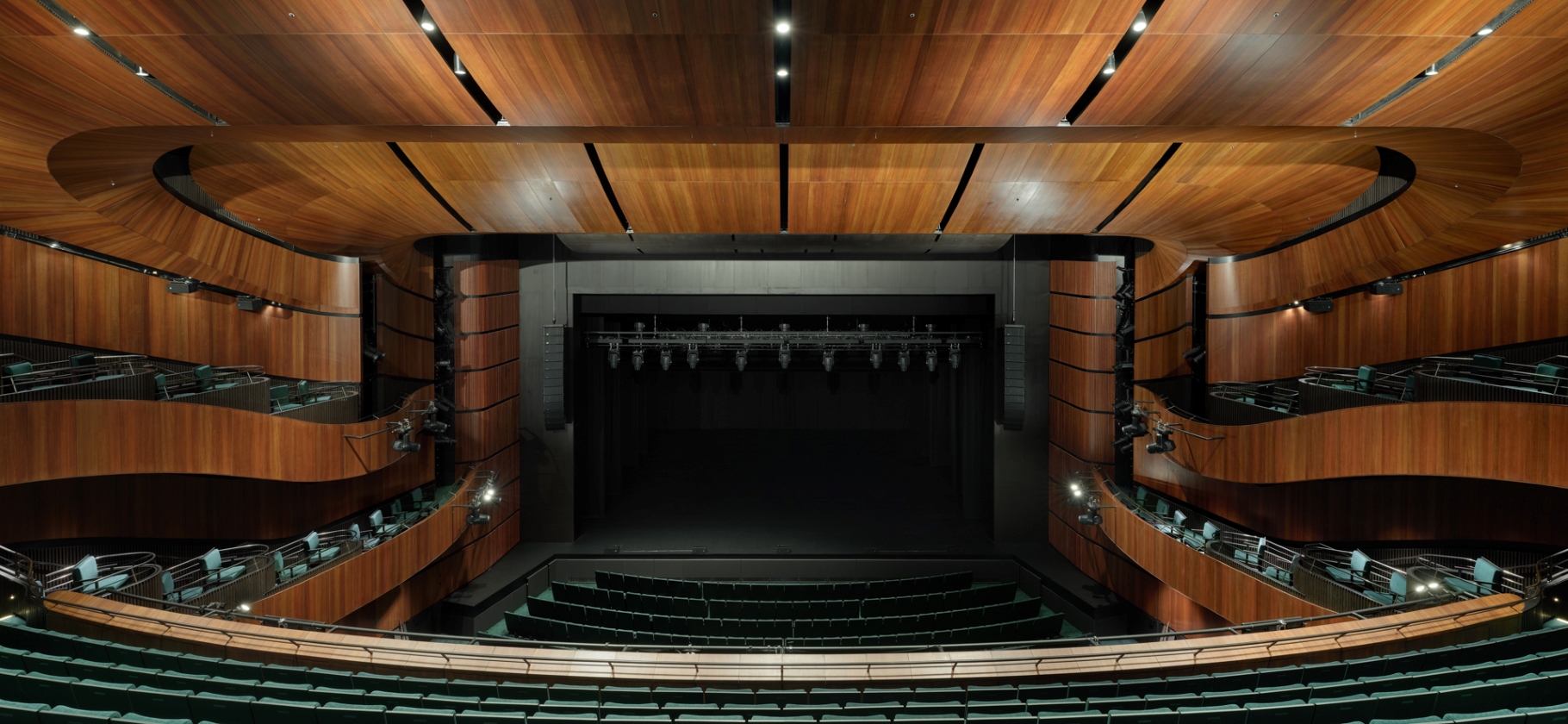
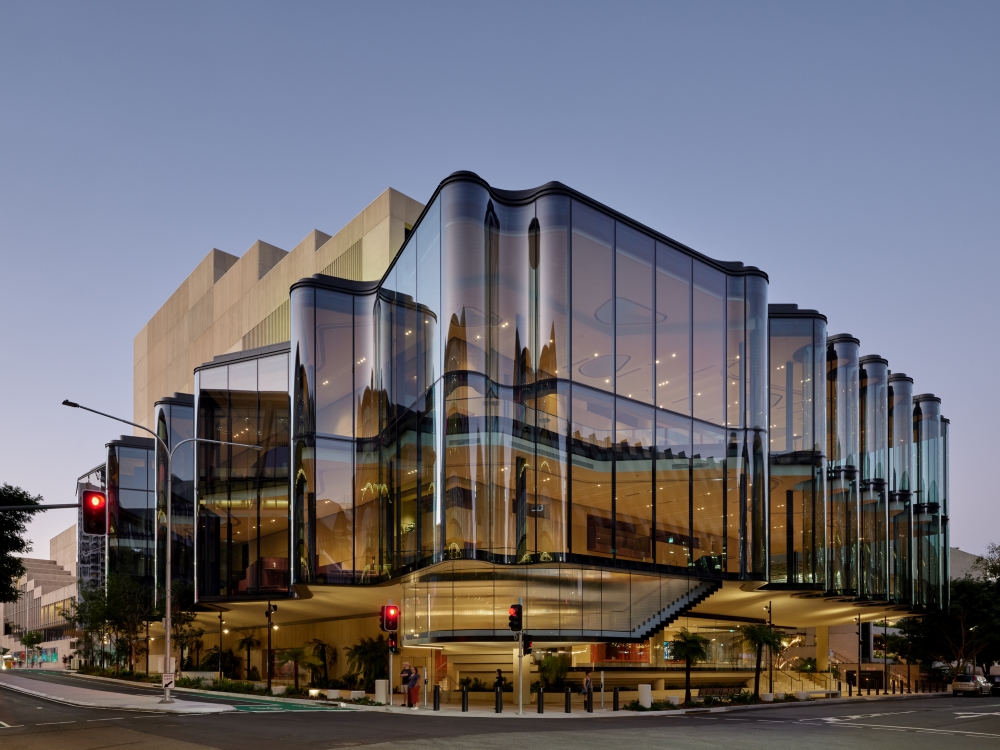
The theatre spans over 1,500 seats (1,000 in the stalls and 500 at the balcony level), making it the largest performing arts centre under one roof in Australia. The interior is adapted to an array of performing arts, including dance, ballet, opera, symphony, theatre, and musicals. In order to fit into the site next to Playhouse Green, the building was allowed to cantilever six meters out on its two street frontages.
Transparent edge and First Nations narratives
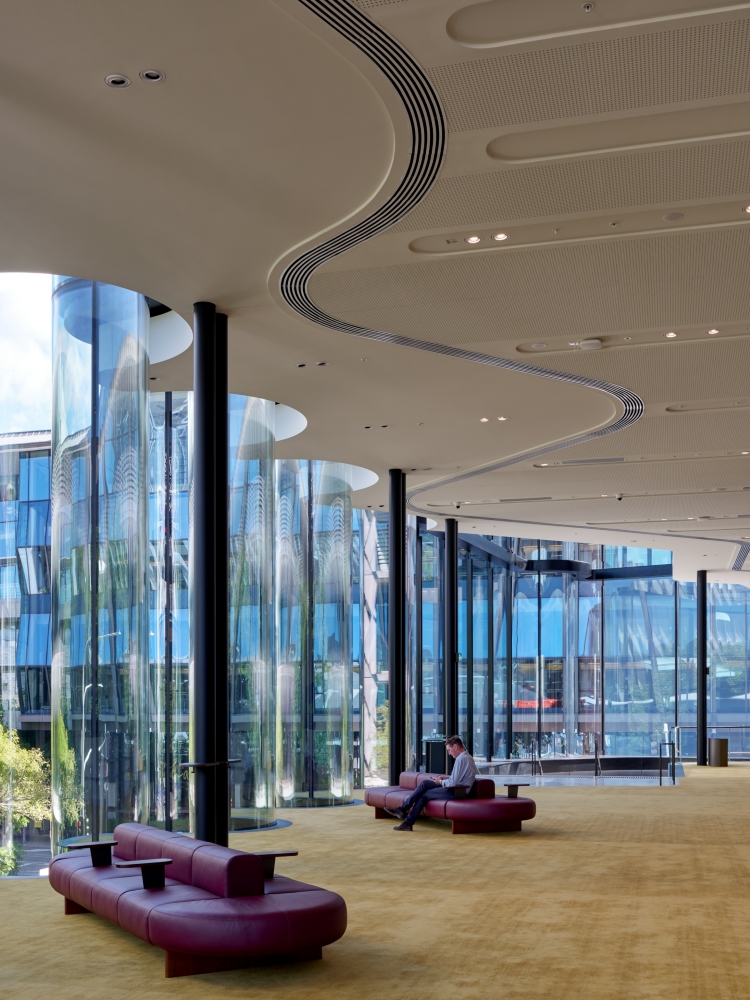
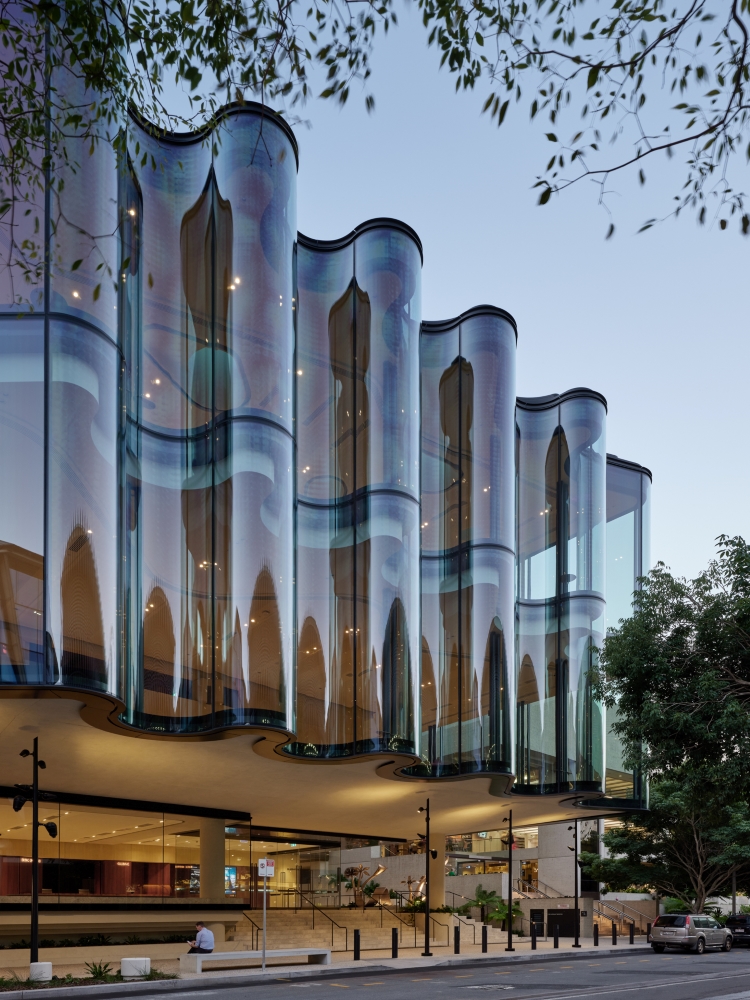
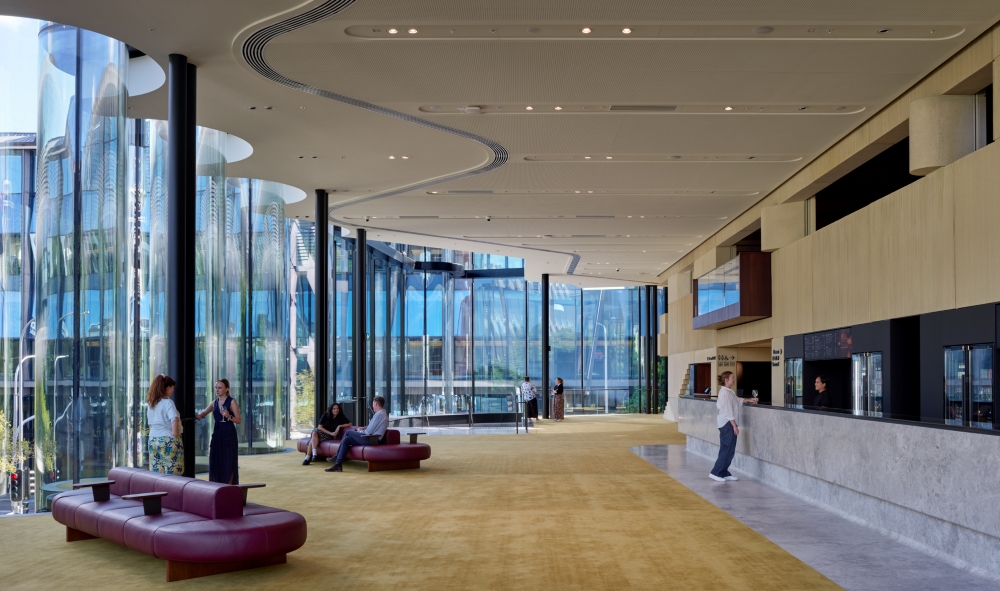
To reduce the visual impact of the cantilever, the architects created a transparent edge. The façade was deliberately shaped into a wave-like pattern following the prose-poem written by Aboriginal artist Lilla Watson. The wavy glass façade provides a dramatic character, while four layers and an intervening air gap ensure thermal insulation. Sunlight is blocked by black ceramic inlay that also minimises glare and improves energy efficiency.
“We thought to make the transparent façade a setting for a kind of public theatre where people in the foyers would be seen variously clear and blurred from the street. And we wanted to embed the beginnings of First Nations narratives related to the context into the design.”
Michael Rayner, Director at Blight Rayner Architecture
The inspiration from native Australian art expands further to include seven skylights that symbolise seven watersheds of Queensland, also based on research by Colleen Wall, First Nations Elder Aunty. The narrative is further enhanced by Torres Strait Islander artist Brian Robinson’s sculpture Floriate, featuring seven emblematic flowering plants native to the area.
Foyer and auditorium
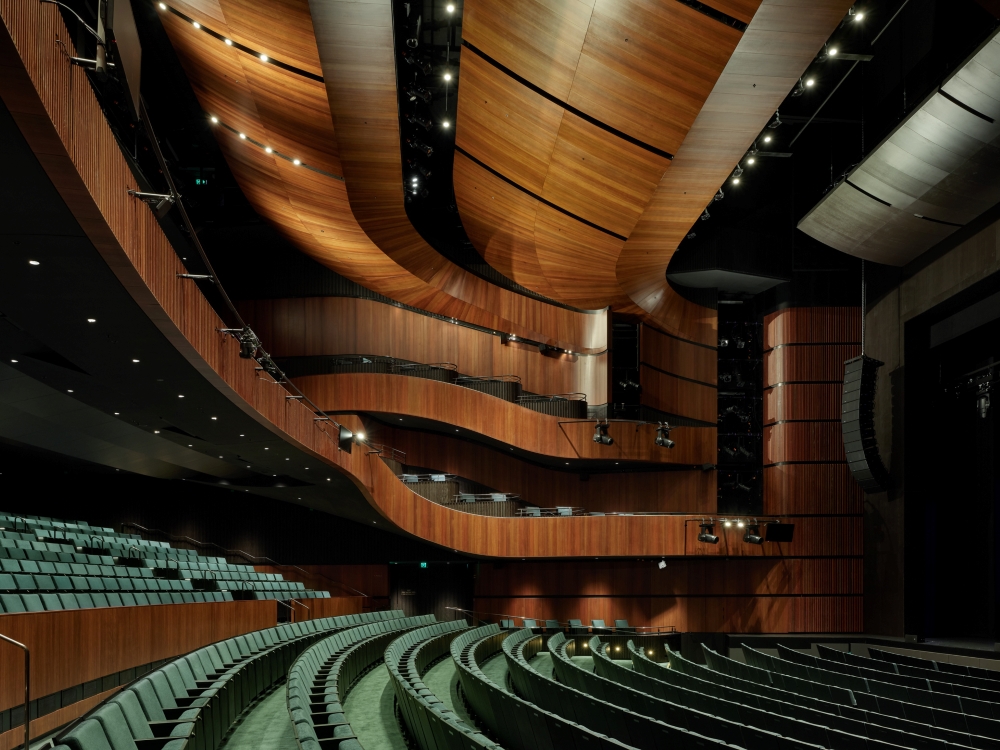
The lightness of the foyer provides a stark contrast to the interior of the building. Envisioned as a dark grey cocoon, the auditorium is executed in dark grey ironbark walls and rainforest green carpet. The small size of the venue (28 meters) and wraparound balconies make the venue incredibly intimate. Gumji Kang, Managing Director of Snøhetta Australasia, claims stringed instruments were the main inspiration for the technically precise yet atmospheric layout enriched by timber ribbons.
Automatization and broadcast suite
Three floor sections of the orchestra pit can be lowered and raised independently to accommodate orchestras of various sizes. Instead of a conventional two-pit configuration, the pit features four. The fly system is also automated, with 24-meter-high towers and fly lines extending to allow for further reach over the audience. The system, made up of 107 hoists and 29 km of steel wire, controls battens, scenery, lighting rails, and moving bars up and down at up to 1.8 meters per second. In-house digital broadcast suite ensures live performances are transmitted to cities and towns across Australia in 4K HDR with immersive Dolby Atmos audio.
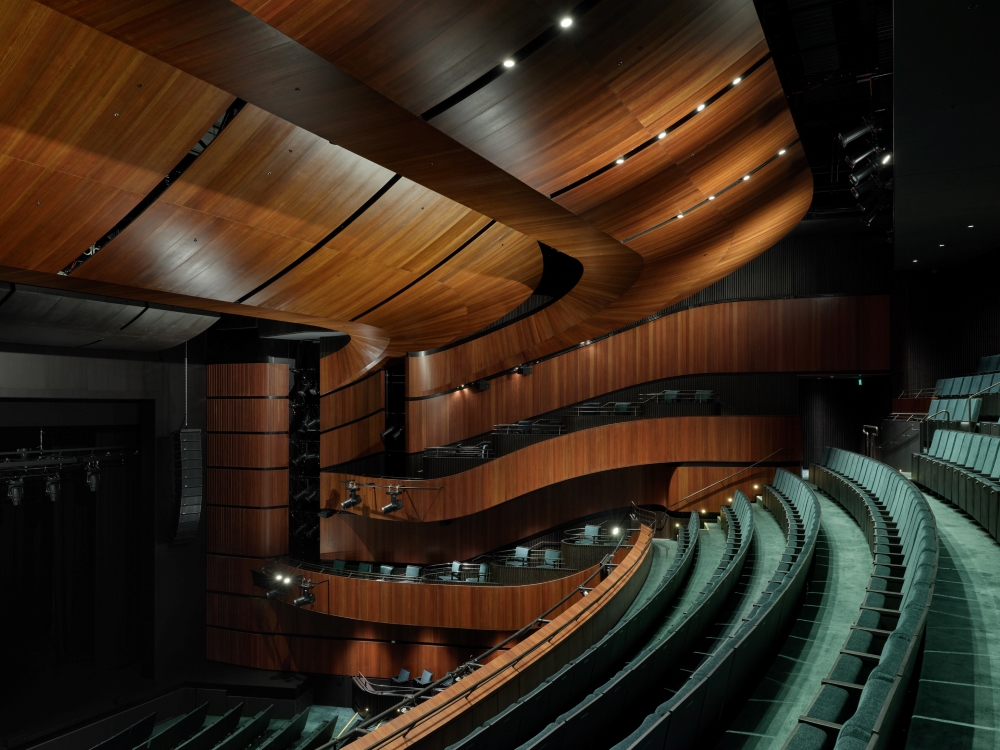
The new Glasshouse Theatre of Queensland Performing Arts Centre uses glass exterior and dark timber and green interior to ensure a venue fit for numerous arts, while paying homage to the First Nations of Australia.


