



Header: LJ-Group
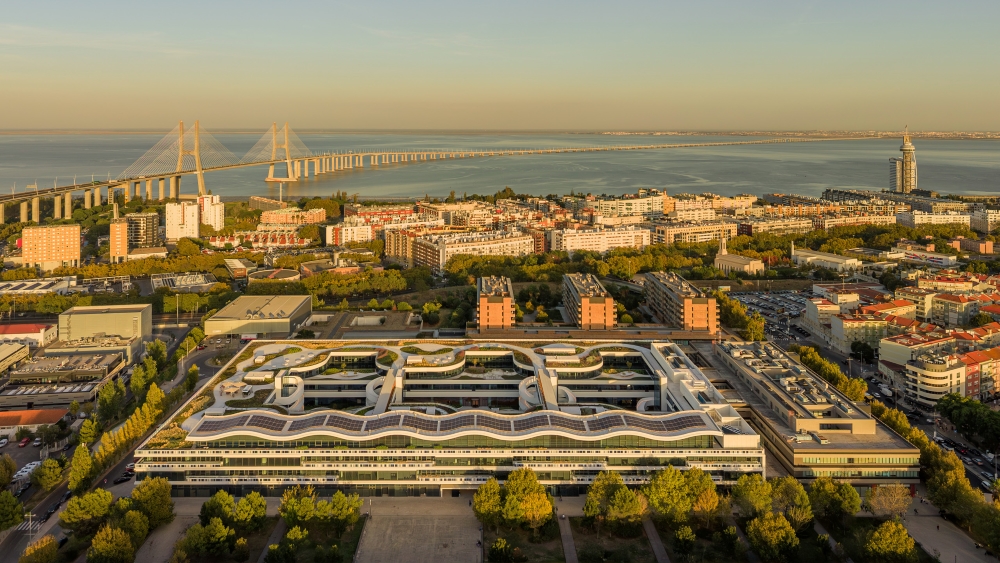
Oriente Green Campus found its home in an unfinished mall in a city’s developing area named the Silicon Valley of Europe. The space was seen as an opportunity to create large, open, and flexible office environments tailored to the needs of technology and research companies. KPF introduced lightwells throughout the structure to extend the floor plates and carved out courtyards to bring natural light and ventilation into the building, transforming it into an office campus set within a garden. To support its new function, the building underwent a comprehensive and transformative adaptation.
A quadruple-height atrium and open floor plan
The four-story structure, the size of a city block, features a typical shopping mall structure. When KPF was hired to reshape a mall abandoned mid-construction, the idea of office space emerged. The building’s connected floor plans enable easy circulation and collaboration between employees, favoured by large tech companies. Made of giant concrete slabs, the structure features a hole in the centre designed for a quadruple height atrium. The large open floor plates were recognised as an opportunity to create a new office space unlike anything existing in Lisbon. The building can house one or two large companies and many small tech companies.
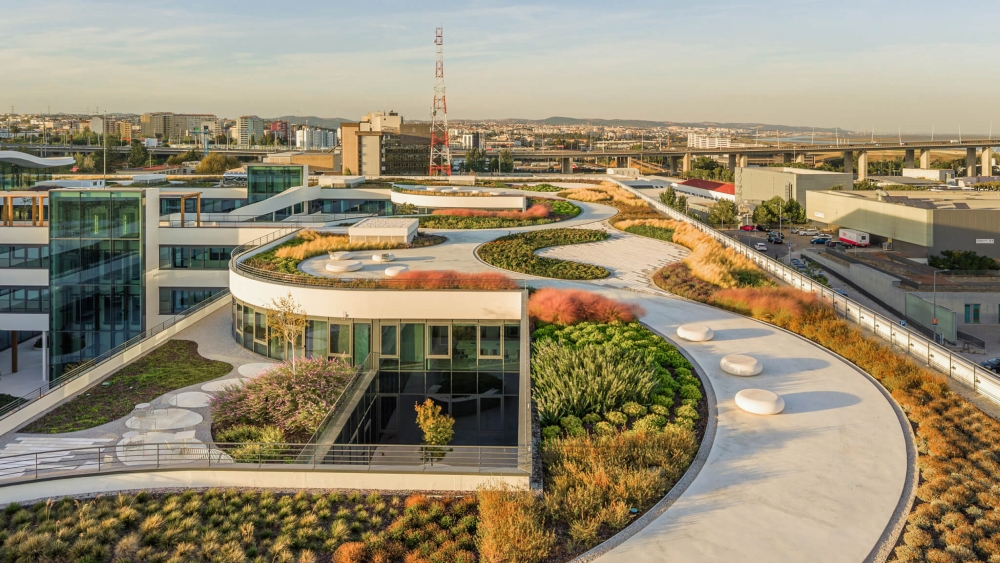
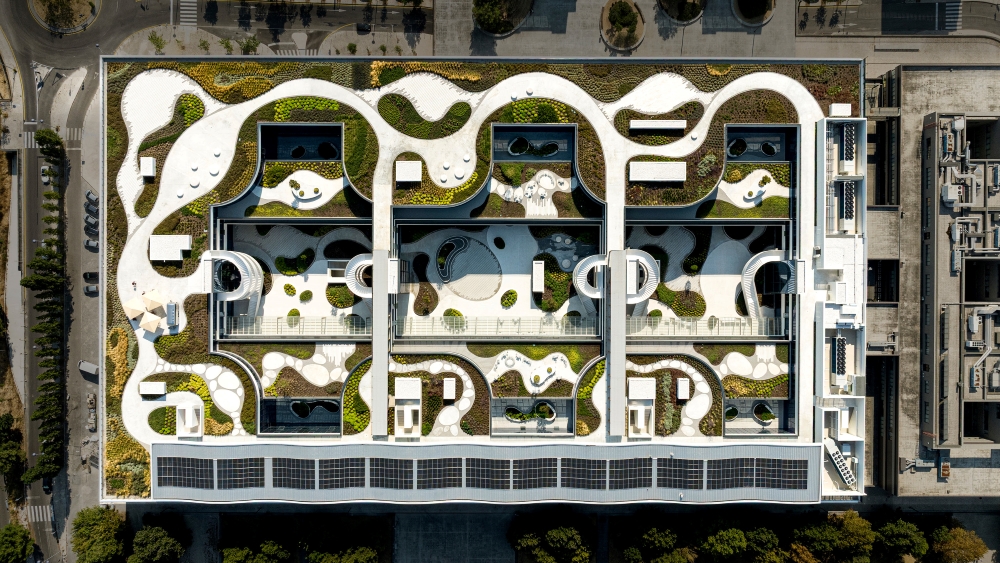
The designers decided to use the hole in the middle to open all floors for ventilation and transform the centre of the mall into an open courtyard. The KPF team ensured ventilation and natural lighting by peeling back walls and selectively opening up parts of the ceiling. Users can rely on natural ventilation for 127 working days each year, approximately a third of the annual working period. The natural supply of clean air also reduces energy consumption, getting the project closer to its sustainability goals.
Circular adaptation model
The architects used a circular construction model, strategically retaining as much material as possible in the final design. The approach minimised embodied carbon while keeping environmental performance targets in mind. The circular process included developing a deep understanding of every element of the building. Beyond renovating the old building, the design team also had to develop several elements from scratch. This included custom mechanical components specifically designed to integrate with the existing structure.
Vegetation and organic pathways
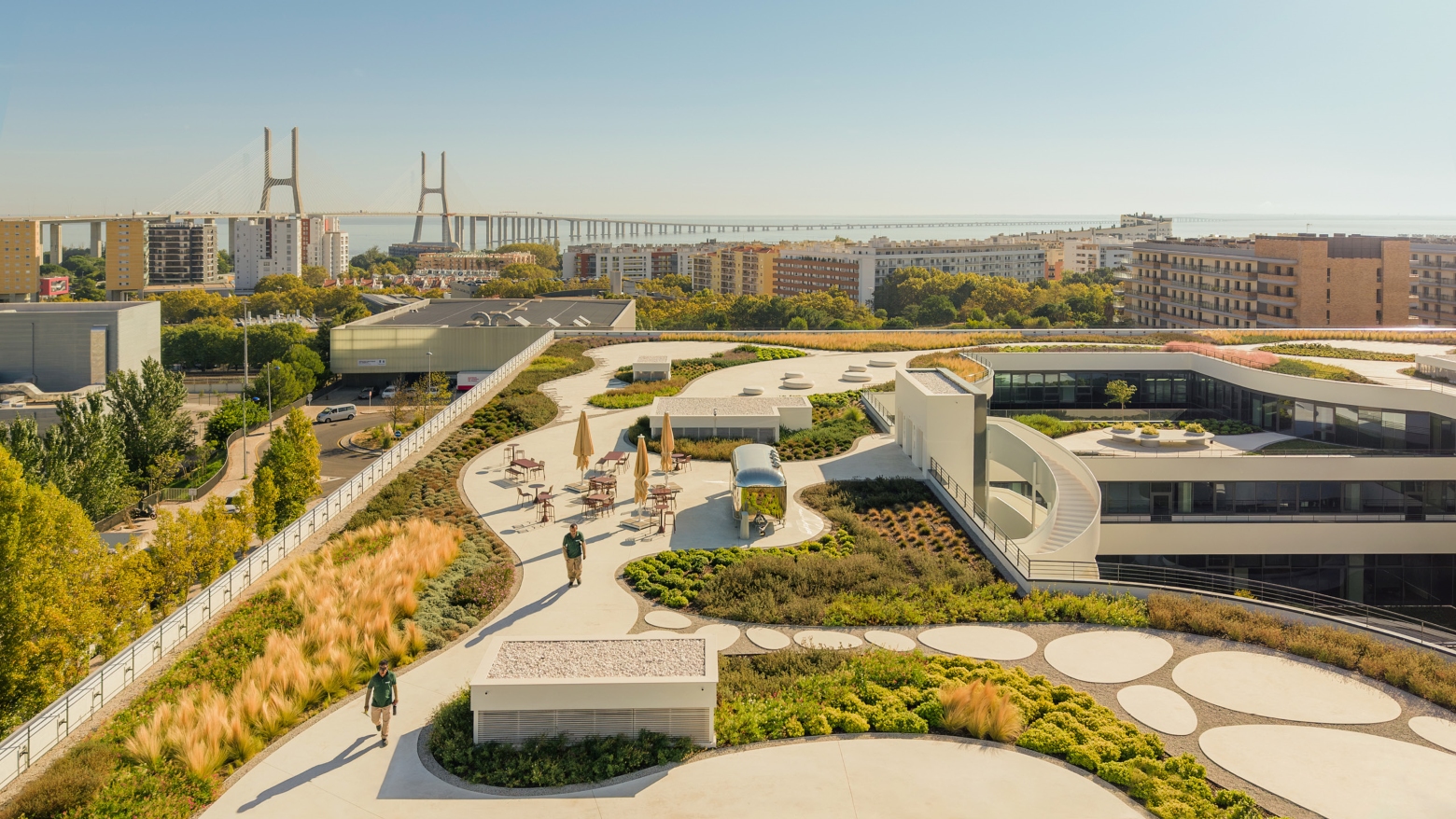
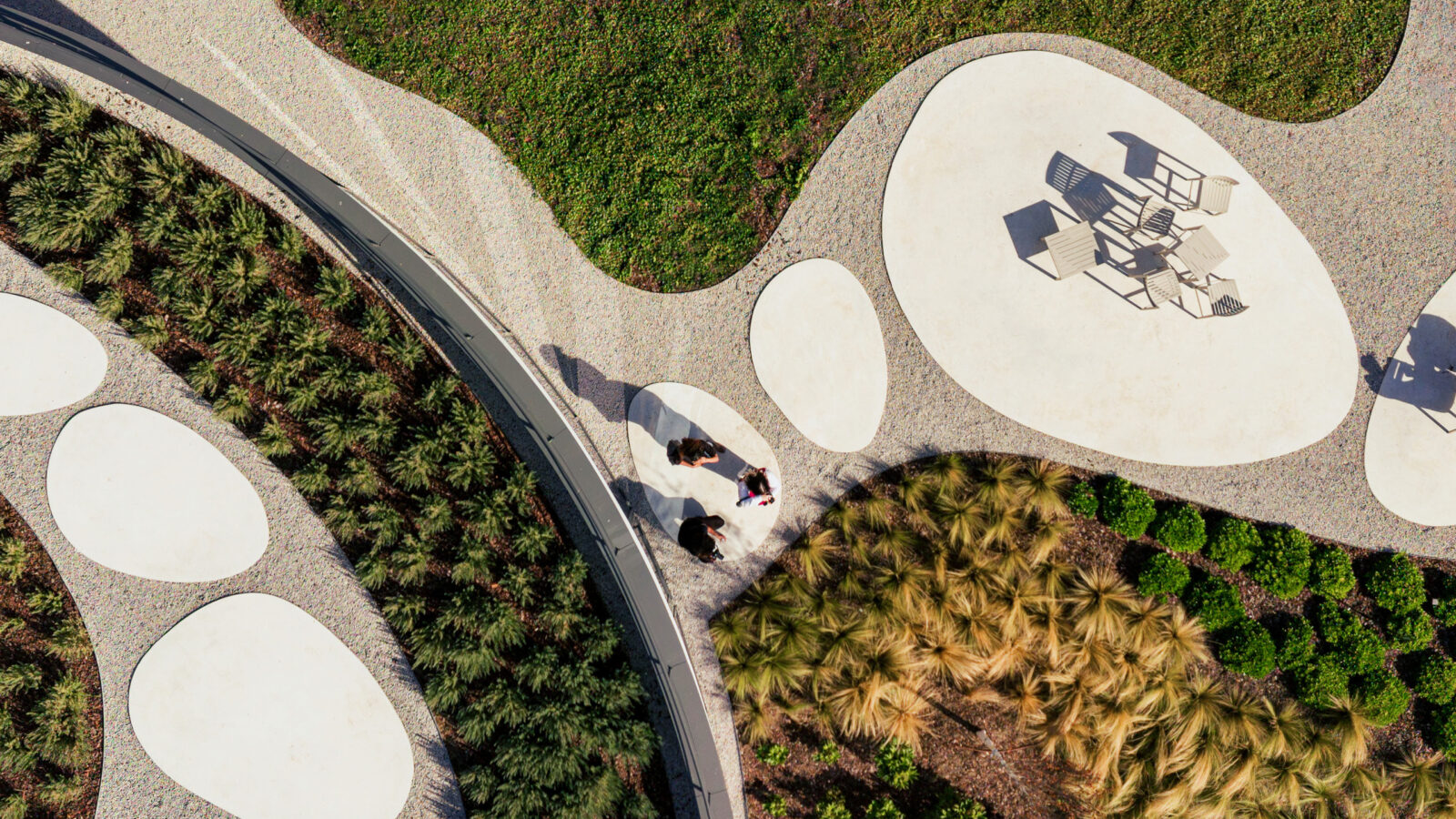
Native or adaptive species have been planted all over the 6,900 square meters of green roofs and terraces. The gardens are interrupted with organic pathways, which encourage movement and contemplation. The greenery boasts biodiversity in the area, reduces irrigation needs, and mitigates the heat. The space was added at the top of the structure to make it more visible and to enable a panoramic view of the Vasco da Gama Bridge and the surroundings.
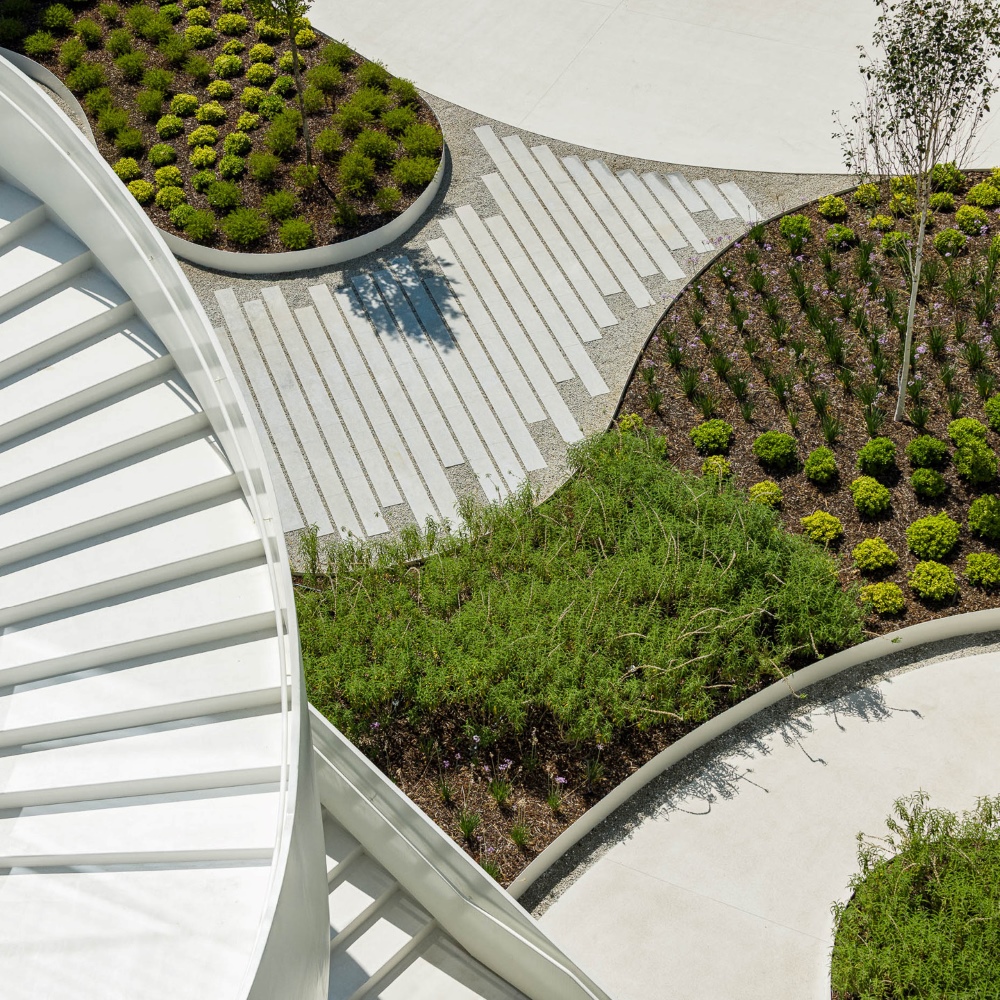
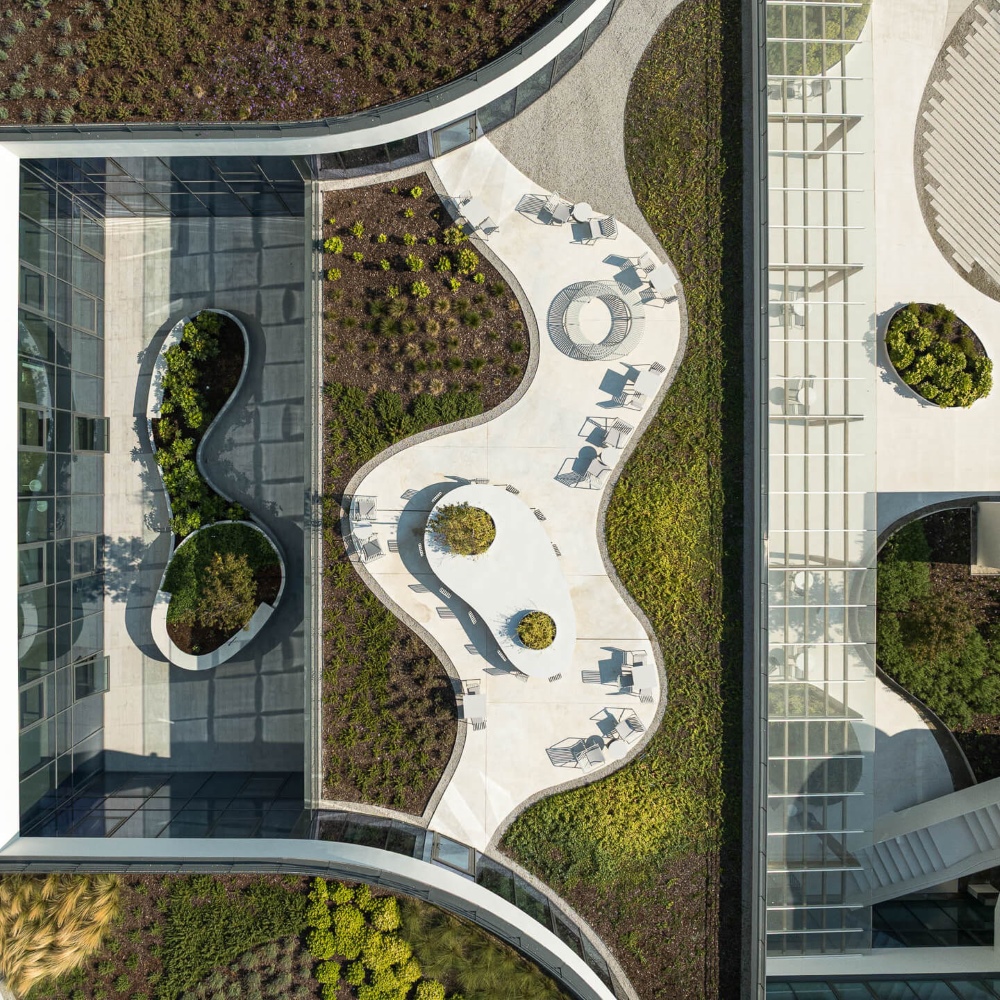
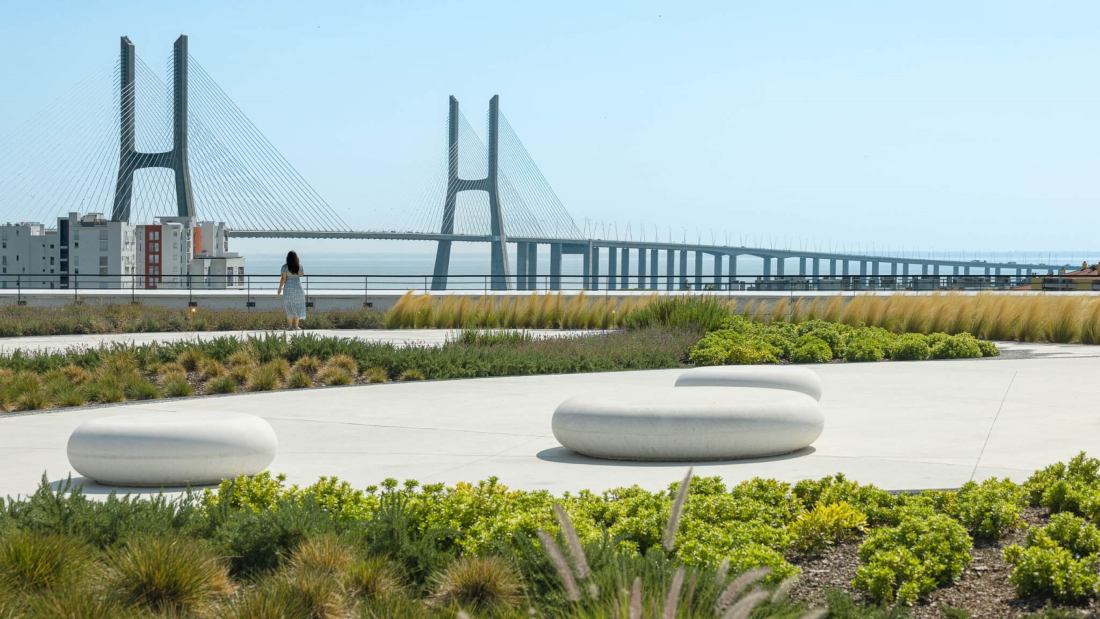
The large-scale office building with grand floors, lush gardens, and collaborative workspaces demonstrates how workplace needs, sustainability, and design quality can successfully coexist within a dense urban environment. Additional walkability and landscaping turned the building into a real oasis.
Technical Sheet
Location: Lisbon, Portugal
Client: Multiusos Oriente FEIIF managed by Norfin SGOI
Team: Saraiva + Associados (Architect of Record)
Type: Adaptive Reuse. Office
Size: 94,000 m2 / 1,010,000 ft2
Project Website: www.europeia.pt/en/about/oriente-green-campus/


