



Header: Dan Schwalm, HDR
Sustainability Learning Lab embodies the university’s commitment to the Science on Display initiative, aimed at bringing science closer to people. As a modern workshop, the lab provides practical experience in horticulture and agricultural research. The architectural presence of the lab, alongside its high-tech lighting system, is prominently highlighted on campus.
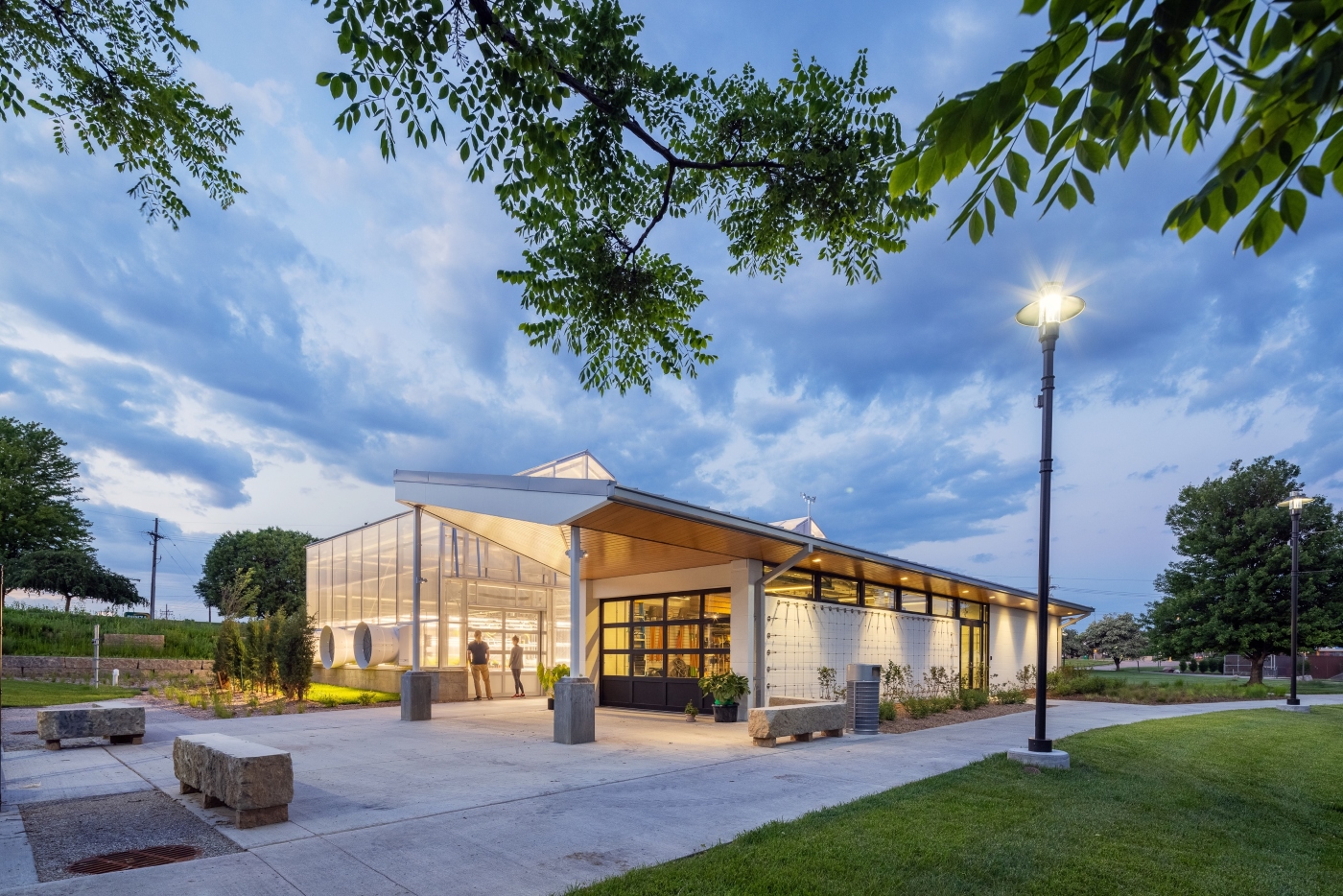
Hands-on experience in biology class
The Sustainability Learning Lab at Bellevue University in Nevada, US, was created to complement the university’s expanded science, technology, engineering and math courses in biology. An outdoor lab facility allows students to gain first-hand experience in sustainability and responsible use of resources. The show-and-tell element gave the lab a multigenerational appeal. People of all ages are encouraged to visit the lab, which also serves as a research hub and a testing site for local sustainability solutions.
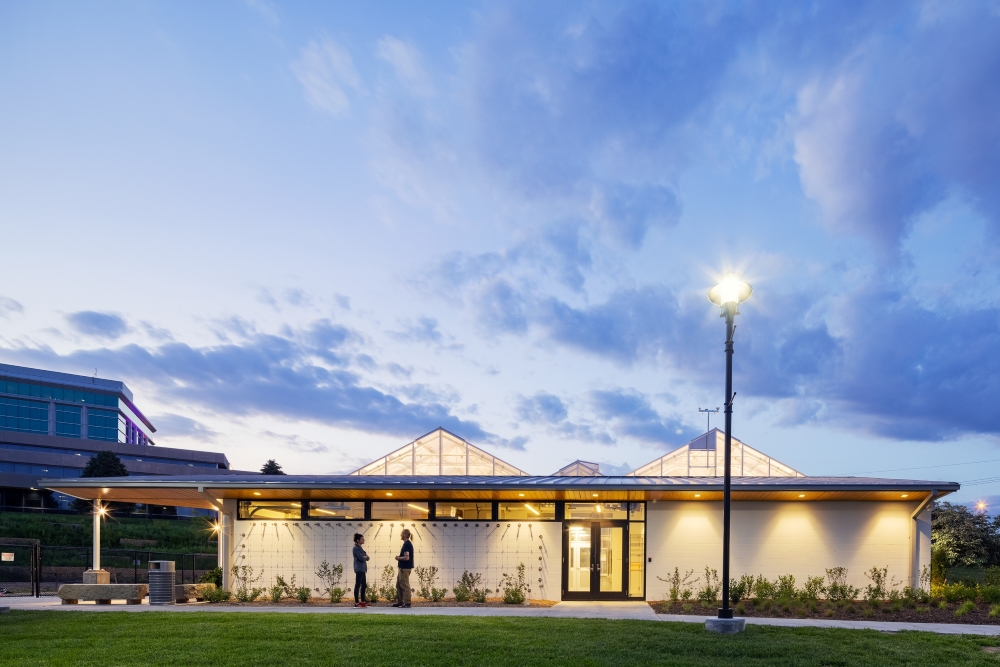
Science on Display Initiative
The architecture and the lighting of the site are in line with the university’s Science on Display initiative that brings science closer to students and local communities. The lab includes a native plant garden in the greenhouse, wind and solar power stations that allow renewable energy research, as well as an outdoor learning space with a cistern and a 1200-square-foot algae pond allowing for the creation of biofuels.
In line with the Science on Display initiative, technology for filming and broadcasting greenhouse experiments is incorporated into the site. An adaptable and flexible structure allows instruction and collaboration. To ensure that a relatively small venue fulfils all the requirements, the architects used building information modelling and regular meetings with the clients and Rough Brothers, an Ohio-based greenhouse manufacturing company.
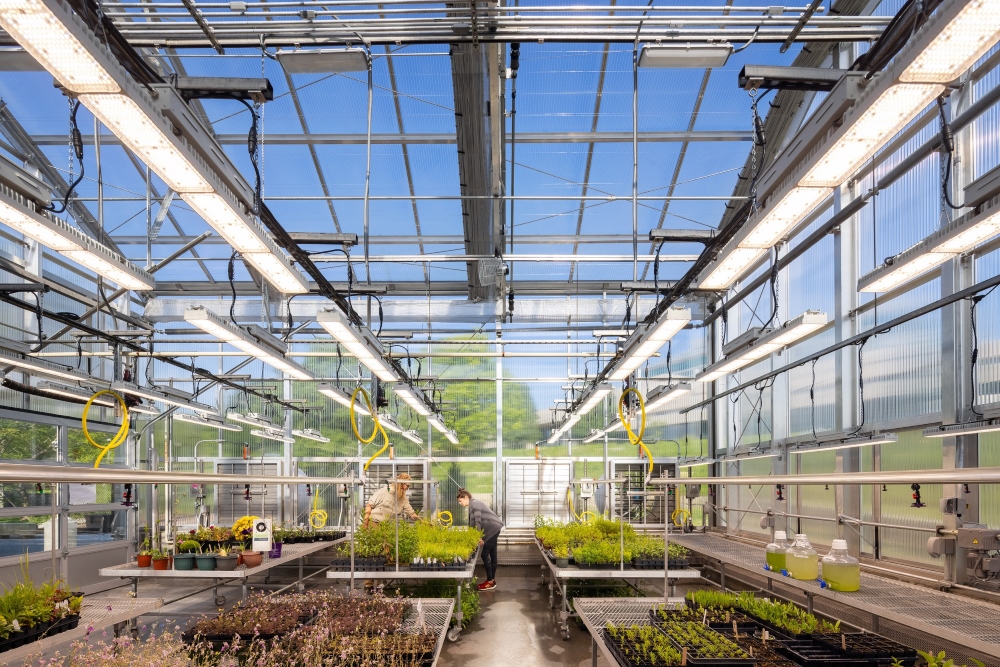
Sustainability Learning Lab lighting design
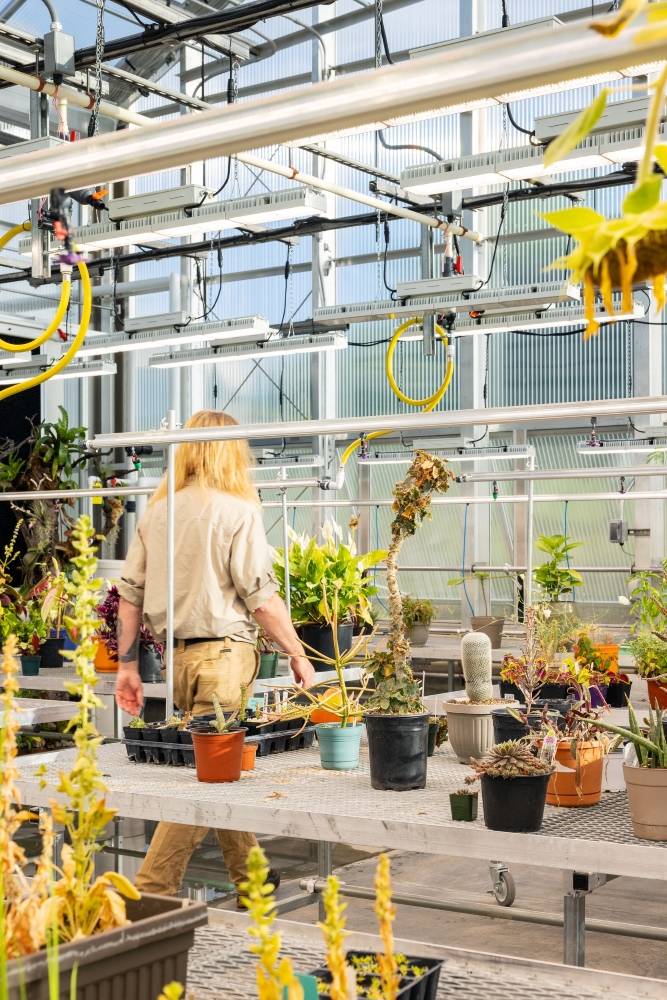
HDR, the company that designed the lab, is also responsible for its lighting design, which includes horticultural lights with movable mountings, custom controls and glazing. In line with the purpose of the lab, created for academic research and experimentation, the lighting fixtures provide full-spectrum photosynthetic active radiation and high photometric photon flux density. Luminaires are attached to movable frames through plug-and-cord connections and tool-free hardware, adding flexibility and precision to the lights.
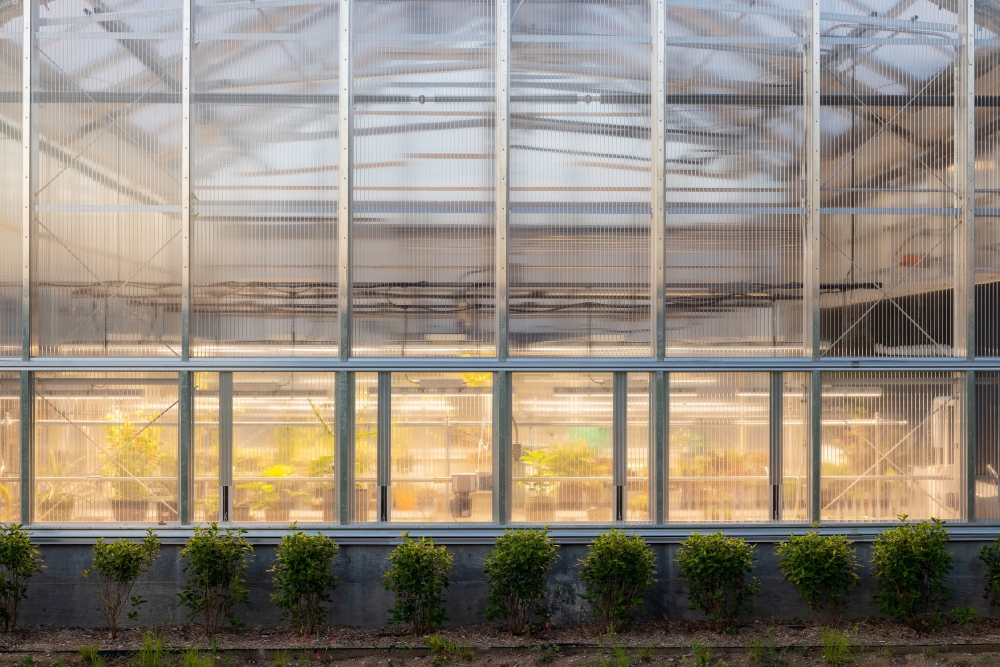
Custom ribbed glazing softens direct solar glare while transmitting 86% of available light to sustain photosynthesis. Its translucent finish bathes the interior in soft, diffused light that highlights the building’s silhouette, giving it a strong visual presence. A custom algorithm in the control system verifies performance and quantifies illumination for experiments. A network of timeclocks, photosensors, and digital dimming elements enables intuitive control of the horticultural lights through a touch screen interface while monitoring and measuring available daylight.
The sustainable lighting design aligns with both the purpose and the identity of the lab. The prolonged presence of natural lighting paired with the custom control system lowers energy use by 80%, while the carbon footprint is further reduced with a nontoxic and recycled material palette. Outstanding design and sustainable approach were recognised with the LIT Lighting Design Award in the Horticultural Lighting Design category.


