



Header: CDW
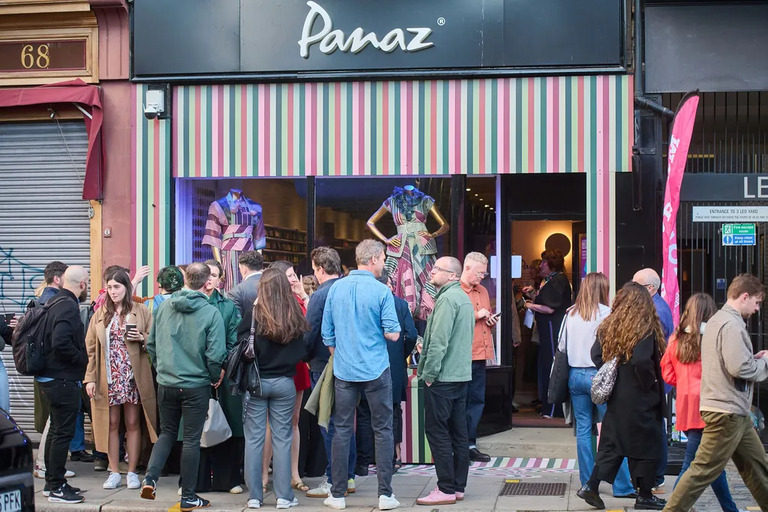
London’s most concentrated creative district just wrapped up its landmark 15th anniversary edition. From 19 to 21 May, Clerkenwell Design Week turned the historic streets and subterranean vaults of the EC1 postal code into a massive laboratory for the future of furniture, lighting, and textiles. With over 200 showrooms and 16 exhibition venues opening their doors, this year’s festival moved away from mere aesthetics to focus heavily on two pressing environmental realities: sustainability and the architecture of sound.
Reclaiming the streets with circular furniture
Walking through the neighbourhood, it became clear that the design industry is finally moving past greenwashing toward hard data and genuine circularity. Instead of temporary, disposable exhibition stands, designers across EC1 chose to give discarded items a second life.
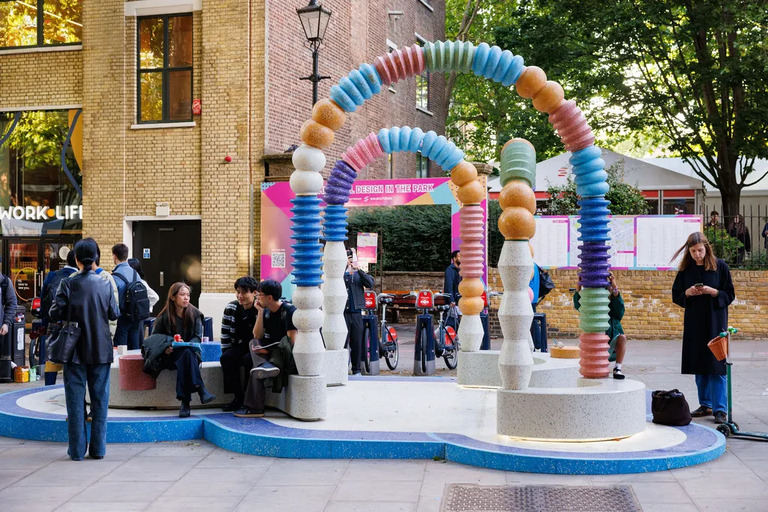
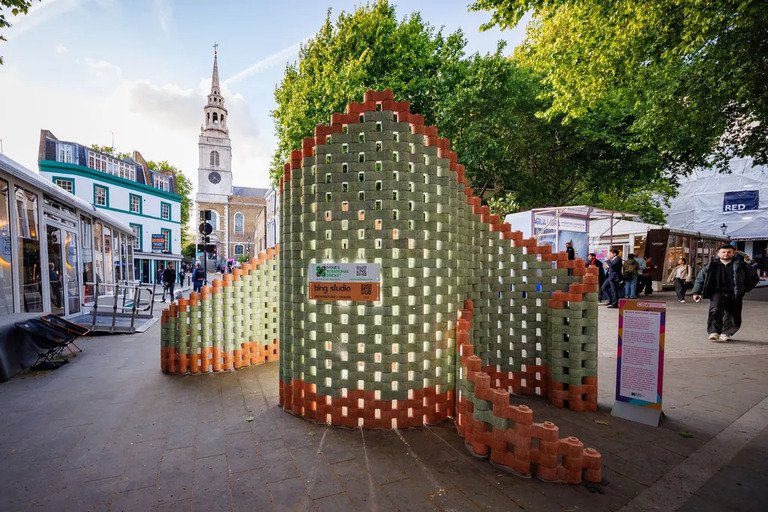
At Brewhouse Yard, Studio Egret West set a brilliant example with the Brew House pavilion. The structure was built from 600 innovative bricks made by York Handmade, incorporating 300 kilograms of waste coffee grounds collected from local London cafés over several months. These aerated clay blocks are five per cent lighter than standard bricks and use ten per cent less finite raw clay. Nearby at the British Collection, creative studio Spared explored these same ideas by transforming everyday post-consumer waste into functional, craft-driven furniture and objects.
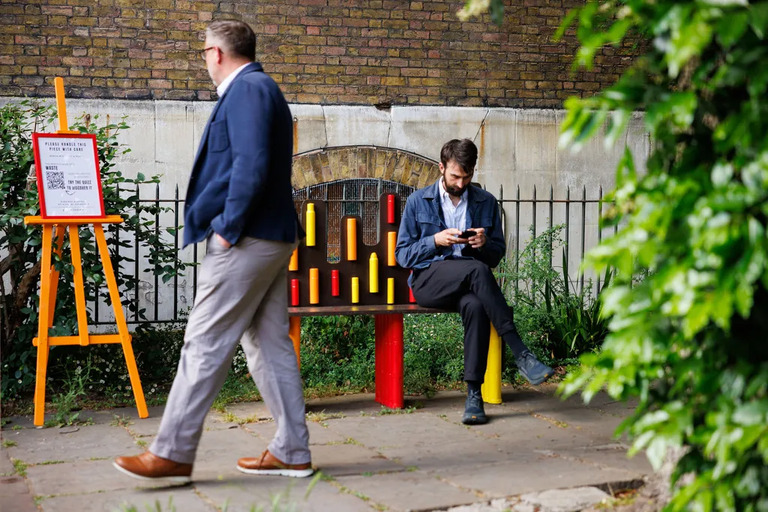
The focus on circularity continued outdoors. French designer Alexane Quenderff introduced her BinSight Benches, which are crafted entirely from tough-to-recycle materials. Passersby could scan built-in QR codes to take an interactive quiz, guessing what the seats were actually made of. Over at St John’s Gate, the Foundations in Flow installation by Magnus Mulvany, Gabi Spangenthal, and Julio Manchón Campillo also championed reused goods. Inspired by London’s subterranean rivers and historic wells, the team utilised reflective acrylic, ceramic tiles, and diamond-embossed polycarbonate corrugated panels to mimic moving water.
Meanwhile, Australian-Indonesian brand Reddie opened its first European showroom, unveiling its Cinta chairs and a broader collection built from salvaged Indonesian teak pulled from old houses and railways. Reddie was not the only brand planting new roots in EC1; companies like ABI Interiors, Nth Degree, and Industville also used the festival to launch brand-new spaces. British brand SCP even gave visitors a preview of its upcoming five-storey headquarters on Clerkenwell Green by animating its courtyard with a rotating cast of furniture labels all week.
Major flooring manufacturers also brought practical solutions to the table. Swedish brand Bolon showcased its Back2Bolon initiative, presenting circular flooring and rugs designed to be laid without permanent adhesives. This allows users to easily lift the materials and send them back to the factory to be shredded and reborn as new products.
The growing architecture of sound
The second major pillar of the 2026 festival was acoustics. As office habits settle into a permanent hybrid rhythm, handling cognitive load and distractions has become a priority for spatial designers.
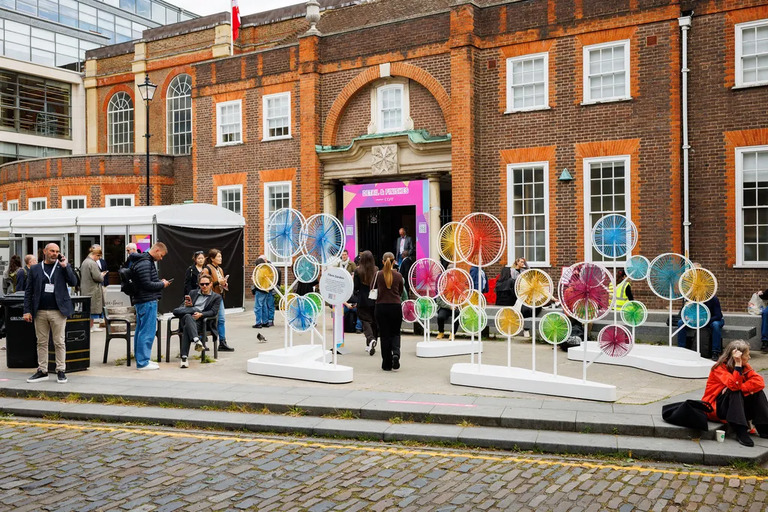
In Charterhouse Square, an installation named Recreatura asked visitors to listen to local soundscapes and resident memories before drawing on traditional ceramic tiles to help build a collaborative spatial sculpture. Over at the Old Sessions House, the BAUX Floating Pavilion used its new collection to demonstrate how acoustic materials shape our emotional experience of a room. German-Polish acoustic booth specialist BOX17 also made its festival debut, showing off the Cube 1 Stand lined with thick Italian wool felt to create instant, calming quiet zones.
Historic venues get a contemporary remix
What makes this festival work so well is the contrast between ultra-modern design and medieval architecture. This year, the map expanded into several unexpected locations to host the most wide-ranging showcase of European design the festival has ever seen, drawing in major talent from the UK, Norway, Germany, Austria, Italy, and Spain.
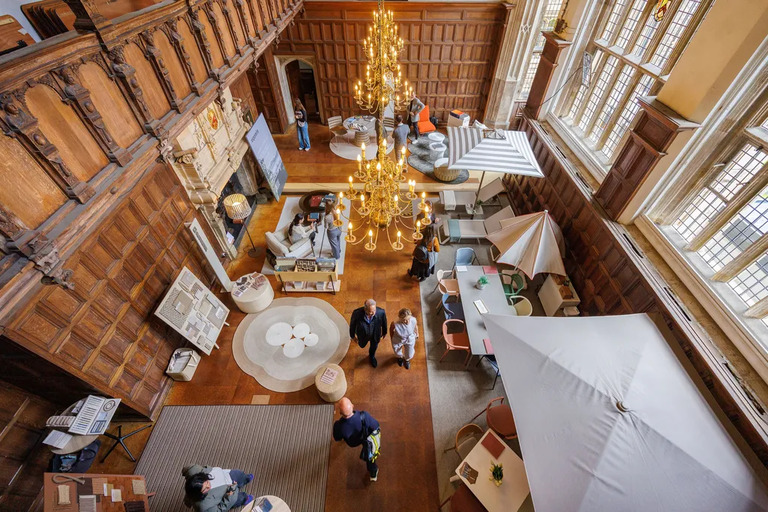
The Museum of the Order of St John, which dates back to 1504, hosted El Salón. Organised by Interiors from Spain, the exhibition saw designer Tomás Alonso transform the atmospheric Chapter Hall into a vibrant platform for 27 contemporary Spanish brands alongside three exclusive product launches. Meanwhile, the historic Haberdashers’ Hall hosted The Luxury Edit, featuring The Italian Hospitality space curated by the legendary Giulio Cappellini in tandem with Interni magazine, the Italian Trade Agency, and the Embassy of Italy in London. This pavilion served as a major anchor for the forty-plus Italian furniture and surface brands showing across the district.
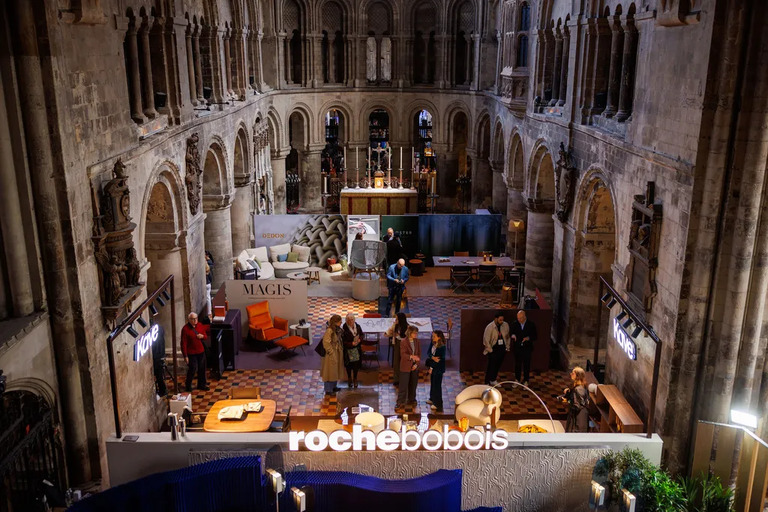
Even the local churches were completely transformed. St James’s Church housed the latest home accessories in the British Collection, while the Crypt in Detail was completely taken over by the Austrian Collection, a massive showcase of interior names including Austriawood, HUSSL, and Woka Lamps Vienna.
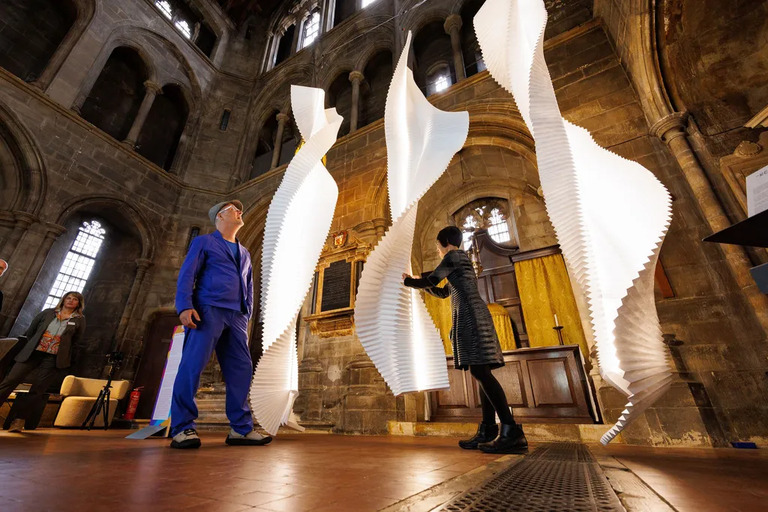
The 900-year-old Church of St Bartholomew the Great became the central Church of Design. Hanging from its ancient ceilings was Resonance (previously referred to as Confluence), a massive, illuminated, folded-paper sculpture by duo Fung+Bedford that brought a sense of quiet repetition and stillness to the crowded festival.
Down in the dark, brick vaults of the House of Detention, a former Victorian prison, the mood shifted entirely to host the Light exhibition, which gathered the latest international developments in decorative and technical lighting.
Debating neurodiversity and workplace trust
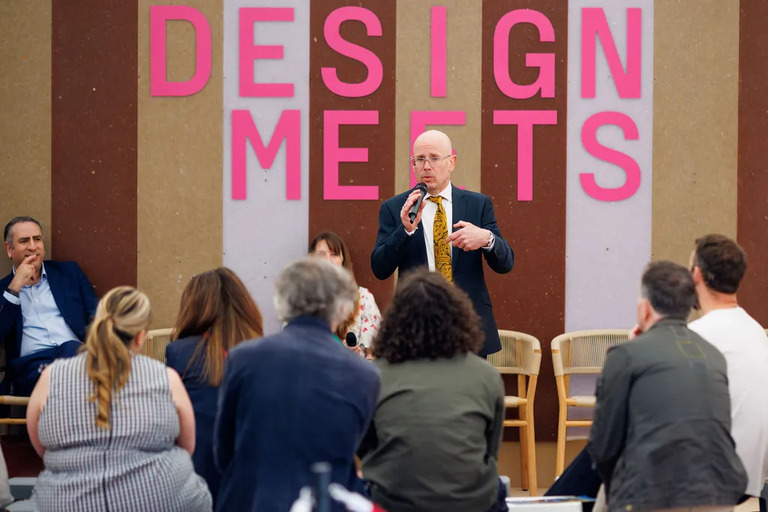
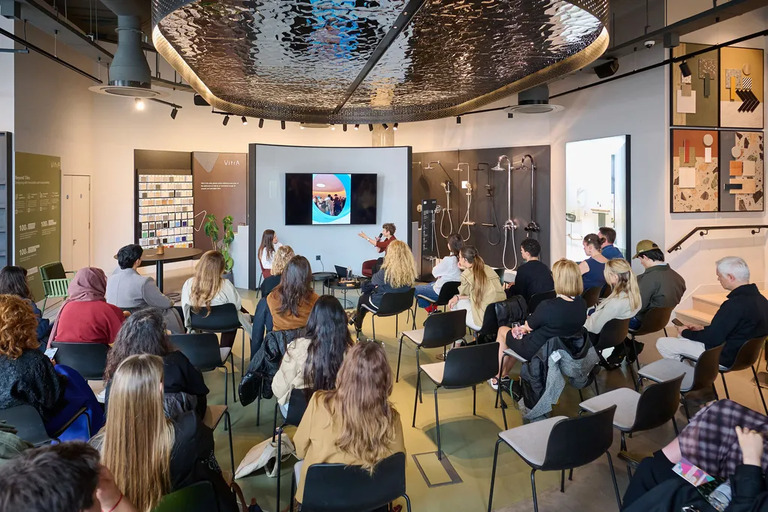
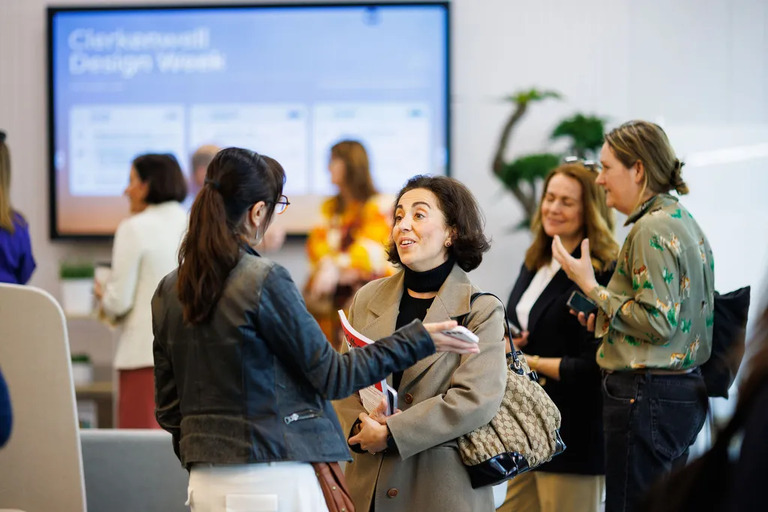
The official talks programme, Conversations at Clerkenwell, took place inside the Church of Design in partnership with Dulux Trade and curated by Katie Richardson. Rather than sticking to safe, promotional topics, panels led by industry experts dug into uncomfortable questions about modern working habits and inclusivity. In fact, designing for difference emerged as the biggest talking point of the week, tying together the official panels with fringe discussions like Design Meets at Haberdashers’ Hall, dARC Thoughts at the House of Detention, and Design in Focus at Commercial Design in the Park.
One of the standout sessions tackled the reality of designing for a workforce that does not fully trust the office, analysing how autonomy and choice are replacing rigid desk layouts. Other panels moved past simple decorative greenery toward measurable wellbeing and neuroarchitecture, looking closely at how light, texture, and acoustic choices alter mental stamina and attention management in open-plan spaces. This drive toward healthier spaces extended right onto the commercial showroom floors, where brands like Egger London, PlusFloor, Milliken Floors, Trilux Lighting, Tarkett, Material Source Studio, Wagstaff, and Umbrella Furniture all set up interactive displays putting neurodiversity front and centre.
High-profile speakers brought a serious retail and manufacturing perspective to the neighbourhood. Activist and businesswoman Mary Portas joined journalist Katie Treggiden to debate what commercial interior designers can learn from the fashion sector about genuine product reuse. In another session, designer Paul Cocksedge and Superflux co-founder Anab Jain discussed how a new generation of makers is using artificial intelligence as a creative partner rather than a tool for pure automation.
Fresh product drops on the showroom floor
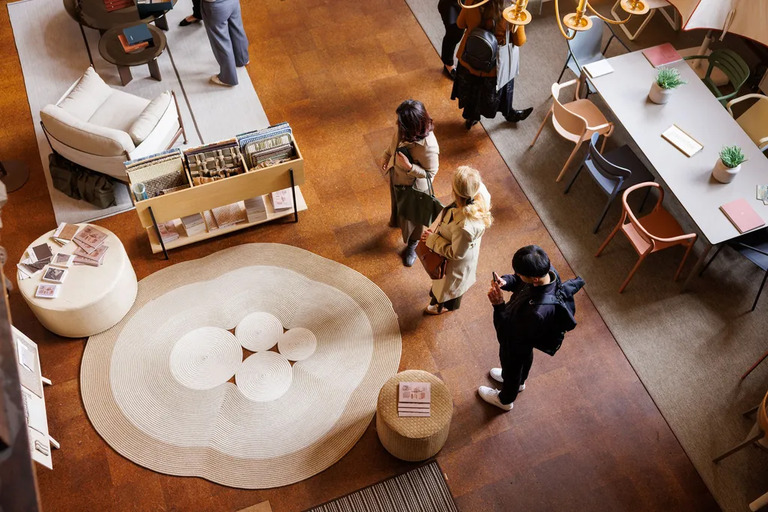
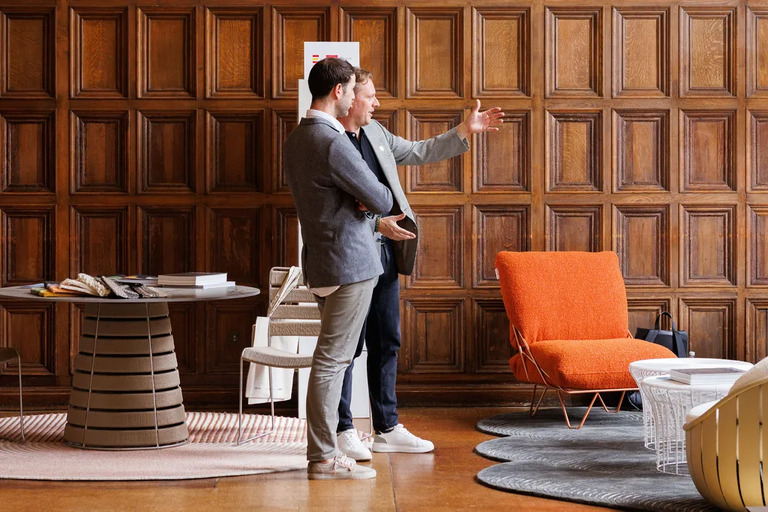
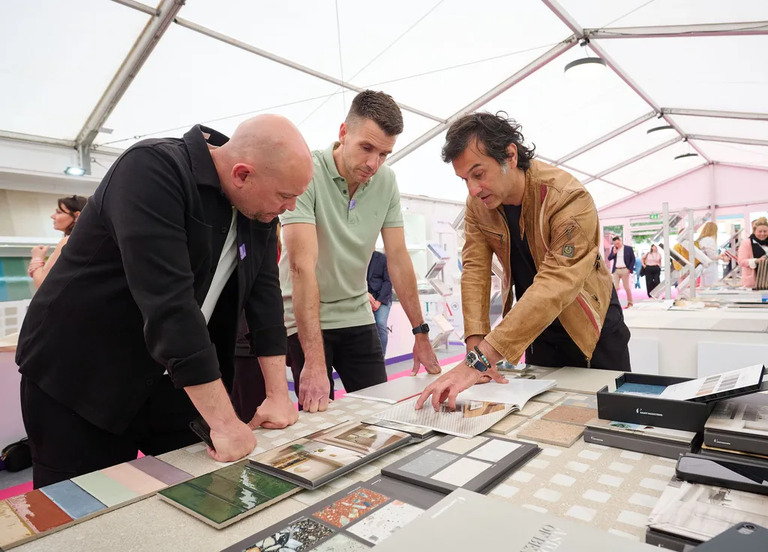
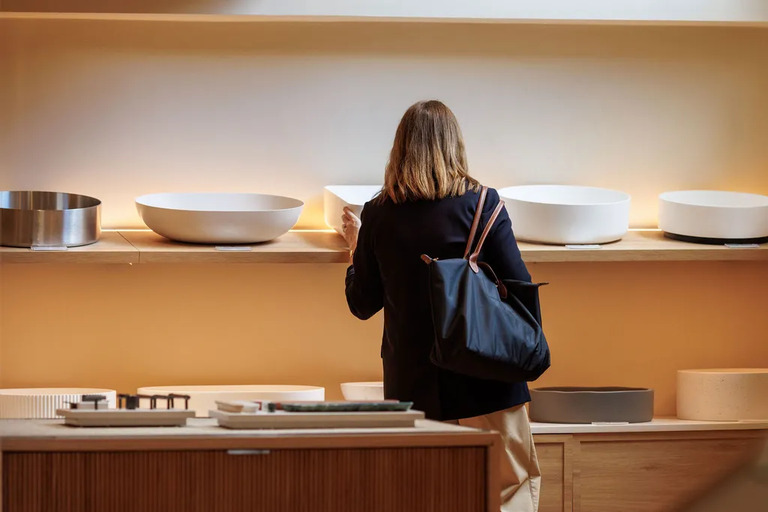
The local showroom partners anchor the festival, acting as hubs for practical workshops, parties, and product reveals. Street-level energy was driven by massive international names like HAY, Herman Miller, and Muuto, alongside surface experts like Cosentino and furniture giants like Knoll and Boss Design.
This year brought an array of clever product launches from hundreds of global brands, including Moroso, Swedese, and Vincent Sheppard. Teknion introduced the Aarea task chair, which features a zero-waste knit back made from ocean-bound plastic. Seiger Design revealed the Coya tap collection for Dornbracht, mixing traditional square and circular geometry with interchangeable handle inlays. On the residential side, Corston launched its Cotswold collection of free-standing table and desk lamps that require no complex wiring, while Nordlux showed the minimalist Akeno pendant, balancing clean lines with tactile wood and brass.
Moving beyond the surface
What this 15th-anniversary edition of Clerkenwell Design Week made abundantly clear is that the industry is undergoing a profound shift in perspective. For years, design festivals have prioritised the visual impact of an object, its silhouette, its colour palette, and its placement in a room. But as EC1 emptied out after three intense days, the lasting takeaway was not how things looked, but how they behaved. The true innovations of 2026 were found in the invisible infrastructure of our spaces: the reuse of waste coffee grounds, the reduction of cognitive fatigue through felt acoustic insulation, and the active accommodation of neurodivergent workforces.
By grounding its landmark year in the dual challenges of waste reduction and sensory comfort, Clerkenwell avoided the trap of self-congratulation. Instead, it delivered a practical blueprint for the next generation of manufacturing. The event proved that elegant design no longer needs to come at the expense of our natural resources or our mental well-being. Moving forward, the true success of a product will not be measured by how well it fits into a temporary showroom display, but by how thoughtfully it considers its eventual afterlife and the diverse needs of the human beings who live alongside it.


