Header: Mikael Olsson
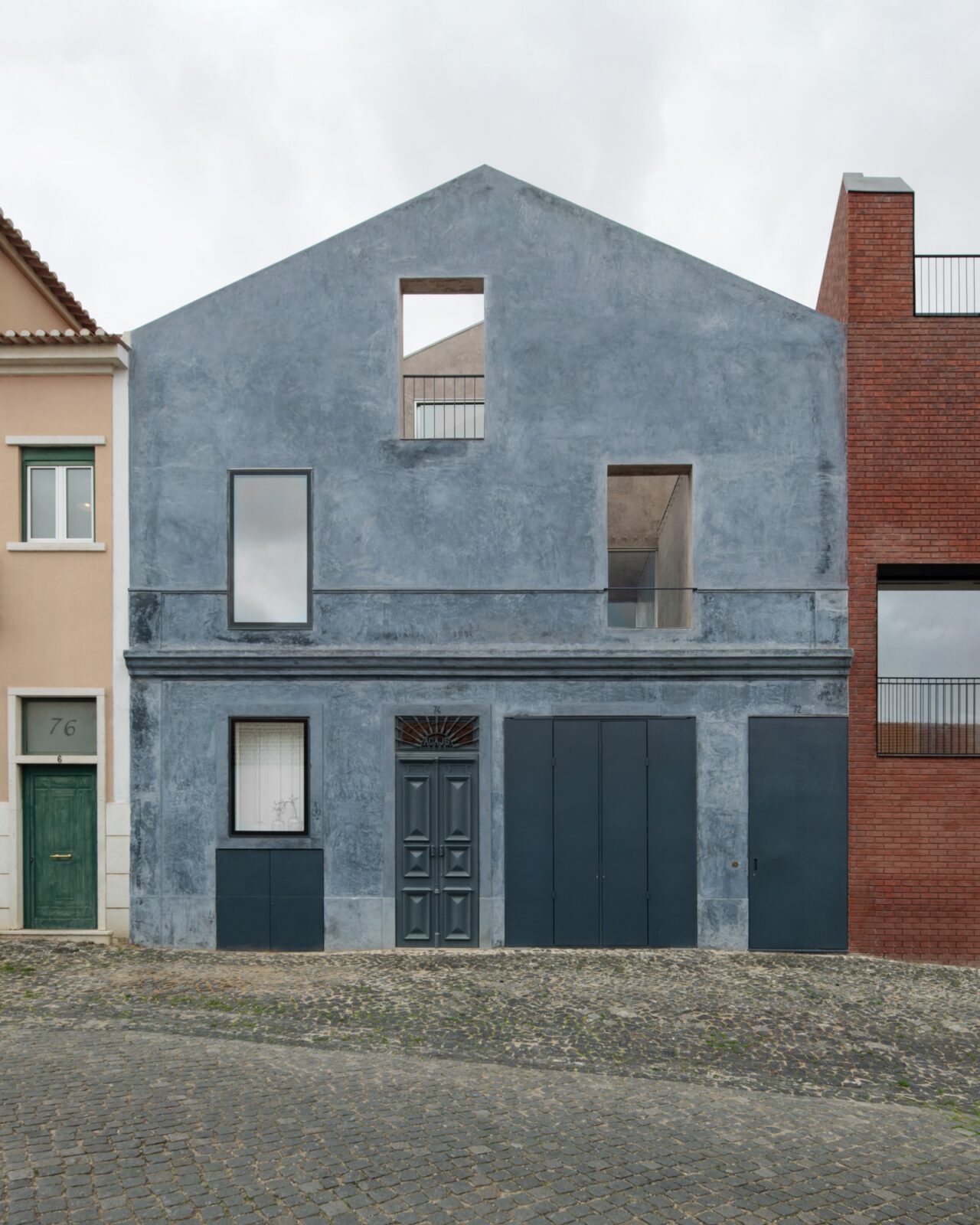
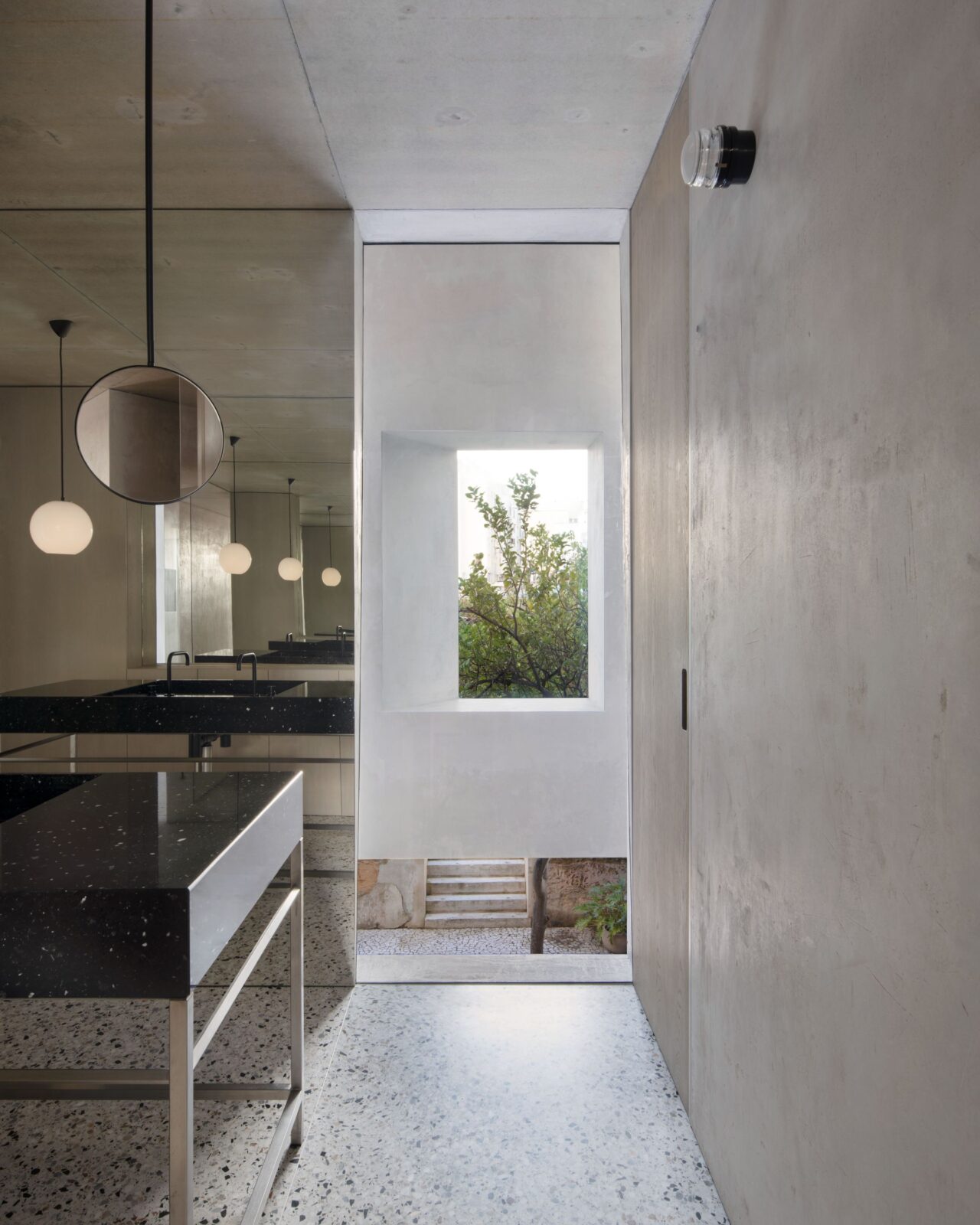
Blue House is the first in a series of three residences named by extrastudio as “casas poveras”. Shaped in a time of uncertainty, yet refusing to compromise on scale, these houses were stripped down to the essentials, acquiring an unexpected, raw and intense character. In this first casa povera, the designers renovated and extended a single-storey house built in 1893, having fully preserved the existing structure.
Discovering Marvila
Once a landscape of estates and farmland, Marvila became Lisbon’s main industrial district in the 20th century. Bounded by the Tagus River and its railway lines, the area is defined by a network of warehouses that once housed the city’s main industries.
This rich history hasn’t been forgotten, having actually been embedded into street names like Rua do Açúcar (Sugar Street) and Rua da Fábrica do Material de Guerra (War Material Factory Street). After decades of neglect, these same warehouses are now home to in-vogue studios and galleries, making Marvila one of the city’s most vibrant creative districts at the moment.
The client’s wishes
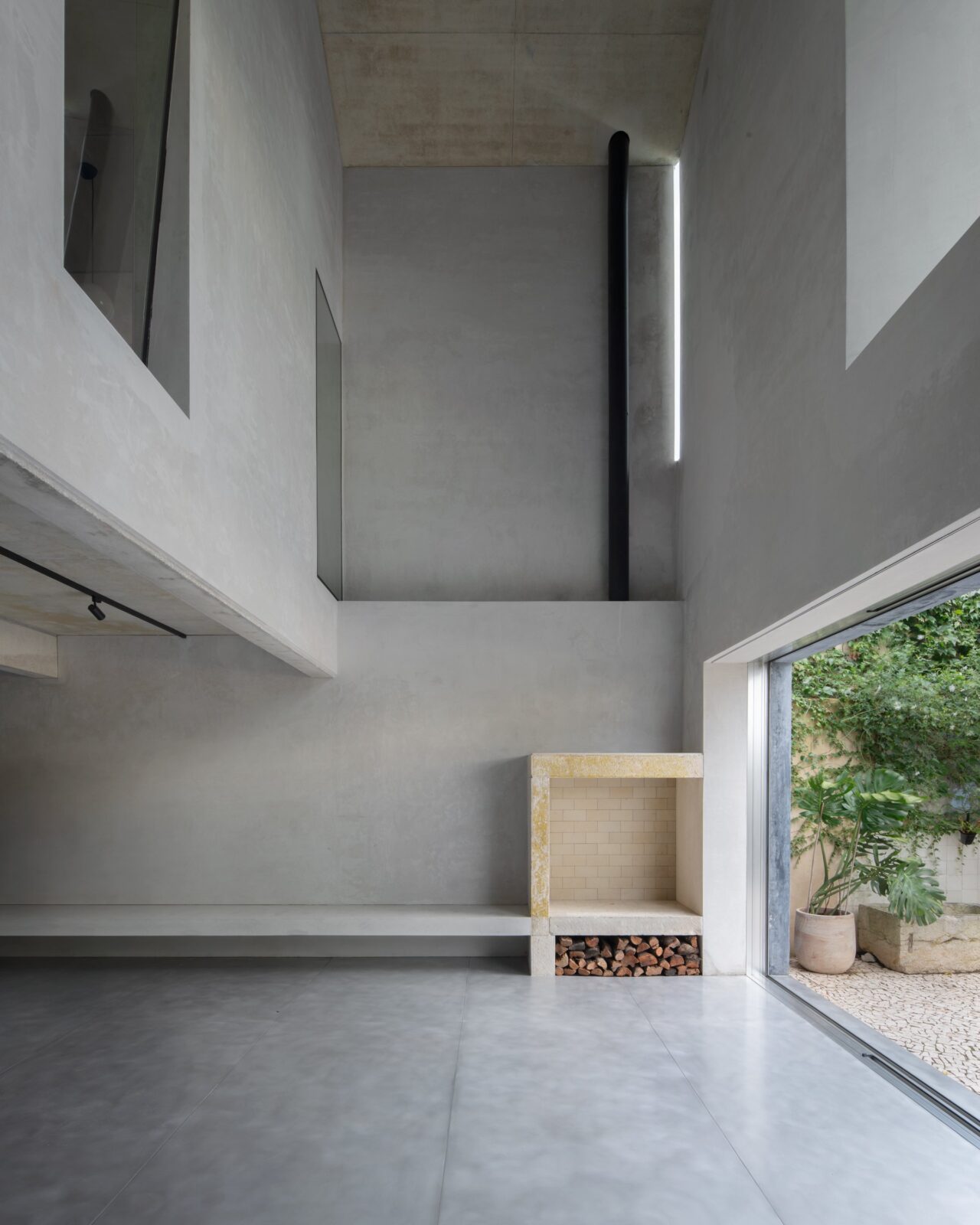
Our clients had two requests for the house: a generous, open, loft-like character and a garage integrated into the living room. While out of the ordinary, the last request was made so that it would be possible to work on cars or motorbikes without being separated from the family’s daily life.
Saving the character of a piece of history
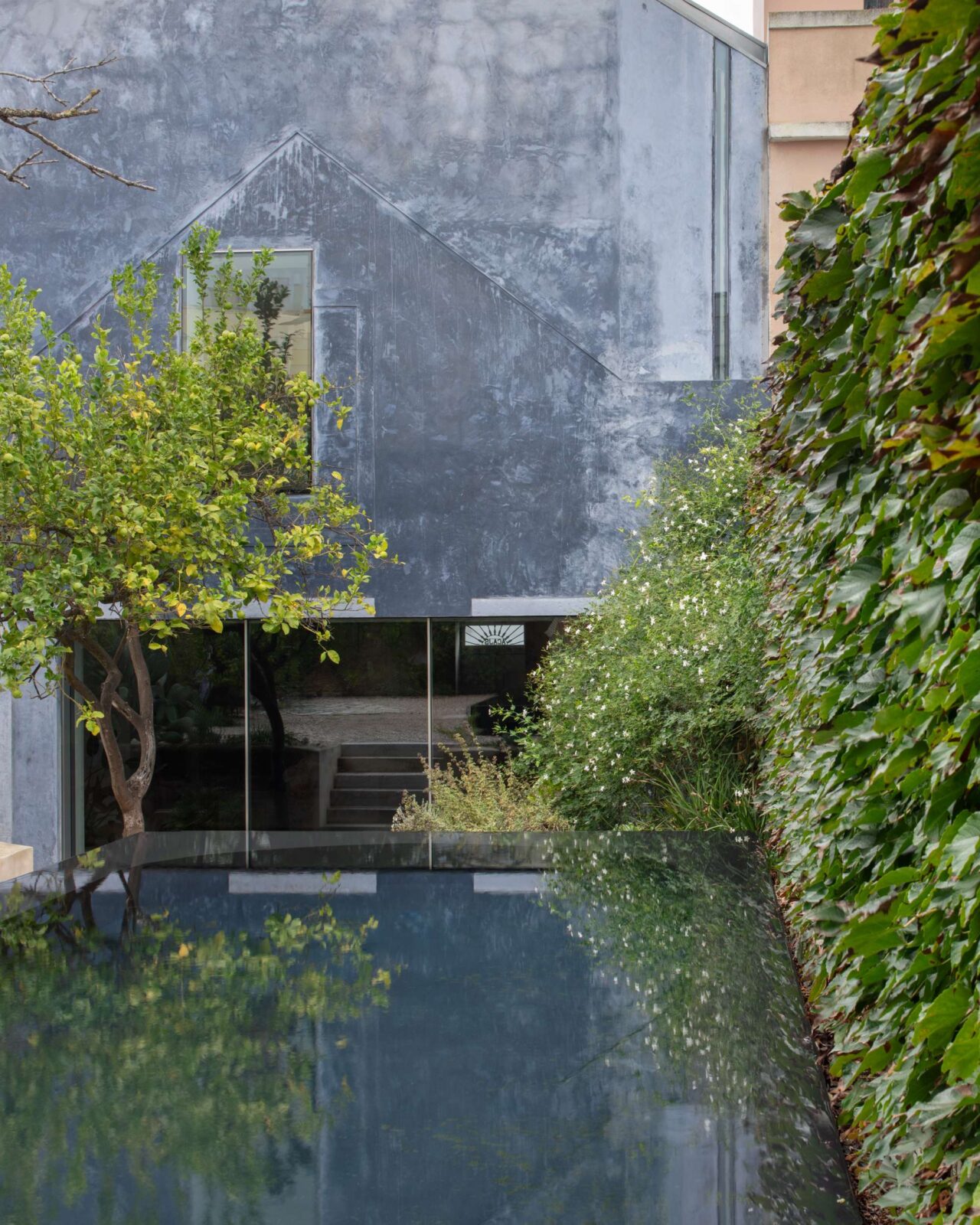
The old house was treated as an artefact with features worth saving, so the new extension affects only the interiors and the rear of the house, where it opens onto the garden. Likewise, architectural elements from the existing façades were removed, restored and incorporated into the current façades, so the different time periods are legible only in the building’s silhouette and the texture of materials. Despite the modesty of the existing house, the project embraces its imperfections as a register of the past, preserving traces of daily life that might otherwise have been lost.
The design elements that define the interior
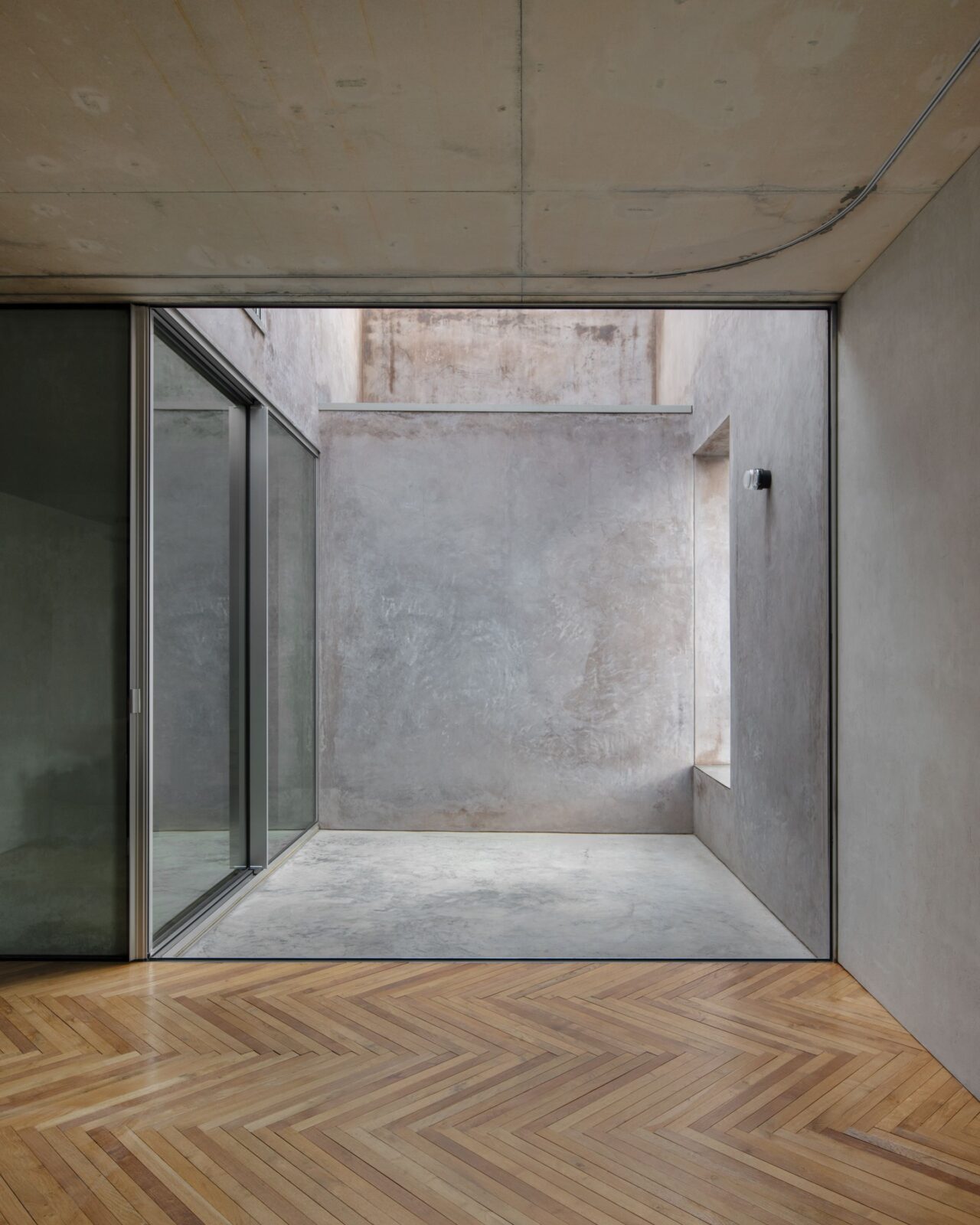
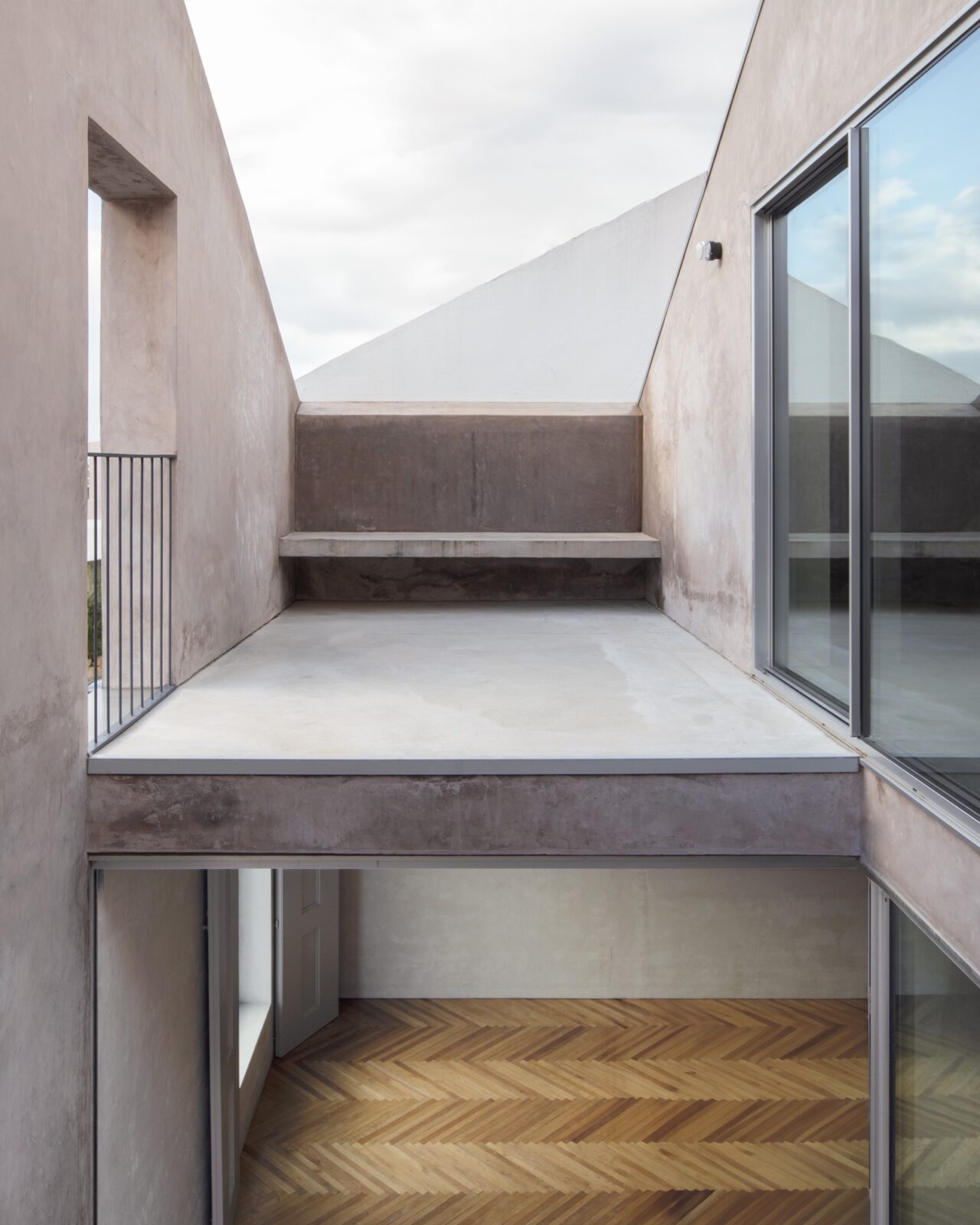
Two gestures shape how the residents live in the house: at the front, facing the street, a full-width cut creates a two-storey courtyard that brings shade and privacy to the bedrooms; at the back, a triple-height interior space opens towards the garden, revealing the full scale of the building.
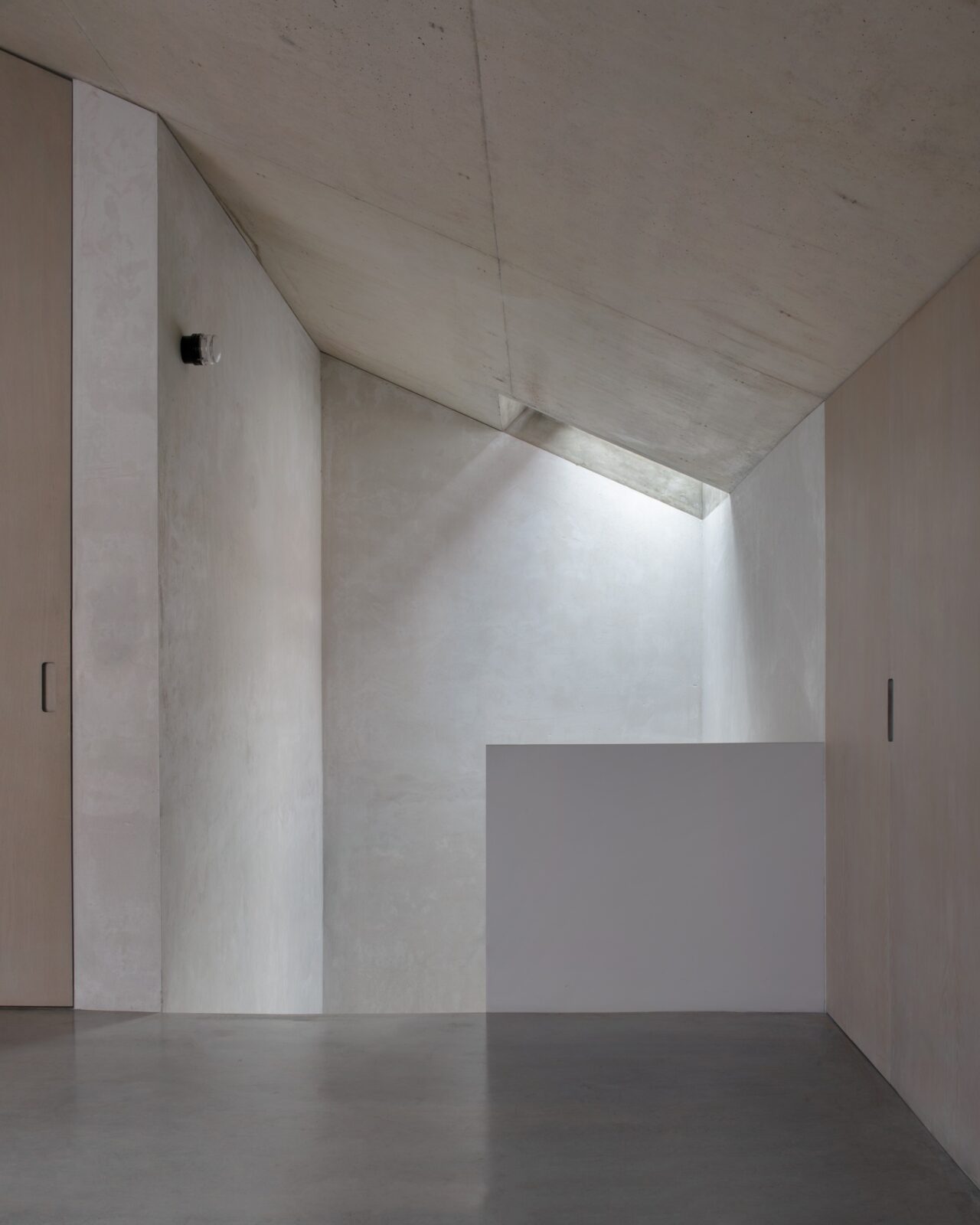
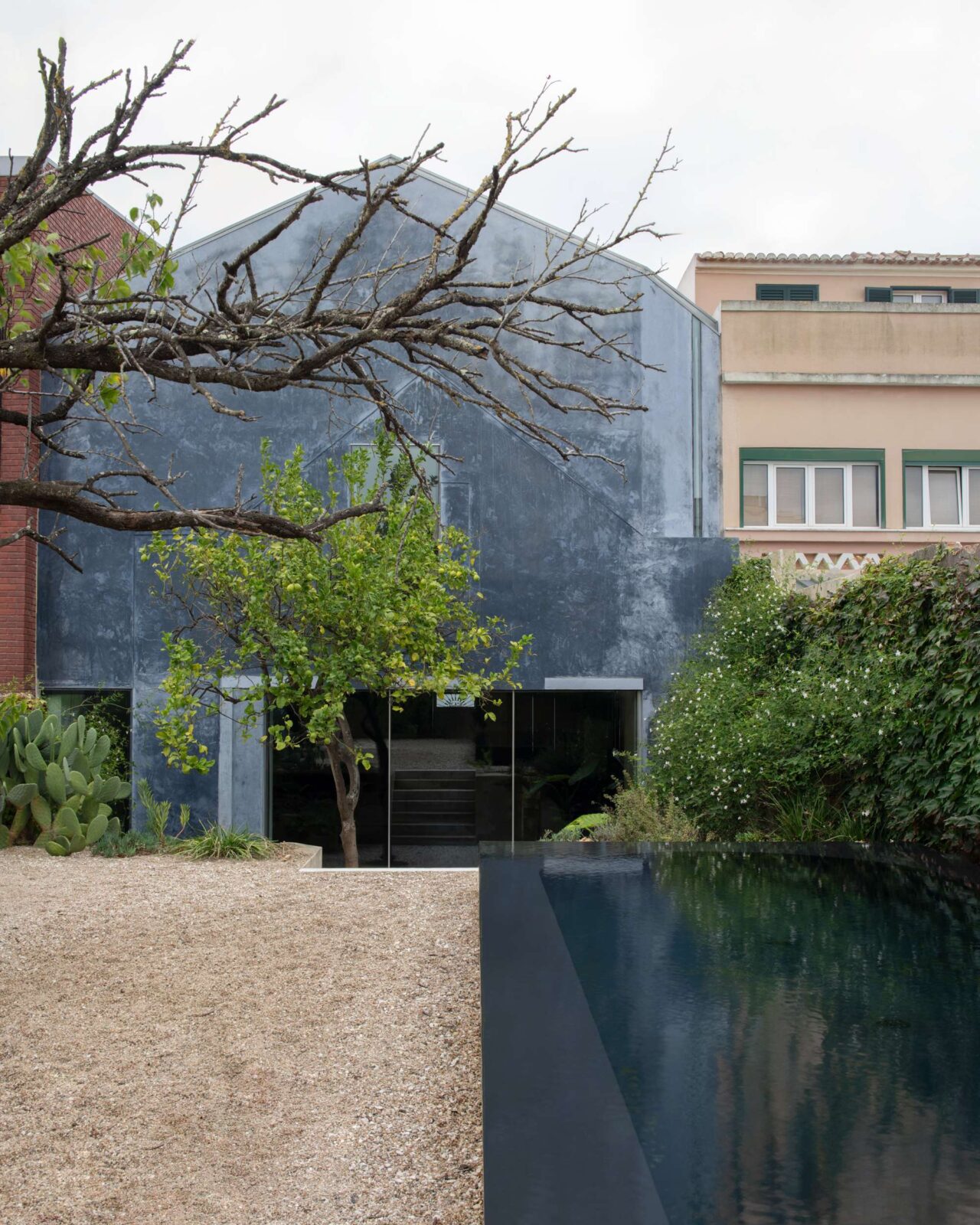
The rear façade is punctuated by windows and cut at one corner by a vertical strip of light, the result of a legal constraint that the team chose to incorporate into the design. This diagonal slice gives the façade its particular shape. As in Utzon’s Can Lis, built in 1972, a ray of light enters the space for a few minutes at the end of the day, slowly moving across the interior.
Character and personalisation
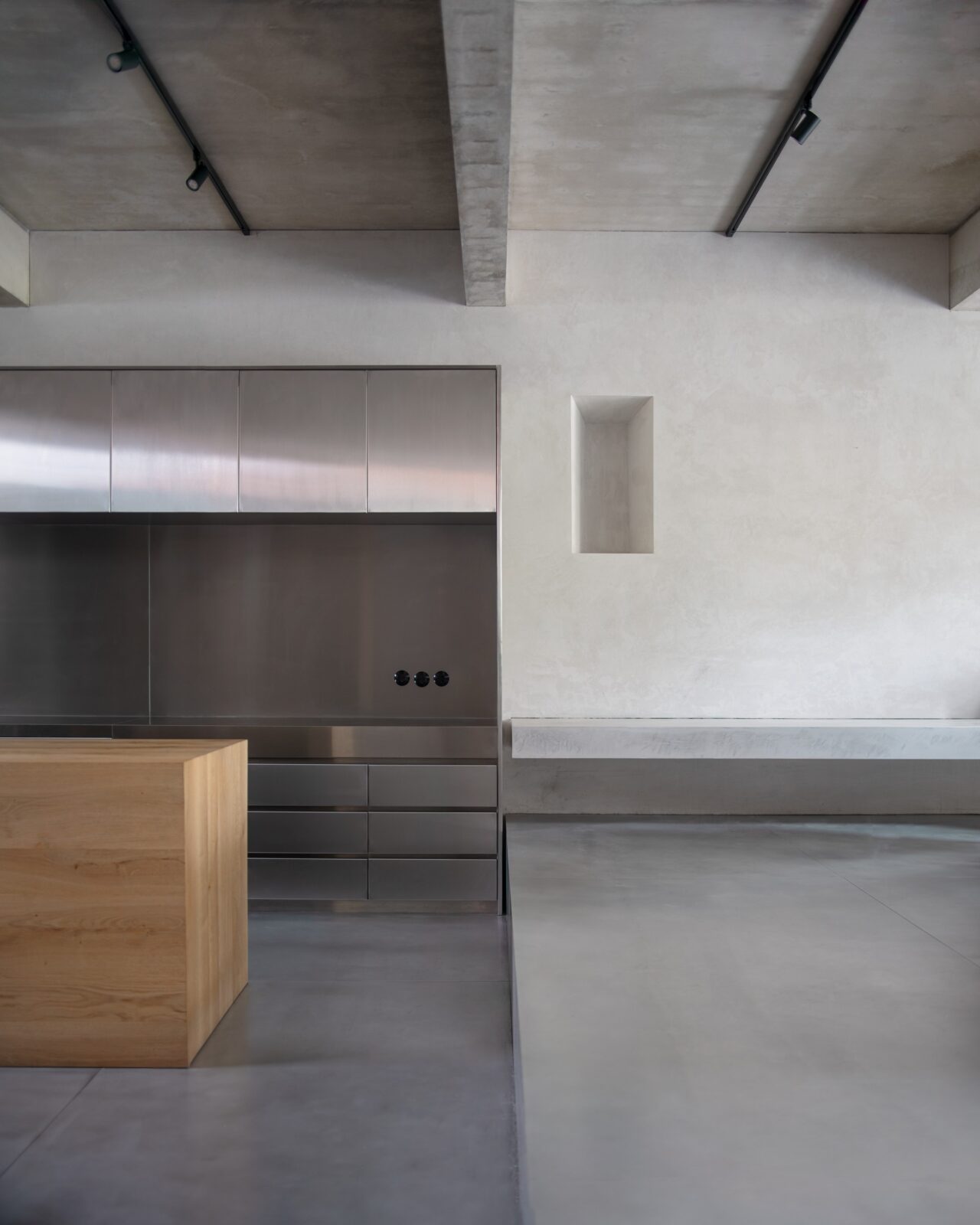
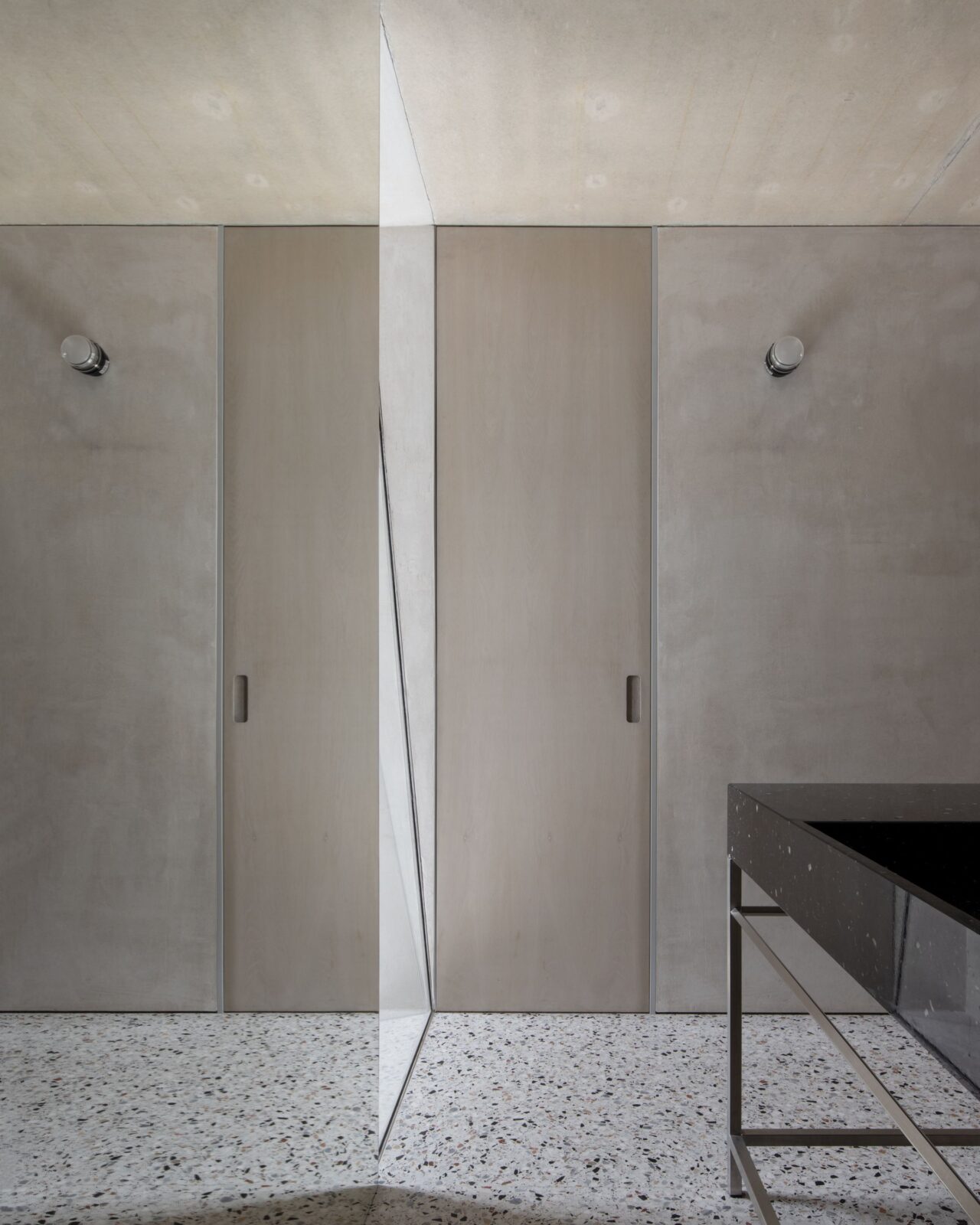
Once the design concept was defined, decisions about finishes, textures and colours were left open, to be made on site with the craftsmen and clients. Their knowledge and choices became part of the work, giving the building a handmade, tactile quality that is both rough and precise.
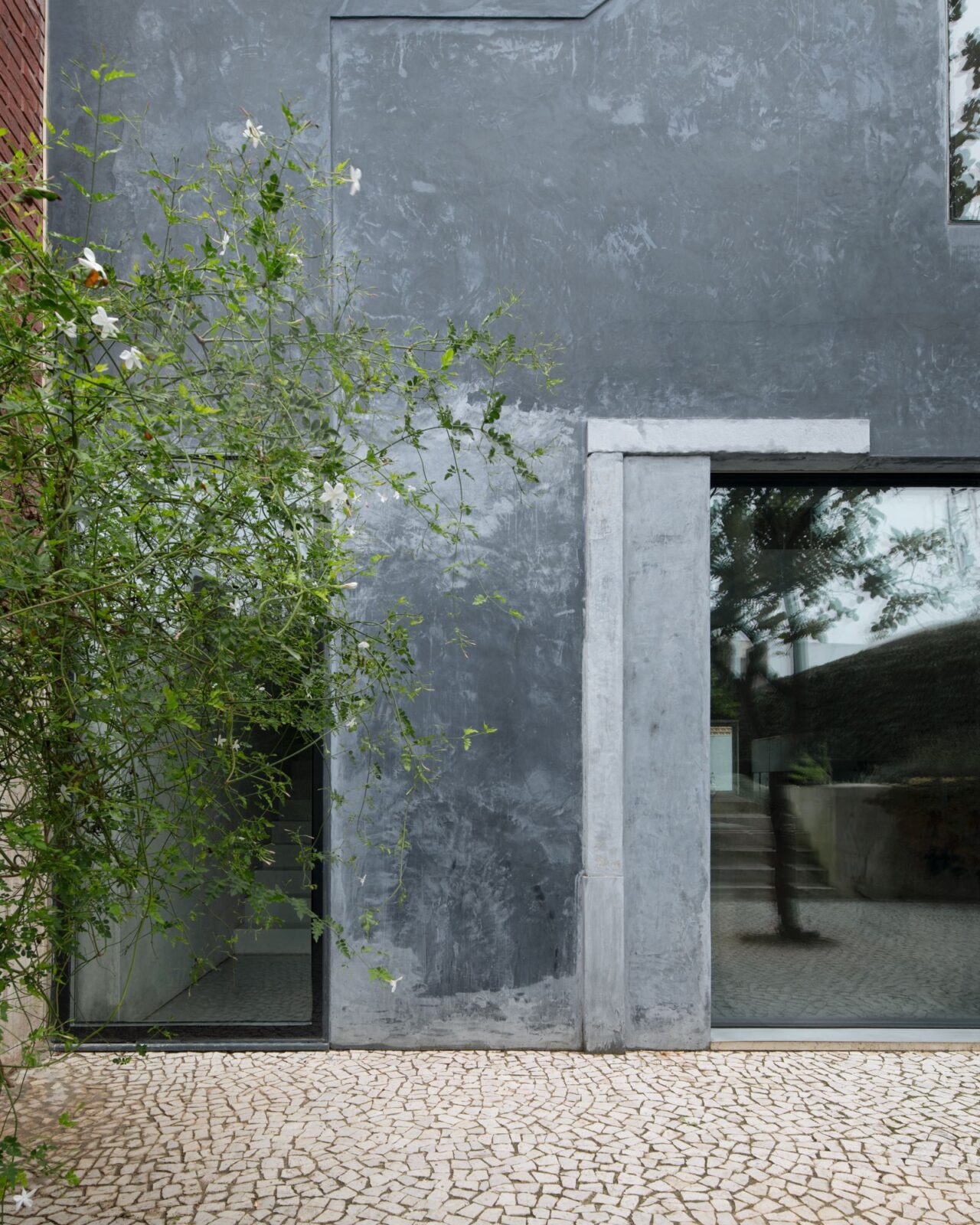
The team was also able to cover the entire ground floor with aluminium sheeting, hand-brushed by one of the craftsmen. Its surface has a leather-like quality: natural, soft and luminous. The internal walls were left bare, covered only with a grey plaster scratch coat, close to what Jannis Kounellis called the colour of our time. This grey was found in a plaster already on site, offering an economical way to bring the different elements together while discreetly linking the house to Marvila’s past.
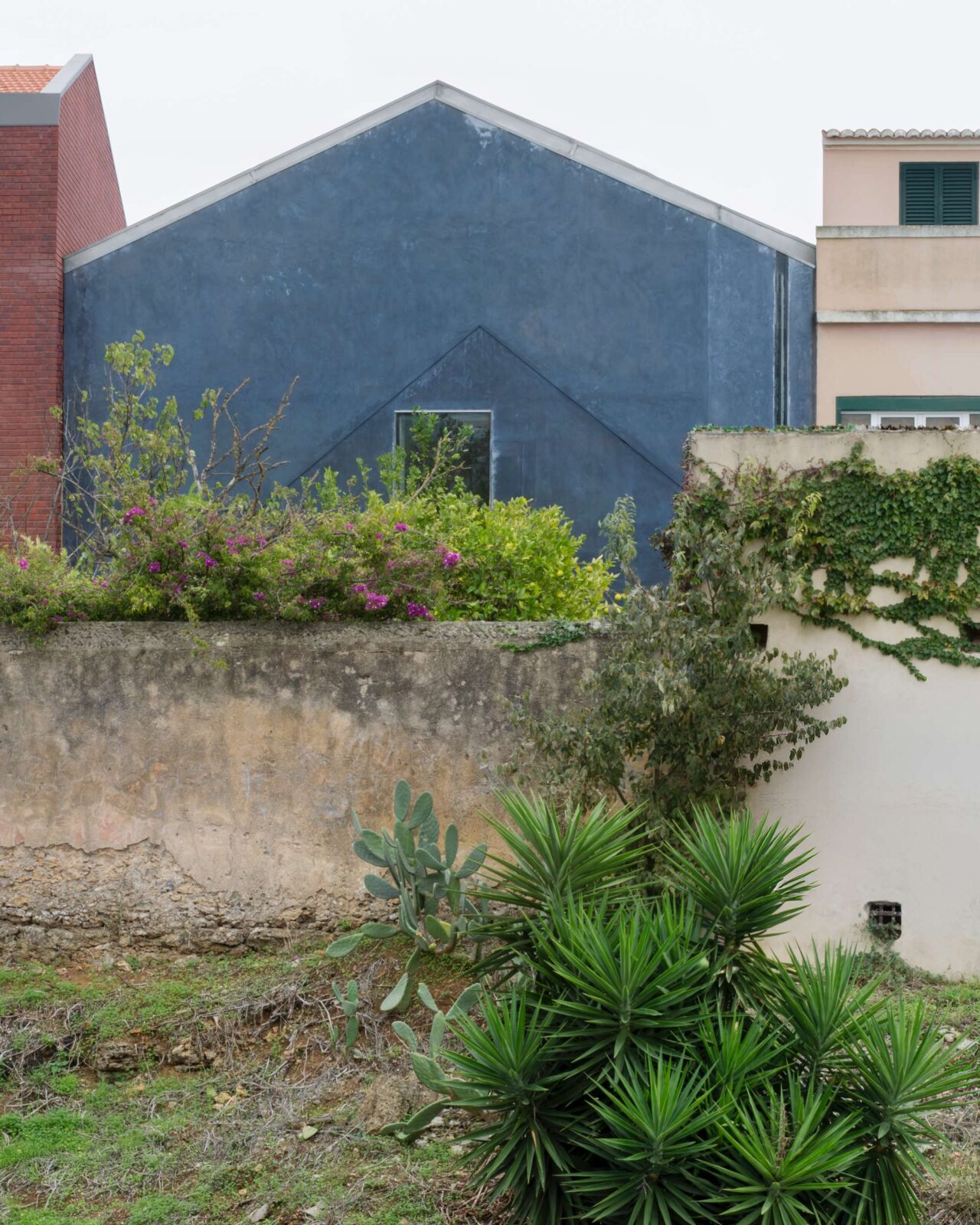
Ultramarine blue, a historical artificial colour that defines the house, was found in the existing building and transported into the final result. Because blue is an unstable pigment, each façade had to be finished in a single day, without seams or repairs, in a Sisyphean process. This blue layer gives the house an ambiguous appearance, more old than new.
As the musician Hermeto Pascoal once observed: “We did it on the spot, right there on the site. We arrived, and they were playing.”
Project information
Architecture company: extrastudio
Design Team: João Caldeira Ferrão, João Costa Ribeiro, Sónia Oliveira, Rita Rodrigues, Marta Oliveira, Martim Mota
Landscape architecture: Oficina dos Jardins
Consultants: Pedro Viegas (structural design), Sandra Mota (hydraulics), Blueorizon (gas, building physics, acoustics, electrical, security)
Construction company: Vassalo & Sousa
Client: Patrícia Dias, Artur Portugal
Location: Lisbon, Portugal