



Header: Courtesy of ZHA
Tirana is changing fast. Albania’s capital, now home to nearly one million people, is moving quickly toward European Union membership, driving a buzzing economy alongside its famous colourful buildings and café culture. To meet the changing needs of the city, Zaha Hadid Architects (ZHA) has designed two new developments, The Nest and Cascades, in the southern hillside district of Kodra e Diellit. Commissioned by local developer Agikons, these projects introduce new housing options for young professionals, couples, and retirees who want to live in this active, well-connected neighbourhood without the maintenance of a massive family villa.
Data-driven architecture shaped by the elements
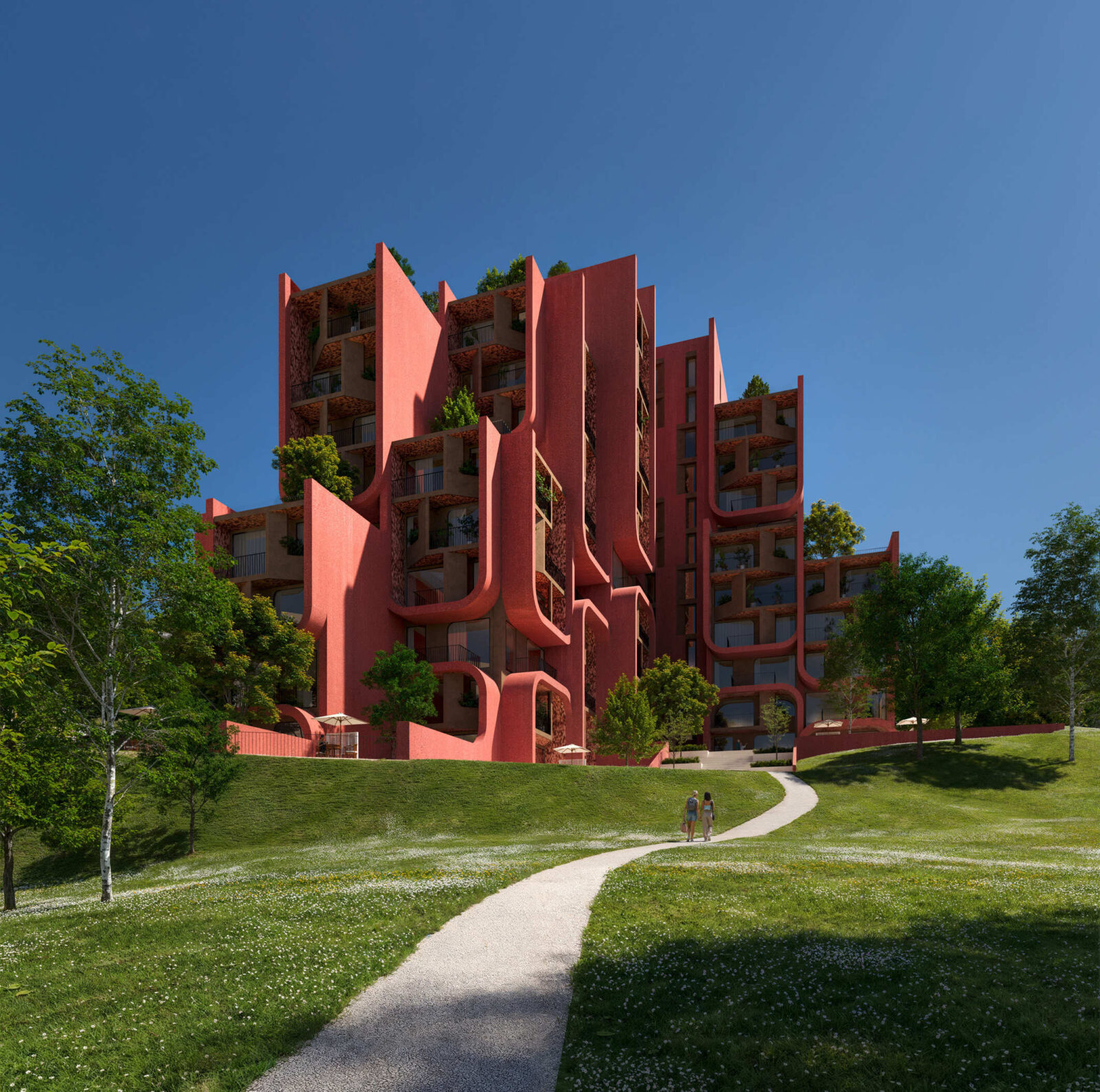
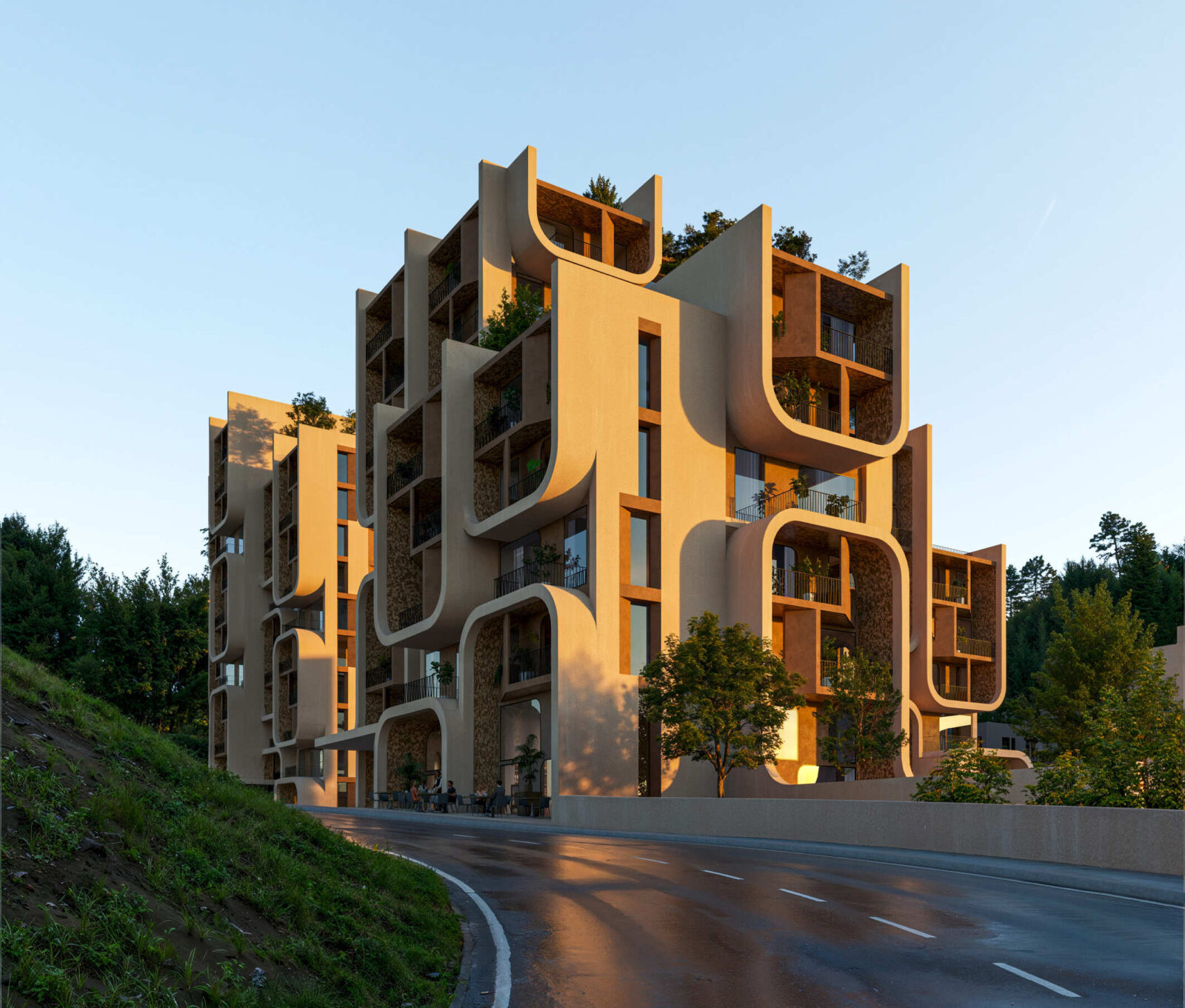
The Nest consists of four buildings arranged around a central park. Instead of imposing a generic shape onto the land, ZHA used digital mapping to study local terrain, sunlight, temperature, wind patterns, and rain. The resulting architecture works as a natural cooling and heating system.
Deep window reveals, overhanging balconies, and recessed terraces block the intense summer sun while letting the lower winter light deep inside, illuminating 95.3% of the living spaces. The exterior walls are angled to catch easterly winds, pulling fresh air through the apartments to lower the need for air conditioning.
Low-carbon materials and circular water systems
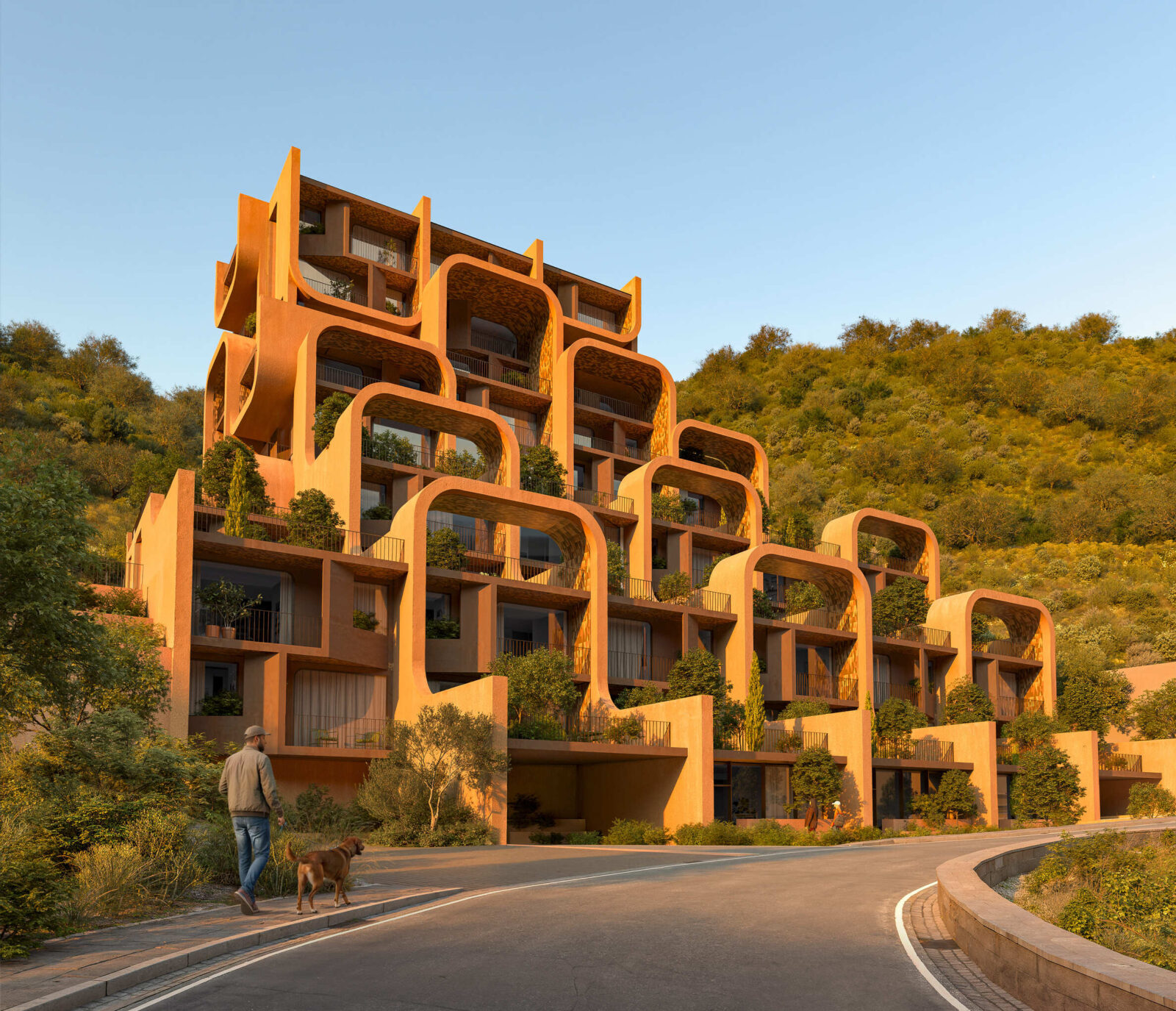
The construction choices for The Nest reduce environmental impact from the start. A full life-cycle review shows that the project uses 471 kg of carbon per square metre, well below the regional standard of 566 kg. ZHA achieved this by using modular parts, recycled concrete mixes, and terracotta panels instead of heavy glass walls. The buildings mirror the colours of the earth around them, using fawn tones, terracotta, and a deep red plaster that matches the iron-rich soil of the hillside.
Outside, more than half of the site is given over to green space. The central park acts as a natural cooler, with trees and plants creating shaded areas that stay up to 16°C cooler than the concrete paths. The grounds feature bright, heat-reflecting surfaces and local plants that handle rainwater naturally. The entire complex runs a closed water loop, collecting rain for the gardens and treating greywater on-site, while solar panels on the roofs generate clean electricity.
Cascades: A hillside extension of stone and light
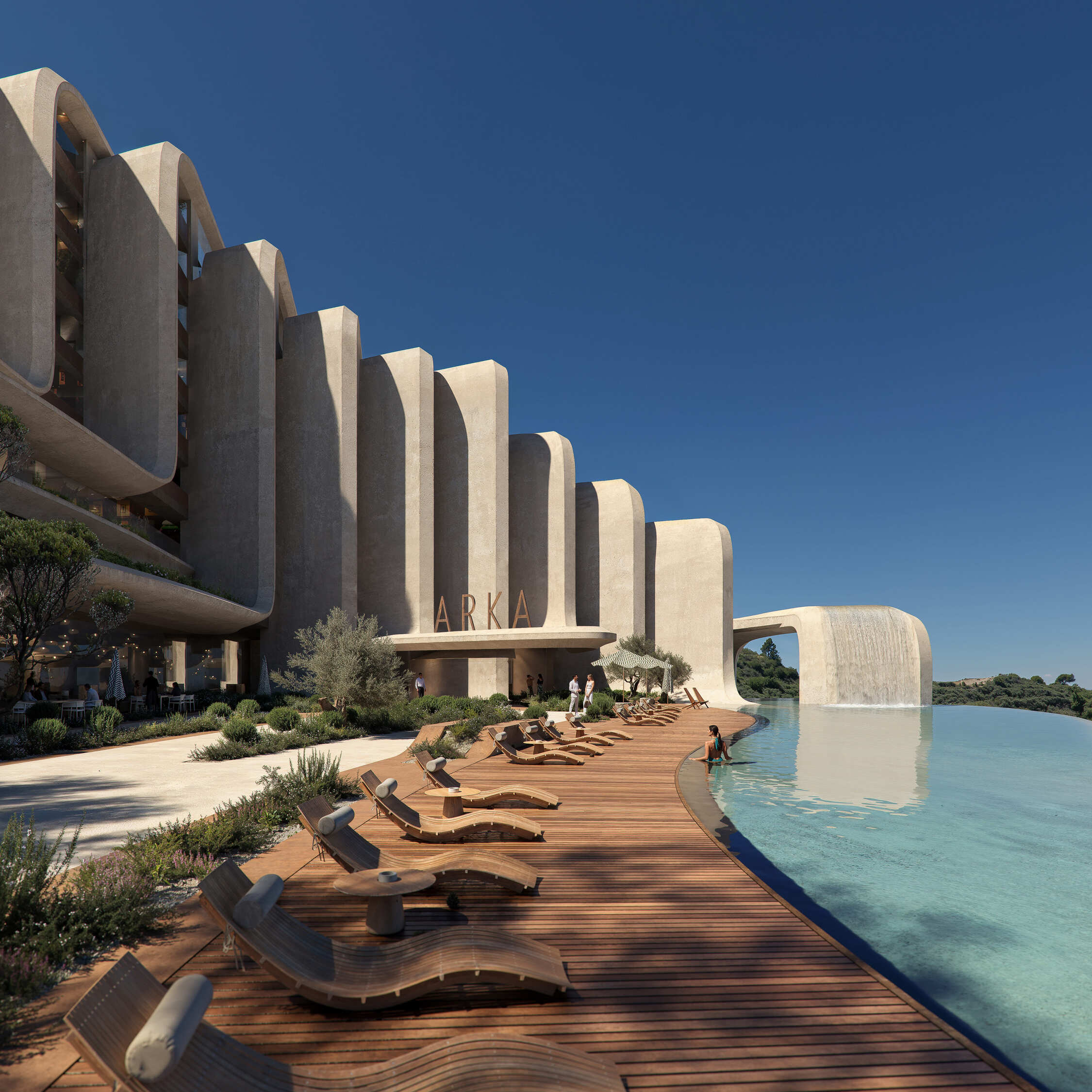
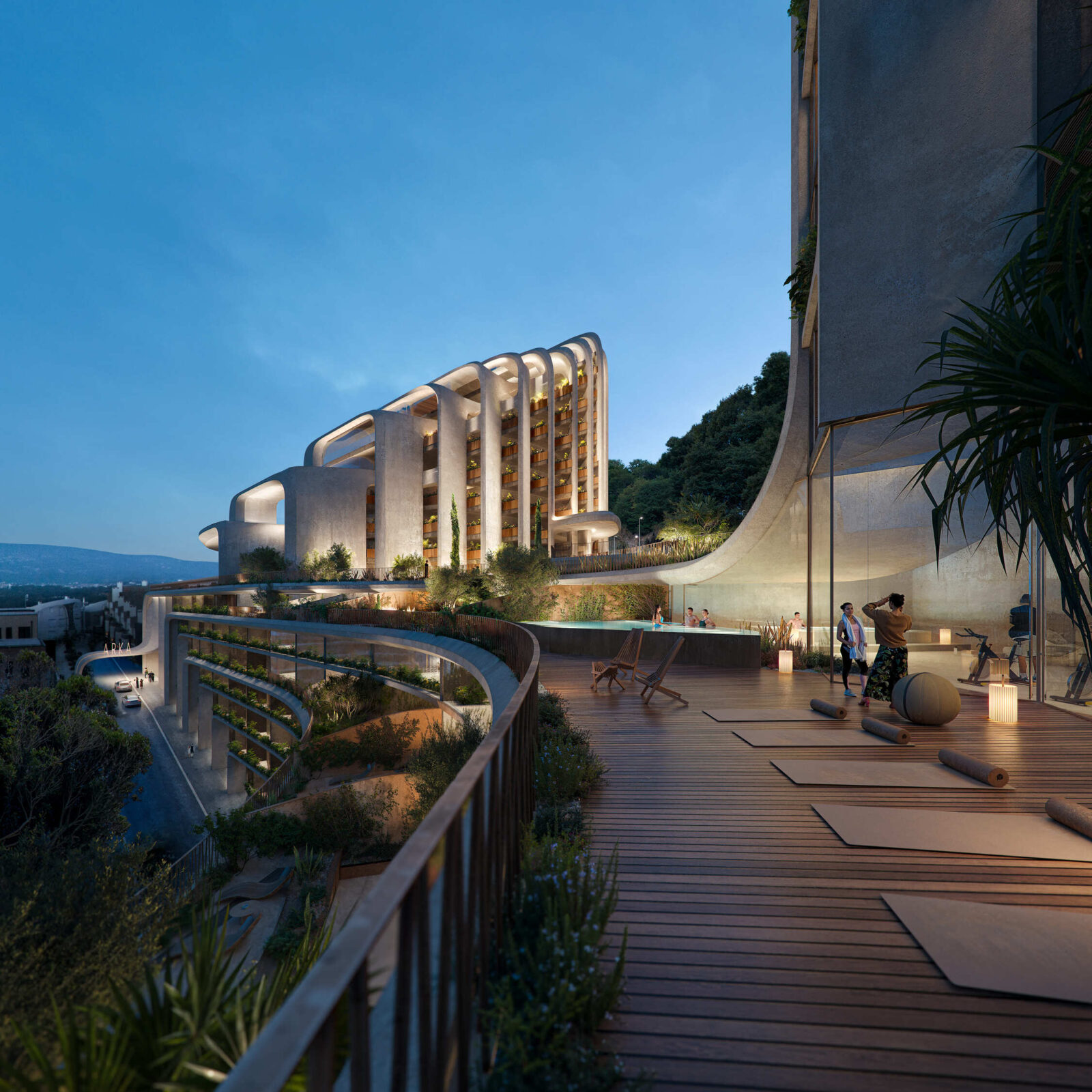
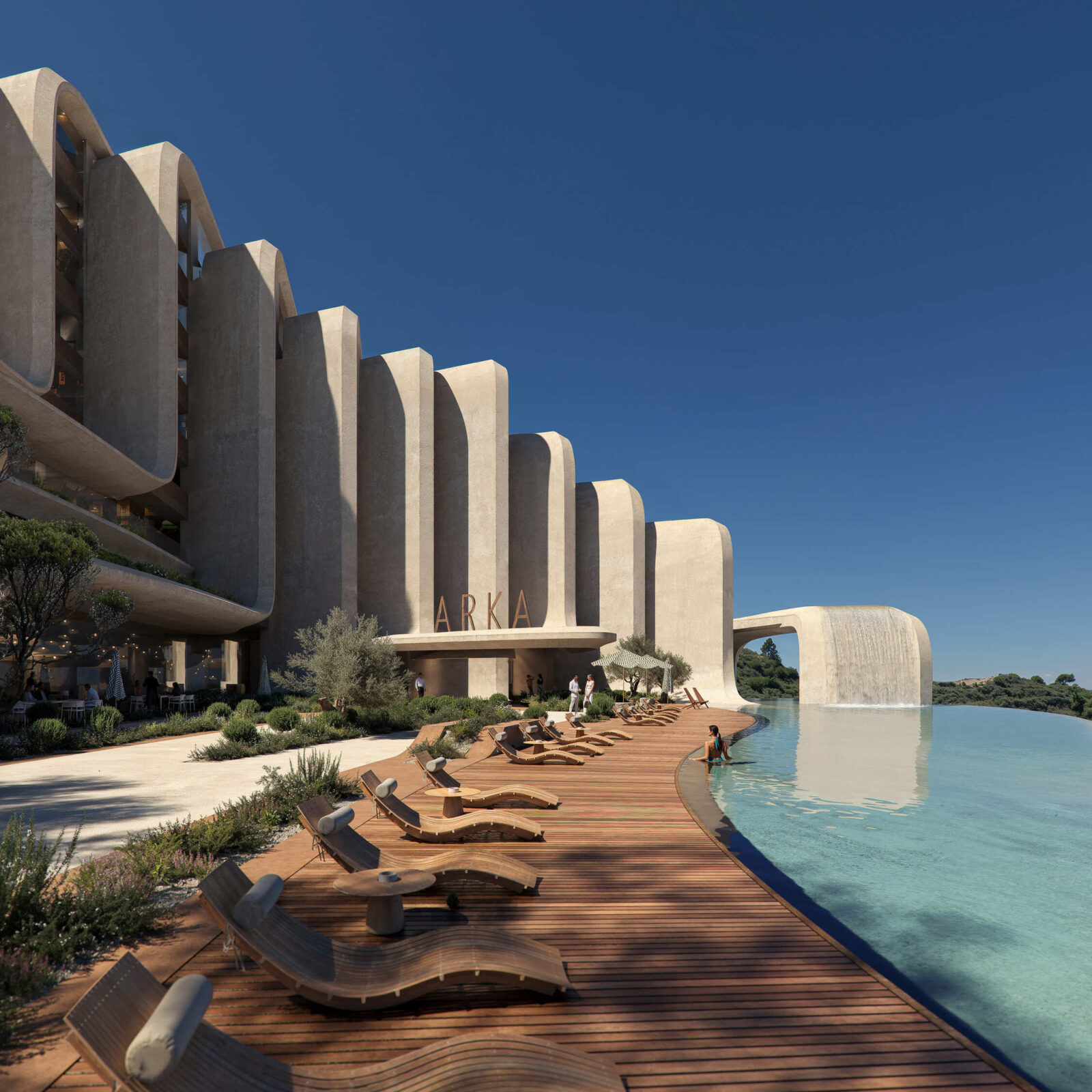
Nearby, the Cascades project expands the existing Arka Art Hotel. It adds a 120-room hotel wing, a 60-metre pool extension, and a collection of apartments sitting above a stone base built into the hill. The design follows the natural slope of the land with stepped garden terraces that open up views of the valley below. Two central courtyards create distinct outdoor areas: one connects directly to the hotel restaurant and pool, while the other offers a quiet, terraced garden looking out over Tirana.
The building sits on a base made from local limestone, and the upper walls use glass-reinforced concrete (GRC) panels that match the texture and colour of the region’s stone. These thin, lightweight panels reduced the raw materials needed by 70% and cut down transport distances because workers cast them on-site. The light shade of the panels reflects heat, while deep terraces protect the glass from the sun.
Sourcing interior materials from the landscape
Inside the Cascades, the focus on local resources continues. The walls are finished with lime-based plaster that regulates indoor humidity without synthetic paints, and the floors are made from durable, sustainably sourced chestnut wood. The balcony railings are cast in bronze, a material that lasts for decades without needing chemical coatings. Combined with green roofs, heat-recovery ventilation, and rainwater recycling, the building is built to last with minimal upkeep.
Architecture for a changing city
True architectural progress is not about planting a rigid shape onto a landscape, but rather listening to the specific forces of the wind, the sun, and the community. By trading high-carbon glass towers for local limestone, earth-toned terracotta, and climate-smart concrete, these projects show how growing cities can expand responsibly. As Tirana steps into its next economic chapter, this hillside development offers a practical blueprint for housing that values local resources, changes alongside the needs of its people, and respects the natural boundaries of the environment.

