



Header: French + Tye
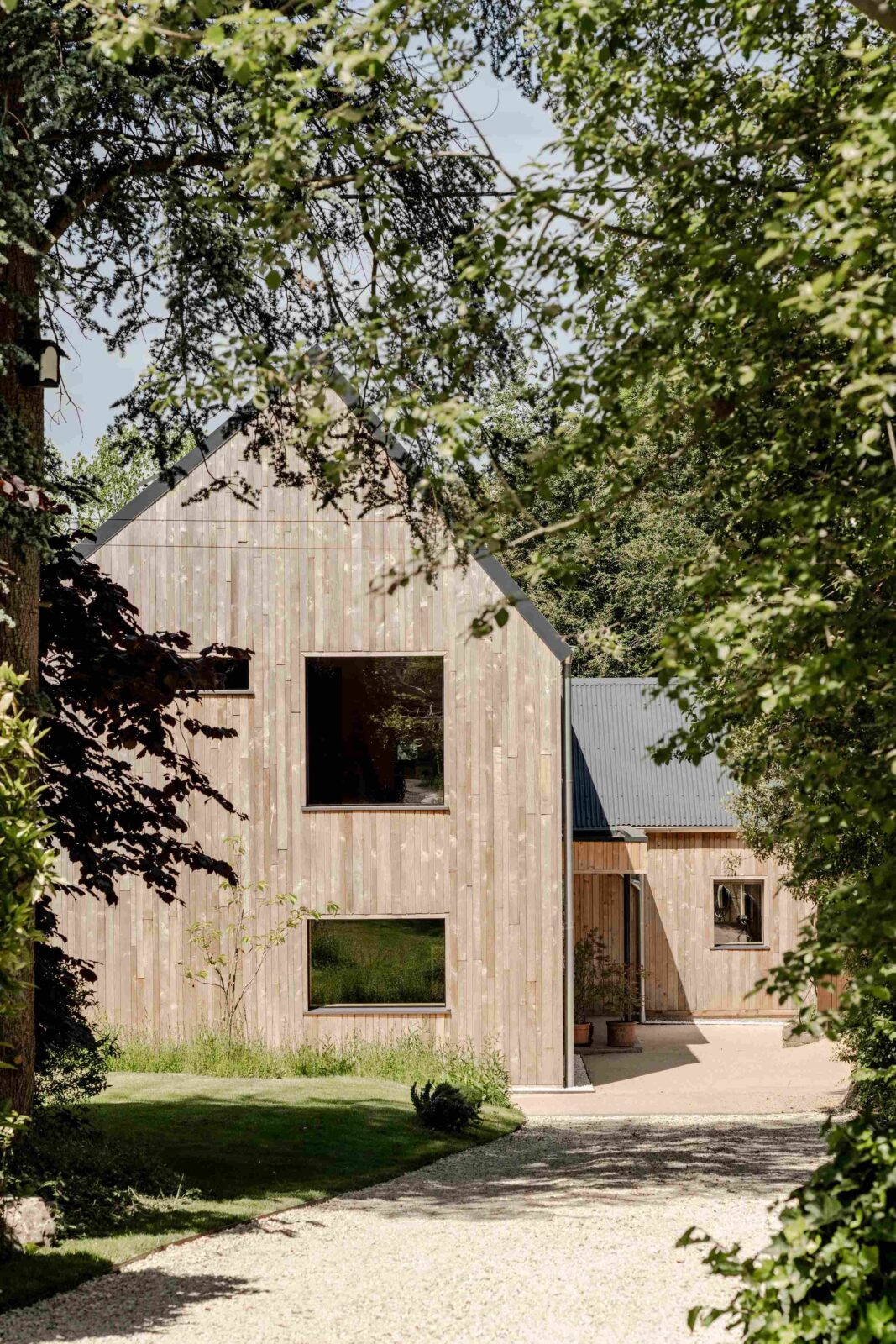
The Old Orchard is a retrofit of an existing bungalow in West Oxfordshire by Gresford Architects, which was originally built in the 1960s, then extended and remodelled in the 1980s. The house is located in the countryside and feels secluded, as no roads pass directly next to it, a detail complemented by the views towards the Thames Valley. Now, it was altered for Tom Gresford, principal architect of Gresford Architects, and his family.
Attempting to be as carbon-neutral as possible
The family had been looking for a countryside property after COVID-19, and the house was chosen partly because of its potential to be brought close to carbon-neutral operation. The building was in good condition, but its internal layout no longer suited contemporary family life. The work was, therefore, both spatial and environmental: the floor area was increased, the interior was reorganised and the external walls, roof and insulation were upgraded, all without expanding the existing footprint or replacing the foundations.
The house is a certified EnerPHIT retrofit, the Passivhaus standard for existing buildings, which means that new material was kept to a minimum. As much of the existing structure as possible was retained, especially the parts with high embodied carbon, such as screeds, blockwork walls, concrete lintels and other heavy elements. The retrofit, therefore, cuts energy use while avoiding the carbon cost of unnecessary replacement work.
Structural changes and additions
The main new addition is on the first-floor level, where a section of the original roof was removed and substituted by a timber-framed upper extension. The extension follows the cruciform plan already present on the site and uses the original walls and foundations below. By adding upwards rather than outwards, the studio increased the usable area without taking more space.
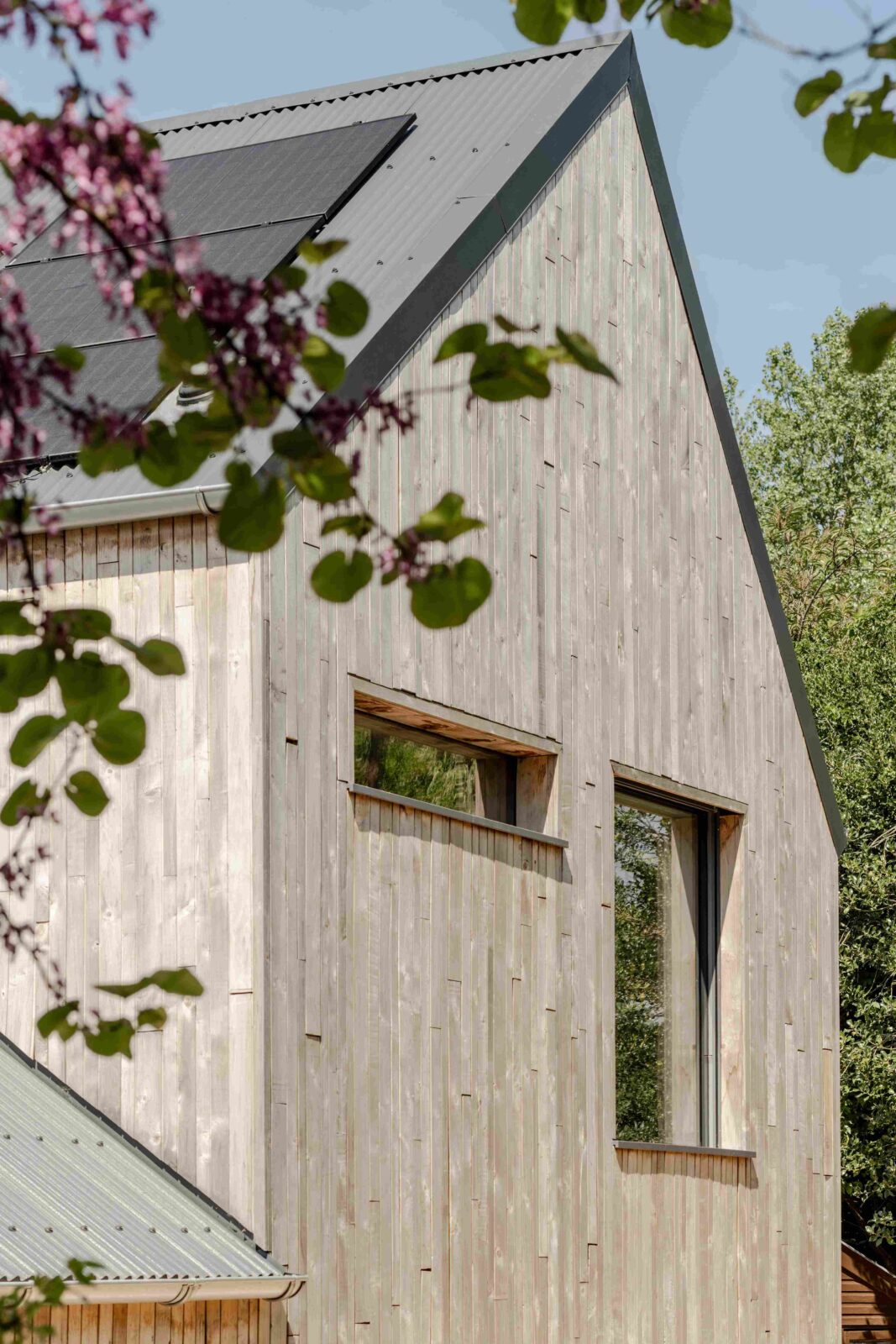
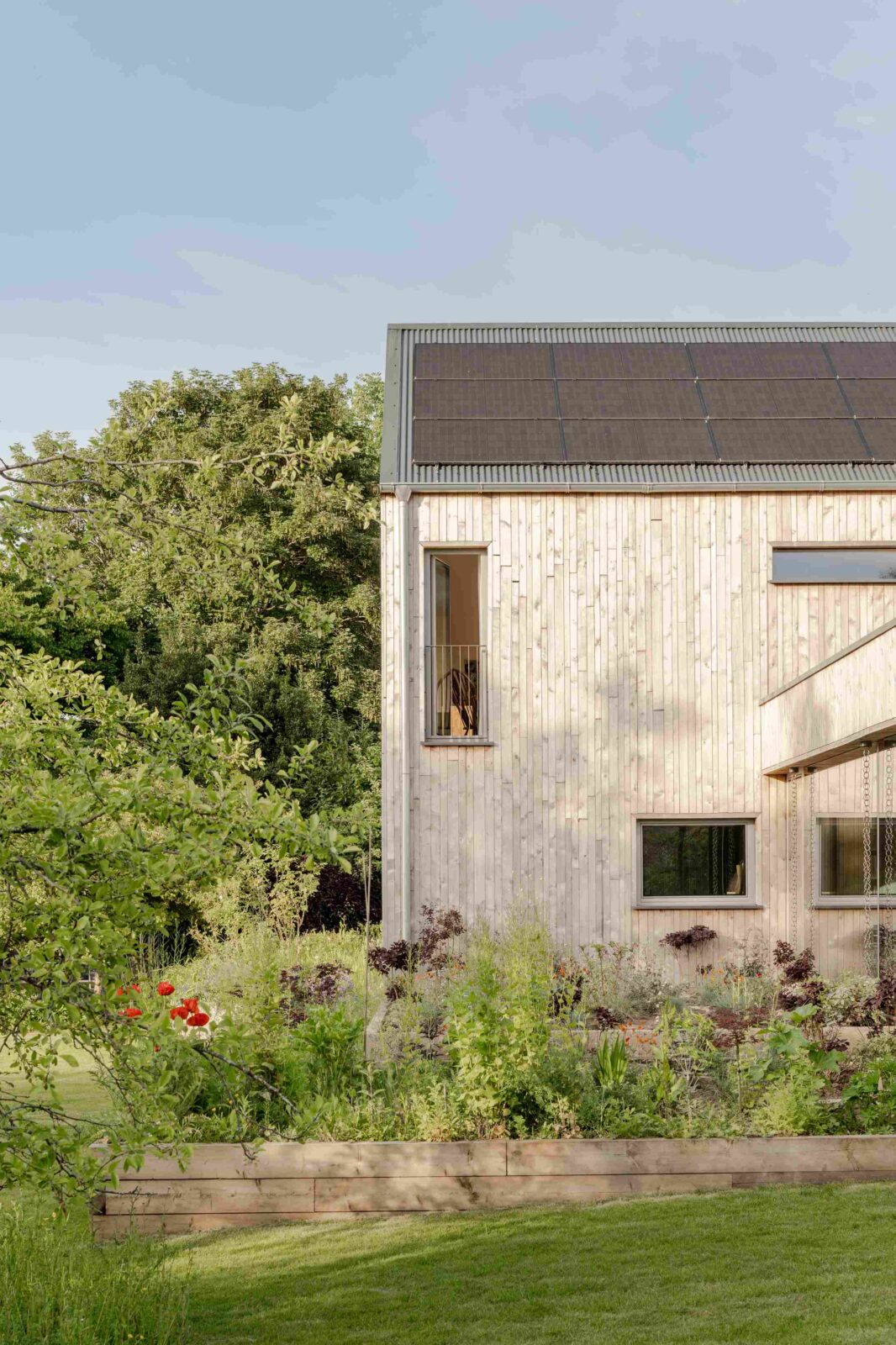
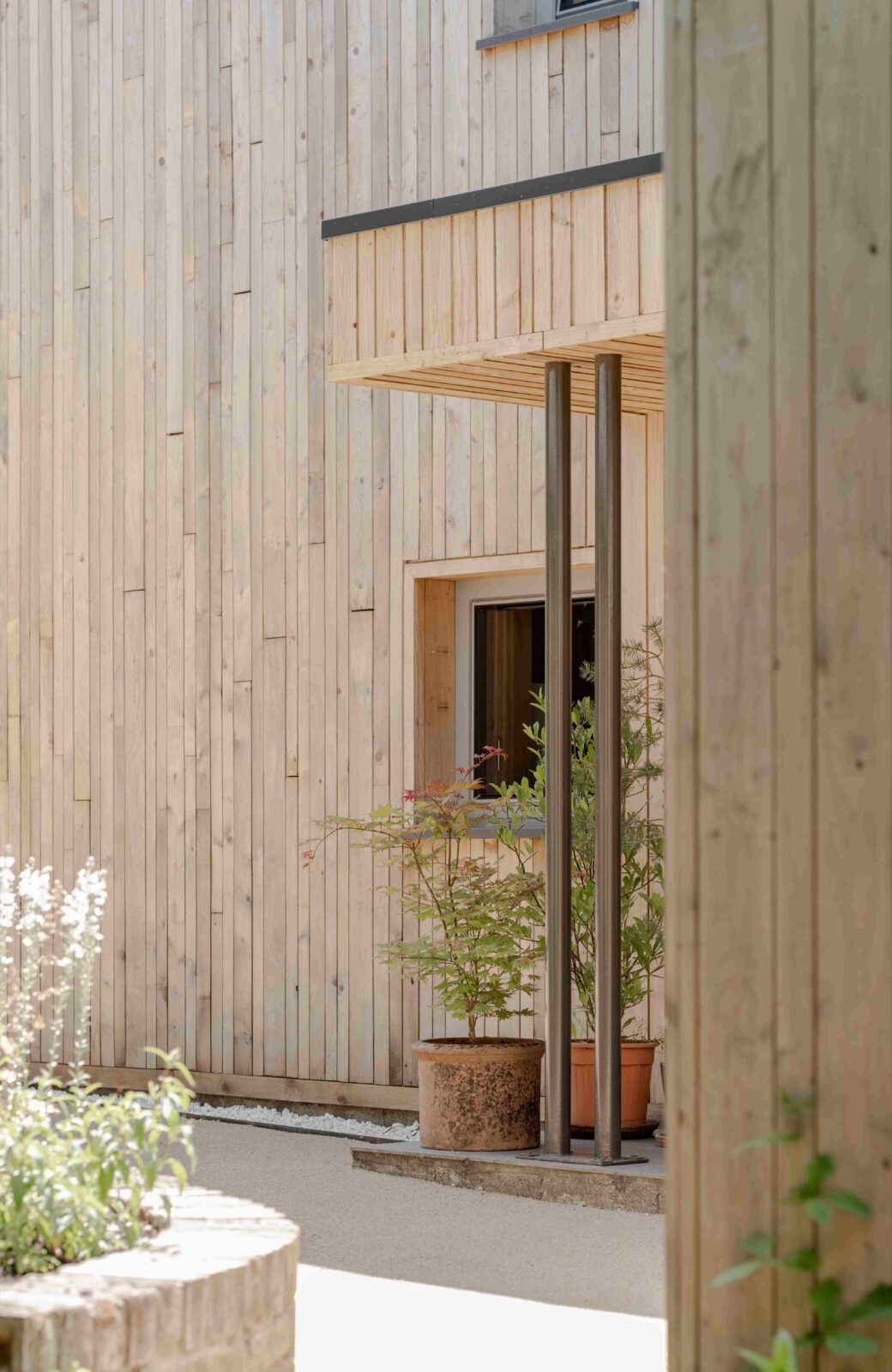
Externally, the old and new parts of the house received a new layer of insulation and cladding. External insulation was added to improve the U-values, followed by western red cedar cladding from trees grown on the site. They were felled and machined at the start of the work, then left to dry naturally in the garage before being fixed to the house.
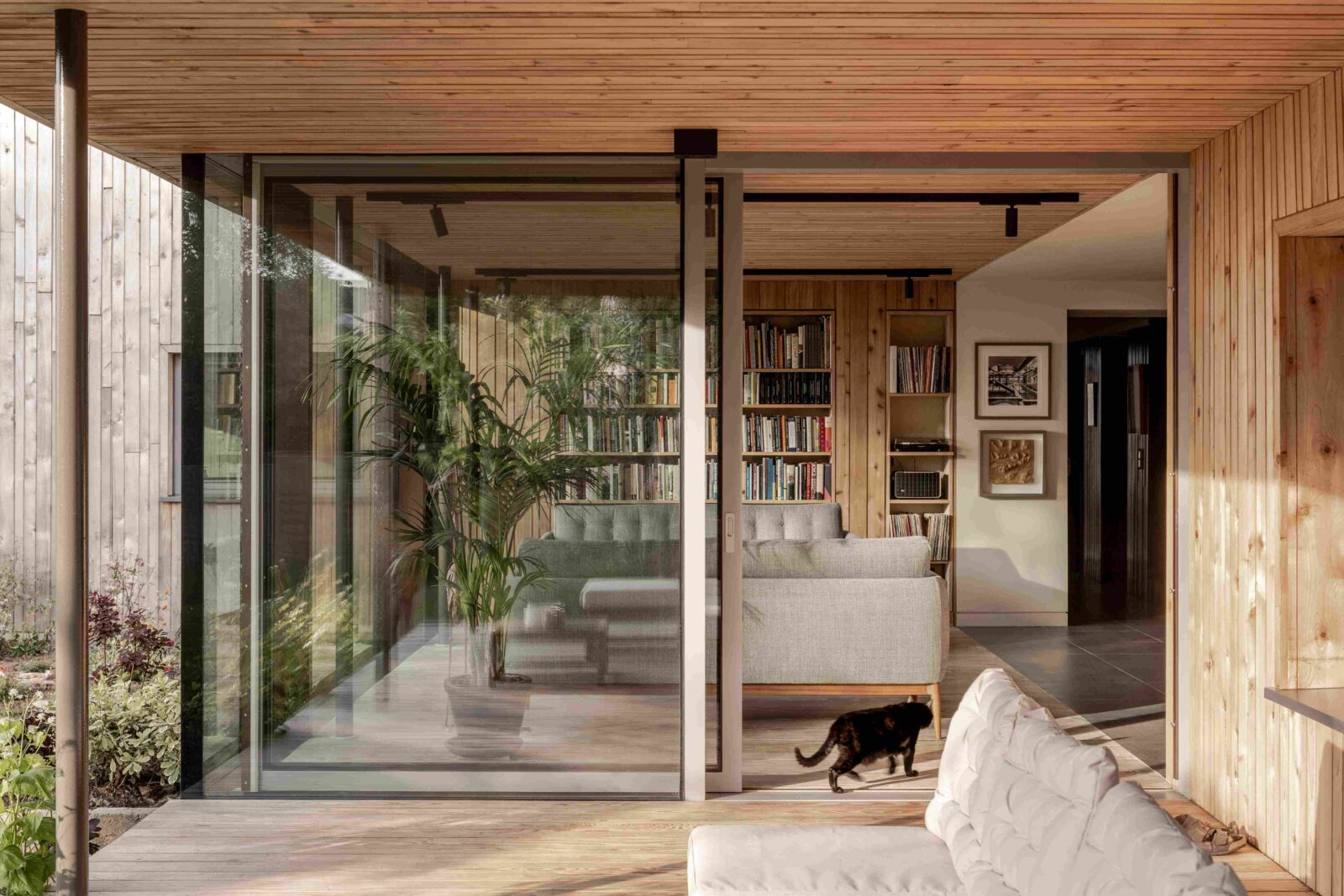
The roof is finished in powder-coated corrugated steel, a material often seen on nearby agricultural buildings. Its shape and finish are connected with the clients’ Australian background, along with the timber and the covered verandah. Above the cedar-clad walls, the steel roof gives the extension a plainer, more practical finish. The environmental upgrade means the house is able to run without a separate heating system. As some extra support, an energy-efficient MVHR system was installed to supply and extract air when the doors are closed, alongside solar panels and an air-source heat pump.
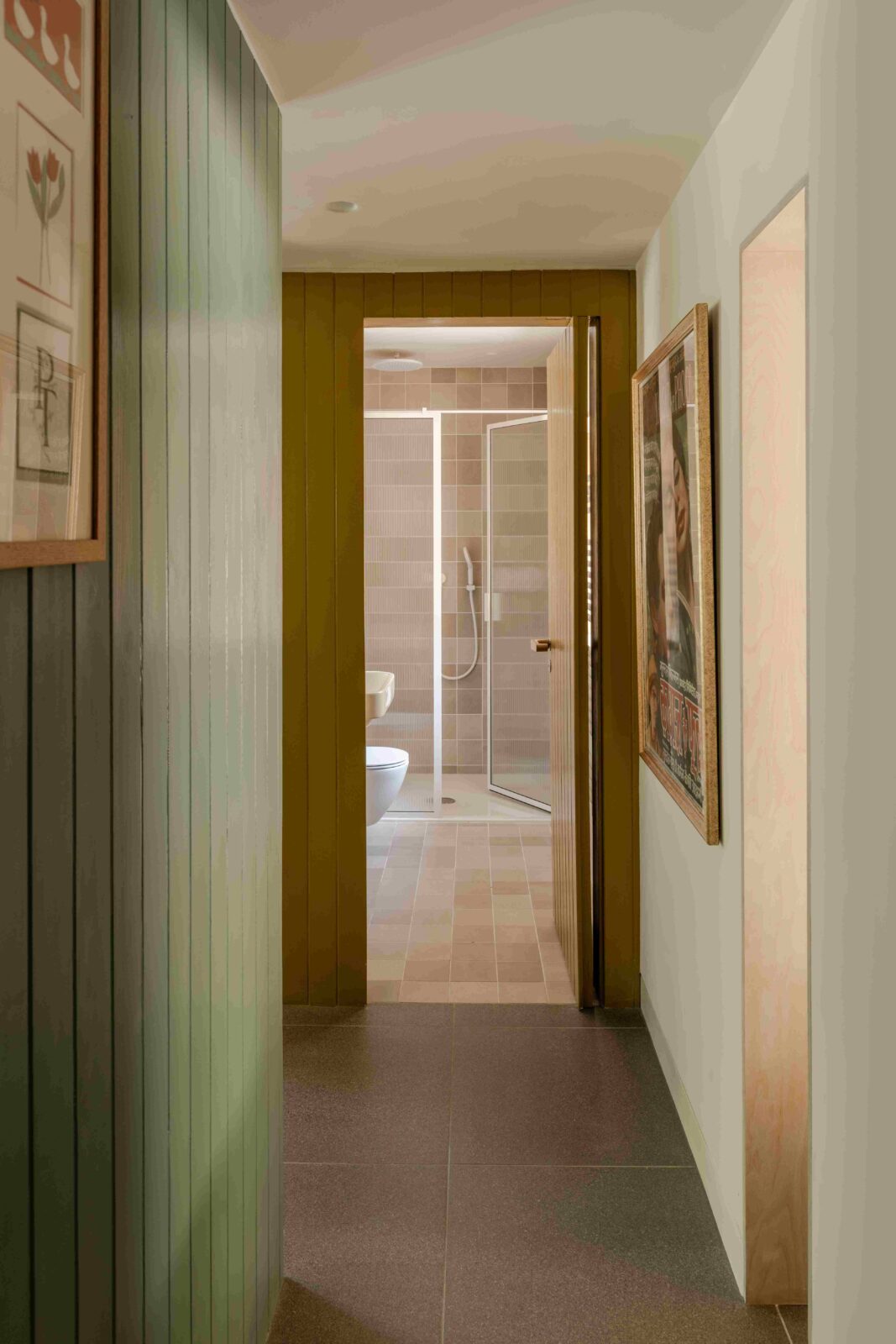
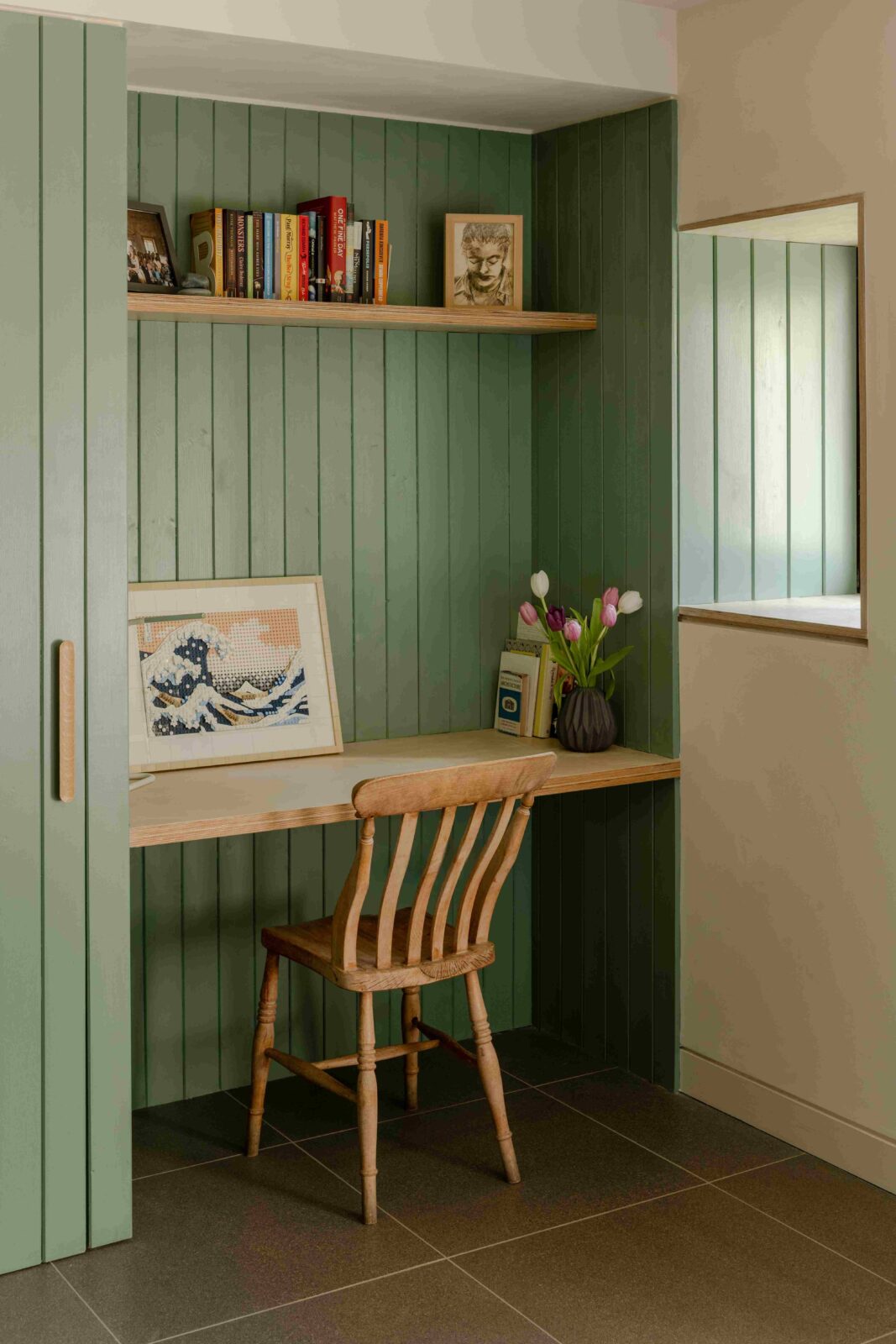
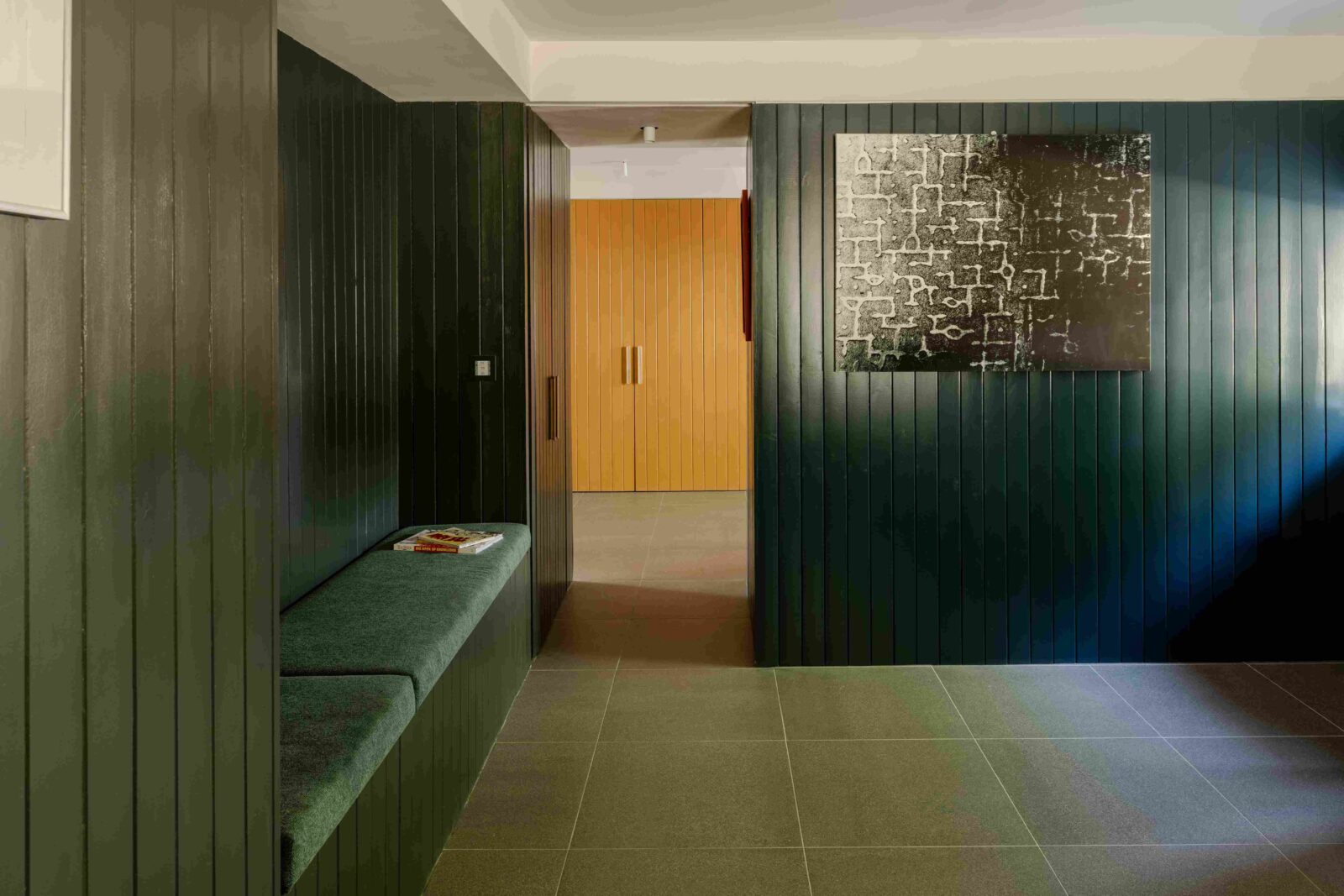
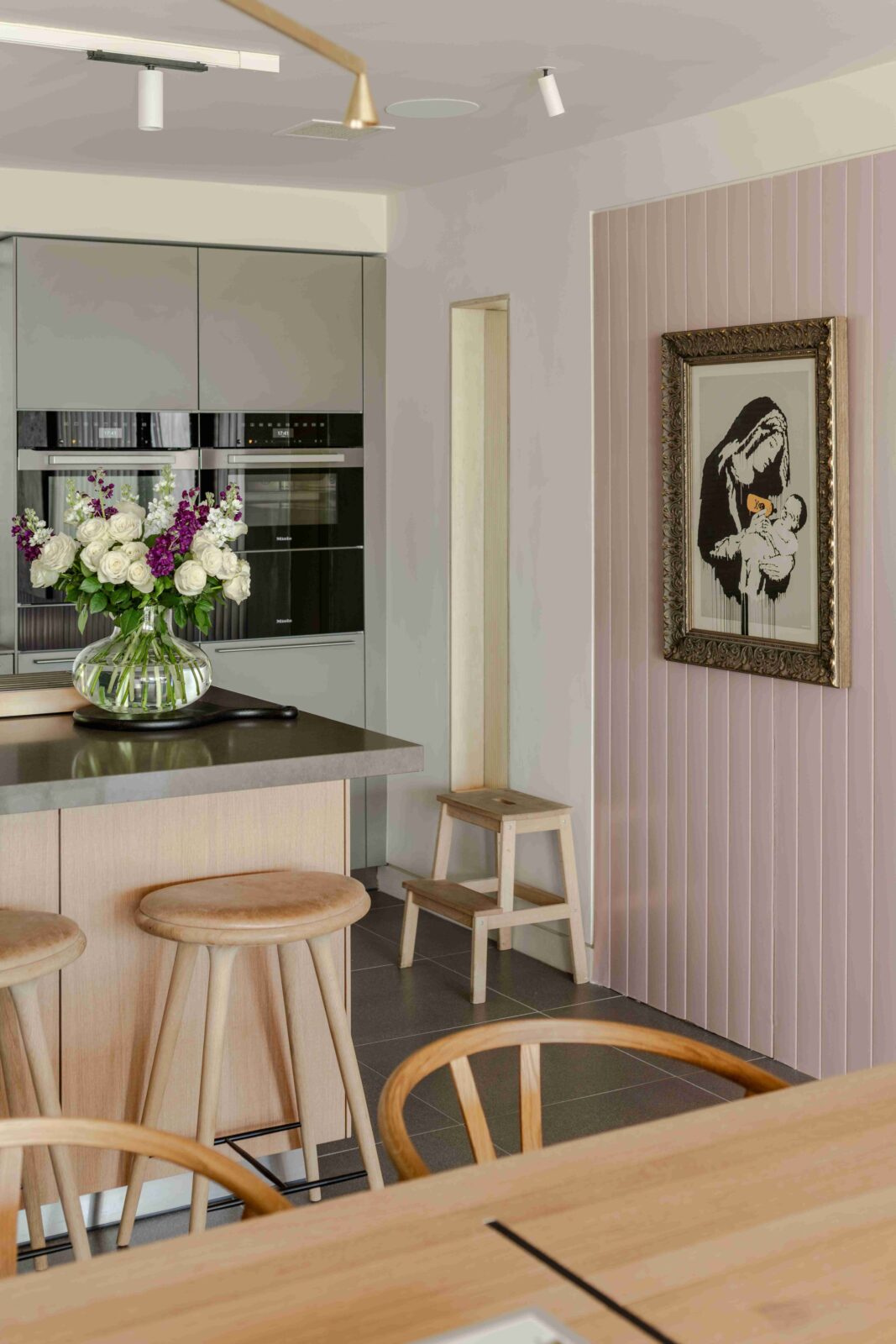
Inside, the ground floor was changed more freely than the main structure. Existing stud walls were removed, opening the plan around a set of coloured timber boxes with pocket sliding doors that divide the living spaces without closing them off completely. The colours and patterns of these boxes come from kimono designs, linked to the family’s time living in Japan, and continuously change with the light as the day goes on.
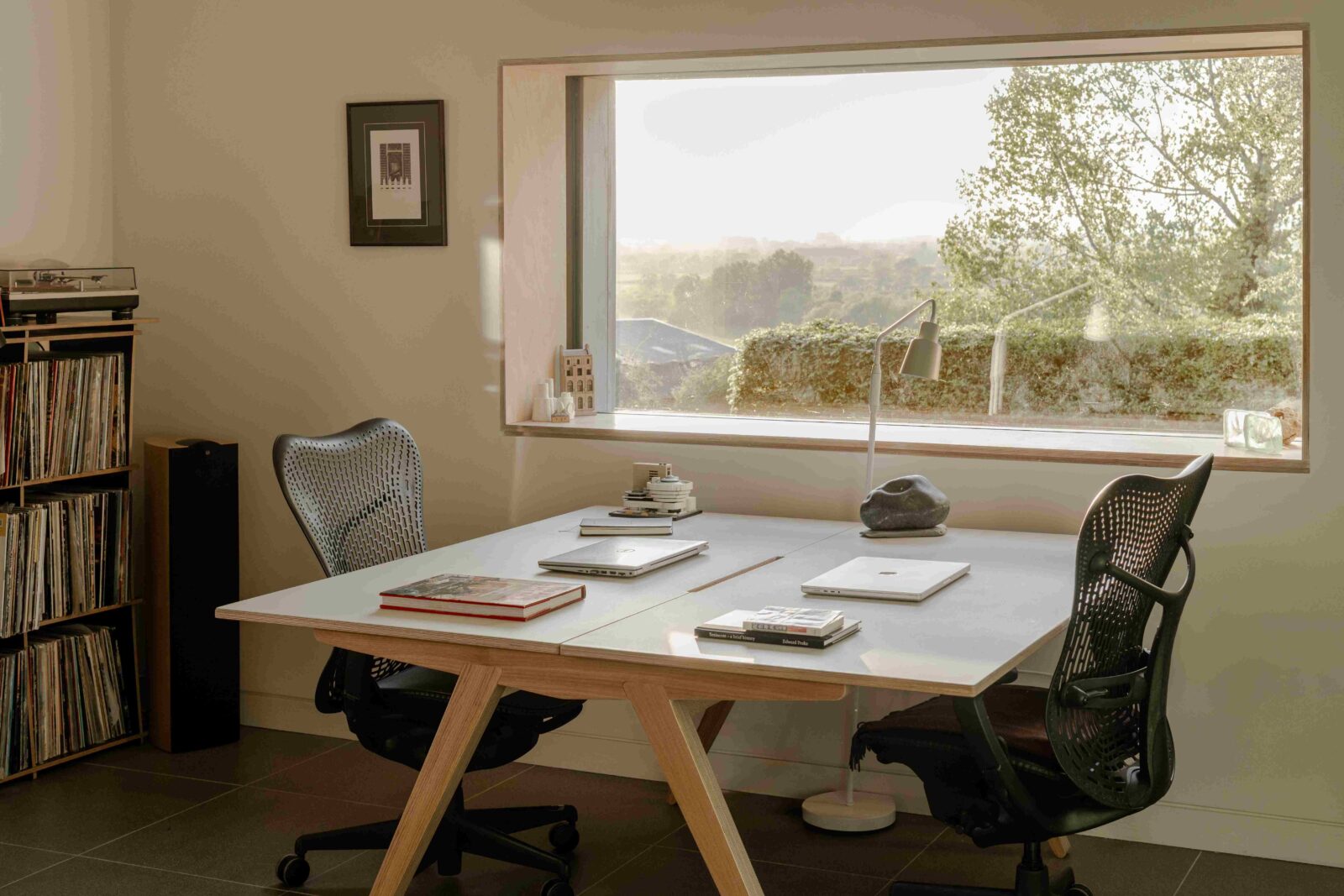
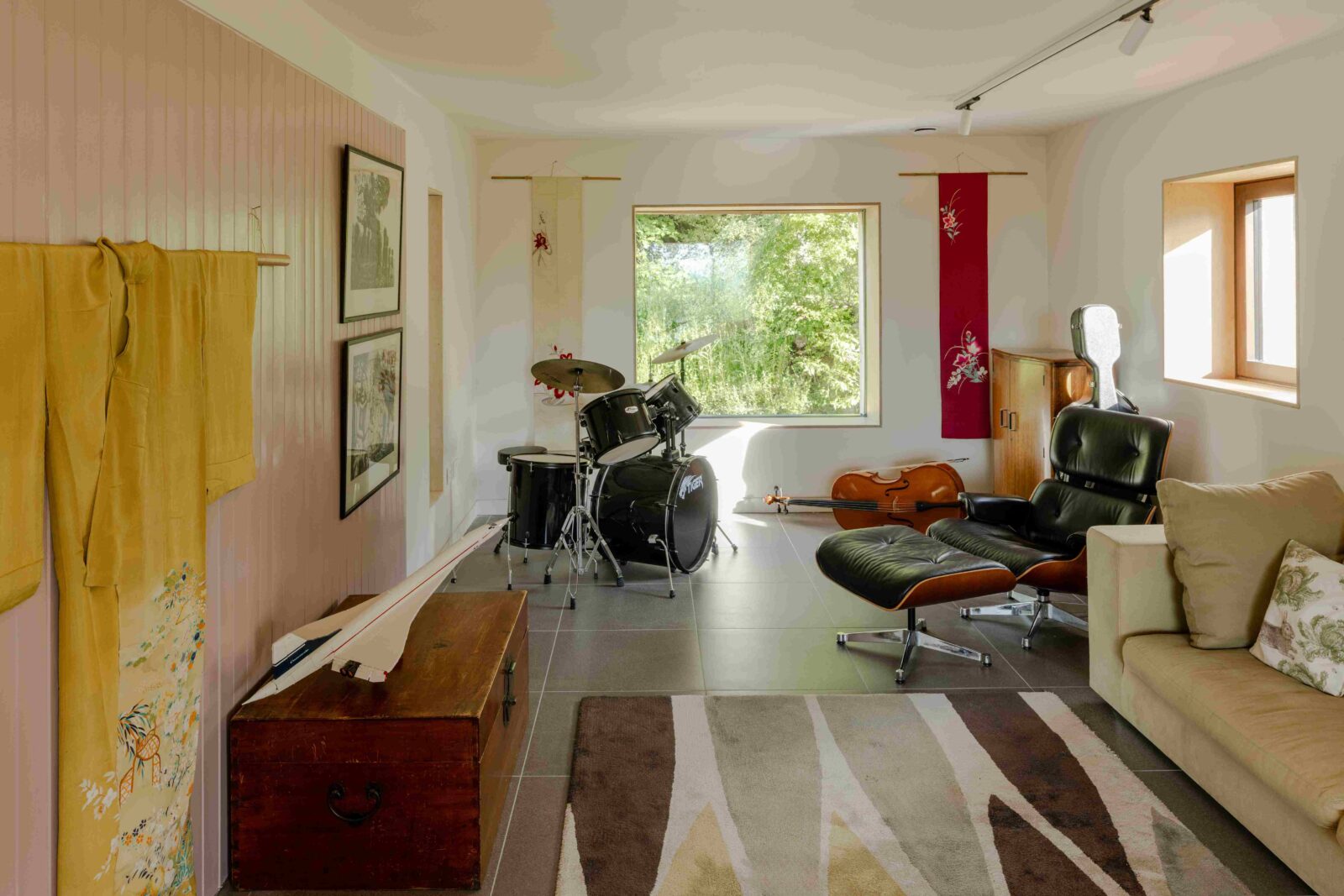
A fun and sunny layout for the family
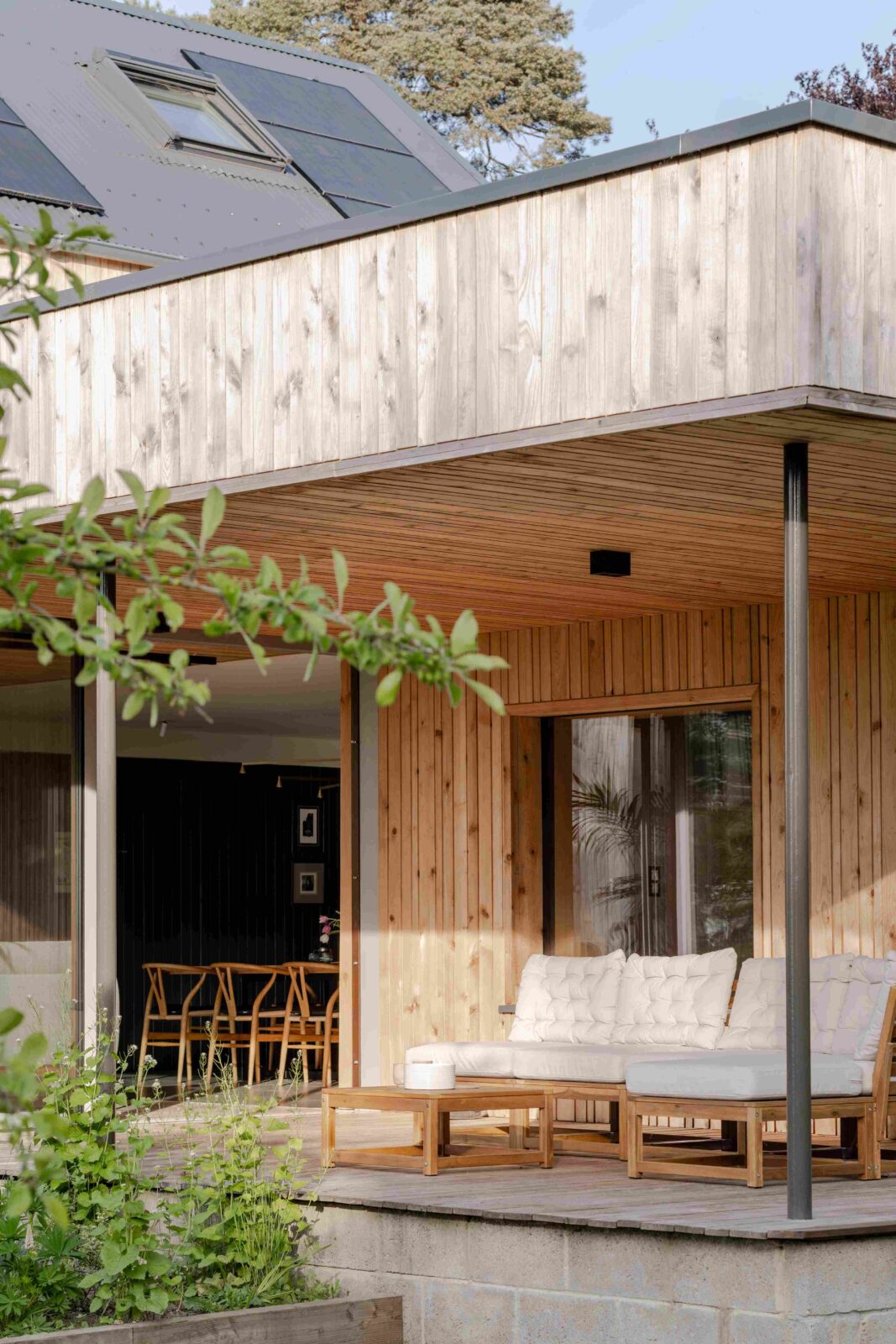
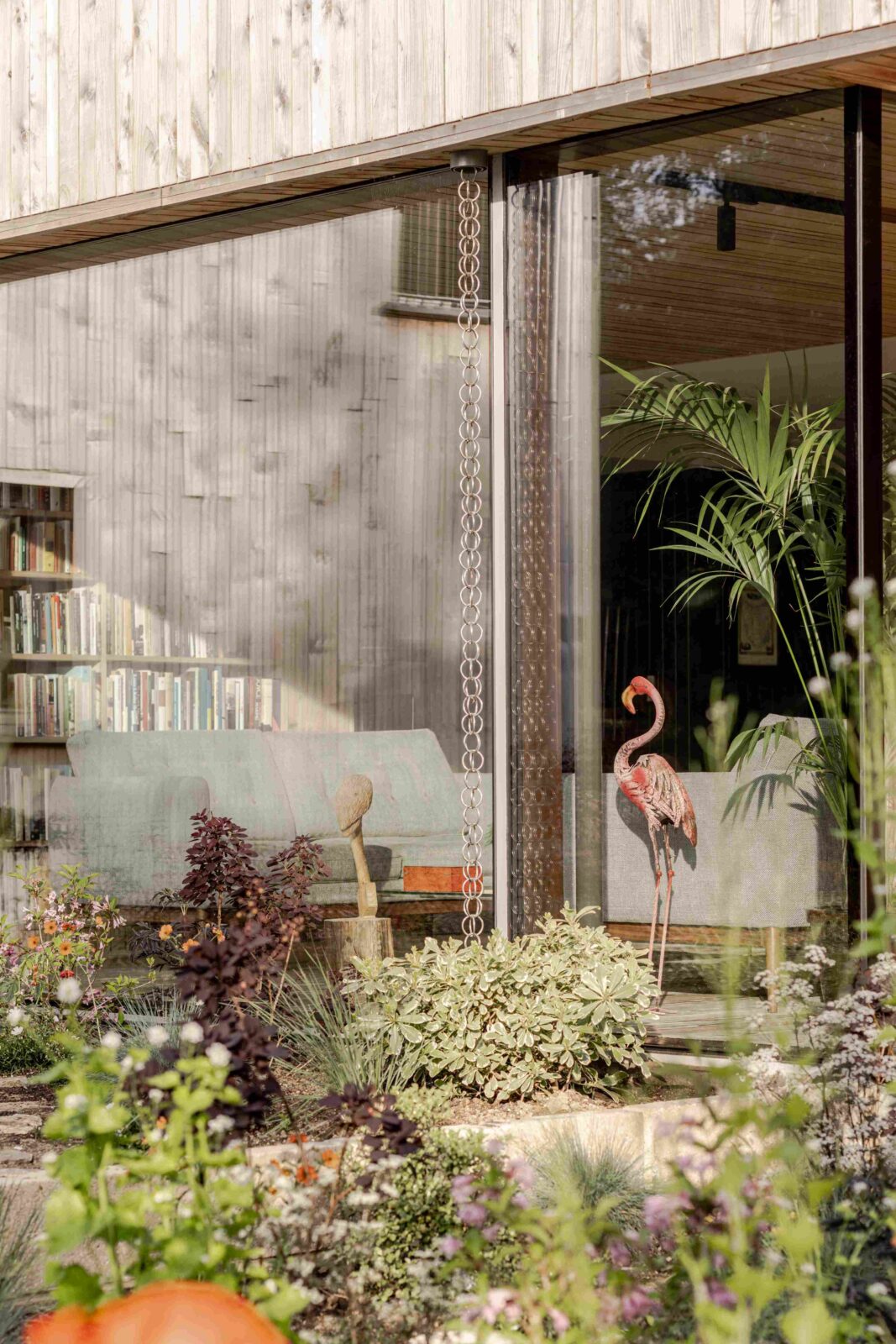
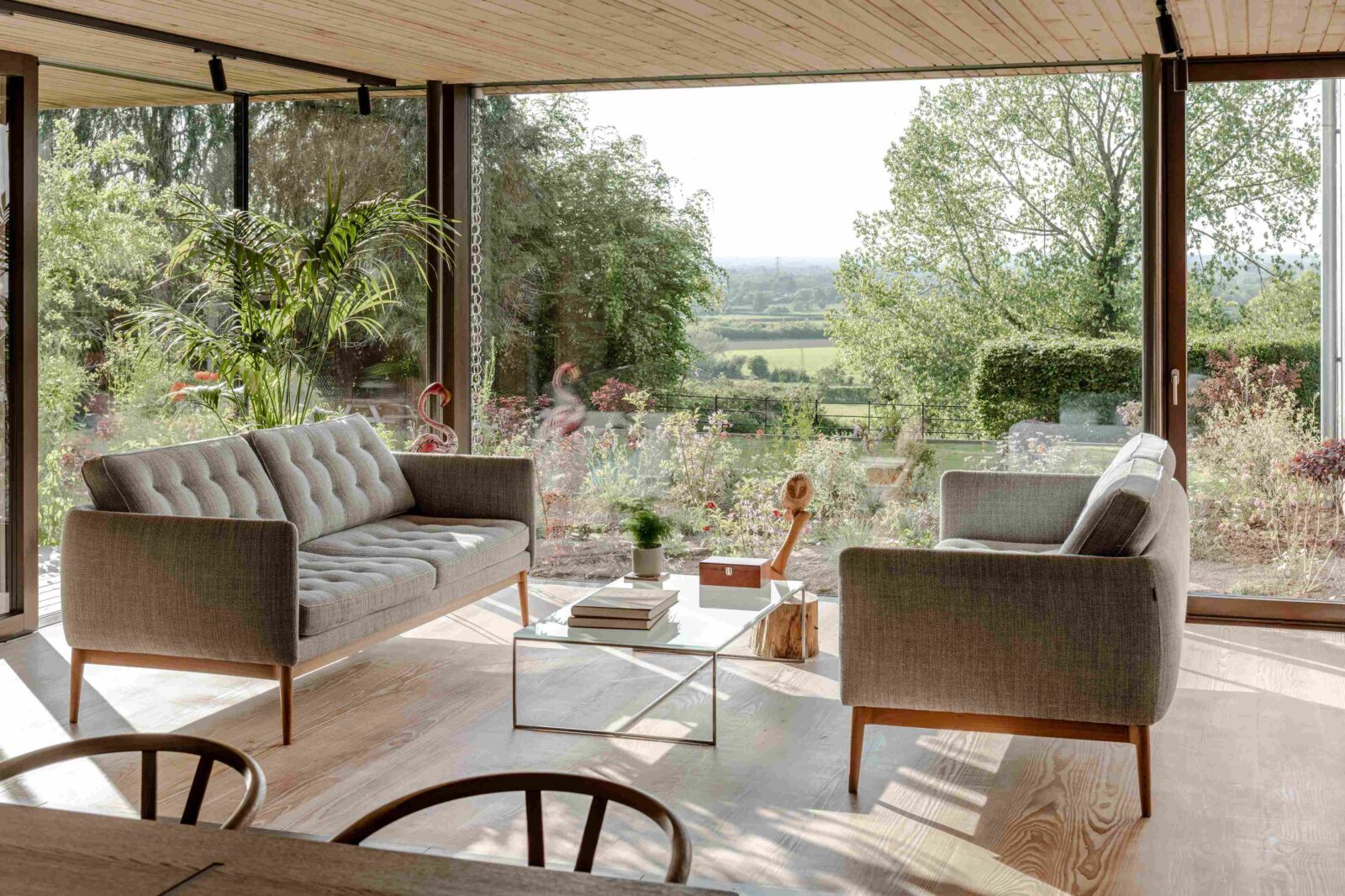
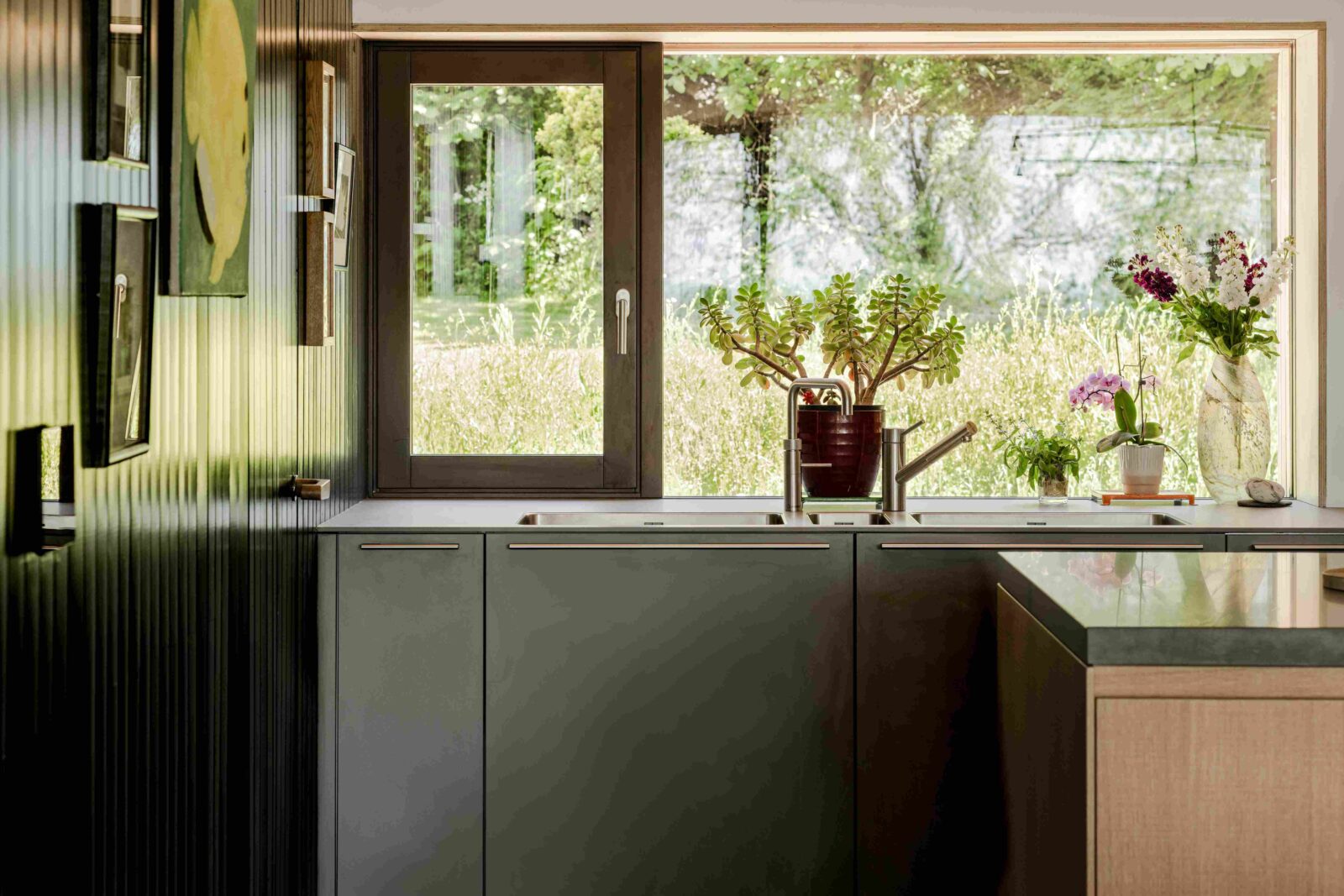
The main living areas are on the ground floor, with the old conservatory having been replaced with a window-filled room, bringing more light into the house and opening onto the covered verandah. From there, the rooms face the garden and the landscape. The same colour scheme continues upstairs through a dark green stairwell and hallway, which holds a built-in slide behind a hidden door. The architects had promised the children a slide after the family spent years looking for a house, and it is now used as part of daily family life.
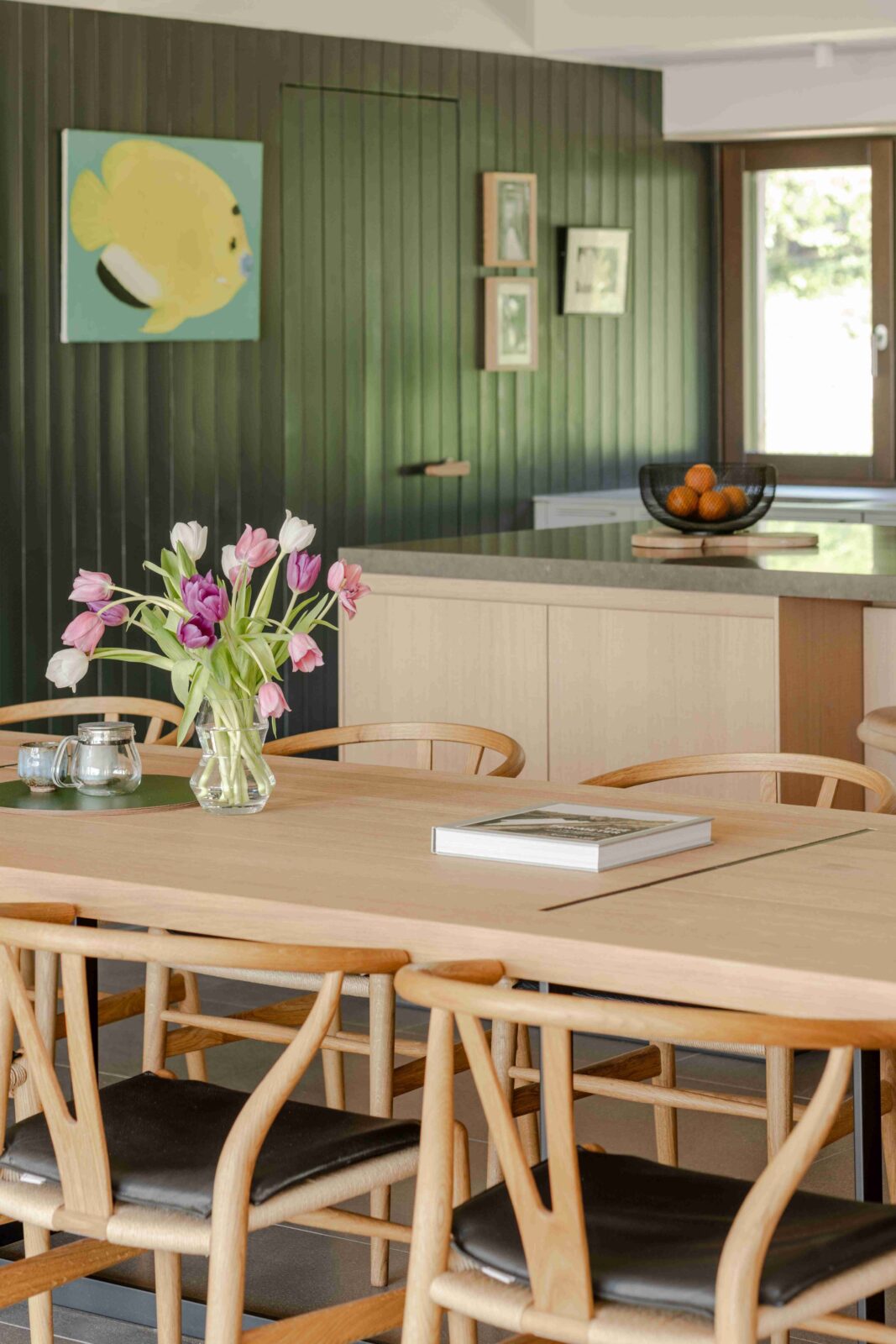
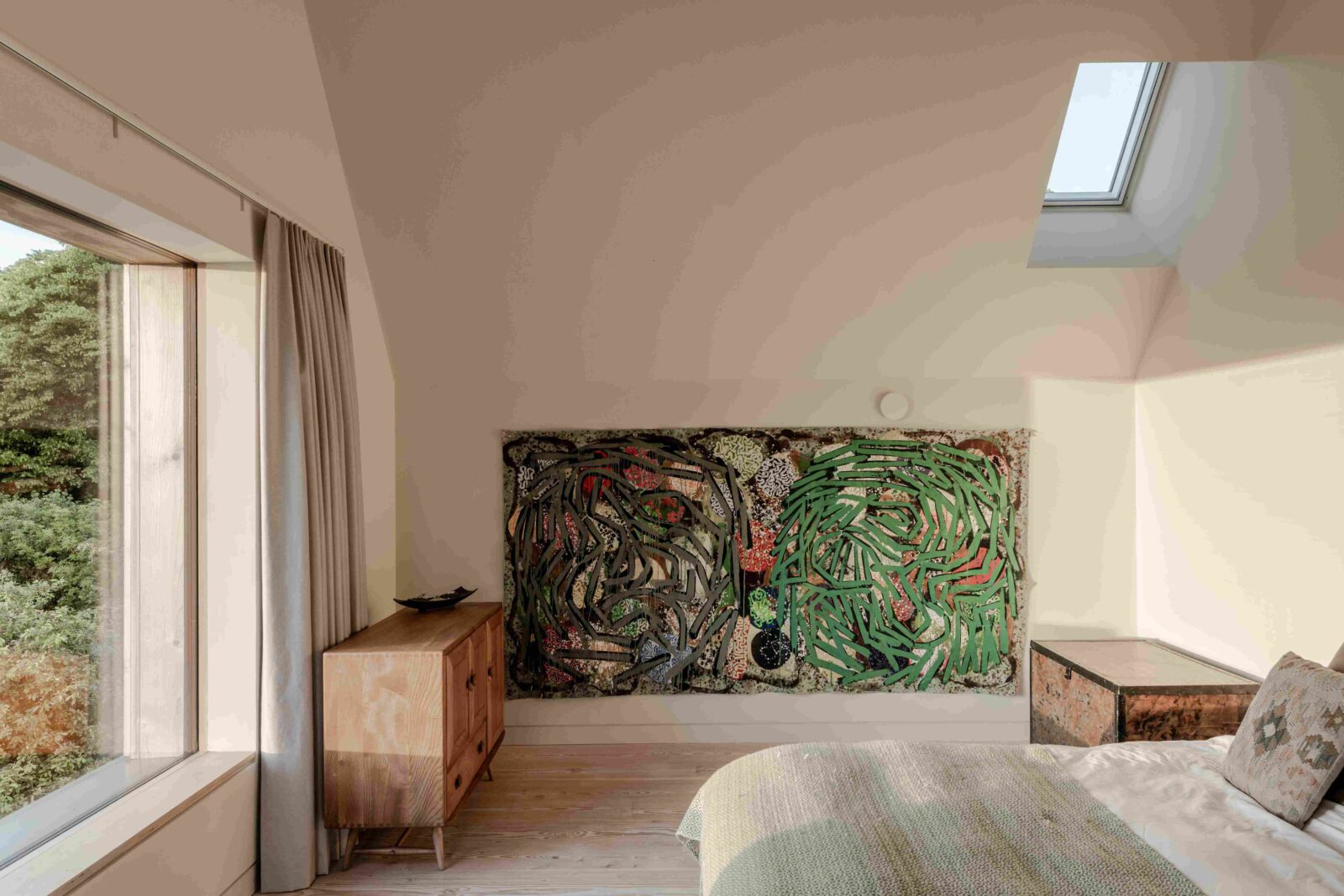
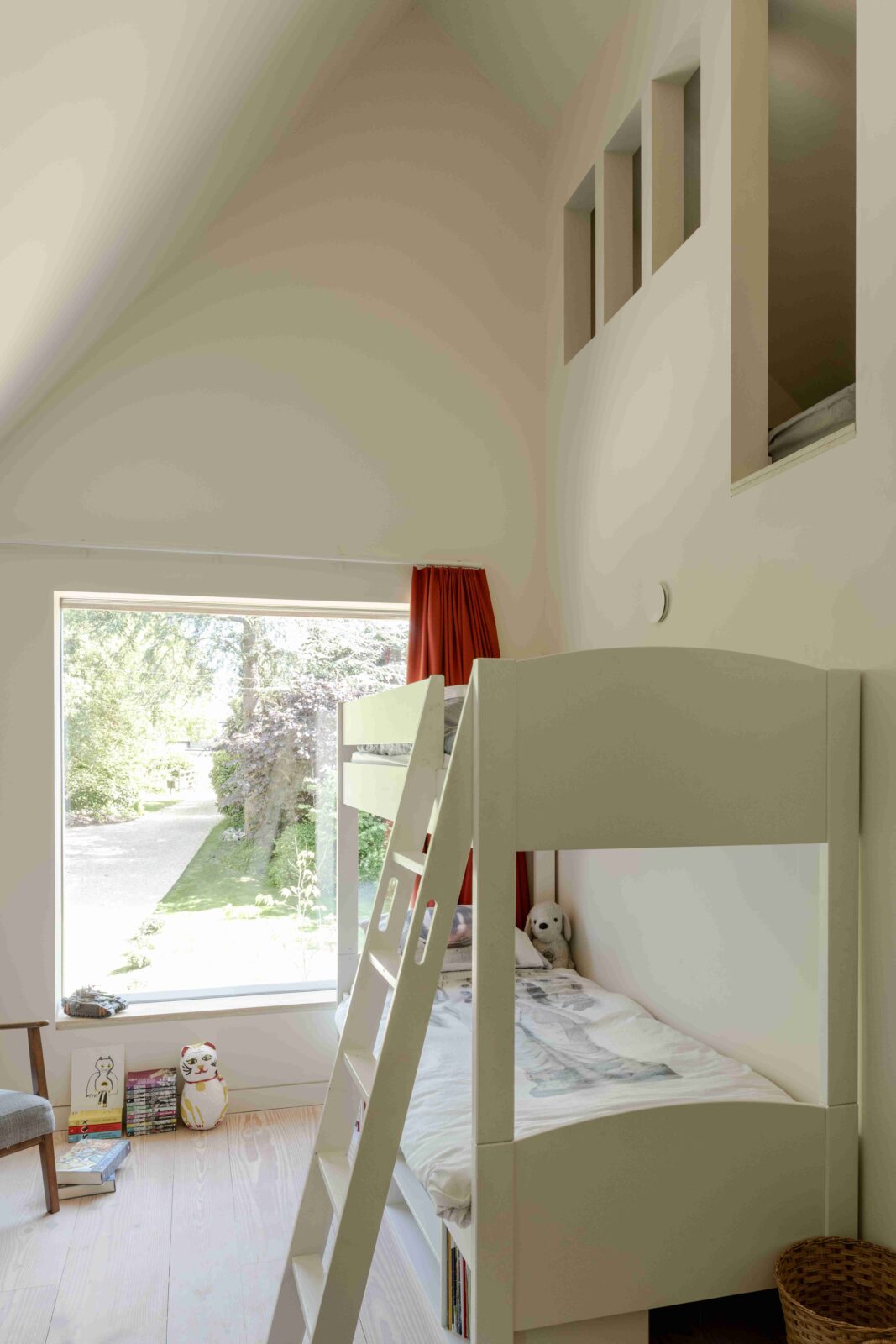
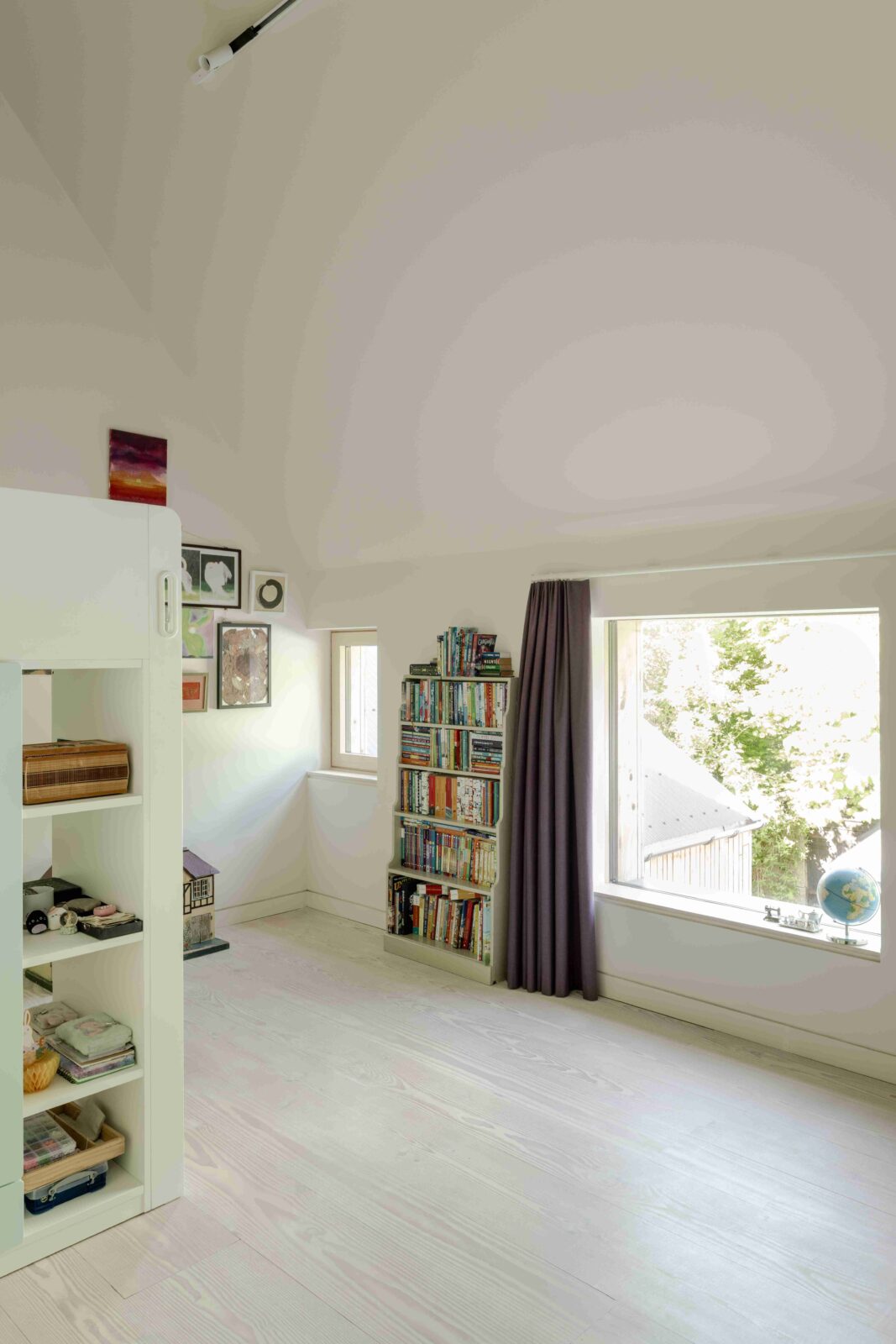
The first floor contains the family bedrooms and bathrooms. In the children’s rooms, the height of the new roof allowed the studio to add the beds to sunny mezzanines, leaving more floor space below for play. Cut-outs and windows face back towards the hallway, so the children can see and speak to one another across the upper level. The primary bedroom is also on this floor, allowing the residents to enjoy the abundant daylight and stunning views over the surrounding landscape brought in by large windows.
The retrofit keeps much of the existing house, adds space where needed, and improves its energy use with new insulation, timber cladding and renewable systems.


