



Header: Cong Lin
Located along the Qinhuai River in Nanjing, China, the Big Red Crayfish project by Dayi Design blends contemporary design with heritage preservation. The project employs modern materials such as metal and glass to create traditional Chinese architectural structures such as terraces and pavilions. Minimalist lines are combined with intricate details in a unique, striking fusion of futuristic and ancient aesthetics.
The Big Red Crayfish’s social impact
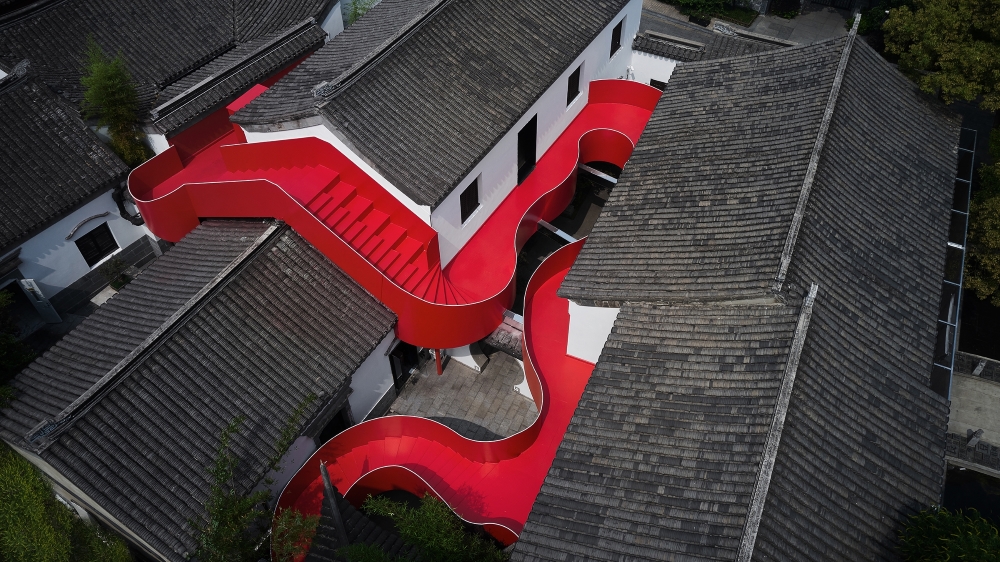
The project revives a former residence of Eastern Jin official Xie An, built 300 years ago. A large dining and commercial space inspired by crayfish spans 2,000 square metres. The site gets new life while preserving its historical value, contributing to the local economy and community, promoting economic growth, and providing a sustainable, lively venue on the banks of the Qinhuai River in Jiangsu province.
A Guardian Dragon and material reuse
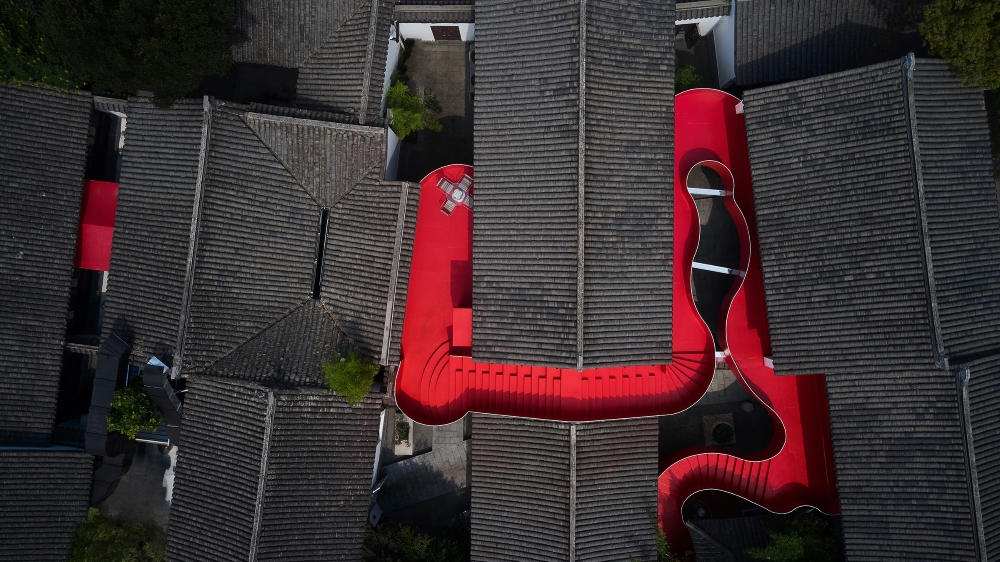
The central part of the design is a meandering, streamlined steel staircase that symbolises a guardian dragon. Apart from striking visual presence, the staircase has a practical function of connecting four courtyard buildings, while embodying the main theme of the design, the big red crayfish. The design reuses materials to preserve cultural heritage. This includes old doors turned into glass-sealed screens and Taihu stones reorganised for landscaping and functional barriers.
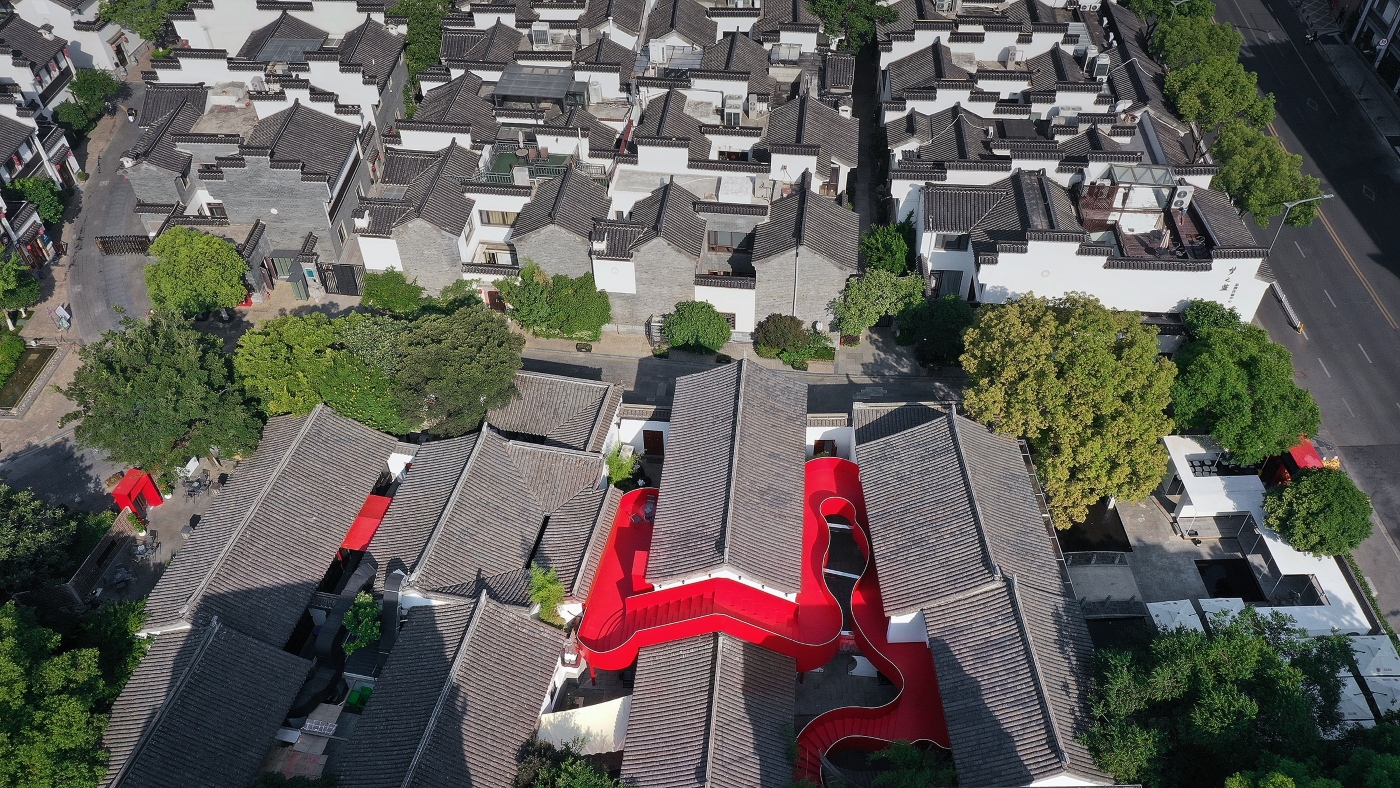
The Big Red Crayfish dining and commercial site puts sustainability at its core. Apart from repurposed materials, the environmental impact is further reduced with locally sourced materials, which reduce the transport carbon footprint. The creative repurposing reinforces the structure’s historical identity while at the same time offering a new perspective on architectural design.
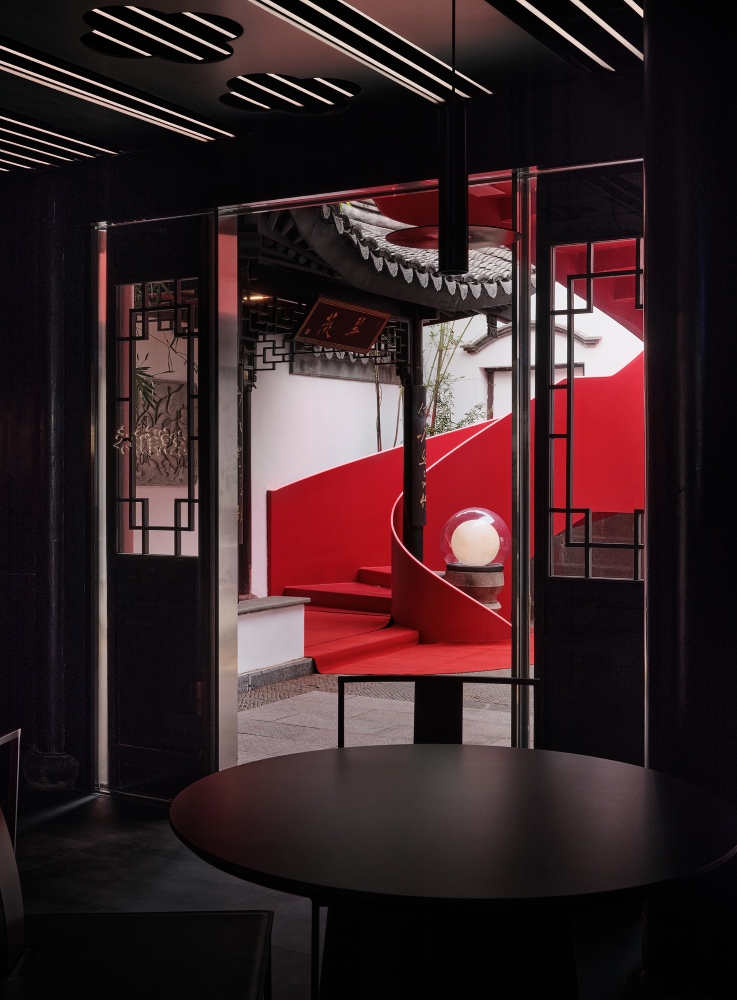
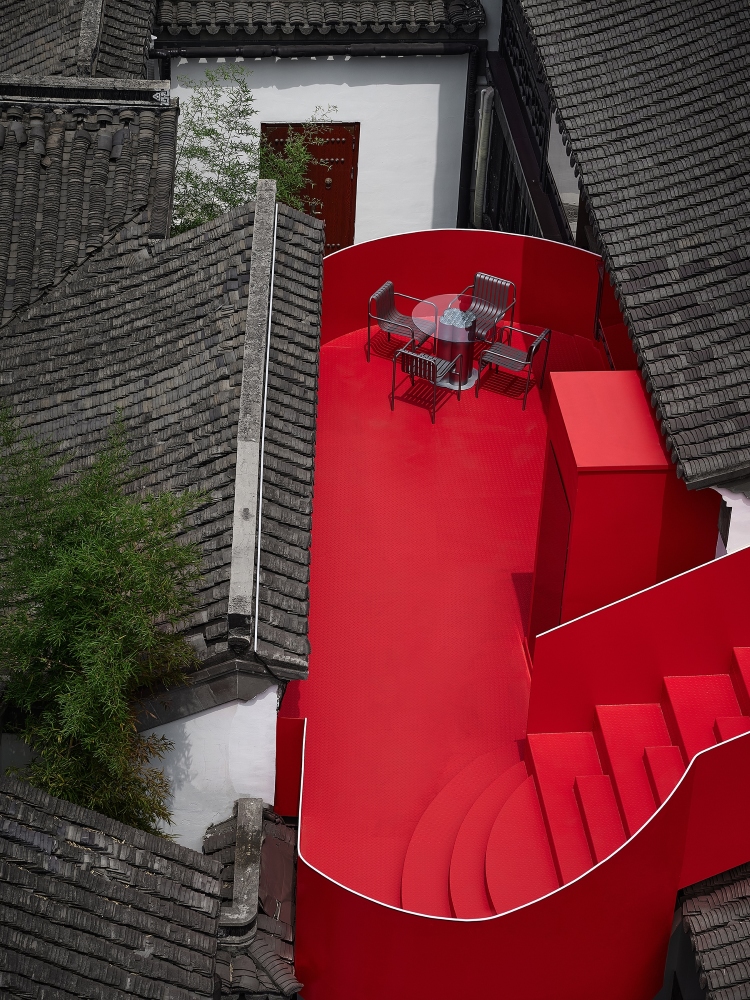
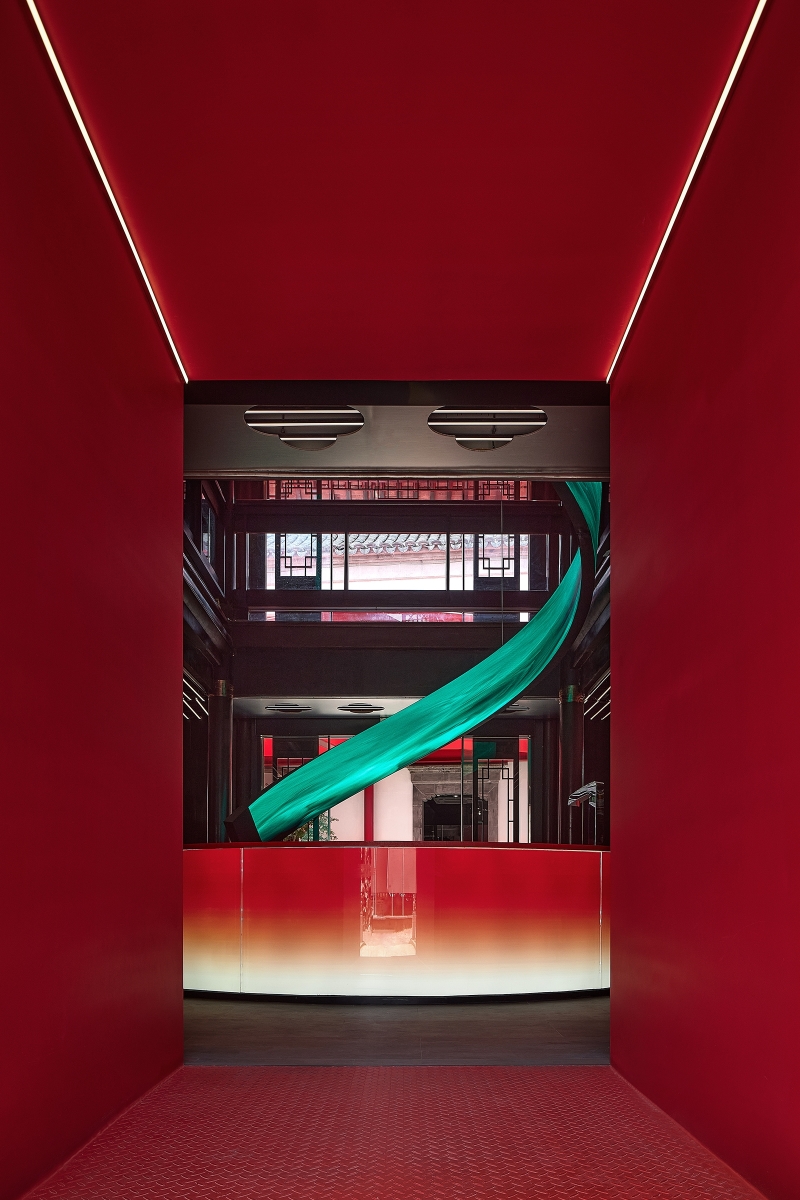
A panoramic view of the Dabaoen Temple
The practical functions of the red staircase are many: weather protection, fire safety and food delivery cover. But that’s not all! The stairs serve as an observation deck for overseeing the surrounding landscape and the nearby landmark Dabaoen Temple. The design takes advantage of the site’s unique geographical location to become a popular photography spot, thus improving local tourism. The volume is further enhanced by LED displays that add dynamic colour and energy to the space.
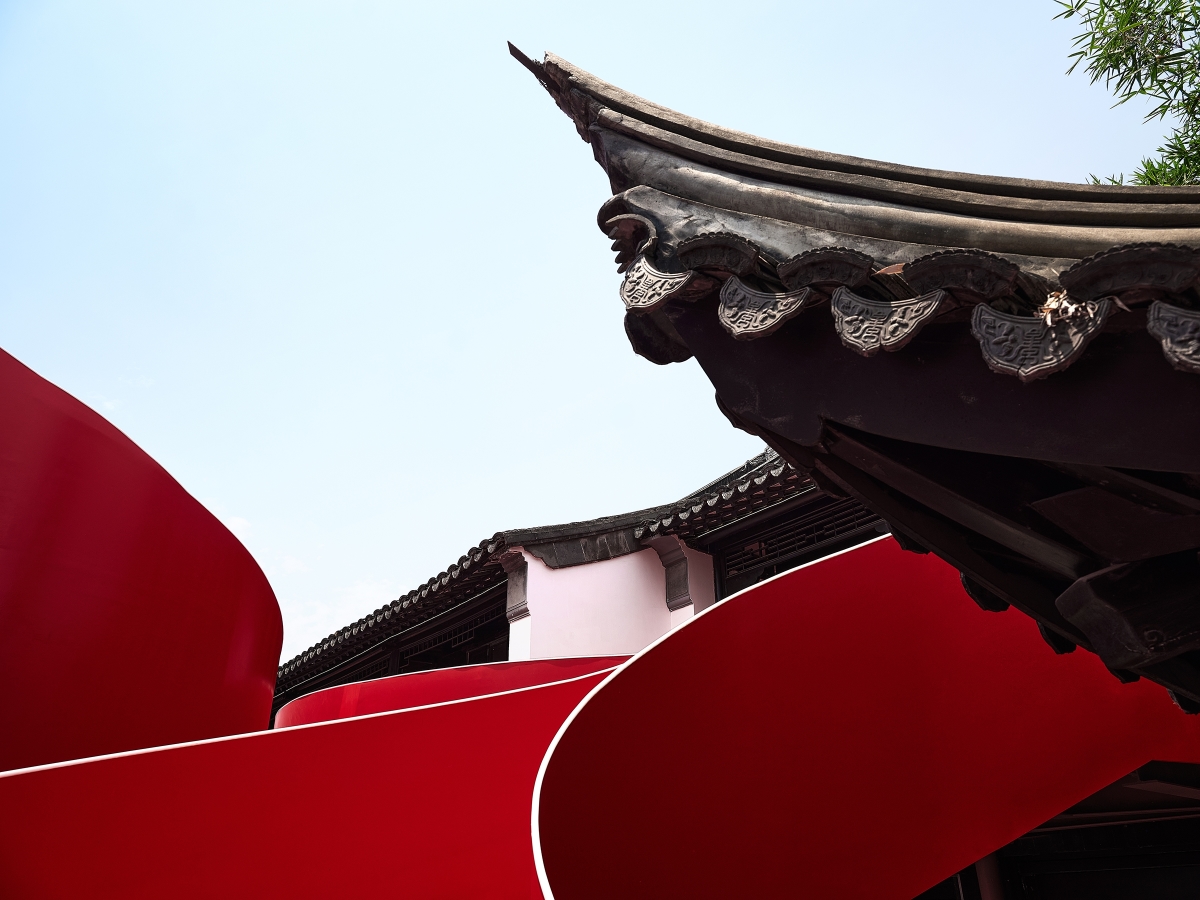
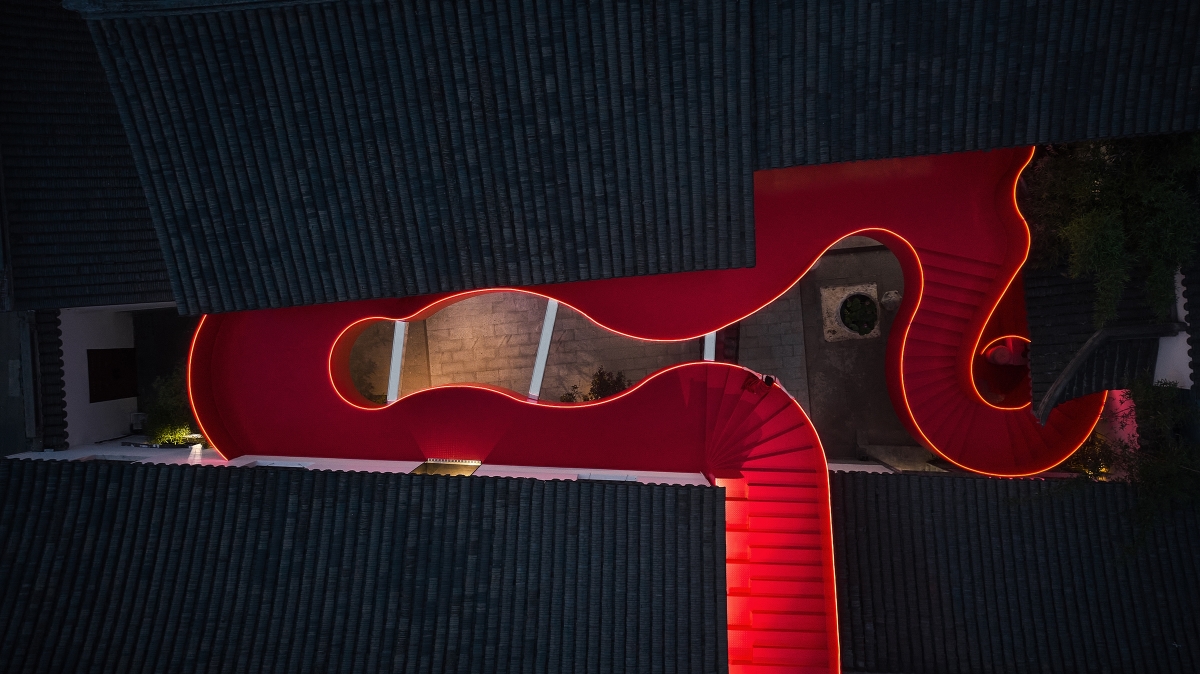
In summary, the Big Red Crayfish project balances the contemporary needs of the neighbourhood with the historical importance of the heritage site in Nanjing province. By fusing Western and Eastern design principles, the crayfish-inspired space creates a dynamic, lively gathering venue for those who wish to enjoy good food, shopping, and the panoramic view of the Dabaoen Temple nearby.
The revitalisation of the historic site provides an economic boost to the neighbourhood without sacrificing the environment or its cultural importance. Dayi Design’s Big Red Crayfish project has been awarded the BLT Built Design Award as the best entry in the Architectural Design – Restoration and Renovation category.


