

Header: Universidade Federal do Paraná
In busy art studios and community centres, standard overhead lights rarely meet the needs of someone sitting down to draw or paint. Lighting nowadays is more and more focused on usefulness rather than just lighting, and on products that respond to the way people actually use a space. Drawing inspiration from the natural descent of the Brazilian Cedro Rosa tree seed, the Brise task lamp addresses this exact reality by offering a portable, cable-free solution that folds away neatly when the work is done.
Created by Brazilian designers Caio César Franco Pael Zanolla and Yasmine Rudek Rodrigues under the guidance of Professor Dulce de Meira Albach at the Universidade Federal do Paraná in Curitiba, the design won an award in the Task Lighting category at the LIT Lighting Design Awards. Developed specifically for trestle tables in dynamic settings, the project tackles the real physical challenges of busy creative rooms.
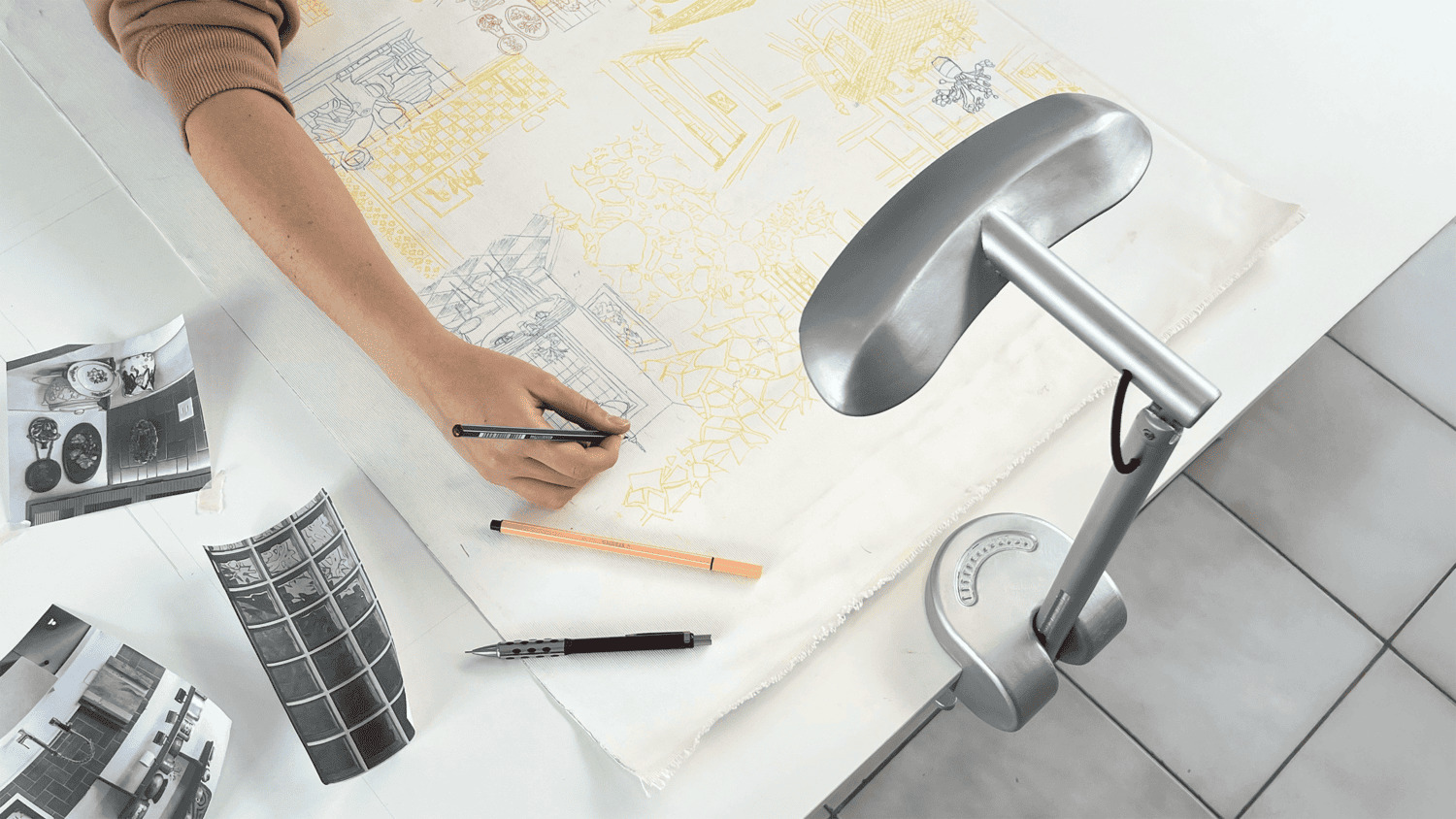
A lamp that offers a solution to a real problem
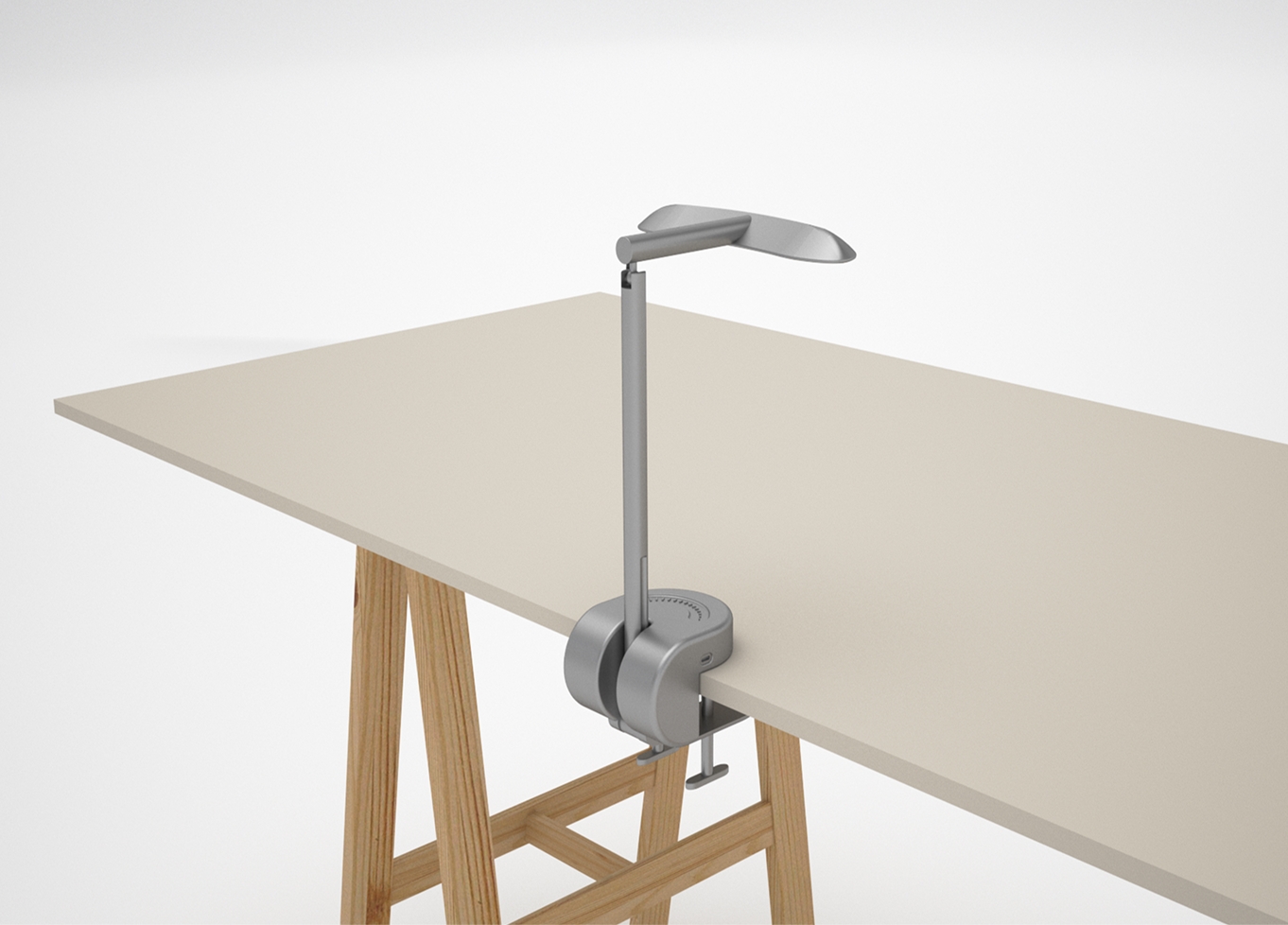
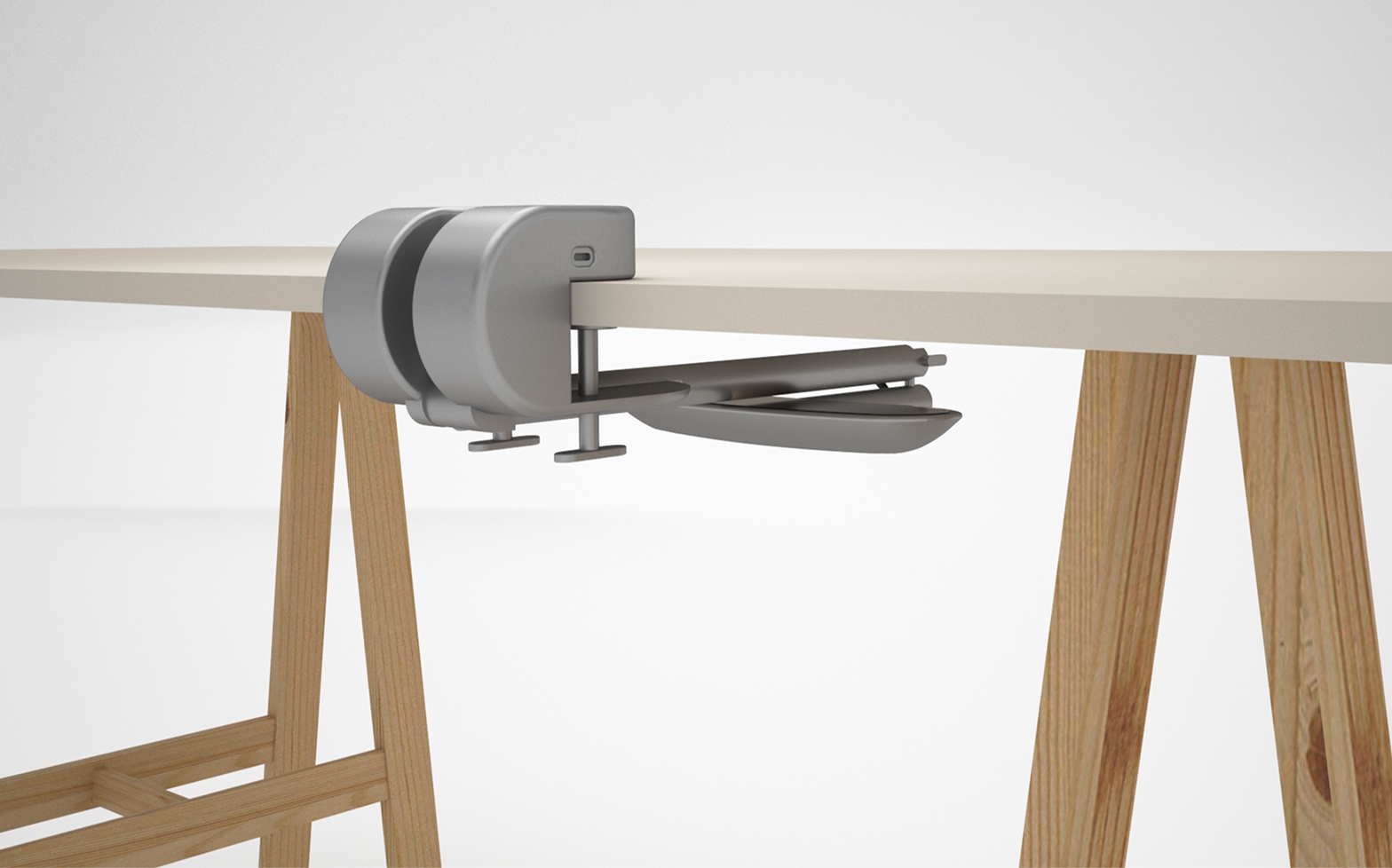
The concept grew directly out of field research across venues like the Oscar Niemeyer Museum, the Paraná Public Library, and the Guaíra Theatre. Interviews with coordinators, staff, and students revealed a recurring problem: high ceilings and shifting room layouts often leave shared work surfaces without direct, comfortable light. At the same time, electrical sockets are rarely where people need them, and table configurations change constantly throughout the day. Brise solves these setup issues with an integrated clamp, often called a sergeant clamp in workshop settings, that mounts onto table edges up to 4.5 cm (45 mm) thick without requiring any tools.
Product movement inspired by nature
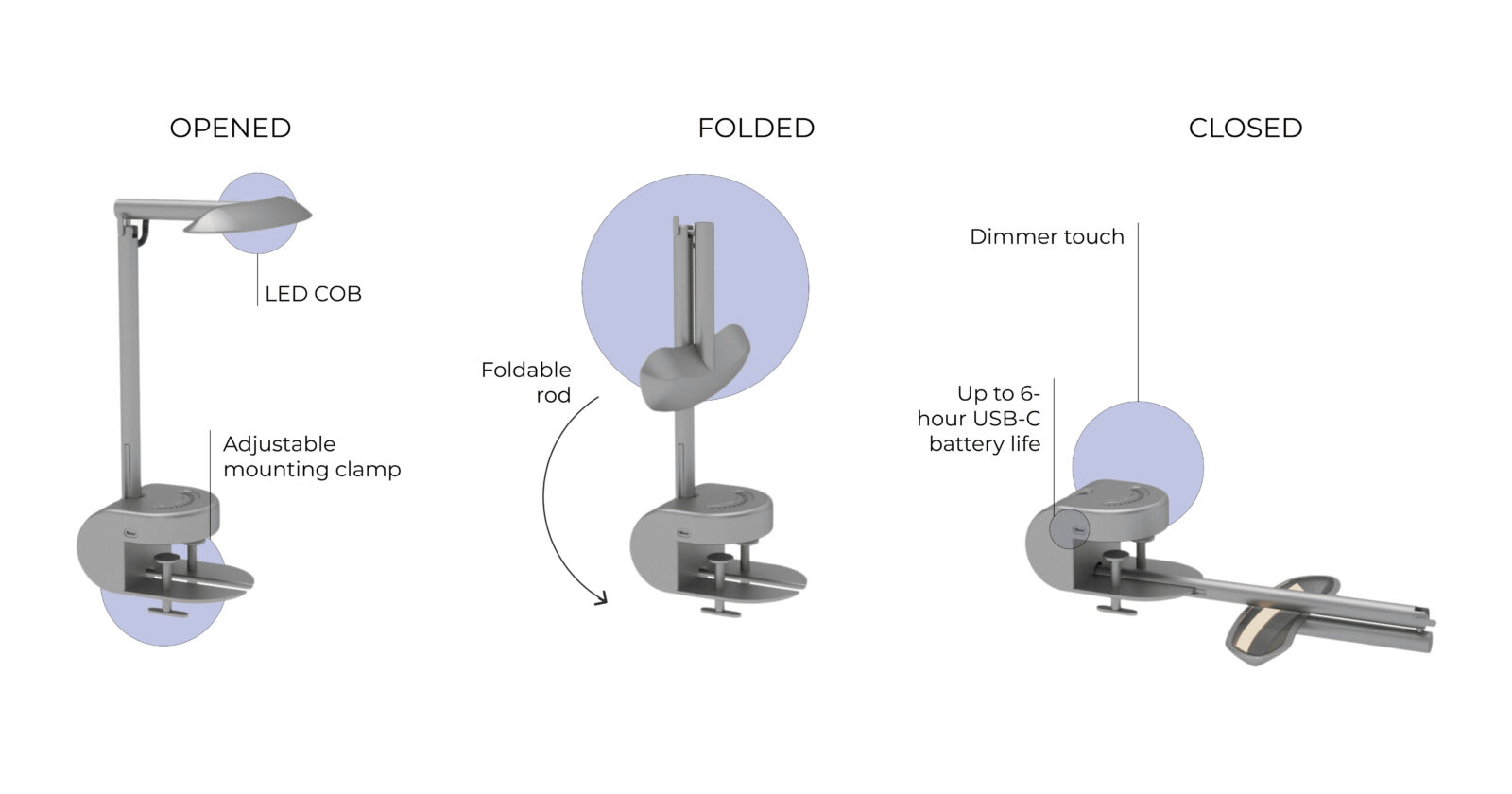
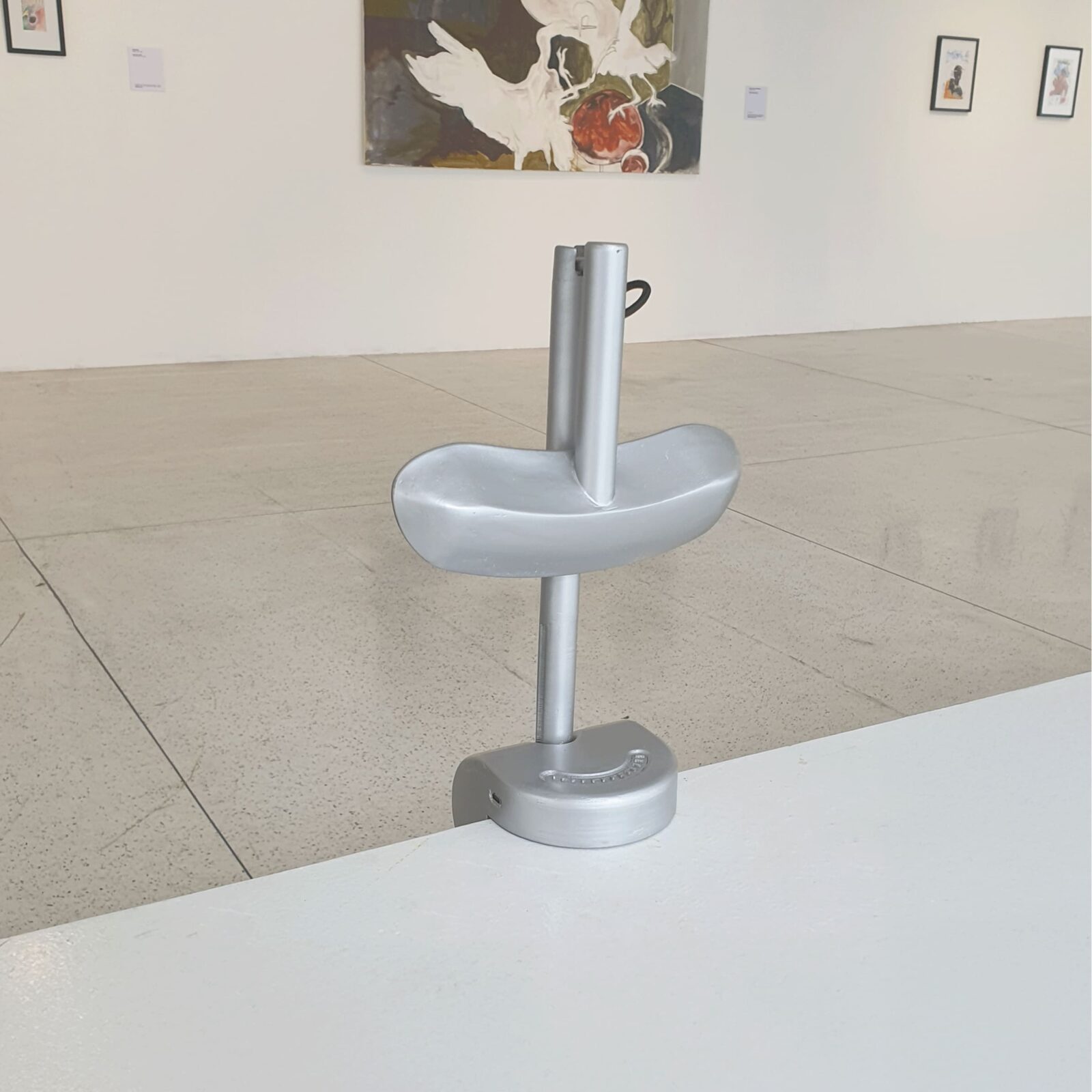
Visual inspiration for the form comes from the natural falling movement of winged seeds from the Brazilian Cedro Rosa tree. To mirror that light, fluid movement, the team engineered a structural system with folding joints, a rotating central rod, and a swivelling hinge. When a workshop finishes, the entire arm folds down under its own side pressure and swings completely beneath the tabletop, allowing people to stack or move the tables without removing the light fixture.
Technical details and development
Technical details match this practical mobility. Powered by an internal 12V, 5200 mAh rechargeable battery, Brise operates without trailing power cables for over six hours on a single charge via USB-C. The lighting head features a 17.5 cm COB LED outputting 3500K neutral light with a high Color Rendering Index (CRI > 90). This setup prevents colour distortion when people paint, draw, or craft, while an intuitive touch dimmer on the base lets users dial in exact brightness levels. Fabric-covered internal wiring keeps the appearance neat and tidy across every joint.
During development, the team 3D printed prototypes to check the hinge mechanics and refined the metal components alongside local Brazilian manufacturers. They chose 6061 aluminium for its balance of low weight, structural strength, corrosion resistance, and clean industrial appearance. By optimising metal stamping, bending, and welding processes, the team reduced scrap material during production. The modular layout also aligns with United Nations Sustainable Development Goals 7 and 12, making it straightforward to repair individual parts or recycle the metal shell at the end of its life cycle.
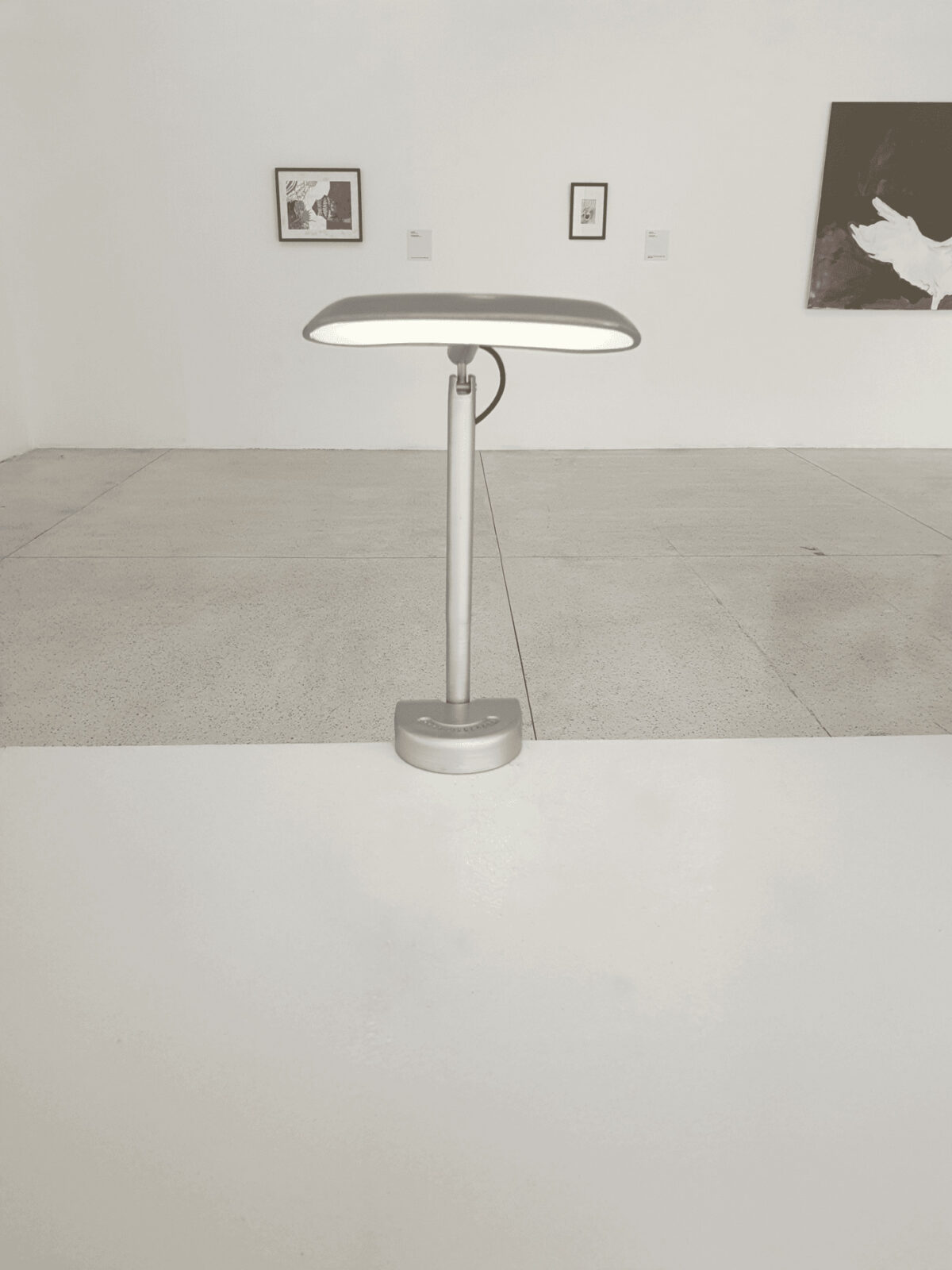
Creating a lamp for shared creative spaces means accepting that people move things around, work in awkward setups, and need reliable light without fussing over cords or tools. Brise shows that when you design around the actual habits of artists, students, and community groups, the result is a tool that quietly improves the way a room feels to work in. Outstanding product design doesn’t require complex gadgets; it comes from watching how people interact with their environment and building a simple, durable solution that makes every task a little bit easier.