



Header: Courtesy of Gravelli
Following its debut at Milan Design Week earlier this spring, the Arcus outdoor seating collection is shifting how we look at heavy materials in open-air settings. Born from a partnership between Czech concrete specialists Gravelli and premium wood manufacturers Garpa, the series presents a clear design statement that replaces typical bulky garden fixtures with sculptural forms.
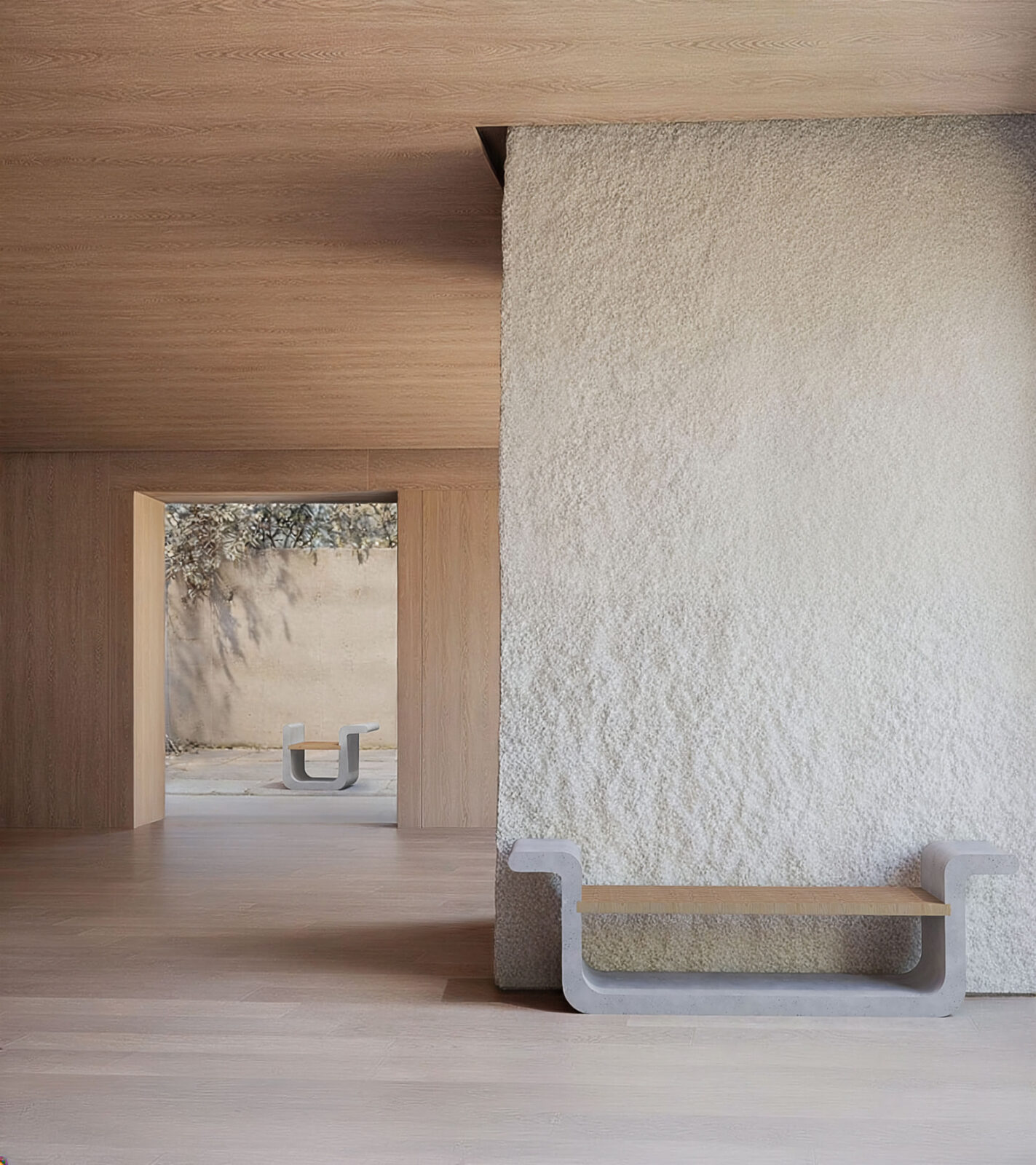
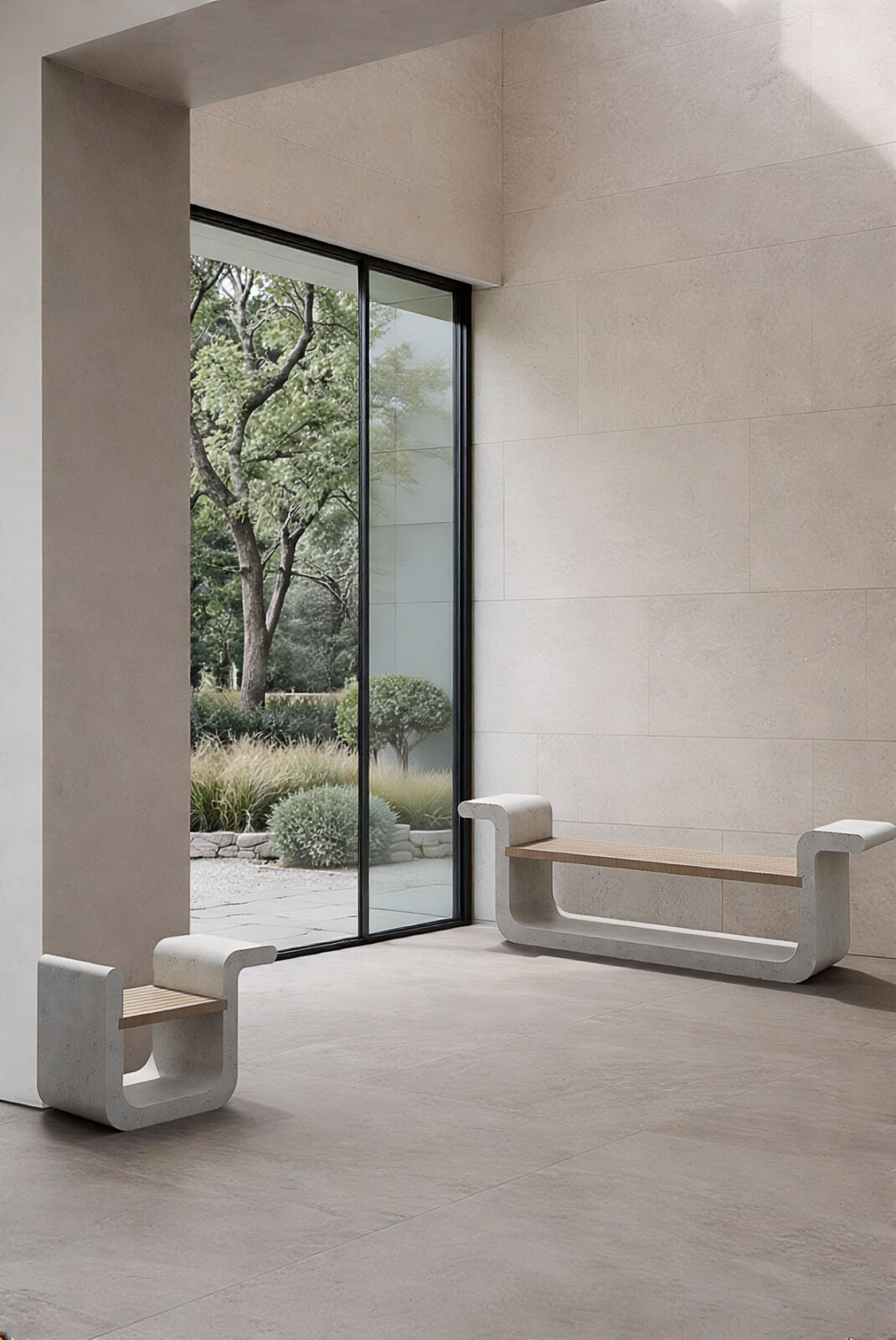
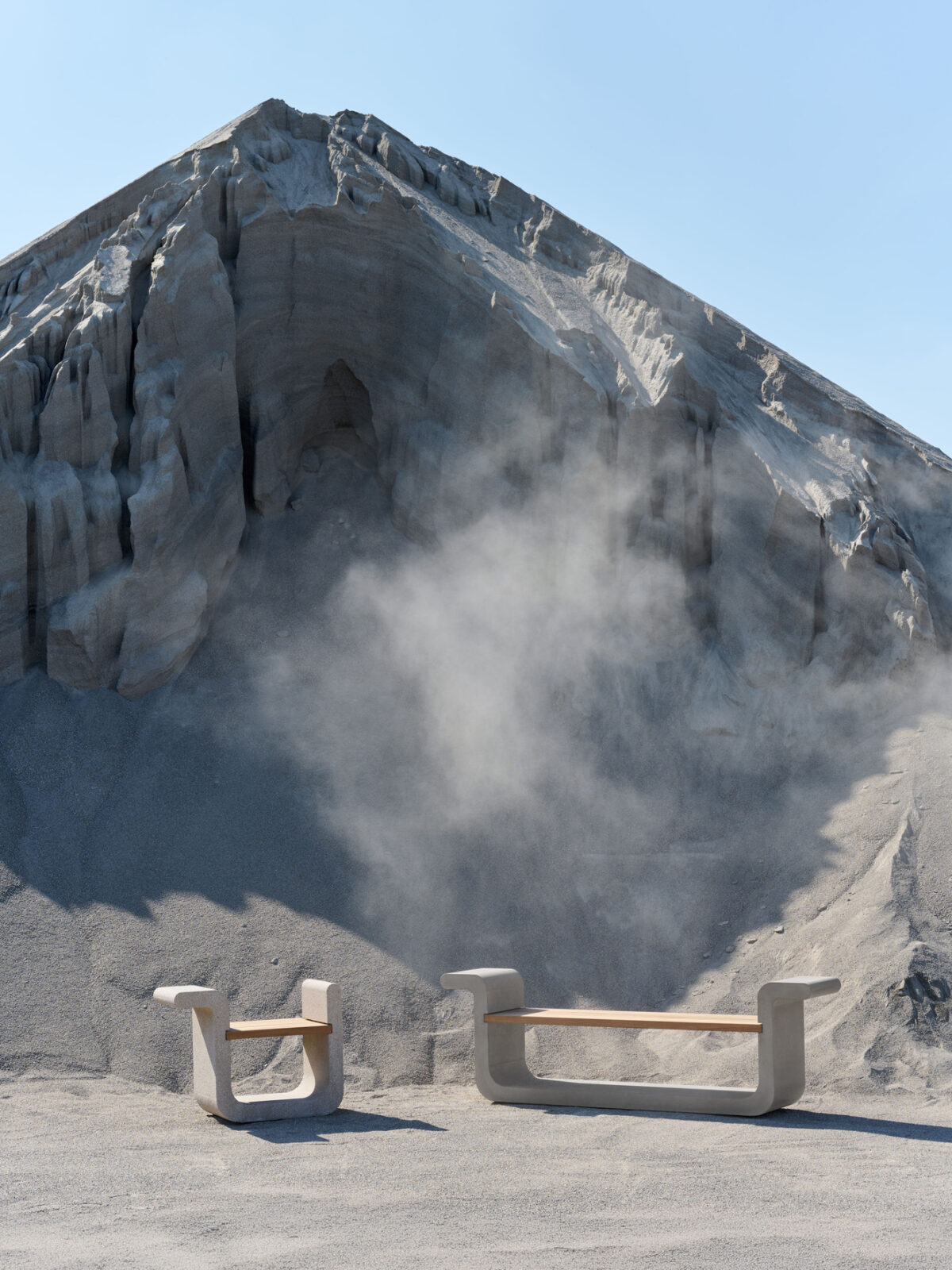
Designed by London-based designer Bodo Sperlein, the collection includes a bench and a stool. Rather than relying on familiar shapes, the pieces rely on a calculated contrast between two very different materials: architectural concrete and warm wood.
Shape inspired by history
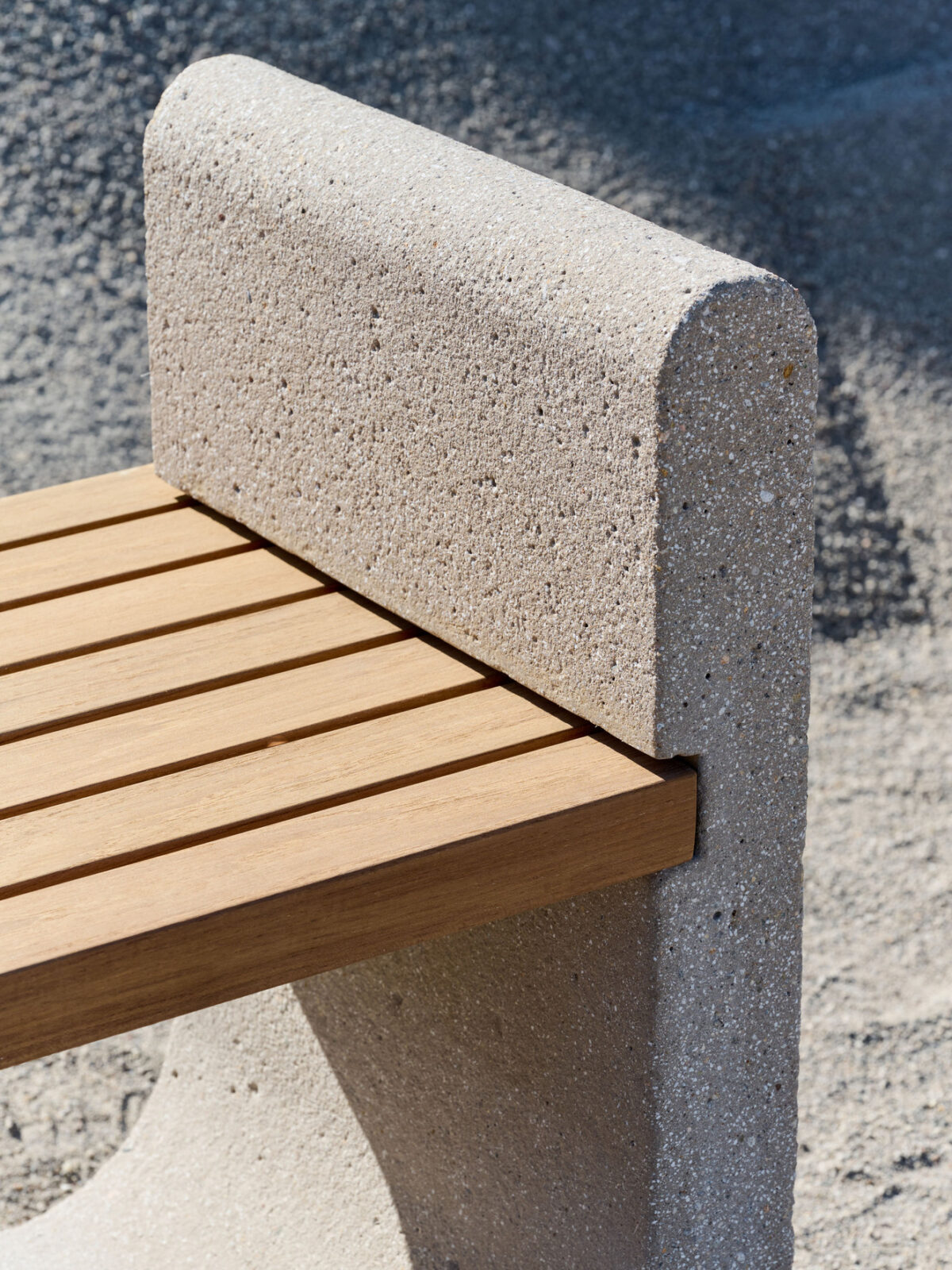
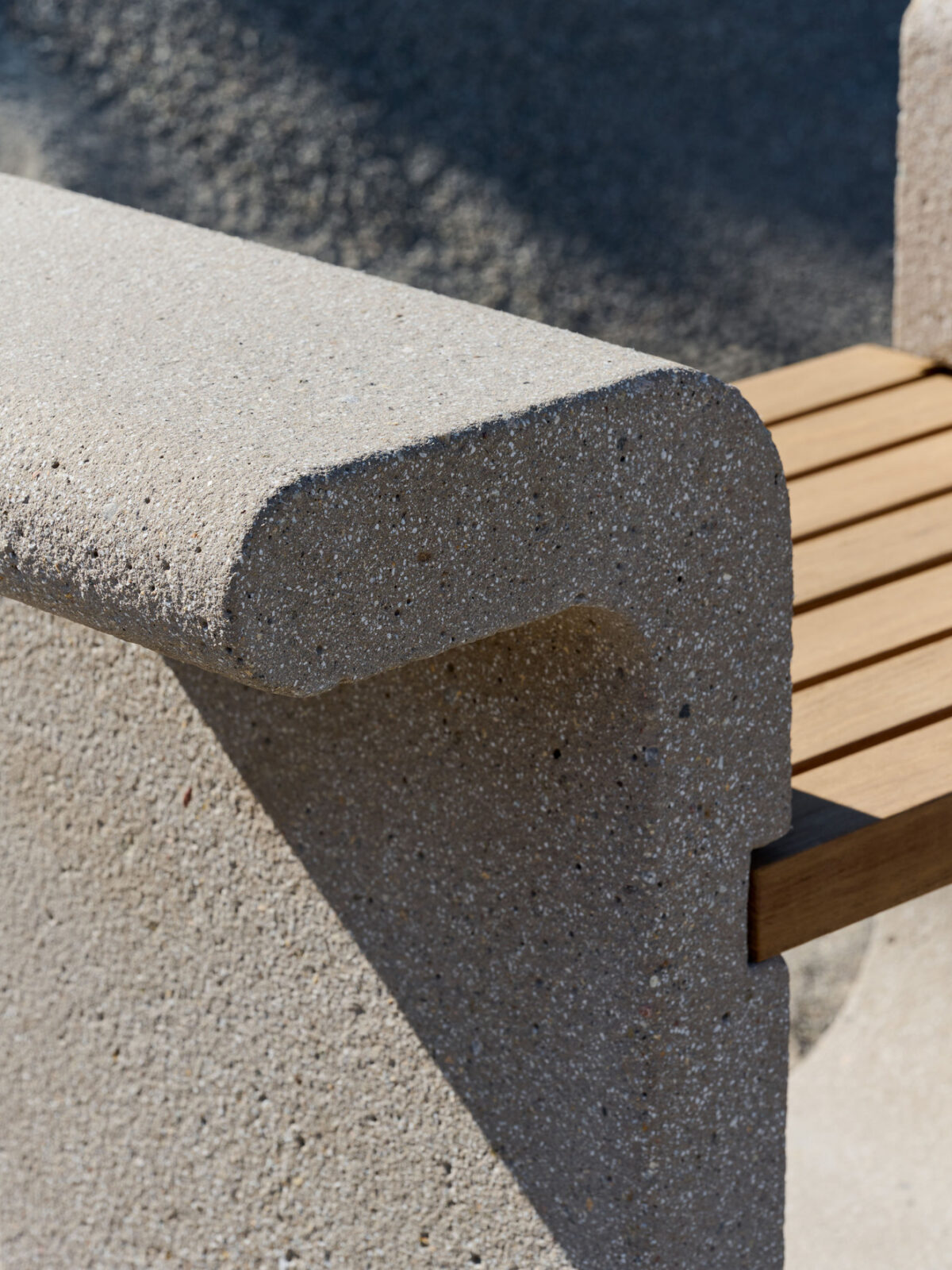
The defining feature of the Arcus series lies in its side panels. Constructed from Gravelli’s specialised architectural concrete, these solid volumes have soft curves and gentle silhouettes that give them an unexpectedly light appearance. The flowing lines look back to the shape of an antique lyre, giving the bench and stool a historic, architectural look.
Spanning between these concrete frames is a seat made of high-grade teak, supplied by Garpa. The wood introduces a warm, tactile element that sits against the smooth clarity of the concrete. Because neither material takes visual priority over the other, the two elements exist on equal terms, creating a balanced object that encourages people to sit and rest.
Material details and customisation
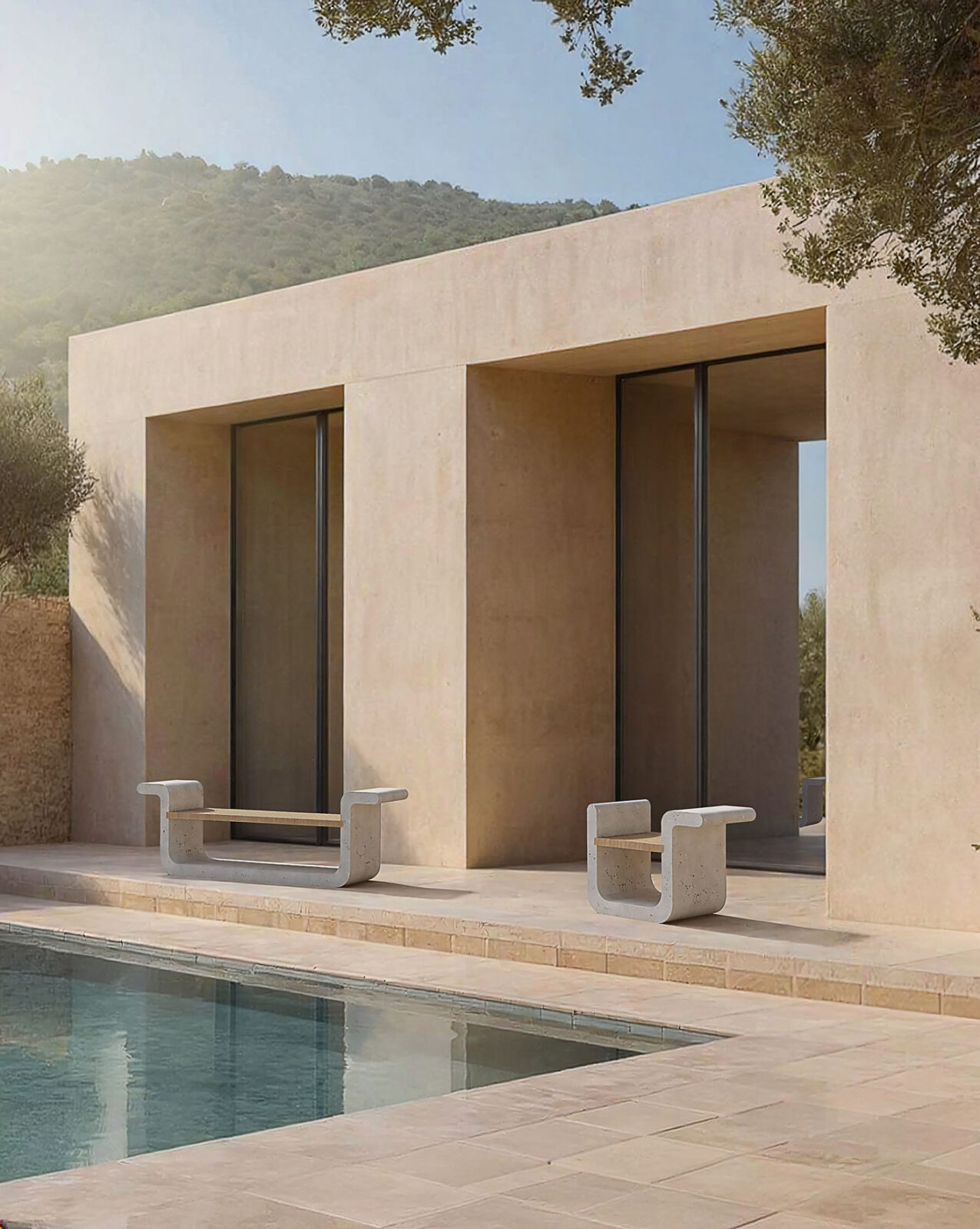
The specific version showcased in Milan features a colour called ‘sand’ — a warm, mineral-like grey with sandy undertones that fits easily into natural environments. For architects and landscapers looking for specific setups, Gravelli allows full customisation of the concrete. The colours, surface finishes, and exact dimensions can be altered to fit specific building projects or terrace sizes.
Garpa’s contribution to the project brings decades of experience with solid teak. Chosen for its weather resistance, the wood is designed to age naturally alongside the stone-like concrete. Over time, both materials will alter under the sun and rain, developing a unique patina that tells the story of the climate it sits in.
Creating an atmosphere outside
For Bodo Sperlein, the connection between an object and its surroundings is the core focus of the project. He notes that outdoor furniture should fit into the landscape while keeping its own distinct character, using texture and shape to define the space. The collection avoids loud details, relying instead on clean construction and classic shapes to make an impact.
The future of living outdoors
As our living areas continue to expand past the traditional walls of the home, the objects we place in gardens and on terraces carry a heavier responsibility. Pieces like the Arcus collection show that outdoor furniture no longer needs to choose between the permanence of stone and the inviting warmth of wood. By allowing concrete and teak to develop their character side by side over years of exposure to the elements, this collection reminds us that good design is not just about how an object looks when it leaves the workshop, but how it grows older with its environment.


