



Header: Francisco Estrada
14-C Hillside is a large family vacation house in Los Cabos, Mexico, designed by Progressive Design Firm to act as two things at once: an ultra-luxurious house where residents can enjoy one of the best beach spots in North America, while also being the perfect spot for a family to make memories. Here, between the crème de la crème of furniture and views, the clients can enjoy long meals, games, sitting outside, moving between the terrace and interior, plus endless conversations with one another. As Progressive put it, this is where “family, memory and design coexist”.
An exterior to complement the landscape
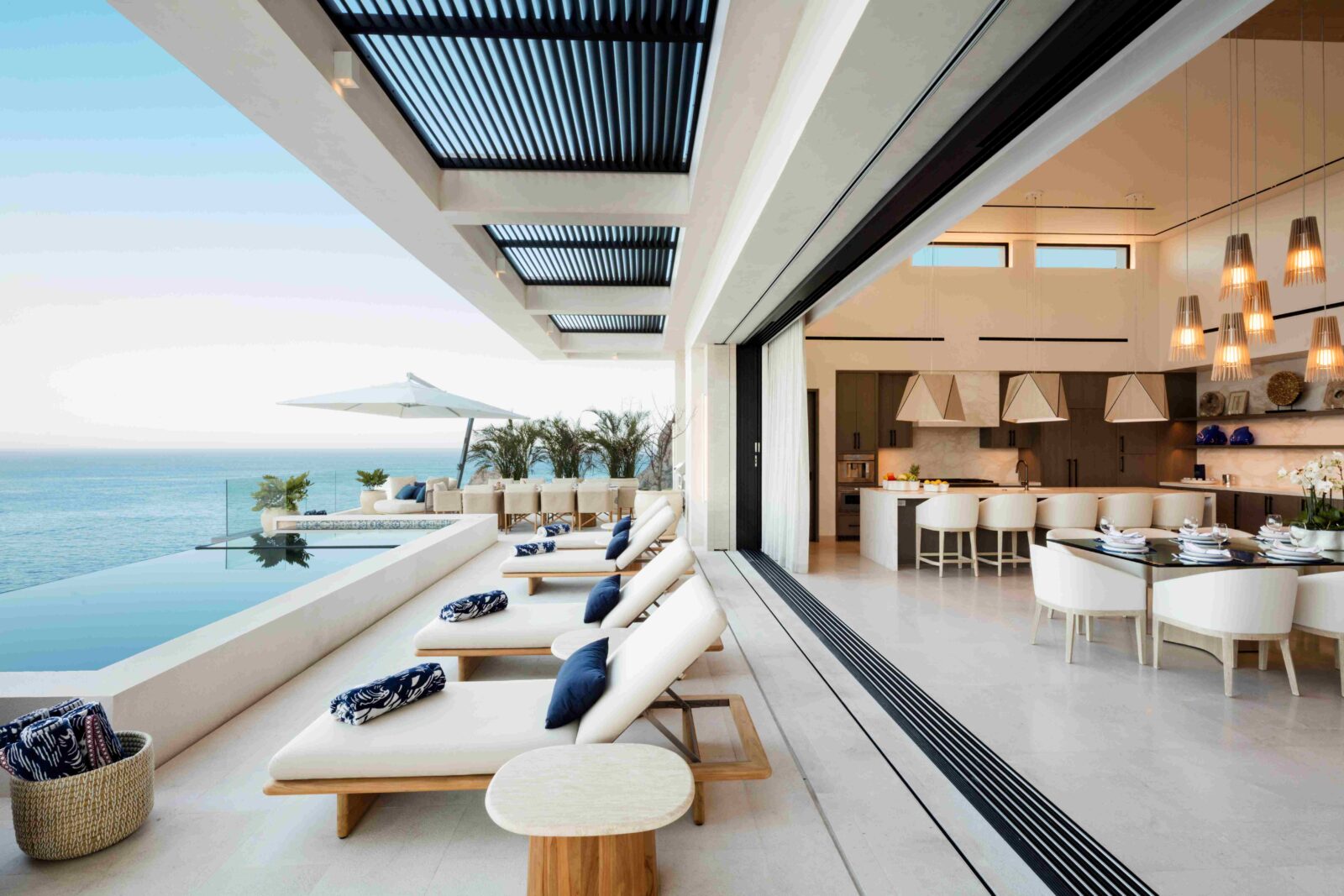
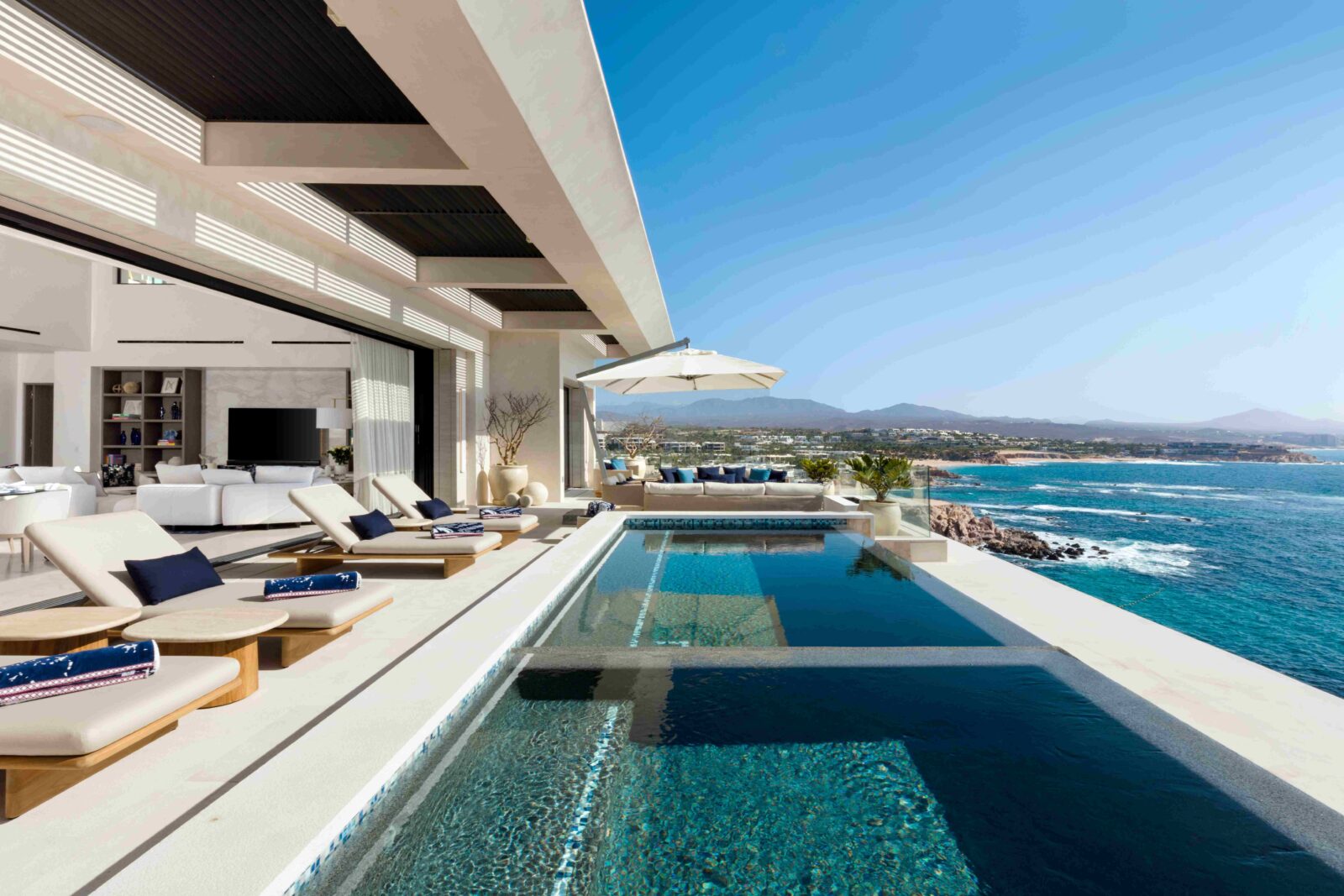
The magazine-cover house opens to the Los Cabos coastline with a wide covered terrace and a long rectangular infinity pool, using pale stone, glass balustrades, deep roof overhangs and recessed black slatted ceiling panels to create a light and coastal aesthetic. The pool, rectangular and simple, runs along the outer edge of the terrace, dressed in blue mosaic tile, which is visible at the waterline. Around it, the terrace is furnished with cream-cushioned timber loungers, rounded woven lounge chairs, low timber side tables and large cantilever umbrellas.
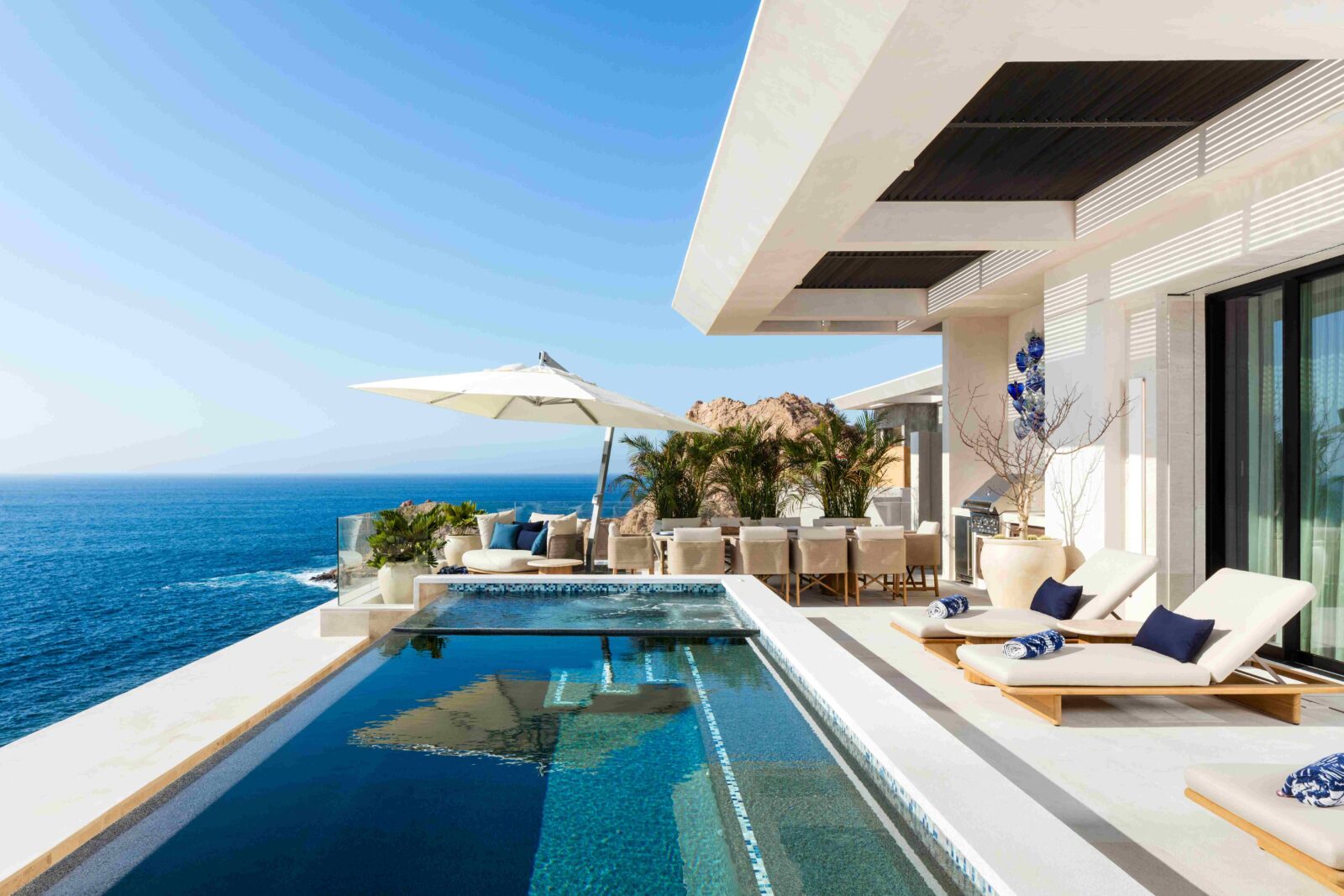
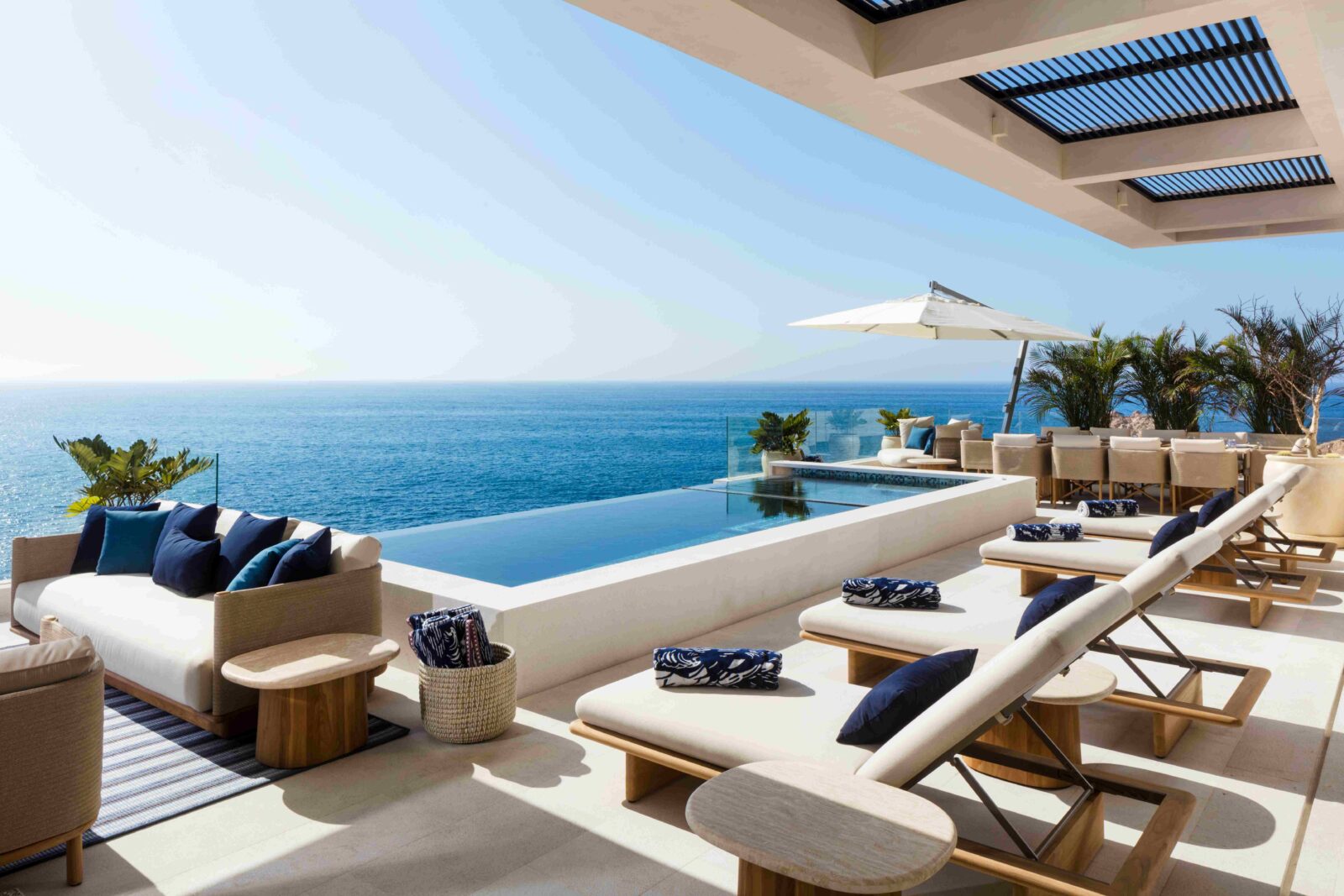
Sunbathing and lounge areas were placed on the ocean side of the house, alongside the pool and other amenities, giving the family several ways to use the exterior during the day. One section has a long outdoor dining table with woven cream chairs, planted palms behind it and a built-in BBQ nearby. On the walls, blue glass pieces bring the same colour found beyond the horizon to the mainly sand, cream and wood palette of colours of the décor. Striped blue rugs, navy cushions and turquoise accents further help bring that sharp sea-blue note into the family’s intimate space.
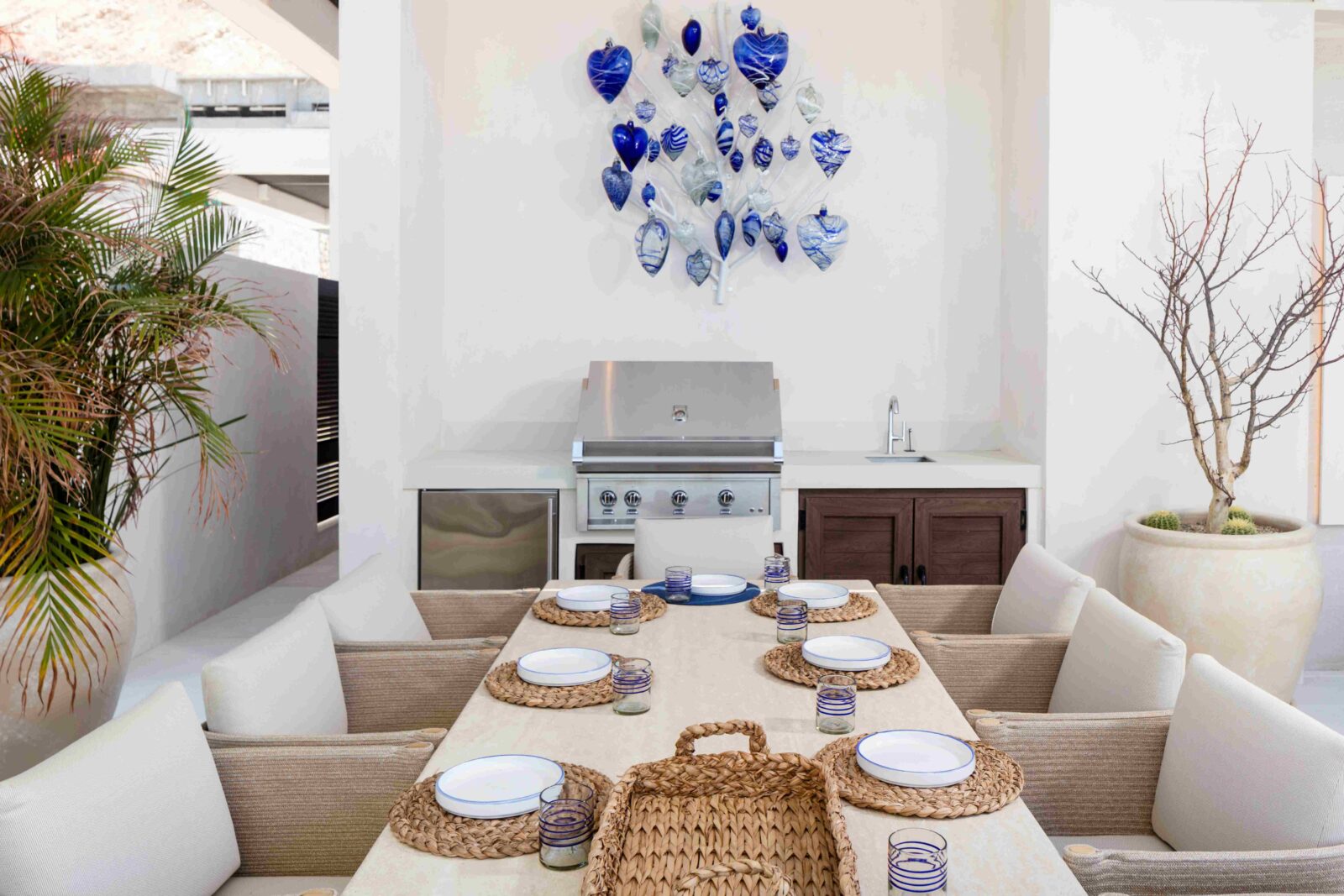
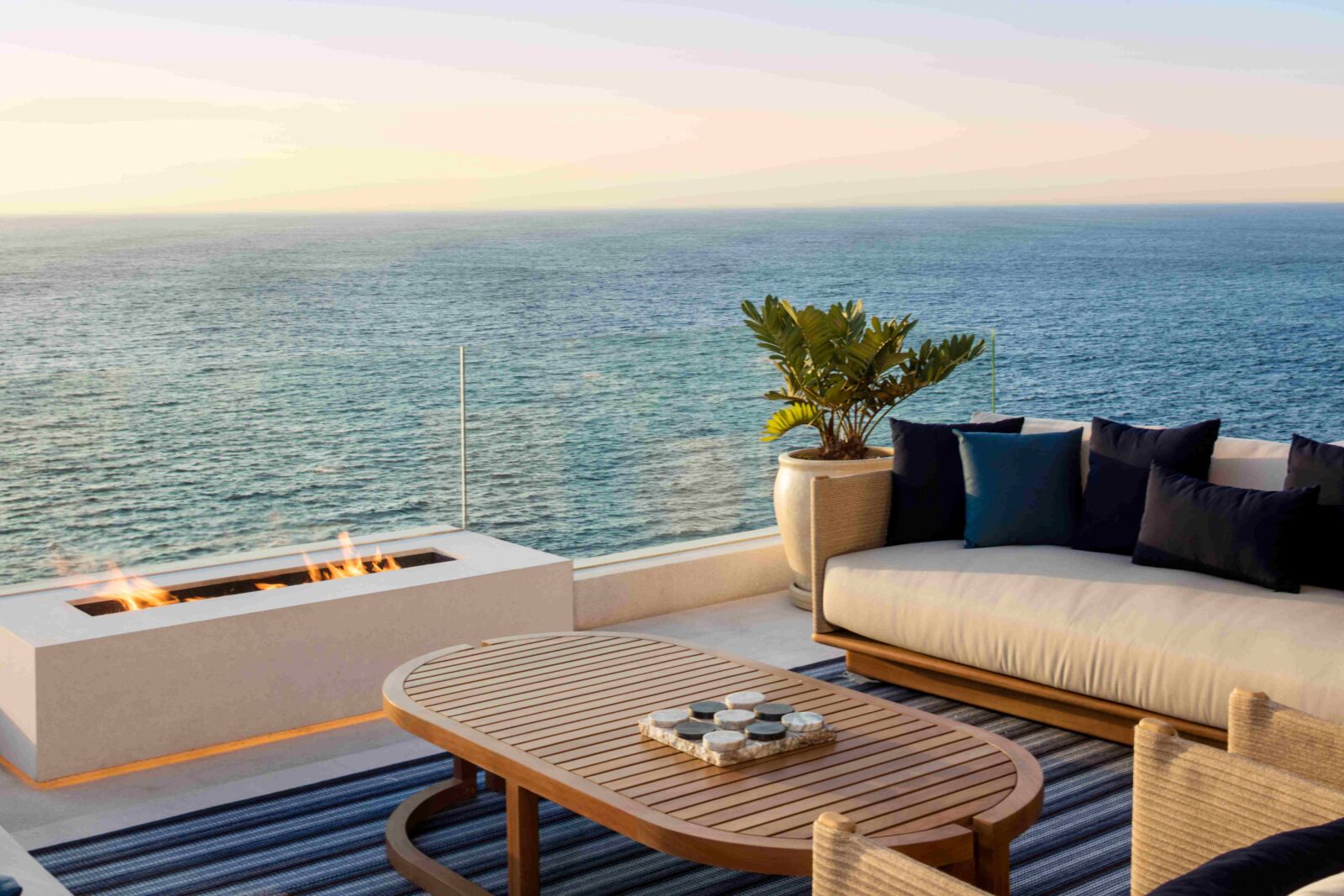
From the terrace, large windows reveal the main living room, dining area and kitchen, all of which keep the same luxurious feel found outside. The house is, therefore, enjoyed in parts: pool and sun, shade and relaxation, family and views.
Luxury and comfort in the interior
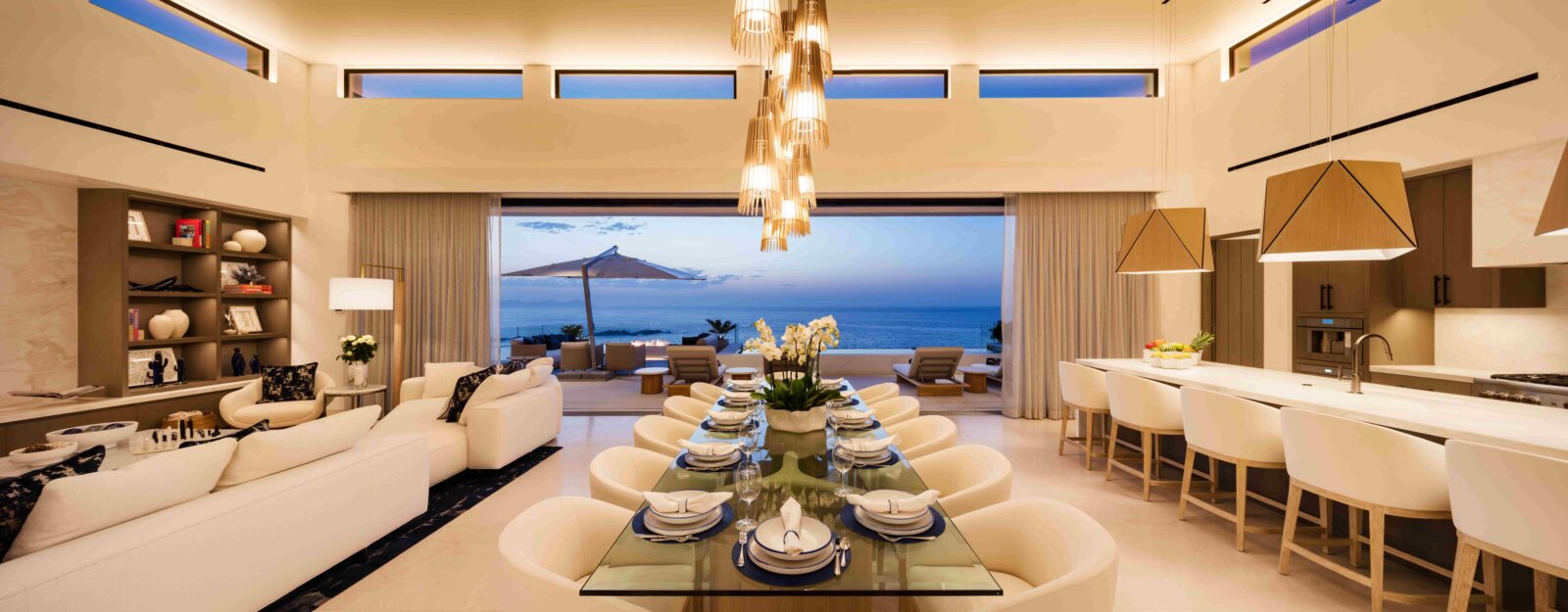
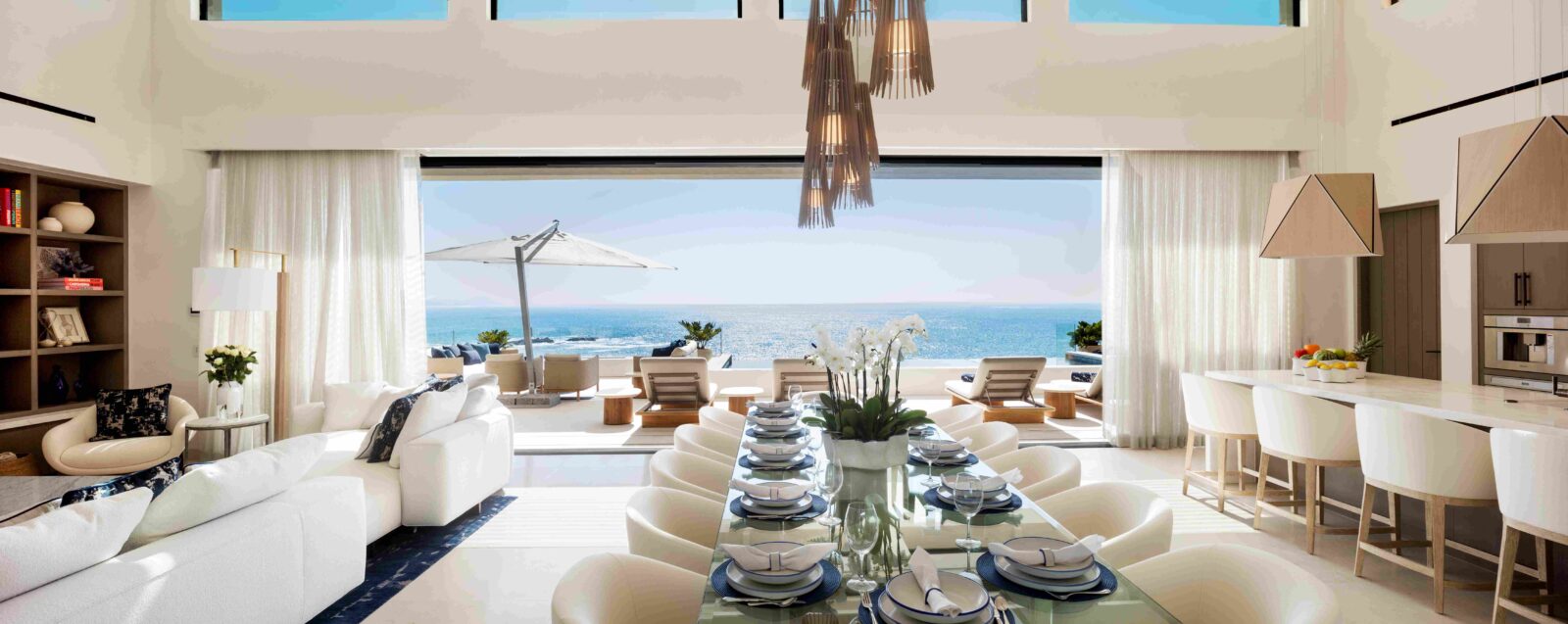
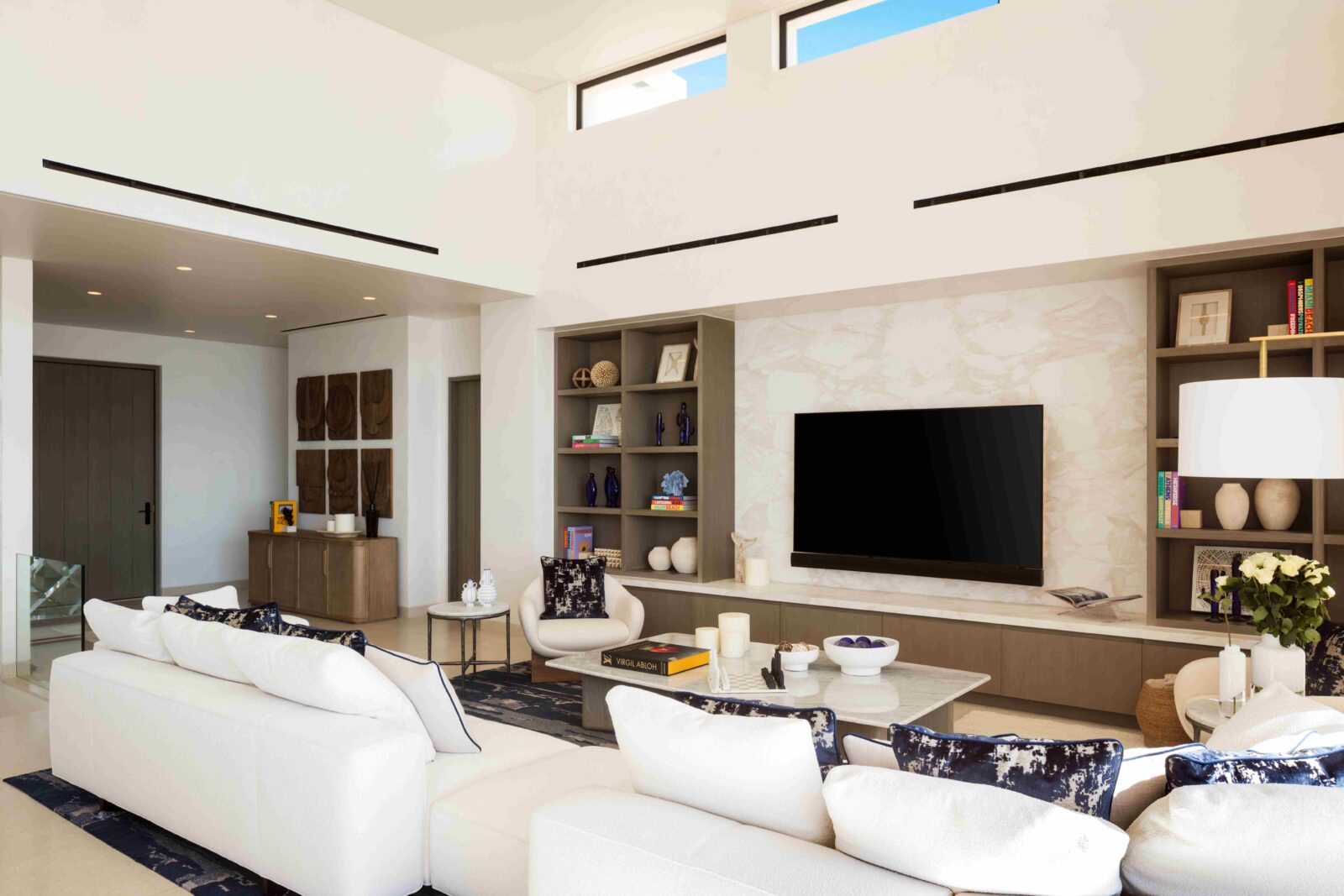
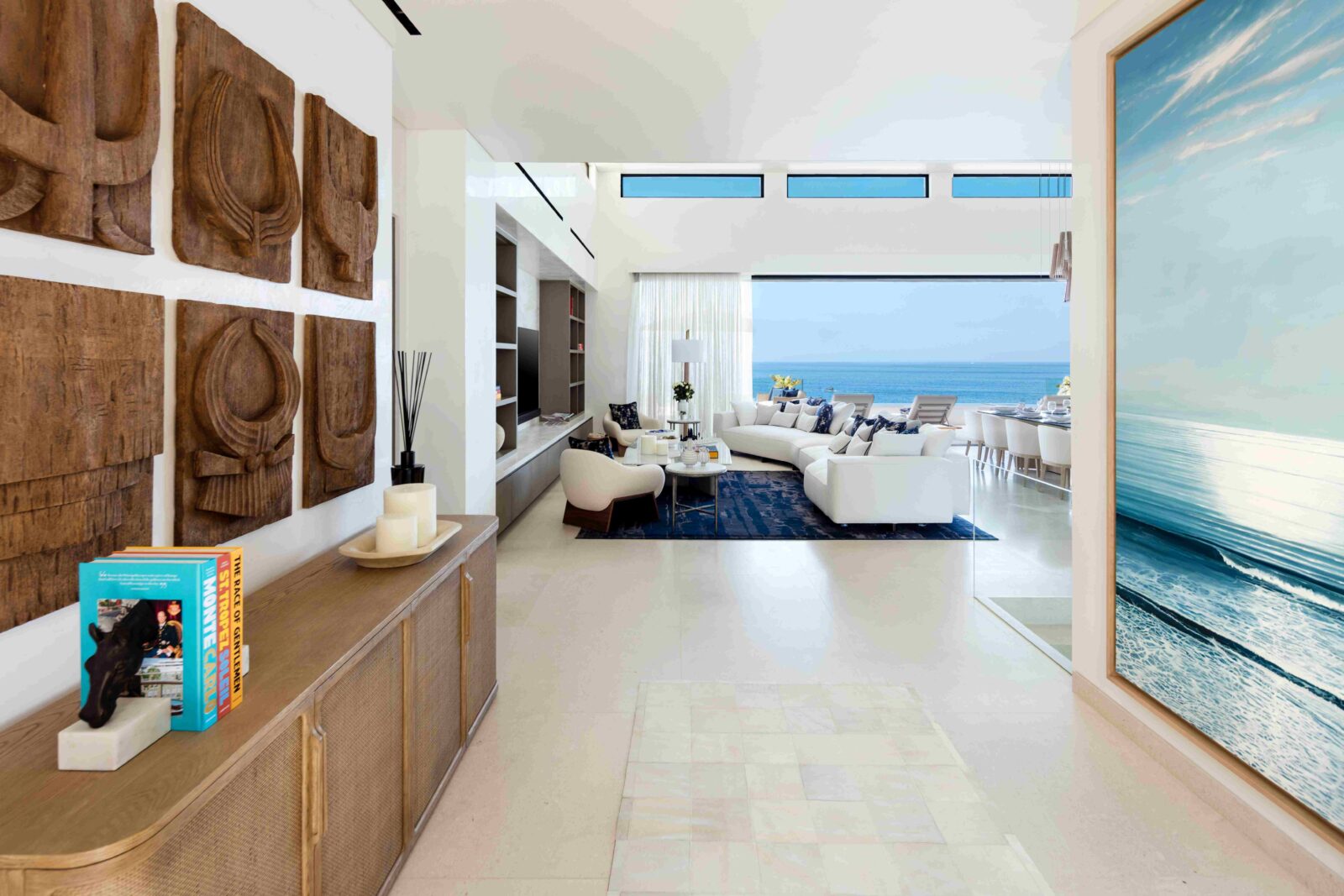
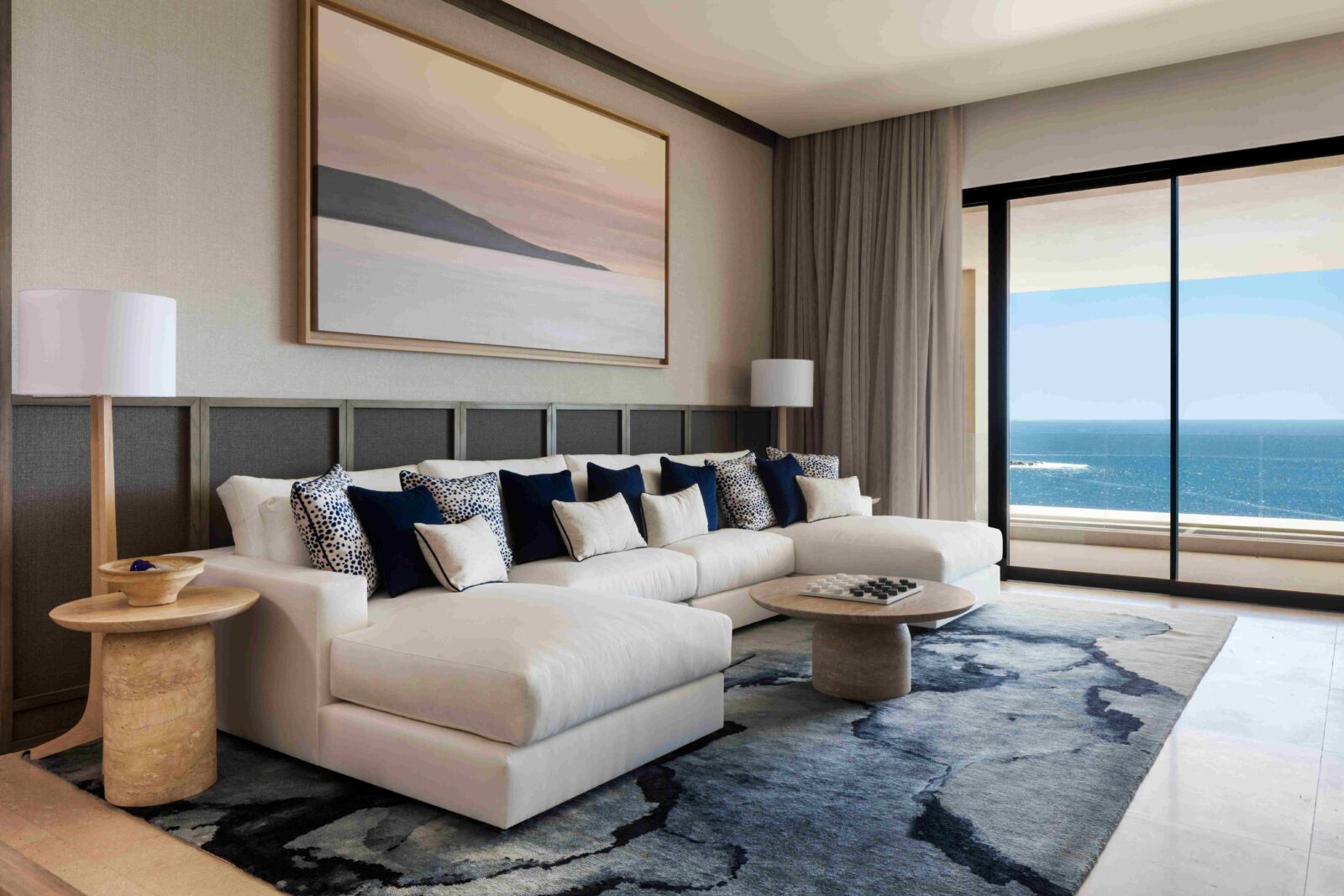
In the main living area, the lounge, dining space and kitchen all sit together in one open family room. The sitting area is centred on large white modular sofas, with a dark blue rug, patterned navy cushions, built-in shelving and a TV wall set within warm timber cabinetry. Black linear ceiling slots and high clerestory windows give the room a more architectural edge without taking attention away from the intimacy of the family room.
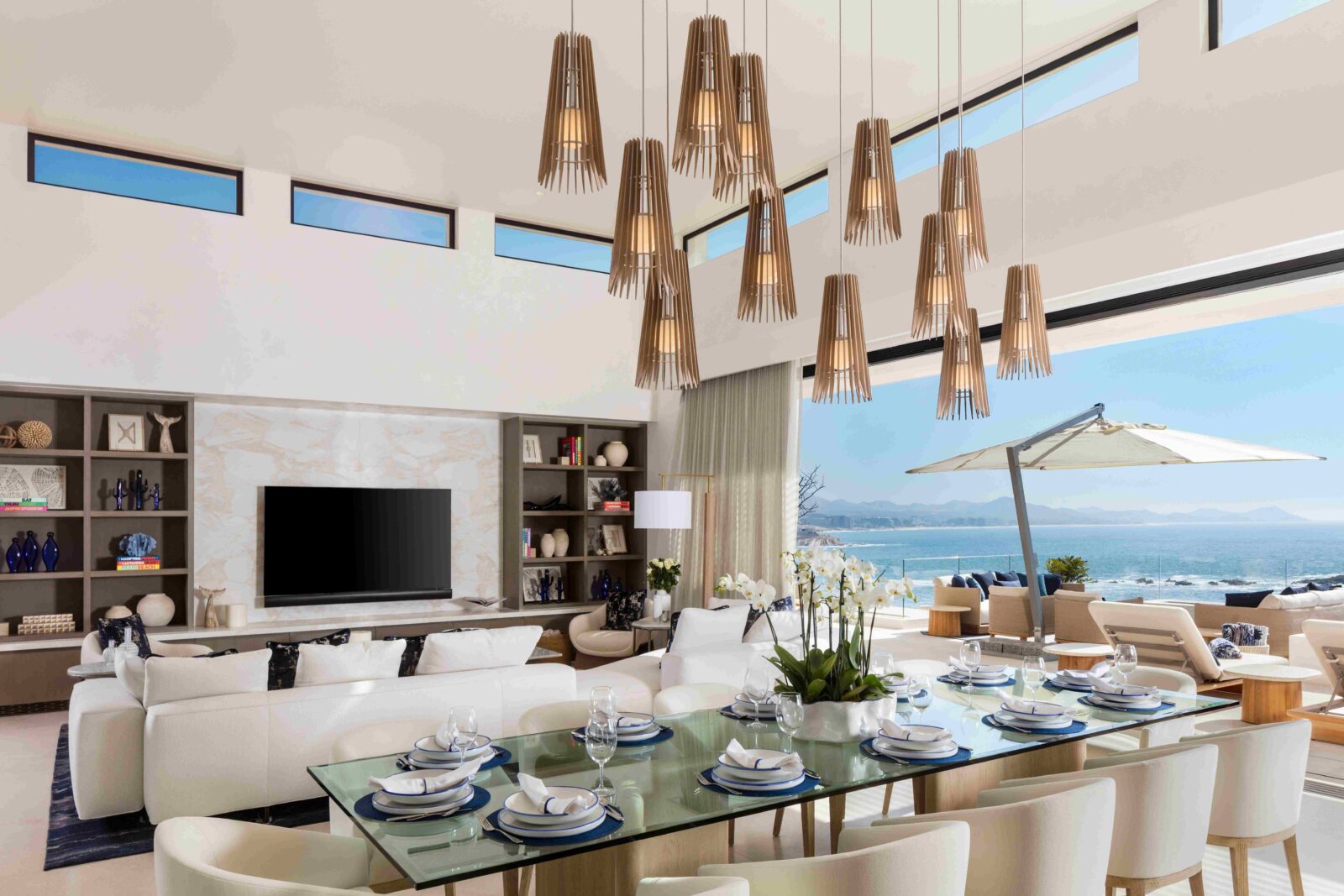
Next to it, the dining area has a glass-top table for around ten to twelve people, surrounded by cream upholstered chairs. Cerno Lex pendants arranged in a loose cluster above the table are considered to be one of the main visual elements inside the house. The kitchen continues from this space, with a long marble island, dark wood cabinetry, cream bar stools, black hardware and integrated appliances. Cerno pendants were also included here, this time at a smaller scale above the island.
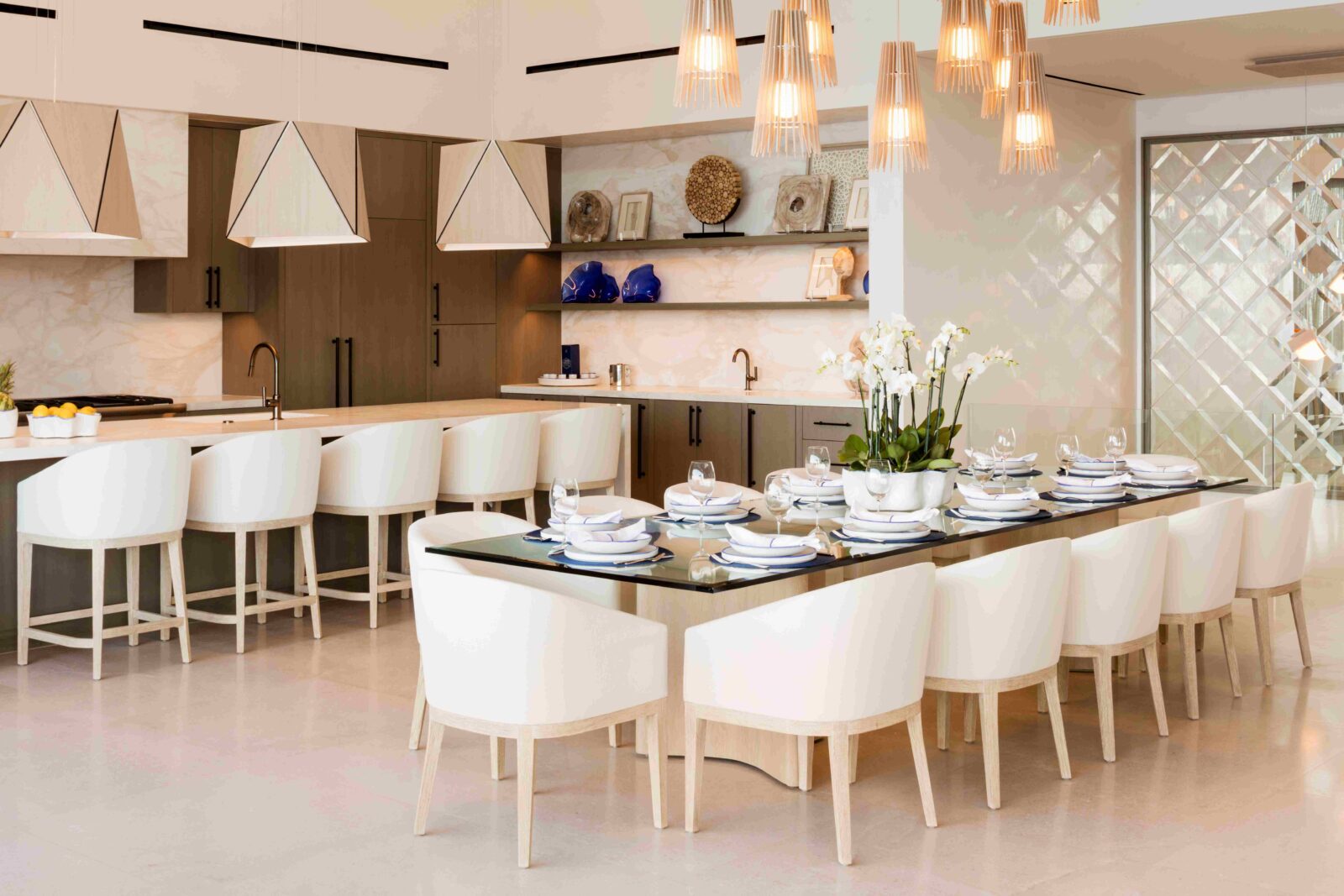
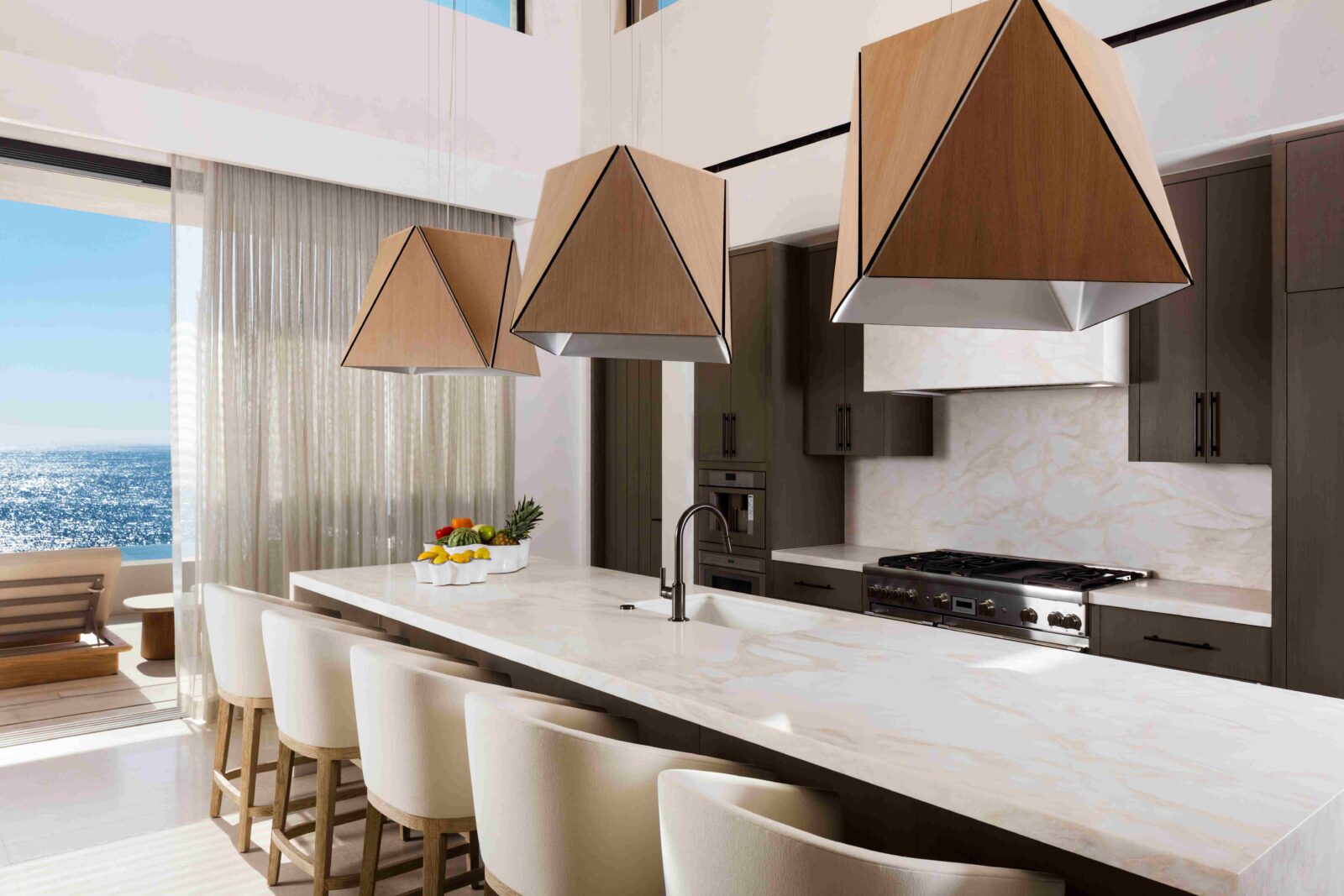
Across the interiors, the designers mixed pale floors and walls with darker cabinetry, warm lighting, glass, woven furniture, marble and deep blue accents. The studio notes that the use of light and dark woods together is uncommon in Louis Ruiz’s work, who is the designer, and that contrast gives the rooms more texture than a purely minimal interior would have. The style is defined by the studio as “controlled but eclectic”, with some references to the 1970s through rounded sofas, sculptural chairs, low lounge furniture, geometric pendant lights, textured surfaces and unique decorative objects.
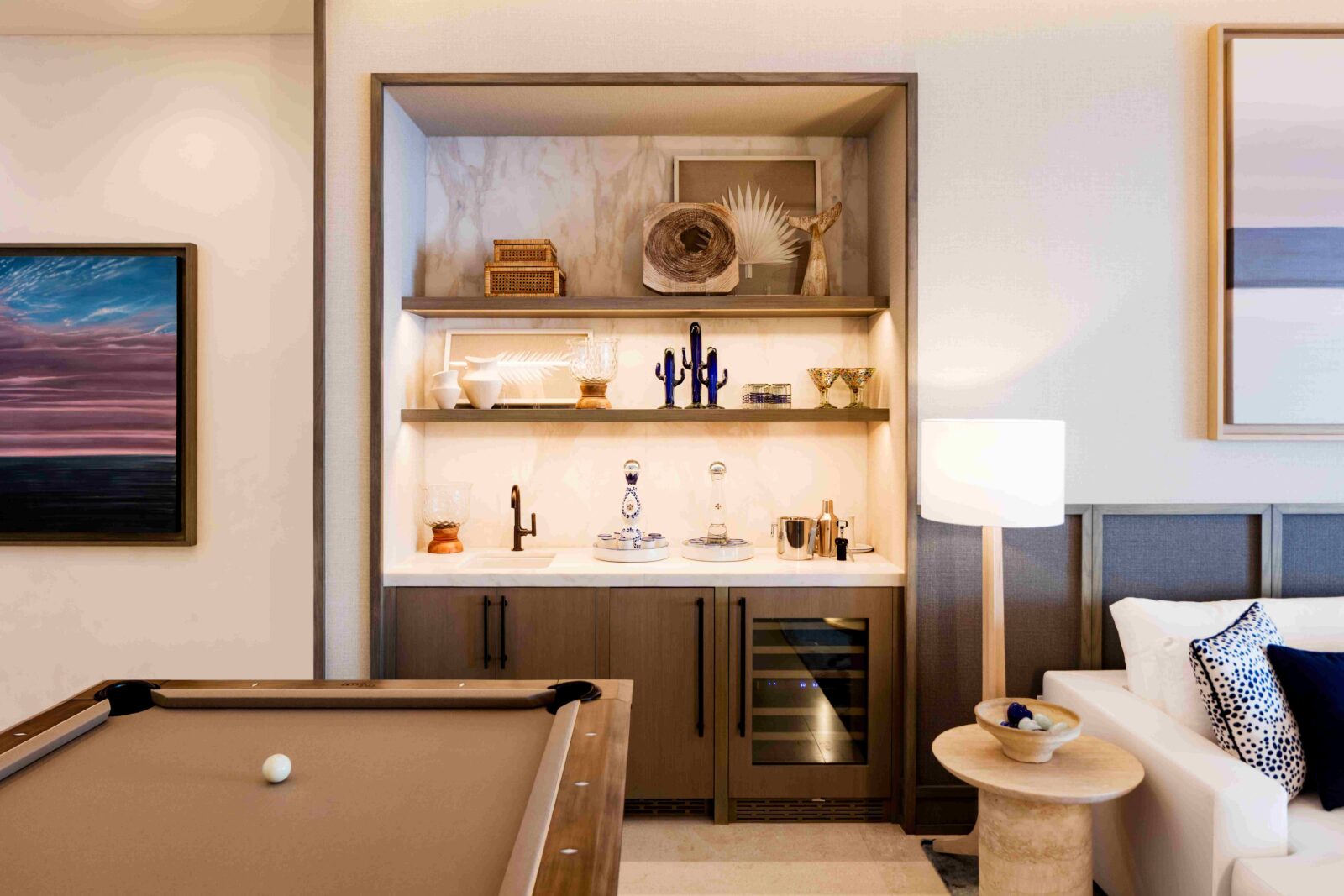
A games room was included for those days when the family wants to enjoy a more intimate time. It includes a pool table, bar, wine fridge, comfortable seating and an ocean view. Compared with the main living area, the room has a darker, more contained feel, with open shelving, dark wood cabinetry, a marble-like backsplash and a long white sofa.
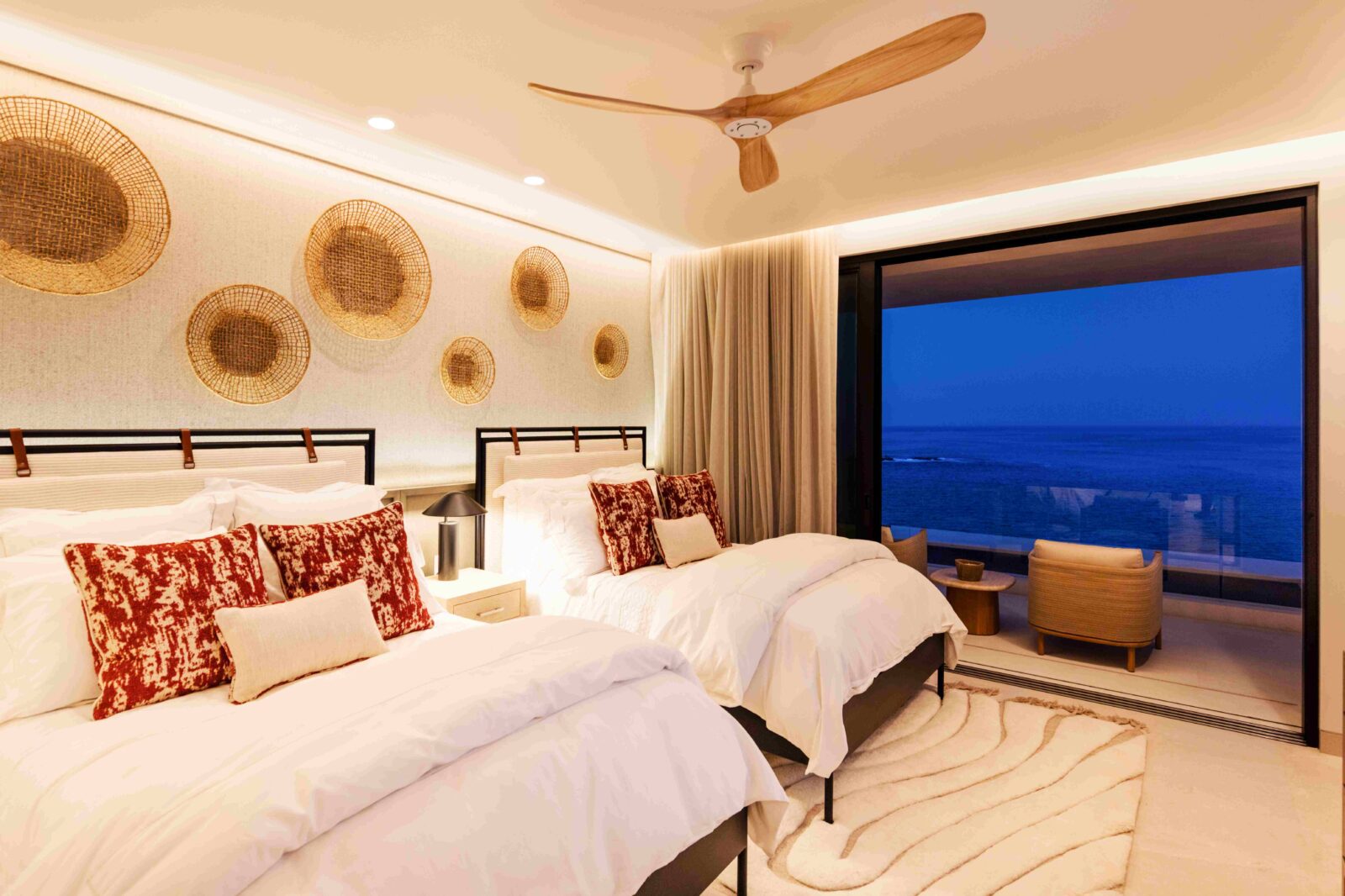
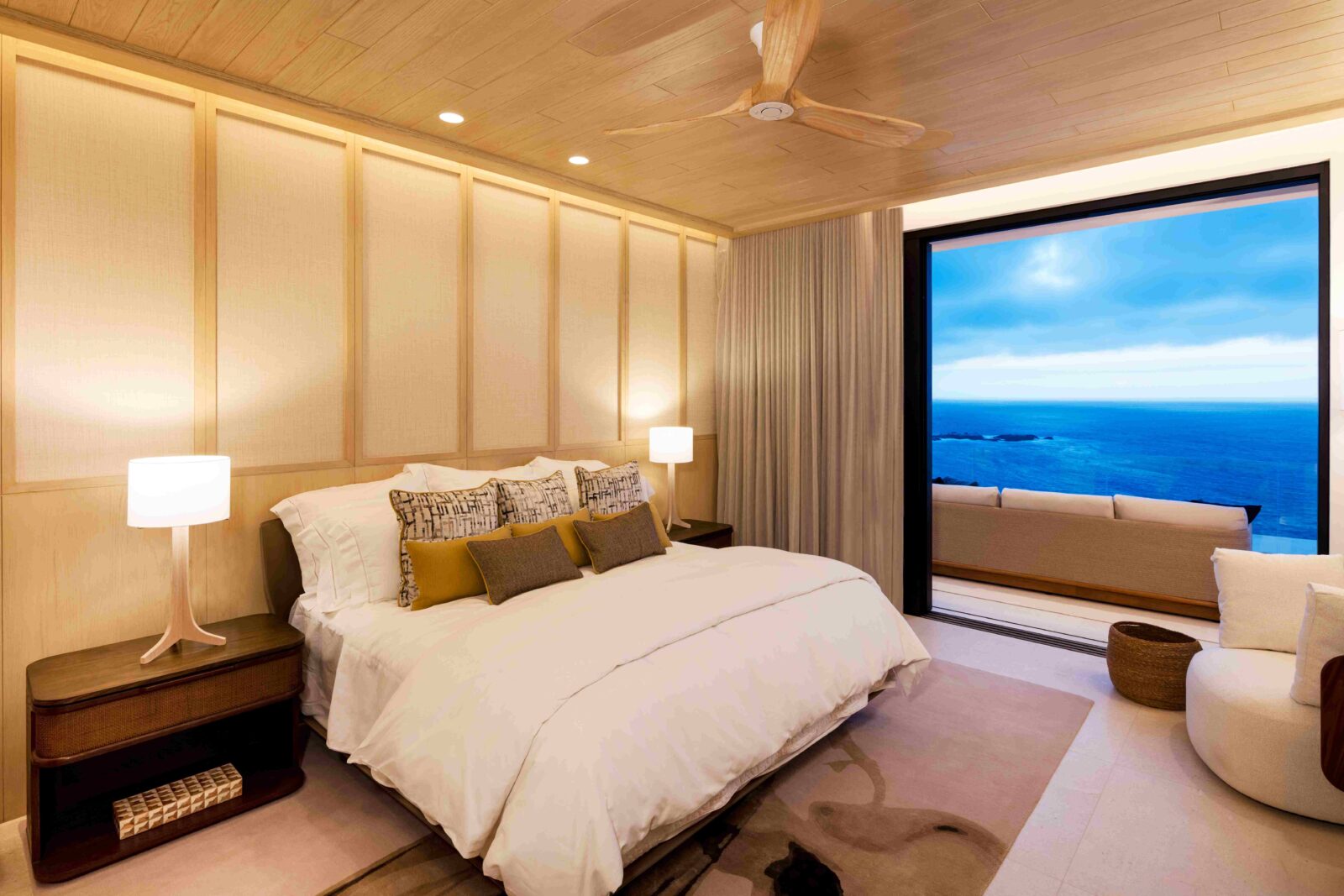
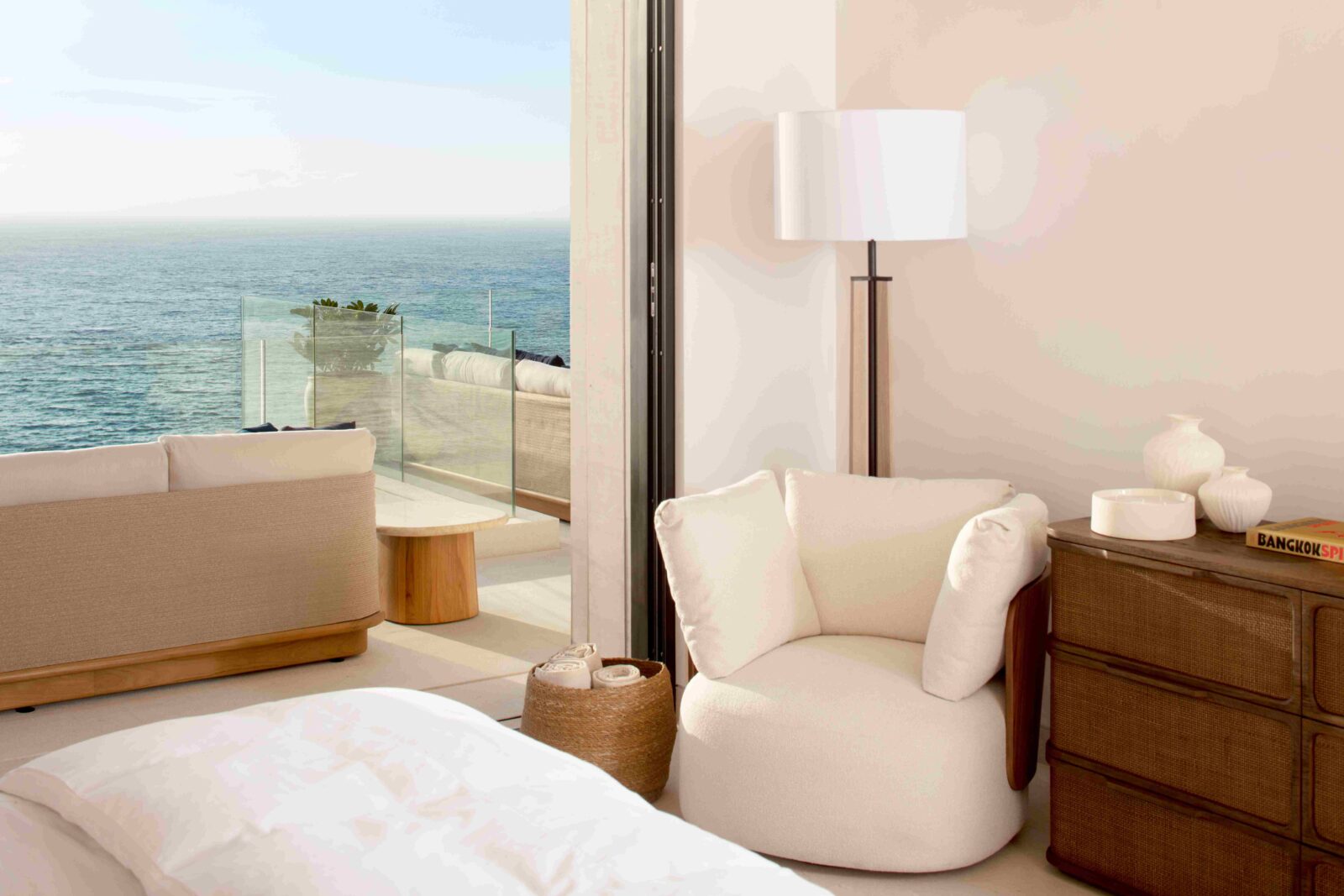
The bedrooms were specifically designed to be relaxing and provide a coastal vibe, having received softer finishes such as cream linens, light timber ceilings, rattan furniture, soft lounge chairs, warm floor lamps and direct access to the terrace.
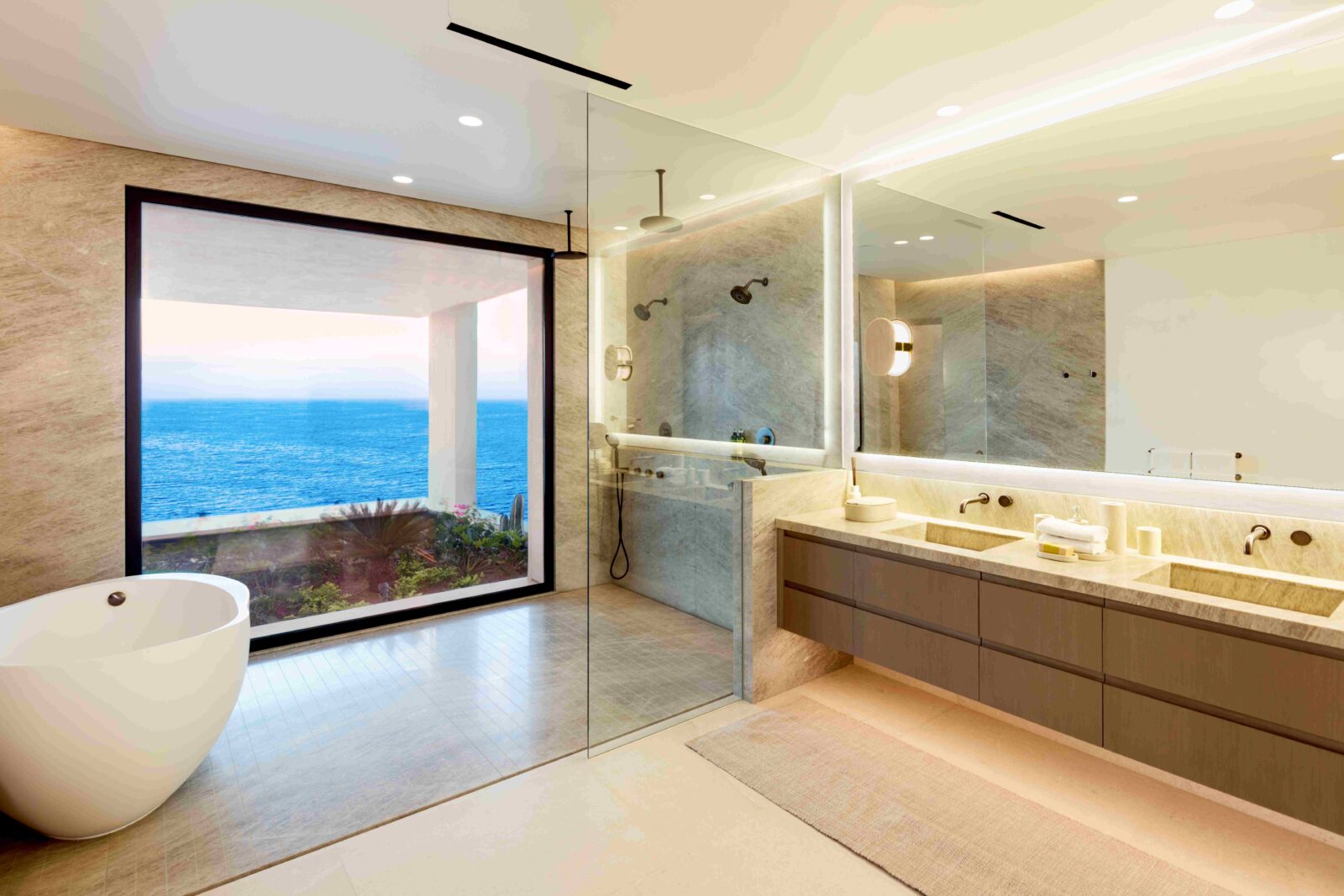
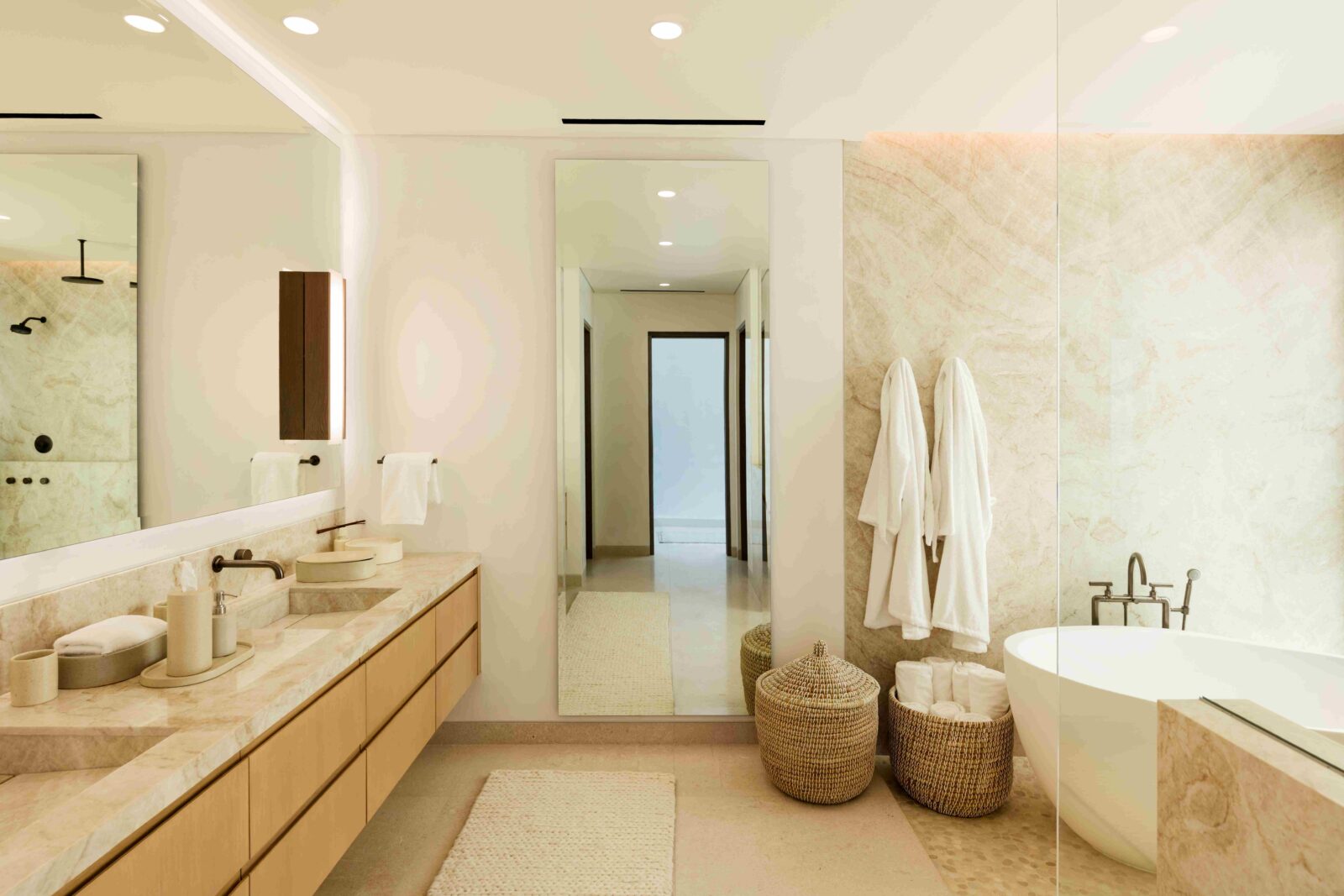
The bathrooms continue the lighter palette, with beige stone, pale timber vanities, large mirrors, recessed lighting and woven baskets, alongside freestanding white bathtubs facing the views beyond the large windows.
Books, sculptural objects, ceramics, orchids, chess sets, bowls and art appear throughout the house, giving the rooms a lived-in domestic look that is sure to make the family feel at home when visiting Los Cabos throughout the year.


