Header: Mutua Matheka
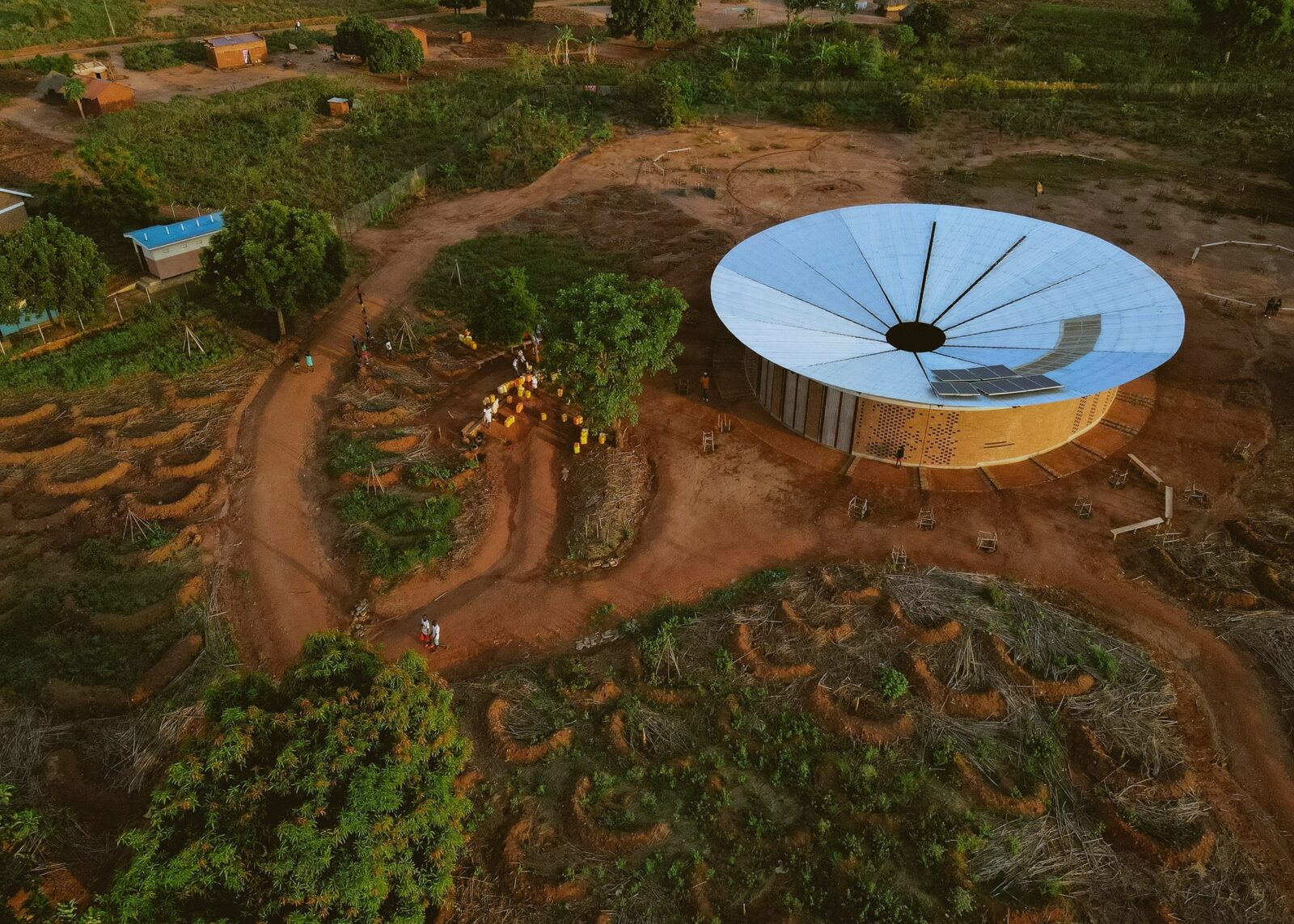
The Bidi Bidi Refugee Settlement in Uganda is home to over 270,000 South Sudanese refugees. Within this vast community, the Bidi Bidi Performing Arts Centre has emerged as a crucial space for music, theatre, and collective healing. Designed through a partnership between Hassell and Localworks, the building provides a safe environment where young people can process trauma and develop creative skills. The project proves that excellent cultural architecture belongs everywhere, even in the most challenging humanitarian settings.
The structure relies entirely on regional resources and low-carbon building techniques. Its walls are formed from compressed earth blocks made using soil dug directly from the site, while a massive roof directs rainwater into a large storage tank for community use. This commitment to local materials and social purpose earned the project the prestigious Architectural Design of the Year title at the 2026 AIDA awards. In this conversation, architects Felix Holland and Xavier de Kestelier discuss how they balanced technical engineering with local craftsmanship to deliver a lasting asset for the settlement.
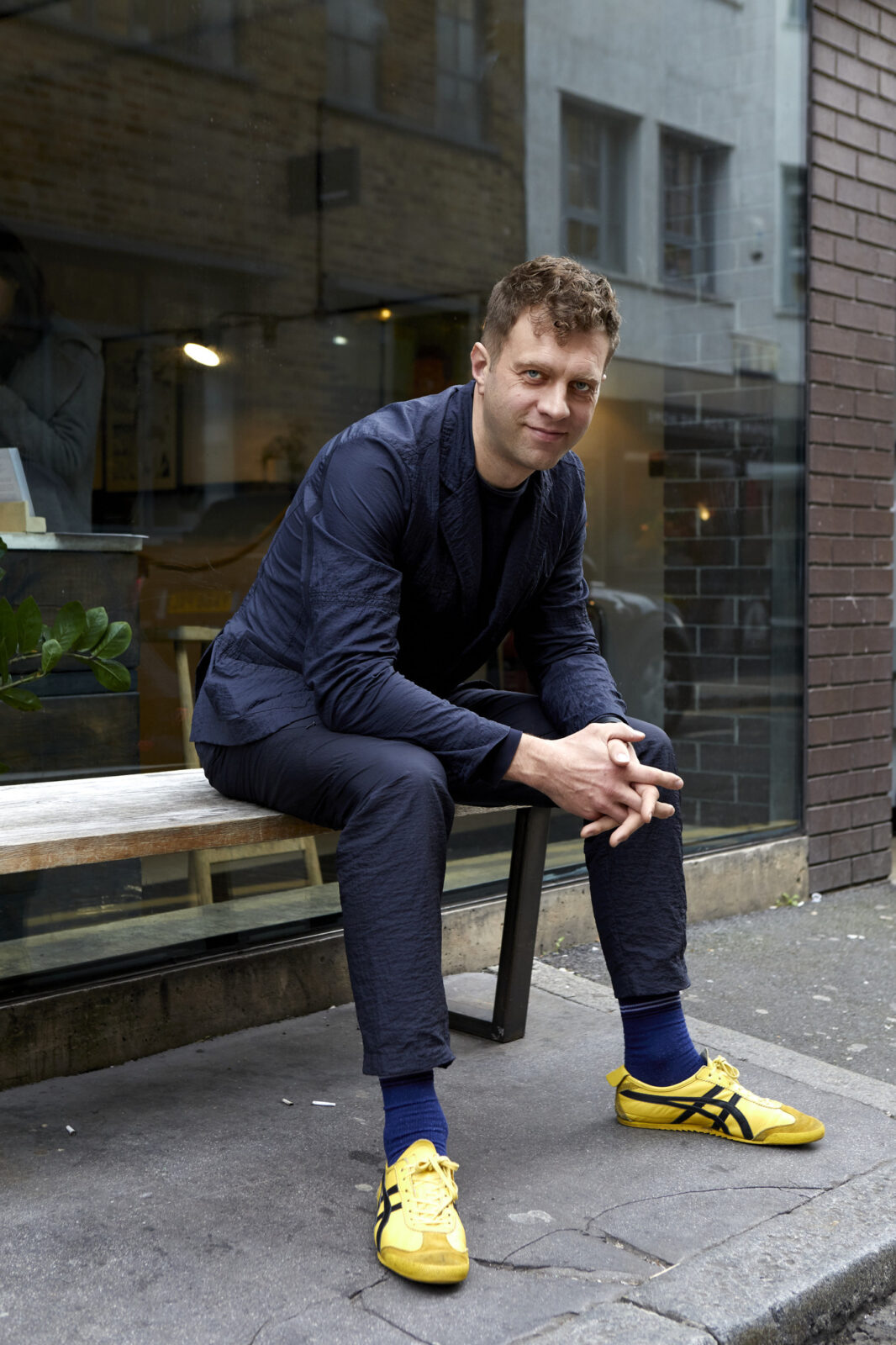
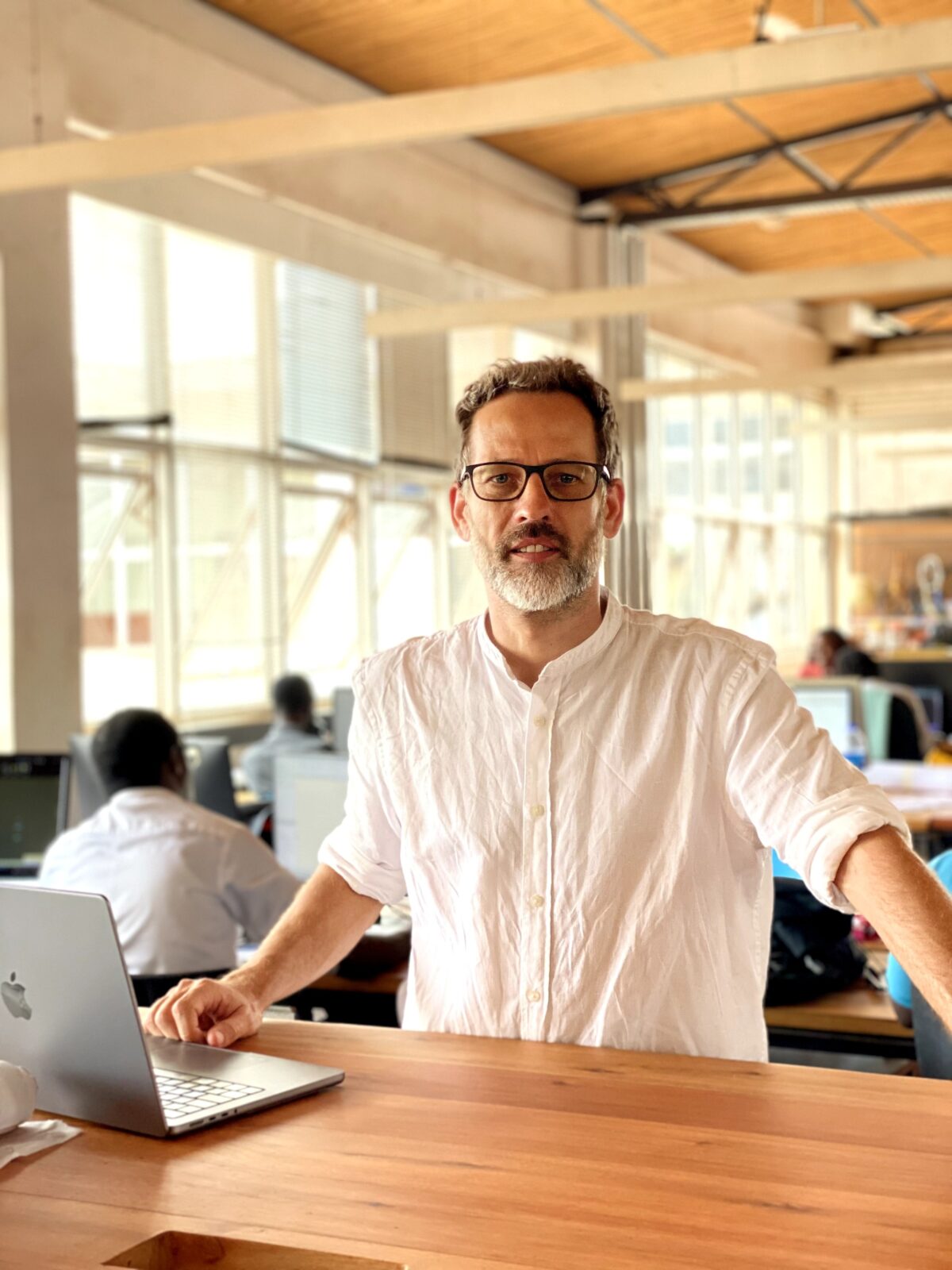
Could you tell us a little about your path into design? What has shaped the way you approach architecture?
Felix Holland: It was always the green angle. I was something of an environmentalist already before I studied architecture, and that interest has stayed with me ever since. It would be too easy to say that’s the only thing — of course it’s not — but it is a very formative part of how I approach architecture. Beyond that, I would widen it to say it’s also about being human-centred, keeping the user in mind, and trying to bring these two things together into something that is rooted in place and responds sensitively to location and climate.
Xavier de Kestelier: For me, it has probably always been about building — about how things are put together. I studied architecture, but at an engineering school in Belgium. I actually started in engineering, failed the first year, and found it far too theoretical, too disconnected from reality. That’s what led me to architecture at the same school, and suddenly everything was so much more about making things, small models at first, then larger prototypes. Later, in professional life, the first fifteen years of my career were really about how to build complex systems, both through digital tools and within physical constraints. I think that drive, and it might well trace back to failing that year of engineering, has always come from building, from thinking through making. You can probably see traces of it in the Bidi Bidi project, too. It was never just about creating a form. It was about creating something that does something, and arriving at form through that intention. The form did not come first.
When you first began working on the Bidi Bidi Performing Arts Centre, what did you feel this place most needed to offer the community?
Xavier: I was born in Ghent, in Belgium, a city of around 270,000 people, which is roughly the same population as Bidi Bidi. Extremely different in every other way, of course, but similar in scale. Growing up in Ghent, we were very fortunate to have a wealth of large cultural buildings: museums, a design museum, modern and classical art galleries, opera houses, and theatres. Going to Bidi Bidi and understanding that community. There were essential services, education, food programmes, and various support structures, but there was no cultural centre. And cultural buildings matter. They look different, they feel different from what surrounds them, and they tend to carry a level of care and attention to detail that sets them apart. That is exactly what we wanted to bring to this project: the same attention to design we would give to a cultural building anywhere else in the world, Australia, Europe, wherever. For that reason, we also drew on the same tools and techniques we would use in any of those contexts.
Felix: To add to that, what I find important about this project is that the idea did not come from us. Our client, TO, approached us with a brief they had developed together with Sina Loketa, who is now the building’s primary user. So, we came to the site and tried to understand it on its own terms.
There is no good reason to approach a project in a refugee settlement any differently than you would approach any other. You take it seriously, you bring the respect it deserves, and you try to understand the location and the needs of the people. And it becomes a very slippery slope to start asking why a refugee settlement needs a music and arts centre, follow that logic and you end up in a very difficult place.
Our first approach was one of modesty and careful listening, the same as with any project. One thing that became immediately obvious was the issue of water. That is really one of the essential elements of this design, the rainwater collection system, which did not have to be part of the Music and Arts Centre brief, but made complete sense in combination with it. Wouldn’t you say that was also a defining aspect of the project?
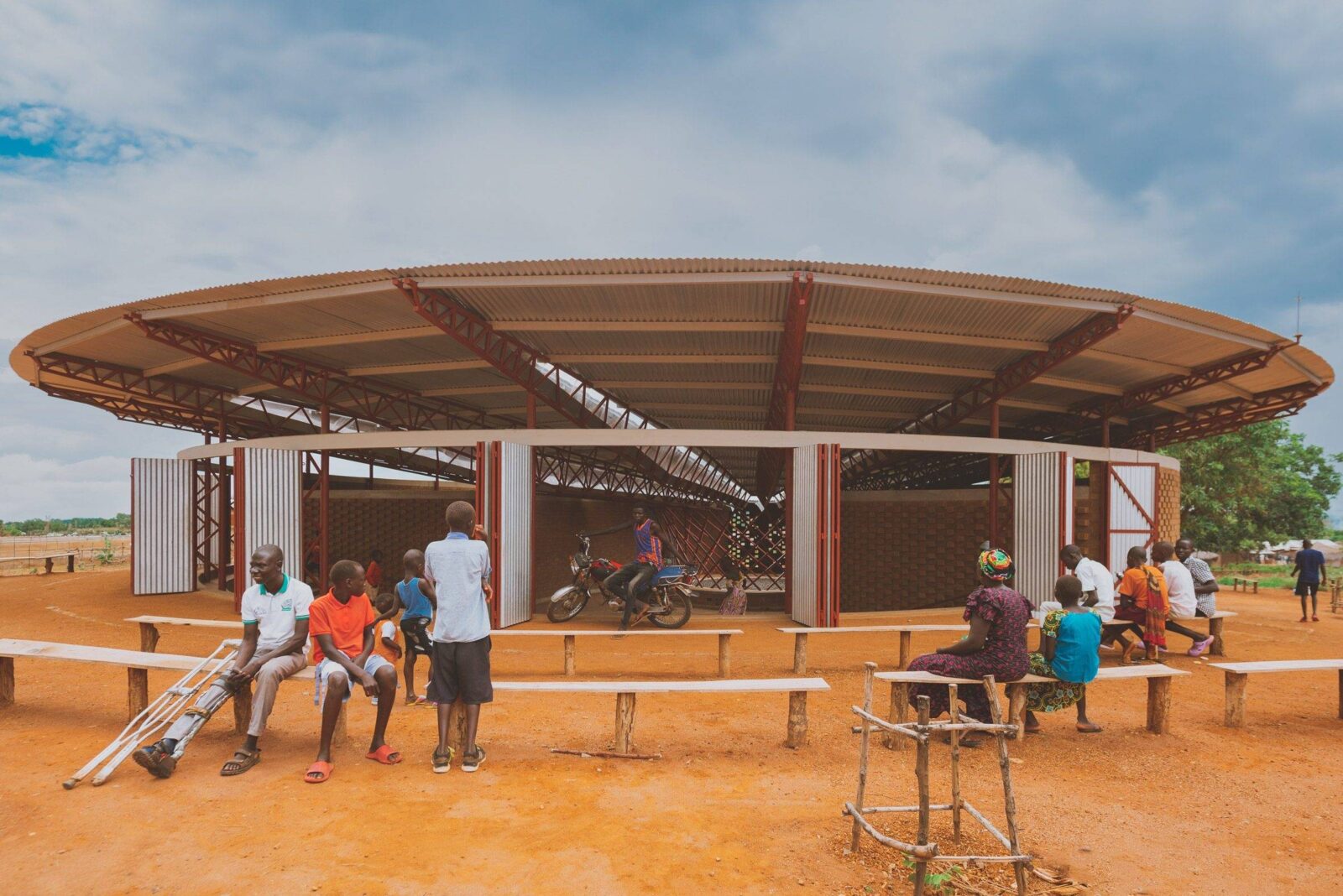
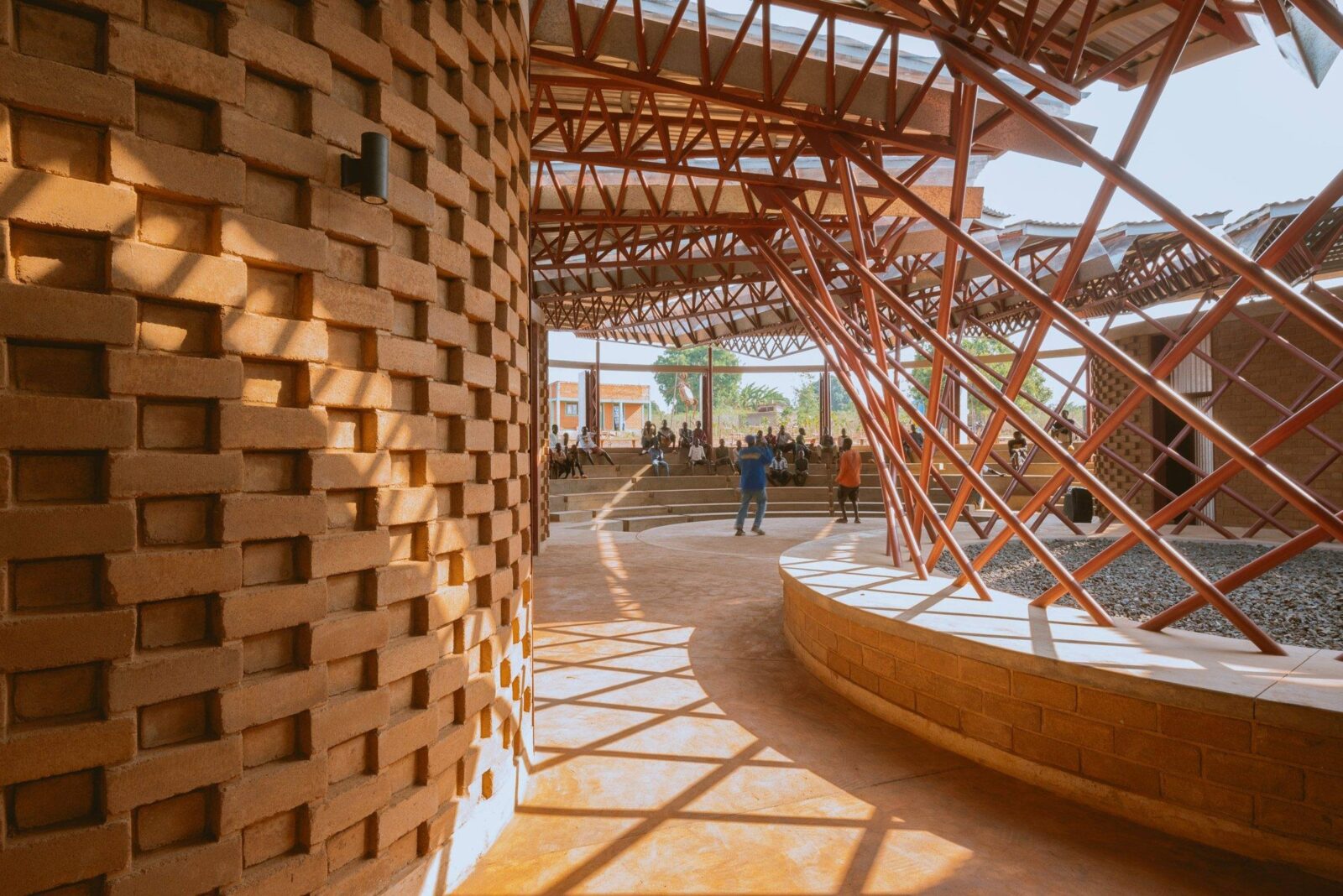
Xavier: Absolutely! And it wasn’t part of the original brief at all. It wasn’t about water collection to begin with. But we realised we needed a large roof anyway, to protect the centre and shield the walls from rain. And then it struck us: this roof could do something more; it could serve a second function. When you factor in the contaminated boreholes in the area, harvesting rainwater didn’t just make sense, it felt almost necessary.
Can you tell me what your approach was to designing a Centre with so many different uses, from performance to learning and gathering?
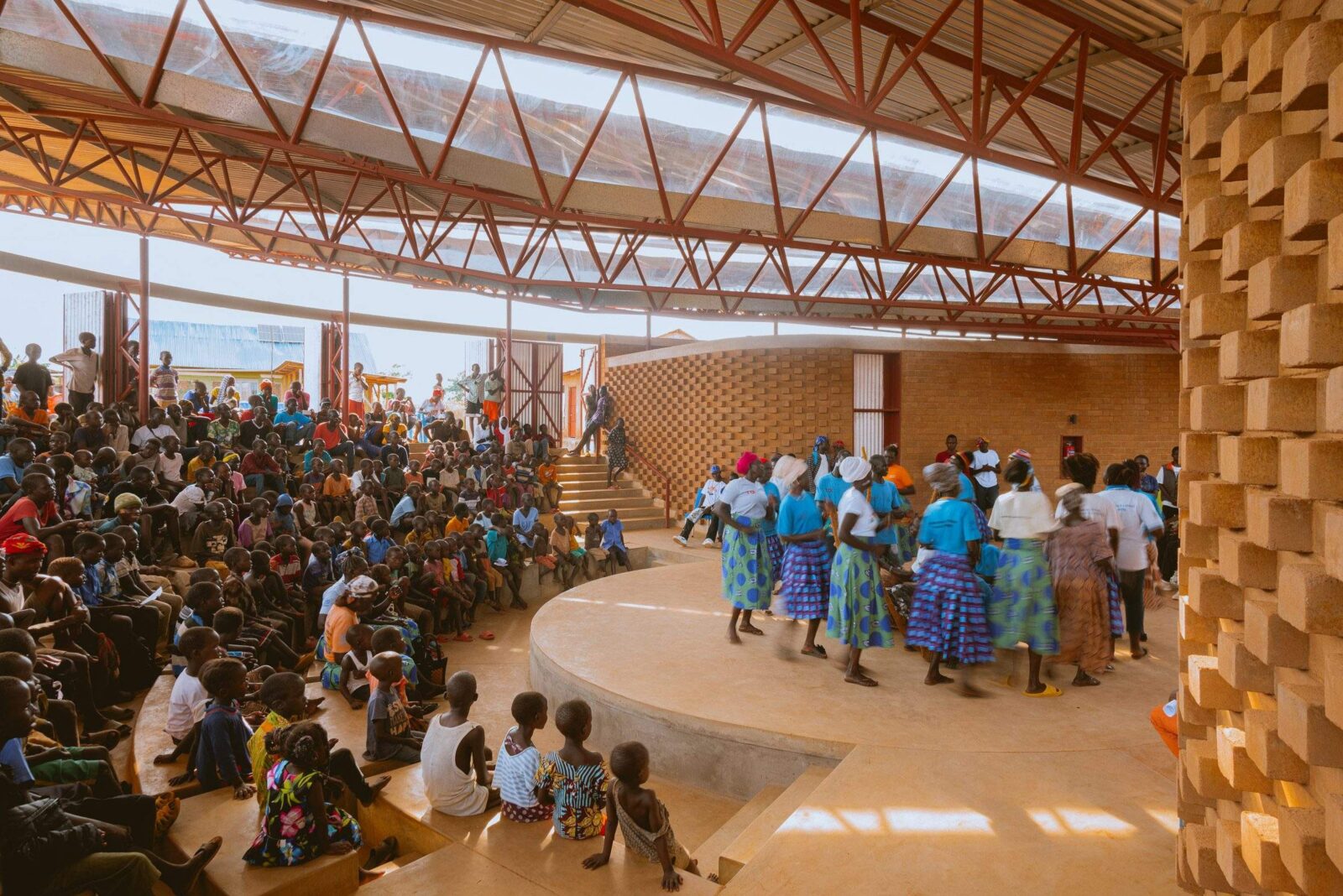
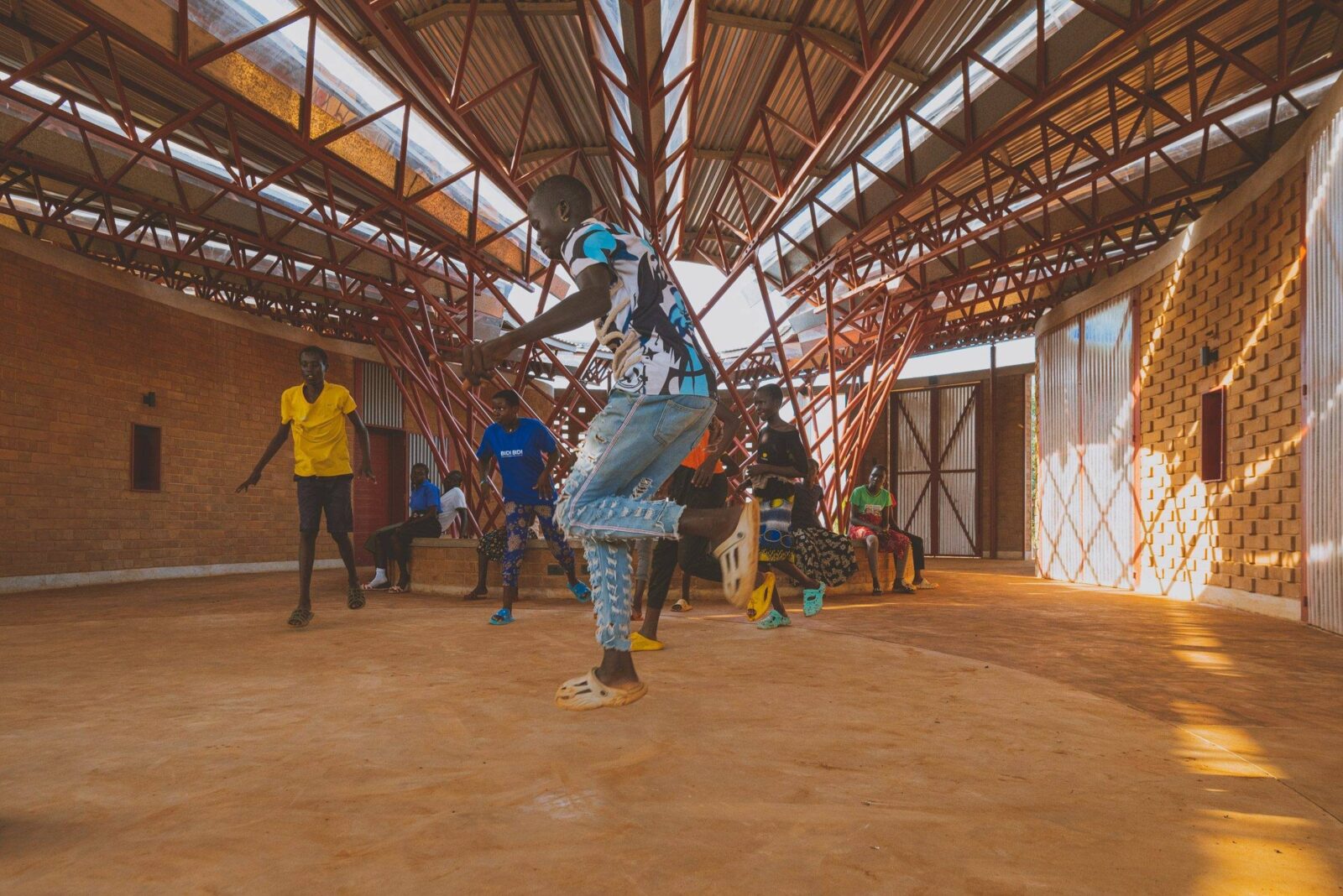
Xavier: It is relatively straightforward to design for what you already know. We knew there would be performances, recording, music teaching, all of which were defined. The harder challenge is designing for what you cannot yet anticipate. When we visited, two things genuinely moved me. The first was seeing children playing on the central structure; it had become something else entirely, a place to hang out, to climb, to inhabit in ways we never planned for. The second was seeing entrepreneurs using the space to sell their goods. I had seen photographs of this before, but witnessing it in person was something different. People had taken the building and made it their own. That, I think, is the hardest thing to design for: a function that doesn’t exist yet, that only emerges once the building is alive.
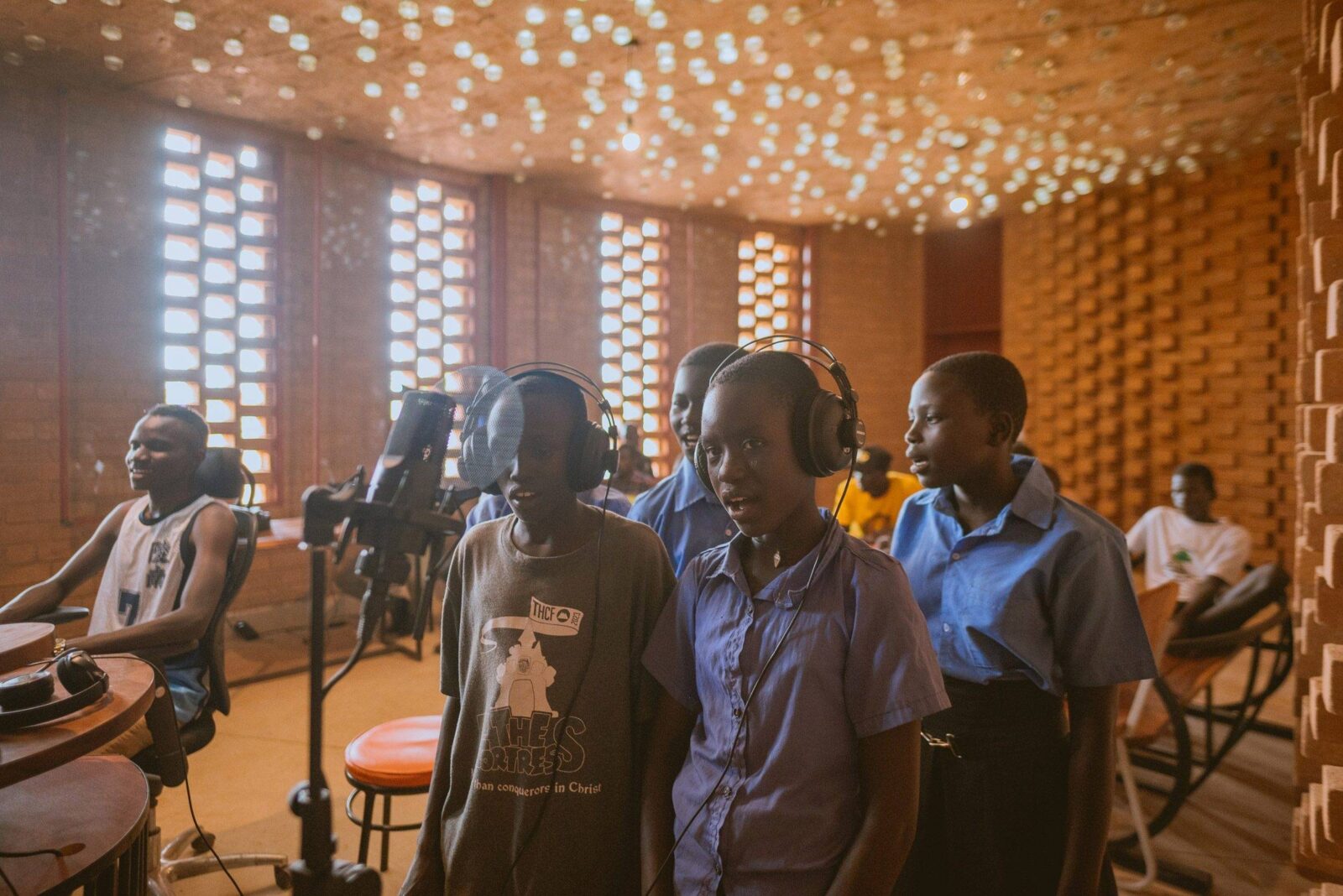
Felix: There is also one function that is particularly difficult to reconcile with the others, and that is the music recording studio. By nature, the assembly space, the dance area, and even the teaching space are noisy, busy, and chaotic. And right next to all of that, you have this completely introverted, quiet room.
Xavier: That was the hardest one to design, wasn’t it?
Felix: Absolutely. It had to be sealed off acoustically, but it still needed light, it still needed air, just not noise. All of those competing requirements are converging on a single space. We made compromises, as you always do in design, and it’s honest to acknowledge that. In practice, the idea is that all activity in the adjacent spaces stops during recording sessions. But when that happens, the studio heats up quite quickly, and the users have to live with that tension. It is a real constraint.
Local earth, natural ventilation, daylight and acoustic brickwork are all key elements of the Centre’s design. What did these materials and techniques allow you to express that a more conventional building might not have achieved?
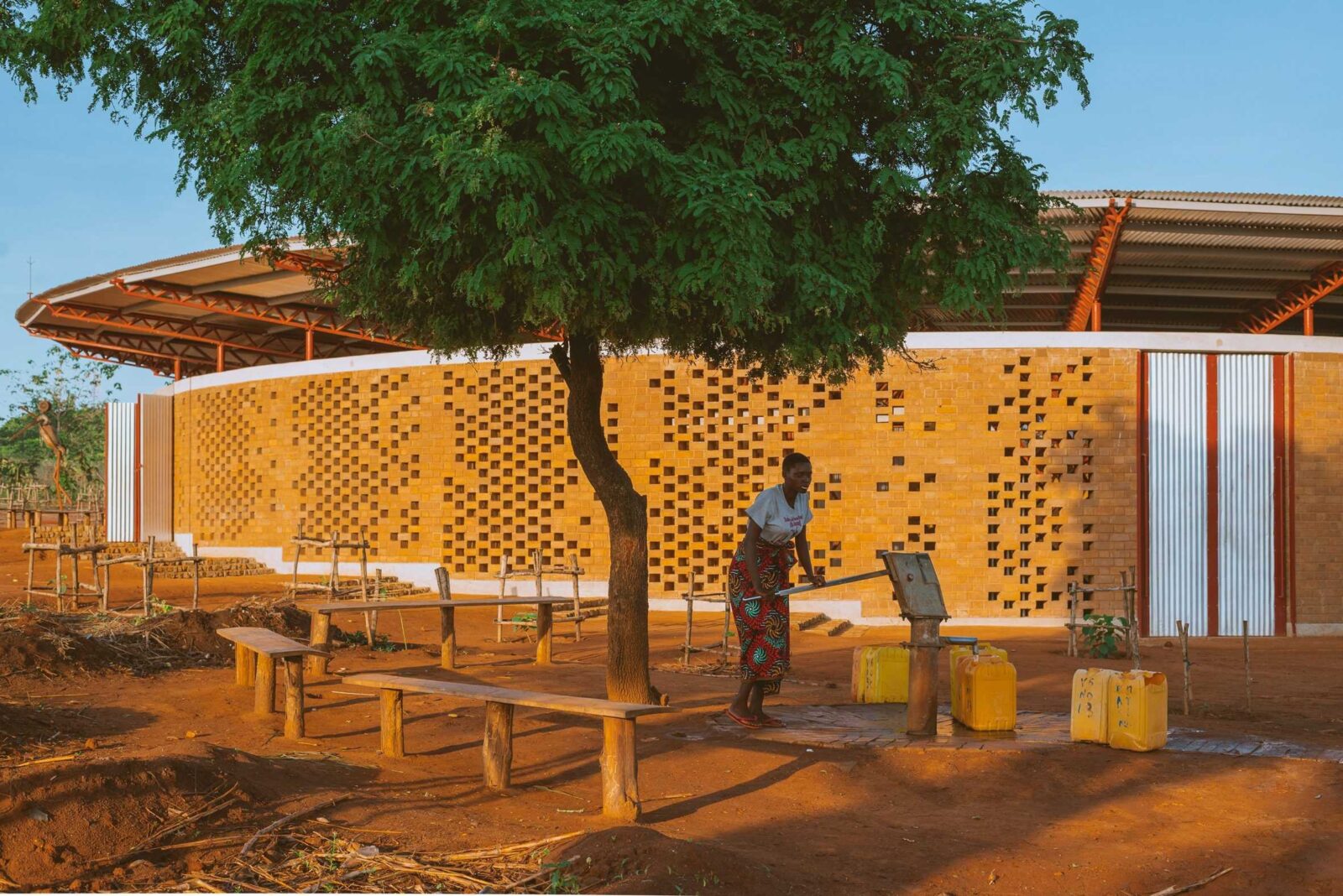
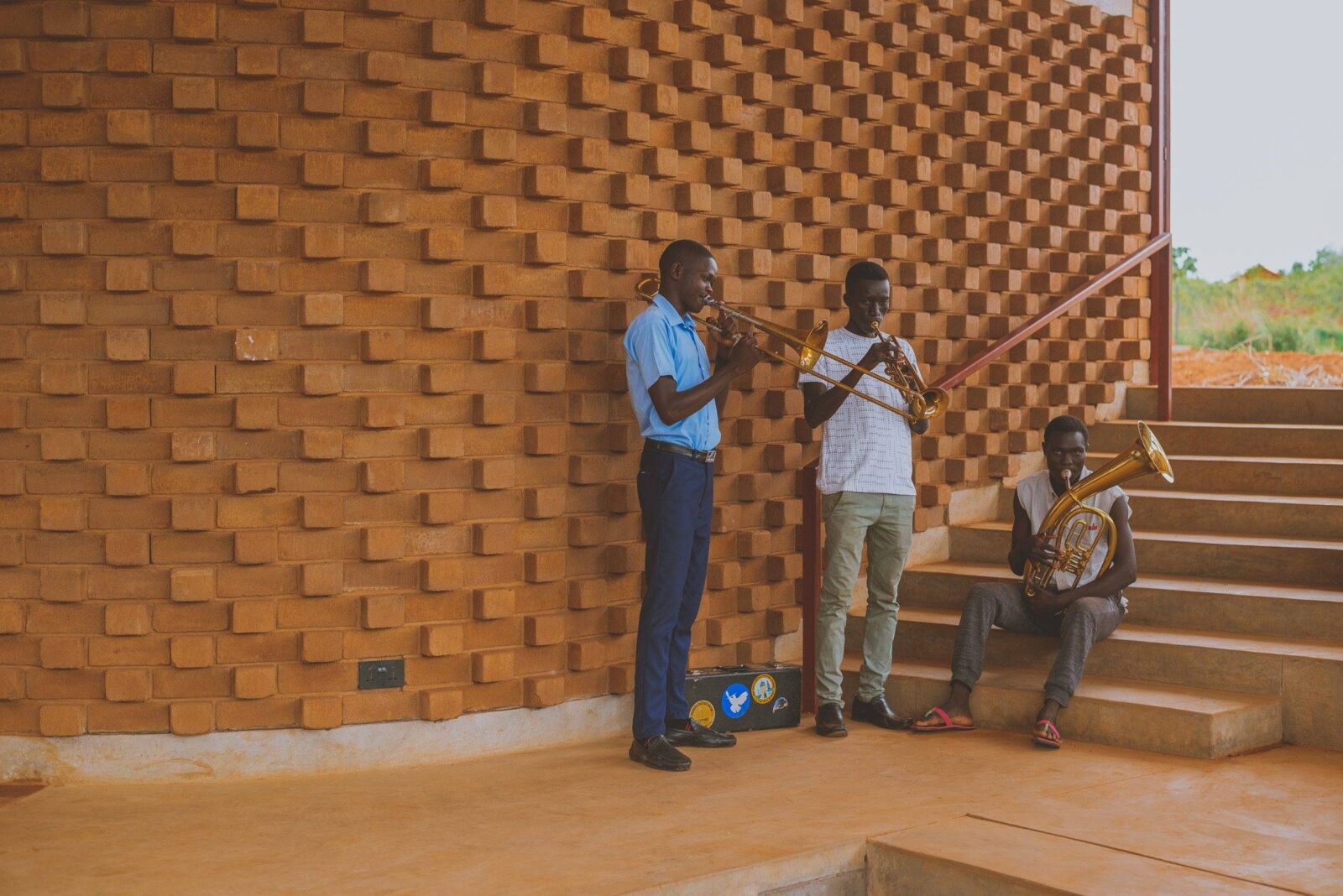
Xavier: What I find remarkable is that we achieved everything with essentially one type of brick, one mould, which we sometimes cut, but that was it. And I think that restraint is what gives the building its aesthetic coherence. We didn’t rely on different systems to bring light in, no windows in the conventional sense, no proprietary acoustic panels. Everything was resolved through that single brick. Is it the most acoustically refined solution? Probably not. A proprietary system would likely perform better on paper. But given the location, the scarcity of available materials, and the difficulty of getting anything to the site, I think it was the right answer. And architecturally, that constraint became a strength — the building has a unity precisely because everything had to be done with one element.
Felix: In my experience, if you want a building to truly belong to a place, one of the most reliable approaches is to use materials found on or near the site. By definition, those materials already belong to that landscape. I was reminded of this when we recently drove away from the site; the road takes you around to the other side of the valley, and for a moment, we genuinely couldn’t find the building. We kept asking, where is it? And then, finally, there it was. That is not something you would expect. In an environment of small, low structures, a 400-square-metre building would normally demand attention. The fact that it didn’t, that it simply settled into its surroundings, felt like a real achievement. We had no interest in creating a monument that announces itself. It was always meant to be part of Zone 2, part of that whole environment.
Xavier: I’m often asked, particularly by people in the West, why we didn’t make more use of vernacular architecture. I find it a slightly odd question, because we did. We used the materials that were literally present on the ground. We drew inspiration from the way people in the settlement were already using corrugated panels for openings, windows, and doors. To me, that is absolutely learning from and working within the vernacular. It doesn’t need a label to be what it is.
Felix: And the form itself, your very first sketches were inspired by something much closer to the ground, weren’t they? The image of an African gathering space, a community under a large tree.
Xavier: Yes, though it was never a literal copy. People tend to assume that vernacular has to mean direct imitation, and of course, that’s not what it means at all.
Congratulations on being recognised as “Architectural Design of the Year”! What does this mean to you and the wider community?
Xavier: What I love about the recognition this project has received is that it has come from different places and from different angles. It has been acknowledged through African awards, but also through the Dezeen Awards and the RIBA Awards. And what feels most meaningful now is that the programmes themselves are being recognised; Sina Loketa’s music programmes, the work actually happening inside the building. That, to me, is fantastic. The building and the life within it are celebrated together. I hope it gives us the leverage to do more of this kind of work — it demonstrates what is possible, and with that, hopefully, more funding will follow.
Why do you think a programme like AIDA Awards is important now, particularly for design rooted in African countries, communities and realities?
Felix: What makes this particular recognition feel special is precisely that it is an African award. There are countless awards programmes around the world, but very little exists in the way of celebrating African talent and design excellence on the continent itself. I am genuinely excited about anything that begins to fill that gap. And we should be proud that the Bidi Bidi Centre is the inaugural winner of the main design category. What I know for certain is that it is a profound source of pride for the users and the owners of the building; whenever news of an award reaches them, the excitement is real and immediate.
After working on a project with such a strong social and environmental purpose, what ambitions do you see guiding you in the future?
Felix: Honestly, it hasn’t changed our direction because Bidi Bidi was always an expression of where we were already headed. It was an extraordinary opportunity to work in a remote and challenging location and pursue excellence through local materials. But there is something we haven’t touched on today: one of the most exciting aspects of the collaboration between Hassell and Localworks was the bringing together of two very different worlds. There is far more high-tech and parametric design thinking embedded in this building than you might suspect from simply looking at it. That combination, rigorous digital design methodology meeting local materials and craft, is what made it so compelling for us. And we are not stopping there. We are continuing along that path, already working on other projects that excite us in similar ways. For me, this is one step on a much longer journey.
Xavier: Exactly. The project gave us confidence. We have done it once, we have the reference, and now we know it is possible. But what I valued most was realising how much we learned from each other as practices. We work in completely different parts of the world, and yet our ways of thinking and designing turned out to be very closely aligned. That was perhaps the most exciting discovery of all, and being able to draw on each other’s expertise made the whole process richer for it.