Header: CUUB STUDIO
TERRA FRACTA is a proposed project by ARISTIDES DALLAS ARCHITECTS in Antiparos, Greece, which means it has already been completely designed and is just waiting for construction to begin. The visuals shared with the public give us a glimpse of what the residence would look like, making one wish they could be there to open the door once it’s ready. Aristides Dallas, the project architect, worked with a team of engineers, designers and architects to create the design, having recently received a BLT Built Design Awards distinction: “Jury’s Favourite in Architectural Design – Residential”.
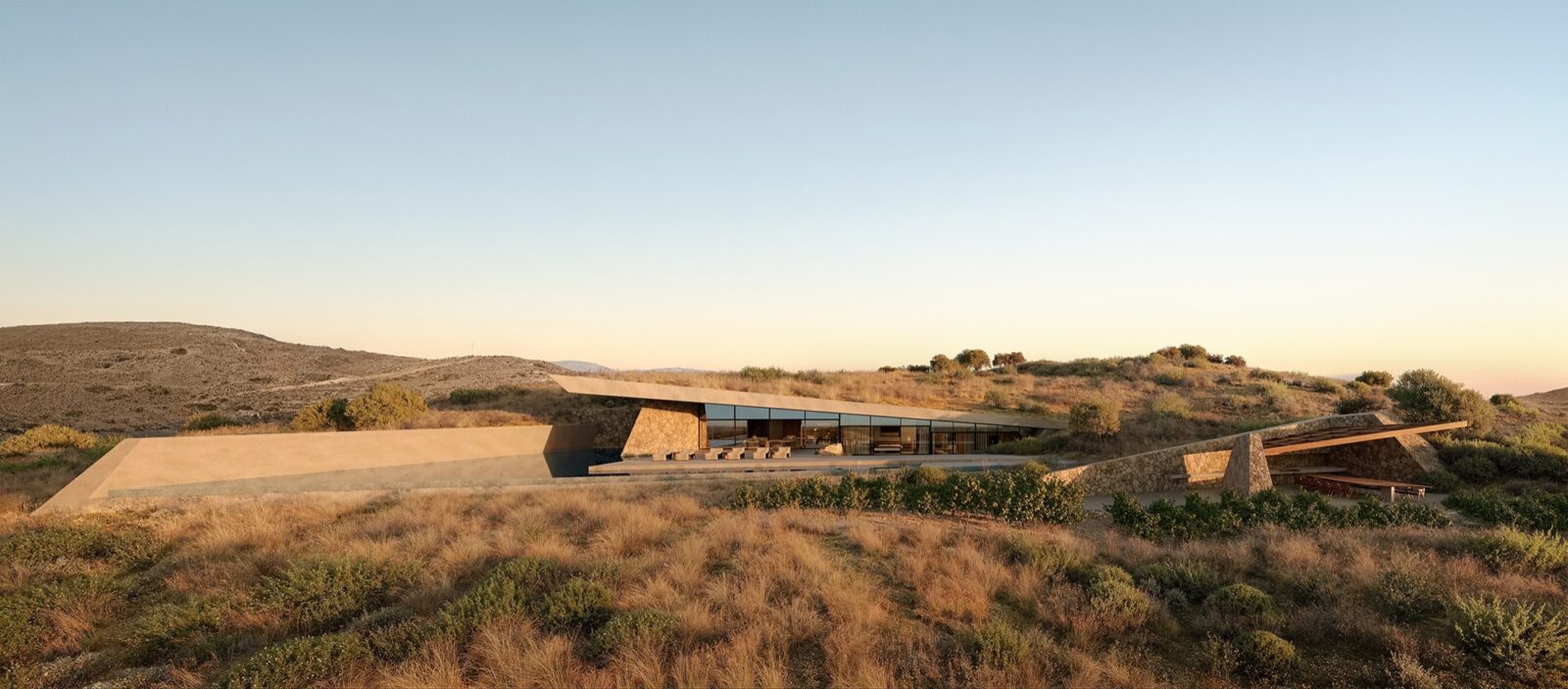
Cut-outs of the hill
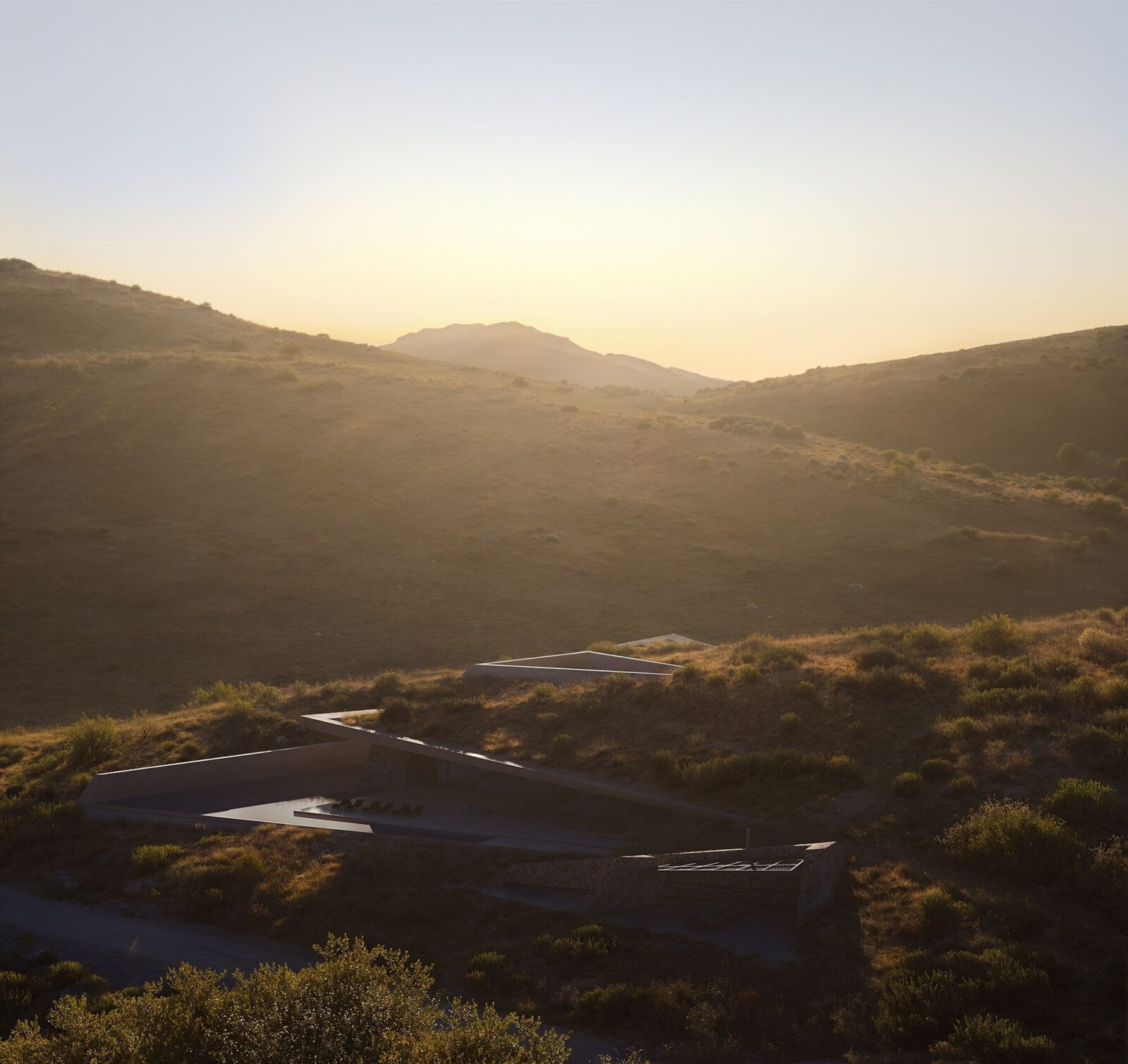
The remarkable feature of this project is that the hill is part of the construction; it is itself the thing you build with. TERRA FRACTA sits on a small hill in a roughly semicircular plot, and the larger surrounding hills limit direct sea views. So instead of acting like another seafront property, the building takes on the role of being one with the land, literally, responding to what the site can and can’t give.
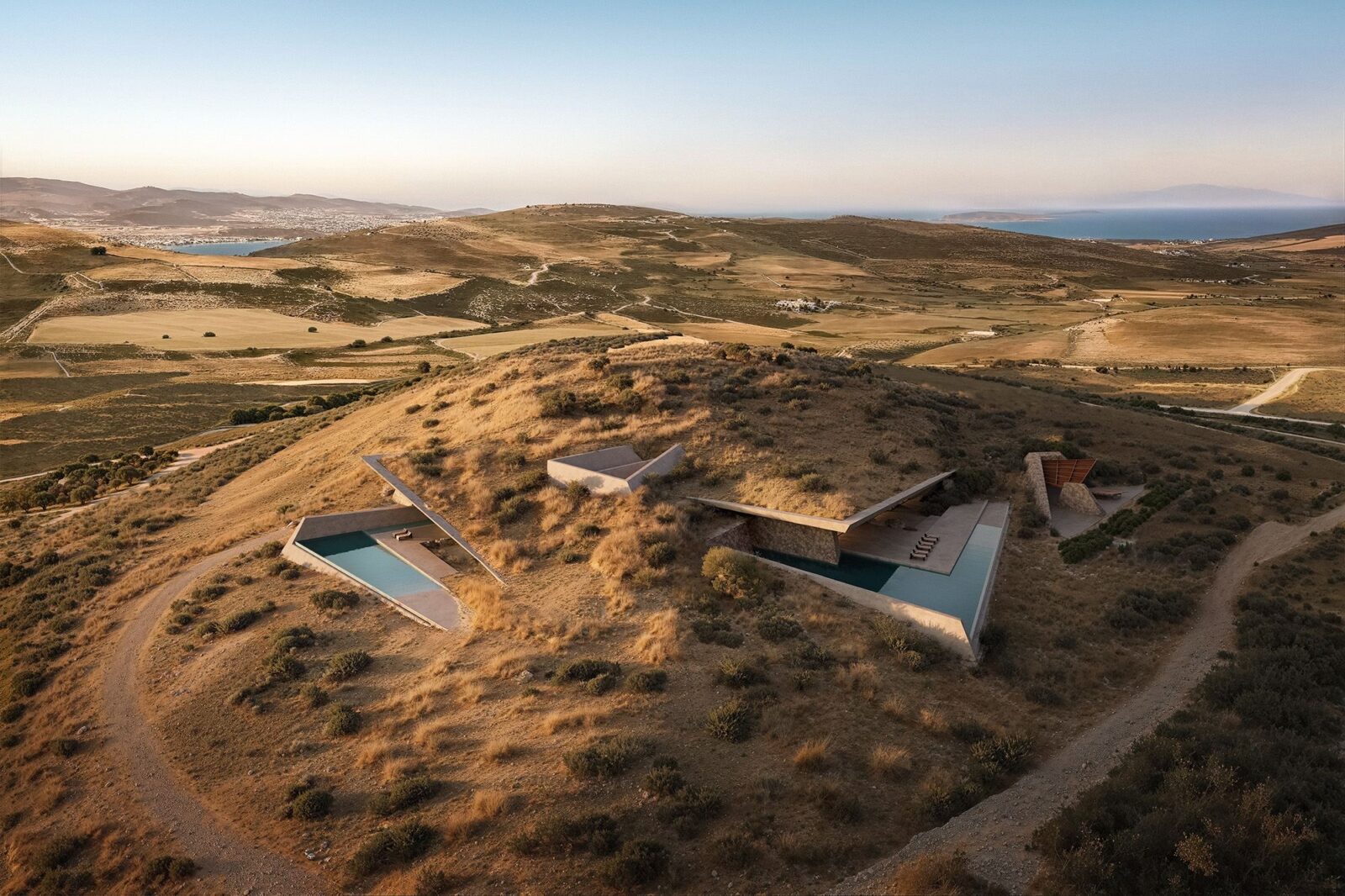
The house is divided into two subterranean sections, the main residence and a guesthouse zone, each marked by a slanted roof slab that comes out of the earth as a sharp triangular cut. The geometry has two roles: it forms a roof, obviously, but it also looks like the ground has been cut or cracked open, rather than just the edge of a normal roof. In the aerial views and site diagrams, those roof lines look like tectonic marks, so the whole house appears as a set of folds, voids and breaks within the hill. That’s where the name “Terra Fracta” comes from, as it translates to “fractured earth”.
Intentional design choices
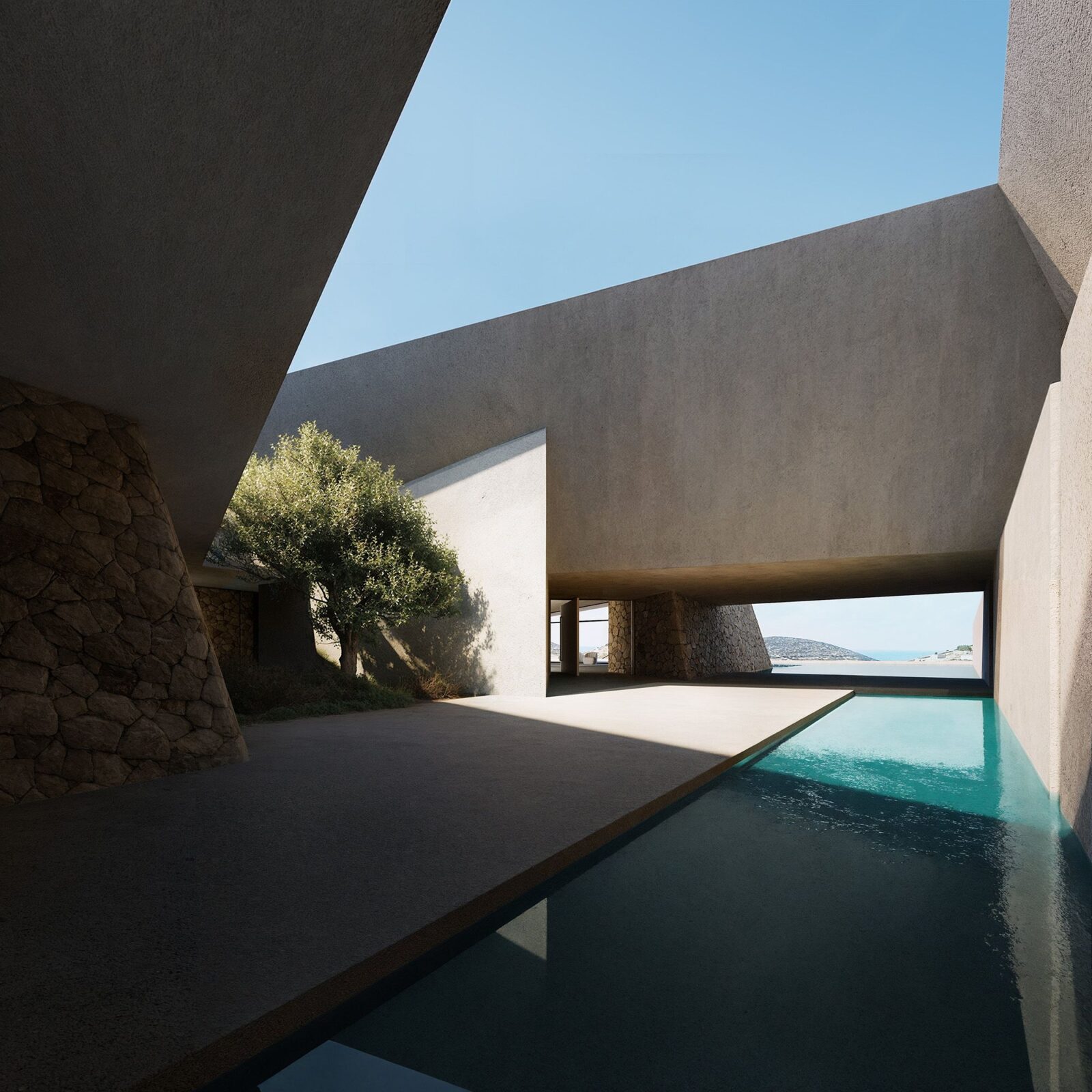
The entrance follows the road as it wraps around the hill, creating a slow welcome into the residence. Then, instead of showing everything at once, the house takes you through an underground passage that cuts through the hill and ends with a view of the sea. The site doesn’t naturally offer wide sea views, so the design turns that limitation into an experience: it’s as if the house has carefully prepared the scene for the residents.
As mentioned, the house is divided into two main spaces: the main living area and a separate, smaller guest area. These areas are built in steps under the sloping roofs so they follow the shape of the hill and are connected by the cut-through passage.
Instead of one large terrace, the outdoor space is divided into several smaller, more sheltered zones. That makes the house feel more private and creates different outdoor experiences: some areas are more open to sun, wind and views, while others feel more protected. Two pools help define the edges of the outside areas, providing residents with panoramic views of the Greek countryside while relaxing under the sun.
Simple, local materials
The studio chose two main materials for Terra Fracta, exposed local stone and concrete, deciding to cater to the geological qualities of the hill rather than vernacular styles (even if the stone fits perfectly with Cycladic decorations). Stone helps the house feel solid and rooted in the hill, while the concrete makes the sharp roof shapes and clean lines possible. Because the palette is so restrained, the spotlight goes directly on the architecture itself (the weight of the walls, the shadows and the way the forms sit in the landscape), as there are no decorative finishes to distract the eye.
Practical considerations
If this were built exactly as shown, the obvious pressure point would be execution. A project like this would need very careful waterproofing, drainage and structural work, especially where the roof meets the earth and around the sunken courtyards. On an island, materials like exposed concrete and metal also need to be designed and built carefully so they can resist humidity, salt air, wind, and wear over time. In short, the design is strong, but it would need a comparable build quality.
Project information
Design Company: ARISTIDES DALLAS ARCHITECTS
Lead Designer: Menelaos Giannopoulos
Design Team: Margarita Kyanidou, Aristotelis Samprovalakis, Athina Tsami, Natalia Koronaiou, Artemis Panagiotou
Project Location: Antiparos Island, Greece