





Header: CreatAR Images
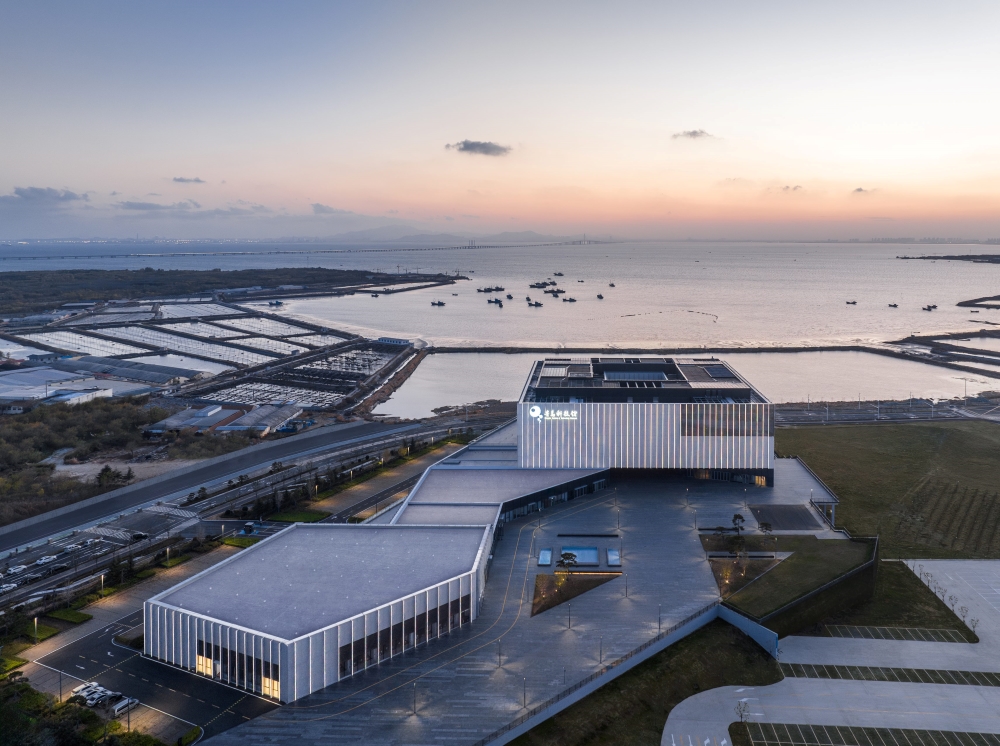
Qingdao Science & Technology Museum, located on the Jiaozhou Bay in Hong Island, is an educational facility dedicated to marine research. The museum, spanning 40,000 square meters, designed by von Gerkan, Marg and Partners (gmp), is expected to give rise to new urban development in the Chinese Qingdao area.
A Marine Science Center
The city that is among the leading centres for marine research and hosts numerous national research institutions is the perfect home for a museum of this kind. Completed in 2026, the museum is just one of the proposed new landmarks of the coastal metropolis that has seen constant expansion. Starting from the 1980s, Qingdao has seen major developments from the historic old town on the southeast side to the shoreline areas on the opposite end. Simultaneously, the city became a marine sciences centre.
Qingdao Science & Technology Museum, together with the Ocean University of China, further fortifies the cultural profile of the area by making the previously overlooked research landscape accessible to the public. The museum has been intentionally built in the northeast part of the bay to serve as a catalyst for the expansion of a partially developed waterfront zone. Although originally planned to become a part of Qingdao’s seaside promenade, the location of the building was changed to reflect the museum’s strategic importance for the long-term development of the Jiaozhou Bay.
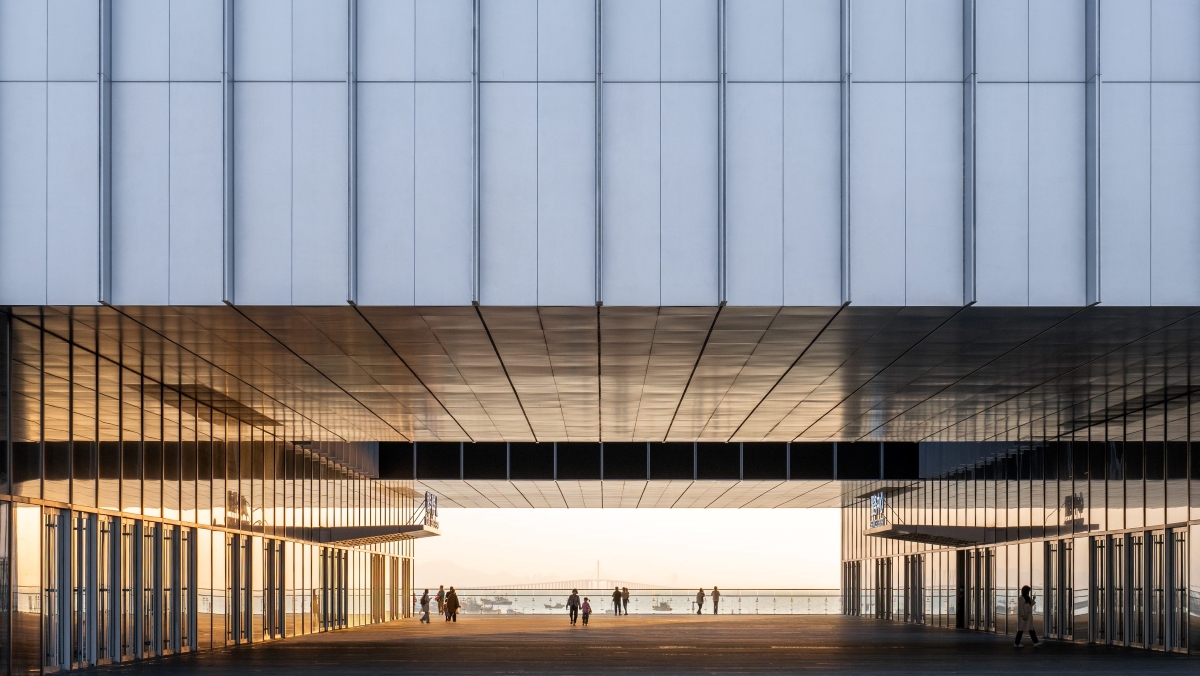
Architecture inspired by the seaside
Seaside life has been the main inspiration behind the project. The structure has taken the shape of a compact cube located on a podium just near the edge of the water. Both the circulation routes and sightlines are directed toward the sea, which comes into focus before, during, and after visiting the museum. The view across the bay is further enhanced through a public pathway that connects the ground floor to the observation terrace.
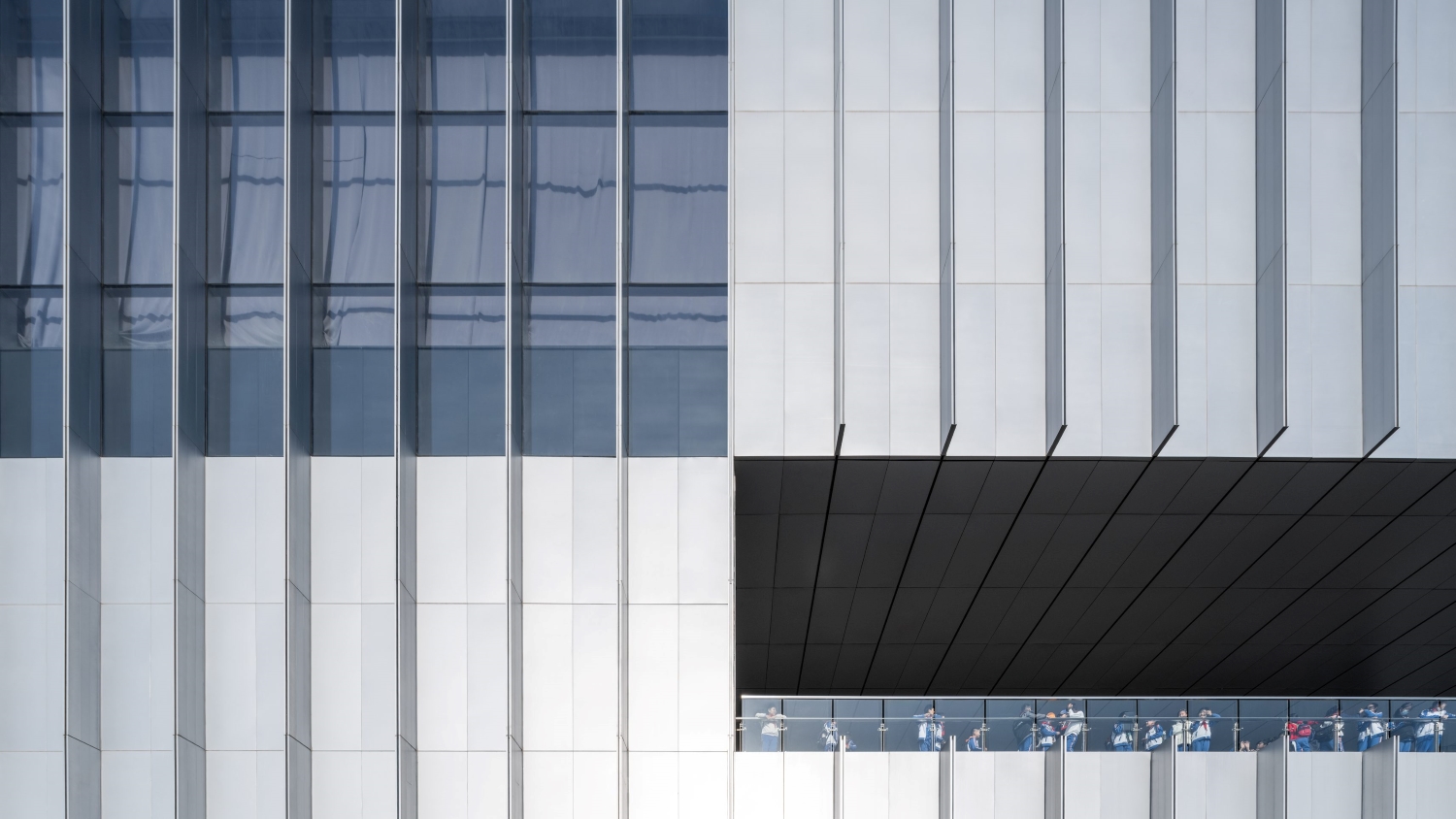
Separate entrances to the museum and a conference hall
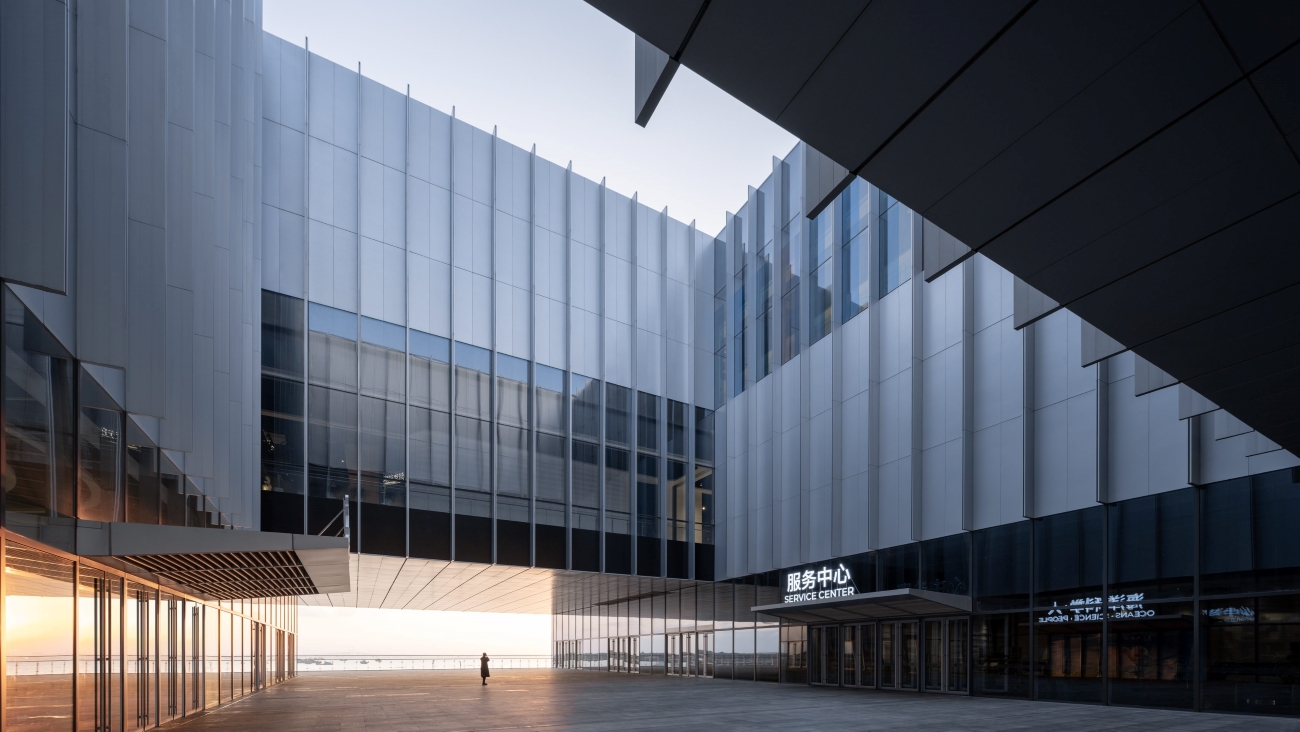
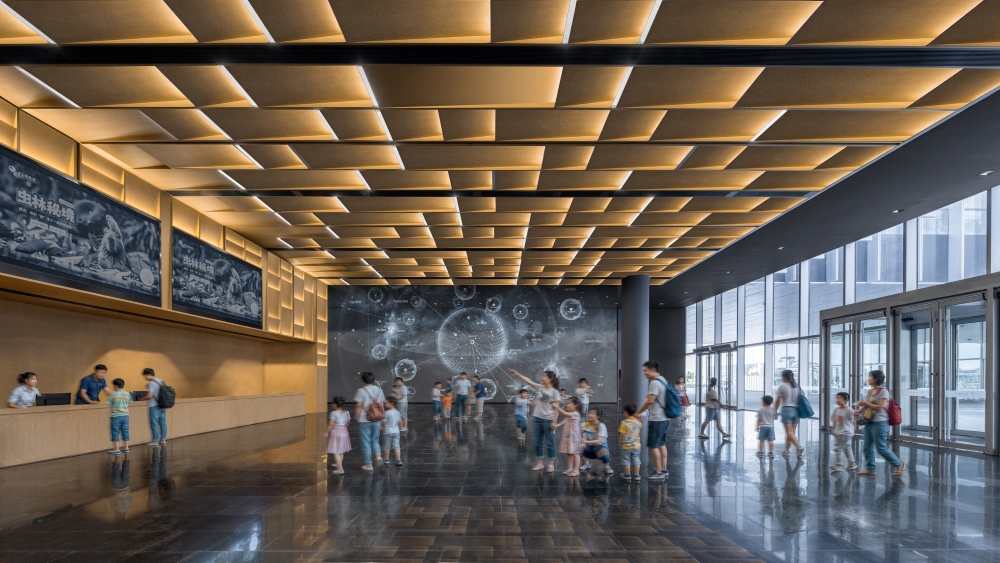
The museum features two entrances that guide visitors to a central courtyard while at the same time serving as a separation point between two functional areas. One entrance guides to the museum, shop, and café, while the other (located on the opposite side) leads to the conference rooms. The permanent exhibition of the museum presents the history of the sea, habitat diversity, modern marine scientific research, and the evolution of shipping.
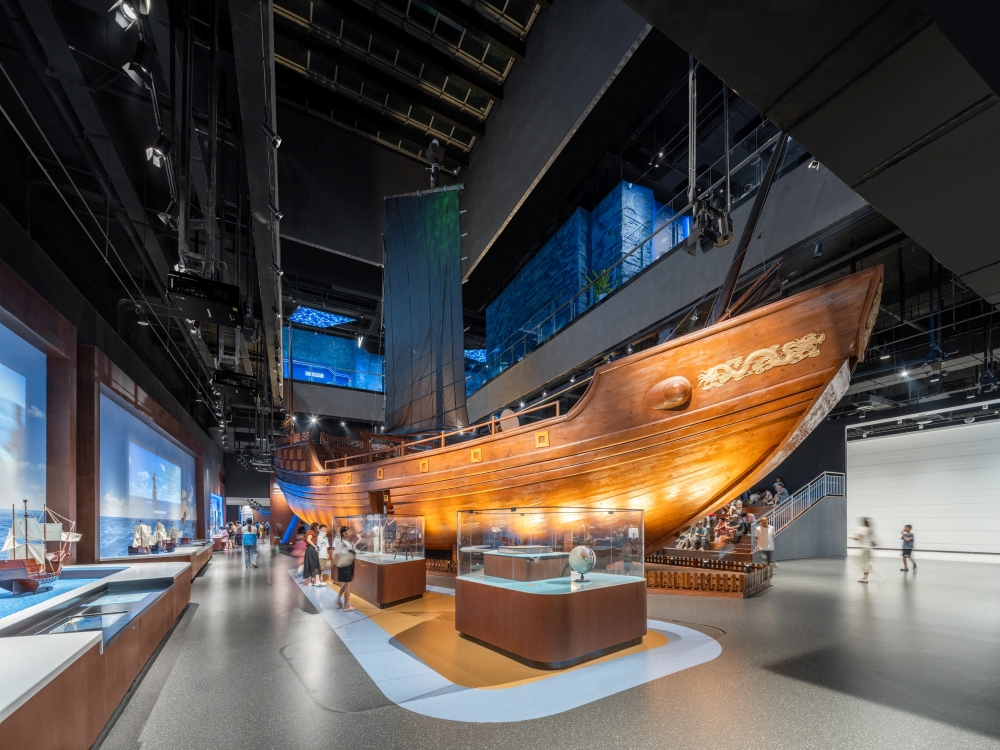
Centrepiece of the show
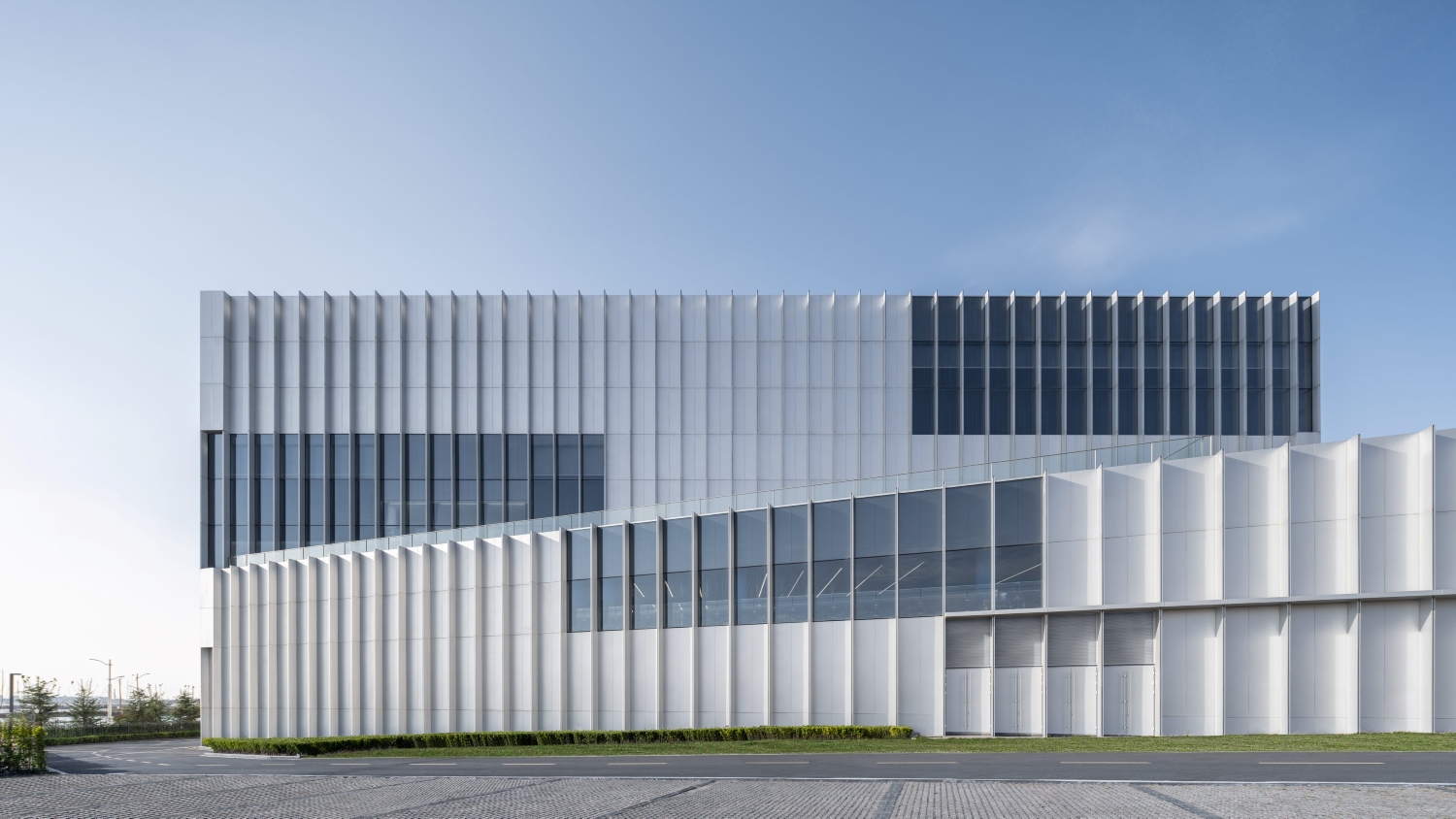
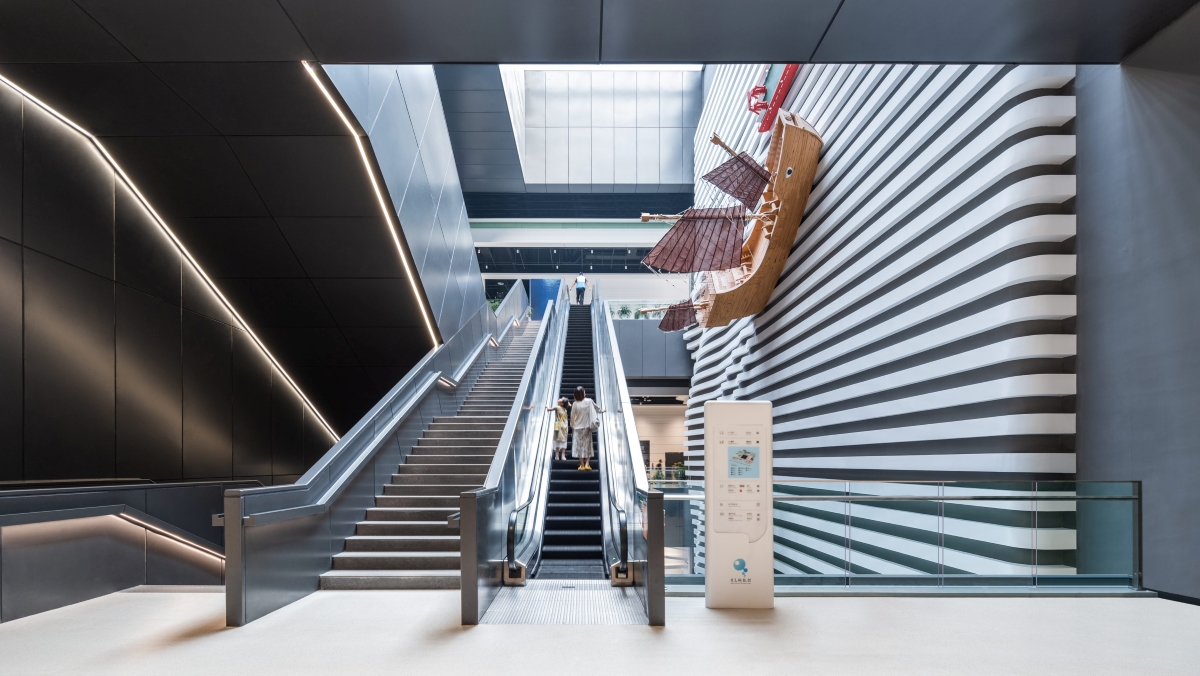
The large-scale historic wooden boat is the centrepiece of the exhibition. The boat engages in dialogue with the surrounding sea through large glass openings in the metal facade that frame the view of the bay. The envelope of the museum is equipped with vertical fins, whose appearance changes depending on the time of day and light conditions to create a visually exciting architectural effect.
LED lights illuminate the museum, making it stand out in the cityscape. This is just the first phase of the museum construction, which is expected to include a marine aquarium and planetarium in the second phase.
Technical sheet
Design: Meinhard von Gerkan and Stephan Schütz with Nicolas Pomränke
Project Lead: Clemens Kampermann, Lan Chen
Project Management: China Li Ling
Design Team: Anna von Aulock, Andreas Götze, Liu Xuda, Andreas Maue, Pan Xin, Kristin Schoyerer, Yu Hainan, Zheng Fei
Partner Firm in China: Shanghai United Design Group Co., Ltd., Qingdao Tengyuan Design Institute Co., Ltd.
Client: Qingdao Huatong State-Owned Capital Operation (Group) Co., Ltd.
Gross Floor Area: 40.000 m²


