



Header: Sean Airhart
The clients had long vacationed in San Juan Island and wished to create a comfortable getaway home for family and friends that could one day become a semi-permanent residence. When it came to choosing a partner, the couple was looking for an architecture studio that would share their interest in a site-sensitive approach and commitment to net-zero energy. It didn’t take them long to find Heliotrope, having welcomed Joe Herrin (principal in charge), Chris Wong (project manager) and Rachel Belcher (designer) into their team.
A mix of San Juan and California
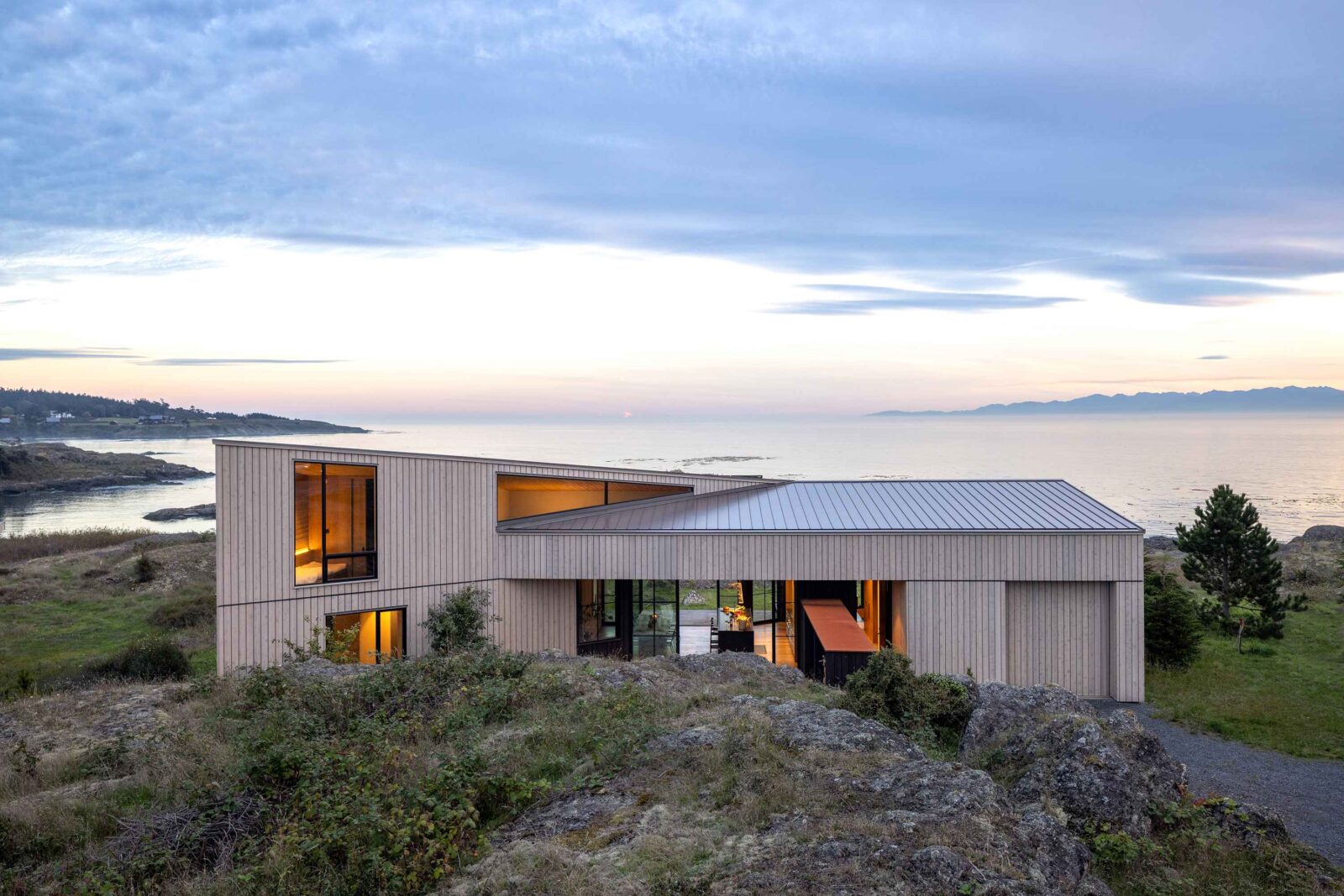
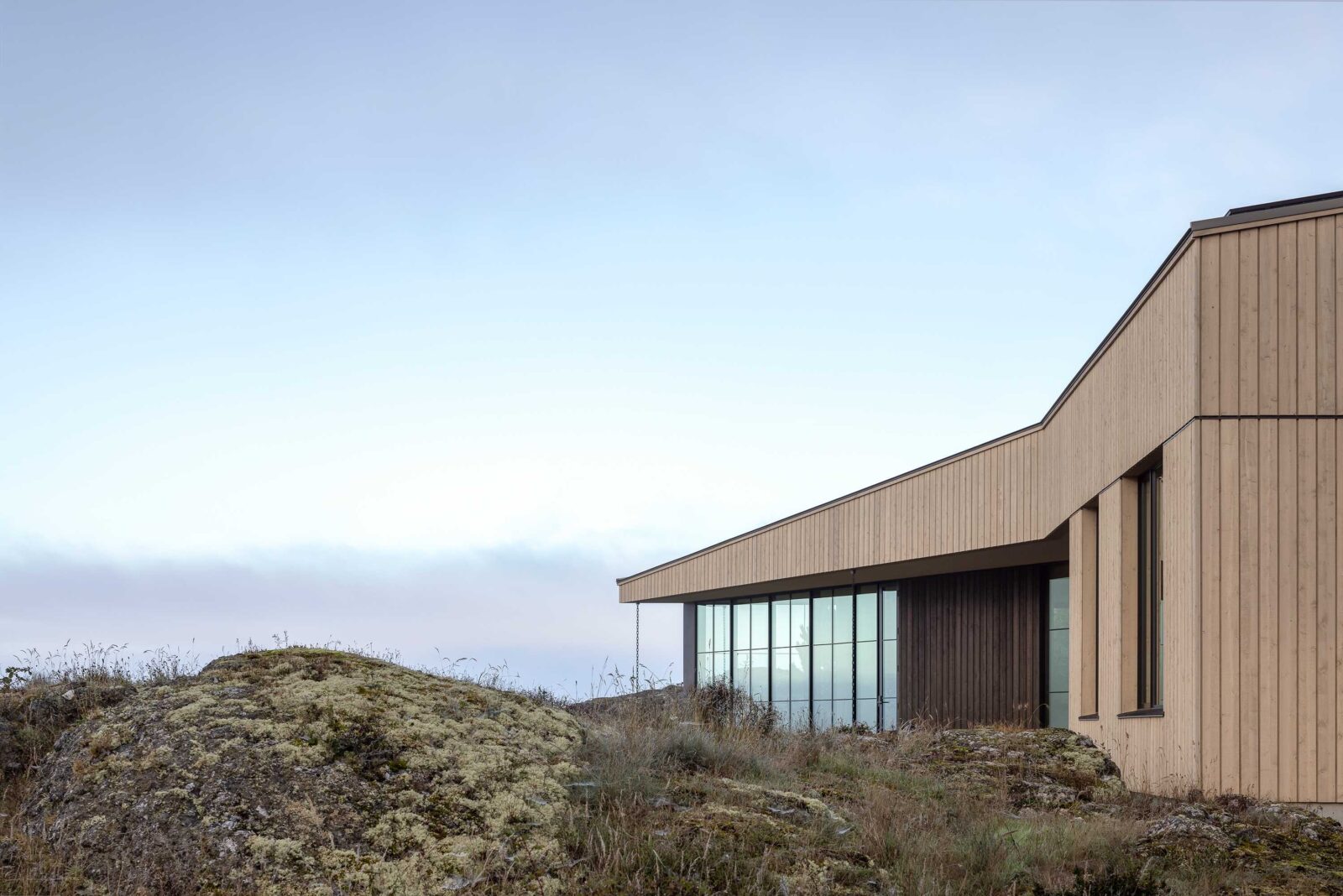
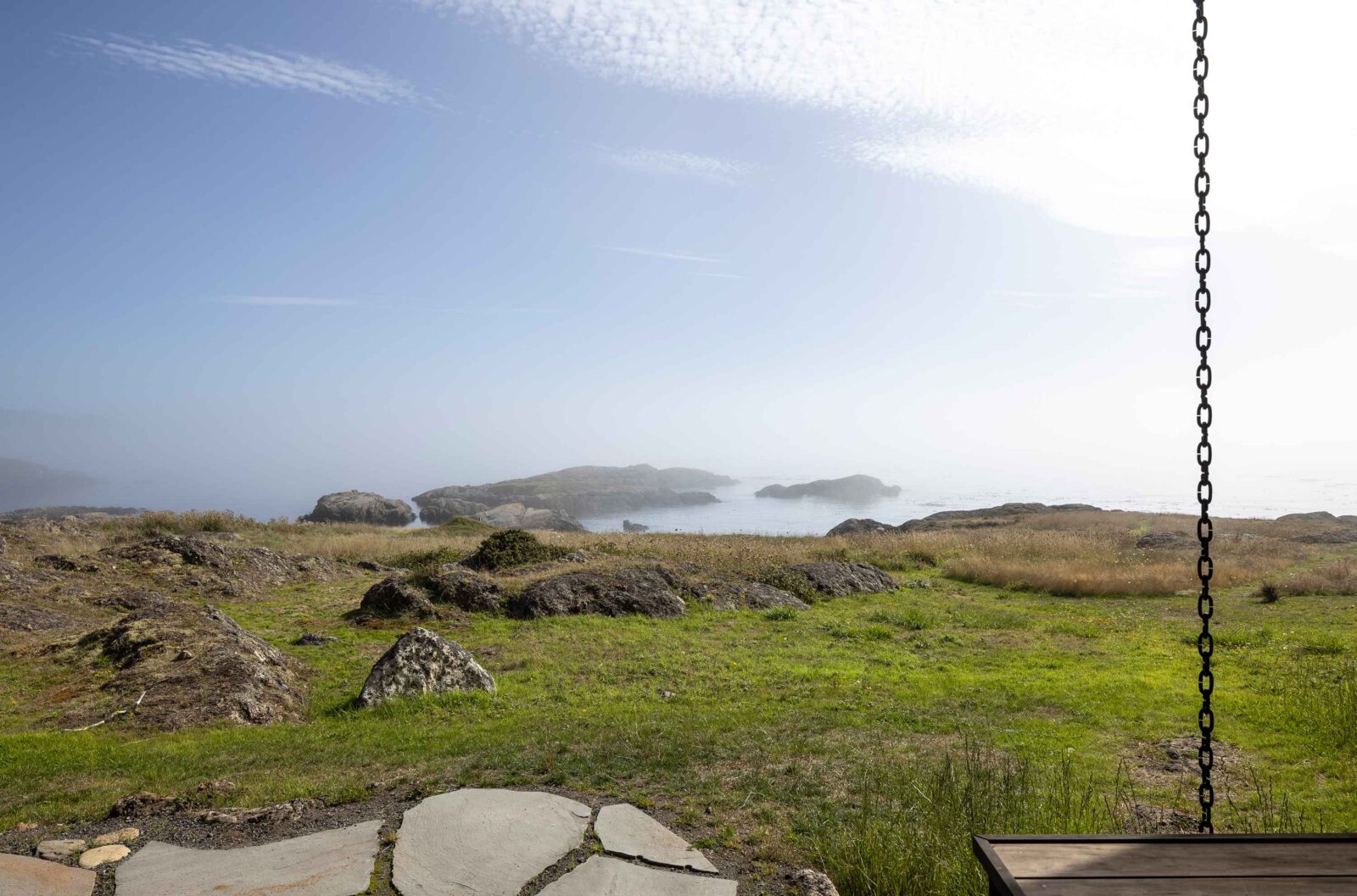
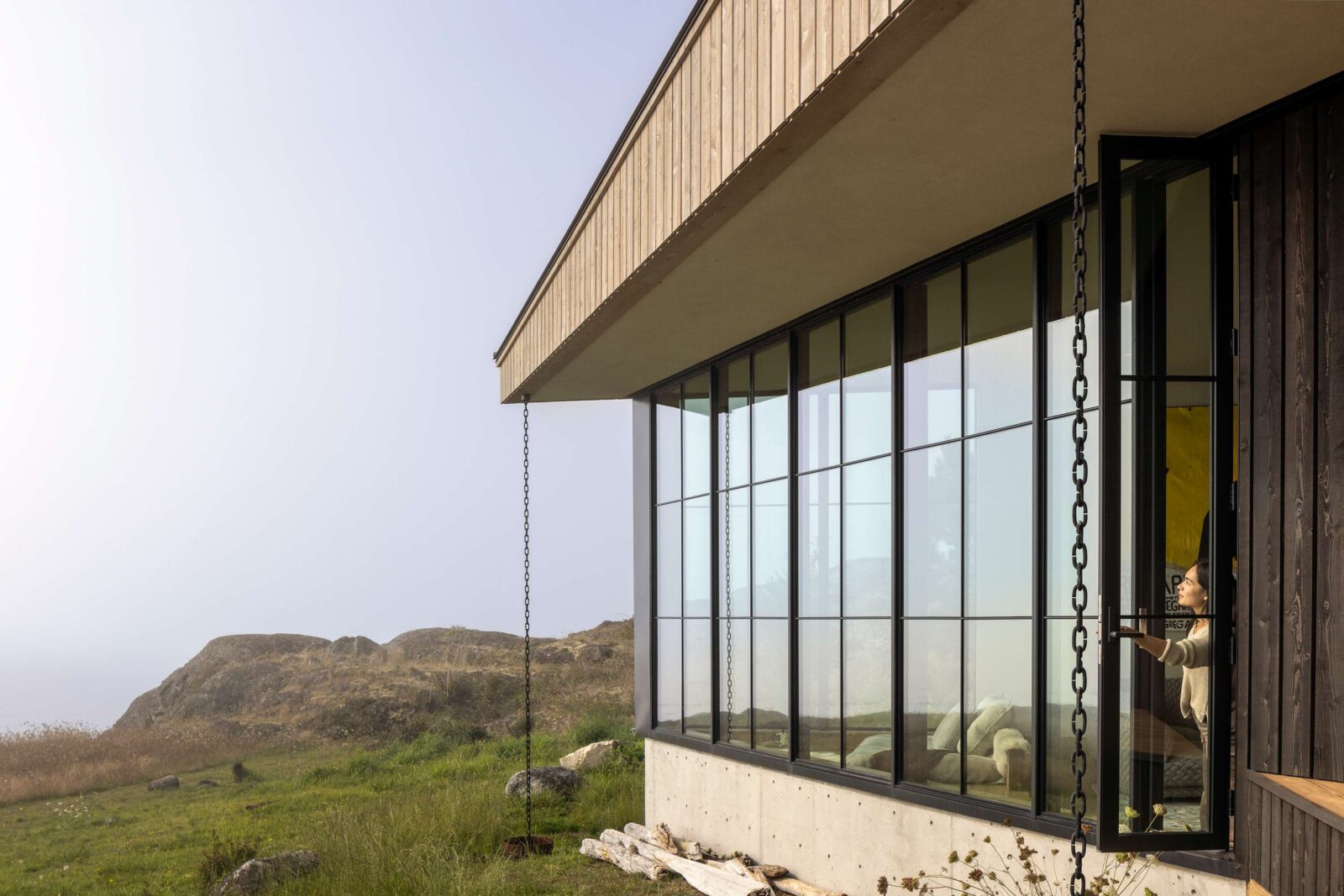
The 2,474-square-foot cedar-clad home is located in the San Juan Island Archipelago along a rocky, windswept shoreline, completely exposed to the weather travelling down the Strait of Juan de Fuca from the Pacific Ocean. Acknowledging a similarity between this rugged Salish Sea shoreline and the windswept coast of northern California, the clients and design team took inspiration from the building styles and weathered materials used in the influential Sea Ranch development in Sonoma County. Numerous rock outcroppings were another great influence, which ended up making choosing the location of the home a bit of a puzzle.
Adapting the house to the harsh environment
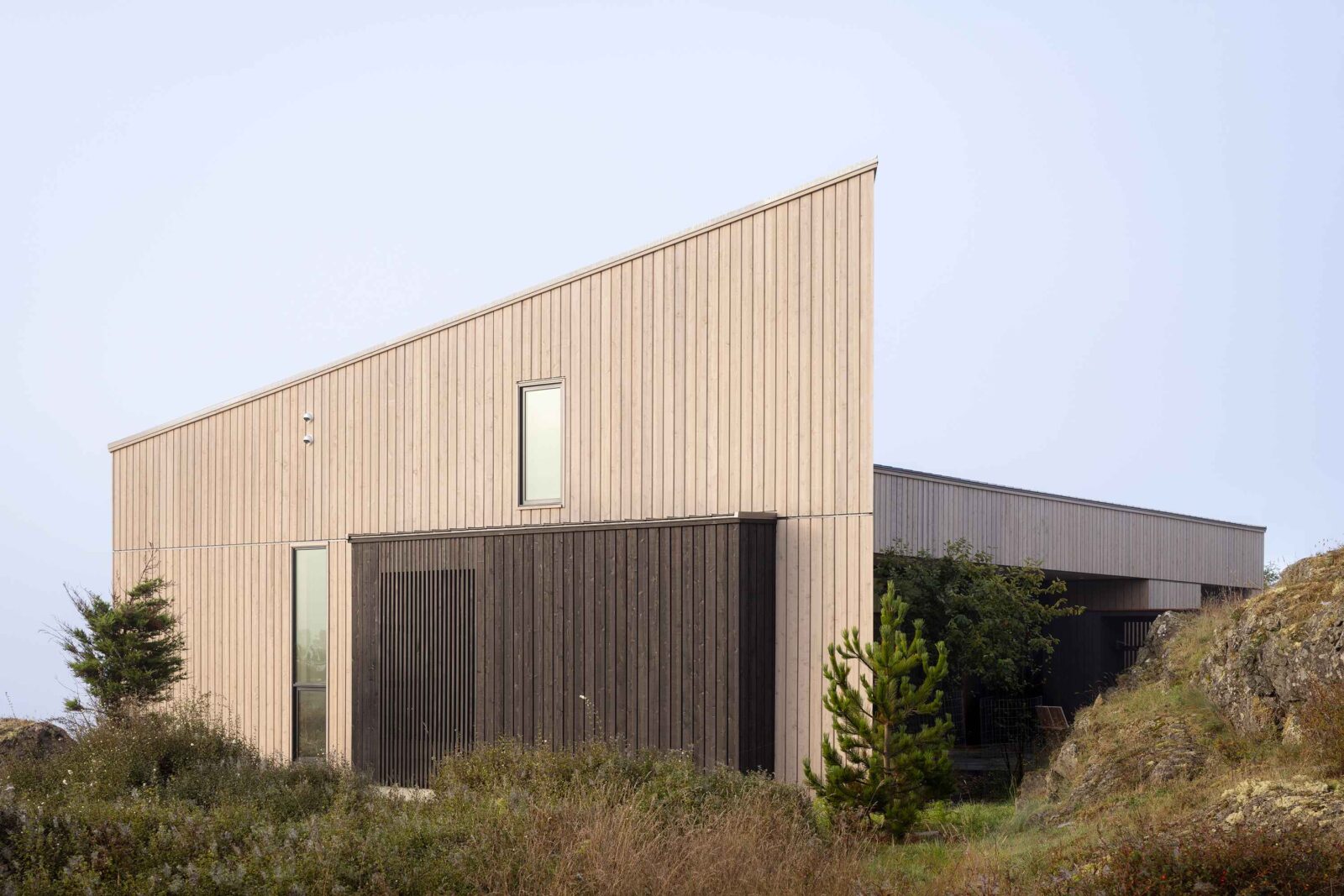
With all of the client’s wants, needs and inspirations in mind, the designers decided to place the home in a gap between the rock formations, next to a large rock on the landward side. The house’s shape narrows in the middle, just like a bow tie, which helps reduce disturbance to the site. The space between the house and the rock created an outdoor nook that ended up becoming a terrace. Due to its positioning, it is completely protected from the wind, an important feature on such an exposed site.
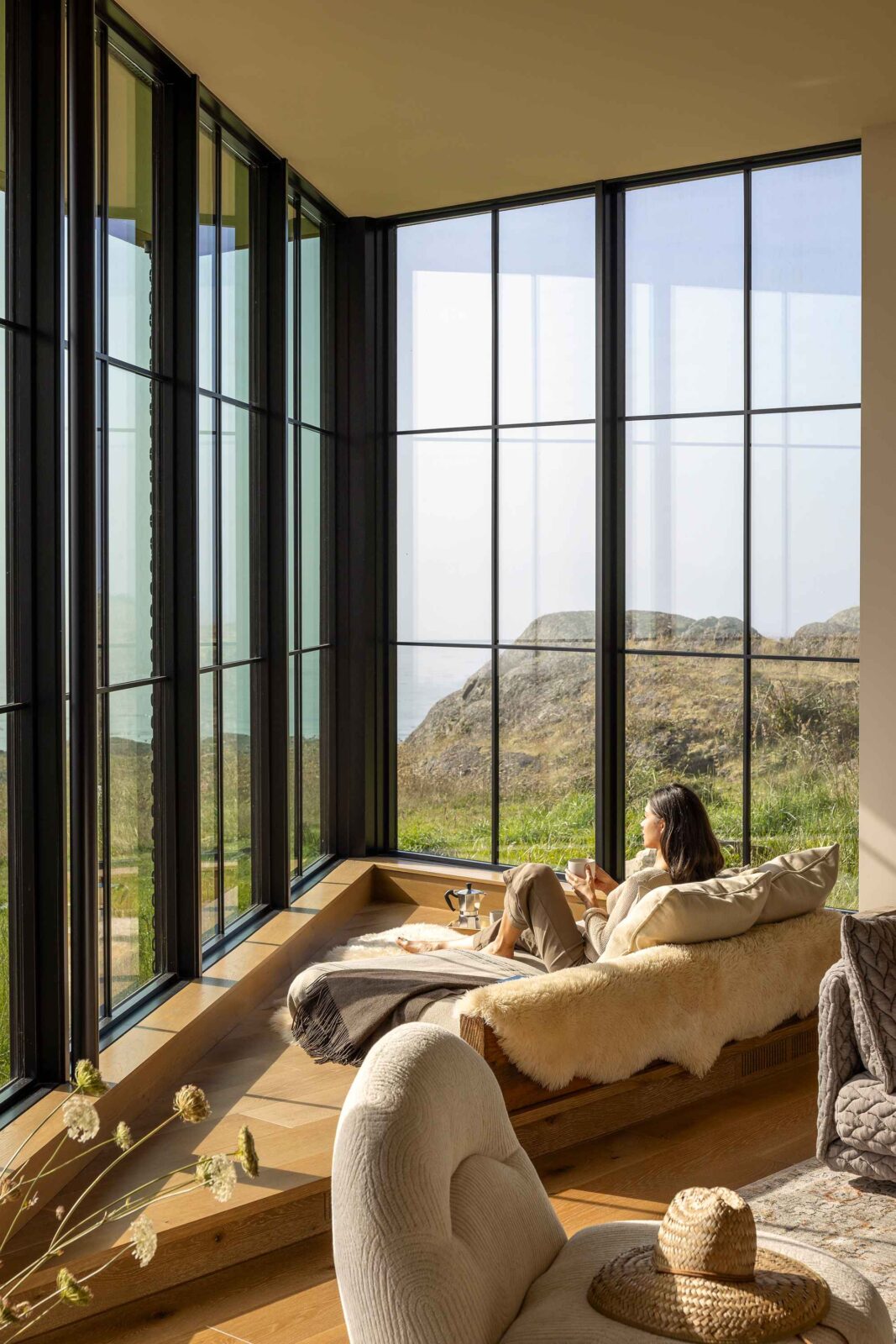
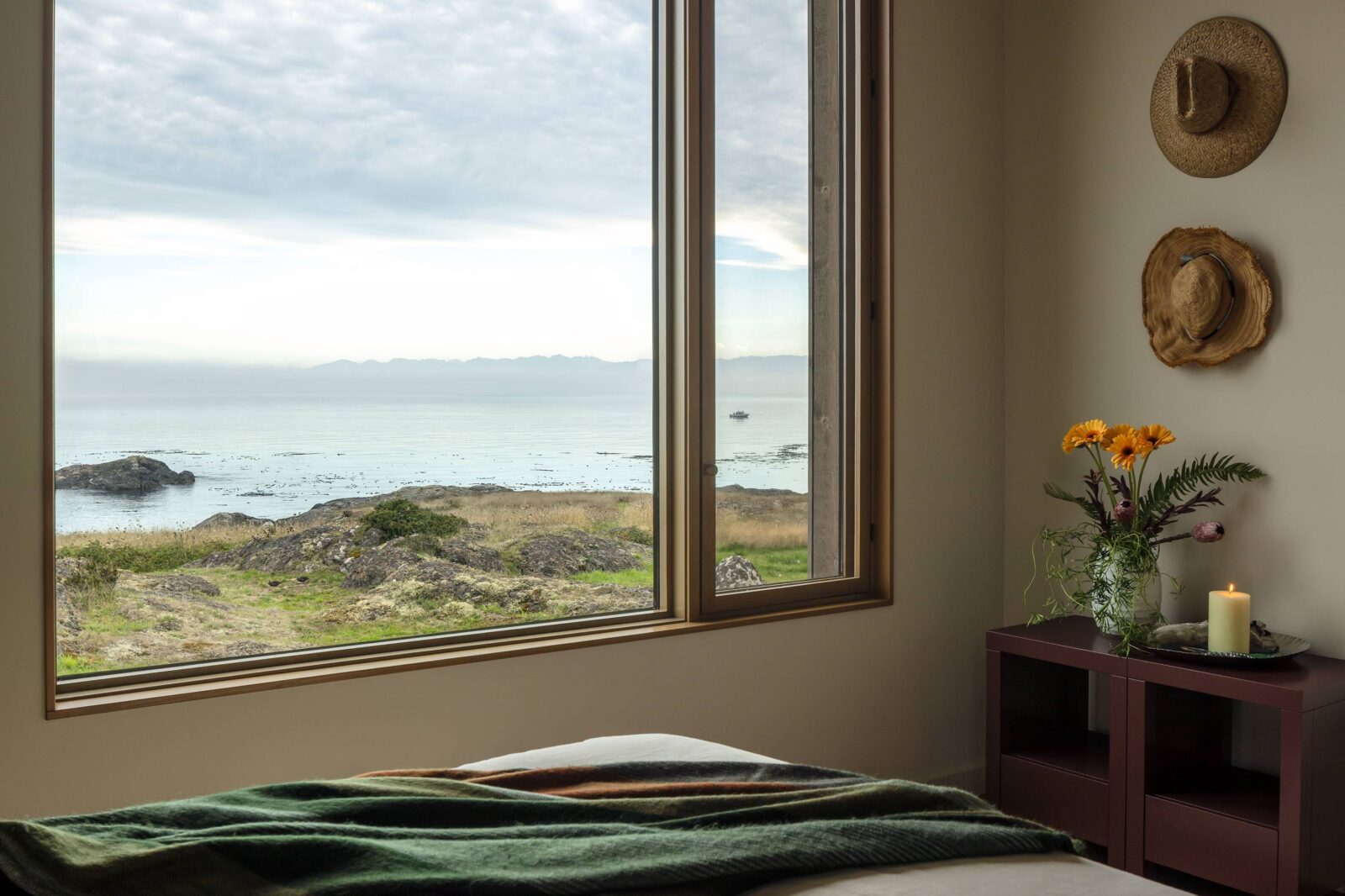
With homes to the east and west, views are focused south (to the water) and north (to the rock). The exposed location also means that few plants can weather the environment: Monterey cypress and native shore pines help wrap and shelter the residence, complemented by a mix of native cactus and grass.
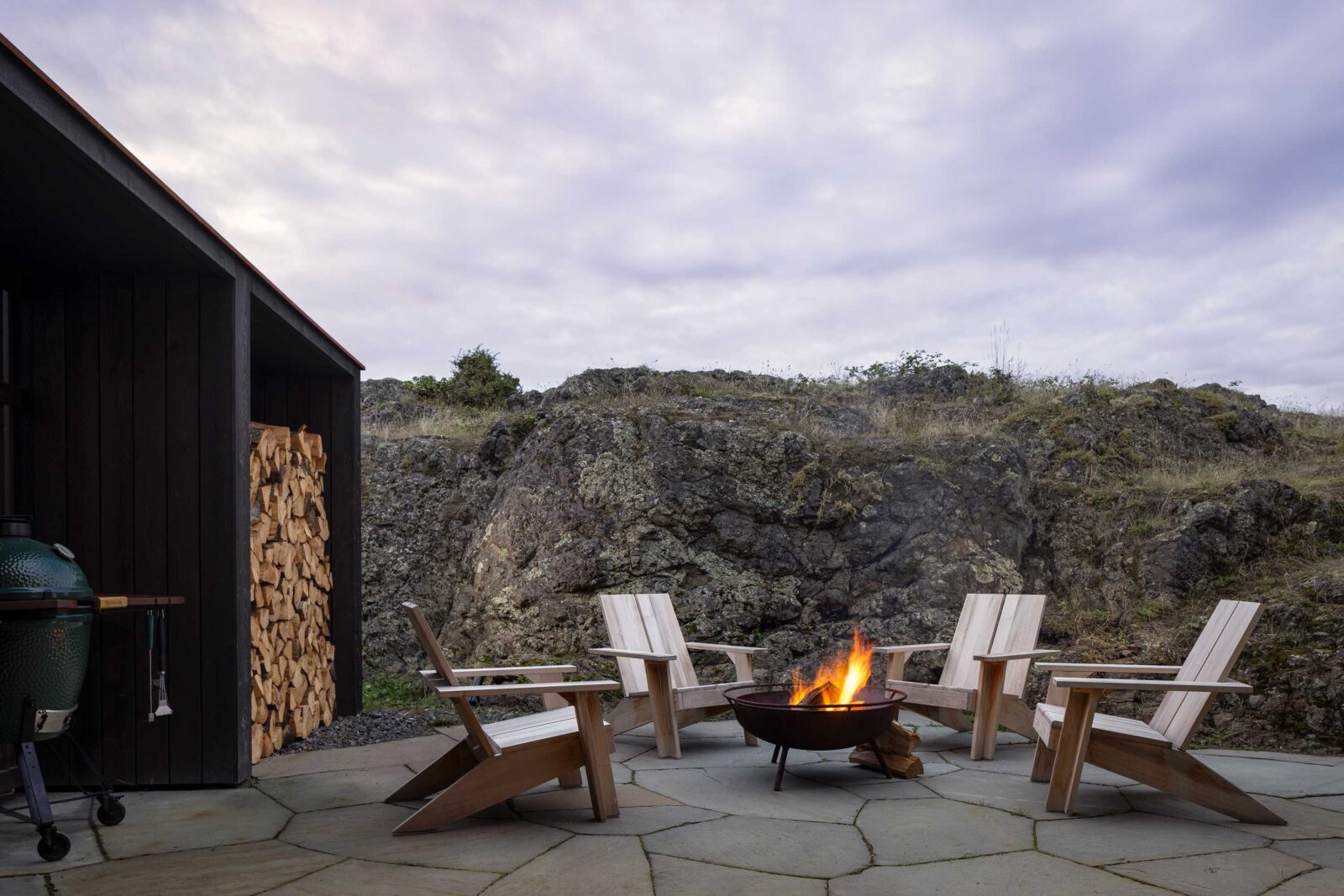
Weathering the storms from the cosiness of the home
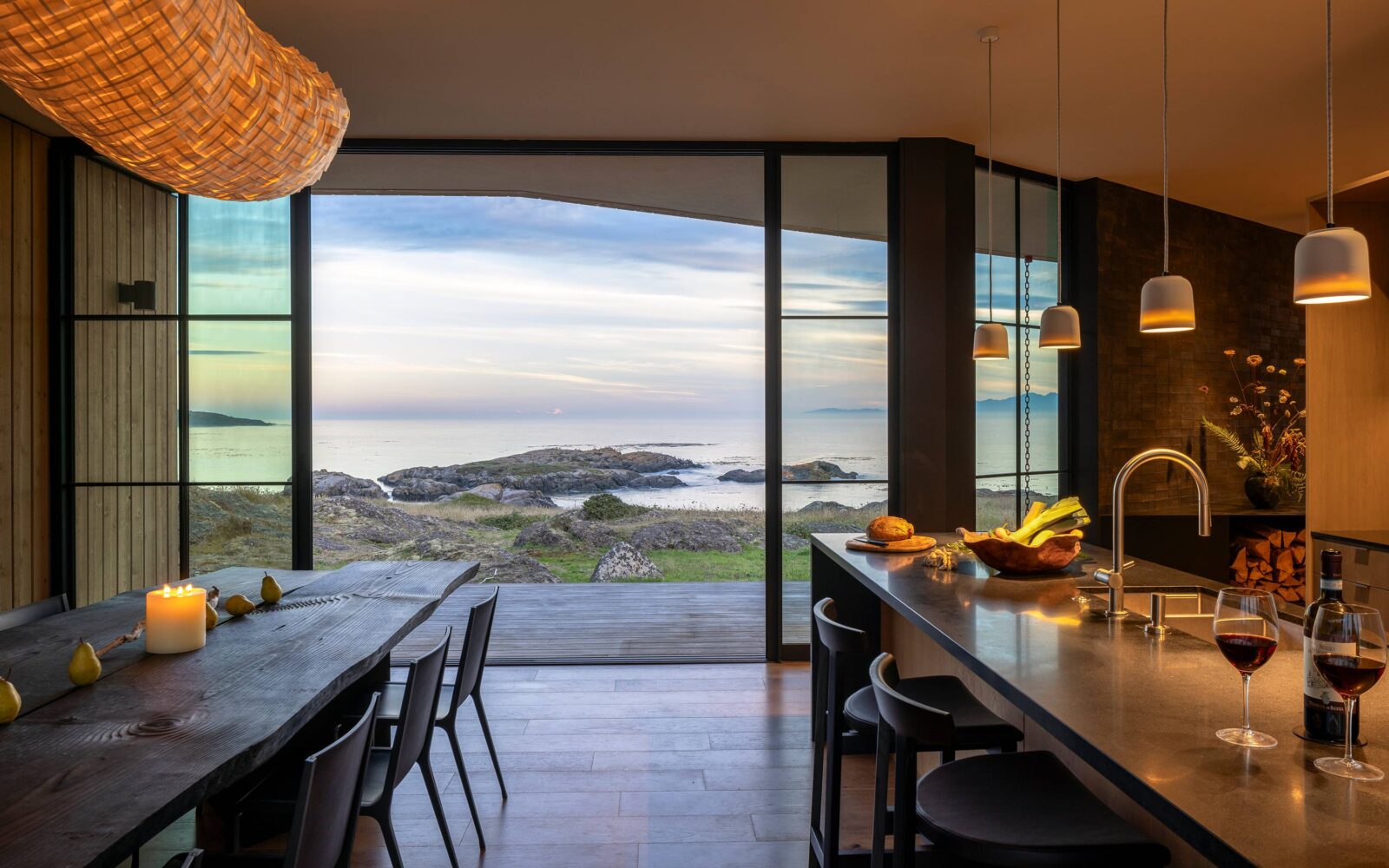
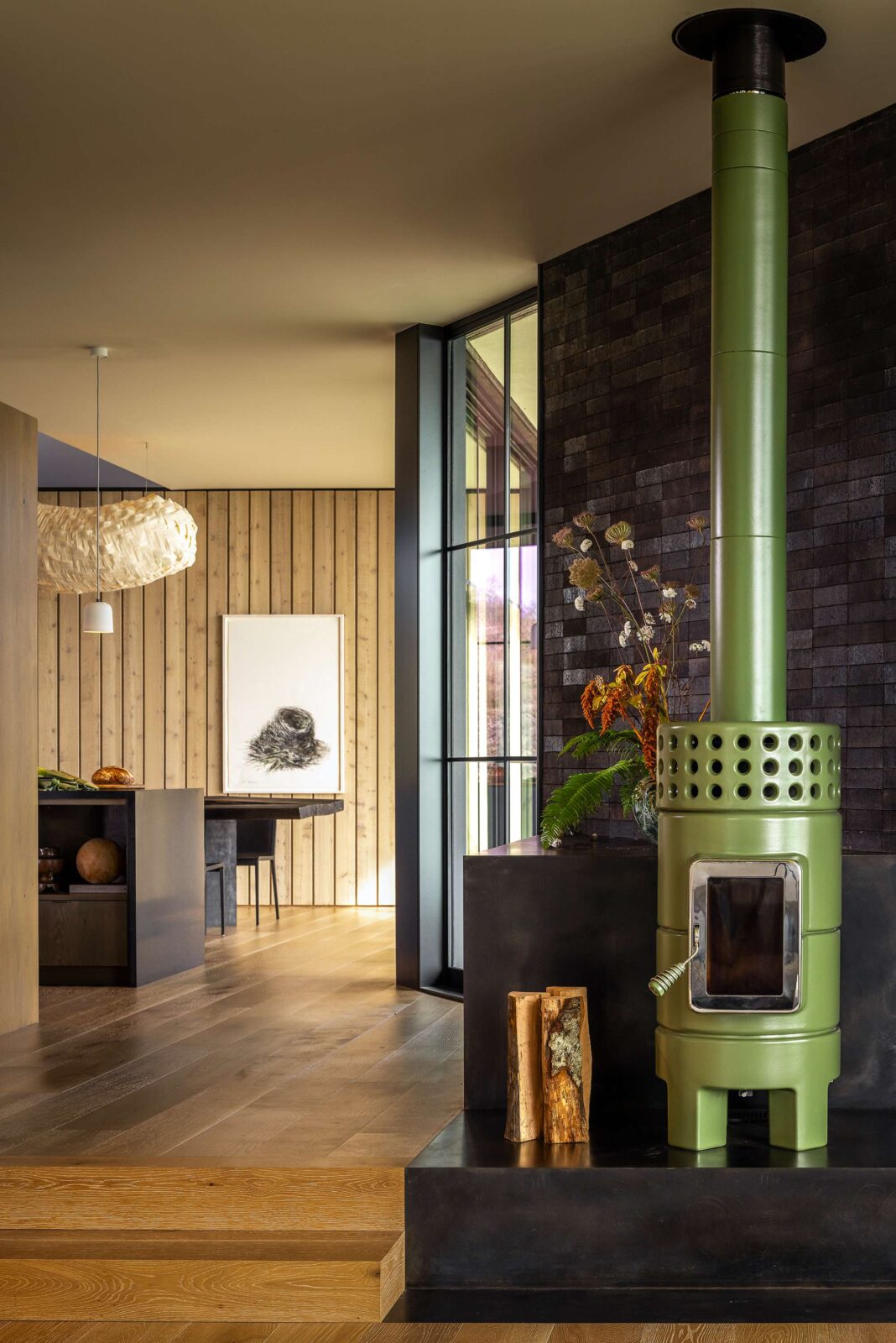
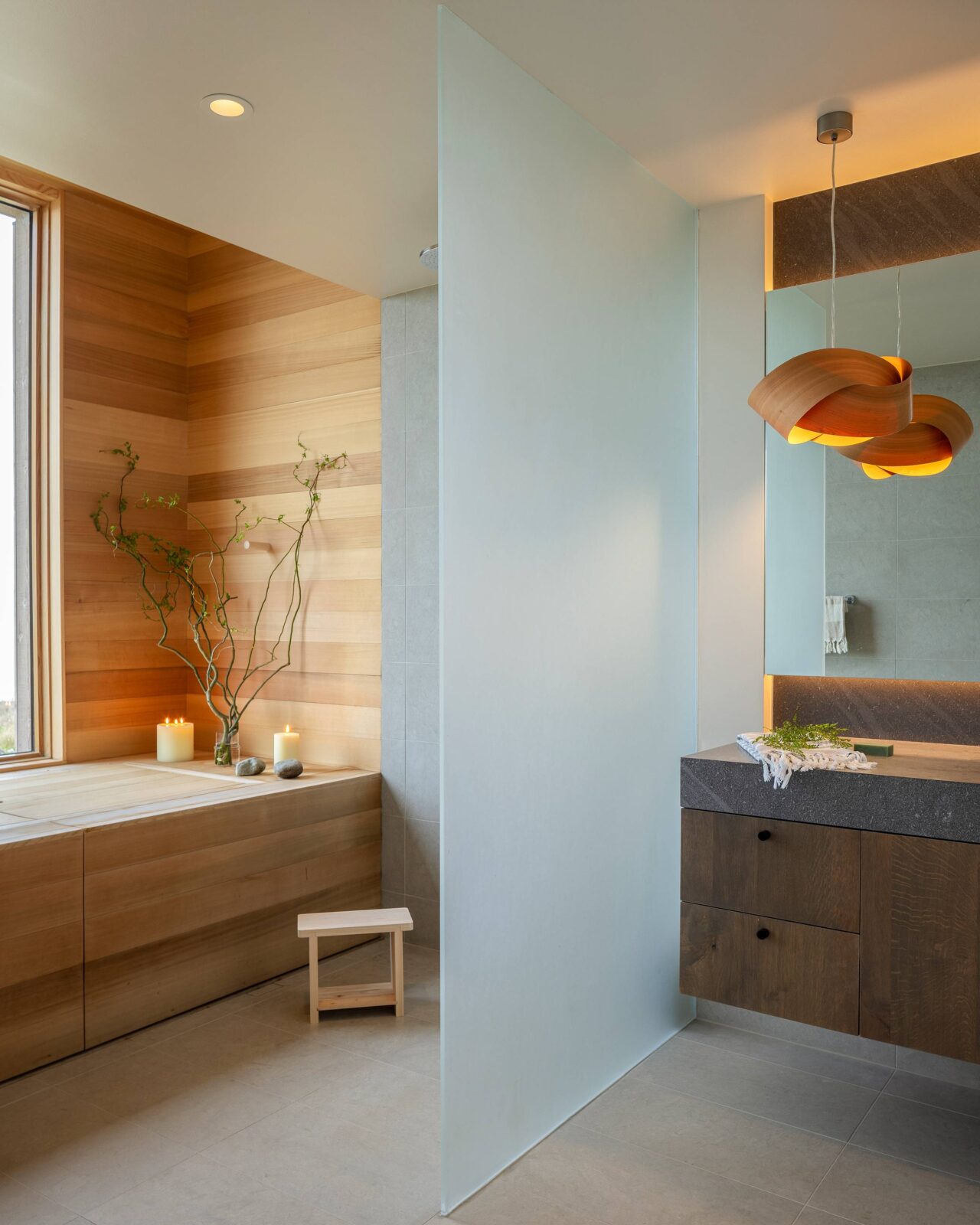
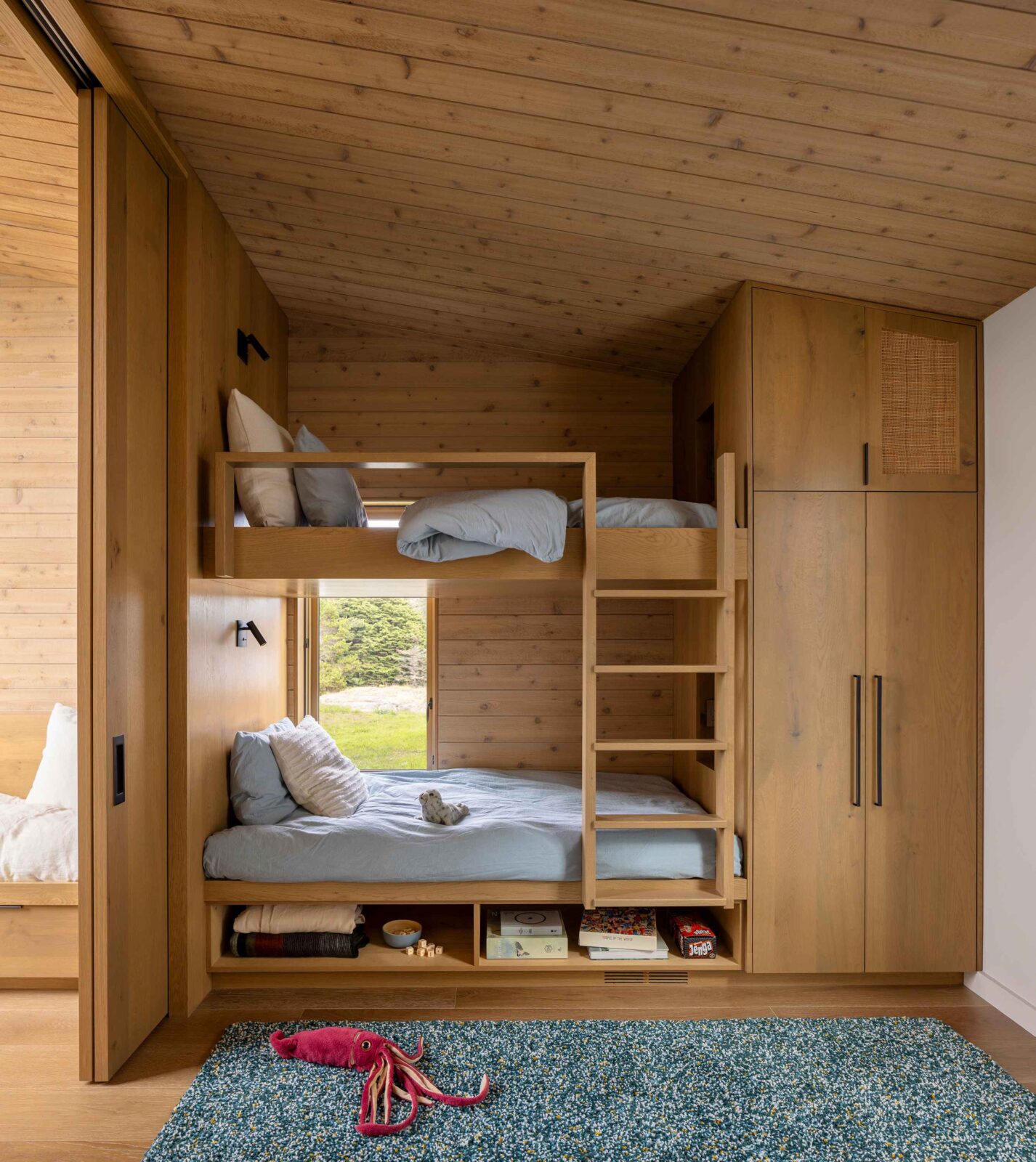
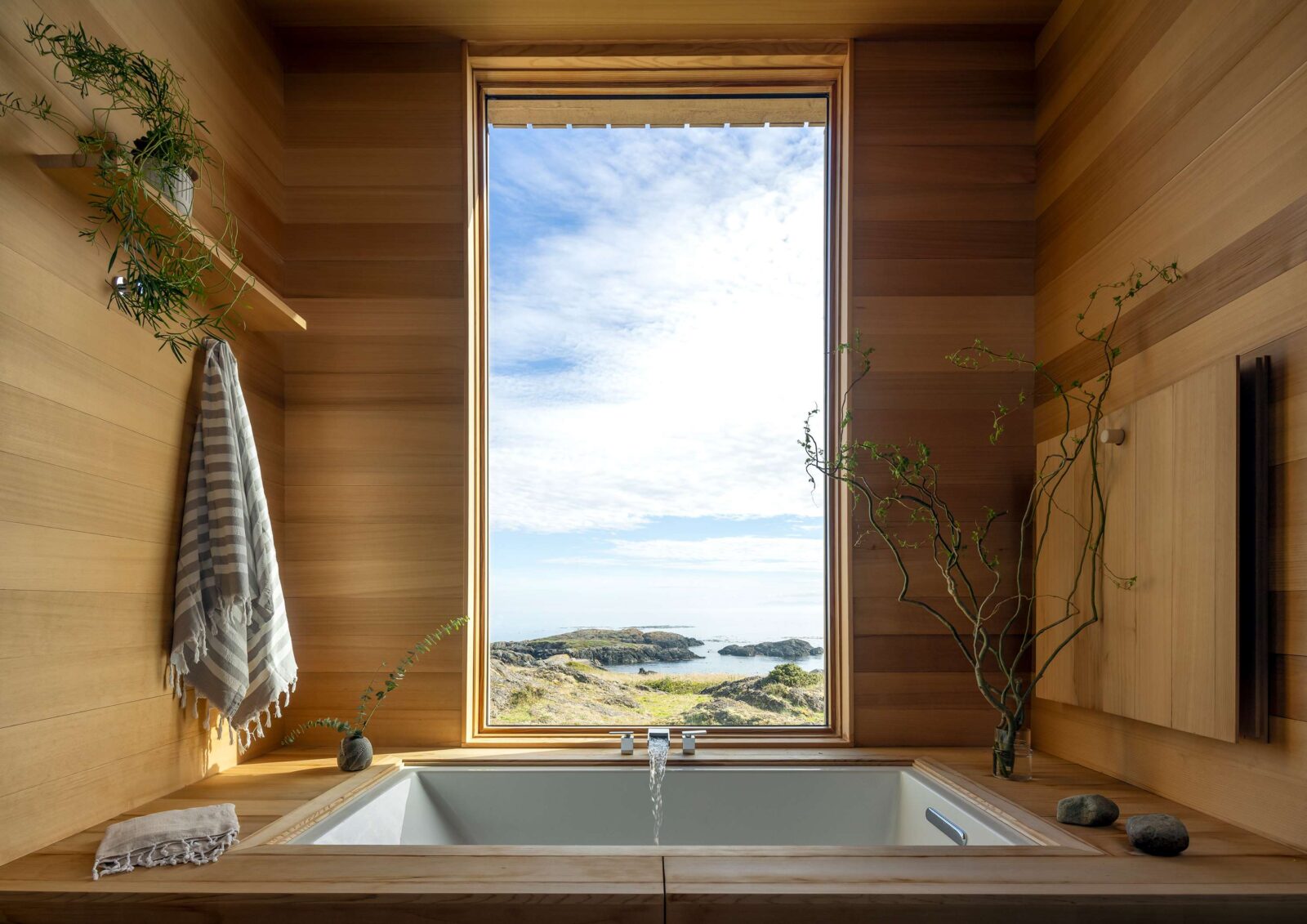
Interiors are calming and neutral, featuring a mix of cedar and plasterboard wall surfaces, wood floors and earth-toned tiles. Furnishings are comfortable and especially placed to take advantage of the views, which seem to pop out from every space. The open-plan living areas include an 11-foot carbonised-wood dining table that reinforces the connection between the home and the rocky shoreline, plus large sliding glass doors. Primary and guest suites occupy the ground floor, while a loft suite, including bunk beds and a reading nook, is located above with views northward over the top of the rock.
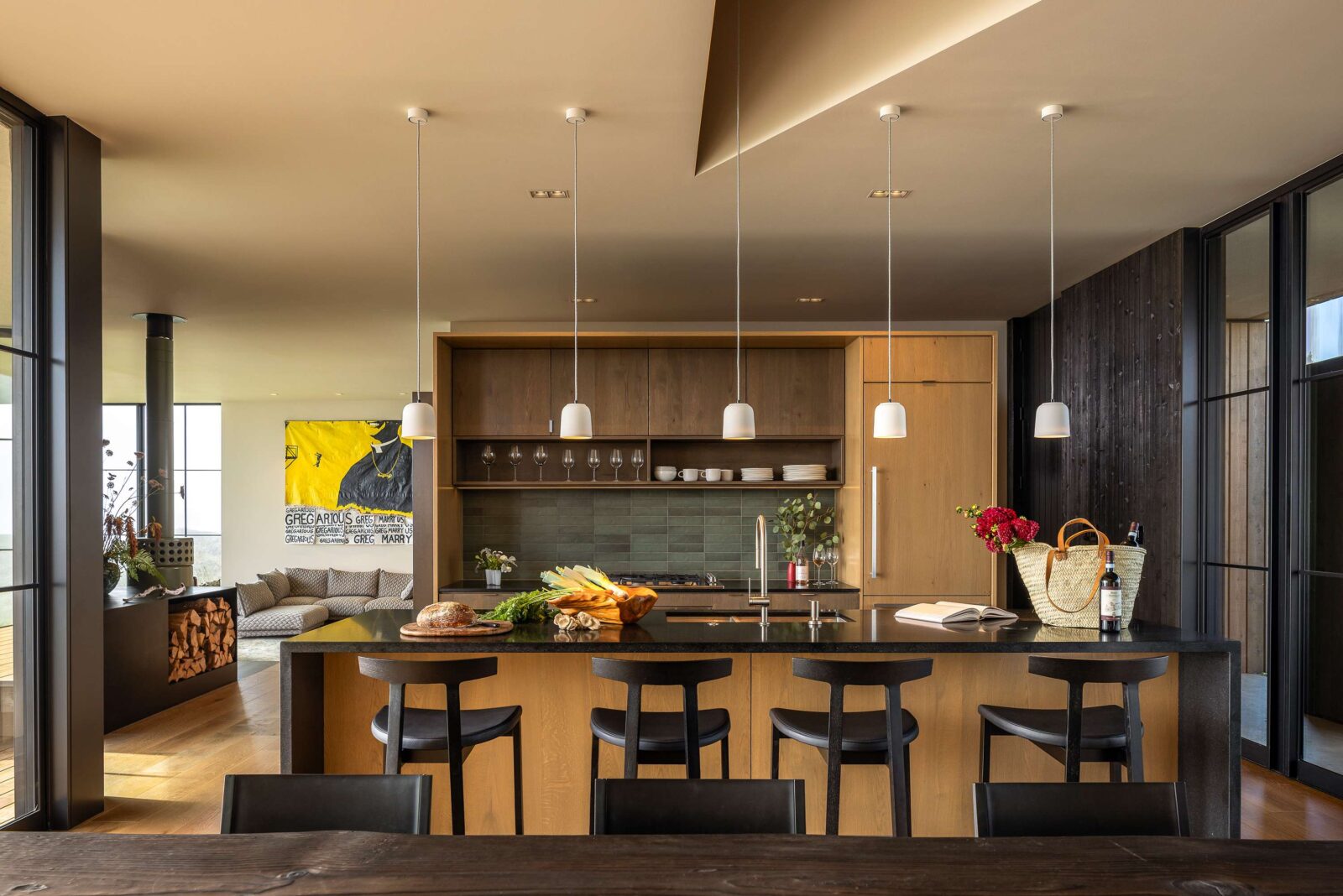
Adapting the home to the climate
The building structure includes beyond-code insulation and window performance, high-efficiency heating with heat-recovery ventilation, an airtight envelope tested at 1.5 ACH and an 8 kW solar array. The house is calculated to exceed the 2030 Challenge for energy performance.
Project information:
Architecture: Heliotrope
Interiors: Heliotrope, Clients
Contractor: DME Construction
Landscape: Garden Artisan Landscapes
Structural Engineer: Swenson Say Faget
Mechanical Engineer: Beyond Efficiency
Geotechnical Engineer: Stratum Group


