



Header: Yumeng Zhu
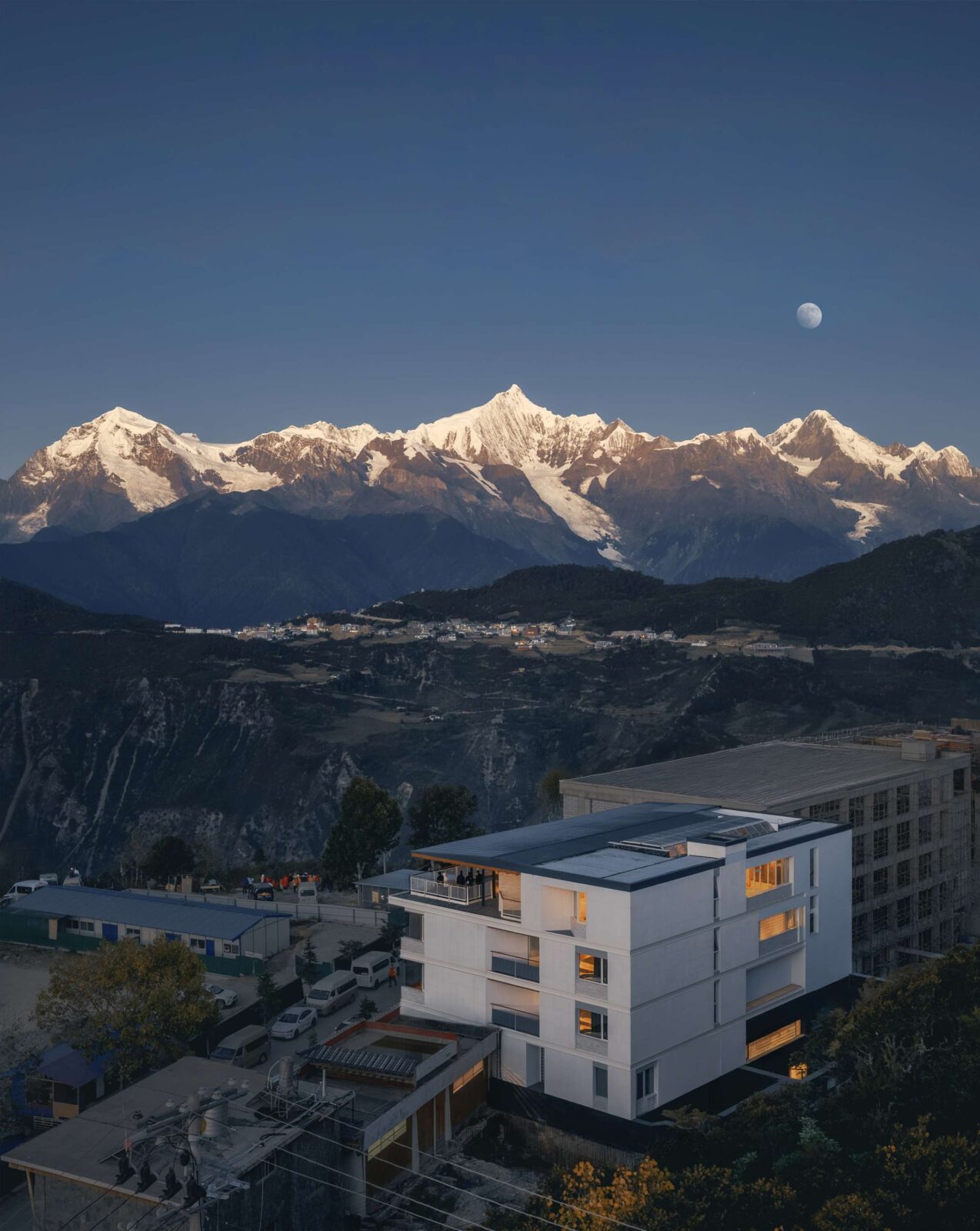
The Kawagebo Snow Mountain Hotel is located beside Wunongding Village, at the Thirteen Pagodas Viewing Platform, a highly exposed tourist site facing the sacred peaks of Kawagebo Snow Mountain. The architects from Shanghai Moguang Studio worked with the site as they found it, using Tibetan references to create a calm and intimate sanctuary in such a busy place.
Building with the slope
The road around the viewing platform is lined with hotels and guesthouses, all facing the mountain. The area has also become crowded with roadside stalls, temporary buildings and ongoing construction, so the architects had to deal with both the view and the clutter around it.
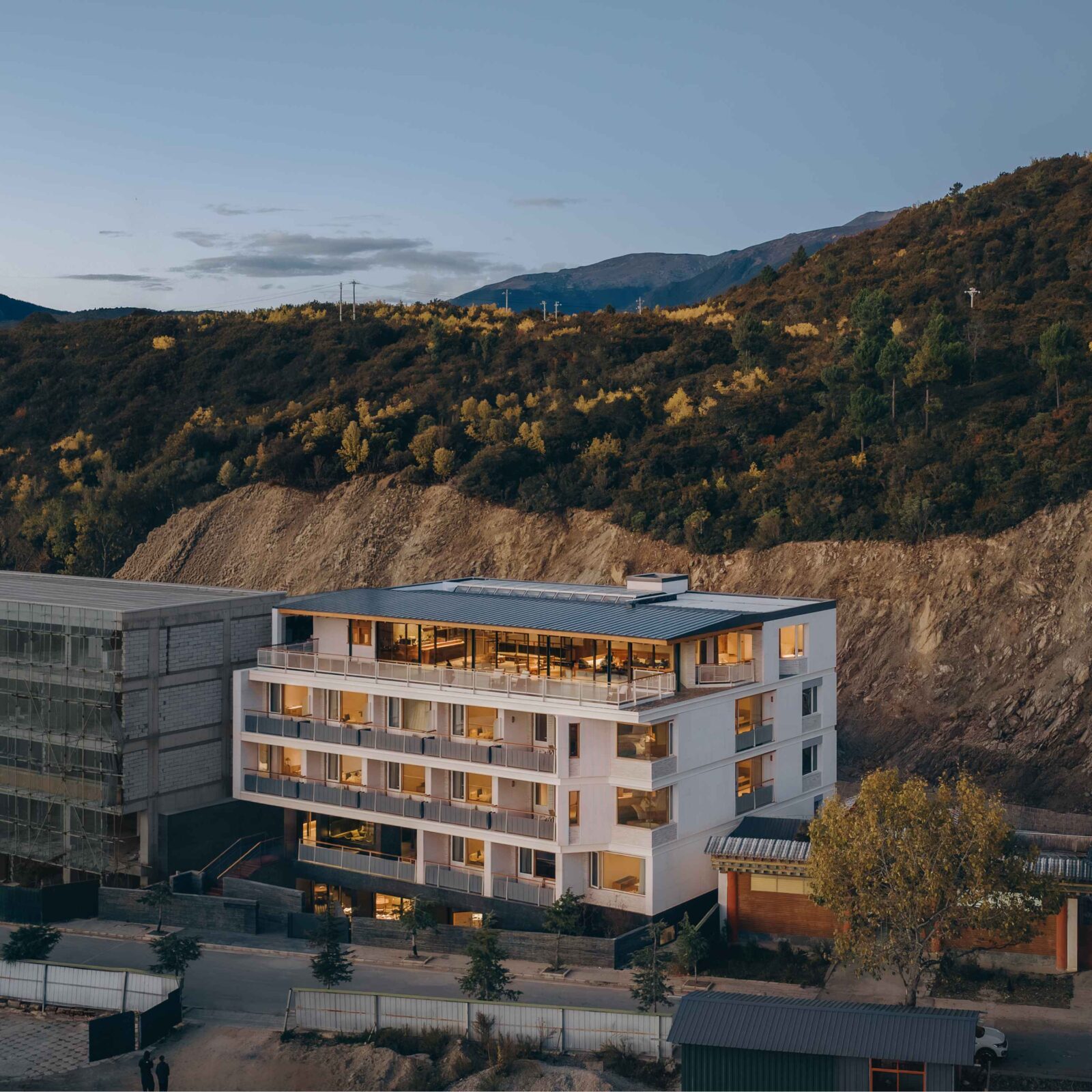
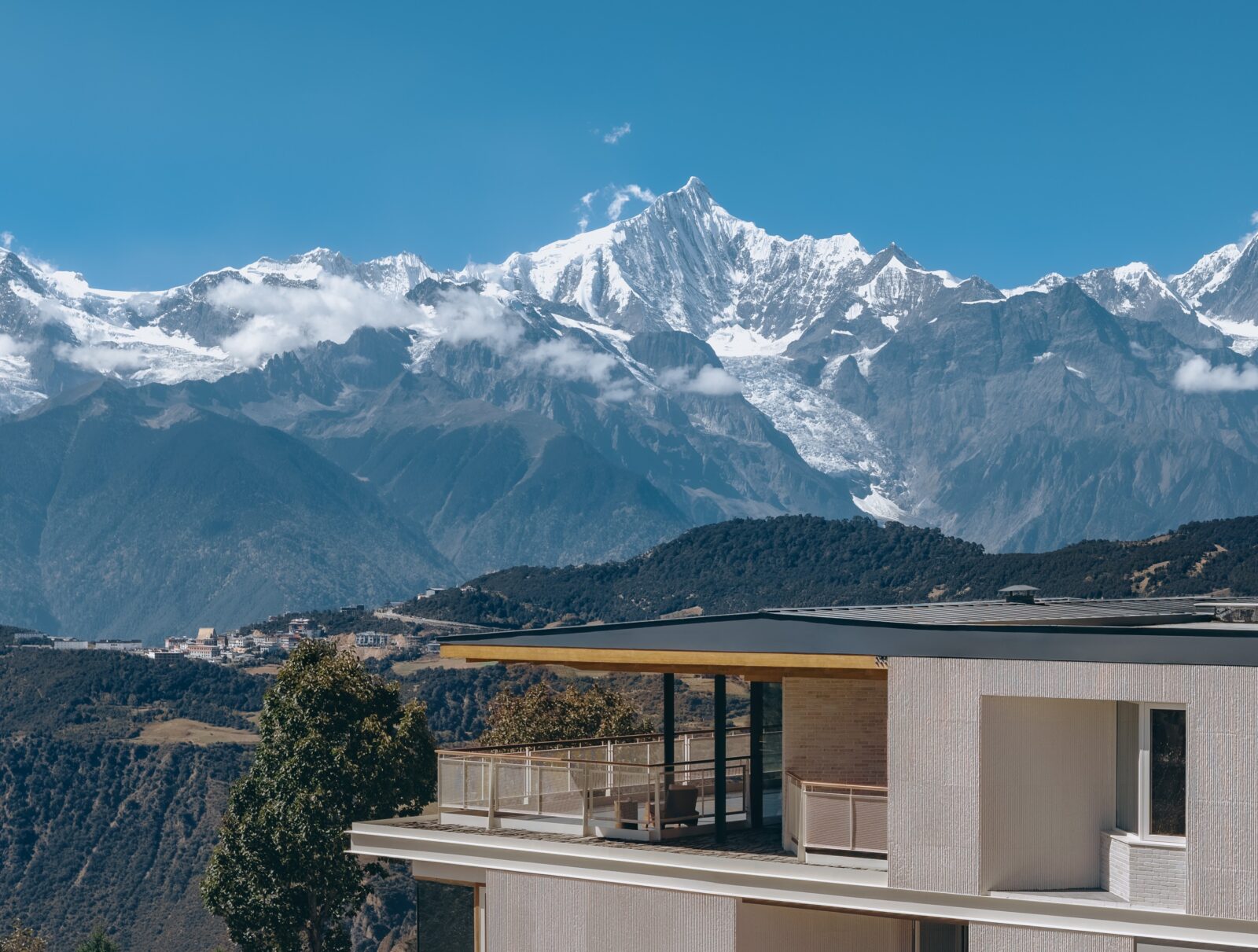
The Kawagebo Snow Mountain Hotel opens to mountain views on the south-west side, while its north side sits against a slope cut through by the road, and its front faces an old village storage yard and a neighbouring construction site. With a 15-metre height limit, Moguang Studio had to find a workable setting, as five storeys would make the interiors too low and four would waste part of the permitted volume. As a solution, the studio raised the ground floor by 1.8 metres, placing the lobby, main public areas and guest rooms on the top levels and the restaurant, kitchen, storage and service areas on the lower ground floor. To access these, guests can cross a bridge into the raised lobby or take stone steps down to the restaurant below.
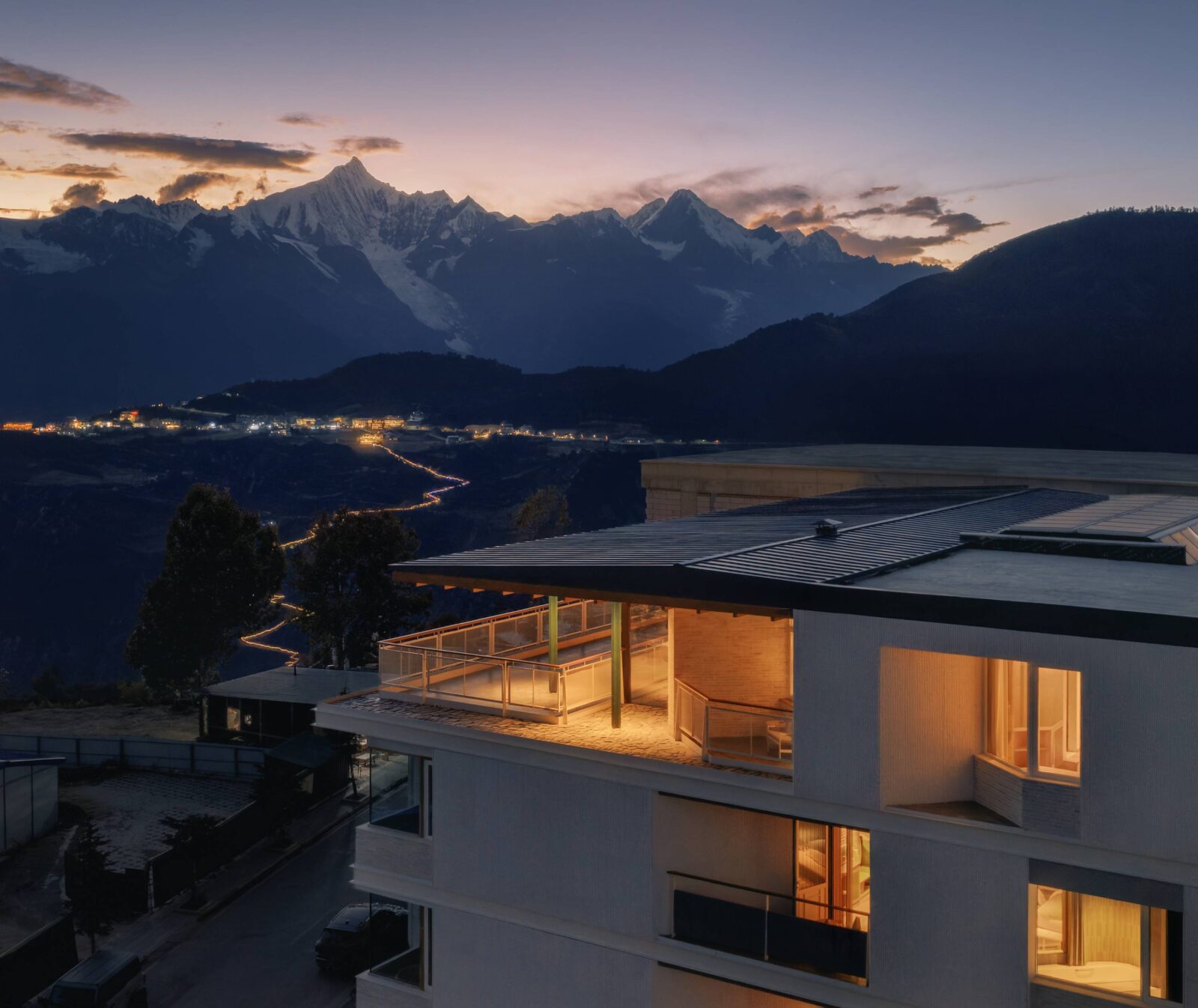
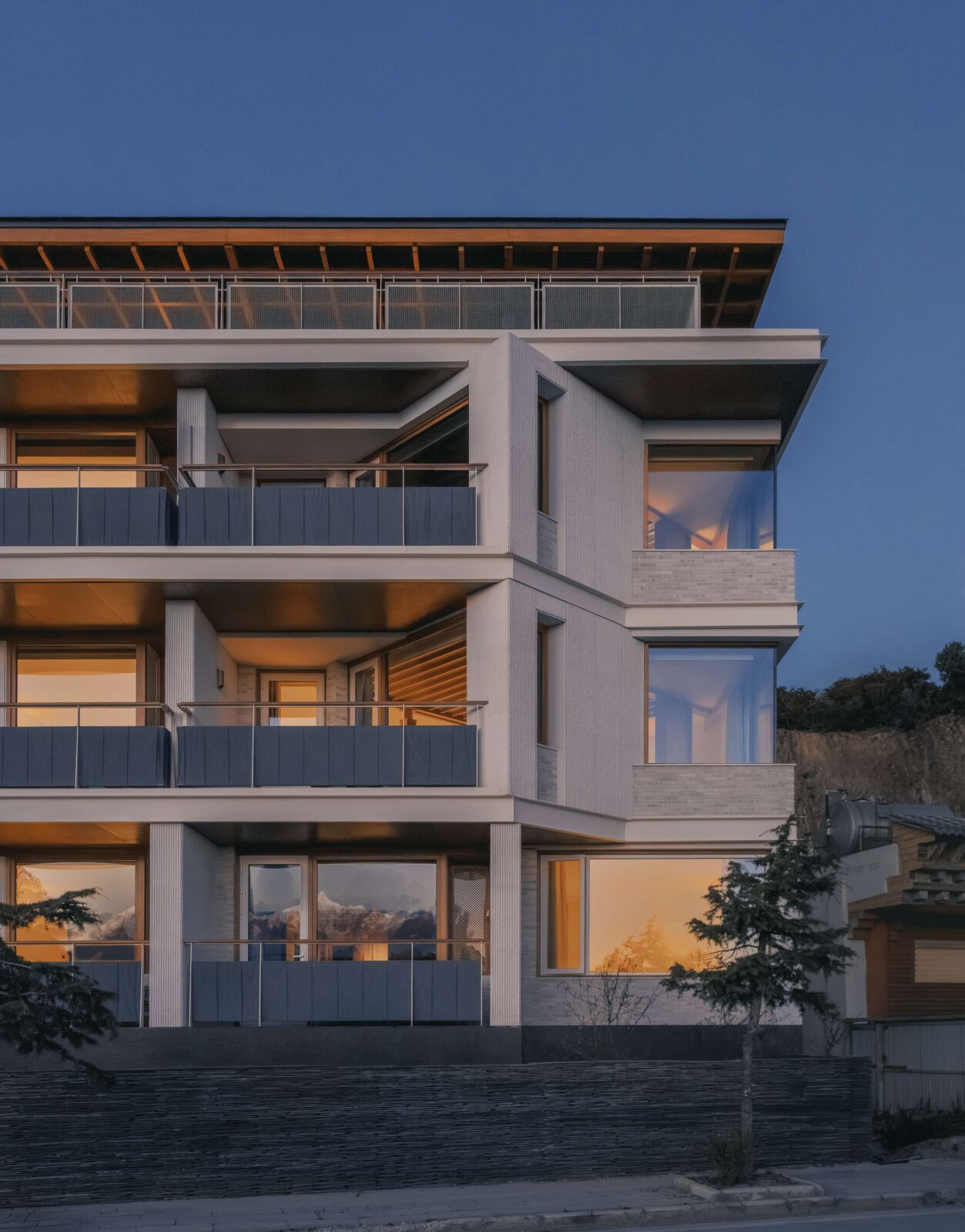
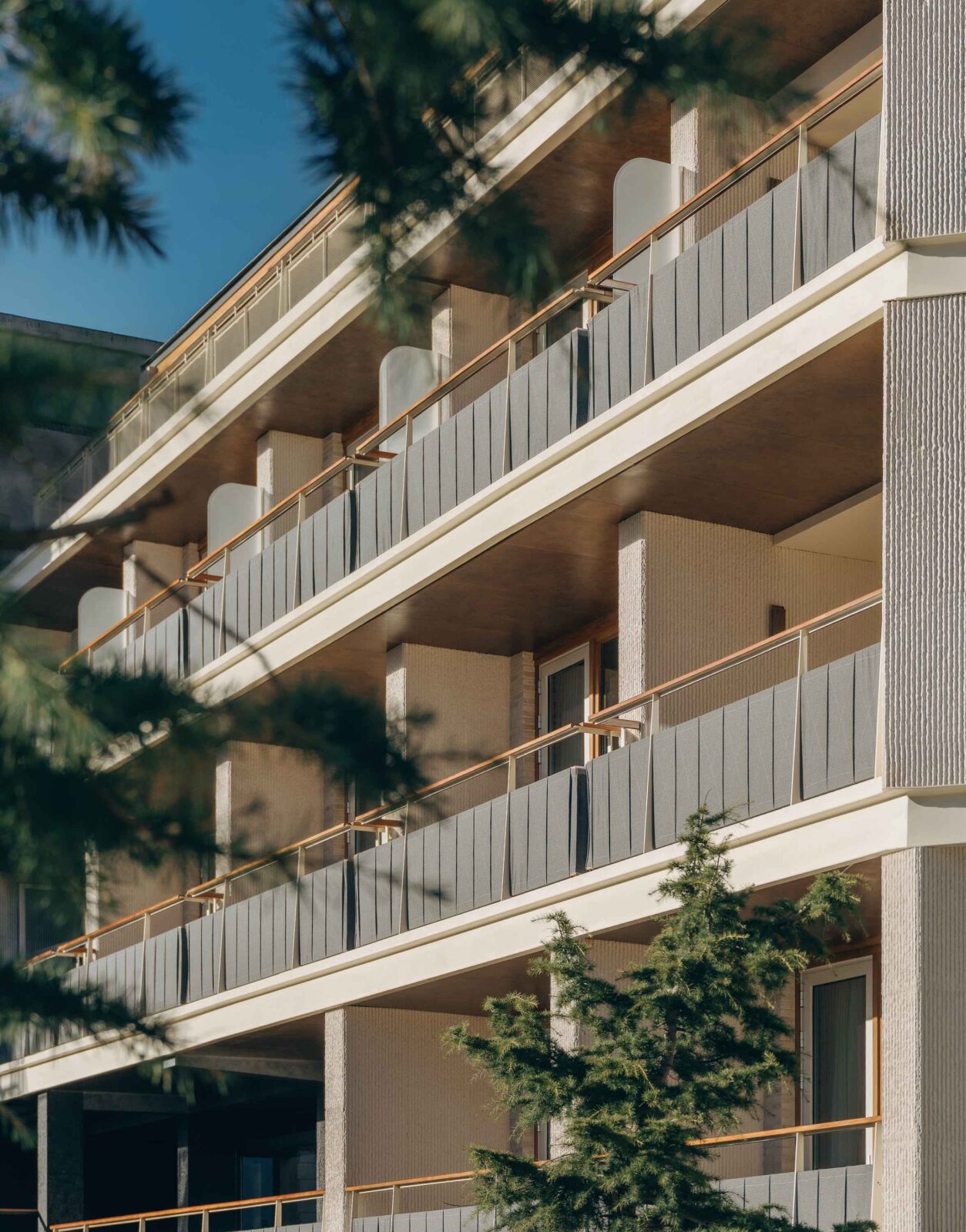
The outside of the hotel was left in white, clad in dry-hung white sandstone and visible chisel marks that give the façades a worked, aged look. Between the hotel and the road, a triangular courtyard brings light and air to the lower level. Higher up, on the fourth floor, the café roof projects out, while the southern terrace is set a little behind the façade below. The guest-room balconies are screened with suspended grey fabric, which also works as the balustrade and softens the stone façade.
Infusing Tibetan traditions
Moguang Studio looked at Tibetan houses and temples when developing the hotel’s circulation and use of light. In monasteries, galleries often wrap around the main hall, so people move through the building by walking around it, going up, stopping and looking back across the space. Light normally enters from above and is filtered by columns, beams, eaves and balustrades before it reaches the centre. At Kawagebo Snow Mountain Hotel, this can be seen in the atrium, the galleries, the timber screens and the rooms above.
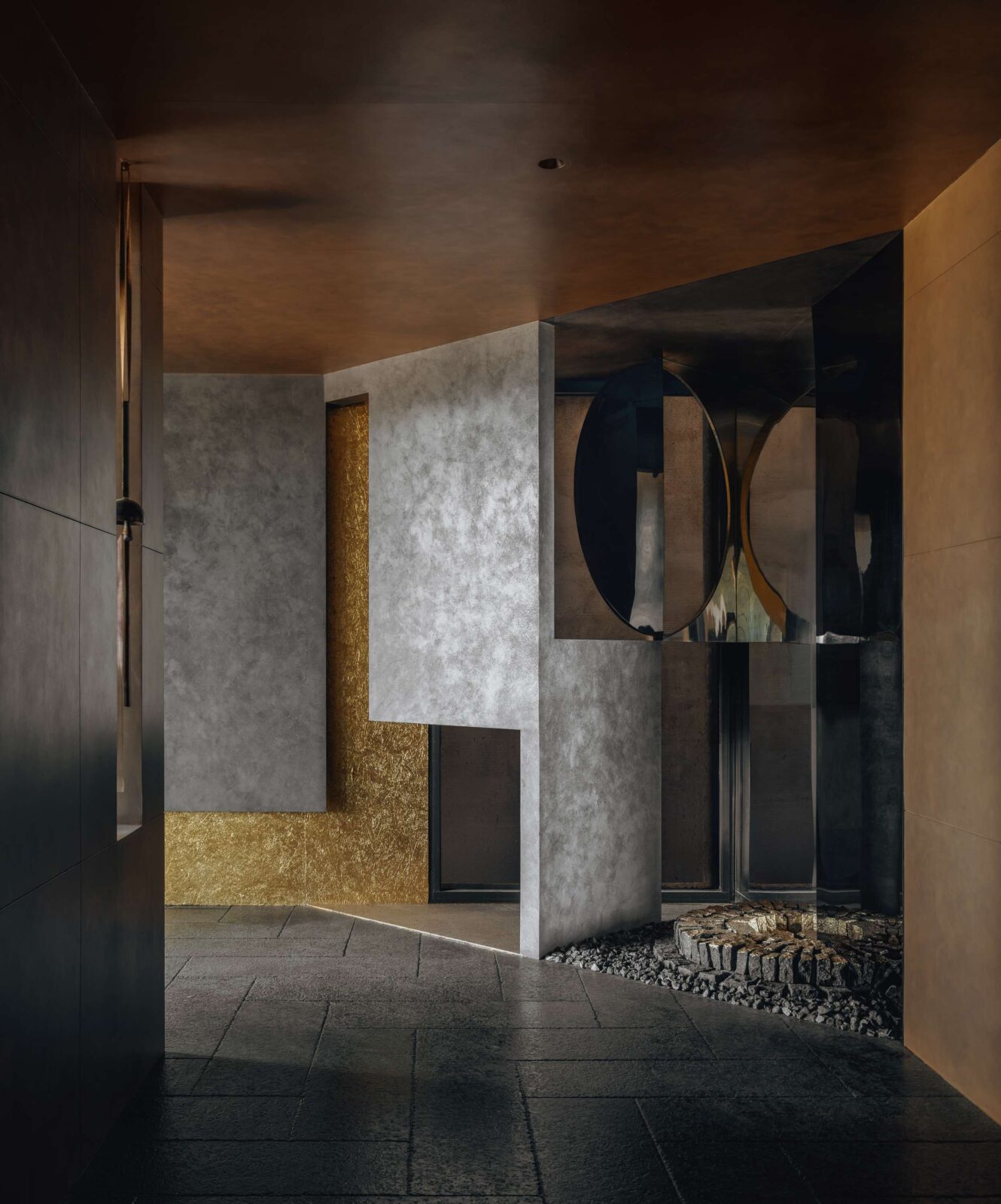
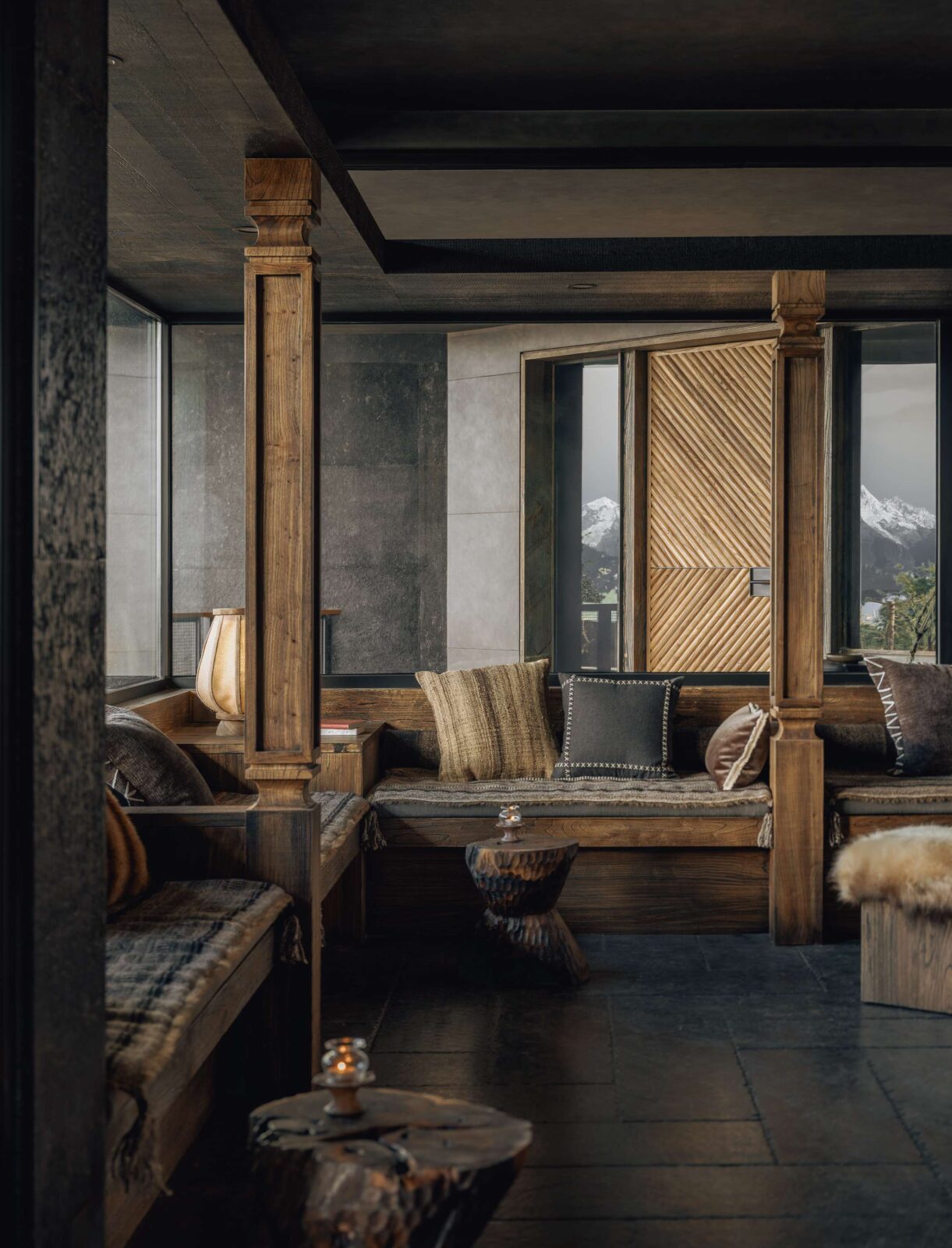
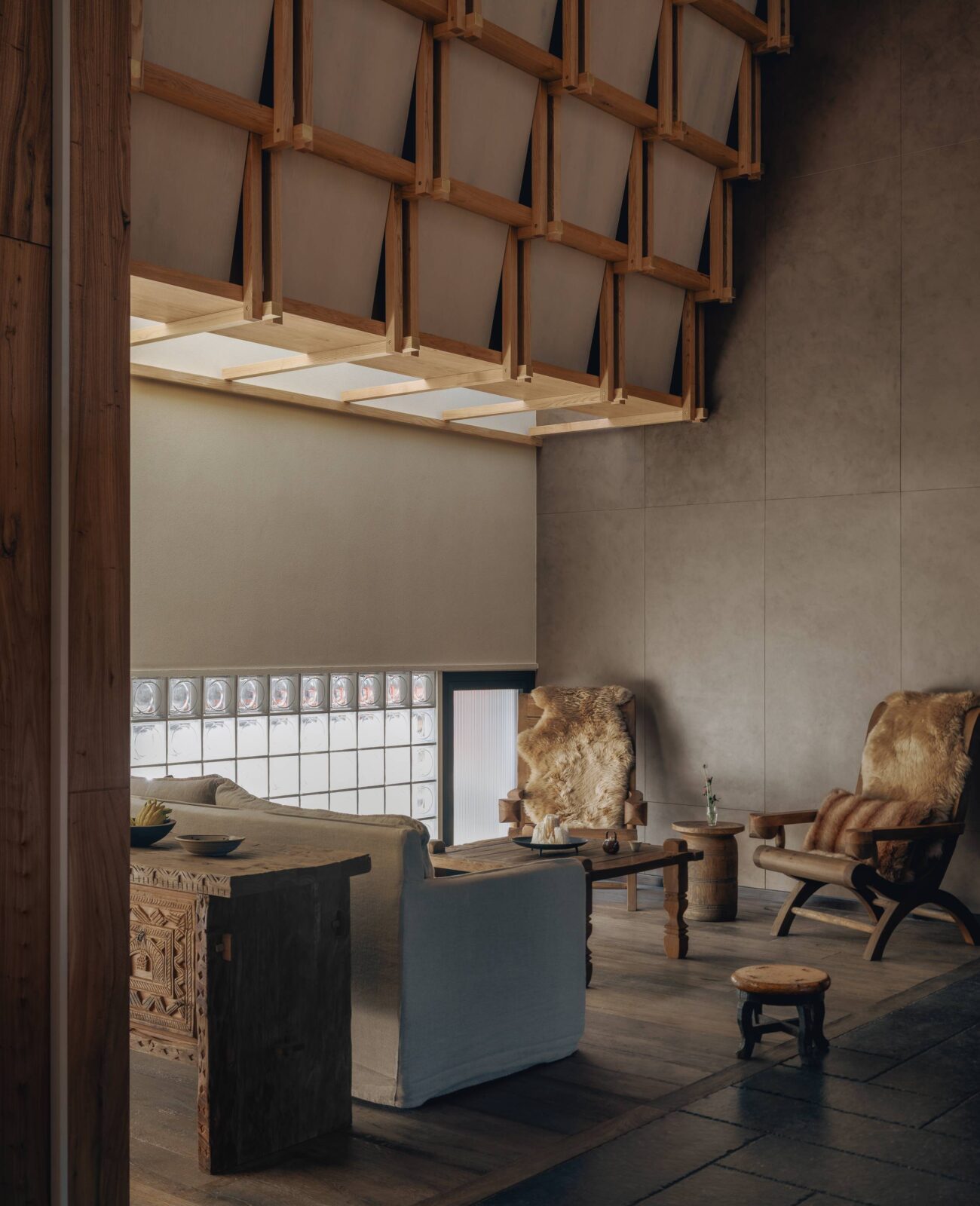
Textiles also shaped the design. In Tibetan buildings, fabric is often used on columns, walls, eaves and windows to filter light, protect surfaces and bring colour into the room. At the hotel, this appears in the screens, balustrades, wall joints, openings and layered materials. The architects also refer to Gottfried Semper’s idea of “petrified carpentry”: the sense that a building detail can still show traces of an earlier material or craft, even when it is made in a different way.
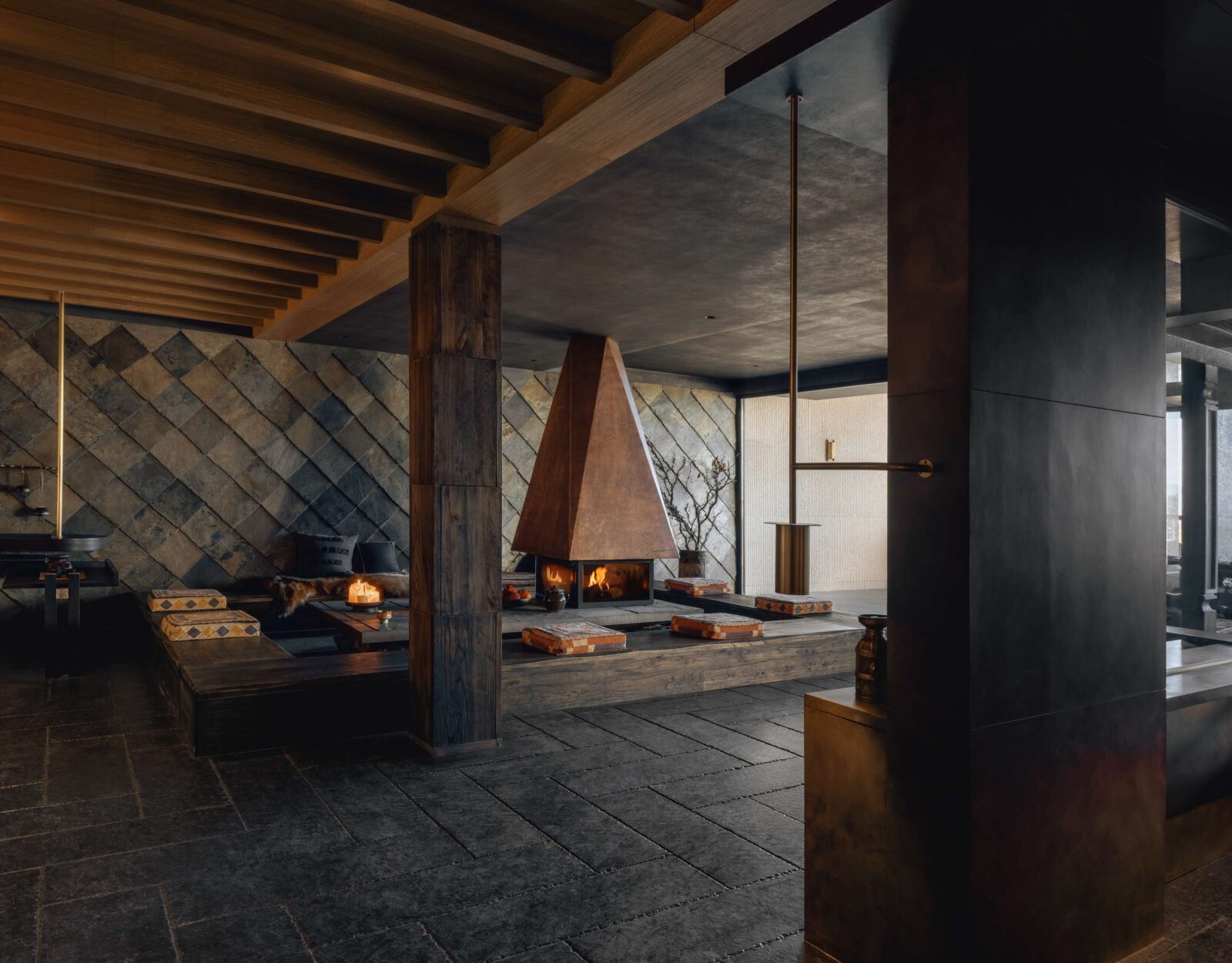
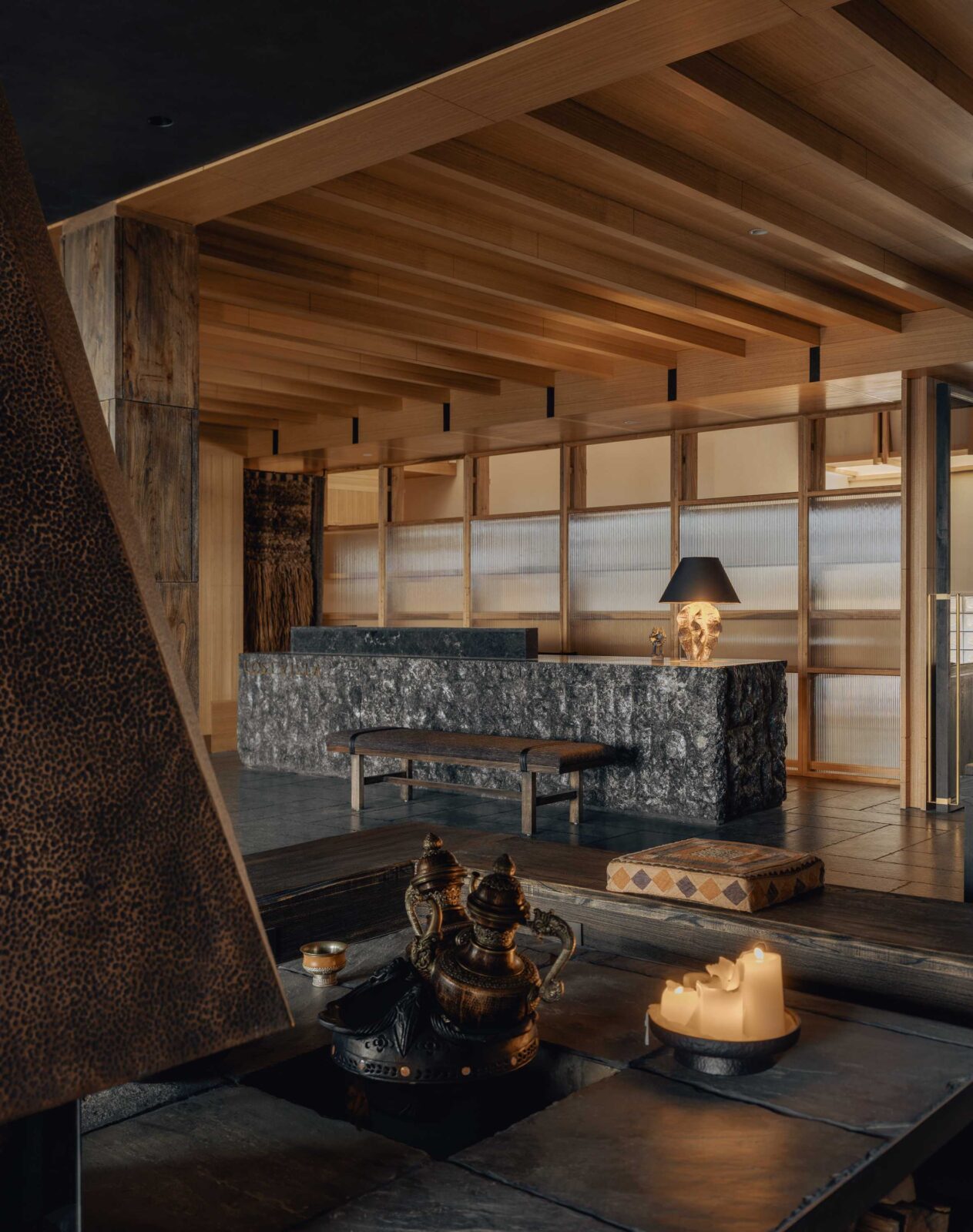
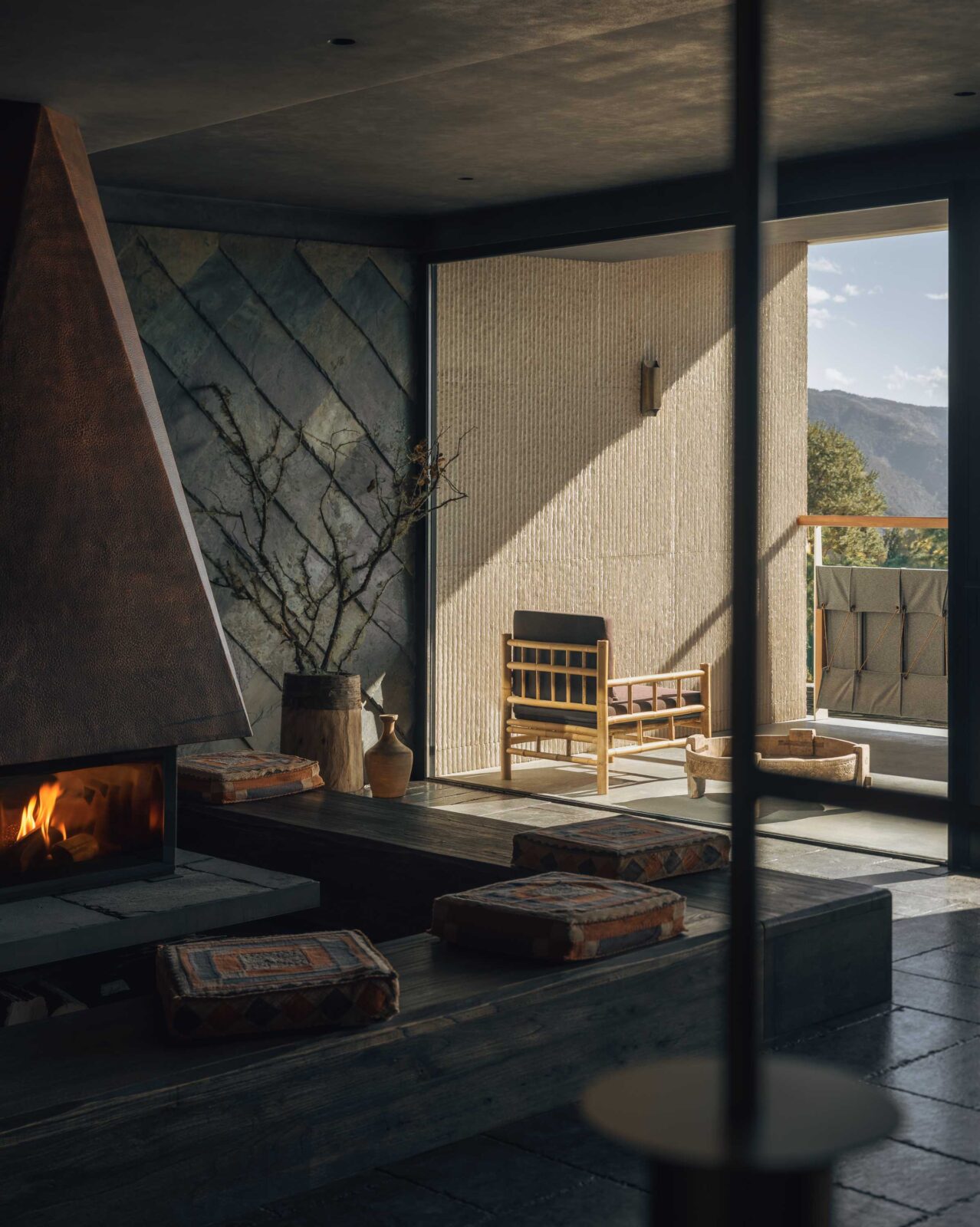
Several interior details come from Tibetan domestic space, where the hearth, water shrine and central column are the main points of the home. In the hotel, this appears as a dark mirrored installation near the entrance, a freestanding copper fireplace in the lobby and a central column that rises through the atrium towards the upper lounge and the mountain beyond.
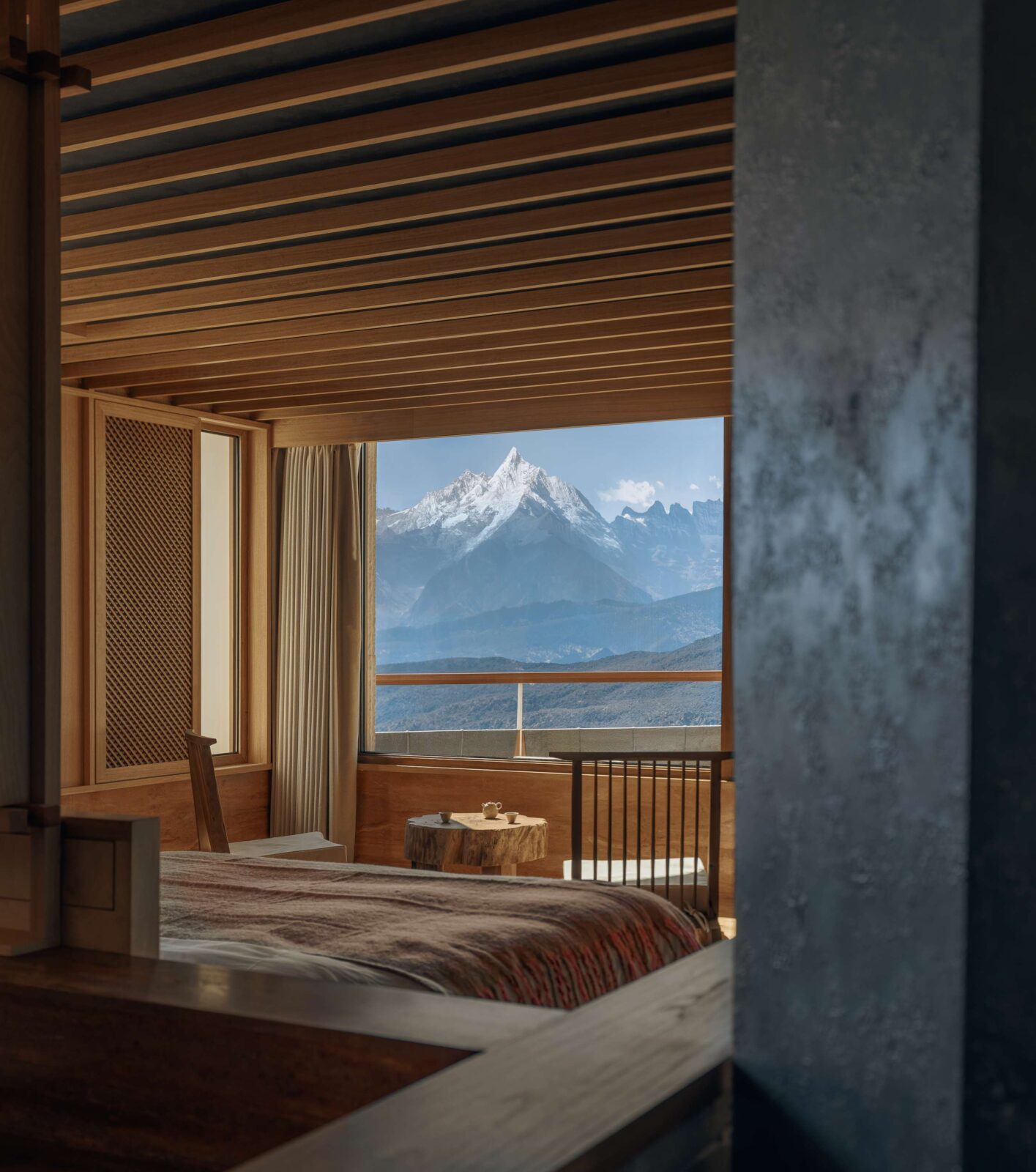
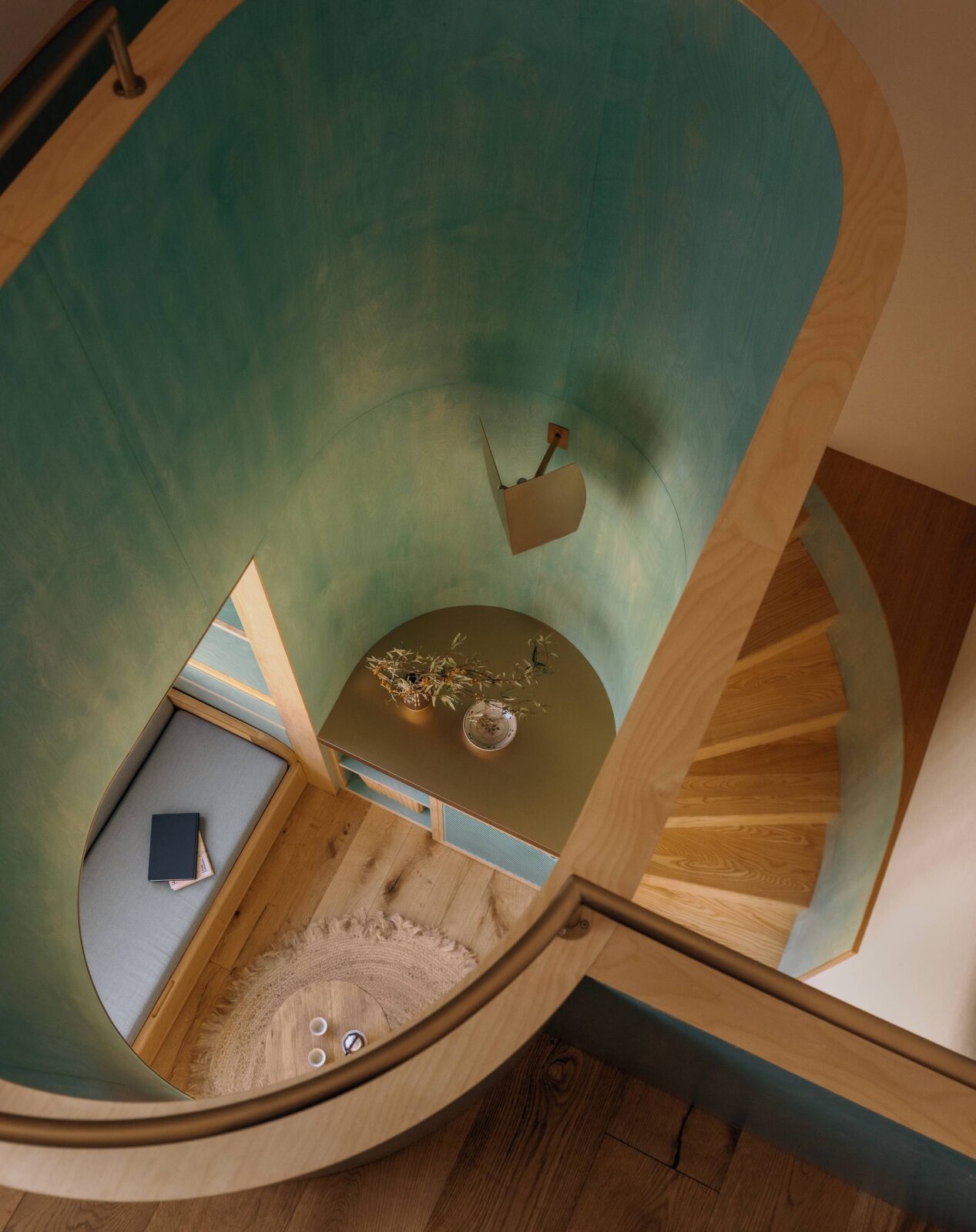
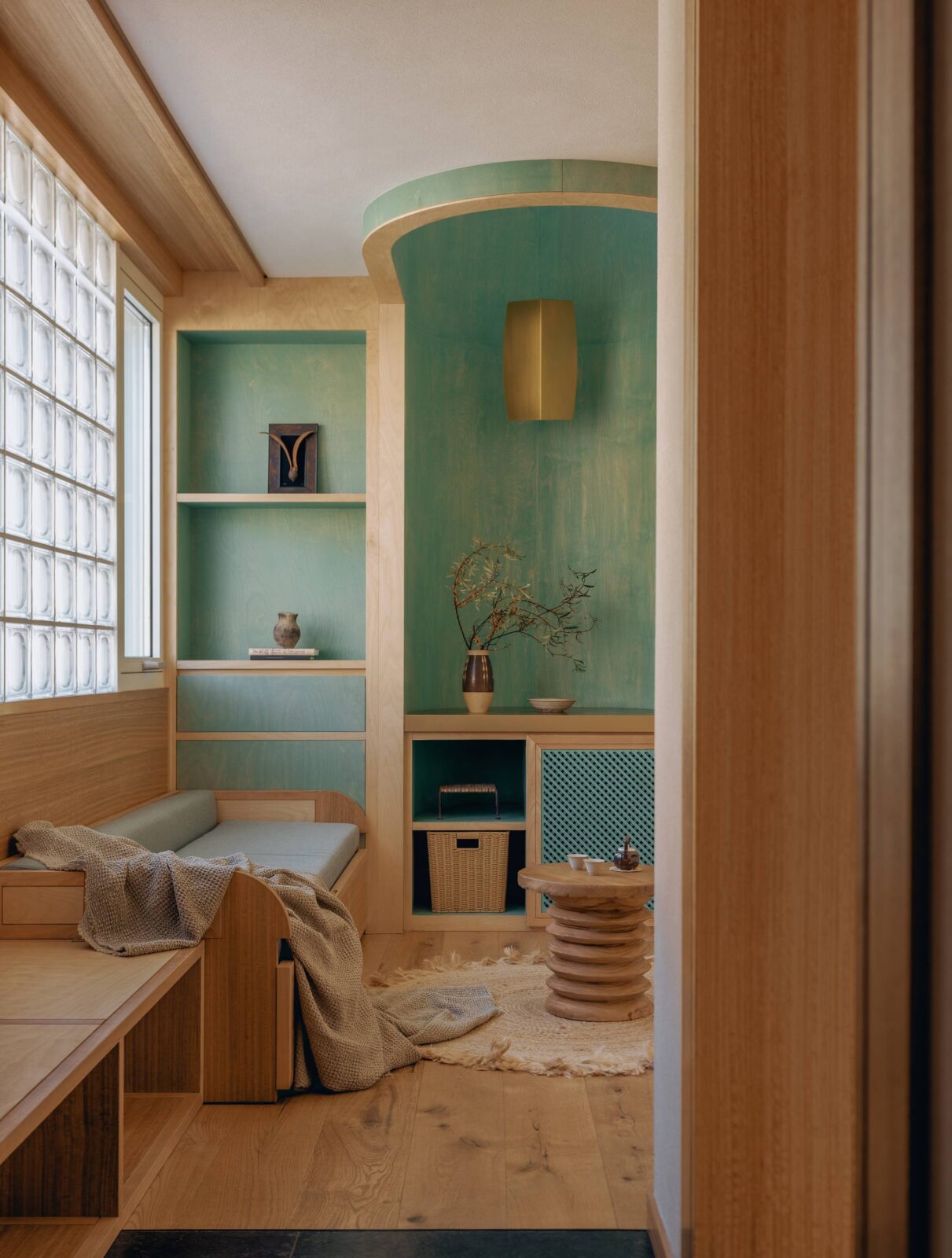
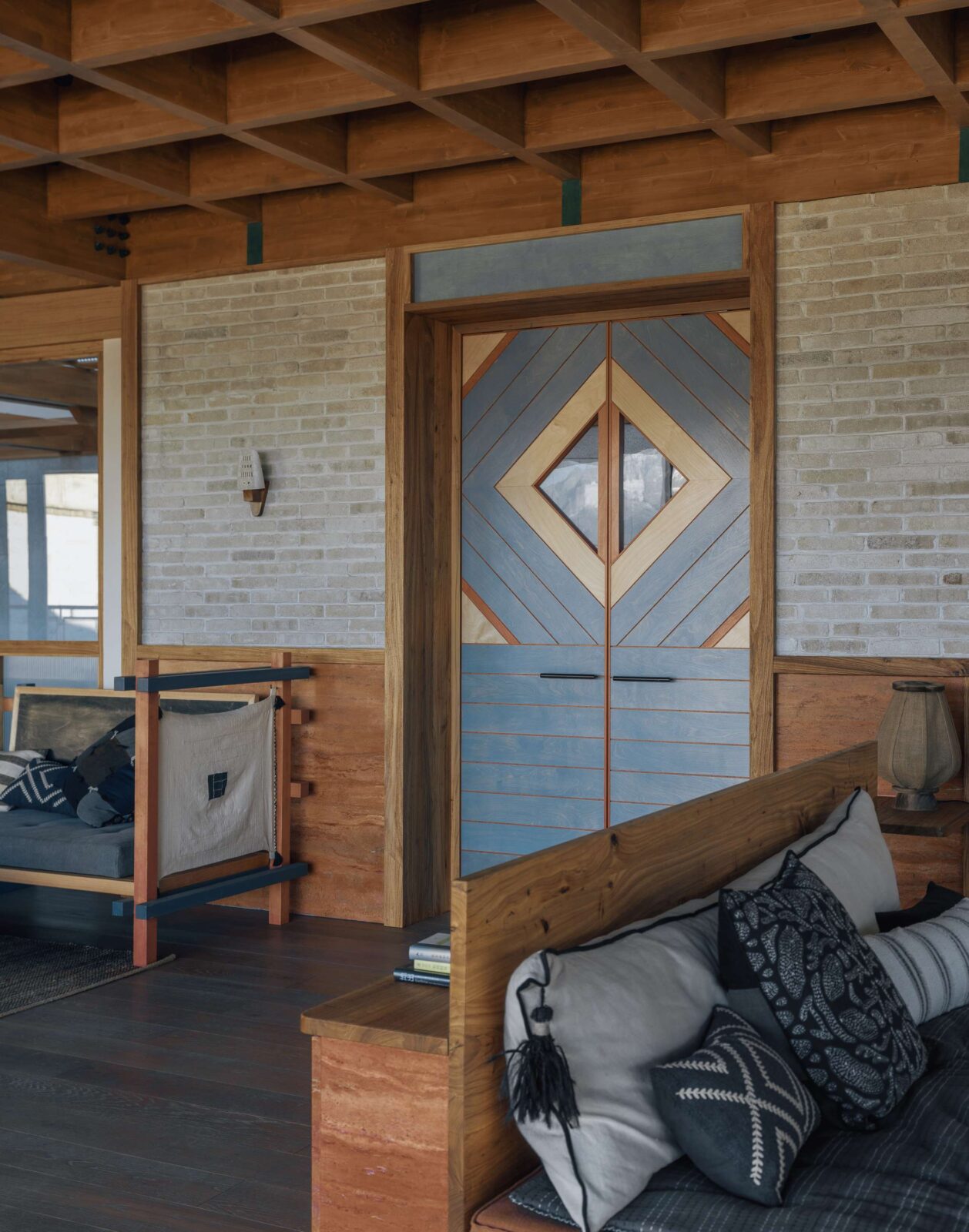
Colours throughout the bedrooms are drawn from Thangka paintings, with mineral pigments used to stain the wood veneers in tones of timber, cream and grey-blue, with blue-green accents in some areas. Wool blankets, linen bedding, movable tables and handwoven textiles add an extra Tibetan touch, as these were sourced from Tibetan pastoral communities in Ganzi, Litang and Gannan and made through family workshops.
The atrium, the galleries and the mountain
The hotel is built around a four-storey atrium that brings sunlight into the building. In Deqin’s high-altitude climate, where the sun is harsh but useful for warmth, the atrium acts like a greenhouse, holding heat during the day and releasing it slowly after dark. Daylight enters through a skylight, which also helps with ventilation, and then passes through timber beams, grilles and balustrades before reaching the walls and floors. Beige wood-wool acoustic panels line the surfaces, while the white stone outside adds another pale layer. The architects describe this mix of texture, light and small shifts in tone as “layered whiteness”.
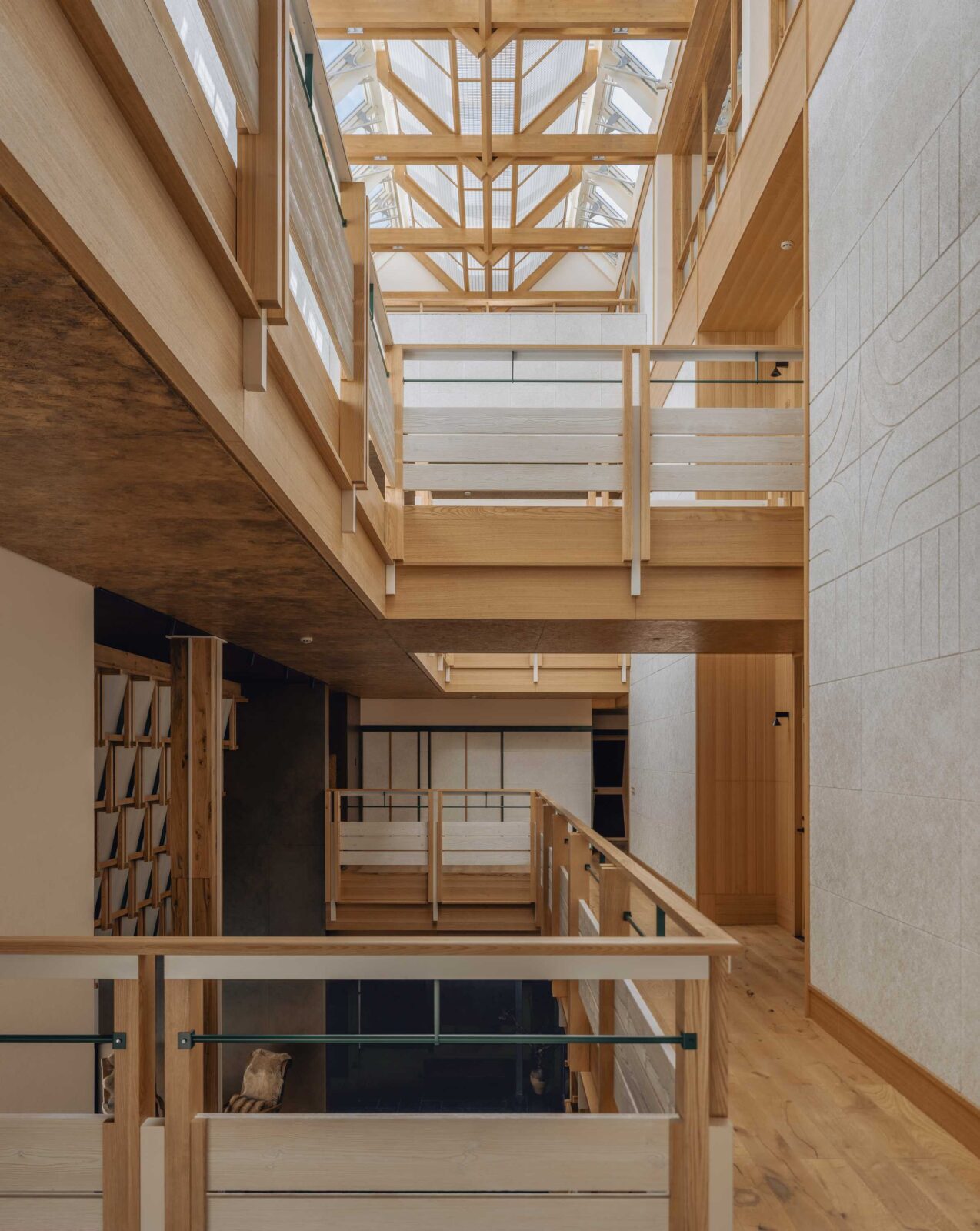
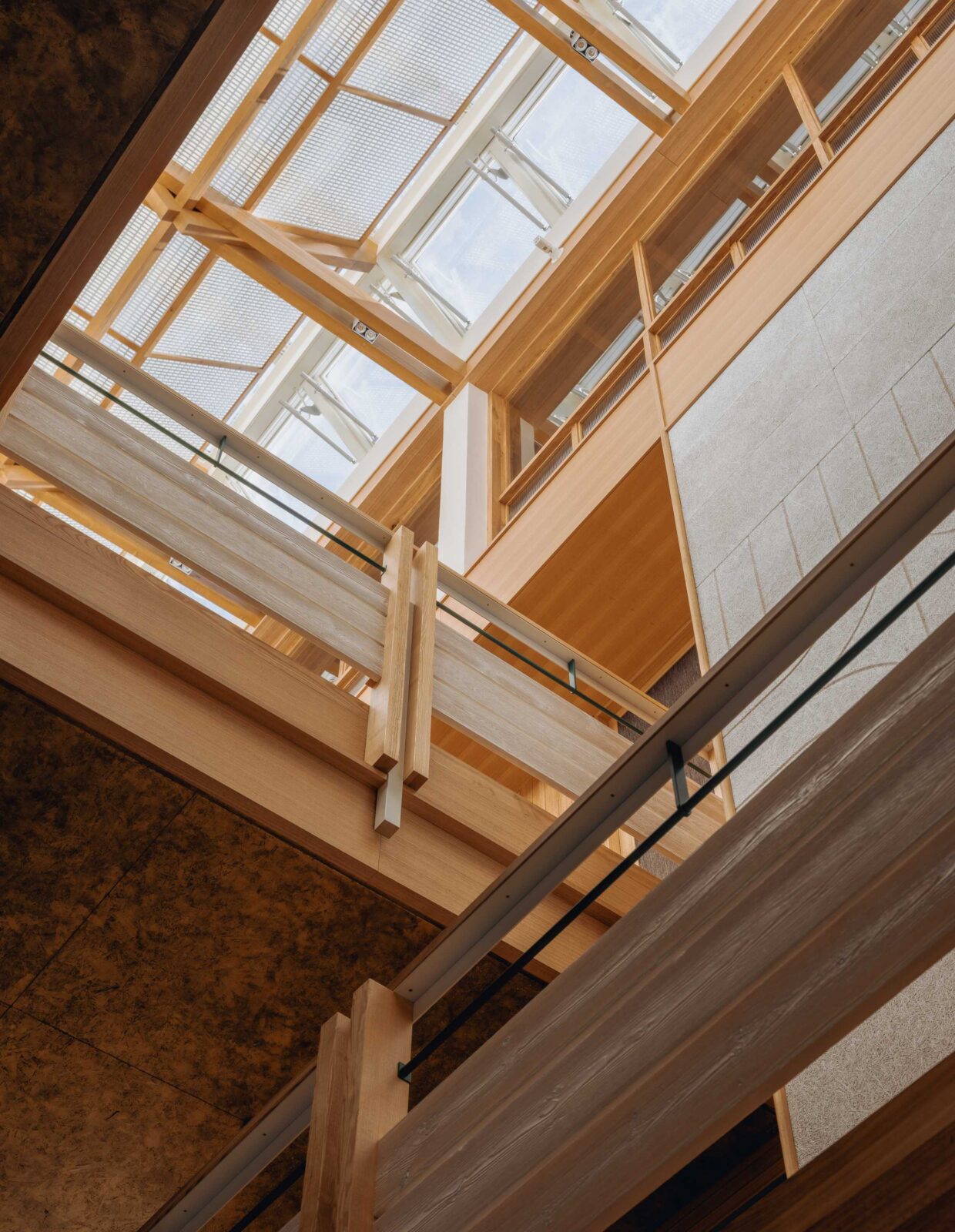
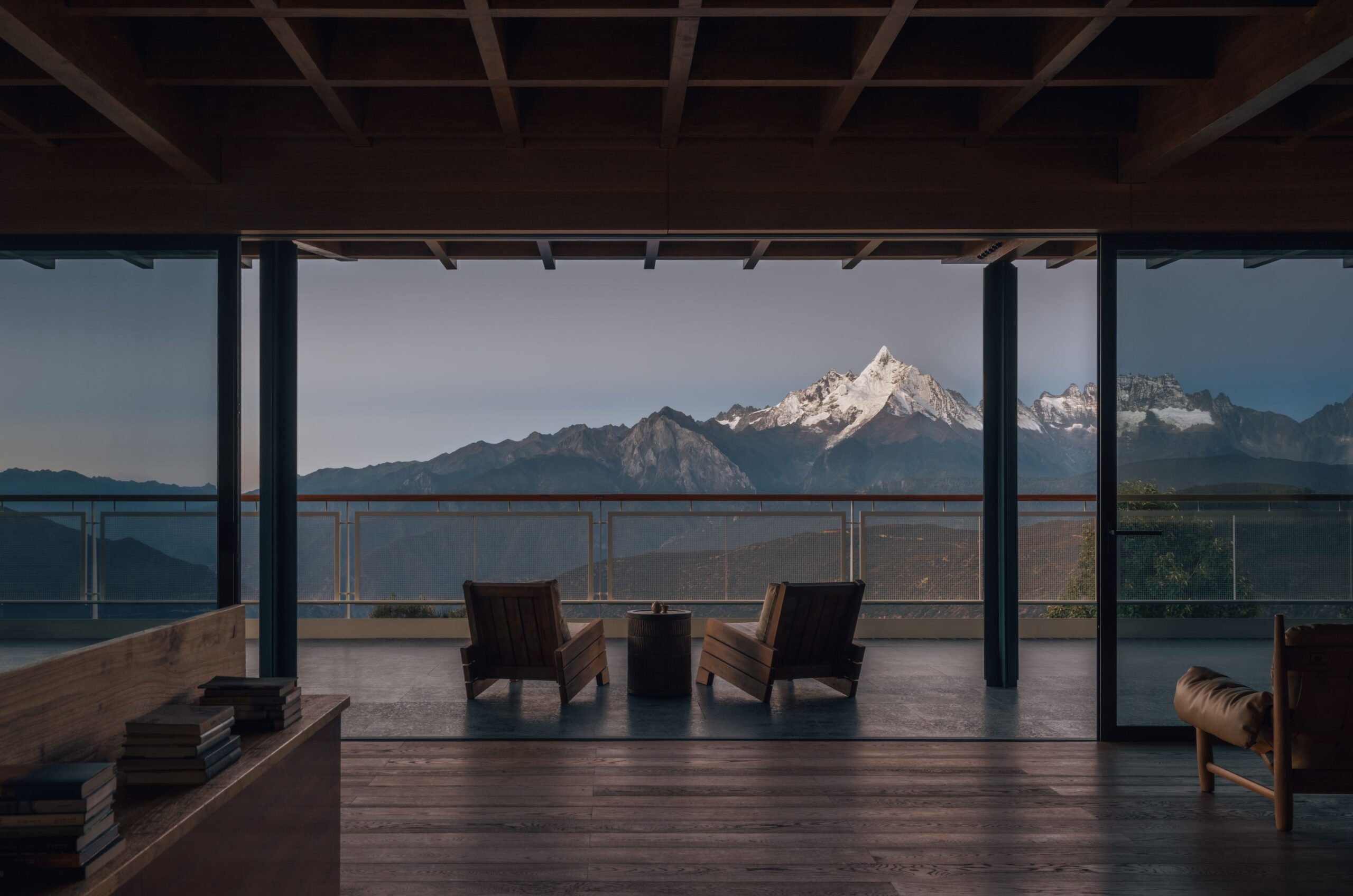
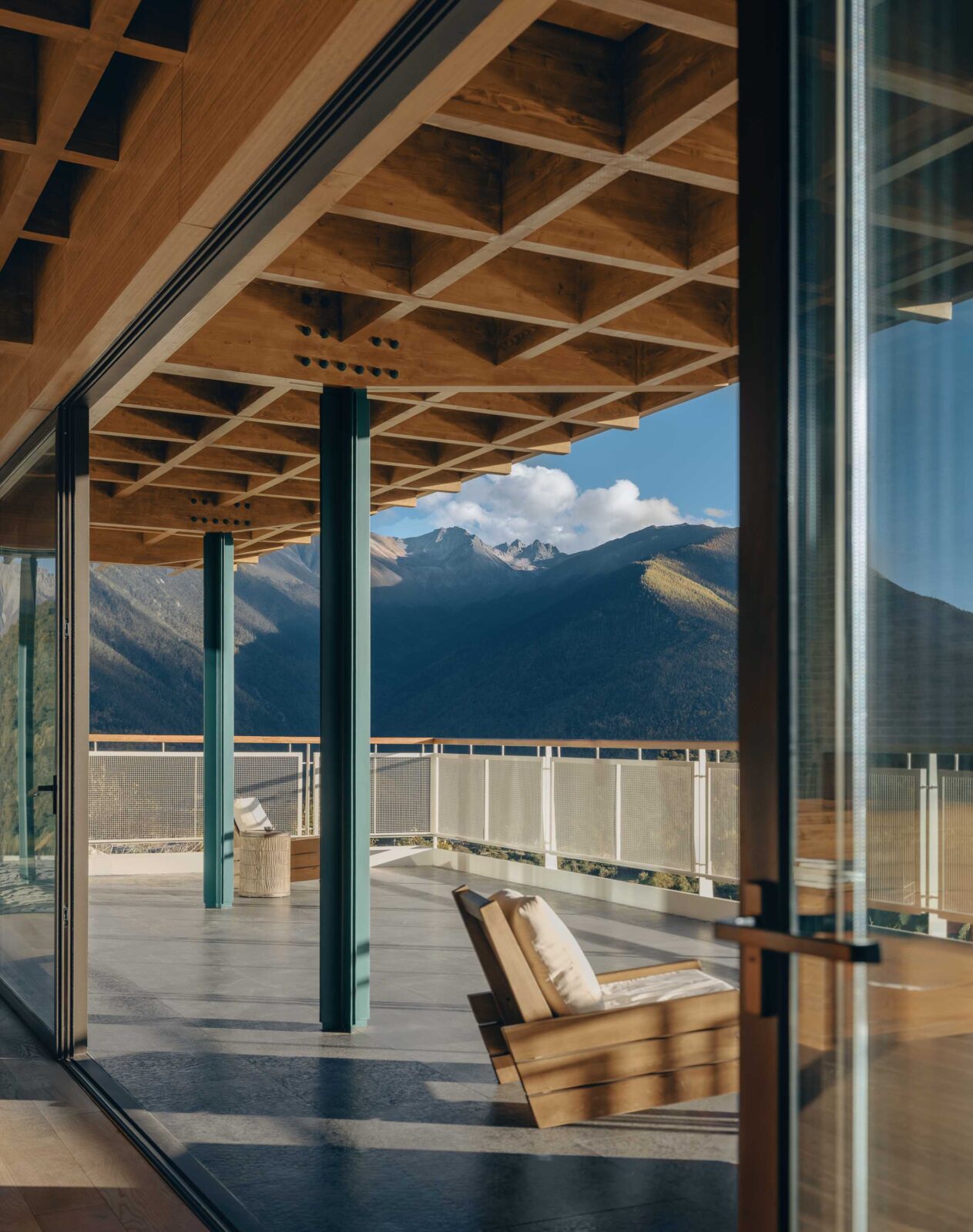
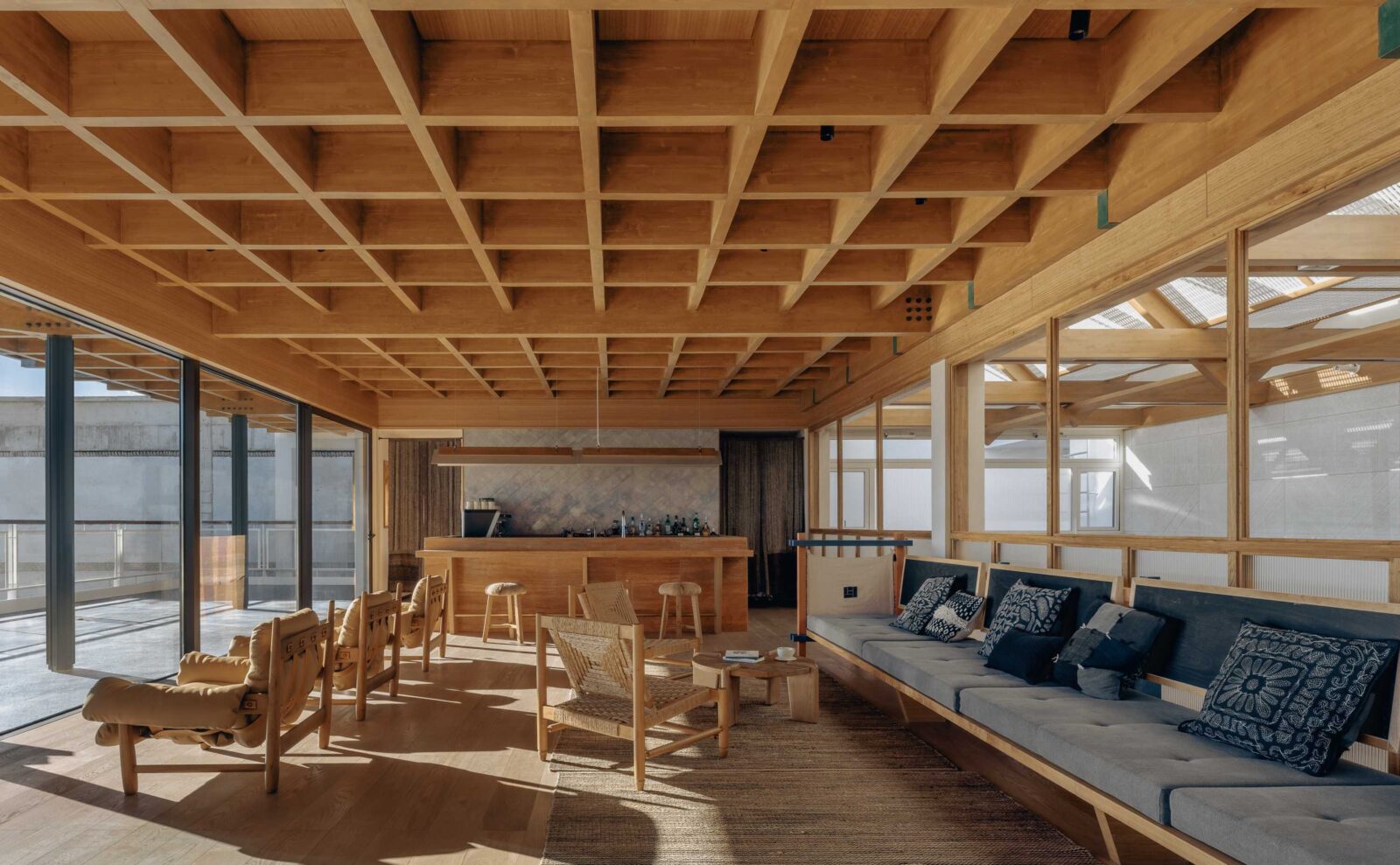
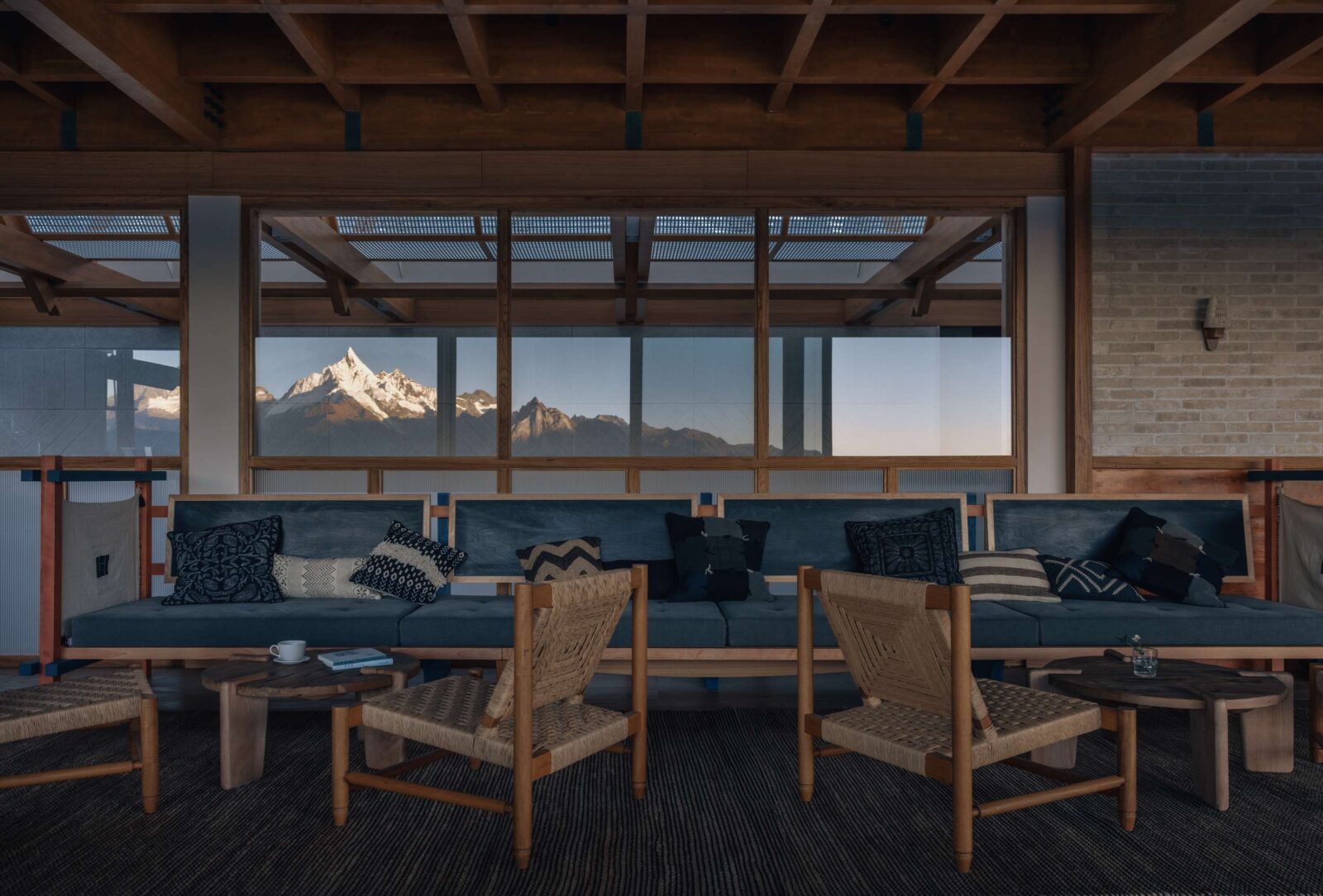
The galleries on the second and third floors reduce the height of the atrium and connect the lobby, guest rooms and café. At the top of the building, the café and viewing lounge are supported by a hybrid steel-and-timber structure, which opens up the room towards the Lancang River valley and the distant peaks. The view is not always clear, though. In Wunongding, the “golden mountain” effect appears only at certain moments, and the weather is often cold, cloudy or misty. For those days, the room is kept cosy by a fireplace and offers sheltered seating under the projecting roof.
The restaurant below ground
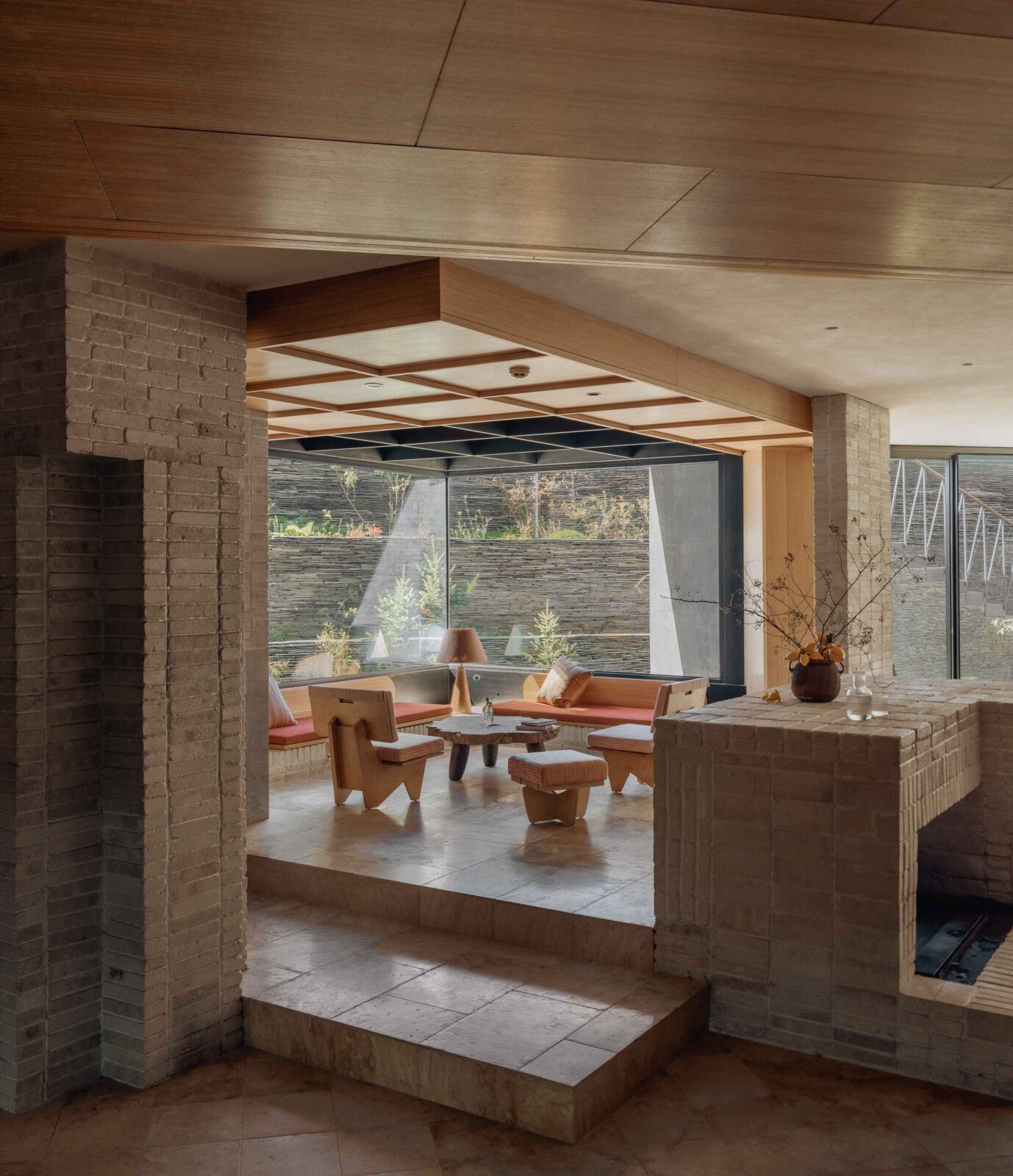
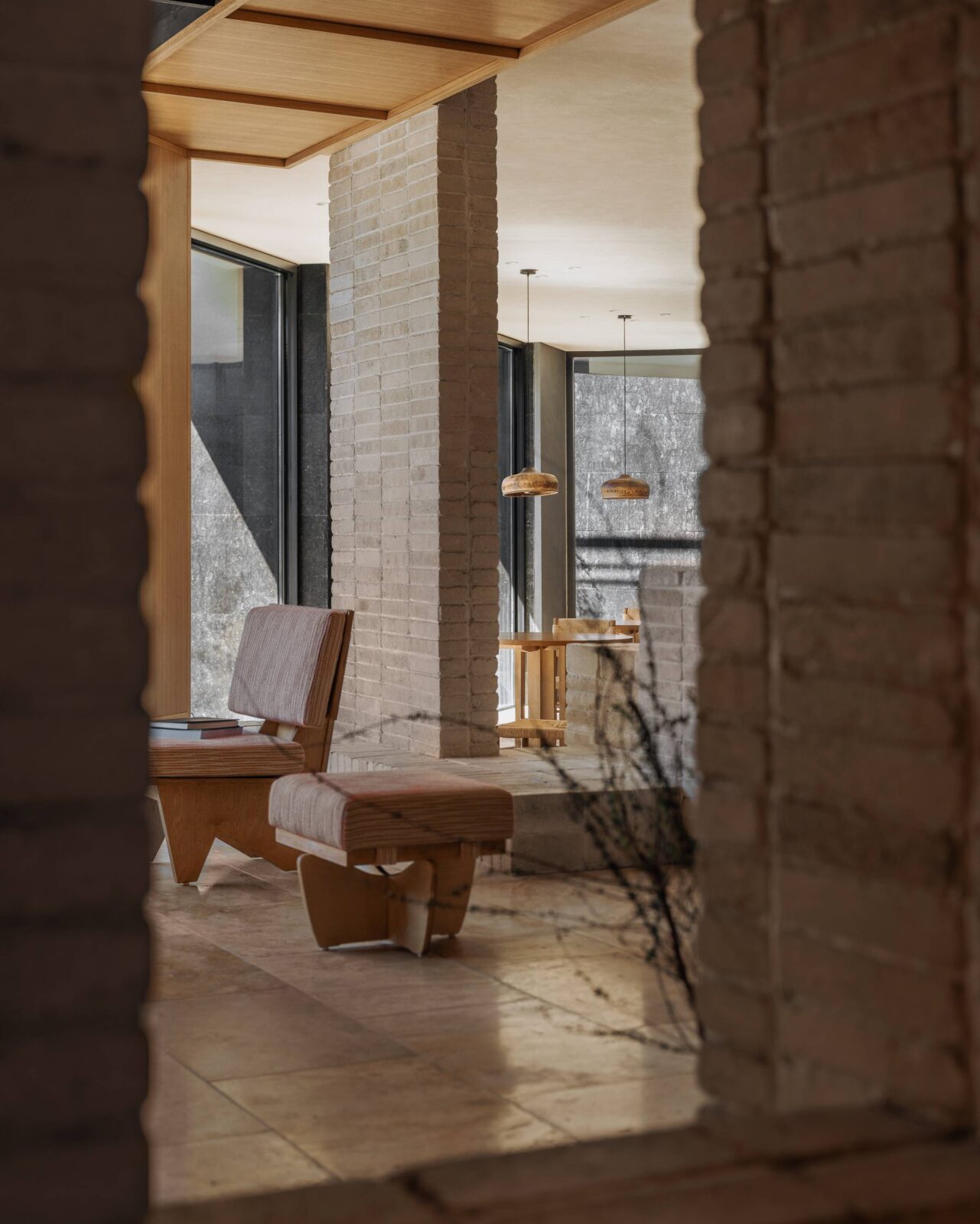
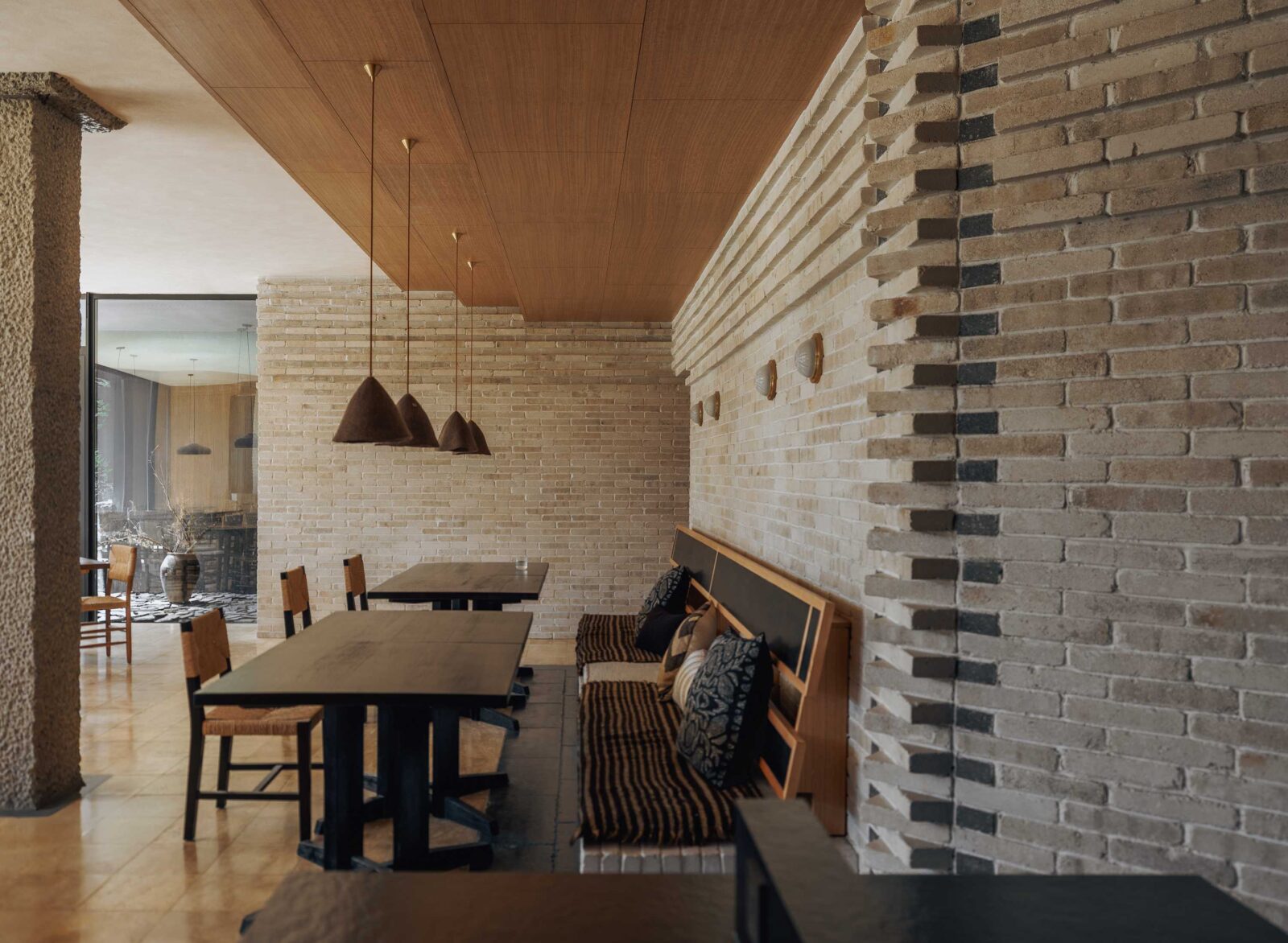
The restaurant can be found on the lower ground floor, where brick, steps and platforms divide the space. Brickwork forms columns, low walls and block-like volumes used as structure, furniture and partitions. Timber ceilings and framed openings face the courtyard and hillside, while the exterior retaining walls cut down the strong plateau sunlight before it enters the room as softer, reflected light. Brick, wood, stone, woven textiles and yak leather give the restaurant its main character.
A home in the mountains
The guest rooms are arranged more like small homes than standard hotel rooms. Each one has a place to change shoes at the entrance, a seating area by the stove, a raised bed platform, and a desk and bathtub by the window. Some rooms also have a curved stair leading to an upper level. Half-height partitions, timber screens, shelves and curtains divide the space without fully closing it off, while the lower ceilings, closer beams and deep window openings make the rooms feel more intimate than the public areas.
Project information
Architecture Company: Moguang Studio
Lead Architects: Jiaying Li, Xin Feng
Structural Design: Zhigang Ma
Lighting Design: Shanghai Inverse Lighting Design Co., Ltd.
Construction: Shanghai Yeyouzhu Decoration Engineering Co., Ltd.
Client: Shanghai Shanhai Youye Hotel Group Co., Ltd.
Location: Thirteen Pagodas Viewing Platform, Kawagebo Snow Mountain National Park, Deqin, Yunnan, China
Date: July 2025

