




Header: Ana Skobe
A fresh dining spot has appeared in the centre of Ljubljana’s old town. While the Lucky Cat brand already has a presence in the city, its newest home is an entirely custom environment where every corner has been shaped from scratch. Designed by the team at AKSL Architects, the restaurant spans a 167-square-metre footprint, featuring a main ground-floor dining area and an atmospheric basement space. The design team has steered clear of cliché oriental themes, opting instead for a creative interpretation of Asian dining culture wrapped in a modern European aesthetic.
Earthy tones and dim sum inspirations
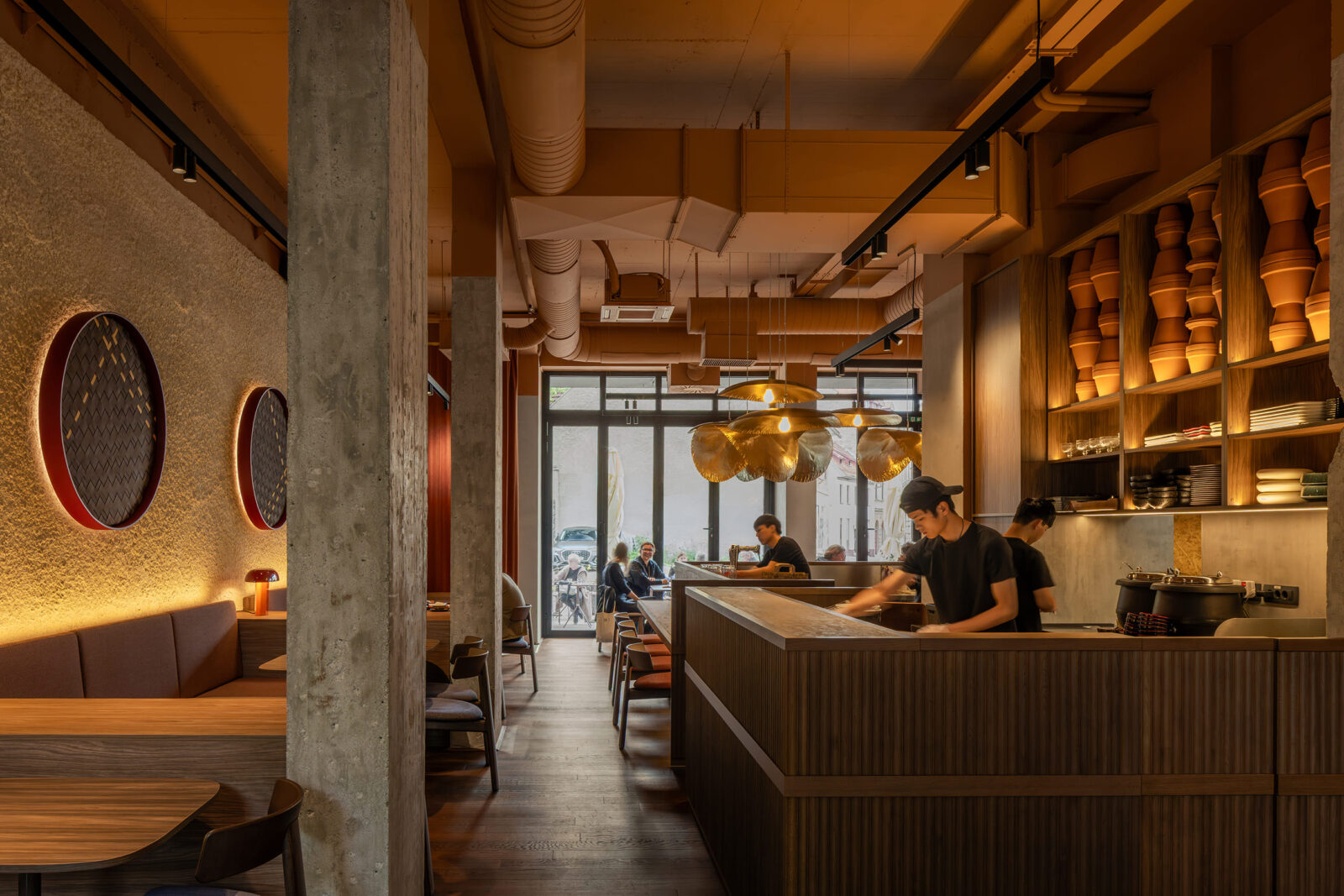
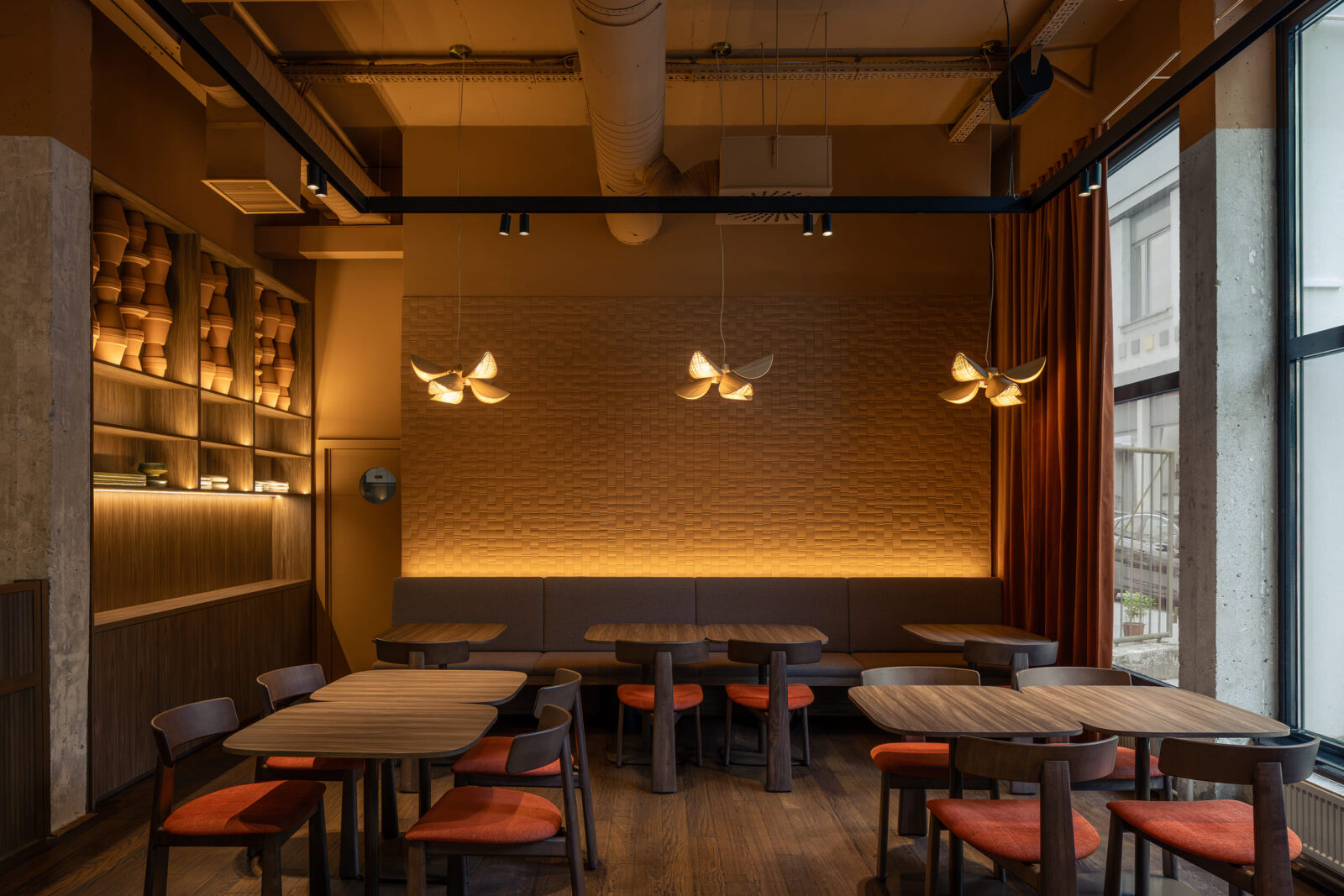
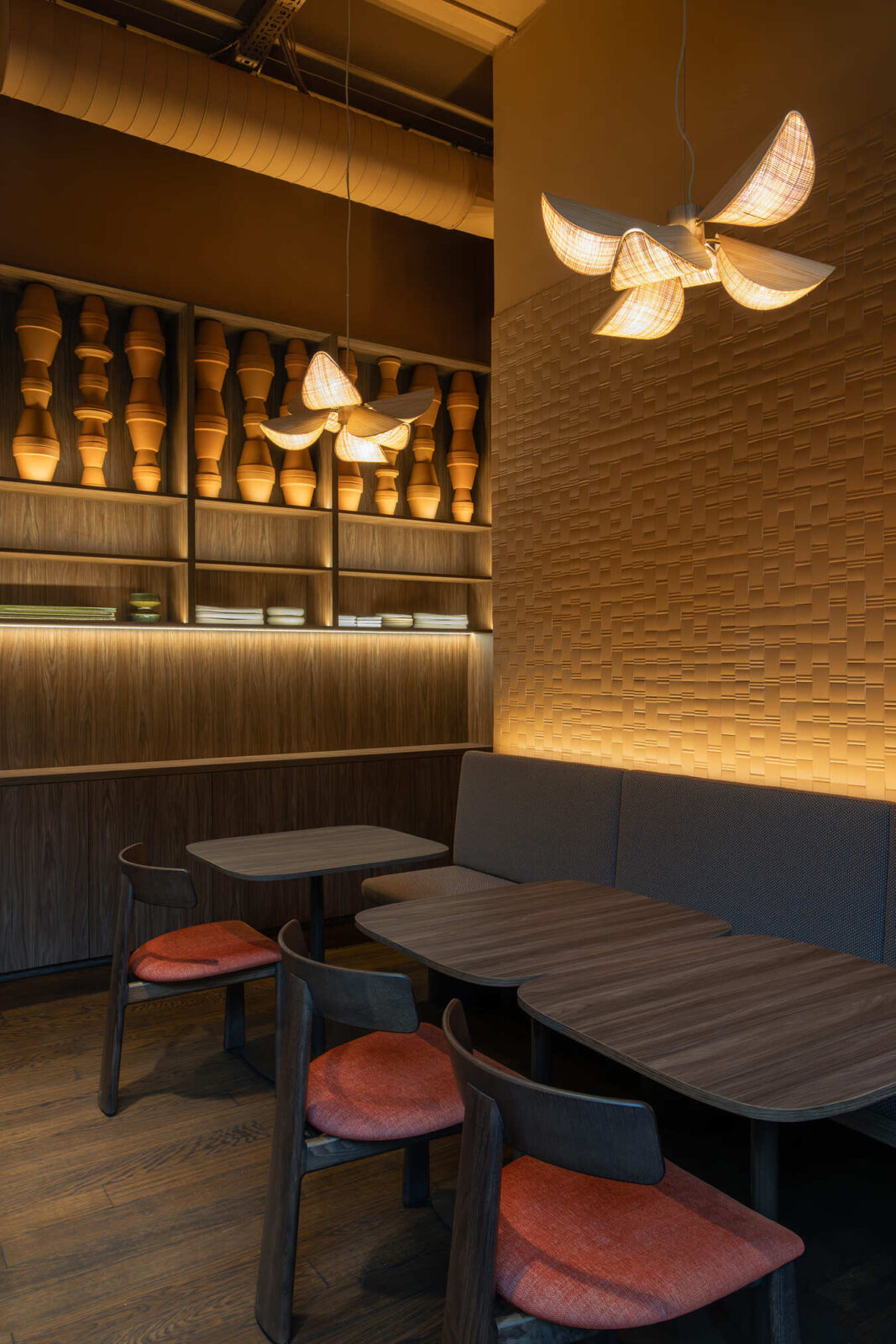
The main ground floor takes up 130 square metres of the layout. It feels open and light, yet it is cleverly divided into smaller, private pockets for diners. The colour palette leans heavily on natural, earthy shades. The custom furniture is finished in a dark eucalyptus veneer, which anchors the room against the warm terra-cotta tones of the ceiling and wall tiles.
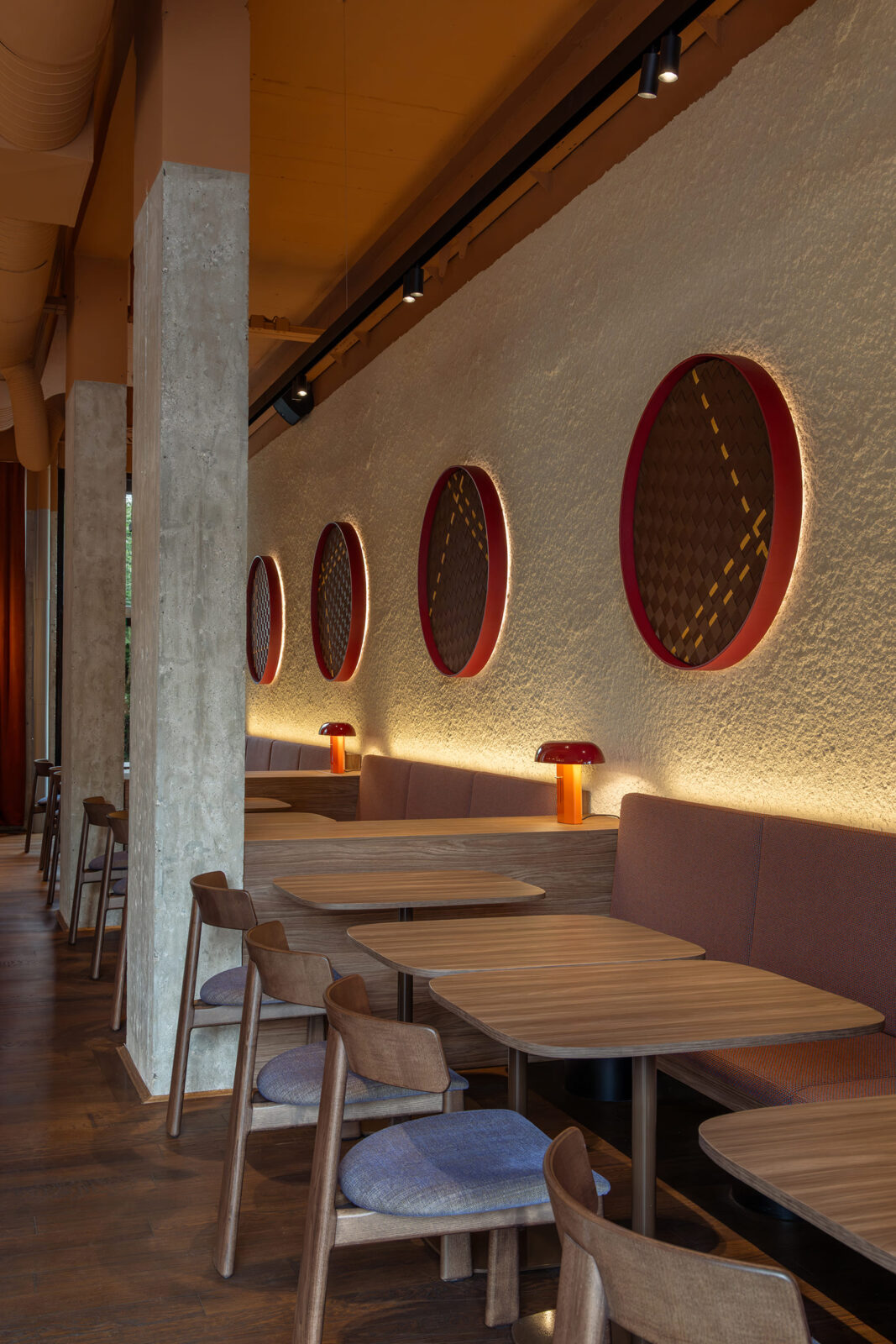
The texture of these decorative wall ceramics is a deliberate nod to woven dim sum baskets. This specific pattern repeats in six custom textile artworks. Framed in wood and lit from behind, these fabric circles look like floating woven discs against a rough plaster wall. They hang above a long, upholstered bench that runs all the way from the entrance to the exit, visually tying the long room together. Along this bench, tables with unique geometric bases pair with dark wooden chairs to complete the seating arrangement.
Sculptural lighting and raw concrete
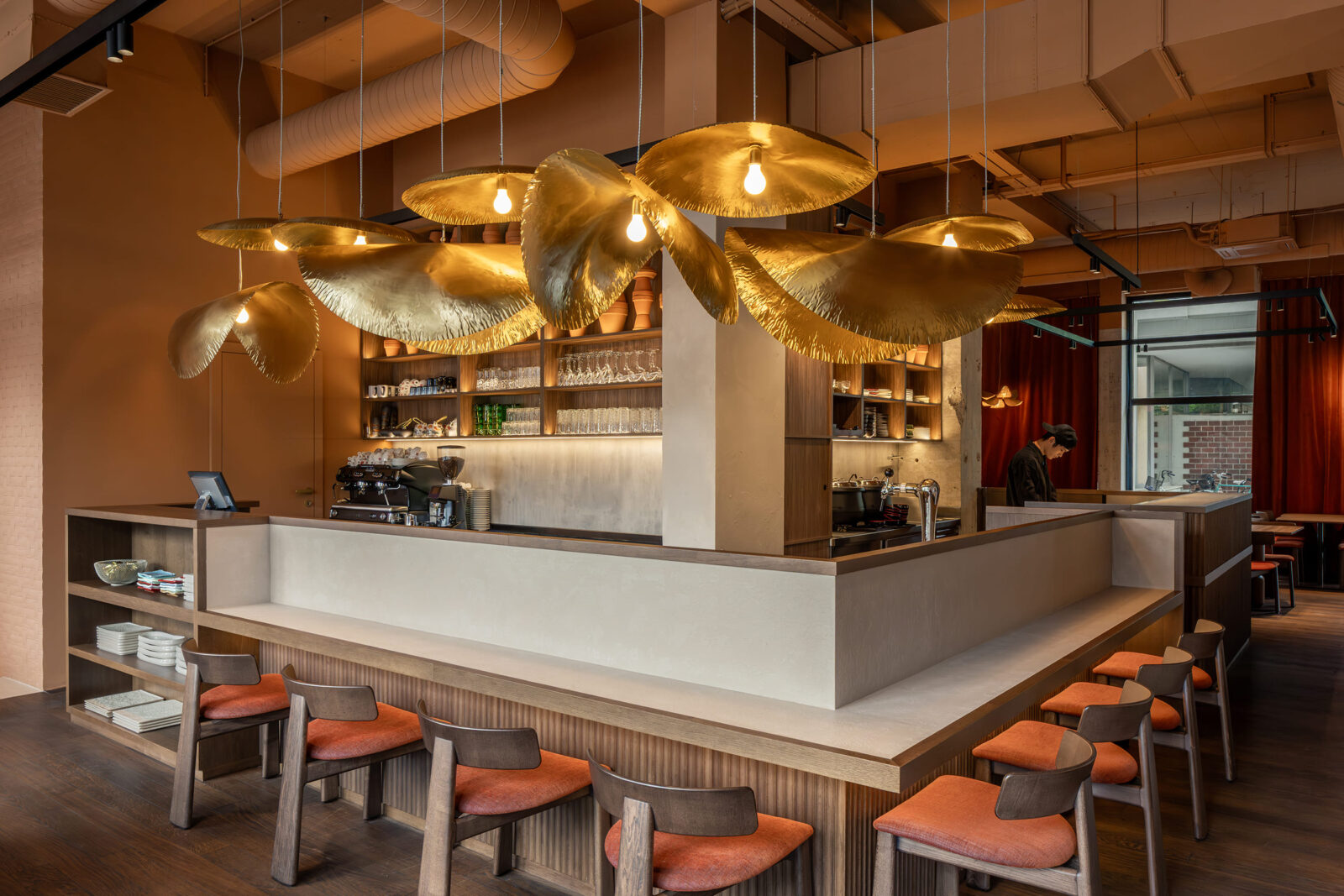
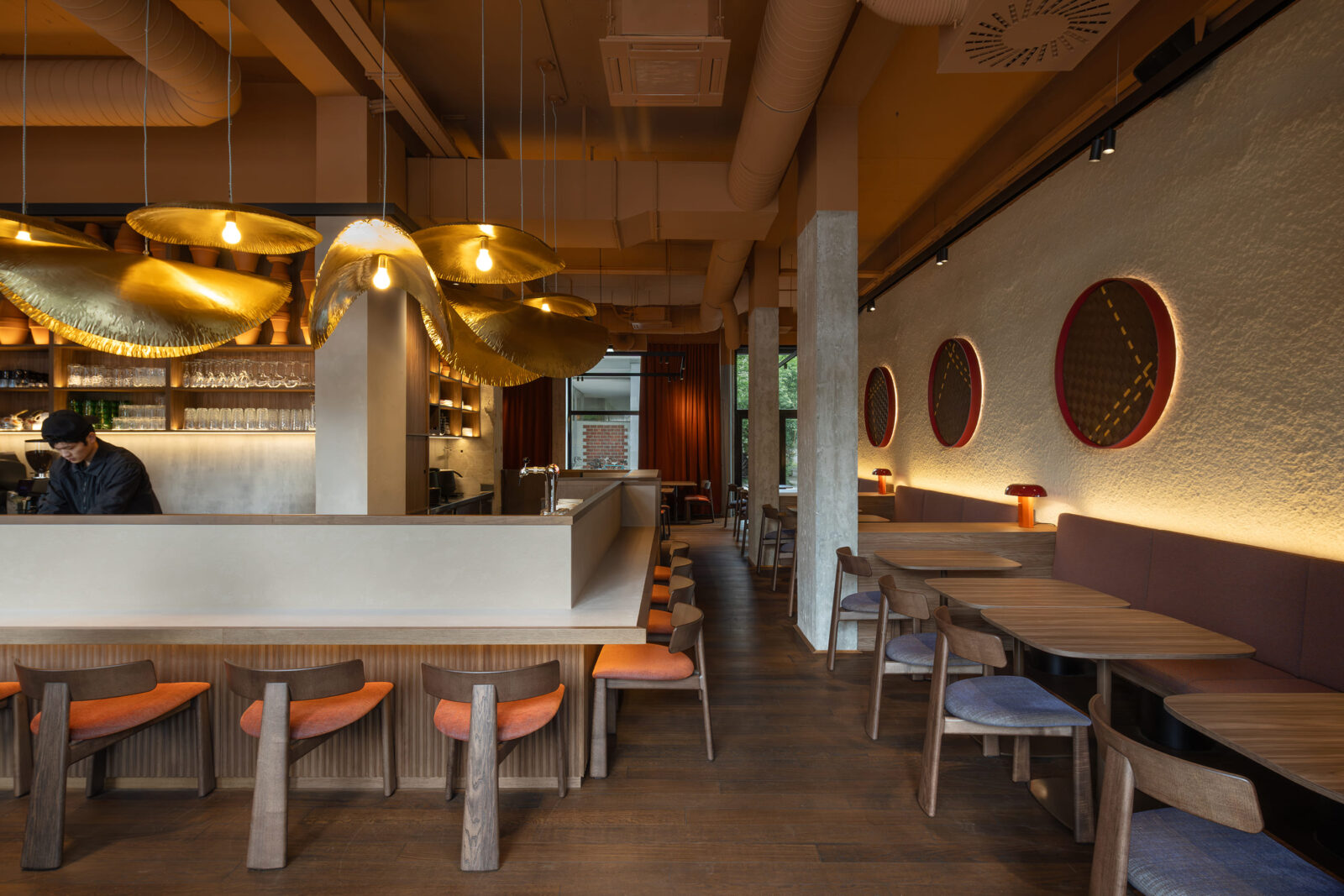
At the heart of the restaurant sits a prominent bar counter, surrounded by high stools that match the overall colour scheme. The architects chose to leave the building’s raw concrete structure exposed, but they balanced its industrial coldness with warm textures and organic lighting shapes.
The lighting choices act as art installations throughout the space. Above a shorter bench section, three wooden lights shaped like butterflies cast a soft glow. Meanwhile, a cluster of nine brass pendant lights in two different sizes floats above the central bar, giving the room a distinct, polished character. To add more personality, the custom shelves above the back counters feature decorative columns built entirely out of stacked ceramic vessels, tying back into the culinary theme.
From pink basements to bamboo gardens
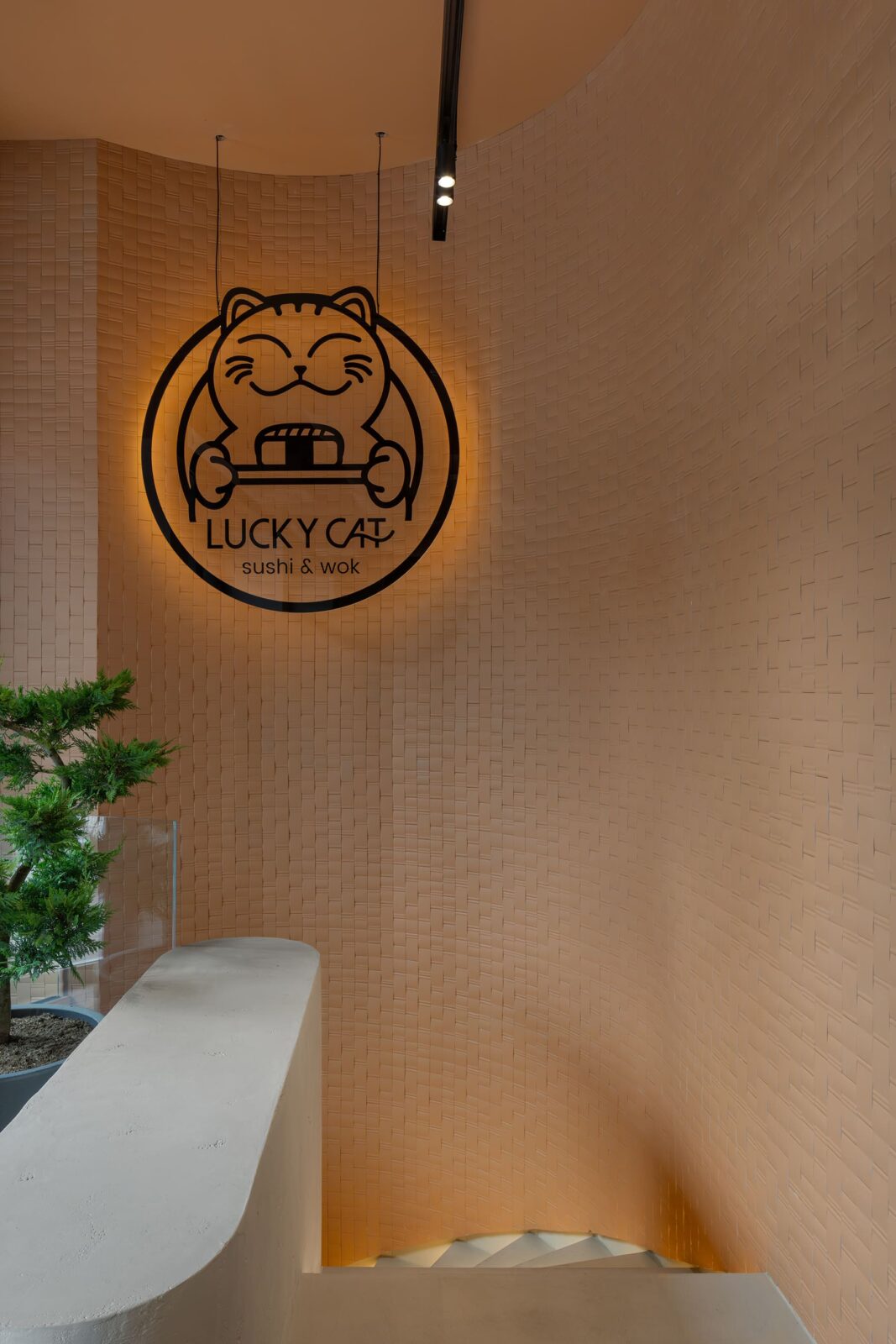
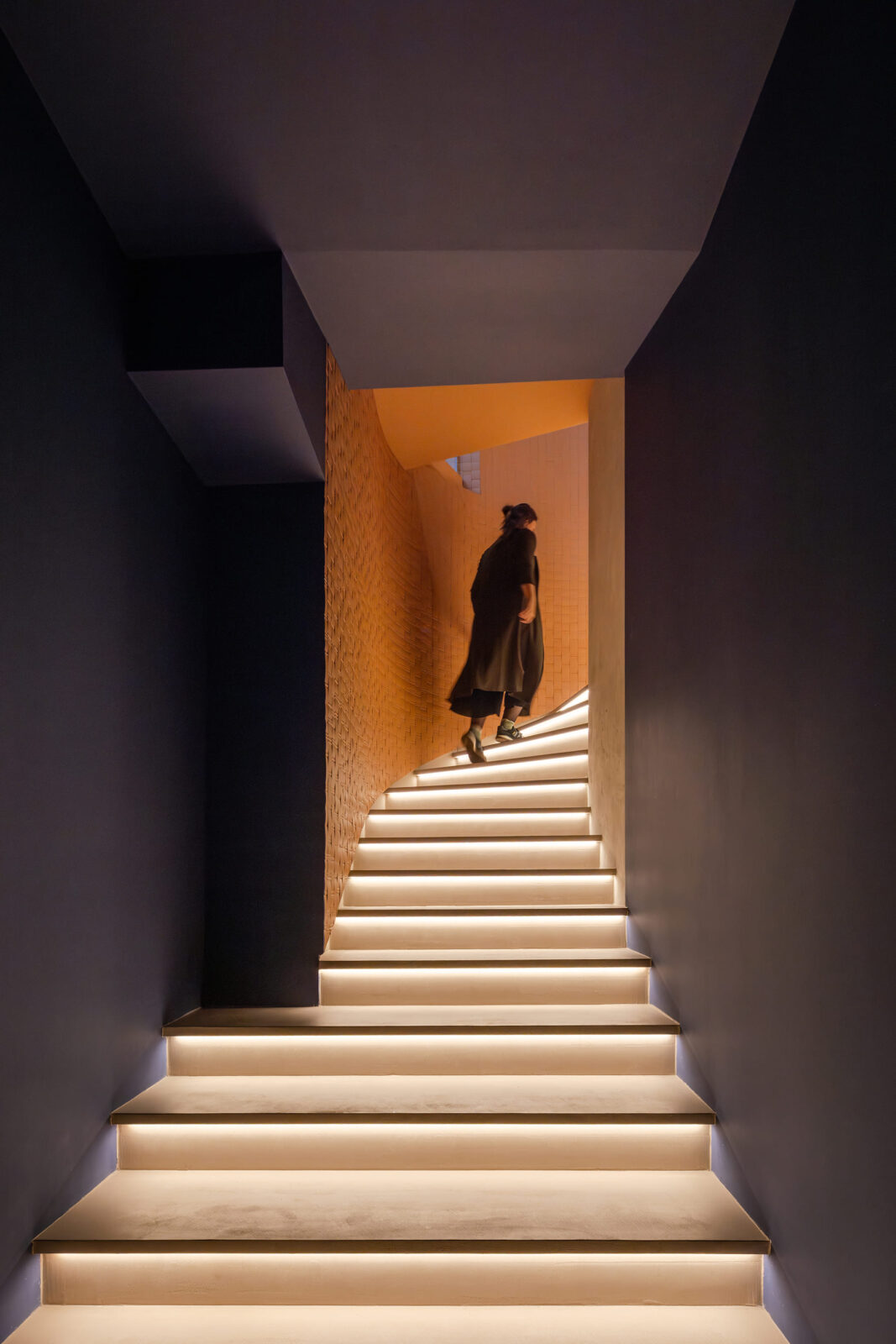
The transition between levels is marked by a shift in materials. The existing dark parquet floor guides guests toward a curved ceramic wall and a staircase finished in a smooth, warm grey microtopping. This leads down into the basement restrooms, which offer an entirely different mood.
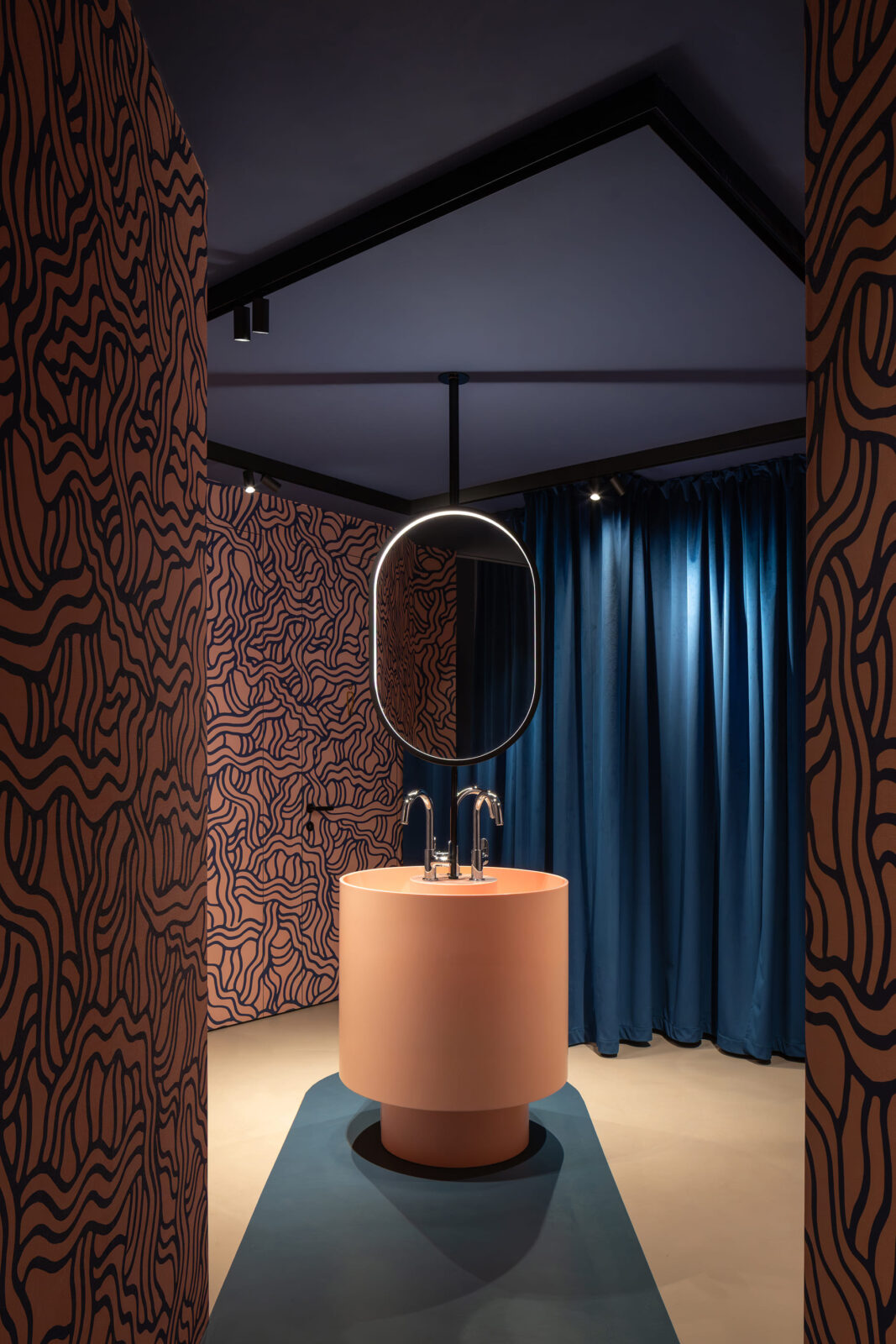
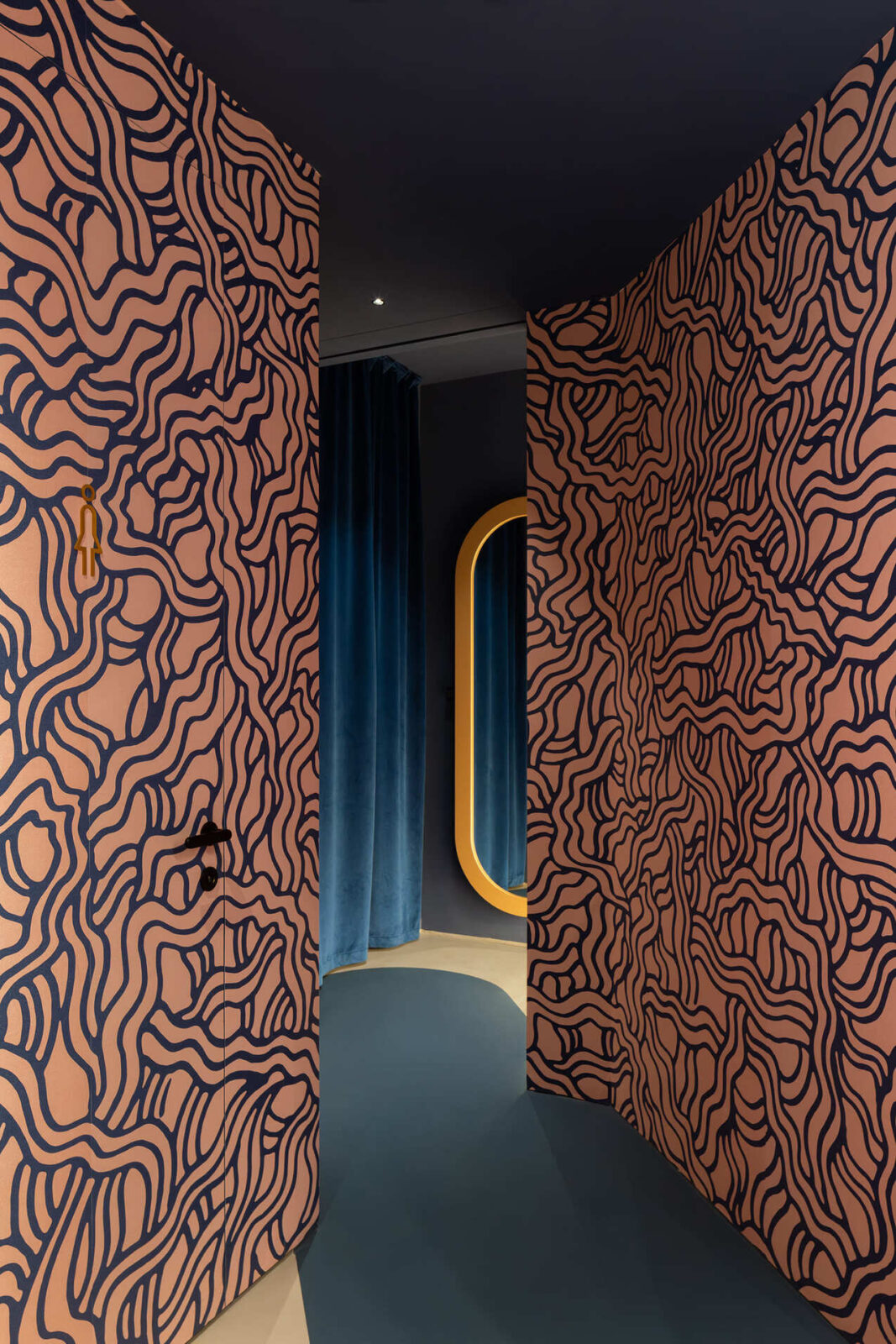
The basement is anchored by a solid, freestanding sink made of pink solid-surface material, fitted with three clean chrome taps and backed by glowing oval mirrors. Blue walls contrast with the pink basin, and the two colours are brought together by a graphic wallpaper that wraps around the entire room. Heavy velvet curtains in matching blue tones hide the service doors, keeping the focus on the dramatic decor. When the weather gets warm, the restaurant opens up on its western side to an outdoor garden surrounded by bamboo plants, adding space for forty more guests.
A new direction for dining spaces
What makes this project successful is how it moves past the predictable look of international dining and creates something deeply tied to its specific location. The designers give the venue a sense of identity without being loud by taking simple, everyday items like a steaming basket or a ceramic pot and turning them into architectural features. It shows that commercial spaces do not need to rely on flashy gimmicks to stand out. Instead, success comes from looking at how people move through a room, how light changes the mood of a concrete wall, and how an unexpected pop of colour in a basement can leave a lasting impression on a guest long after dinner is over.
Project info
Project name: Lucky Cat
Type: restaurant
Photo credit: Ana Skobe
Location: Ljubljana, Slovenia
Year of execution: 2026
Architecture company: AKSL arhitekti d.o.o.
Project group interior: Špela Leskovic, Aleš Košak, Samantha Konec, Vita Marolt


