
Header: MOSS Objects
Lighting is no longer just about filling a room with light; it is about defining the room itself. With the launch of the Dune modular pendant luminaire, German lighting brand MOSS Objects has introduced a system that treats illumination as an architectural tool. Designed by Daniel Becker and Elisa Bakaniev, this clever system moves away from the idea of a fixed light fixture. Instead, it offers a flexible language of individual aluminium shades that can adapt to almost any interior.
The geometry of changing landscapes
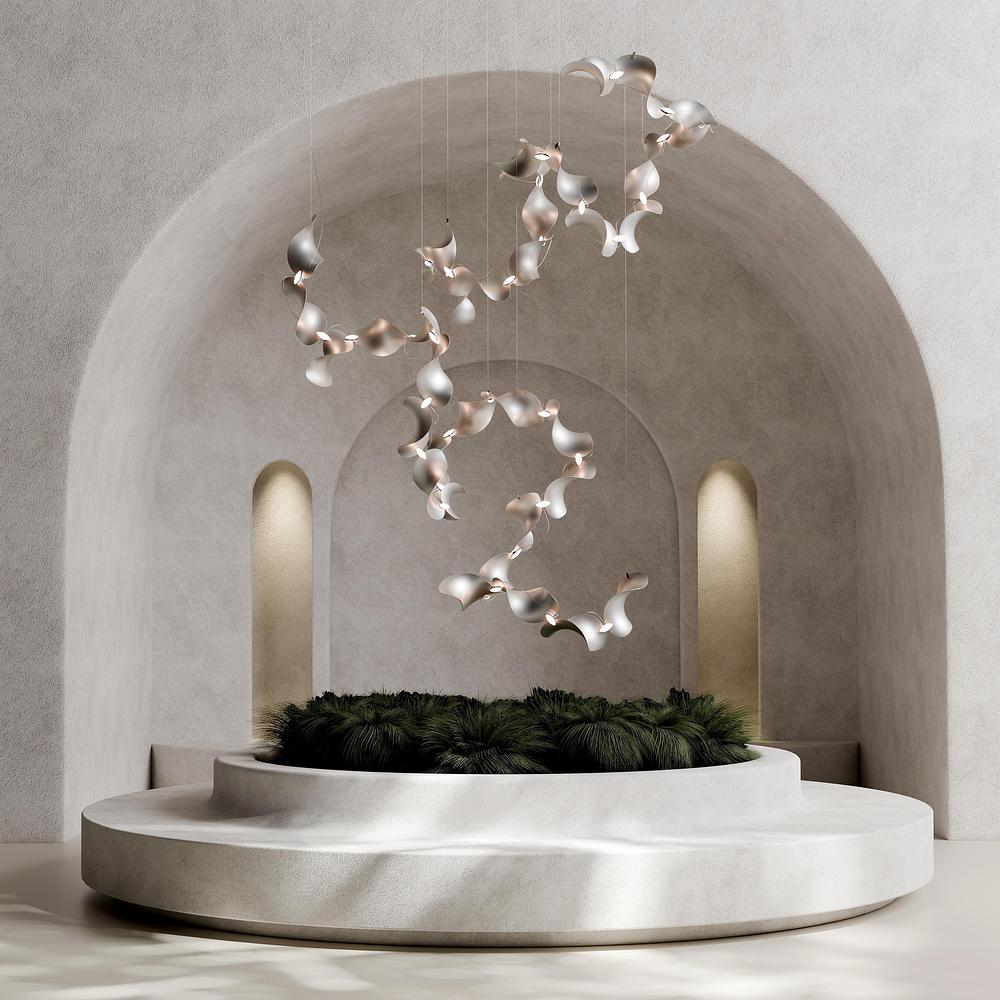
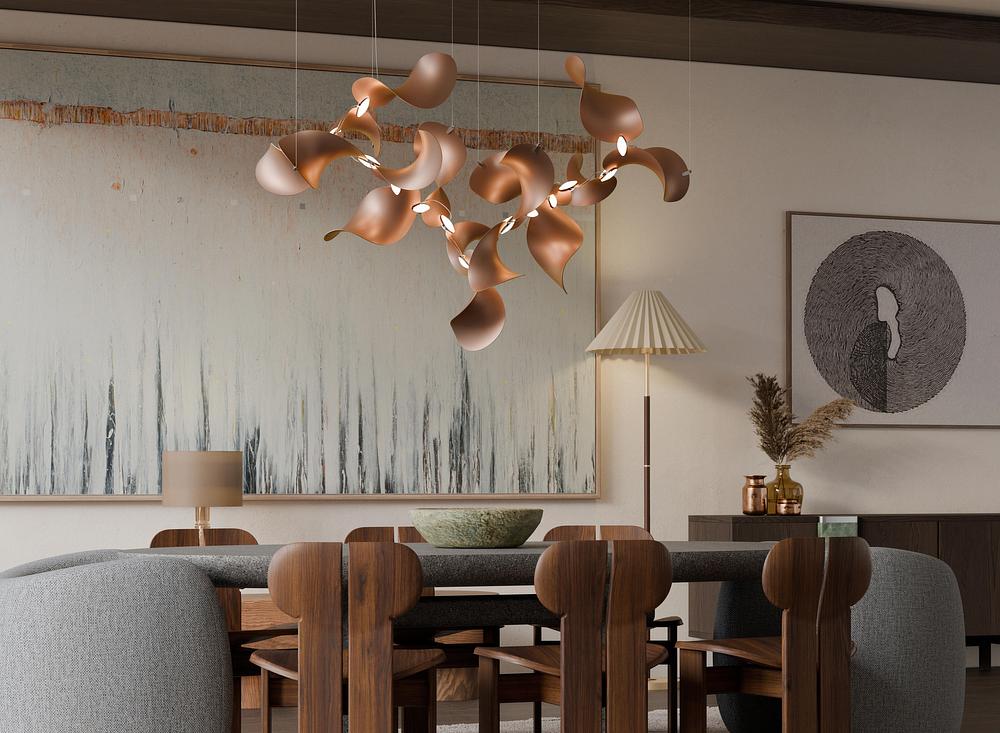
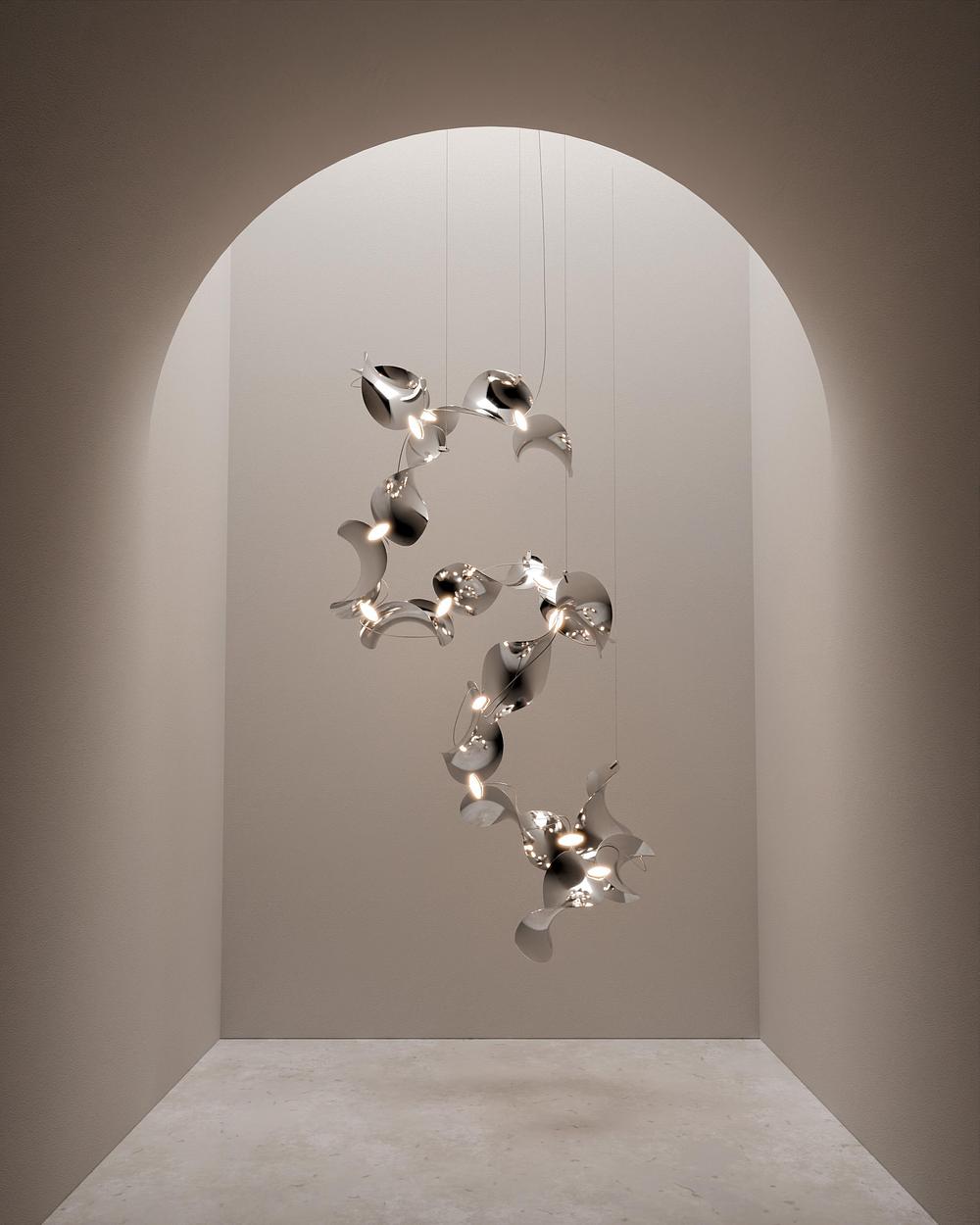
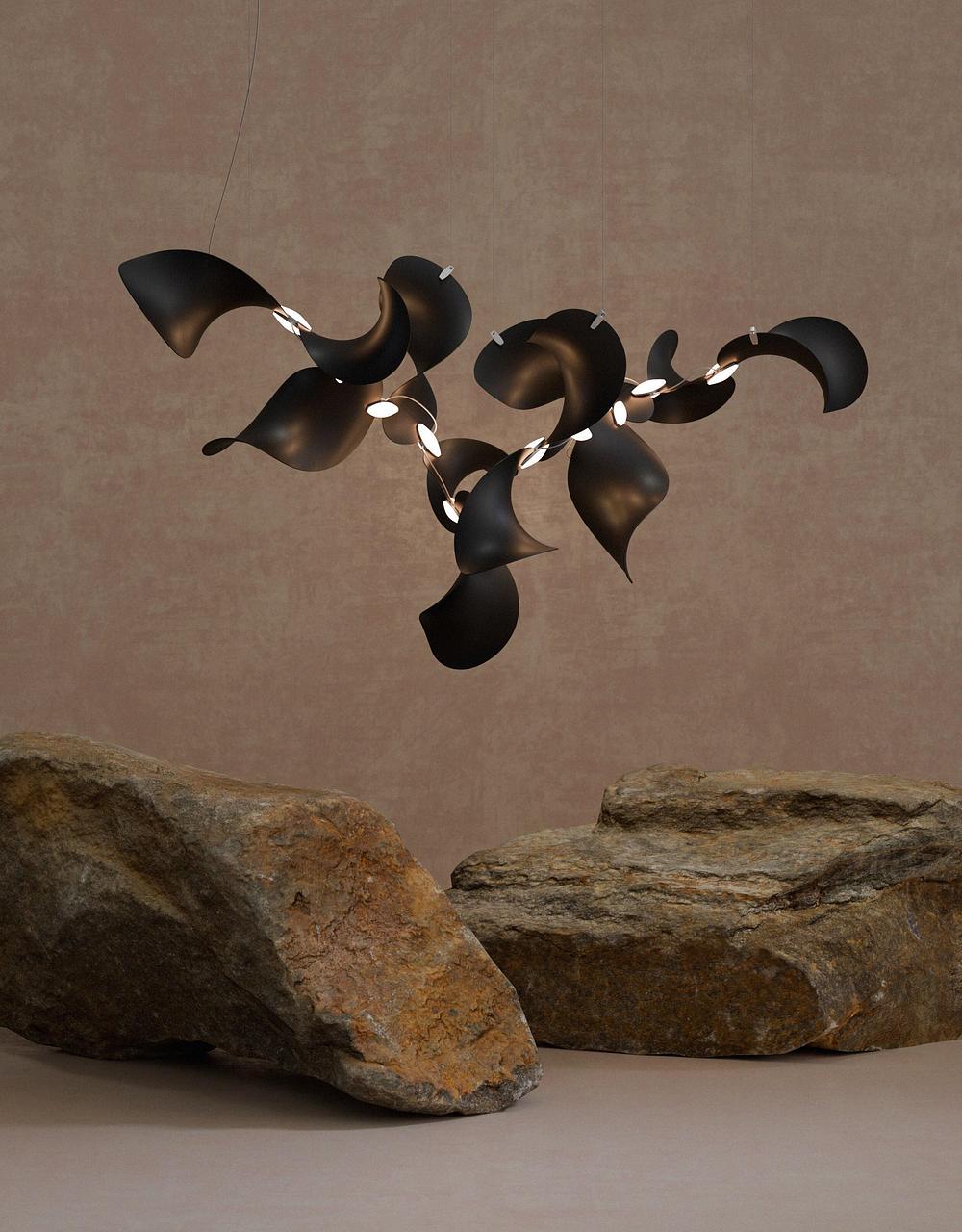
At the heart of Dune is a single, carefully shaped aluminium module. Rather than using sharp, harsh edges, the design takes its cues from the natural, soft curves of desert dunes. Each shade is made from an aluminium sheet, formed to create a curved surface that catches and plays with the light.
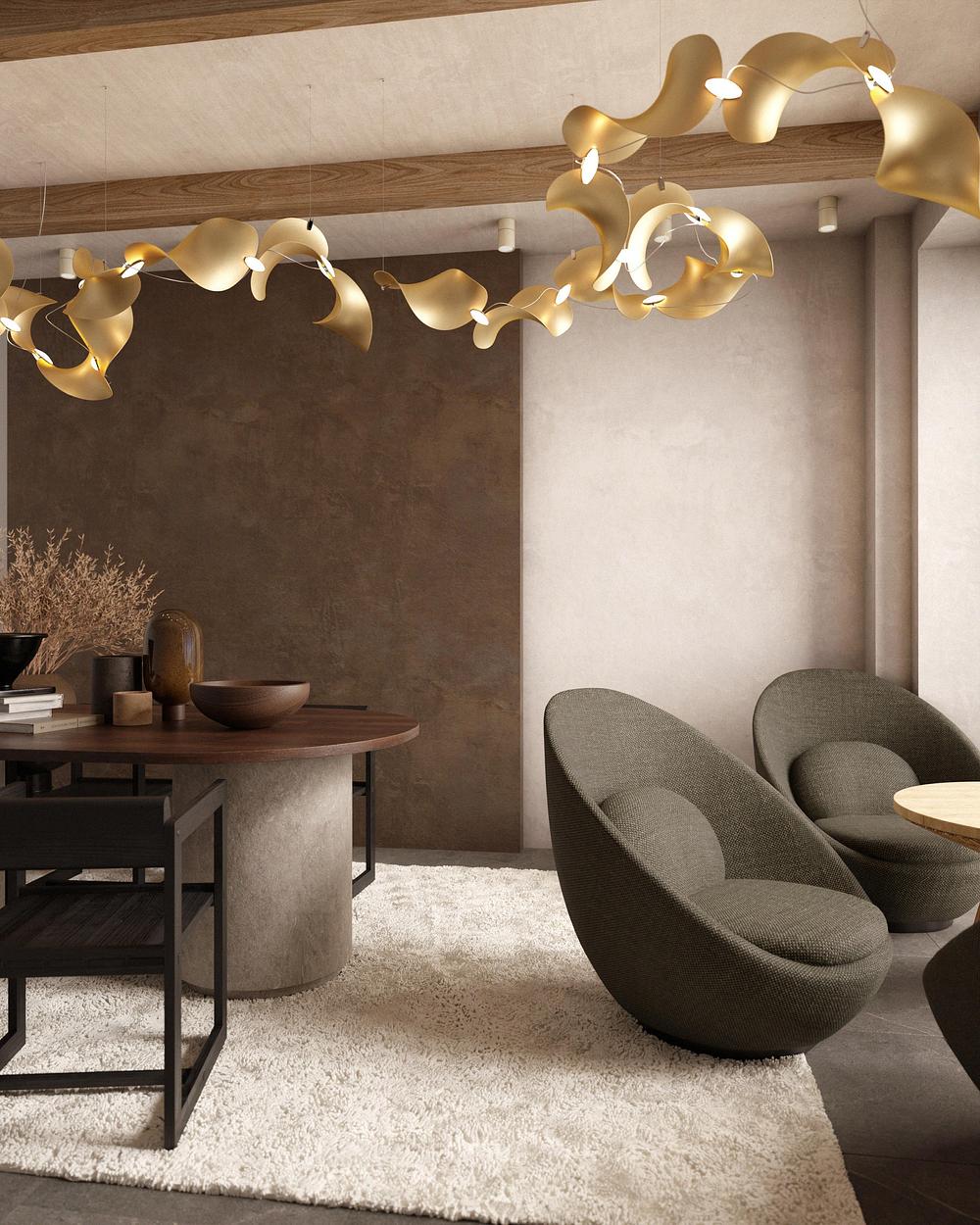
These individual shades act as links in a chain. By joining the segments at their outermost points, the system creates a continuous line of light that can expand or contract depending on the needs of the room. It is a visual trick that makes metal look fluid, mimicking the natural transitions found in moving landscapes.
From kitchen islands to grand lobbies
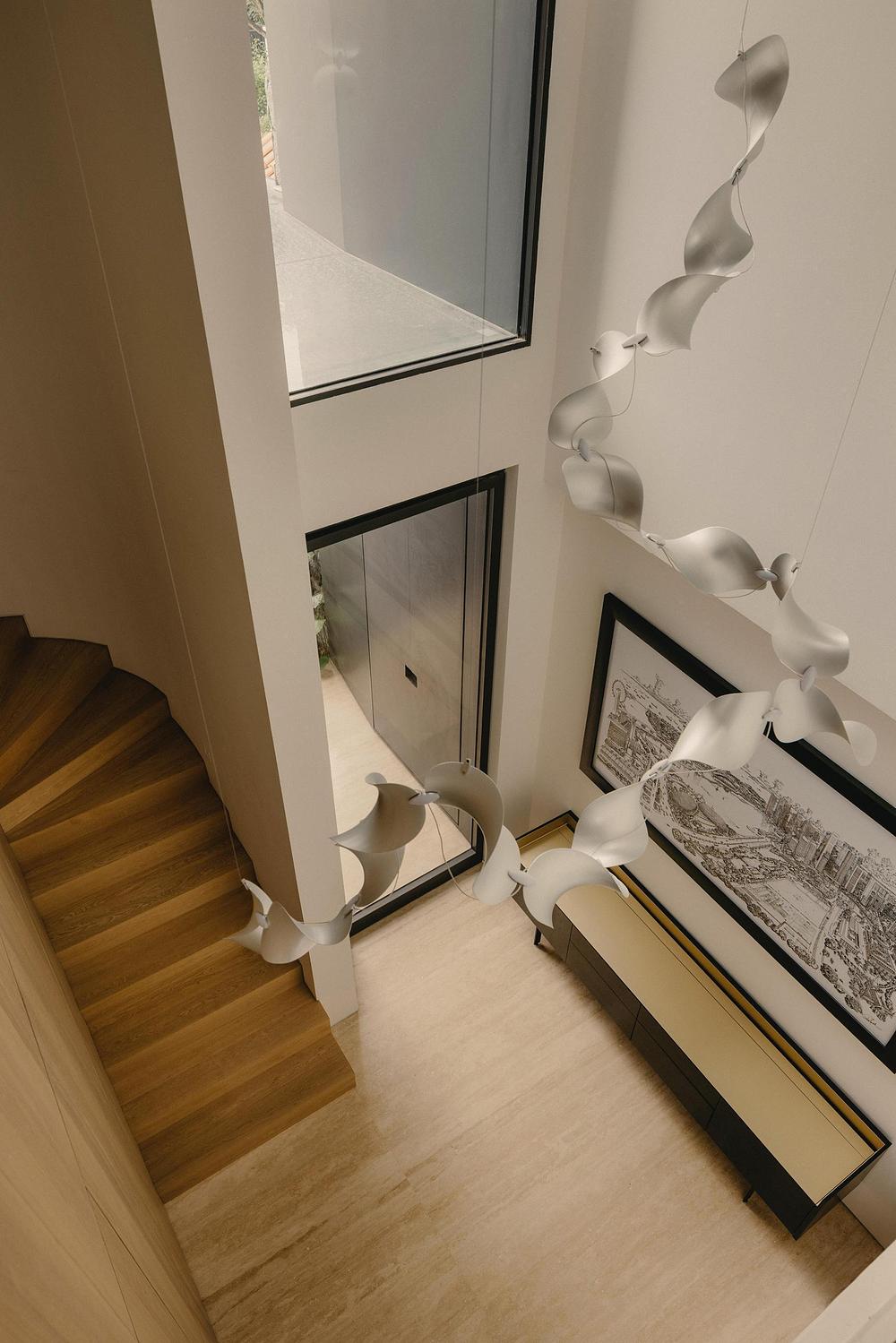
Because Dune is a system rather than a single product, it solves a common problem for interior designers: how to scale a lighting concept across different rooms. The collection can use anywhere from four to twenty units, meaning it works just as well over a domestic kitchen island as it does inside a vast four-storey commercial lobby.
“Dune was developed as a complete language rather than a single product. Each shade is small enough to feel intimate, and the chain can grow as far as the architecture asks for. The system replaces the question of what light to specify with the question of how to compose it.”
Daniel Becker, founder of MOSS Objects
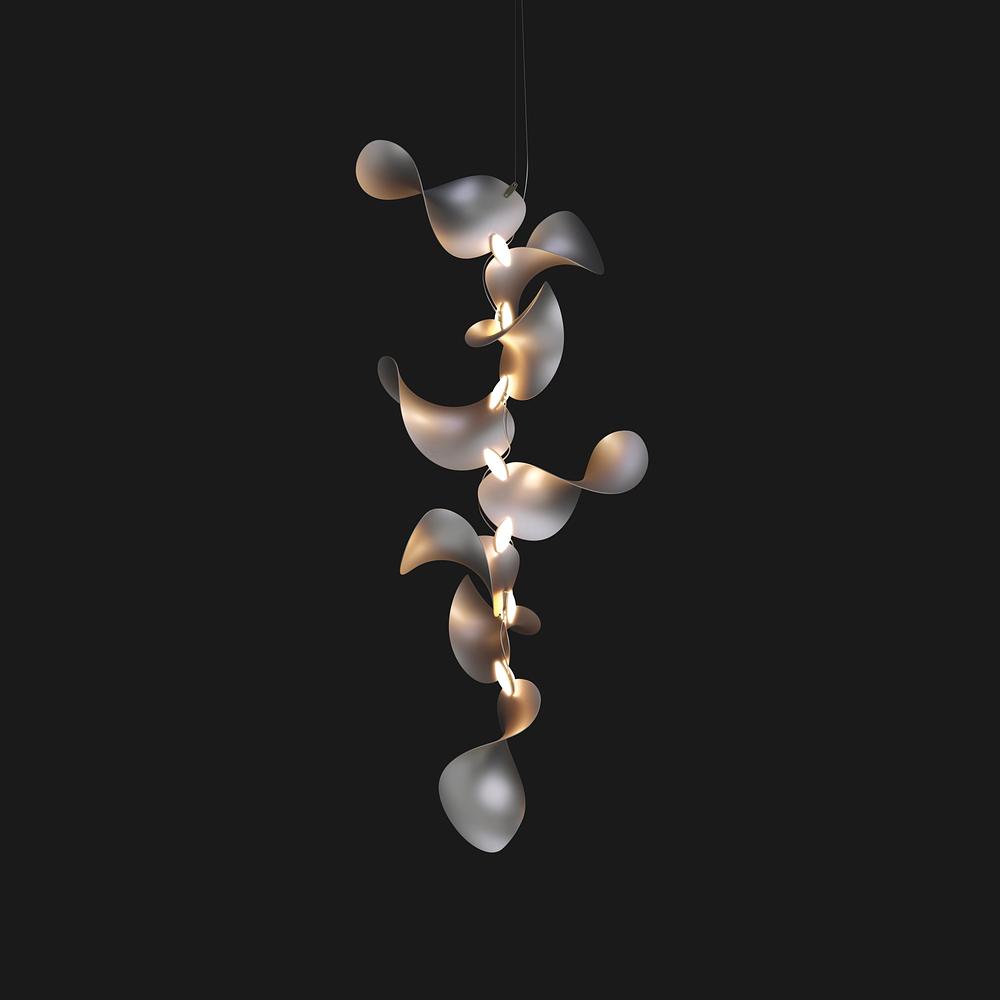
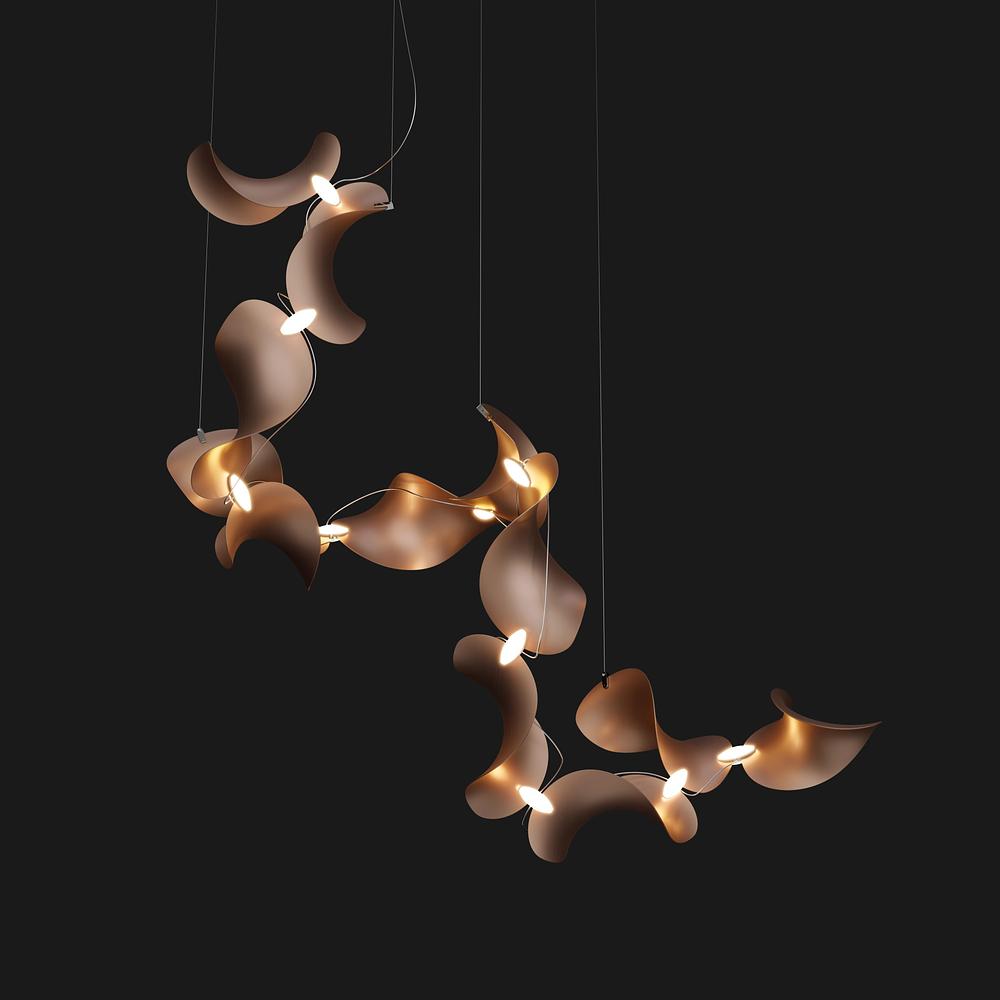
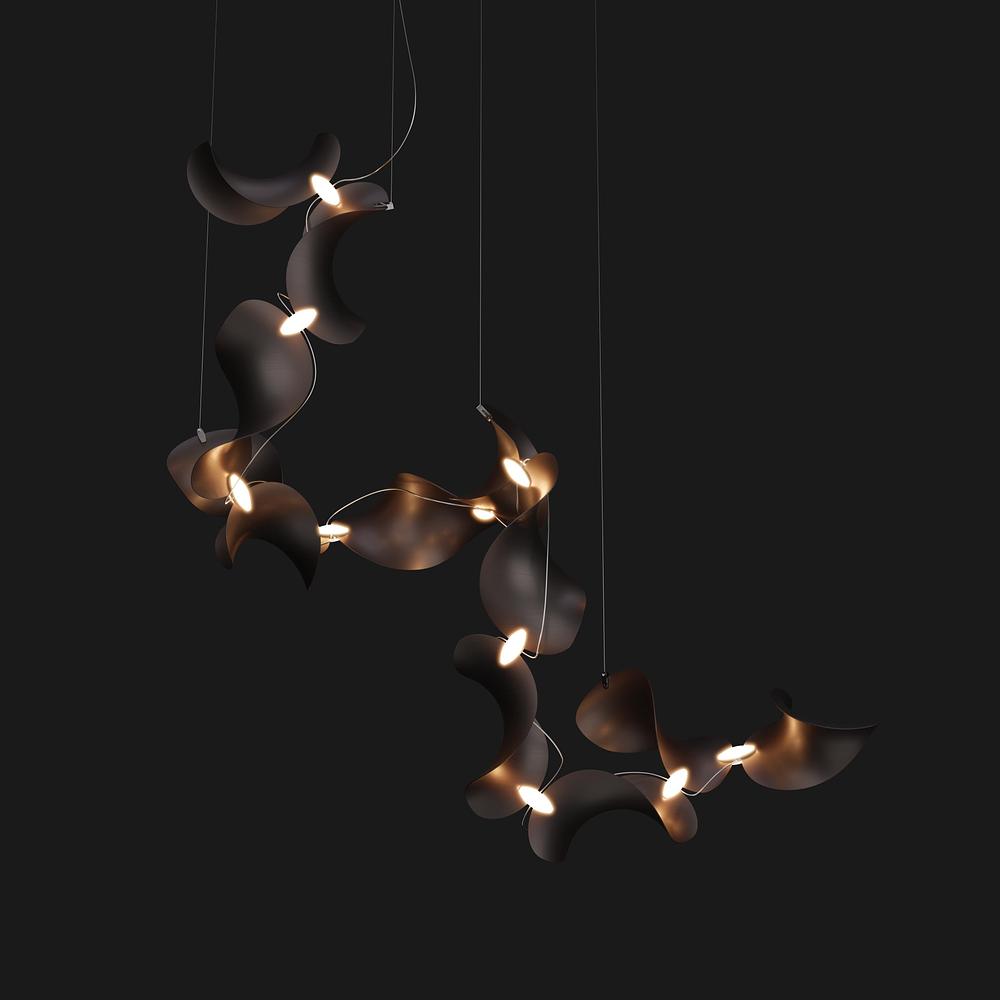
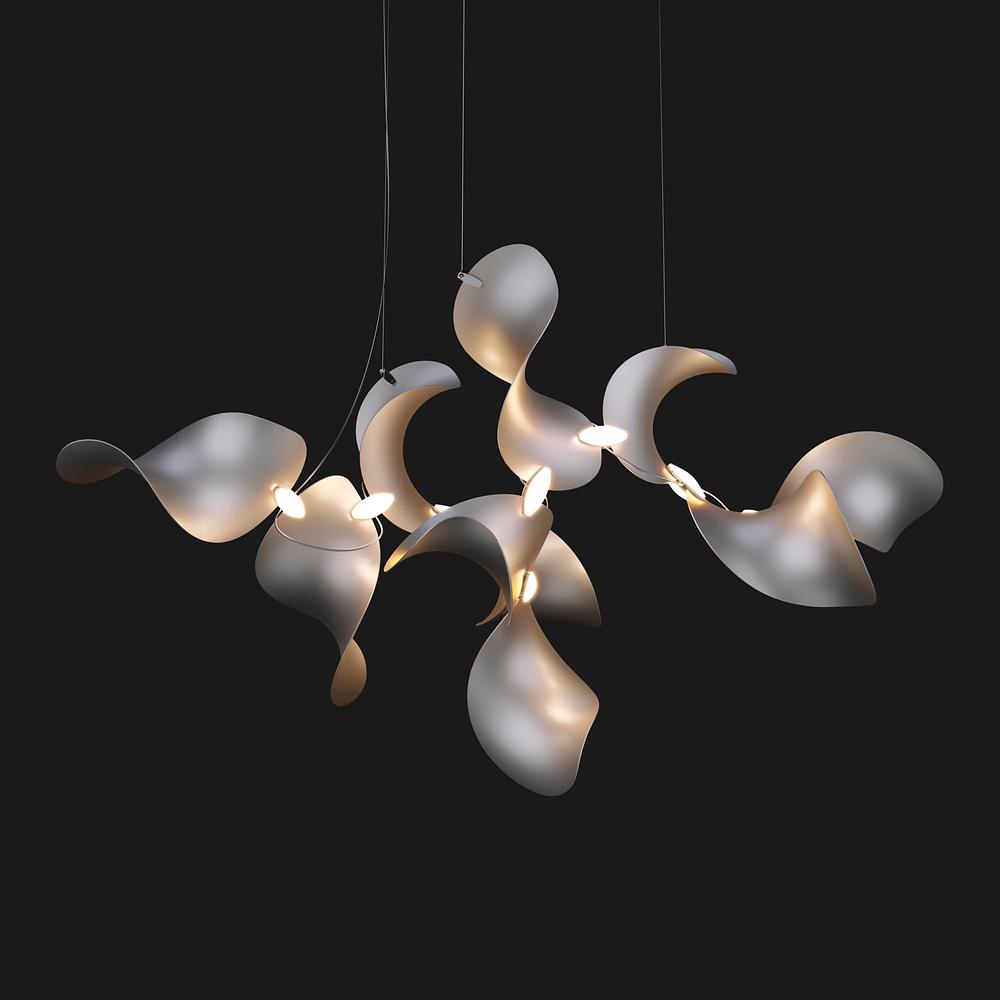
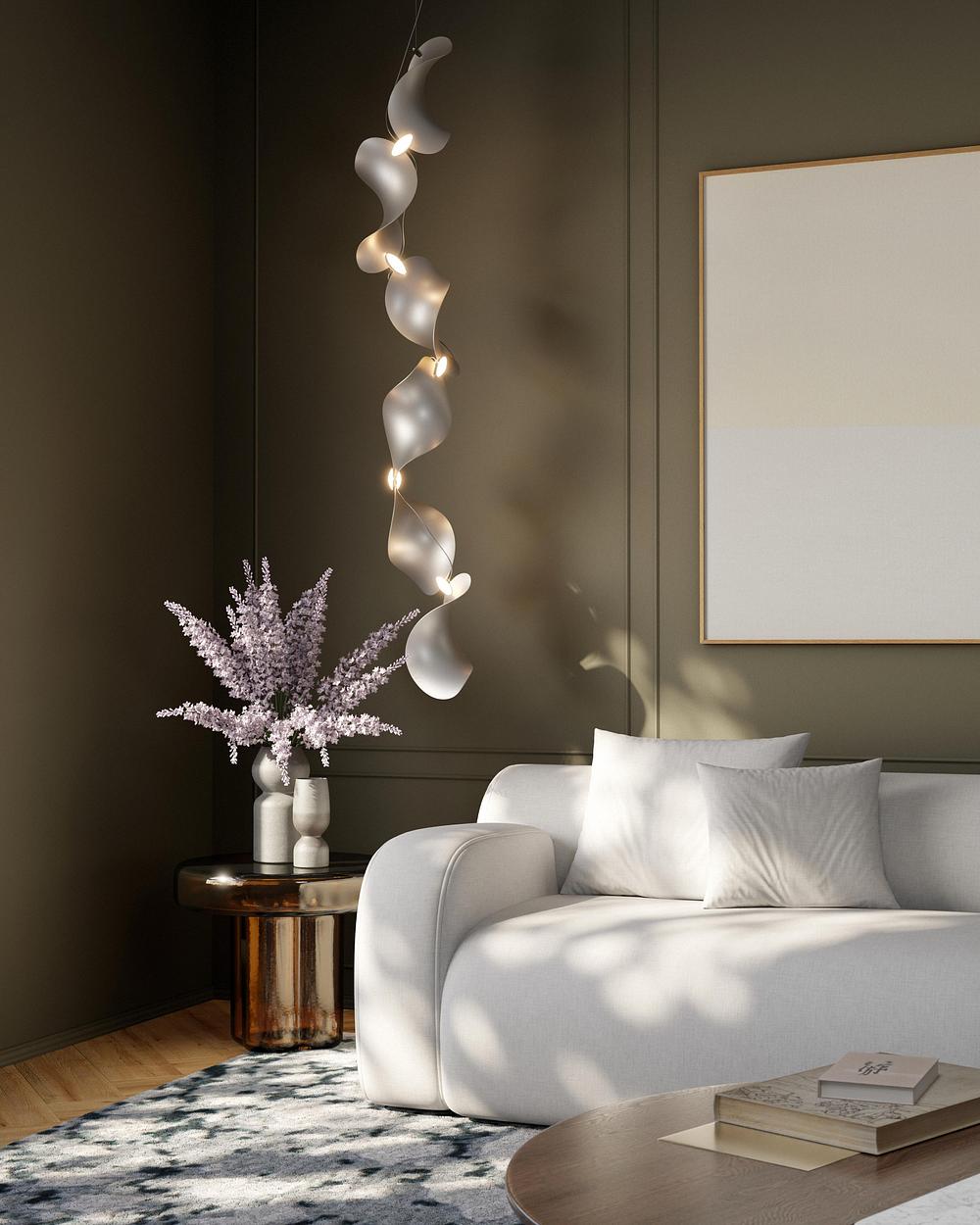
To make this adaptability work, the brand offers five distinct shapes that cater to different spatial needs. The Dune Curve is the most horizontal layout in the series, featuring a wide, flat shape that brings a calm rhythm to rooms with lower ceilings without overwhelming the space. For grander volumes, the three-dimensional Dune Spiral climbs vertically to bring a sense of movement to rooms with high ceilings. The Dune Cluster packs the shades closely together into a dense, impactful object, giving the heavy, luxurious impression of a traditional chandelier while keeping the modern logic of the system. For areas that need a strong visual presence but only have one mounting position available, the Dune Vertical Cluster creates a large, dramatic shape suspended from a single point. Finally, the Dune Vertical Line offers a slim, minimal alternative to a standard floor lamp, taking up very little floor space and turning the light into a strict, sculptural column that cuts through the height of a room.
Robust technical specifications
Every Dune fixture is handmade in Berlin, Germany, utilising high-quality materials like aluminium, a steel canopy, and a PE diffuser. Under the surface, the technical specifications are robust, featuring integrated LEDs with a warm 2700K temperature and a high CRI 90+ rating for excellent colour accuracy. The system supports Triac, DALI, and 0-10V dimming drivers, making it highly compatible with modern smart home and commercial control systems.
The collection comes in five standard finishes that completely alter its character. The Silver Anodised and Silver Polished options show off the raw, pure look of aluminium, emphasising the industrial and architectural side of the design. For softer, more welcoming spaces like hotels or homes, MOSS Objects offers three warmer, applied finishes: Gold Tone, Copper Tone, and Dark Bronze Tone. If a project demands something entirely unique, custom finishes and bespoke chain lengths can be requested directly from the studio.
The Dune collection by MOSS Objects represents a shift in how we think about modern lighting. Daniel Becker and Elisa Bakaniev have given designers the freedom to build their own light installations by turning a pendant lamp into a scalable, modular system. It avoids the trap of being mere decoration, relying instead on structural clarity, material honesty, and a clever understanding of space. Whether configured as a quiet horizontal line or a dramatic vertical column, Dune proves that the best lighting design is one that grows alongside the architecture it illuminates.
Source: v2com newswire