



Header: Joe Fletcher
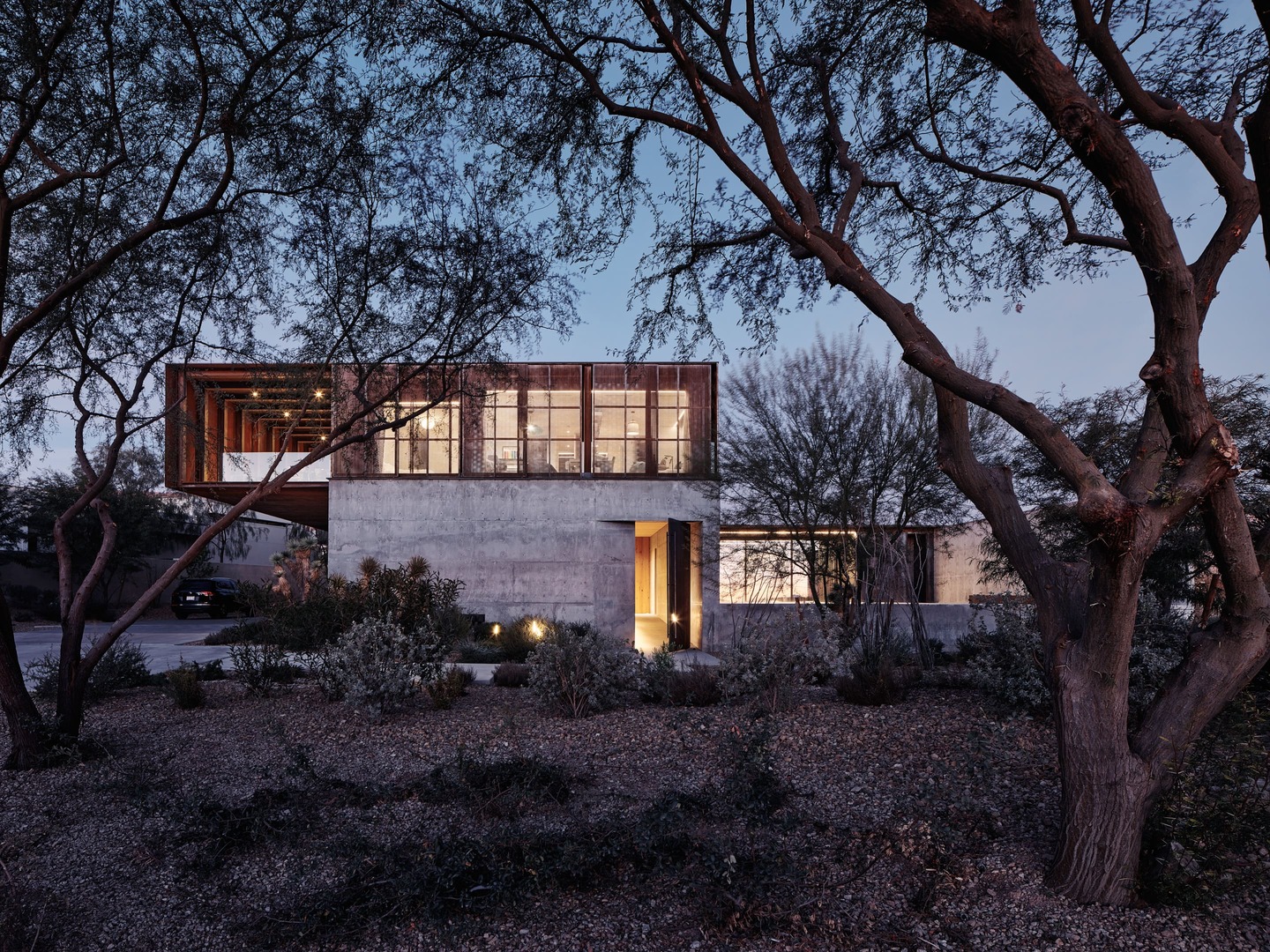
The Mojave Desert is not a place for the faint-hearted. In the Summerlin area of Nevada, the land deals in extremes: searing summer heat, biting winter winds, and sudden, heavy monsoon rains. For Faulkner Architects, building on a three-quarter-acre plot with views of the Las Vegas Strip and Red Rock Canyon meant creating a structure that could handle this volatile climate. The result is an atypical home that feels like a piece of the local environment.
Carving out a sanctuary
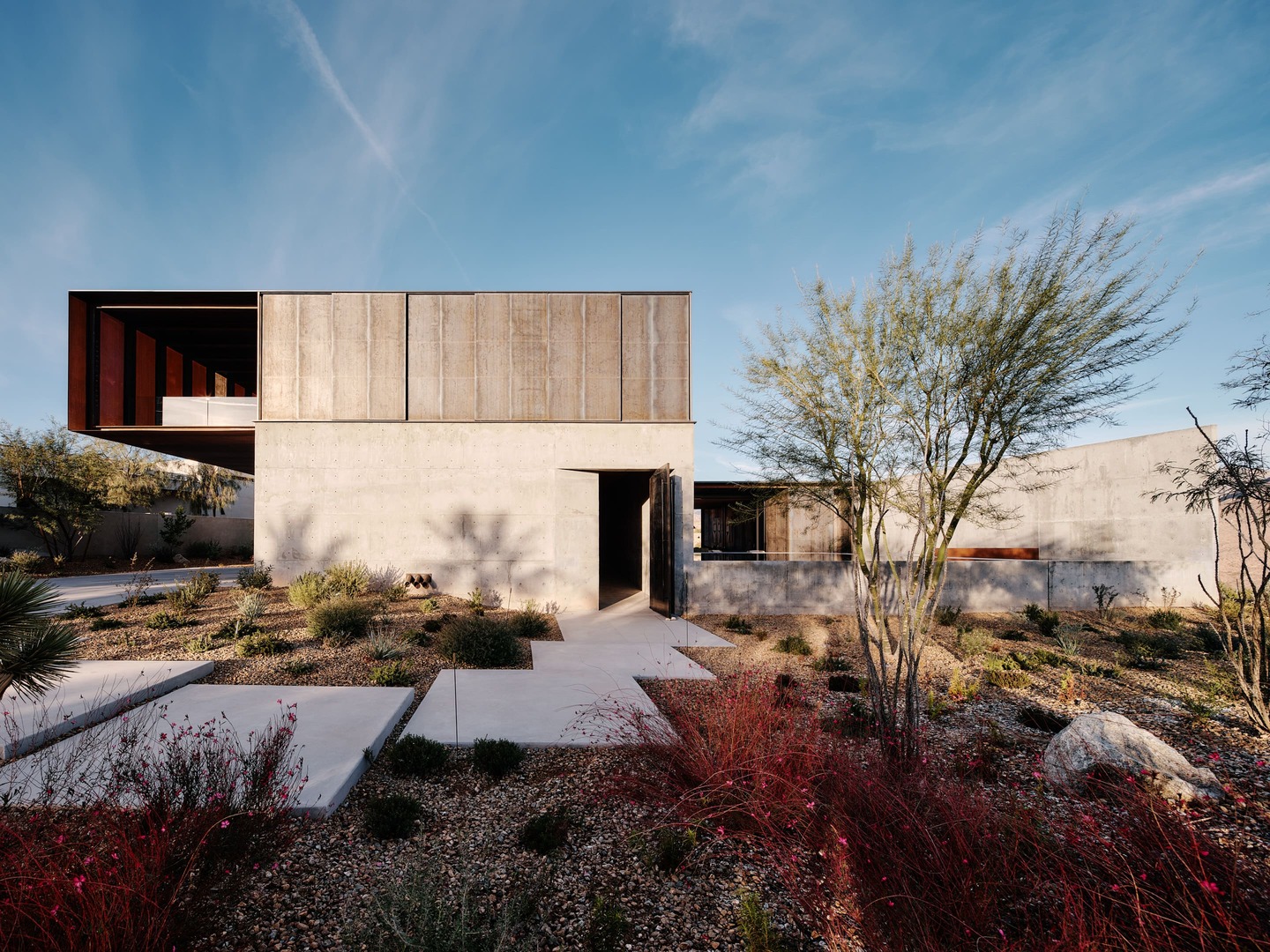
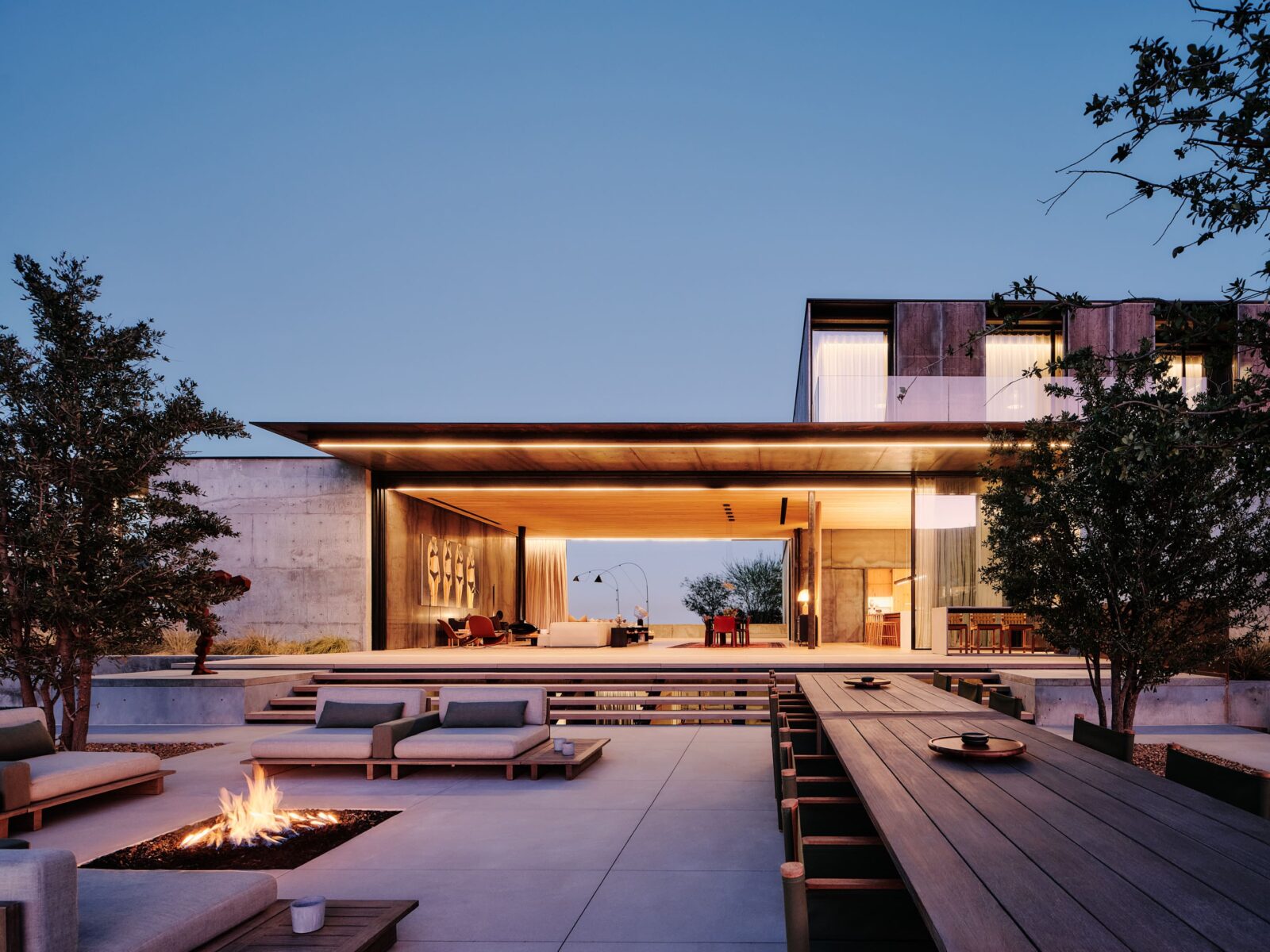
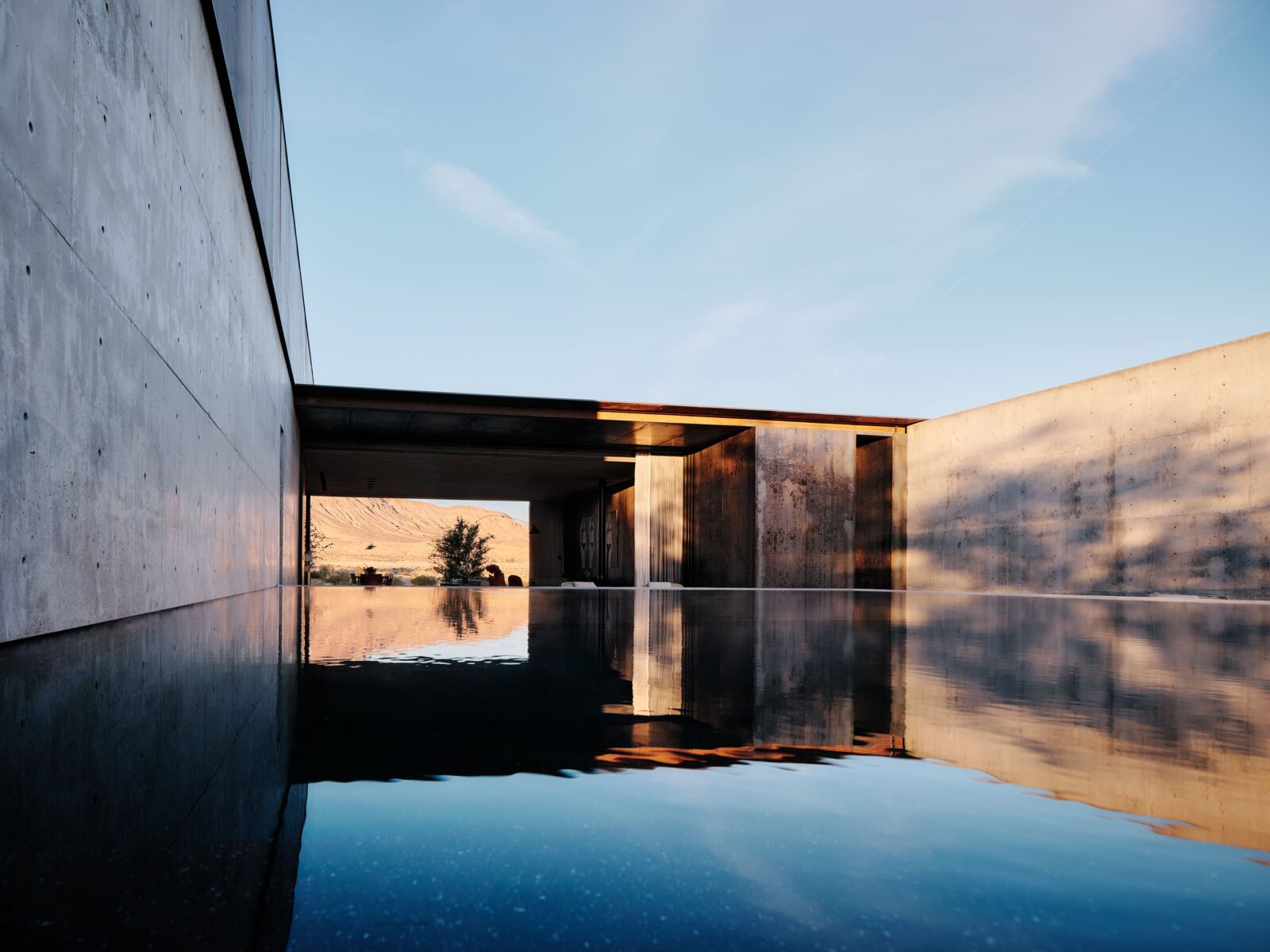
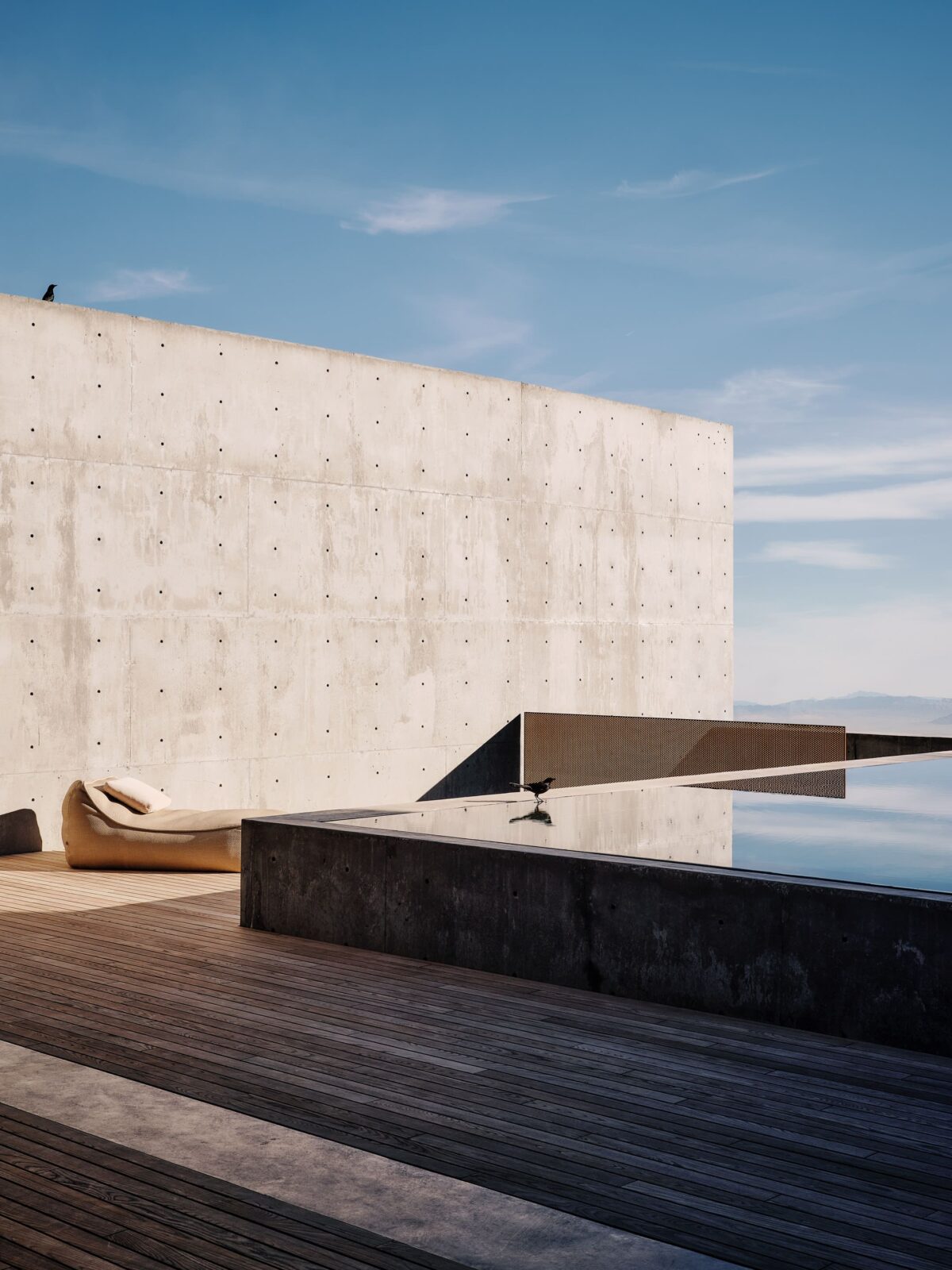
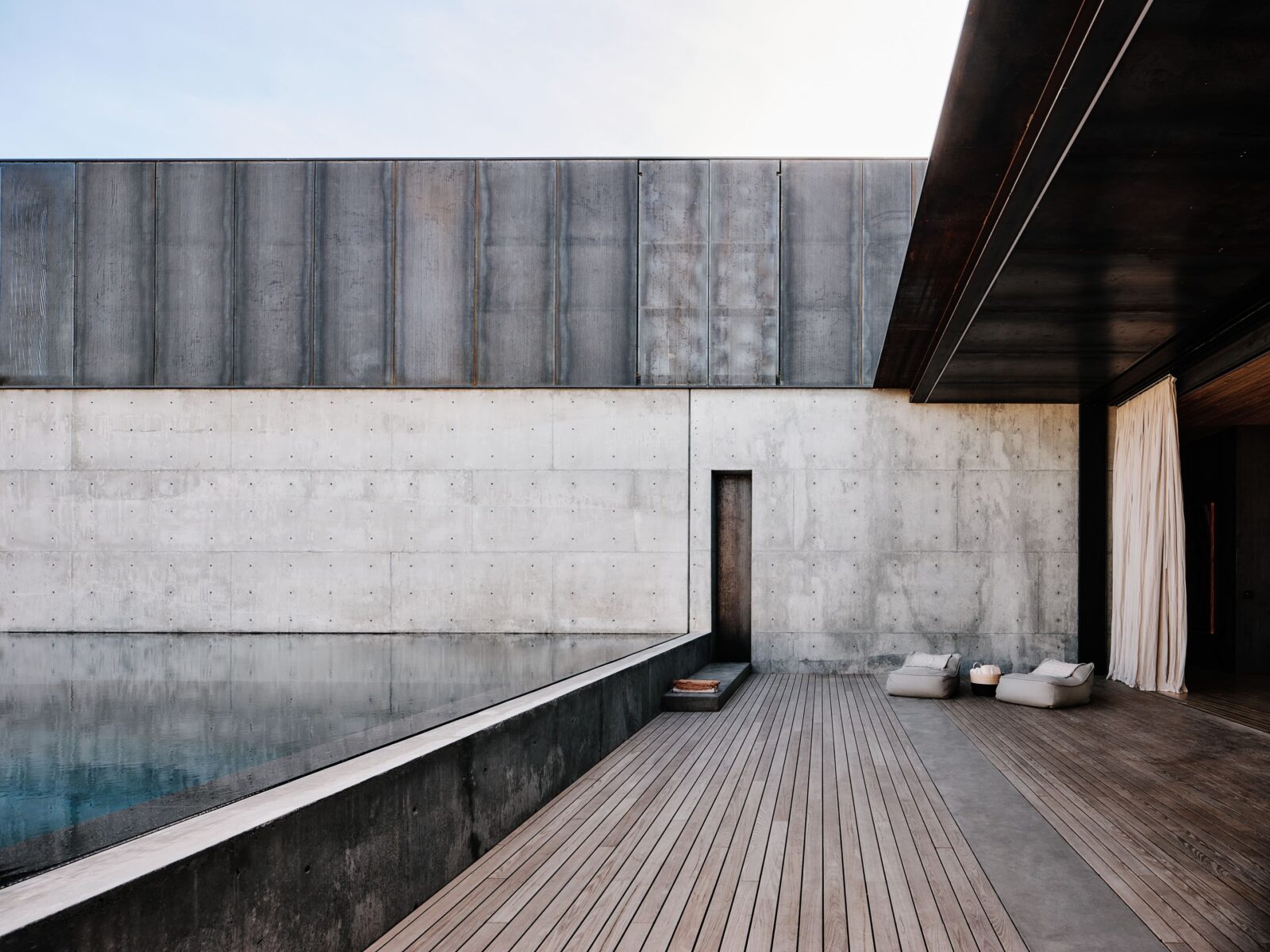
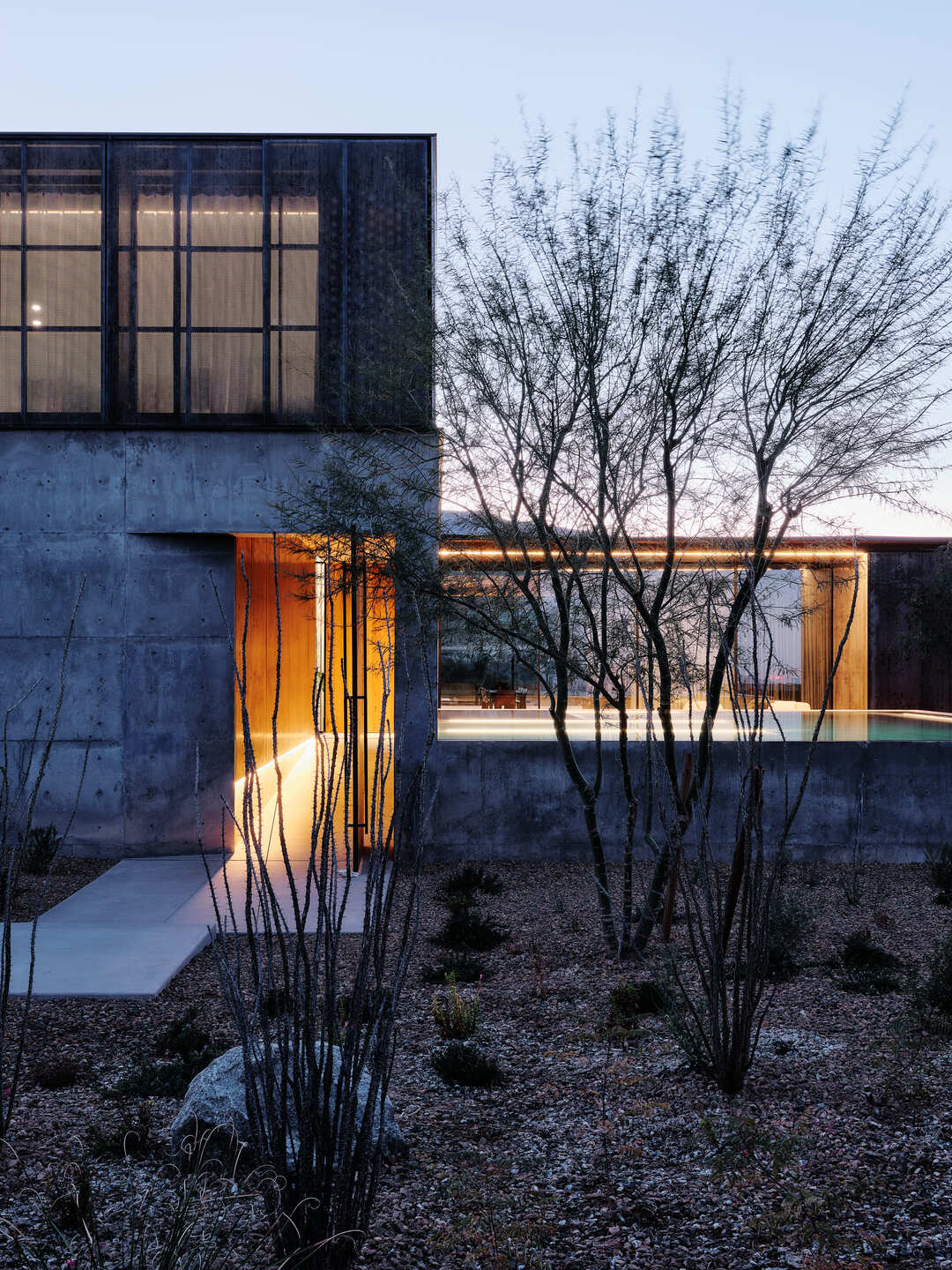
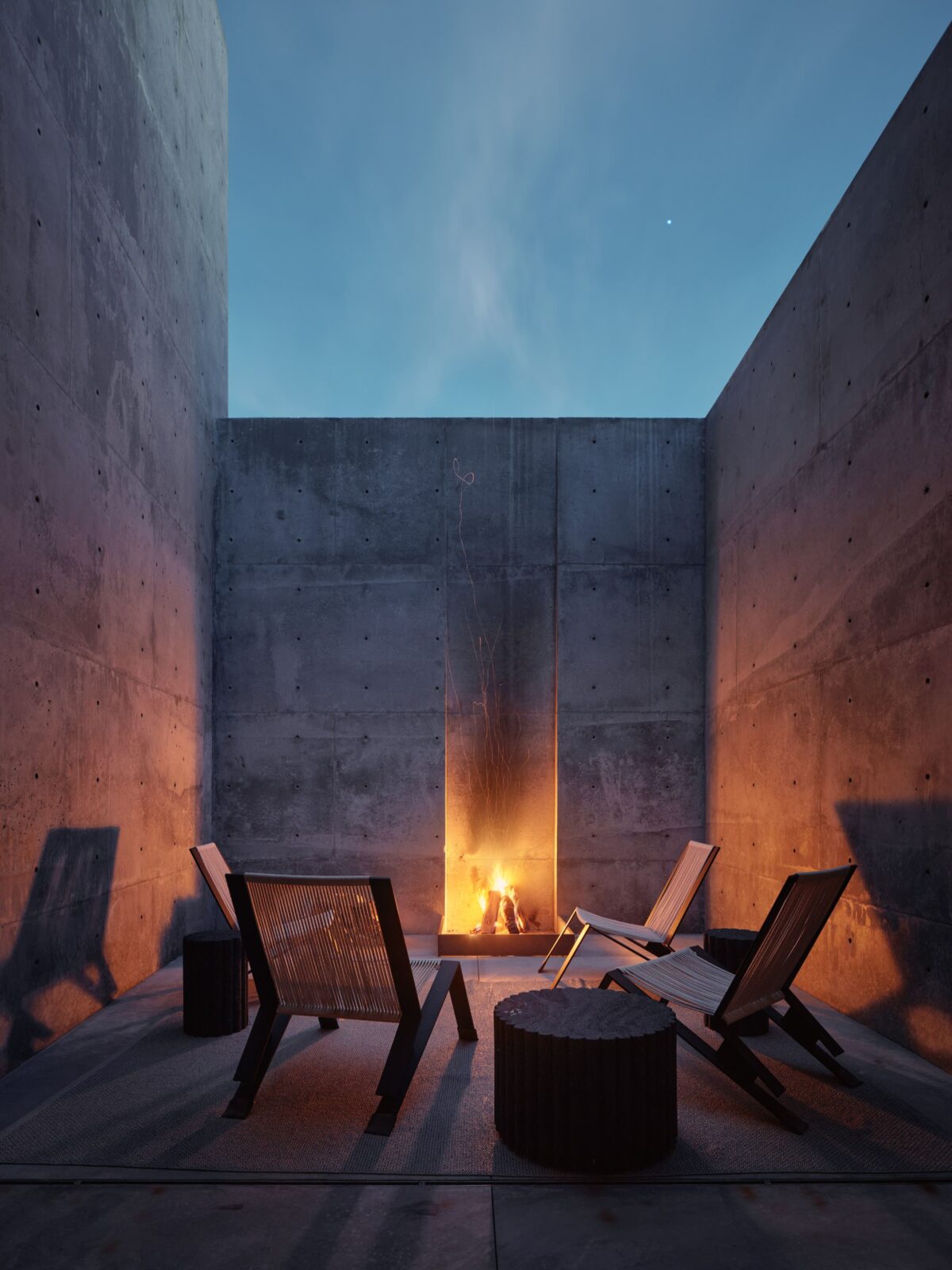
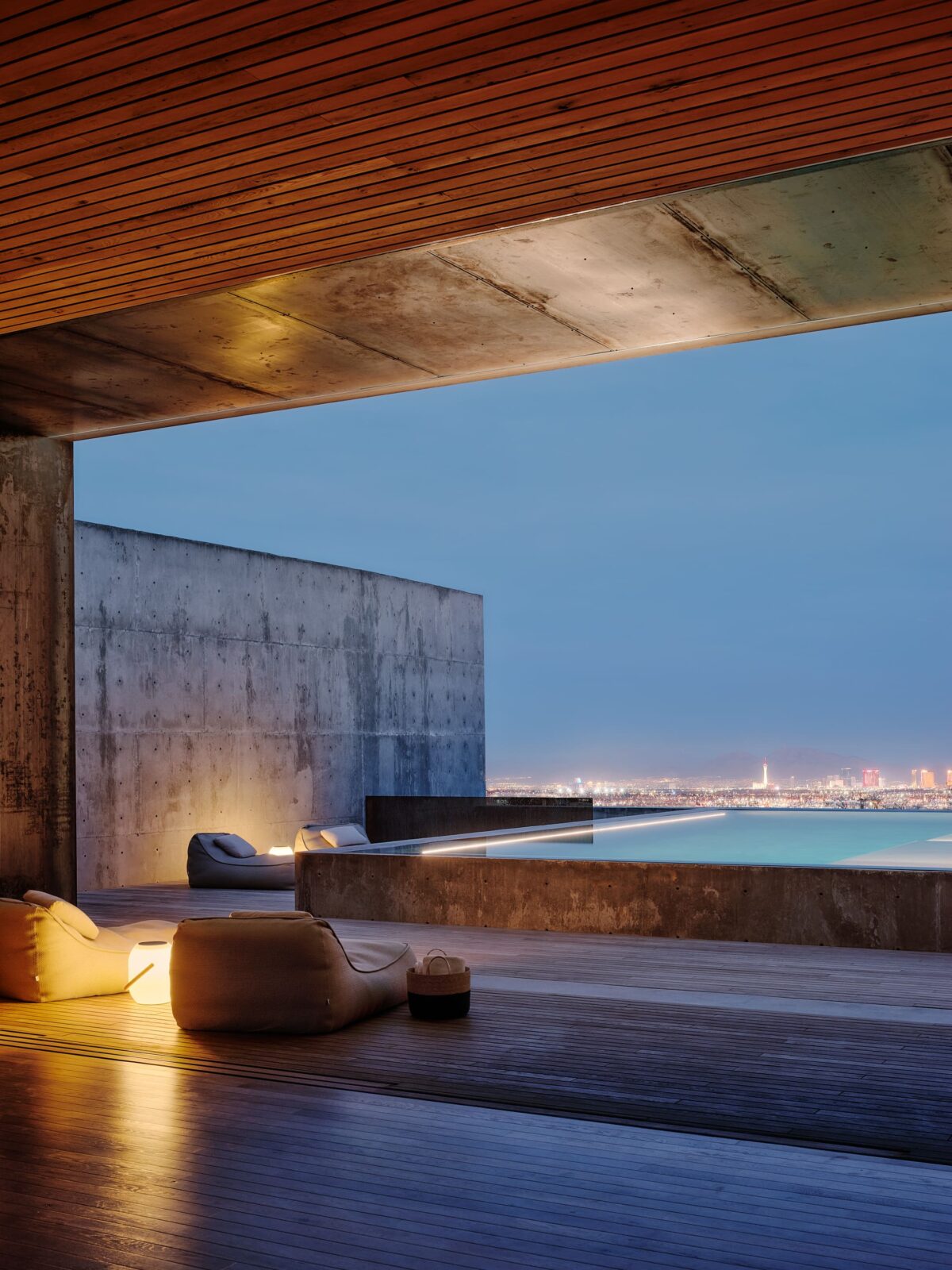
The design started with a simple need for shelter and privacy. Instead of building upwards and exposing the living spaces to the elements, the architects used a subtractive method. They effectively carved out the house from a heavy mass, creating a protected courtyard on the eastern side. A standout feature is the elevated water basin. This pool reflects the size of the main living area and acts as a liquid mirror for the city skyline in the distance.
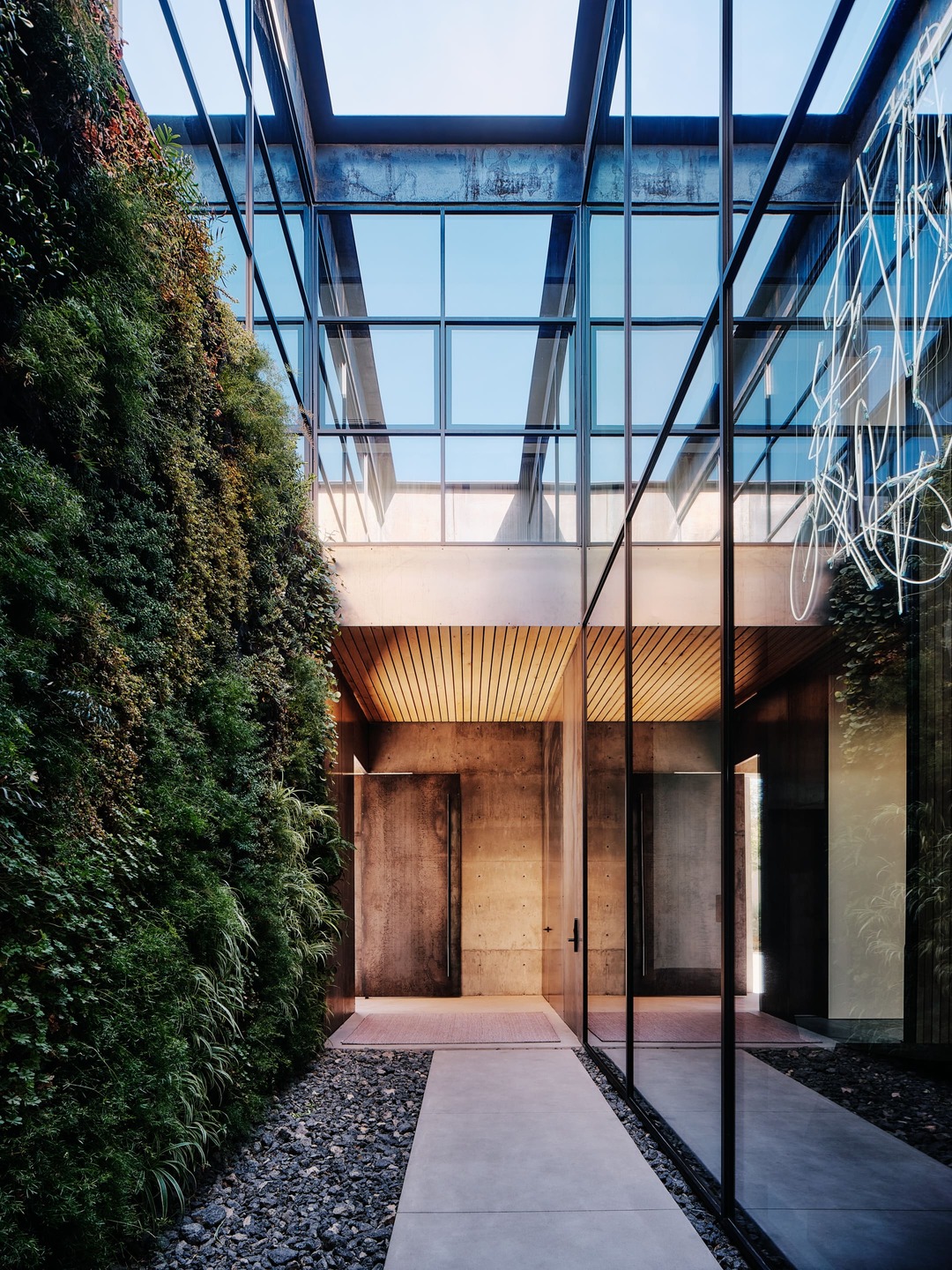
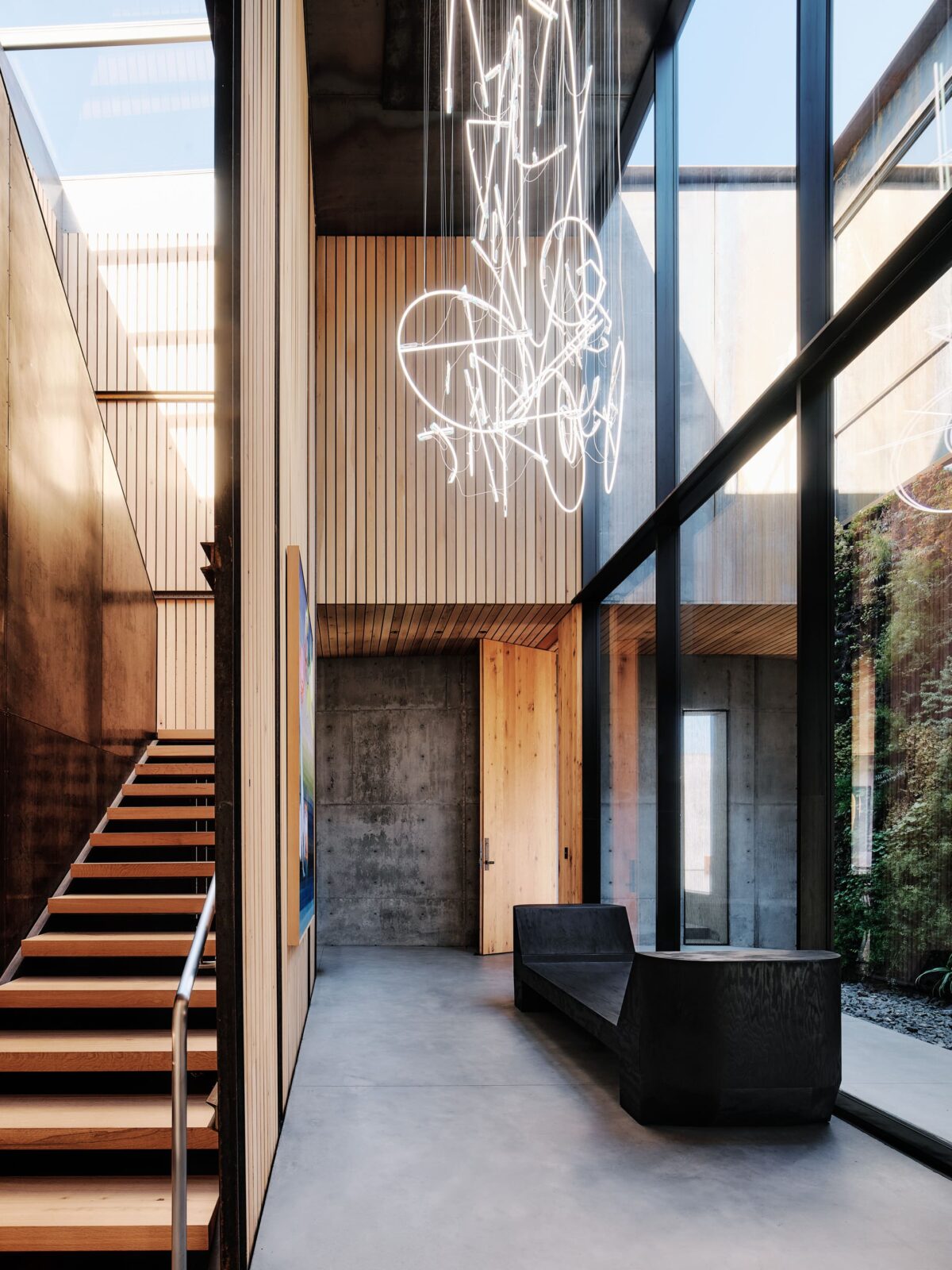
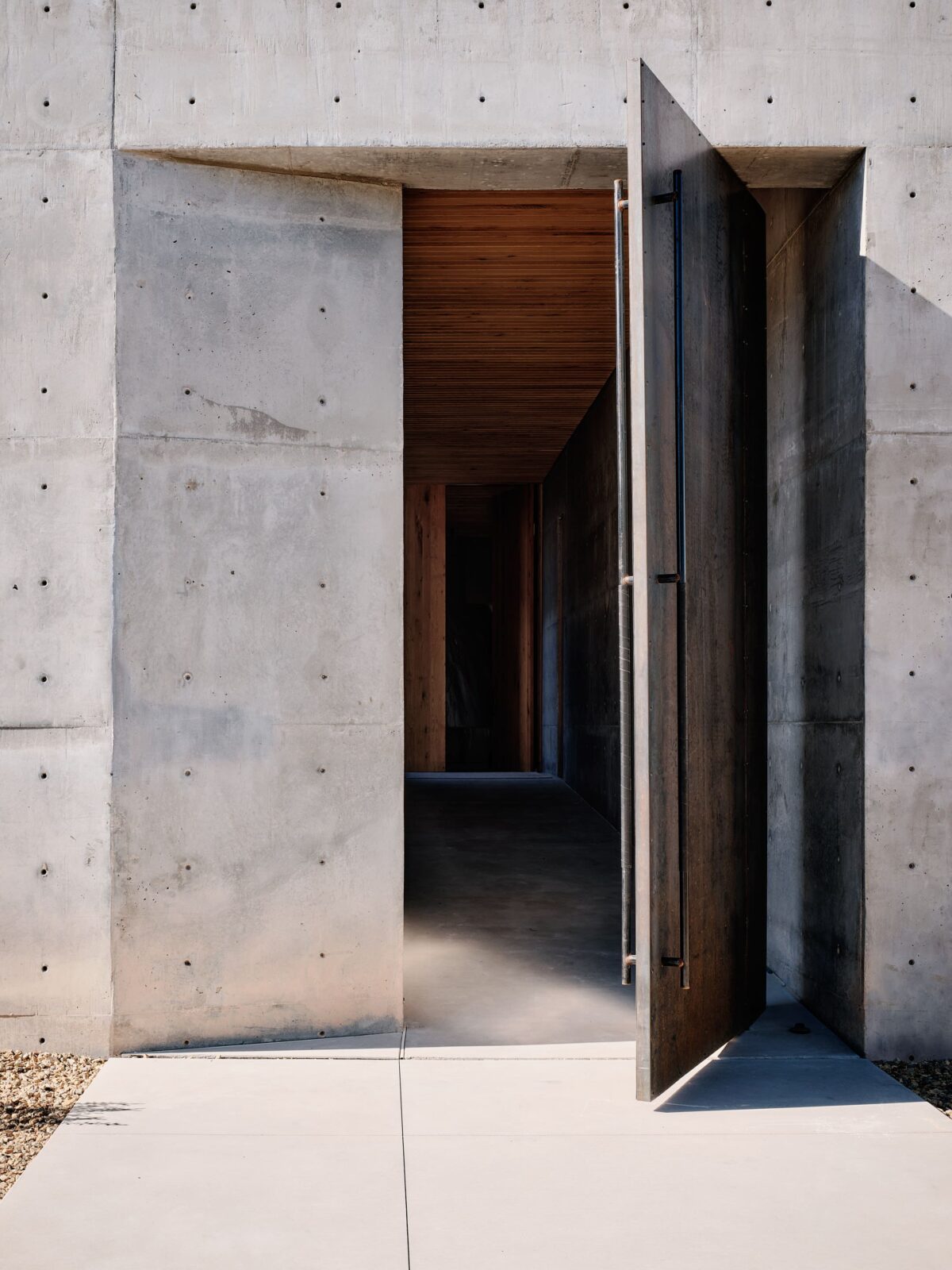
Getting inside the house is a deliberate experience. You enter through a tight gap in the concrete walls. At this point, your eyes are level with the surface of the water. From there, a shaded ramp leads you into an inner court that opens up to the sky, filled with tall, native plants. It is a sequence that moves you from the harsh, open desert into a quiet, cool retreat.
Building with the earth
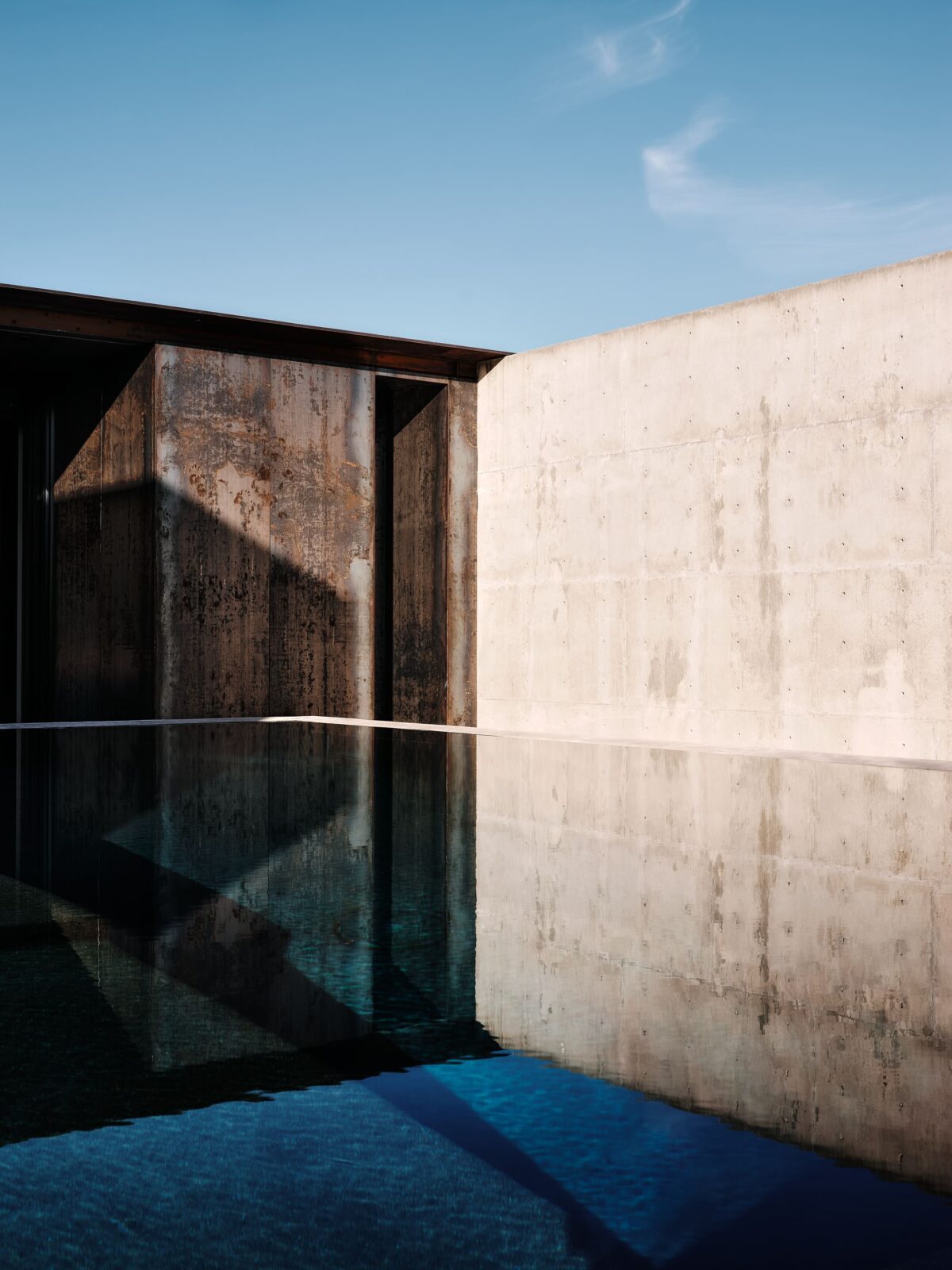
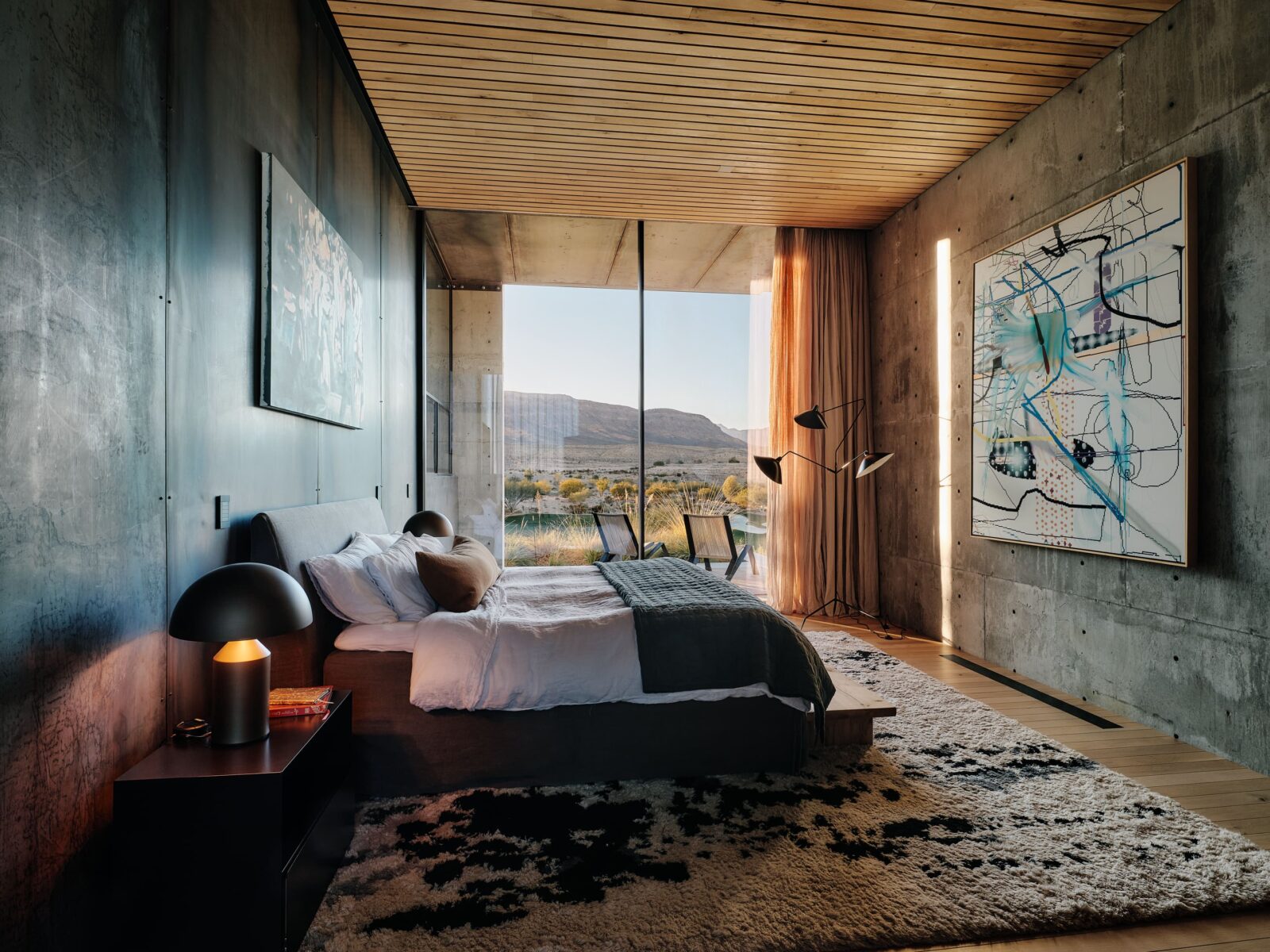
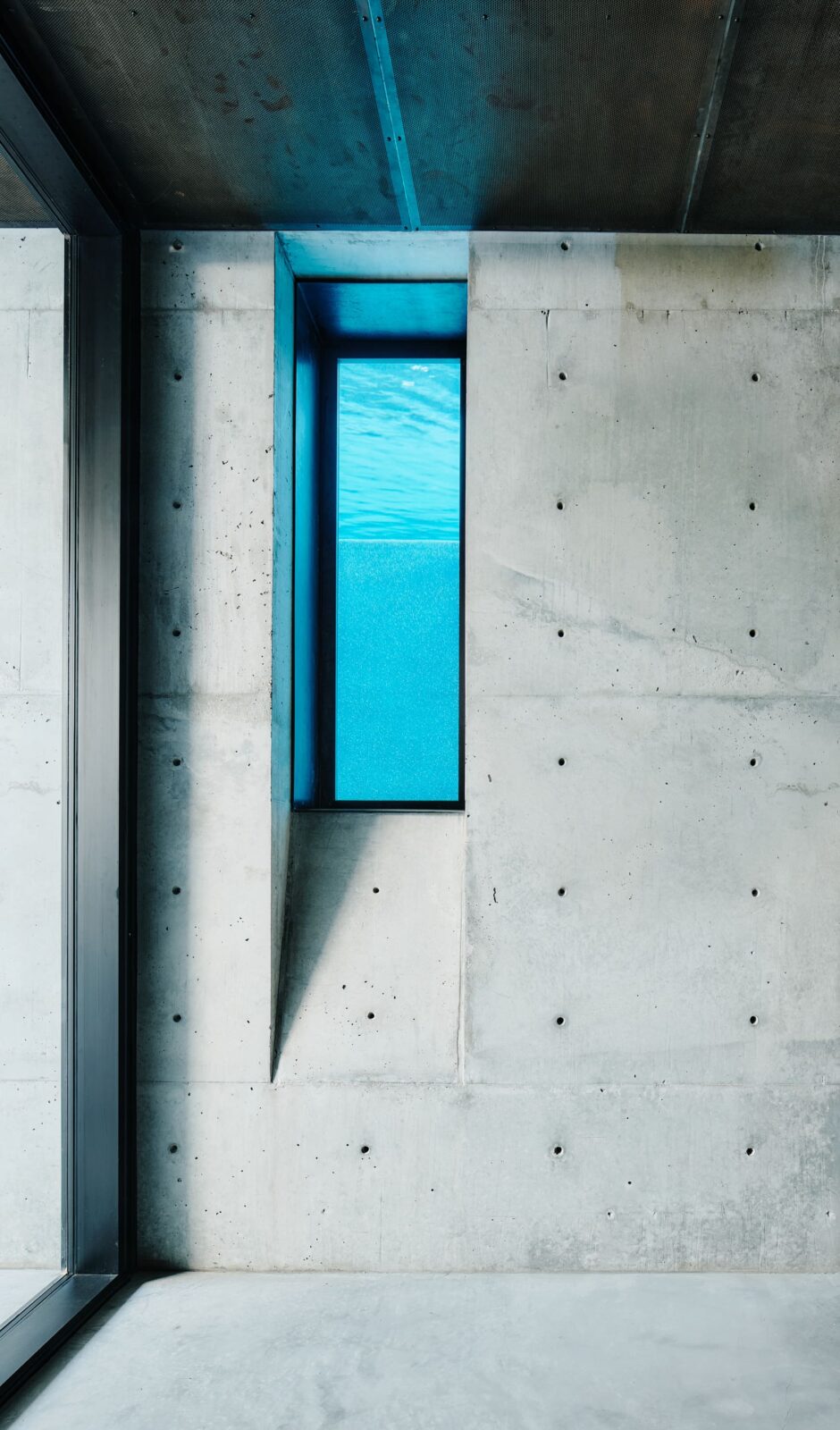
To make the house feel right at home in its surroundings, the team used concrete made from locally sourced sand, gravel, and fly ash. In the bright Nevada sun, these walls take on a tan, sandy colour that matches the mountains on the horizon. A large portion of the home, more than half of the total area, is actually tucked away below ground level. These subterranean spaces stay cool and bright thanks to clever openings in the structure, some of which even sit below the water level of the basin, letting in a shimmering, refracted light.
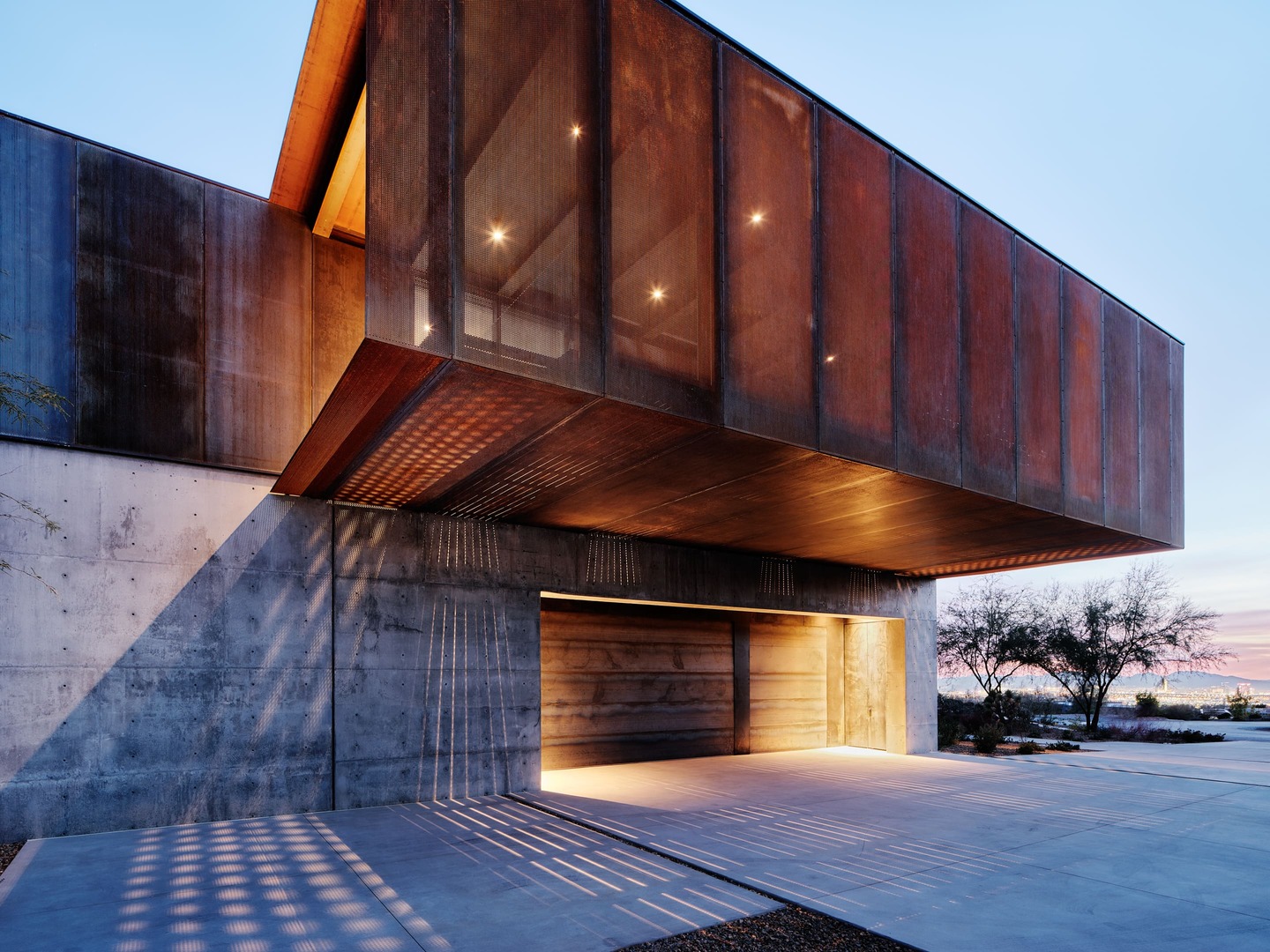
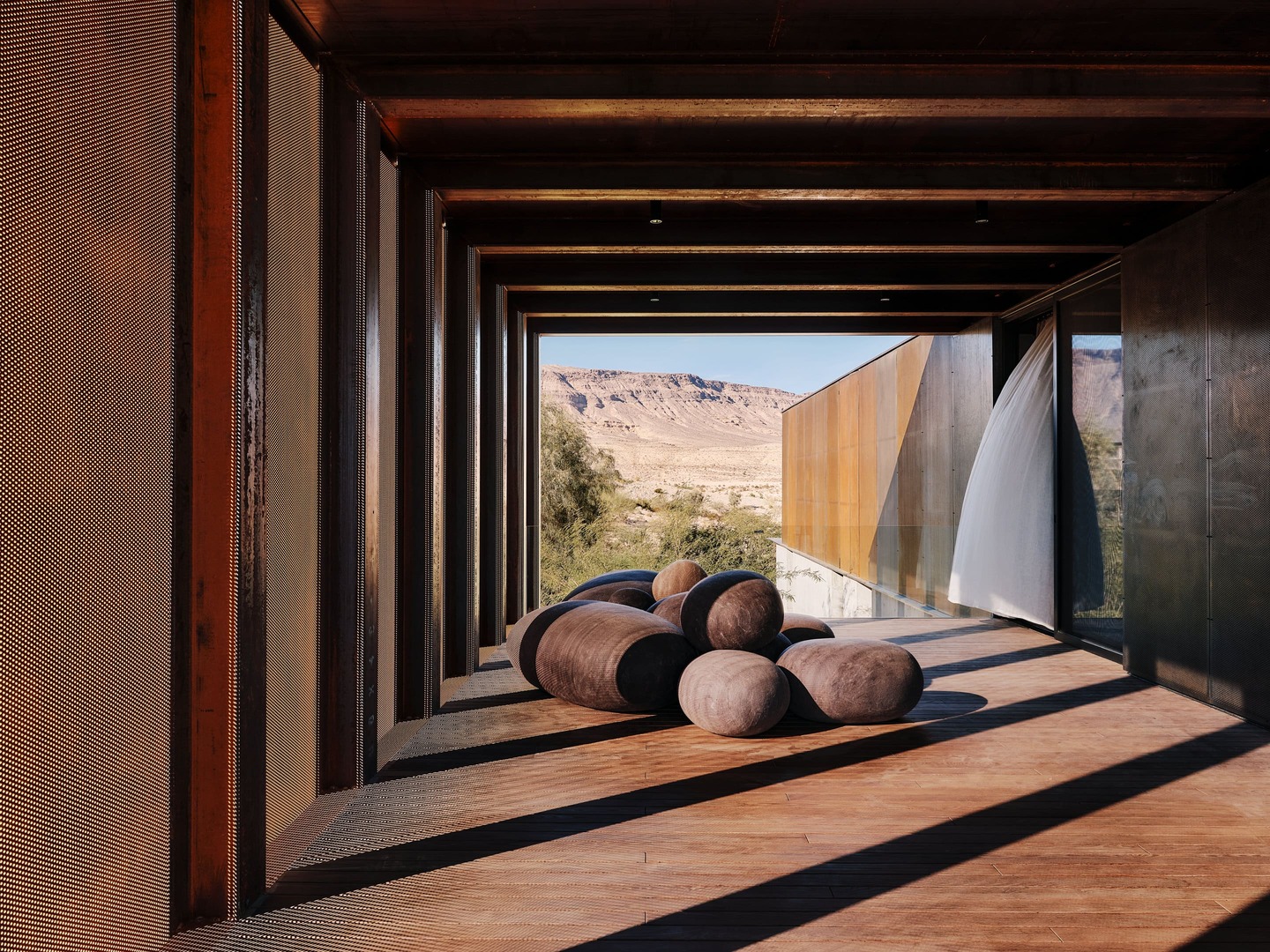
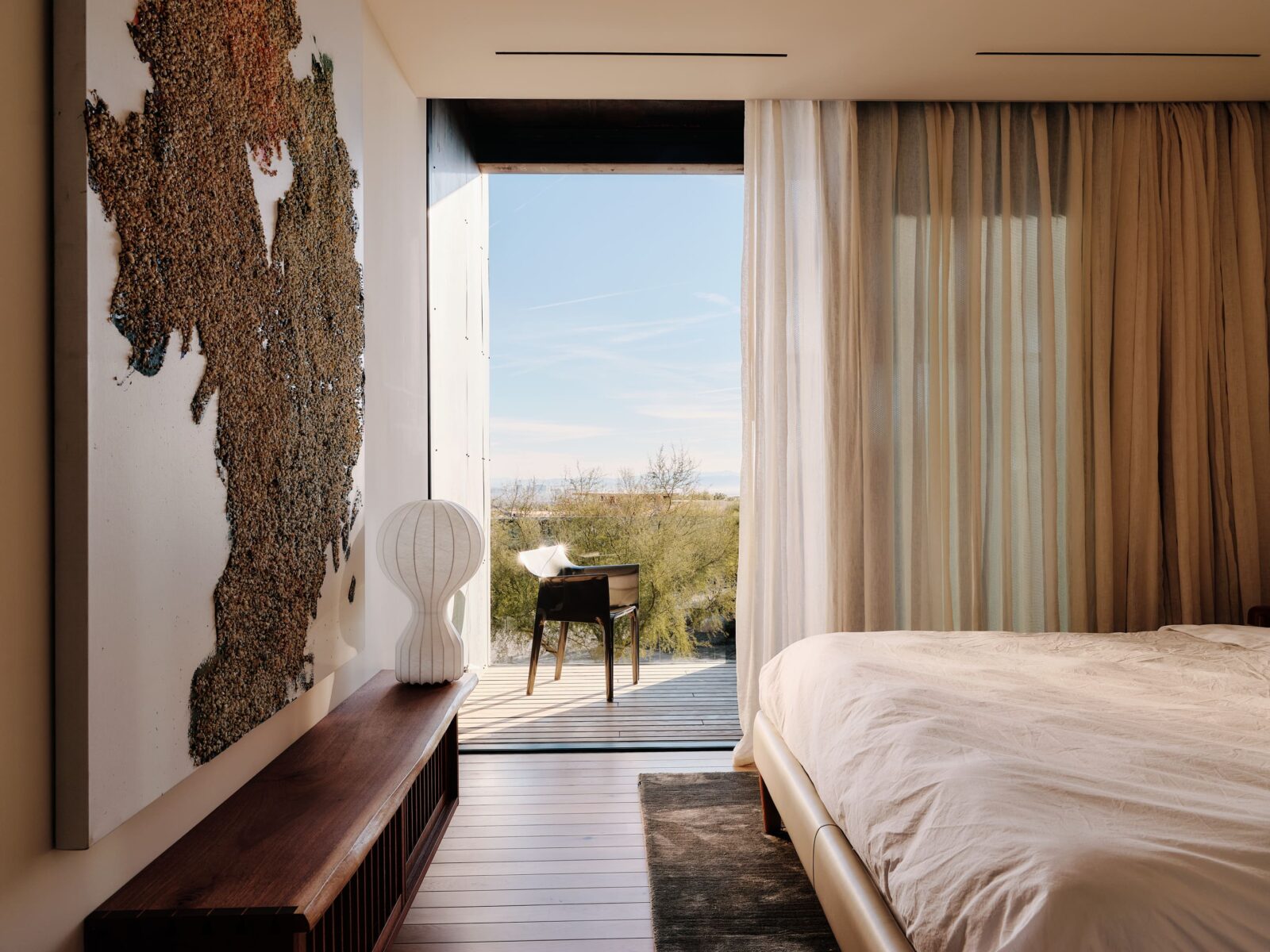
The materials are chosen for their grit and ability to age. The upper level, where the bedrooms are located, is wrapped in a frame of perforated weathering steel. This steel skin runs along an east-west line, acting as a massive windbreak and sunshade for the pool area. This rusted metal finish is a direct nod to the iron-rich geology of the Las Vegas Valley.
High tech meets heavy mass
While the house looks like a rugged part of the landscape, it is packed with modern tech to keep it running efficiently. The roof is reflective to bounce away the sun’s heat, and a 45 KW solar array provides power. The glass, lighting, and cooling systems are all high-efficiency models designed to keep energy use low in a climate that usually demands a lot of it.
On the south side, a deck covered in perforated mesh hangs over the main structure, keeping both the building and the cars parked below in the shade. The entire form is a balancing act; the heavy, earth-bound concrete of the lower floors supports the long, cantilevered steel sections above. It creates a frame that captures the neon lights of the city to the east and the red stone cliffs to the west.
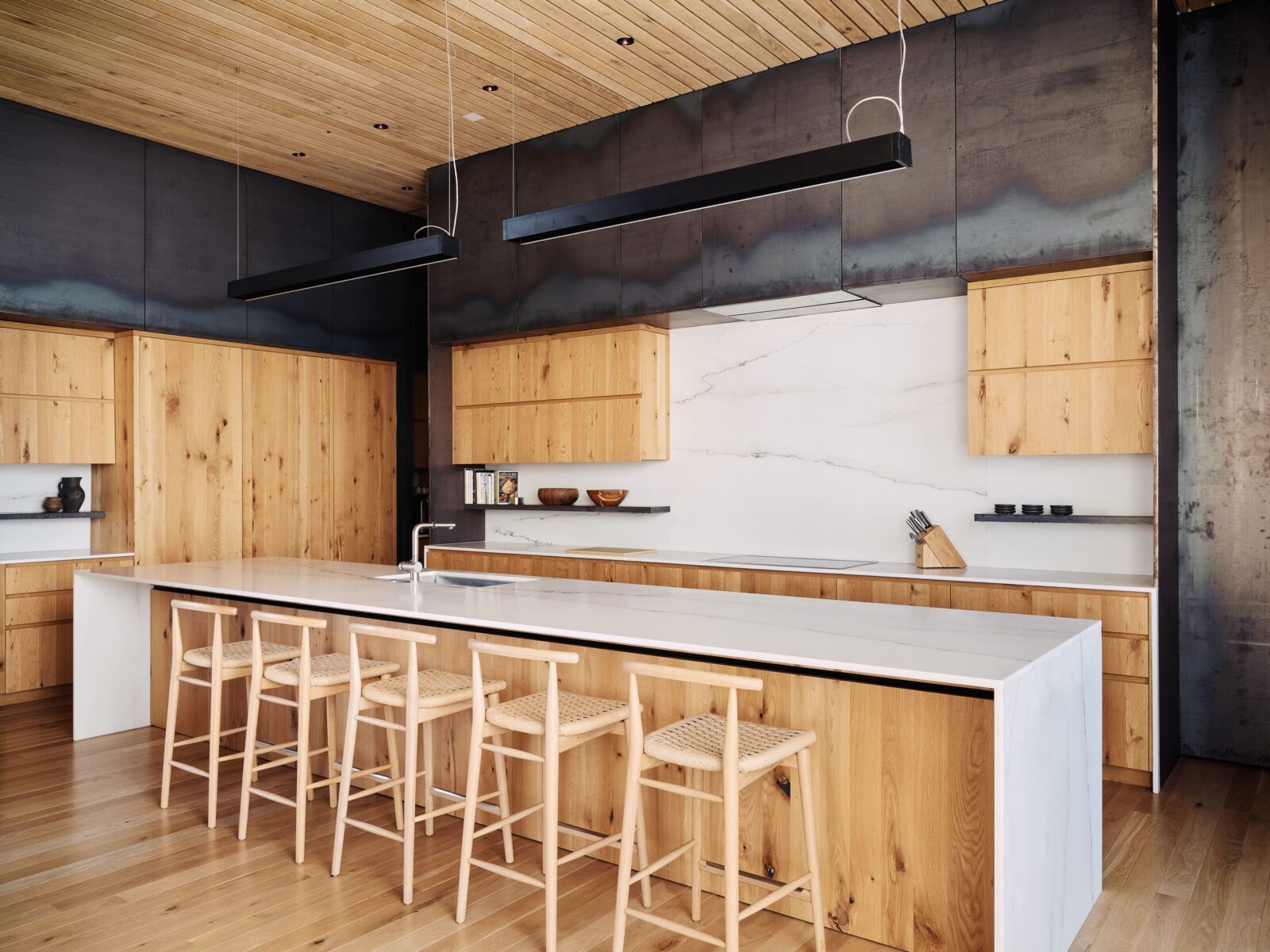
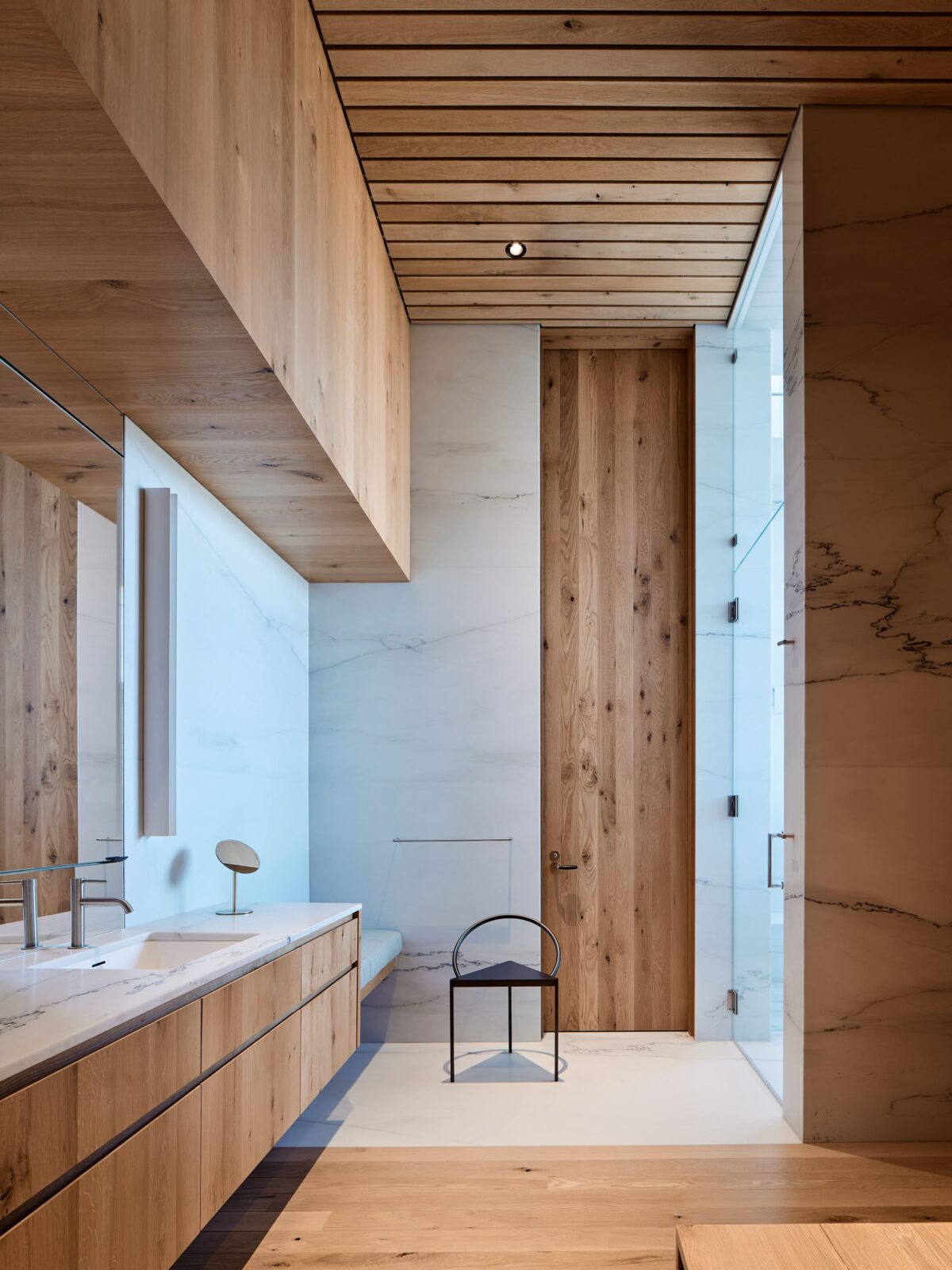
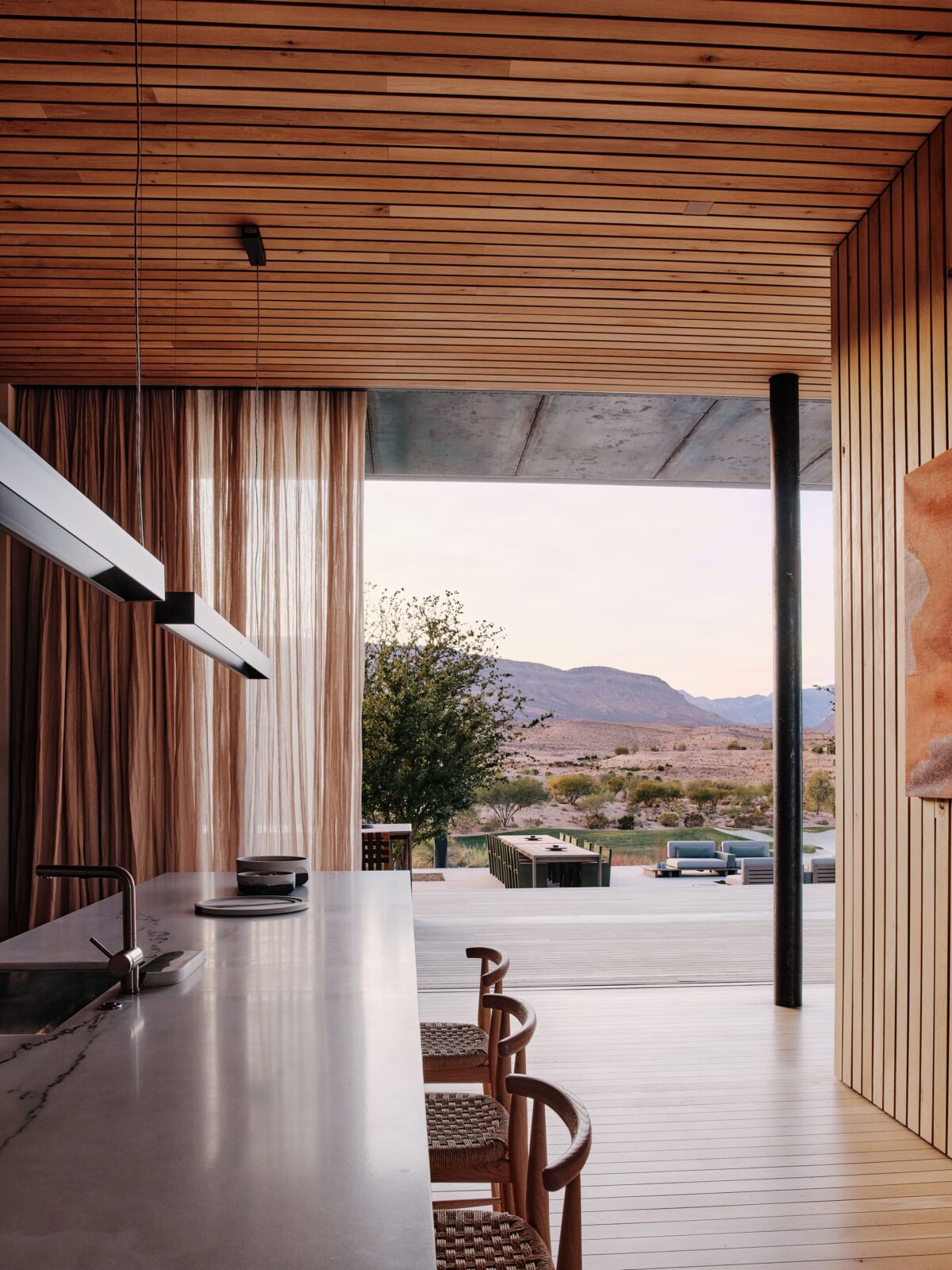
The Red Rock project is an example of living in the desert that doesn’t have to mean fighting against it. Faulkner Architects have built a house that works with the wind and sun rather than just standing in their way. It is a tough, durable home that offers a quiet place to watch the city glow from the safety of the shadows.
Project info
Project name: Red Rock
Architect: Faulkner Architects
Faulkner Architects design team: Gregory Faulkner (FAIA, Principal), Owen Wright (Project Architect), Jenna Shropshire (Project Manager), Breanne Penrod (Architectural Staff Level II).
Interior Designer: Concept Lighting Lab
General Contractor: RW Bugbee & Associates
Landscape Architects: Hugo Sanchez Paisaje and Vangson Consulting
Lighting Designer: Concept Lighting Lab
Pool Designer: Ozzie Kraft Pools
Photography: Joe Fletcher


