Header: Oscar Hernández
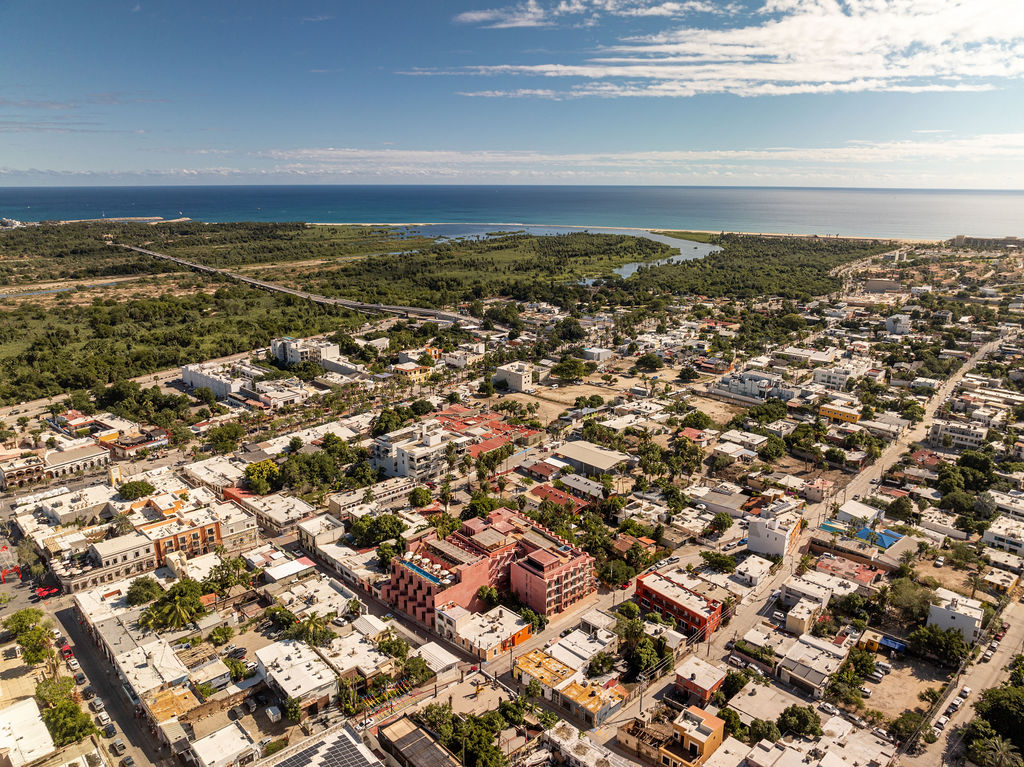
The historic heart of San José del Cabo has a new neighbour that refuses to hide behind tall gates. Designed by the Mexico City-based studio RA!, Laiva Plaza is a boutique hotel that acts more like a public square than a private fortress. By stepping away from the typical “all-inclusive” isolation, this project by Grupo Laiva finds its strength in being part of the street.
Building for the pedestrian
The 1,557-square-metre building is located right in the thick of the city’s pedestrian district. Instead of building right up to the pavement, the architects pushed the ground floor back. This creates a shaded public atrium that invites the city inside. This open threshold serves as a cooling transition zone where the breeze can move freely, making the entrance feel like a natural extension of the pavement.
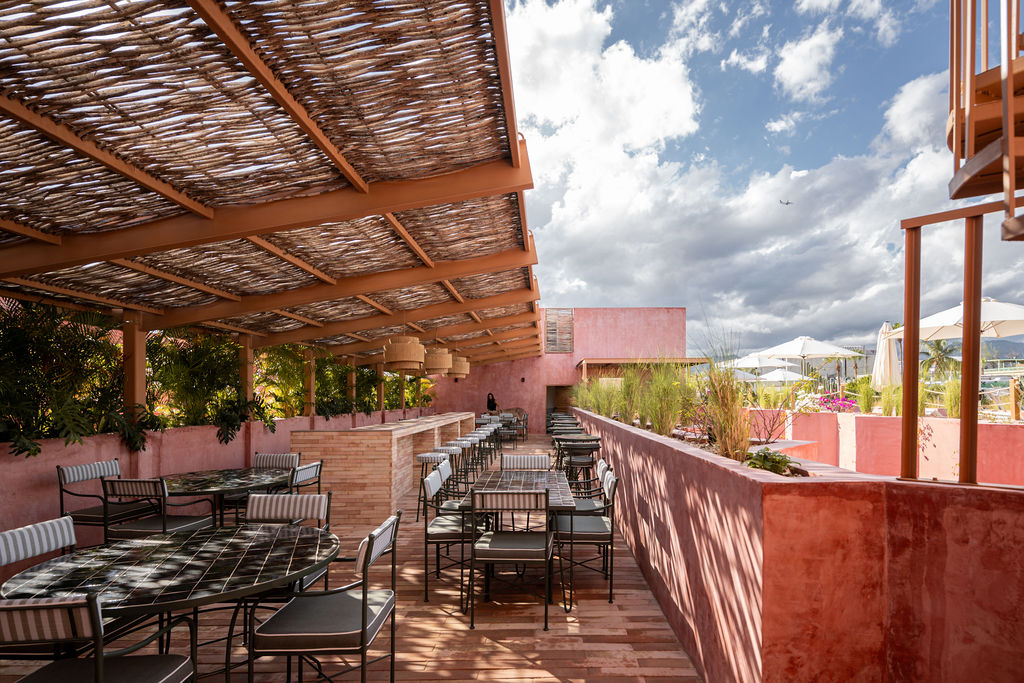
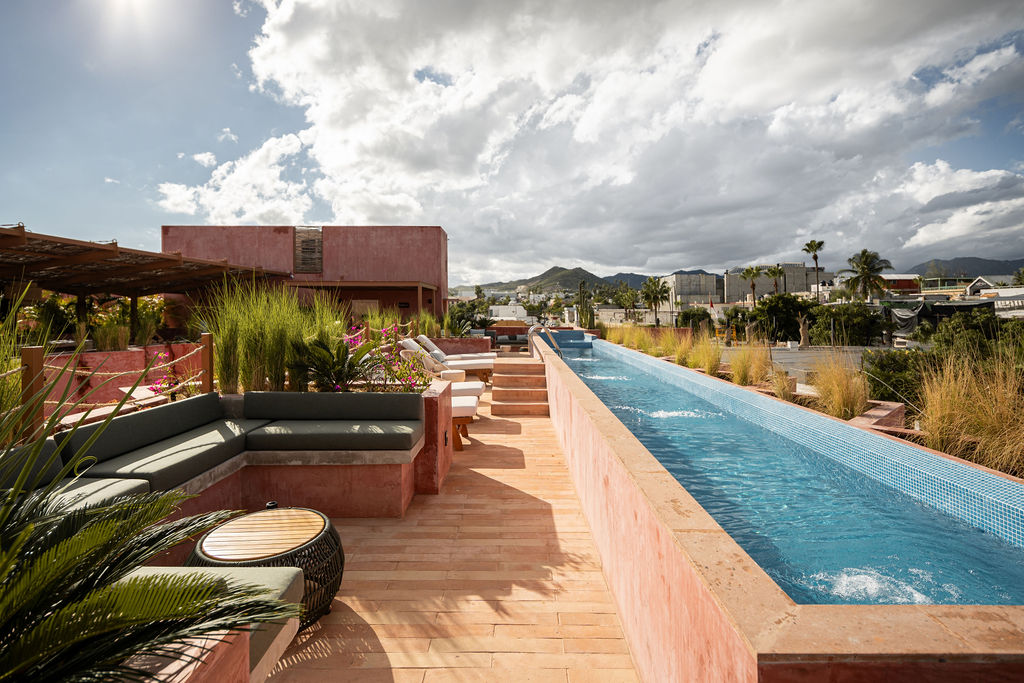
On the ground floor, mixed-use spaces keep the building active at eye level, while the floors above house the guest rooms. This layout ensures that while the hotel is a place for rest, it never loses its pulse. The roof garden sits at the very top, offering a place to look back out over the historic skyline.
Inspired by Papel Picado
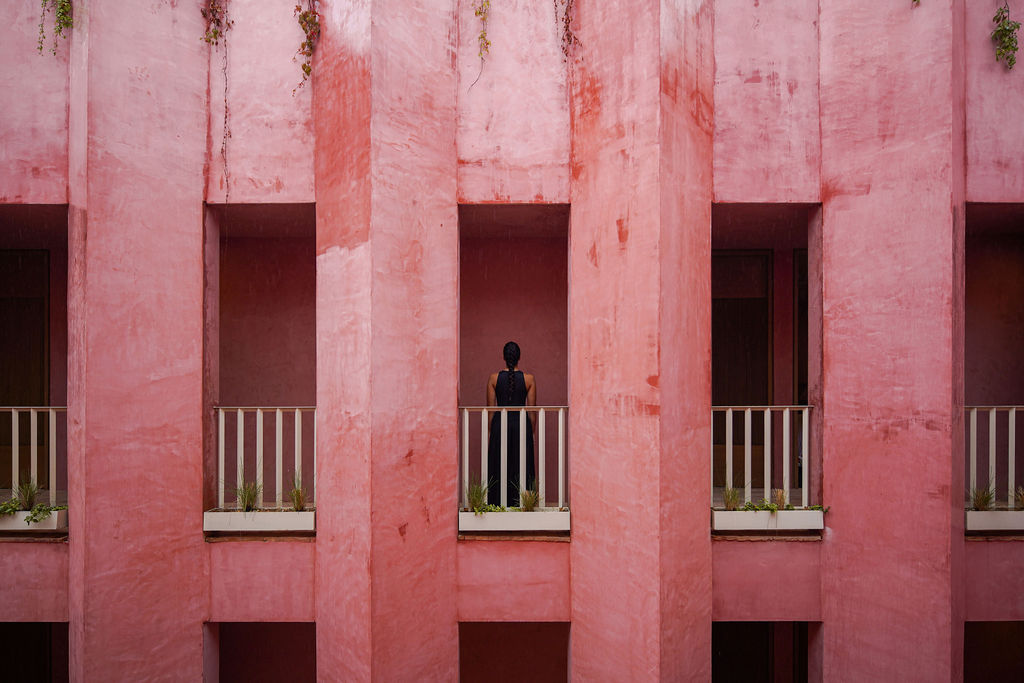
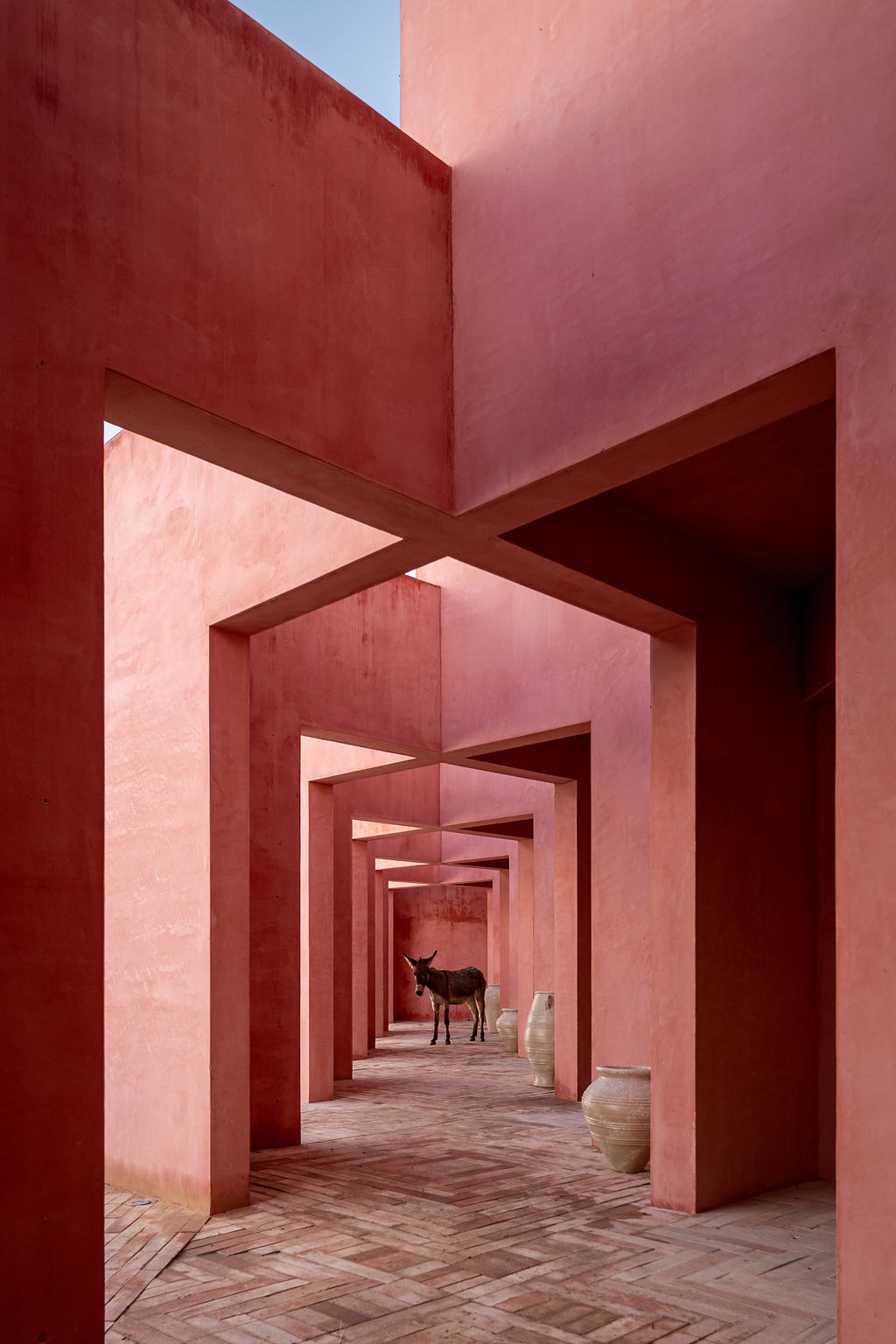
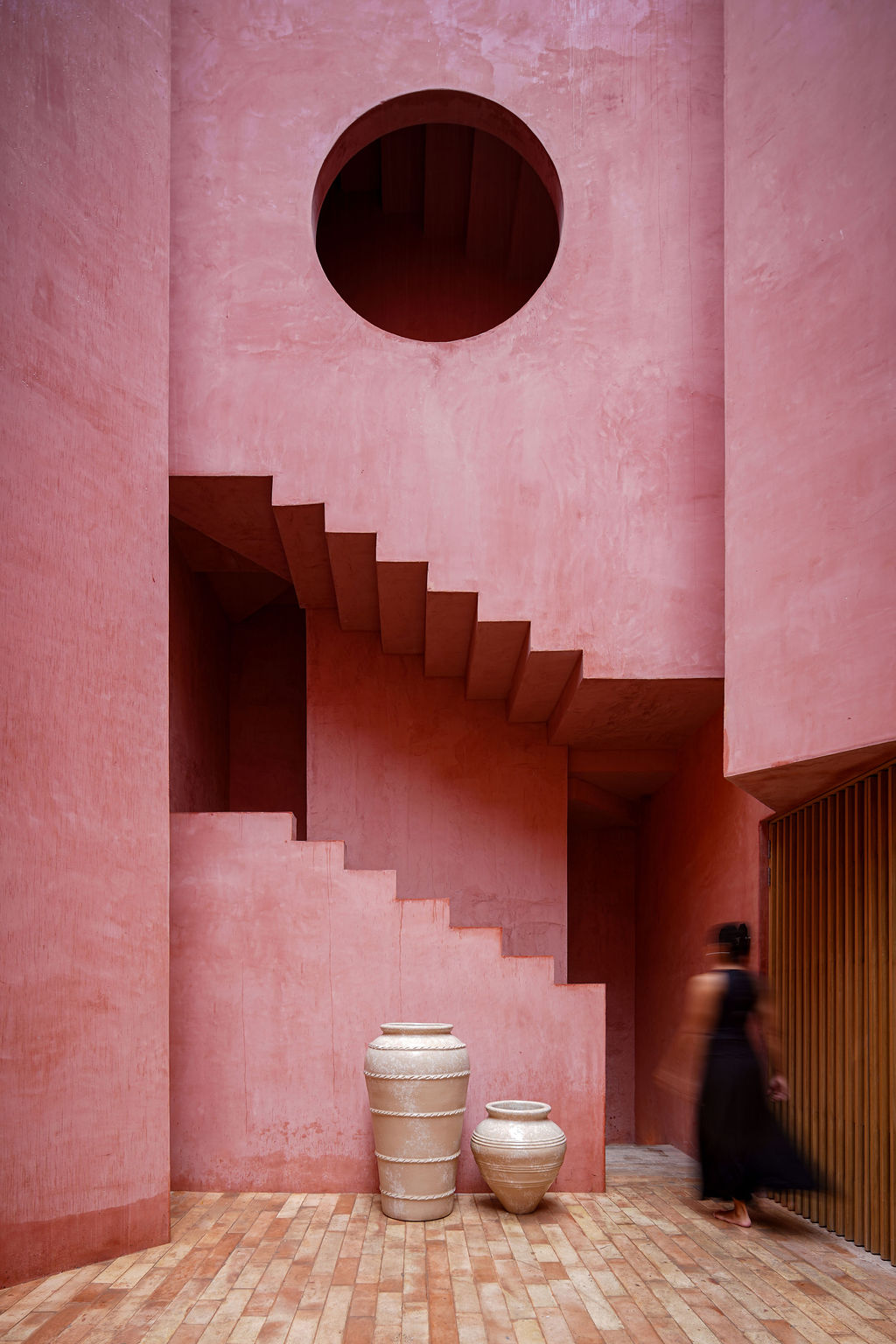
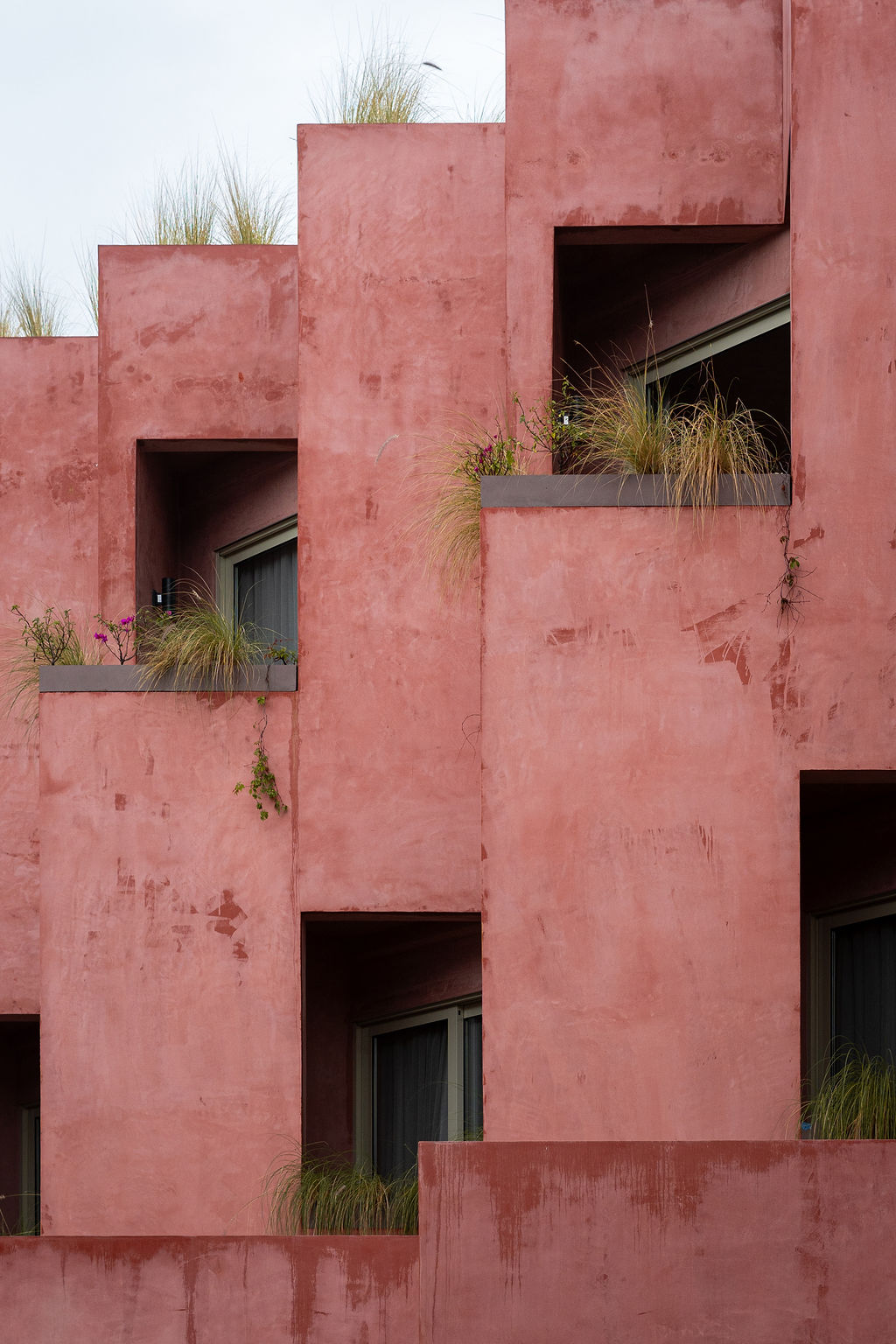
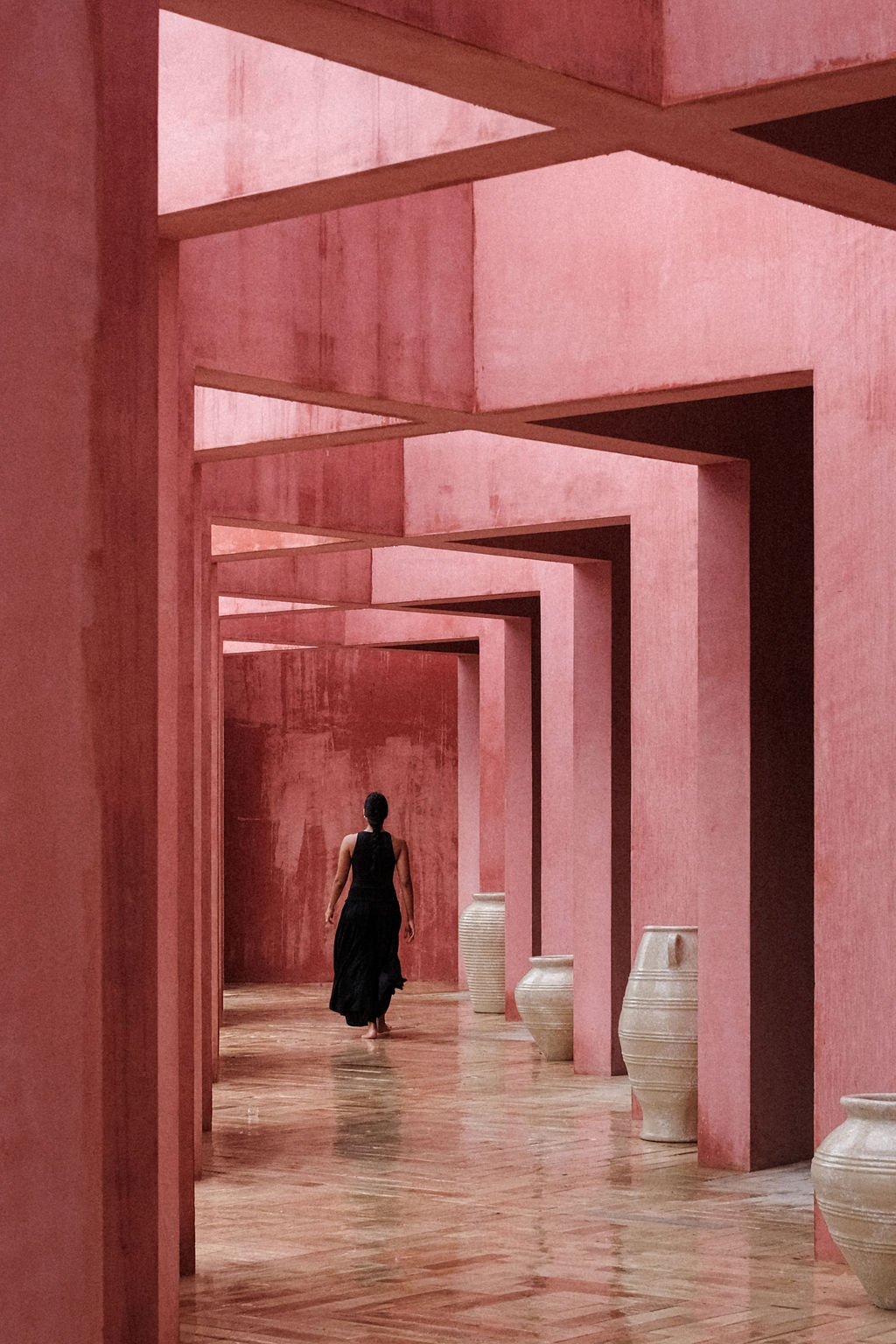
Visually, the hotel is hard to miss, yet it feels entirely right for its location. The design uses a system of interwoven walls that create a series of small patios and terraces. One of the most interesting choices is the rhythmic pattern of the facade. The architects drew direct inspiration from papel picado, the traditional cut-paper flags that hang across Mexican streets.
The building doesn’t just mimic these flags; it uses their repetitive, airy quality to dictate the shape of the windows and openings. To ensure the large structure didn’t overwhelm its older neighbours, the team designed the volume to step back progressively as it gets higher. This keeps the scale of the street feeling comfortable and familiar.
Heart of the project
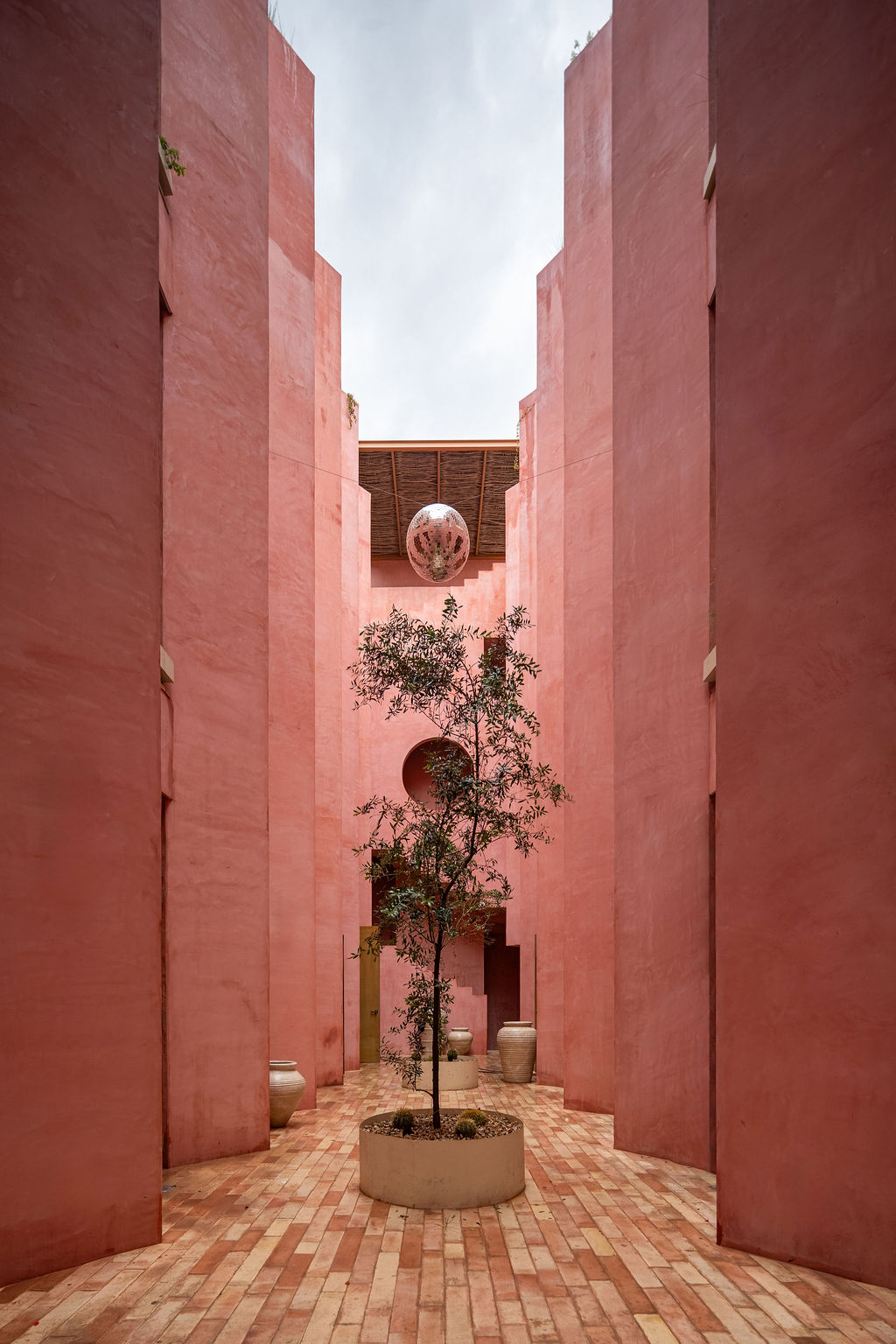
Inside, everything revolves around a central vertical courtyard. This “void” is the heart of the project, pulling natural light deep into the building and encouraging cross-ventilation. It acts as a natural air conditioner, keeping the atmosphere calm and bright without relying solely on mechanical systems.
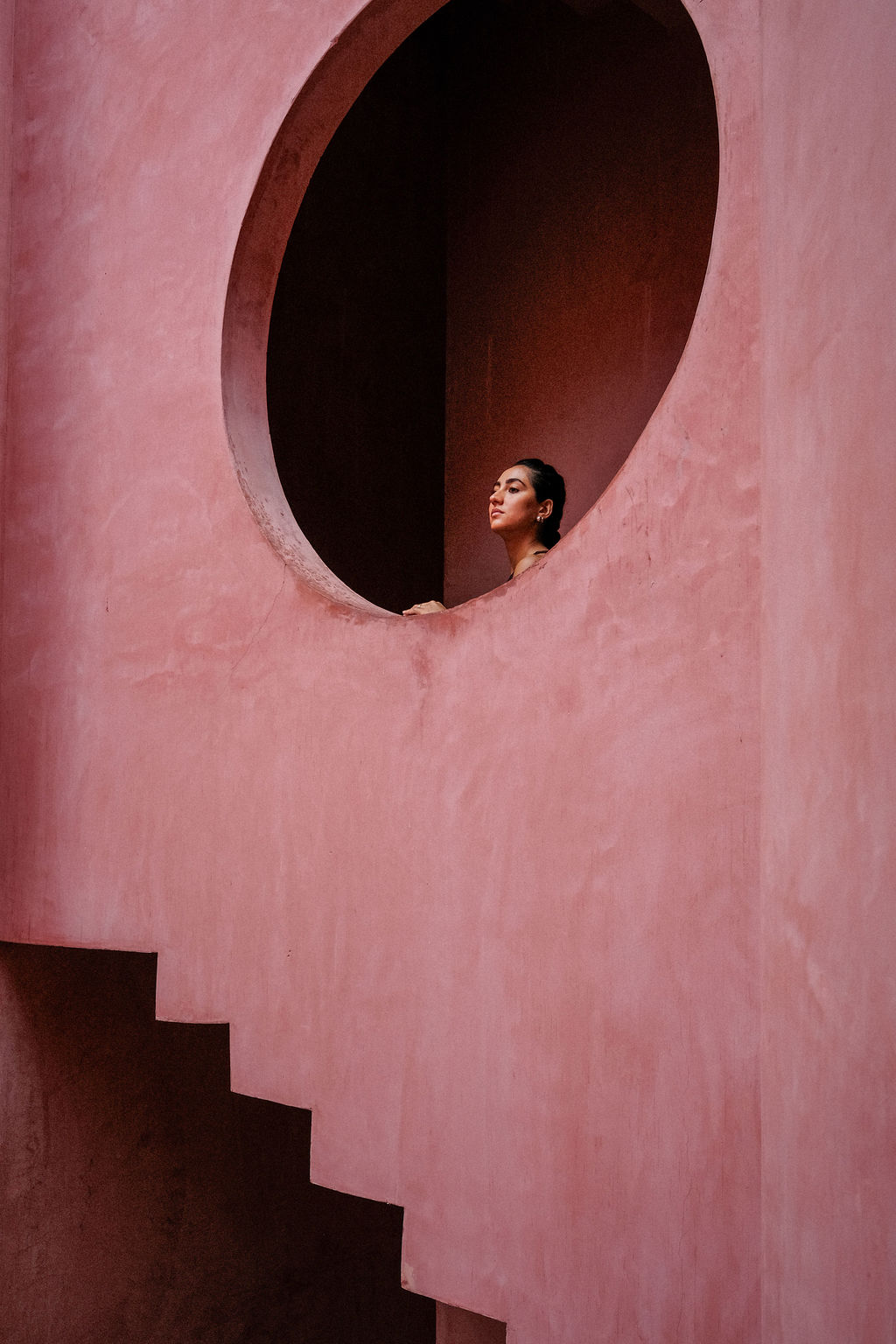
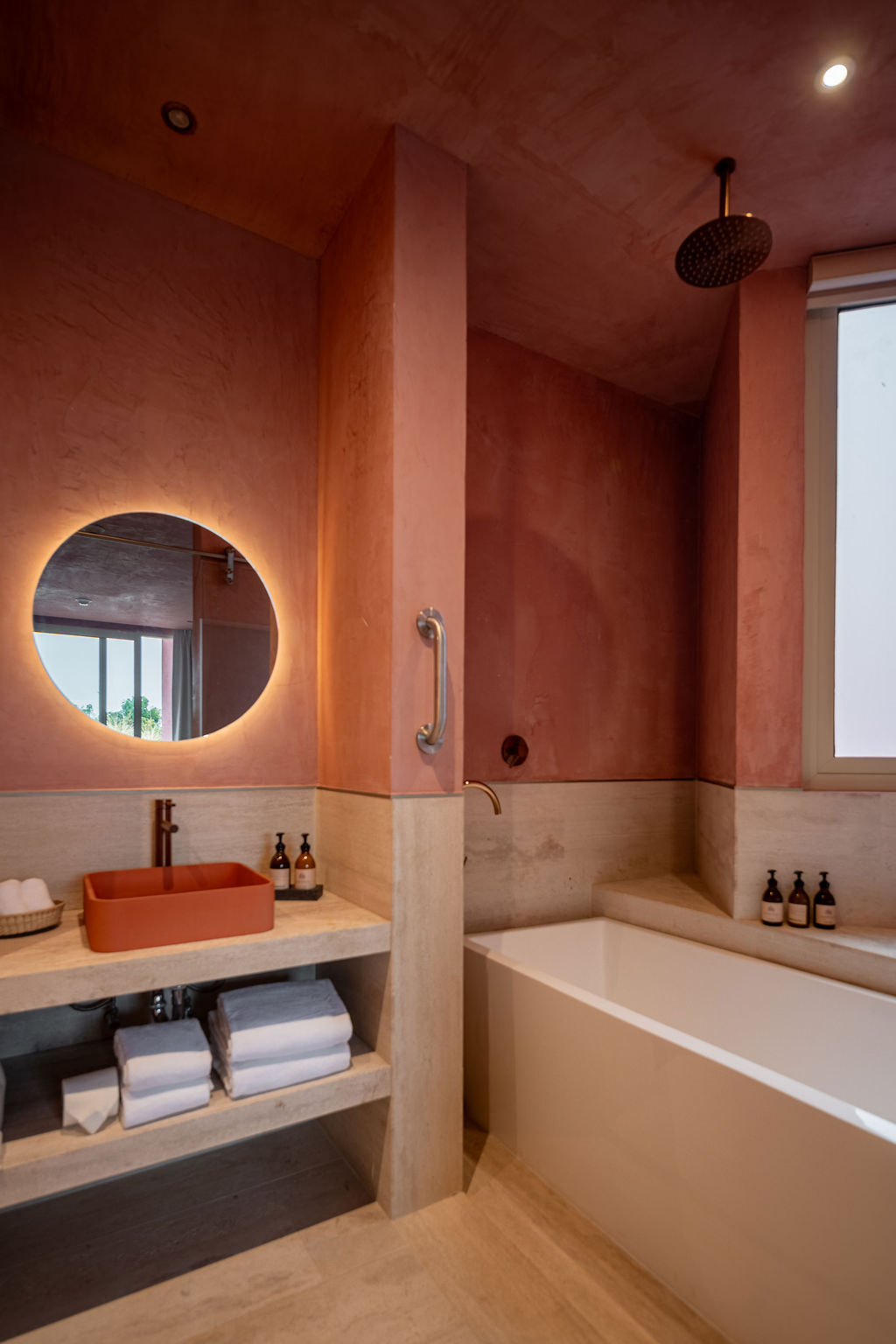
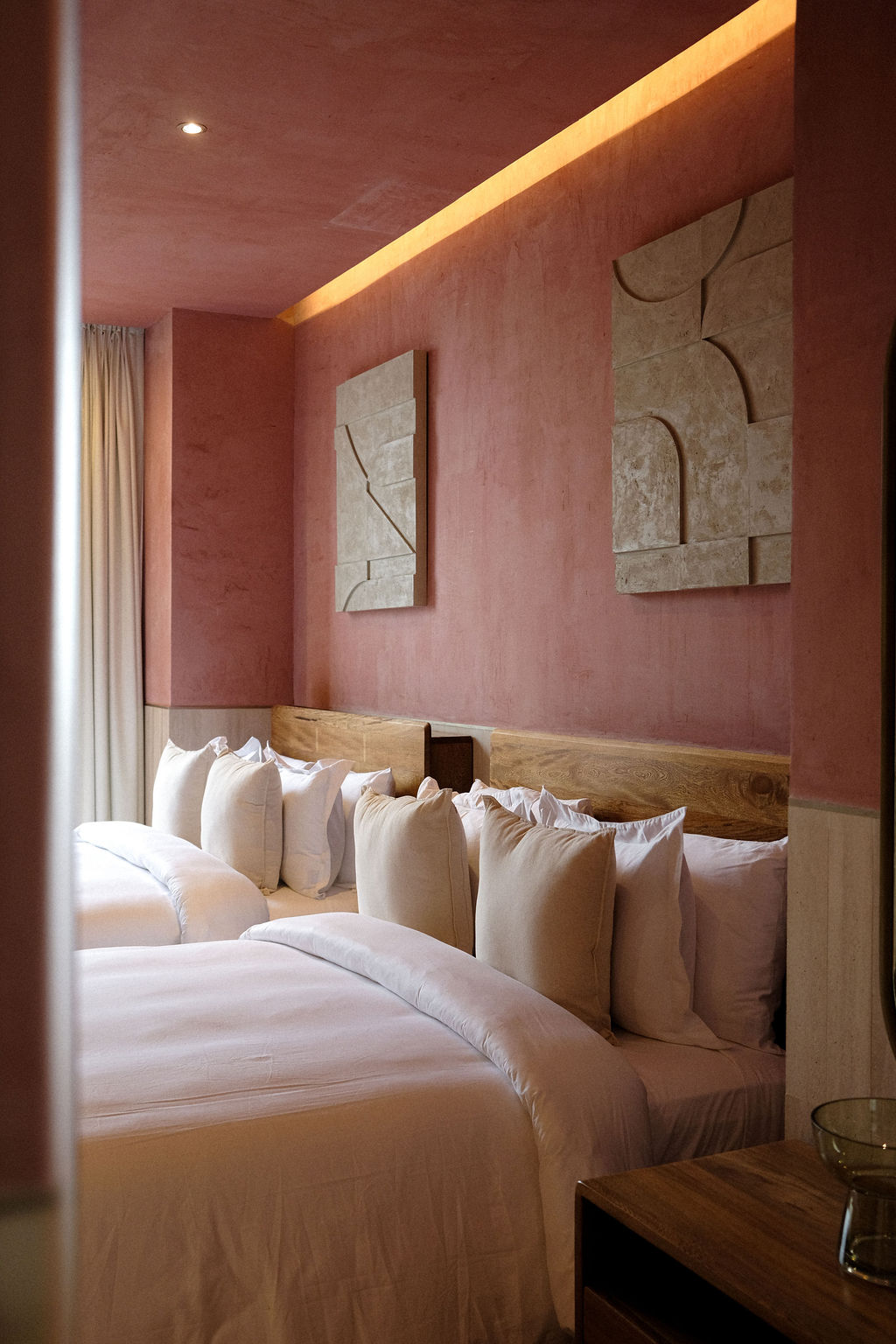
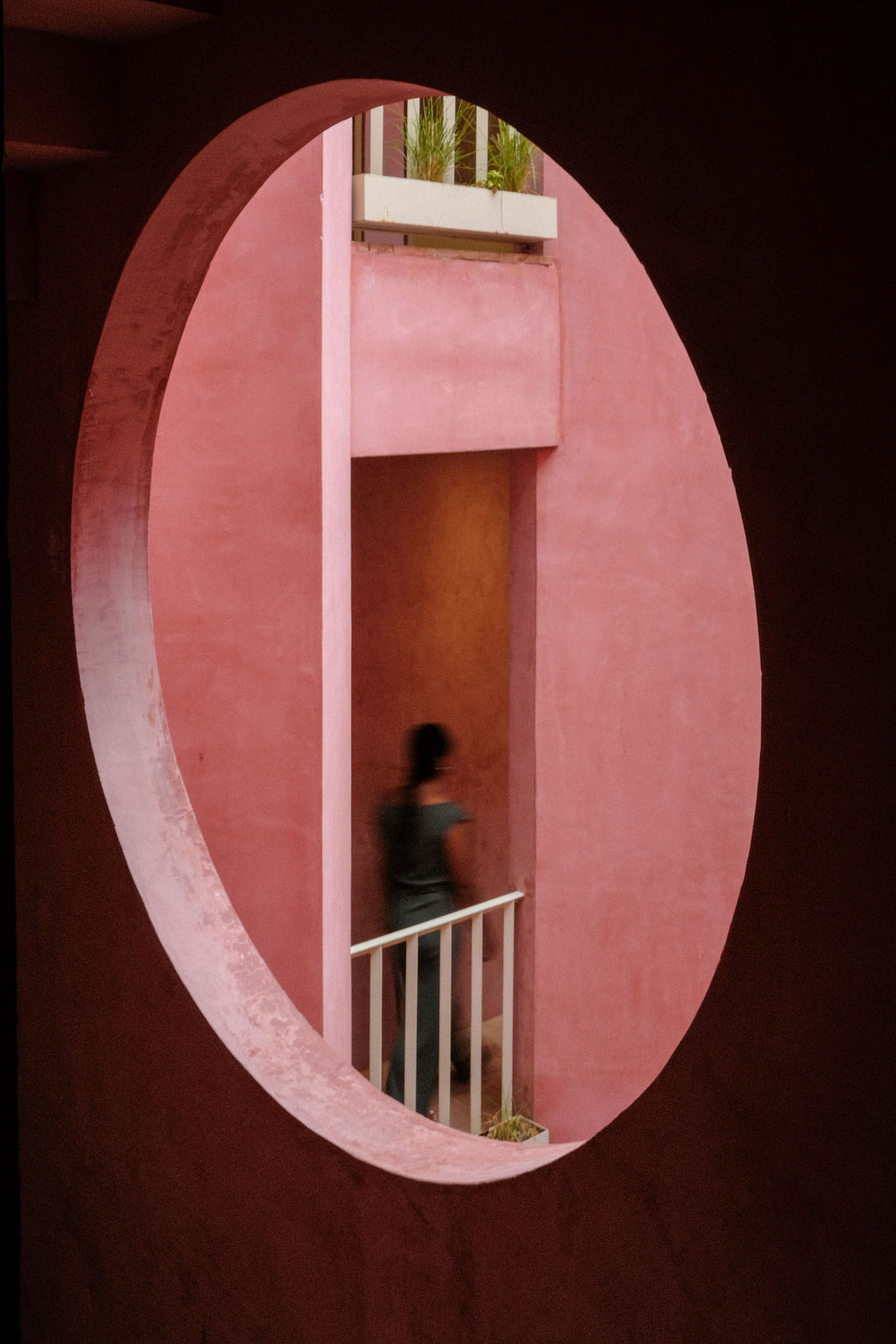
The staircases are particularly noteworthy, featuring circular openings that allow guests to look into the courtyard as they move between floors. These shapes create a playful visual link between the different levels. The use of handcrafted stucco and bold local colours gives the walls a tactile, timeless feel. The architects at RA! describe the project as an “urban piece” that is “deeply rooted in its urban and cultural context.”
Connection to the street
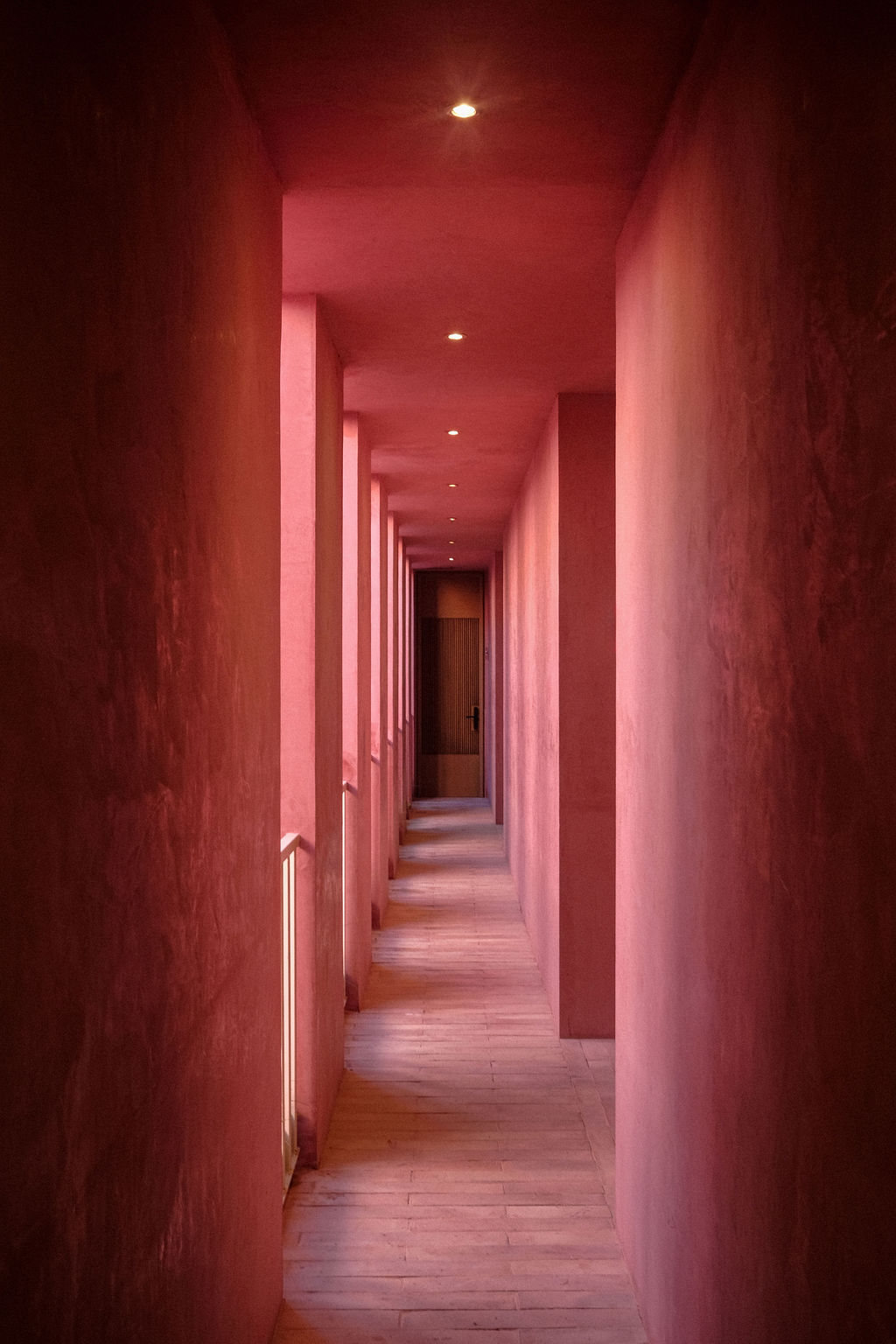
Rather than acting as a self-contained box, Laiva Plaza lets the life of the city flow through it. The design team has managed to soften the hard line between the public street and the private hotel room. By using local materials and traditional references, they have created a space that feels like it has always been there, even as it introduces a sharp, modern silhouette to the skyline. It is a project that values the street as much as the suite, making it a standout example of how to build in a historic city centre today.
Project info
Project: Laiva Plaza Hotel
Architecture company: RA!
Client: Grupo Laiva
Use: Hotel Boutique
Area: 1,557 m2
Location: San José del Cabo, B.C.S, Mexico
Year: 2026
Team: Santiago Sierra, Pedro Ramírez de Aguilar, Cristóbal Rámirez de Aguilar, Valentina Oregón, Carlos Fuentes, Oscar Salazar, Daniel Martínez, Andrés Rubín, Mateo Macouzet, Gustavo Cortés.
Photography: Oscar Hernández