




Header: Courtesy of the Pritzker Architecture Prize, photo by Cristobal Palma
Smiljan Radić Clarke is a Chilean architect based in Santiago, born into an immigrant family, with Croatian roots on his father’s side and British roots on his mother’s. This myriad of influences shaped his early sense of identity and belonging, which can be found in every project he works on.
“Sometimes, you have to produce your own roots. That gives you freedom.”
Smiljan Radić
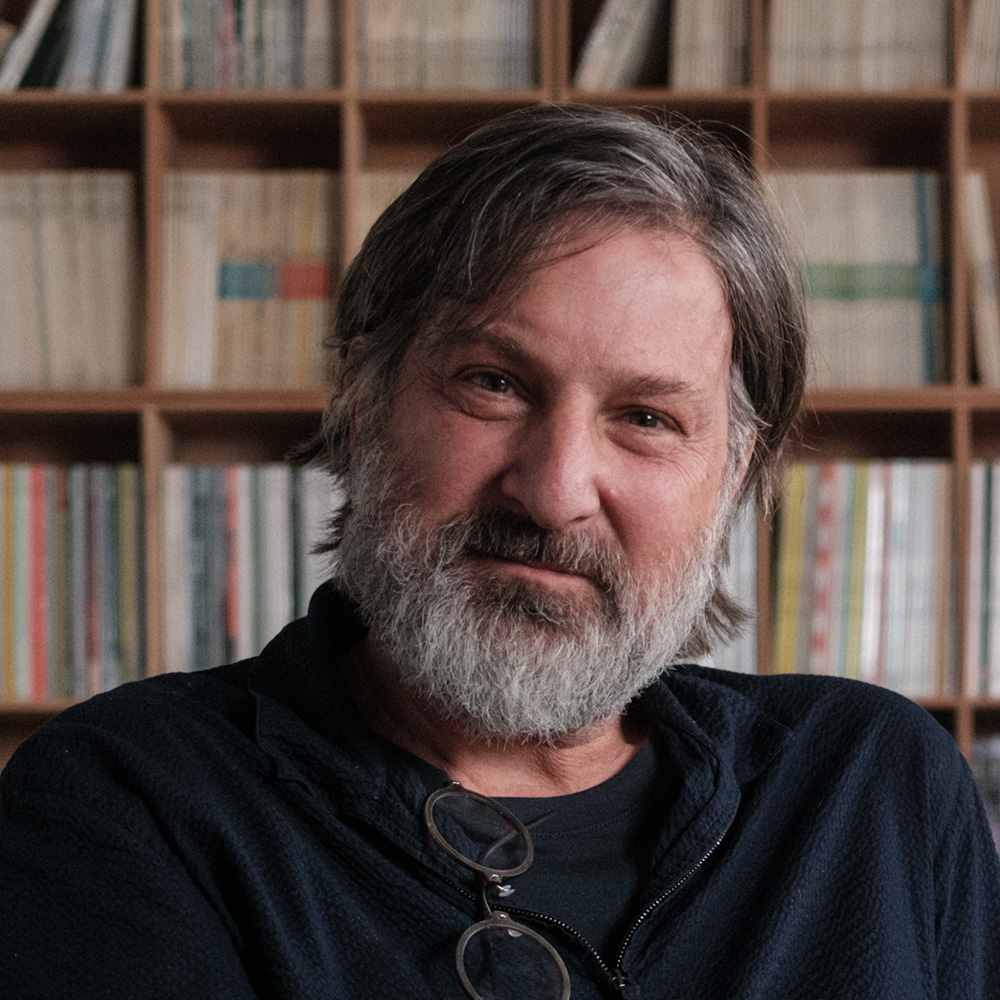
As a child, he spent much of his time drawing, having first encountered architecture at the age of fourteen through a school exercise. He went on to study at the Pontificia Universidad Católica de Chile, graduating in 1989 after an early setback in his final examination. That period led him to study history at the Istituto Universitario di Architettura di Venezia and to travel widely, experiences that became central to his approach to both life and work.
“Ideas inhabit things, I have always tried to build settings where others might discover emergent ideas.”
Smiljan Radić
Radić established his practice, Smiljan Radić Clarke, in Santiago in 1995. During his university years, he met the sculptor Marcela Correa, who later became both a client and his wife. Together they designed Casa Chica in Vilches in 1997, a 24-square-metre house built by hand in the Andes. Over time, his work expanded across houses, cultural and civic buildings, commercial projects and temporary structures. Among his best-known works are The Boy Hidden in a Fish, made with Correa for the 2010 Venice Architecture Biennale, and the 2014 Serpentine Pavilion in London.
“There is a complexity in enclosure: a shelter provides a distance from reality, whereas a refuge urges you to feel that the life inside is unique.”
Smiljan Radić
In 2017, Radić founded the Fundación de Arquitectura Frágil in Santiago, based in his home studio, as a platform for experimental architecture through exhibitions, workshops and shared research. His work has been shown internationally, and he has received a number of honours over the course of his career. In 2026, he was named the laureate of the Pritzker Architecture Prize, one of the highest honours in architecture, given each year to a living architect for significant achievement. He continues to live and work in Santiago.
Our favourite Radić projects
Casa Chica
Casa Chica, one of Radić’s first houses, was designed as a reference to his work and life with the sculptor Marcela Correa. The two designed it together in Vilches in 1997 as Correa’s first house, a 24-square-metre structure built by hand in the Andes. The materials and forms gave an early glimpse of the small, rough constructions that would continue appearing in Radić’s work: a one-room dwelling made from granite slabs, with reused doors and windows set into a very compact envelope.
Radić later wrote that the house had been made for a very specific moment in life and that its sense of permanence was partly artificial. After around ten years of use, he and Correa left it and moved about forty metres away to an older, larger house on the same site. Casa Chica was built from stone, steel, glass and timber, with many of those parts having simply been found, gifted or gathered over time.
Pite House
Pite House in Papudo was designed between 2003 and 2005 as a large coastal house spread across a steep site above the Pacific. In a creative move, Radić used almost the whole terrain for 400 square metres of habitable space, letting the slope and the areas of the site define different parts of the house. A central ramp links the parking terrace to the main living spaces, the guest room and service areas can be found behind a retaining wall, and a separate volume for the children is located eighteen metres lower down the cliff. The main materials used throughout the house are reinforced concrete, glass, demolition timber and travertine.
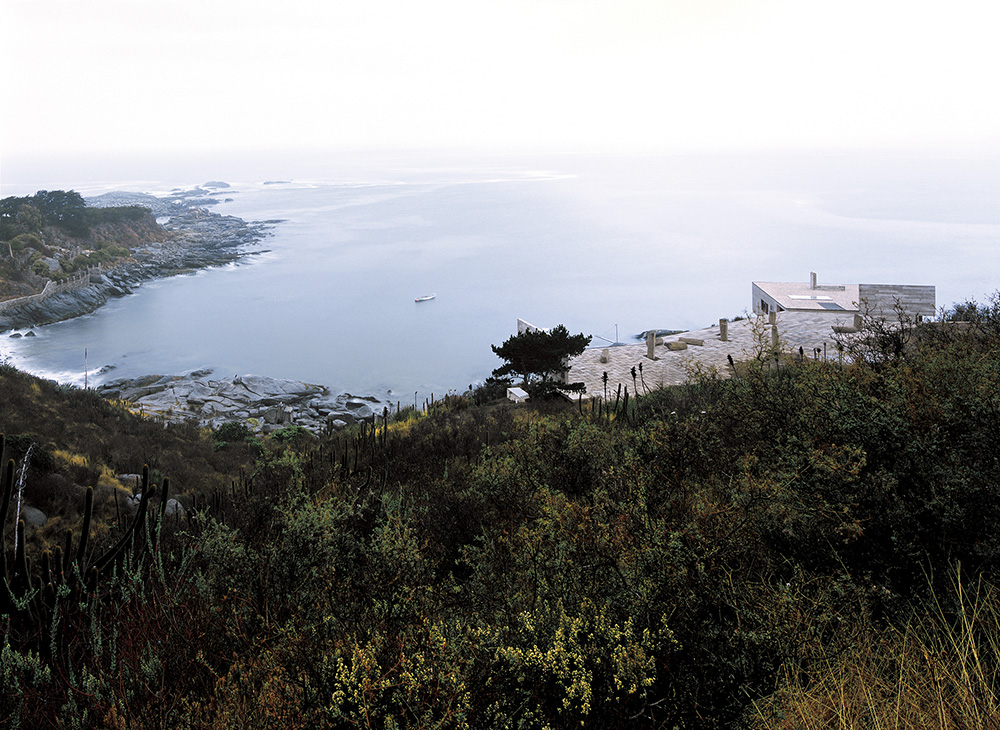
Photo credit: Cristobal Palma
Marcela Correa’s influence is especially present in this home: eleven monumental rocks were carefully sculpted, each between three and nine tonnes, and set on forty metres of concrete paving to form a kind of veil in front of the house. The clients had asked for this screen, but it also gave Radić a way to better connect the building, both physically and visually, to the geological conditions of the site.
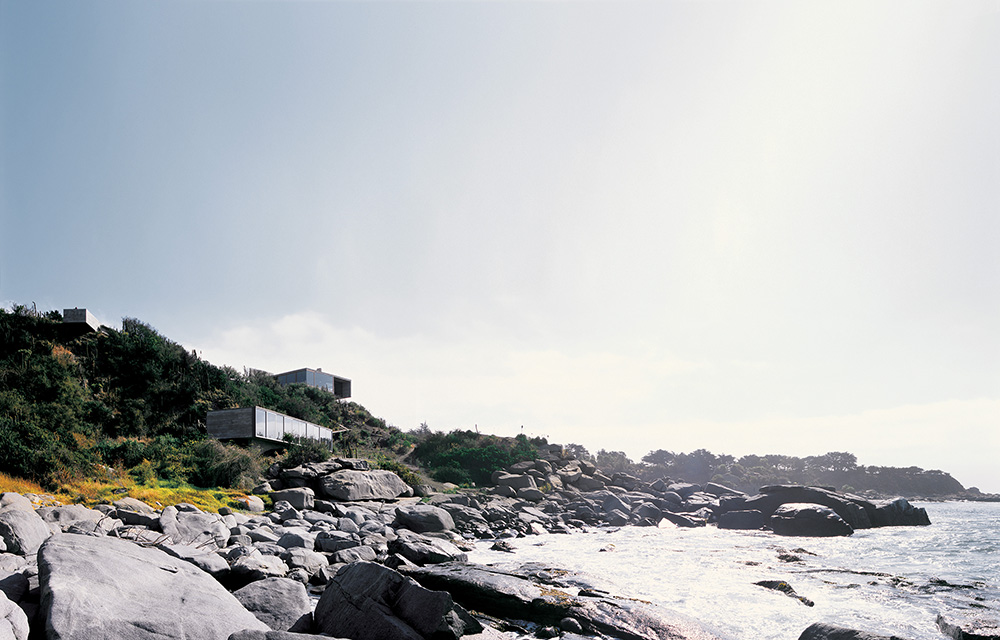
Photo credit: Cristobal Palma
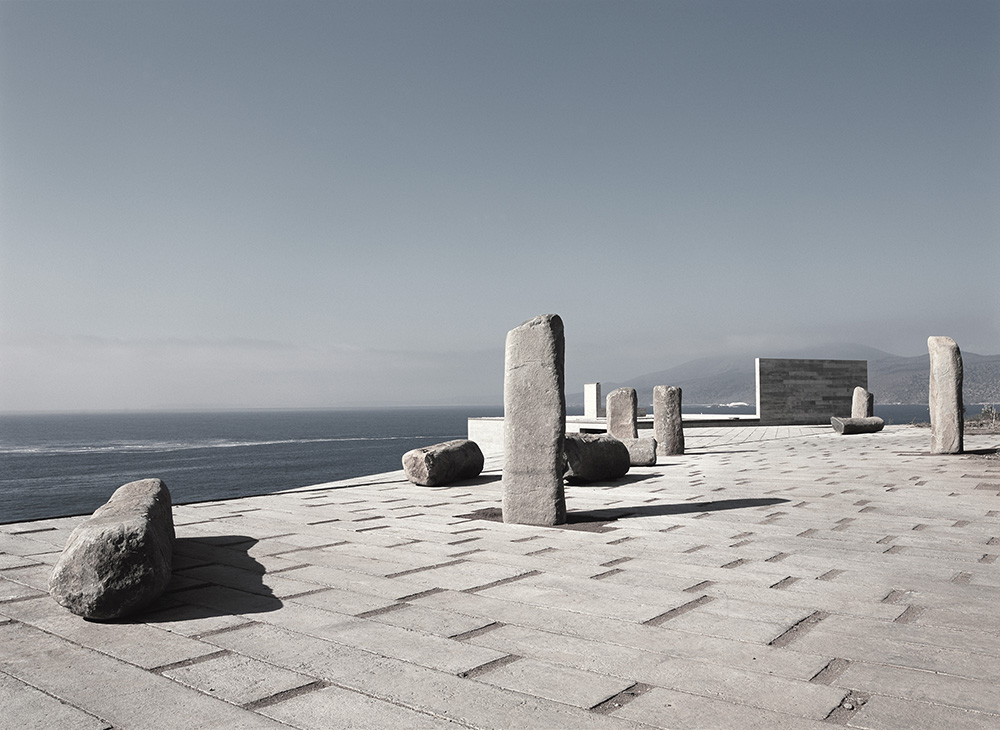
Photo credit: Cristobal Palma
Restaurant Mestizo
Restaurant Mestizo began with a competition win in Santiago in 2005 for a restaurant in Las Américas Park, now part of the Bicentenario Park area, which was completed in 2007. The first model was made with a child’s inflatable float for the roof membrane, industrial irrigation beams for lateral support, and four granite blocks of around fifteen tonnes each as dead weights. The client accepted the improvised model, but Radić and his team assumed the authorities would reject a restaurant built from something so visibly temporary, so the plan was reworked into a black reinforced-concrete roof of beams and slabs.
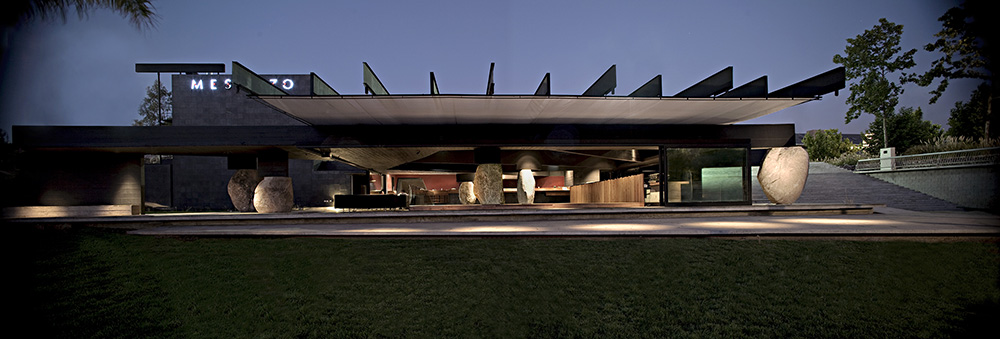
Photo credit: Gonzalo Puga
What stayed intact from the first idea was the relation between the roof and the stone. Granite blocks from the quarry were placed as structural supports, some as much as eleven metres apart, so that the natural rocks would appear to belong to the garden rather than the building. Radić later compared the move to Lubetkin’s use of caryatids at “Highpoint II“, except that, here, the supports are Andean granite. It was also said elsewhere that, with Correa, he was simply trying to bring the park and its lagoons into the work.
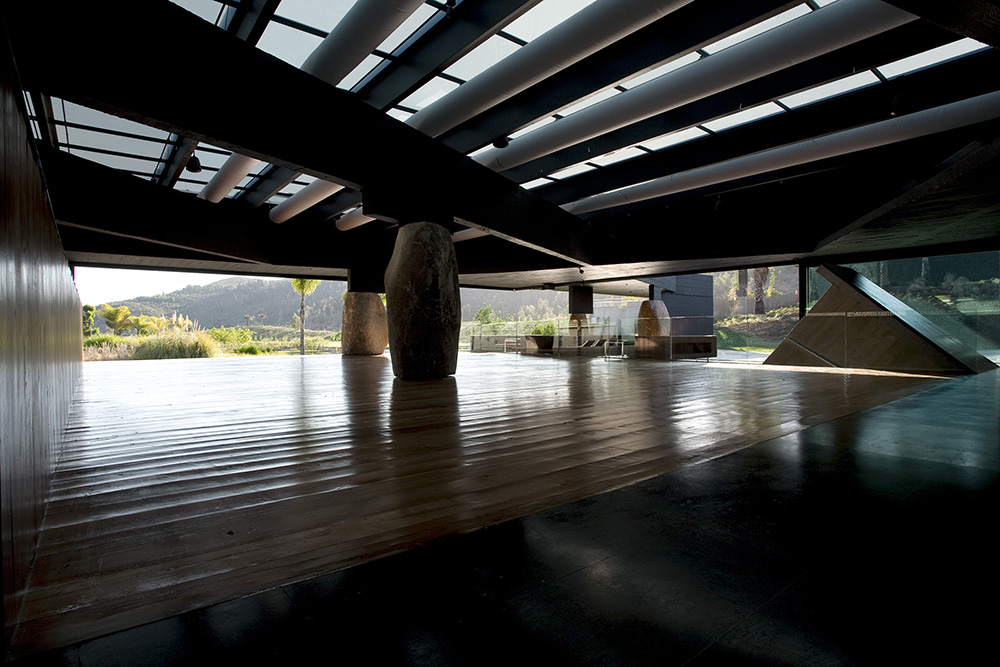
Photo credit: Gonzalo Puga
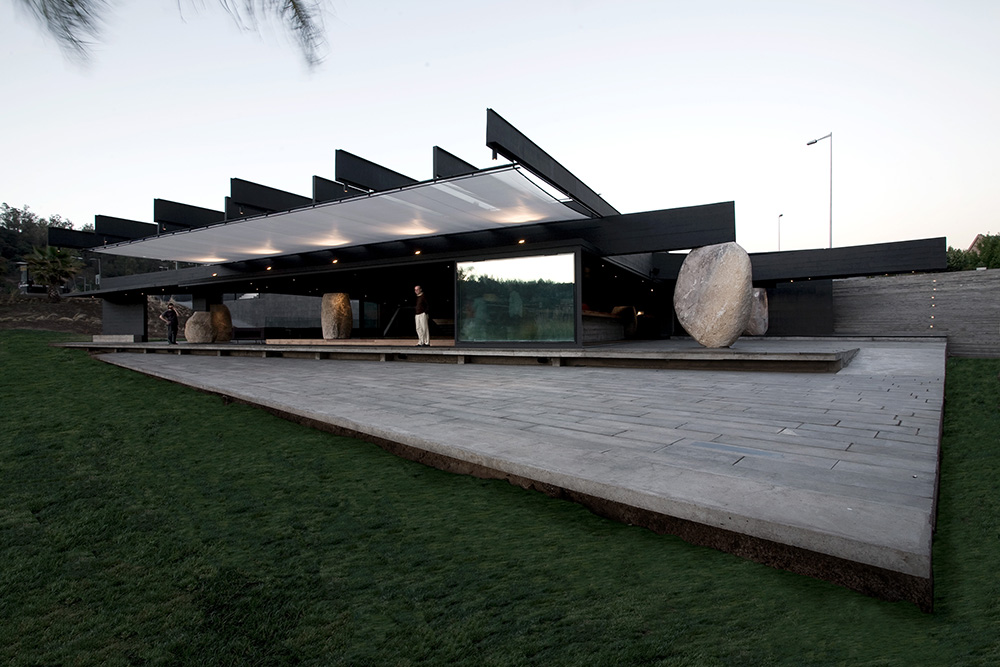
Photo credit: Gonzalo Puga
The Boy Hidden in a Fish
Made with Correa for the 12th International Architecture Exhibition in Venice in 2010, The Boy Hidden in a Fish can be defined as a public introduction to his work, as guests stumbled upon it right at the entrance to the Arsenale. This design was born from Radić’s interest in the idea of refuge created by architecture, which, put simply, englobes the protection of the body by the built, surrounding structure.
This interest is deeply connected to the need for protection after the 2010 Chile earthquake, with Radić later connecting it to David Hockney’s etching “The Boy Hidden in a Fish“, itself drawn from the Brothers Grimm. In the Venice version, a large granite rock was transported to the Arsenale and opened with a perfumed cedar refuge inside, sized to feel more like a hideout than a room. That relation between a heavy outer shell and a protected inner chamber would return in several later works.
Vik Millahue Winery
The winery can be found in the Millahue Valley, and much of it is buried underground, while, above ground, a transparent PTFE roof stretches across the production spaces like a long white wing. Approaching the building, visitors cross granite paths over a shallow plane of running water, with a stone installation by Radić and Correa laid through the forecourt. The site itself was used to support the building and its functions: the underground barrel rooms are cooled by the valley and by the water above them, while daylight enters through the roof.
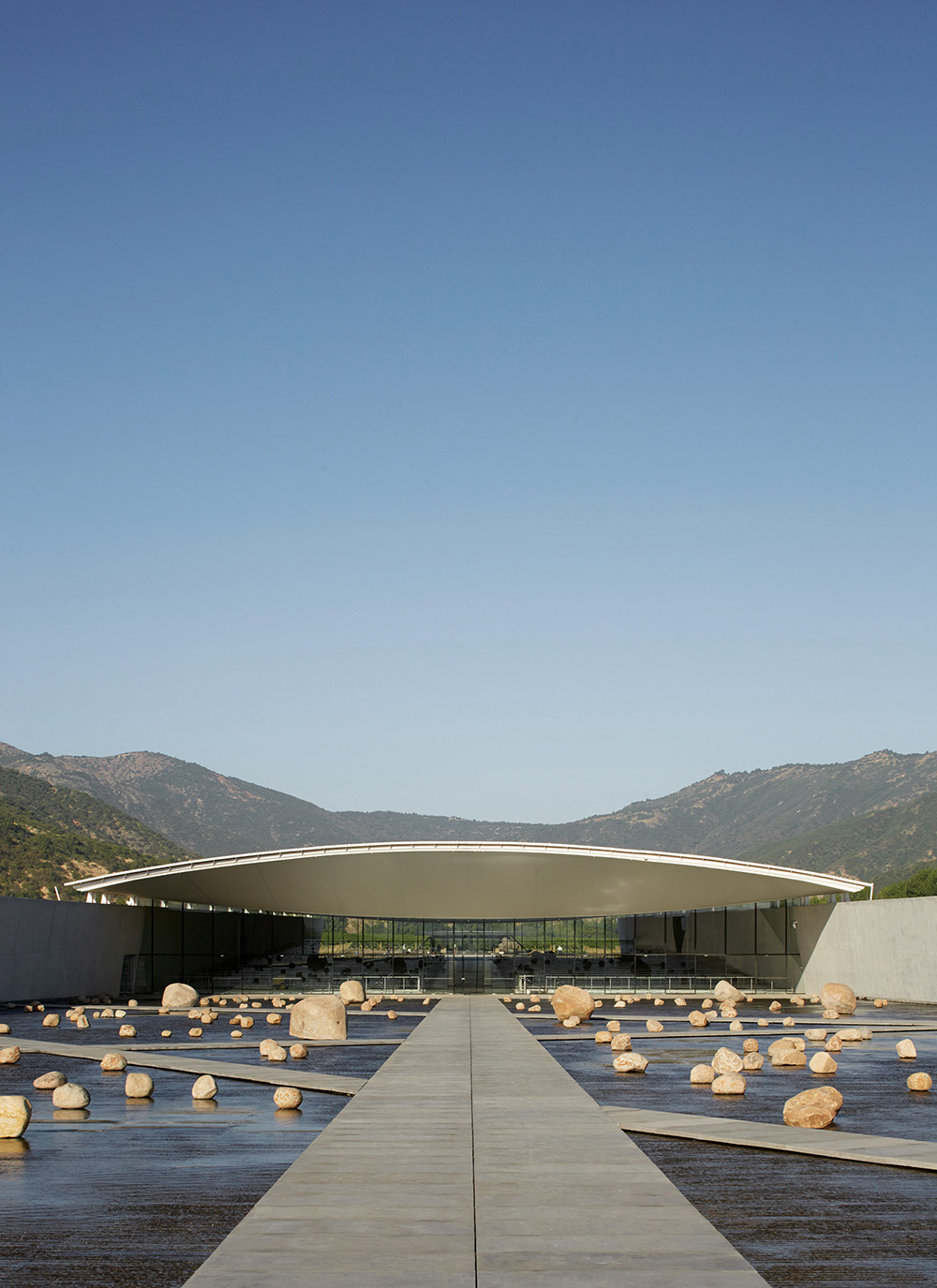
Photo credit: Cristobal Palma
The roof was one of the more complex parts of the project Birdair designed and built the steel and membrane system, using eleven lenticular steel trusses lined with inner and outer PTFE layers. The outer skin provides weather protection and helps control solar gain, while the inner layer improves acoustics and hides the steel frame. Radić later said the success of this roof led him towards another iconic project in the south of Chile, which became Teatro Regional del Biobío.
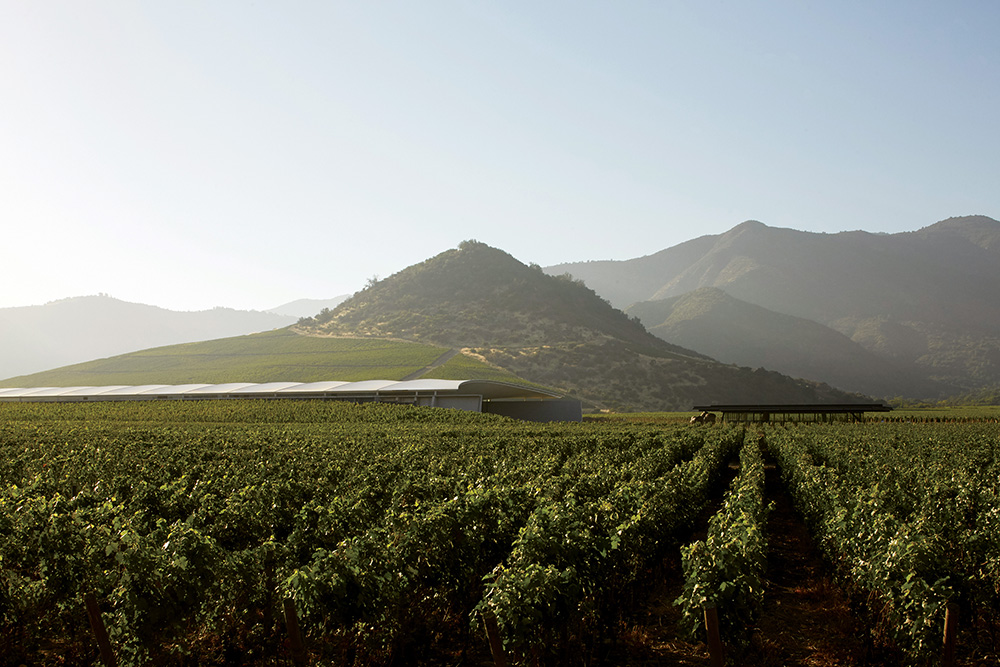
Photo credit: Cristobal Palma
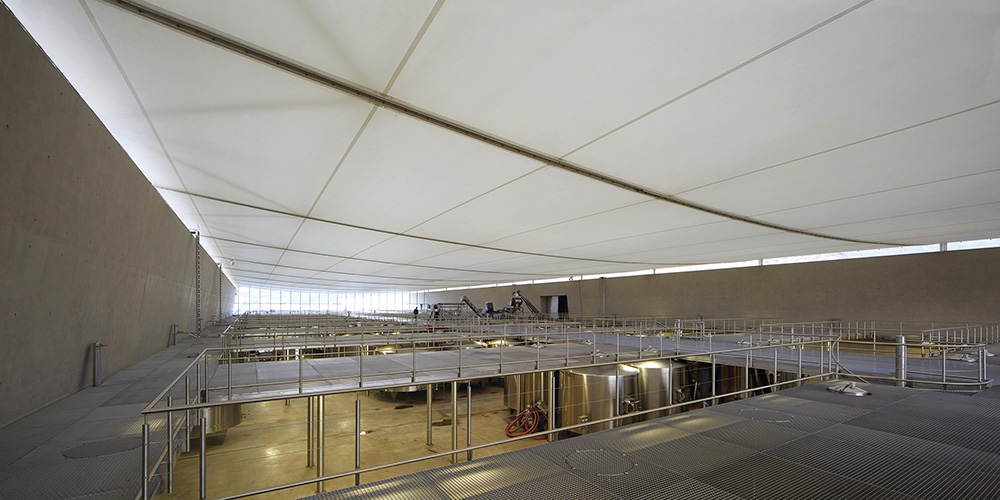
Photo credit: Cristobal Palma
Teatro Regional del Biobío
Teatro Regional del Biobío is located on the bank of the Biobío River in Concepción and was developed after Radić, working alongside Gabriela Medrano and Eduardo Castillo, won the 2011 competition for the project. The building is a six-storey performing arts centre of nearly 10,000 square metres, with a 1,200-seat main auditorium and a 250-seat chamber hall. Enclosed by a semi-translucent PTFE skin stretched over a light structural frame, by day it looks like a pale box and by night like a lit lantern.
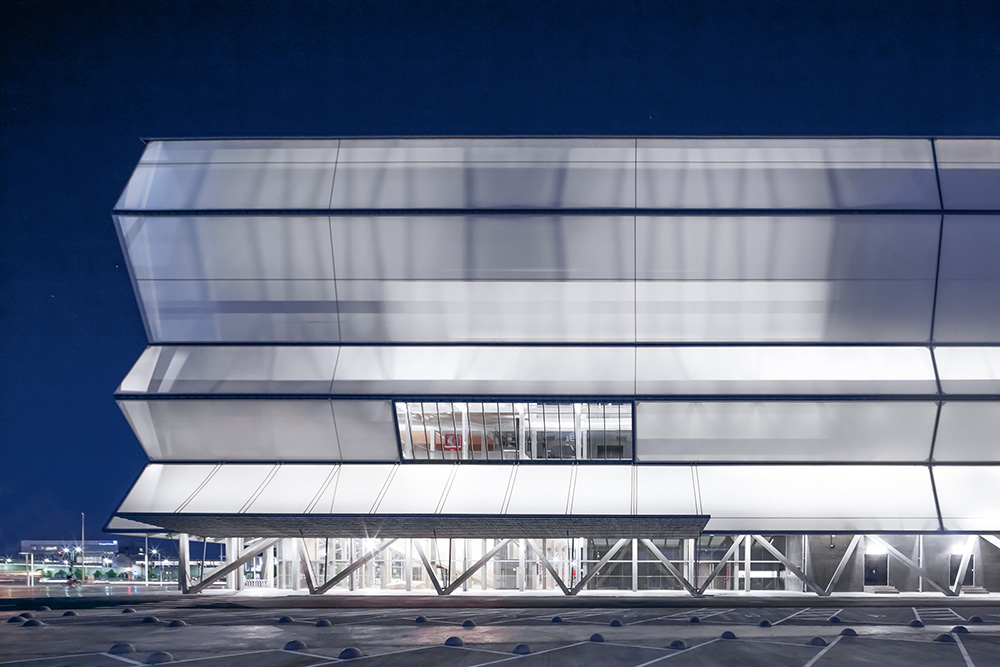
Photo credit: Cristobal Palma
Because of the riverbank site, the building has no deep foundations or basement; instead, it stands on compacted sand on a 30-centimetre concrete slab with reinforced perimeter beams. In Radić’s own recollection, the theatre is described as the skeleton of a wrapped building, with the visible grid, circulation and support structure made visible instead of being hidden behind finished surfaces.
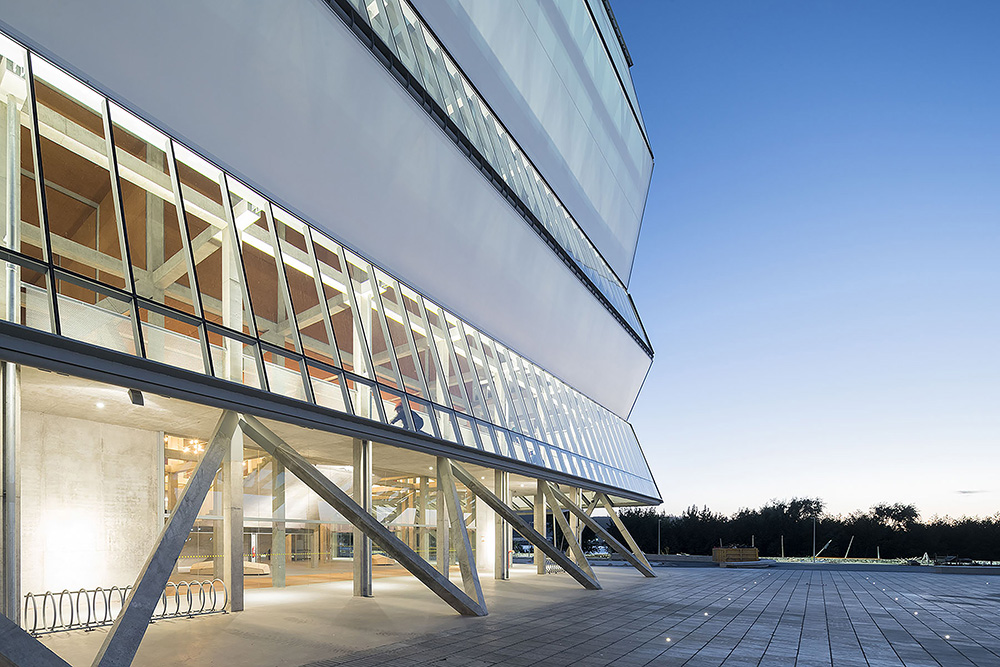
Photo credit: Iwan Baan
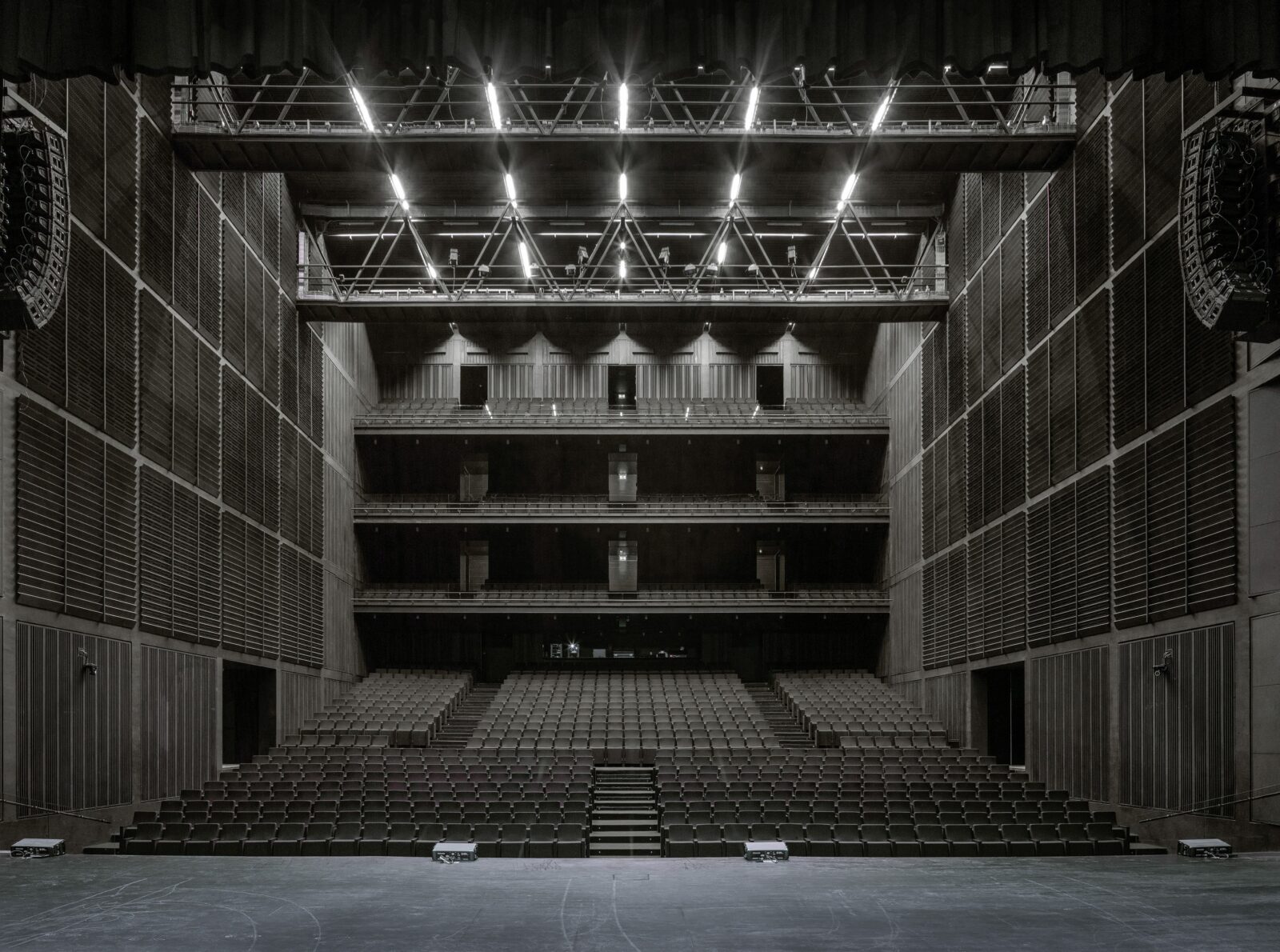
Photo credit: Hisao Suzuki
Serpentine Pavilion
Radić’s 2014 Serpentine Pavilion in London took the form of a semi-translucent shell raised on large quarry stones, covering about 350 square metres on the Serpentine lawn. This was a temporary public structure with openings in its curved shell and a café inside. As Radić’s first built project in Great Britain, it is considered one of the propellers of his career beyond Chile.
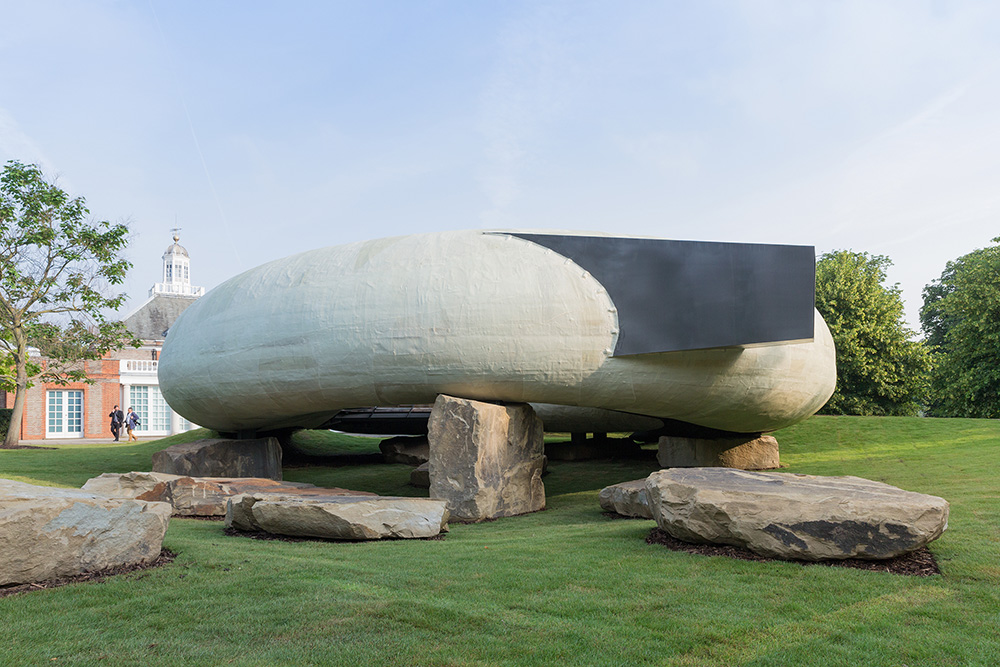
Photo credit: Iwan Baan
The design was born from the architect’s own understanding of his earlier experiments. Serpentine is linked to “The Castle of the Selfish Giant“, a papier-mâché model inspired by Oscar Wilde, and to Restaurant Mestizo, where parts of the roof also rest on stone. Radić has since said that he wanted the pavilion to carry the feel of those taped and pasted models, even at full scale, and he went to the quarry himself to choose stones of the right size so the shell would appear to float.
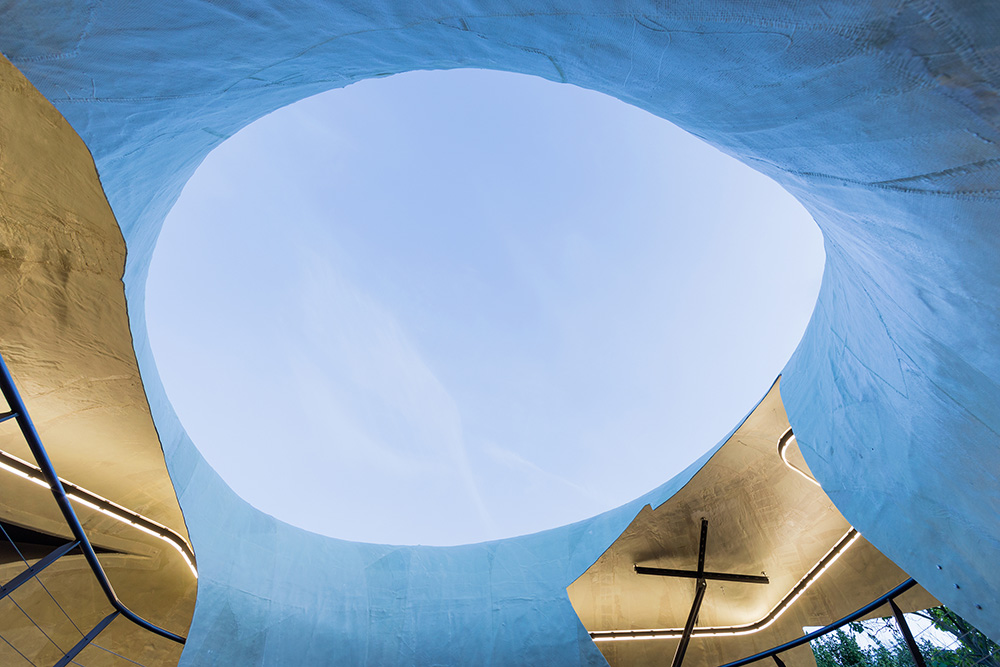
Photo credit: Iwan Baan
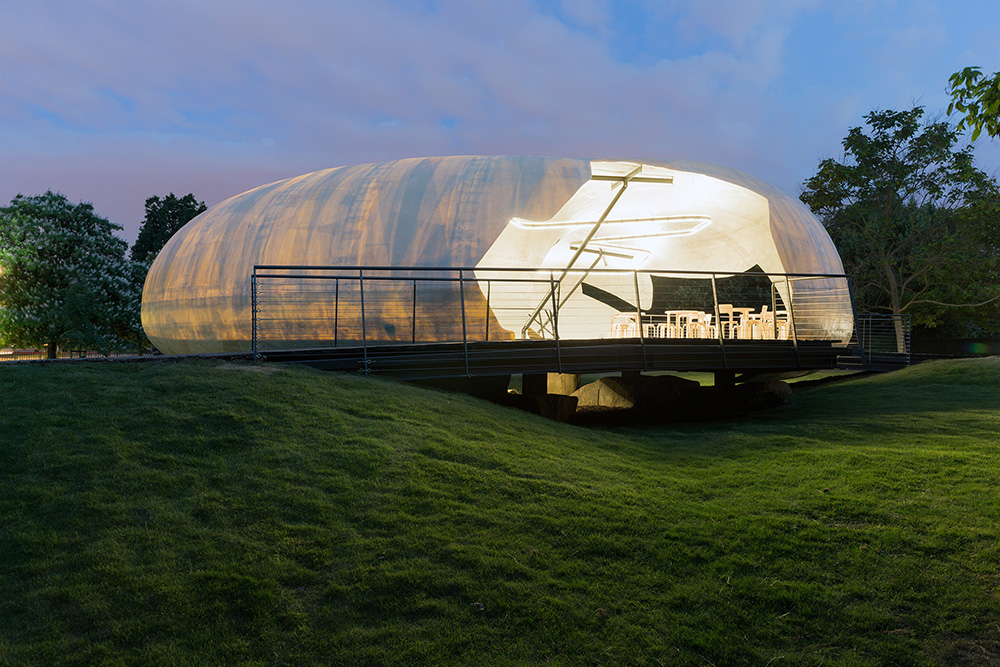
Photo credit: Iwan Baan
House for the Poem of the Right Angle
The House for the Poem of the Right Angle in Vilches was developed for Marcela Correa, with its cedar model having been first shown in 2010 at the Global Ends exhibition in Tokyo. Radić referenced both Le Corbusier’s “Poem of the Right Angle” and “The Boy Hidden in a Fish” in this project, having conceived the house with an opaque reinforced-concrete exterior and a calm cedar interior. Later, the project entered MoMA’s collection as a model and appeared in the museum’s “Endless House” exhibition.
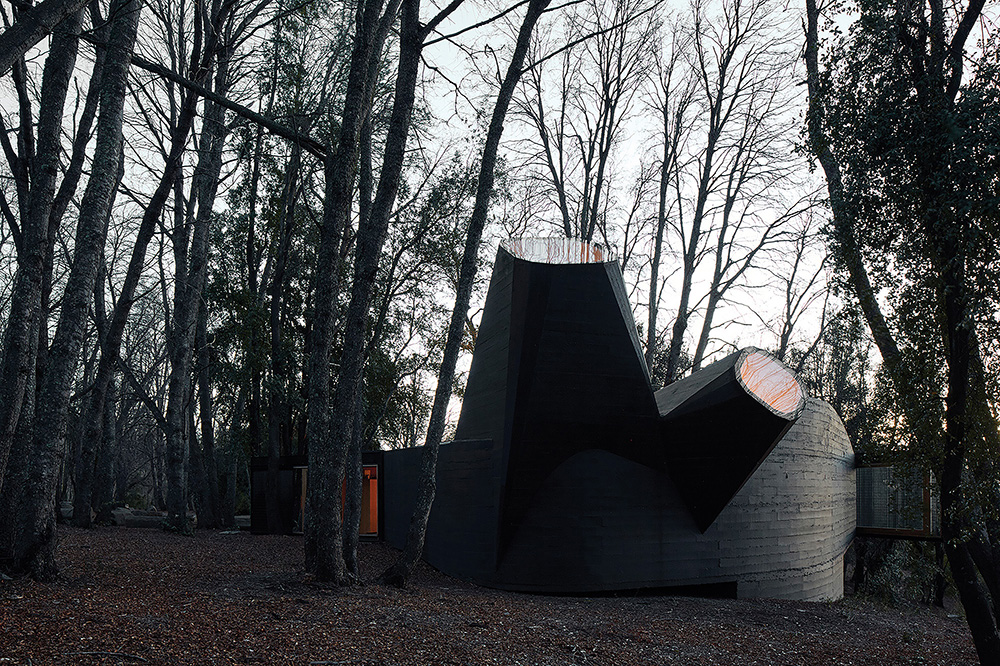
Photo credit: Smiljan Radić
The main structure is a reinforced-concrete vault only 12 centimetres thick, spanning up to 15 metres and resting on perimeter walls, with the edge cut irregularly to leave an open courtyard inside. The house sits in an oak forest and faces the mountains, while an artificial garden of 300 basalt stones extends the work into the ground around it. The upward-facing opening catches light and time, abiding by the architect’s longstanding interest in enclosure and thickness, trading common panoramic plans for intentional natural light.
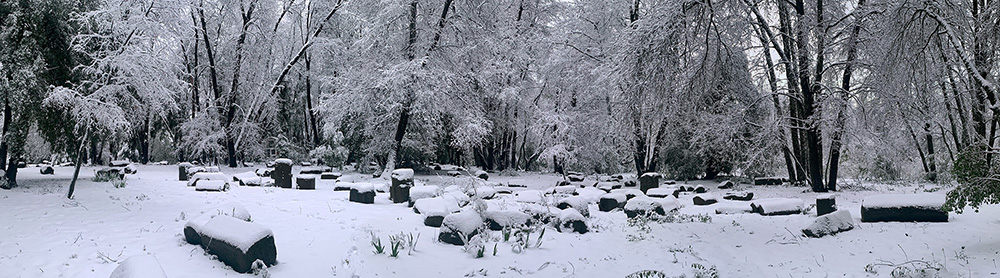
Photo credit: Smiljan Radić
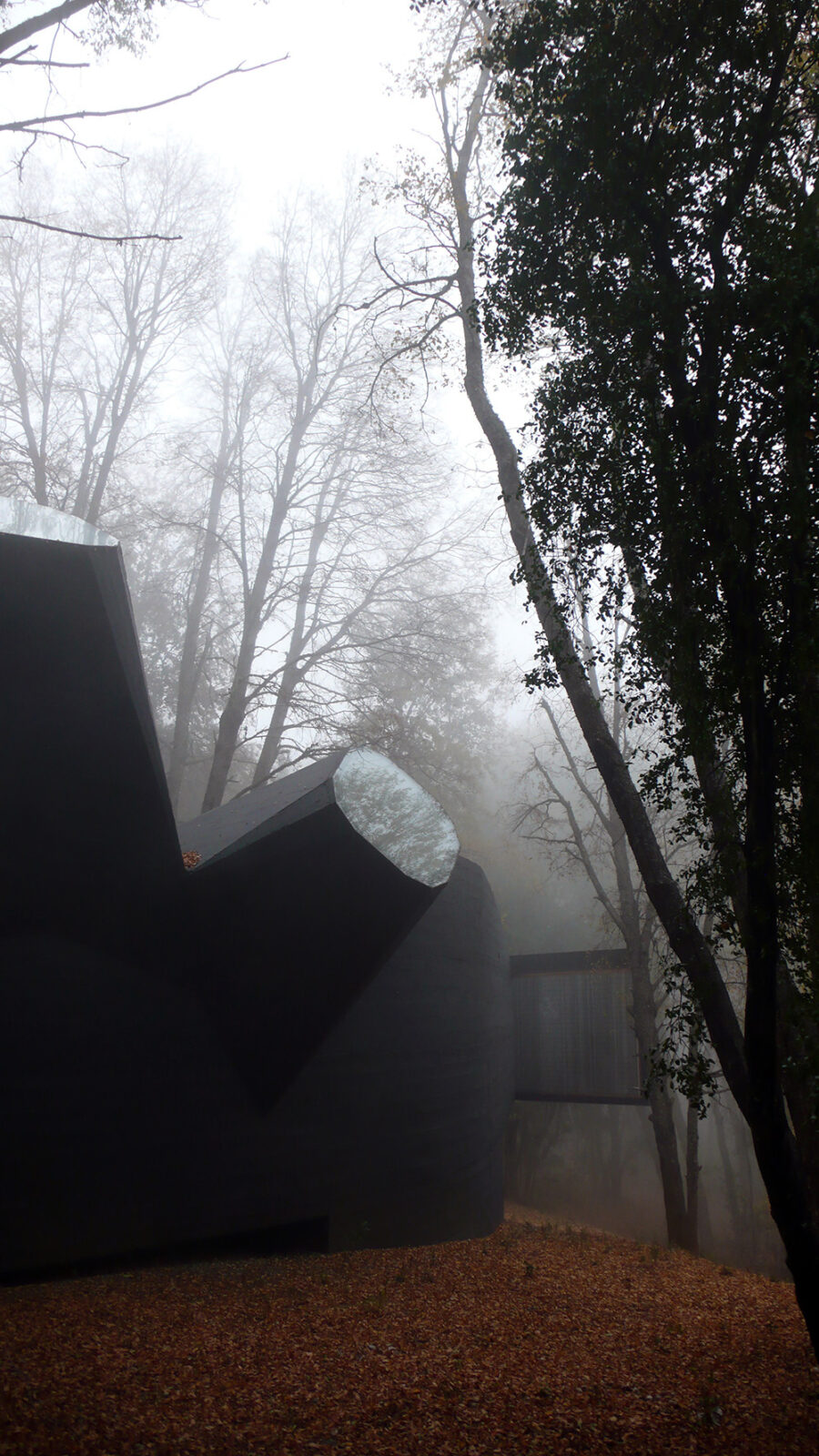
Photo credit: Smiljan Radić
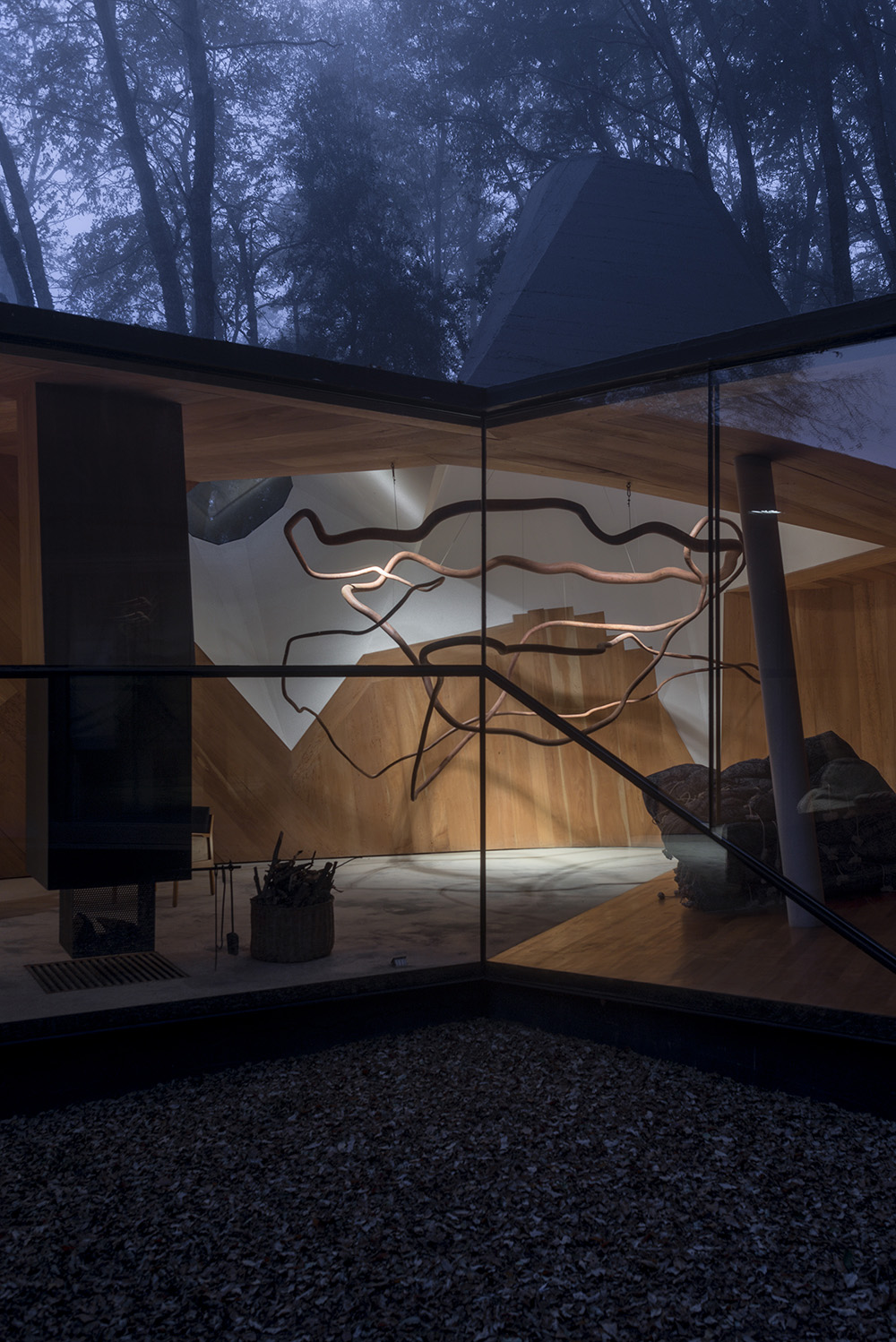
Photo credit: Gonzalo Puga
Throughout his career, Radić has shown a consistent way of working, having continuously chosen to include his interest in refuge, favourite materials and creative mindset in his projects, no matter their scale or purpose. His lifelong collaboration with the sculptor Marcela Correa, his wife, can’t be removed from this story, as she is able to read through the lines and see the hidden possibilities that can be found in stone, landscapes, the arts and her husband’s mind. With the 2026 Pritzker Architecture Prize, Radić’s work has received its biggest recognition yet, marking a long career where art and architecture are never quite separated.


