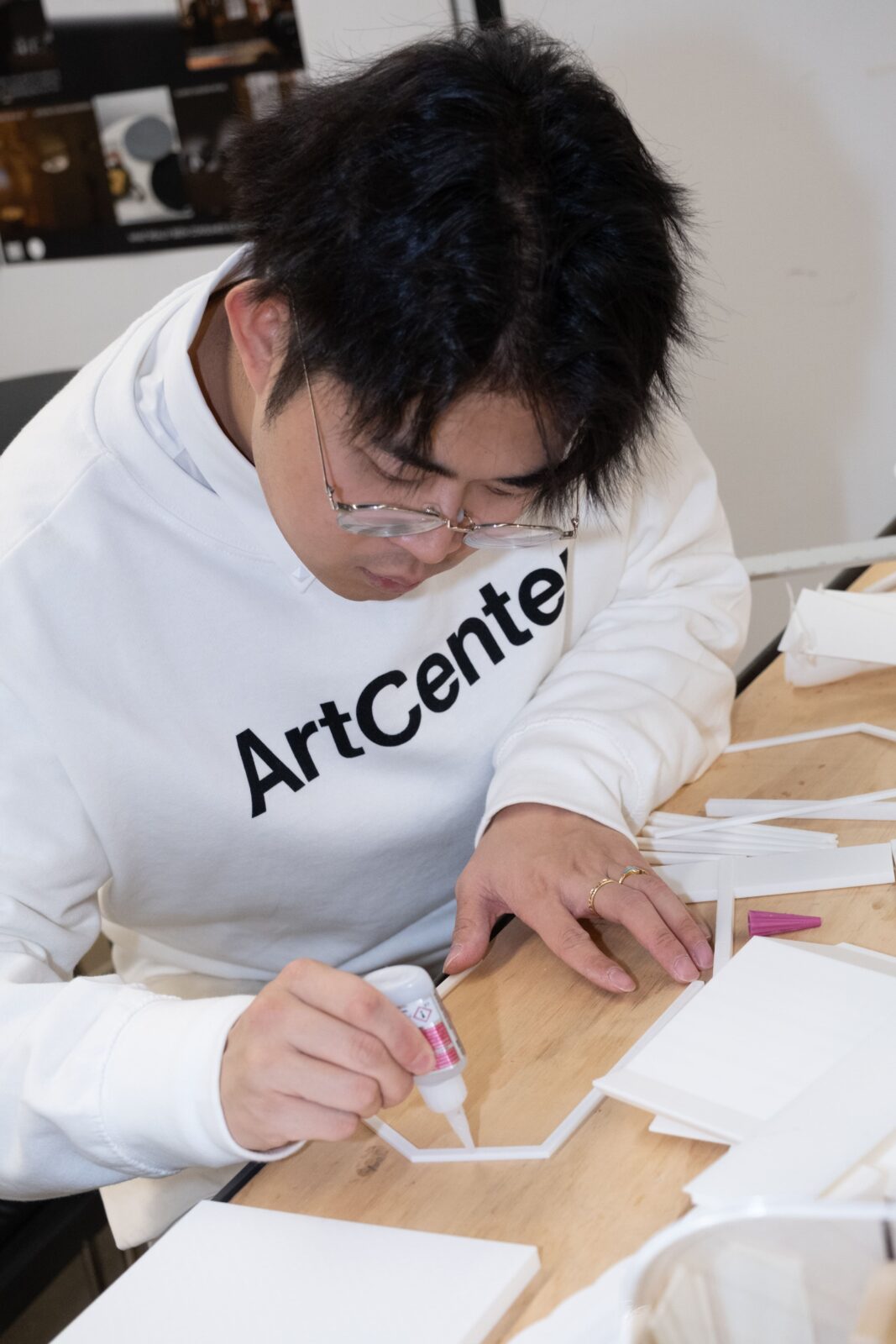
Header: Courtesy of Zeming Zhu
What happens when you mix the delicate flavours of eastern China with bespoke perfumery in the heart of Los Angeles? For Zeming Zhu, a graduate of the Art Center College of Design, the answer is an innovative restaurant concept designed to help people escape the pressures of modern life. Named The Etherea, this spatial concept uses food, aroma, and nature to build a quiet sanctuary in the middle of the busy Melrose neighbourhood. The project has already caught the attention of the international community, earning Zhu the title of Emerging Interior Designer of the Year for Eating Space at the LIV Hospitality Design Awards.
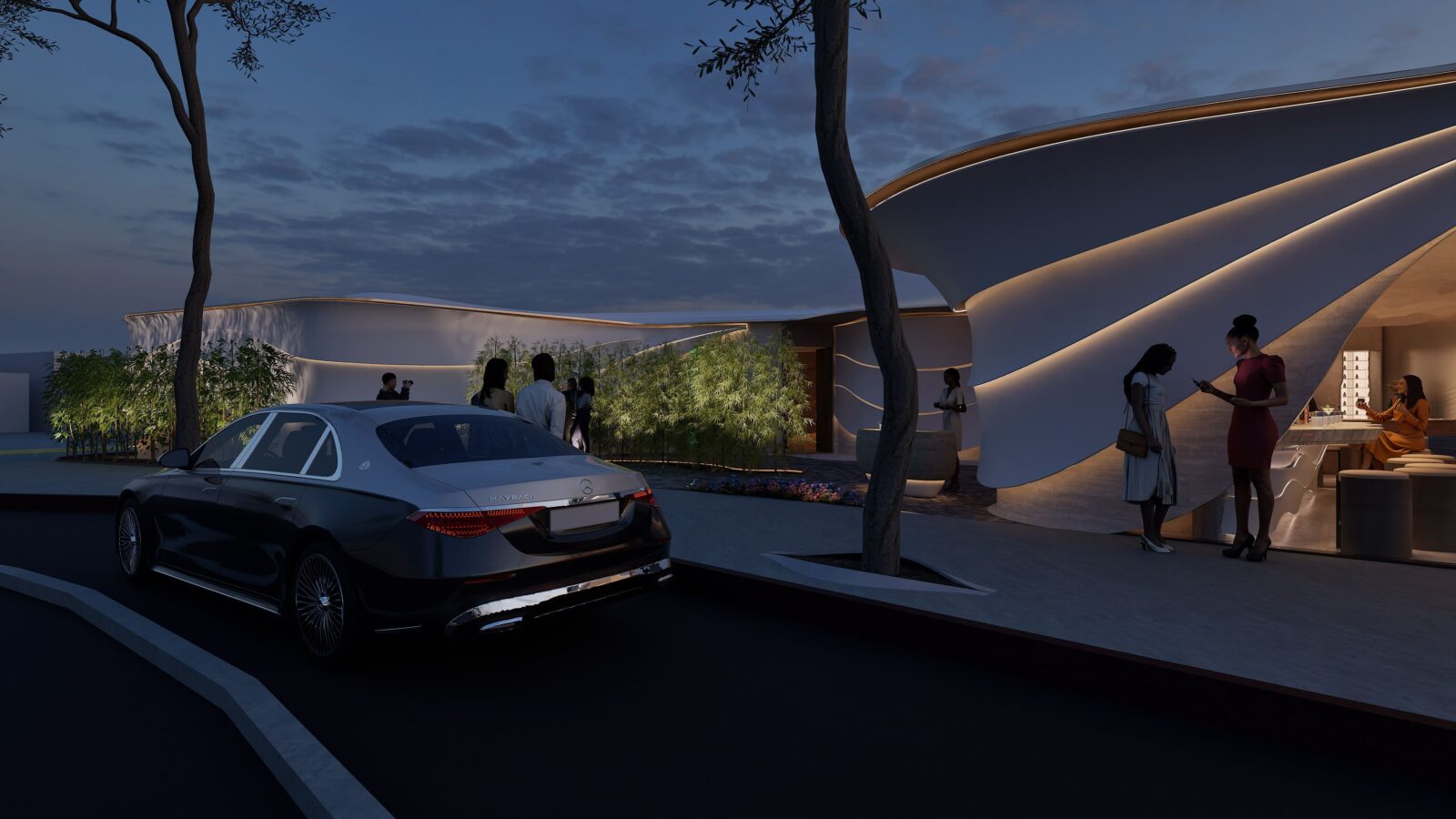
Zhu’s vision goes far beyond a typical night out. By pairing the natural fragrances of Suzhou cuisine with customised perfumes, the project treats dining as a form of sensory storytelling. Organic furniture shapes, flowing architectural lines, and bamboo elements work together to slow visitors down the moment they walk through the door. In this interview, Zhu talks about how personal memories shaped the project, how to keep food aromas from clashing with bottled perfumes, and what it feels like to receive major global recognition before even launching a commercial career.
The Etherea combines Suzhou cuisine with bespoke perfumery. Can you tell us about the specific “warm memory” from your own life that inspired this unique concept?
When I envision the Etherea space, I would like to create an unforgettable memory for the guest. In my own experience, I remember lots of different scents, from food, nature or a certain piece of memory. Etherea uses scents and taste as a medium to guide people through a unique memory. Suzhou cuisine is significant in its various fragrances from ingredients, and it is a cuisine that uses scents to mimic a sense of environment in the local Suzhou region. Therefore, I combine this cuisine and perfume culture to create the “memorable moment.”
You describe the restaurant as a “sensorial narrative.” If a guest walks in for the first time, what is the very first thing you want them to feel, see, and smell?
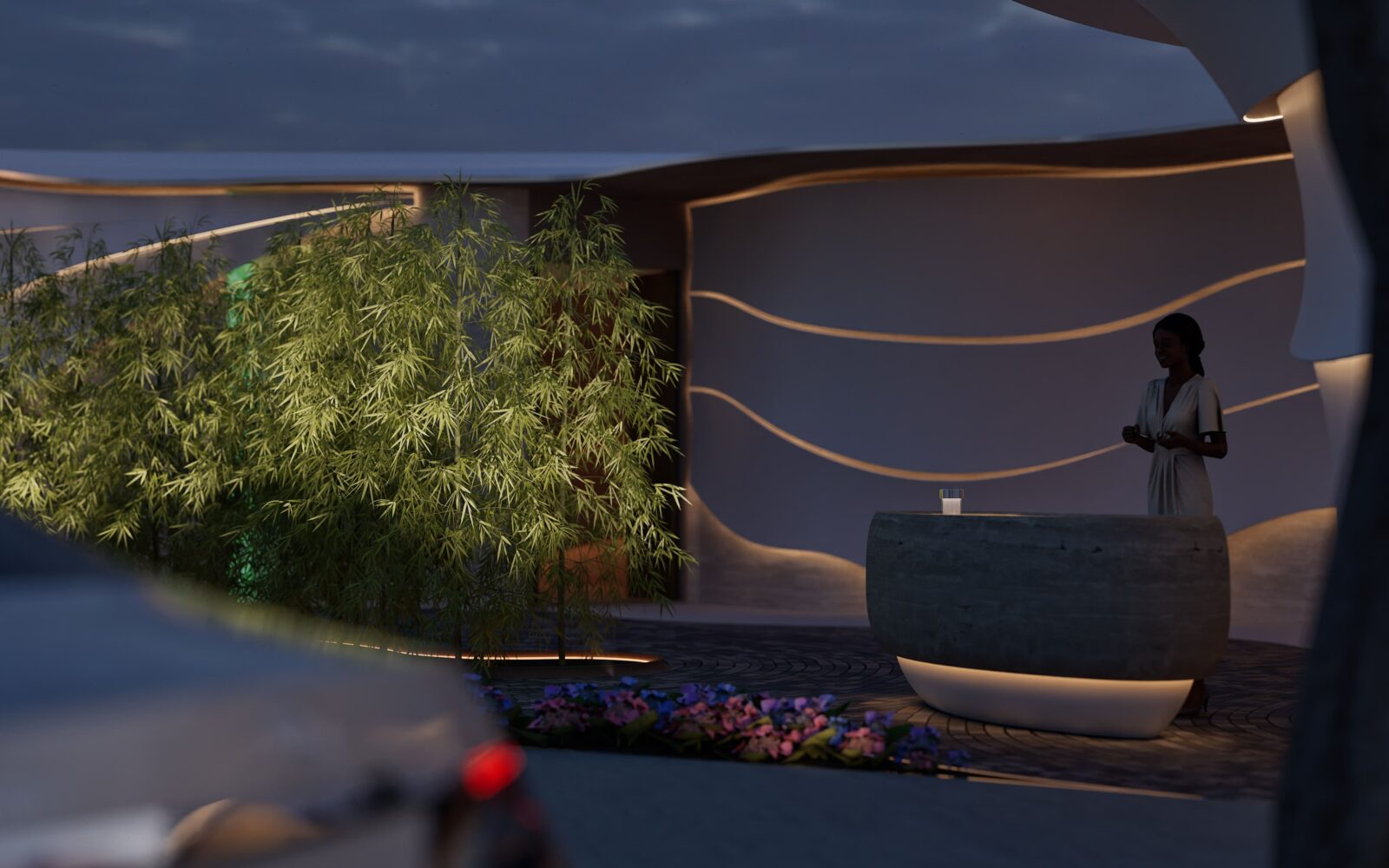
The guest would feel slowed down and wander into this sanctuary that is curated by various scents. They will feel peaceful and calm at first, seeing the bamboo, natural materials and flowing forms of space, and smelling the scents of nature and various perfumes. These elements create an environment that is both intriguing and tranquil.
You’ve mentioned that this space is meant to help people struggling with pressure. How can a dining room actually help someone heal from the stress of modern life?
In modern life, people face an overwhelming amount of information and rapidly changing surroundings. This disconnection from nature and people’s familiar environment would cause pressure. Etherea is a place that uses scent therapy throughout the dining experience, inviting guests to experience scents that feel like a piece of memory or nature. During this reconnection with nature and the memory process, people will feel relaxed and comfortable. The food, scents, and environment work together to create a safe and tranquil nature for people to slow themselves down and ultimately relieve the pressure.
As a student at the Art Center College of Design, what was the most important lesson you learned that helped you shape the identity of The Etherea?
At Art Center College of Design, we learned to design for change, not only to create a good-looking space, but also to create a future scenario and a solution to better shape the world. Therefore, I try to use spatial design to create a future experience to inspire people on the possibilities of hospitality space and dining ritual.
Your project is located in Los Angeles but features Suzhou-inspired cuisine. How did you blend the fast-paced energy of LA with the traditional, poetic nature of a Suzhou garden?
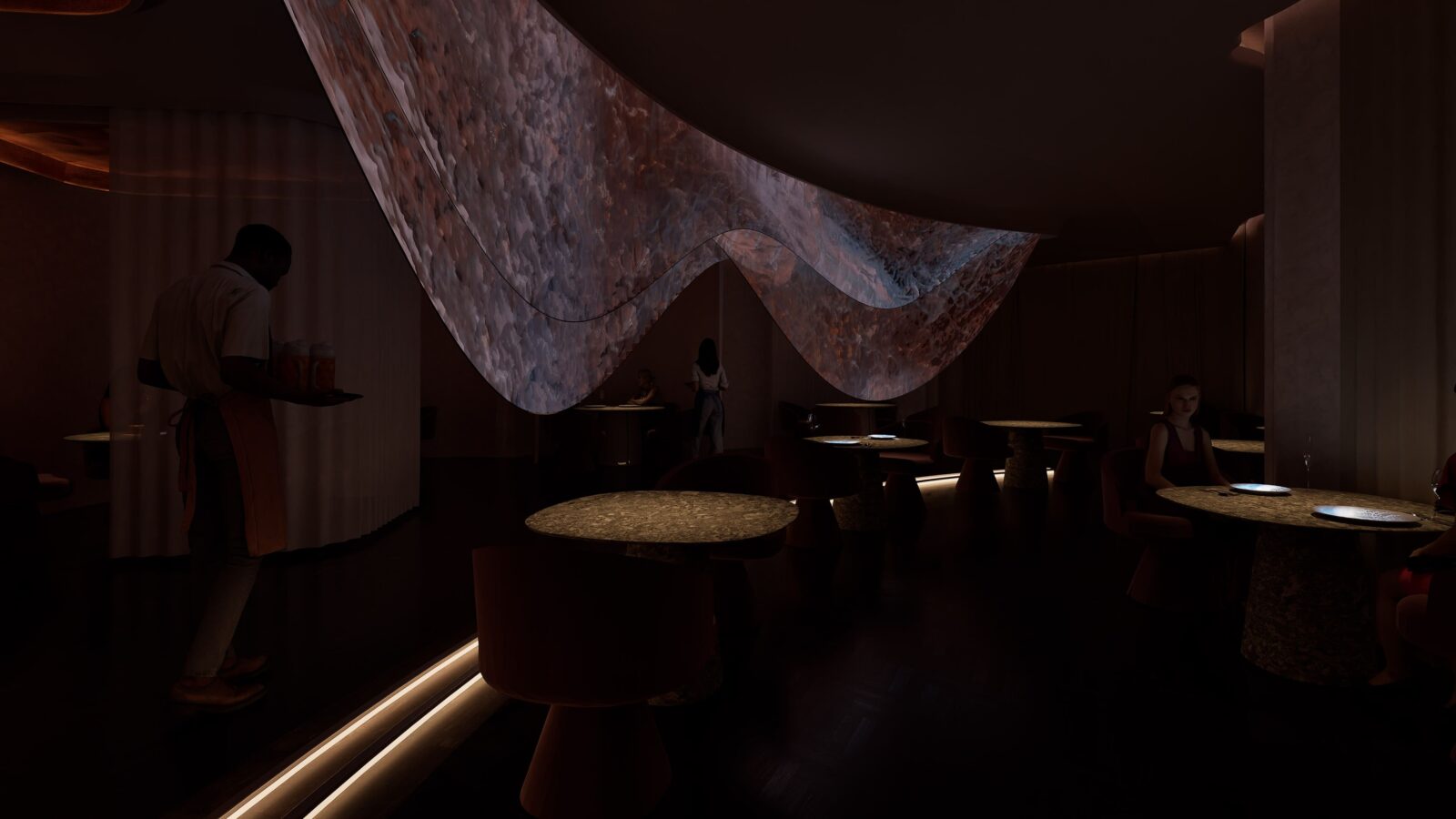
I think LA is unique in its inclusiveness in terms of different cultures; you can see Hispanic, European, Asian, and African cultures blending together and affecting each other. This diversity inspired me to bring the poetic and tranquil aspects of Suzhou Cuisine into the Melrose neighbourhood in Los Angeles. I believe Suzhou’s poetic will benefit Melrose’s artistic vibe even more, and Melrose’s peaceful environment would create a nice backdrop for Suzhou cuisine’s tranquillity.
The Etherea functions as both a retail perfume shop and an Omakase restaurant. How do you ensure the smell of the food and the smell of the perfume complement each other rather than compete?
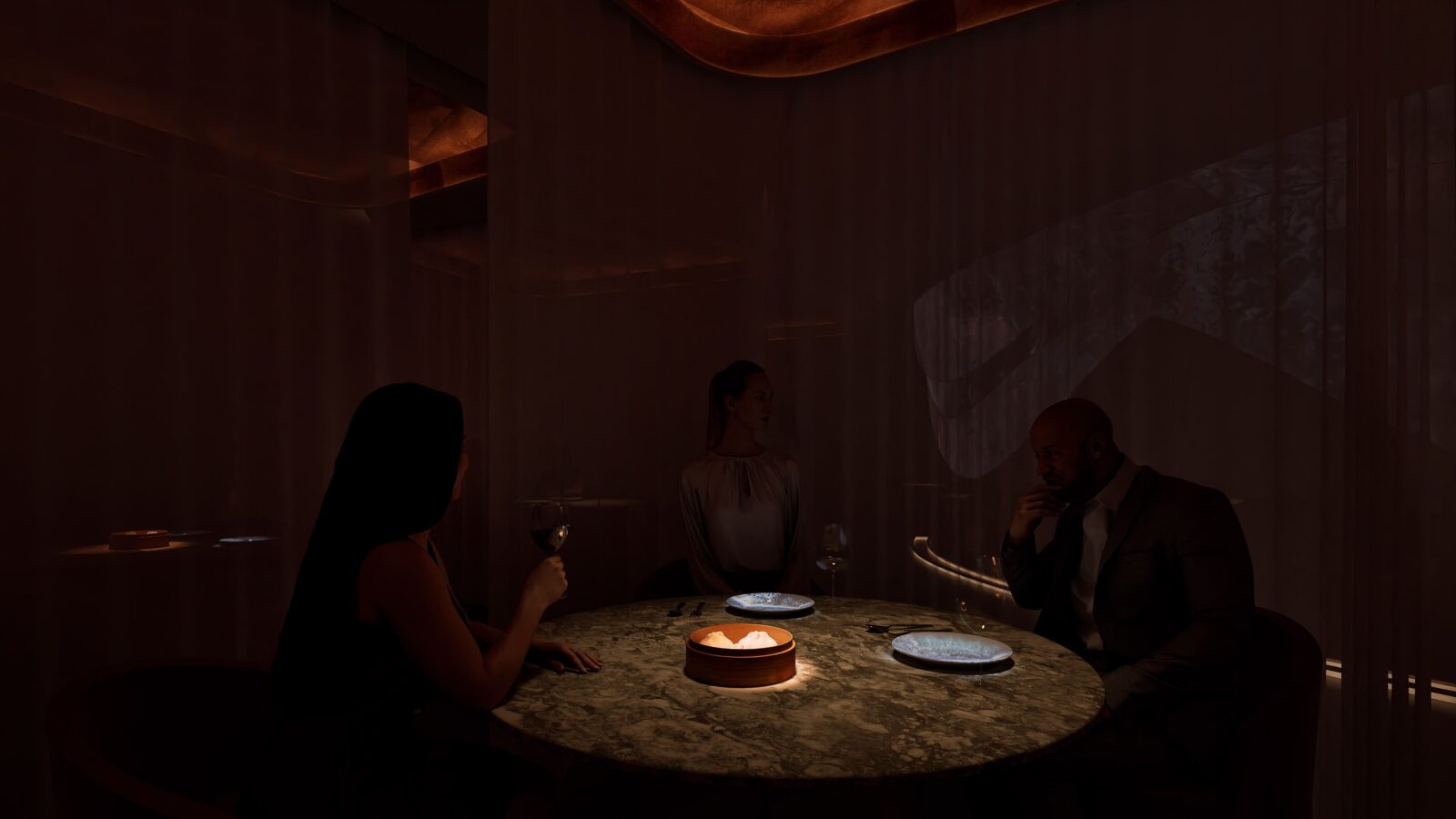
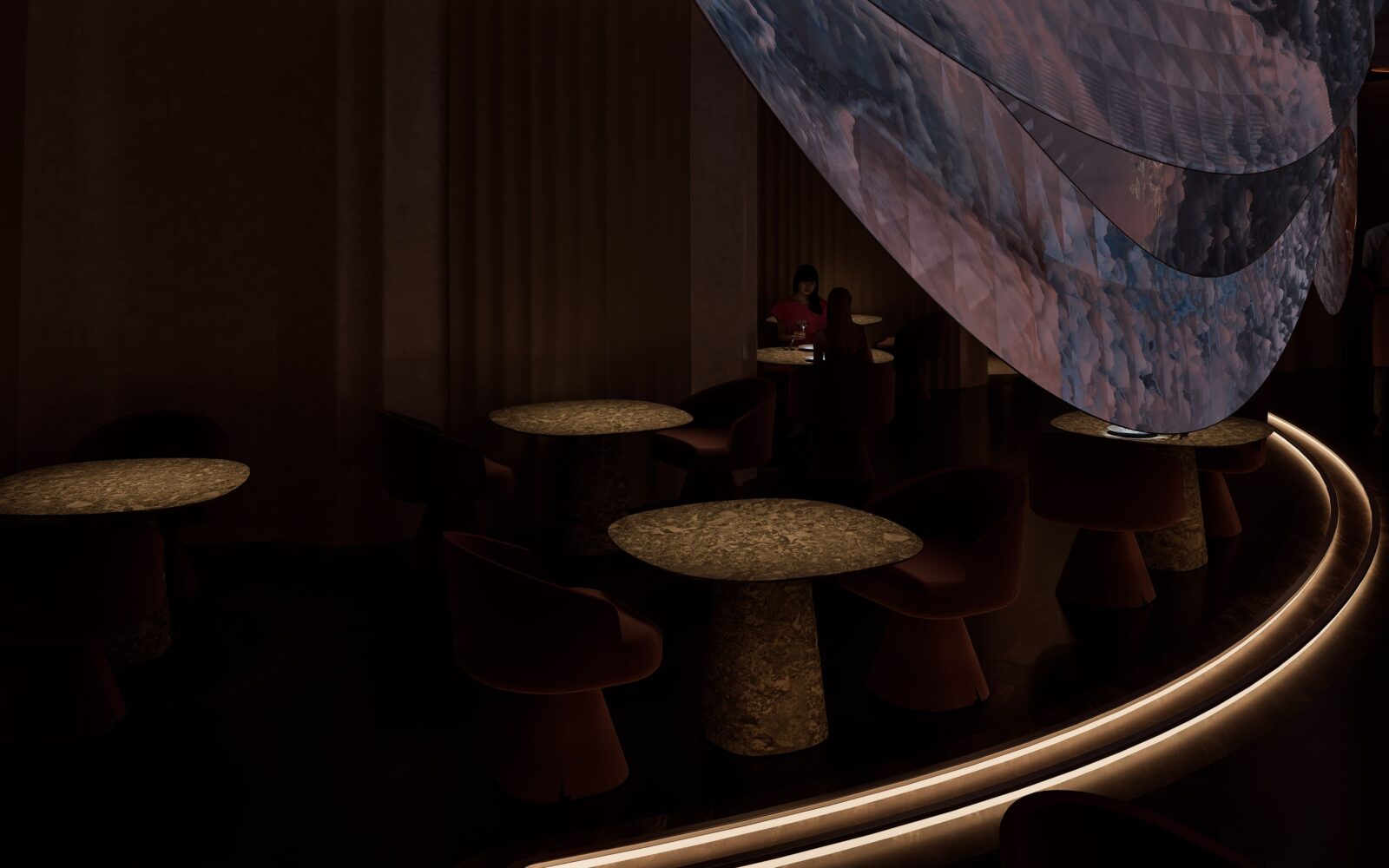
The Omakase part of Etherea will happen in a semi-enclosed dining area, and a scent ritual will happen between each course being served. In this part, the scents function as a background, and the smells of food function as characters in this background. These scents will become an element of the dining ritual to harmonize with food.
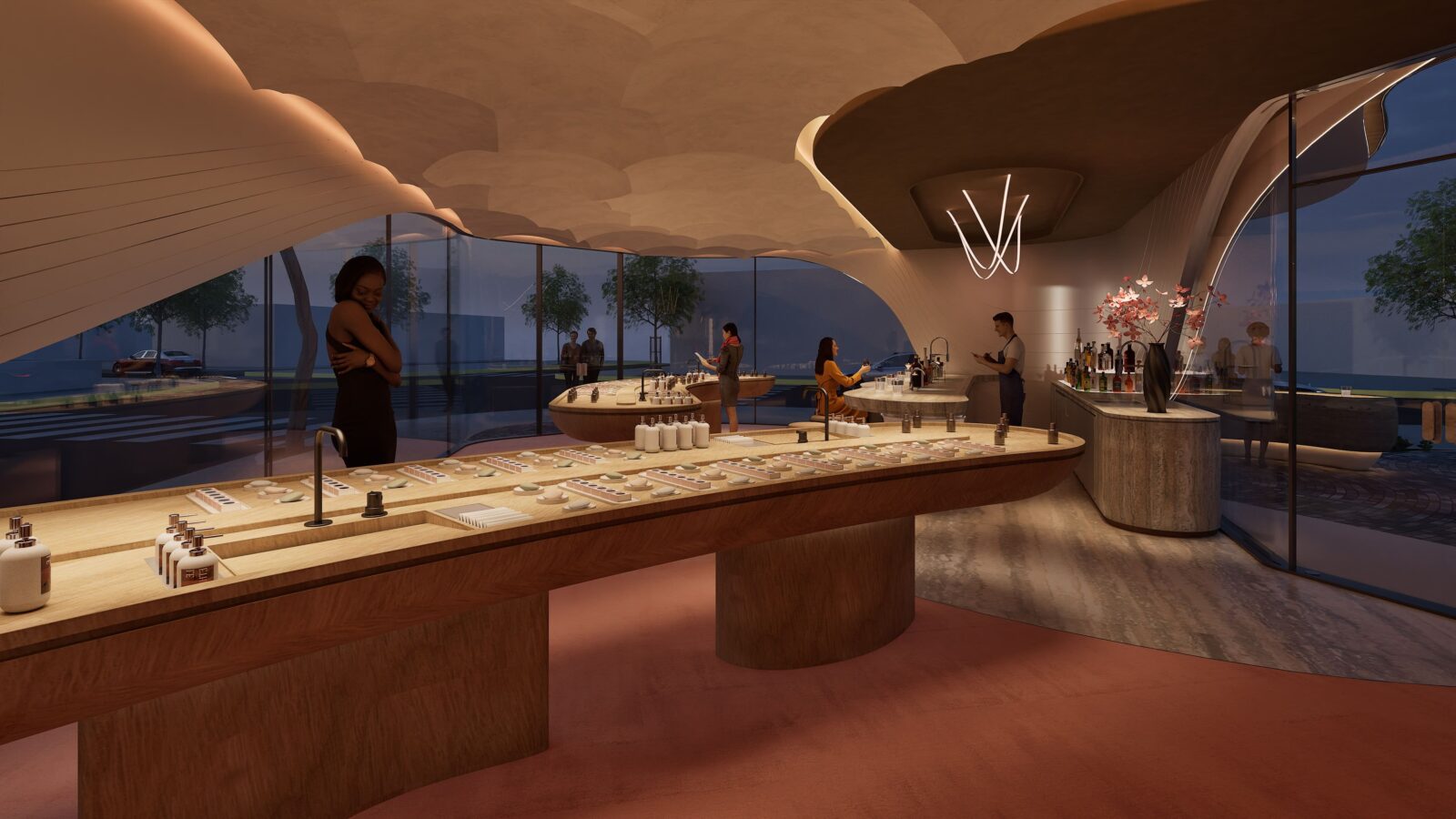
As an FFE (Furniture, Fixtures, and Equipment) designer, was there a specific piece of furniture in this project that you felt was essential to telling the “scent story”?
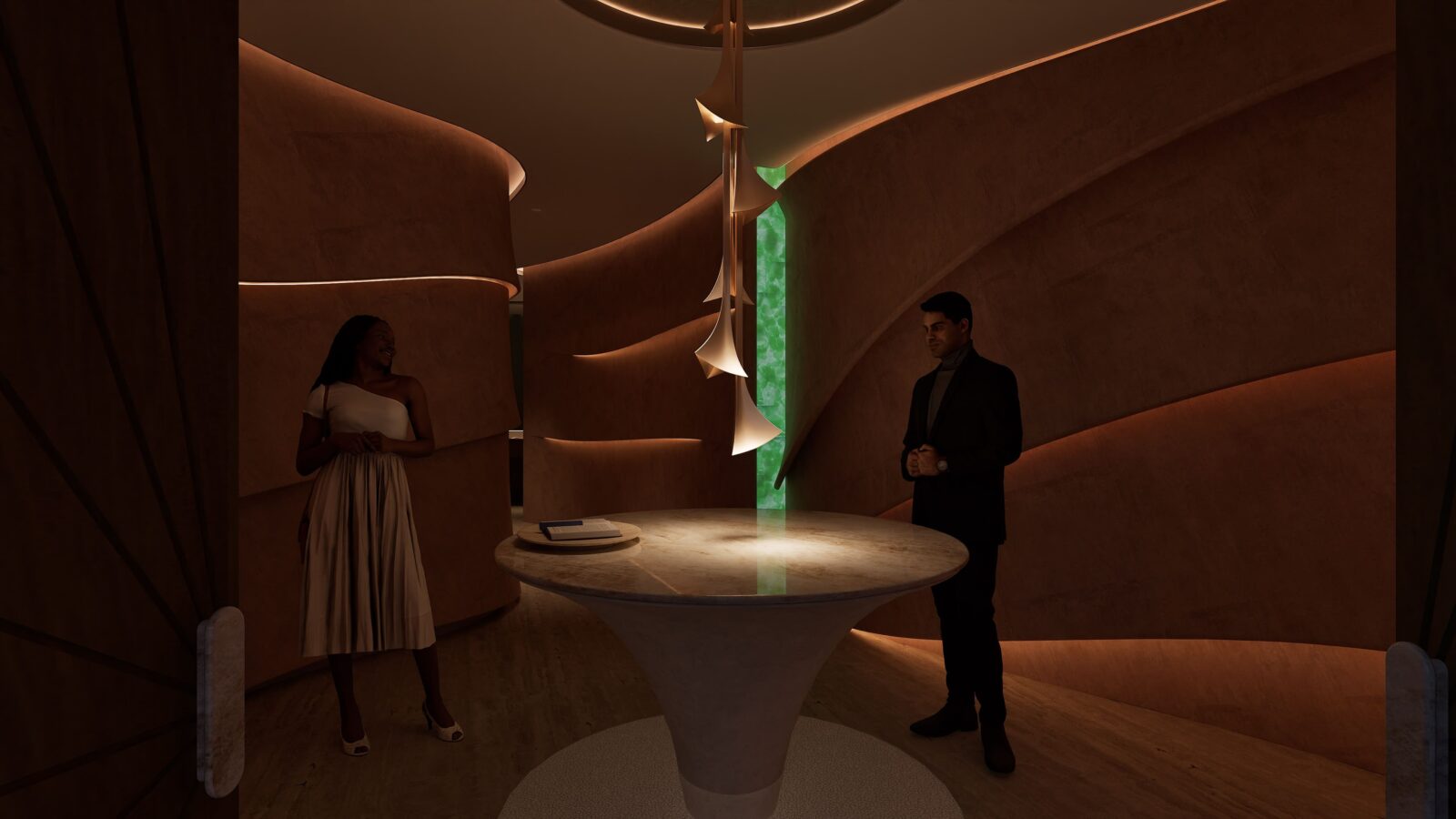
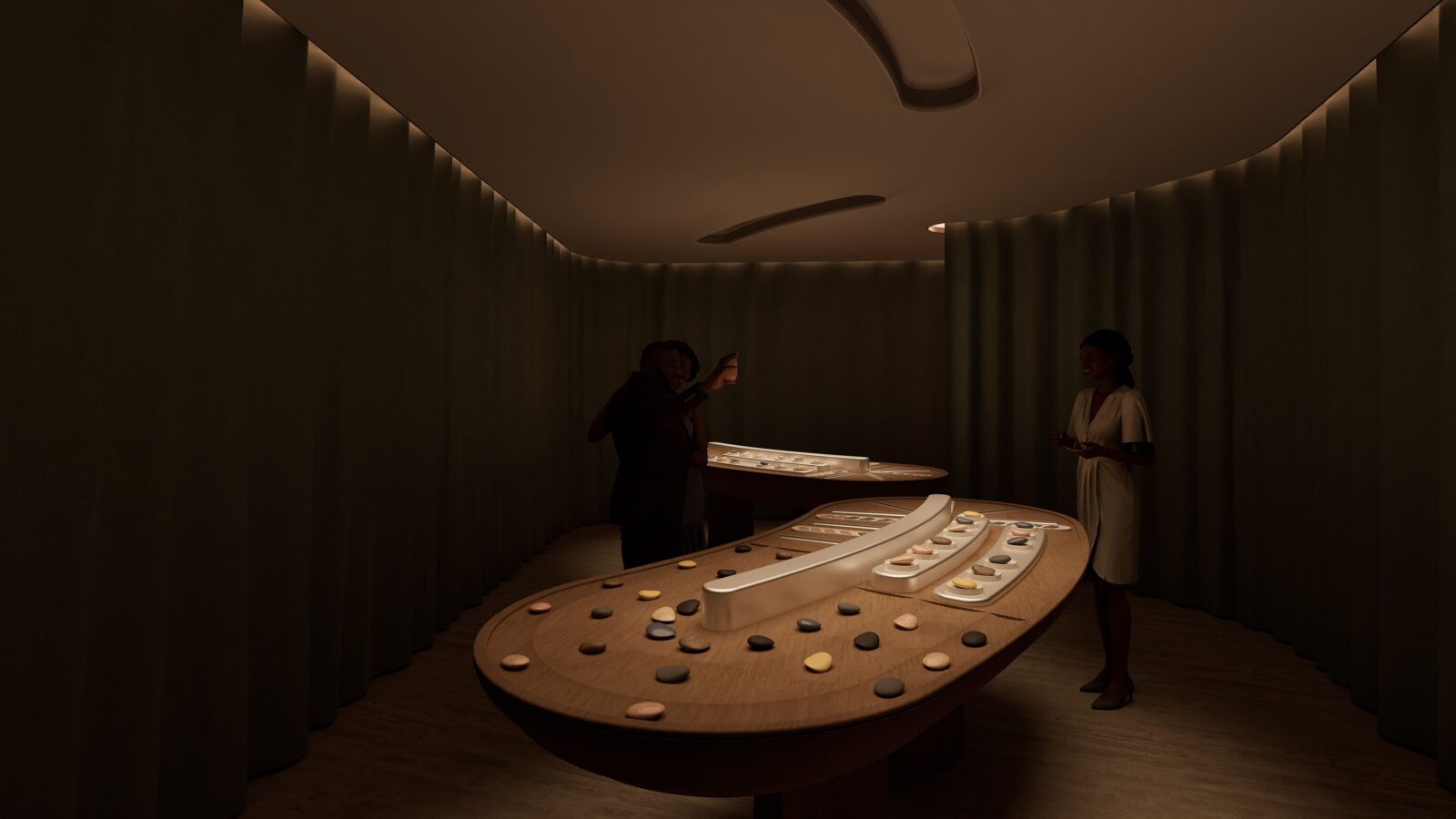
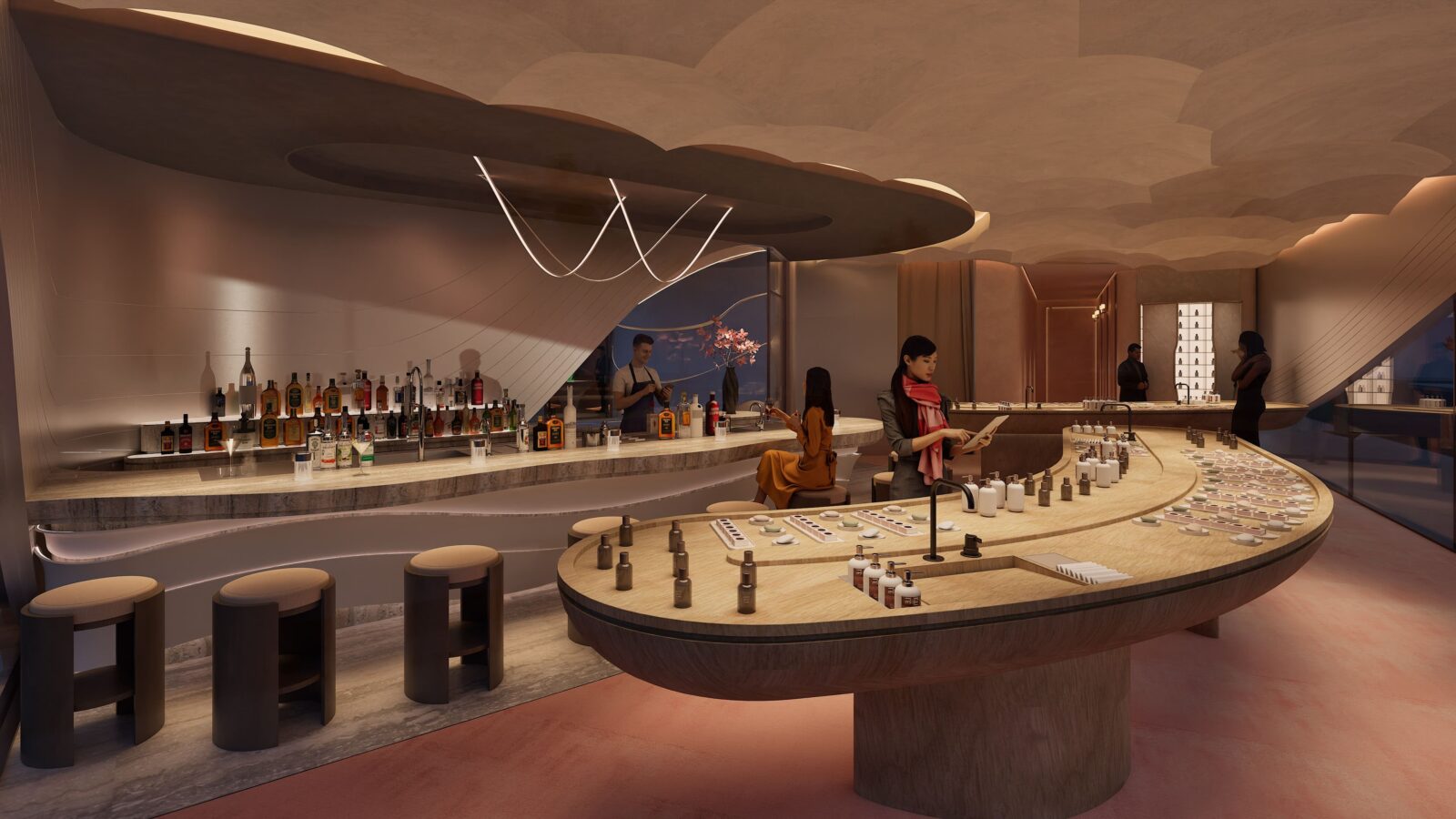
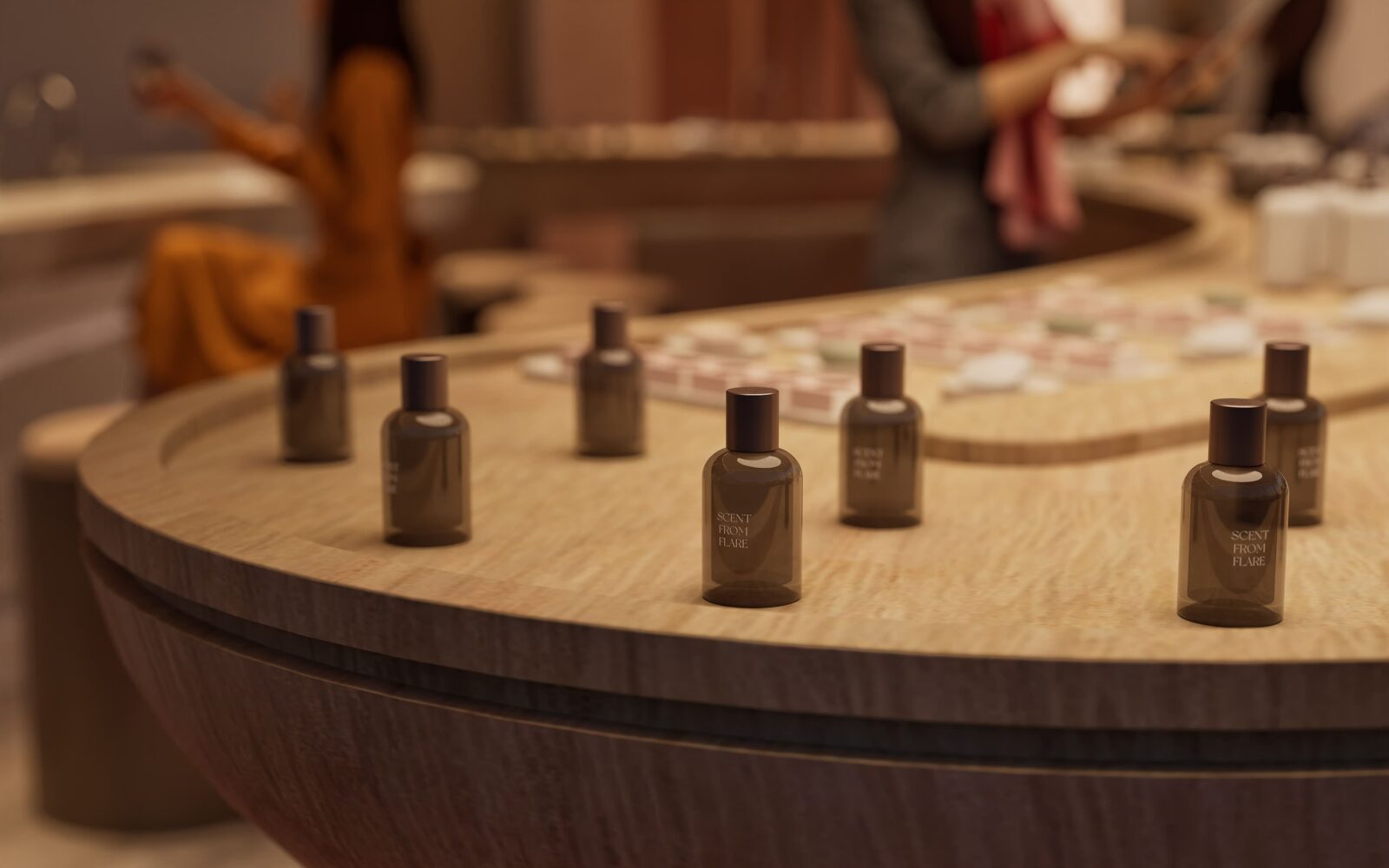
I think the flower-shaped pendant light in the entrance, and the organic-shaped perfume display table in the bar area, tell the scent story very well. The pendant light sets up a form story of nature and a floral fragrance vibe. And the perfume display table combines function and flowing forms to deliver the interactive experience for guest to pick their own perfumes and try out different scent samples.
You’ve just been named the Emerging Interior Designer of the Year for Eating Space. How did it feel when you realised your student project had gained such high-level international recognition from the LIV Hospitality Design Awards?
I feel very excited at first, and then I feel it is a gift for my design career. And of course, it really encourages me to create more inspiring spaces in the future.
Now that you’ve set a new standard for sensory dining, what is next for you? Are there any upcoming projects or new “scent journeys” you are excited to explore?
My next step is using spatial and FFE design to merge cultures together to create some new experiences. I’m currently designing exhibition spaces and storefronts for a luxury brand to tell the story of how heritage crafts meet modern living fashion.