

Header: Tian Xuanang / Zhou Li
In the heart of Beijing’s 798 Art District, this project stands as a compelling example of how to inherit and transform space without losing its roots.
What was once an abandoned industrial site with an ash-settling pool from a former electronics factory has now been transformed into the Beijing 751 Library: a vibrant civic space and dynamic cultural hub shaped by its industrial memory.
Today, through careful adaptive reuse, the project balances preservation and intervention, retaining traces of its industrial history while introducing new spatial experiences and a porous framework for contemporary use. Now reimagined as a place for movement, gathering, and reflection, this thoughtful transformation was recognised with the Jury’s Favorite distinction in the Architectural Design (Cultural) Category at the 2025 BLT Built Design Awards.
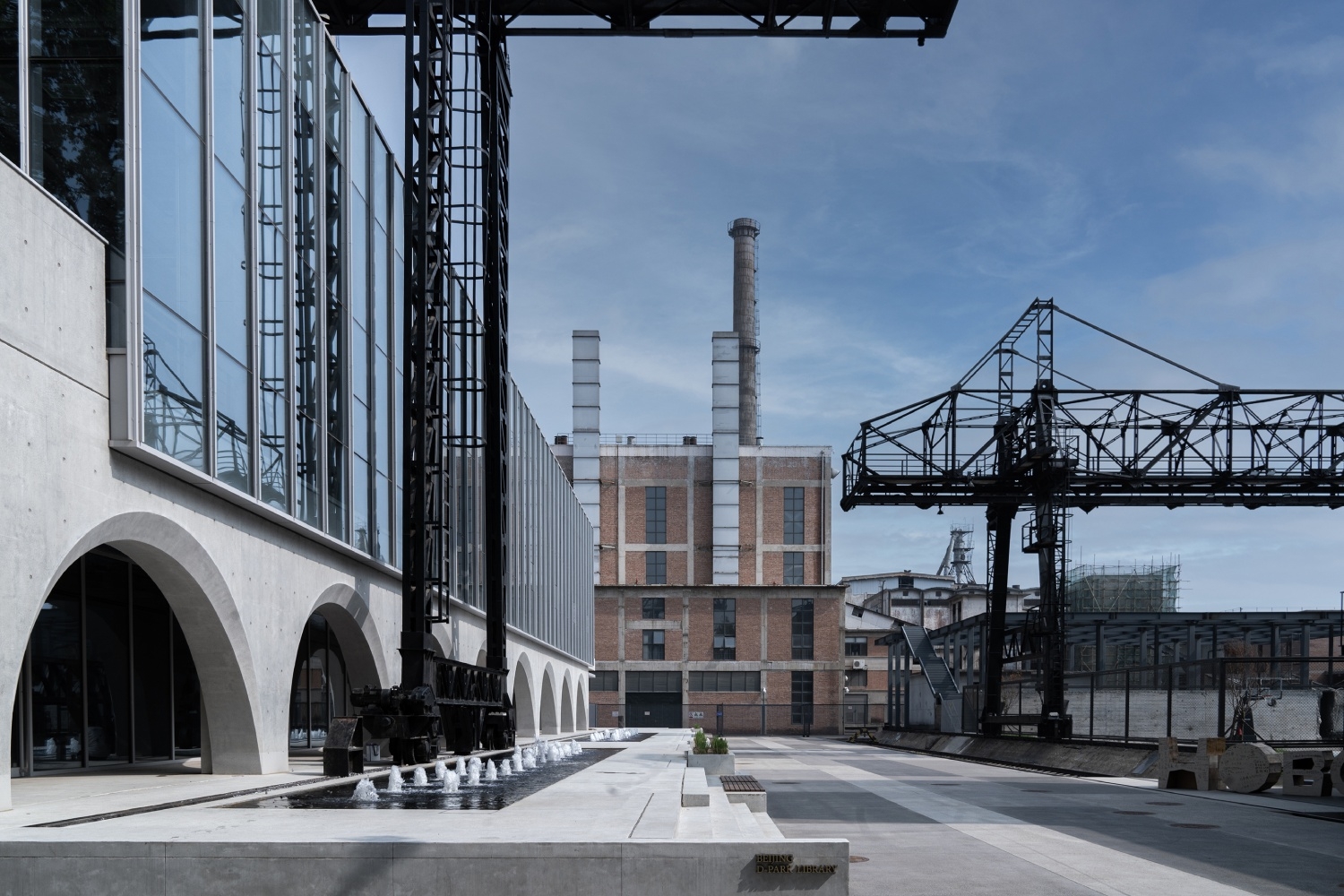
Before its transformation, the site was defined by industrial elements, including an overhead gantry crane used to transport waste—an industrial relic of the district’s origins as a 1950s electronics production hub.
When operations ceased in the early 2010s, the area was entirely sealed off, creating a physical and visual break along a primary pedestrian route leading to Locomotive Plaza. This disruption not only disrupted the arts district’s flow but also left a key urban node underutilised. In response, the design team addressed this disconnection by repurposing the site and restoring its role in the broader cultural and spatial fabric.
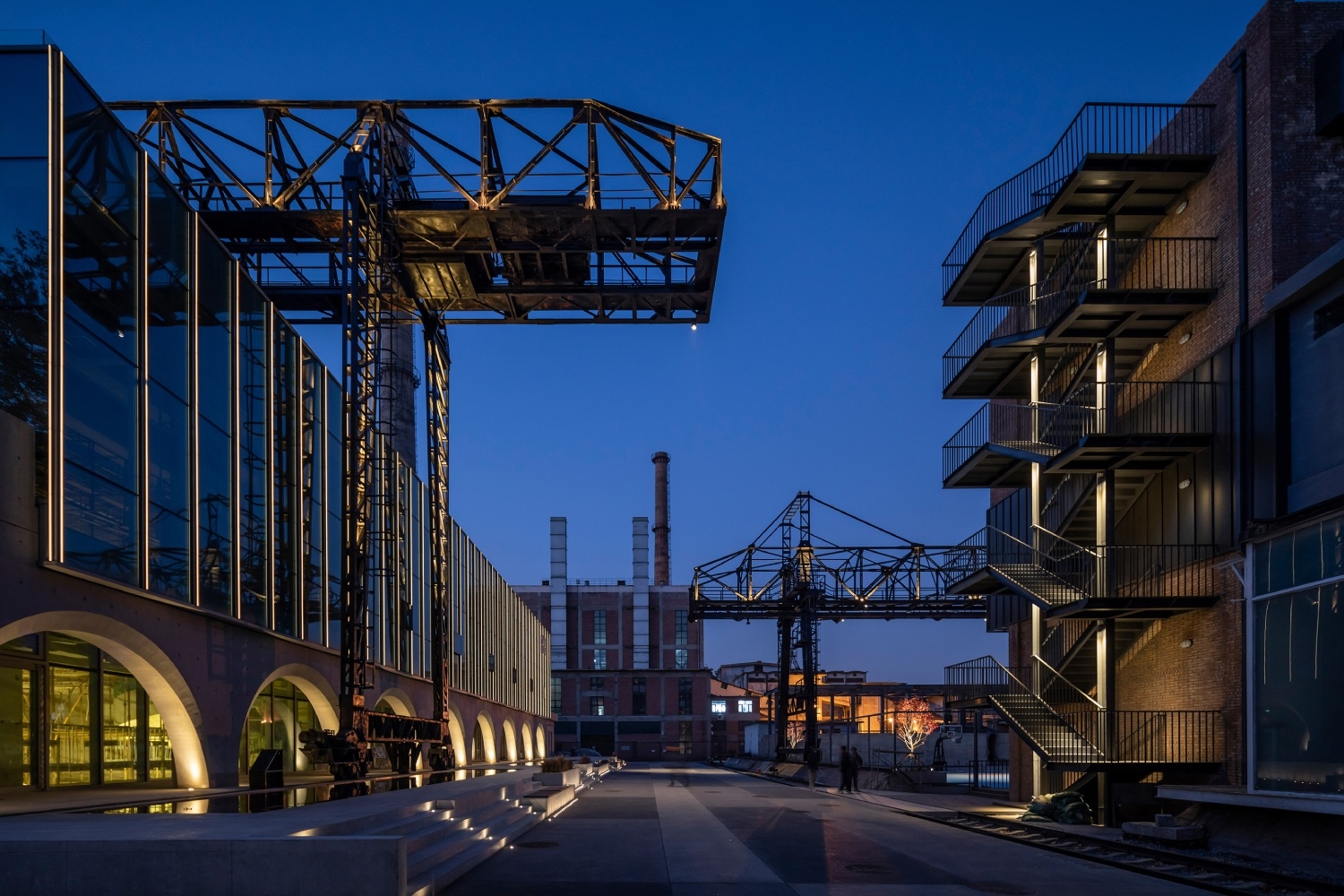
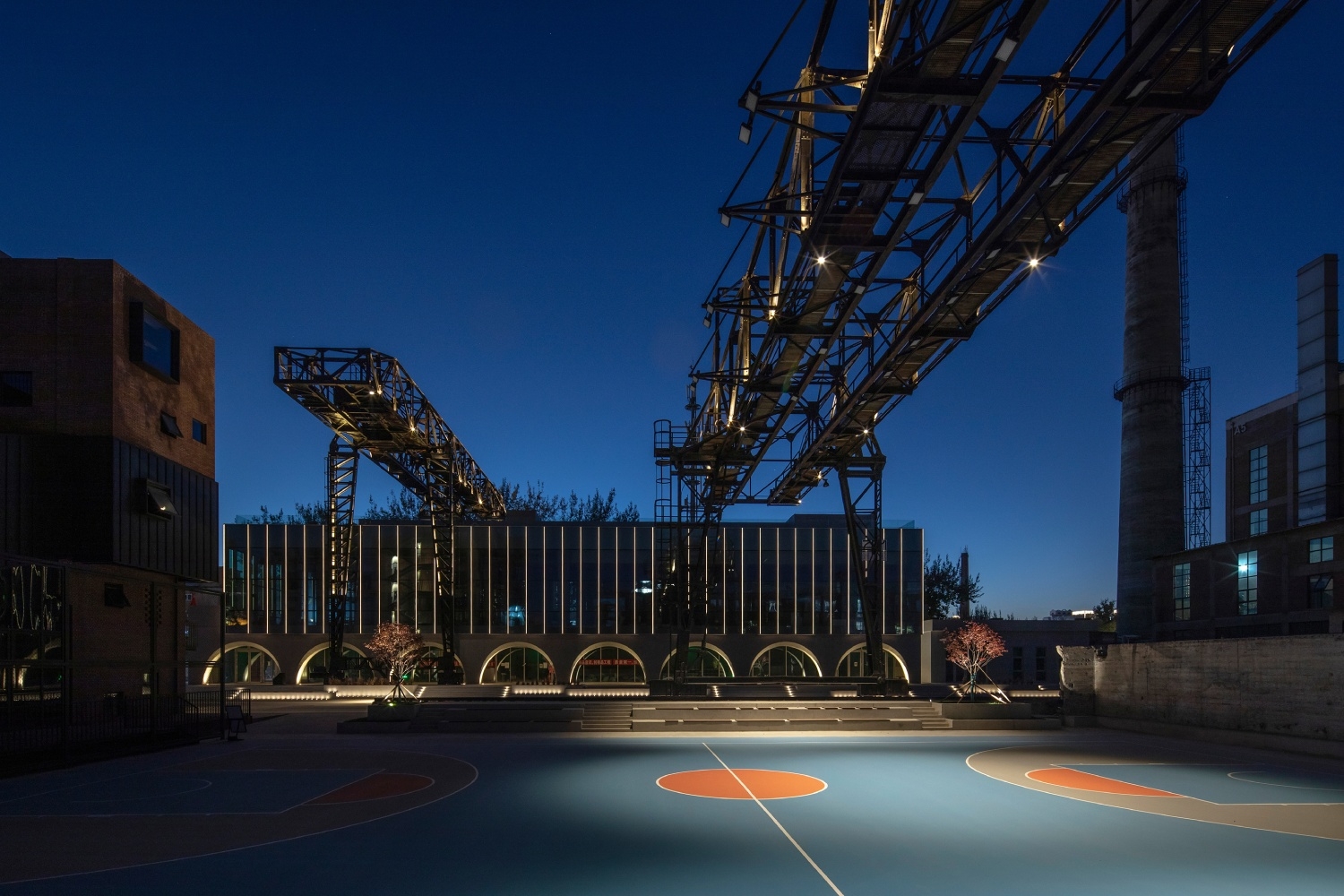
The project centres on a strategy of reconnection, bridging the gap between the site’s industrial past and contemporary cultural life. Instead of a single overarching design feature, the design follows a “seamless integration and replacement” approach, introducing new interventions within the existing industrial framework.
For instance, the space is fully opened on all sides, allowing the library’s former boundaries to dissolve and invite the surrounding energy to flow through. From scattered relics and rail tracks to conveyor corridors, the site’s former functional features are repurposed and reinterpreted as part of the public landscape. In turn, a formerly production-oriented environment has now become a community-centred civic space, adding a new layer of urban life.
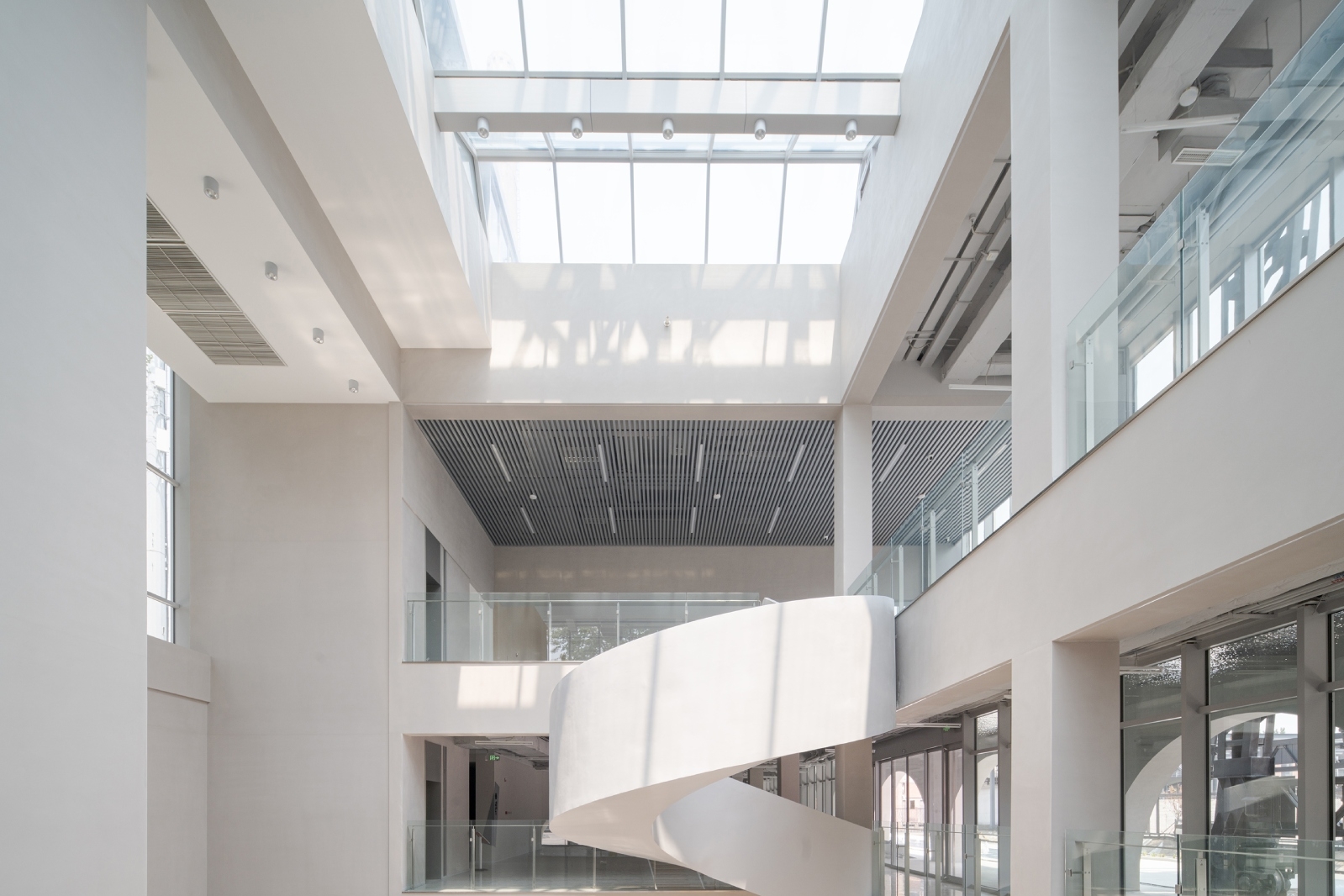
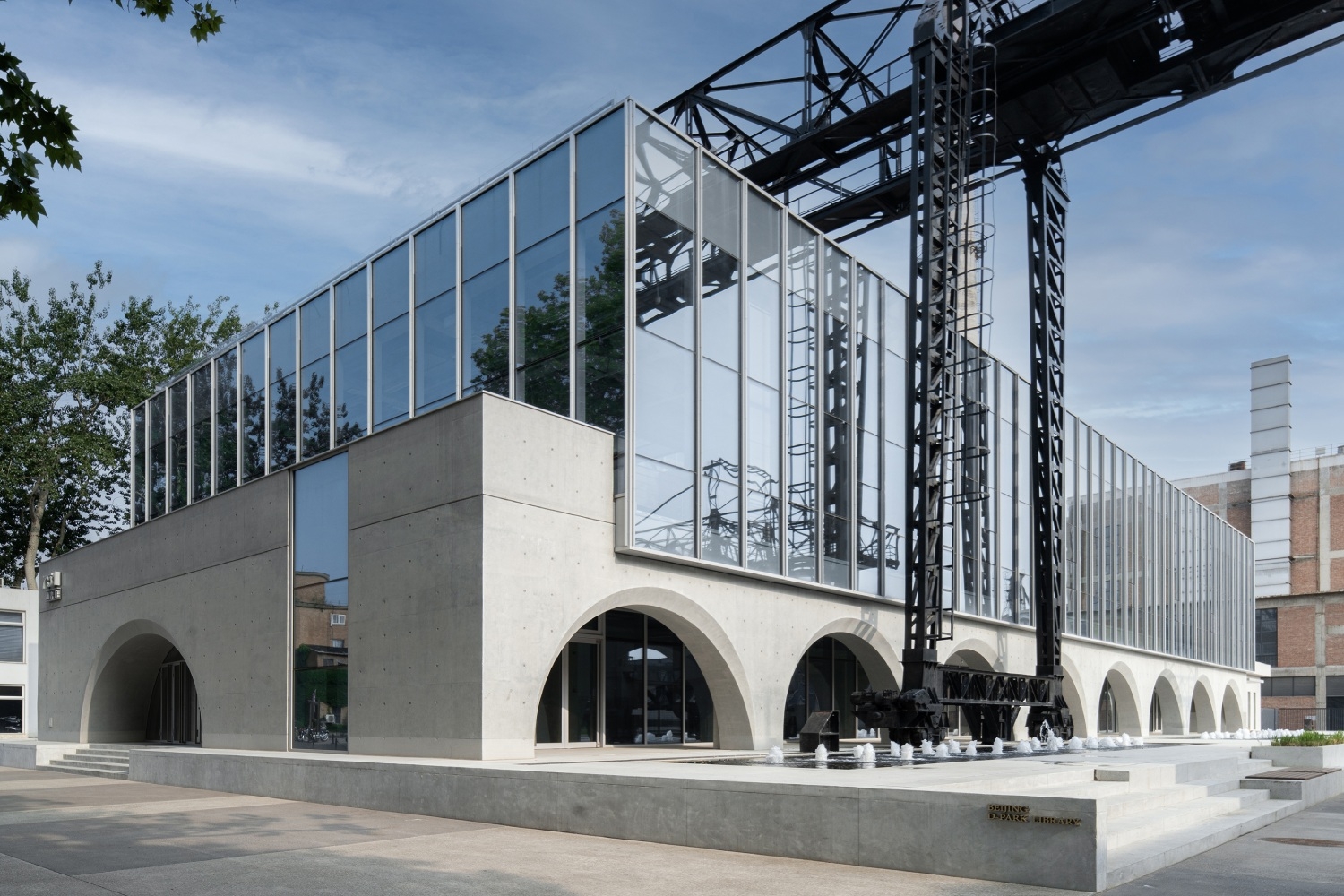
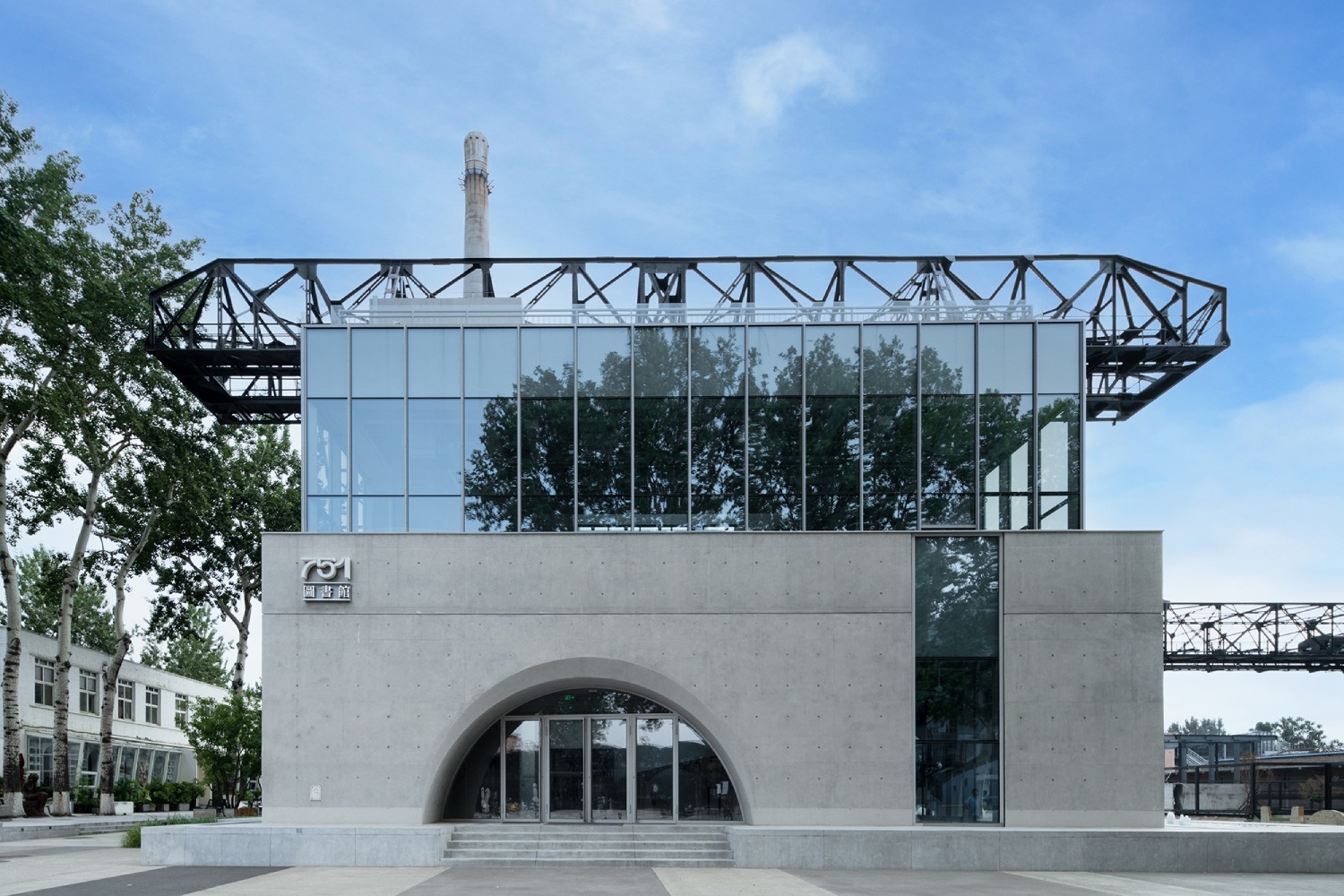
The library’s architecture further reinforces this dialogue between past and present. Concrete arches frame the building’s structure, contrasting with the rugged textures of industrial relics, while the glass facades and skylights draw the outside in, reflecting cranes, tracks, and conveyors.
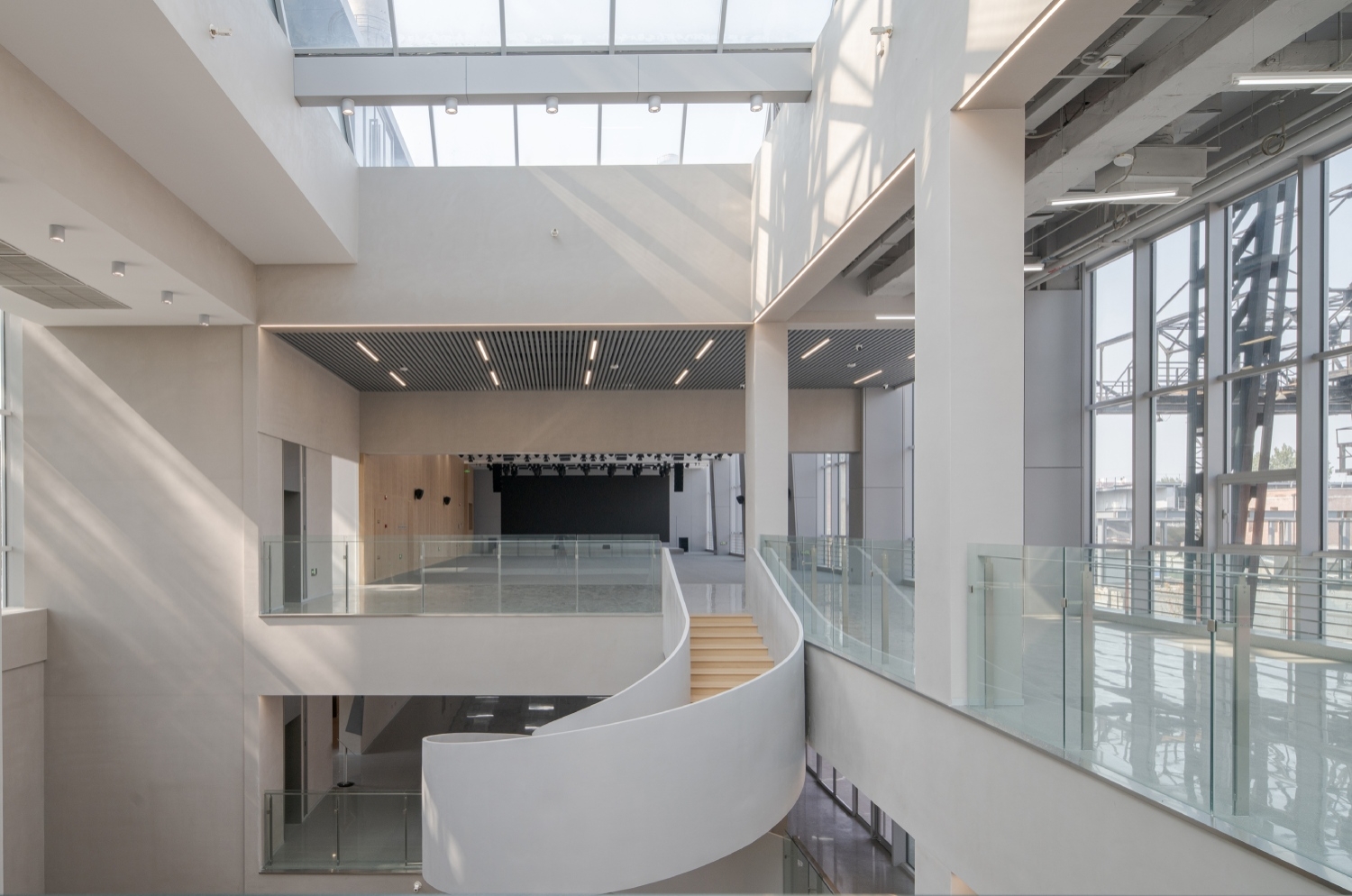
Once you step in, a three-story transparent void connects the interior to the sky, creating a dramatic spatial sequence. Even the preserved gantry crane became a key feature, acting as a movable “industrial sculpture”. Each element has its place and plays a role in the library’s spatial experience, all intentional and thoughtfully designed.
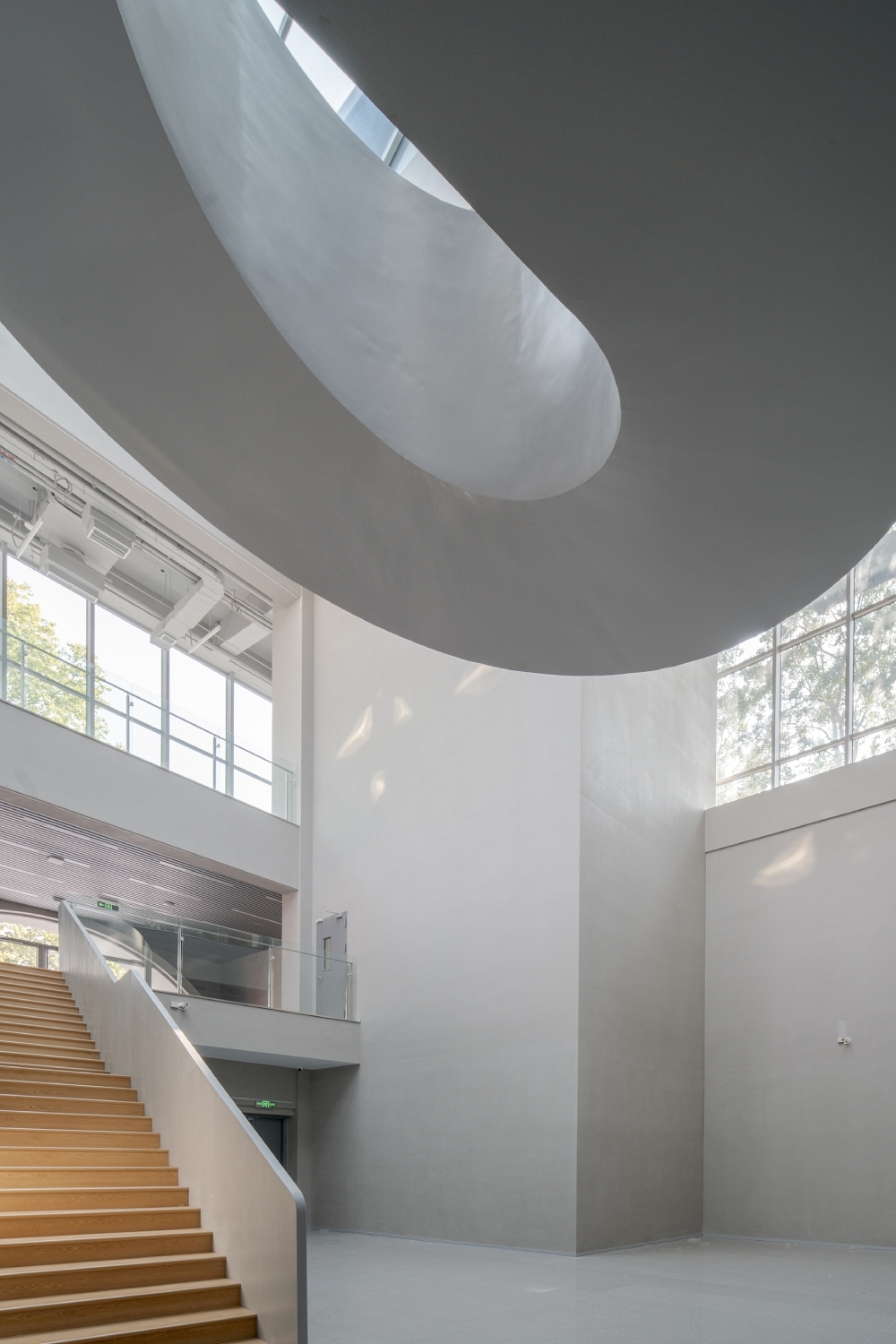
The 751 Library is not your typical library. It also serves as a vibrant cultural hub, hosting exhibitions, dining experiences, community events, and everything in between. With its flexible programming, the space can adapt organically over time and remain relevant without resorting to superficial changes.
In spaces like this, the old and new don’t compete; they coexist harmoniously, proving how thoughtful design can breathe life into forgotten sites and transform them into enduring cultural landmarks for the years ahead.
Project Info
Project Name: Beijing 751 Library
Location: Beijing’s 798-751 Art District, Beijing, China
Year: 2024
Client: Beijing Zhengdong Group
Design Team: Beijing Do Union Architecture Design Ltd.