



Header: César Béjar
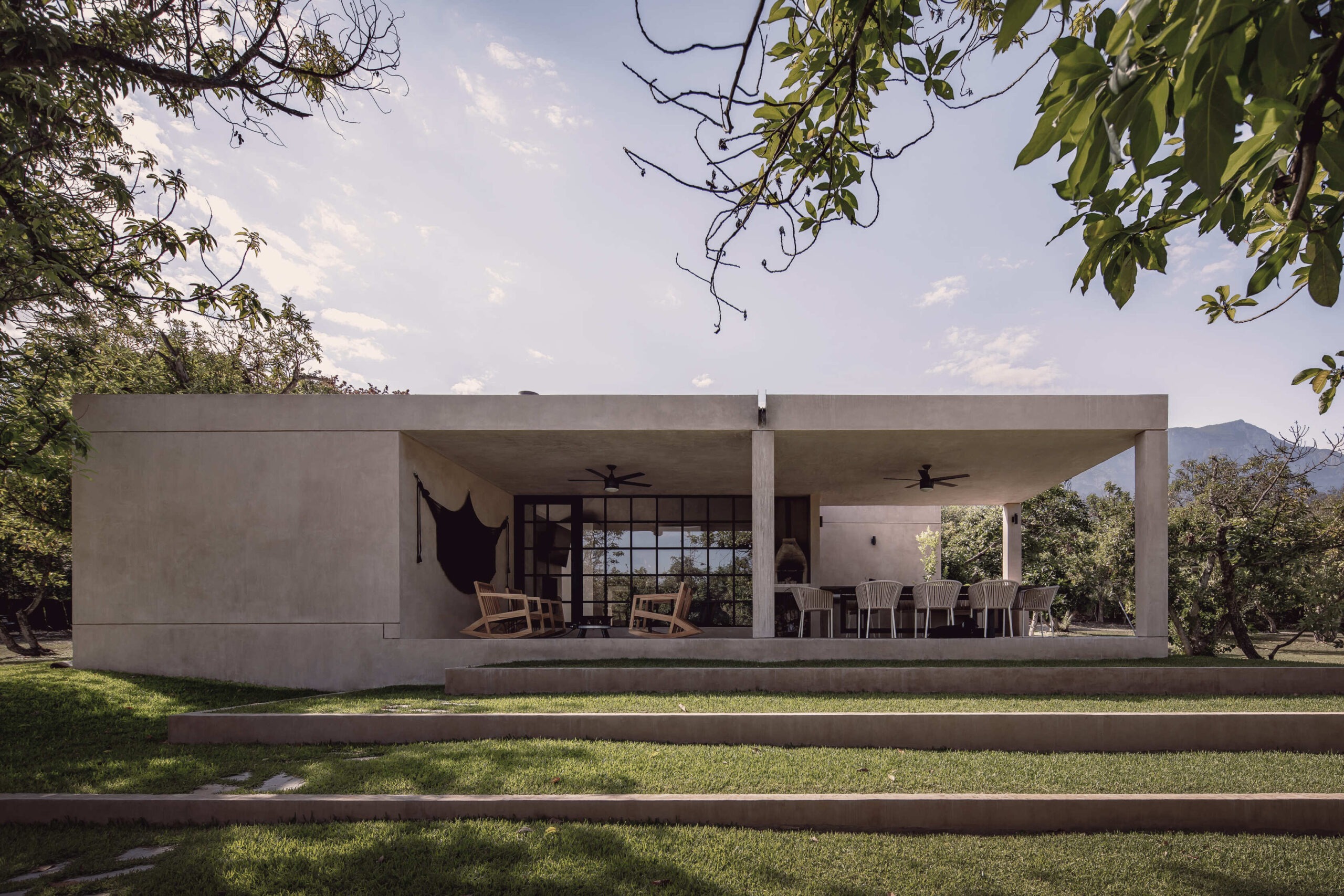
The definition of a weekend home is changing. As digital connectivity allows us to work from anywhere, the sharp divide between the city and the countryside is fading. In Santiago, Mexico, the studio Práctica Arquitectura has responded to this shift with “El Aguacate,” a project that rethinks the vacation house. Instead of excess, the design commits to the environmental, social, and economic basics. It proves that a smart approach can say a lot with very little, focusing only on what is necessary for living.
A layout built on concentric squares
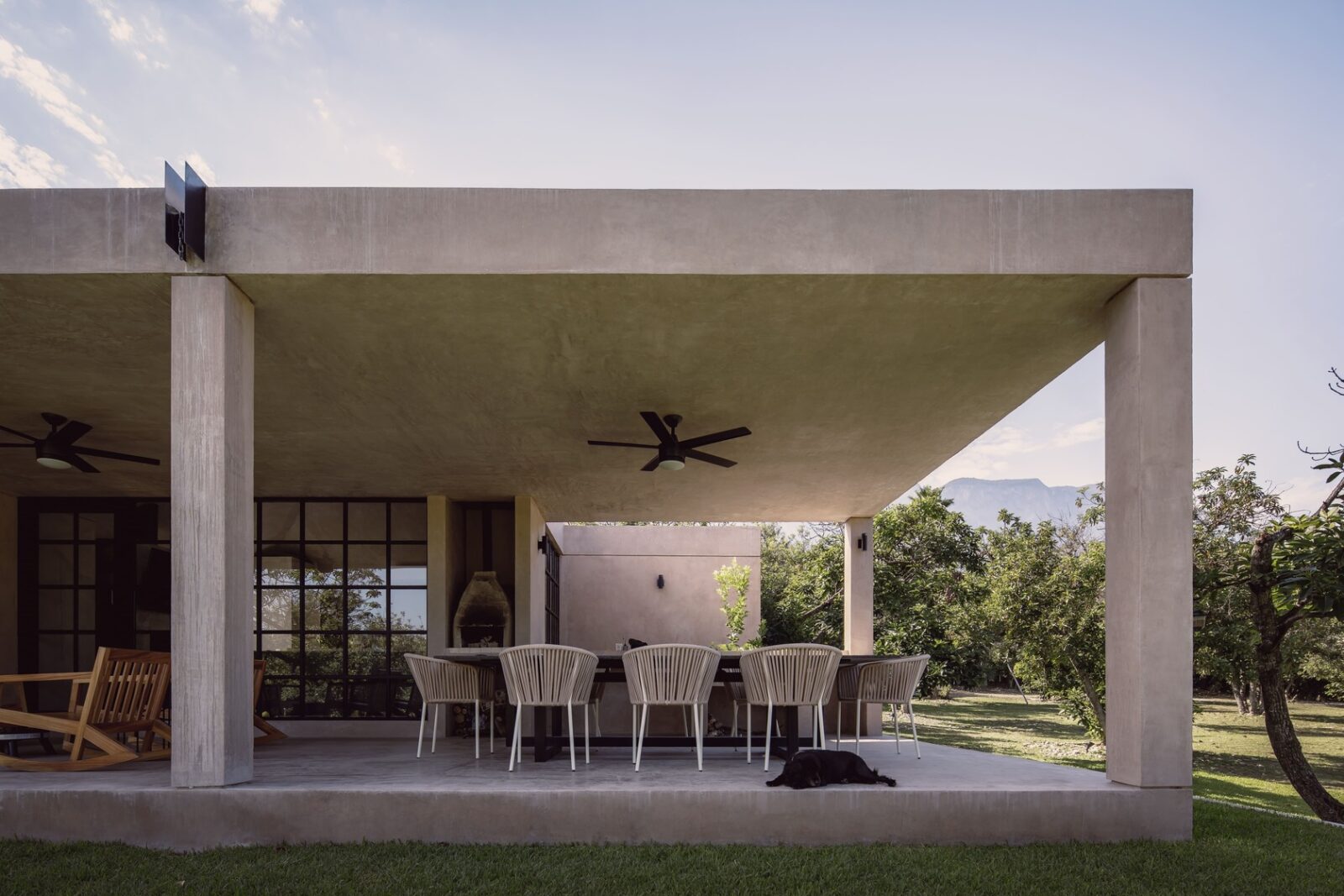
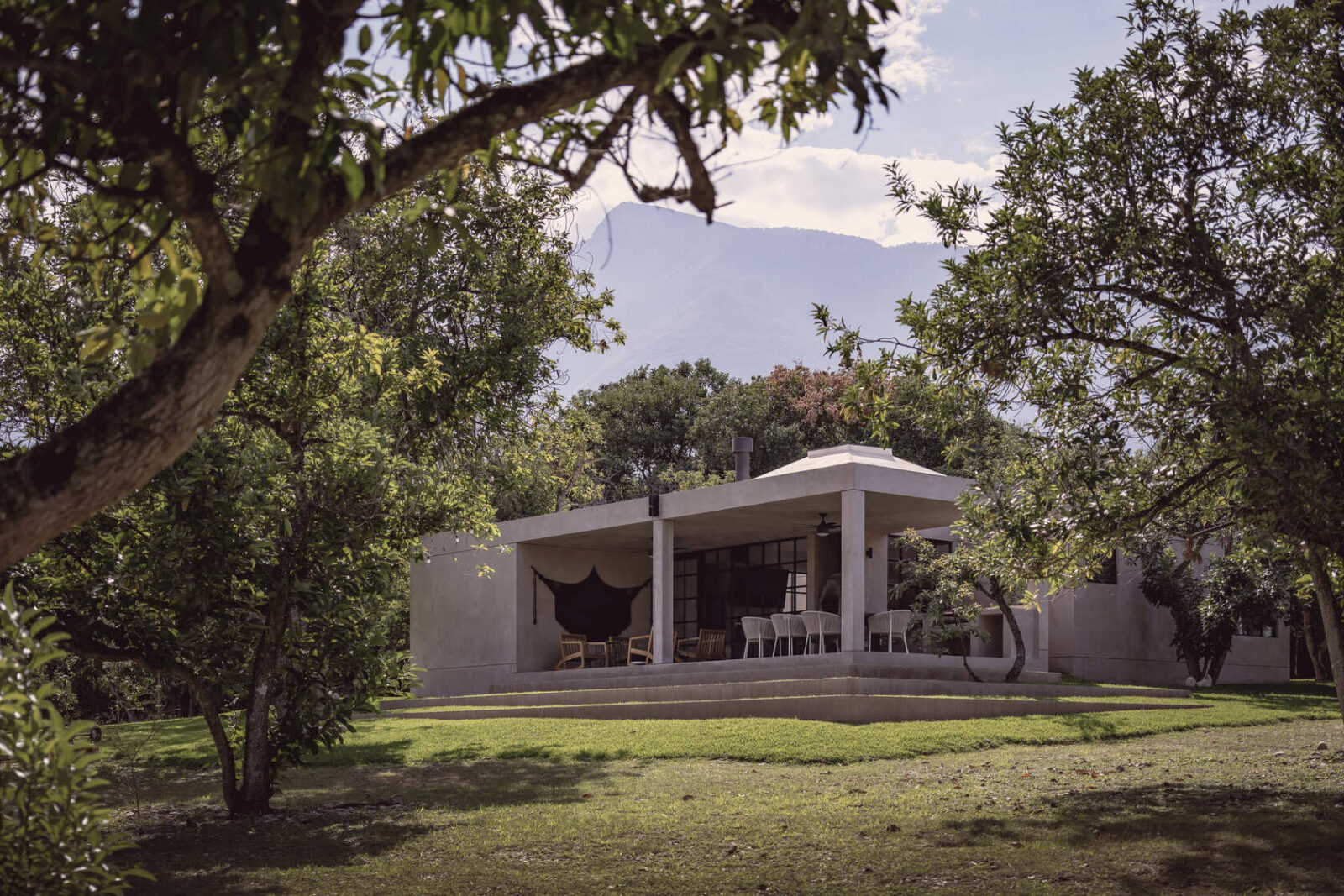
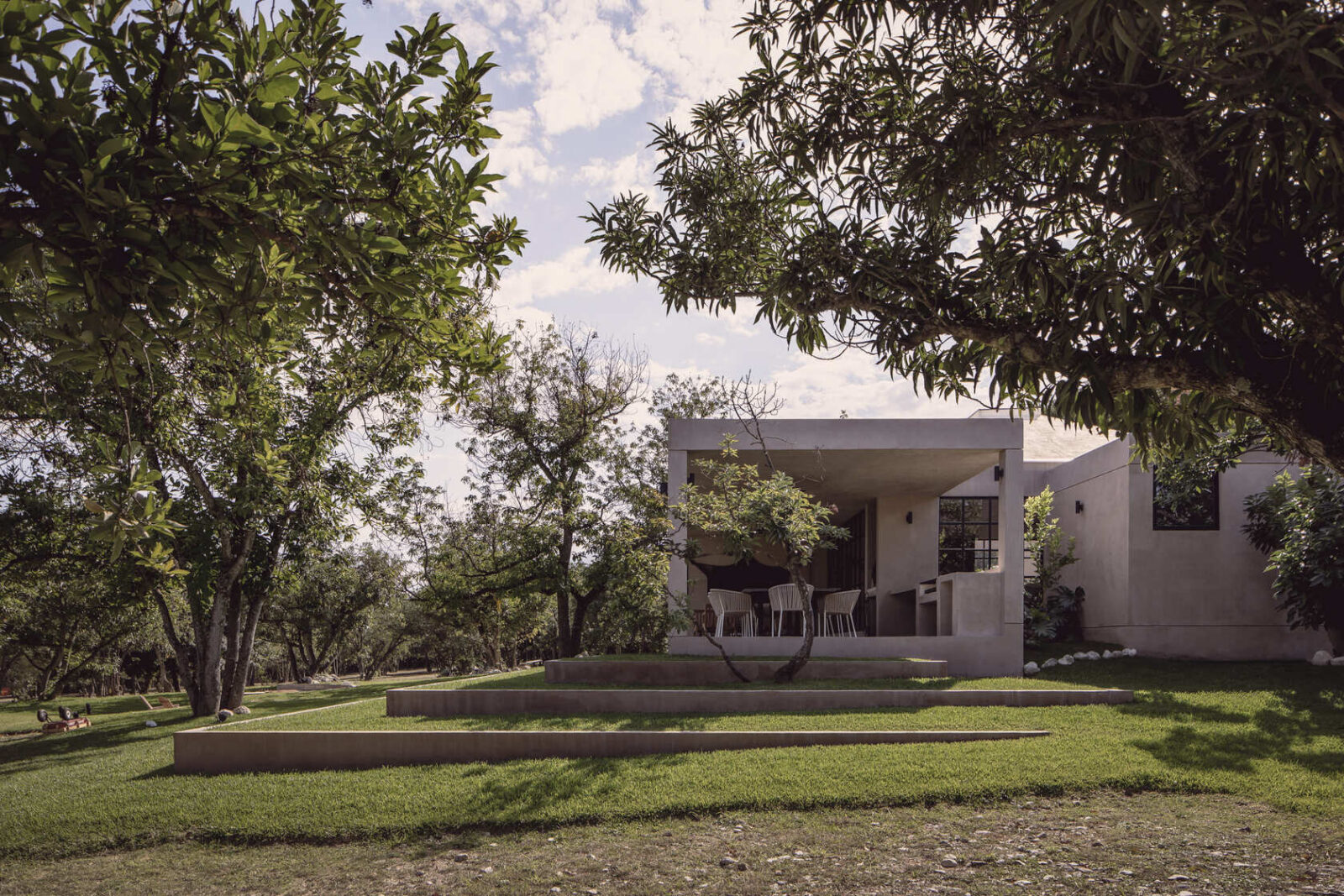
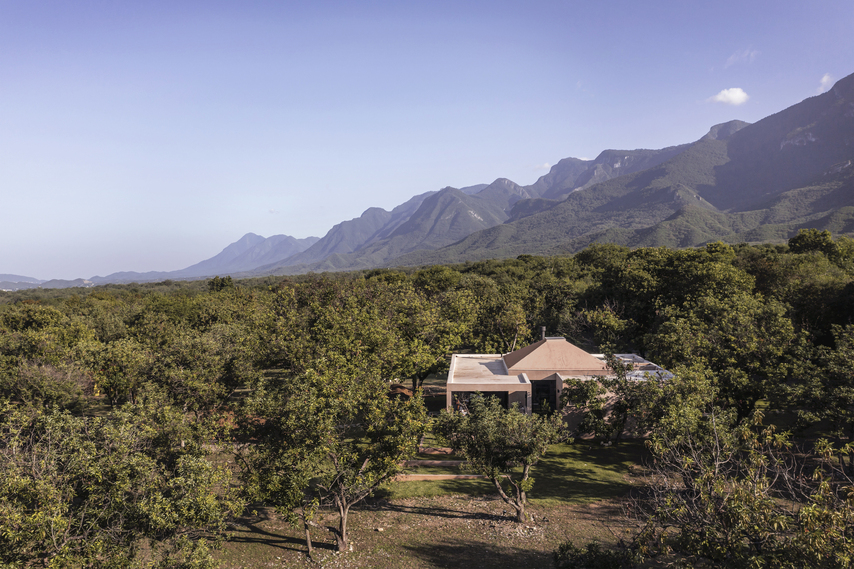
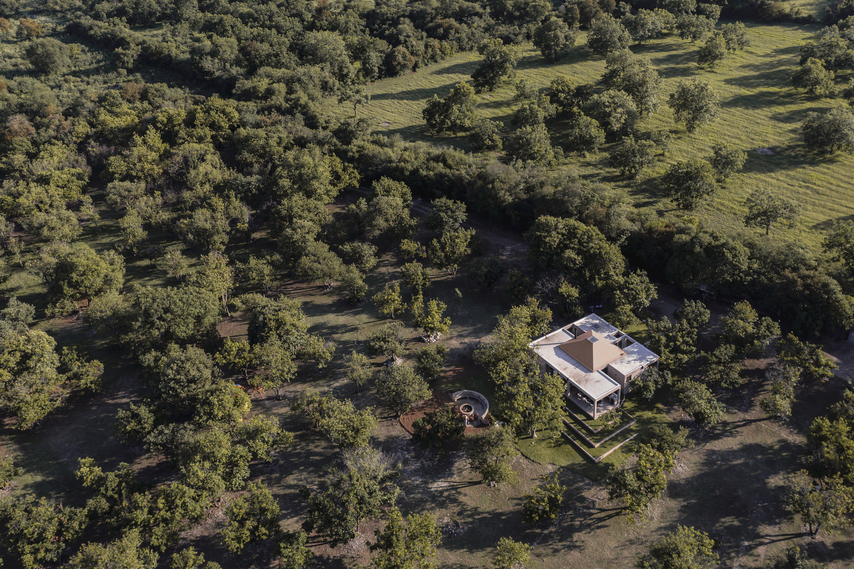
The design began with a simple idea: a scheme of concentric squares. However, the architects subverted this strict geometric order to serve the people living there. They shifted the lines to expand the terrace, making the outdoor resting zone larger and more comfortable. The result is a compact building that maintains a discreet presence on the site while maximizing space where it counts.
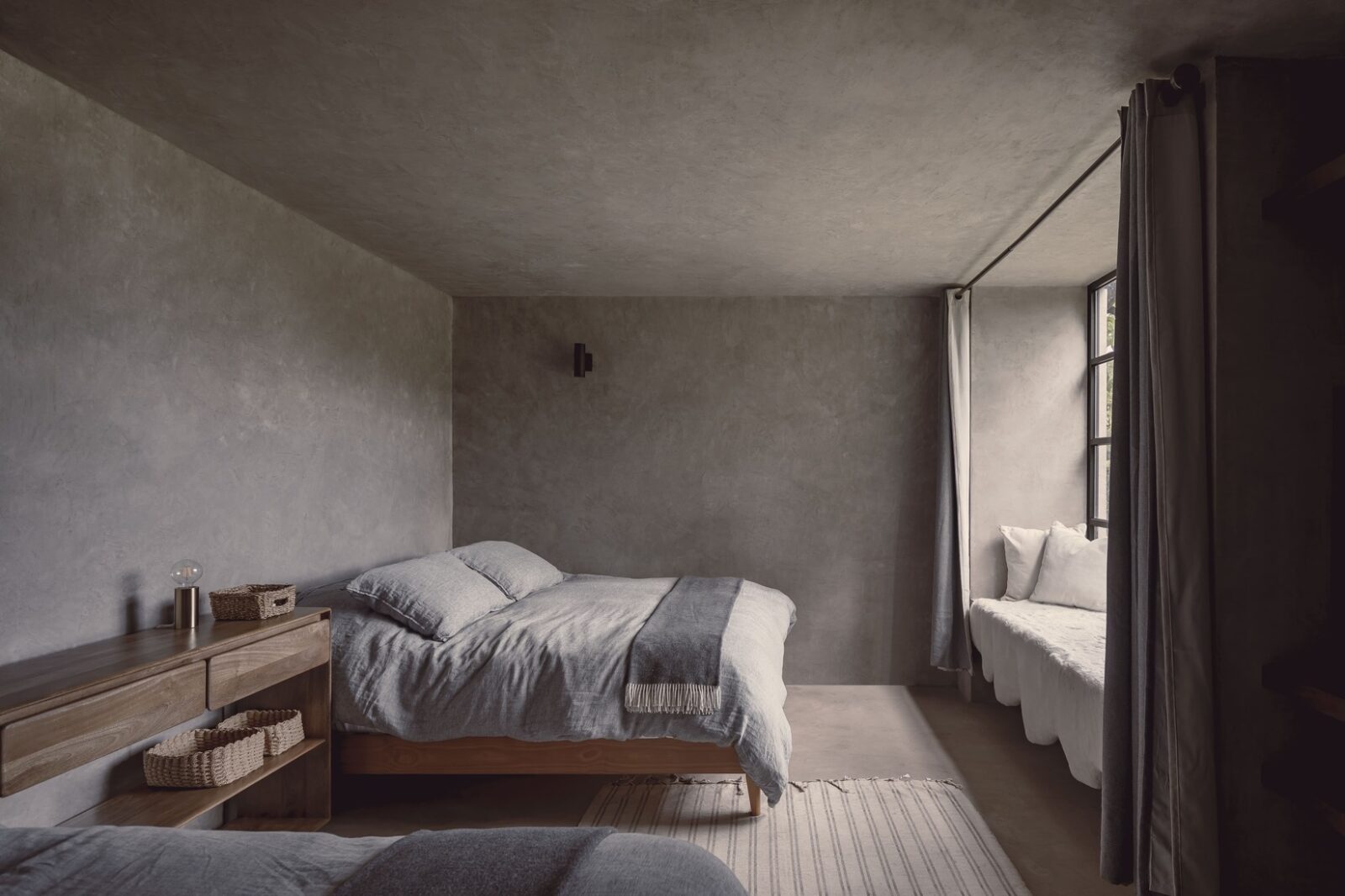
The floor plan is organized around a large central room that functions as the heart of the home. Surrounding this core are three distinct “cells” that house the private rooms and service areas. This arrangement keeps the footprint small but ensures that every part of the house feels connected to the main living area.
Light, height, and materials
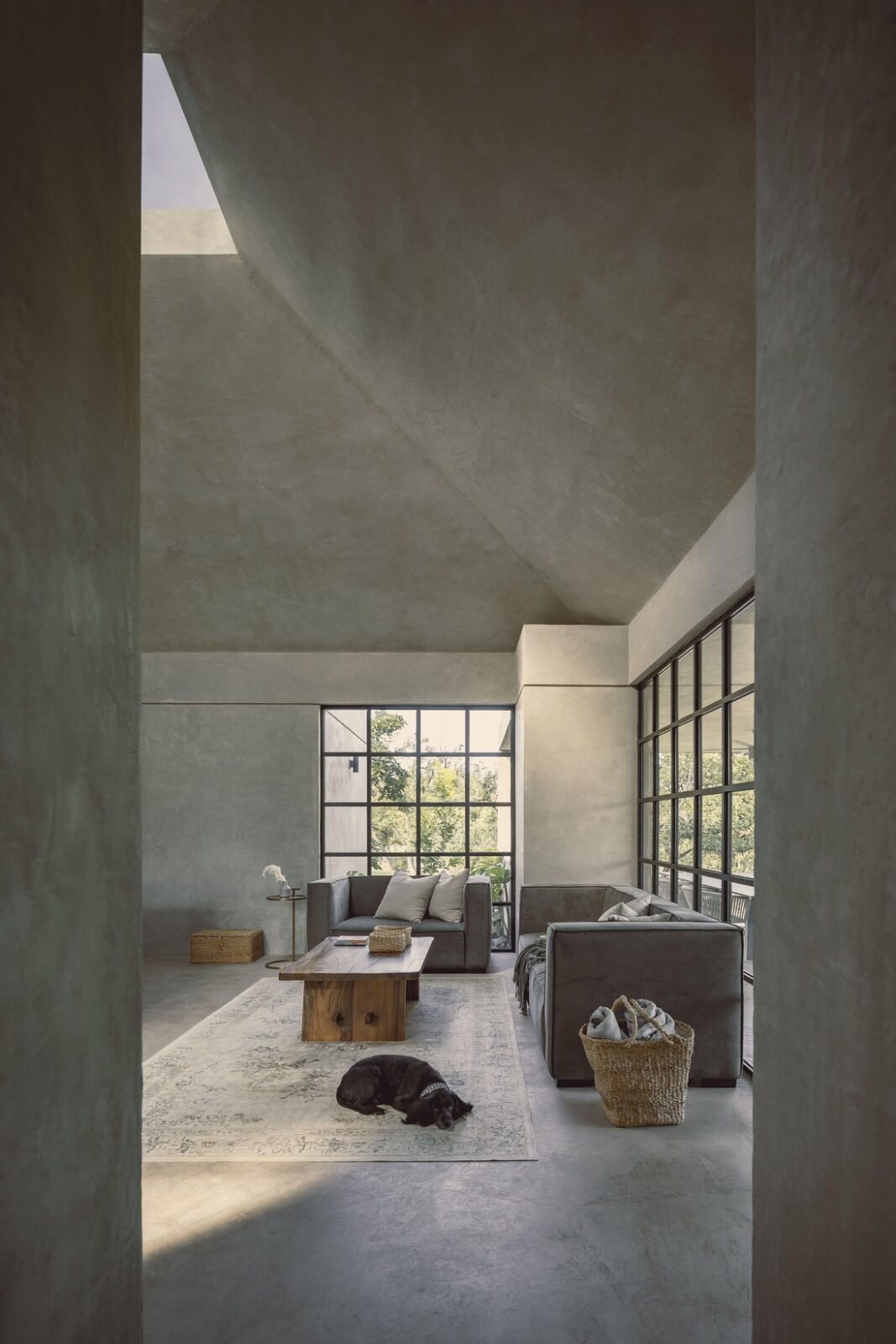
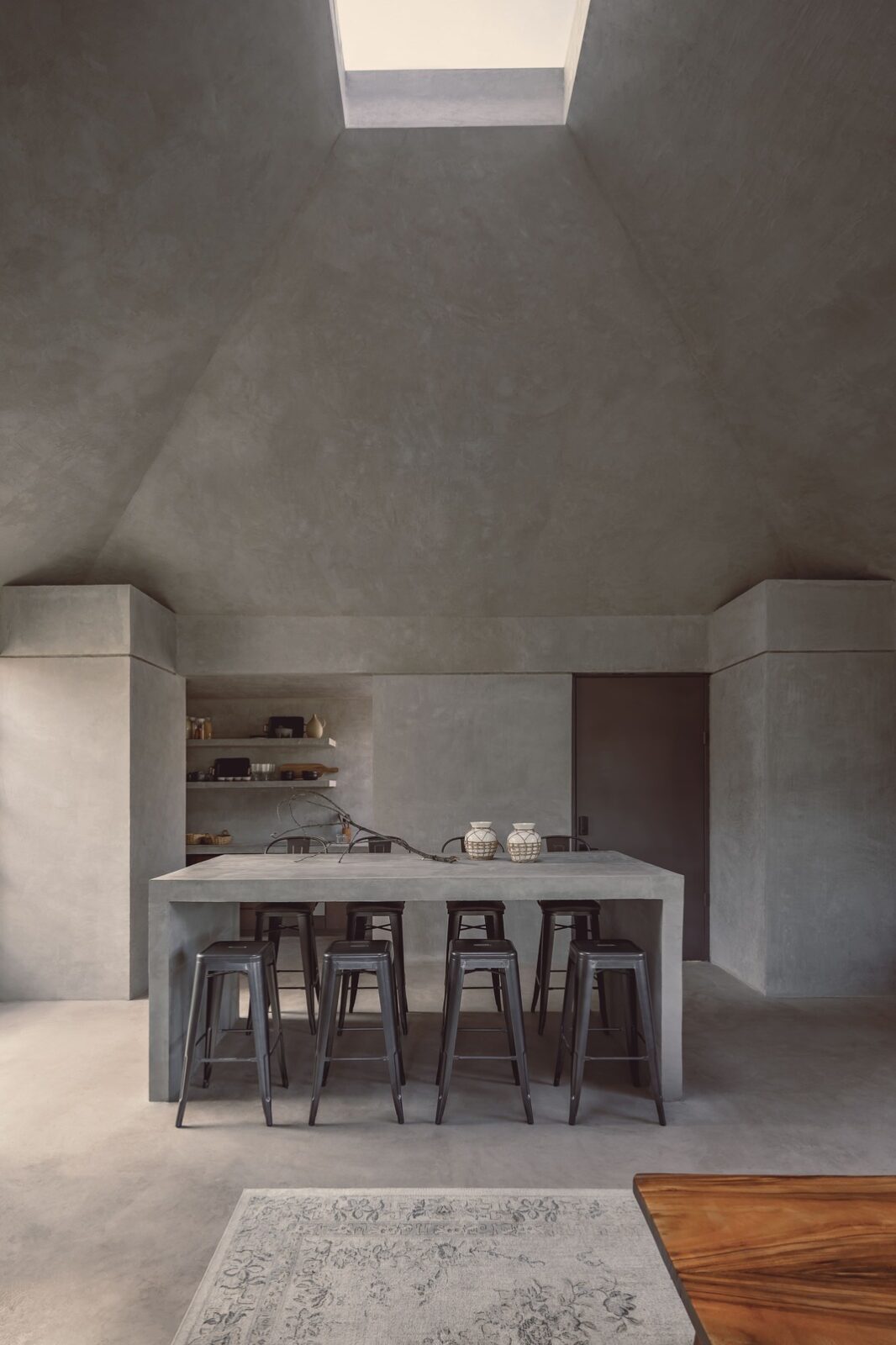
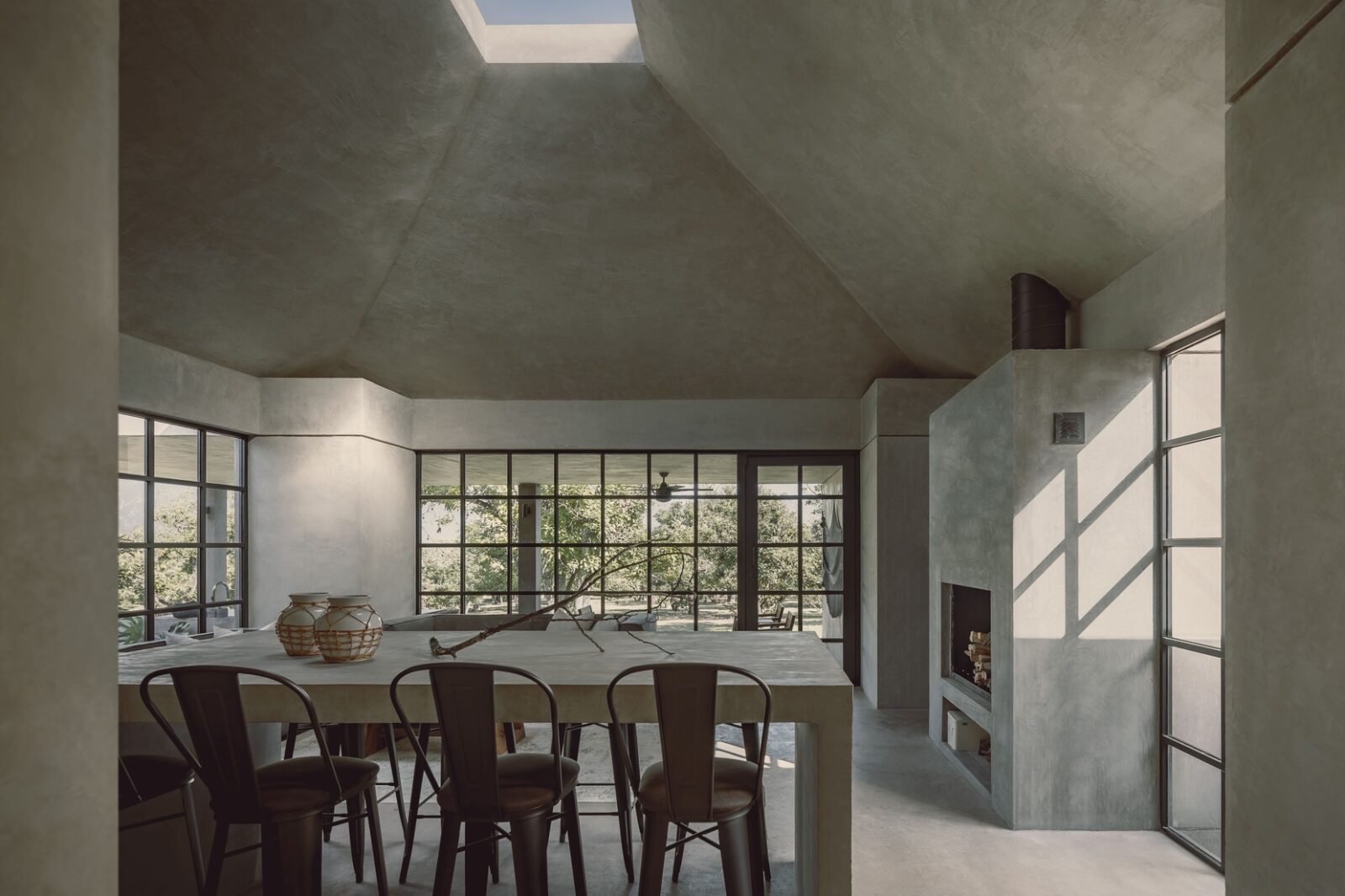
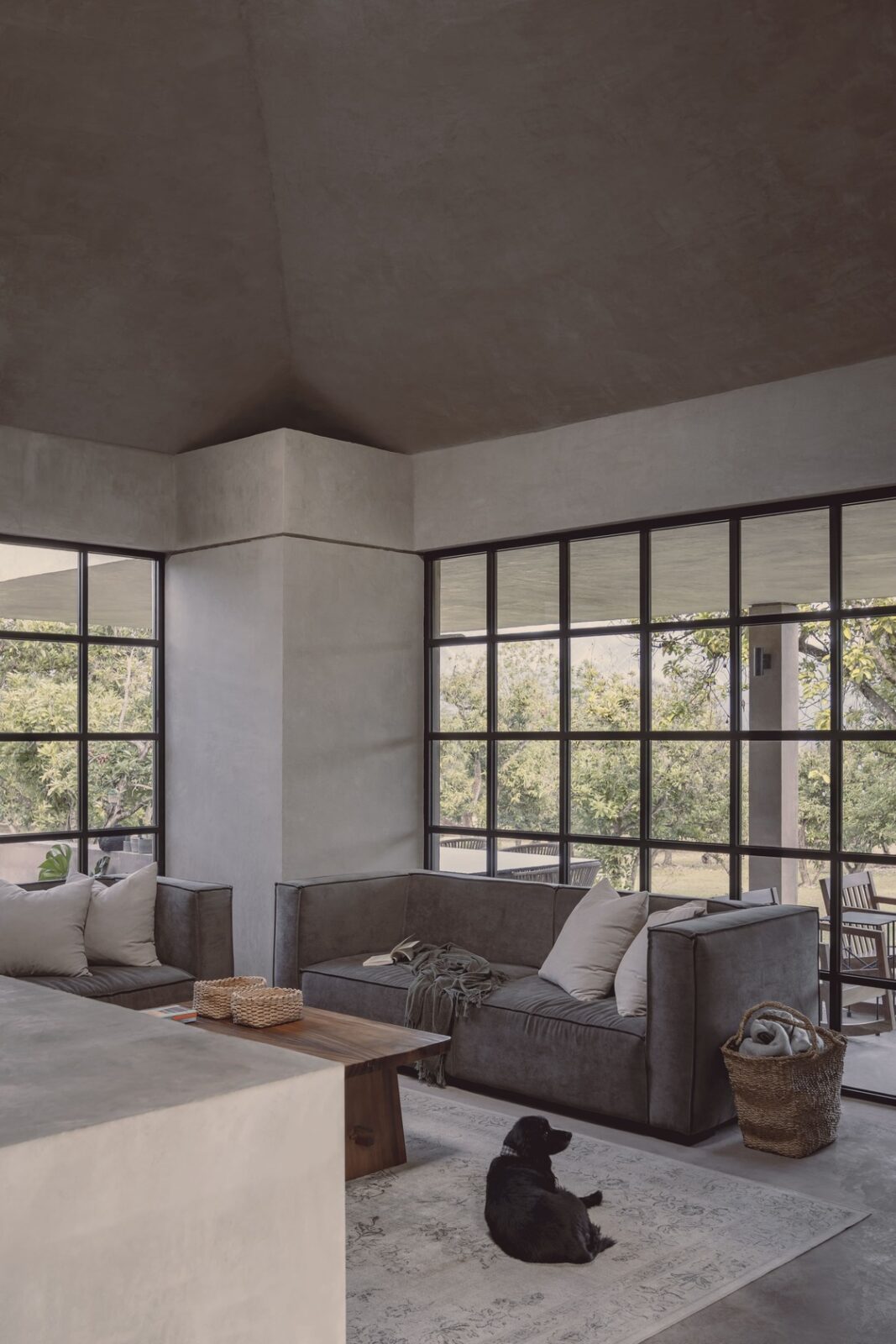
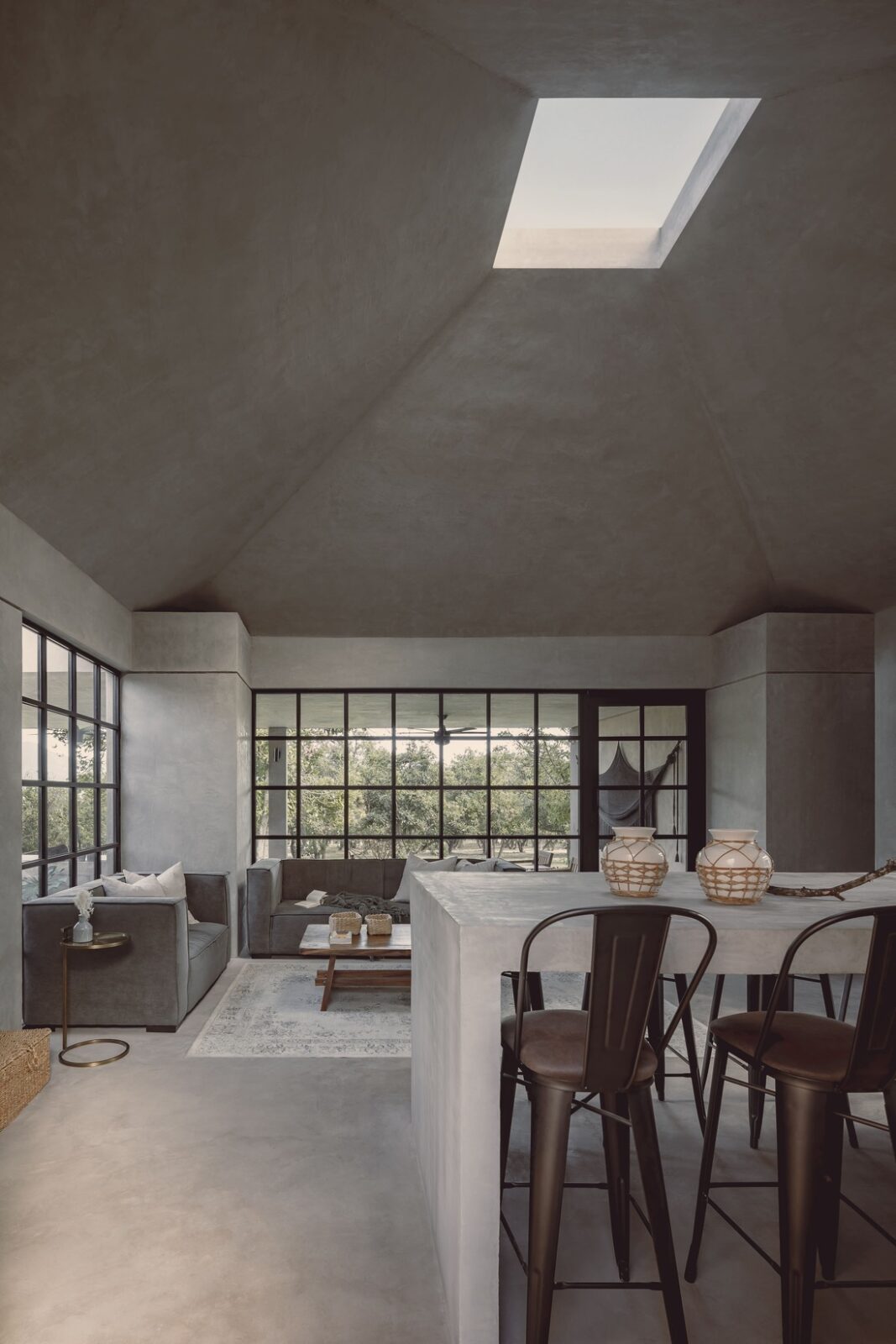
The central space acts as both a living room and a dining room. It features a soaring ceiling that reaches 4.5 meters in height. A skylight at the very top captures zenithal light, allowing sunshine to pour directly into the middle of the home. This pyramid-like roof is supported by the surrounding walls, creating a strong sense of shelter.
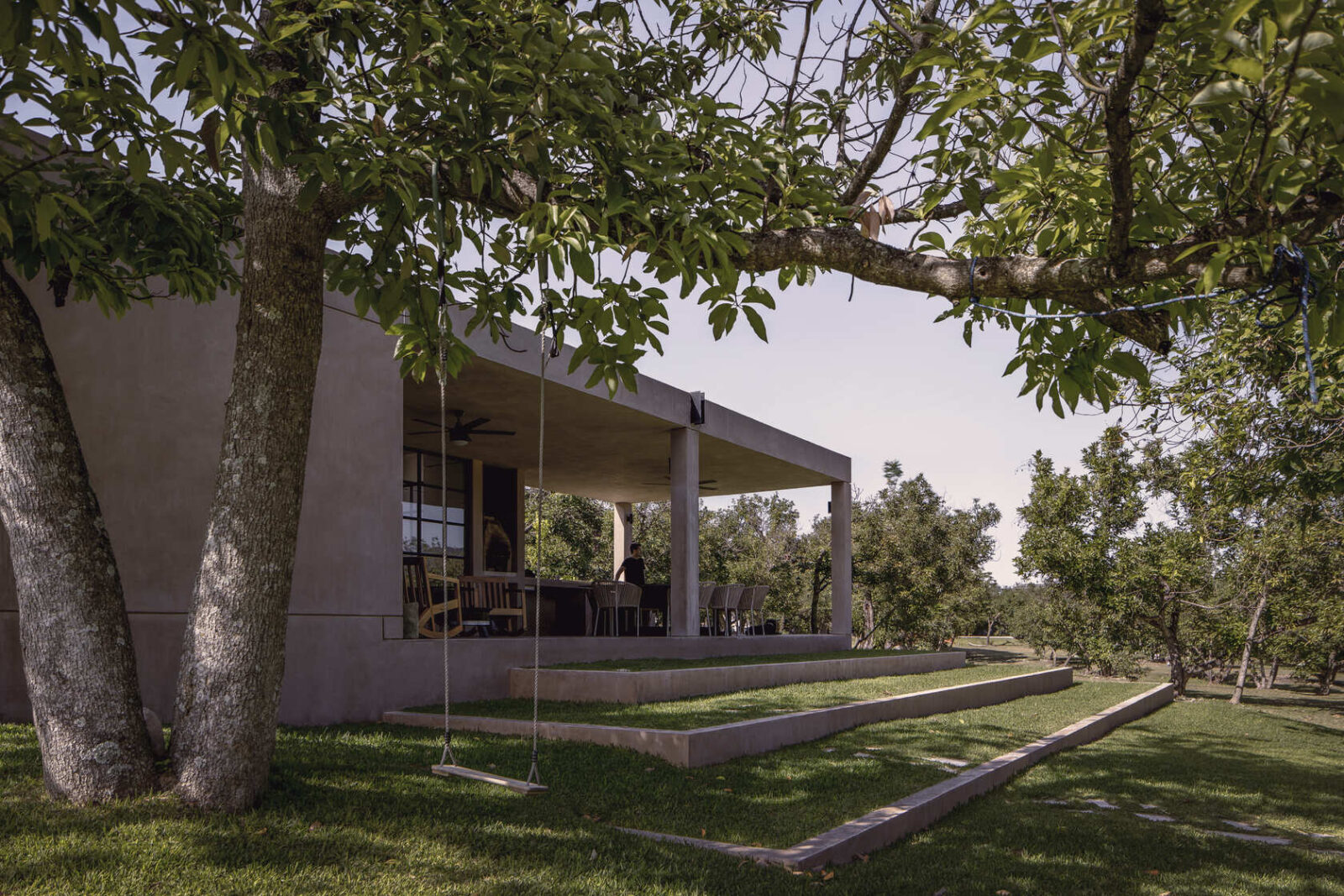
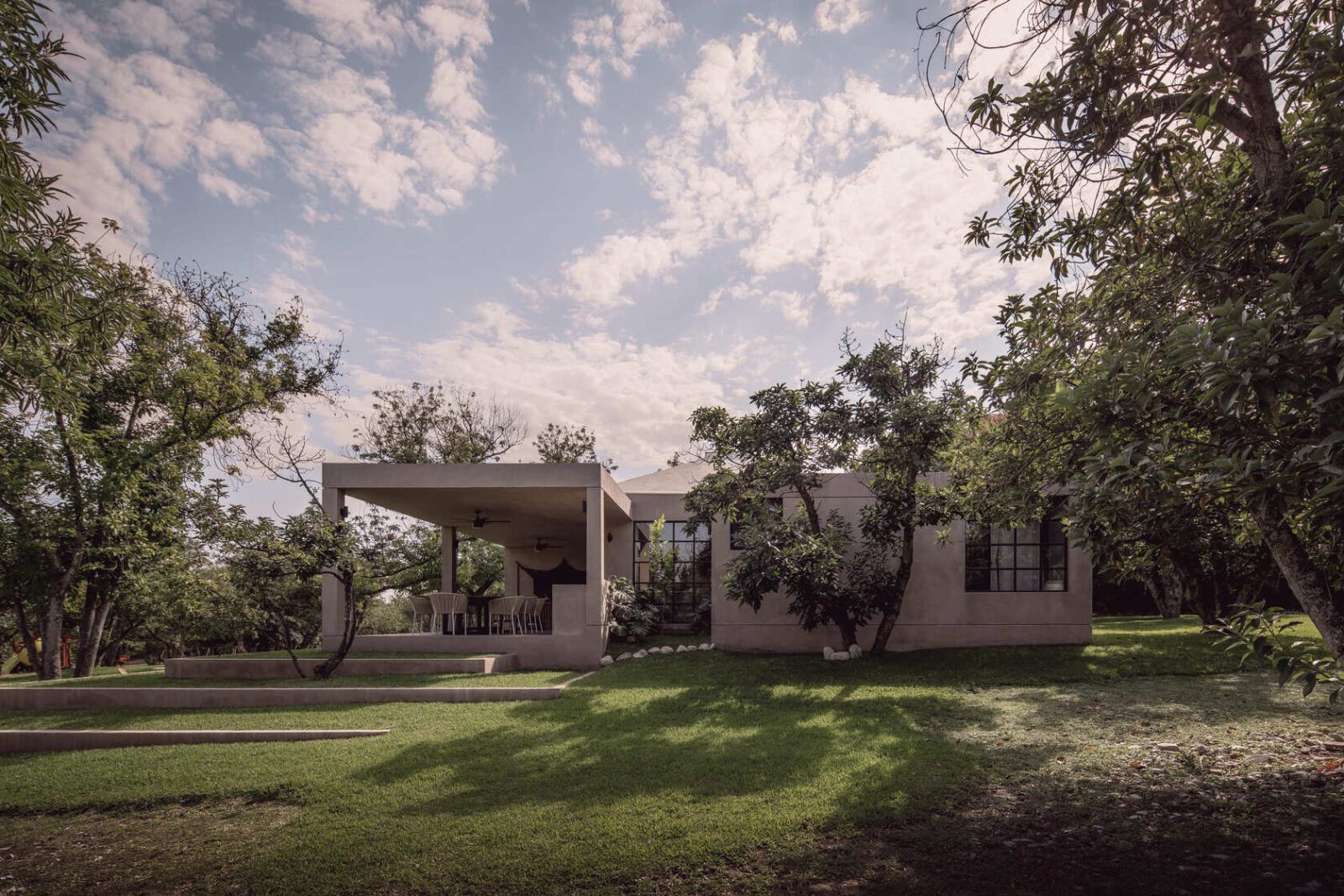
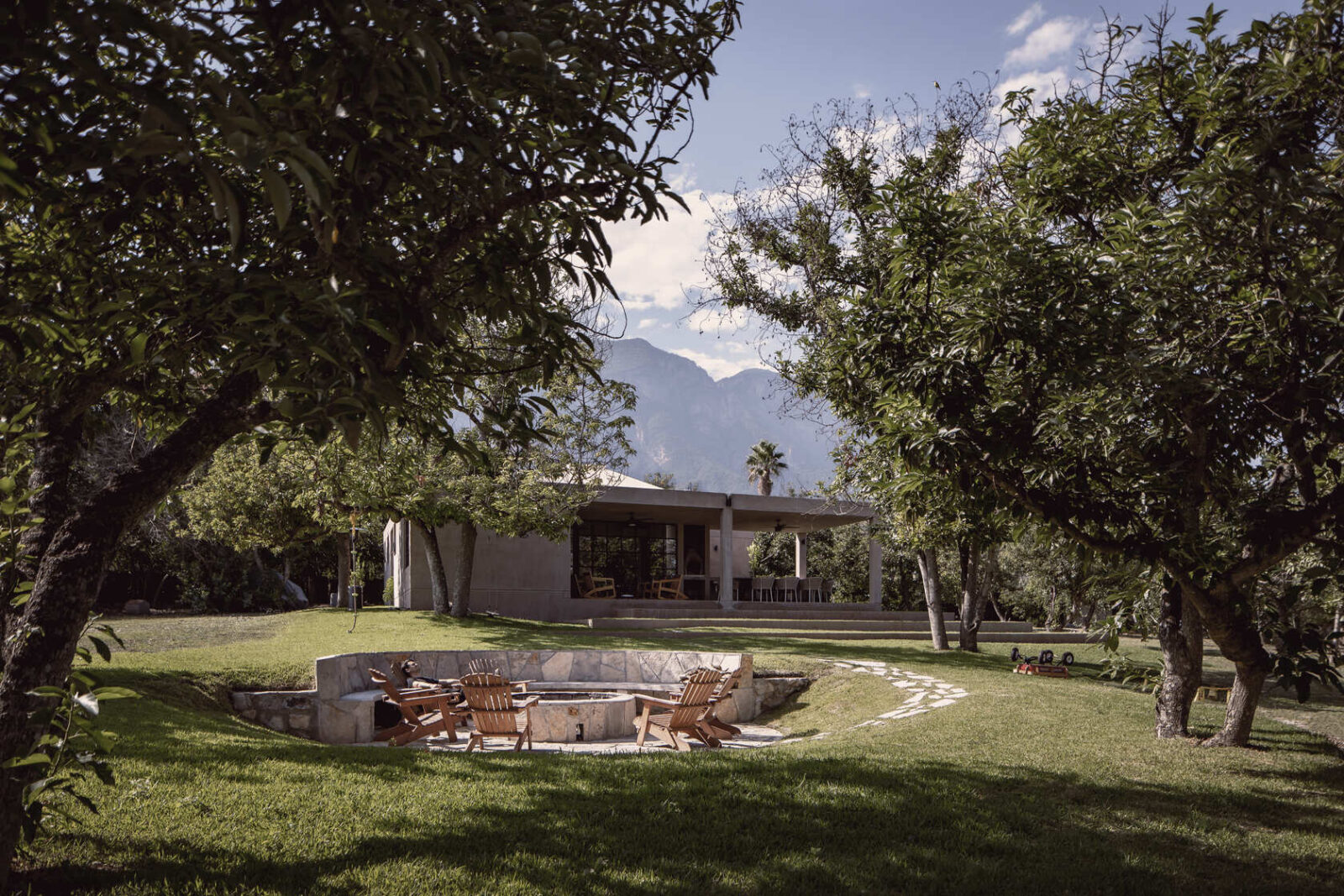
Materiality plays a huge role in the atmosphere of El Aguacate. The walls are constructed from gray block covered in a rustic polished finish. This choice gives the exterior a sense of solidity and sobriety. Combined with landscape design that uses apparent stone, the house takes on a stony, monolithic appearance. The grey tones of the structure dialogue with the intense green of the garden, making the house feel like a natural part of the terrain rather than an intruder.
The interface between inside and out
El Aguacate is designed to be an interface between the inhabitants and the landscape. The layout allows for a free flow of wind and circulation throughout the interconnected courtyards and volumes. Large windows in the central space frame views of the outdoors, ending in two perimeter patios that bring light and air into the edges of the house.
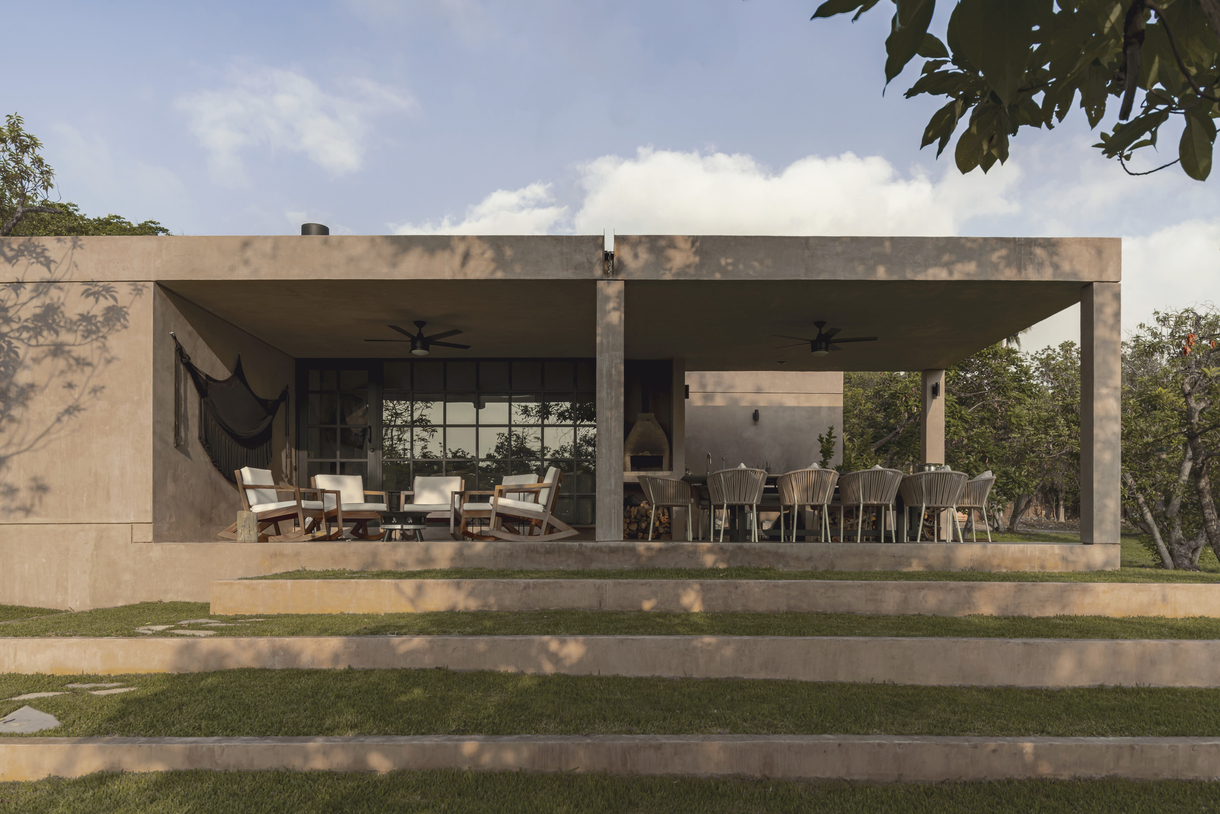
The connection to the land continues with a large terrace that extends out into the property. This is achieved through a series of vegetated platforms that step down into the terrain, softening the transition from the built structure to the wilder site. Whether standing in the tall central room or resting in one of the private cells, the design ensures a constant visual experience of closeness to the environment.
Práctica Arquitectura has created a residence that challenges the typical idea of a weekend getaway. By prioritizing a geometric order that adapts to human needs and selecting materials that feel permanent and grounded, El Aguacate achieves a high level of comfort without excess. It shows how architecture can provide a welcoming space for rest and coexistence by focusing simply on light, space, and a strong connection to the earth.
Project info
Project name: El Aguacate
Architects: Práctica Arquitectura
Lead architects: David Martínez, José Buzo
Location: Santiago, Mexico
Photography: César Béjar Studio & Dove Dope


