Header: Onnis Luque
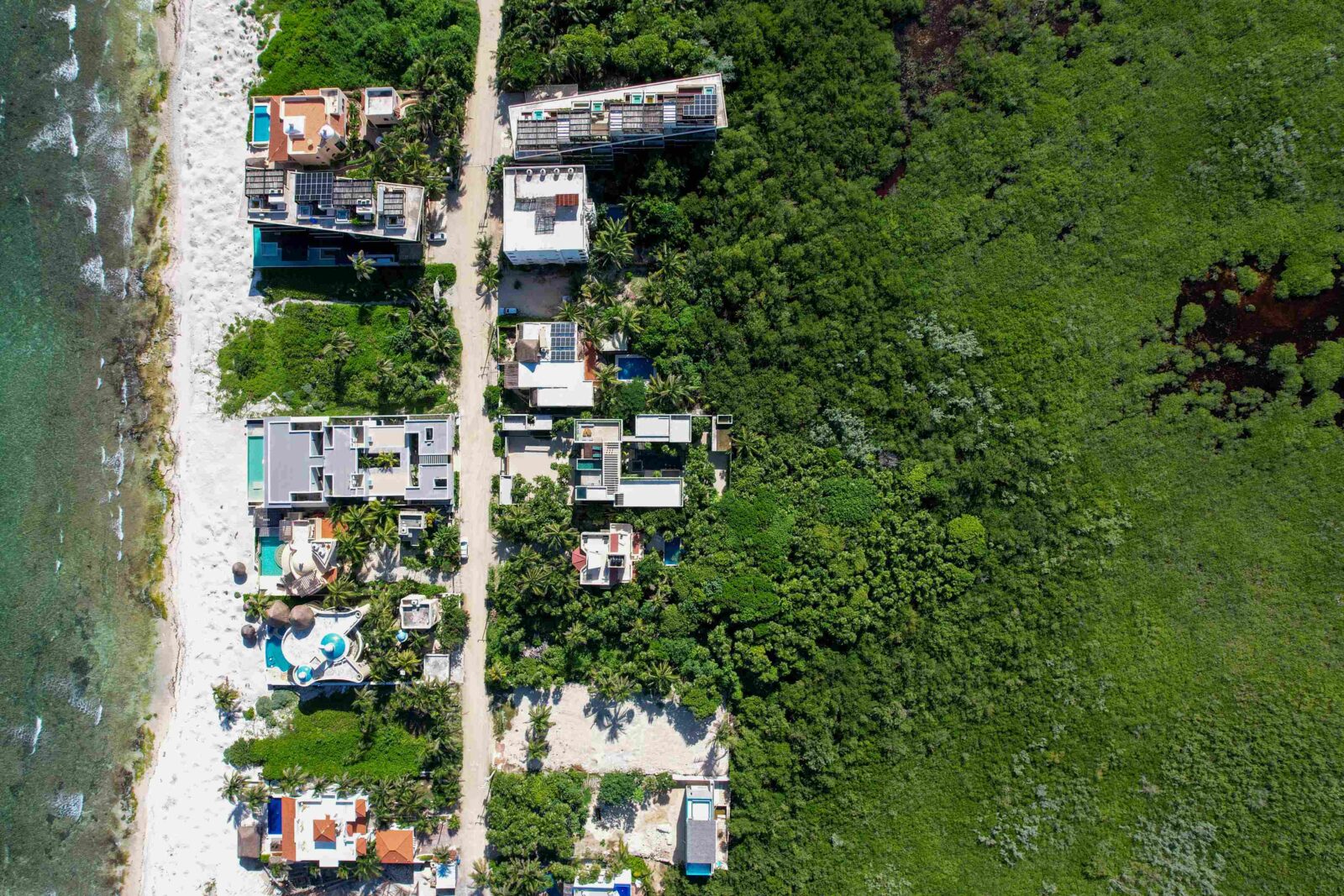
There are landscapes where architecture doesn’t dare to impose itself, as life found the perfect way to organise itself around water. Here, light filters through branches and vegetation determines the way the air moves. It is from this logic that Casa Vihara, a luxurious villa, came into existence, having been designed by Di Frenna Arquitectos as a natural extension of the rhythm of Quintana Roo, in Tulum, Mexico.
The natural complements the raw
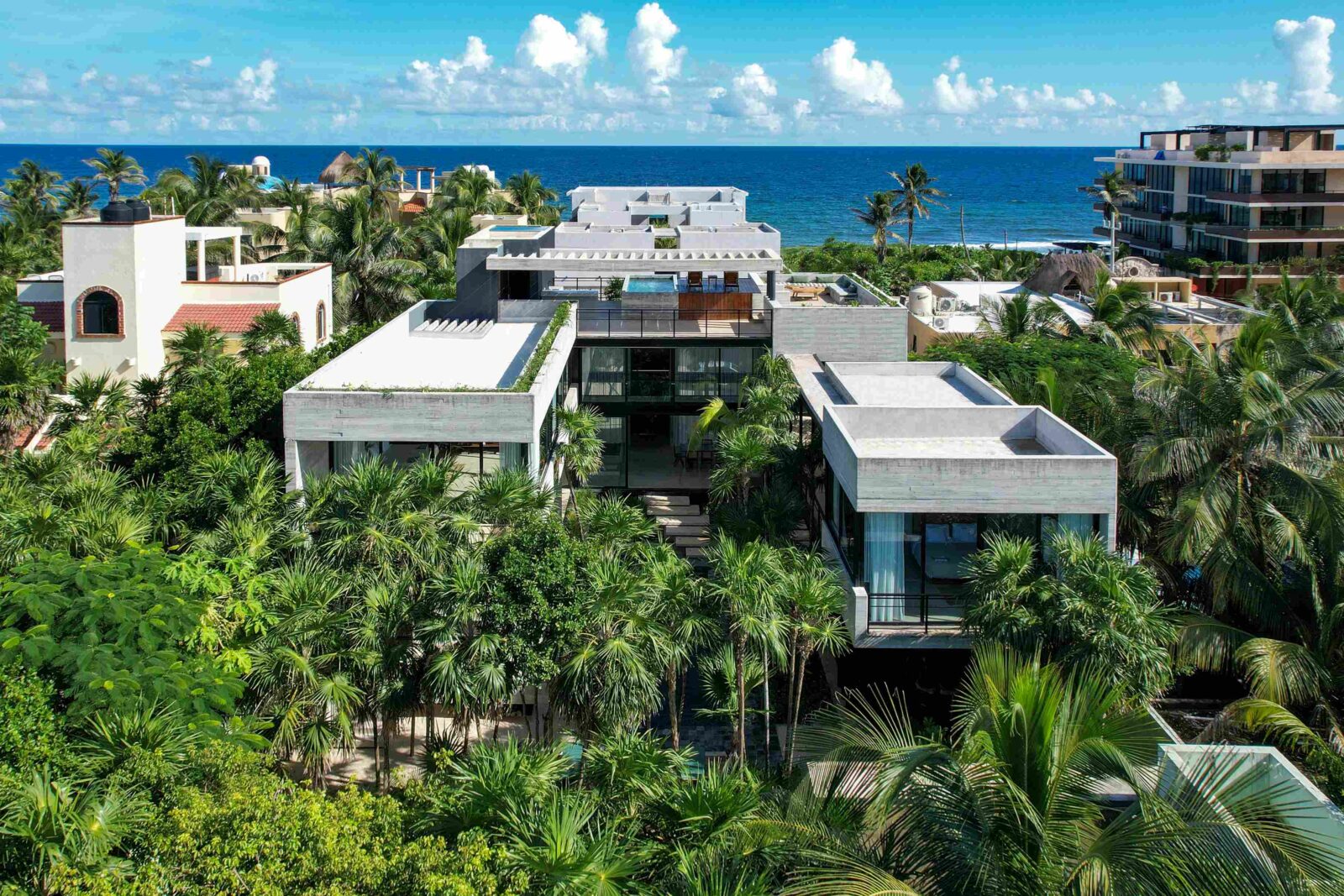
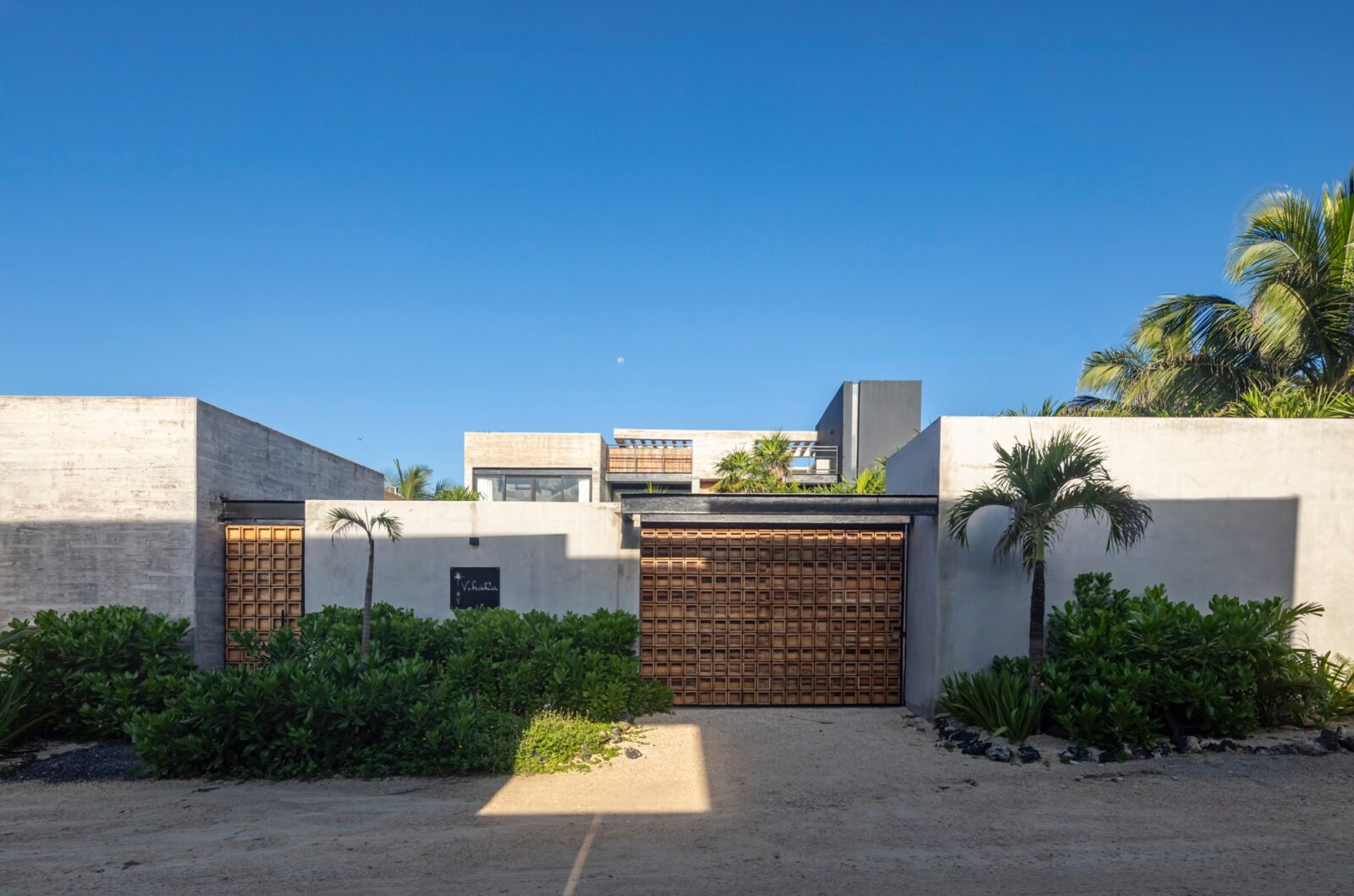
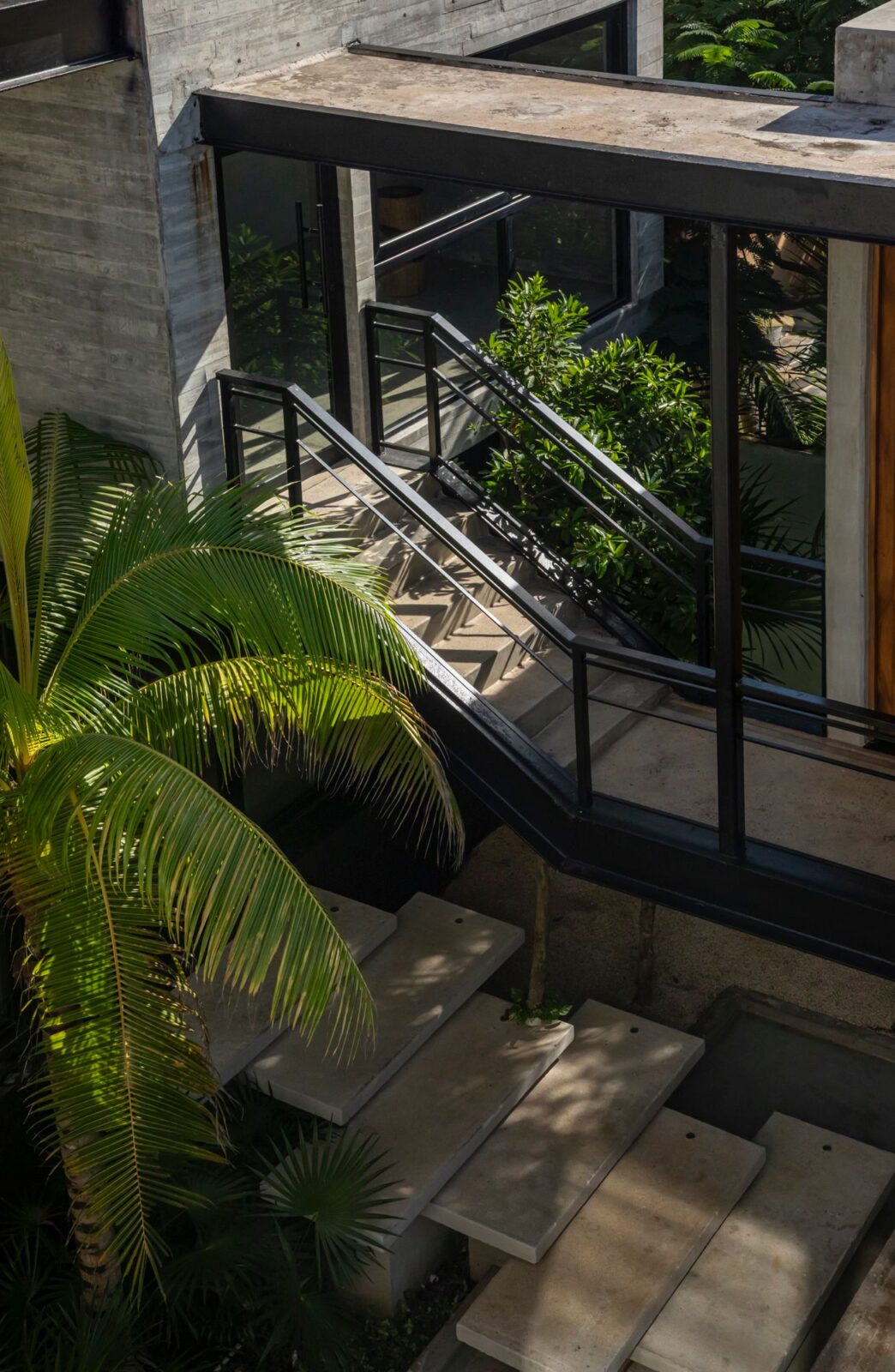
To enter the house, one has to pass through a wooden gate shouldered by two tall walls. Passing through this threshold, the visitor encounters a house surrounded by a garden of water, palm trees and other native flora. The façade, full of windows and raw from the cement, is defined by the building’s storeys, which create sharp ridges and glazed valleys that allow glimpses into the interior.
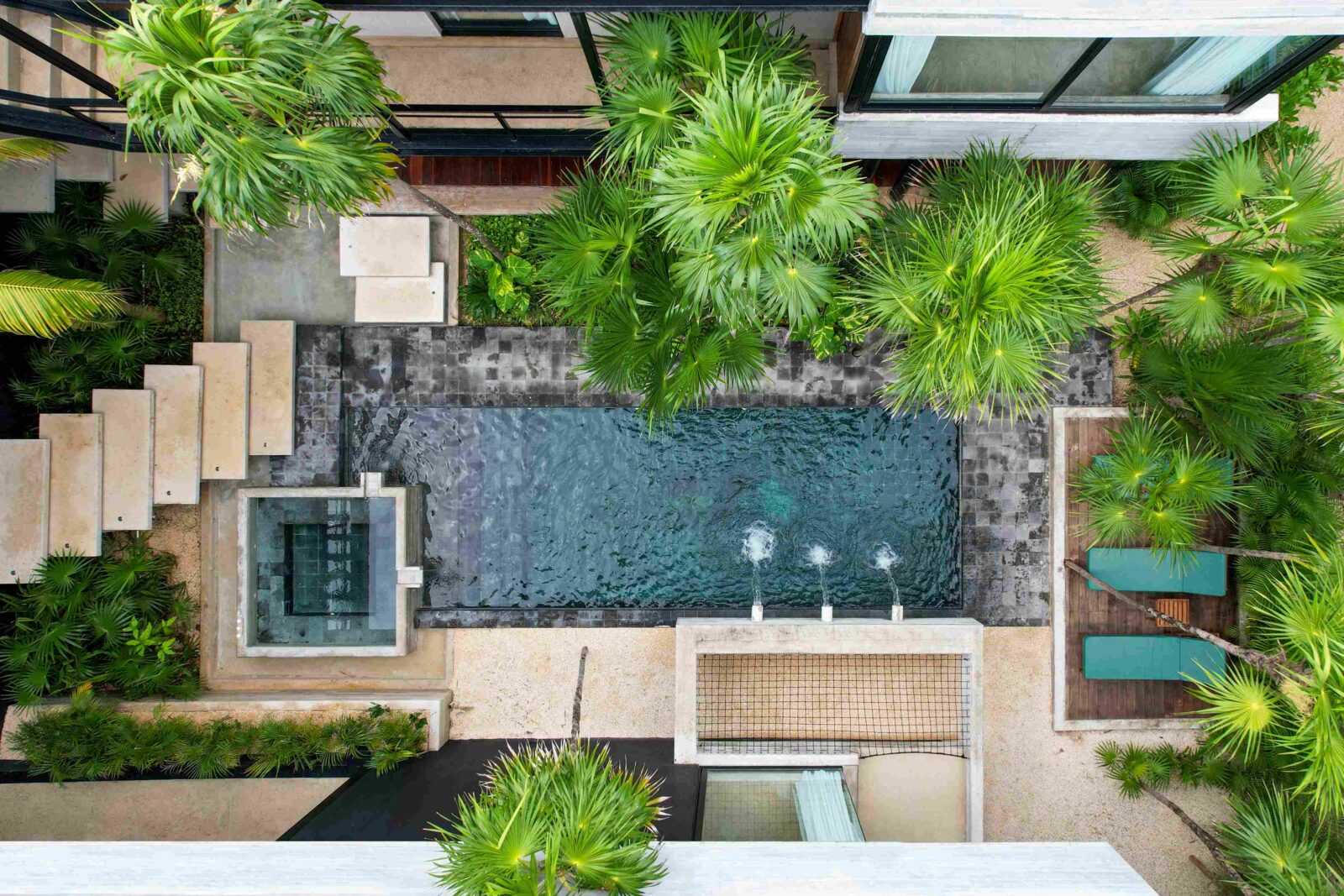
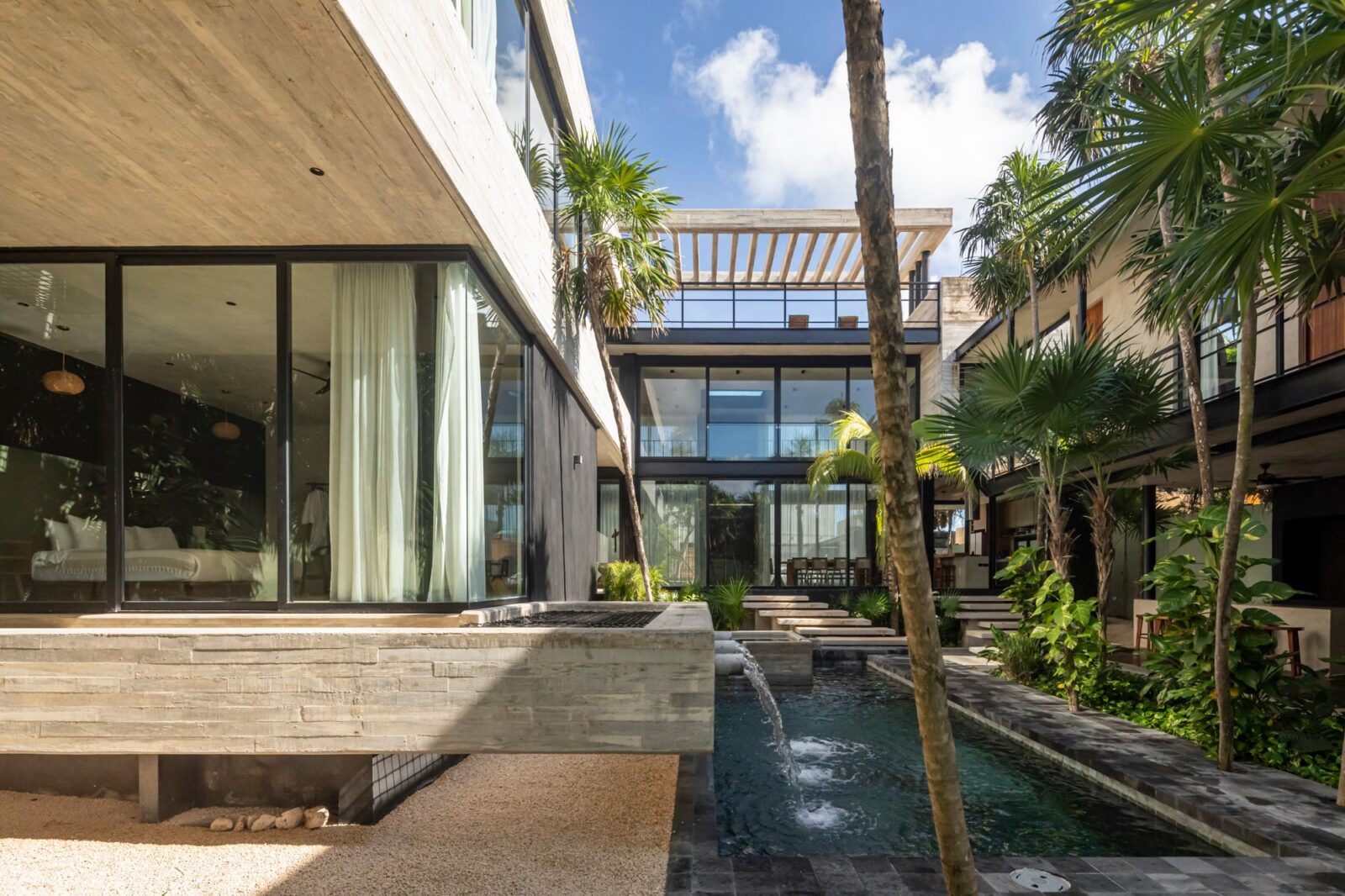
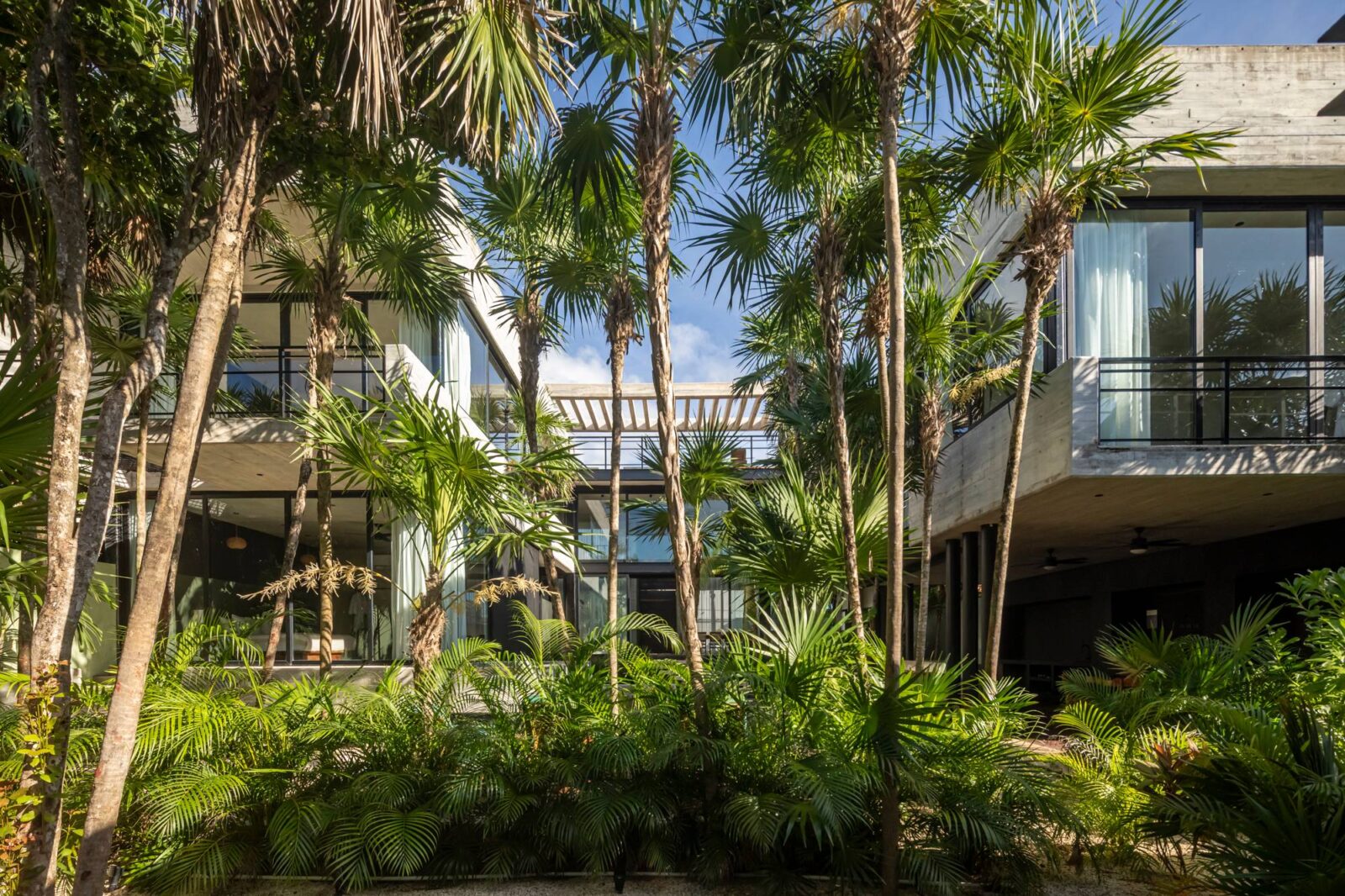
Visitors are immediately met by a long courtyard with a pool and small fountains, around which the living room, dining room, kitchen and terrace are arranged. Here, amidst the smell of the sea in the distance, the green of the plants and the sound of the falling water, residents get the chance to completely feel connected to nature: due to its positioning in the architectural plan, the courtyard feels like a part of the interior layout of the villa.
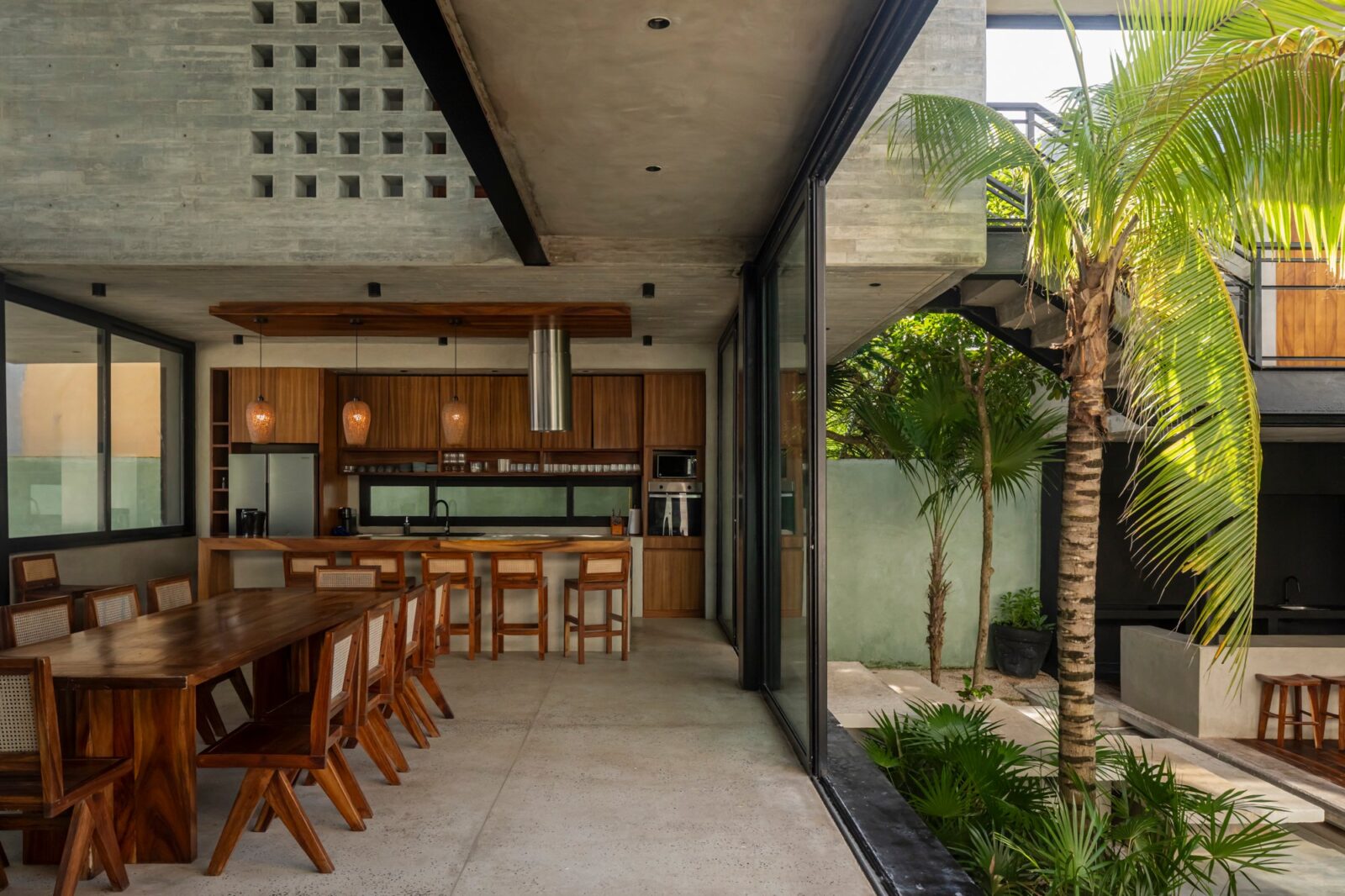
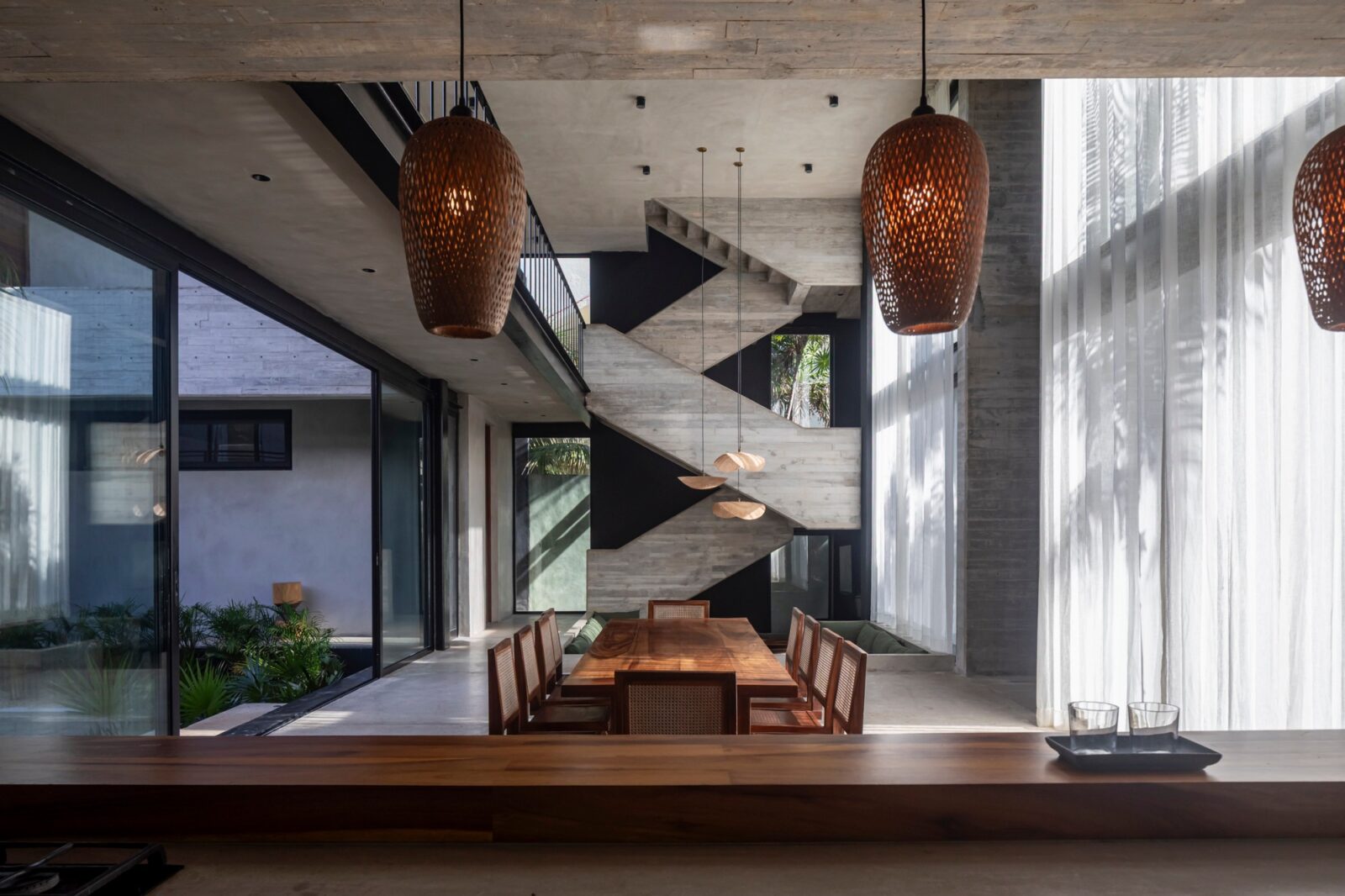
Points for contemplation
On the upper level, huge windows open the interior to the horizons surrounding the house and to cosy patios, which follow the same aesthetic as the courtyard below. This continues the idea of interplay between home and nature, as the bedrooms enjoy the same views as the terraces: the nearby vegetation and the distant line of the sea.
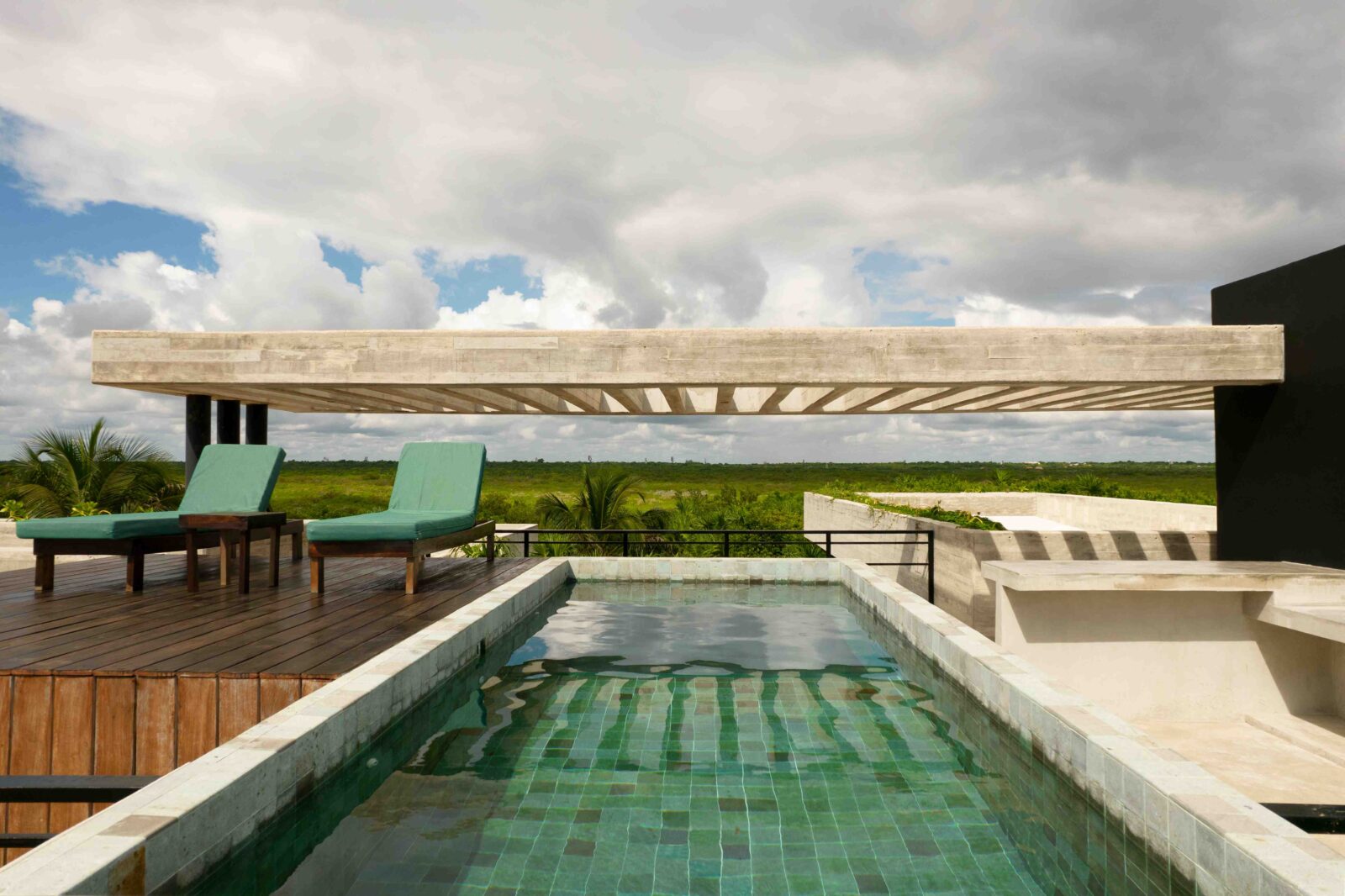
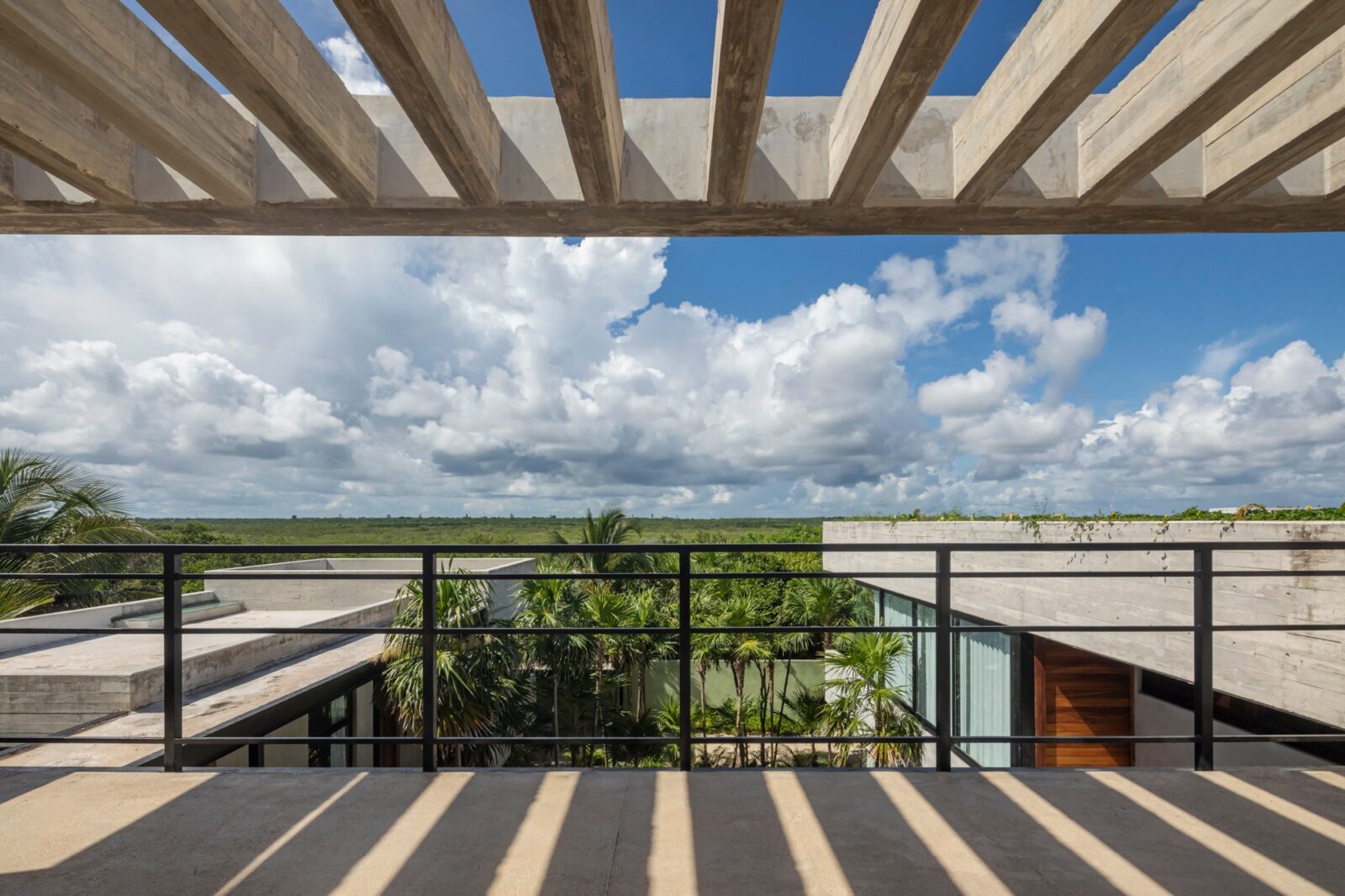
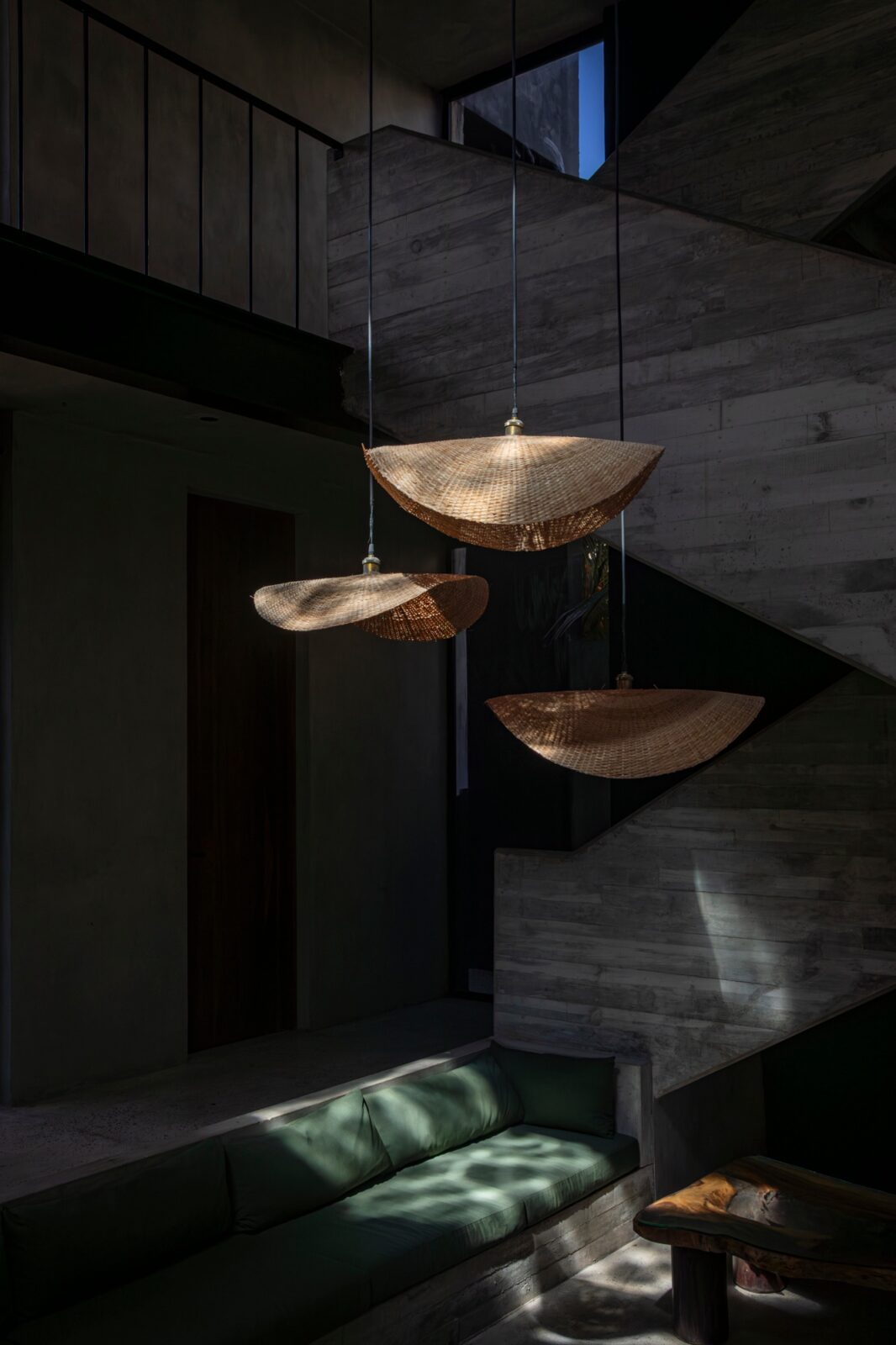
On the rooftop, a terrace with a firepit and a pool offers a spot for contemplation. From within the water, a glass dome opens onto the double height of the living and dining room, allowing natural light to pass through and cast shifting reflections upon the walls and furniture. Another interplay comes into view, that of light and shadow, that accompanies the house throughout the day.
Concrete, steel and wood
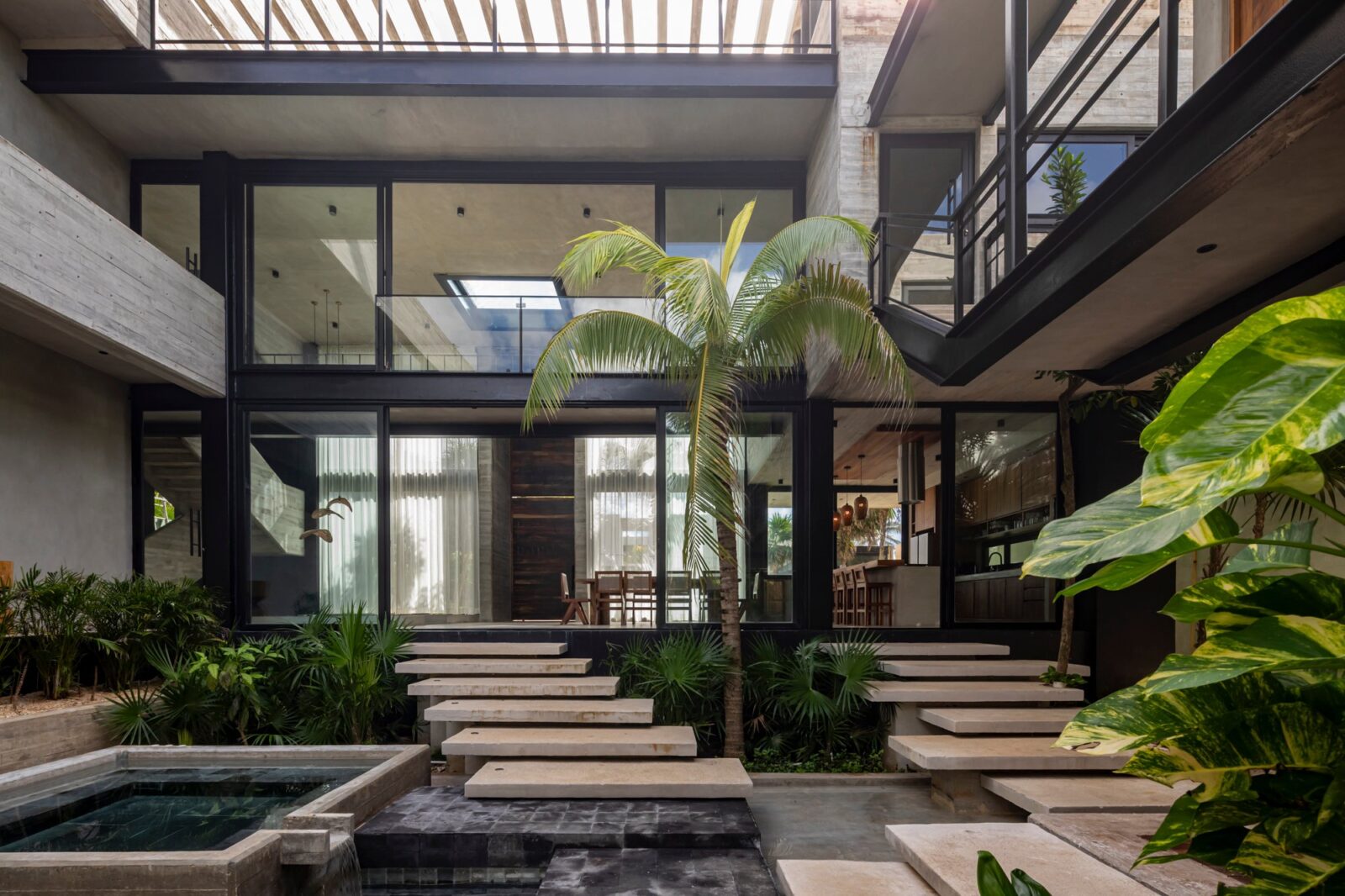
Finally, the materials chosen were intentional, as each responds to the climate and to a need for low maintenance: tropicalised concrete paired with accents of black steel and local wood. In its neutrality, the concrete allows the green of the vegetation to stand out and become the protagonist. A sculptural staircase made from this same concrete can be found indoors, evoking both the style of a pre-Hispanic motif and of the outside architecture.
In the end, the house follows the same idea that shaped it from the start: a close relationship between water, light and nature, carried through every space.