





Header: muuto
Shaped by a thin, flexible shell and folded edges, the Brink Chair pushes the plywood to its limits. Made by designer Thomas Bentzen for Muuto, the chair provides the strength required for demanding use while remaining light and easy to carry. Stackability is central to the design. Built directly into the form, the stackability combines performance with practicality and a distinct visual identity.
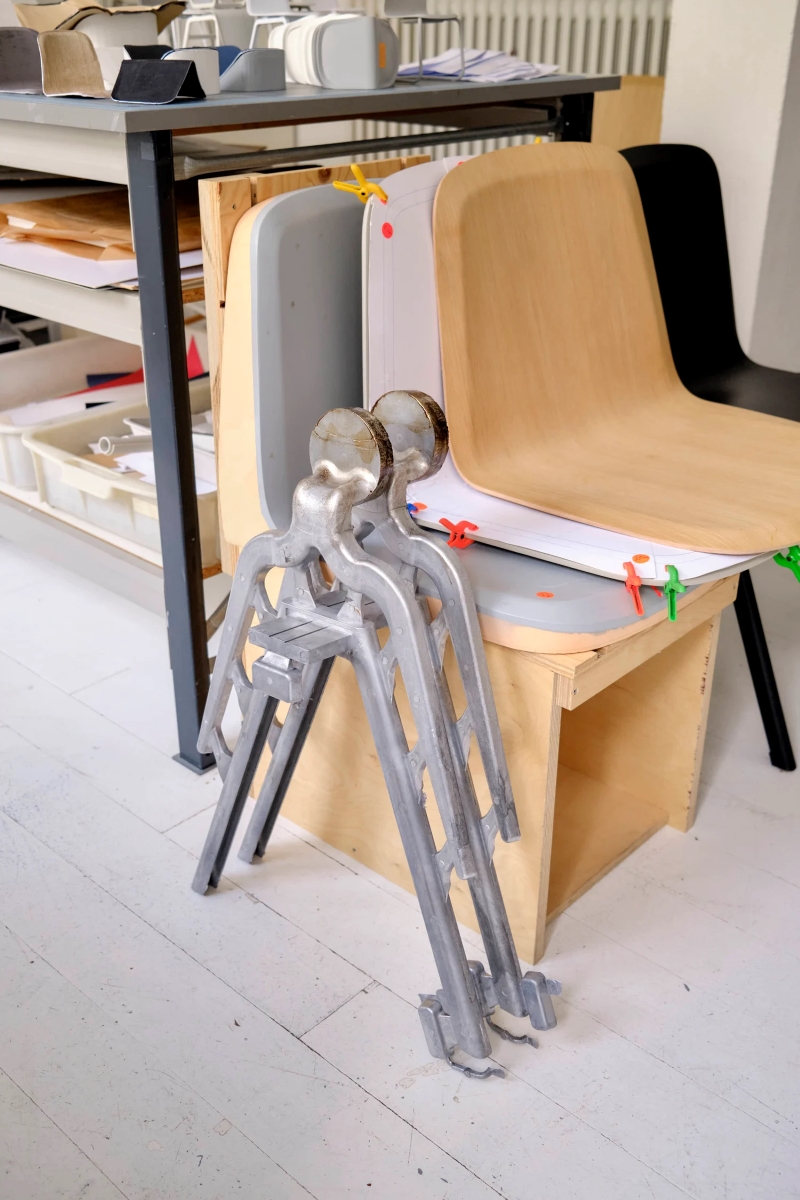
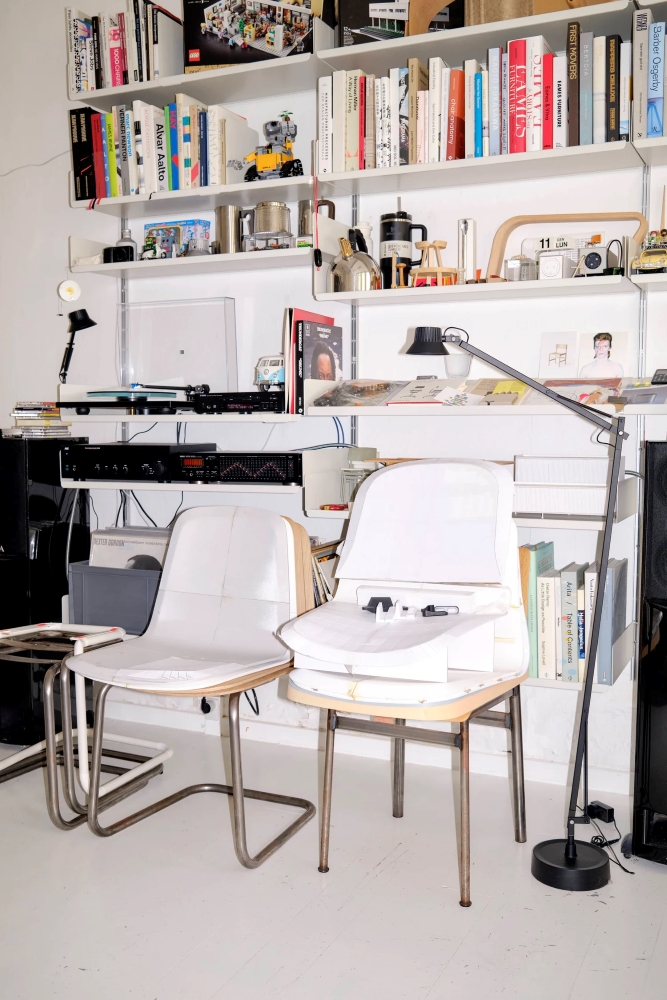
Thomas Bentzen’s explorative design process
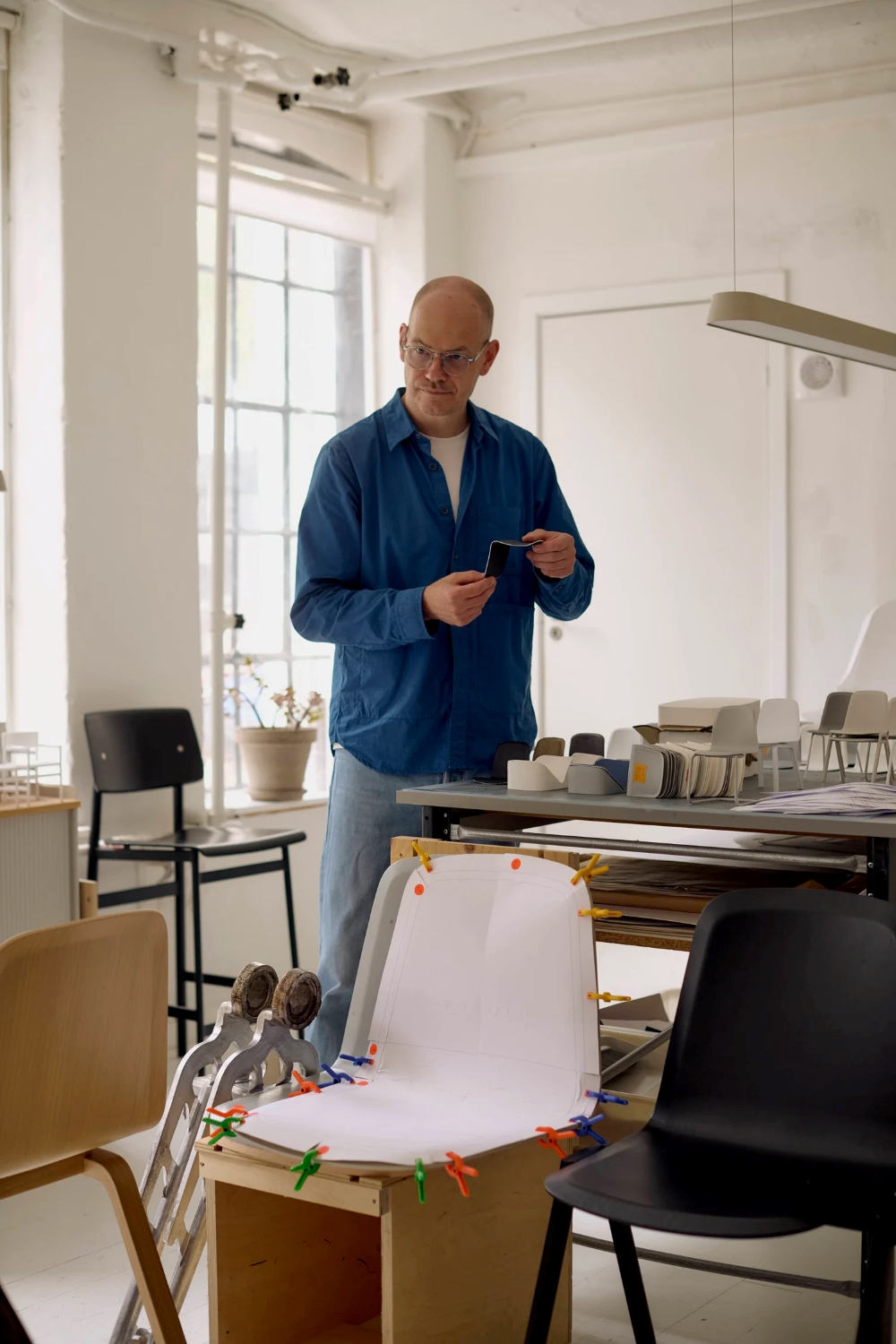
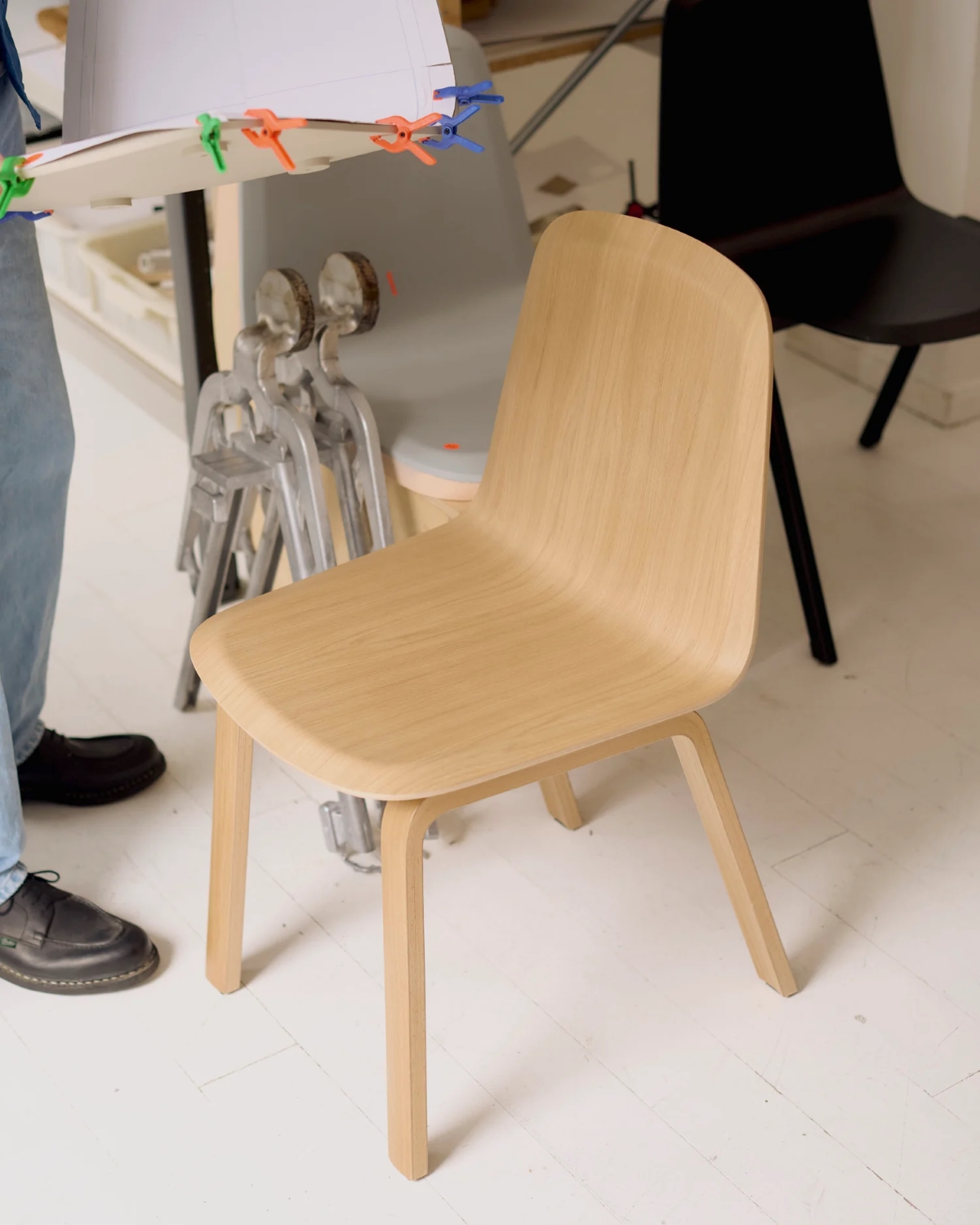
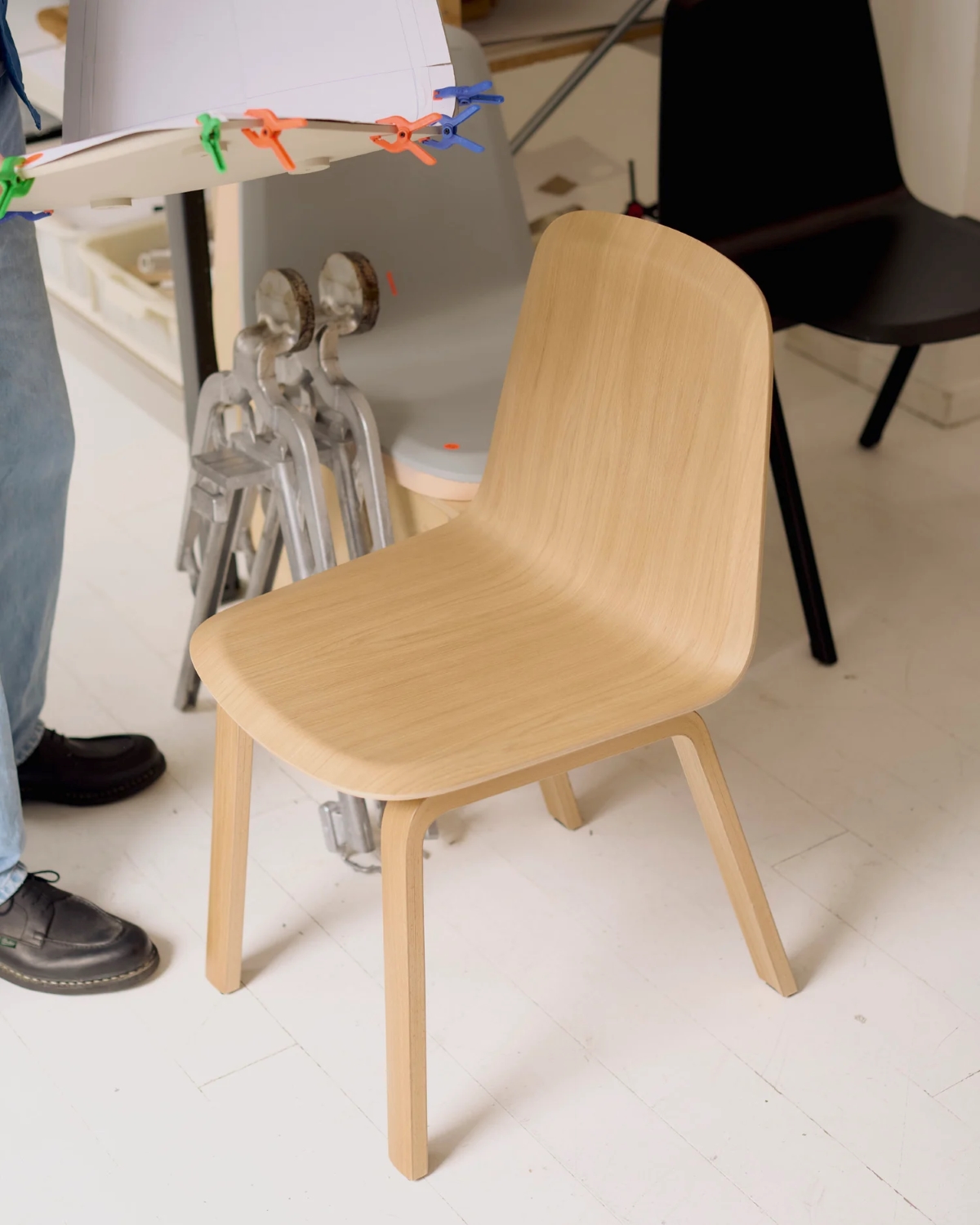
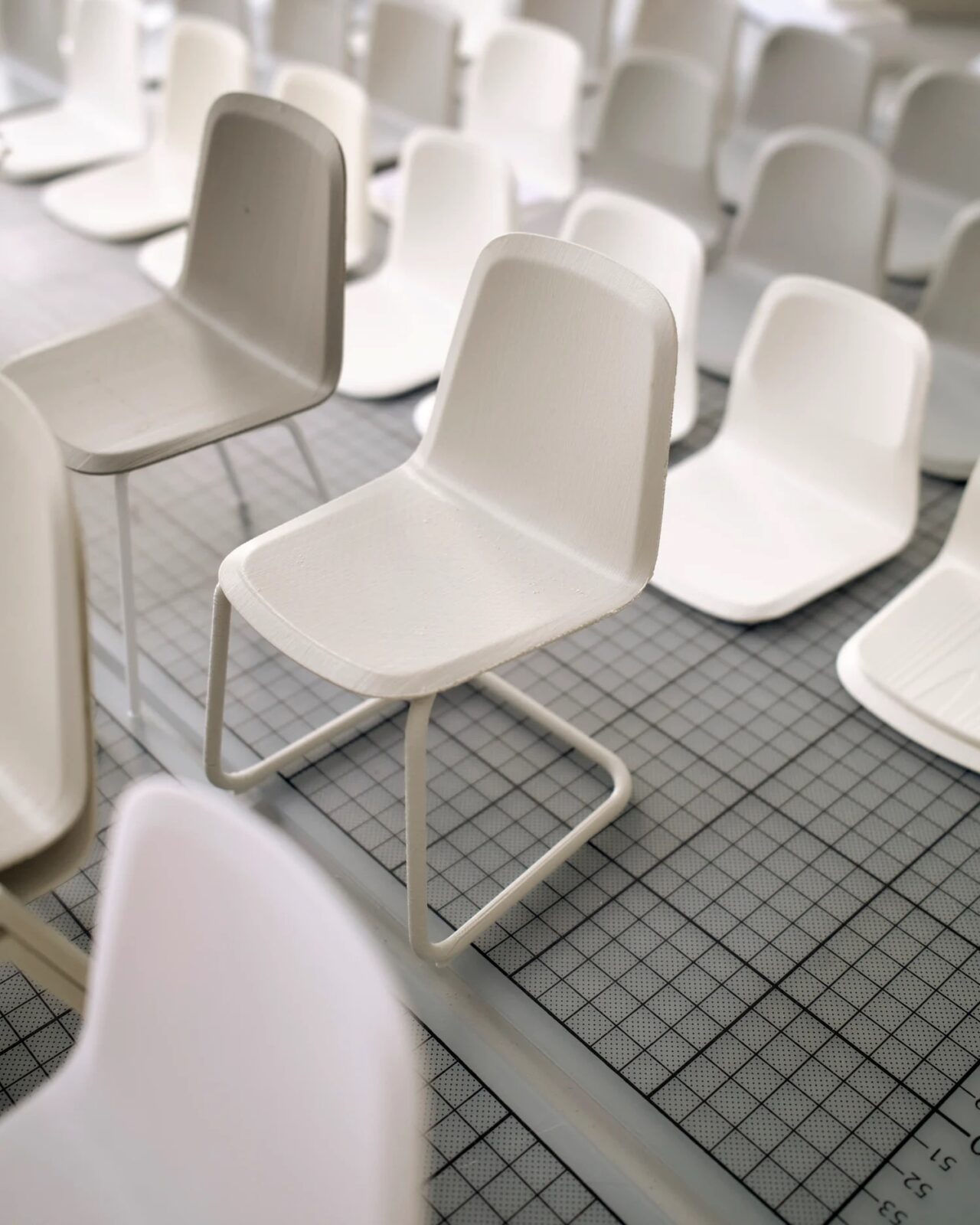
The design process took countless iterations. Every curve, layer, and transition was refined numerous times to reduce material use without compromising on durability and comfort. While testing the boundaries of the monoshell, Bentzen focused on the characteristics of the plywood itself. By exploring plywood’s natural properties, he designed the chair’s defining folds. The shell is shaped around the body and structural demands, featuring a flat area in the centre and a softer area towards the edges.
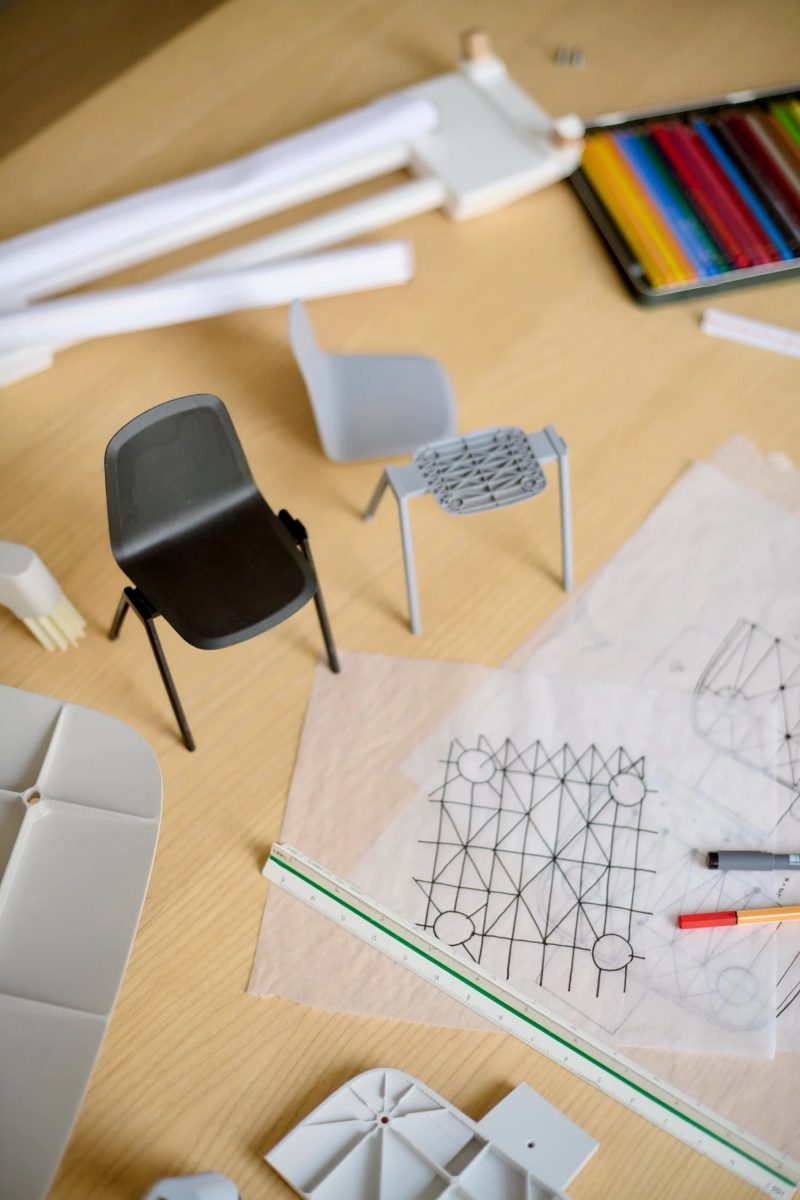
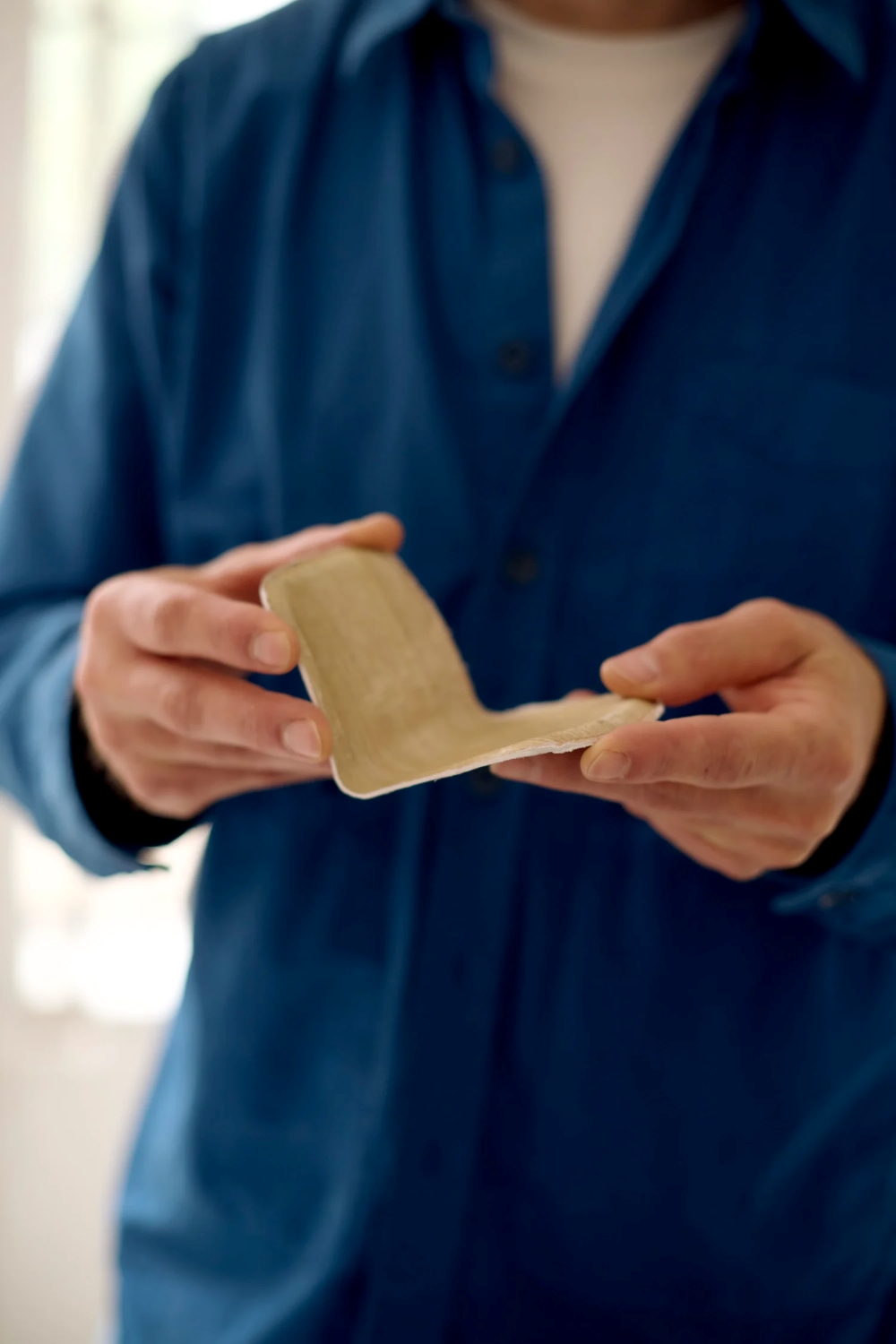
Bentzen developed the concept for the Brink Chair through numerous small paper models. Continuous folding, cutting and testing allowed the designer to explore how the material moves and gains strength before translating the result into moulded plywood. Every change brought the design closer to the final product. Some versions were more curved, others slimmer, but the chair reached its final form by balancing flexibility, comfort and strength.
Four years of development
From the front, the chair features a soft, open aesthetic, but from behind, the edges become sharper and more precise, resulting in a distinctive interplay of lines and shadows. The folds provide strength exactly where it is needed. More than a decorative element, folds allow the chair to remain thin while maintaining outstanding performance. Through very small modulations, the designer sought the strongest solution with minimal material use. A tiny change in an angle could affect how the plywood behaved during the moulding process, while removing a layer could significantly affect the chair’s usability. The final product is a result of a continuous four-year exploration of the material.
Precision and stackability
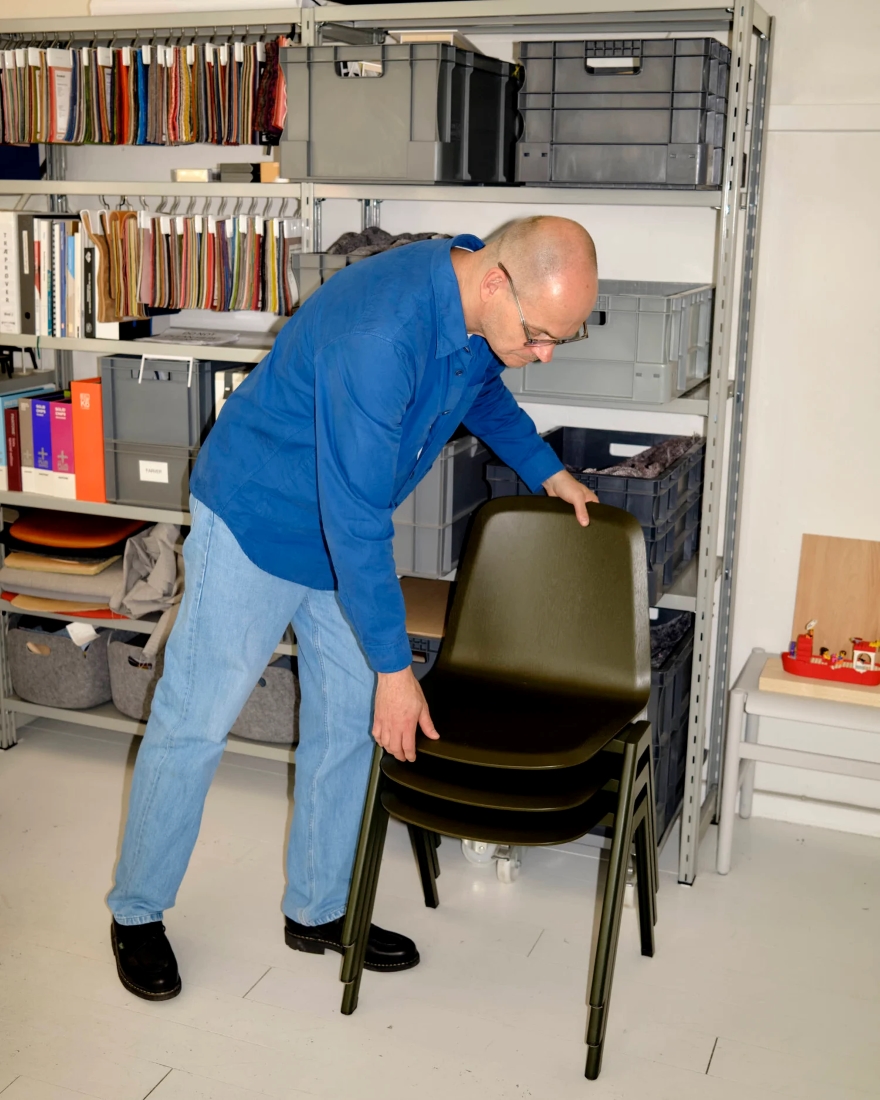
The precise lines and details were paramount to achieving the slim and light feel of the chair. The structure allowed the material to work harder, instead of adding more of it. This slimness of the chair is what makes Brink stackable. Engineered as an A-stacker, the chairs move upwards when stacked, allowing many chairs to be stored without taking much horizontal space. The flatter central section of the shell enables sturdy stacking, while shaped edges and flexibility of the material maintain softness in use.
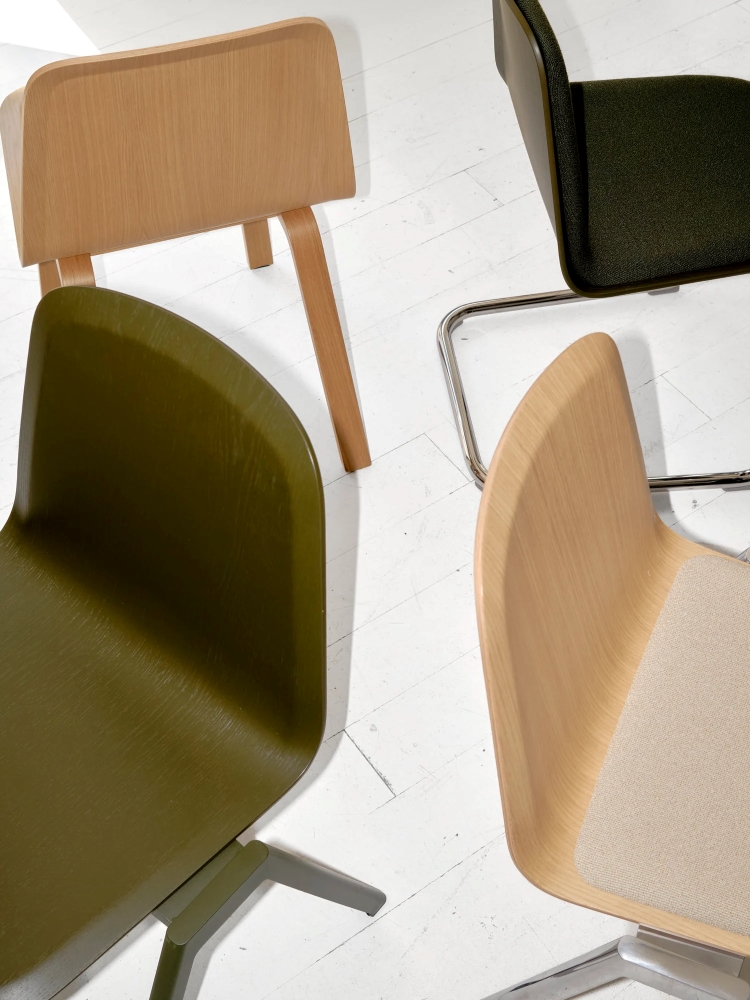
The chair comes in three models: with a wood base, an A-base and a cantilever base. Through subtle refinements, the Brink Chair achieved a deliberately understated form: a thin plywood shell pushed to its limits, balancing strength, flexibility, comfort and stackability. Homely yet technically refined, the chair features a restrained presence, overshadowing the amount of work behind Brink, where every line and every curve had to be adjusted and tested for maximum efficiency.


