



Header: Courtesy of Volkswagen 2026
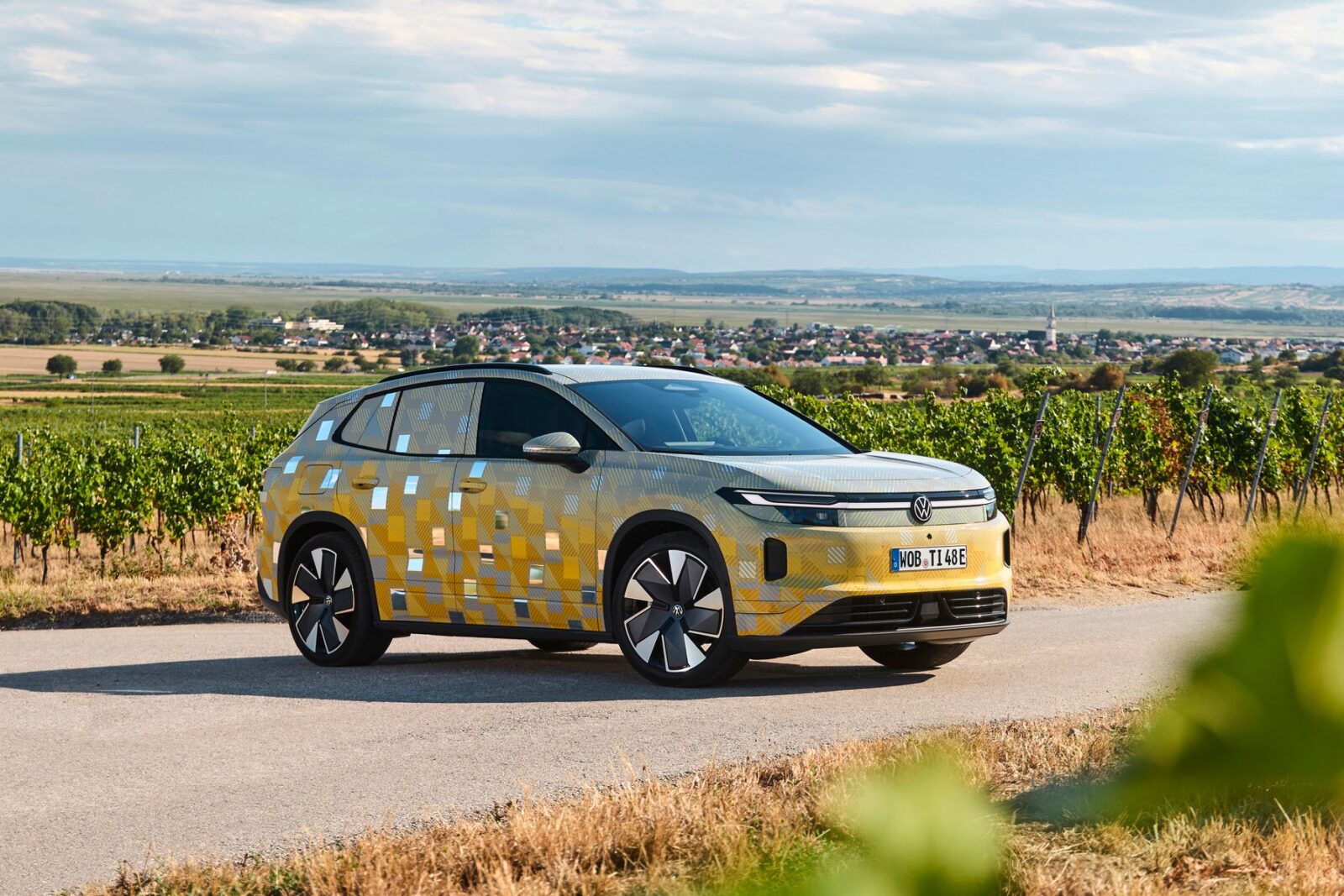
Volkswagen has just revealed the new ID. Tiguan, an all-electric version of the Tiguan that will replace the ID.4 and the ID.5 as the brand’s electric SUV for five people. It reaches the market at the beginning of 2027, and it will be sold alongside the Tiguan with petrol, diesel and hybrid engines, which stays in the range.
From the ID.4 to the ID. Tiguan
The Tiguan is Volkswagen’s best-selling model worldwide, as well as the best-selling model of the whole Volkswagen Group, with more than 8.3 million built since 2007. After the ID. Polo and the ID. Cross, it is the third of the brand’s established names to be turned into an electric car.
The ID.4 and the ID.5 have been built more than 950,000 times, and the ID. Tiguan will be made in Emden, on Germany’s North Sea coast, where the ID.4 has been built since May of 2022. The plant was converted for electric cars while it continued to produce the Passat.
“The Tiguan is our best-selling model worldwide.”
Thomas Schäfer, CEO of the Volkswagen brand
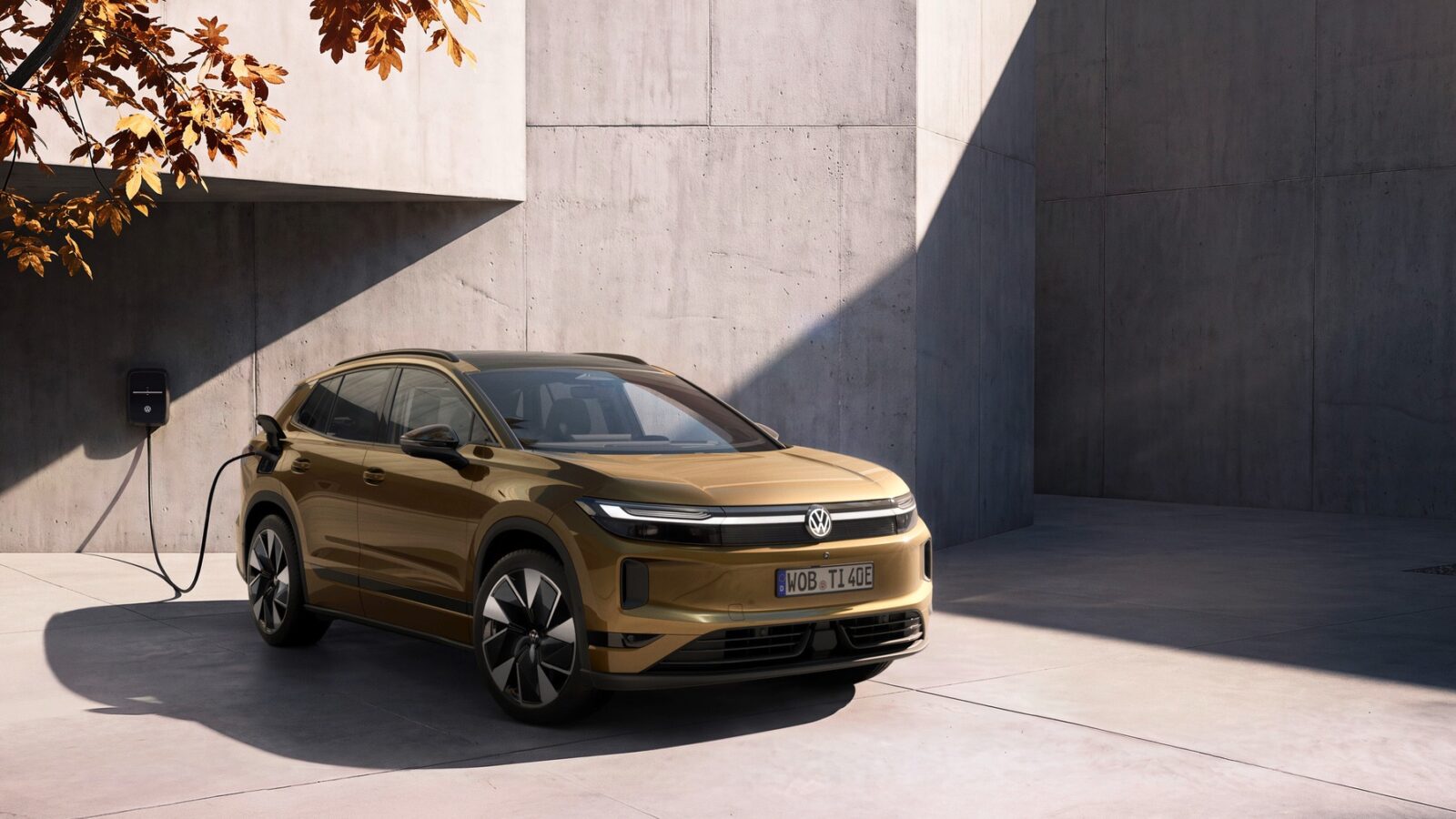
A bigger SUV look
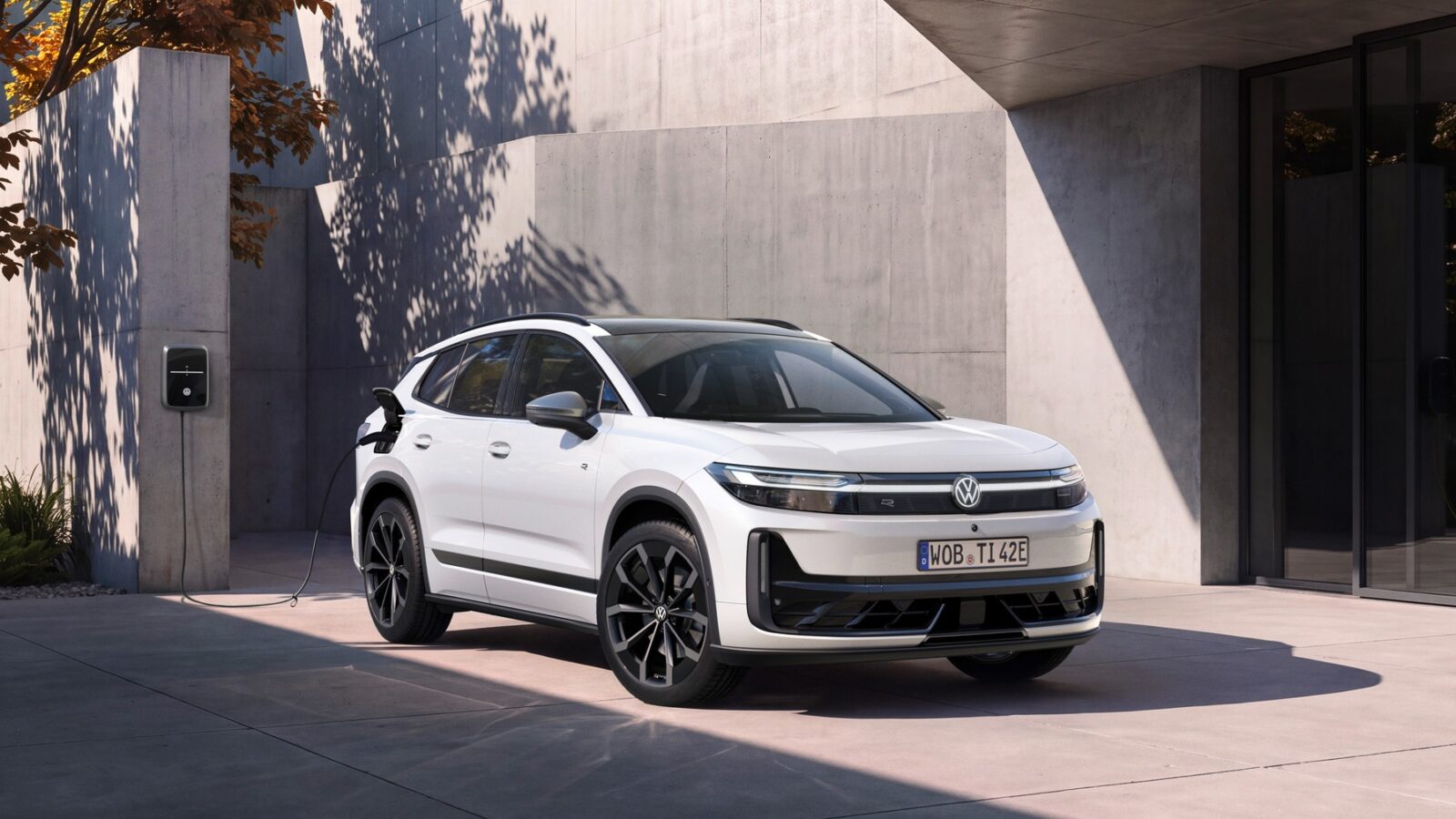
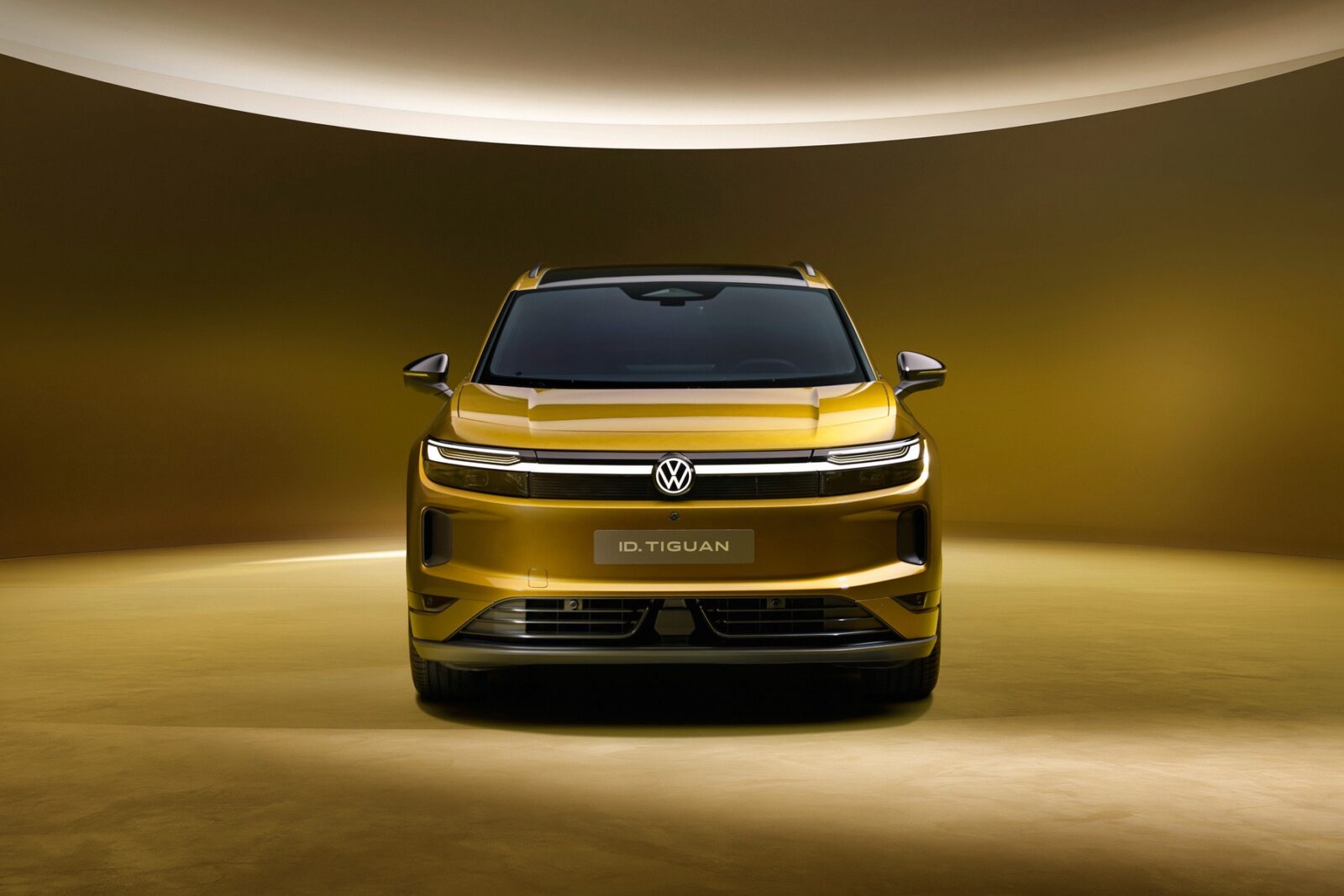
The ID. Tiguan is the largest new Volkswagen in Europe to have been drawn in the brand’s Pure Positive design style, which, compared with the softer, crossover look of the ID.4 and ID.5, gives it a more powerful SUV shape. With precise lines and taut surfaces, it looks, according to Volkswagen, like a car from the class above.
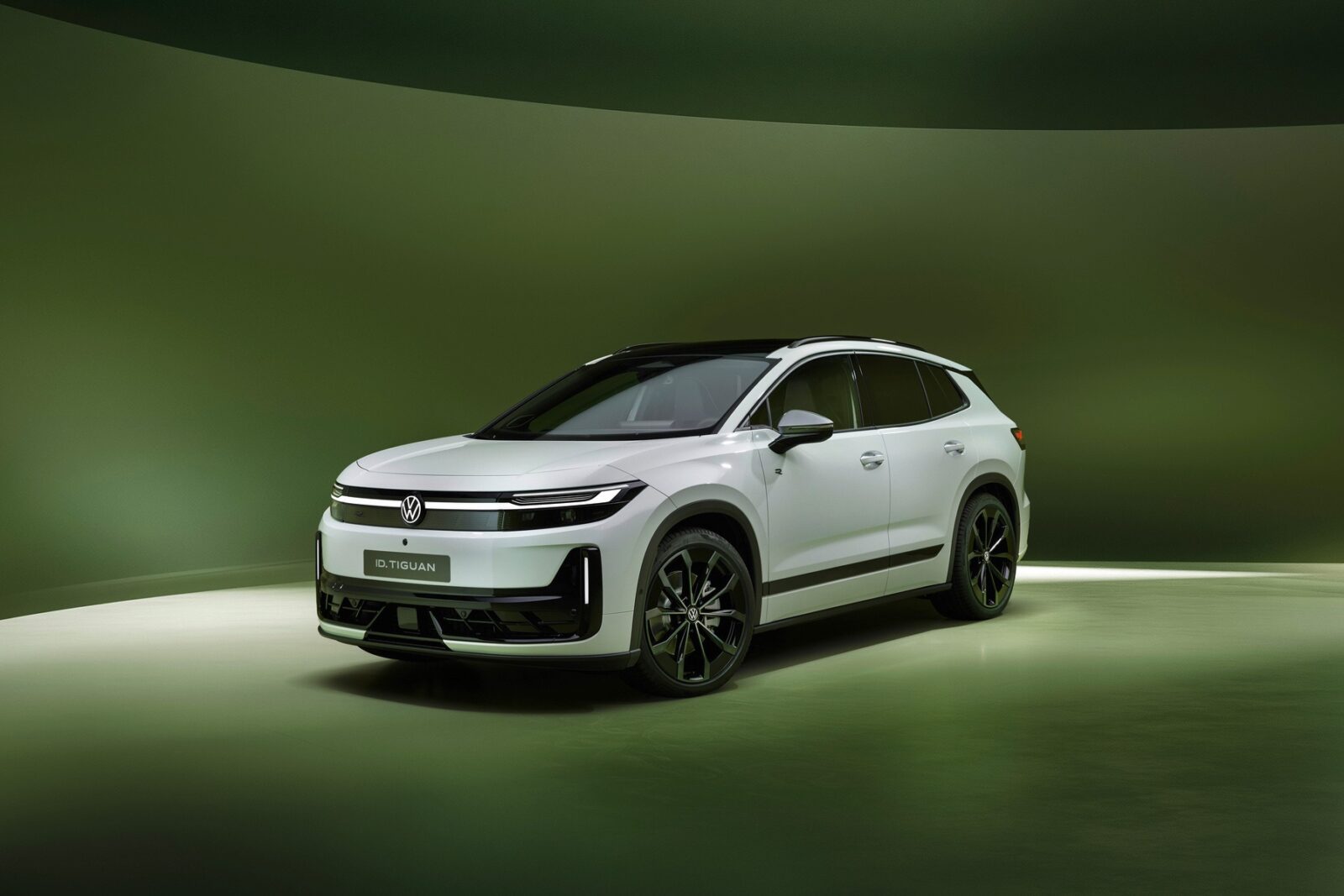
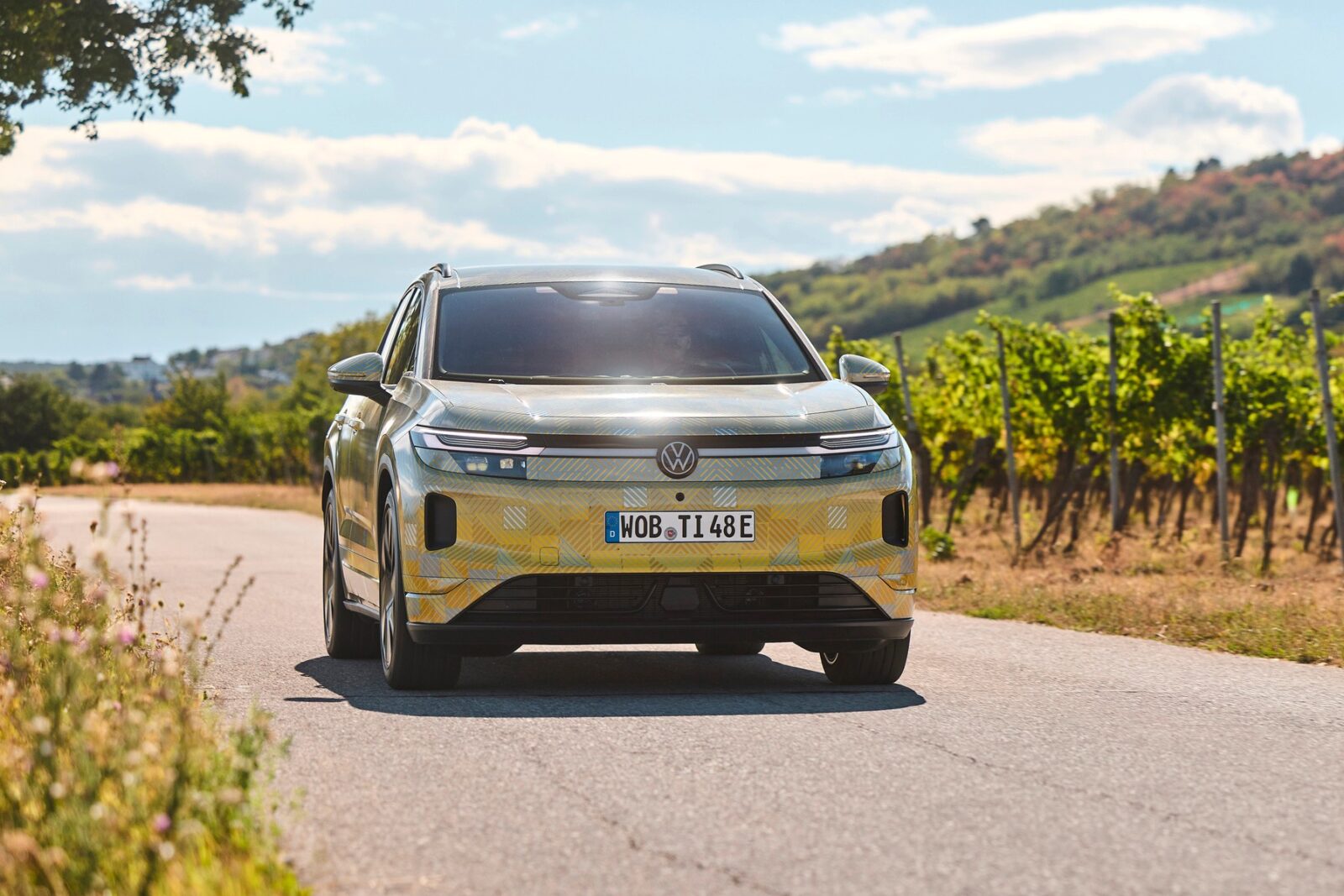
The front is defined by a transparent horizontal bar with the LED headlights. In the Style and R-Line versions, an illuminated VW badge was placed in the middle of this bar, with a light strip stretching out to the left and right to make the front look wider. In the IQ.LIGHT versions, three very thin extra LED strips were added to the bar. At the bottom of the bumper, some versions also have a matt black, V-shaped opening that lets cooling air in for the battery and the air conditioning.
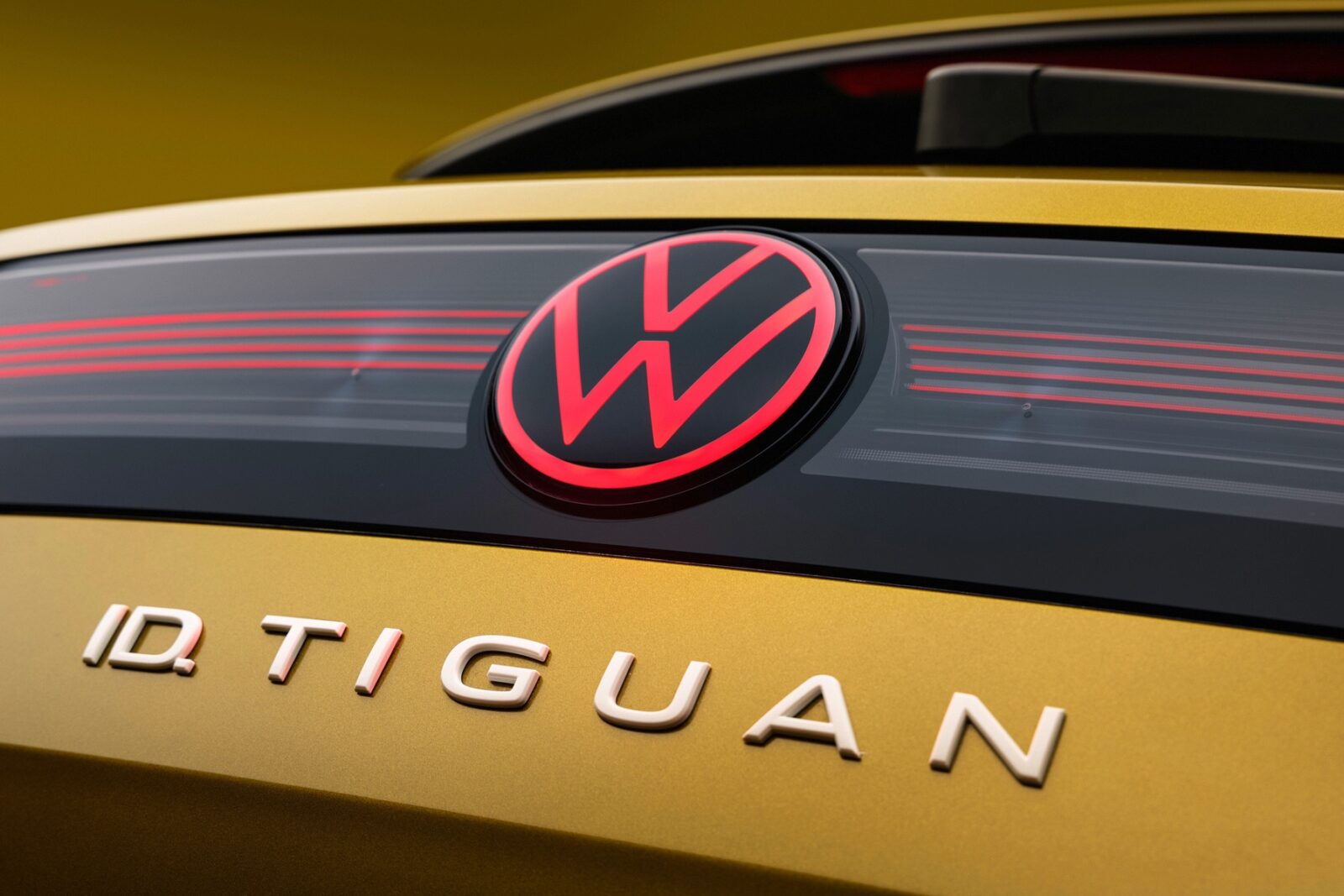
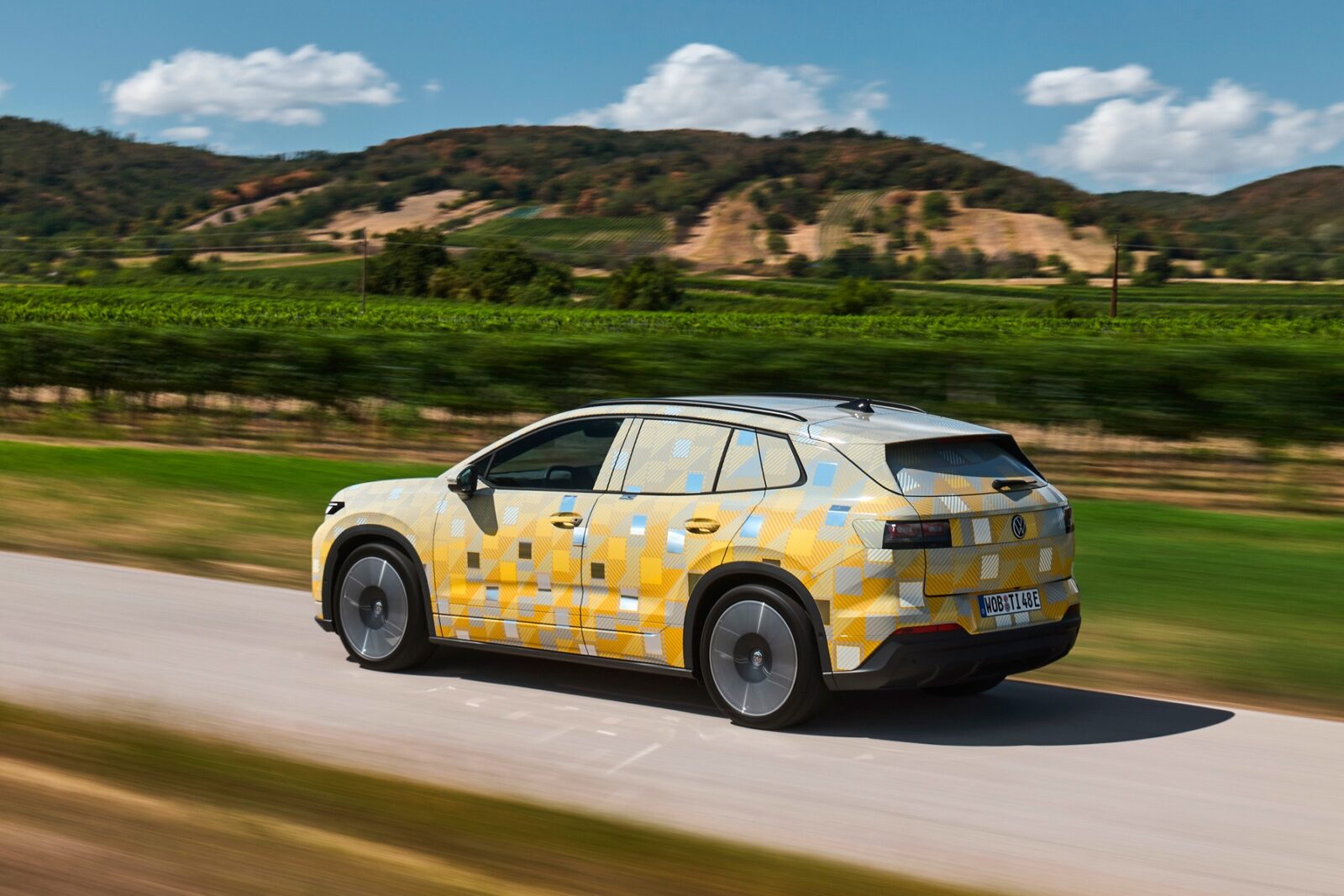
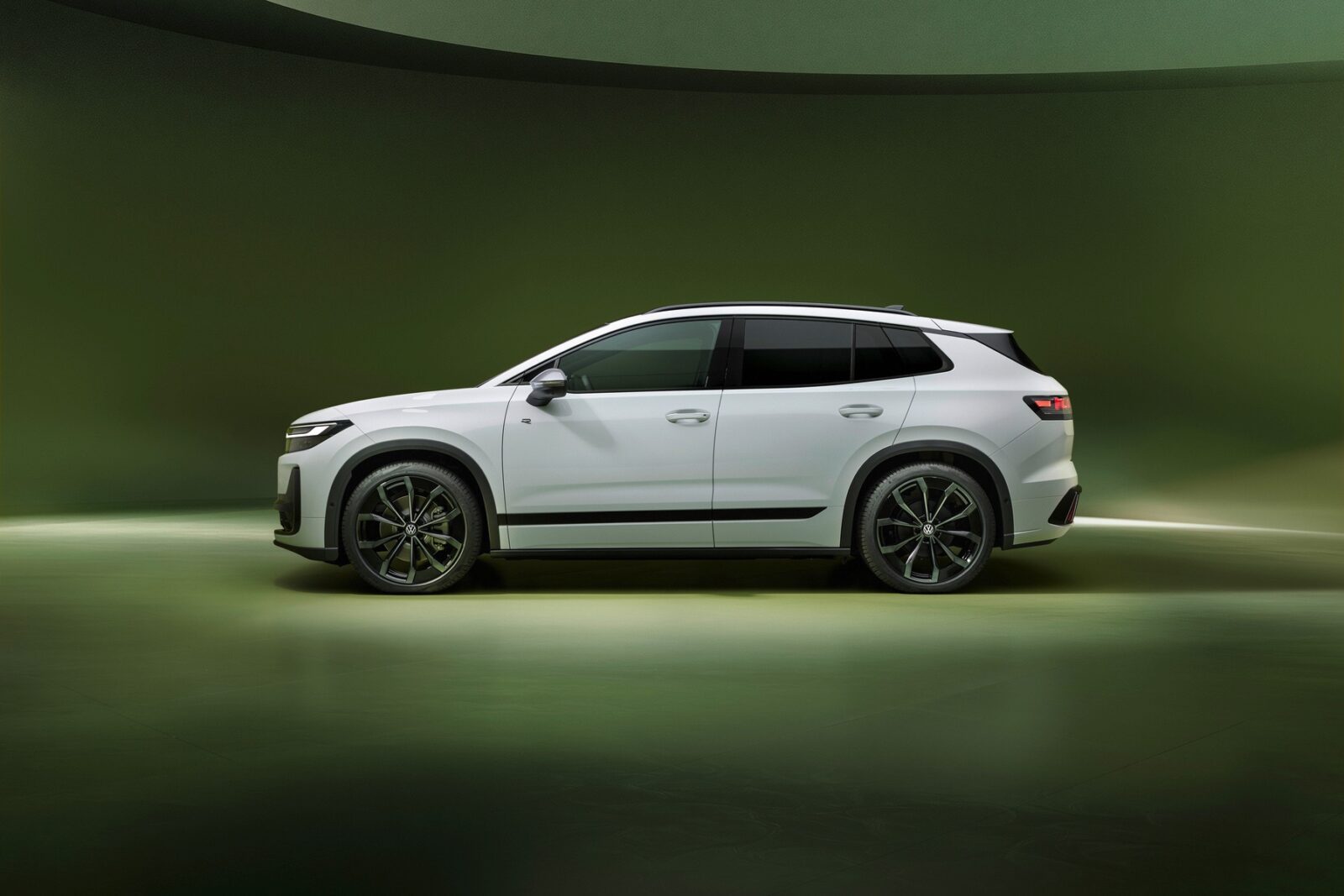
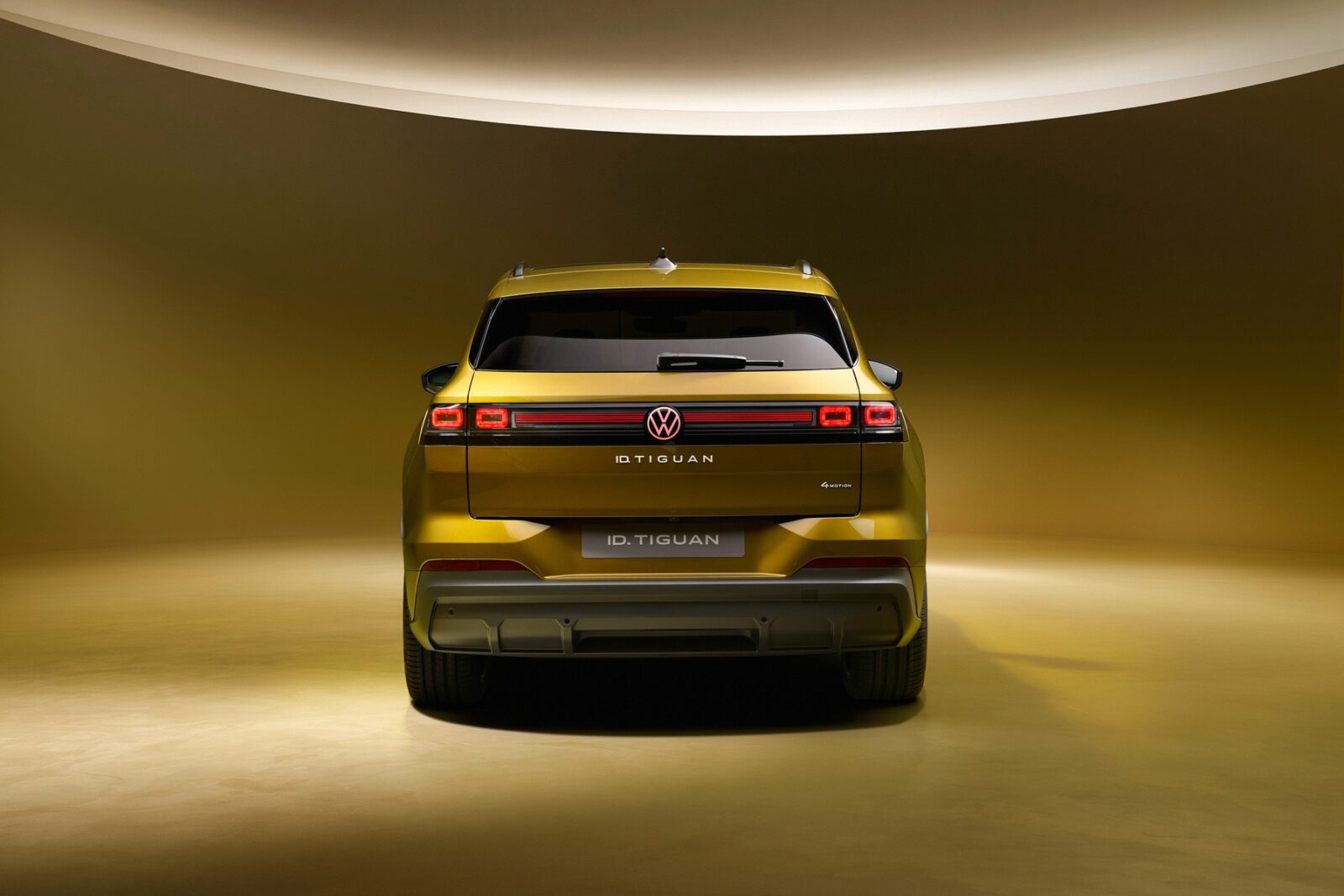
From the side, the semi-circular wheel arches hide wheels of 48, 51 or 53 cm, and the body colour now also covers the outer edge of the roof and the C-pillars. Volkswagen also went back to classic door handles that are pulled open. At the back, the rear lights form a horizontal LED bar, the boot lid reaches far down into the bumper, and the “ID. Tiguan” lettering was added beneath the lights. The drag coefficient, the figure for how easily the car moves through the air, was also brought down from 0.27 to 0.26.
Space inside
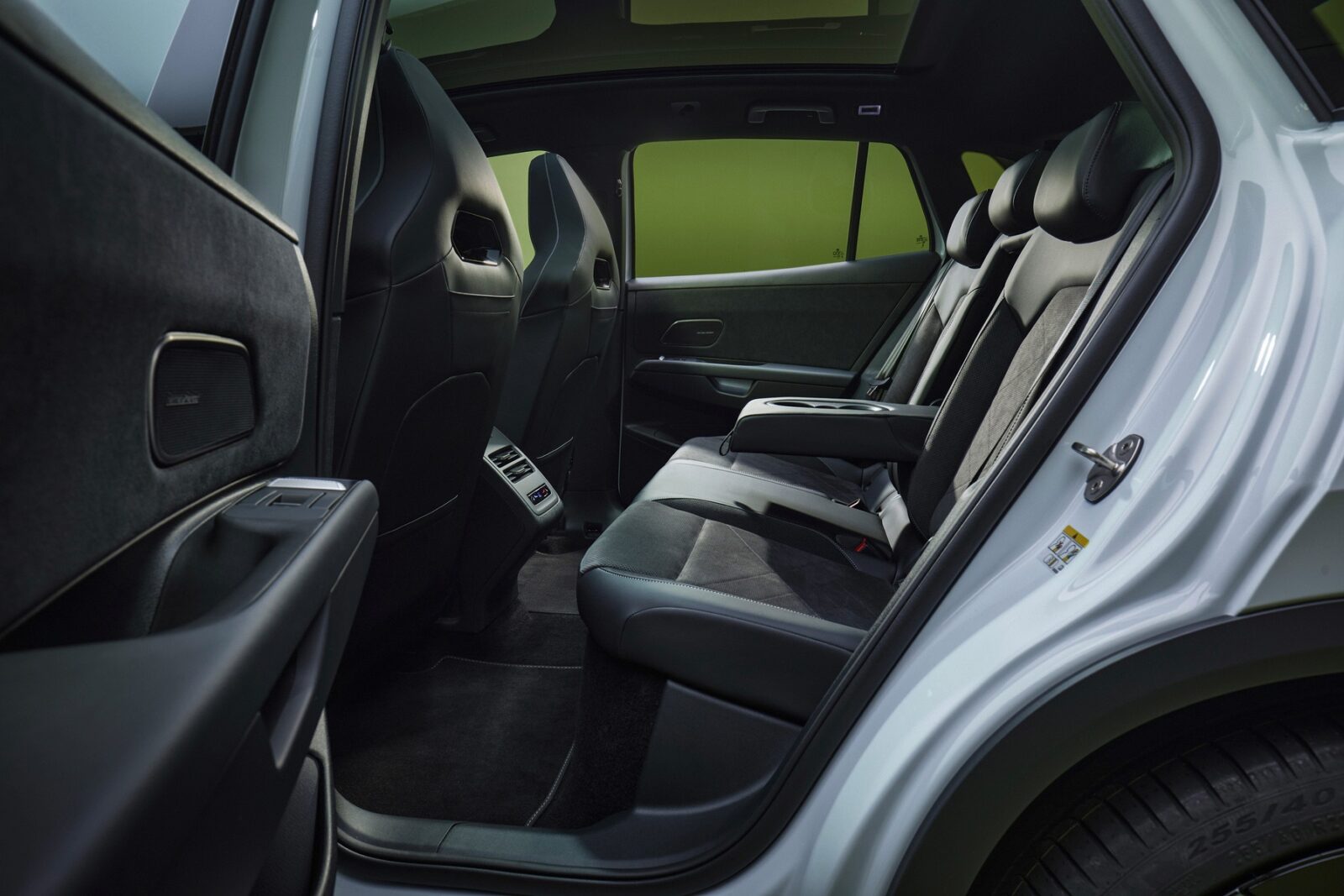
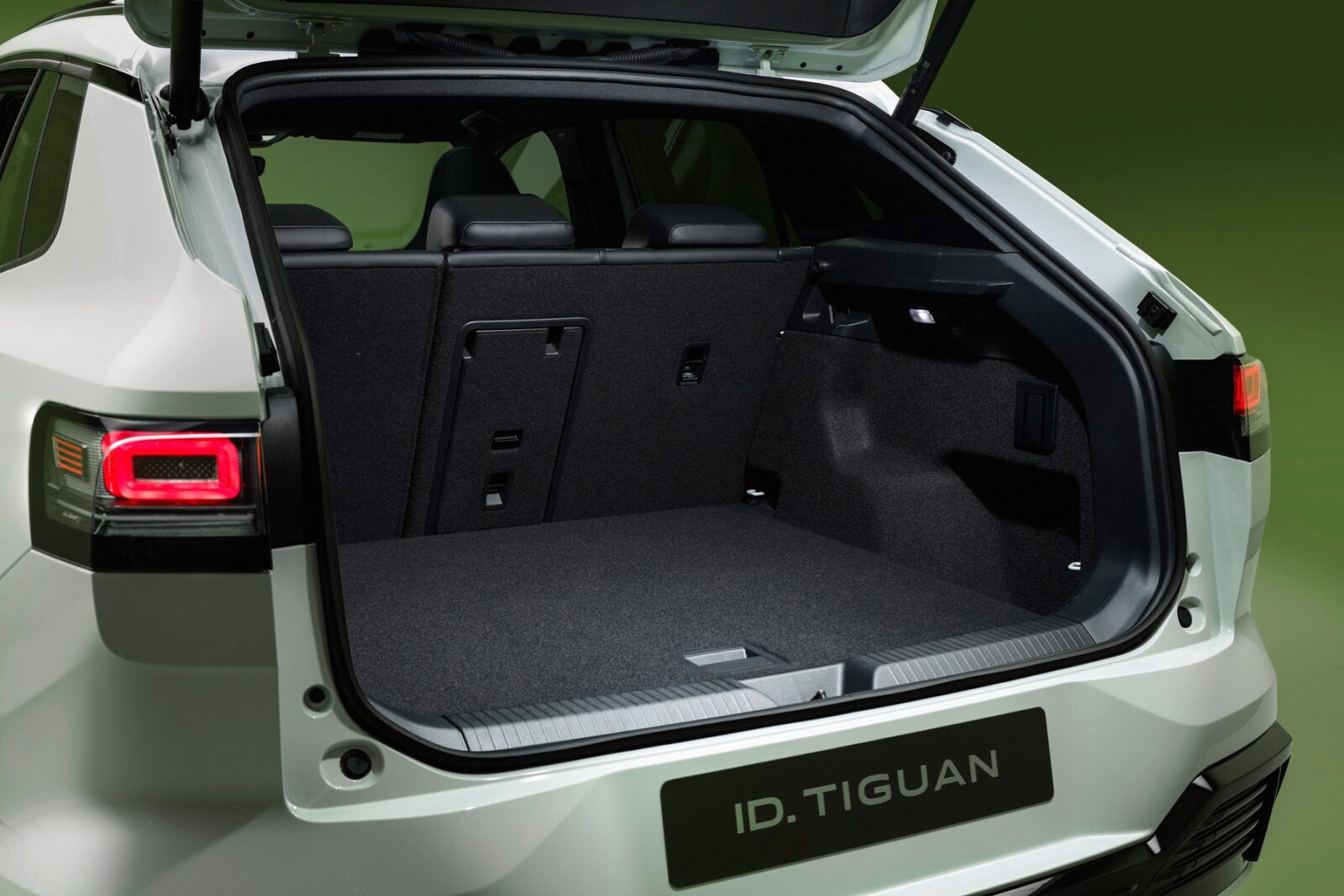
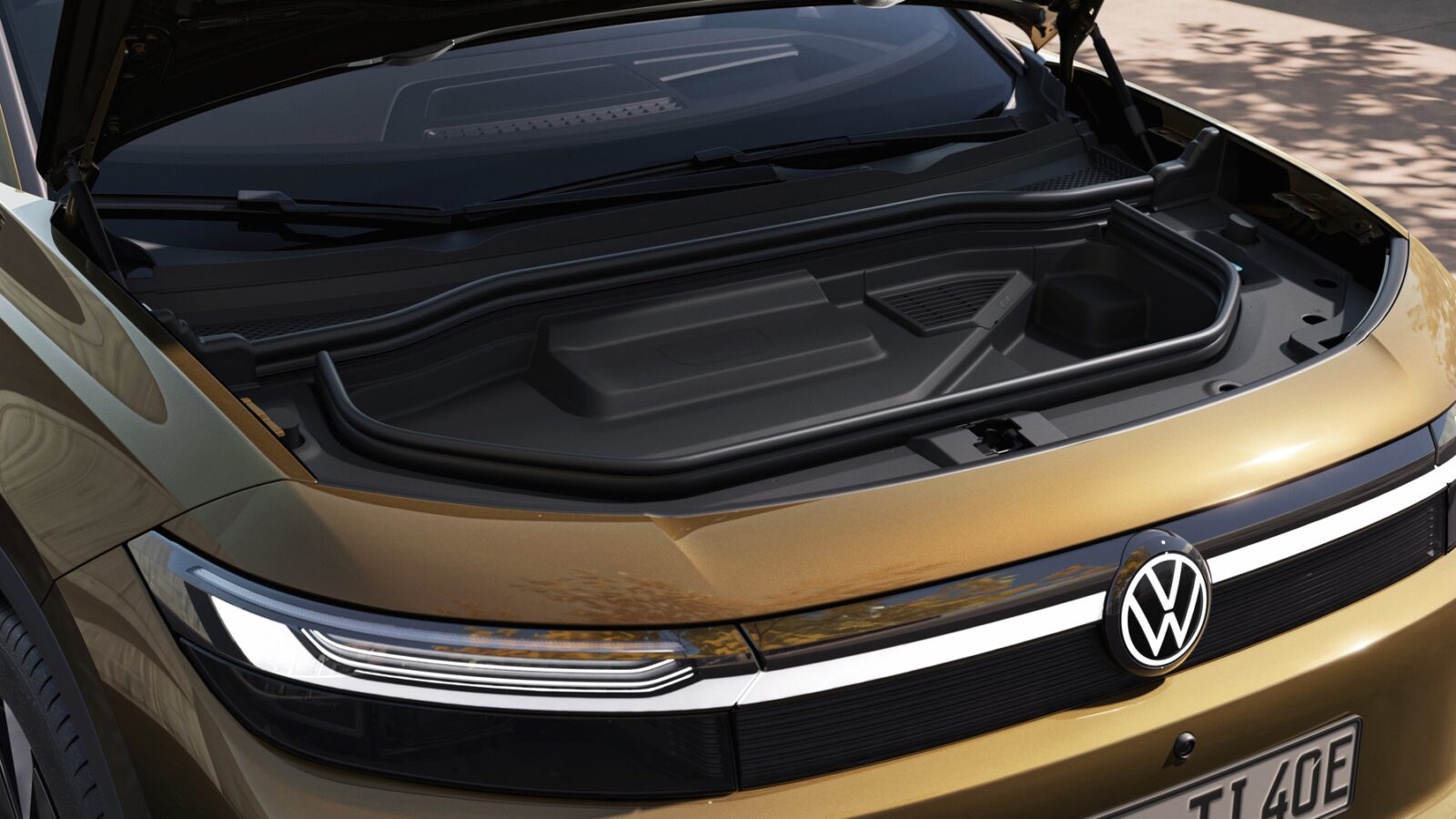
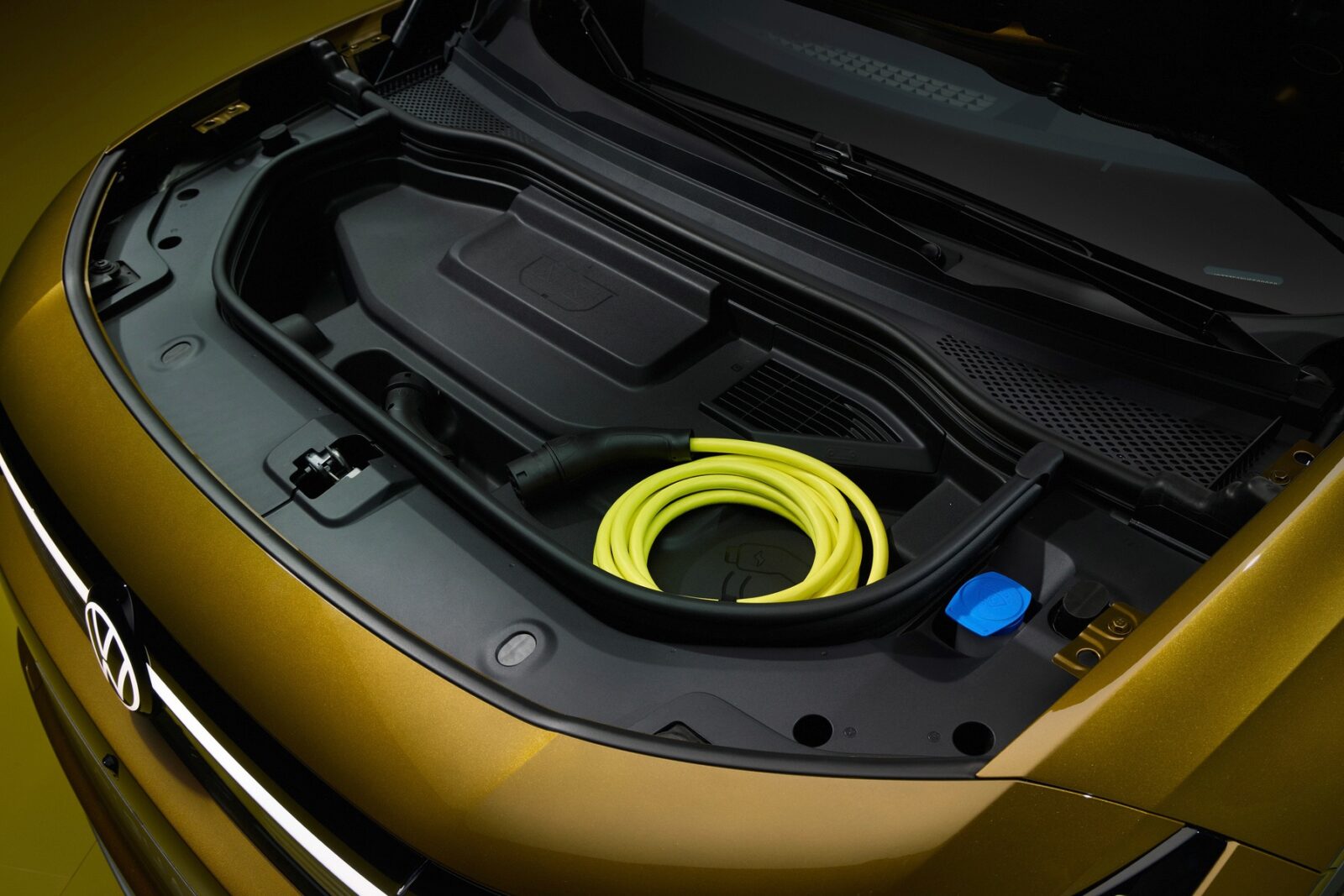
The wheelbase is 84 mm longer than that of the Tiguan with petrol, diesel and hybrid engines, which gives both front and rear passengers more legroom. The boot holds 534 litres with the rear seats in place and up to 1,577 litres when loaded up to the roof, and a further 32 litres can be found in a small storage compartment under the bonnet.
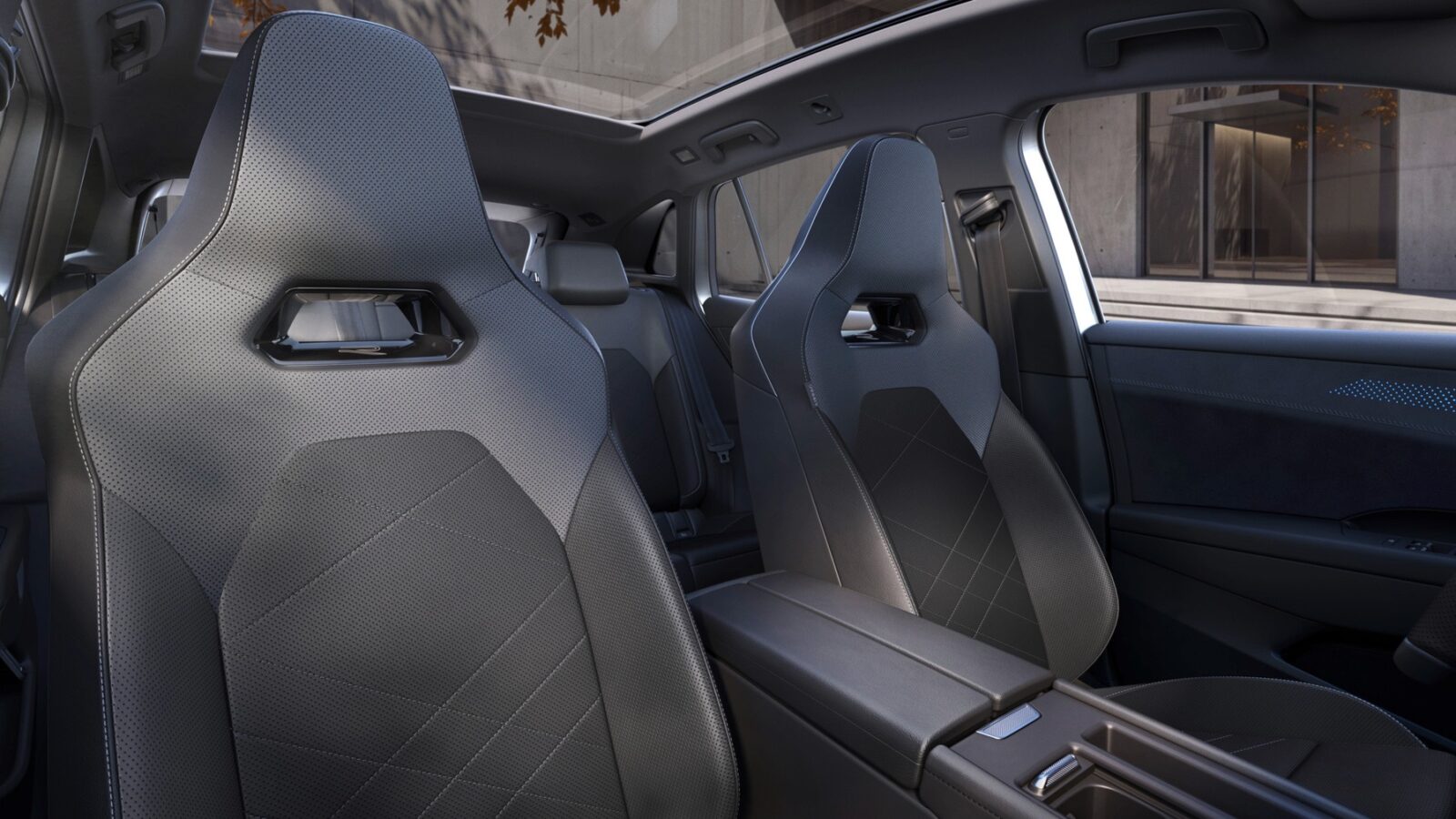
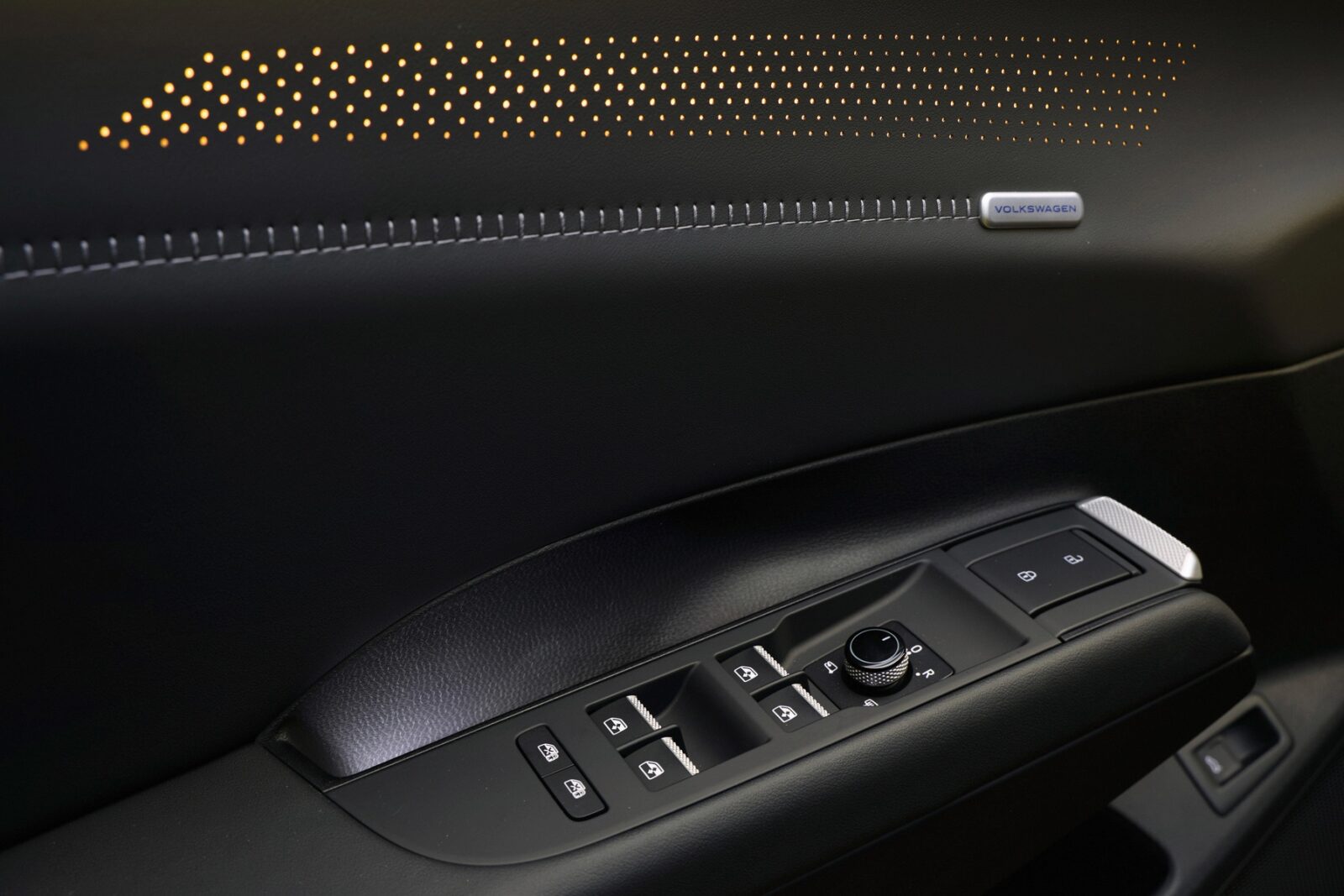
Many of the cabin’s materials contain recycled content, among them the headliner, the carpets and the floor mats. The Classic Melange seat fabric, for example, is made from Seaqual yarn, which is produced mainly from recycled polyester. Massaging and ventilated front seats with a memory function, a 480-watt Harman Kardon sound system and a panoramic sunroof are available as options.
Screens and buttons
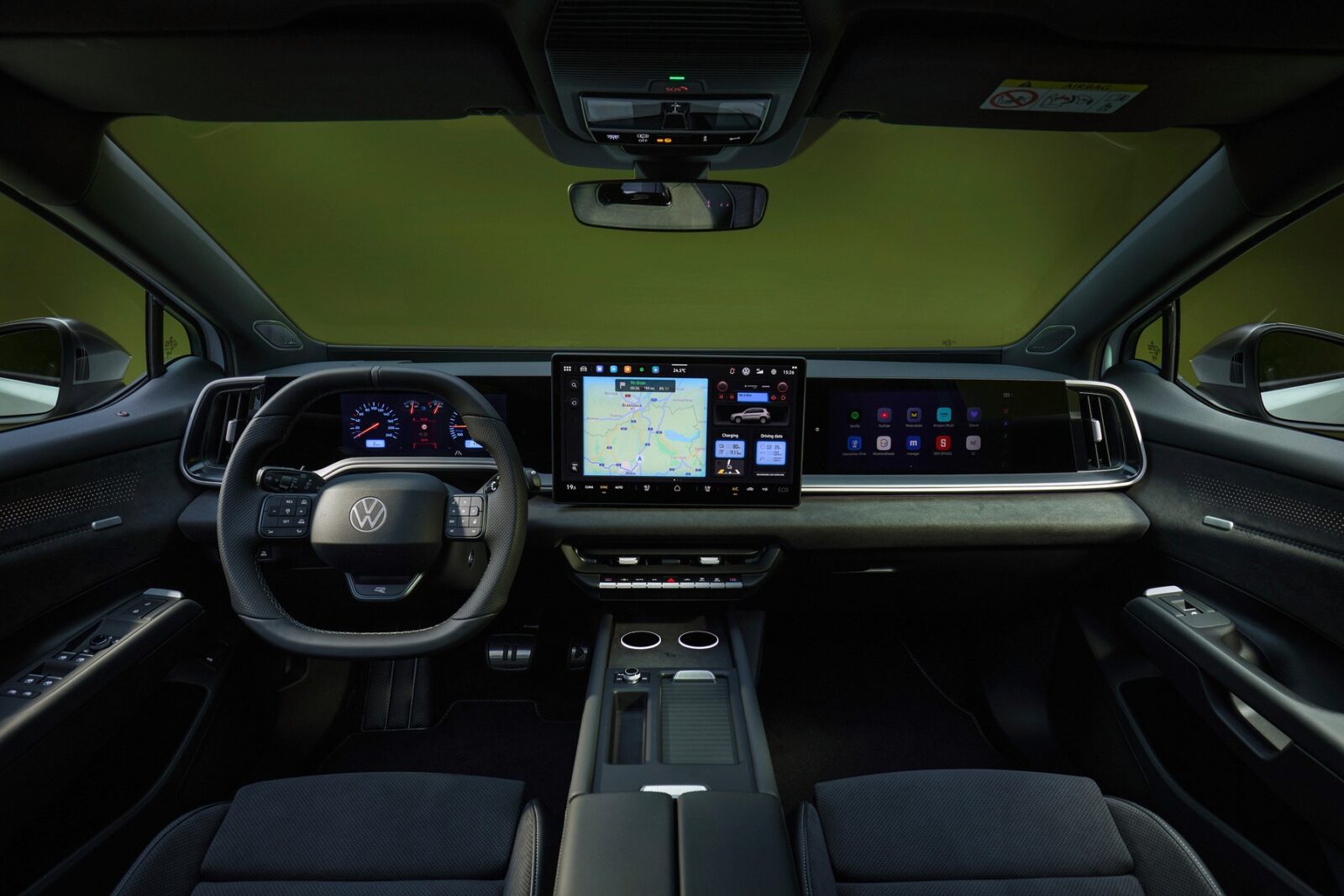
In front of the driver and passenger, a row of screens stretches between the two front pillars, with a new 10-inch driver display and a new 15-inch infotainment screen in the centre. For the first time on a European Volkswagen, a 12-inch screen was also added in front of the passenger. Much like a laptop privacy filter, it cannot be seen from the driver’s seat, and the passenger can listen to music through their own Bluetooth headphones.
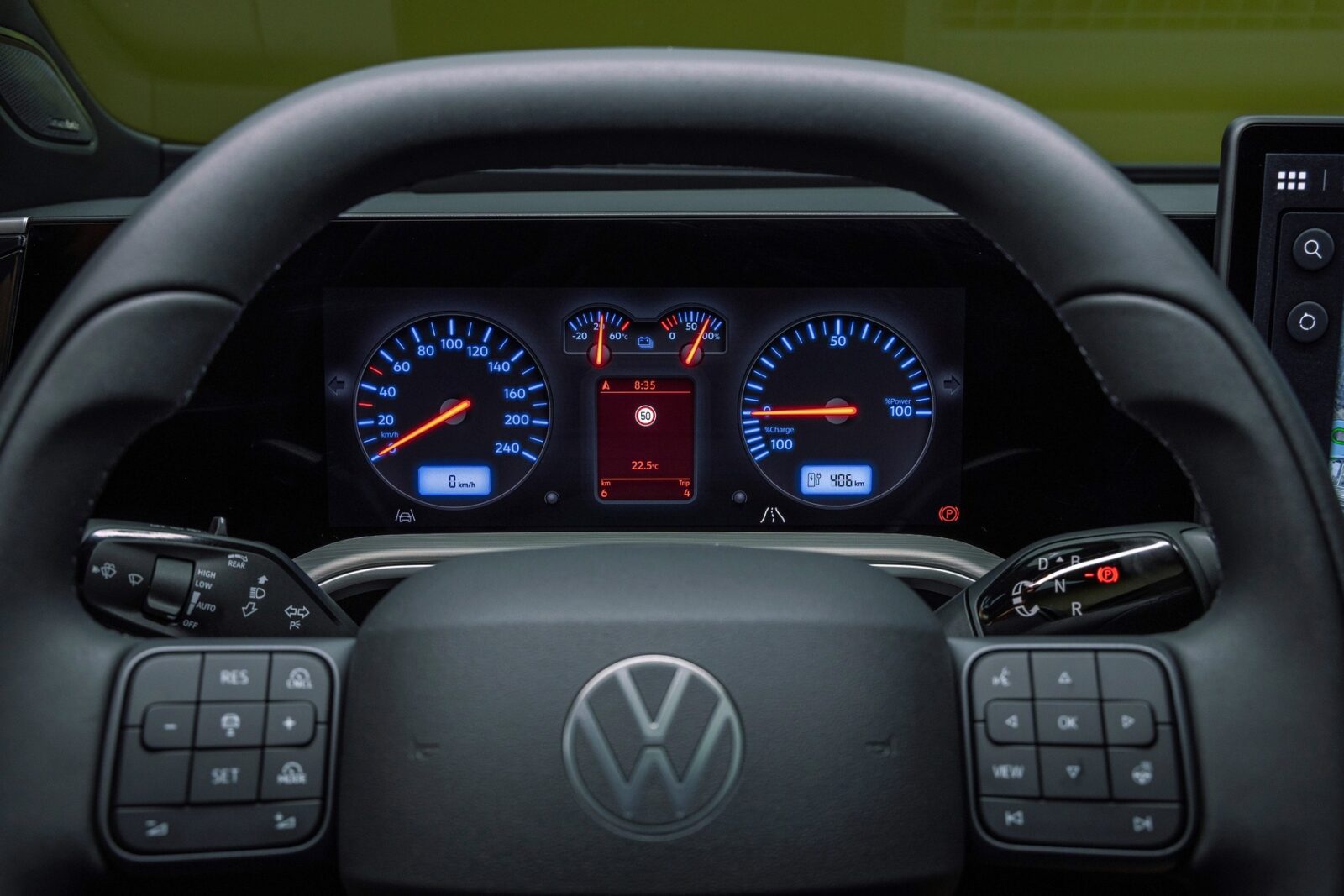
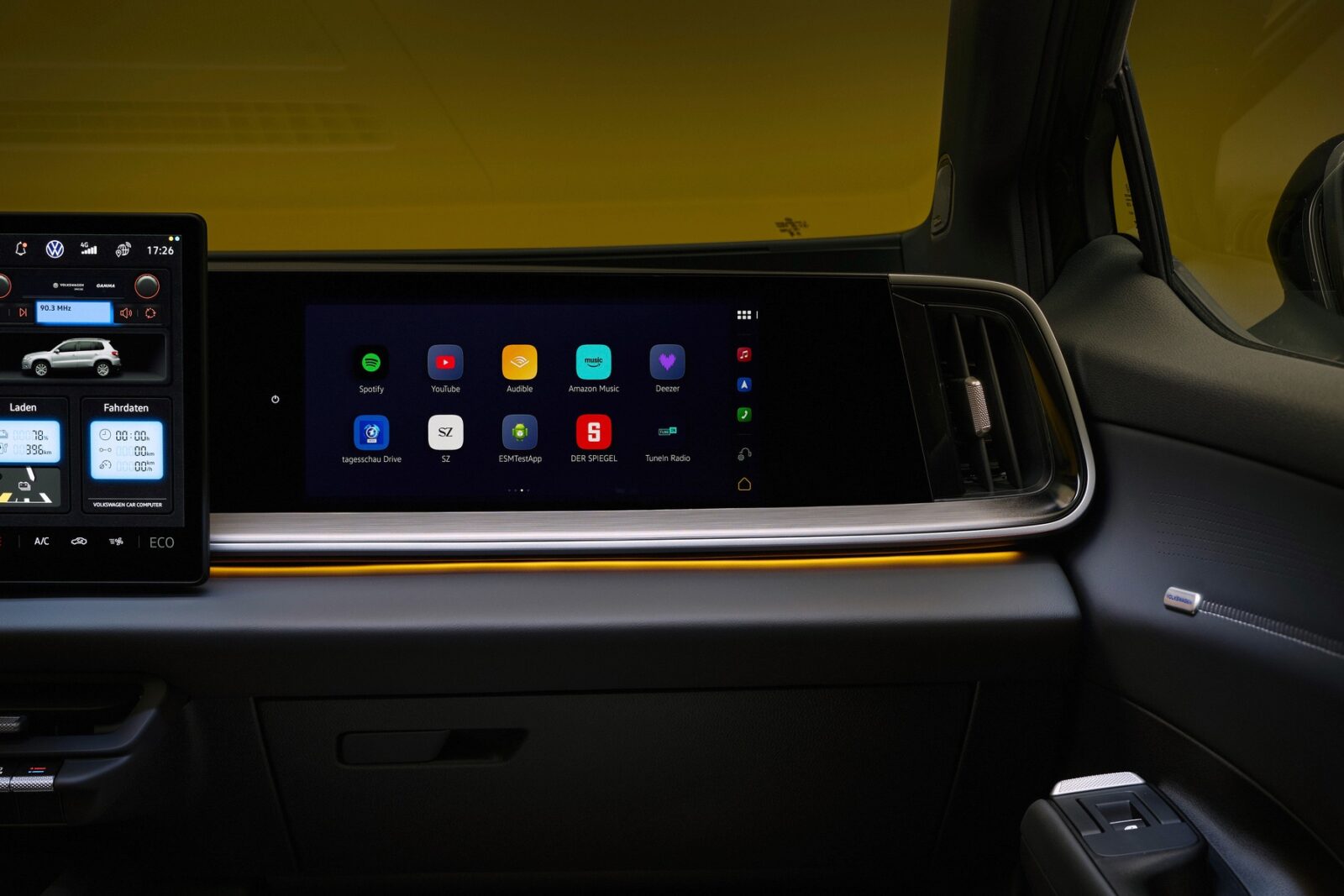
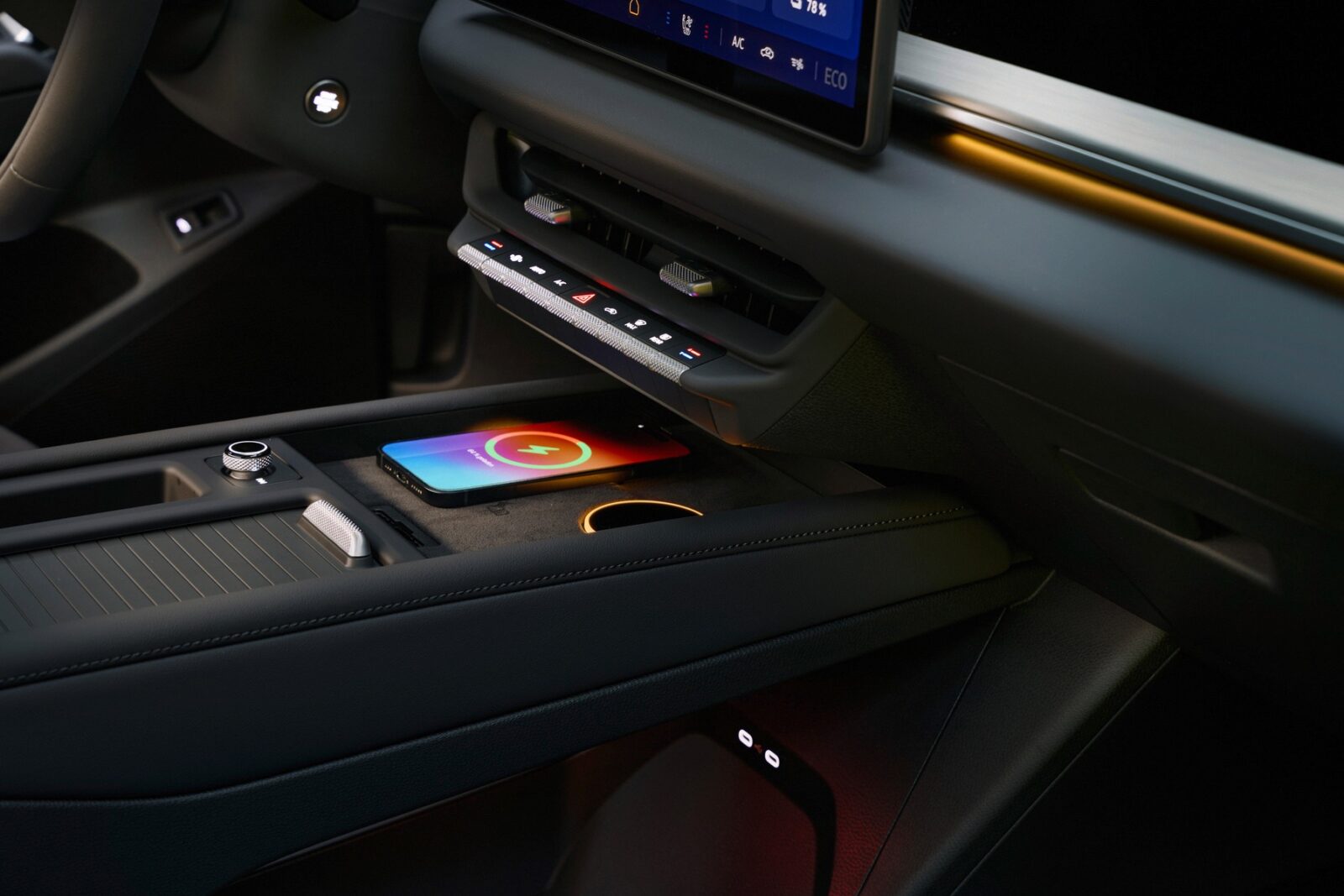
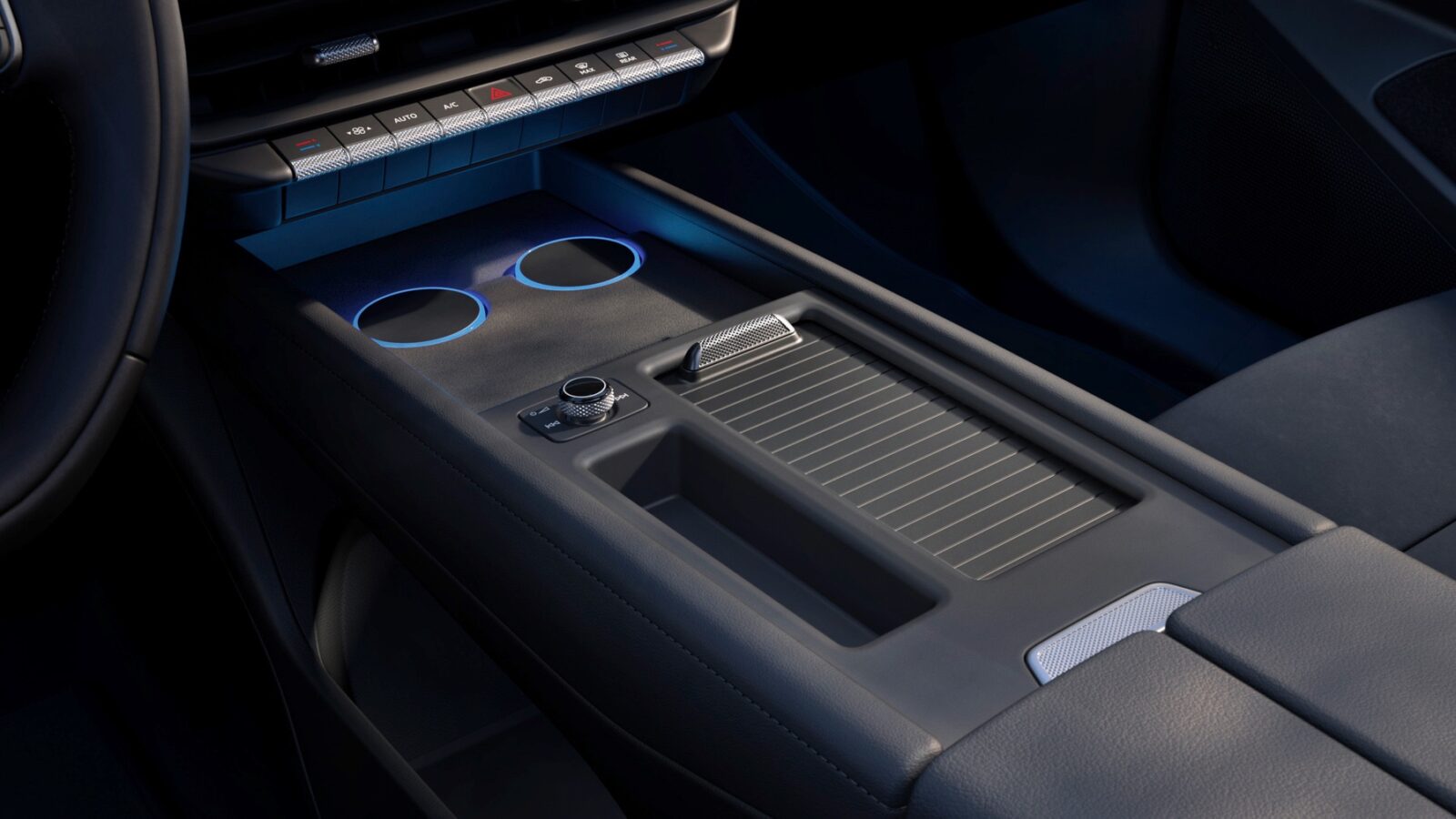
Following feedback from customers, physical buttons are also back. The main climate functions are now set from a row of buttons in the centre console, where a separate controller handles the volume and the music. The steering wheel, meanwhile, has proper buttons in place of touch surfaces. At the front, two wireless charging pads were added for phones, using Qi2, a standard in which magnetic rings hold the phone in the right position.
The most playful feature is found behind the View button on the steering wheel. Pressing it changes the driver display into the blue and red instruments of the Golf IV, the fourth-generation Golf built between 1997 and 2003, with the rev counter replaced by a display of how energy flows through the car. The infotainment screen can show the same retro style for six older Volkswagens kept in a virtual garage: the Golf I, the Golf II Country, the Golf IV, the first Tiguan, the Race Touareg and the Beetle.
Batteries, range and towing
The ID. Tiguan comes with three powertrains. The entry version has a 140 kW (190 PS) motor driving the rear wheels and a 58 kWh LFP (lithium iron phosphate) battery. The second keeps rear-wheel drive, with a 210 kW (286 PS) motor and a 77 kWh NMC (nickel, manganese and cobalt) battery. The top version, with 220 kW (299 PS), uses the same 77 kWh battery with 4MOTION, Volkswagen’s name for its all-wheel drive.
On the WLTP cycle, the standard European test used to measure range, Volkswagen quotes up to 450 km for the entry version, 600 km for the 210 kW model and 560 km for the all-wheel-drive one. On a fast charger, the smaller battery takes about 26 minutes to go from 10% to 80%, at up to 105 kW, and the larger one about 29 minutes, at up to 165 kW. Both accept up to 11 kW on AC charging.
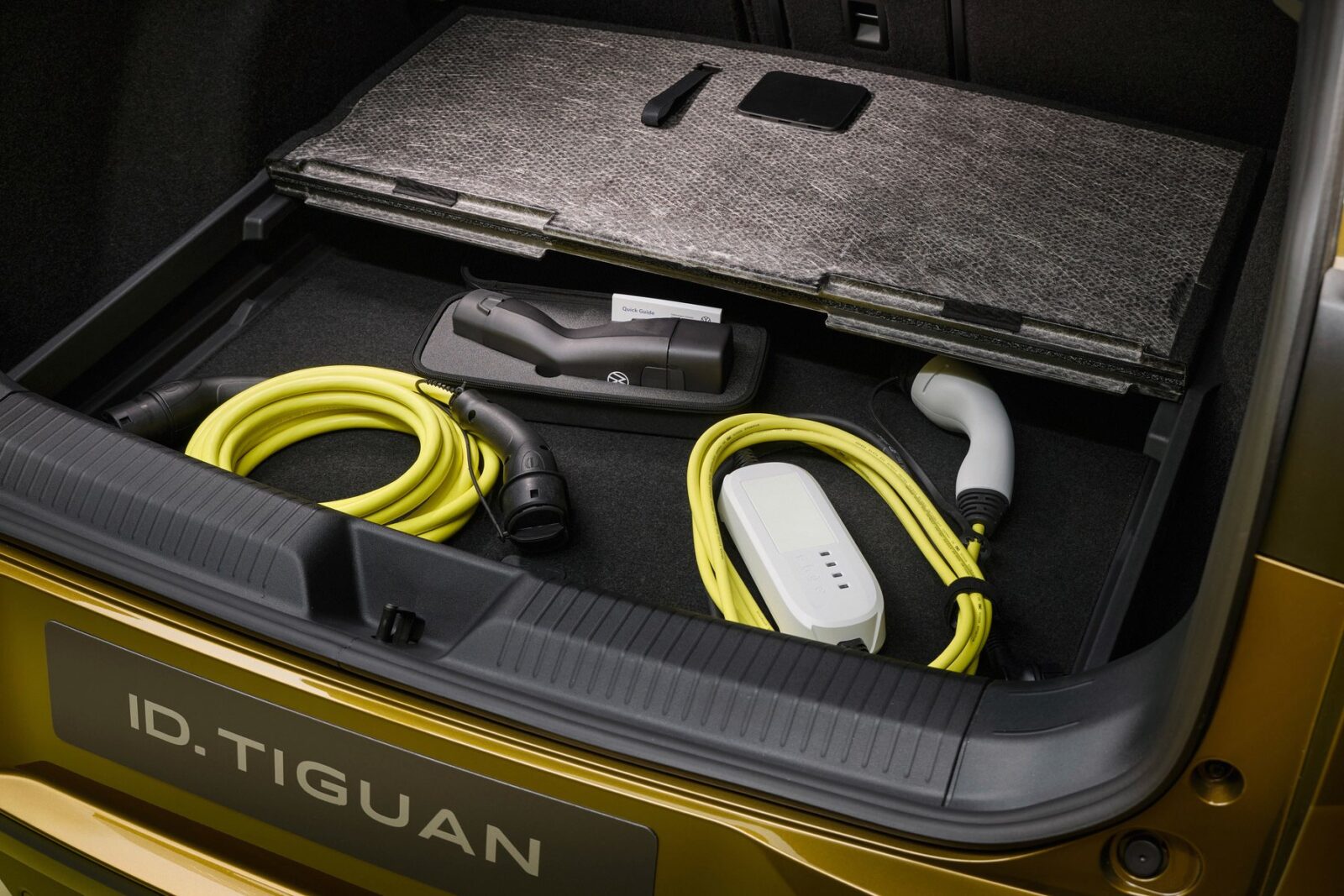
One-pedal driving comes as standard, which means the car slows down strongly as soon as the driver lifts off the accelerator. The optional Connected Travel Assist, on the other hand, helps the driver change lanes on the motorway and can stop the car automatically at red traffic lights. The ID. Tiguan can also tow up to 1,800 kg with the smaller battery and 2,000 kg with the larger one. Using an adapter plugged into the charging socket, it can even power devices such as an electric grill or an e-bike.


