

Header: Claus Brechenmacher & Reiner Baumann, Helen Cathcart
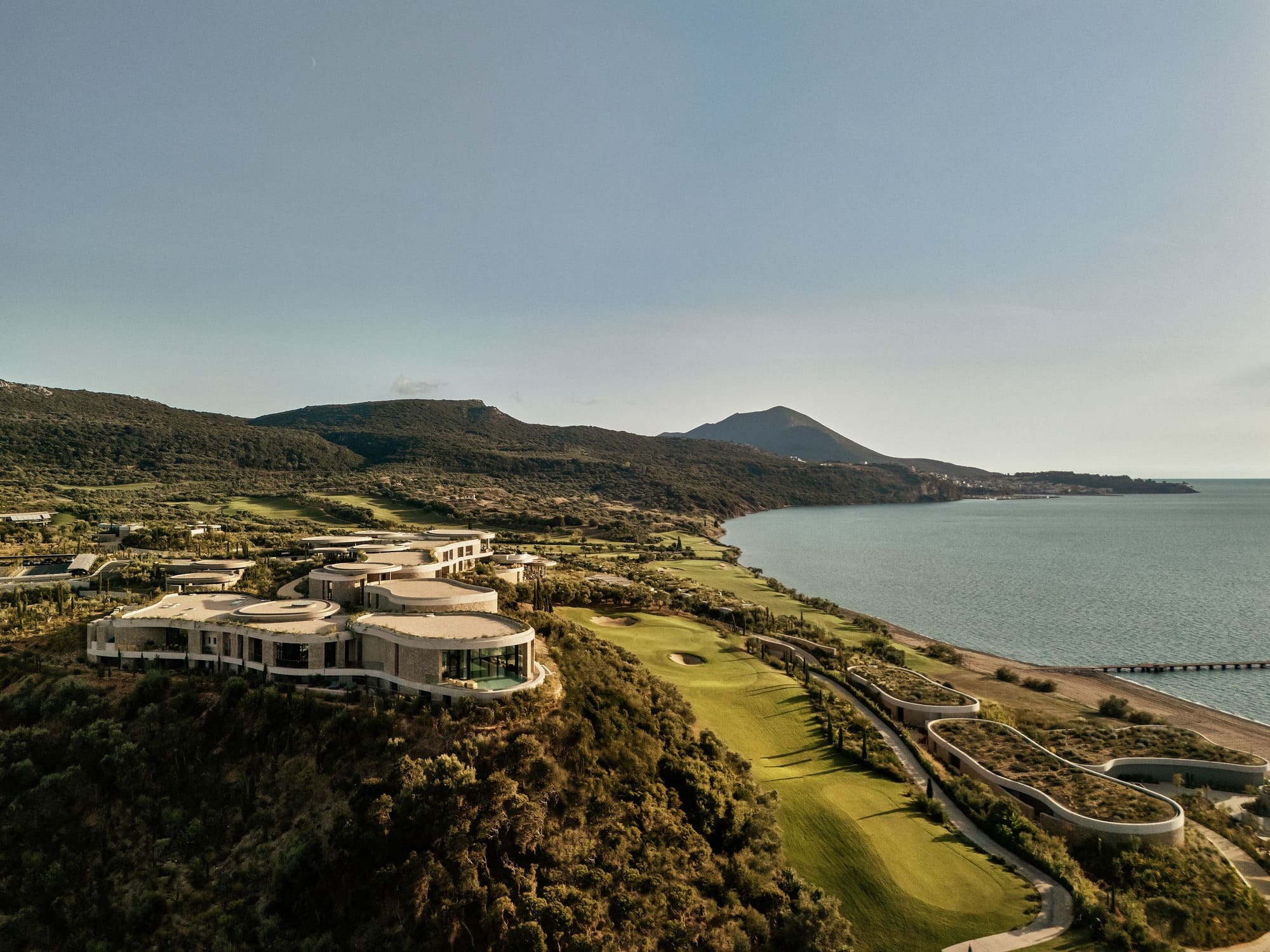
The Mandarin Oriental, Costa Navarino has redefined coastal luxury by looking back at the agricultural history of Greece. Designed by Alexandros N. Tombazis and Associates Architects alongside K-Studio, this destination resort on the hills of Messinia balances the expectations of a global hospitality brand with a deep respect for the local land, culture, and climate. Built above the bay of Navarino, the masterplan avoids the typical layout of a large hotel, choosing instead a decentralised design that feels both vast and private. The project was recently named Architectural Design of the Year in the Living Space category at the prestigious LIV Hospitality Design Awards, confirming its place as a standout piece of modern architecture.
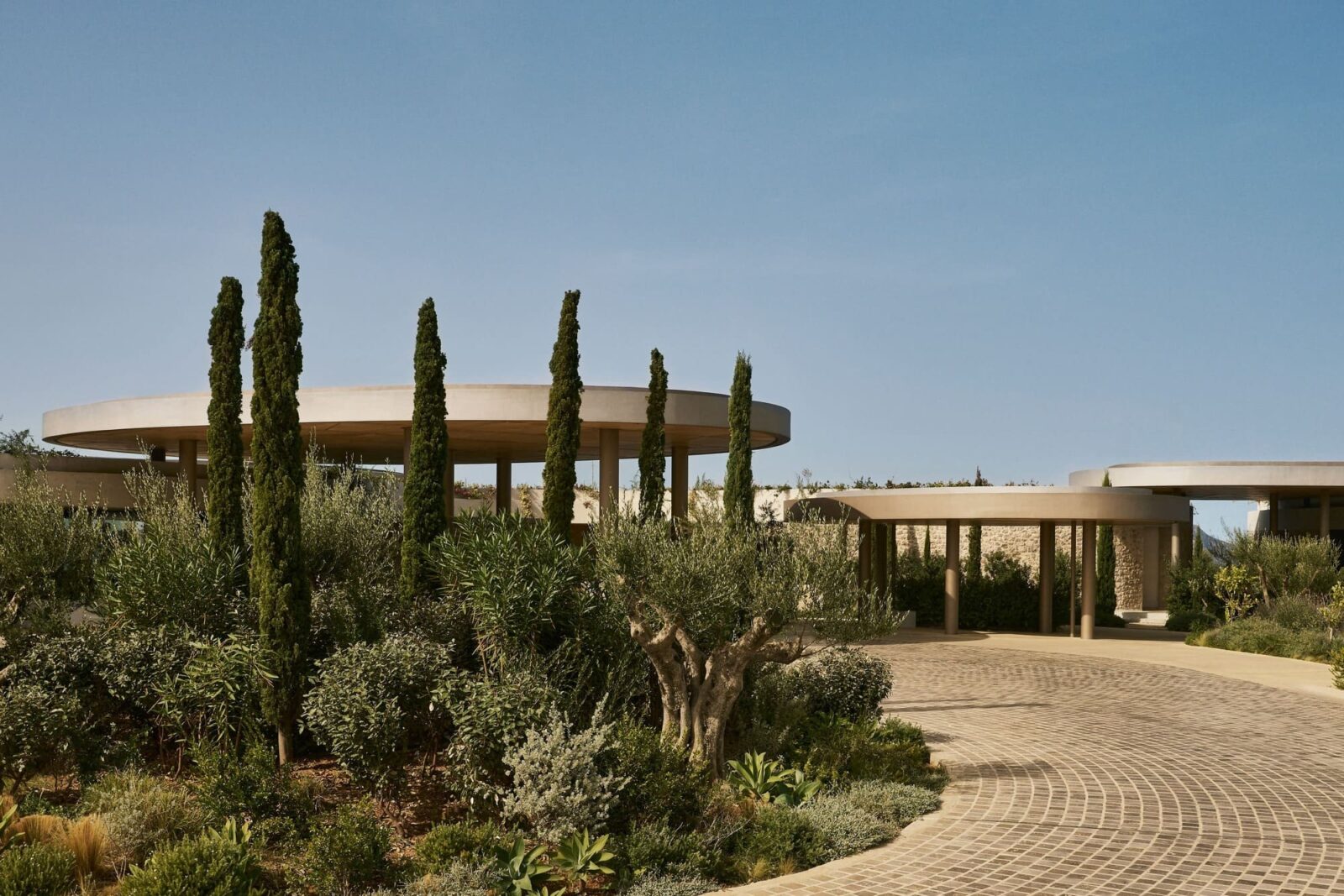
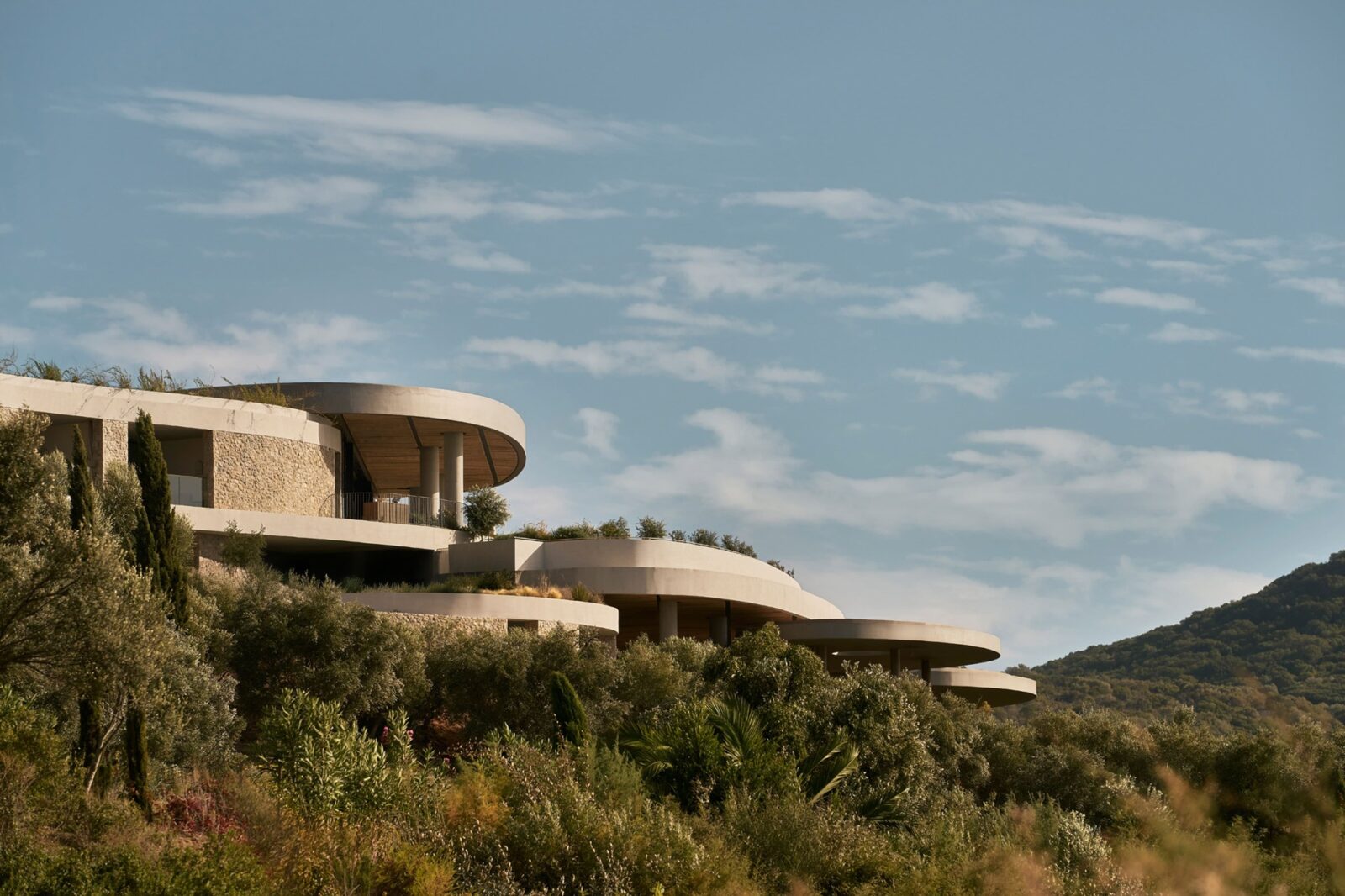
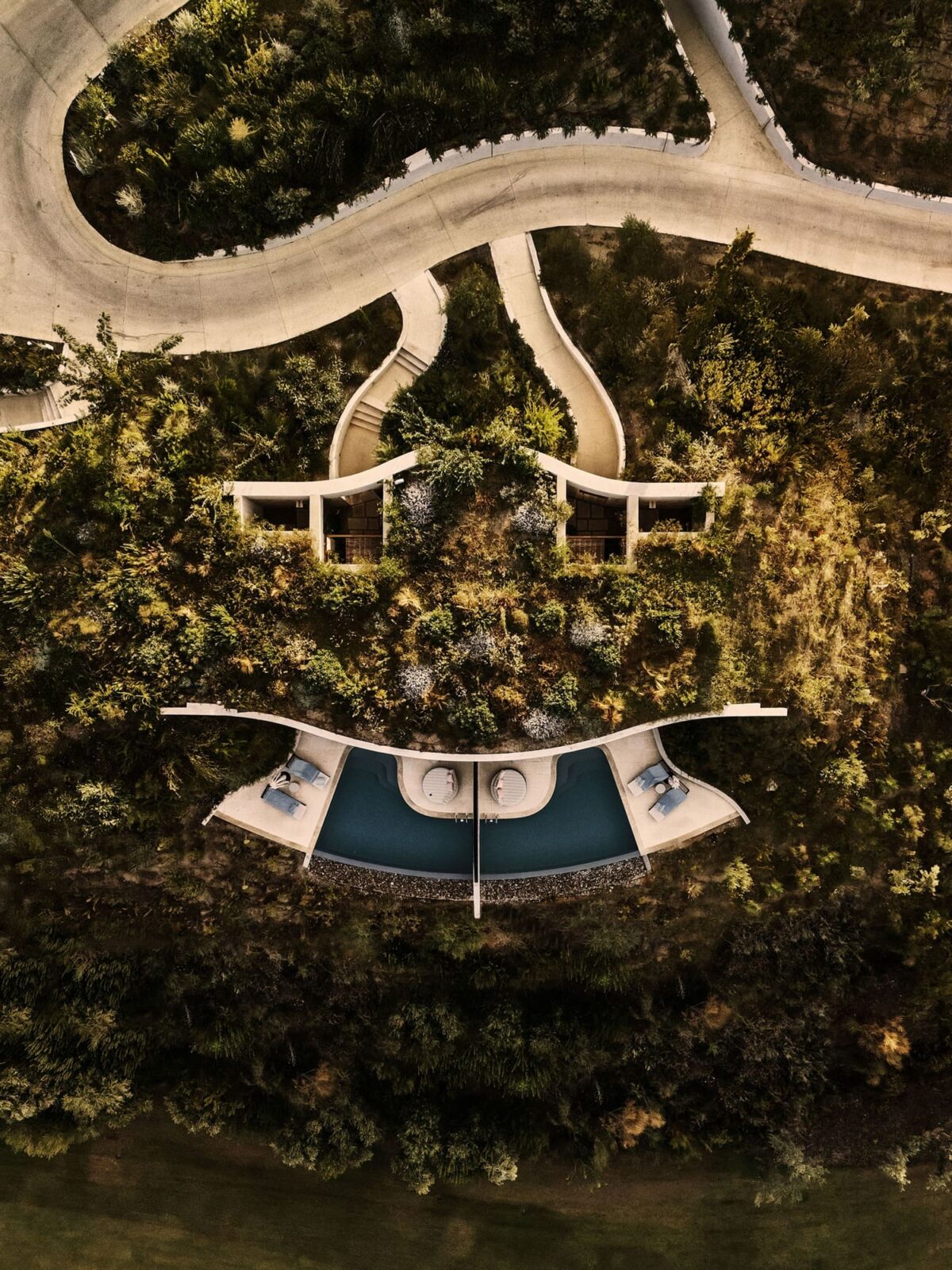
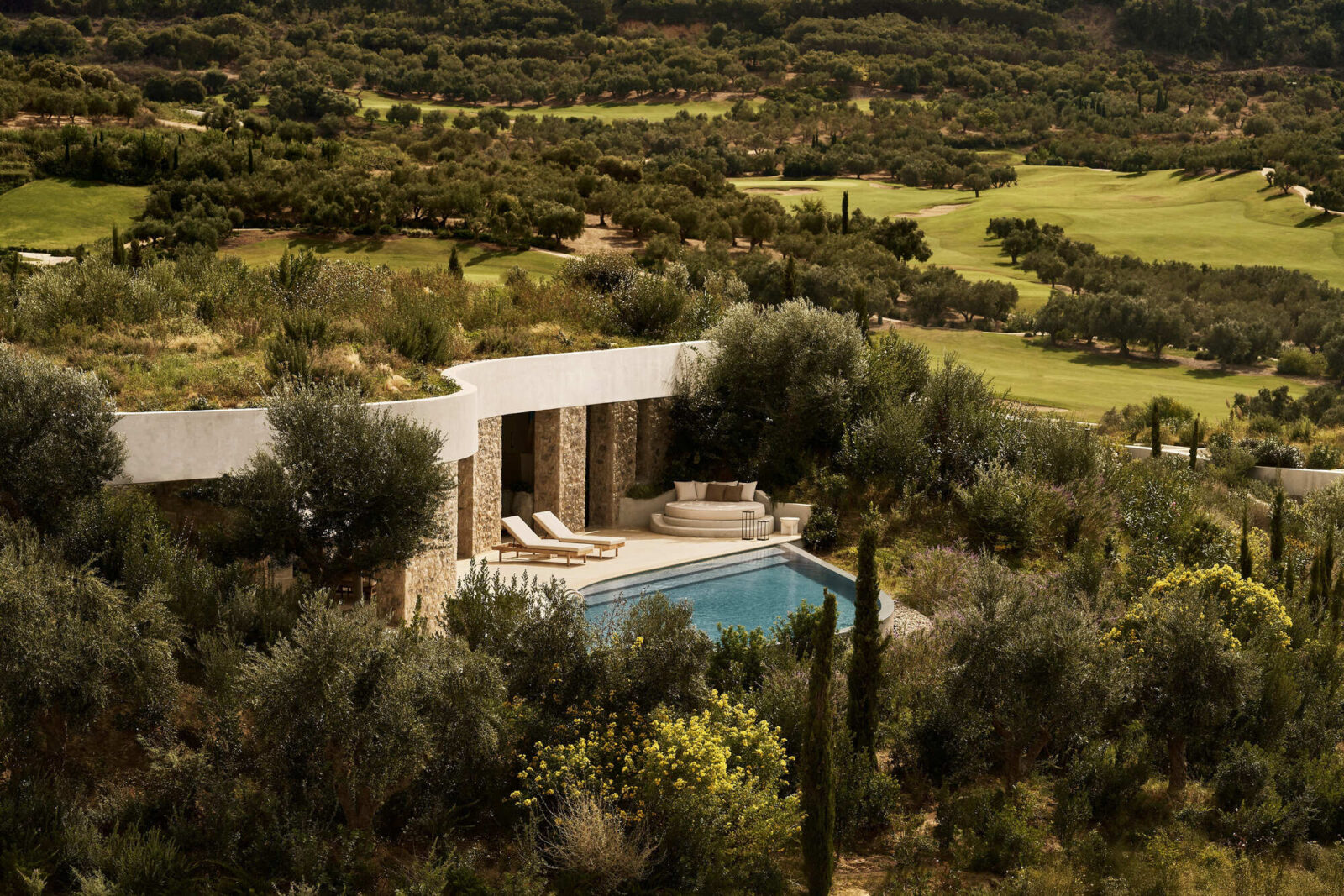
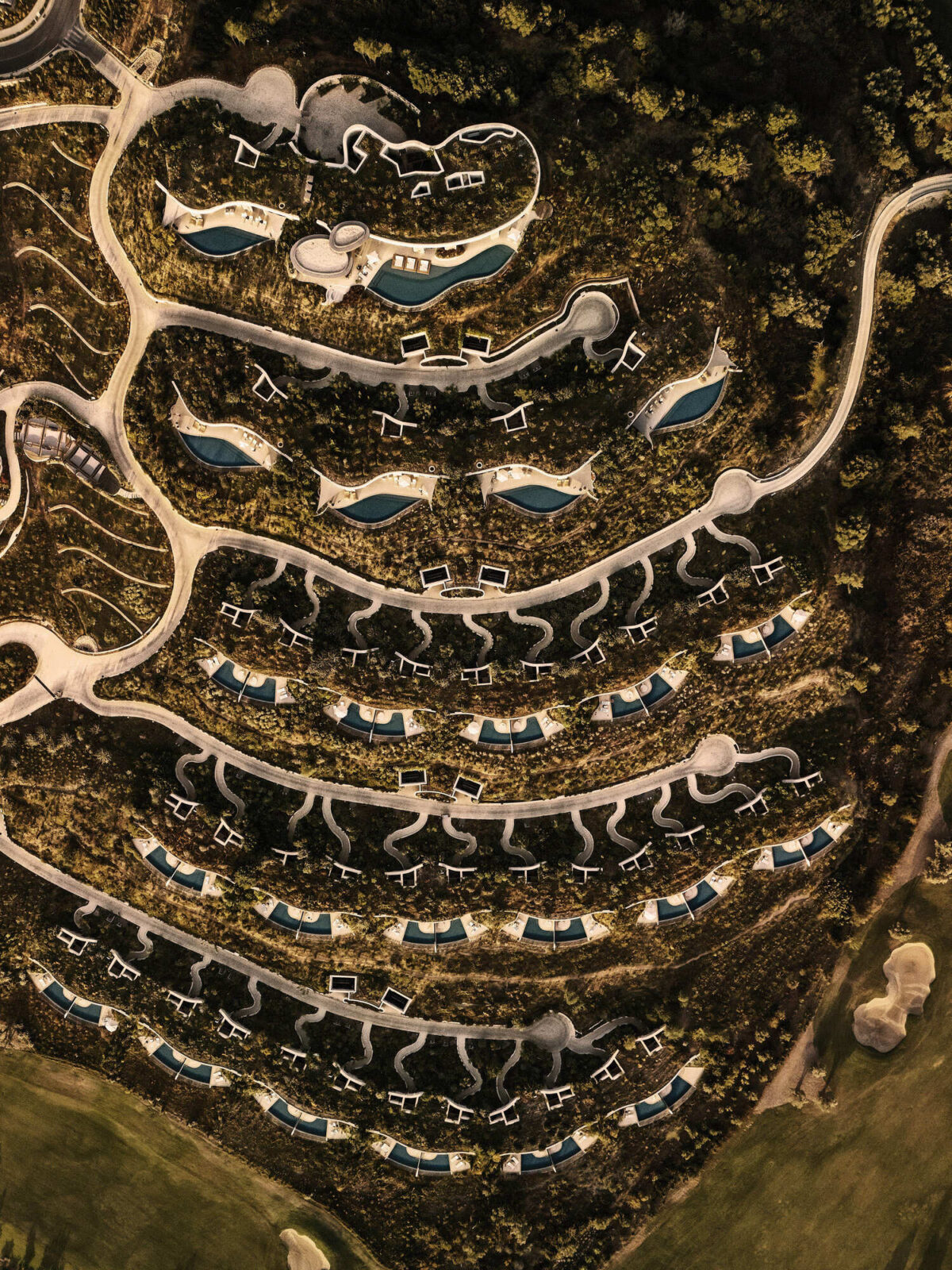
The heart of the design lies in its clever layout, which takes inspiration from the mandria—the traditional, hand-built stone shelters used by local Greek farmers. By embedding 48 pool villas directly into the sloping earth, the architects created a resort that stays cool naturally while keeping the landscape intact. Local stone, terrazzo, and a palette of Mediterranean tones give the spaces a quiet, grounded quality. Rather than blocking out the elements, the buildings use deep shades, open-air pathways, and clever orientation to work with the intense Greek sun and coastal breezes.
About K-Studio
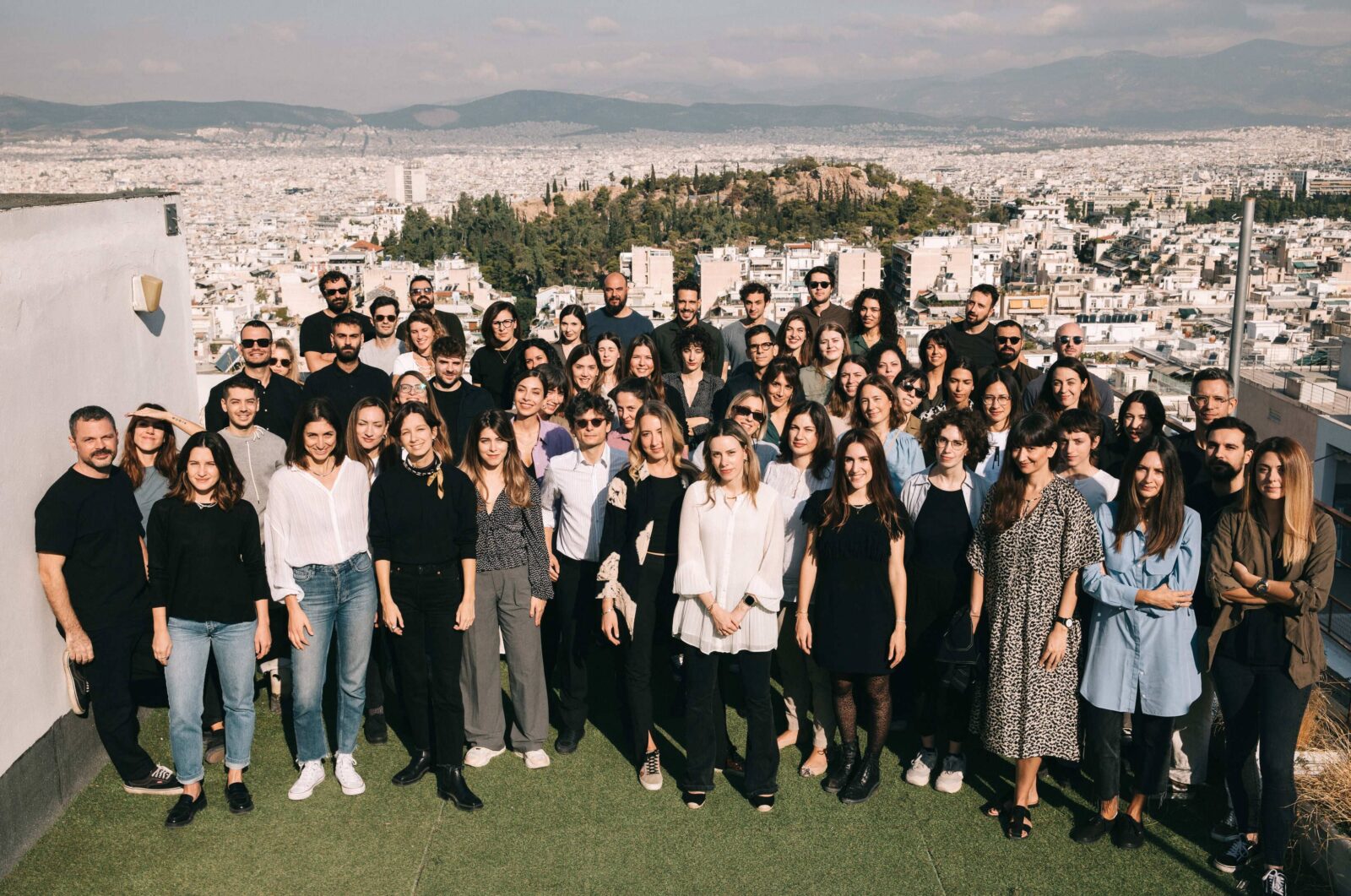
Based in central Athens, K-Studio is a creative practice of around 110 architects and interior designers who focus on building immersive, site-led experiences. Over years of practical work and academic research, the studio has developed a specific expertise in the leisure industry, working with world-class hospitality brands to create spaces that feel naturally comfortable. Their approach treats large, complex resorts as collections of smaller, detailed studies, ensuring that every corner of the property gets equal care and clarity.
In this exclusive interview, the design team shares how they turned a humble, rustic concept into a world-class luxury retreat, their changing definition of luxury in 2026, and how the Greek climate became their most important asset.
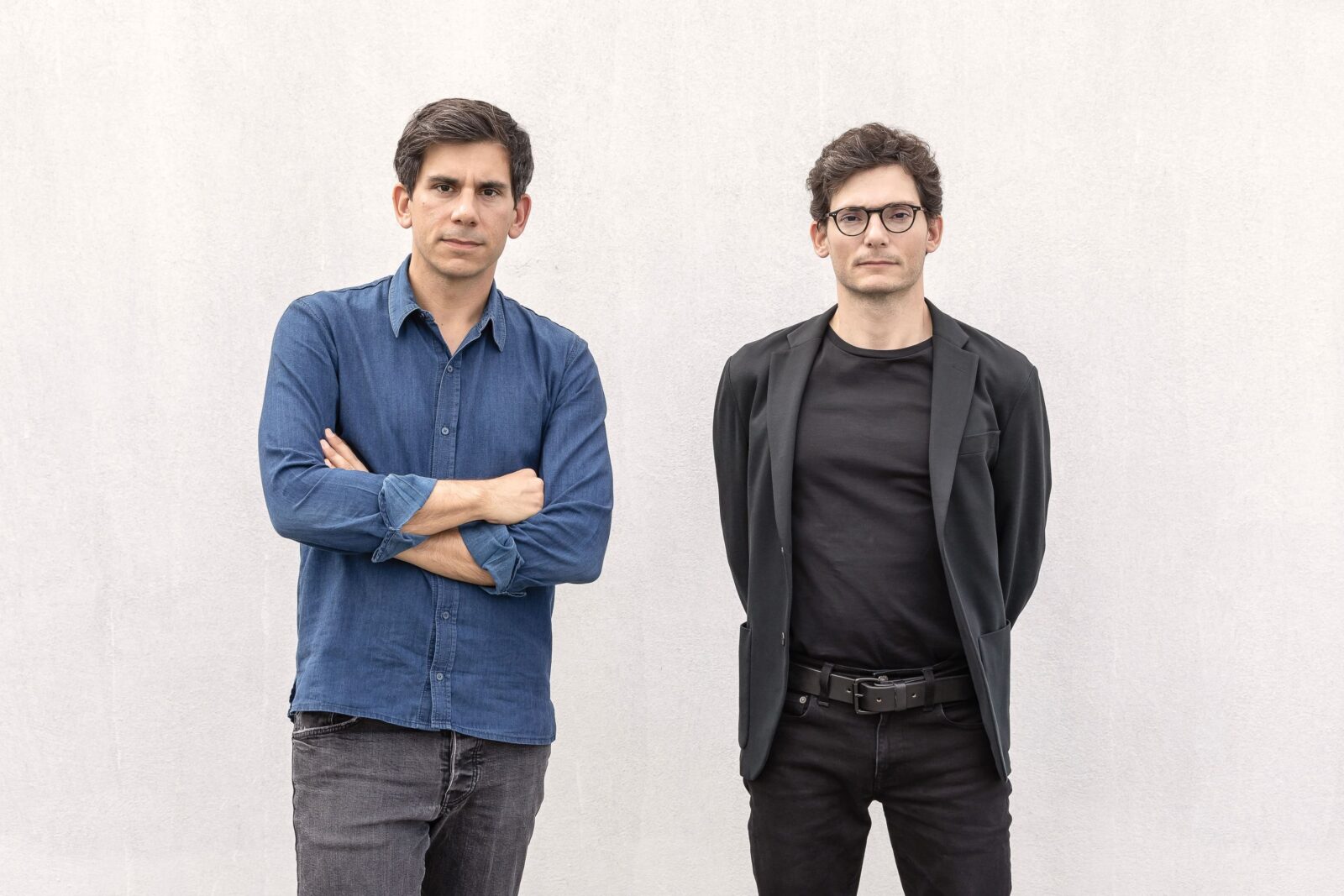
Your design for Mandarin Oriental, Costa Navarino was inspired by the mandria—the traditional, hand-built stone shelters used by local Greek farmers. How did you take such a humble, rustic concept and transform it into a world-class luxury experience?
The architectural concept draws inspiration from the local agricultural tradition of the Mandria – dry stone animal shelters built by hand by the farmers working the land. These spontaneously constructed enclosures are built of stone found in the ground of the site and take a simple, straightforward form that follows the natural topography of the land, including or excluding any obstacles such as trees or large rocks that lie in their path.
Drawing inspiration from the site’s fascinating origins—terraced terrain carefully shaped to support productive cultivation—the architecture reinterprets this logic through a series of earth-sheltered structures embedded within the landscape. Naturally, a hotel resort is a more complex building typology with more sophisticated requirements, but this land-led attitude to organic form-finding gave us our starting point. The resulting spaces enjoy distinctive views, natural cross-ventilation and the thermal stability afforded by the earth itself.
Surrounded by lush vegetation and complemented by the comforts of a world-class hospitality offering, the experience extends beyond luxury alone. It fosters a meaningful connection to the site’s broader narrative, allowing guests to engage with the landscape not simply as scenery, but as a living cultural and environmental legacy.
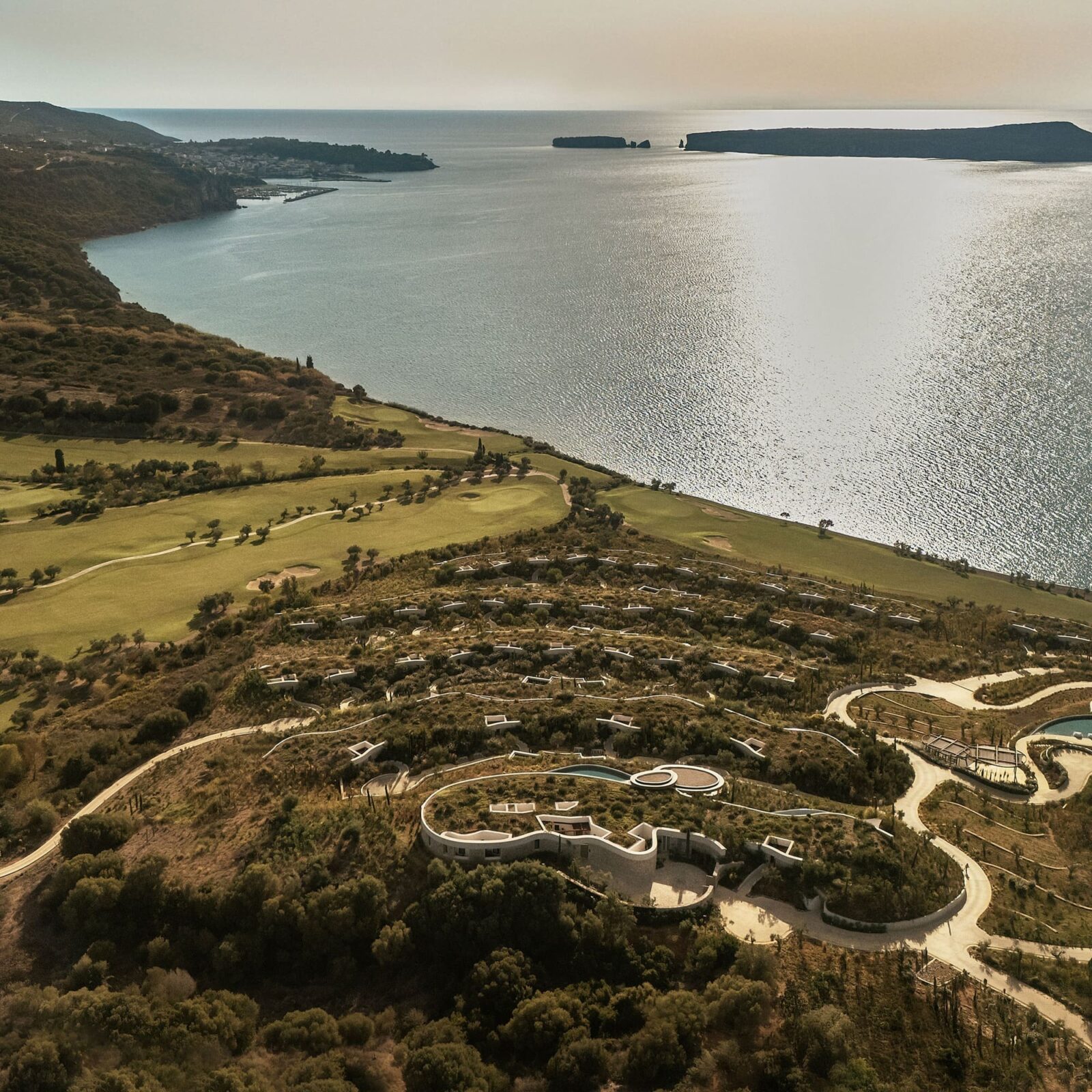
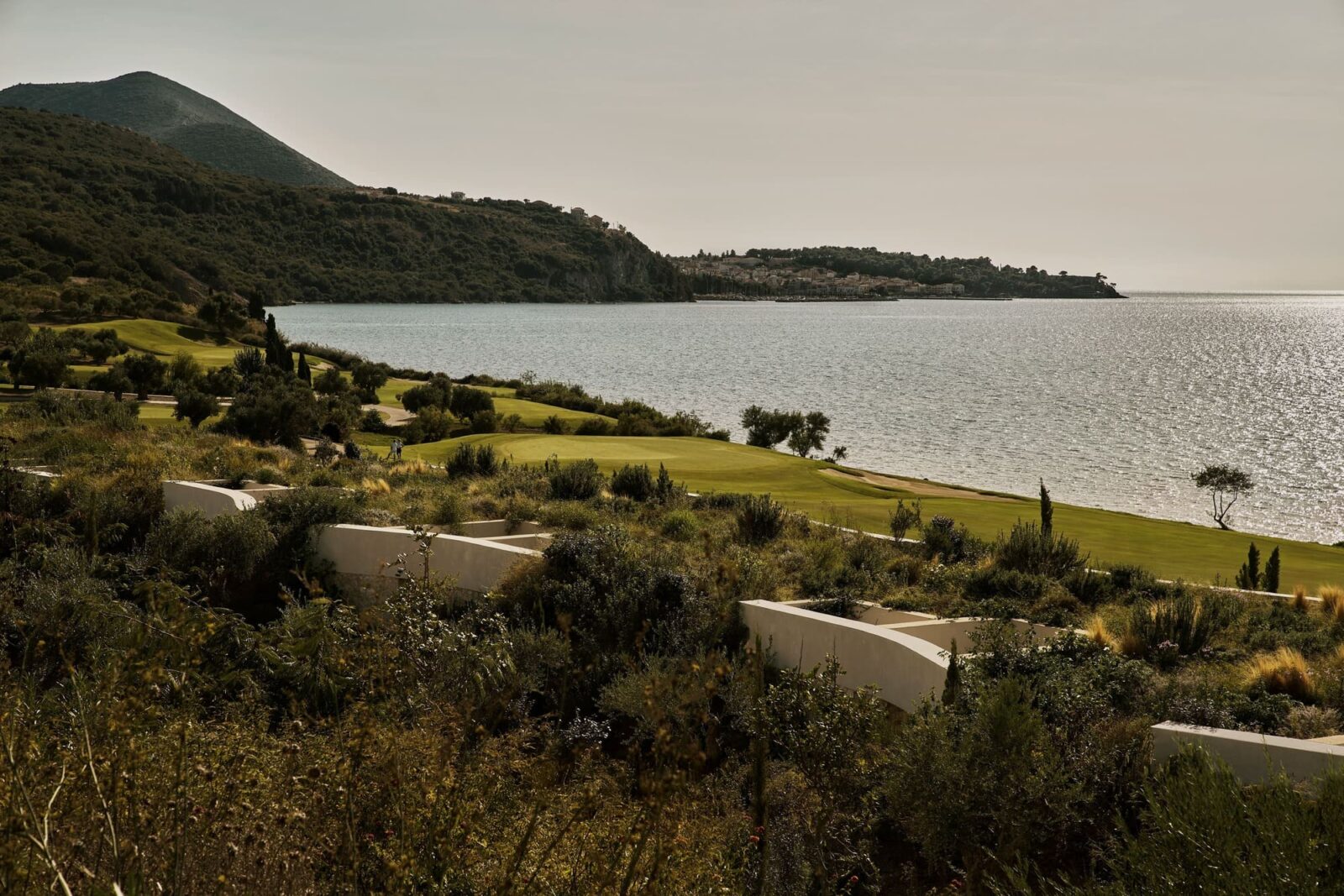
Many of the 48 pool villas are “earth-sheltered” and built into the slope of the hill. What does this feel like for the guest? Is it more about being underground, or about being completely “at one” with the garden?
At Mandarin Oriental Costa Navarino, our ambition was to create an experience that feels deeply connected to the landscape and climate rather than separated from them. The earth-sheltered villas are a key expression of this approach. More than being “underground”, they are embedded within the terrain, benefiting from the thermal stability and protection offered by the land while remaining fully open towards the views, gardens and horizon. The feeling for the guest is one of shelter without enclosure—a sense of being embraced by the landscape rather than simply looking at it.
The resort uses open-air circulation and “blurred” thresholds. How does this layout change the way a guest moves through their day compared to a traditional, hallway-based hotel?
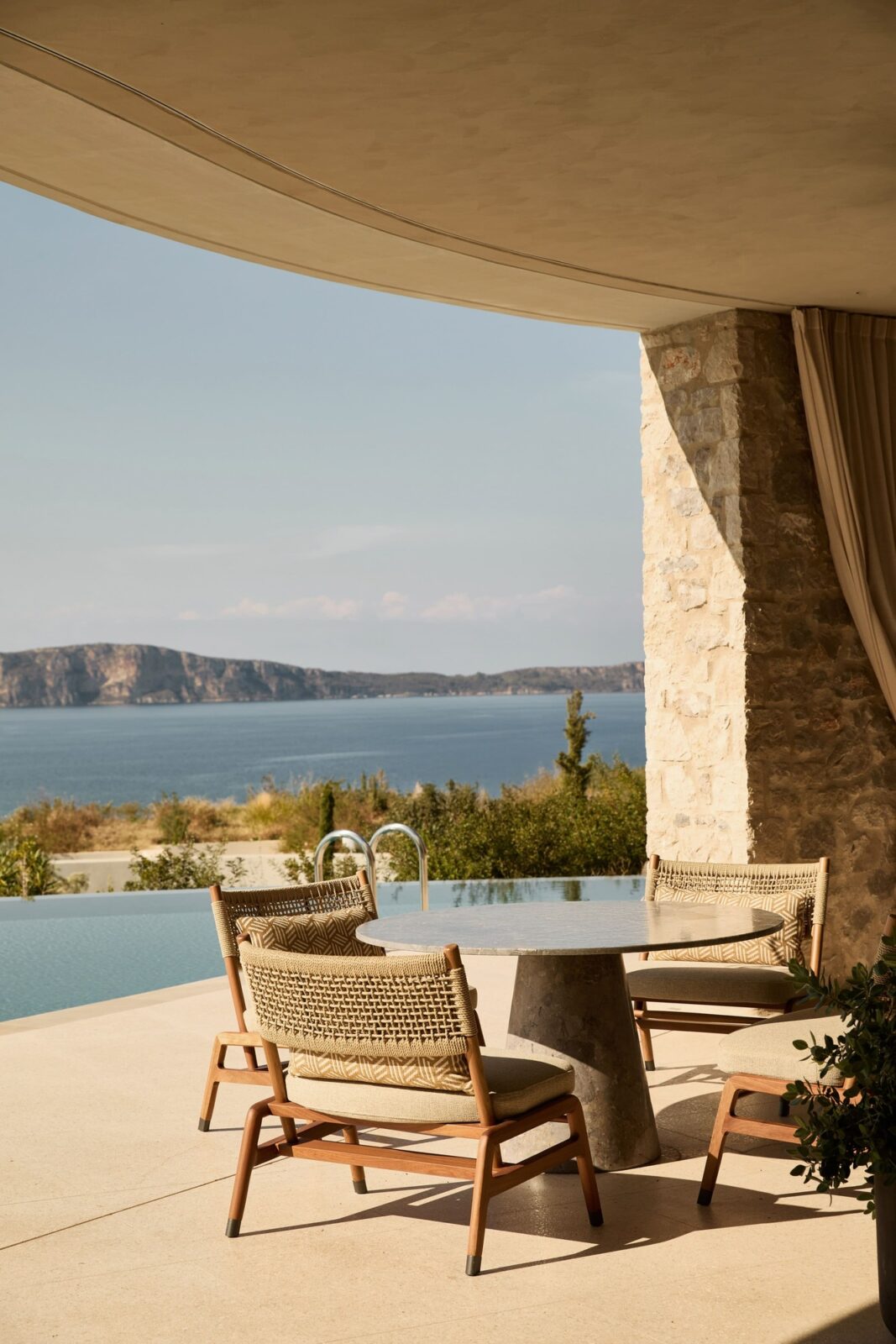
This idea extends throughout the resort. Rather than relying on abrupt transitions between indoors and outdoors, we designed a sequence of thresholds that gradually mediate between landscape, architecture and interior space. Entrance courtyards, shaded terraces, pergolas and open-air circulation spaces create layers of protection and openness, filtering light, wind, temperature and views. As guests move through the resort, they remain constantly aware of the changing qualities of the environment—the breeze, the sun, the scents of the landscape and the shifting light throughout the day.
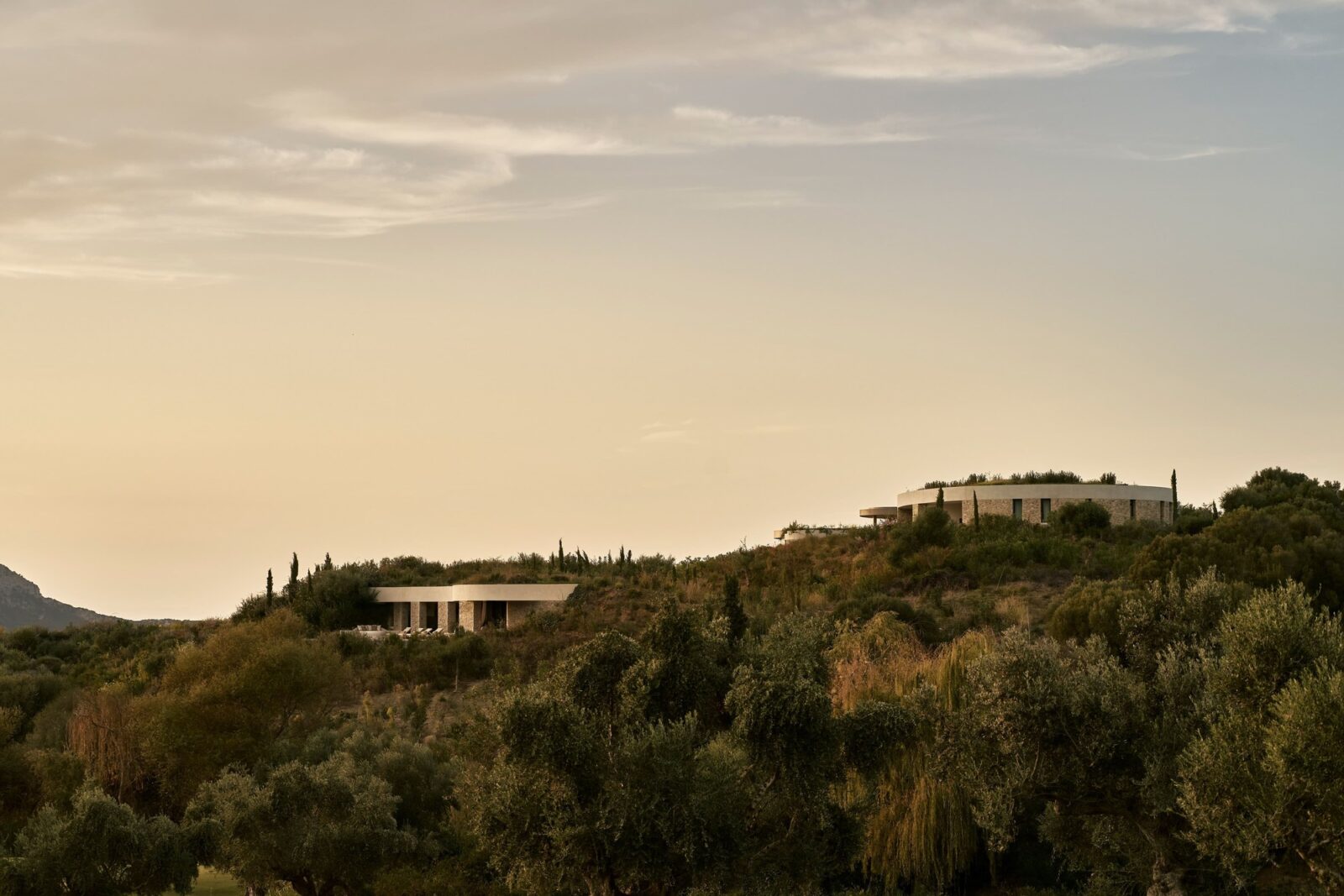
With the Mediterranean sun being so intense, you used zinc-clad pergolas and “topographical exclamation marks” for shade. How did you use the Greek climate as a design tool rather than a challenge to overcome?
The Mediterranean climate became one of our most important design tools. Drawing from the intelligence of traditional architecture, we prioritised shading, orientation, thermal mass and cross-ventilation over mechanical solutions wherever possible. Deep façades, earth-sheltered construction, protected courtyards and semi-open spaces create comfort through adaptation rather than isolation. The building does not seek to block out the elements; it engages with them, filtering them into a comfortable and enriching experience.
You’ve worked on everything from Mykonos Airport to international marinas. What was the most important “small detail” in the Mandarin Oriental guest rooms that makes a traveller feel grounded and at home?
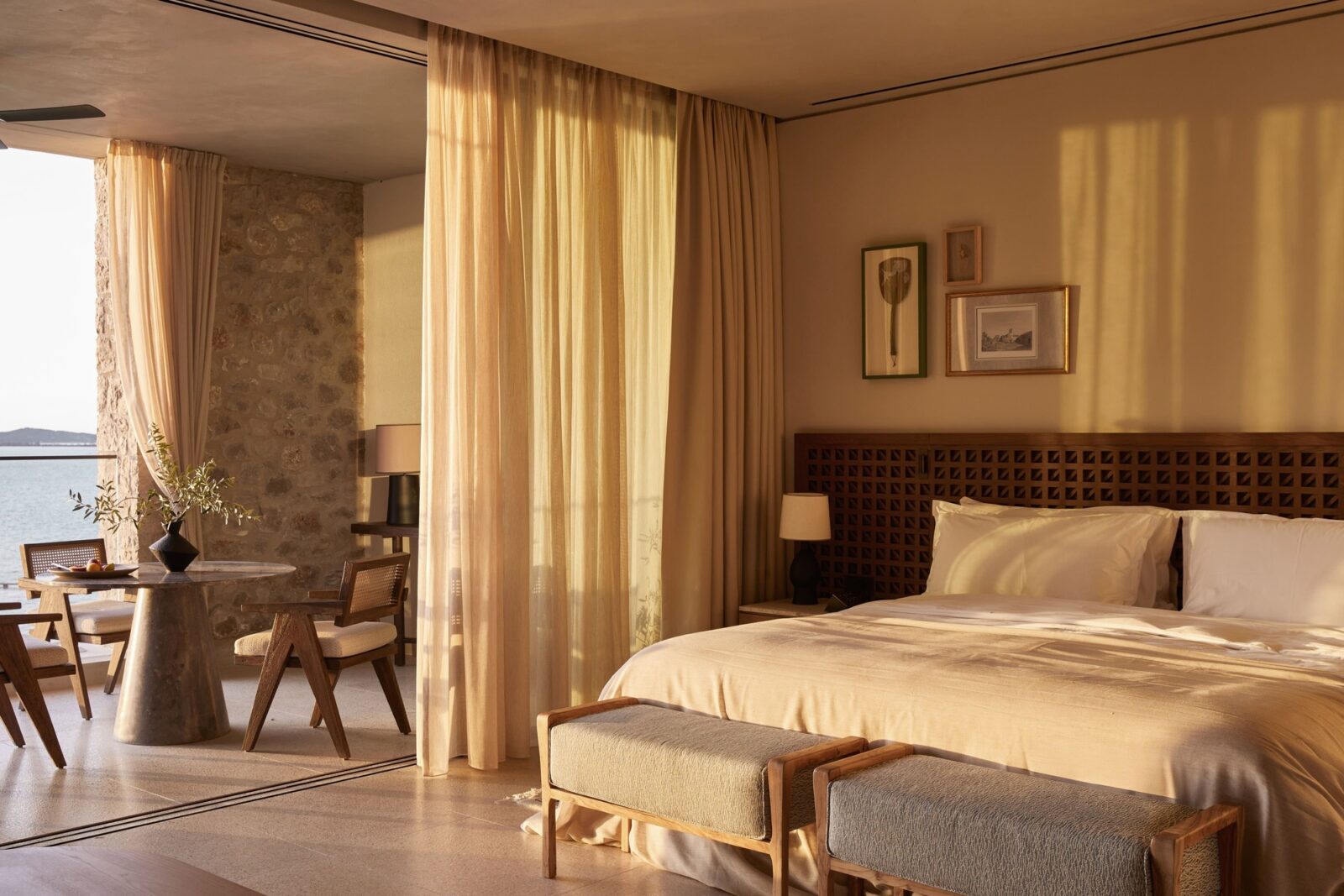
Perhaps the most important quality of the guest rooms emerges from this layered approach. The sequence from landscape, to courtyard, to room, to terrace and view creates a feeling of privacy, calm and domesticity. Combined with natural ventilation, tactile materials and carefully calibrated shade, each villa becomes a self-sufficient microcosm—simultaneously protected and open, intimate and expansive. Ultimately, the architecture seeks to offer a luxury rooted not in excess, but in comfort, connection and a profound sense of belonging to its surroundings.
K-Studio often says you “do not like waste.” How do you define “luxury” in 2026? Is it about gold and opulence, or is it about the breeze, the shade, and the smell of lavender and thyme?
For us, luxury today has little to do with opulence or excess. It is not about gold or spectacle, but about the depth and quality of experience a place can offer.
We see luxury in the impact of an encounter—the ability of a space to resonate on multiple levels, and to offer a wide range of experiences and interpretations depending on the individual. It is rooted in holistic, multisensory participation: the sense of being fully present, and of being able to connect intuitively with a place.
This connection comes from attentiveness to context and to the “DNA” of a site. Architecture becomes a vehicle through which this identity can be revealed and experienced. By working with natural materials drawn from the place, and engaging traditional techniques as carriers of cultural memory, we aim to root each project in its specific locus.
In this sense, luxury is not an added layer, but a condition of alignment—between people, place and atmosphere—where architecture enables a deeper reading of what already exists, and allows it to be felt in its most essential form.
Congratulations on winning the LIV Award! Success like this often opens new doors—are there any exciting upcoming projects on the horizon which you’re excited to share?
One of our most anticipated upcoming openings is Rosewood Blue Palace, a project that brings together Rosewood Hotels & Resorts and the local ownership of Phaea—two partners with a shared respect for place and a deep understanding of hospitality. Aligning the owner’s long-term ambition with Rosewood’s global vision created a rare creative condition, where trust, continuity and a common intent became the foundation for the work. It allowed the project to move beyond a conventional refurbishment and instead become an opportunity to reframe an already iconic site through a contemporary lens, while remaining deeply rooted in its Cretan identity.
In parallel, we recently presented our vision for the Grigoris Lamprakis “El Paso” Municipal Stadium, initiated with the support of Athens Kallithea FC. The proposal reimagines the stadium not only as a sports infrastructure, but as a civic ground for the wider community—a place where sport, culture and everyday urban life can intersect.
K-Studio has a very distinct, grounded philosophy. For the young architects and designers looking at your work today as a gold standard, what is the most important piece of advice you can offer them about finding their own creative voice?
The most important advice we would offer is to stay close to the responsibility embedded in each brief, and to resist the temptation of overcomplication. At the core of every project lies a set of simple, fundamental questions: what is this place, what does it need, and what story is it meant to carry forward? The clarity with which these questions are asked often determines the strength of the outcome.
Equally important is the ability to remain receptive—particularly to technological and material innovation—while never allowing it to become an end in itself. Tools evolve, but intention must remain primary. Technology should serve a higher purpose: to deepen understanding, enhance experience, and reinforce the relationship between people, place and environment, rather than distract from it.
Ultimately, finding a creative voice is less about inventing a style and more about cultivating a way of thinking—one that is grounded, curious and disciplined, and that consistently returns to the essence of what is truly necessary.