



Look around a fashionable restaurant and there’s a good chance you’ll find stone, glass, tiles and perhaps a wonderful high ceiling with a unique chandelier. These materials can look beautiful together, but they might also reflect sound.
Once the room fills with conversation, music and maybe even the enthusiastic birthday celebration, those reflections become harder to ignore. Part of the problem is how long sound remains in the room. When it repeatedly bounces between hard surfaces, speech becomes less clear, so people raise their voices to compensate and their neighbours do the same. Acoustic treatment helps control those reflections, making conversation easier while leaving enough background sound for the room to feel lively.
Exton Park and the Acoustic Potential of Timber Ceilings
At Exton Park, an English vineyard in Hampshire, the hospitality building has the proportions to make an impression before anyone pours the wine.
Designed by Dunning & Everard, with Luke Rose Architects, the cathedral-like structure brings together spaces for tastings, dining, meetings and events. A curved staircase connects three floors through a dramatic hall, while natural materials and an earthy palette relate the interiors to the vineyard outside.
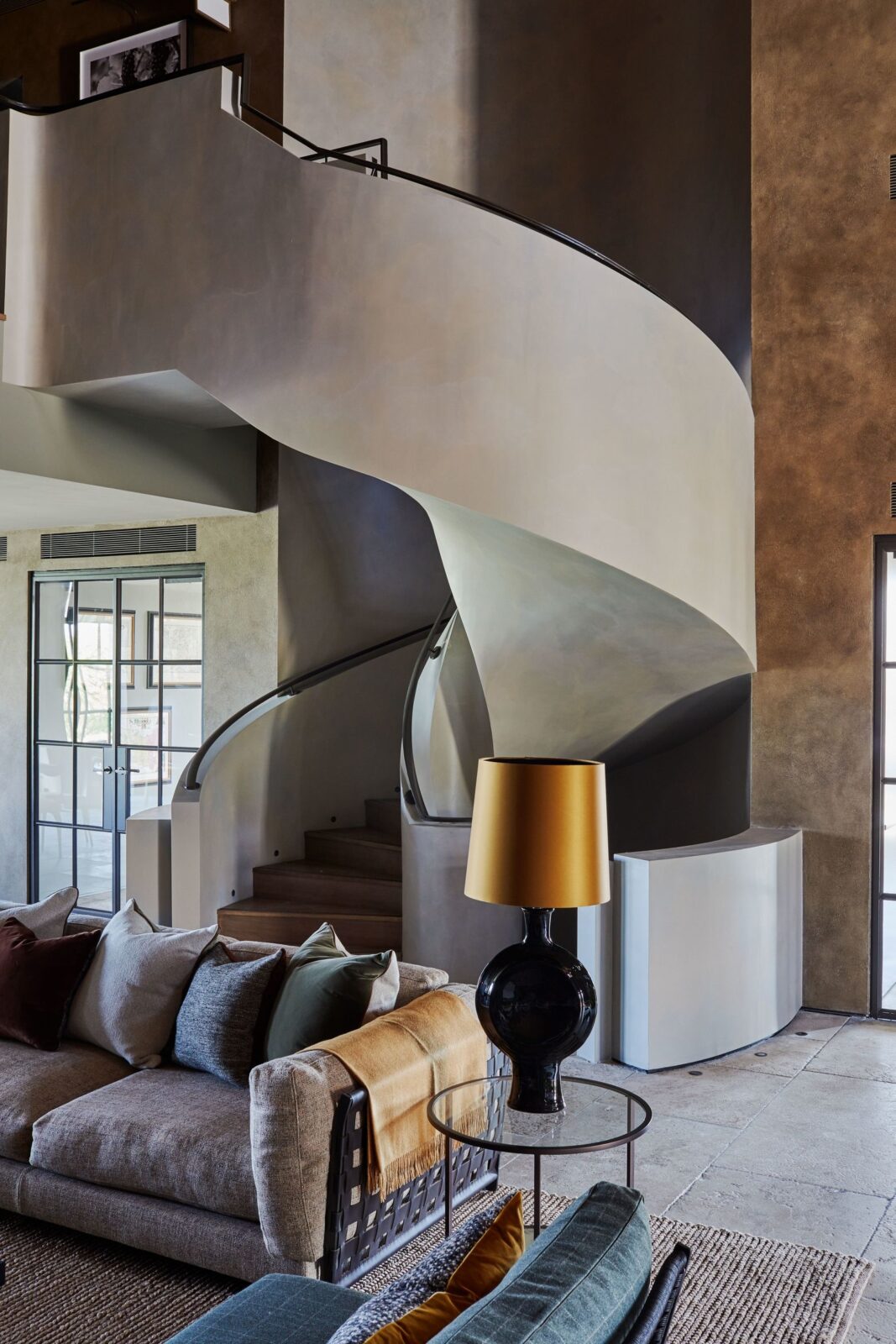
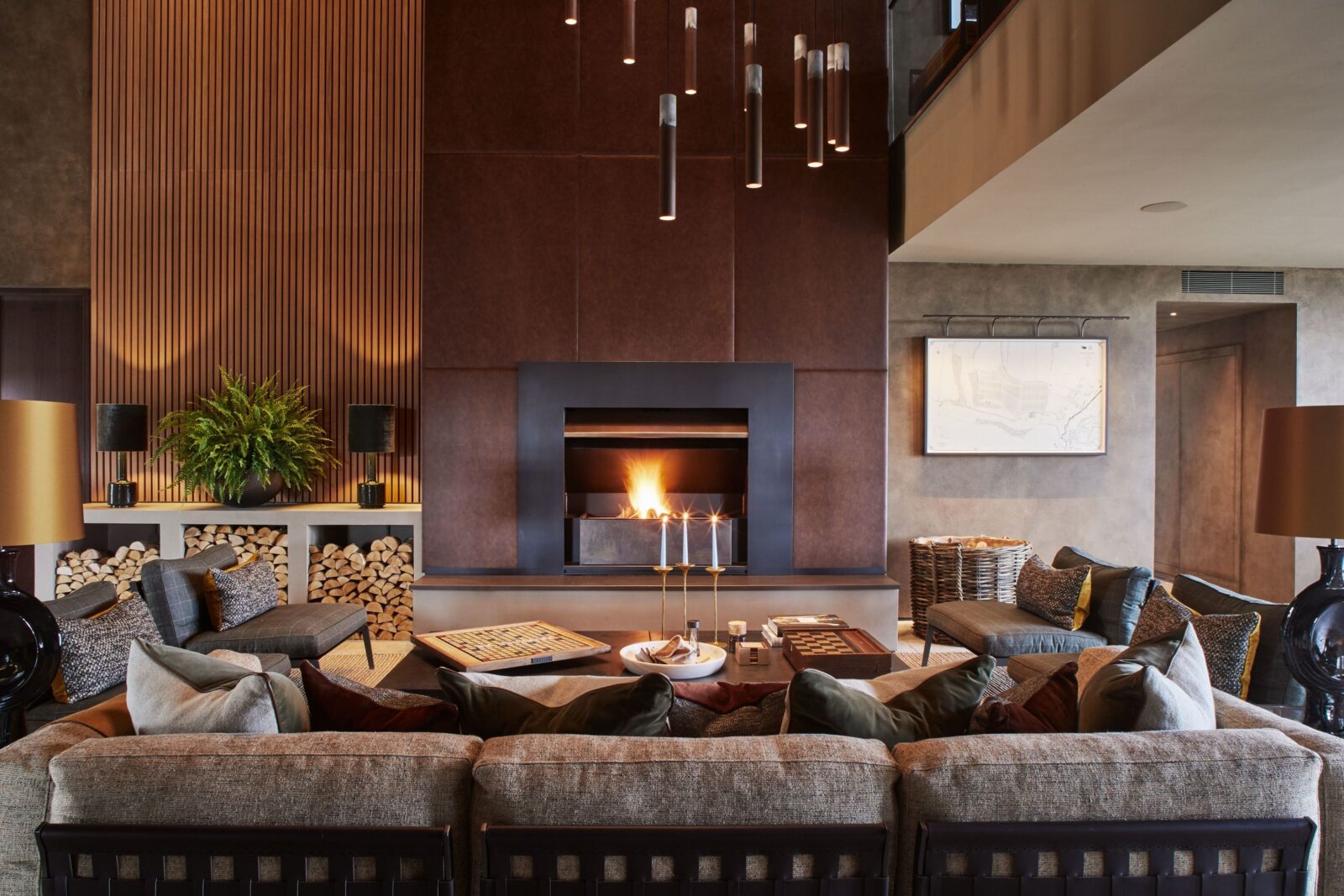
Above, a timber-slatted ceiling adds an acoustic function into the architecture. In a building with this much volume, the ceiling offers a substantial surface to work with. Large rooms can be impressive to enter, although their proportions and hard finishes can also make sound more difficult to manage.
Timber slats can form part of a sound-absorbing system when combined with suitable backing materials and acoustic detailing. The spacing and depth of the slats matter, as does their installation. Exton Park’s ceiling is identified as an acoustic feature, but the published project information doesn’t include its technical construction or measured performance.
What we can see is how comfortably it fits with the rest of the interior. Oak, wool, horsehair, limestone, leather and bronze appear throughout the building, alongside bespoke pieces made with local artisans. The ceiling continues that use of natural materials while taking on a practical job.
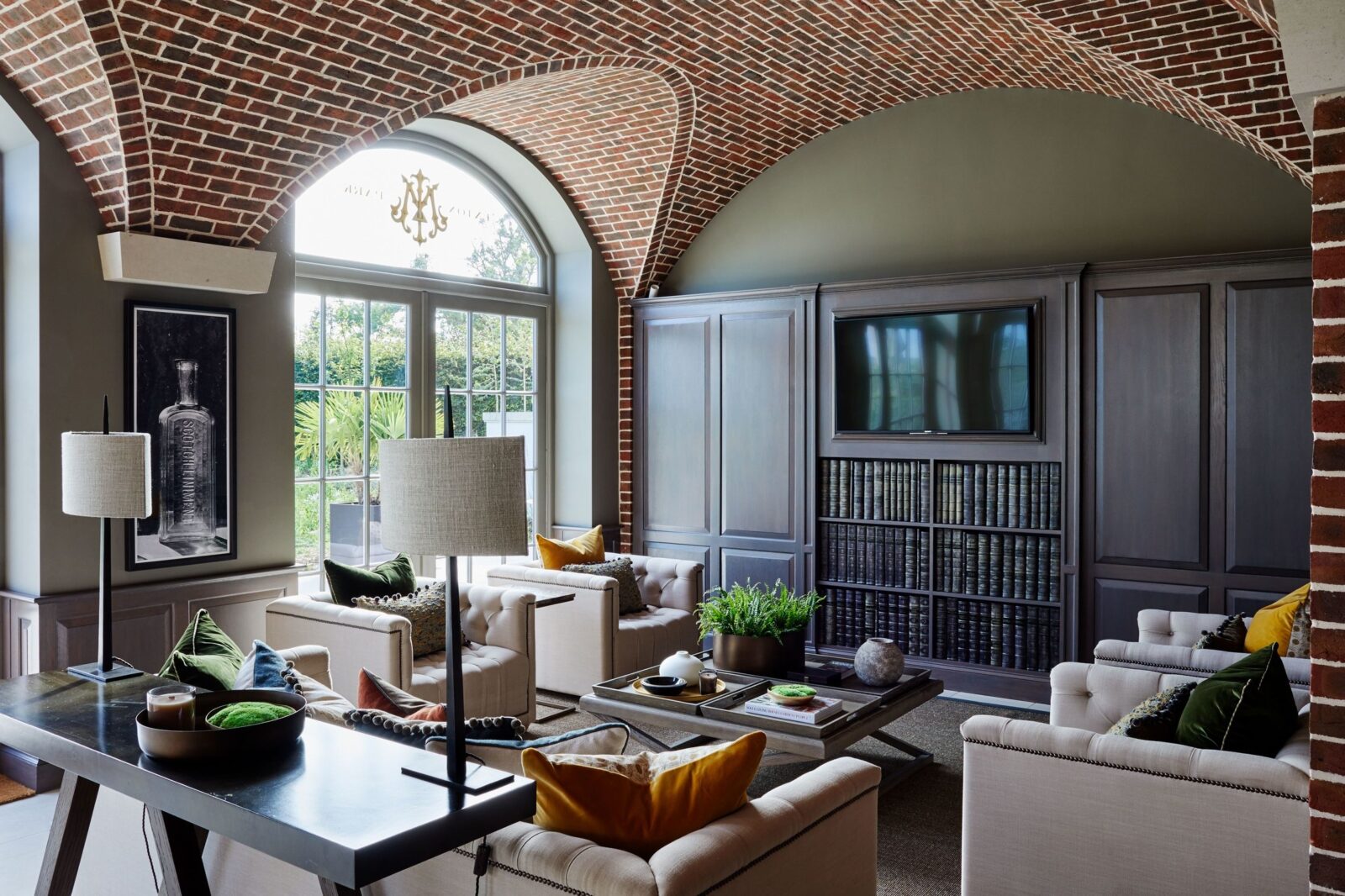
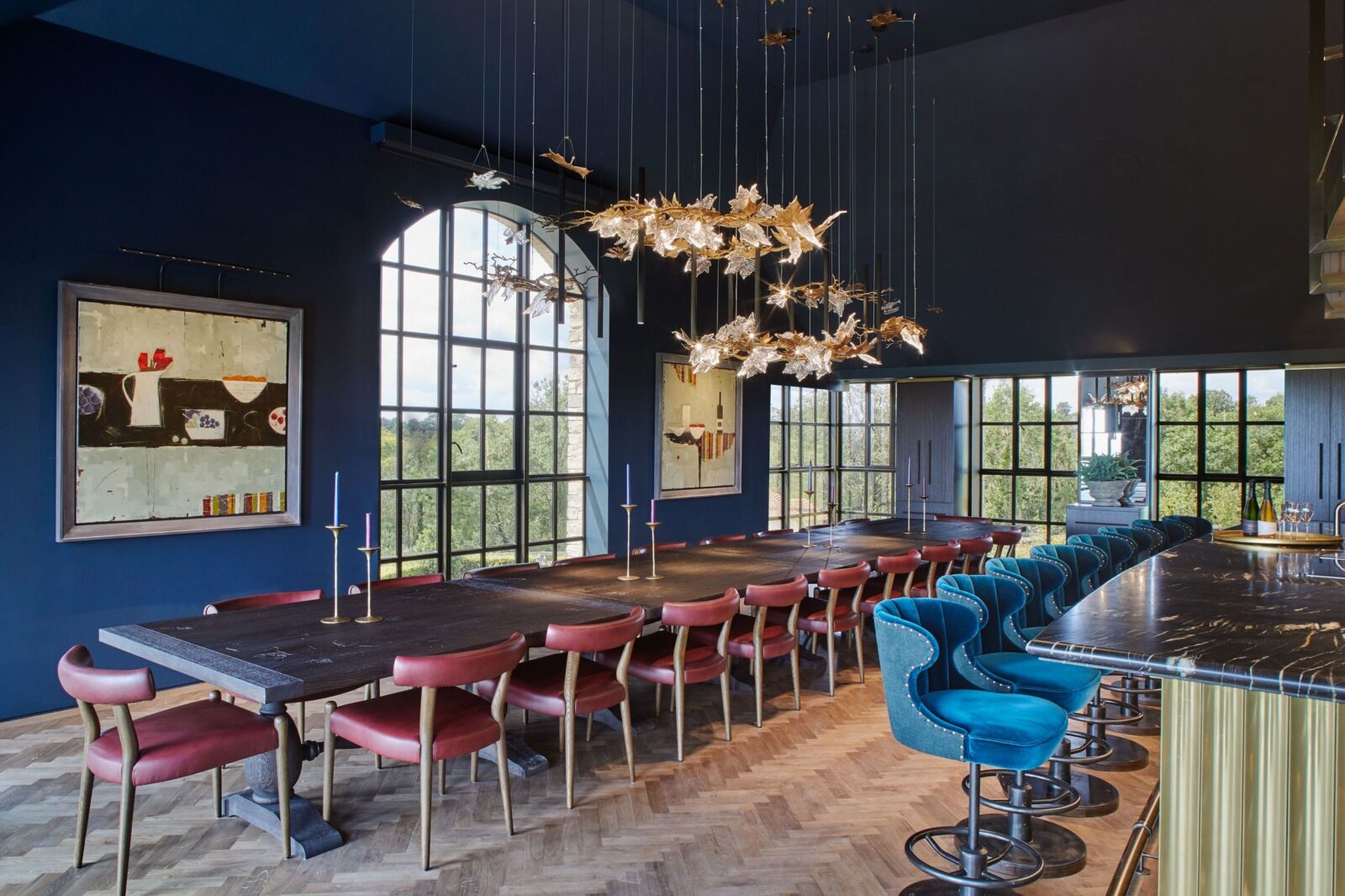
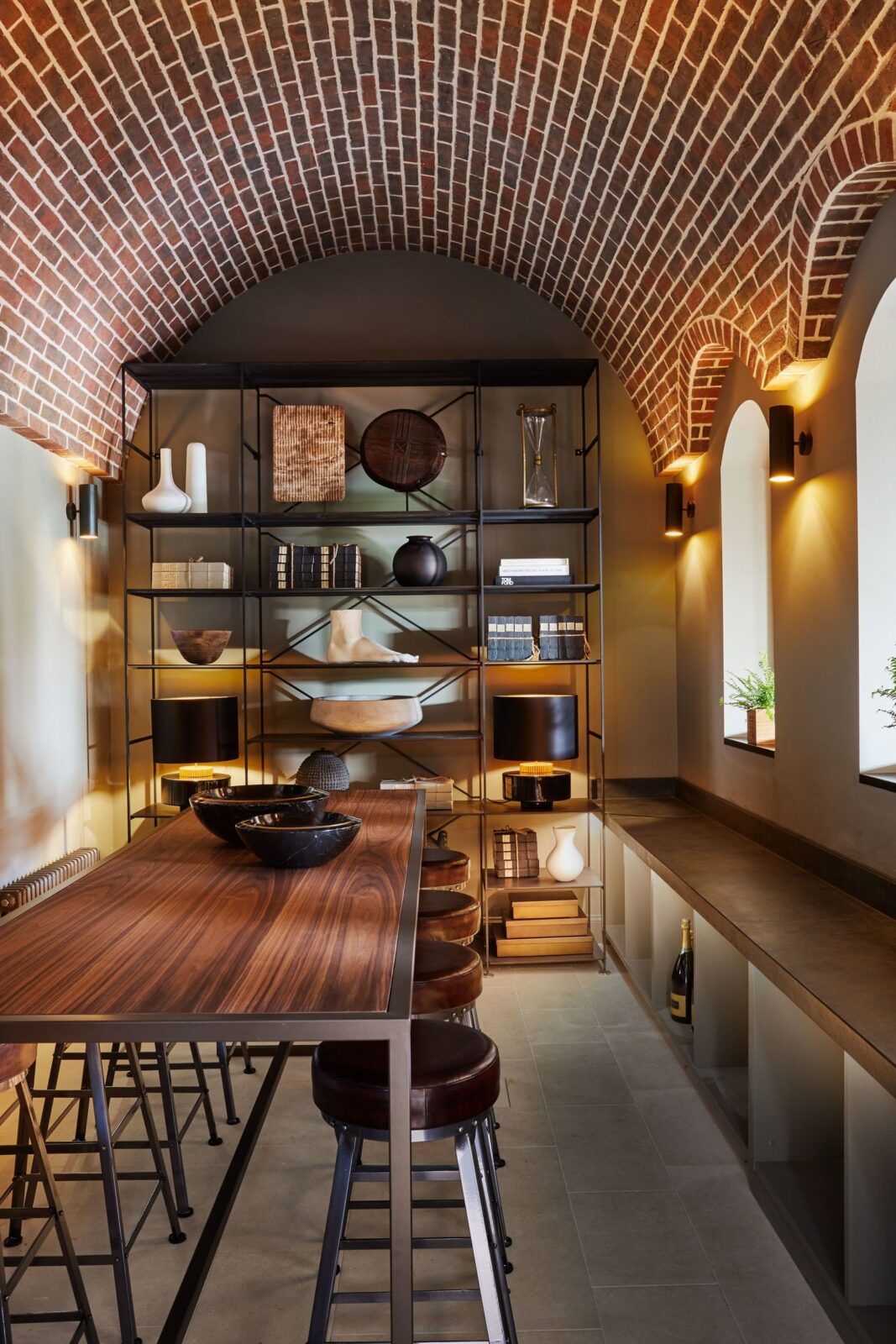
Exton Park is home to a café, a club room that can be used as a boardroom or informal lounge, a chef’s kitchen for intimate dining, and vaulted cellar rooms for wine tastings. All these unique spaces make different demands on a room. During a private tasting, guests need to hear whoever is speaking; a gathering in the great hall can allow for more background conversation. A consistent interior palette still needs to leave room for those differences.
Mercure Antwerp City Centre Makes Acoustic Panels Part of the Décor
At Mercure Antwerp City Centre, the acoustic treatment gets a frame. Buckley Gray Yeoman‘s refurbishment was inspired by Antwerp’s Academy of Fine Art, which has produced some of the world’s finest master painters and fashion designers, mixing references to European bistros and classical painting in an interior that allows itself a little fun.
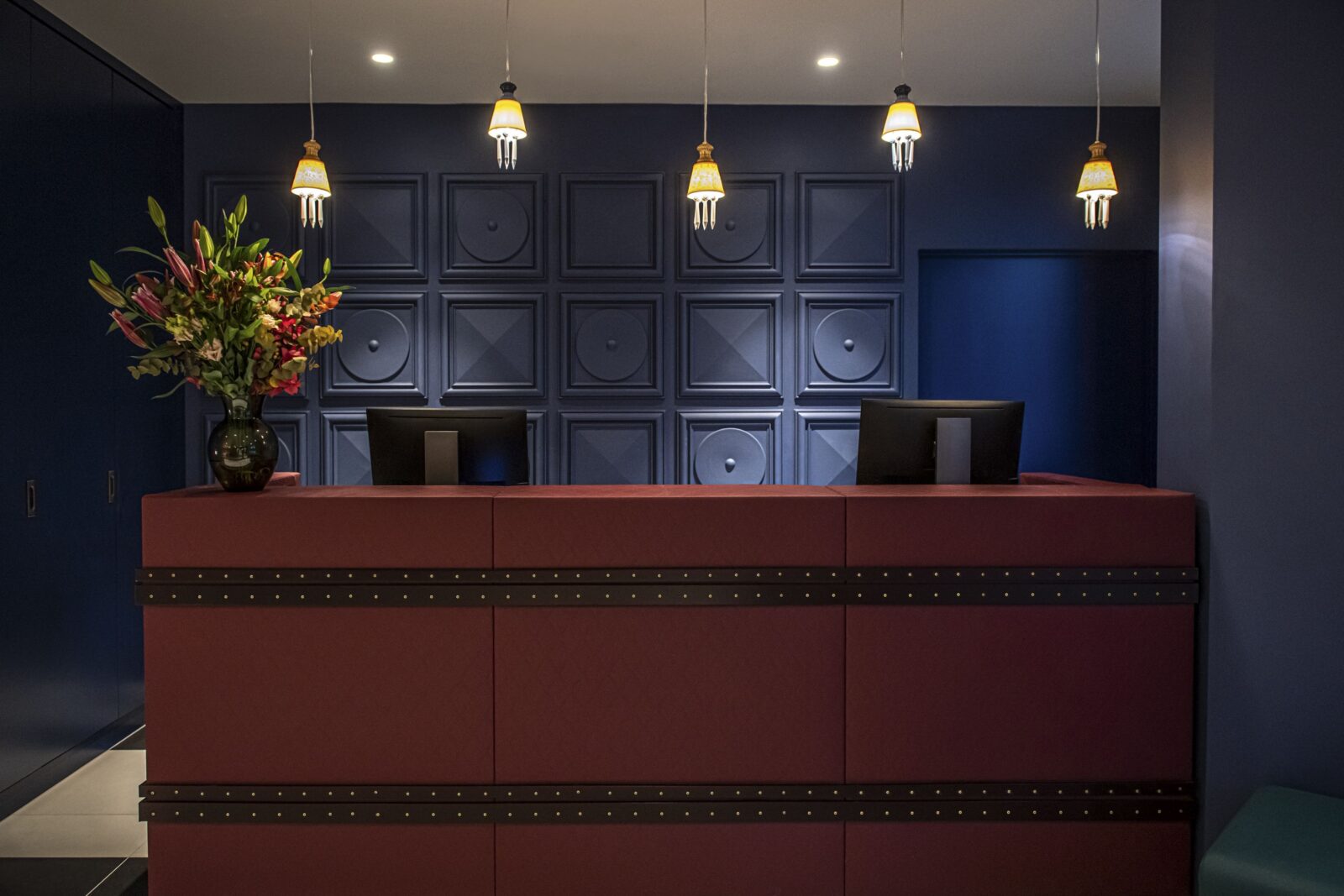
The lobby combines Antwerp Blue panelling, burgundy tiles and a stitched reception desk. The food and beverage areas use a lighter palette, with glazed tiles, globe pendant lights and bentwood chairs. Among these details, acoustic panels are hidden within solid oak frames. It’s an approach that suits a hotel restaurant, as the appeal of a lively bistro can become too much quickly if you spend the evening asking, “Sorry, what?”
How Materials and Finishes Influence Sound
Both projects bring up a distinction that can be easy to miss when looking at photographs: a material’s appearance tells us little about its acoustic performance. Glass, polished stone and tiles usually reflect sound and softer, porous materials and purpose-designed acoustic products can absorb some of that energy and reduce unwanted reflections.
Wood needs a little more explanation. A timber ceiling isn’t always sound-absorbing, however warm and reassuring it looks. Its performance depends on how the system is built, including the materials behind the visible surface. The same goes for a decorative wall panel, which needs suitable construction and installation to do useful acoustic work.
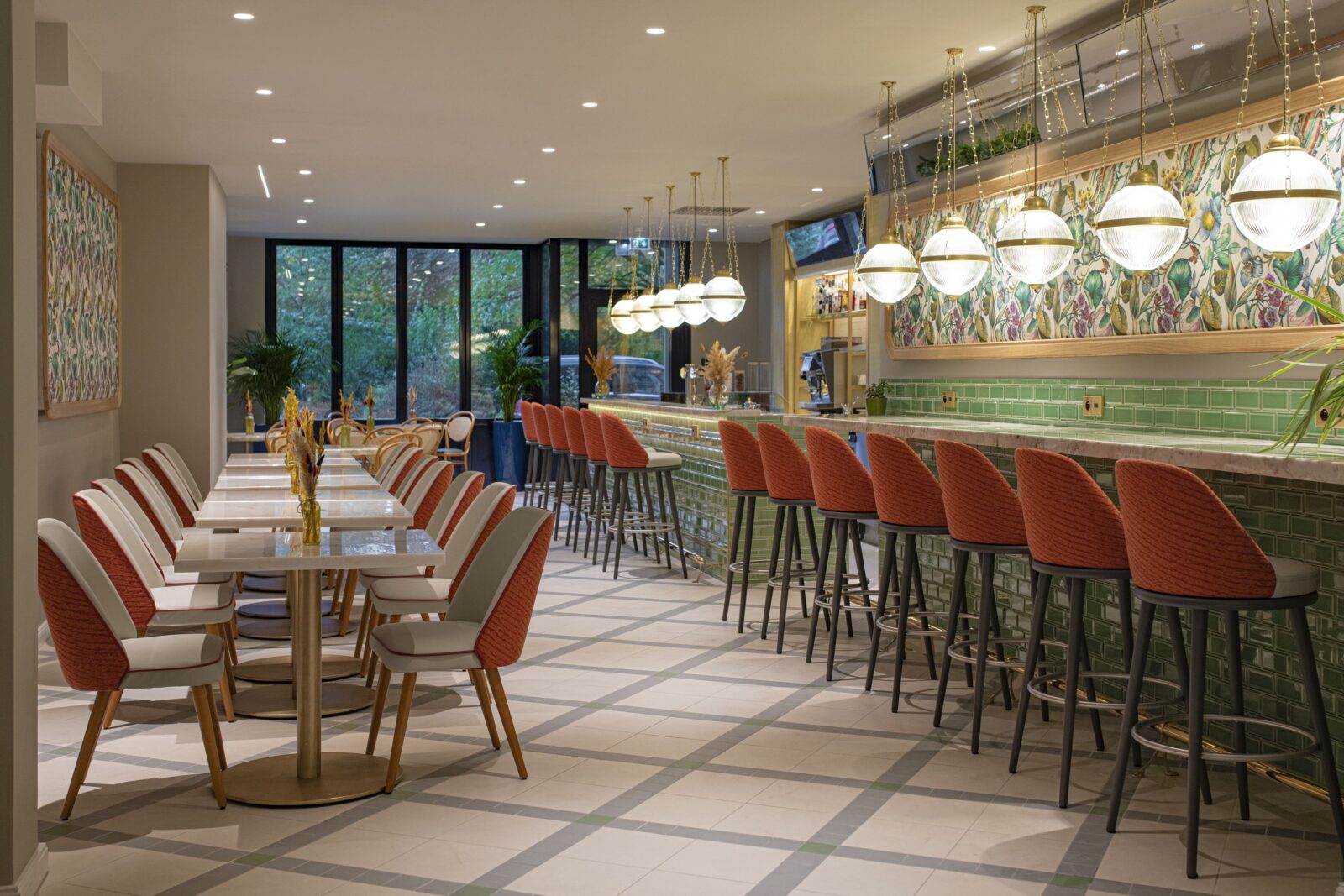
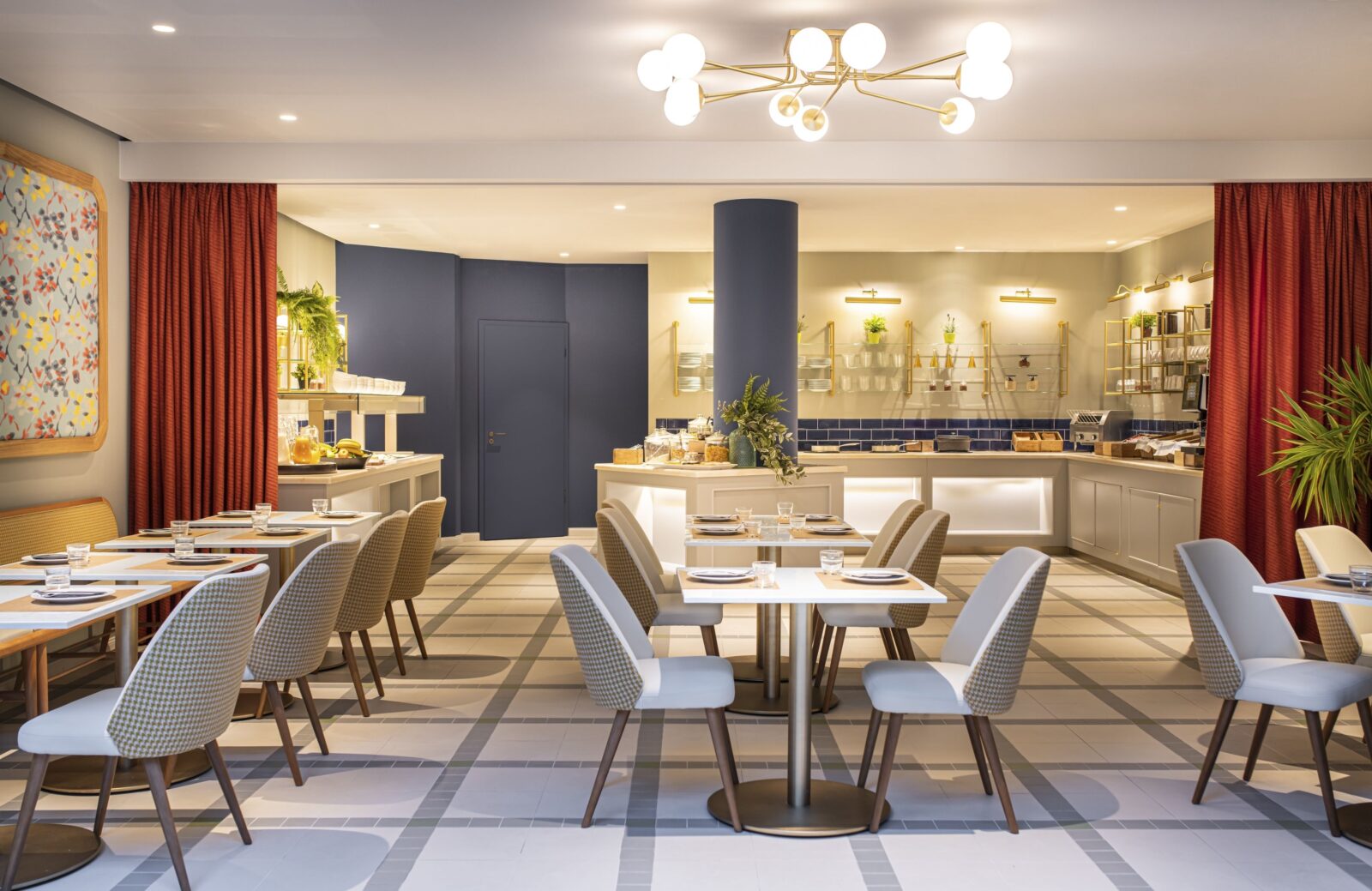
Upholstery, curtains, carpets and furniture can also affect how a room sounds, though their contribution varies.
For designers, the task is to choose and detail these elements around the room’s use. Guests arriving for dinner are unlikely to ask about acoustic backing materials, but they will notice if conversation becomes hard work.
The Best Hospitality Interiors Are Comfortable to Spend Time In
Hospitality interiors are often introduced to us through photographs, which give us a chance to admire a staircase, question a colour choice and decide that we need those chairs, all before finding out whether we’d enjoy sitting in them for an evening.
Sound is harder to judge from a beautifully composed image. You notice the value of that work once you’re sitting down, the tables around you are filling up and you can still hear your friend finish a story.


