



Good playground design gives children several ways to use the same space, with opportunities to climb, test their balance, play together or sit out for a while. The layout matters as much as the equipment: routes should be easy to follow, and adults need clear views of the children.
At Old Beijing Bus and Cishan Tribe, children can climb through a bus-inspired structure, spin in a pottery-shaped bowl and swing beneath a hut modelled on ancient dwellings. Designed by XISUI Design and led by Hu Yihao, both projects won in the Playspace Landscape category at the 2025 BLT Built Design Awards. In both, the historical references give children recognisable objects to invent games around, adding possibilities beyond the activity each piece of equipment was designed for.
An old Beijing bus returns as a playground
In Sanjiaodi Park, located 37 km from Beijing’s Forbidden City, the site was once the departure point for route 345, which connected Changping’s historic neighbourhoods with central Beijing. XISUI modelled the installation on the BK640, a domestically manufactured bus dating from 1957, retaining its red-and-white palette.
A pathway separates the structure into front and rear sections while maintaining views between them. The front accommodates activities for younger children, including balance exercises and interactive play, while the rear brings together swings, trampolines and climbing structures for children and parents to use together.
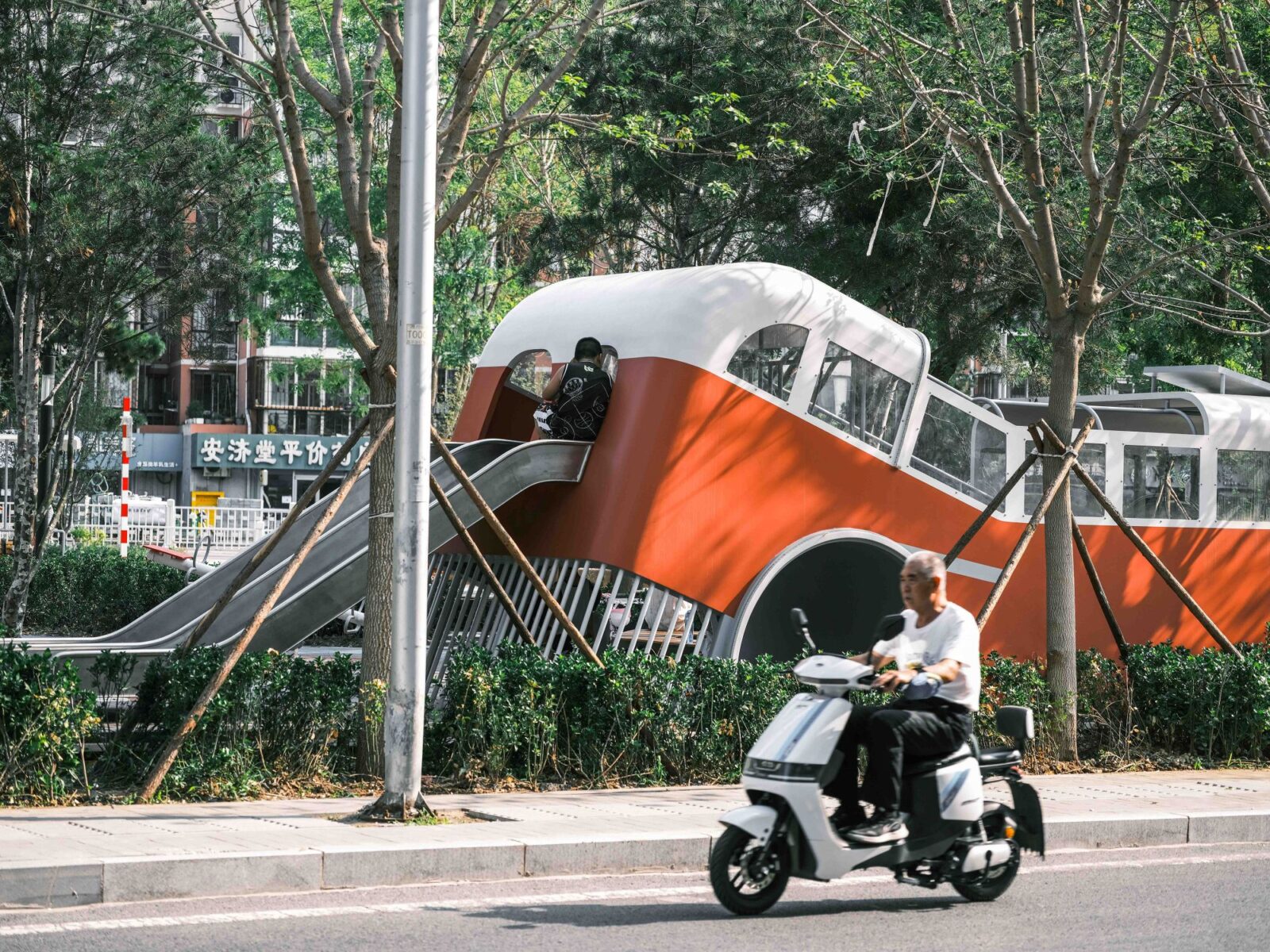
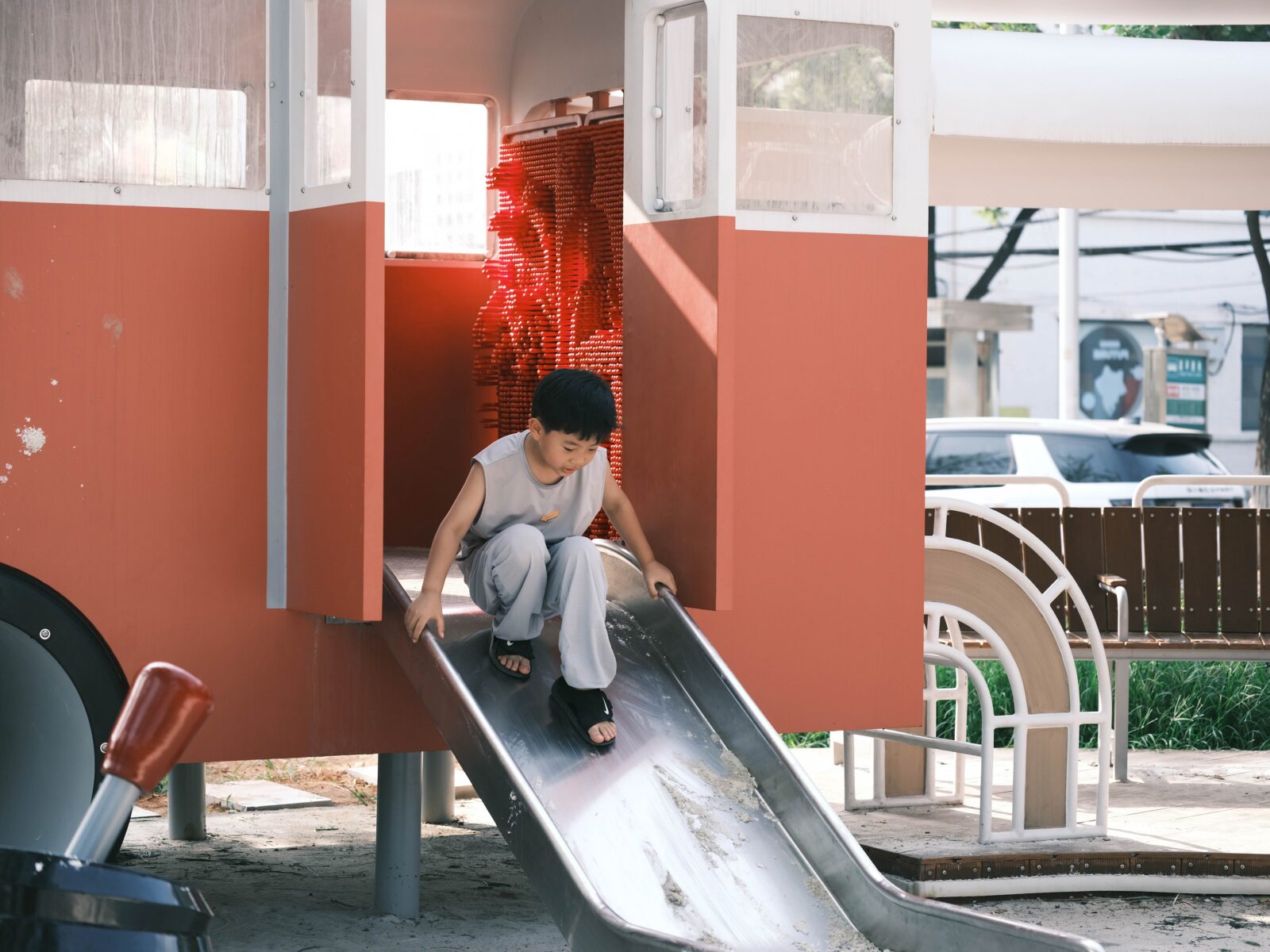
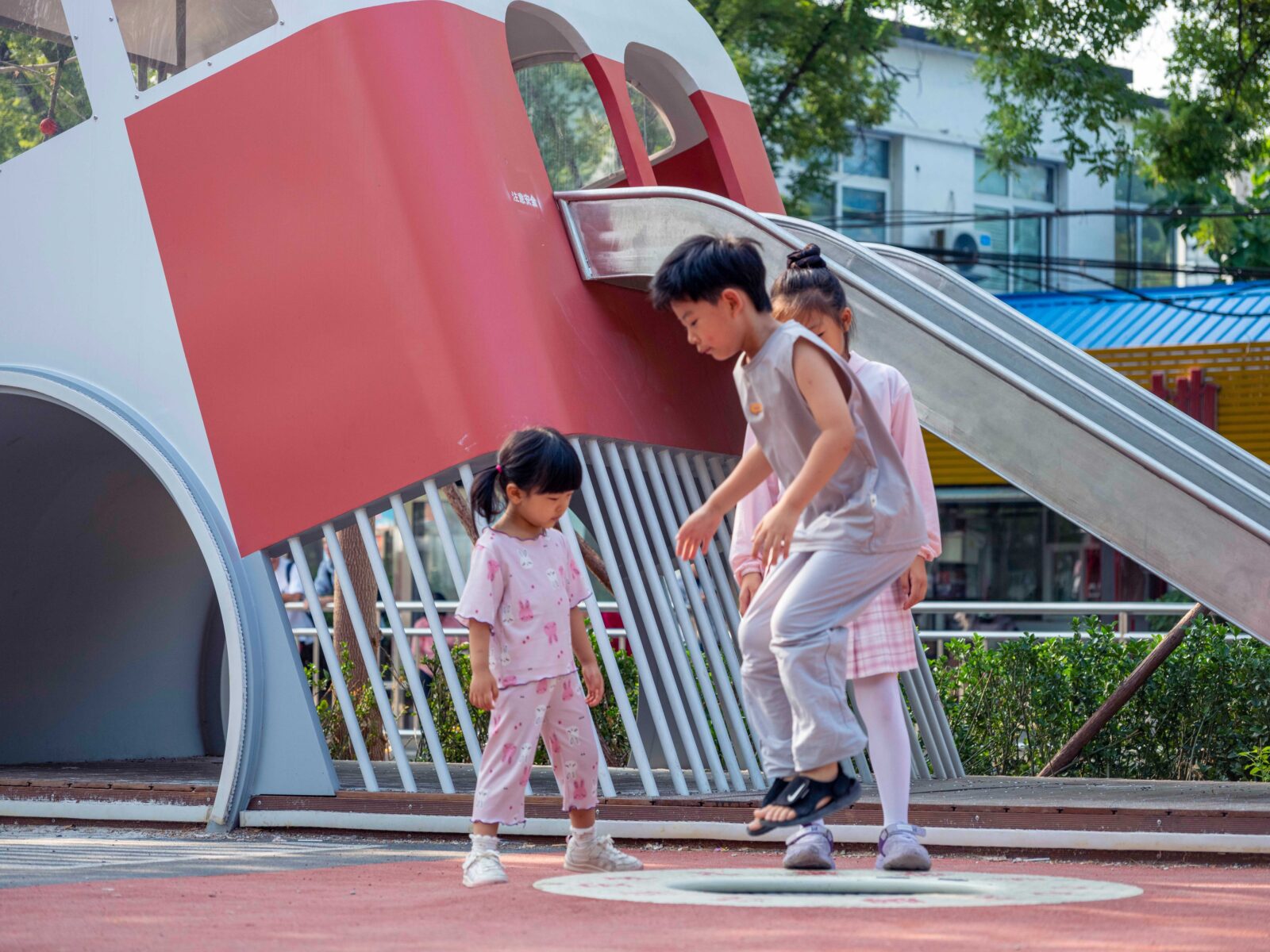
Children can move around and through the two halves, with the gap allowing the park’s pathway to continue between them with the bus recognisable, even as the activities are very different from anything encouraged on public transport.
Cishan culture as a play area
Outside Handan’s MixC One Mall, the 3,200-square-metre Cishan Tribe playground draws on the approximately 8,000-year-old Neolithic culture of the surrounding region. Its references include agriculture, animal domestication, pottery and dwellings.
The largest animal reference, the Egg-Hatching Chicken, accommodates slides, climbing nets, tunnels and observation points within a single play structure. At the entrance, the Millet Arch combines a recognisable gateway form with specimen-recognition and kaleidoscope functions, introducing the agricultural references that continue across the playground.
Other installations translate domestic objects into equipment at the scale of a child’s body. The Running Tripod Bowl, based on pottery vessels excavated at Cishan, becomes a spinning seat, while the Walnut Seat incorporates nets for lying down. The Tribal Wooden Hut offers a more architectural interpretation: its rounded profile recalls ancient Cishan dwellings, with swings, climbing nets and hanging ropes incorporated beneath it. Each reference brings a different physical activity into the scheme, from rotation and balance to climbing and rest.
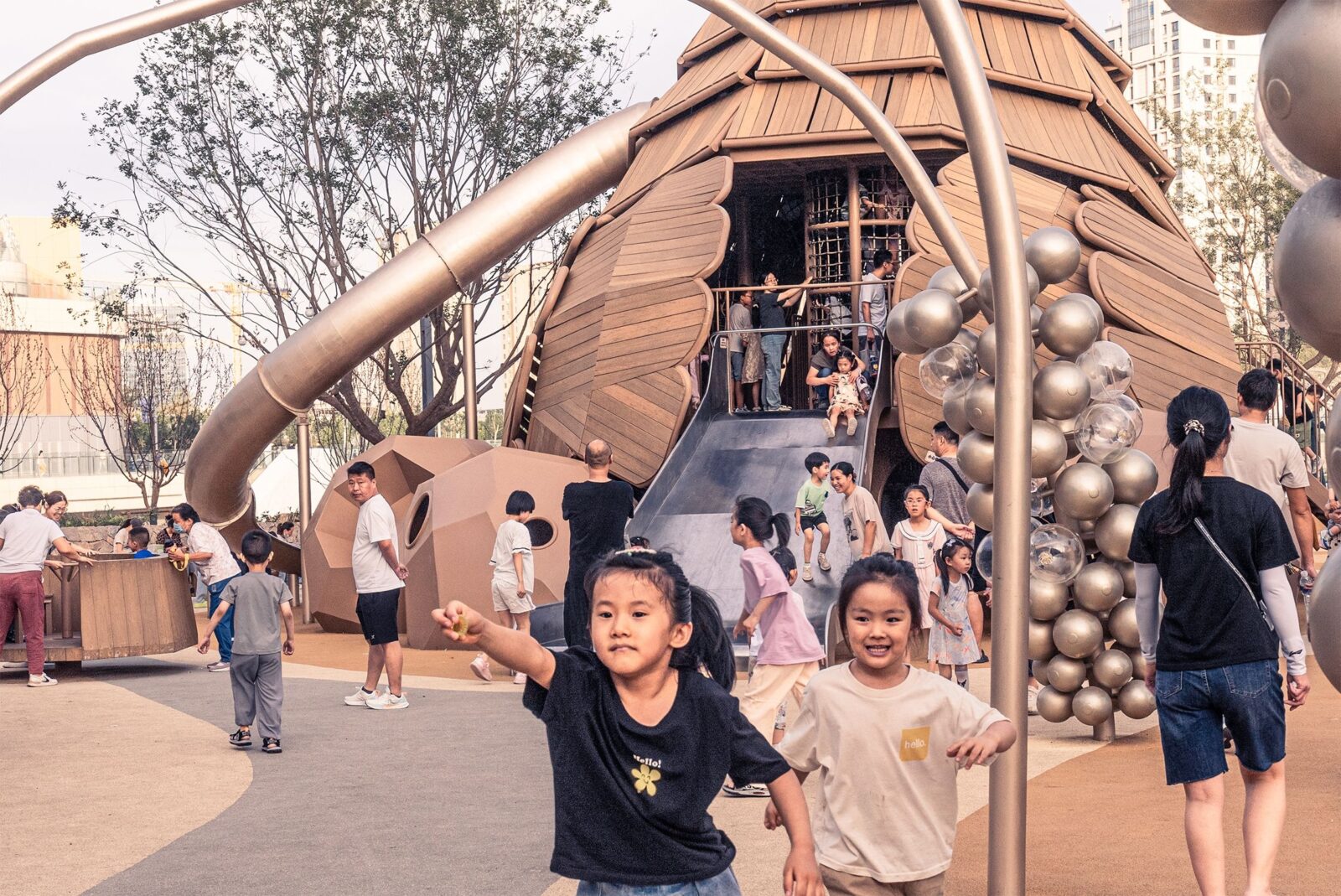
Completed in April 2024, the project extends the shopping centre’s outdoor space with a playground whose individual structures also serve as shelters, seats and places to spend time together. Its historical references are built into the forms children use, giving the plaza a unique identity through the equipment itself.


