Header: Courtesy of Annabelle Armstrong
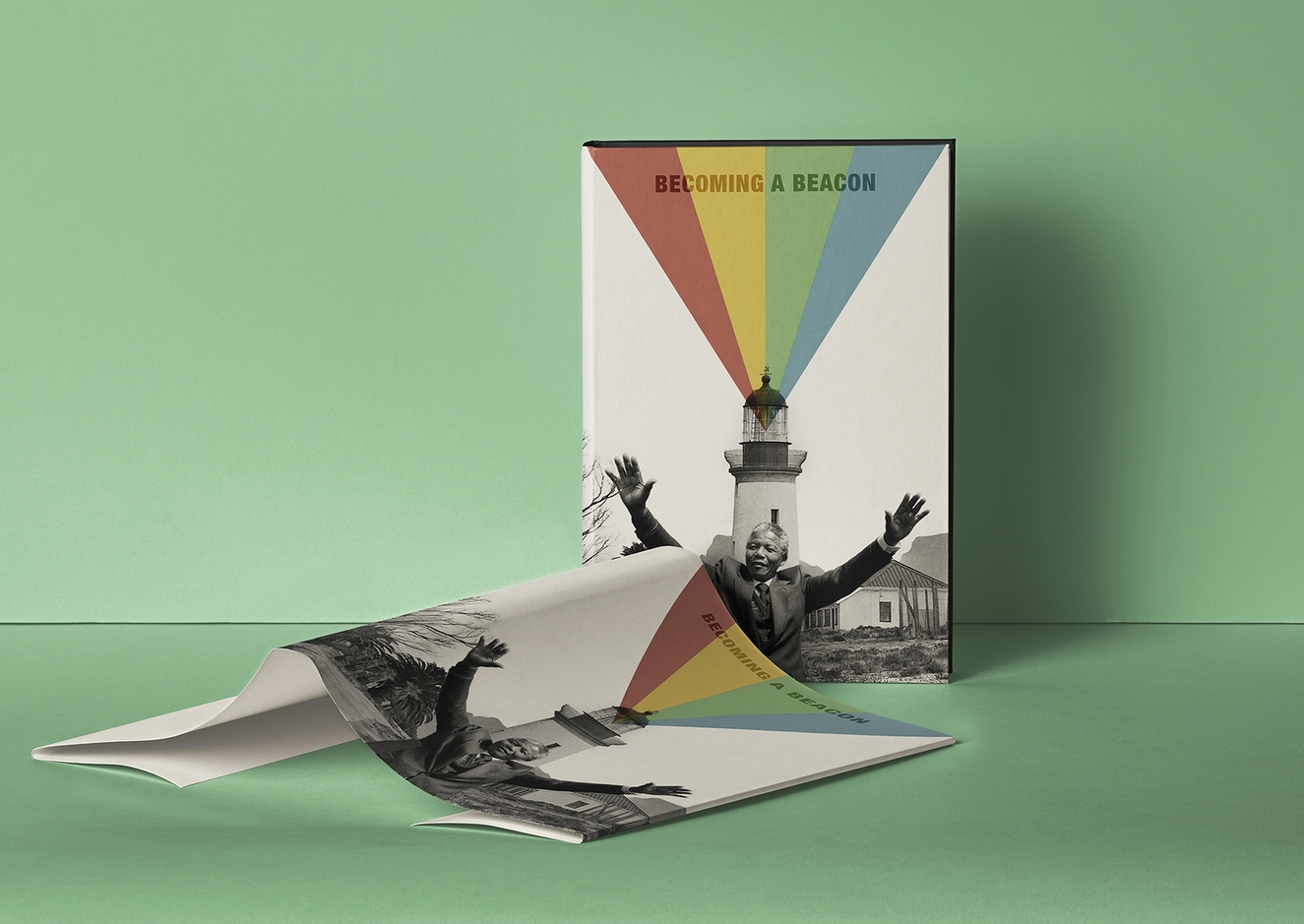
South African designer Annabelle Armstrong has been named the Emerging Communication Designer of the Year 2026 at the Africa International Design Awards (AIDA) for her project, Becoming a Beacon. Developed during her studies at the Greenside Design Center, the project challenges the traditional ways historical biographies are presented. By focusing on cultural preservation, the work offers an engaging way to keep history alive for younger generations.
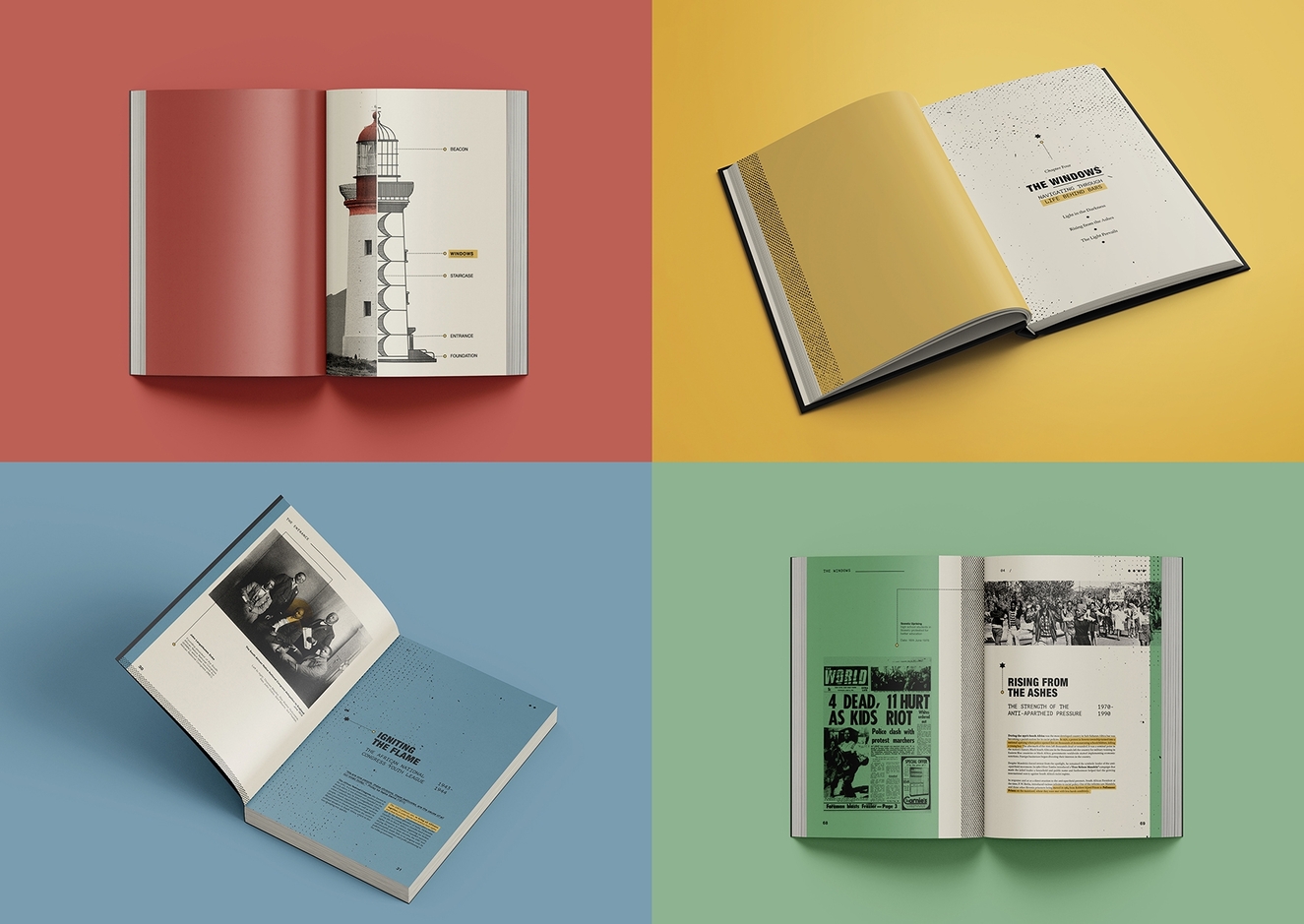
The project uses the physical structure of a lighthouse as a central framework to explore the life of Nelson Mandela. Armstrong breaks the narrative down into five distinct sections: the foundation, entrance, staircase, windows, and the lantern room. This structural choice maps Mandela’s journey from his early days to his global status as a political leader and philanthropist, demonstrating how each phase of his life was essential to his enduring legacy.
In this interview, we talk about her personal journey with art, the deep research behind the lighthouse metaphor, the deliberate design choices that shape the book, and how technology can help address human and social needs in the future.
Tell us a bit about your background. What first drew you towards graphic design and visual storytelling?
From a young age, creativity was always my primary language – at school, I studied art, and it was through art that I first understood the power of a visual idea to communicate something words couldn’t quite reach. One of my matric (Grade 12) artworks was a mixed-media charcoal drawing installation about my personal experience living with Common Variable Immune Deficiency (CVID), and it placed first in the International Festival of Paintings for Pediatric Patients in 2018. That experience taught me early that most resonant work tends to come from truth, from real stories, real struggle, real life.
Almost everything I’ve made since has followed that instinct; here are a few projects from my studies that reflect that. Save Our Seas uncovers how we exploit our oceans and tries to cultivate a deeper love and respect for marine life. Zebruh, a gender-neutral pop-up shop concept, uses the zebra as a metaphor for community, individuality, and freedom, challenging the black and white lens society has unconsciously taught us to see the world through. And Be Bald, inspired by my brother’s experience with Alopecia, reframes hair loss not as something to hide, but something to own. Each project started with a real person, a real problem, or a real injustice, and Becoming a Beacon was no different.
After school, I studied a BA in Visual Communication (majoring in Graphic Design) at the Stellenbosch Academy of Design and Photography, graduating with a Distinction in 2021, and went on to complete a BA Honours in Multimedia Design at Greenside Design Centre, College of Design in 2022. More recently, I finished an MA in Digital Media Design at Birkbeck, University of London, again graduating with a Distinction in 2025.
What inspired you to explore Nelson Mandela’s life through the metaphor of a lighthouse?
The project was actually born from the International Society of Typographic Designs (ISTD) 2022 brief, which centred around lighthouses, structures that exist entirely in service of others, standing alone but guiding everything around them. Being selected in the ISTD Student Assessment Scheme 2022 and elected as a Member of the Society as a result made the brief feel even more significant to me looking back. The more I researched the history and architecture of lighthouses, the more I kept arriving at Mandela. A lighthouse doesn’t simply appear fully formed; it is built in layers, each one structural and each one essential to what comes next. Mandela’s life works the same way. Remove any section, and the beacon doesn’t hold. Once I saw that parallel, the concept felt inevitable. The structure of a lighthouse became the architecture of his story, and of the book itself.
How did your visual choices, from typography to layout and images, help shape the way readers experience your work?
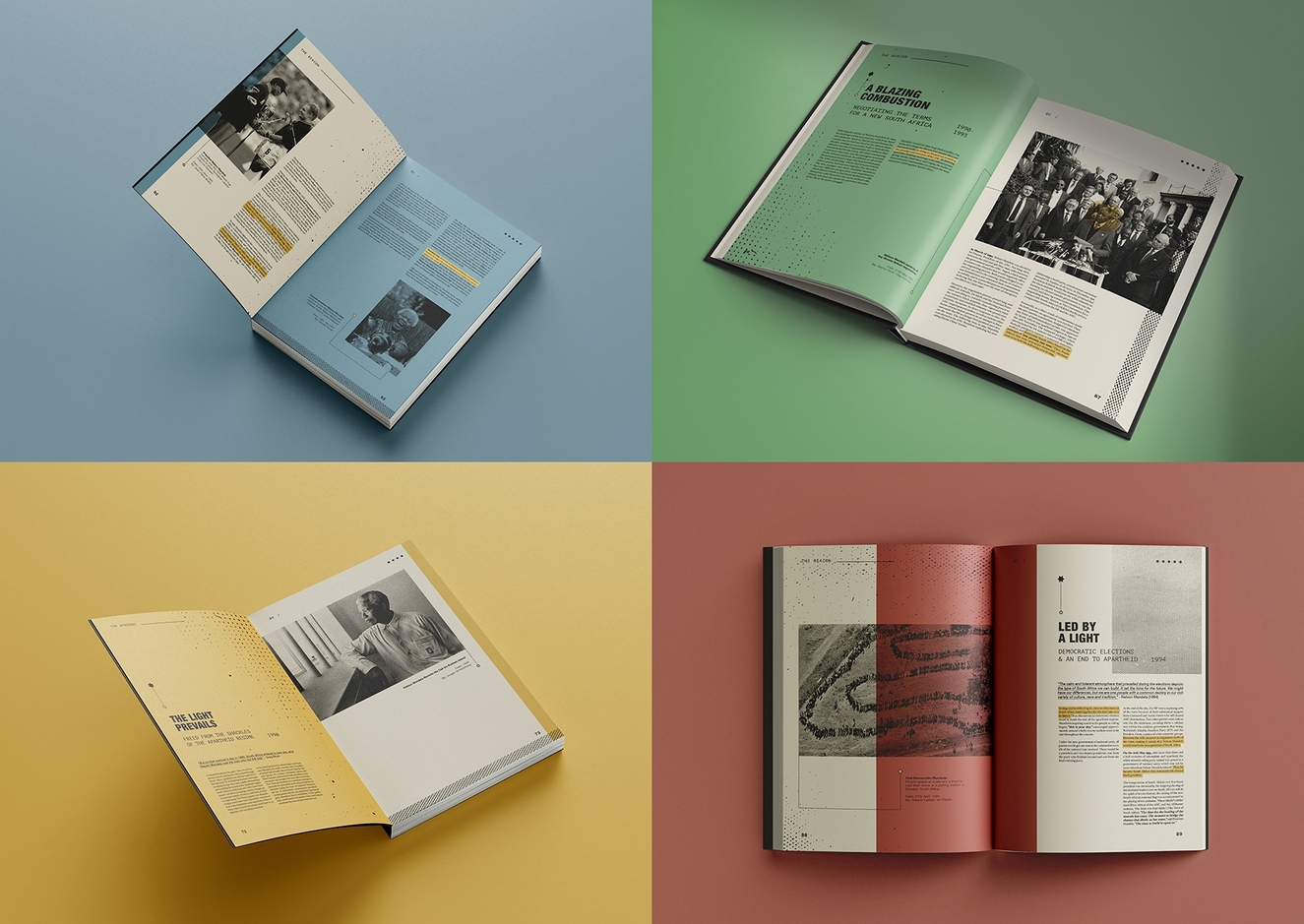
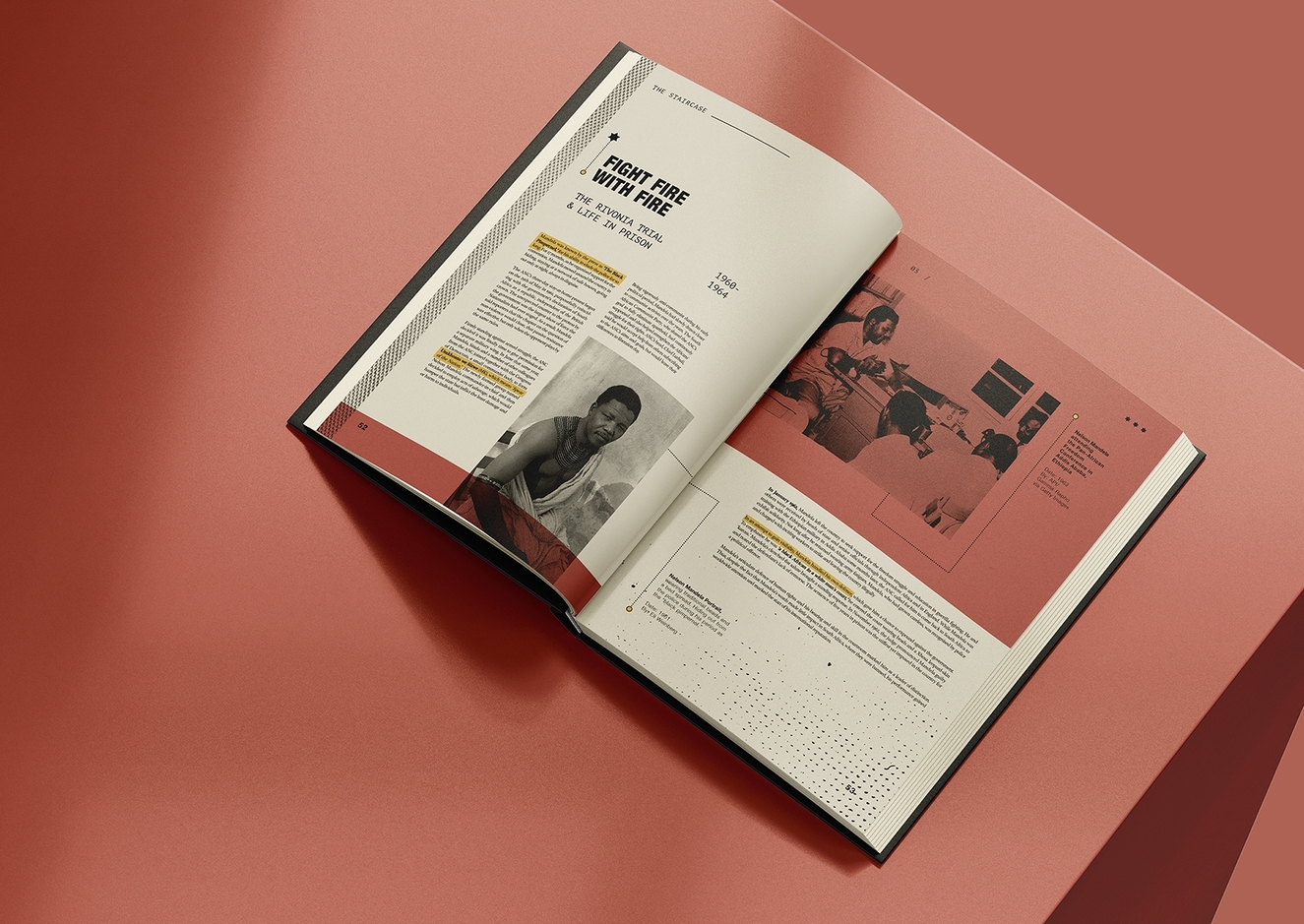
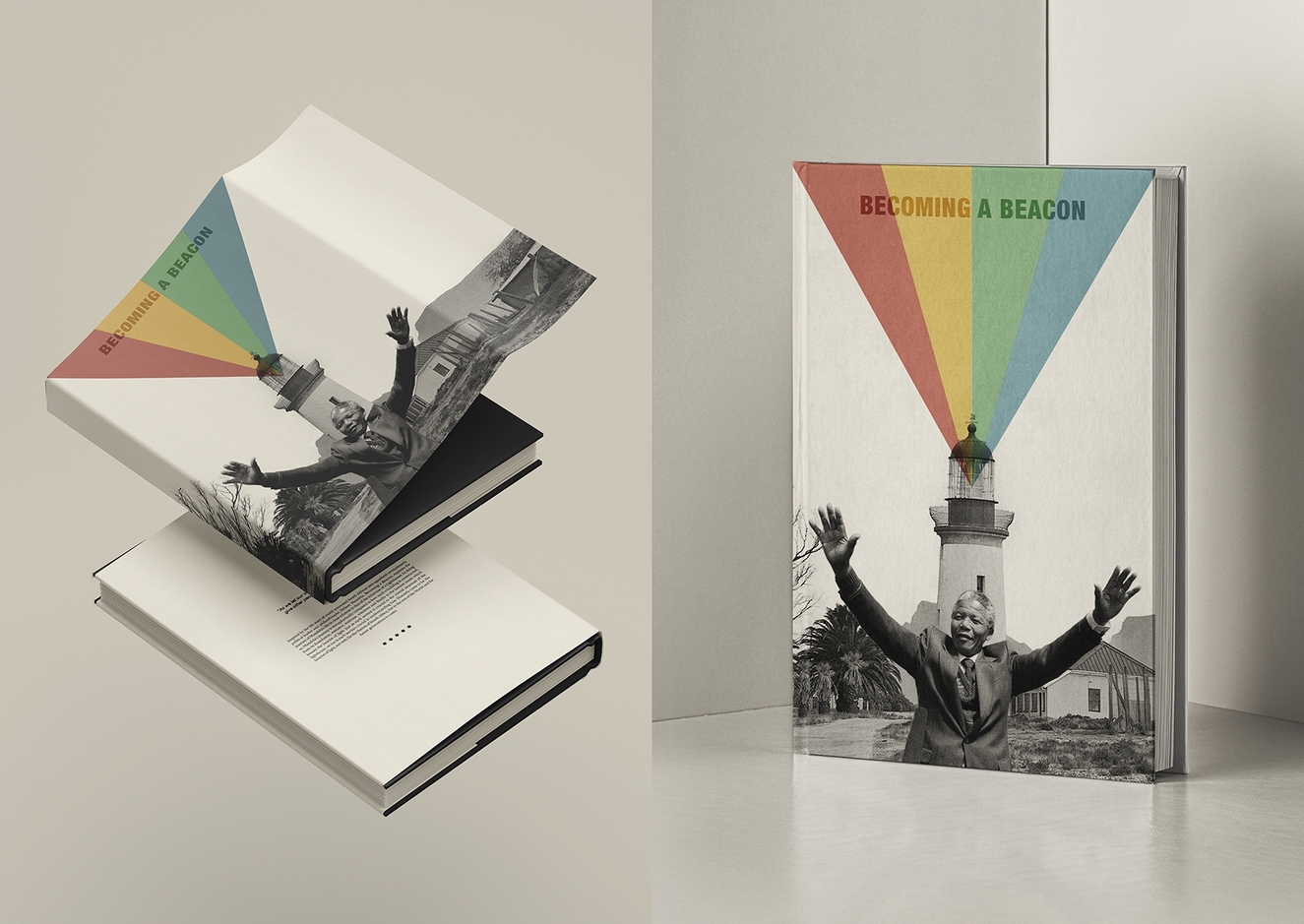
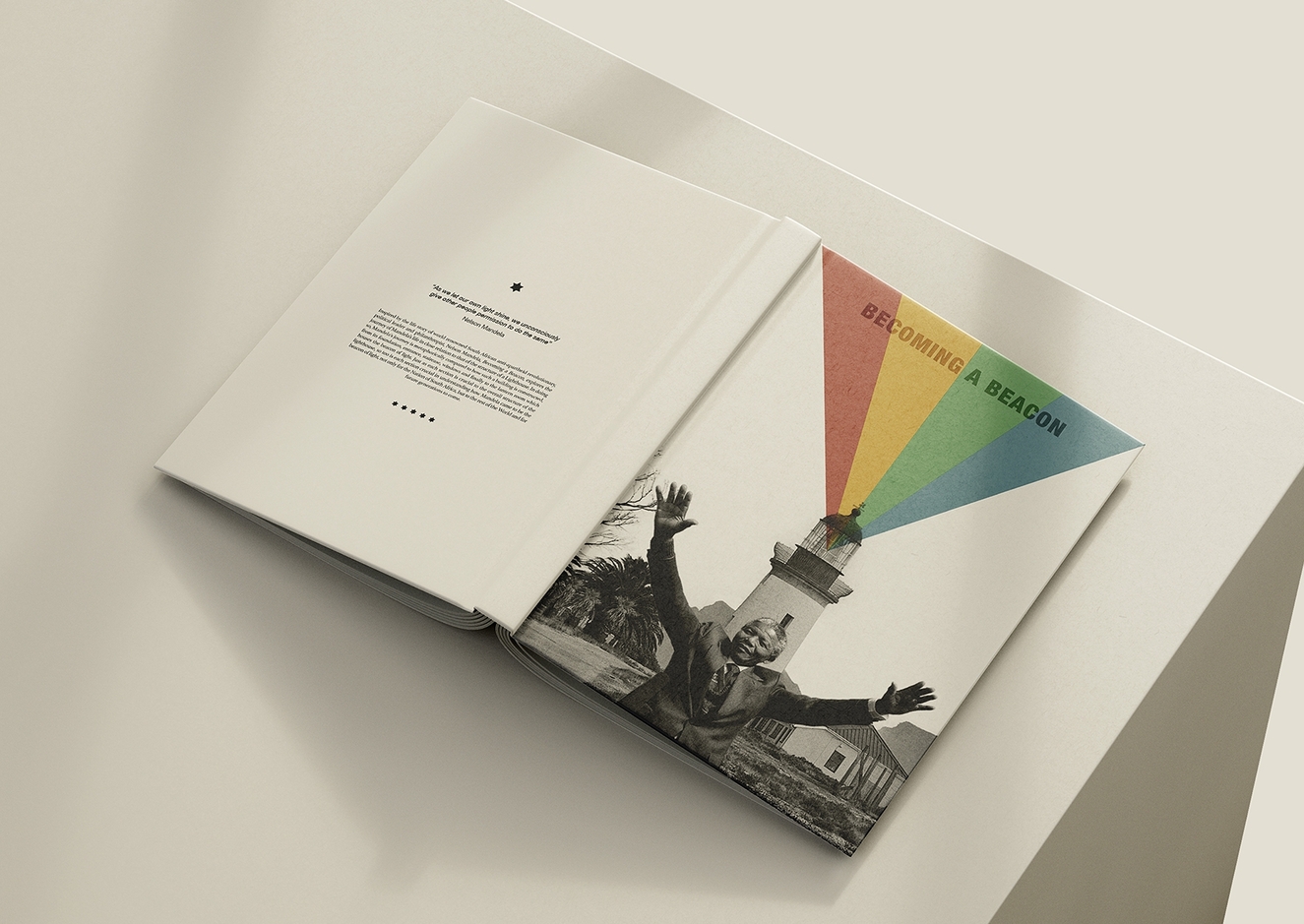
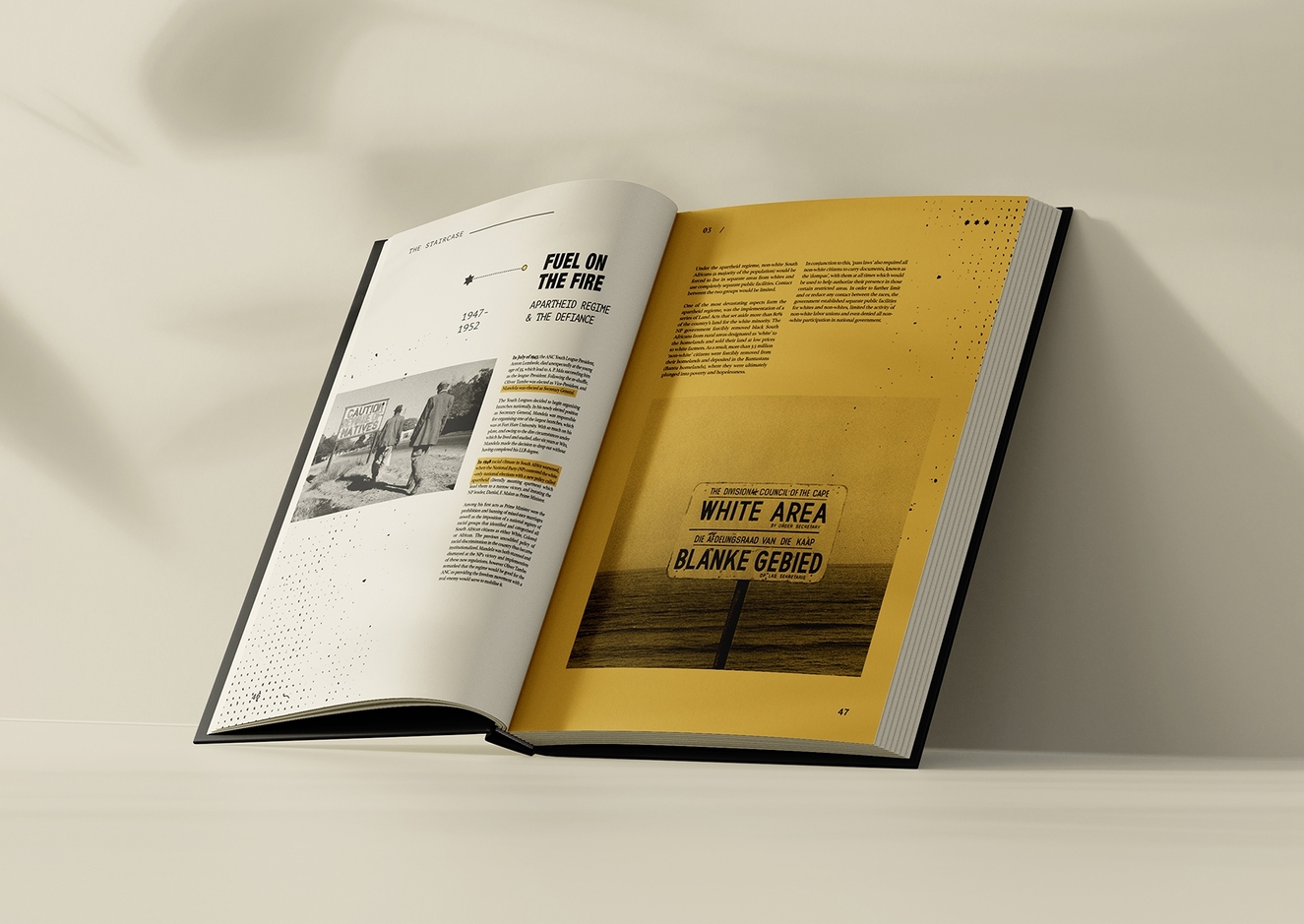
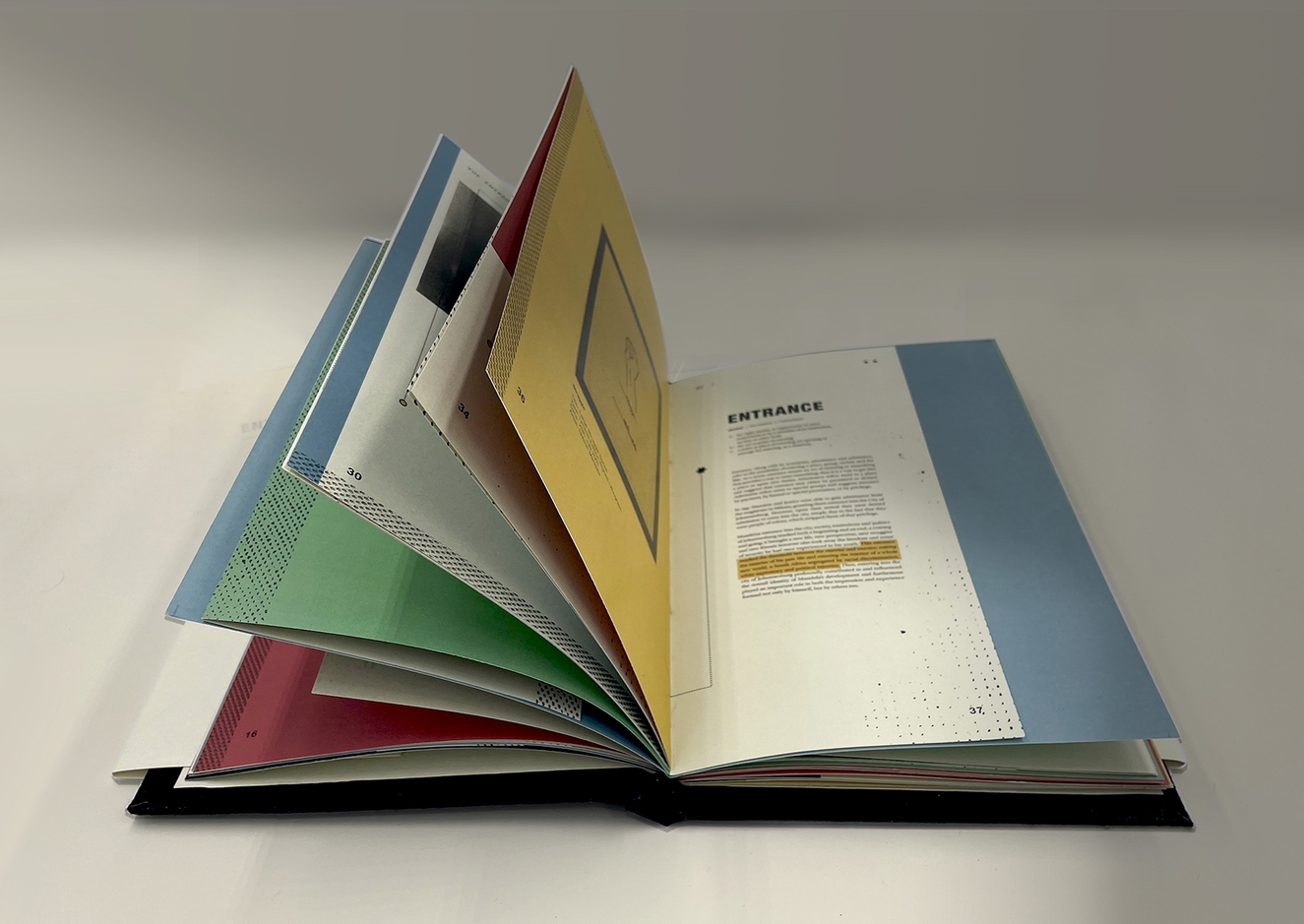
Every decision was made in service of the metaphor and the reader. The book is structured around the five sections of a lighthouse (the Foundation, the Entrance, the Staircase, the Windows, and the Beacon), each corresponding to a phase of Mandela’s life. The colour palette was drawn directly from the South African national flag, anchoring his story to the country he helped build. The typography pairs Helvetic Neue with Athelas, a clean modern sans-serif alongside a warmer, more classical serif, holding the tension between a contemporary audience and a deeply historical story.
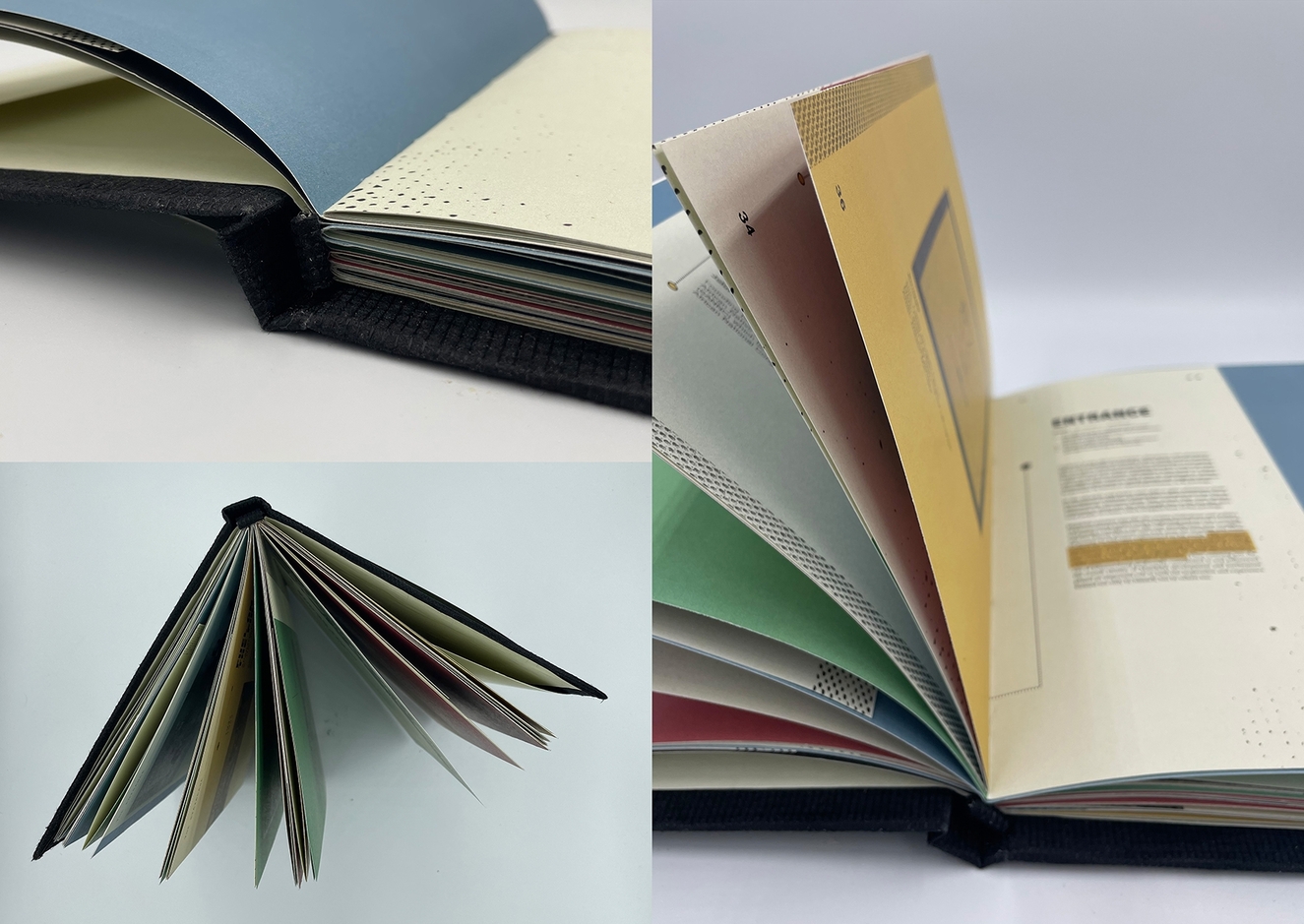
For the imagery, I converted archival photographs and newspaper headlines to black and white with a grain overlay. This textured historic quality runs throughout, complemented by graphic devices drawn from the lighthouse theme itself, such as stars referencing maritime constellations, circles used like pins on a pinboard to link images to information, and dotted lines threading it all together. The physical object mattered too; the hardcover binding, the coloured page edges, the tactile quality of the paper. In an era where everything is scrolled past in seconds, I wanted to make something that asked to be held.
What did you learn from working on Becoming a Beacon?
Working on Becoming a Beacon taught me three things. First, the importance of research. Before I touched a single layout or made any visual decisions, I spent a long time immersing myself in two subjects simultaneously, which brought the history and architecture of lighthouses and the life of Nelson Mandela. That depth of understanding is what gave the concept its integrity. Second, I learned to trust my concept. Once I committed to the lighthouse metaphor, there were inevitably moments where I questioned whether it was too abstract or too indirect a way to tell Mandela’s story. But the strength of the final book came from not abandoning the idea when it felt uncertain; committing to it fully is ultimately what made it work. Third, and most personally, I learned that design is a form of responsibility. When you design around a subject, especially one as historically and politically significant as Mandela’s life and South Africa’s past, you can’t treat it casually. You have to understand it deeply and find a way to honour it honestly. Designing this book changed my own relationship with South African history in a way that has stayed with me, and that sense of responsibility is something I carry into all of my work now.
What does it mean to receive AIDA Awards recognition for this project at this stage in your design journey?
Receiving this recognition means a lot to me. Becoming a Beacon was my BA Honours project, the work where I first started to feel like I had found my own voice as a designer, where my technical skills and instinct for storytelling came together in a way that felt genuinely like me. To have that piece of work still being recognised four years later is something I didn’t expect, and it means a great deal. The timing also feels significant. Since completing the project in 2022, it received an ISTD pass award and was selected as a Loerie finalist in 2023. But I am now on the other side of a master’s degree, and looking back at the designer I was during that Honours year, this feels like a kind of full circle, a confirmation that the ideas in that project have a life and a relevance beyond the classroom.
Why do you think a platform like AIDA Awards is important now for emerging designers and for the future of communication design in Africa?
I think platforms like AIDA are vital, particularly for students and recent graduates. Speaking from my own experience as a student, there simply aren’t enough platforms that specifically celebrate African students and emerging design work. Most of the big international award platforms are expensive to enter and heavily weighted toward established agencies, making them largely inaccessible to students or those just starting out. Having a platform that sees that work, celebrates it, and puts it on an international stage does something really important. It tells young creatives that they are good enough, that the stories they are telling and the work they are making from this continent matter and can stand alongside the best in the world.
Looking ahead, what kinds of stories or ideas do you hope to explore through your work?
Looking back, my studies felt like a natural progression, from graphic design to multimedia design, to digital design, and I think that mirrors the shifting creative landscape we are all moving through as technology becomes more present in every aspect of our lives. I never want to be left behind by that shift, but rather grow with it and figure out how design can harness it meaningfully.
The stories I am most drawn to are rooted in social issues, particularly environmental ones, and how design can shift the way people feel about something and move them to care. Going forward, I want to push that further, and I’m increasingly interested in how technology can amplify that work. My master’s dissertation is a good example of that. It explored how UX and UI design could improve systems in the agriculture sector, specifically looking at how sugarcane farms in KwaZulu-Natal could move from manual ticketing processes on trucks to a more efficient digital system. That project came from exactly the same instinct as most of my earlier work, identifying something that isn’t working, understanding the people affected by it, and using design to find a better way. It made me realise how powerful the intersection of people and technology can be when driven by a genuine human or environmental need, and that intersection is where I want to keep working.
At my core, I remain passionate about visual communication and the tactile elements of graphic design. But I am evolving, and excited about what becomes possible when you bring those instincts into new spaces. The medium may change, but the drive underneath it, to tell real stories, solve real problems, and make people care, stays the same.