



Header: Courtesy of Cen Shen
As growing environmental challenges reshape our cities, architects are being called upon to rethink the traditional relationship between static buildings and changing ecological resources. New York-based architectural designer and project manager Cen Shen is answering this call. Rather than treating sustainability as a secondary checklist applied after design decisions are made, Shen places environmental management at the absolute core of her design process.
Her work challenges the status quo by turning structures into active infrastructure that manages resources, restores ecosystems, and survives changing climates. With an educational background spanning a Bachelor of Architecture from Pratt Institute and a Master of Science in Advanced Architectural Design from Columbia University, Shen pairs theoretical depth with a grounded understanding of construction logistics. She views architecture not merely as a collection of physical objects, but as a vital medium connecting people, technology, and the natural world, ensuring that human-centred design remains central as she explores new forms of ecological resilience.

From megastructures to modular cabins
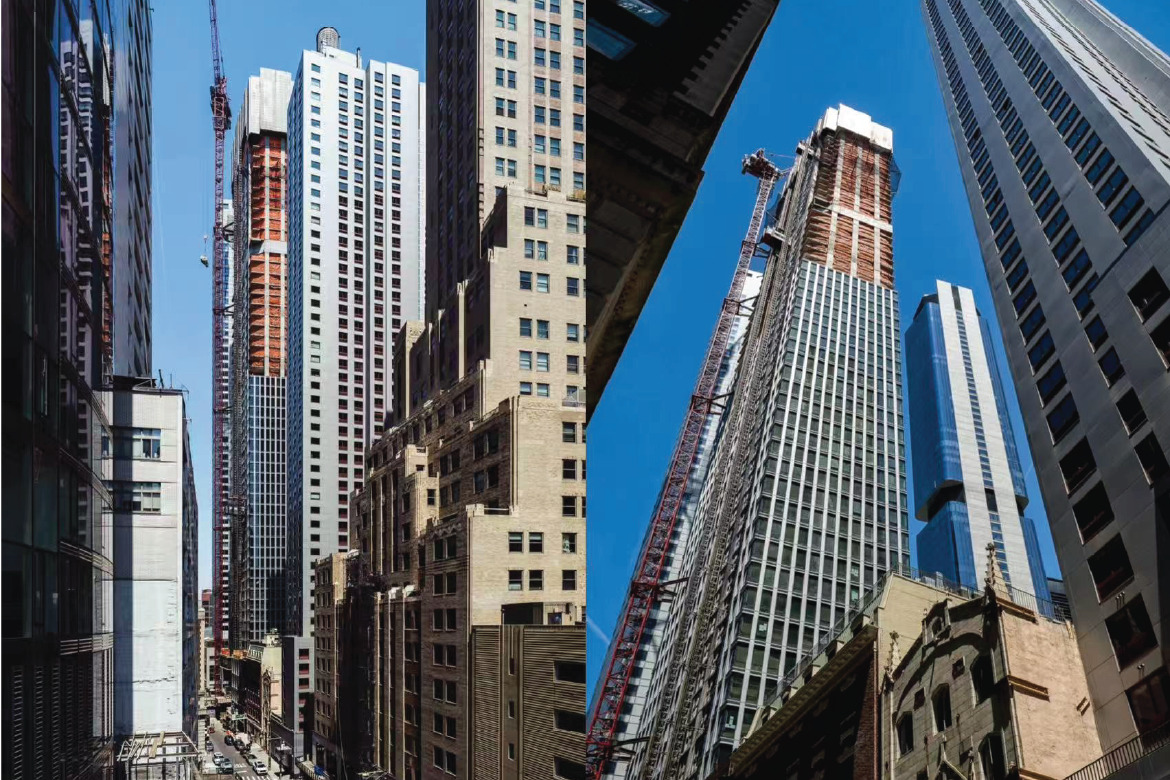
A major pillar of Shen’s approach developed from her work with Elicc Group, a specialist firm focused on the engineering, fabrication, and performance of complex high-rise facades across North America. Managing the building envelope for 8 Carlisle Street, a massive sixty-five story skyscraper in New York City, has provided her with deep technical knowledge regarding curtain wall installation, material assembly, and extreme weather resilience. Working directly at the intersection of design, manufacturing, and construction has given her an understanding of how building performance is shaped by material systems and assembly logic under real-world conditions. Shen has established major advancement for these complex, heavy-duty engineering principles used for massive towers and scaled them down to advance the field of circular, low-carbon construction. This translation of high-rise installation technology to smaller, sustainable systems marks an important shift in how architects can think about assembly and disassembly.
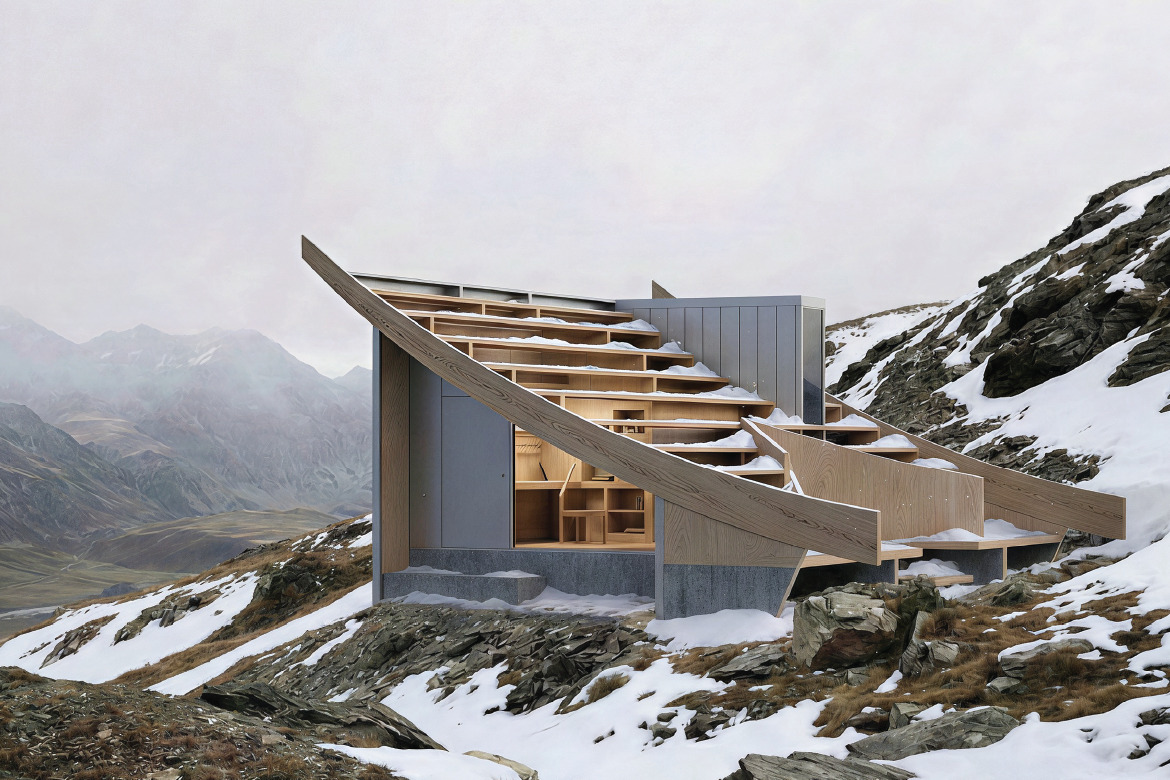
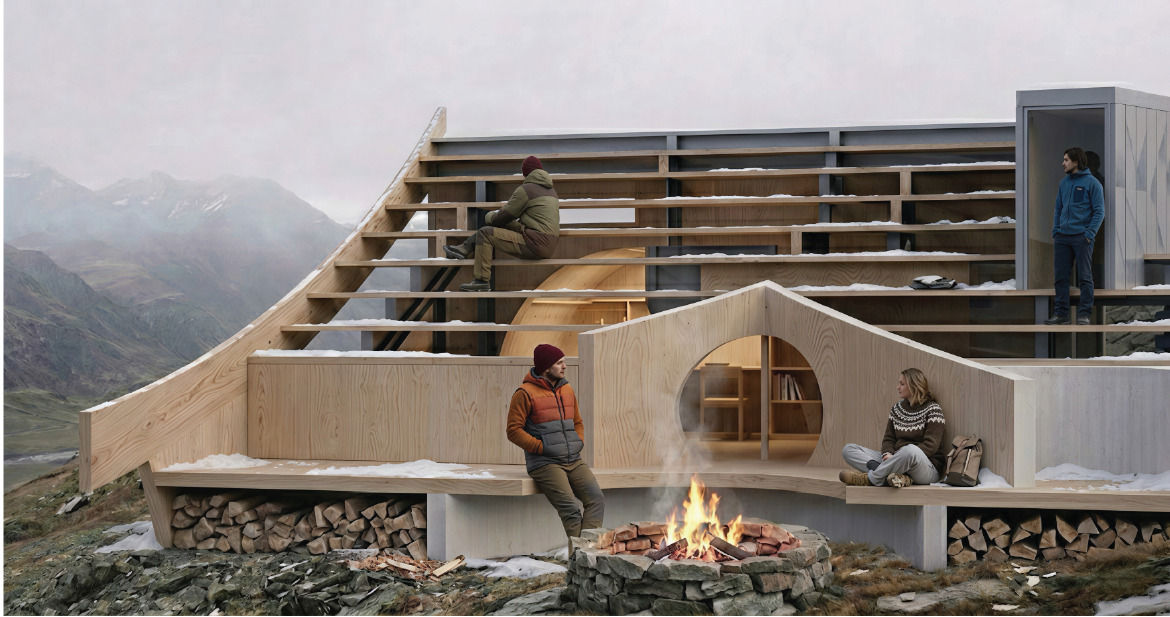
This material lifecycle-driven methodology is clearly visible in the Summit Interlock Cabin, a project developed through her research platform CSLab and recognised as a Platinum Winner at the International Architecture & Design Community Awards 2026. Through this project, Shen pioneered a reversible timber construction methodology that entirely replaces traditional, permanent metal fasteners with a fully interlocking structural system. Using precision manufacturing technologies, the building components are designed to be put together, taken apart, repaired, and reconfigured without damaging or destroying the timber itself. By treating timber joinery as a scalable, resource-efficient system, the cabin offers a practical blueprint for low-carbon building lifecycle management, demonstrating how advanced fabrication can transform traditional techniques into scalable architectural solutions.
Engineering the dissolving riverbank
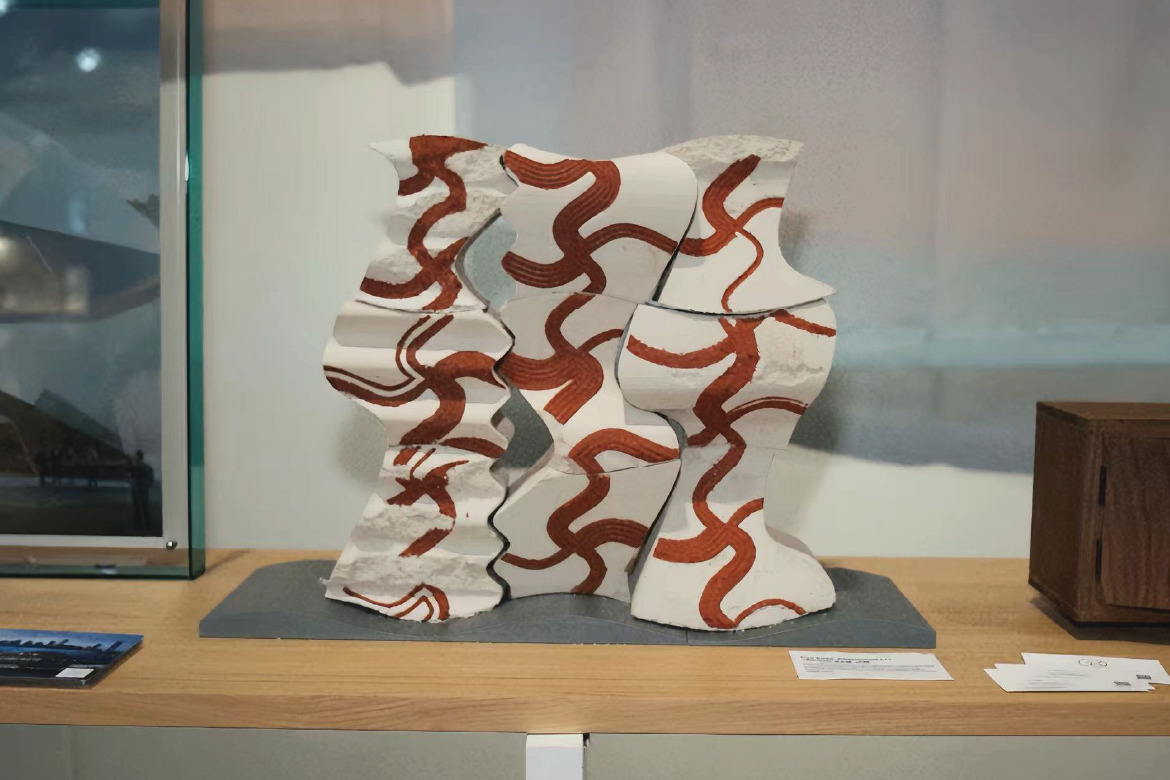
Shen’s research moves beyond carbon reduction into the realm of ecological restoration, where structures actively participate in the lifecycle of their local environments. This exploration is highlighted by her project Riprap Ram Jam, which focused on the shoreline restoration of the heavily industrialised Gowanus waterfront in Brooklyn and was selected for exhibition at the New York International Contemporary Furniture Fair in 2026.
This project represents a major advancement in the use of three-dimensional printed prefabricated brick technology for urban riverbank engineering. Instead of using printed clay simply as static containers for plants, Shen utilises the specific solubility of the printing material to introduce time as a functional design element. Over the years, the modular blocks gradually erode and dissolve under the action of the water. As they wash away safely, they reshape the riverbank naturally, creating custom cavities and habitats for aquatic organisms while leaving only a positive impact on the surrounding river environment, establishing a new dissolved relationship between manufacturing and nature.
Architecture as water infrastructure
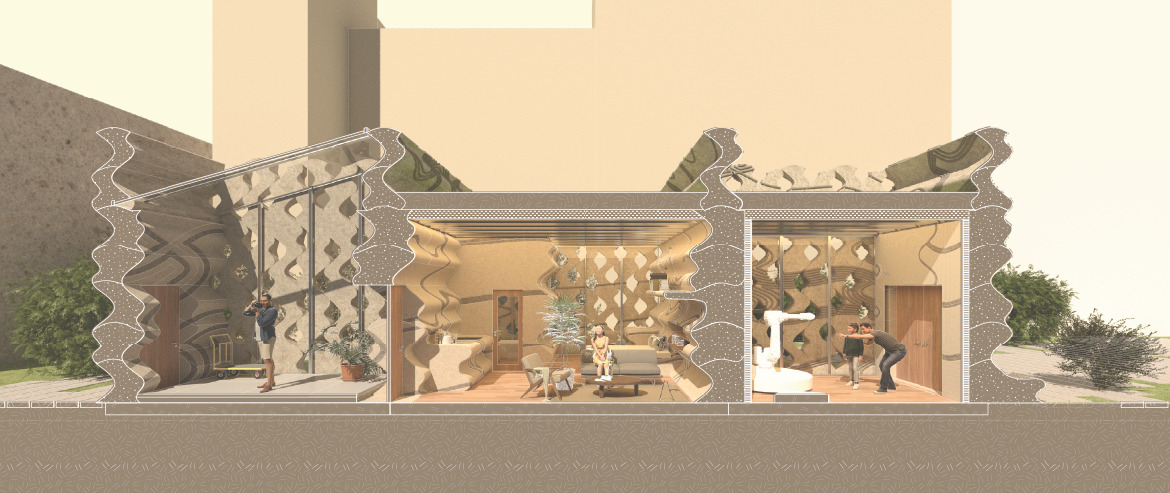
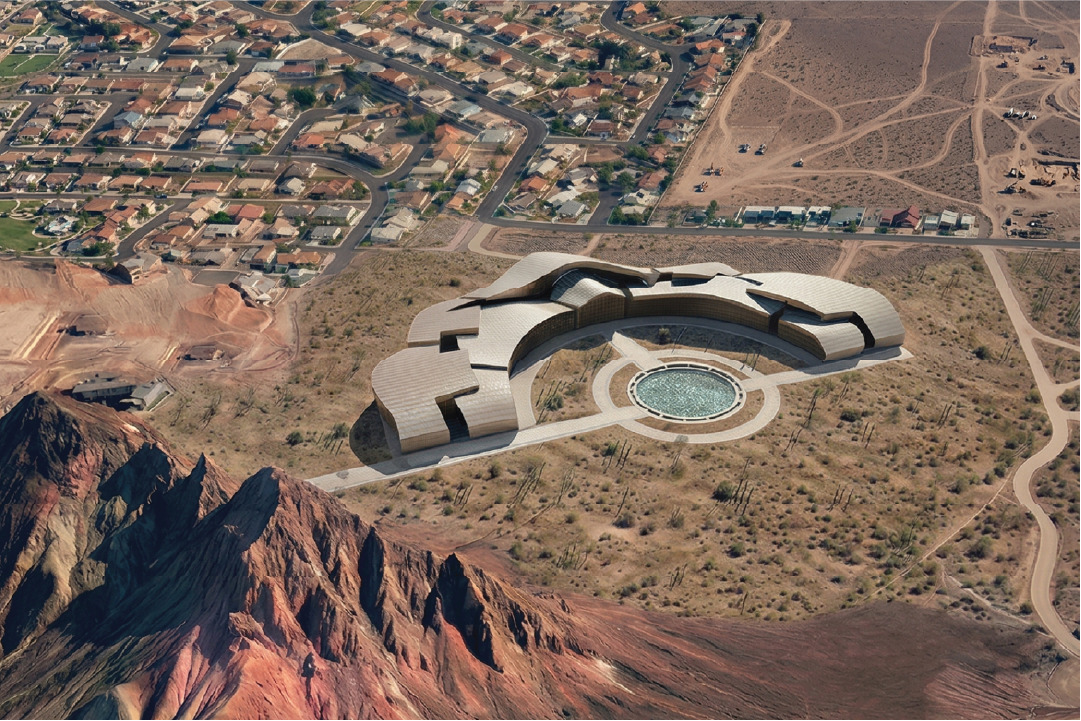
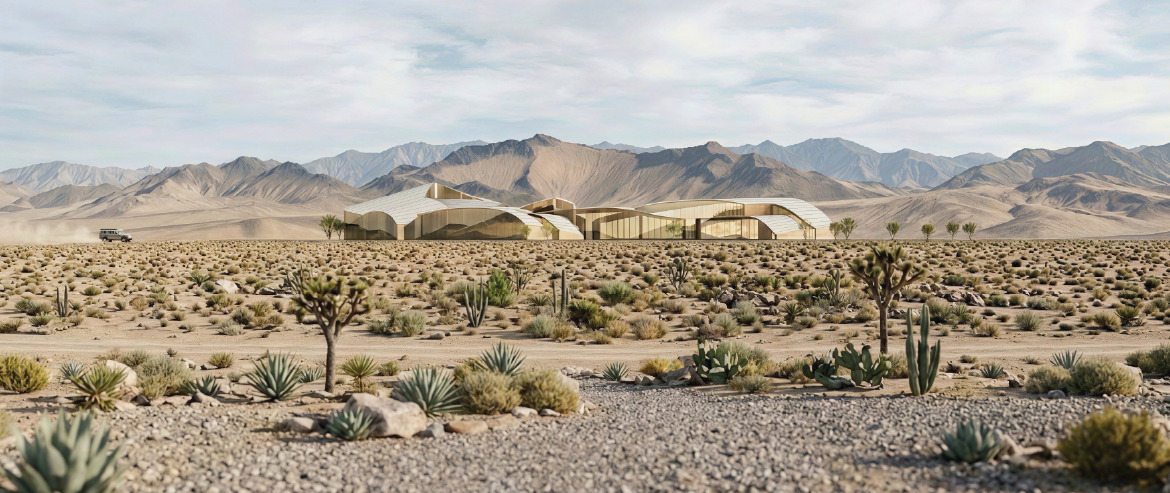
In arid regions, climate adaptation requires an entirely different set of rules, a challenge Shen addressed through her project Osmosis, which received both the Italian A’ Design Award and the American Good Design Award. Developed for the parched landscapes of Texas, Osmosis redefines the traditional home as a self-sustaining utility node by combining rainwater harvesting, groundwater recharge, passive cooling, and ecological conservation within a single architectural framework.
The project features a series of distinctive, petal-shaped roof structures specifically shaped to capture every drop of rainfall, funnelling it directly into large, concealed underground storage systems. At the same time, the main living areas are elevated high above the ground on a series of structural piers. This elevated design minimises the building’s physical footprint, preserving crucial wildlife migration corridors across the desert floor and allowing natural water drainage to recharge local aquifers without obstruction, offering a new model for climate-adaptive development.
A foundation built on human experience
Shen’s ability to combine technical precision with human behaviour is rooted in a wide variety of earlier professional roles that demonstrate a consistent focus on how people move through and interact with space. During her time at Highthink Architects in Shanghai, she worked as an architectural designer at the Yingling Zheng Kindergarten, a massive project spanning over one hundred and twelve thousand square feet. She solved complex site elevation issues to maximise outdoor activity space and designed innovative, self-contained classroom units with dual independent entrances to reduce contact risk and improve spatial flexibility, a design that was fully implemented and became a guiding direction for local architecture.
This focus on experiential design continued during her time as an exhibition curator at Fengyuzhu and Wutopia Lab, where she helped redesign the layout for the twenty-one thousand square foot Architecture Model Museum in Shanghai. Here, she introduced an unsupported lifting structure to offer visitors changing visual perspectives along their tour, categorising and arranging the exhibits by theme to build a clear, continuous journey through the galleries.
In New York, as an interior designer at Tykoon Branding Incorporated, she conducted intensive research into a fashion client’s brand identity, translating retail logic into a corporate workspace by proposing a compartment-style layout that matched an existing octagonal roof structure and creating diverse exhibition spaces resembling a kaleidoscope to reflect different brand concepts. Furthermore, her foundational research includes serving as a research assistant at the Pratt Institute Interdisciplinary Technology Lab, where she investigated three-dimensional printing techniques for double-curved surfaces across various industries, and at the Palazzo Te Historic Preservation project in Brooklyn, where she created detailed facade transformation animations and roof drawings to preserve and document classic historic architecture.
Pioneering the regenerative frontier
Certified as a LEED Green Associate, Shen has consistently built a career where technological innovation serves people and design serves the future. Her extensive research trajectory has gained significant traction within the global design community, earning additional accolades from the iF Design Award, the MUSE Design Awards, and a Pratt Inprocess Honourable Mention for her material-based studies.
Looking toward the future, Shen argues that the profession must move beyond the conventional understanding of buildings as isolated, static objects. As technological innovation accelerates, the next generation of architecture will be shaped by the convergence of advanced fabrication, high-performance building systems, and ecological intelligence. In her view, design success will be measured not by what buildings consume, but by what they contribute back to their surroundings. By integrating reversible construction, material circularity, ecological restoration, resource stewardship, and high-performance enclosure systems into professional practice, Shen continues to investigate how architecture can create stronger connections between humanity and the natural world.
The next era of the built environment
Ultimately, the true impact of this work lies in how it shifts our expectations of what a building can be. Instead of treating a structure as a finished monument that fights against the elements, architecture enters a partnership with nature where changes over time are anticipated and embraced. When a wall can dissolve safely to feed a river, or a shelter can dismantle completely to protect a forest floor, the old boundaries between engineering and ecology disappear. This methodology offers the design world a vital perspective for a climate-threatened world, proving that human habitations can become cooperative extensions of the Earth rather than permanent scars upon it.
Rather than producing isolated architectural objects, Shen’s work advocates for the development of transferable methodologies that can be applied across future projects, environments, and scales. As global construction industries seek solutions to reduce carbon emissions and material waste, her work offers a framework for a more adaptive and regenerative future of architecture.


