

Heading: Heinrich Wolff
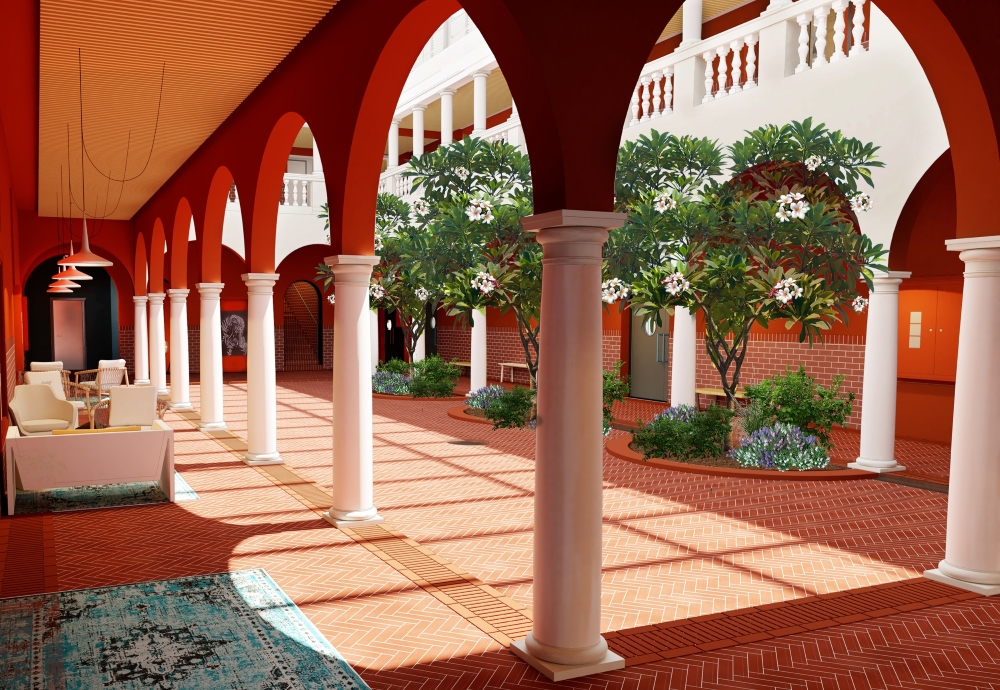
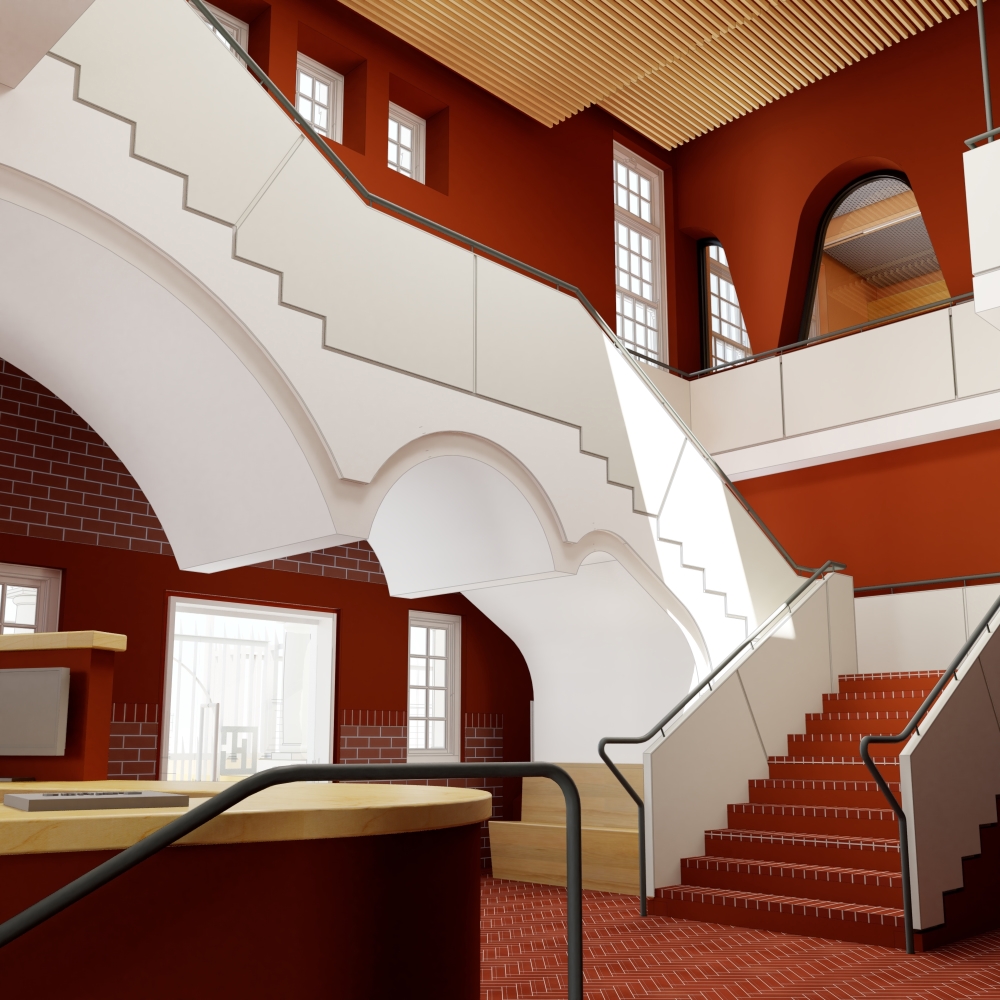
Originally built as the Regent Street School in 1916, the building at 66 Greatmore Street in Woodstock will be transformed into a contemporary higher education facility. The new design conceived by Wolff Architects kept the elements of the original building, including the arched walkways, large classrooms, and a courtyard. The University of the Western Cape, the long-term lessee of the building, plans to open the Centre for Humanities Research here.
Second major renovation
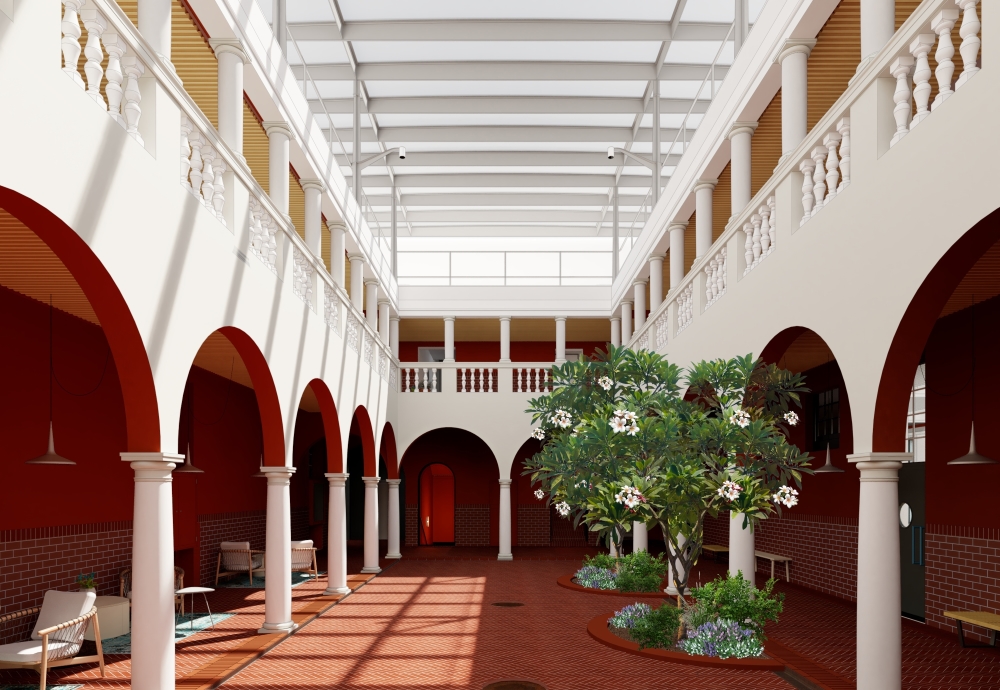
Designed in Georgian style by McGillivray & Grant Architects, the 1916 school featured a concrete structure and a concrete flat roof, with timber-framed ornamental stained glass windows and timber shutters. Ornate concrete balustrades and a classical arched walkway encircle the courtyard. The two-story building includes a basement level to the north. A separate toilet block was built further away from the main building. The south wing classrooms span over two levels, while the north wing classrooms have an additional semi-basement level facing the playground.
Initially used as a primary school building for working-class citizens, the institution is located in Woodstock, once the heart of South Africa’s new industrial transformation. The education system was based on Anglo-Victorian ideas of learning and play separation, as well as separation by gender outside of classrooms. Consequently, the stairs, entrances, and playgrounds were divided by gender.
The enclosed internal courtyard was used to closely monitor the students, while the playground was also overlooked from offices on higher levels. Between 1957 and 1965, the building went through a refurbishment as timber windows were replaced with steel frames, open terraces on the roof level were closed, and a corrugated roof was installed above the concrete one, while toilets were integrated into the building.
Contemporary, accessible design
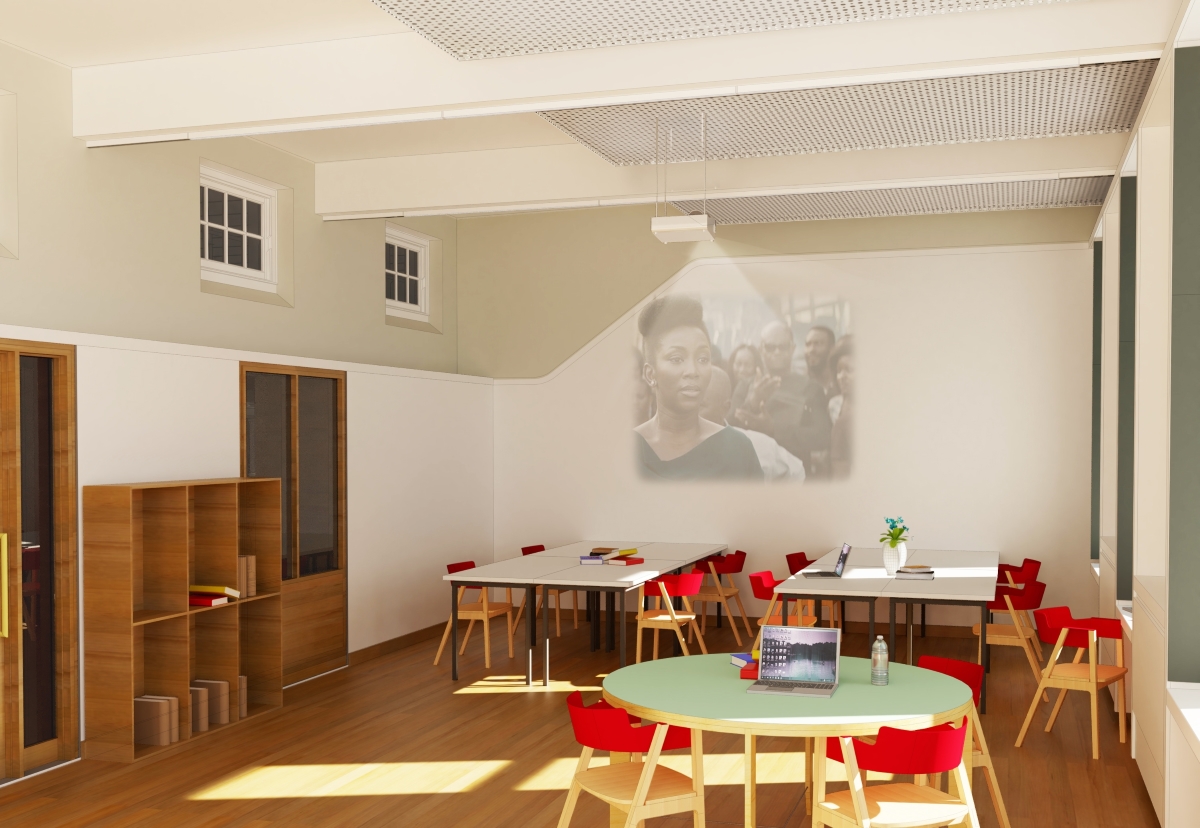
The building that served as an educational facility till its closure in 2015 will keep its original intent but will adapt to a new, contemporary way of learning. The art-based education will nurture the connection between the humanities and arts, and their role in anti-racism and new conceptions of social cohesion. Students will learn through experimentation and play, and freedom to think and explore. The frame, with its tall volumes and open spaces, is suitable for this contemporary way of learning. To adhere to government regulations, the rooms must first be refurbished.
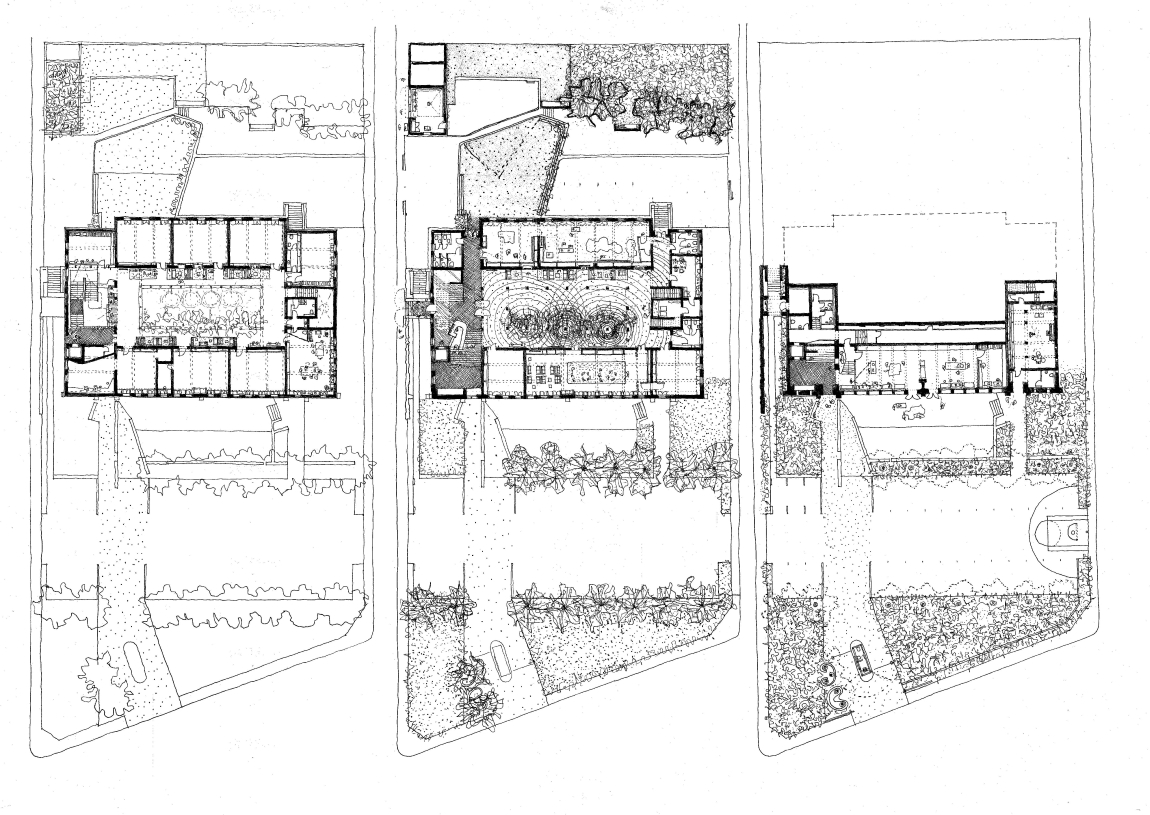
While the main structure of the building will largely remain unchanged, significant modifications will be made to the circulation cores. An elevator will be installed to ensure accessibility, as well as new escape routes and stairs. Additionally, the workshop at the basement level will have to be lowered for workshop use, since the current floor-to-ceiling ratio does not comply with standards.
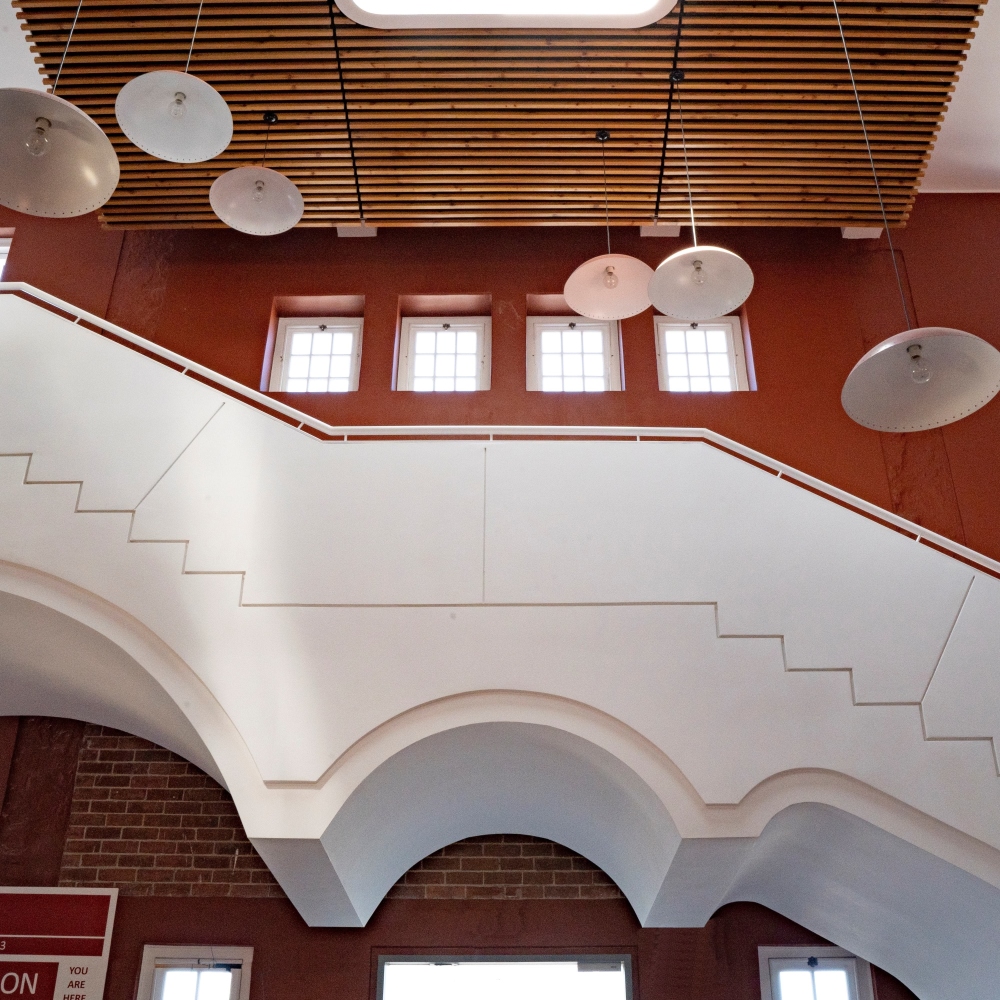
New roof and window frames
The renovation of 66 Greatmore Street prioritises modern design, accessibility, and heritage preservation. The spatial character of the courtyard will be preserved through a new roof that will hover above it, protecting both the space and users from wind and rain. The new roof will also allow for organising large gatherings in the space. The opening of the side ensures proper ventilation. By placing the roof at the highest possible level, Wolf Architects maintained the sense of volume needed for an institution of this type.
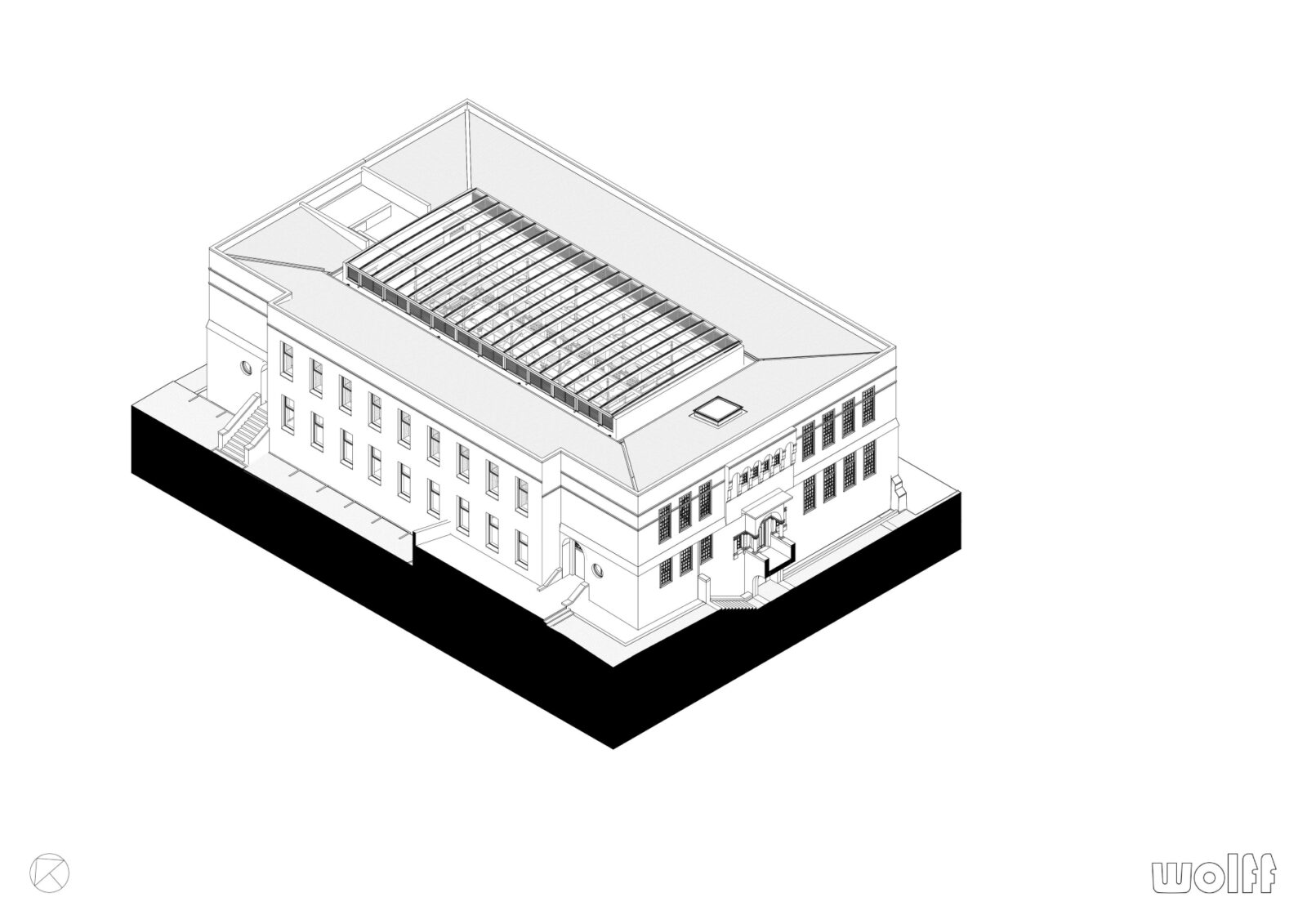
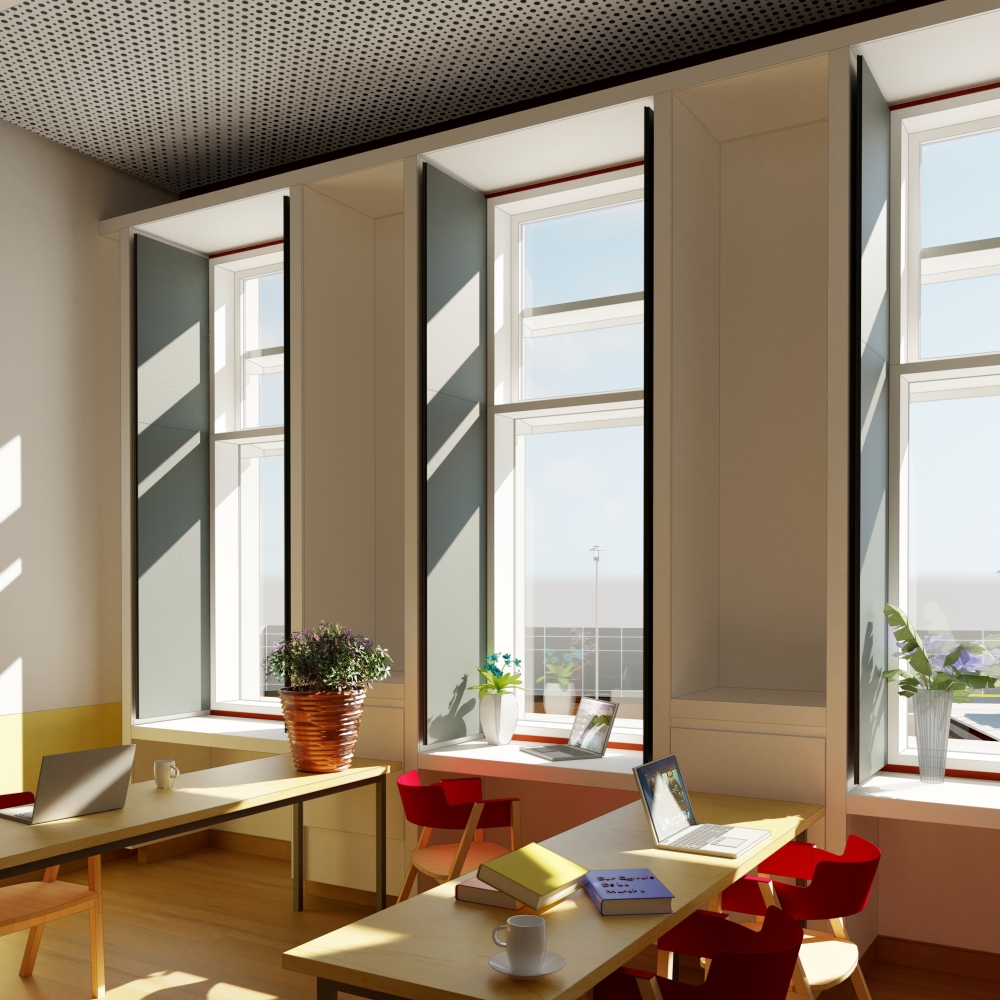
The natural light enters through the high-transparency glass, which also conserves the light quality. During the renovation in the 1960s, the timber louvres were removed, and many of the timber sash windows were replaced with steel. The only wood windows (those facing the Greatmore street) will be repaired and reglazed. The steel windows will be replaced with aluminium for optimal climate control and better acoustics.
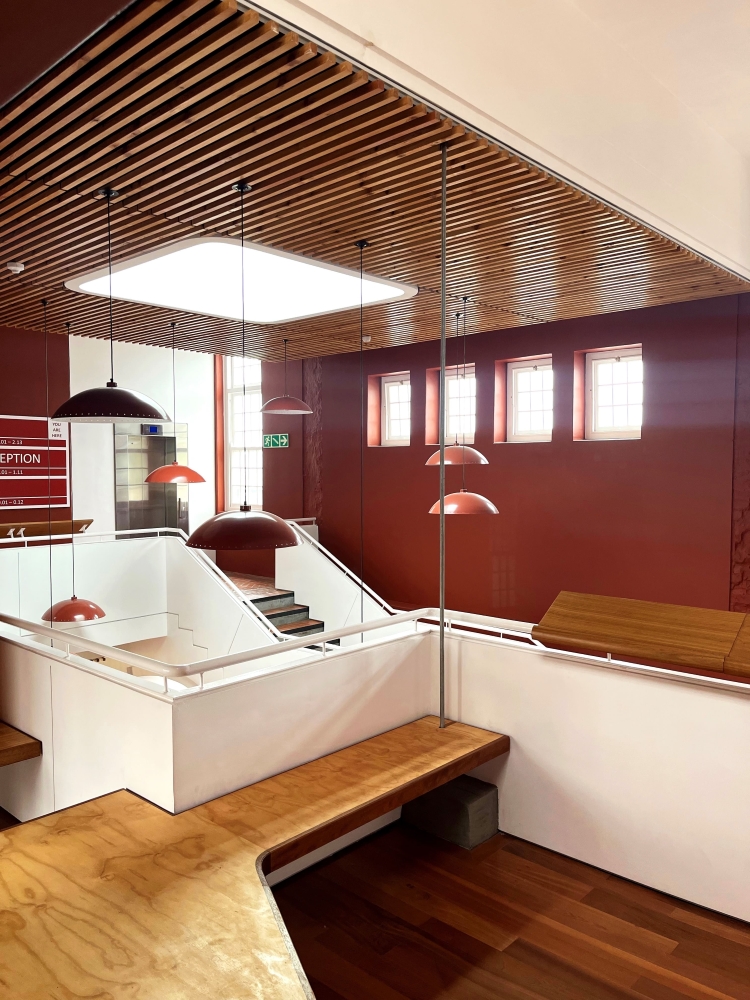
The design of the former Regent Street School has won the Africa International Design Awards (AIDA) in the Cultural Building Architecture category. The design of the Cape Town educational facility is an excellent example of modernisation through the reuse and protection of the building’s heritage.