



Header: Fábio Jr. Severo
May Restaurant, located on Praia Brava beach in Florianopolis, reflects the slow life on the Brazilian seaside. The restaurant is just a part of the D Pulse development created by Dimas. The immersive design inspired by the beach expresses values such as well-being, elegance, and a strong connection to nature.
Connecting gastronomy and architecture
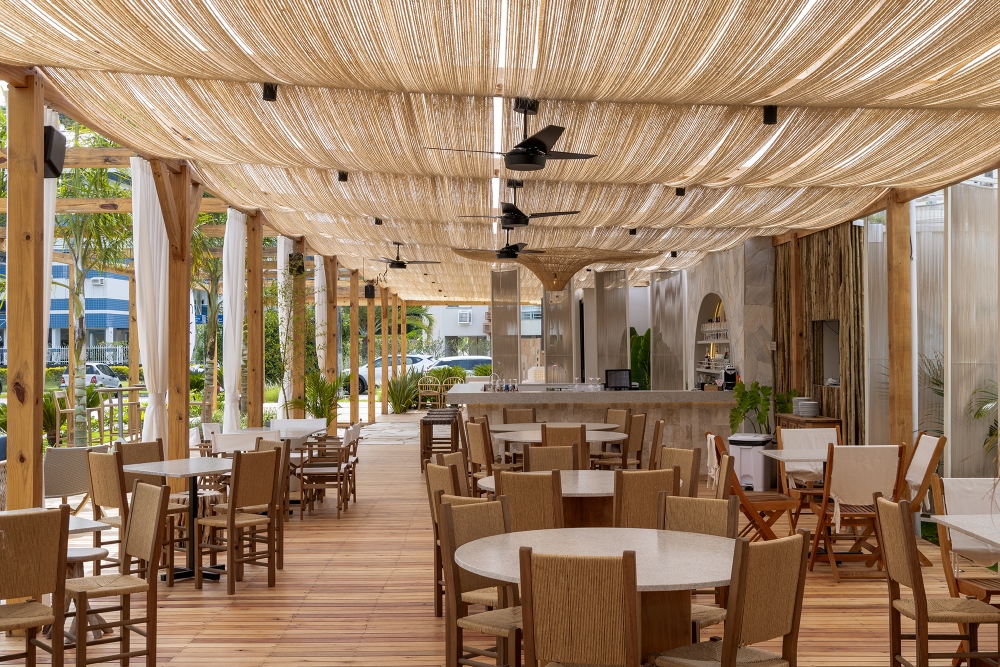
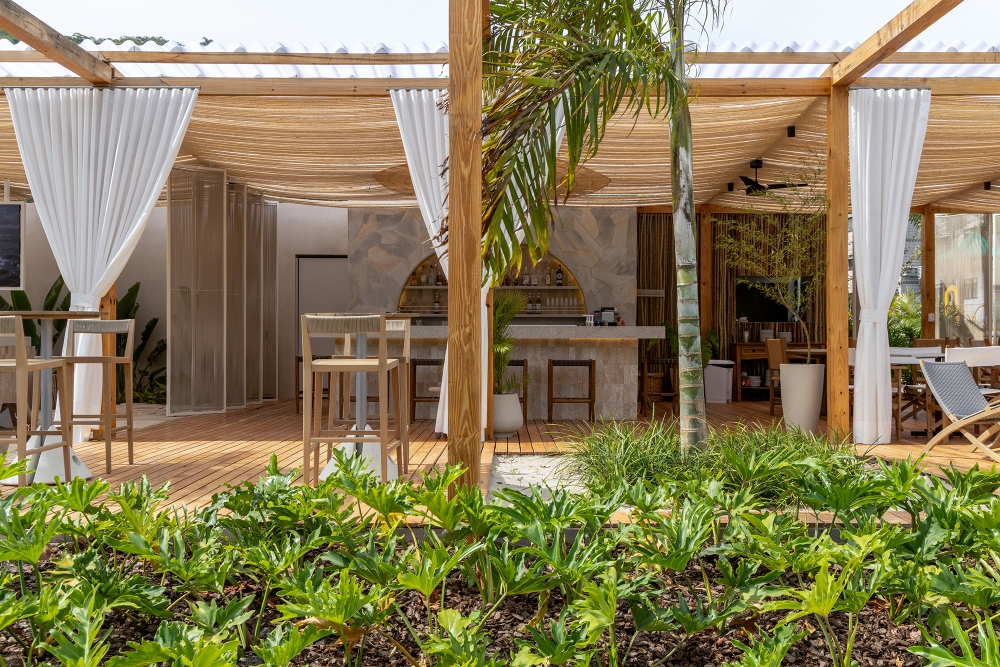
The architect Mariana Maisonnave has conceived a space that merges sensory architecture and gastronomy, creating engaging and inviting atmospheres. Natural materials, organic textures, and carefully crafted shadows accompanied by filtered light are the main elements of the design, which immerses visitors in the effortless lifestyle typical of coastal living. Inspired by the slower pace of life and the natural beauty of the city, which is also the architect’s hometown, the elegant design centres on comfort and experience.
Organic materials, quick construction
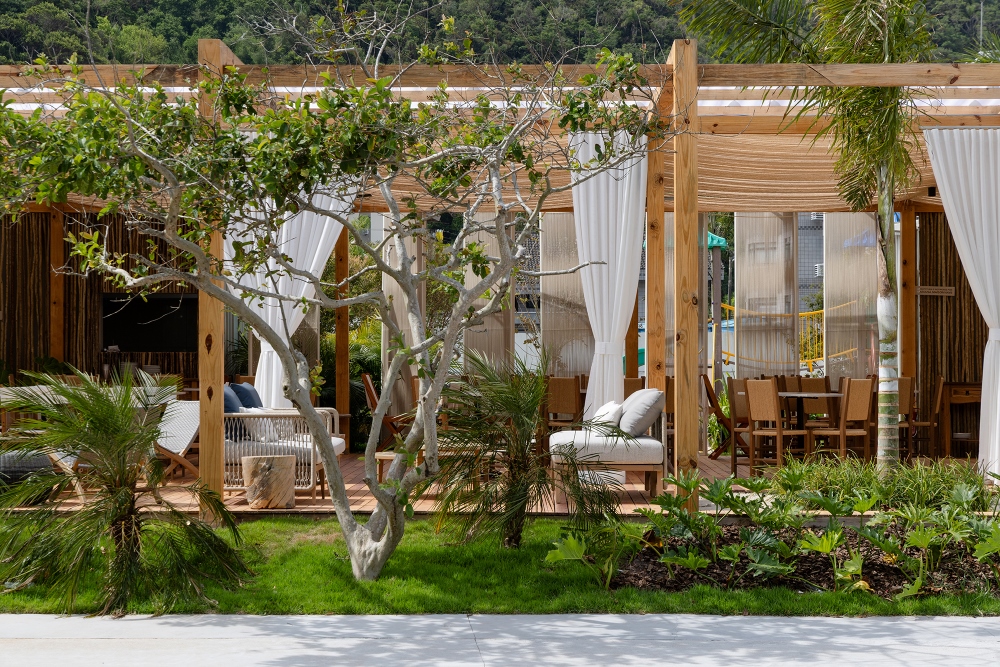
The lightweight structure is completed in just 50 days. The May Restaurant consists of three containers that host enclosed areas such as the kitchen, showroom, and support spaces. A large wooden deck connects these volumes, improving circulation and integration between spaces.
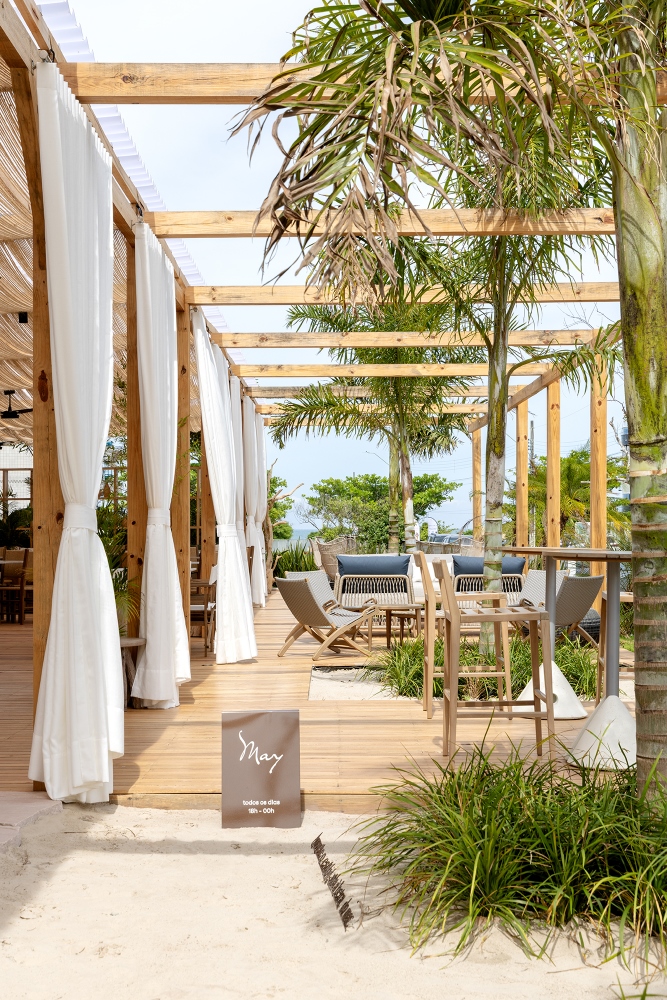
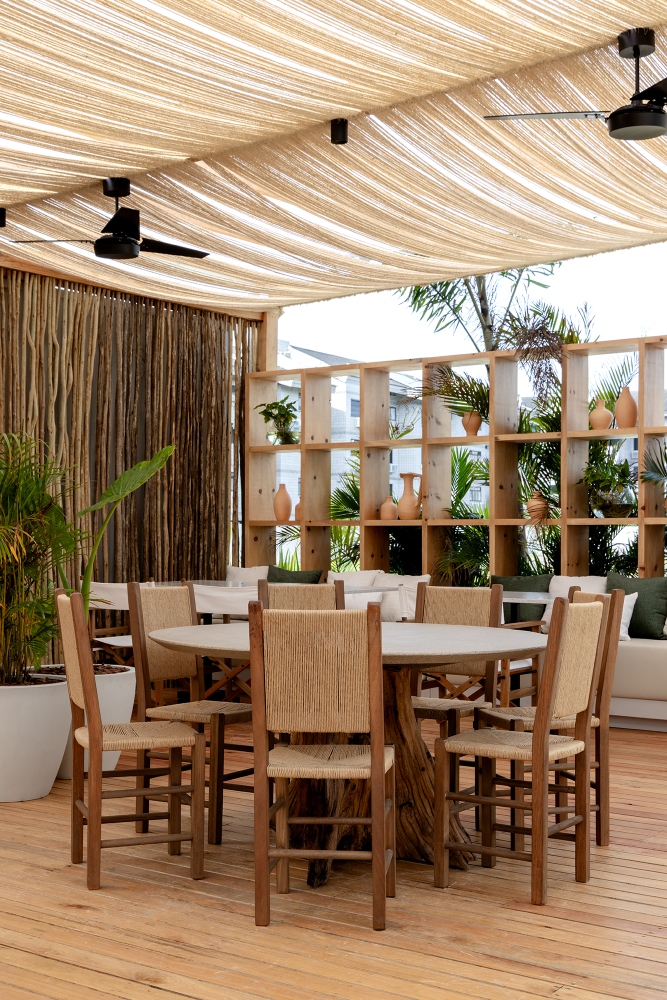
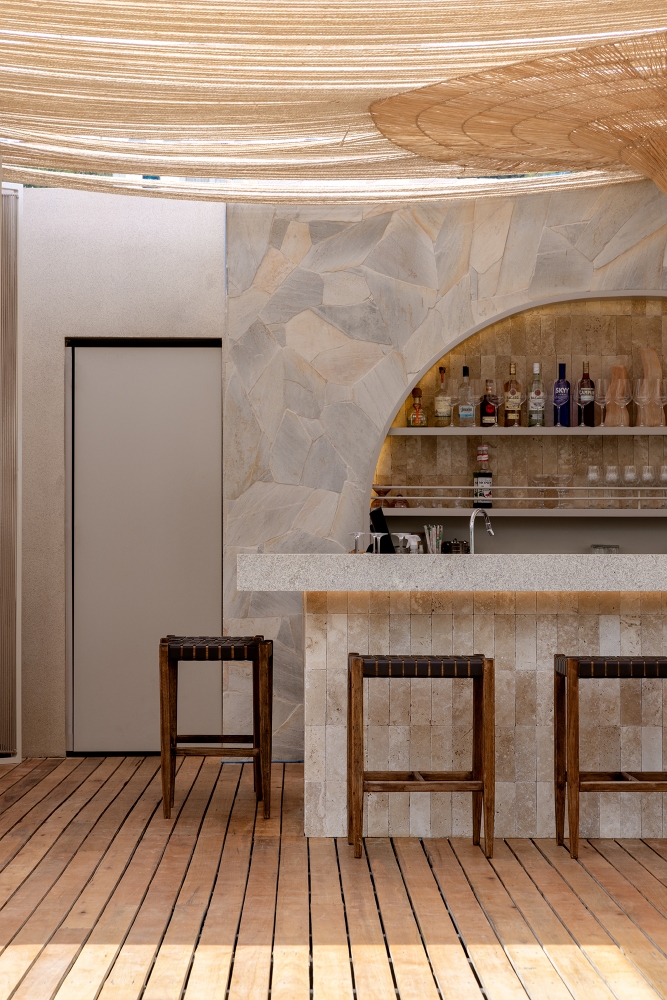
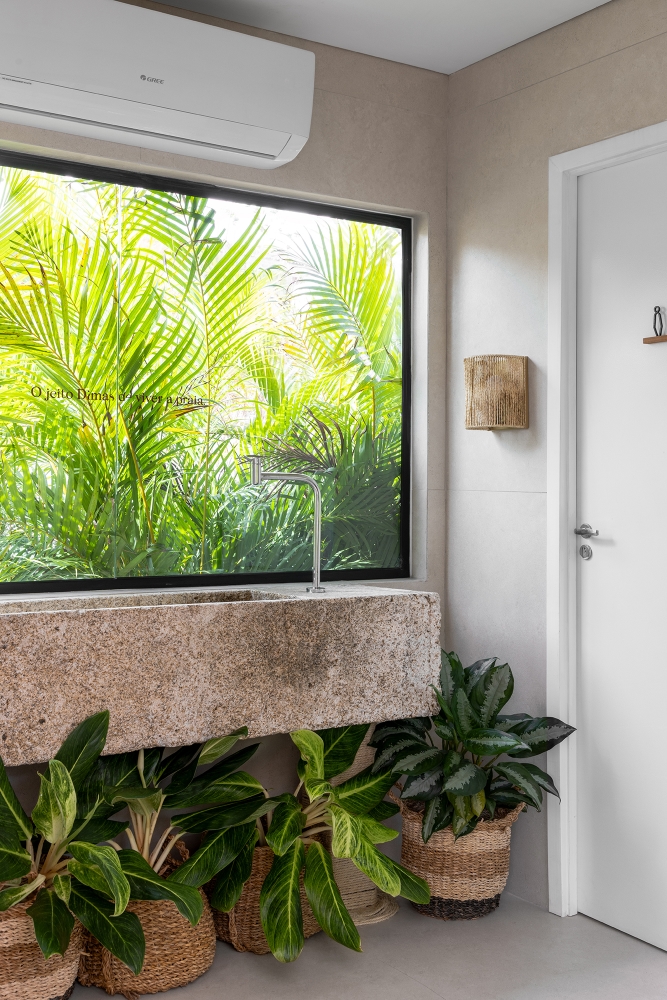
Wood dominates the design both in the construction of the restaurant and the furniture. Stone surfaces alongside mineral finishes strengthen the design while connecting it to the surrounding landscape. Lightweight, white fabric dripping from above engages in the interplay with the light, thus creating movement. The design is completed with handcrafted details that add delicacy and a human touch to the space. All materials have been selected for their durability, visual appeal, and resistance to the coastal climate.
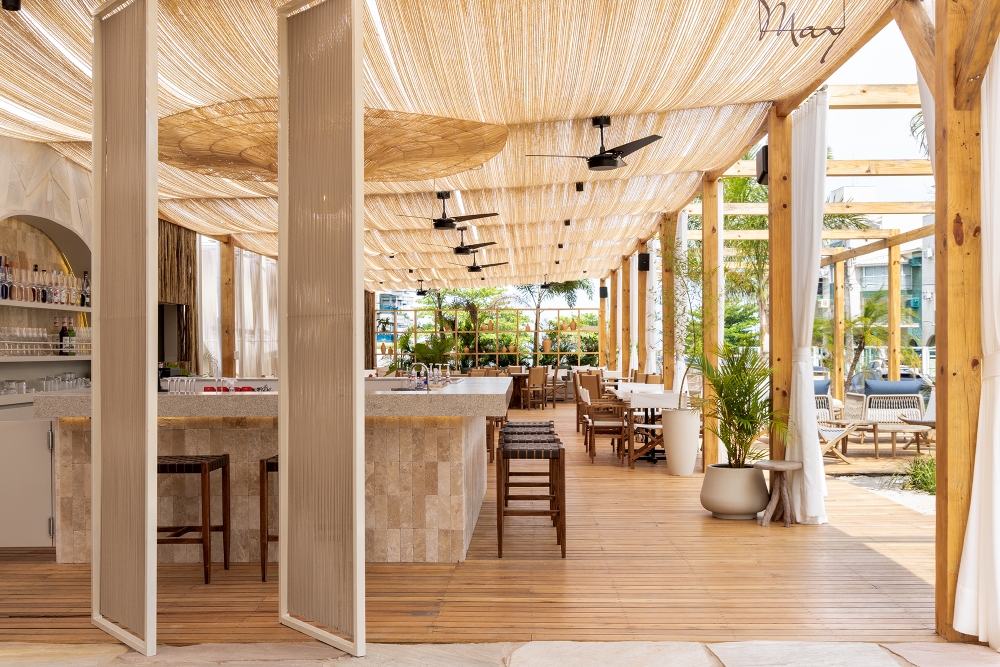
Lighting by Mariana Maisonnave Architecture
The tactility of wood, the interplay of light and shadow, accompanied by the sound of the wind, results in a simple, sophisticated design without any excessive elements. The lighting design contributes to a welcoming atmosphere both at night and during the day. During the day, natural light creates soft shadows by passing through the punctures in the fabrics. Subtle artificial lighting at night-time highlights arches, shelves, and other key elements of the design, creating a warm and intimate environment. The natural textures are spotlighted with low-glare warm lighting, which improves the sense of comfort.
Environmentally and socially responsible approach
Designed with sustainability at its core, the lighting strategy relies predominantly on natural daylight, reducing the dependence on artificial systems. Cross-ventilation and an open-plan layout further limit the need for mechanical cooling, responding efficiently to the region’s warm coastal climate. The durability and the organic nature of the materials ensure low material waste. The design studio prioritised local suppliers and craftspeople, a choice that reflects not only the sustainability of its practice but also its strong sense of social responsibility.
More than a place to eat, May Restaurant offers a calm, immersive experience grounded in nature. Drawing directly from its surroundings, the design also gives back through environmentally conscious practices that extend beyond ecology to embrace a broader sense of social awareness.


