



Header: Joe Fletcher
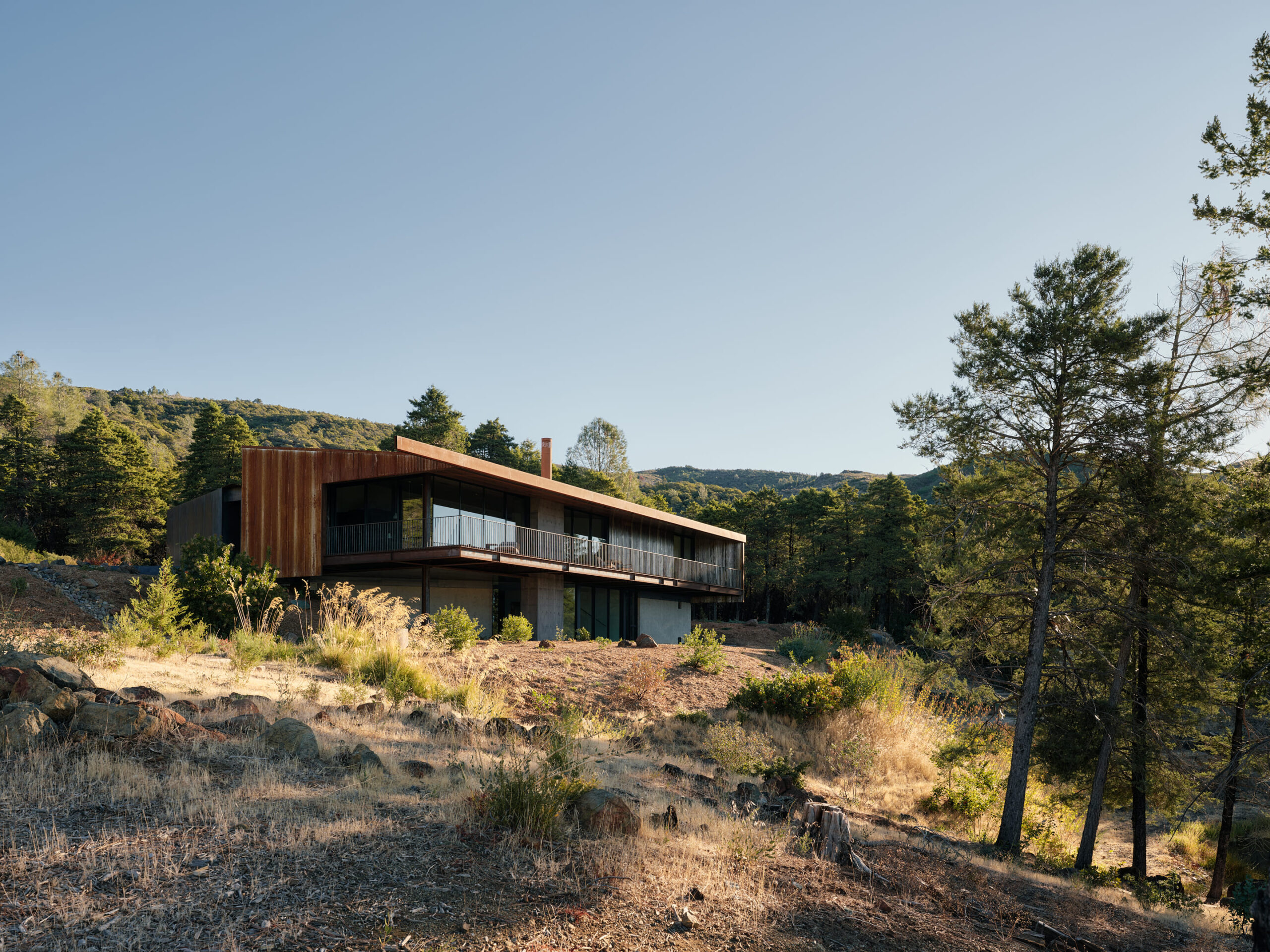
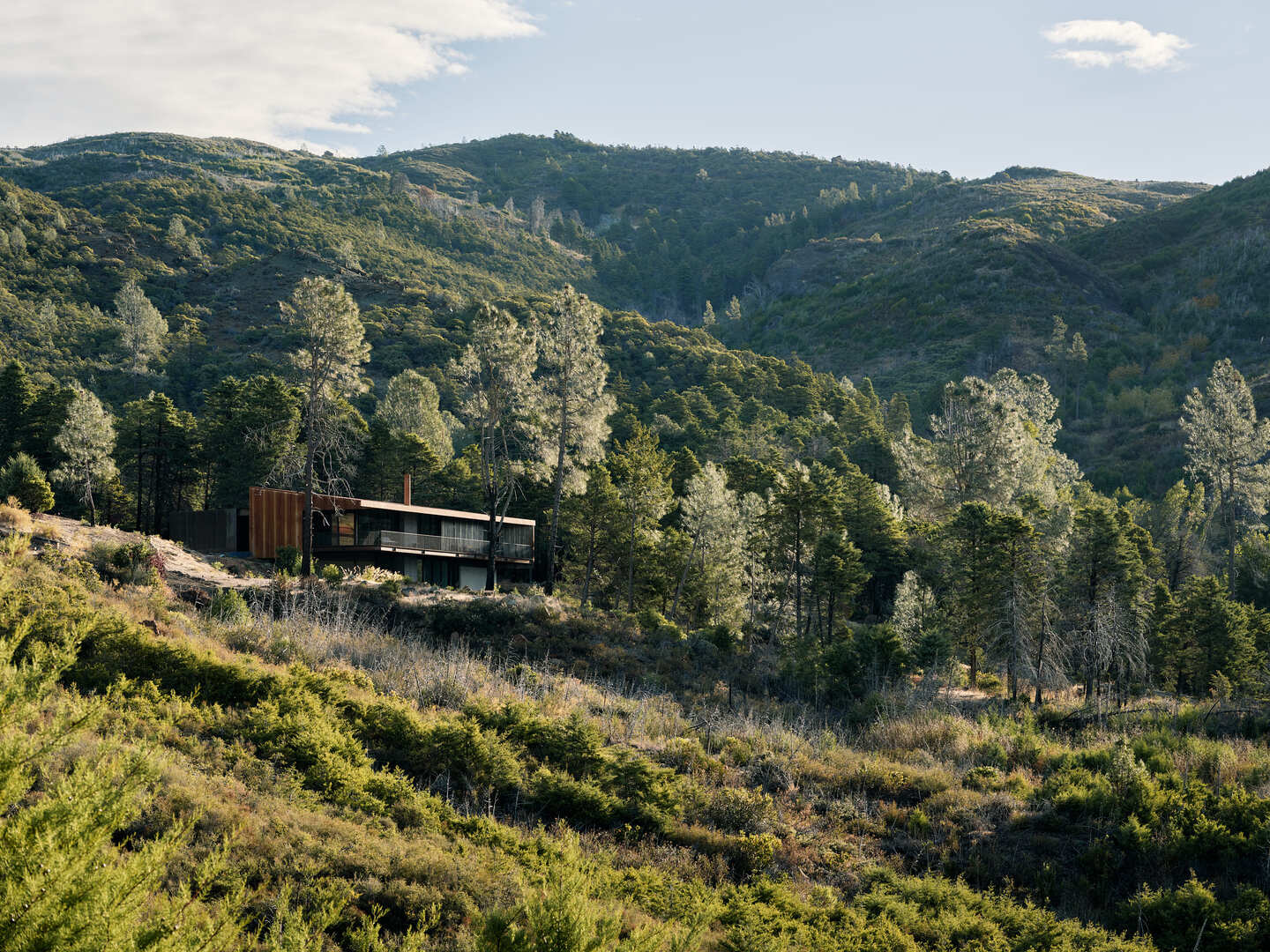
The rugged terrain of the Mayacamas Mountains holds a history of resilience, from the 1870s mercury rush to the 2019 Kincade Fire. When the flames took the original off-grid home on this site, the owners chose to stay and rebuild. Working with Faulkner Architects, they created Pine Flat: a house that functions more like a tool for survival than a typical luxury residence. Located northeast of Healdsburg and reached by a twisting old stagecoach road, the project focuses on durability and a direct connection to the wild California landscape.
A shell built to withstand the heat
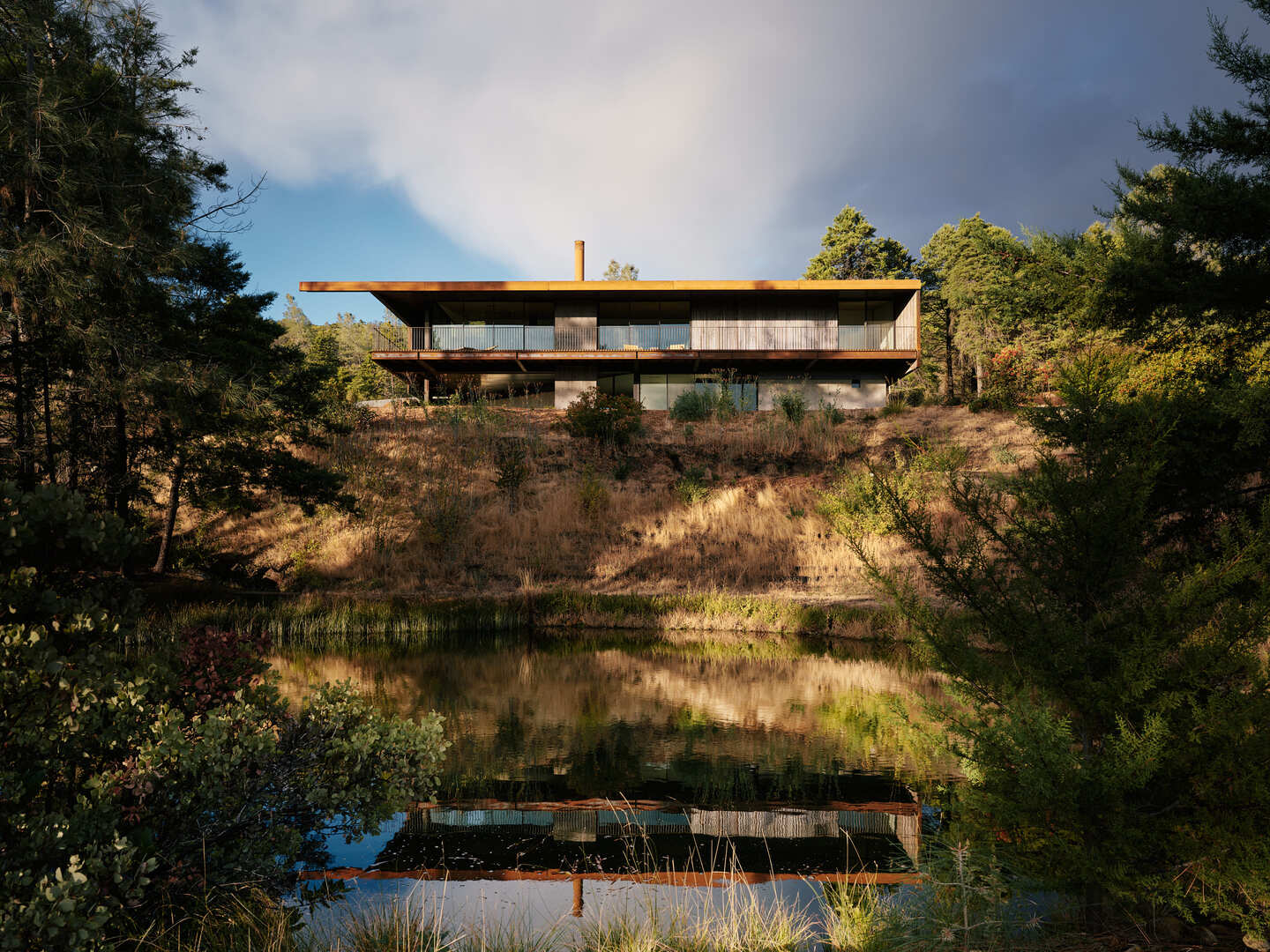
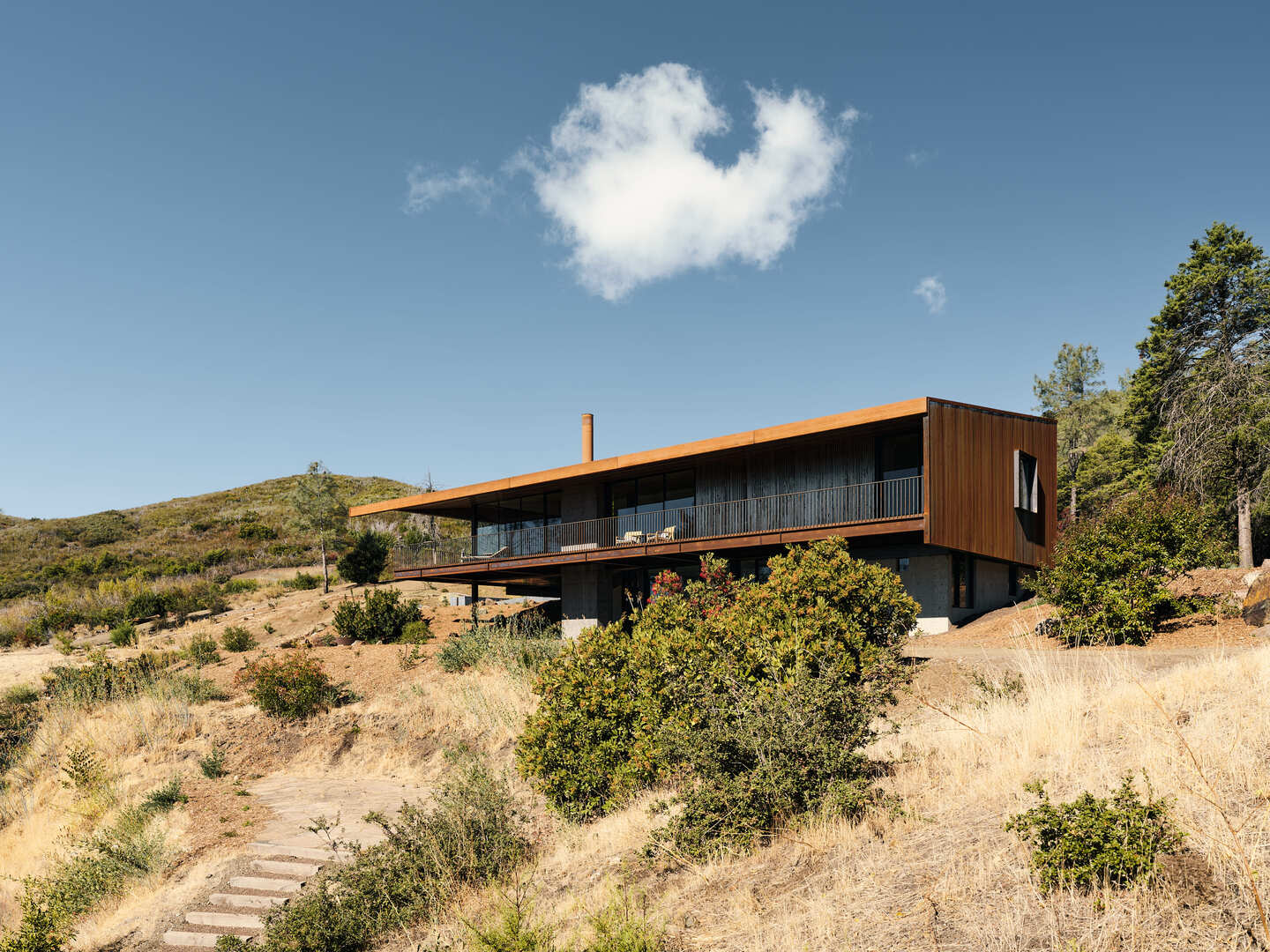
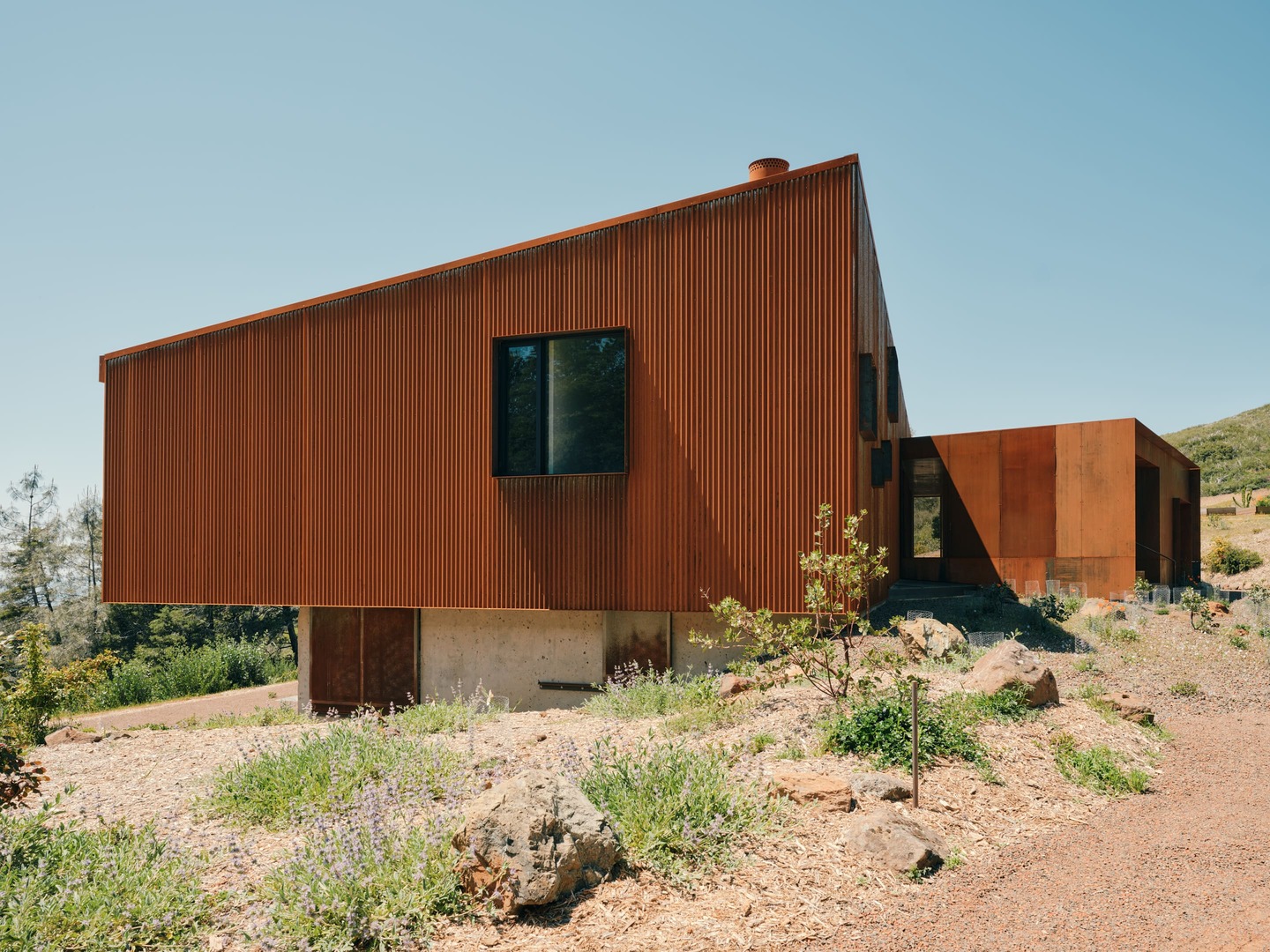
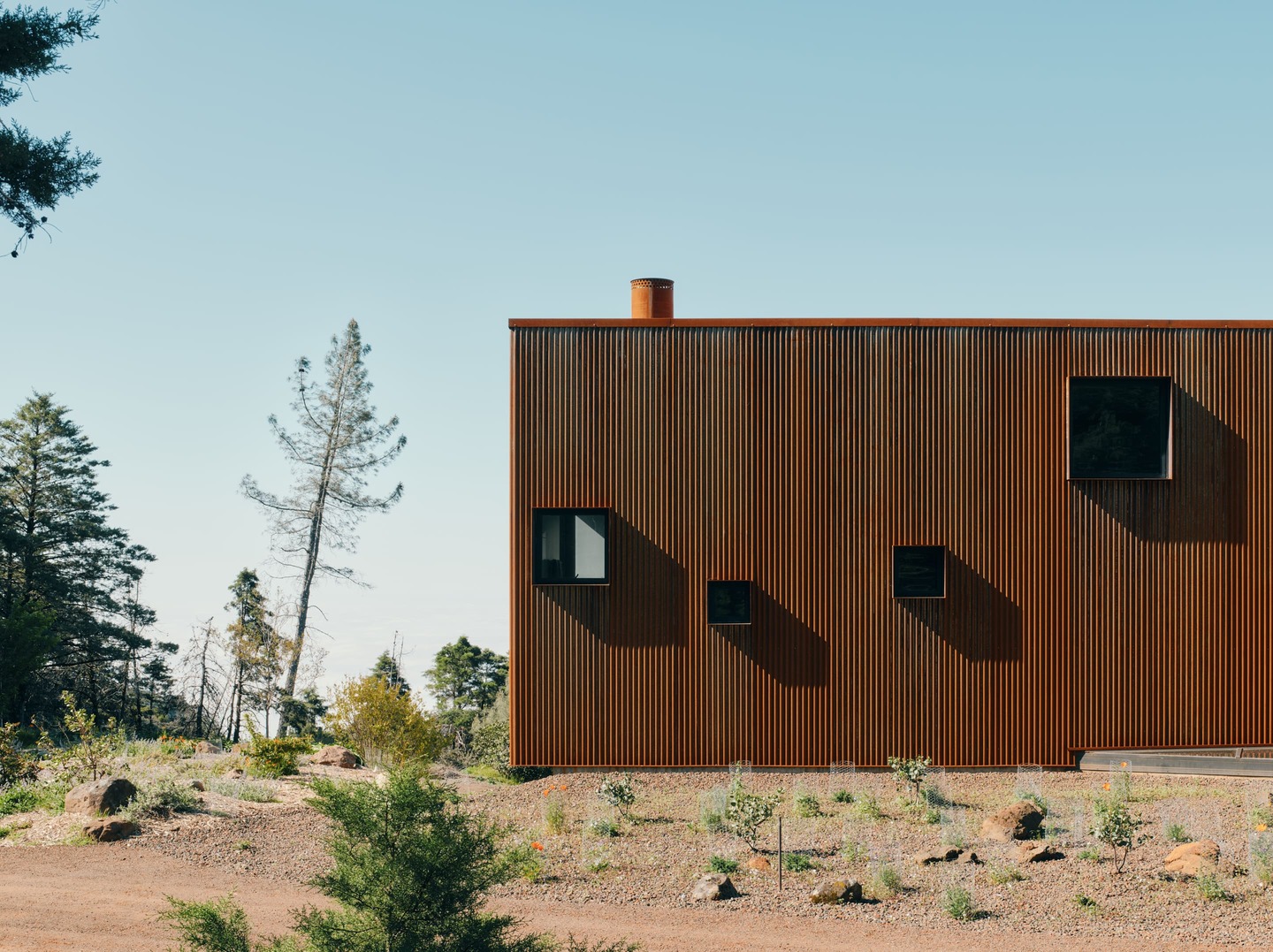
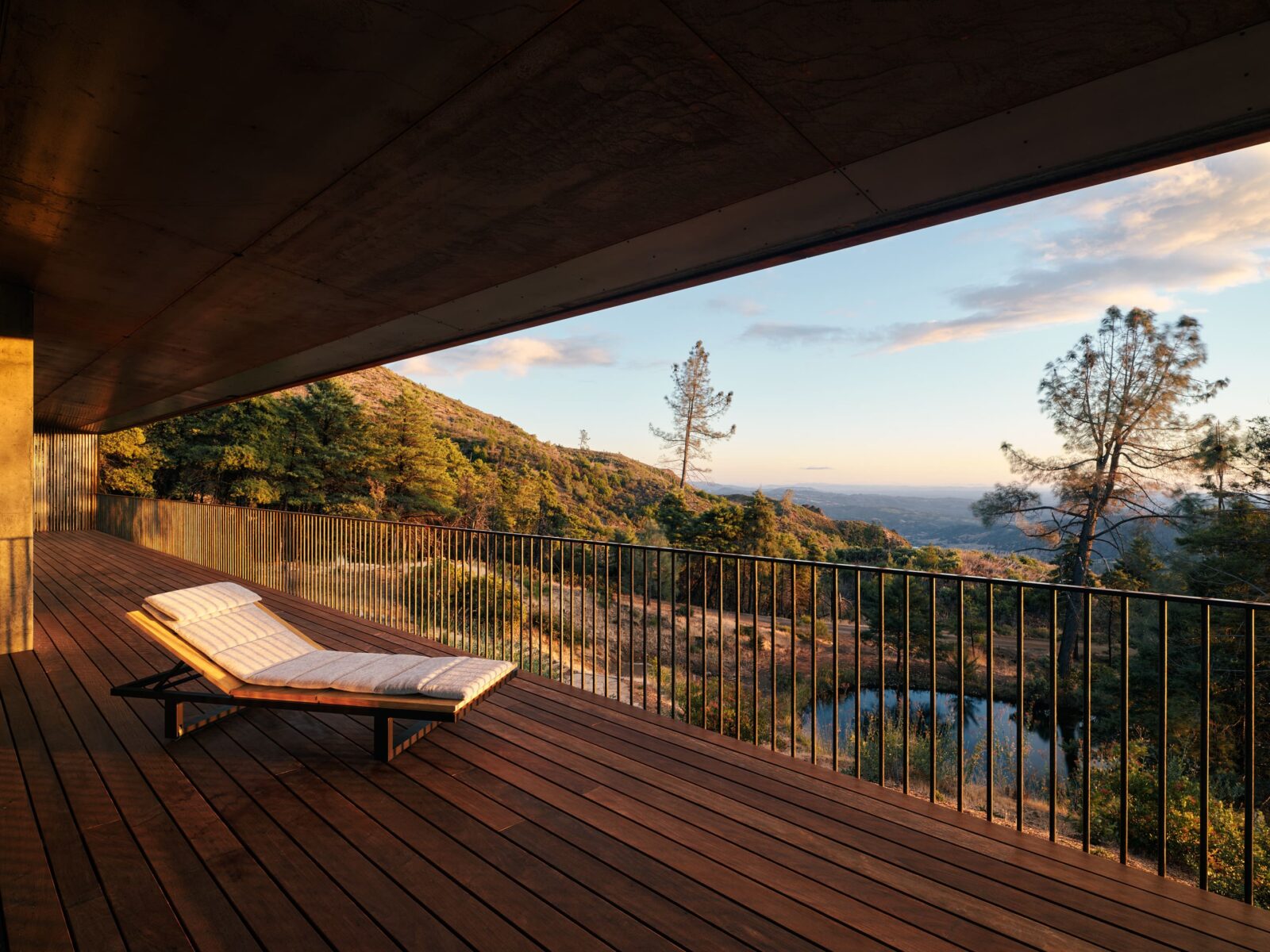
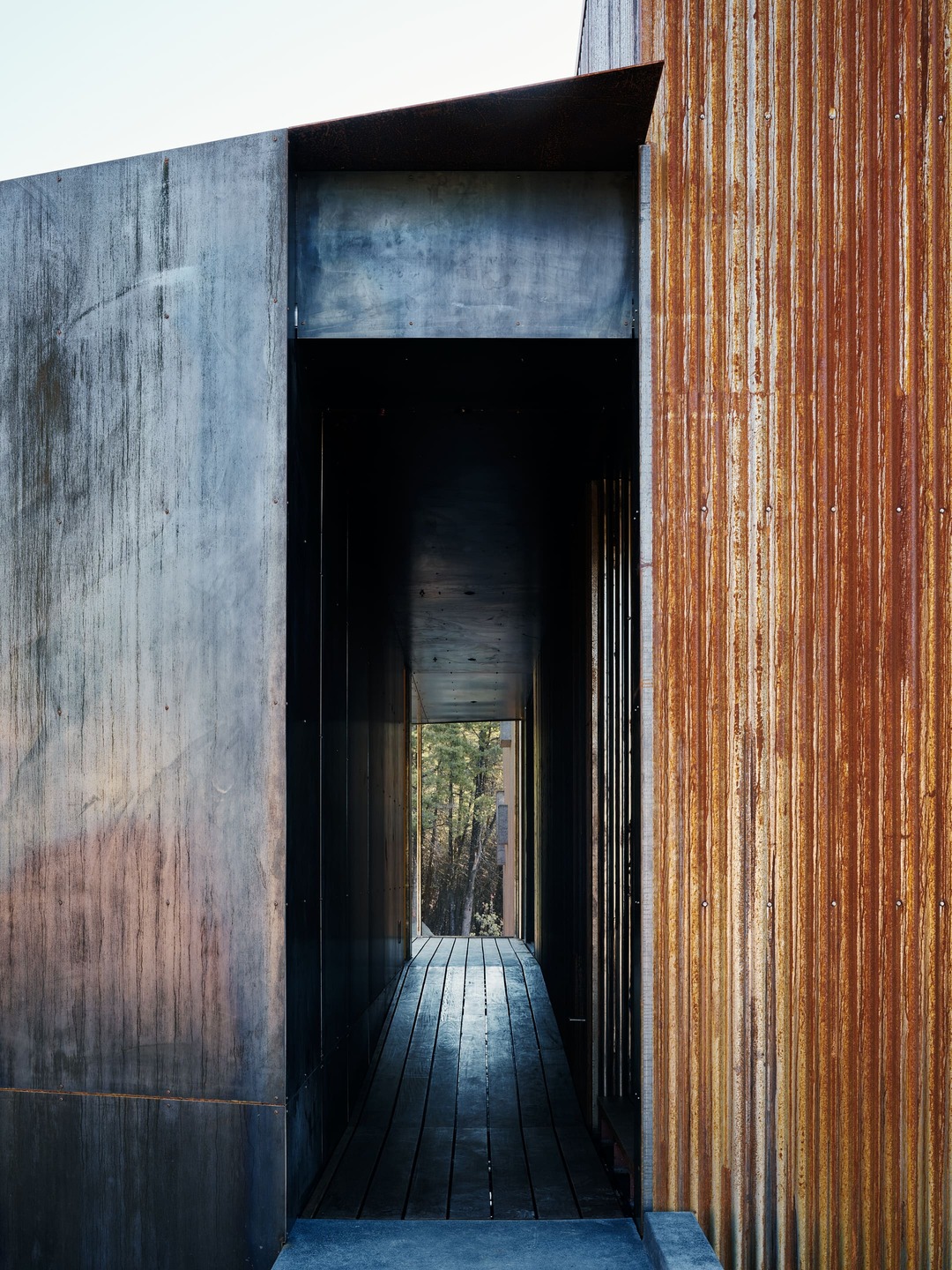
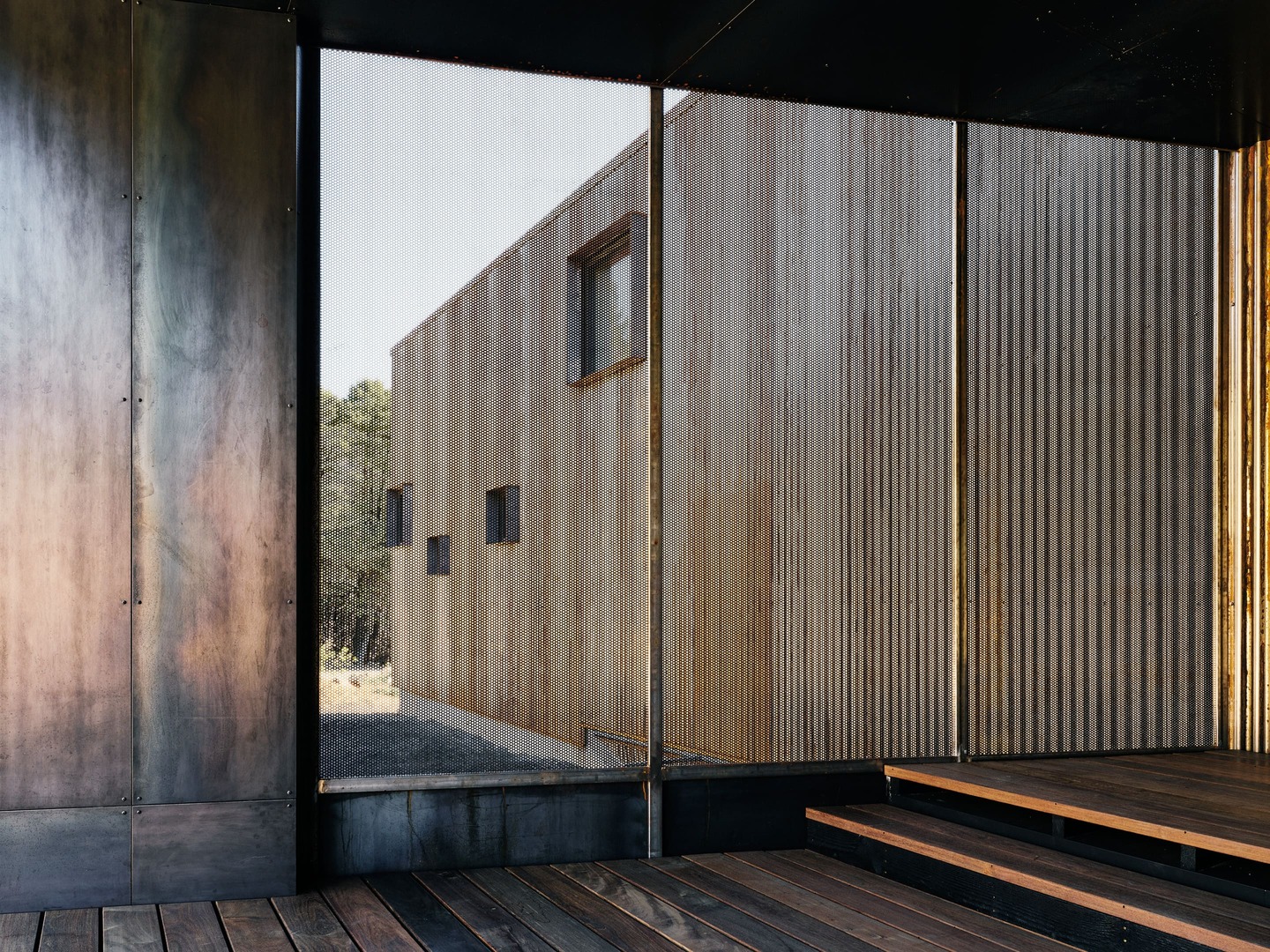
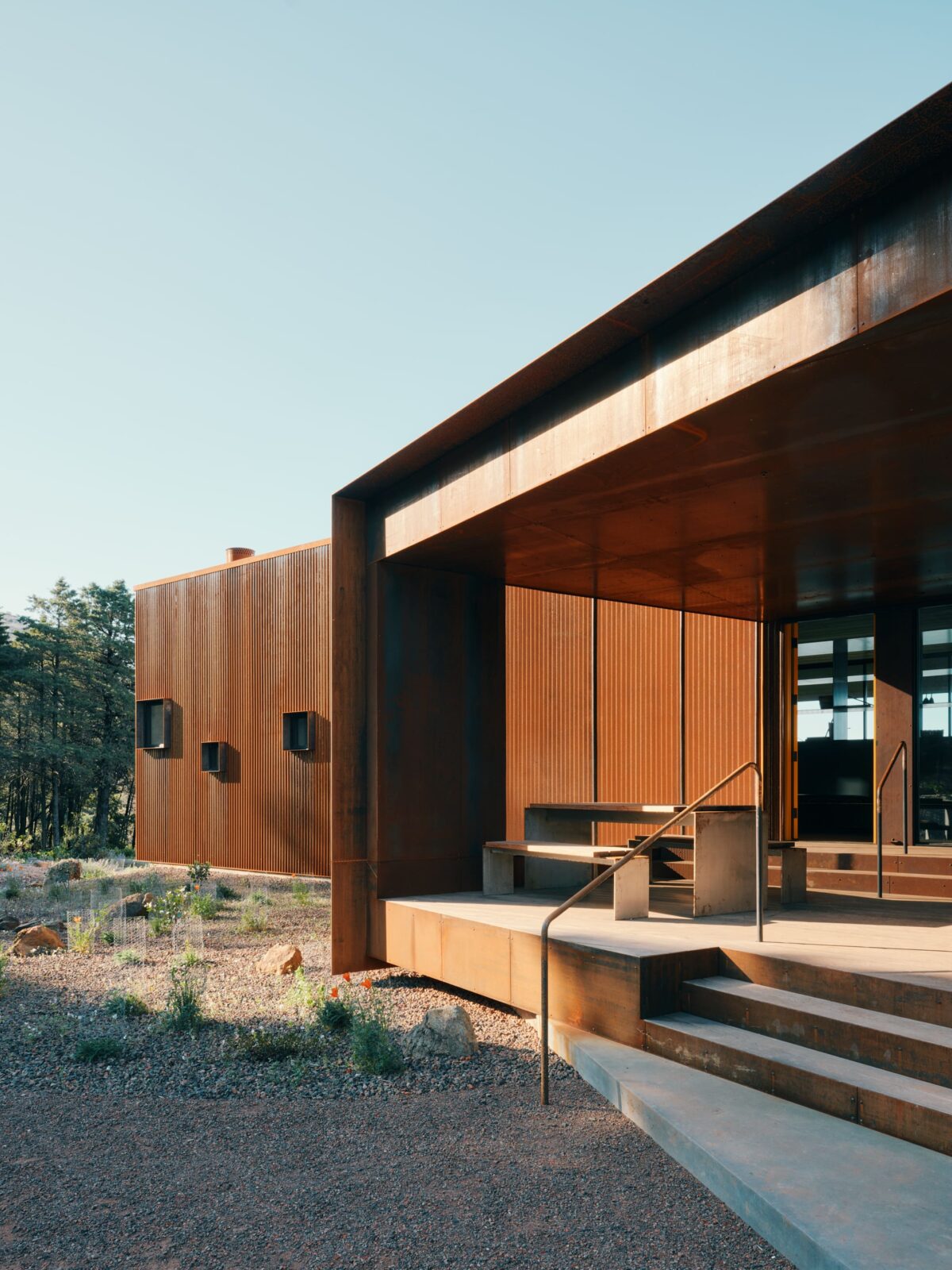
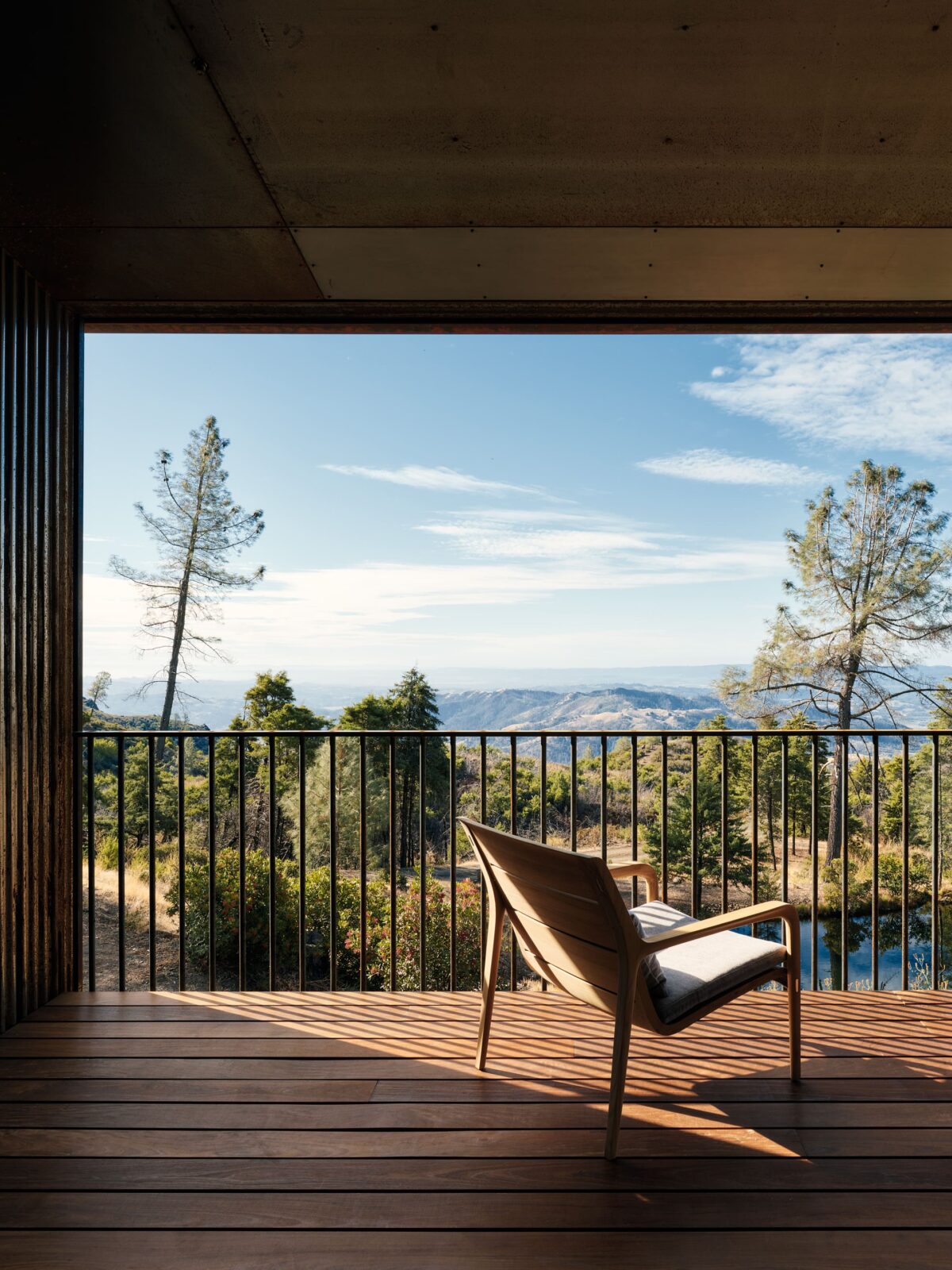
Because the previous home was lost to wildfire, the new design prioritises safety through tough, non-combustible materials. The building is wrapped in a Corten steel shell, a material that develops a protective rust-coloured patina over time. To keep sparks out during a fire, the architects installed sliding ember screens and placed exterior sprinklers above the timber decks. These choices ensure the house has a long life cycle with very little maintenance, even in a high-risk environment.
Working with the shadows of the past
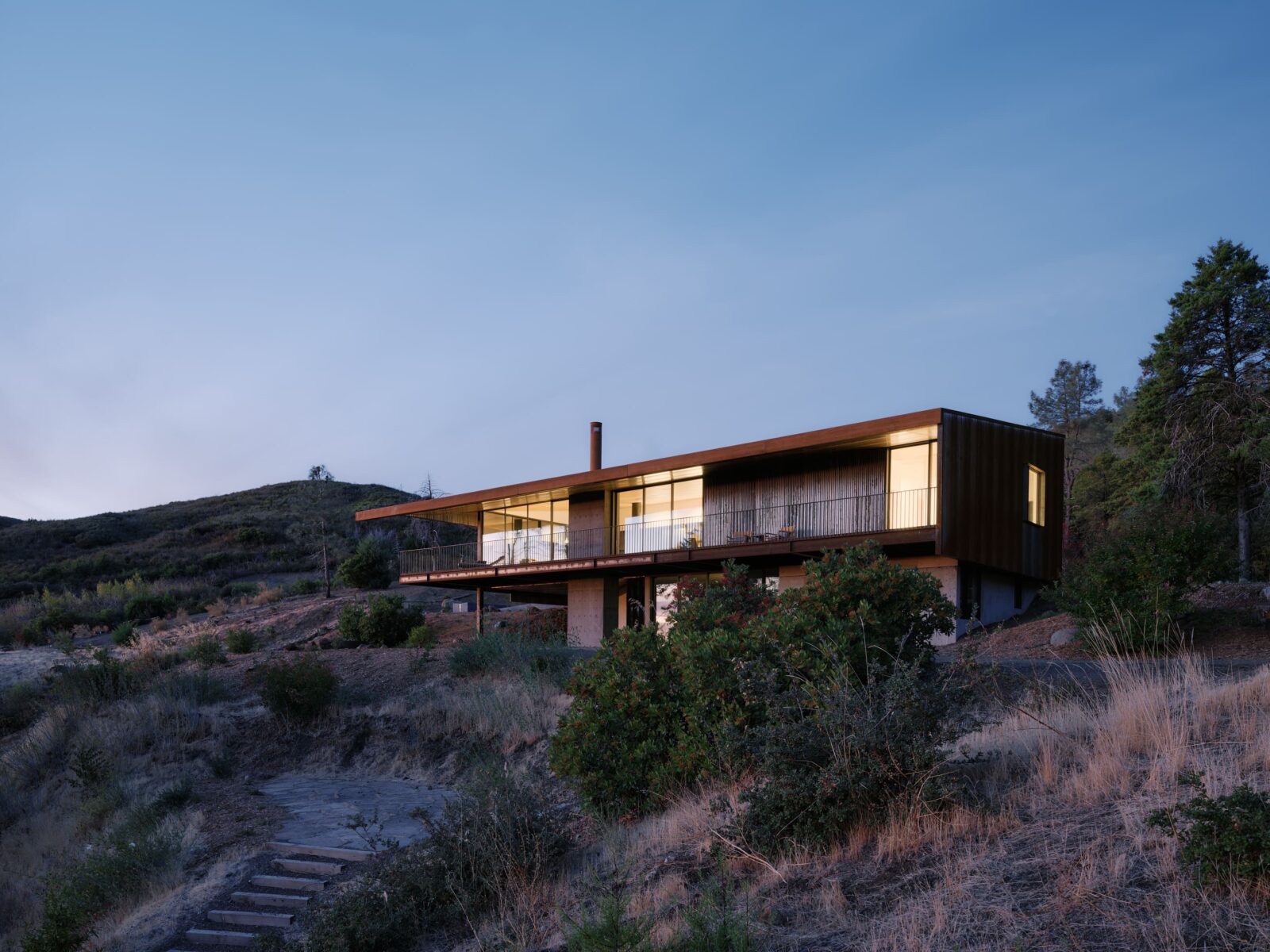
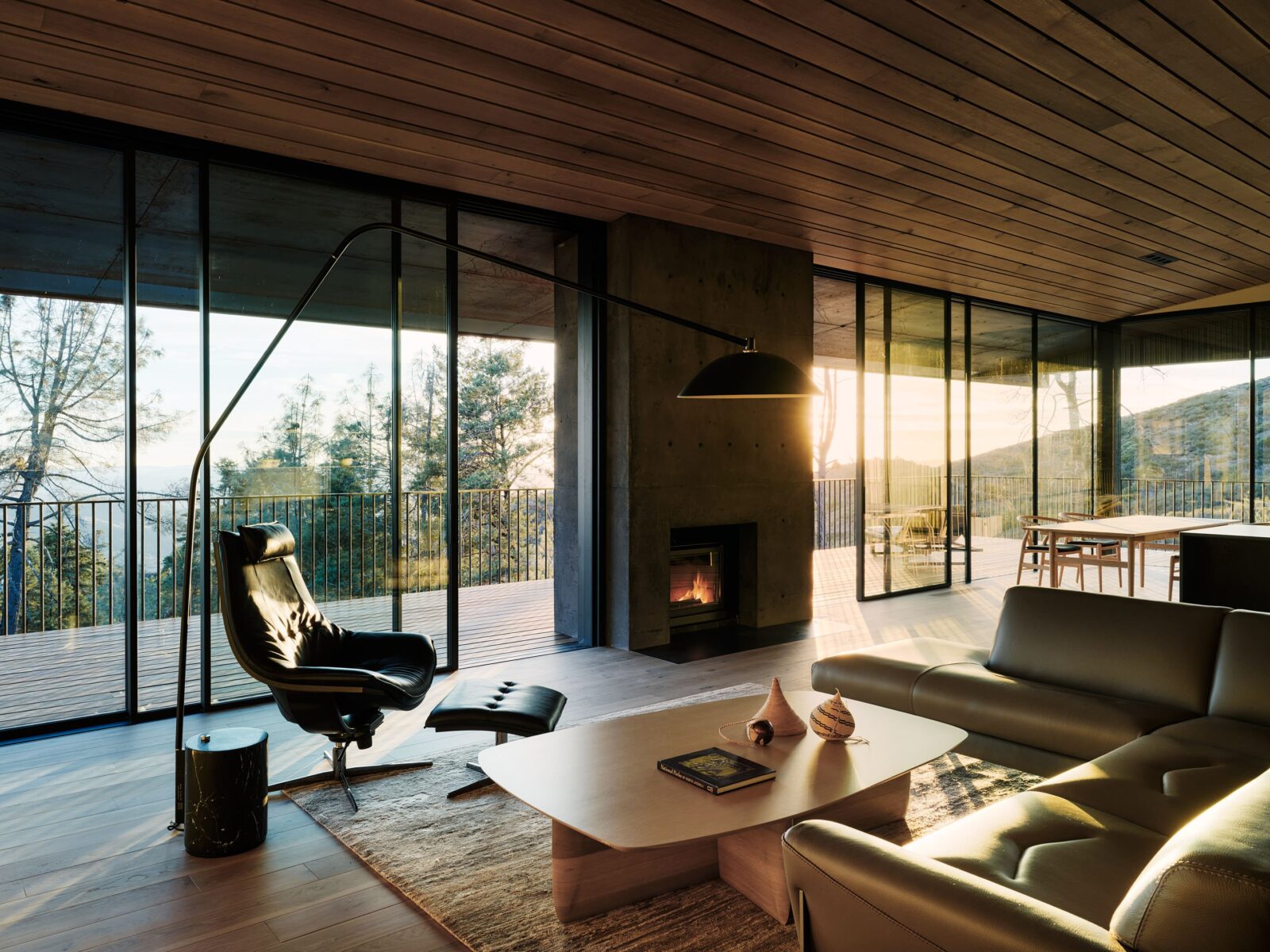
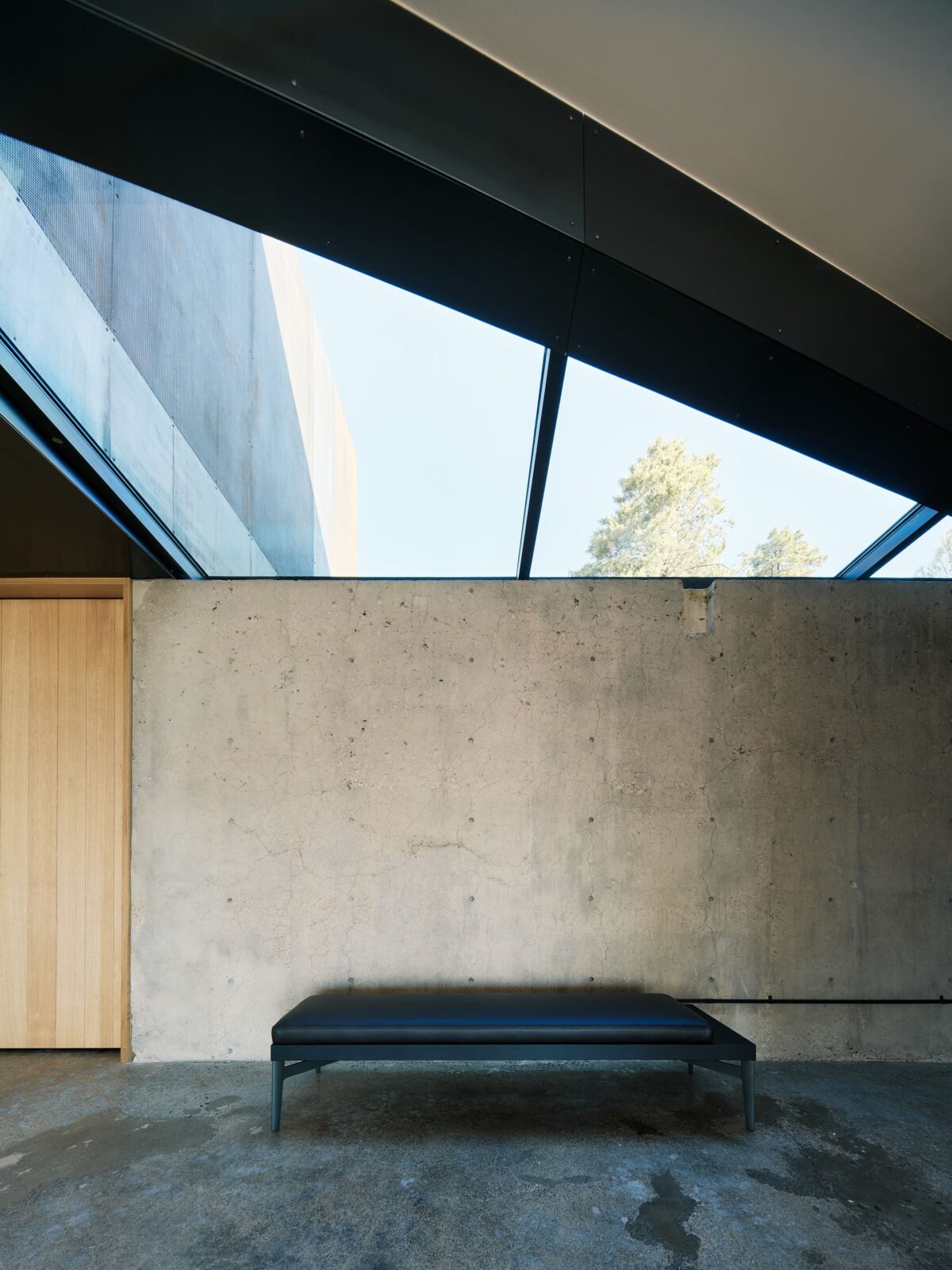
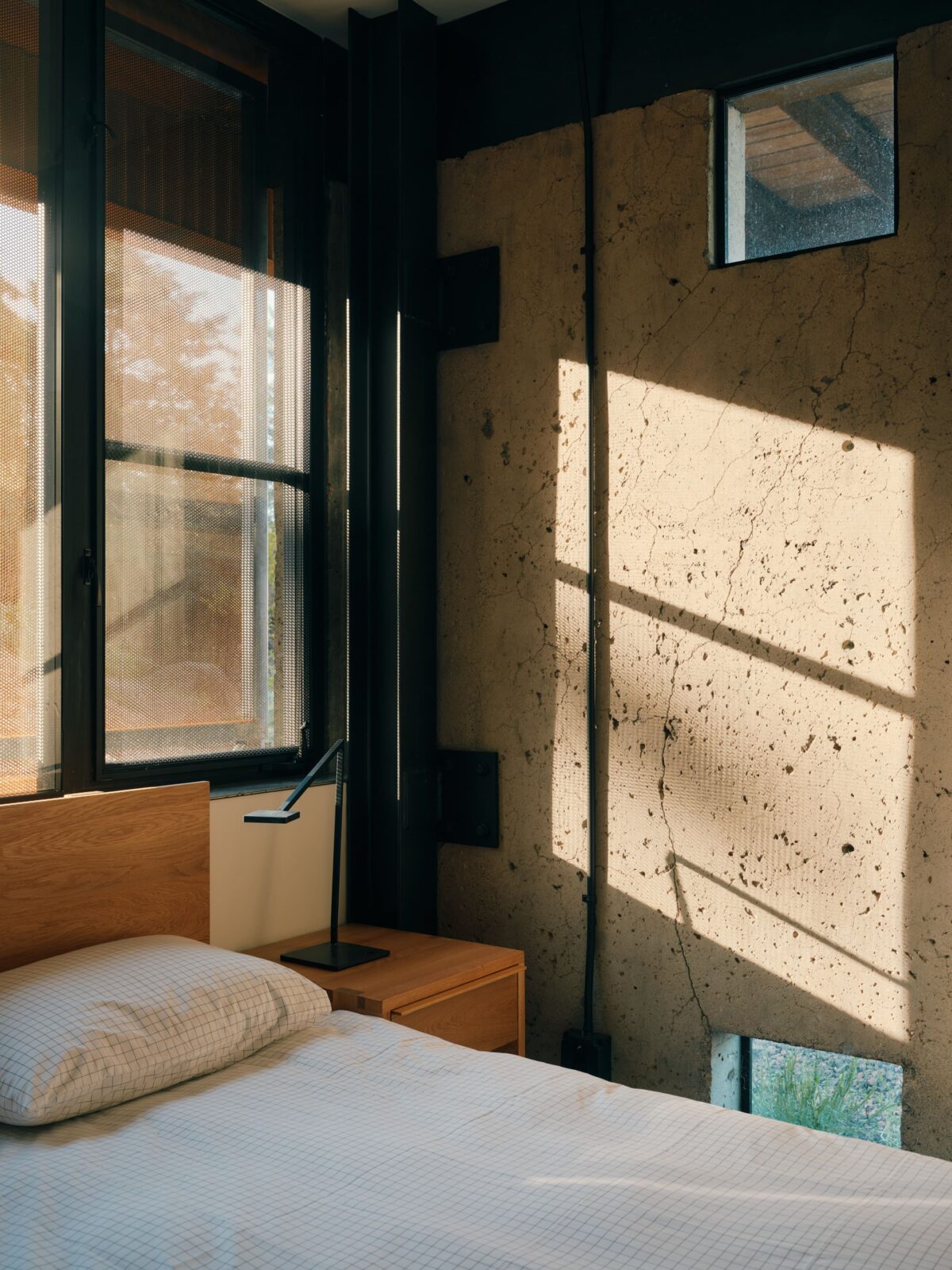
Instead of clearing the site and starting over, the team reused 90% of the original concrete foundation and walls. This kept the energy already stored in those materials and meant less digging into the hillside. Because the new house is a simple rectangle and the old foundation was angular, parts of the old concrete now poke out from under the new building. These extra bits of concrete aren’t wasted; they serve as a sculptural entry step and a glass-covered light well. Inside, a heavy concrete chimney stands in the middle of the main floor, a solid anchor that frames a view of the fireplace against the mountains outside.
Planning for the future and accessibility
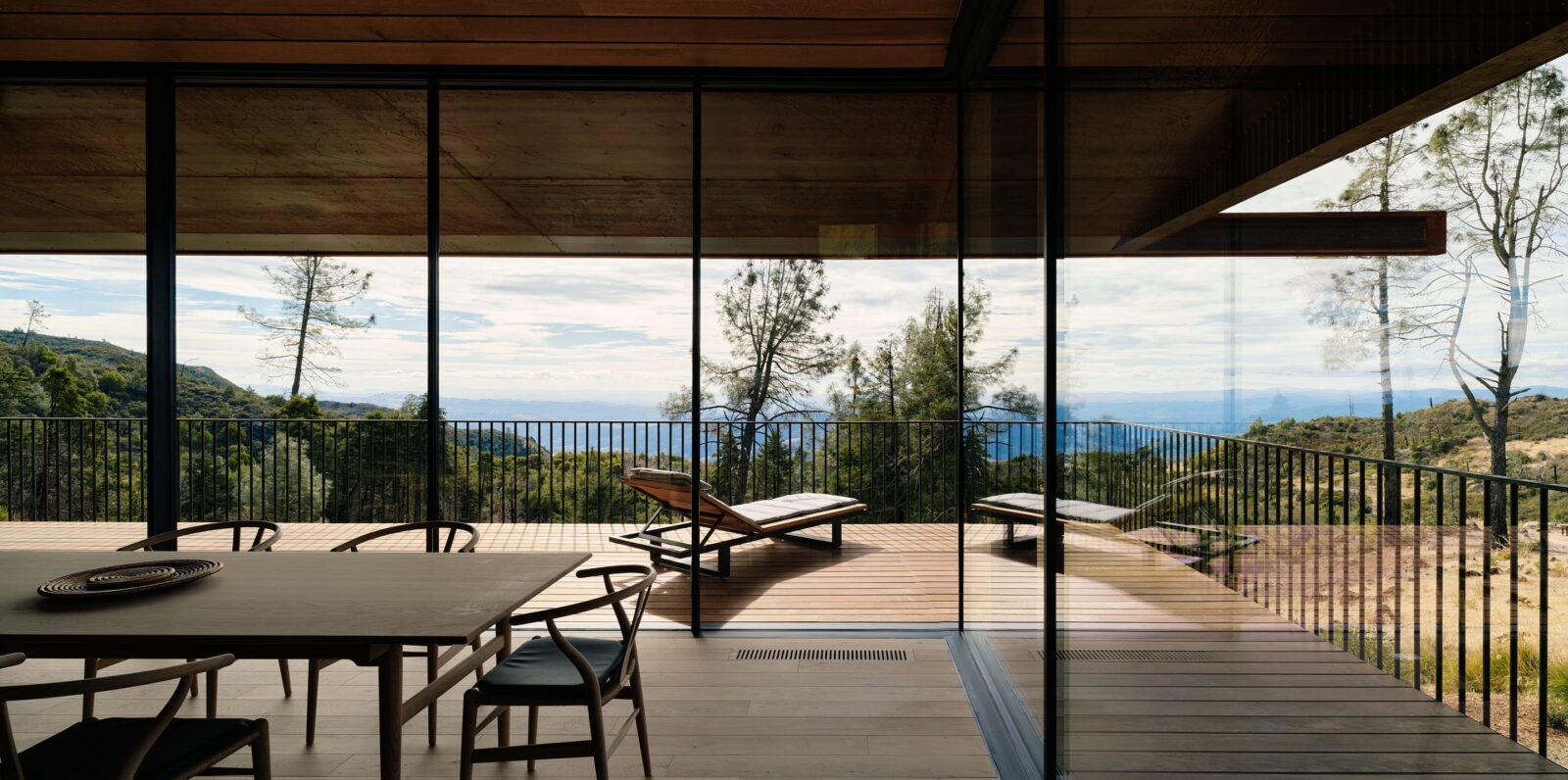
The owners wanted a home they could use comfortably as they grow older. This led to a layout where the kitchen, dining area, living room, and main bedroom are all on the same level. A long entry ramp stretches out toward the western hillside, making it easy to get inside without stairs. The architects also cleared enough space for wheelchairs to move around and even framed out a spot for a future lift. It is a practical design approach that ensures the house remains useful for decades.
Living entirely off the grid
Being remote means the house has to take care of itself. Pine Flat uses a new solar power system with upgraded panels and batteries to keep the lights on. Water is handled with equal care. A large gutter hangs over the edge of the roof, catching every drop of rain and sending it into a steel basin. From there, the water goes to a pond that acts as a backup for firefighting. The site also has spring-fed wells that fill a dedicated tank for the fire hydrants. In a clever bit of engineering, the water passes through a Pelton wheel to create extra hydroelectric power before filling a concrete basin where the owners can take a cooling dip.
Simple materials and local resources
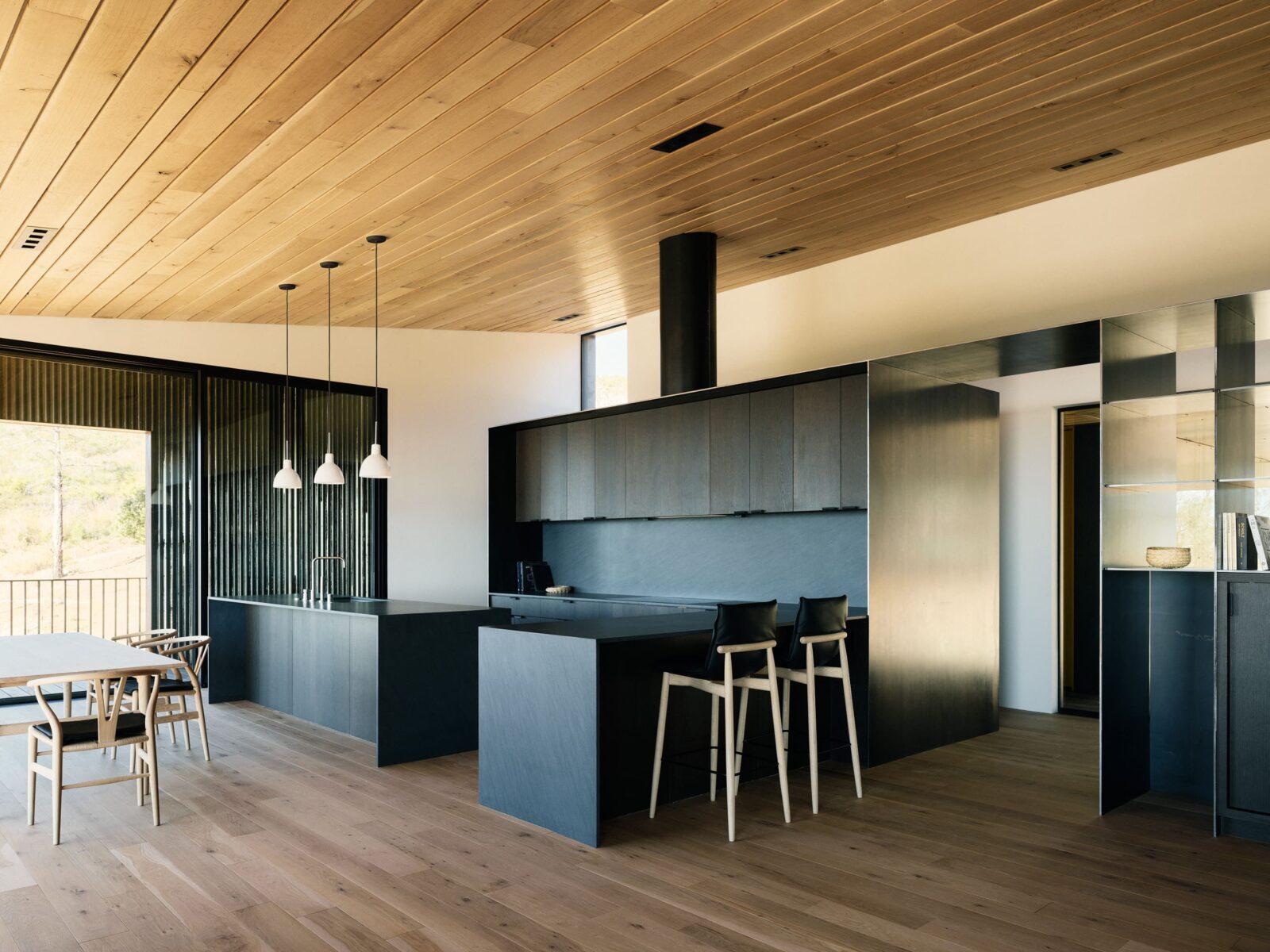
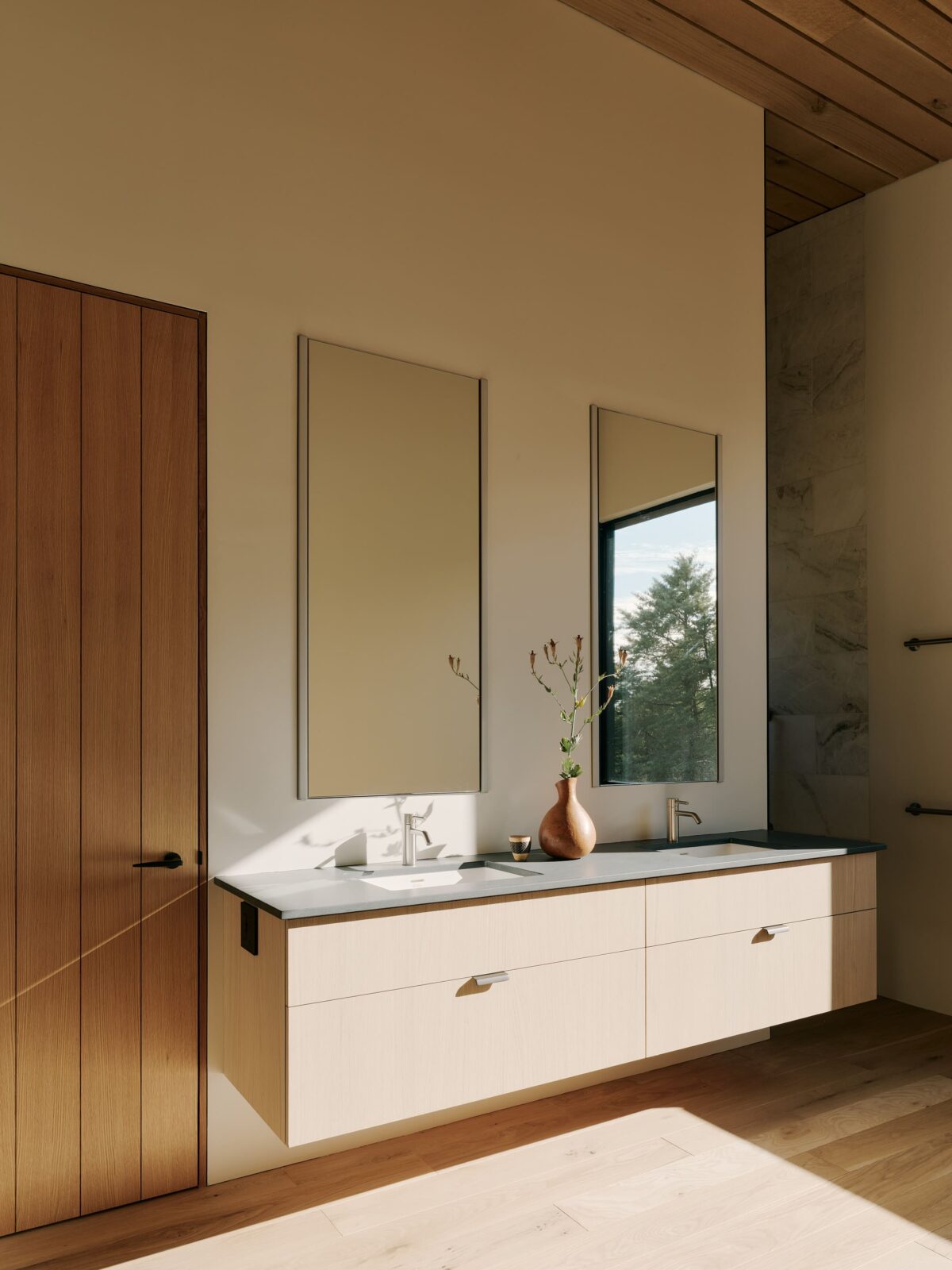
Because it is so difficult to get building supplies up the winding mountain road, the team tried to limit waste at every turn. Inside, the finishes are high-quality but functional, featuring Shinnoki cabinets and TruStile wood doors. The kitchen is kitted out with Wolf and Subzero appliances, while the bathrooms use fixtures from Duravit and Dornbracht. Large Blomberg windows and doors allow the residents to look out over the ridge, keeping them connected to the weather and the woods.
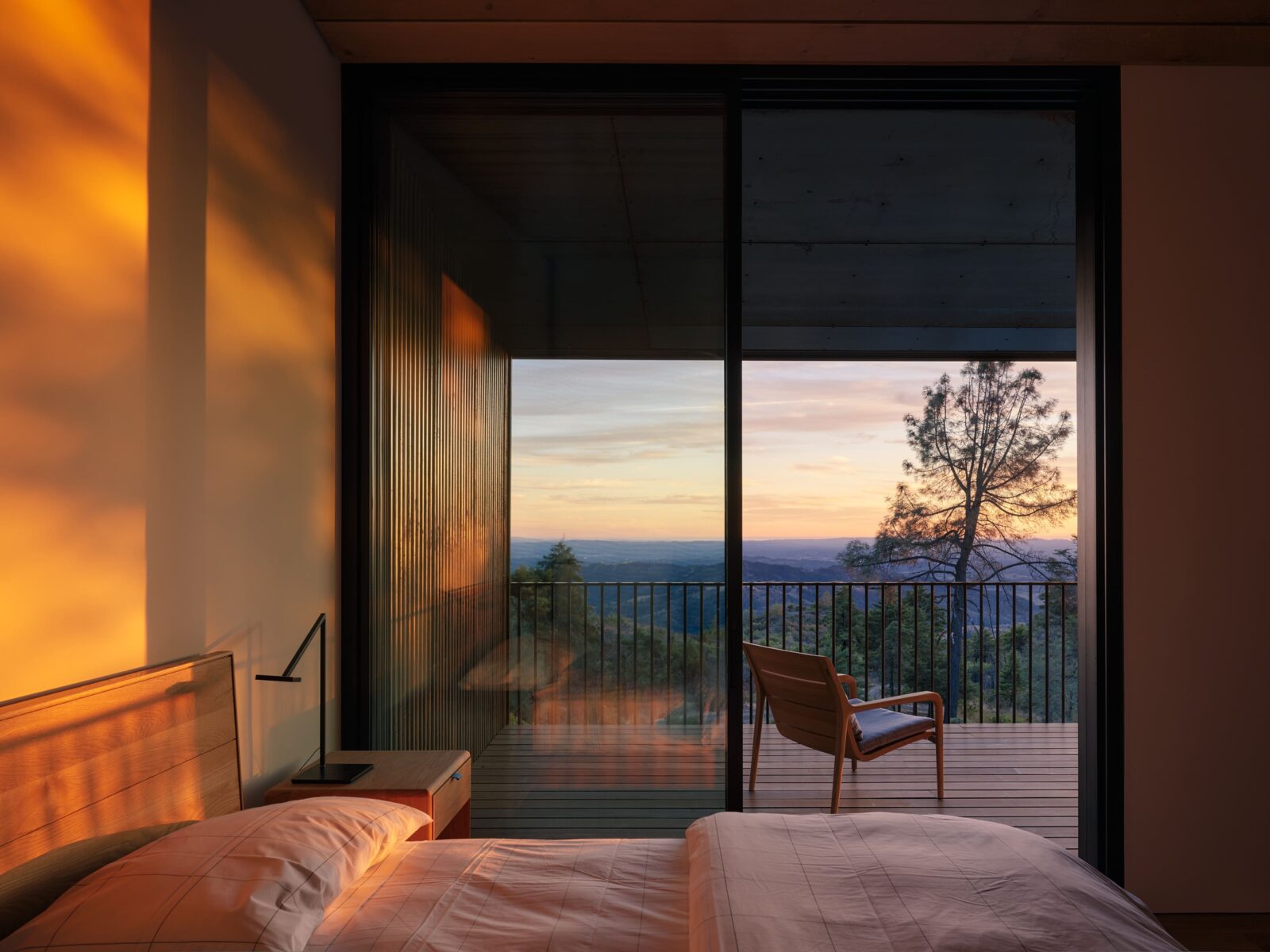
Pine Flat shows that building in beautiful, dangerous places requires a shift in how we think about architecture. It isn’t just about how a house looks, but how it works as a shield against the elements. Faulkner Architects has created a home that respects the history of the old mining town while preparing for a future where wildfire is a constant reality.


