Header: Courtesy of HANDU ASSOCIATES
Xi’an CCBD is a large mixed-use district in Xi’an, developed for China Resources Land, that opened its public spaces in December 2024. A winner at the 2025 LIT Lighting Design Awards, the lighting design by HANDU ASSOCIATES is seen as just as important as the craft and landscape designs.
The Xi’an Tree
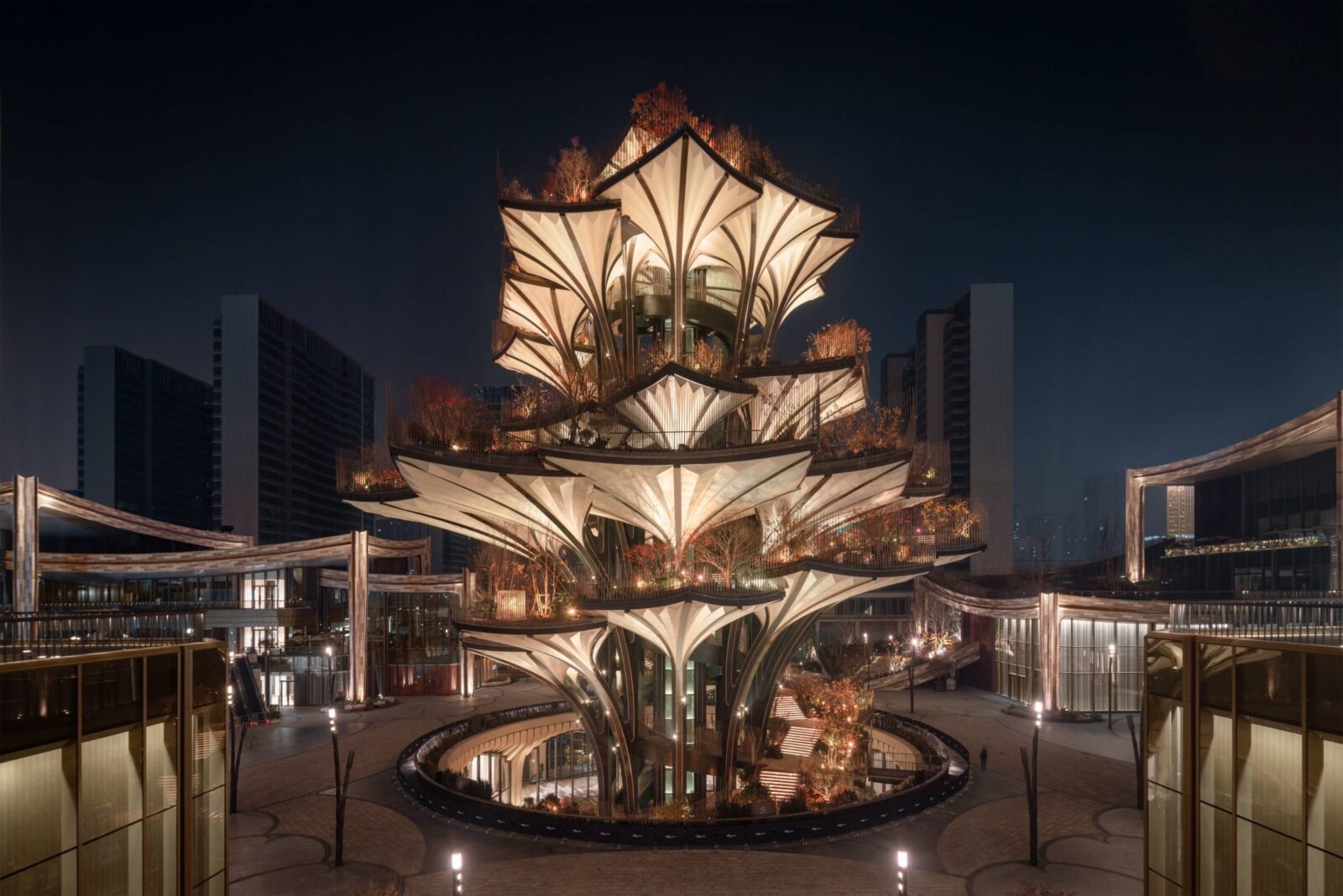
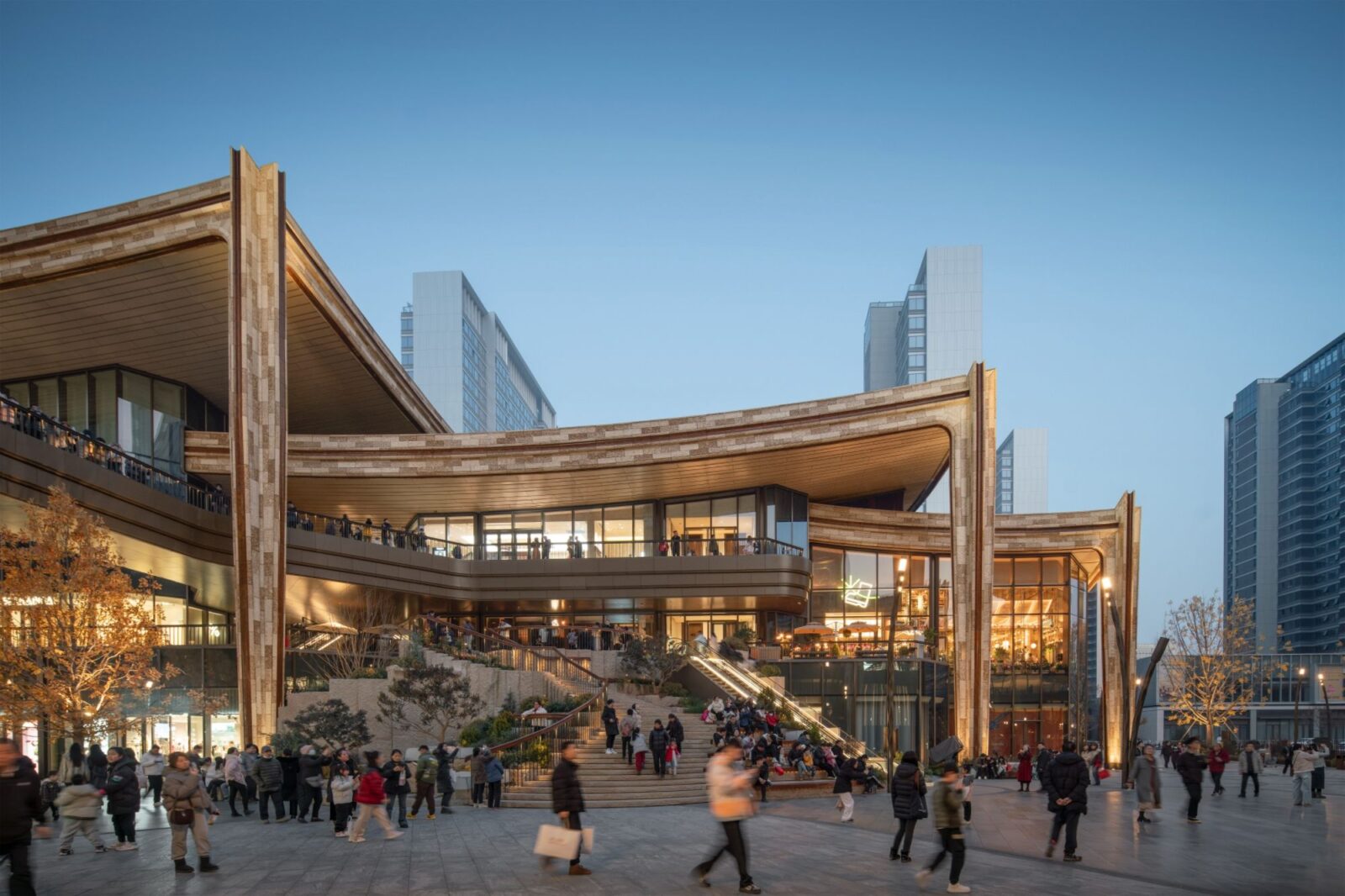
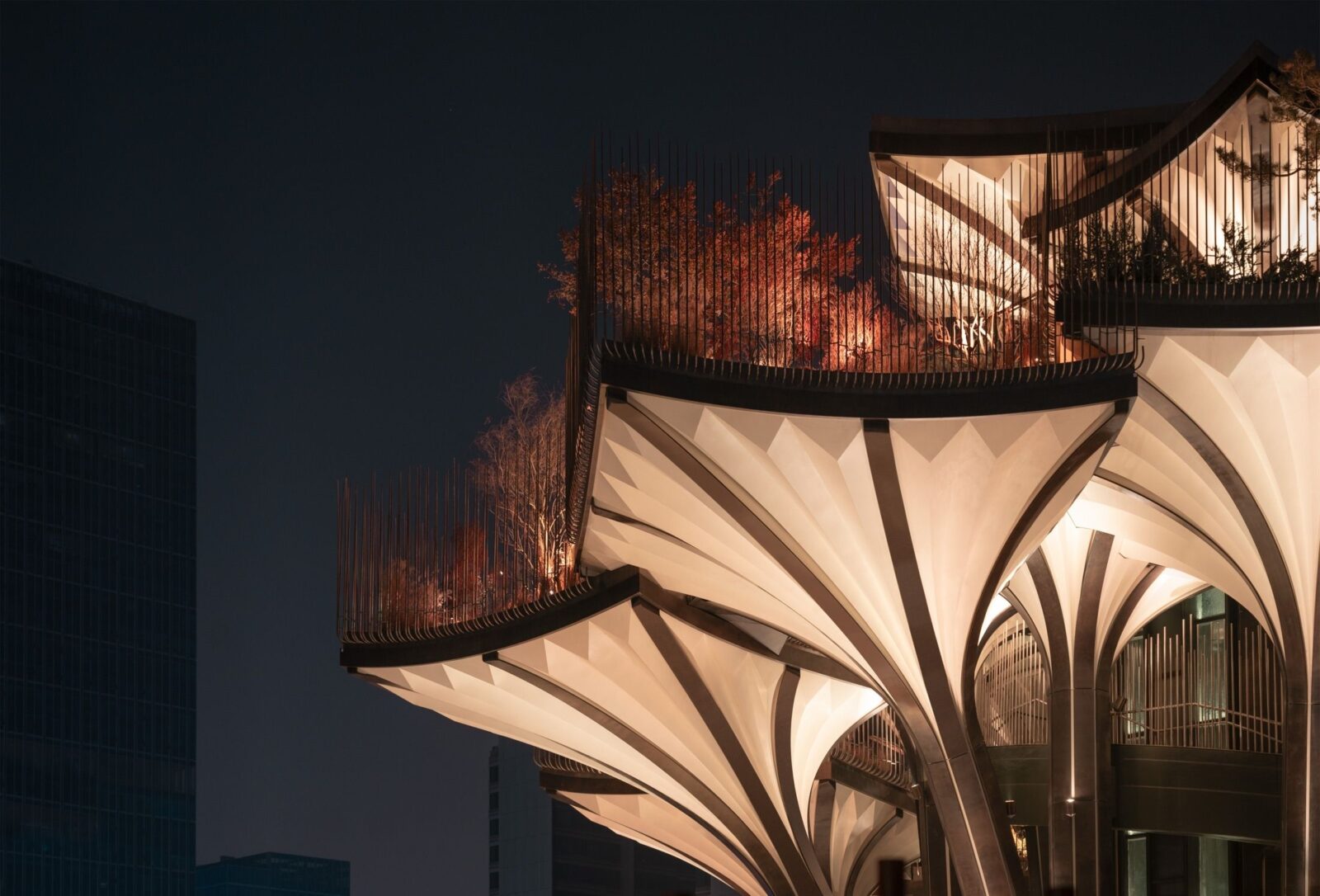
At the centre of the district is the Xi’an Tree, also known as the Tree of Life: a vertical park that rises by roughly 57 metres from the basement level, where people move across dozens of raised “petals” or terraces and planting zones that evoke Silk Route biomes. Its reference point was a millennium-old ginkgo tree in Xi’an, which can be noticed in the controllable, programmable canopy of light that can change colour and focus without feeling like a separate layer stuck onto the sculpture.
The team used a DMX512 control system so they could adjust the lighting in small, precise areas and go through colours smoothly. This is done with twenty-nine projectors that are built into the structure and hidden away, making the Xi’an Tree look like it’s glowing from within. To ensure the hidden equipment couldn’t be seen, the team used custom-made fixtures to match the shape of the sculpture.
Light in the streets
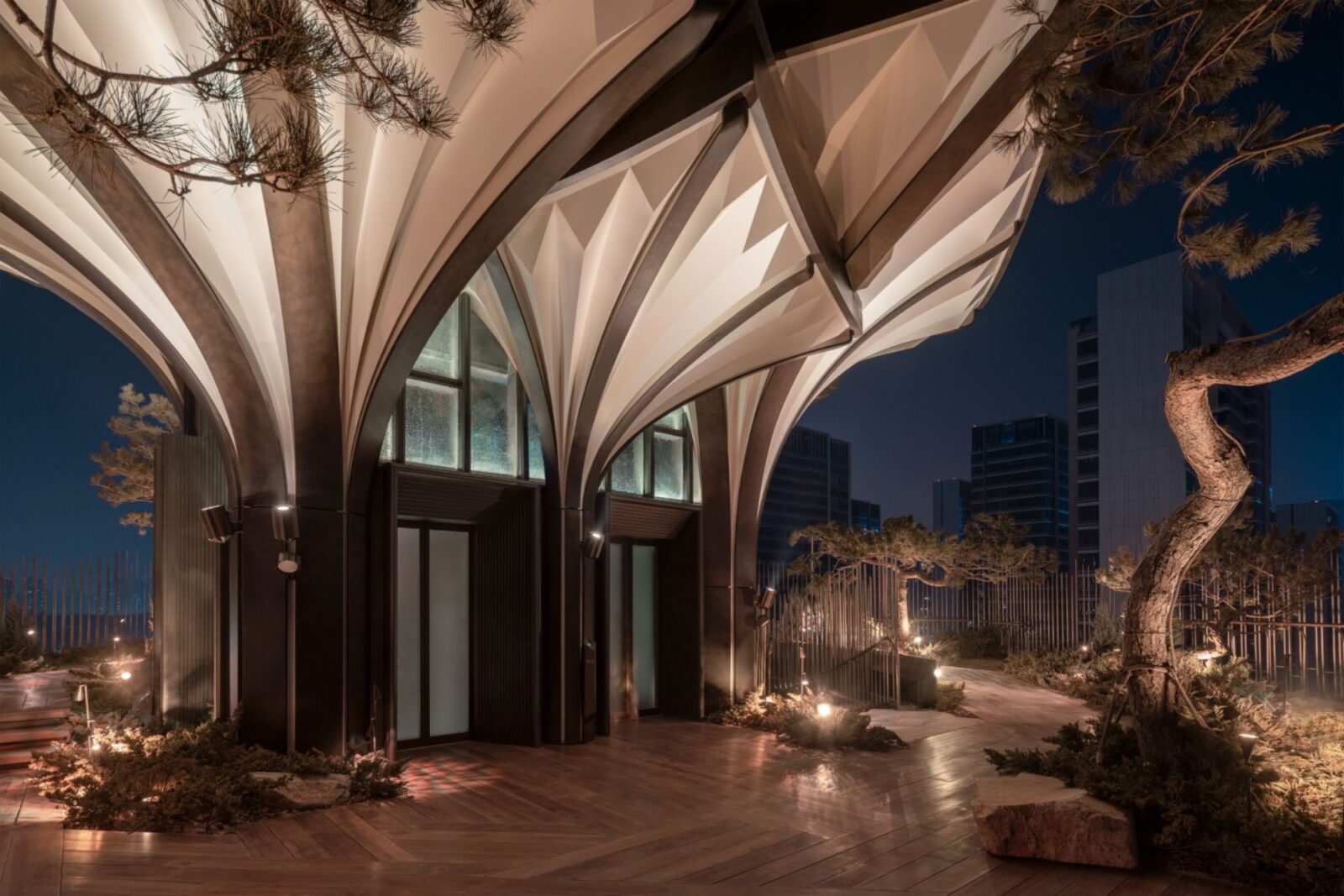
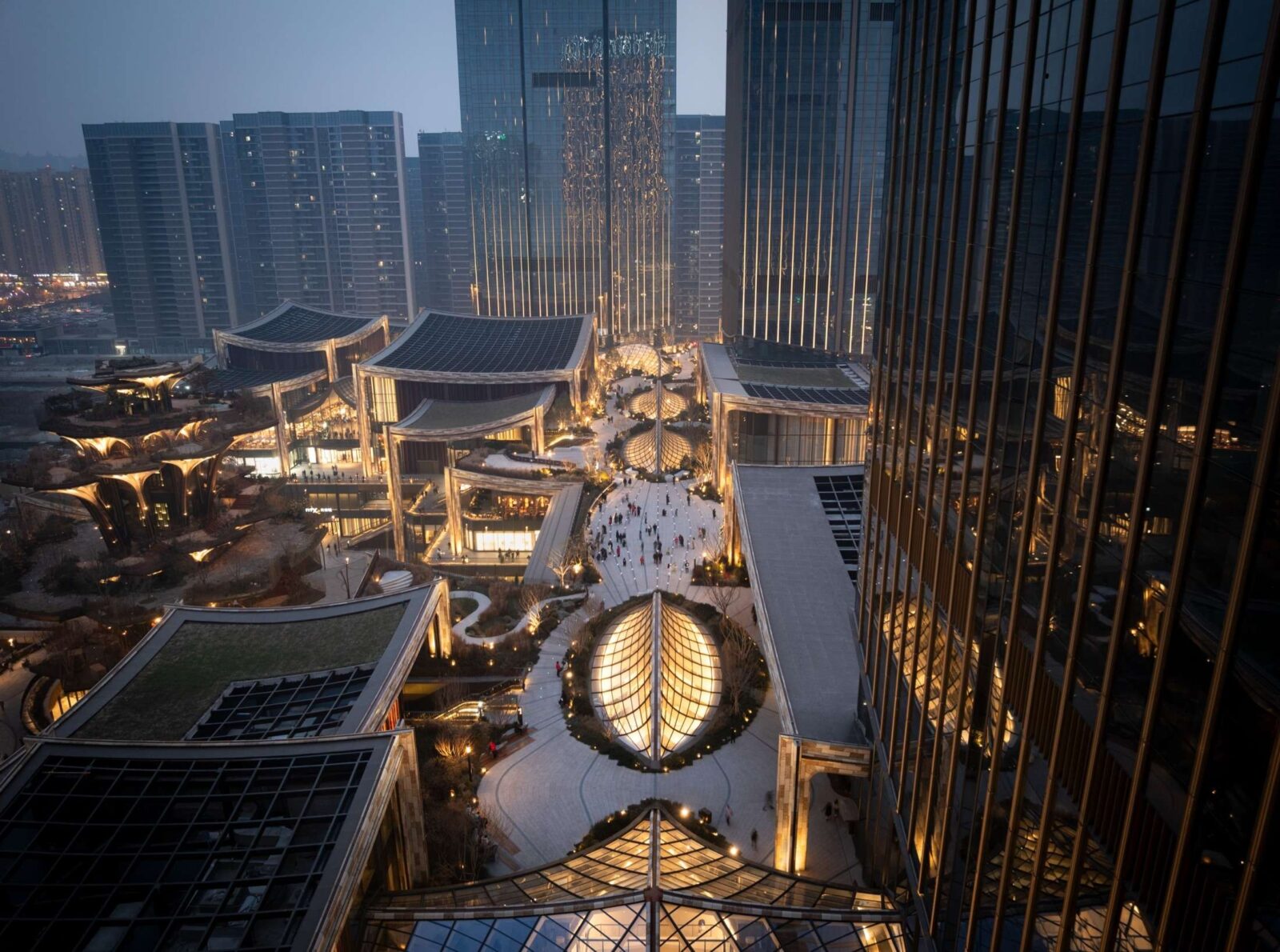
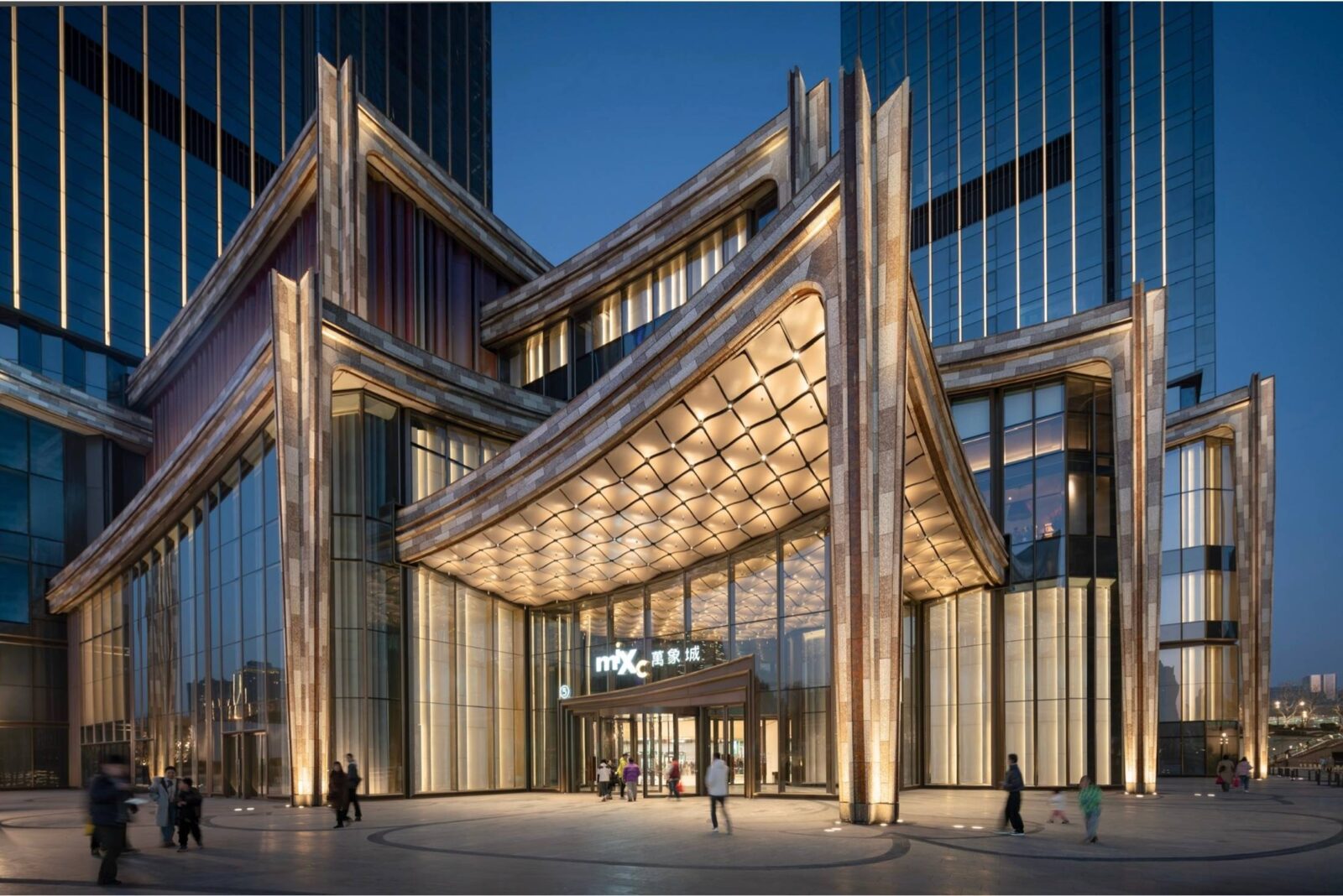
Outside the main centrepiece, the lighting approach stays the same throughout the walkways and shop entrances. The designers’ main focus was creating a comfortable and safe environment, so they put a lot of effort into reducing glare so the light wouldn’t feel harsh when people are shopping or walking around.
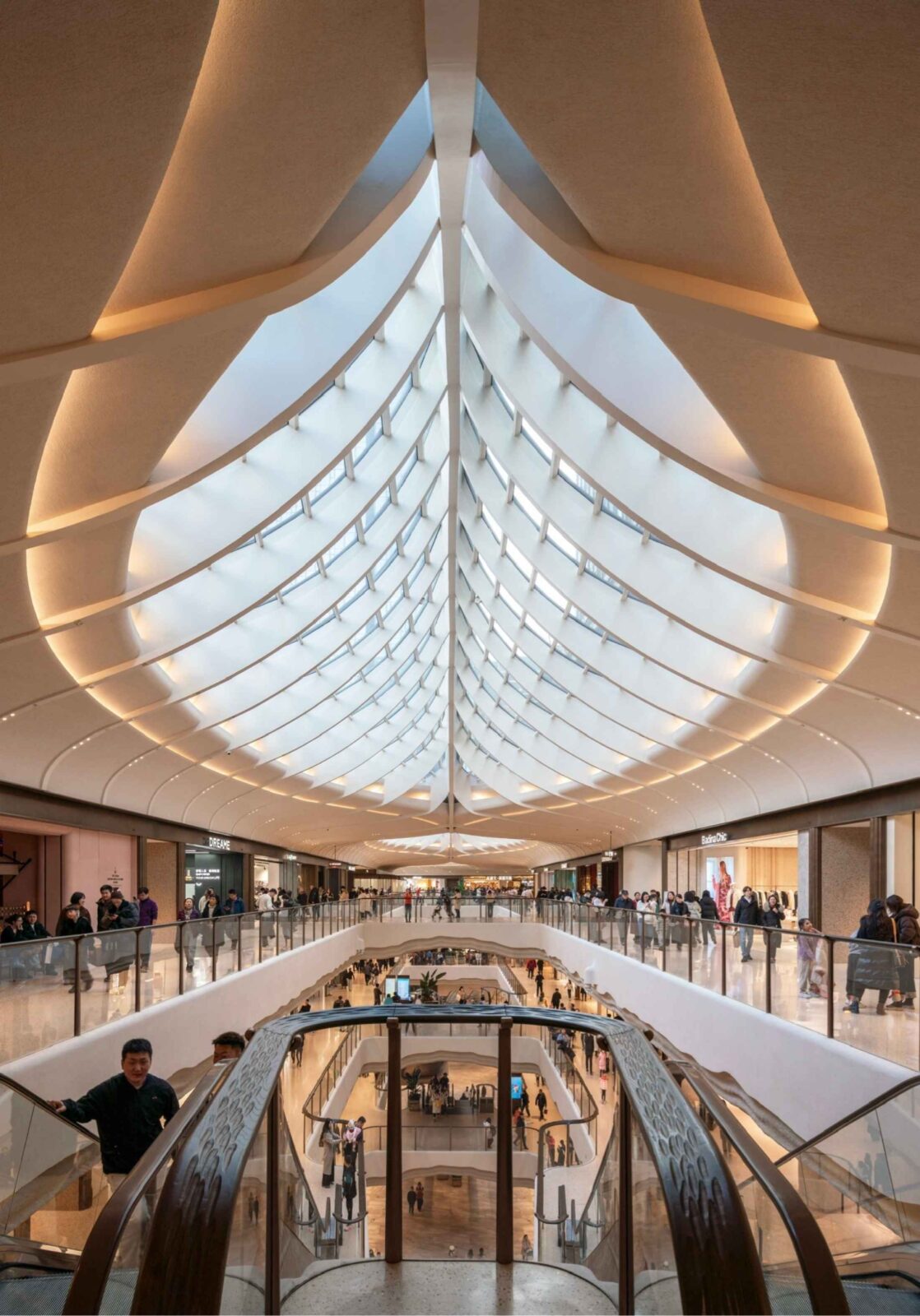
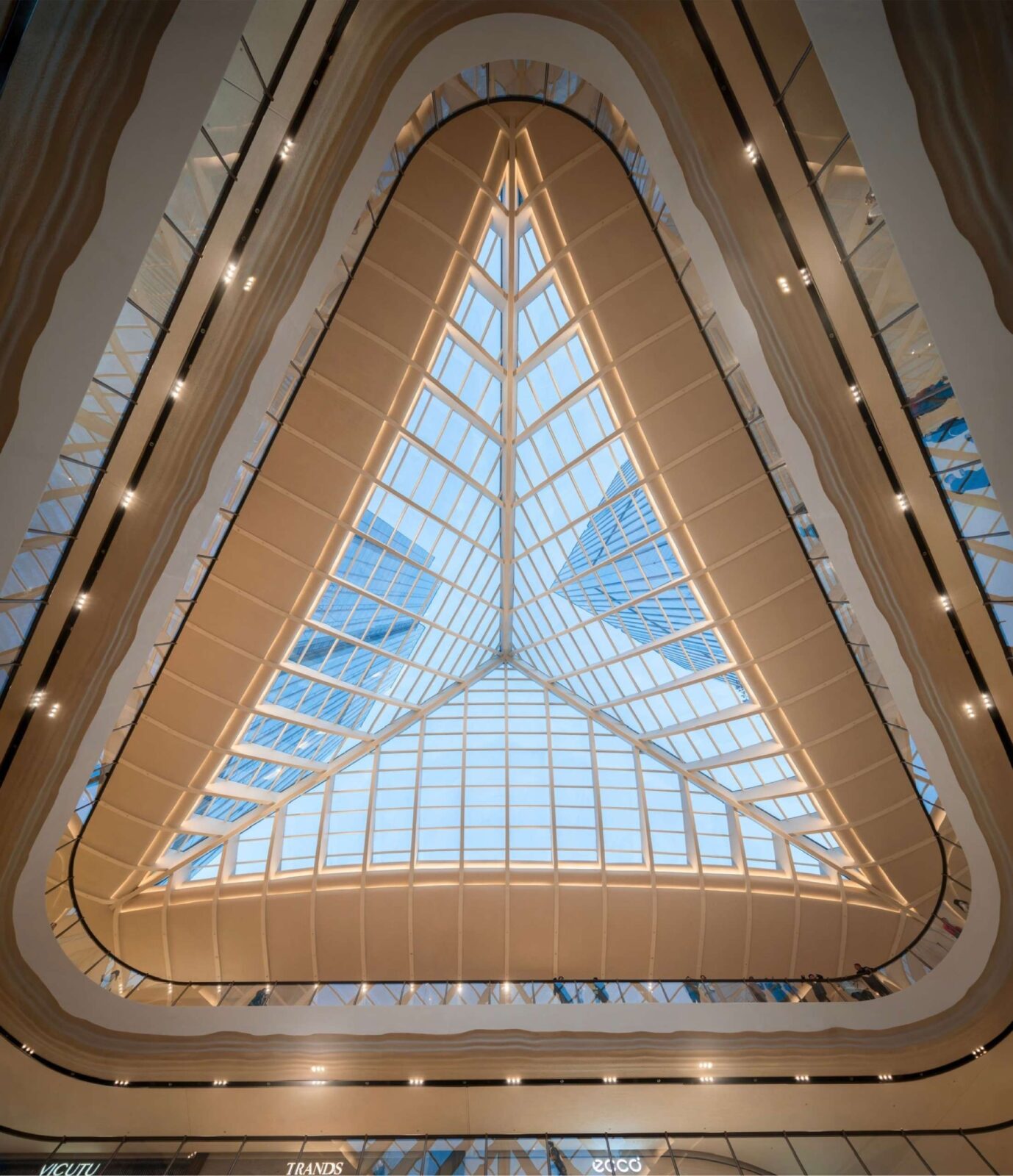
Skylights were a tricky area because their shapes aren’t standard and the team wanted the lighting to stay as “invisible” as possible without the ceiling becoming unpleasant to look at. So, the designers mixed softer, reflected light with concealed linear lighting and adjustable spotlights, giving them a way to balance brightness without adding glare.
The outdoor environment
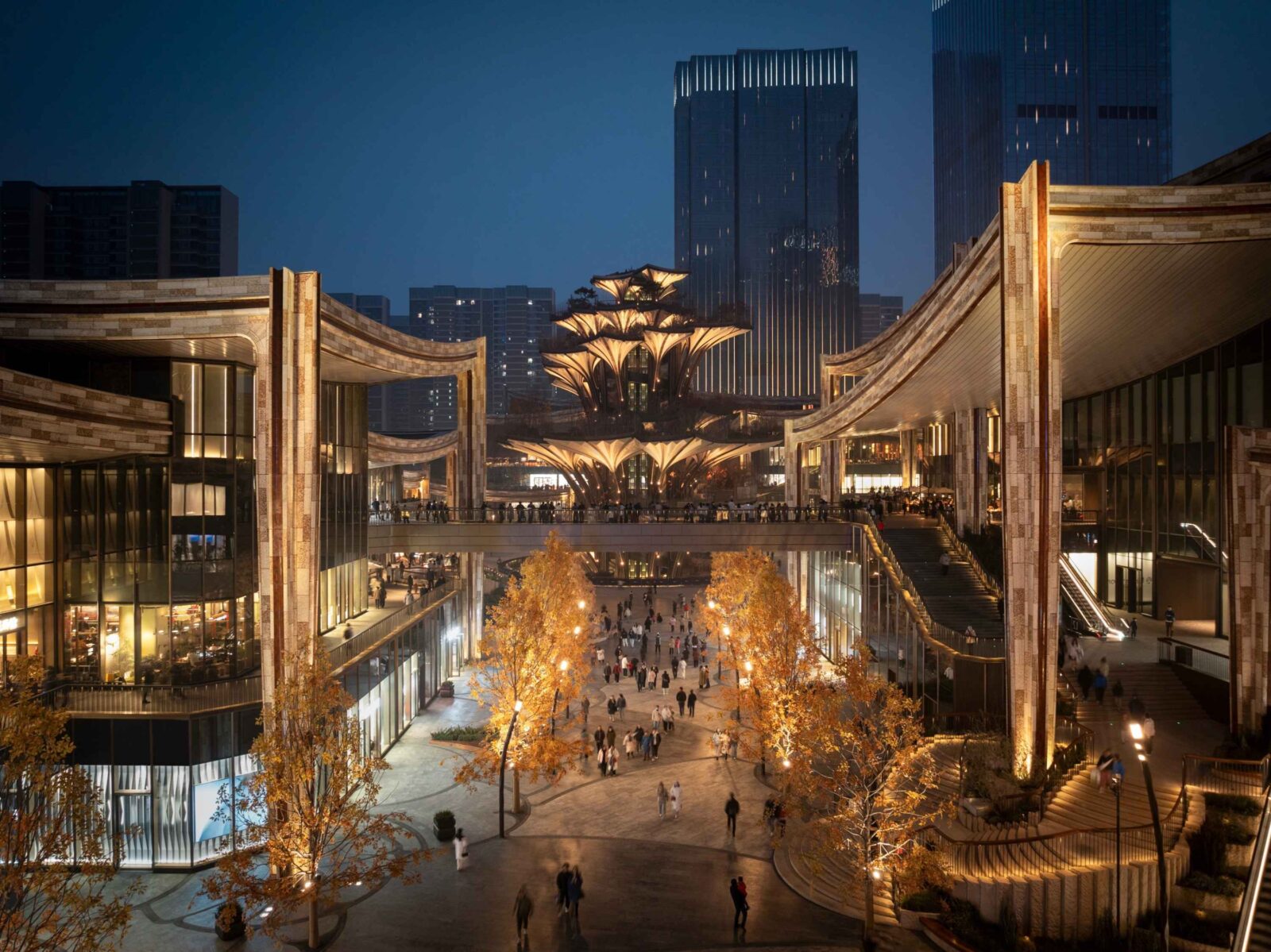
The outdoor areas see a different lighting tactic. In the courtyards, the luminaires are custom pieces finished in durable metal that’s meant to look like tree bark, a direct reference to Chang’an’s historical aura. Across lawns and planted areas, the team uses GOBO projection with diffusing films to throw softer, tree-shadow patterns onto the ground. Those shadows act like soft paths, helping link the planted terraces, the pedestrian streets and the central sculpture.
Lighting specs
The Tree of Life lighting was developed in stages, with the lighting designers breaking the structure into height zones (the sunken plaza, a transition level, mid-platform areas and the top platform) and testing options through Grasshopper (Rhino, a 3D modelling software) and Relux (a lighting design software).
Because the build was moving quickly on site, the designers didn’t try to lock down every single fixture position in advance. Instead, they gave the team clear indications about the vision, such as what the lighting should achieve, where equipment could be hidden and what to avoid, so decisions could be adjusted as the structure came together.
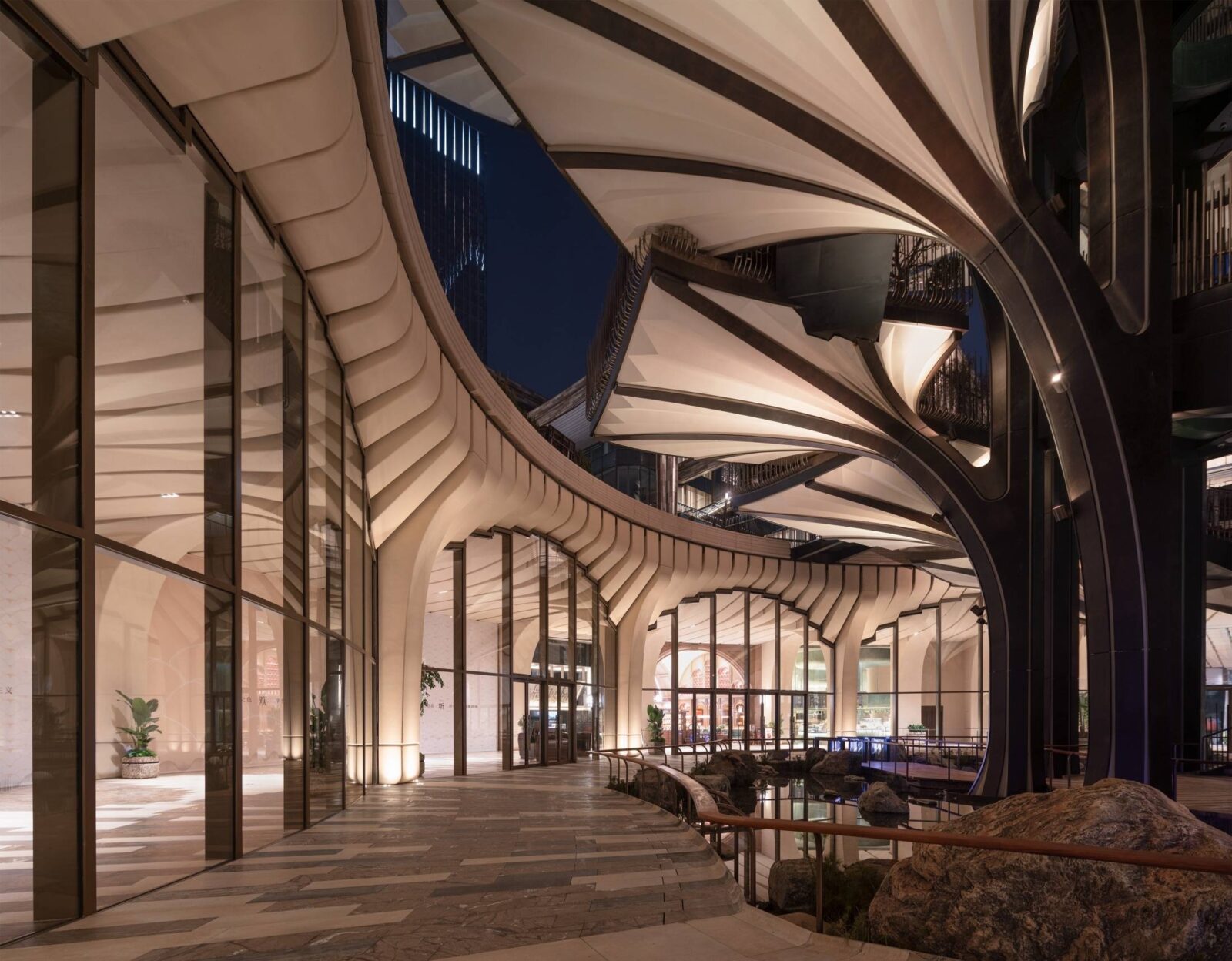
After completing the project, the designers have talked multiple times about “clashes” and how their design focused on ensuring that “those” wouldn’t happen. Basically, a light becomes a clash if it ends up in the wrong place for how the terraces are used: if it interrupts a walkway, creates glare in one’s line of sight, throws light into nearby levels, or gets in the way of moving through the space and seeing it comfortably.
Up close, the lighting fixtures show all of the intricate detailing that went into their design. Some sit on steel stems and are described as “seed pods”, stairs use inset LED strip lighting below the nosings, and unique low-level fittings are used to keep glare down in planted terraces. For dappled effects, the designers used slim steel bollards (roughly 600 to 1,200 mm tall) with RGBW light sources andfinely CNC-cut metal gobos that project patterned light, set out at around 1,000 to 1,500 mm centres to keep illumination even and safe. The RGBW modules also make it possible to change colours during events, including red for the Chinese New Year.
Thoughtful details
On the sustainability side, the project used high-efficiency LEDs, smart controls that adjust brightness when needed, and custom lenses in some areas to keep light focused where it’s useful, with less spill and less light pollution. In-ground fittings have anti-glare glass and improved waterproofing, so they’re less exposed and easier to maintain. Along the pedestrian streets, some poles are designed as multi-use units, combining general lighting with audio and surveillance so the streetscape doesn’t feel crowded.
Project Information
Prize: “Exterior Architectural Illumination” at the LIT Lighting Design Awards
Lighting Design Company: HANDU ASSOCIATES
Lead Designers: Hannah Tian & Kevin Hu