Header: Koerbel Photography
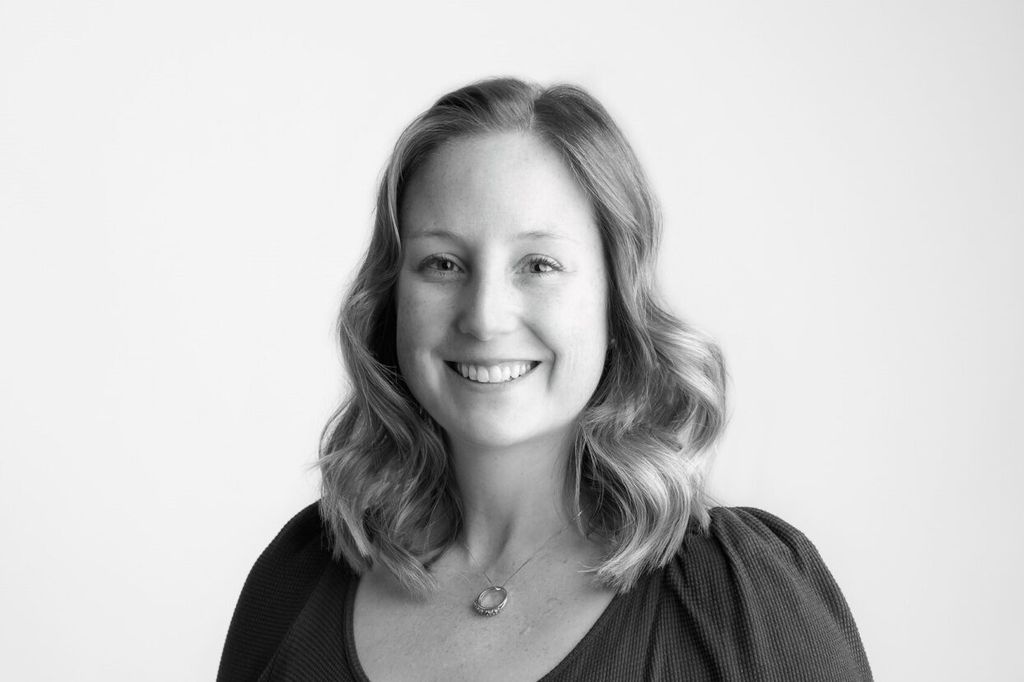
As the design industry and society as a whole turn to more sustainable practices, dark sky hotels and resorts are becoming some of the top luxury destinations in North America. In these settings, the night sky isn’t obfuscated by strong lights, making for an exceptional experience of stargazing and connecting with the great outdoors. Commenting on the trend, Sarah Erickson, a designer at studio LS Group, explains that outdoor lighting has evolved to do more with less, bringing attention to the architecture and landscape through thoughtfully introduced fixtures that do not feel overbearing.
Why dark sky design?
This field has grown fast for two reasons: the night sky is getting brighter by roughly 7–10% a year, and stargazing travel has become a real commercial category. The 2016 world atlas of artificial night sky brightness reported that more than 80% of the world’s population lives under light-polluted skies and that the Milky Way is no longer visible to more than one-third of humanity.
Lighting design is the solution for this issue, so cities from all over the world have started to apply stricter guidelines to protect the communities and the sky above them. Lighting designers are now having to deal with low numbers of allowed lumens, lighting customisation to ensure the fixtures used are up to code, and thorough studies of properties to decide where light is most needed and why.
While so many rules might look like limitations, such thorough and thoughtful control of light can lead to some of the most luxurious hospitality settings. Some designers, like Sarah, thrive in this, as their practice can reach new heights of creativity, and the crucial relationships between studio, client and city allow them to truly cater the design to the human experience.
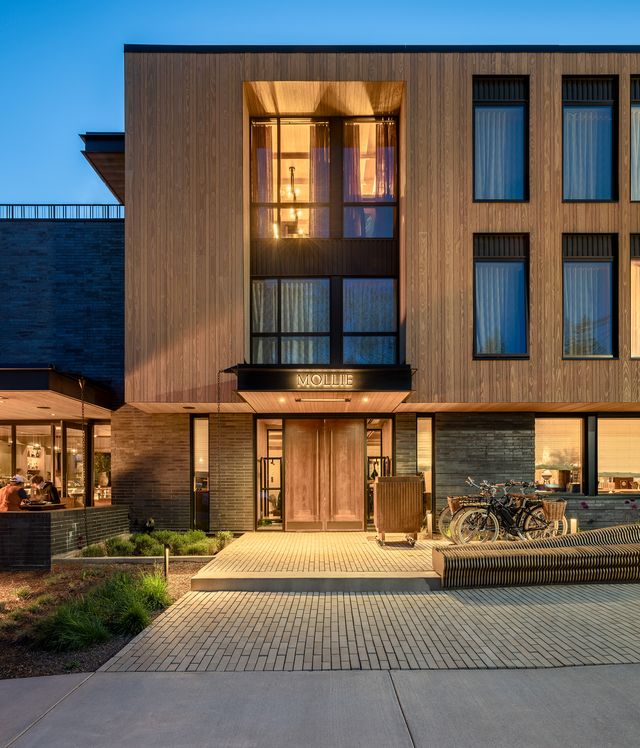
Photo credit: Draper White Photography
A conversation with Sarah Erickson
Can you tell us a bit about the story of how you became a lighting designer? What shaped the way you work today?
I’m Sarah Erickson, and I’m a principal partner at studio LS Group. I first learned about architectural lighting design when I went to Intro at college, at an architectural engineering school, and then realised that illumination engineering was a thing. I kind of first discovered light and colour because my grandparents owned a stained-glass business and made custom Tiffany lamps, repaired church windows and all these really interesting things. Afterwards, I figured out that I could actually use what I had learnt with them in my design career.
My biggest approach to design is all about human experience. As a very people-oriented person, I think that architecture is not much if you don’t think about humans as a part of it. For me, the aesthetic and all those details lead to creating an atmosphere that aligns the human experience with the architectural environment.
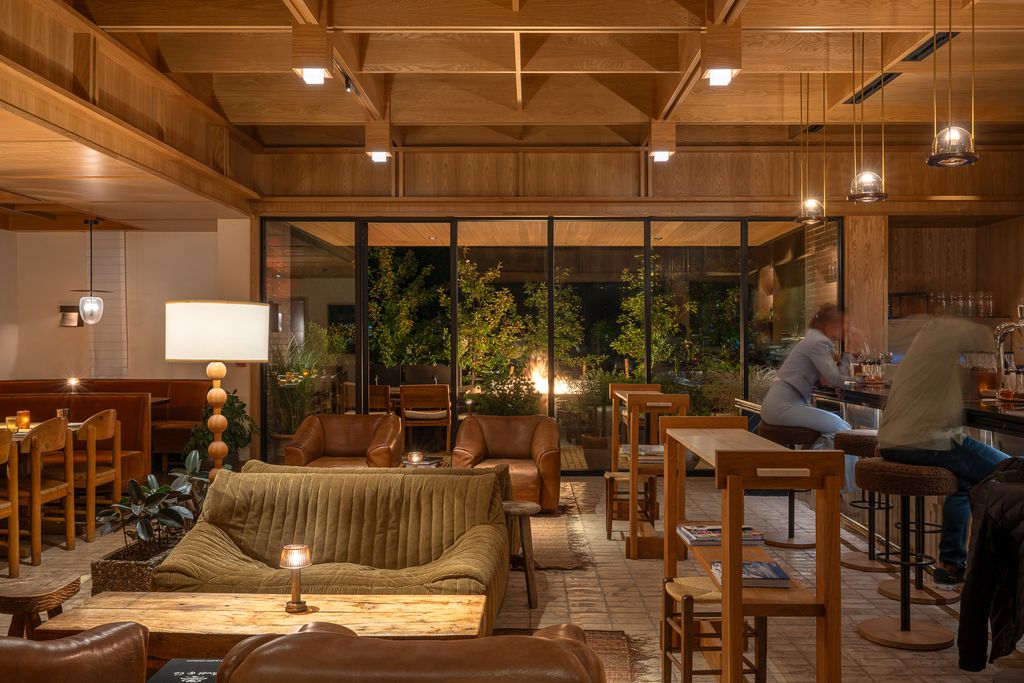
Photo credit: Draper White Photography
LS Group has built a strong repertoire around remote high-altitude environments. What first drew the studio to these contexts?
LS Group was founded about a year before I started with them, right when I finished college, and we were pretty focused just on residential projects in the mountains. I opened our second office in Denver, Colorado, in 2012, and since then, we started doing a lot of hospitality work in Aspen, which has always been extremely progressive when it comes to the requirements for how we use lighting outdoors. I would say that the baseline of our business has always been super thoughtful when it comes to exterior lighting, and I don’t think that’s changed at all. I’m from Colorado originally, so preserving our environment and making sure that we’re being thoughtful about how lighting impacts the visual environment and night sky is really important to me. Regarding aesthetics, we’ve always been very much in the custom luxury field.
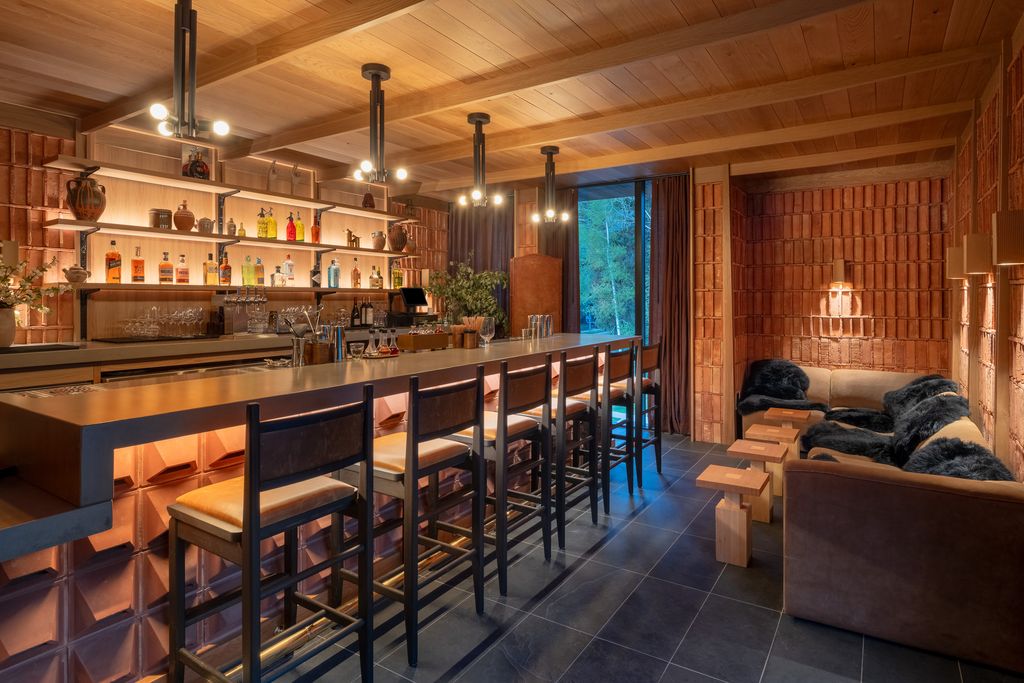
Photo credit: Draper White Photography
From your perspective, how has lighting design in dark sky hospitality evolved over time, both culturally and aesthetically?
I would say that one of the narratives we’re really trying to be thoughtful about is how the building is actually being utilised at night. So rather than saying it is about the dark sky, it is more about where we are using the lighting and why. One of the things that I’m pushing on a lot of my hospitality projects is the trend of stepping away from what we would historically call facade lighting. This trend puts the focus on arrival and user experience and limits how much lighting we’re using just to highlight architecture on the exterior. Facade lighting works in the middle of the city, where lighting is used to brand the hotel, but in mountain towns, we don’t have that kind of culture. So, it’s really about being thoughtful with where we need to be using lighting.
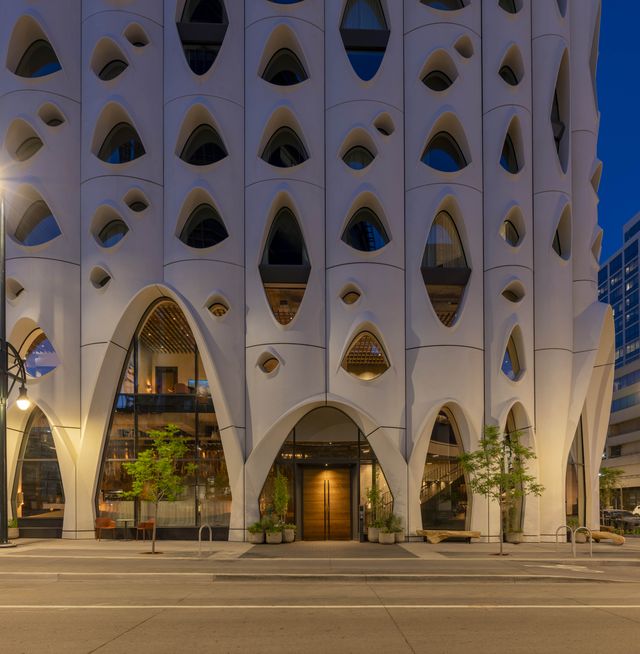
Photo credit: Draper White Photography
In towns with strict regulations, how do you balance technical constraints with the expectations of your clients?
Honestly, it has a lot to do with managing a client’s expectations by understanding how they can use lighting in their exterior spaces and just being very forthright with the information. It’s also about having conversations with the jurisdictions if we feel like safety is a concern. In Aspen, for example, there’s a lumen calculator, which essentially takes the size of the property and gives a certain number of lumens to utilise. So, as it goes both ways, we can say, “City of Aspen, we really feel like we need some lighting along this path because it’s a transitional element”. So, it’s a balance. I think it has to do with having a good relationship and an understanding with the city, as well as the owner.
We are also doing a lot more custom lumen packages with manufacturers. If a manufacturer has 1000 lumens on their cut sheet but we’re only allowed 1000 lumens on the whole site, we have to ask that manufacturer to make us a custom lumen package of only 200, for example. So customising fixtures can still get the look and feel that we want while fitting within the requirements.
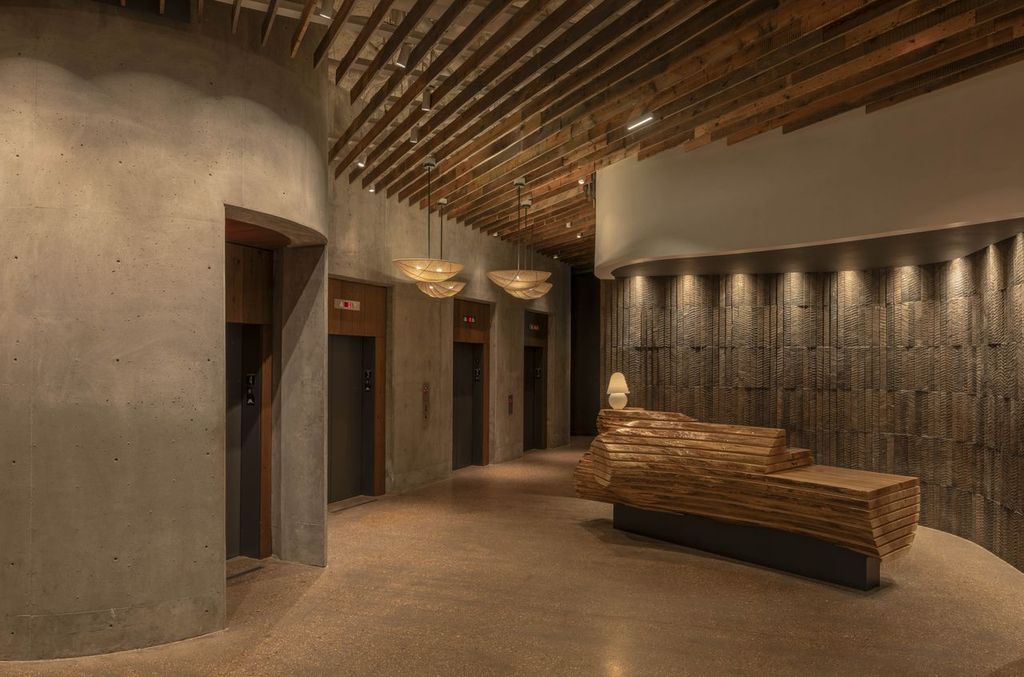
Photo credit: Draper White Photography
What are your non-negotiables for exterior lighting, and what do you deliberately avoid to protect the landscape and the sky?
Non-negotiables are the safety standpoints and transitional areas. In hospitality specifically, there’s egress, so you’re required to have a certain amount of light on the inside of the building and on safety zones on the exterior. Obviously, that’s a no-brainer. I would say that our non-negotiables would be that primary points of transition, like stairways, for example, need to be lit.
Then there’s an aesthetic component. So, if you have a rooftop, a non-negotiable would be to have accent lighting and a covered area with a trellis or step lights around the perimeter. We’re also trying to encourage some of the interior designers we work with to utilise furniture that has integrated soft glow lighting, such as toe pick details or light coming from underneath the fire pit.
For the hospitality industry, those exterior spaces are some of the biggest money makers, so you want people to go outside, have a drink by the fire, eat dinner, and order appetisers. You want them to stay and pay. So, from the design perspective, safety and aesthetics are the main non-negotiables.
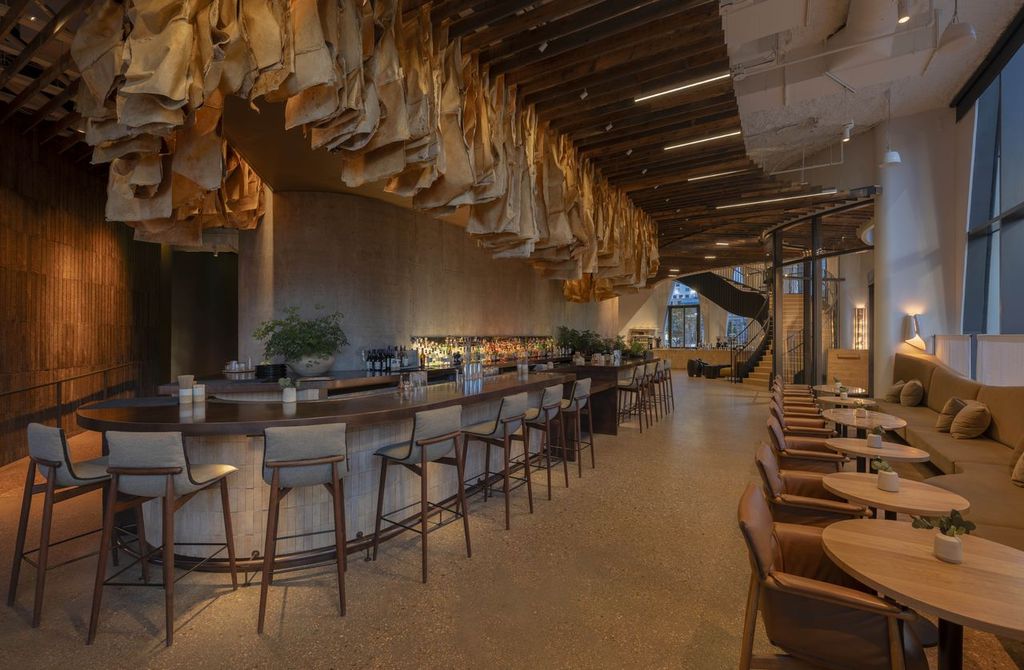
Photo credit: Draper White Photography
Luxury has traditionally been associated with spectacle and abundance, but in these destinations, it now seems to be defined by restraint. How do you create drama when the brief is, essentially, to use less light?
We create drama using layers of light on the exterior and on the interior. So, let’s say we’re only allowed to have a couple of path lights and that we’re going to have some fire pit lighting and maybe a couple of other lights outdoors. What we do is we control each of those fixtures or zones separately, allowing us to individually dim them to just the right level so there’s enough light on the bar countertop, but then it has a very low, pleasant glow on the fire pit. That allows us to create a very specific aesthetic without things being too intense. You’d be really surprised, because on the exterior, a little light goes a long way visually, so we use light and control to really dial in that luxury experience.
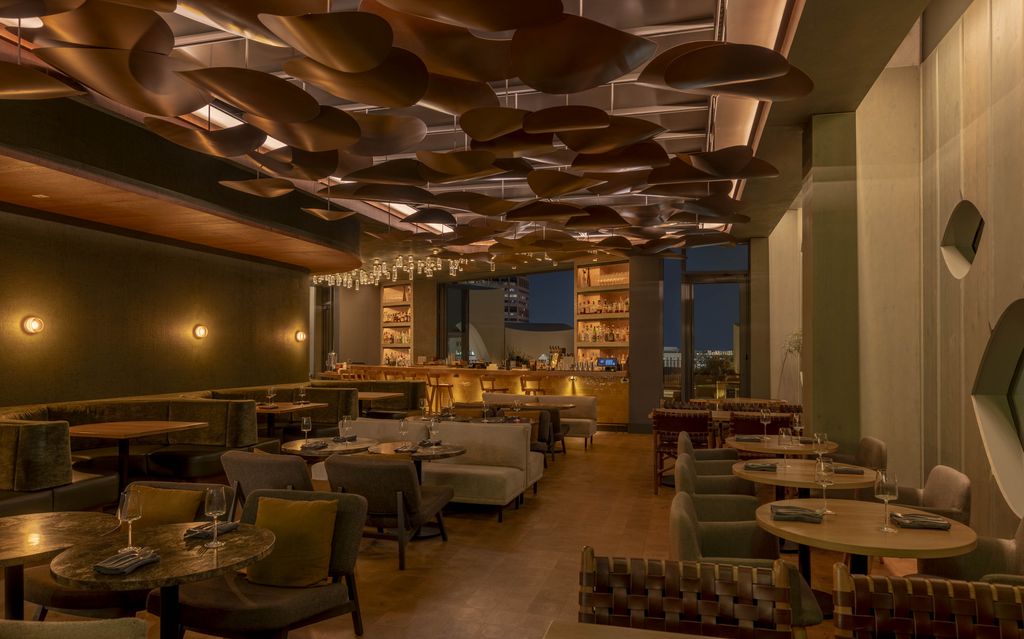
Photo credit: Draper White Photography
Looking back, is there a project that fundamentally changed the way you think about dark sky design?
I would say a couple of the projects that my company just finished recently. We did Populus in Denver, our commercial projects director, Kristen Miller, led the design on that one. But interestingly enough, that project has barely any exterior lighting. It’s kind of a full city block, so there’s not a site to be lit. But on the rooftop, there’s a handful of step lights that define the perimeter, and the architecture is just so incredible that you don’t even know there are no lights on the exterior. I think that’s pretty cool; it’s a really interesting design.
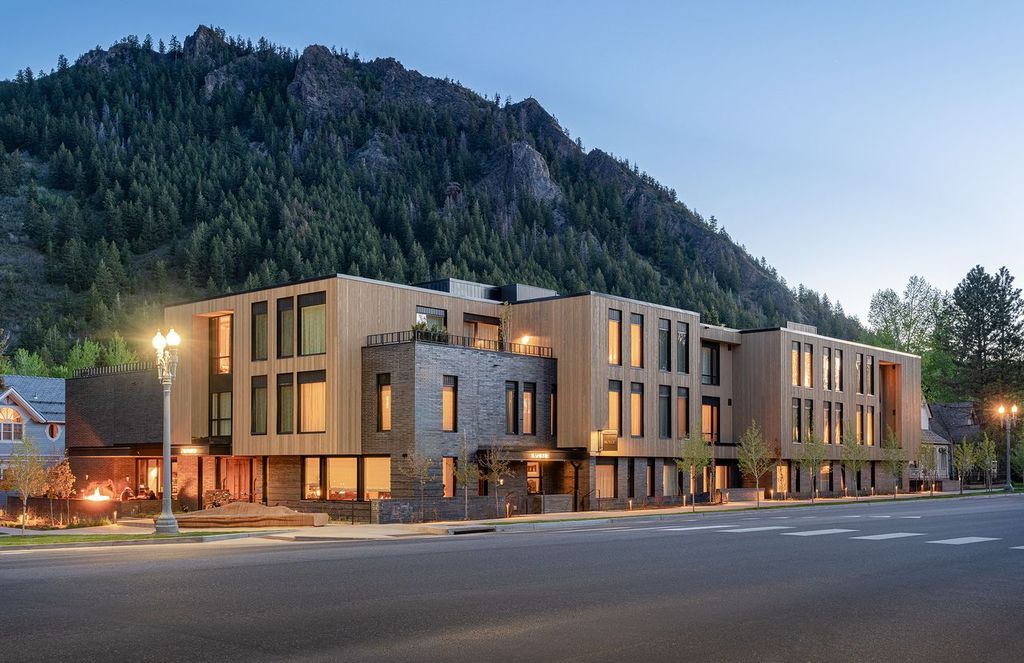
Then we just finished Molly in Aspen, not too long ago, Kristen and my business partner, Elise Streeb, which is another boutique hotel. And similarly, Molly has some really thoughtful but simple exterior architectural sconces that do a really nice job of lighting the exterior, plus some thoughtful lighting on the rooftop. But it’s very streamlined, as Aspen is so beautiful. I think some people get the wrong idea about lighting, like they think of Vegas when it comes to linear lighting and lighting effects. But actually, when lighting is thoughtfully implemented, detailed and hidden to accentuate architecture, even if it is linear, it can be dimmed down to become super warm and soft, so you barely even notice it’s there. And that’s the whole point. The whole point is that you don’t notice the lighting, you just feel good in the space.
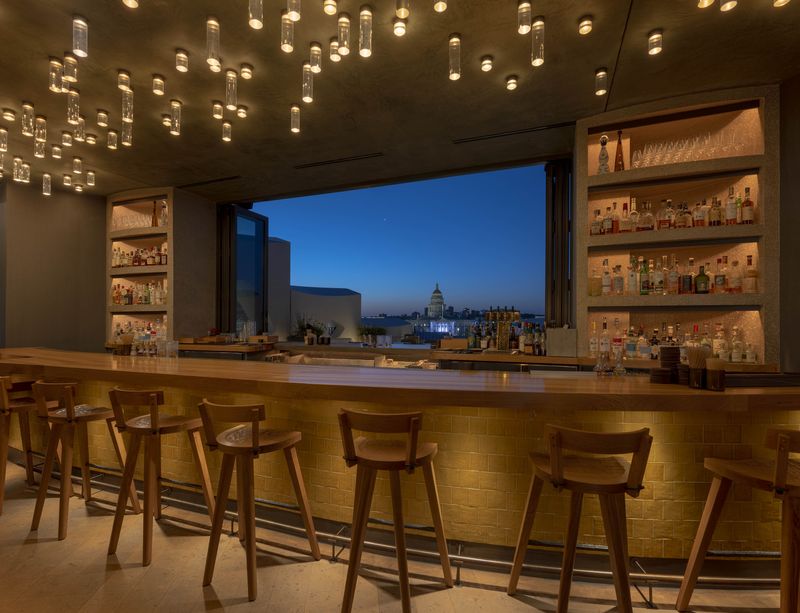
Photo credit: Draper White Photography
Looking ahead, how do you see the relationship between sustainability, technology and luxury evolving in these types of hospitality projects?
That’s an interesting question. I would say, specifically in mountain towns and jurisdictions, that as lighting technology gets more efficient, there’ll be more that we can do with these greater, more stringent requirements. It’ll be interesting to see if they continue to allow us to provide the amount of lighting we need for safety or if they’ll get more stringent – I’m not sure they could, quite frankly.
I’d say, in general, there’s been a pretty big shift toward this idea of combining hospitality and entertainment. What I’m noticing on some of those projects is the use of colour tuning and colour changing to adapt the lighting to the entertainment or hospitality setting at hand, while still keeping it mostly soft, warm, and hidden. On our part, while sometimes we might want something to be a little more in-your-face on the lighting front, we mostly put the emphasis on the interior, the exterior, the architecture, and the furnishings. Those are the things you notice. The lighting is good if it goes unnoticed. But with this shift toward entertainment, we’re starting to see that maybe sometimes the lighting needs to be a little more prominent.
Do you have any advice for young designers who would like to one day work in environmentally sensitive and technically demanding contexts?
If there’s anything that my business partner Elise has taught me, it’s to be present and work with the city. You must be willing to have a relationship with the people who are reviewing plans and providing code changes, so instead of sending an e-mail, you should be calling them and saying, “Hey, why did you review this and leave this comment? I think this needs to be here for safety.” Per usual, my big thing is that the relationships matter, especially in these sorts of systems where things are strict. I think if you’re afraid, then it would be frustrating to not have a collaborative relationship that is helpful to the whole community. Remember that those guys are not there to make our job harder; they are just careful with how lighting can impact the community. If we can work together, then great, because that’s the goal.
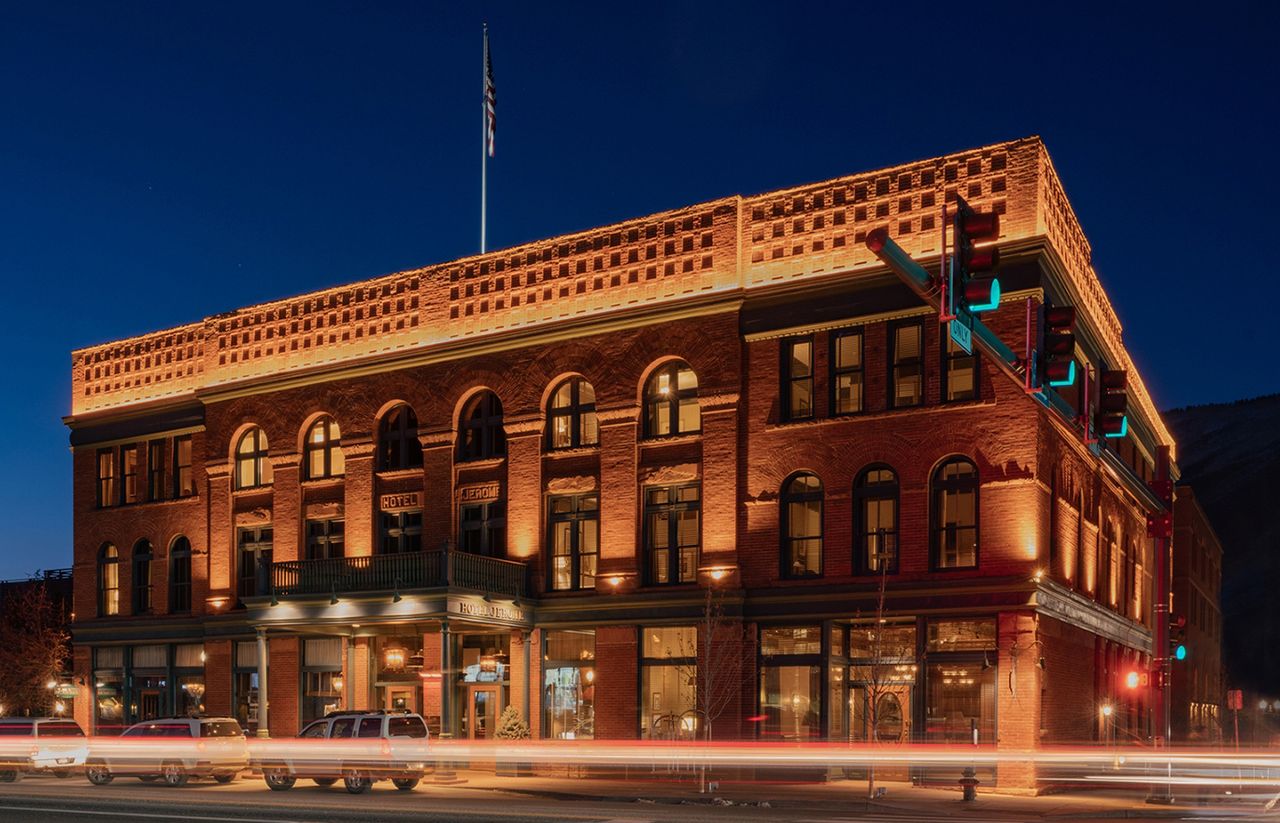
Photo credit: Koerbel Photography
Dark sky is definitely the new luxury, as these dimly lit, beautiful destinations show that warmth and style don’t need to be manufactured, they can just come from what already exists in the space. Restraint seems to be the main driver here, even reminding one of the famous saying “less is more”, as the landscape, architecture and interior design do the talking, leaving the job of keeping safety and crafting the ambience to lighting. In a way, it pulls lighting back towards what it was always meant to be: simple, practical and there when you need it.