

Header: Wang Ting
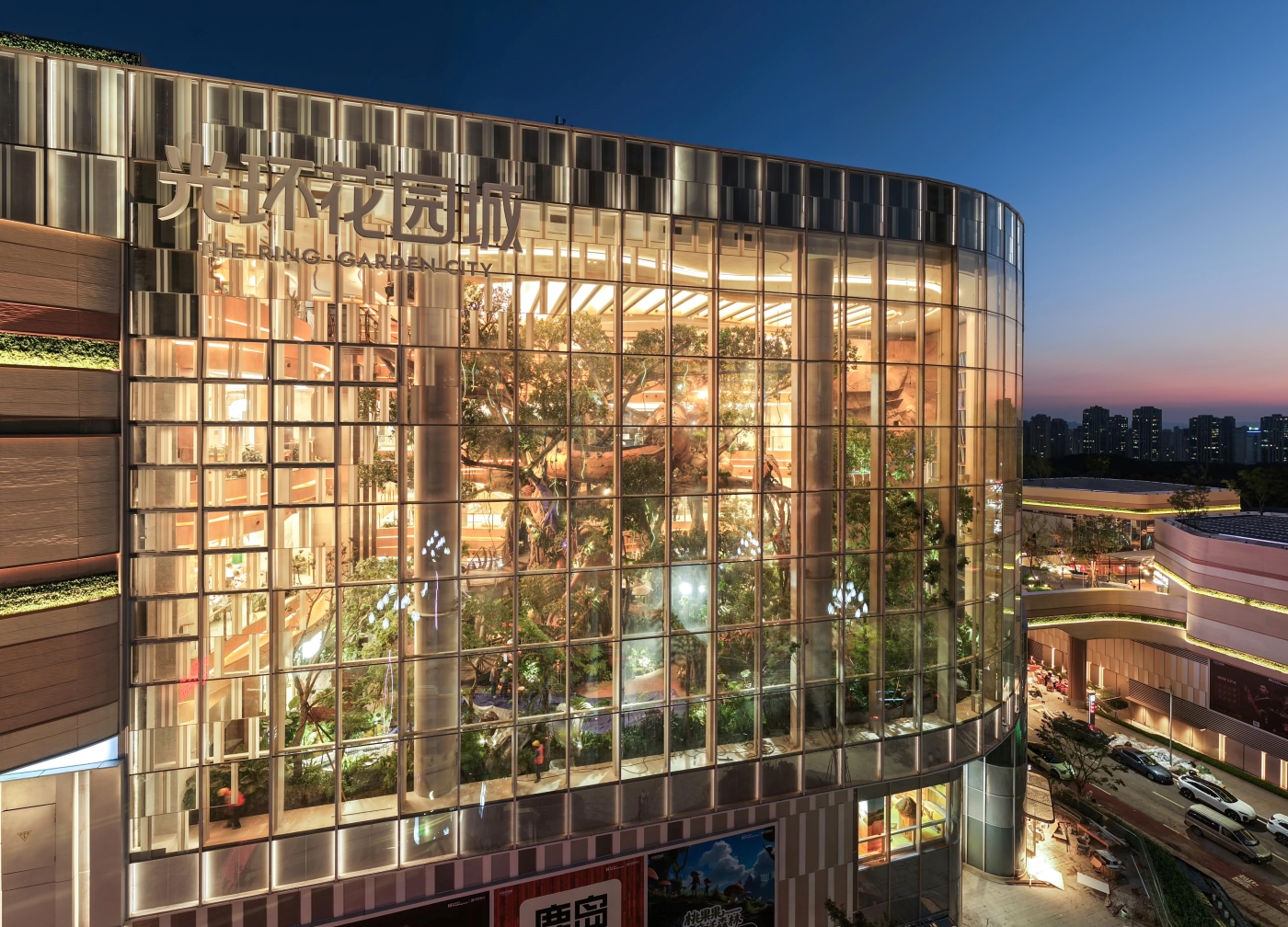
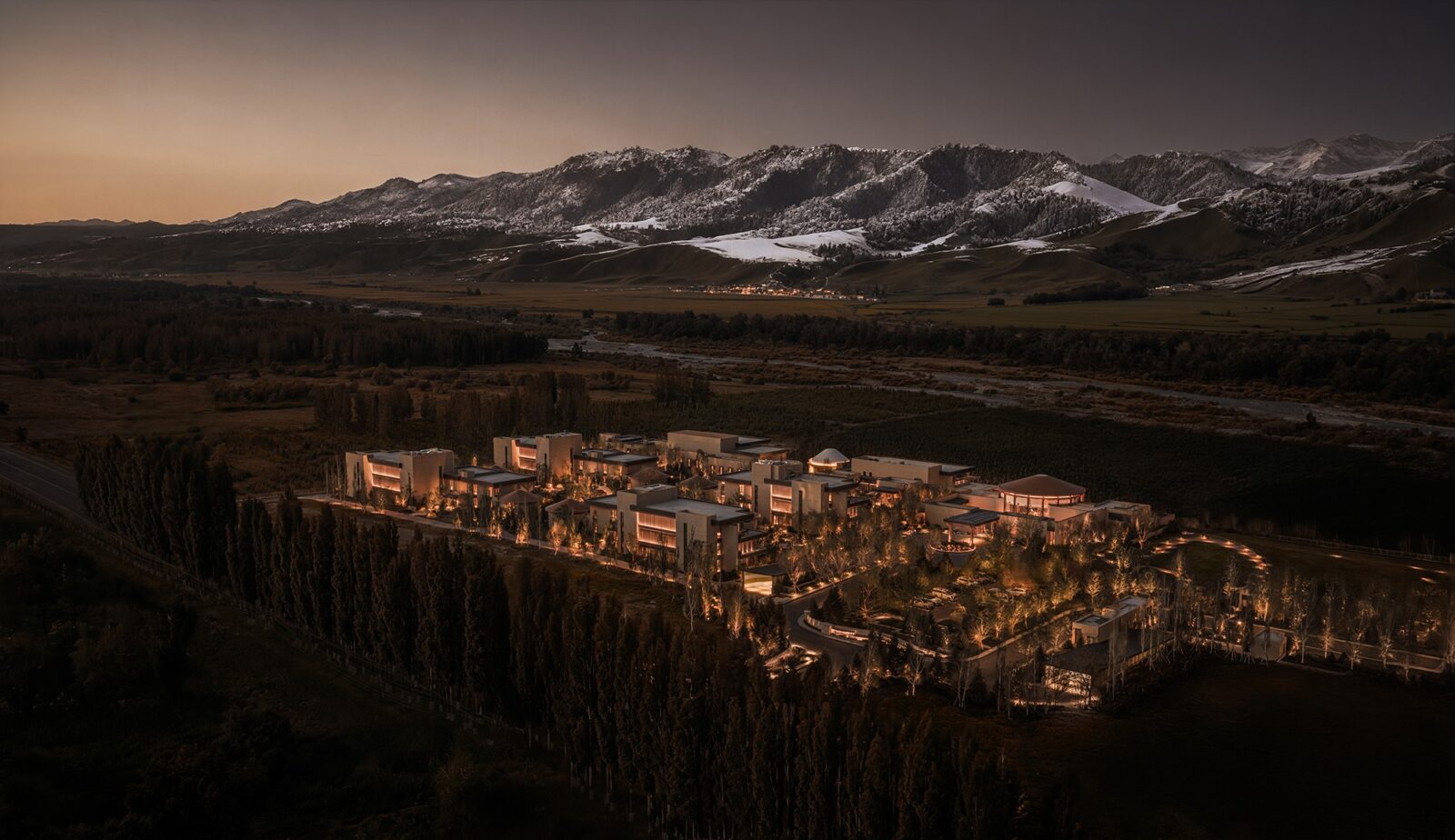
Located at the convergence of the Duku Highway and the Ili “Figure-8” Scenic Loop, Hotel Indigo Nalati occupies a prime location in the heart of Nalati Town, China. Surrounded by vast steppes and the Tianshan Mountains, guests are welcomed into a tradition-inspired resort designed by H2 Architecture Design Group and Cheng Chung Design (CCD).
Anchored in the design theme “A Grand Journey Along the Duku Highway, Through the Seasons of Nalati”, CCD introduced mausym (meaning “season” in Kazakh) as a conceptual reference, reflecting Nalati’s four seasons and aspects of nomadic life. The overall design draws on steppe nomadic culture, with elements of yurts and winter settlements being present throughout the hotel. The resort almost looks like a forest when seen from afar, all due to the series of dispersed yurts linked by winding paths surrounded by lush forest landscape.
The arrival
Inspired by the Nalati sunrise, the hotel’s entrance features a curved canopy that evokes radiating sunbeams, with the drop-off area sheltered beneath a “floating canopy” that provides shade and shapes the courtyard space. The entrance is defined by soft curves and warm-toned finishes, with references to the form of an Aul, the traditional Kazakh nomadic settlement on the steppe. It is here that guests are first greeted and learning about the local culture through the traditional Aul-style welcome.
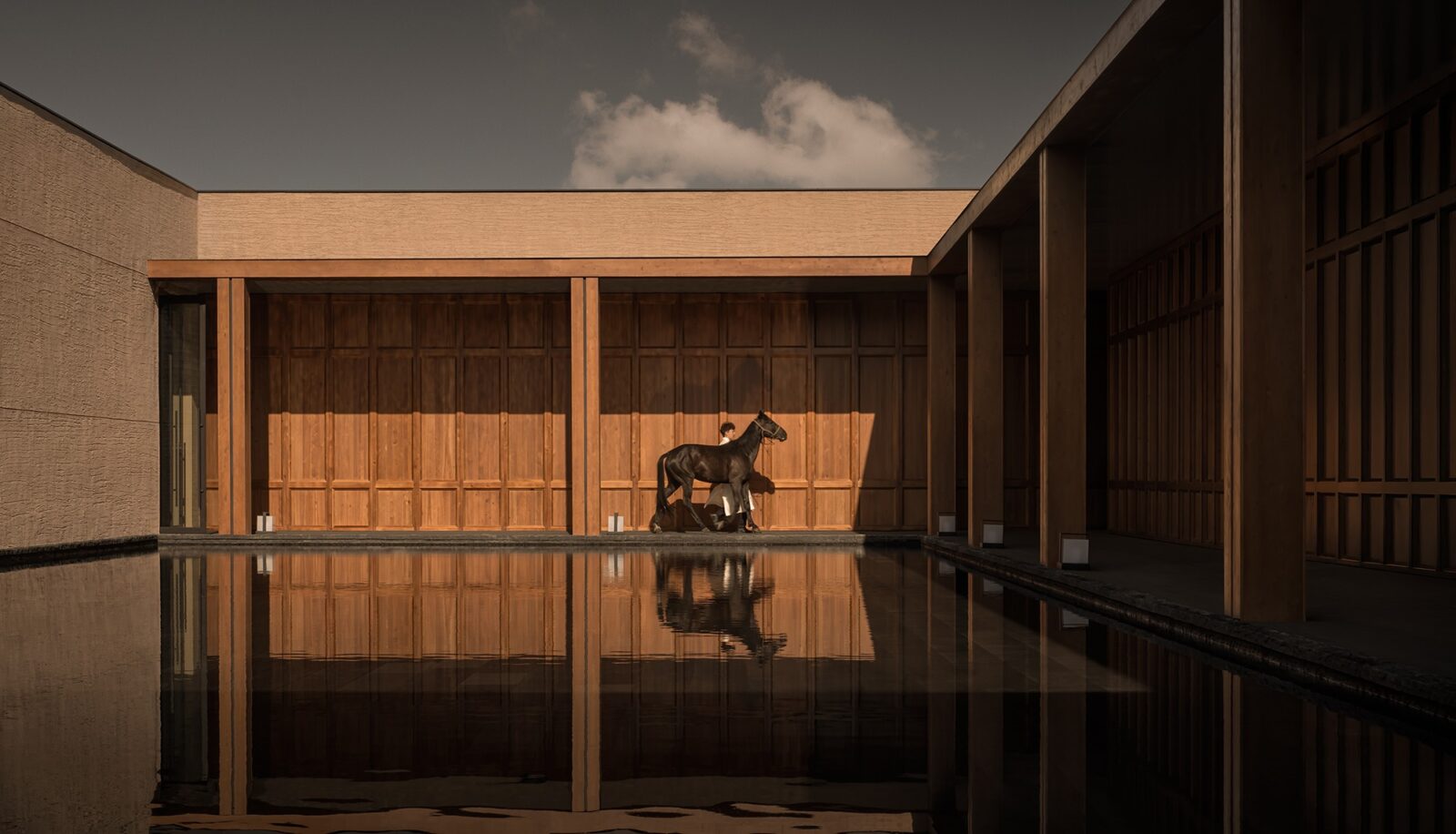
References to the Tianshan Mountains, the Nalati sunrise, the Gongnaisi River, and Wusun totem pillars were incorporated into the arrival sequence, which ends in a courtyard. Here, stone and wood are used across steps, railings, and surfaces, while natural light filters into the courtyard throughout the day. The designers compare the pairing of solid materials with lighter elements to the combination of local references with contemporary design styles.
The lobby
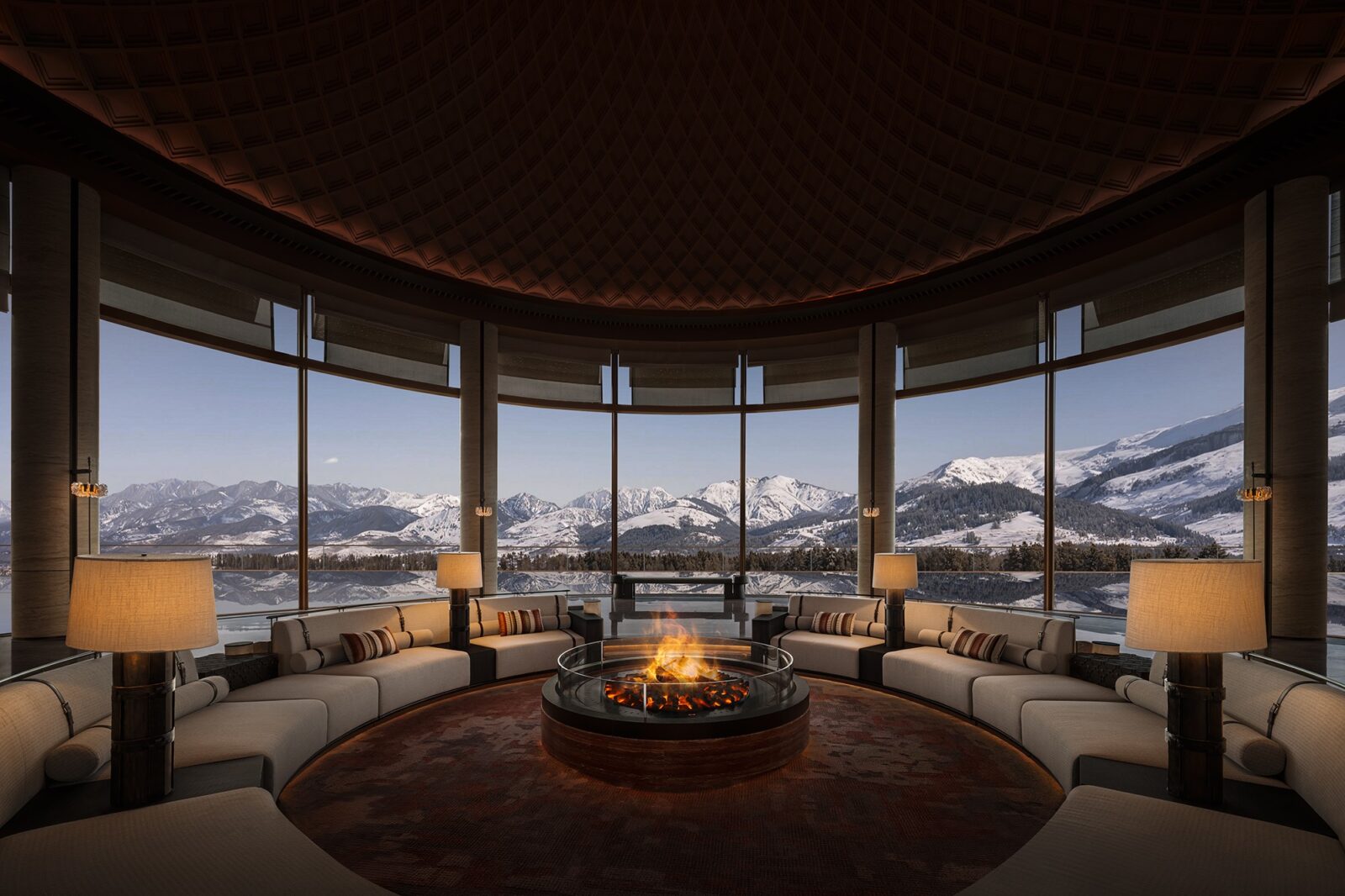
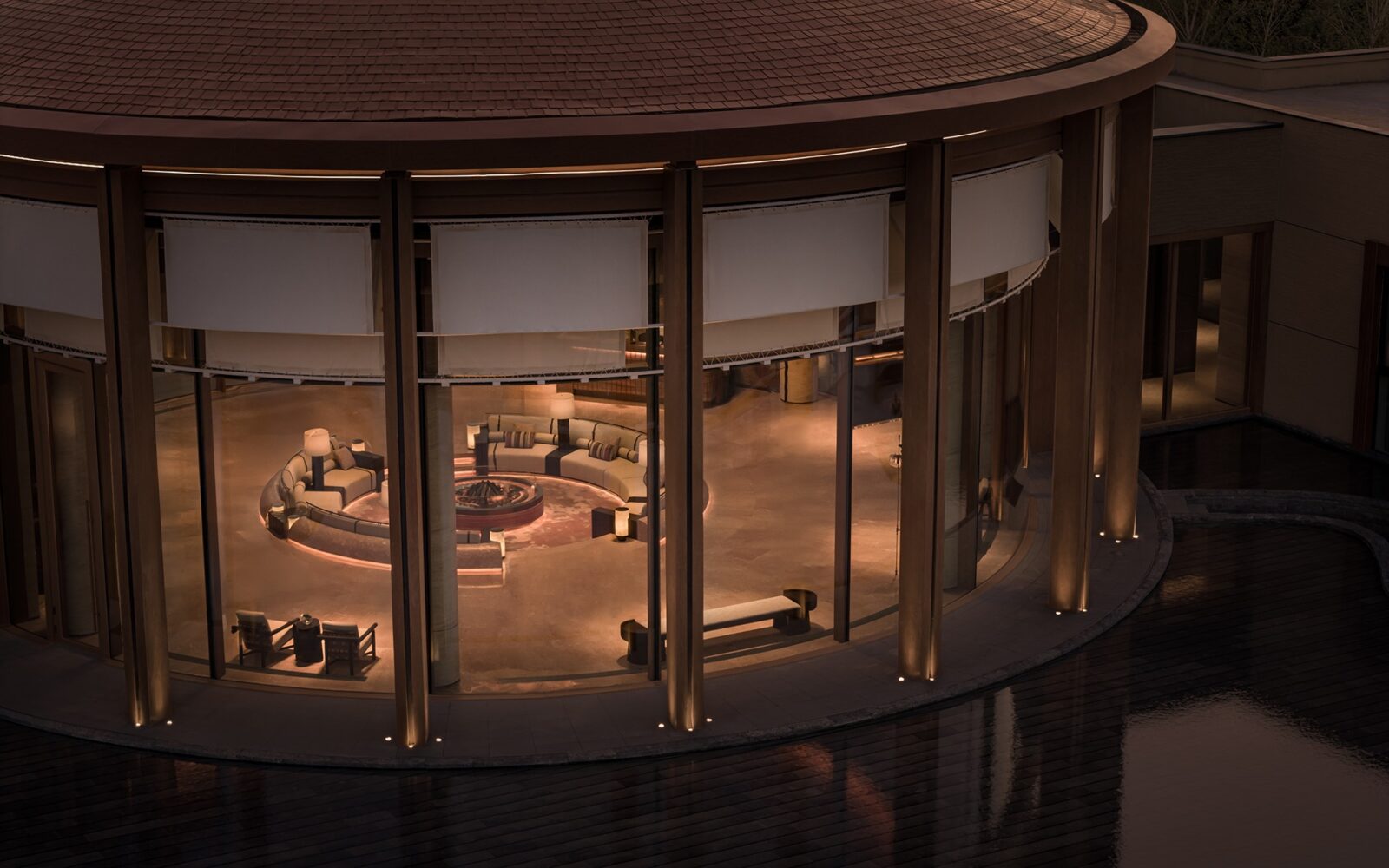
The lobby is located under a dome, a form that specifically references a traditional yurt. This dome rises above evenly spaced columns, while red brick walls and earth-toned finishes define the interior. Layered patterns are applied across the dome’s surface, adding texture above the space and aligning with the spacing of the columns below.
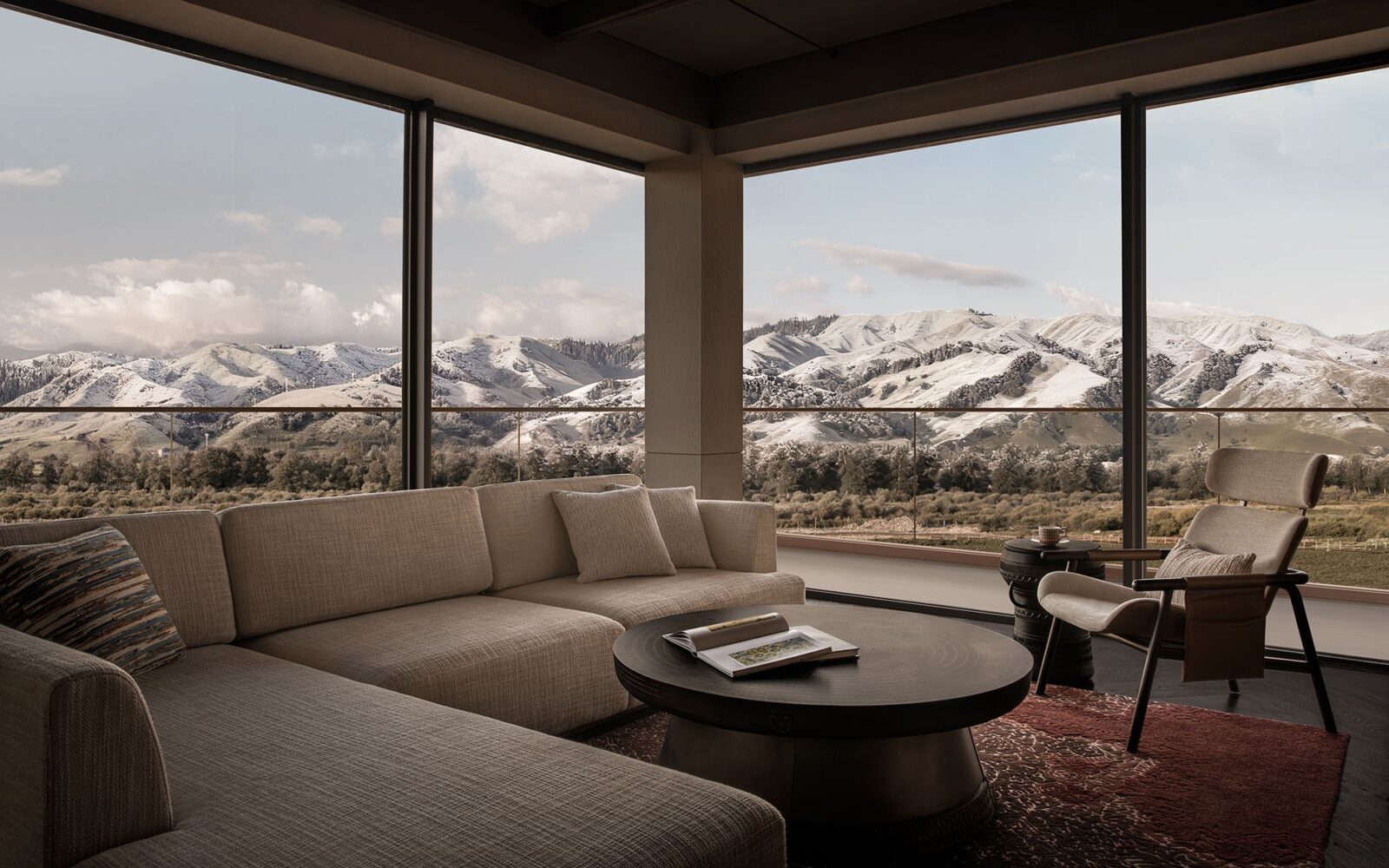
A large curved window opens up views towards the Nalati Grassland and the Tianshan Mountains, bringing the surrounding landscape into the space. Natural light moves across the brick throughout the day, changing its colour and reminding guests of long walks in the countryside.
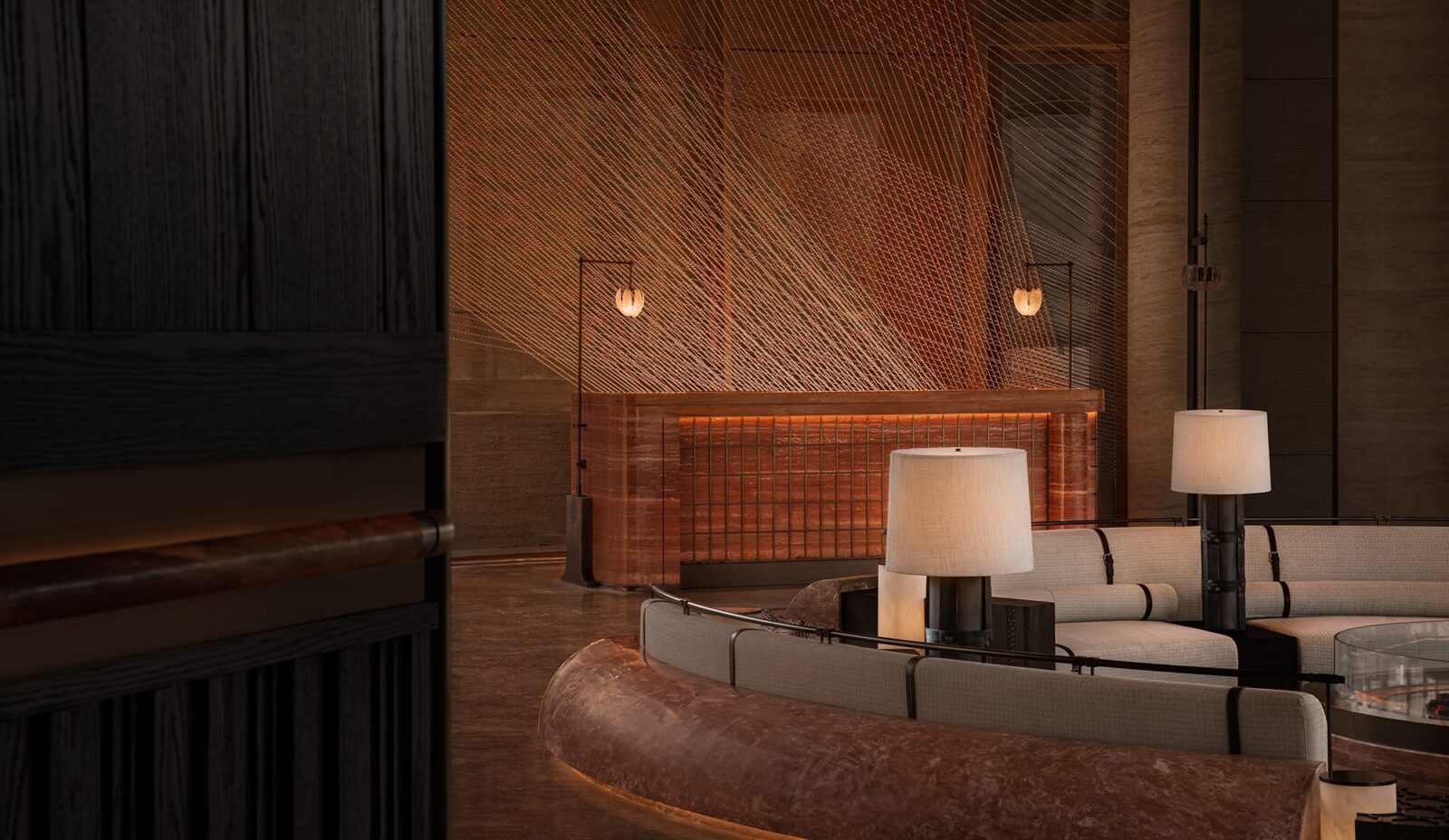
At the centre of the lobby, a fireplace reinterprets the traditional hearth as a contemporary focal point. Seating is arranged around it, referencing communal gathering spaces found in nomadic culture.
Detailing throughout the lobby was inspired by local craft traditions: motifs derived from regional patterns were incorporated into the carpets, and the backdrop behind the reception desk features artworks produced using traditional felt-thread techniques.
The restaurant and bar
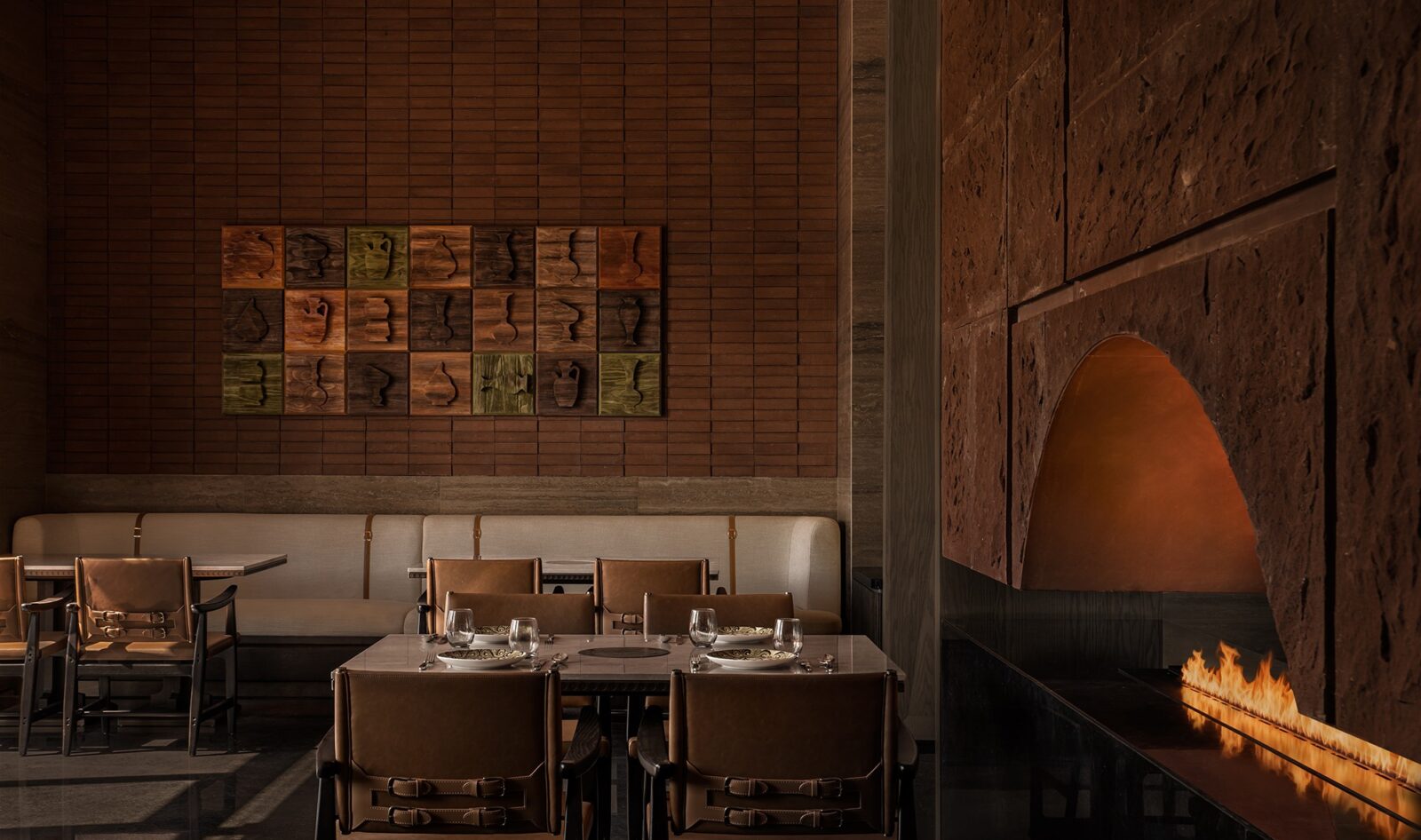
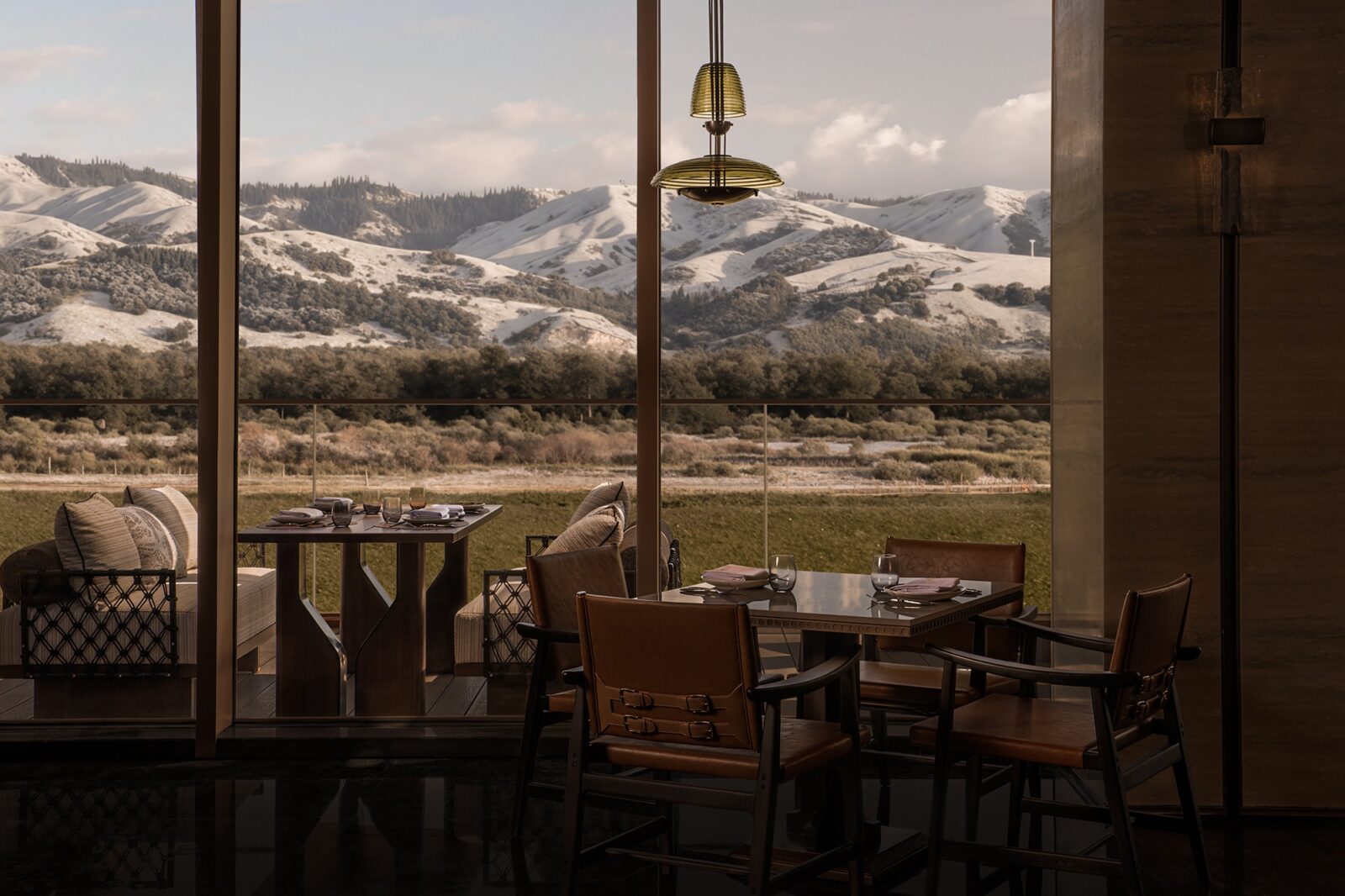
The restaurant, named “SHOW · A Neighbourhood Café”, draws on local Kazakh hospitality tradition: Qiaxiu, the ritual of welcome, and Bata, the words of blessing. Its design references scenes of nomadic life, including streams meandering across the steppe, horses pausing to drink, and yurts rising where water and grassland meet.
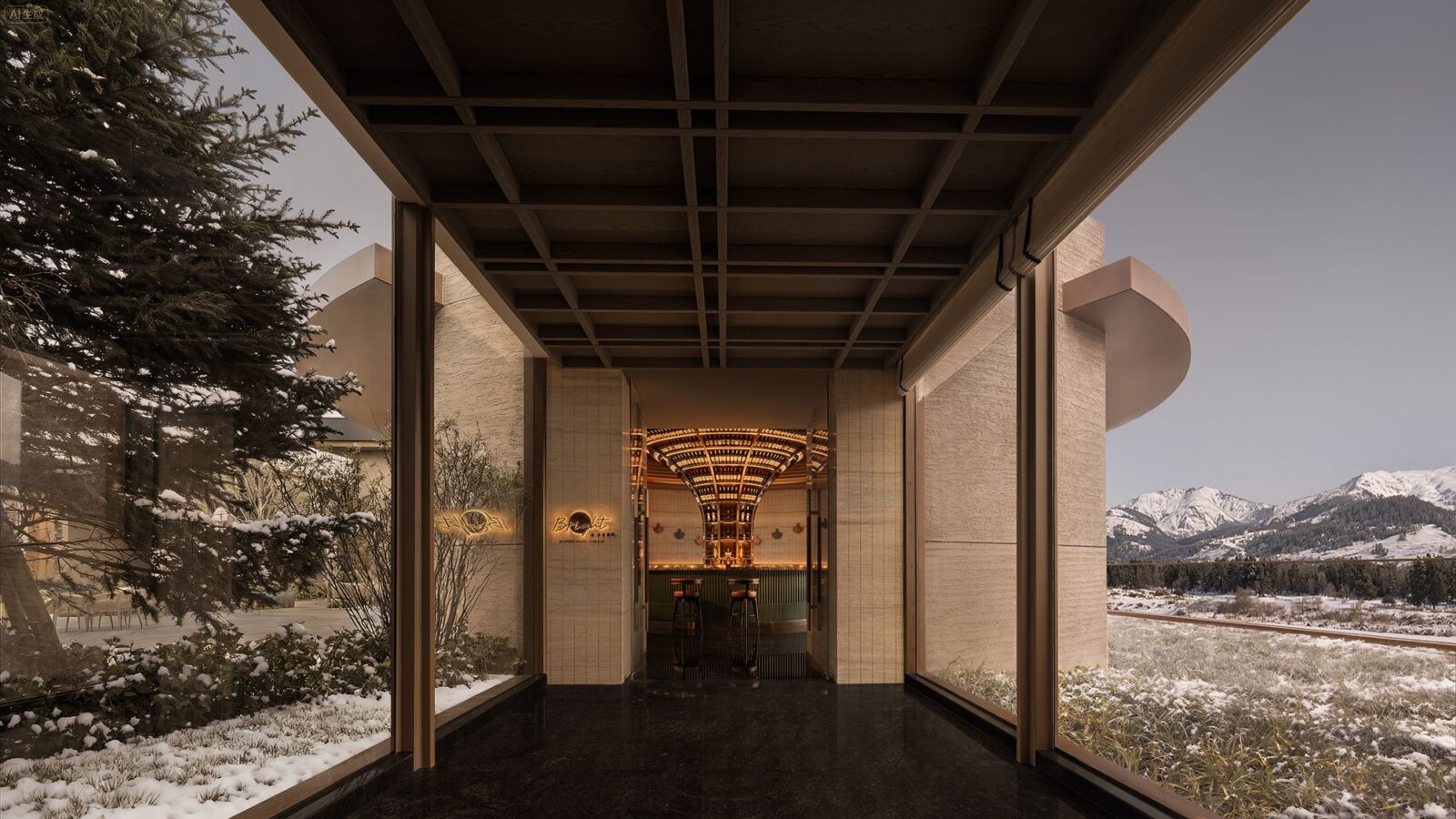
The circular bar evokes the image of a solitary tree on the steppe, functioning as a focal point within the space. Inspired by the play of perspective, the design introduces a sense of visual flow and extension.
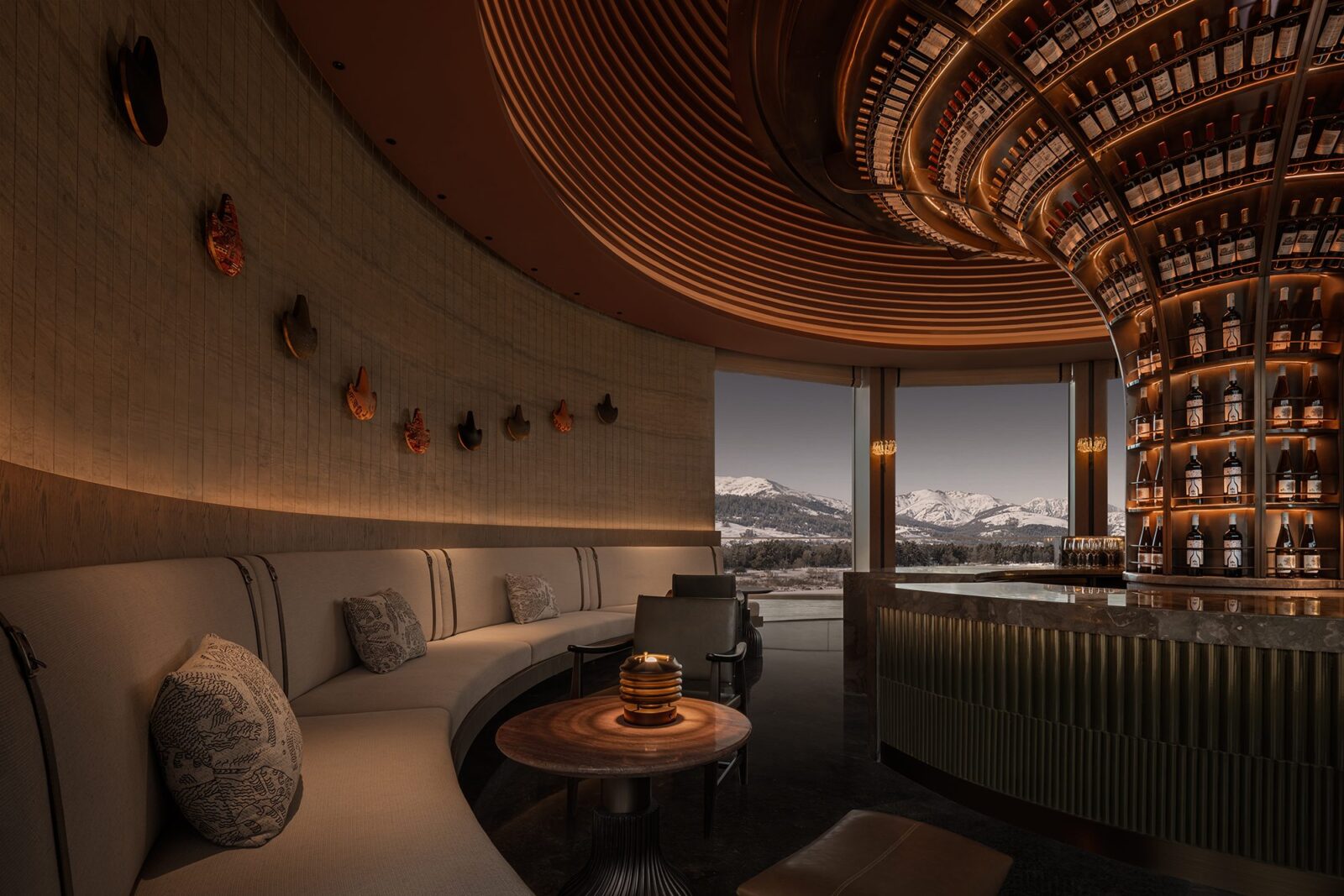
Curved circulation paths, circular layouts and orchestrated sightlines define how guests can move, while dining and socialising areas, alongside interior and exterior zones, remain distinct but connected. Red bricks and washed stone finishes echo earth tones, with warm wood and metal accents adding a contemporary note. Paired with the fluid curves, these elements establish a consistent look across the restaurant and bar.
Every design choice is rooted in the human experience: whether settling into the circular lounge, taking in the view beyond the window, or moving along the curved paths with a drink in hand.
The guestrooms
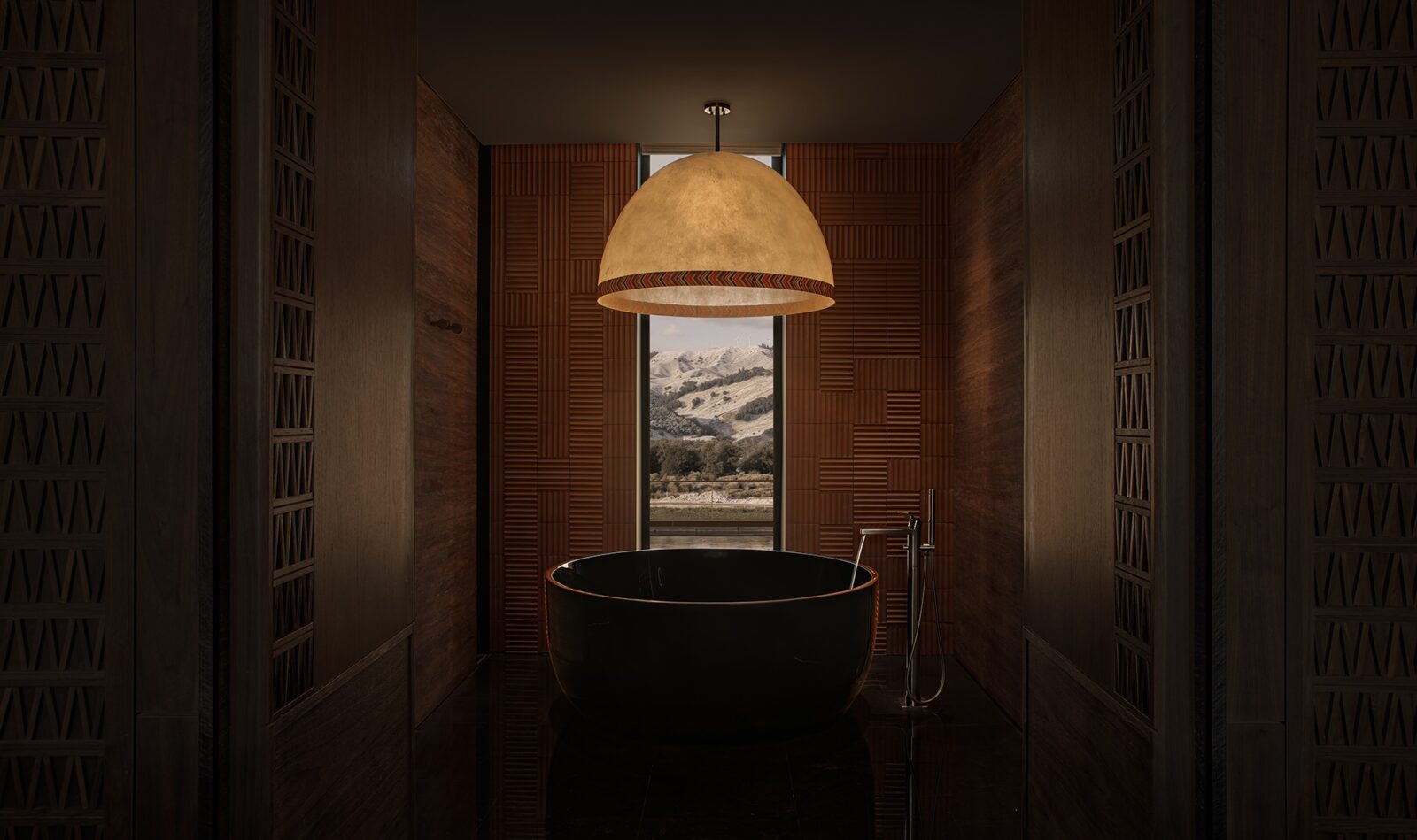
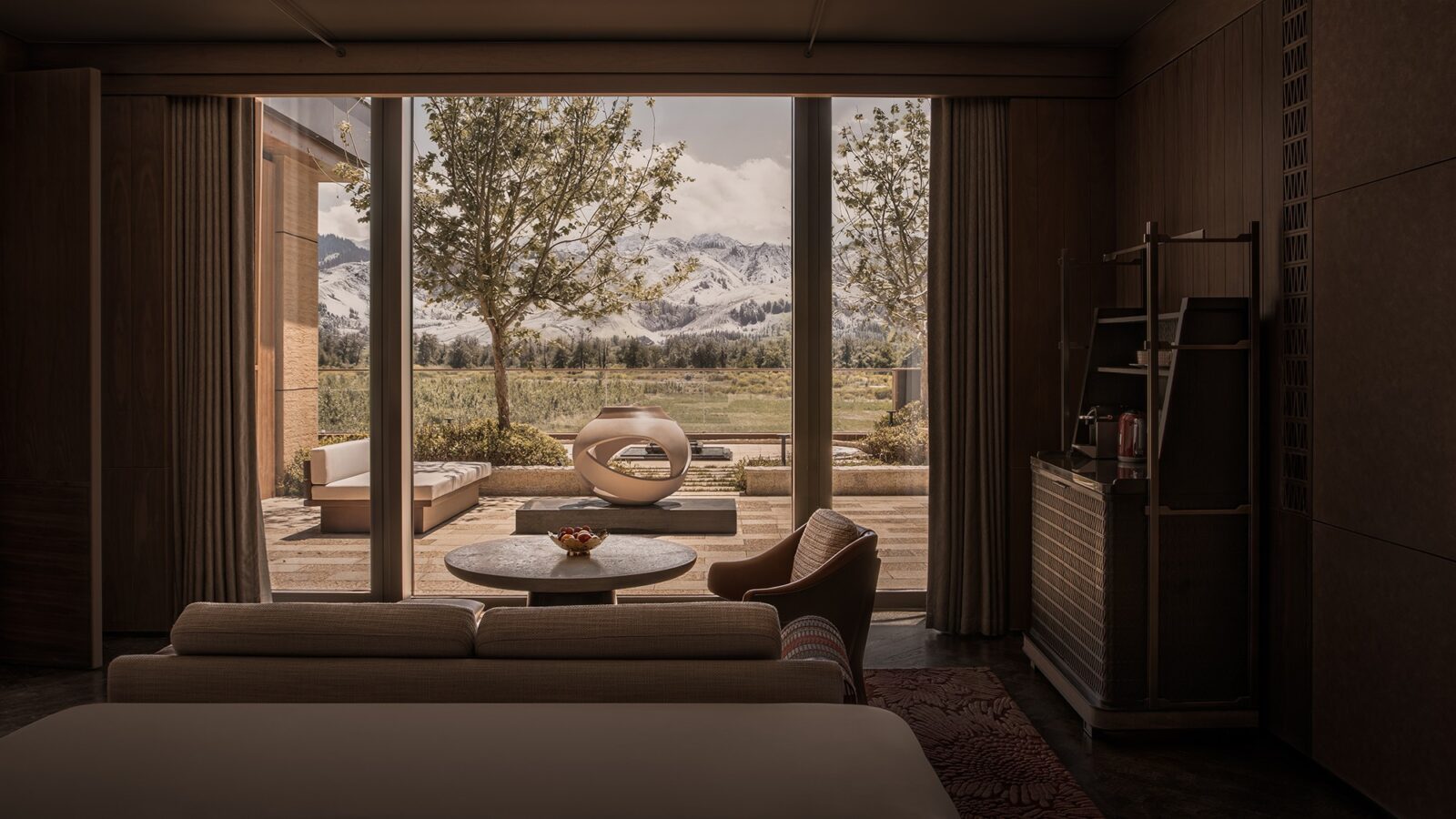
Pushing open the intricately carved double wooden doors, guests enter a space defined by warm materials and layered detailing. The carvings vary in depth and pattern, while a skylight above (inspired by the traditional yurt’s method of gathering light) helps fill the room with natural light, even casting patterns across the floor.
In the elevator hall, the lighting fixture draws inspiration from Crocus alatavicus, the first flower to emerge on the Nalati Grassland in early spring. Carved details continue throughout the guestrooms: the layered, interwoven motifs of the doors echo decorative accents used on the exterior walls, with changes in depth giving the woodwork a strong look.
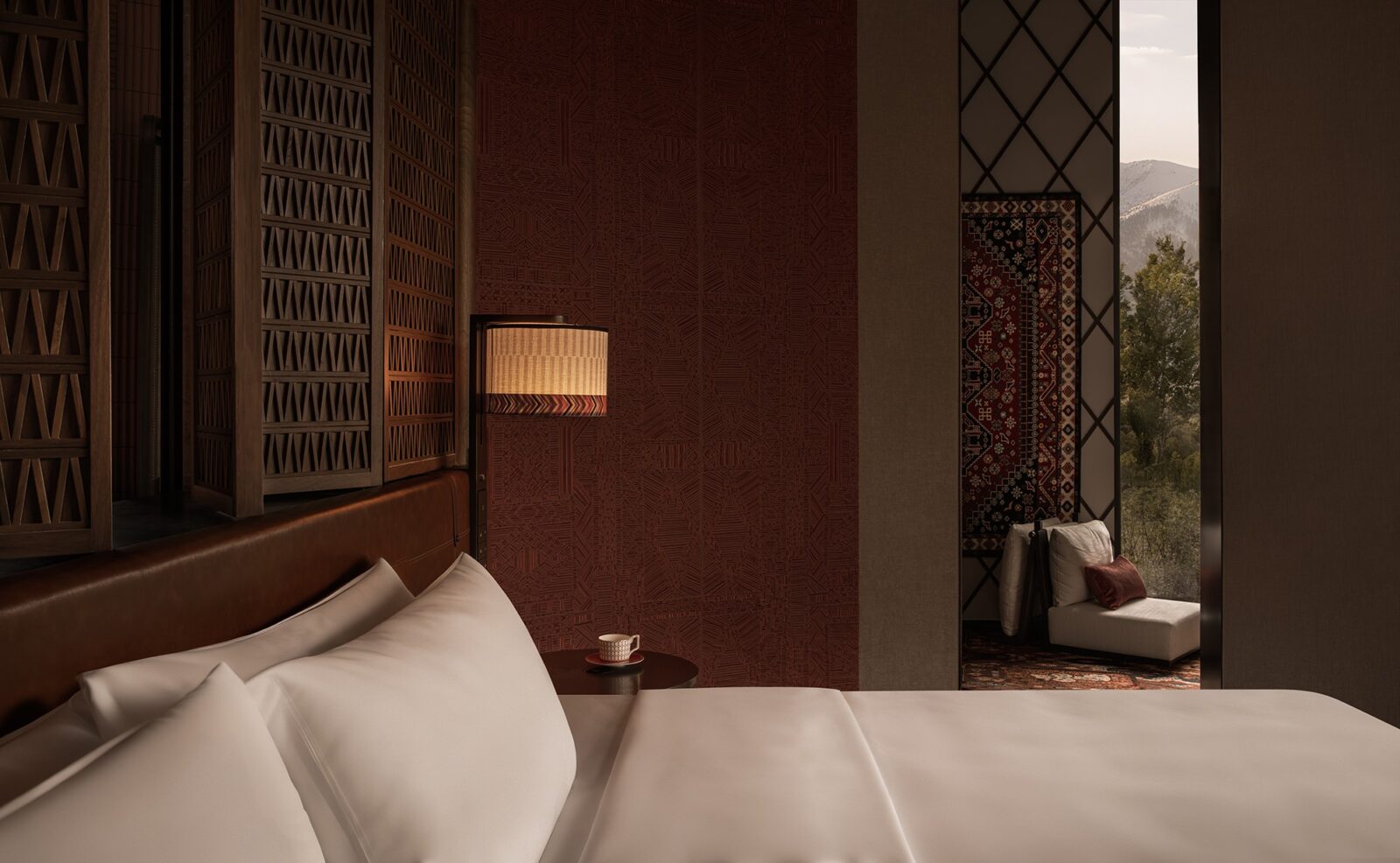
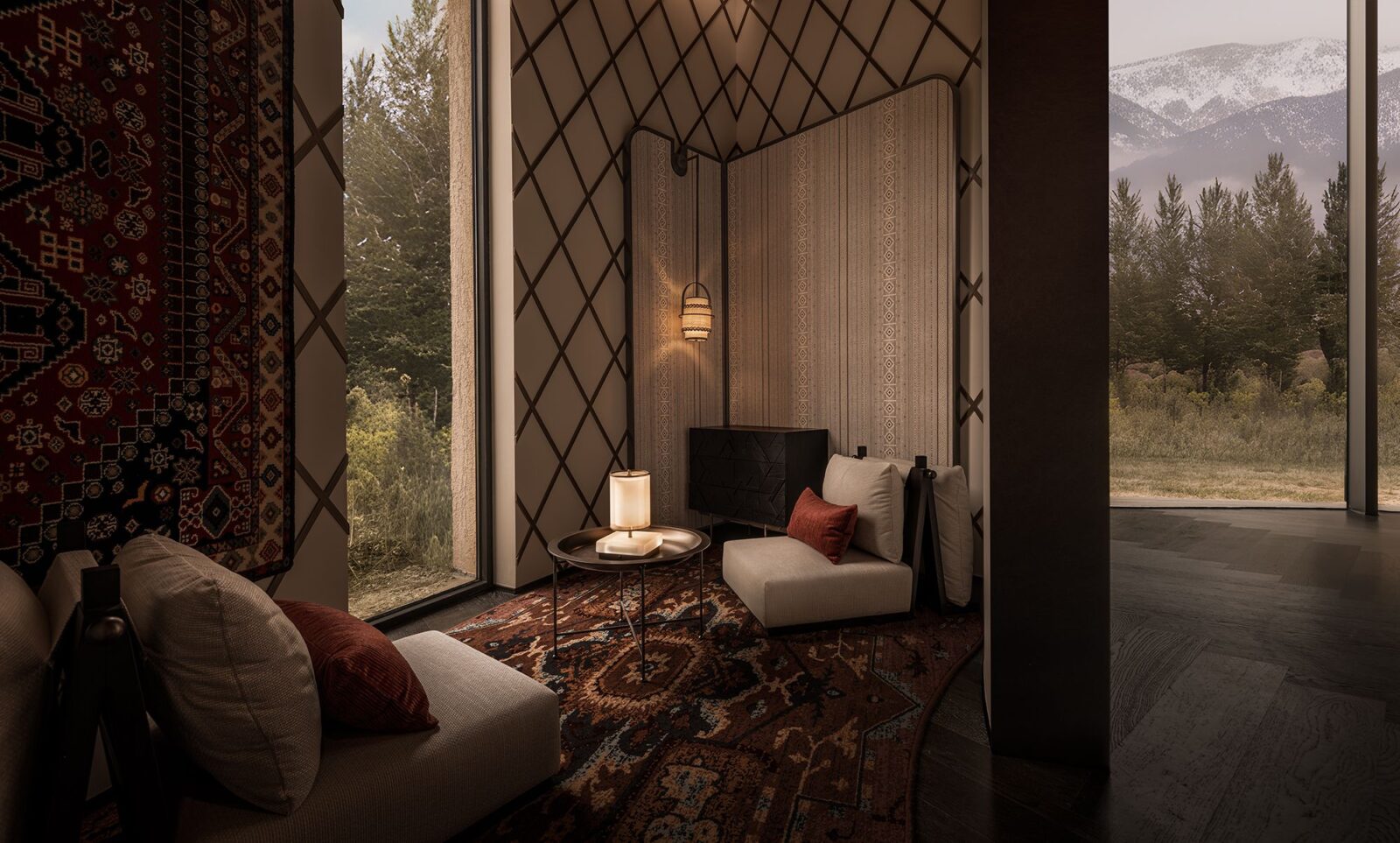
Walls and carpets were added following the tradition of felt craft, a local domestic handicraft used in tapestries, rugs, cushions, and traditional caps. Vivid colours and patterned surfaces were inspired by this tradition, reflecting both the techniques and motifs passed down through generations.
Partitions and wall elements reinterpret the yurt’s diamond-grid wooden form, and accents such as silver-plated horse tack, symbolic references to naan and the komuz, and artworks depicting horses and other grassland animals appear throughout the rooms.
Additional details include paintings inspired by Nalati’s wildflower atlas, arrangements of dried local plants, and small floral elements integrated into the interior. The yurt’s diamond-lattice structure is also reinterpreted in the bathroom walls and partitions, where it is paired with warm wood tones.