



Header: “Réflexions colorées” by Hal Ingberg, photo by Gisèle Teyssier
When one looks at the landscape calendar for 2026, it becomes clear that there are some events worth taking time off work for. Be it for a passion for aesthetics or an eagerness to learn, the field presents you with several events that promise an array of experiments on environmental pressure, planting techniques, and design styles that make it difficult to settle on which you want to attend.
The major events of the year seem to check all of the boxes, from large professional congresses to festivals where designers test ideas in real conditions, and each one adds their two cents on how people are thinking about land and its uses. The five events gathered here were chosen because they look at questions that many designers are now working through, so, together, they can hopefully give you an idea of what the new year will bring.
1. IFLA World Congress 2026 – 28 to 30 October, Hong Kong
The first major landscape design event of the year is the IFLA World Congress, considered the largest annual gathering for the profession. During the days of the event, Hong Kong will welcome thousands of designers, researchers, policy specialists, and environmental organisations, all of which will discuss and explore the changing relationship between land and water. Hong Kong is a crucial setting for this study, as the city sits within the Pearl River Delta and is known for a long history of coastal engineering, dense urban development, and ecological complexity.
The theme, “Liminal Landscapes: Shifting Boundaries of Watersheds and Coastlines”, will influence three days of discussion around how coastlines and water systems are changing under climate pressure. Much of the programme is expected to look at rising sea levels, storm impacts, erosion, and how cities can adapt their waterfronts and estuarine environments to all of these threats. Hong Kong is the perfect background for this, from its tidal corridors and engineered shorelines to its wetlands and archipelagos.
Although a detailed schedule has not yet been released, the event usually hosts lectures, academic papers, professional project presentations, and policy panels. Exhibitions also tend to run alongside the former, opening the door for students, award-winning projects, and research of all types. Field visits in Hong Kong are expected to highlight coastal infrastructure, revitalised harbour areas, flood-responsive parks, and conservation sites.
The event is widely considered a must for landscape architects, urban designers, ecologists, hydrologists, and planners working on climate-sensitive projects, as well as students looking for international exposure and fresh knowledge. While the coastal emphasis may be less important for those focused on inland landscapes, the event still allows them to understand global research and practice, plus gives them the chance to study a city where both worlds influenced every inch of urban design.
2. RHS Chelsea Flower Show 2026 – 19 to 23 May, London
The 2026 edition of the RHS Chelsea Flower Show will run from 19 to 23 May at the Royal Hospital Chelsea in London, celebrating a long tradition that began in 1913. The event is known as the point in the year when designers, plant growers, and landscape professionals come together to see how planting ideas, material choices, and broader horticultural thinking are changing. Although known to the wider public as a flower show, those on the inside understand it as the perfect testing ground for new designs and products.
The format has been the same for a long time: two preview days for RHS members and three days open to everyone. Once inside, the venue is arranged around large Show Gardens, which bring together established landscape architects, while the Sanctuary and Wellbeing Gardens focus on the restorative qualities of planting. Smaller plots, such as the Urban and Balcony Gardens, focus on compact and sustainable design strategies, and the Great Pavilion continues to be the place where growers introduce new plants and botanical displays.
One confirmed feature for 2026 is The Curious Garden, which was created by Frances Tophill with The King’s Foundation. Its main goal is to encourage people to look at gardening with new lenses and adopt it into their everyday lives, showing how simple interventions can support wellbeing and environmental responsibility.
Visitors will be able to explore themes of planting designs suited for hotter and drier conditions, gardens designed to support biodiversity, gardening solutions for rooftops, balconies, and other small spaces, and sustainable materials and crafts. For landscape architects, urban designers, horticulturists, and students, Chelsea is truly the one place where ideas are being tested and discussed across the industry. It is the best event to be exposed to design examples, new plants, and the concerns shaping conversations for the coming years.
3. Singapore Garden Festival 2026, Gardens by the Bay – 4 to 12 July, Singapore
The Singapore Garden Festival will be reaching its tenth edition in 2026, returning to Gardens by the Bay for nine days of garden designs, floral work, and plant exhibitions. The festival has been growing since its launch in 2006, having clearly established itself as the first major international garden show in a tropical climate. For this, it continues to attract designers, horticulturists, and plant specialists from all around the world, making it an extremely interesting event to attend.
The programme has already been shared with the public, and the International Show Gardens are the main event, where designers from Asia, Europe, Oceania, and the Americas will see their full outdoor gardens be judged for awards such as “Best of Show”. Alongside this is “Floral Windows to the World”, a competition for master florists to share their talent with the world. Visitors will also be invited to admire a variety of garden designs, including highly constructed Fantasy Gardens, small urban balconies, and a set of indoor garden exhibitions.
The horticultural and botanical exhibitions are considered the educational part of the programme, bringing together rare tropical species, bonsai and ikebana displays, and collections curated by NParks and international plant societies. A large marketplace will also run throughout the event, which has become a meeting point for designers working in tropical and subtropical climates, as suppliers and plant growers use the opportunity to share new materials and techniques.
For many designers, the festival is particularly useful because it concentrates on tropical planting designs that are not often available in Europe or North America. The rich mix of regional and international talent gives visitors a unique window into how different professionals approach planting, structure, and materials in hot climates. The venue, Gardens by the Bay, is the cherry on top, as it woos guests with direct access to one of Southeast Asia’s most advanced horticultural infrastructures.
4. International Garden Festival 2026 – Summer 2026, Grand-Métis
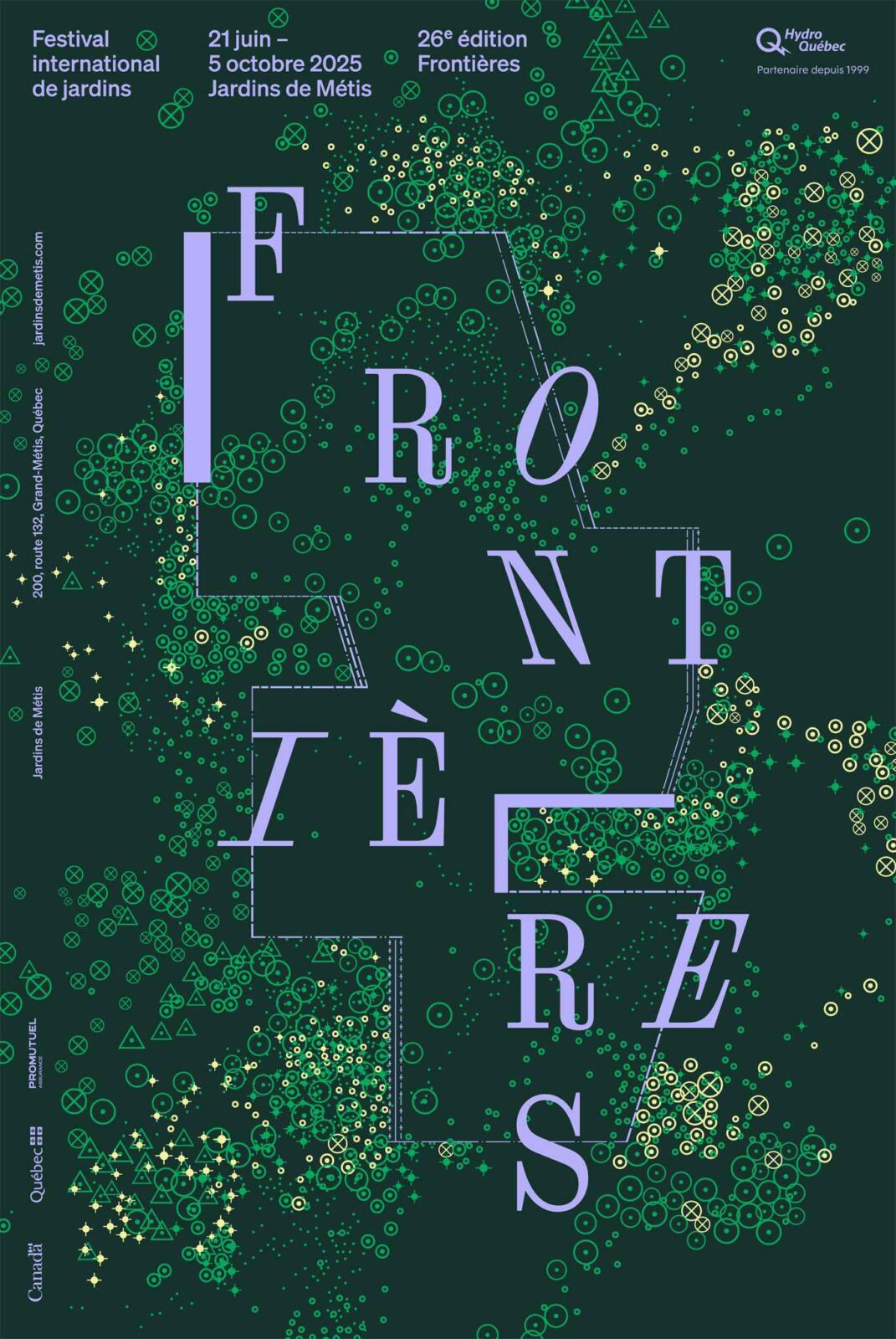
Starting on 20 June, the International Garden Festival returns to Reford Gardens for its twenty-seventh edition. The historic site is known for its long horticultural tradition and large plant collection, making it the perfect venue to experiment with plants and designs.
The 2026 theme, “Mapping Sensitivity”, asks participants to think about how a landscape might evoke things that are usually harder to pin down, whether that relates to memory, atmosphere, or the personal ways people perceive space. The festival encourages a mix of conceptual thinking and hands-on experimentation, opening up space for having emotional and sensory perceptions come from the garden itself.
The participants were especially selected for this edition, with each team receiving a budget of 27,000 CAD, with fees, materials, and labour divided in proportions, and being expected to be on site in the week leading up to the opening to ensure preparations run smoothly. The installations need to survive over two summers, and teams are asked to plan responsibly for how materials will be reused or recycled afterwards.
For visitors, the festival typically revolves around visiting newly built installations and permanent collections of past projects, but there are also tours, workshops, and small exhibitions related to contemporary garden design. An extra allure of this event is the beautiful landscape surrounding Reford Gardens, such as its woodland paths, river views, and planting areas. Landscape architects, designers, artists, and students tend to use the event as a way to study experimental approaches, and the 2026 theme promises to invite projects that continue that exploration.
5. International Garden Festival 2026 – 22 April to 1 November, Chaumont-sur-Loire
The International Garden Festival at Chaumont-sur-Loire will be returning in 2026, and with it comes a site perfect for experimental garden making. Since its inception in 1992, the festival has presented a set of roughly twenty temporary gardens, each built on a standard 210-square-metre plot within the château’s domaine. The format encourages designers to test ideas at a scale that is manageable yet large enough to make a difference, giving them the chance to explore structure, planting, and atmosphere over the course of a seven-month season.
This year, the organisers chose the theme “Le jardin fait son cinéma” (“The Garden Goes to the Movies”), asking participating teams to work with cinematic tools such as framing, sequence, and staging when making their designs. In practice this means that each garden will consider how visitors move, what they see first, and how visual cues change as planting and materials transform through the year. The festival typically brings together landscape architects, architects, artists, and other specialists, all selected through an open international call that is happening as you read.
Designers who take part usually approach Chaumont as a place to test new methods, whether in construction, planting, or how a narrative can be told through a landscape. The long exhibition period requires attention to durability and seasonal growth, so ideas must hold together from spring through autumn.
Attending the festival also means that apart from beautiful landscapes, visitors will be able to discover the broader Domaine de Chaumont-sur-Loire, which includes permanent outdoor works and exhibitions within the château and its galleries. While there isn’t much information available at the moment, this is an important event for those interested in how gardens can interact with cultural contexts and the seasons that pass through, making it a top-notch space to try out a special experiment you’ve always dreamt of doing.
After looking at these events, a pattern appears: attention is being given to climate behaviour, materials, and the sensory possibilities of outdoor space. Some events focus on the technical challenges ahead, while others give room for slower, more experimental work, but all of them show a profession trying to stay responsive to changing conditions.


