Header: Yushin Labo
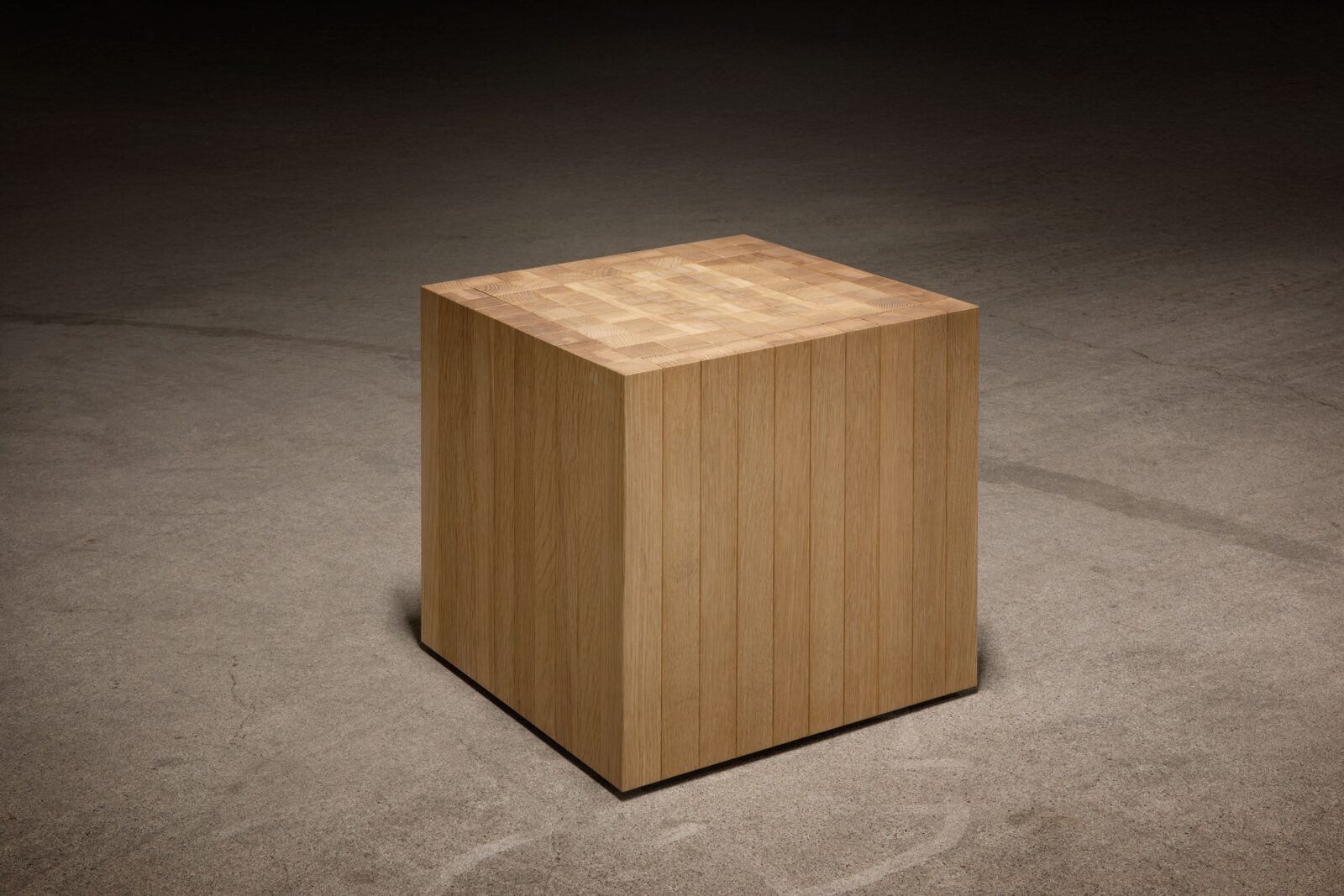
At first glance, the KIGI stool looks like a solid block of timber, a rigid cube that suggests a hard seating experience. But this piece, created by designer Seiji Kuwabara of the British Columbia-based firm In Element Designs, hides a clever mechanism inside its frame. The design is so unique that it actually won a SIT Furniture Design Award in the Stool category earlier this year.
KIGI takes the rigid nature of wood and makes it behave in a surprisingly soft way. The name itself comes from the Japanese word for “multiple trees,” a fitting title for a furniture piece formed by bundling distinct wooden sticks into a unified whole.
Engineering a soft landing
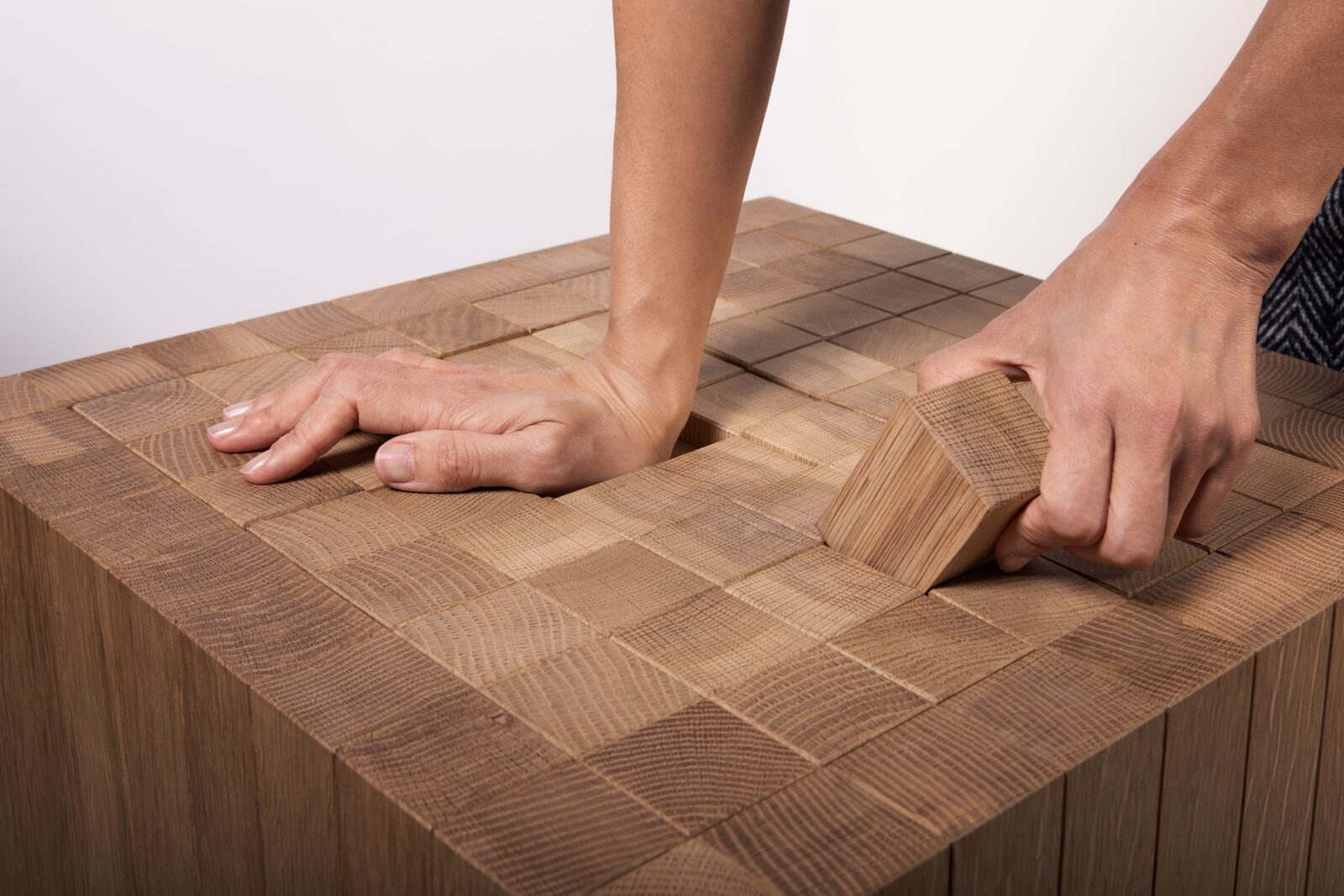
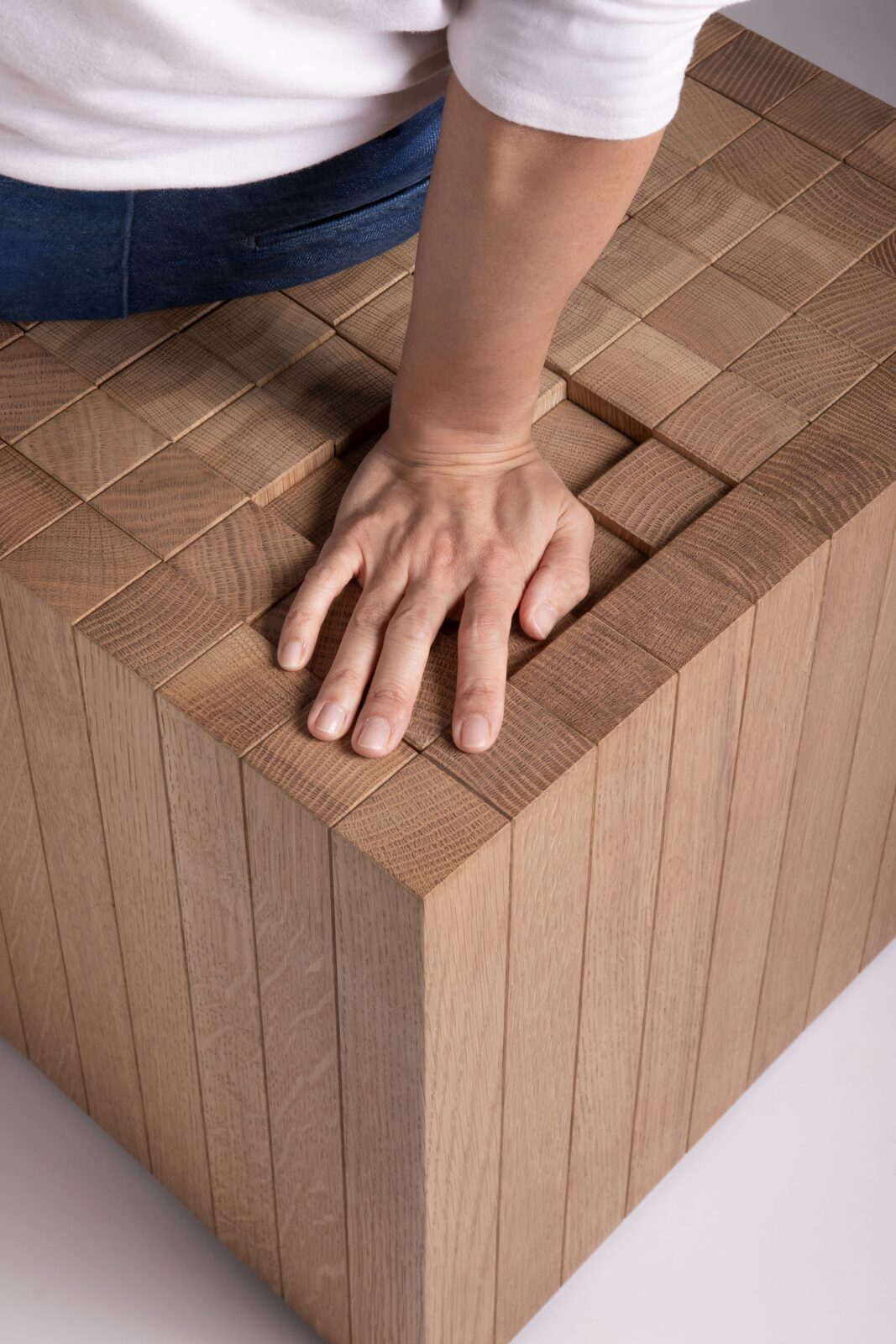
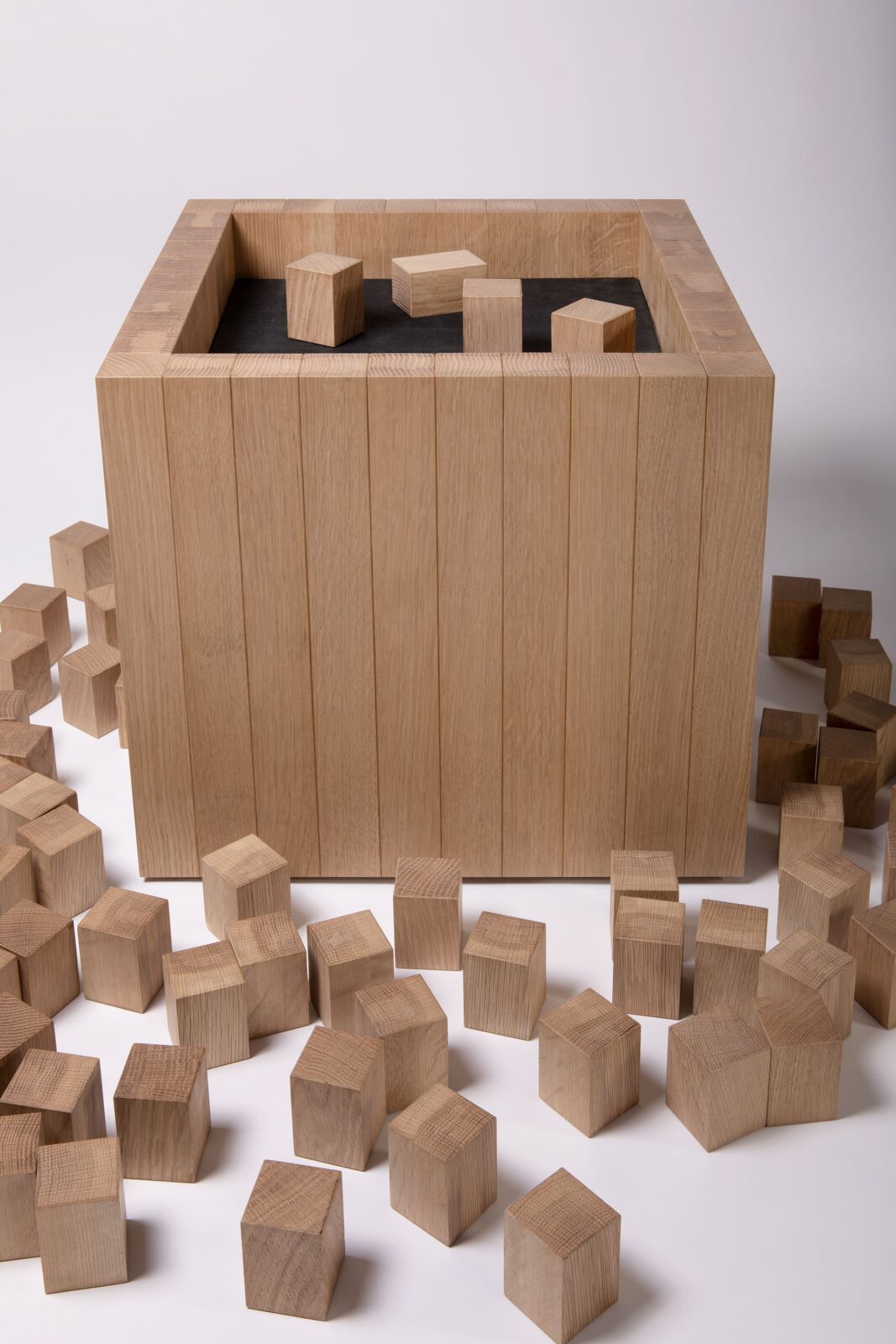
The design logic behind KIGI relies on a distinct separation between the frame and the seat. The outer shell is built from 36 fixed wooden sticks that hold the shape. Inside this border, 64 individual wooden blocks are arranged in a grid. These inner blocks are not glued down or nailed in place. Instead, they rest on a rubber sheet placed over a 1 ½-inch-thick foam layer.
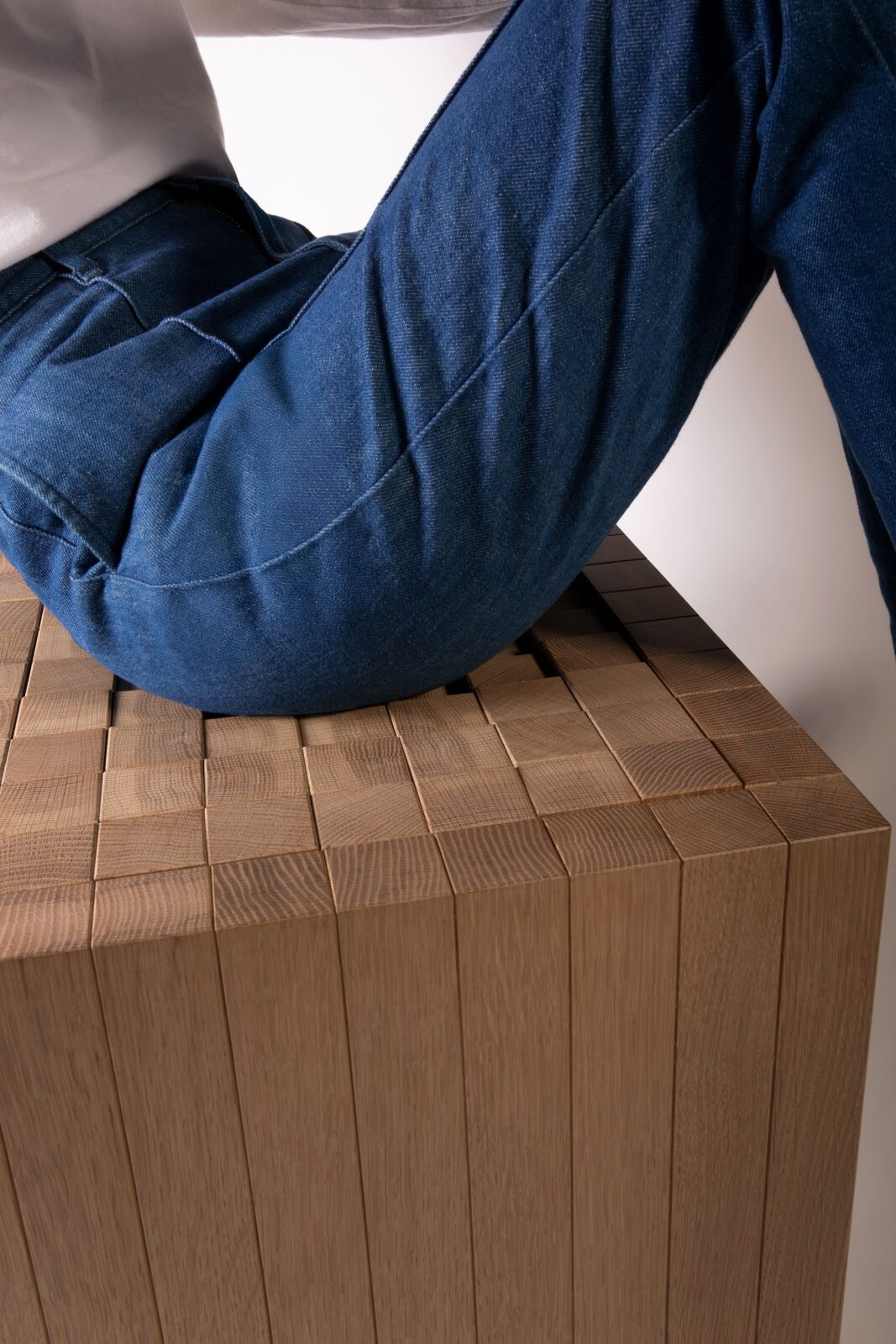
When you sit down, the foam compresses. The 64 blocks sink under your weight, contouring slightly to your body. To ensure these blocks glide up and down without getting stuck, the designers reduced the thickness of each inner block by approximately 0.5mm compared to the frame. This tiny gap allows for smooth movement and gives the wood room to expand and contract with humidity changes naturally. The result is a chair that looks solid but feels giving, providing comfort without needing any fabric or cushions.
Embracing the end grain
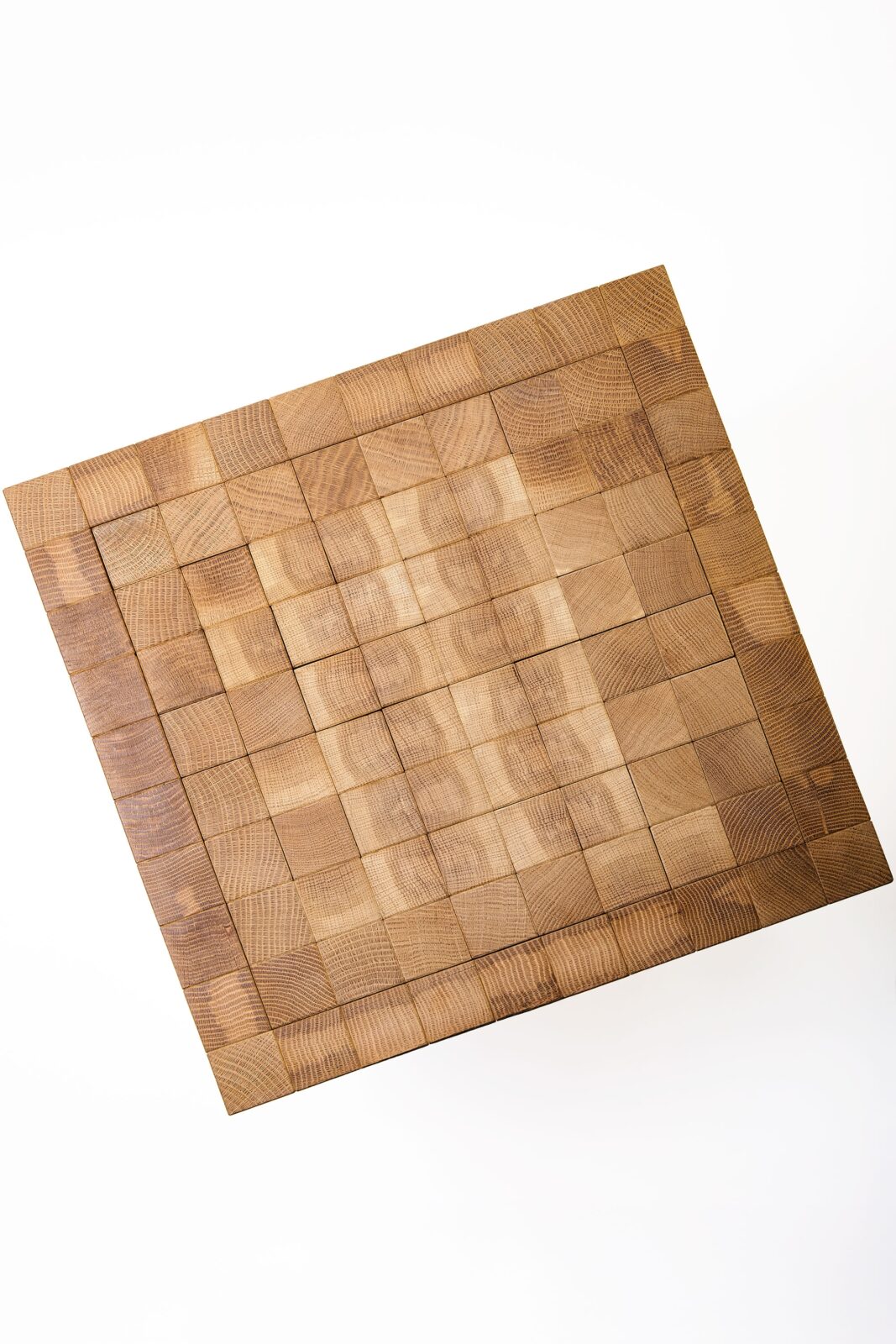
Most furniture makers try to hide the end grain of wood (the surface created when you cut across the growth rings) because it is harder to finish and absorbs liquids easily. KIGI does the opposite. It turns the end grain into the main surface you touch. Because the stool is made of solid white oak with a simple soap finish, the natural pattern of the wood rings is front and centre.
This creates a unique texture. The seat feels firm, yet the end grain offers a tactile grip that is different from the smooth side of a board. It is an experience that feels unfamiliar at first but becomes pleasant as the individual blocks shift beneath you. The designers utilised this specific cut of wood to give the stool character and durability.
From scraps to structure
The concept for this project did not start on a drawing board but on the shop floor. Seiji Kuwabara noticed the pile of wood scraps left over from daily woodworking tasks and felt it was a waste to throw them away. He began arranging the small blocks, noticing they looked like a butcher block cutting board. The idea sparked when he placed those loose blocks on a piece of leftover foam.
It took four years of testing and refining to move from that initial spark to the current minimalist version. The design maximises the use of material, creating an empty space underneath the foam structure to keep the stool as lightweight as possible while maintaining its sturdy appearance.
Playful customization
Beyond its engineering, KIGI is designed to be interactive. Because the inner blocks are removable, they can be swapped out or rearranged. Owners can mix in different wood types or colored blocks to create patterns, turning the seat into a chessboard or a pixelated art piece. The modular nature also allows multiple units to be placed together to form a bench.
The KIGI stool is a piece of furniture that asks you to trust it. It invites you to sit on what looks like a hard crate, only to reward you with a responsive, sinking sensation. By combining 64 moving parts with a static frame, In Element Designs has created an object that respects the history of the material while finding a new way to use it. It is a seat that is best understood not by staring at it, but by using it.
Project info
Company/Firm: In Element Designs
Designer: Seiji Kuwabara
Lead Designer(Other): Himali Kuwabara
Photo Credit: YUSHiiN LABO
Location: BC Canada
Project Date: January 2025