



Header: Courtesy of BLT Awards
Sustainable architecture is often discussed through big systems, but sometimes its smartest ideas are easiest to see at a smaller scale. These three winners in the BLT Built Design Awards Small Architecture category do exactly that: one turns factory waste into shade, planting structure and furniture, one touches an Alpine ridge as lightly as possible while producing its own energy, and one lets water and weather become part of the building itself.
None of them tries to solve sustainability in theory; each started with a specific inconvenience and made it useful. “Each project tells a story of innovation and resilience, offering solutions to the complex challenges we face in our built environments,” says Astrid Hébert, Co-founder and Program Director of the BLT Built Design Awards.
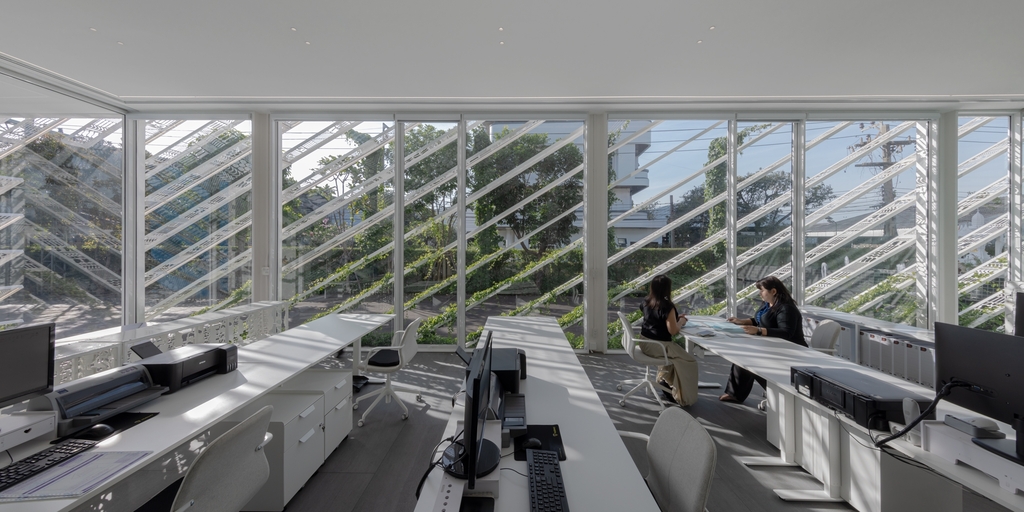
“No Time to Waste” Office | AUN Design Studio | Samut Prakarn, Thailand
Designed for Chung Huat Steel (1992), AUN Design Studio’s 100-square-metre office starts with a very ordinary industrial problem: material left behind by punching and laser-cutting. Up to 15% of material can become scrap during these processes and instead of treating those perforated steel sheets as something to dispose of, the project makes them central to the architecture.
Outside, the discarded sheets become sunshade fins and trellises for climbing plants, creating an envelope that shifts from exposed metal and shadow to greenery and seasonal flowering while inside, the same waste stream is used for custom furniture, including cabinets, floor lamps, tables and stools.
The intelligent move is not simply recycling waste but using it to do real work: shade the building, support planting, furnish the interior and give the office its identity.
View “No Time to Waste” Office
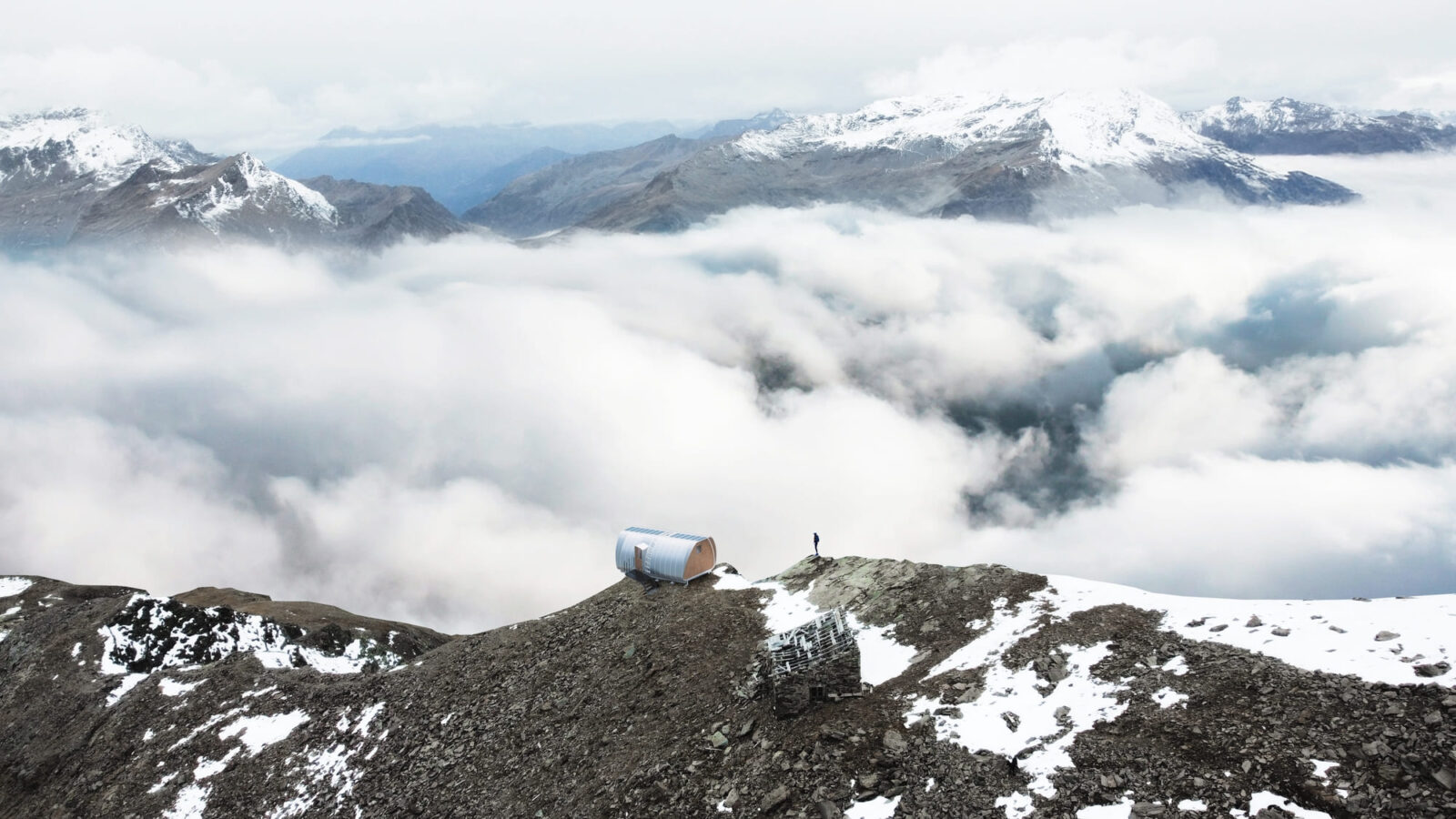
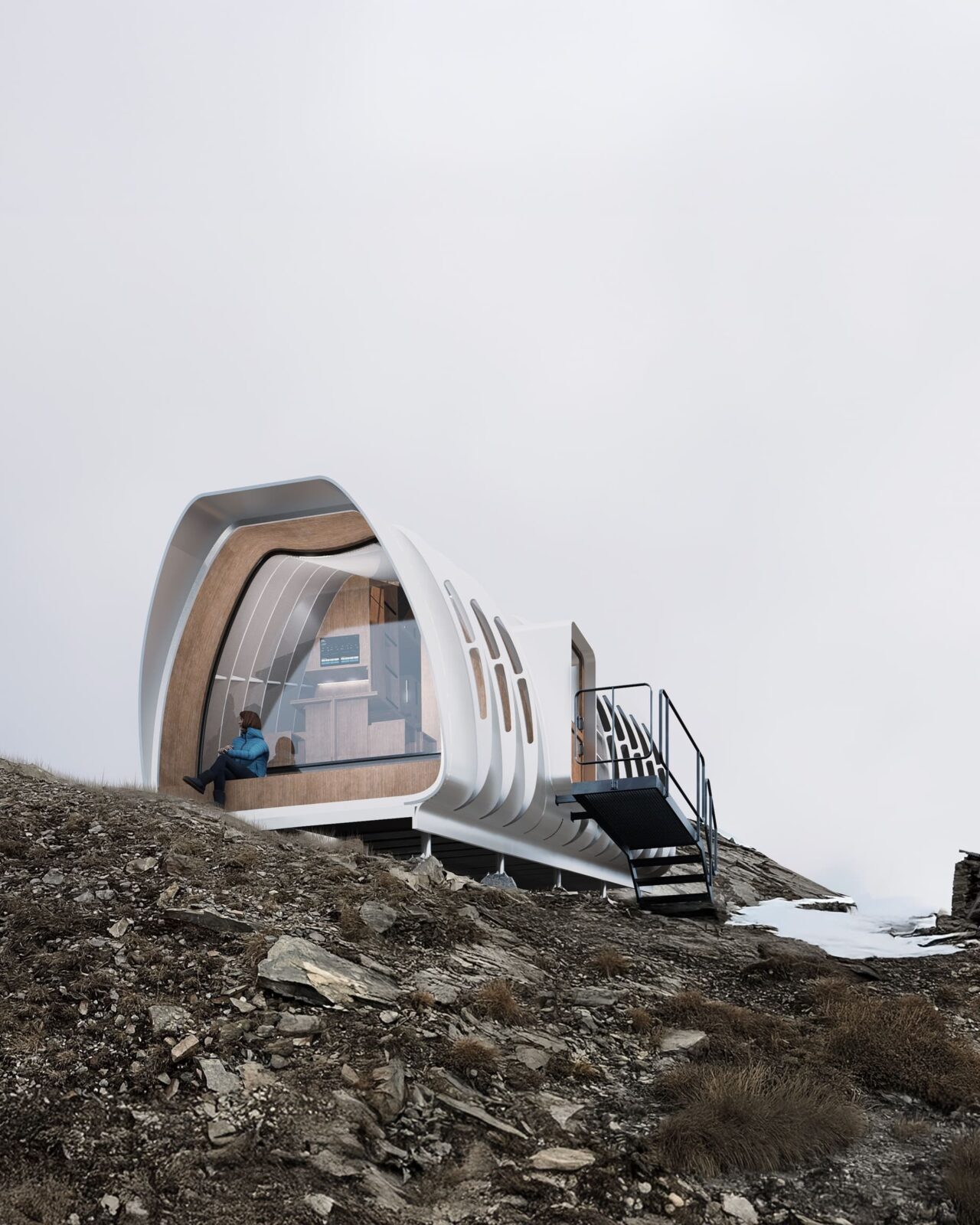
Stratum: A Carbon-Free Alpine Bivouac | YCJ Studio + xiaohanqiu studio | Italy
Perched along a ridge near Capanna Bernasconi, Stratum addresses a very different constraint: how to occupy a fragile alpine site without turning it into a conventional building site. The bivouac is elevated on precision pin foundations aligned to 3D terrain scans, reducing disturbance to the ground below.
Its sculpted geometry deflects wind and snow while creating a protected entrance. Inside, stepped platforms organise an emergency vestibule, sleeping areas with modular bunks and a communal zone. Fin-like side apertures balance insulation with daylight, while a panoramic front window supports passive solar gain. Integrated photovoltaic panels allow the refuge to operate off-grid.
Here, the small footprint is both literal and operational as the project reduces what it needs of the site while still providing shelter, safety and energy autonomy, proving that resilience does not have to begin with more infrastructure but with needing less.
View Stratum: A Carbon-Free Alpine Bivouac
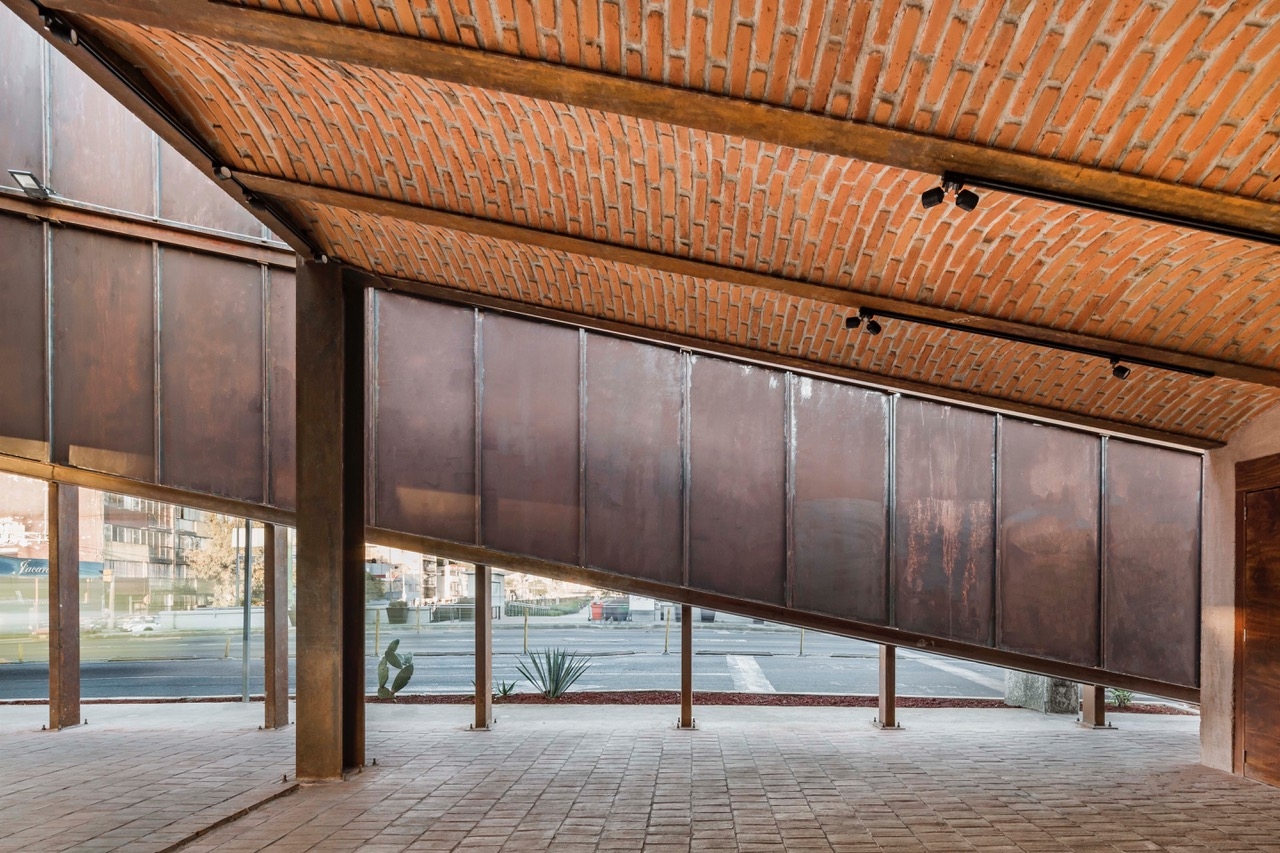
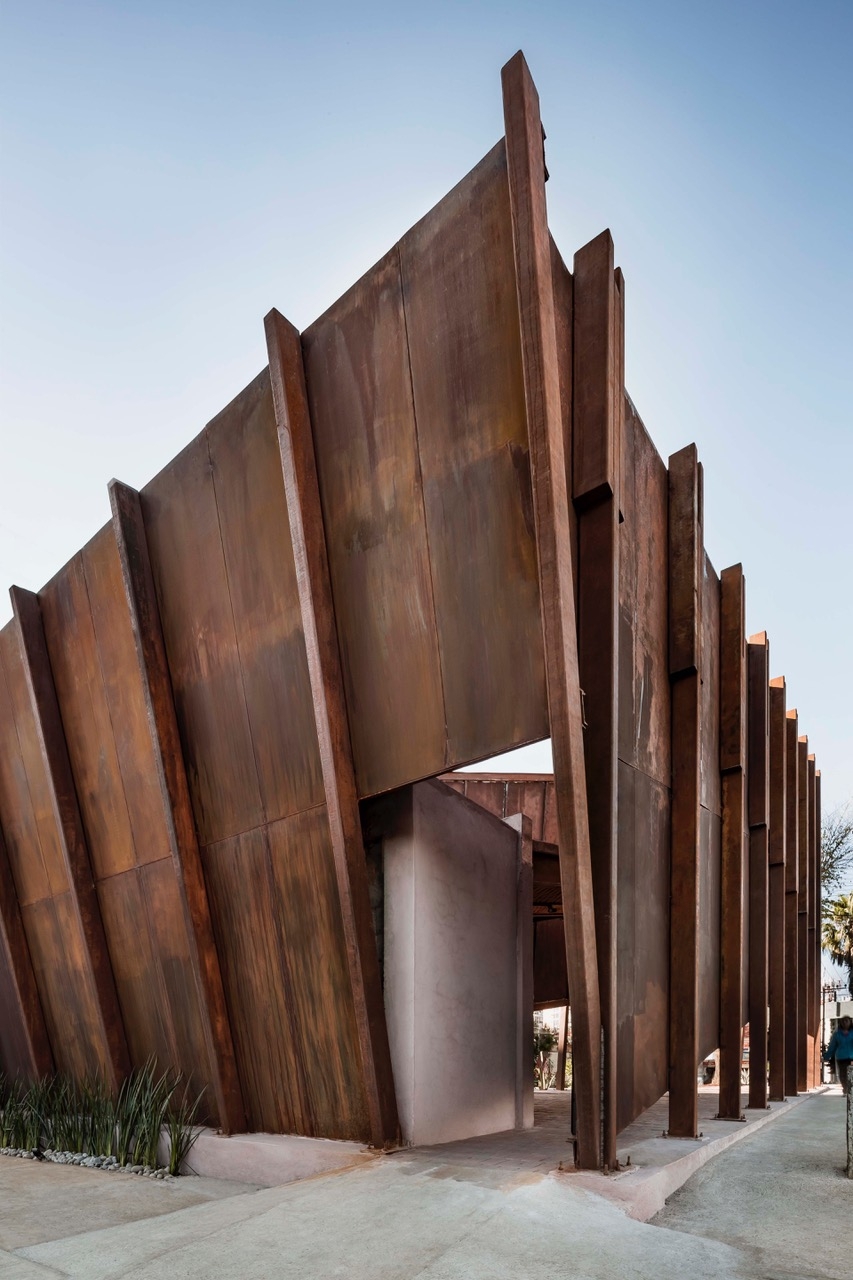
ECODUCTO + PABELLON DEL AGUA | Apaloosa Estudio De Arquitectura | Mexico
Apaloosa Estudio De Arquitectura begins with water, not as a service to be routed invisibly through a building, but as an active part of design. The project is shaped by the relationship between water networks and natural catchments, and deliberately allows water to participate in the pavilion’s material life.
Rather than preventing steel’s natural oxidation, the design incorporates it, so over time, weather and water alter the pavilion’s colour and texture, making seasonal change visible on the architecture itself. A central block accommodates a workshop classroom, bathroom and storage, while the surrounding envelope creates the more open-ended public space of the pavilion. That makes weathering part of the experience rather than evidence of failure.
View ECODUCTO + PABELLON DEL AGUA
Why small architecture matters now
Large-scale sustainability is essential, but large systems can also make cause and effect difficult to see. Compact architecture has another advantage: it can isolate a problem and make the response unusually legible. In these three projects, the relationship between constraint and design is almost impossible to miss.
The 2026 BLT Built Design Awards are open for entries across Architectural Design, Interior Design, Landscape Architecture and Construction Product Design. If your work is finding a smarter way to deal with materials, place, resources or constraints, submit your project before October 4.


