



Header: Hou Bowen
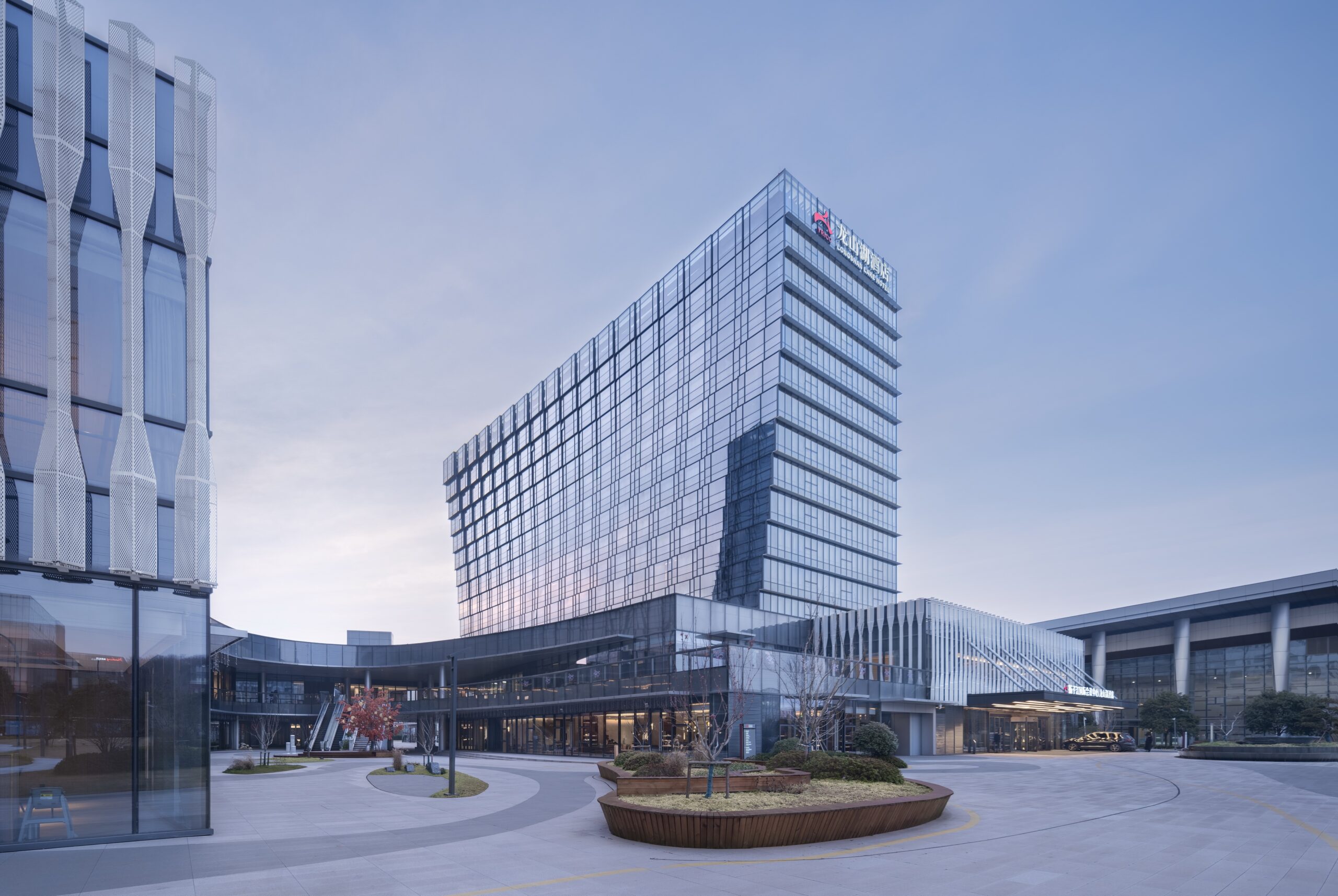
In the energetic heart of Nanjing’s Biomedical Valley, a new pair of towers has risen to meet the needs of a growing biotech district. Known as the Business Center of BPV, this project doesn’t just provide office support or a place to sleep, it is an attempt to soften the hard edges of a tech-heavy industrial zone.
Designed by City-Town Architects and U+ DESIGNPARTNERS, with Xiao Lujiang leading the charge, the development acts as a bridge between the rigid city grid and the rolling natural landscapes nearby. It has clearly caught the eye of the industry too, recently picking up a win at the BLT Built Design Awards for architectural design in the mixed-use category.
Shaped by the wind
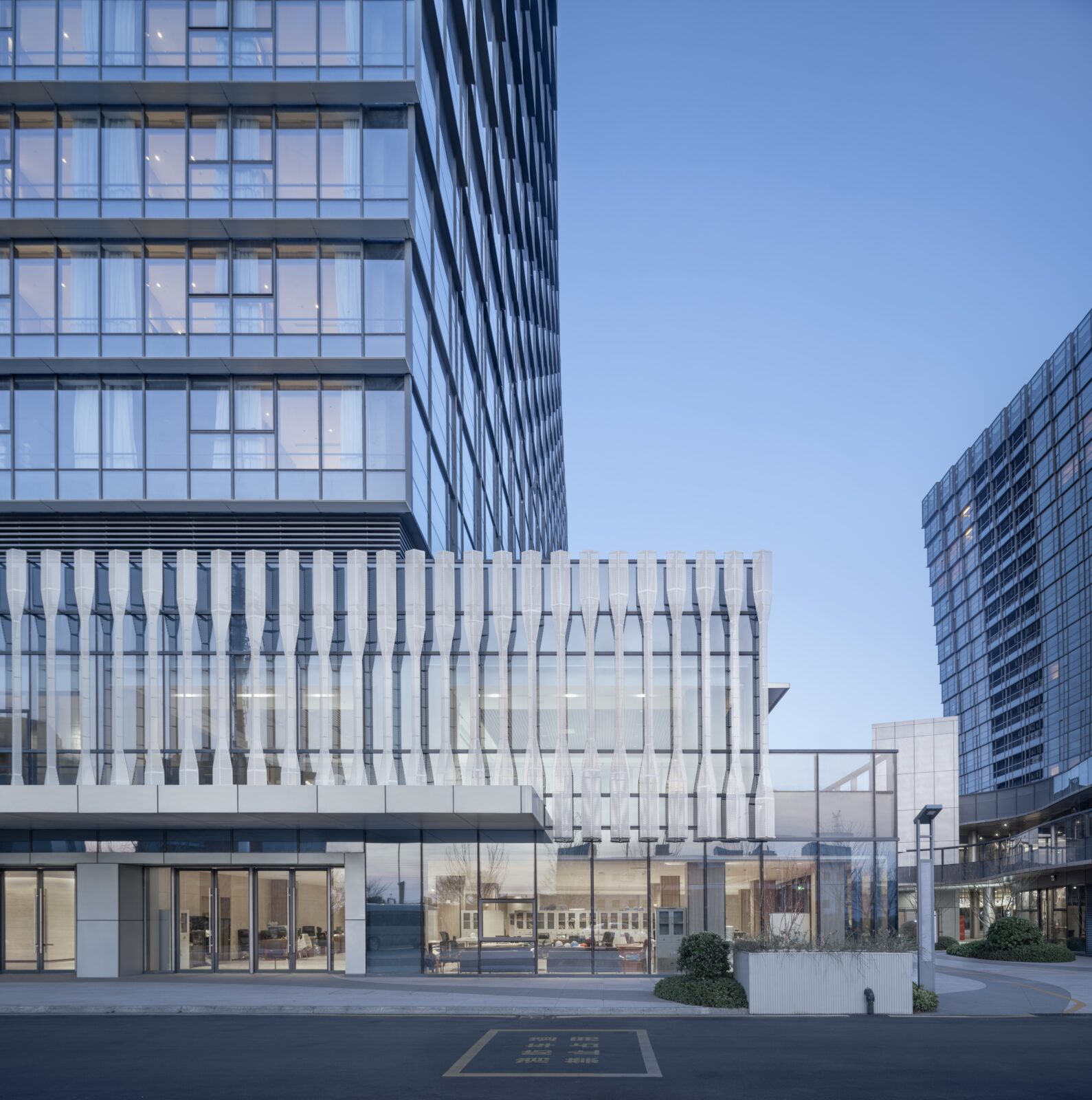
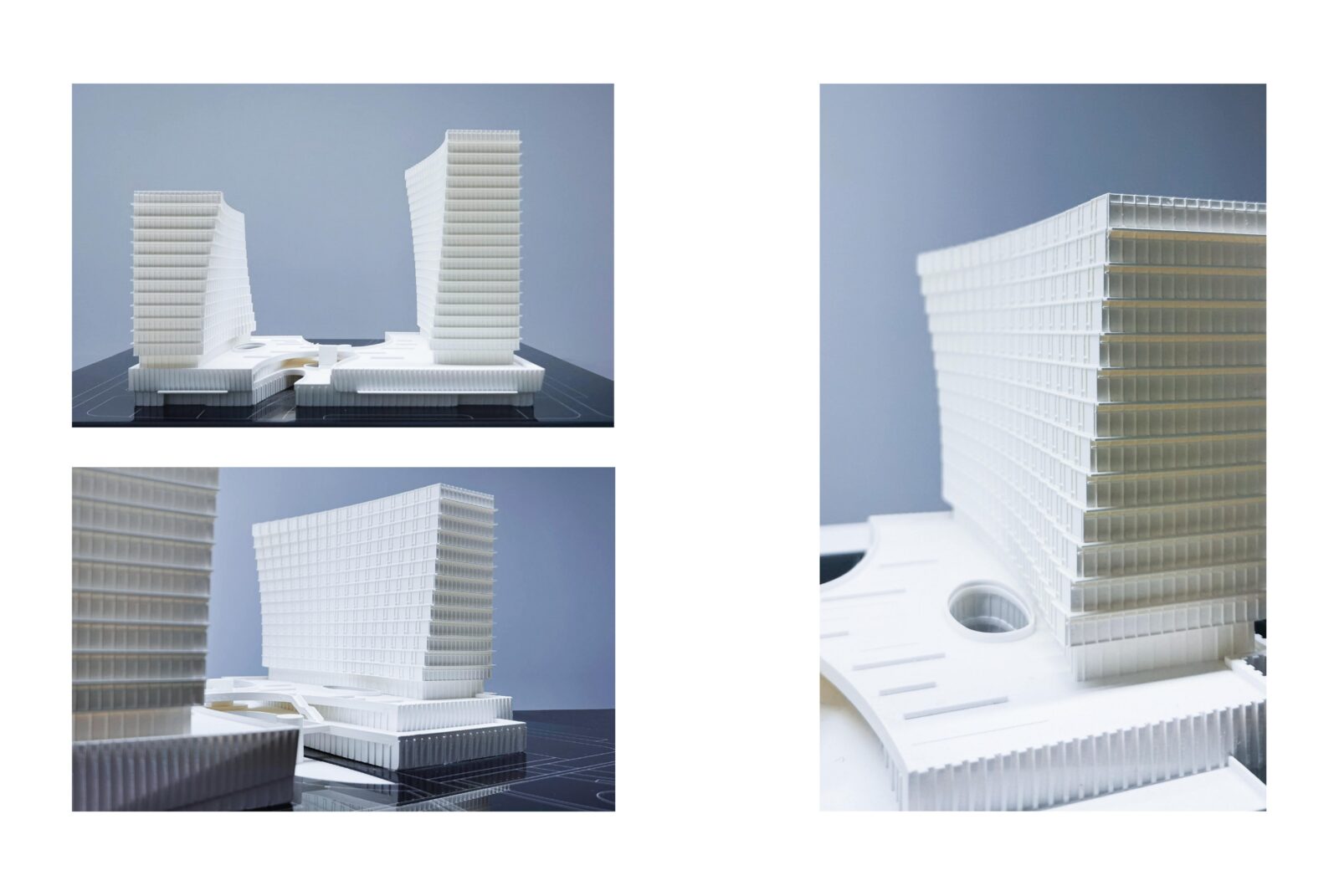
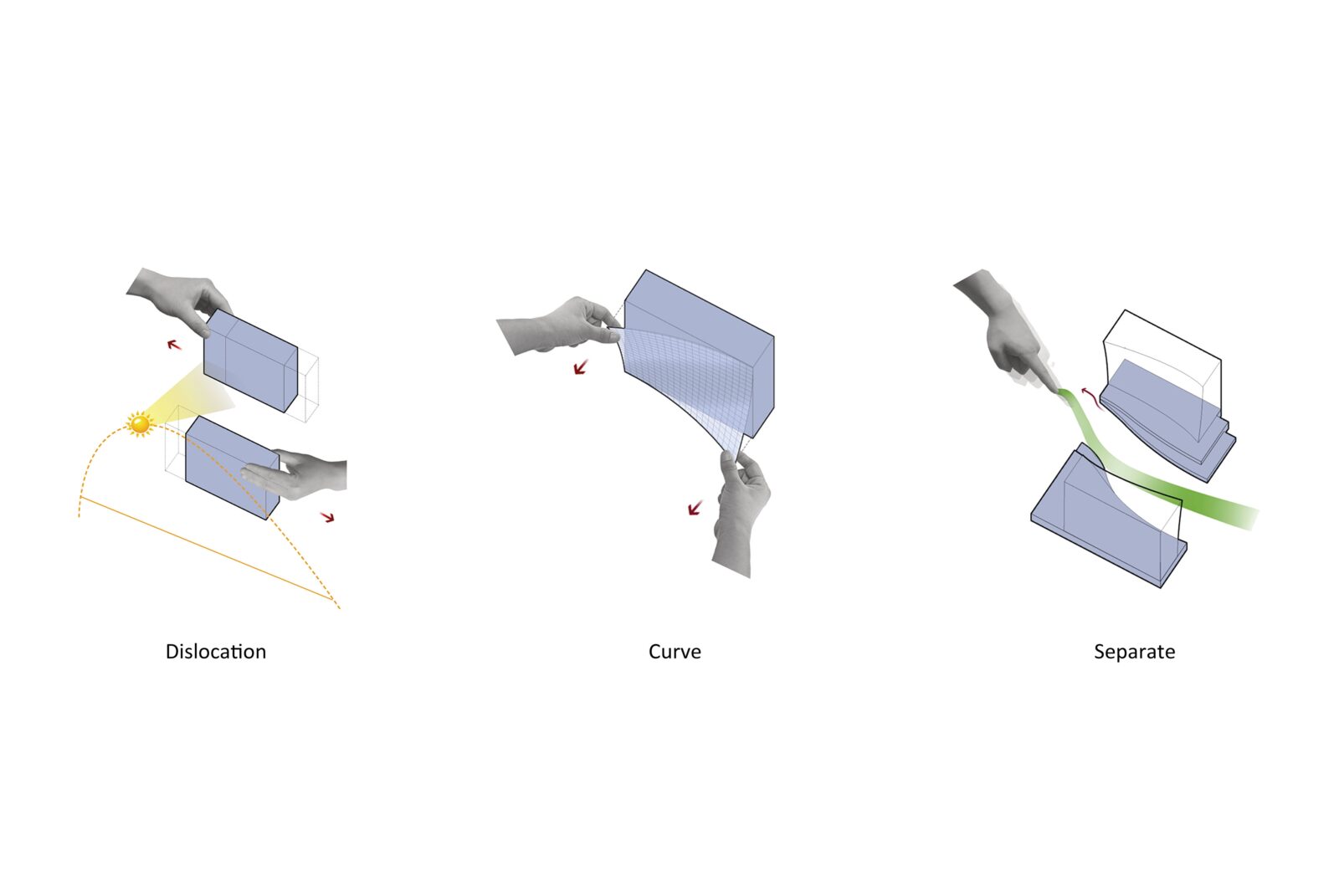
The first thing you notice about the project is the shape. The architects wanted to step away from the standard boxy skyscrapers often found in R&D zones. Instead, they looked to the concept of “setting sail.” The two towers draw inspiration from wind energy turning into forward motion, resulting in a curved, sweeping form that looks like it is catching a breeze.
This approach serves a dual purpose. It creates a visual link to the idea of progress and energy, which fits the bio-pharmaceutical research happening in the area. But on a simpler level, it helps the buildings feel less imposing. The curves frame the nearby mountains to the west, acting as a reminder that even in a district focused on high-tech ingenuity, nature is still the backdrop.
Chasing the sun and views
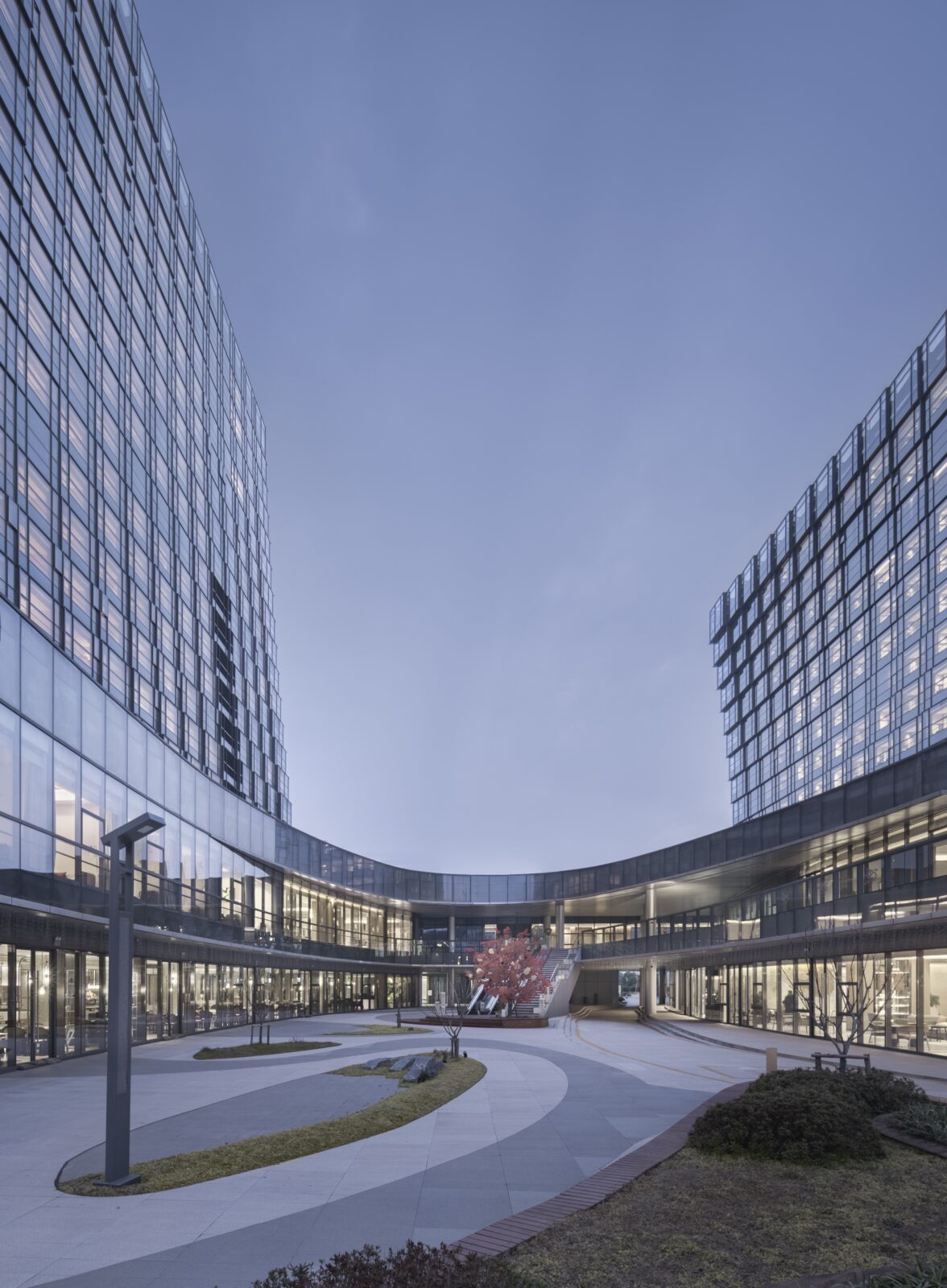
Positioning two tall buildings next to each other requires a smart layout to avoid casting big shadows. The design team staggered the hotel and apartment towers, shifting them slightly rather than lining them up perfectly. This move ensures that the living spaces get plenty of sunlight throughout the day.
The north-south orientation also plays a big role here. By splitting the volume into two distinct parts, the architects maximised the views for the residents and guests. On one side, you have the industrial strength of the expo centre, and on the other, the softer view of the mountain landscape. The curved facades act almost like a wide-angle lens, opening up these city and nature views for the people inside and improving the overall quality of their stay, whether they are there for a few nights or a long-term rental.
A walk in the valley
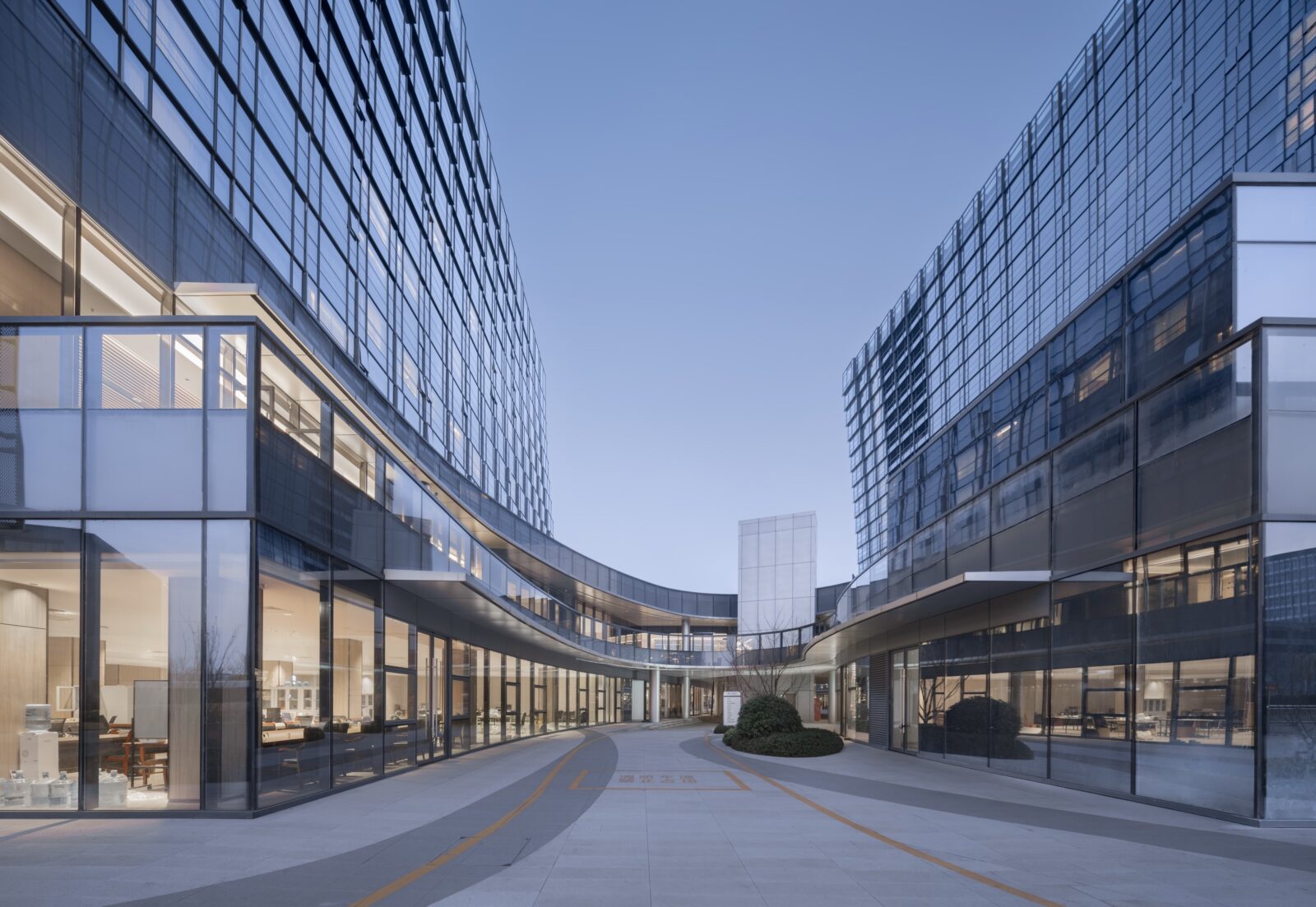
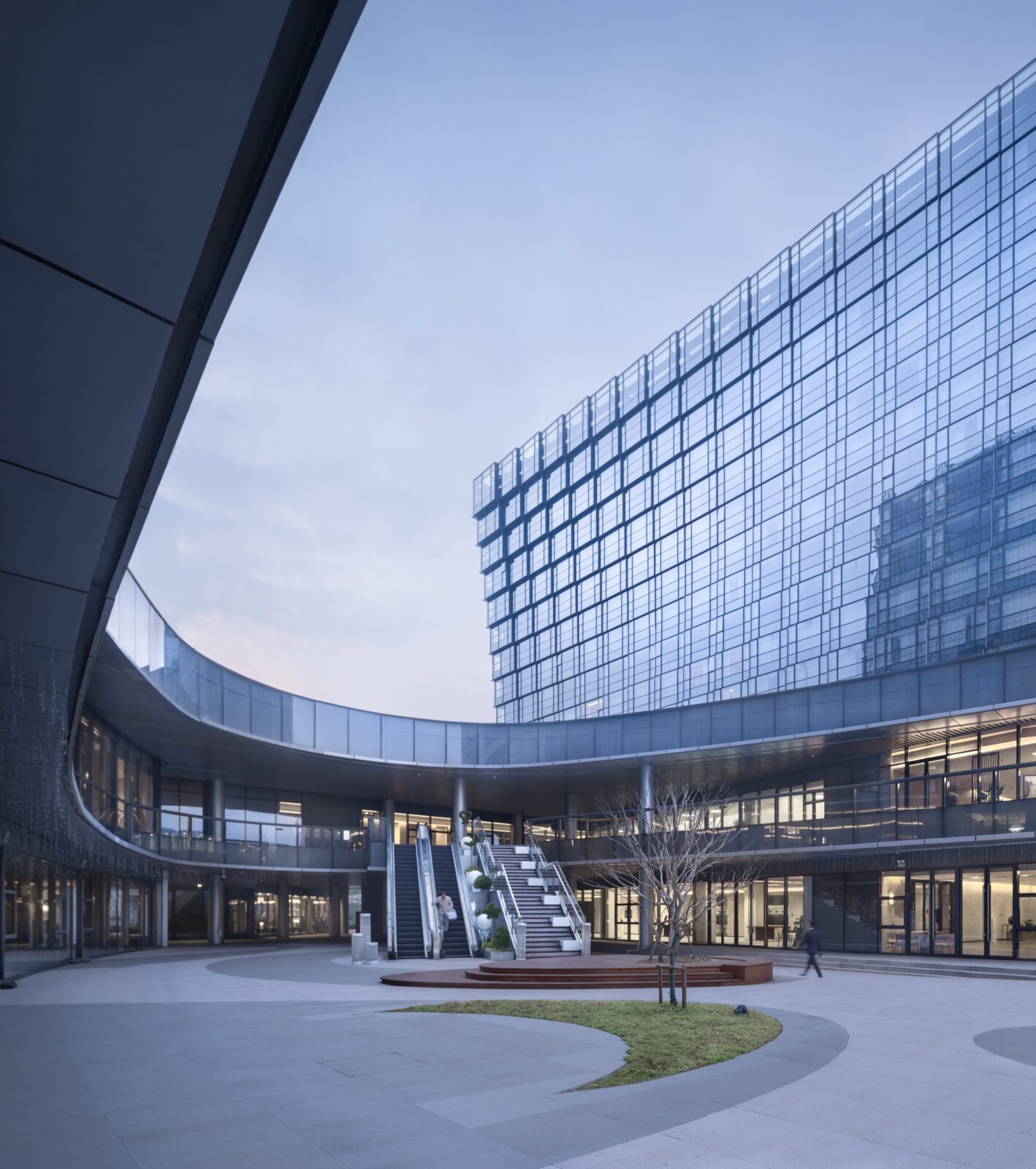
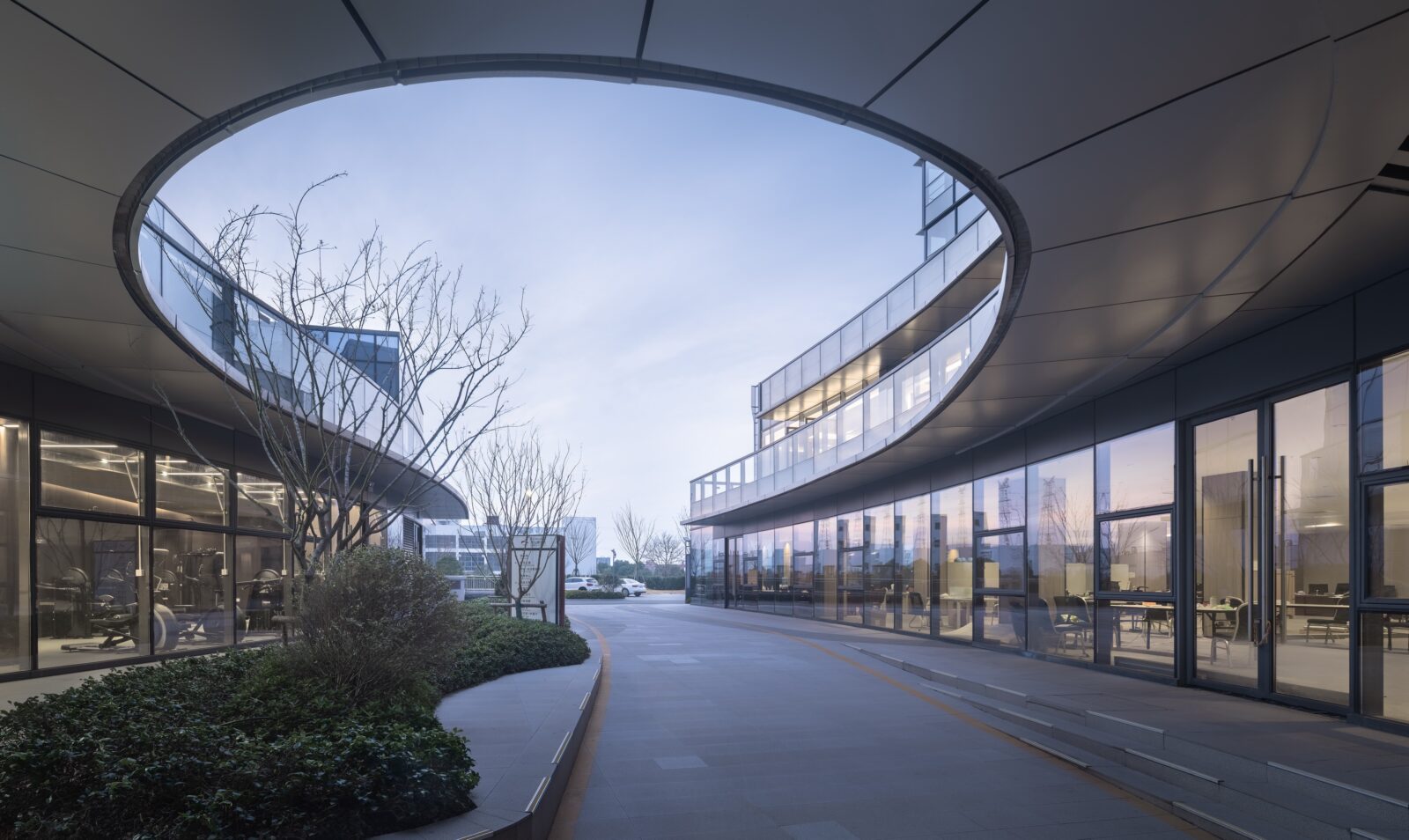
While the towers dominate the skyline, the experience at street level is just as important. The base of the project features a commercial podium that connects everything. It’s designed as a dynamic passage that links the east and west pedestrian routes.
The architects curved the entrances of the buildings to face each other, creating a sort of embrace that guides people into the central space. This area is filled with water features, seating, and landscaping, offering a spot for researchers and business professionals to take a break. It turns the space between the buildings into a lively engine for the district, encouraging people to stop and talk rather than just rushing to the elevator.
Lighting up the night
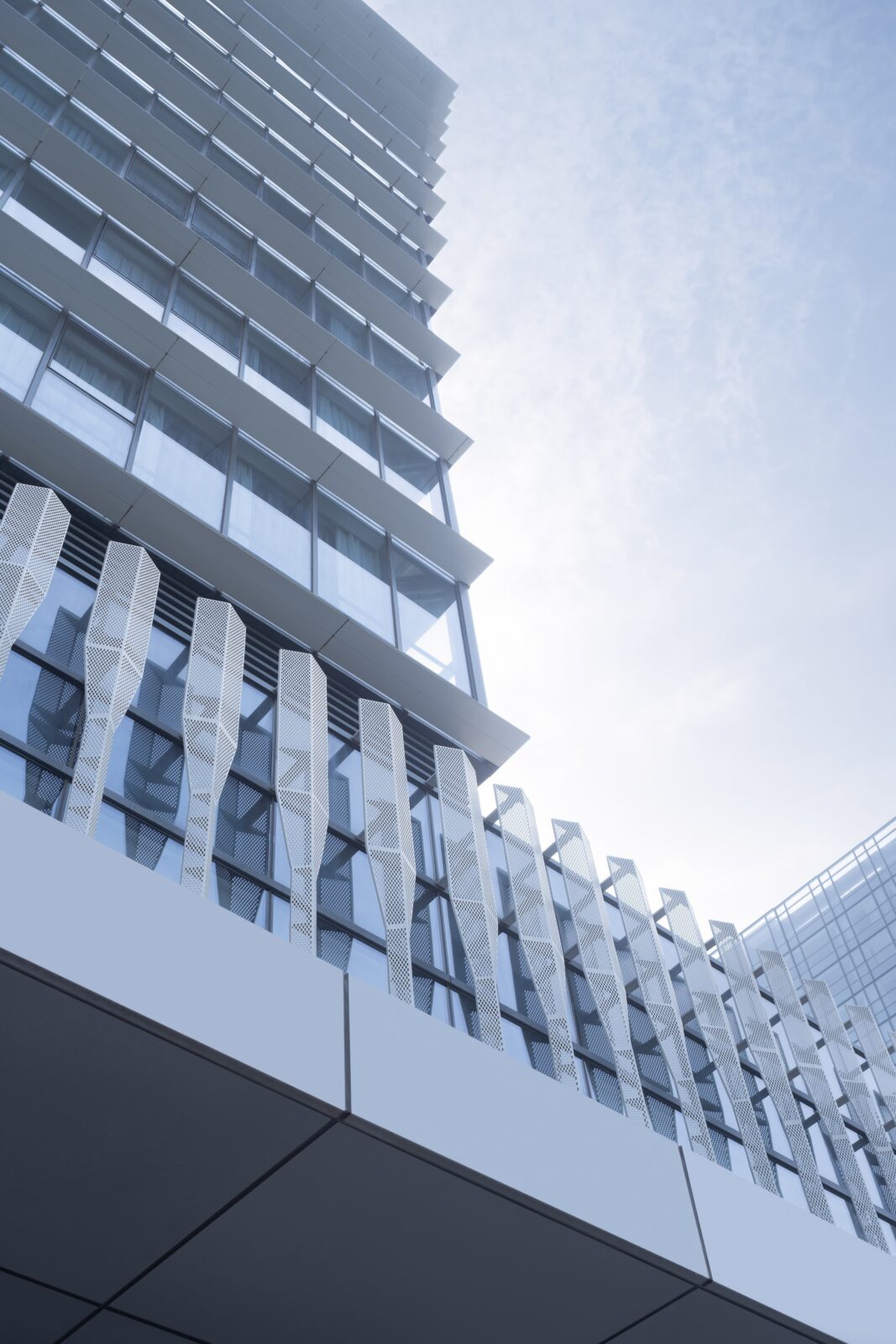
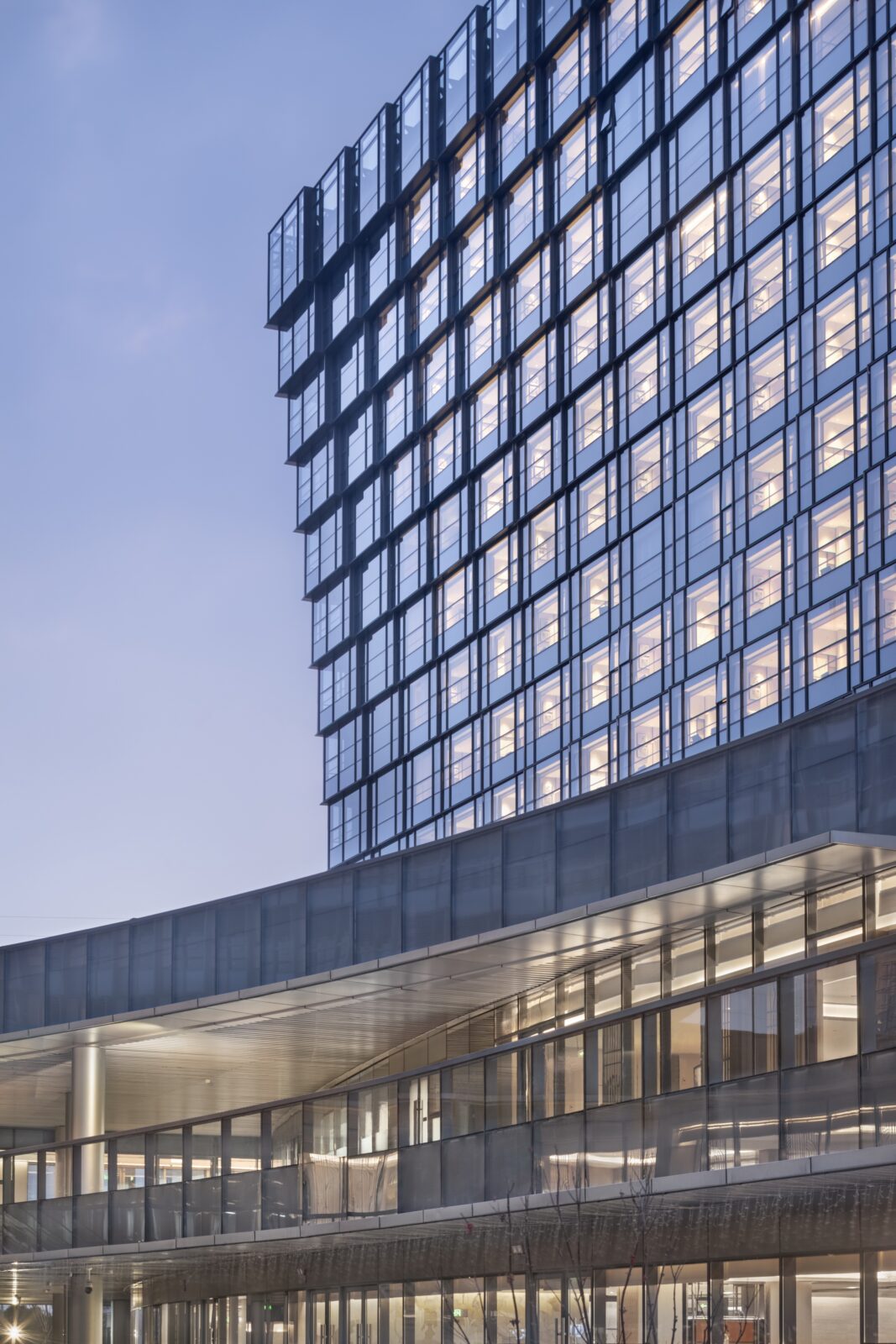
The facade does a lot of heavy lifting for the project’s identity. The team used prefabricated modules to construct the exterior, allowing for a high level of precision. These modules cantilever incrementally, which is what creates that gentle, sloping “sail” effect without needing overly complex structural gymnastics.
When the sun goes down, the building changes character again. Dynamic lighting panels are integrated directly into these facade modules. Coloured side lights trace the curves of the towers, reinforcing the sailing form against the night sky. It turns the centre into a glowing landmark for the BPV Innovative Zone, making it visible from miles away.
The Business Center of BPV succeeds because it doesn’t try to overpower its surroundings. It respects the urban grid with its rectilinear boundaries while using its internal softness to create a friendly atmosphere for the people working in Nanjing’s biotech sector. By mixing smart solar orientation with a form that references the natural flow of wind, the design team has created a space that feels distinct and welcoming. It is a fresh take on corporate accommodation, proving that functional support buildings can still have plenty of personality.
Project info
Design Company: City-Town Architects, U+ DESIGNPARTNERS
Lead Designer: Xiao Lujiang
Design Team: Qian Zhengchao, Zhang Jinshui, Xie Hui, Tang Ben, Yu Zhiqiang, Sun Mu
Photo Credit: Hou Bowen
Project Location: Nanjing, Jiangsu Province, China
Project Date: 2022


