Widely acclaimed and recognised as one of India’s most iconic architecture and design practices, Sanjay Puri Architects has long occupied a distinct position within the global architectural landscape. Led by Sanjay Puri, the Mumbai-based studio is celebrated for a body of work that is both instantly recognisable and rigorously contextual, defined by expressive contemporary forms shaped by climate, culture, and a deep understanding of place. Across typologies and scales, the practice has consistently challenged conventional boundaries, producing architecture and interiors that are as experiential as they are precise.
With more than 250 awards to date, including international recognitions from the World Architecture Festival, LEAF Awards, ArchDaily, Architizer, and WA Community, the firm’s influence extends far beyond India. Sanjay Puri Architects is repeatedly cited among the world’s leading design studios, earning a reputation for work that balances sculptural ambition with technical clarity and human-centred thinking. Each project, whether architectural or interior in scope, reflects a careful orchestration of movement, light, and material, resulting in spaces that engage the senses while remaining grounded in their context.
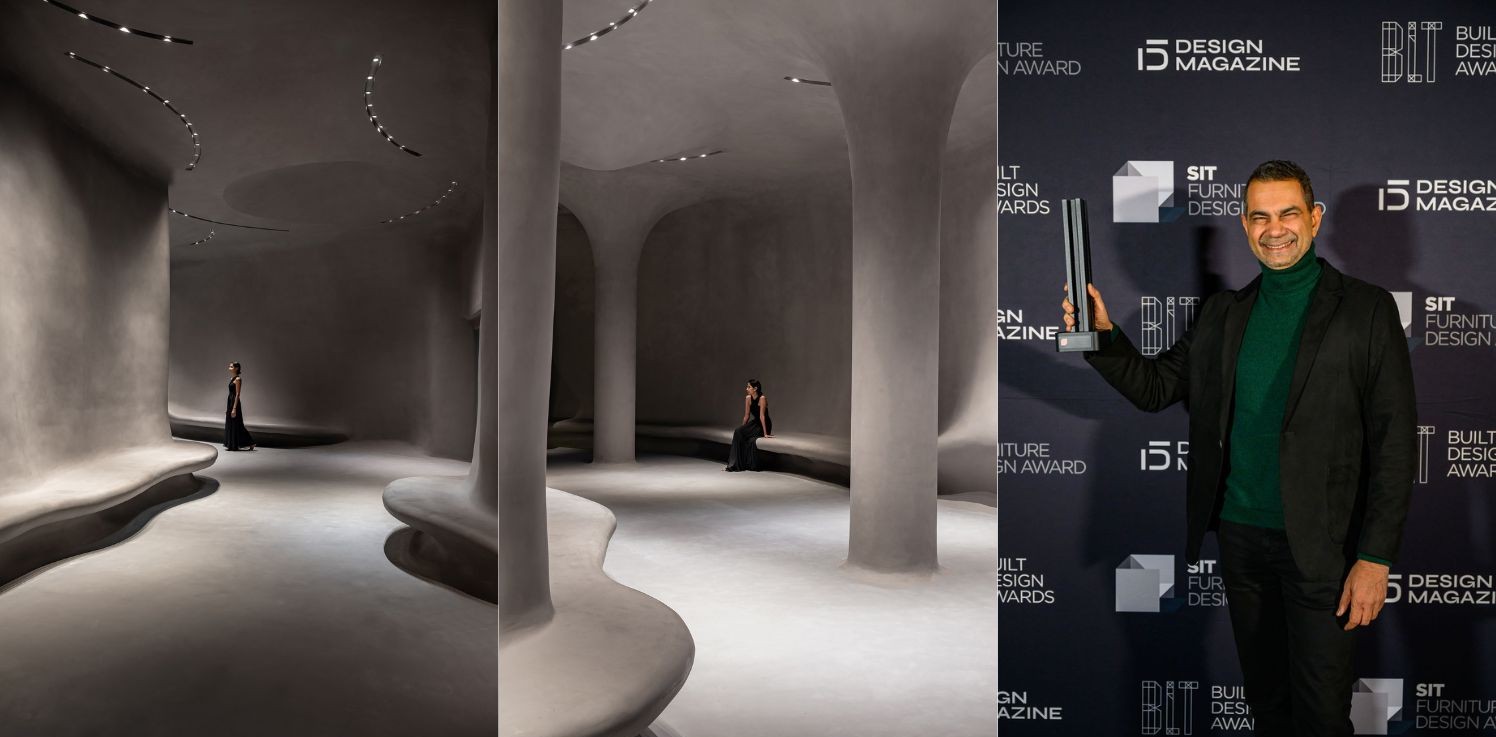
This philosophy is powerfully embodied in the Aatma Manthan Museum, recipient of the BLT Built Design Awards – Interior Design of the Year. Located beneath the monumental Statue of Belief in Nathdwara, Rajasthan, the project presented an extraordinary challenge: to create a meaningful interior experience within a complex, irregular structure at the base of a 369-foot-high statue. Rather than approaching the museum as a conventional container for artefacts, Sanjay Puri reimagined it as a spatial meditation, a sequence of immersive environments designed to guide visitors inward.
In this interview, Sanjay Puri reflects on how his early, hands-on training shaped his design instincts, how mythology and philosophy informed the museum’s conceptual framework, and how architecture can move beyond representation to become an emotional and psychological journey.
Can you tell us a little about your background? How did your experience shape the way you approached designing this project?
I started working with an architectural firm at the age of 18, prior to joining architectural school for a formal education.
I had completed multiple sets of working drawings and details, site visits to interior and architecture projects, and meetings with clients before joining an architectural school.
This practical knowledge allowed me a very comprehensive understanding of materials & processes. There are multiple interior sites where sketches have been made directly on site, with lines, angles or curvatures marked directly and then executed as opposed to drawing everything in an office.
This was the attribute that helped create this free-flowing fluid space for the Aatma Manthan Museum. While the basic planning was done in the office with multiple sketches, the execution on site was overseen and modified to achieve the derived fluidity.
What were your first thoughts when you were invited to create a museum dedicated to “aatma manthan” under a 369-feet statue, and what brief did you give yourself before you began sketching?
The very first thoughts were to create a museum with various aspects of Lord Shiva. We researched his story, the numerous names he was known by and thought of creating different spaces to depict different aspects based on history.
Based upon mythology, Lord Shiva attained spiritual divinity after a long period of meditation. Upon learning this aspect, we decided to create a series of experiential spaces that are meditative or contemplative in nature, instead of a museum with artefacts and writing.
The essence of his spirituality came from the soul (aatma), mind (mana), and body (tann) being one, holistically.
It is this aspect that became the key value to be experienced by the design.
How did you translate the triad of soul (aatma), mind (mana) and body (tann) into the design? What kind of journey did you want visitors to experience as they move through the museum?
Our intention was to move beyond a traditional artefact-based museum and instead create a meditative spatial journey inspired by Lord Shiva. As we studied his mythology, we were drawn to the idea of spiritual oneness achieved through deep meditation, where soul (aatma), mind (mana) and body (tann) exist in harmony.
This triad became the core design principle. Each zone of the museum evokes one aspect — from sensory awareness to introspection — ultimately guiding visitors toward a unified, contemplative experience. The museum is designed as an inner journey, mirroring Shiva’s path to spiritual alignment.
How did you tackle the irregular floor plan and manage to create a clear sequential flow of spaces, rather than a museum that feels fragmented?
We looked at the irregular shape as a challenge & made multiple configurations to fragment the overall volume into different spaces with different experiences. Lord Shiva has 108 names. A number totalling 9 is very auspicious in Hinduism.
Our final plan created 18 rooms of varying sizes based upon the column grid & available space.
These spaces are entered sequentially by orchestrating the circulation path through carefully placed openings.
What guided your decision to work with a neutral palette throughout, and how did colour, light and material help you support the audio-visual and immersive installations?
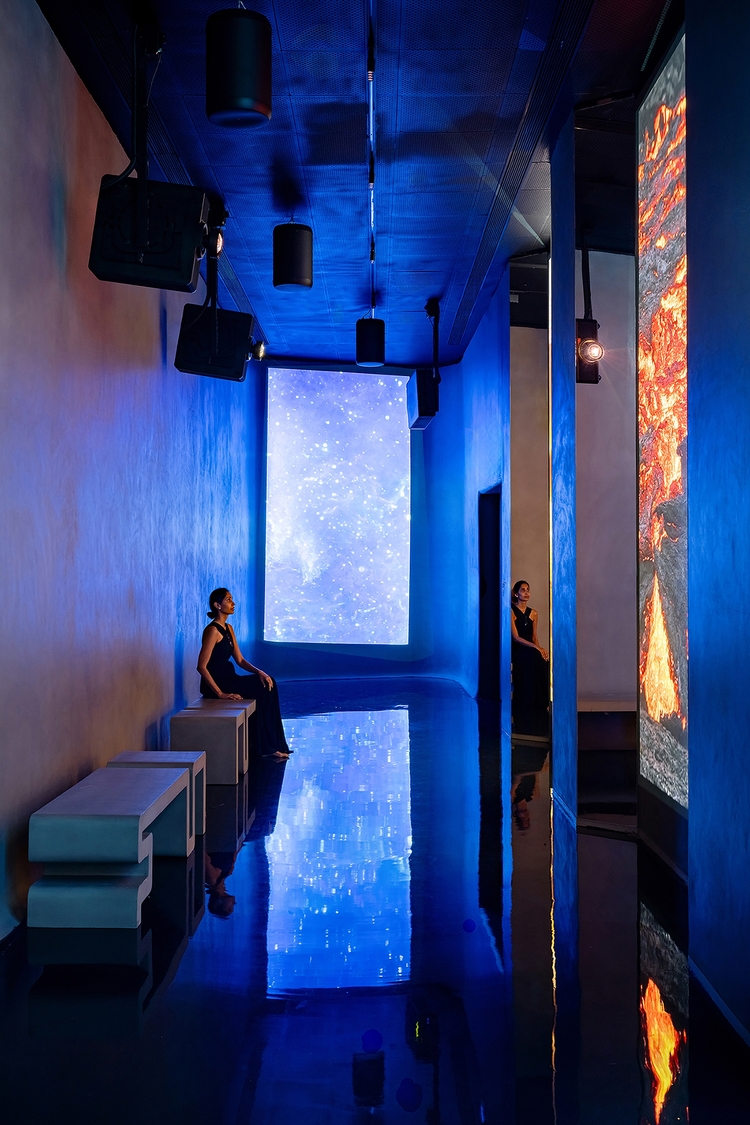
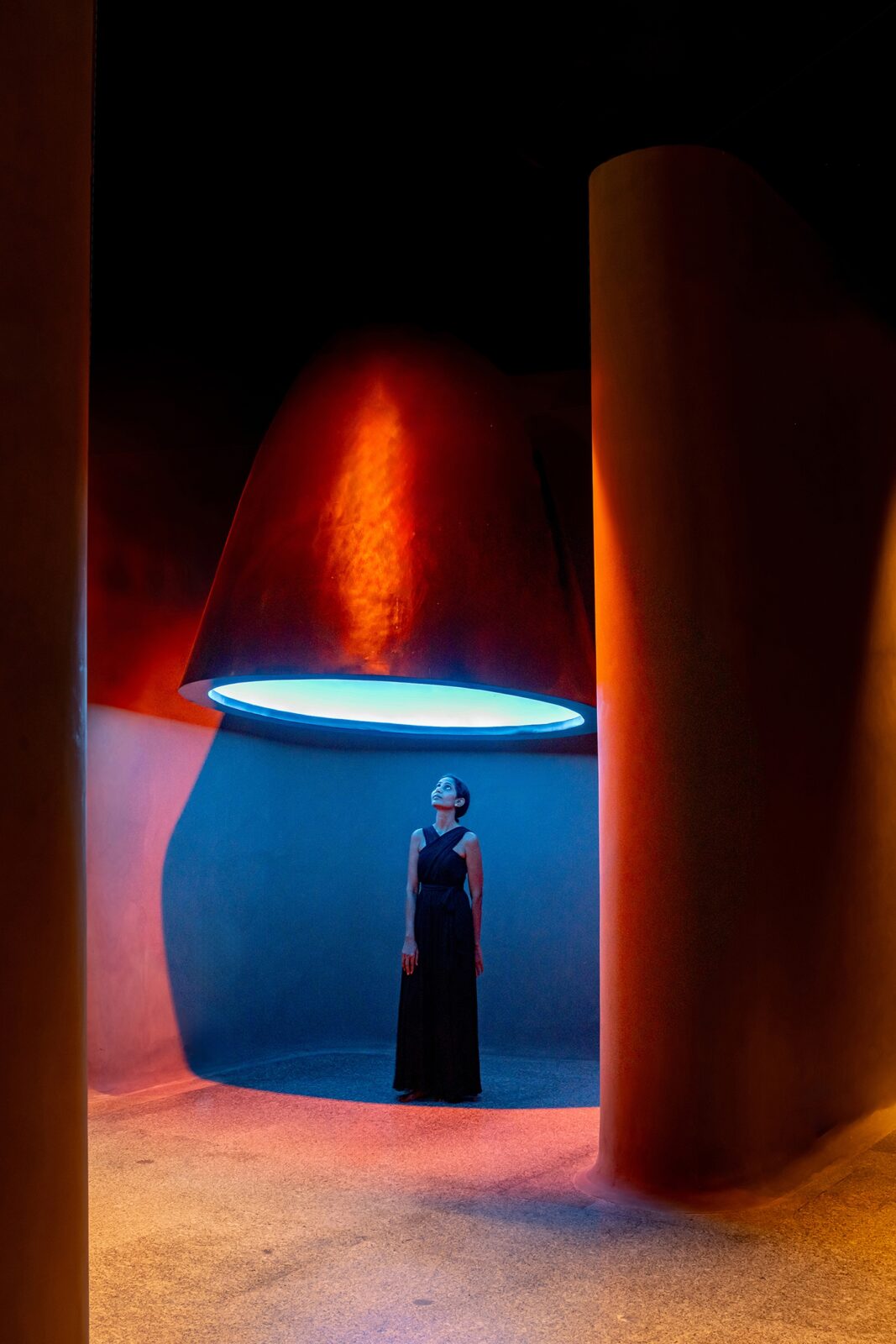
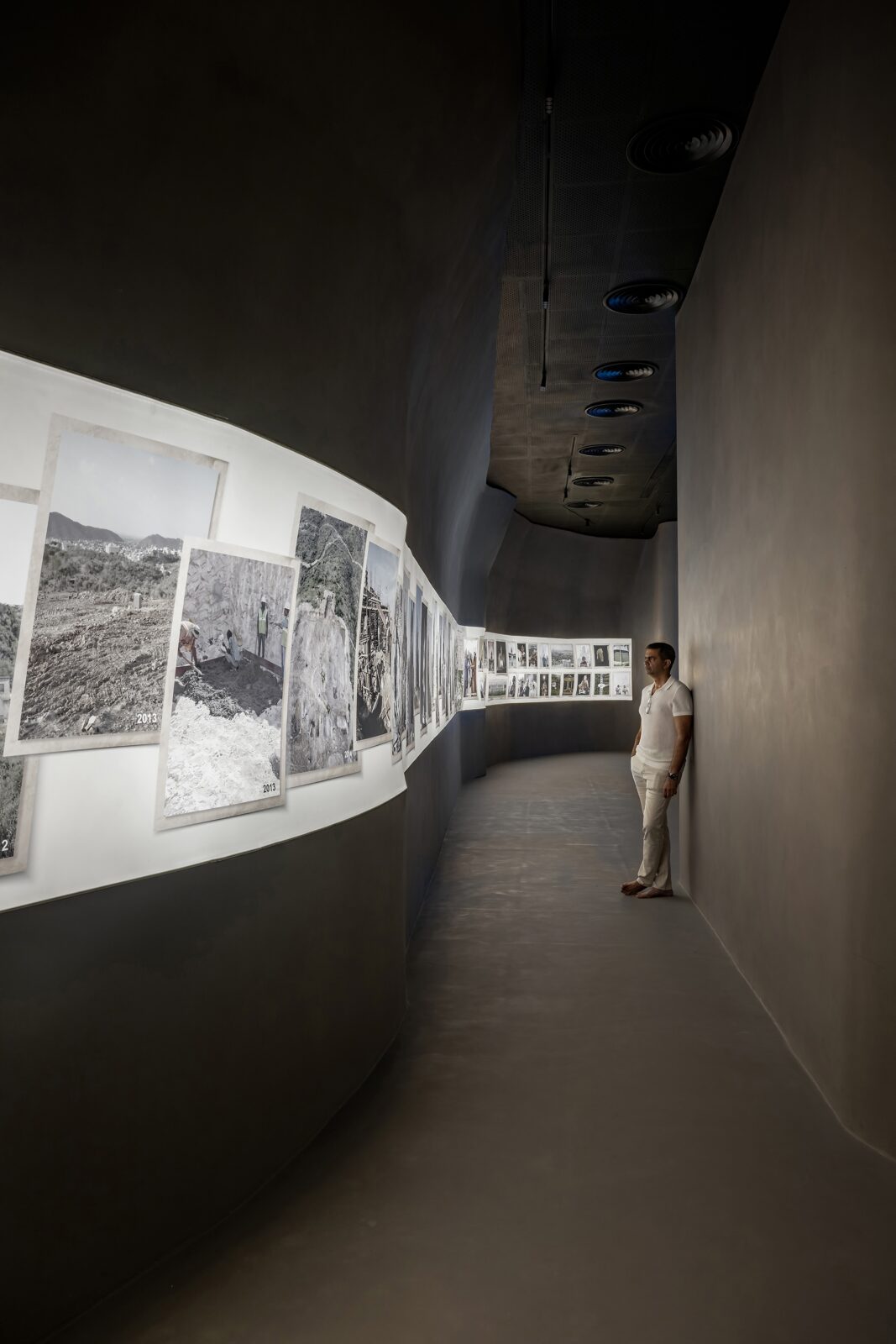
We needed the space to be neutral throughout to enhance the impact of the sound and light in the immersive spaces.
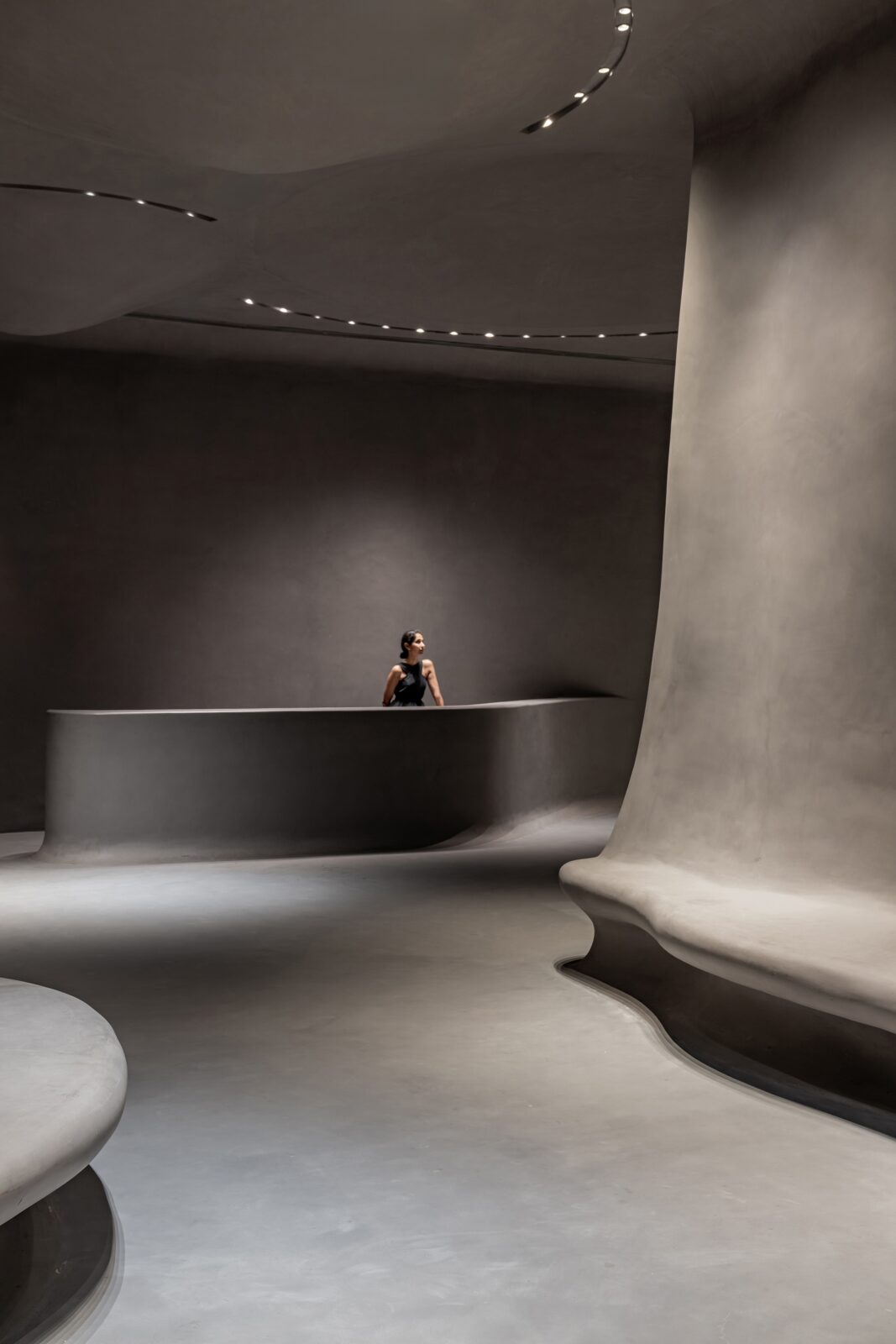
The neutral grey was chosen with specific controlled lighting to calm the mind immediately upon entering the lobby.
The sound, along with colour and light, is themed in each room. The first room only has the elements of fire, water & earth. One room has the universe depicted. The sounds are meditative as well as informative, based on the rooms.
What were the most challenging design or coordination moments in this project, whether technical, conceptual or client-related, and how did they change the project along the way?
The most challenging aspect was aligning everyone involved toward a non-traditional museum experience. Instead of narrating the history or mythology of Lord Shiva, we proposed a sequence of immersive, meditative spaces that reflect how Shiva himself attained spiritual transcendence. Convincing stakeholders to move away from conventional displays and embrace a purely experiential, contemplative approach required extensive discussions, but ultimately strengthened the project’s clarity and purpose.
How do you imagine a visitor moving through the museum for the first time? What emotional or mental transformation would you hope they feel between entering and leaving?
We imagined visitors moving slowly through each space, letting the space guide them into a quieter, more reflective state. The intention was for them to experience the gradual calm that meditation brings — not just while inside the museum, but even after they leave.
The client has shared that many visitors naturally respond this way, describing how the spaces ease their senses and leave them feeling noticeably calmer..
How do you feel about receiving this award for “Interior Design of the Year”? What does it mean for you personally?
It is an honour to receive the Interior Design of the Year award from BLT — not just for us as architects, but for the clients and every consultant, contractor and craftsperson who contributed to the project.
Personally, it means even more. This design was simple yet radical in how the initial brief was re-interpreted and transformed. Knowing that the space positively impacts hundreds of visitors every day already makes the project deeply fulfilling. Receiving such a significant award for it adds a profound sense of satisfaction and meaning.
What, if anything, would you refine if you could revisit the Aatma Manthan Museum today?
We would not want to change anything yet since it is being positively experienced by numerous people daily.
What advice would you give to younger designers who want to engage with spiritual or introspective themes without slipping into cliché or empty symbolism?
There is a real need for spaces that genuinely calm the senses. My advice is to focus on creating environments that naturally encourage meditation, reflection and quiet — rather than relying on symbols or decorative references.
If the space itself feels peaceful and helps people slow down, it will convey spirituality in a sincere and meaningful way.