
Header: Madara Kupla
Once an industrial building located in a historic 1900s quarter, Augustine’s Garden has been turned into a residential venue with a contemporary urban garden. The building features post-industrial aesthetics that mirror its guiding concept of adaptive reuse, which implies the preservation and adaptation of any building, regardless of its original purpose.
The elements of Augustine’s Garden
Apart from the low-rise industrial building, the Art Nouveau tenement house was also a part of the project, which started with façade renovation and reconstruction of courtyard buildings. In the middle of the building, a relaxing urban garden is nestled with benches, chairs, and other types of outdoor furniture.
Lighting and insulation
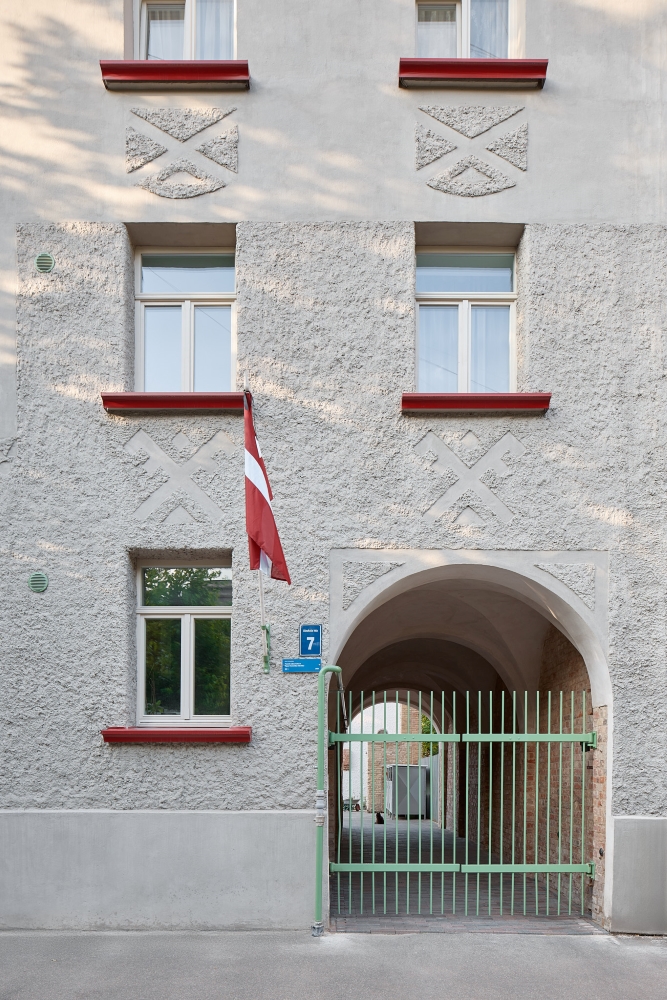
Art Nouveau tenement house designed by Aleksandrs Vanags in the National-Romantic style had to be renovated and insulated, which is a delicate task for such an old building. As a result, the façade was insulated from the inside, and the original décorations located outdoors have been restored. Typically for the architecture in Latvia of the time, the ornaments included rough plaster areas, which alternated with smooth ones, and carmine red accents on the roof and window sills. The gatehouse is completed with an olive green gate boasting a laconic design. Lighting elements are integrated in the façade window sills and on the wall.
Adaptive reuse approach
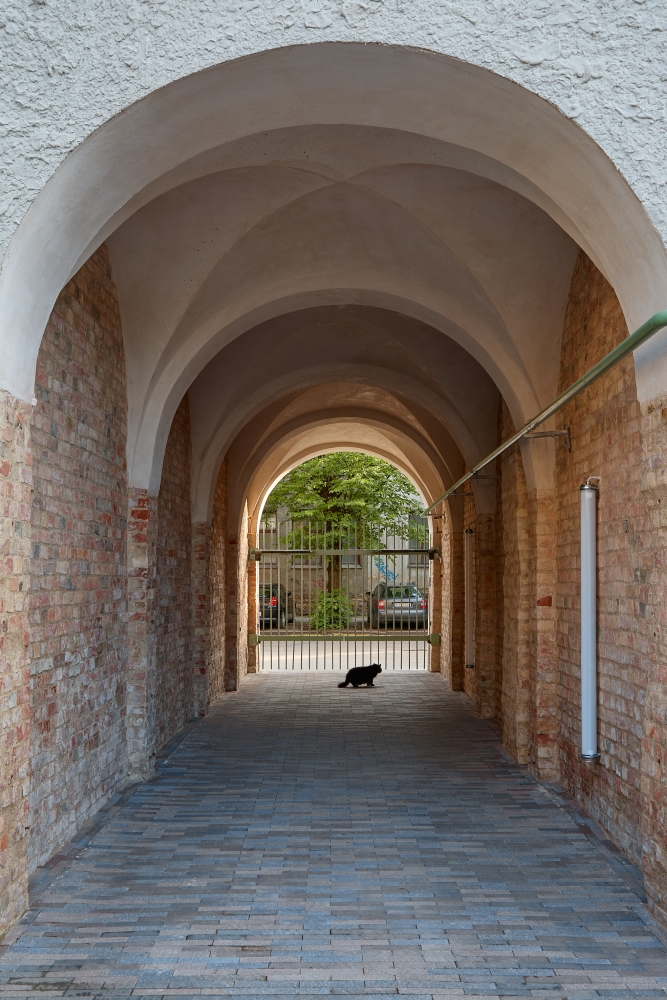
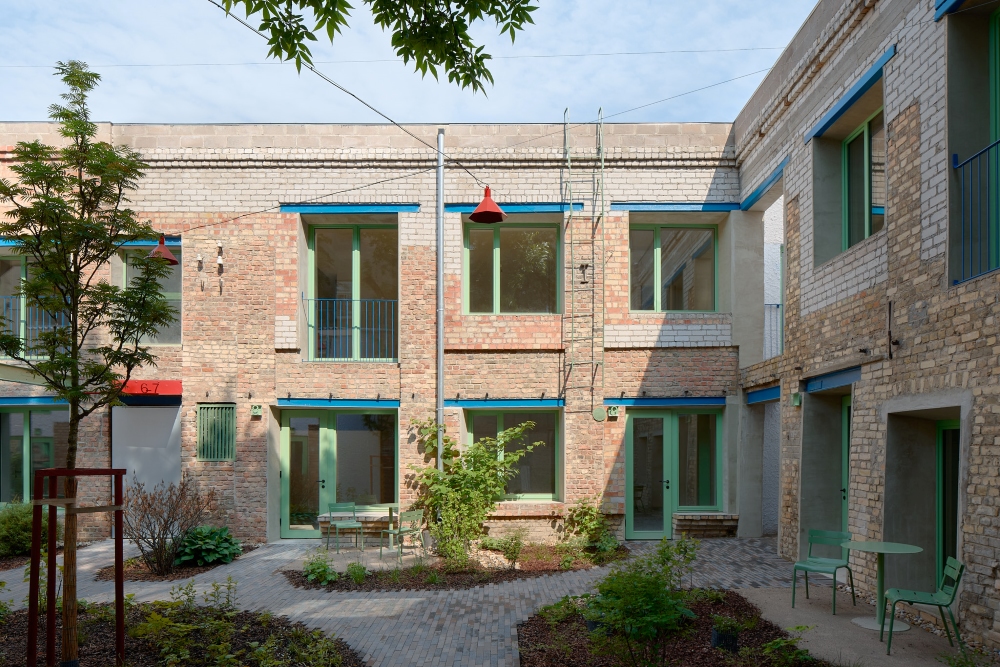
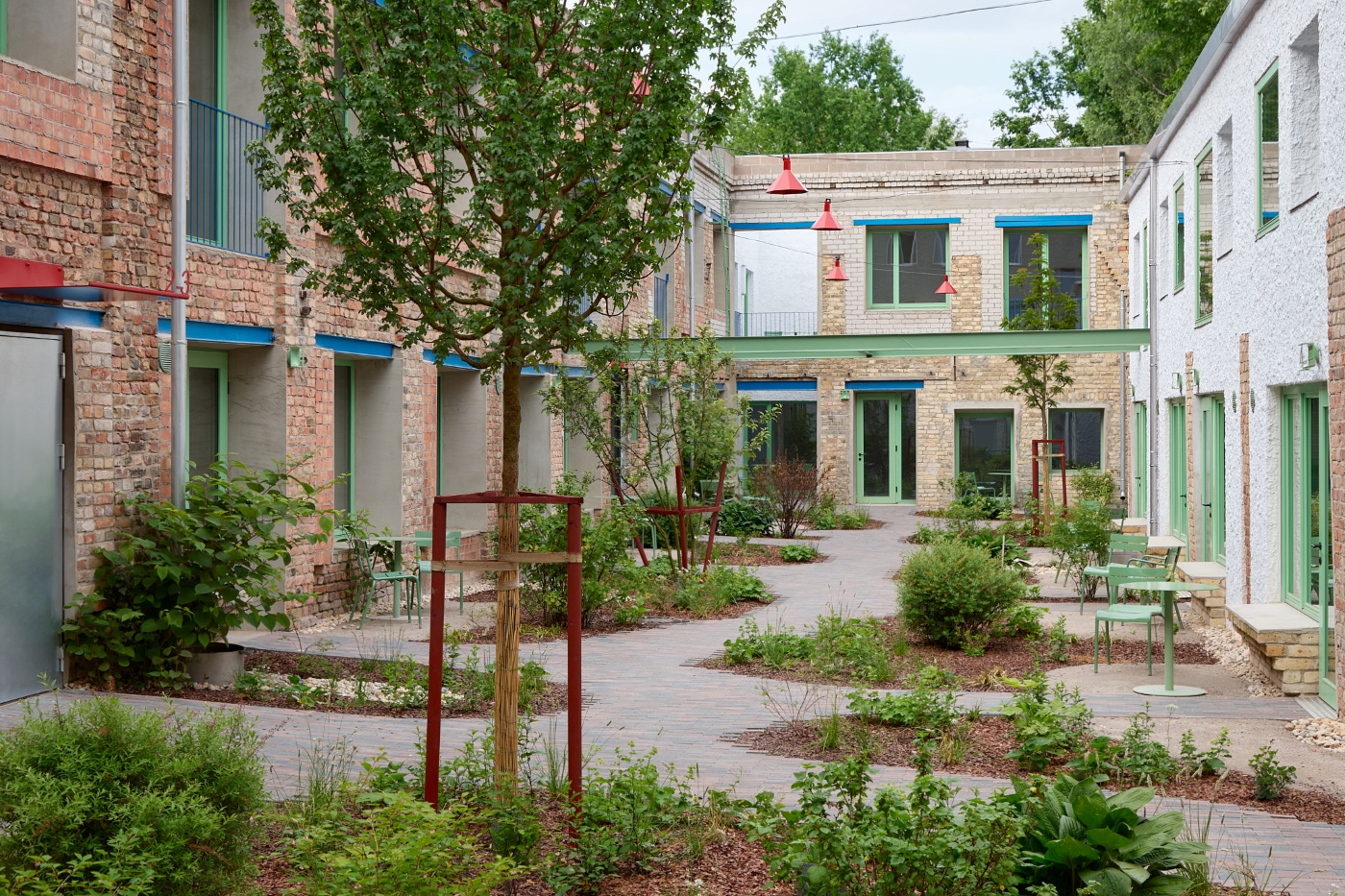
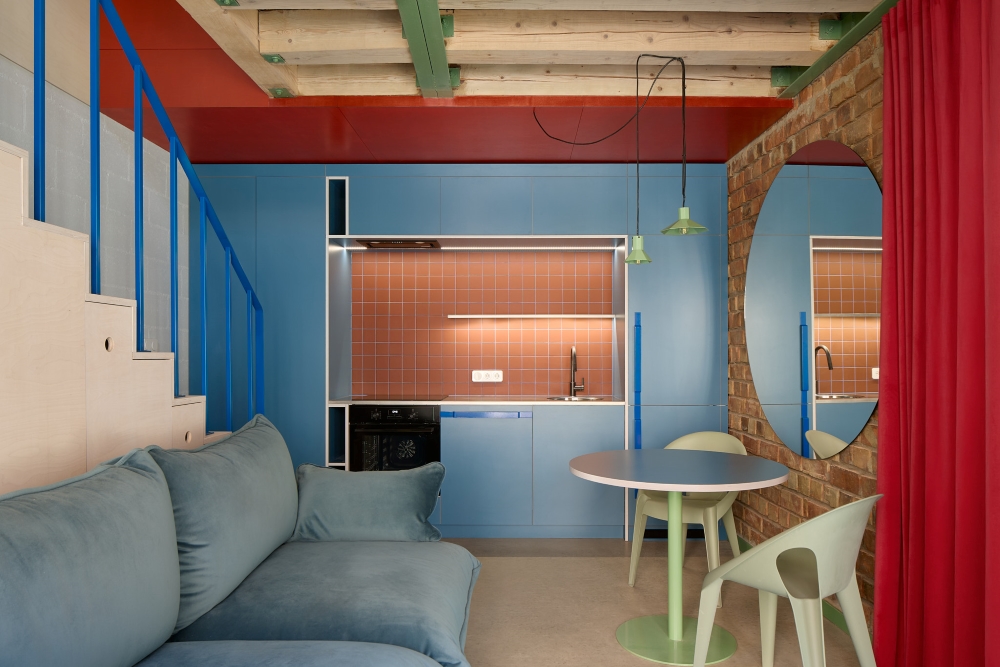
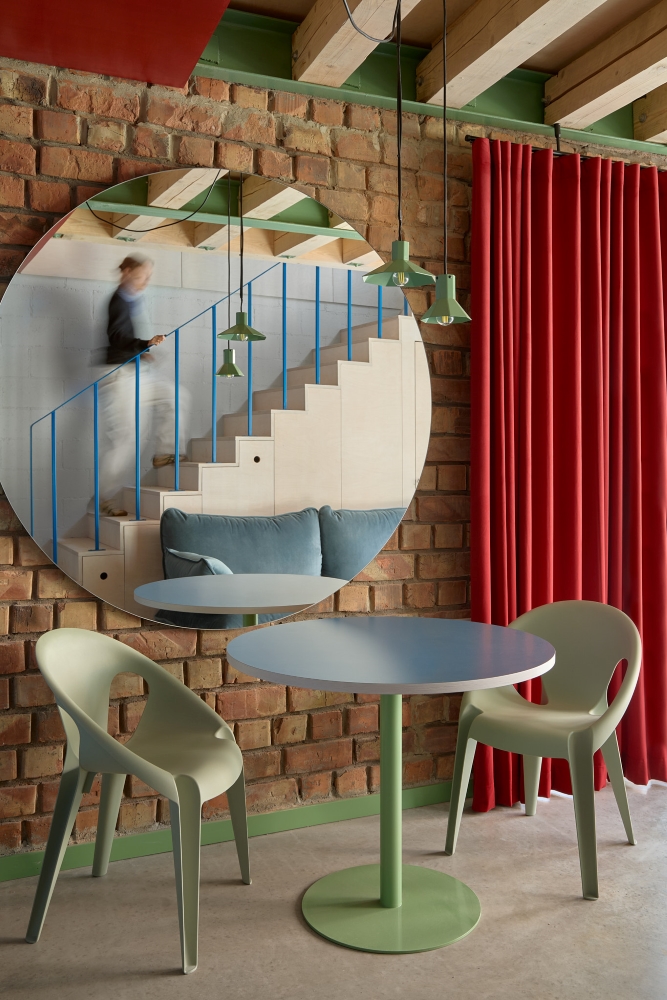
Once entering the courtyard, the visitors will find themselves inside a green oasis – the urban garden that is surrounded by industrial and workshop buildings. The structures incorporate building materials from different eras, from ceramic bricks dating back to the early 20th century, to white silicate bricks popular during the Cold War, telling the tale of Riga’s complicated history. As the designers decided to reuse the materials and preserve the existing structure, the interior layout has been adapted to the residential function. The Augustine Garden consists of both small studio duplexes and larger apartments featuring terraces and French balconies.
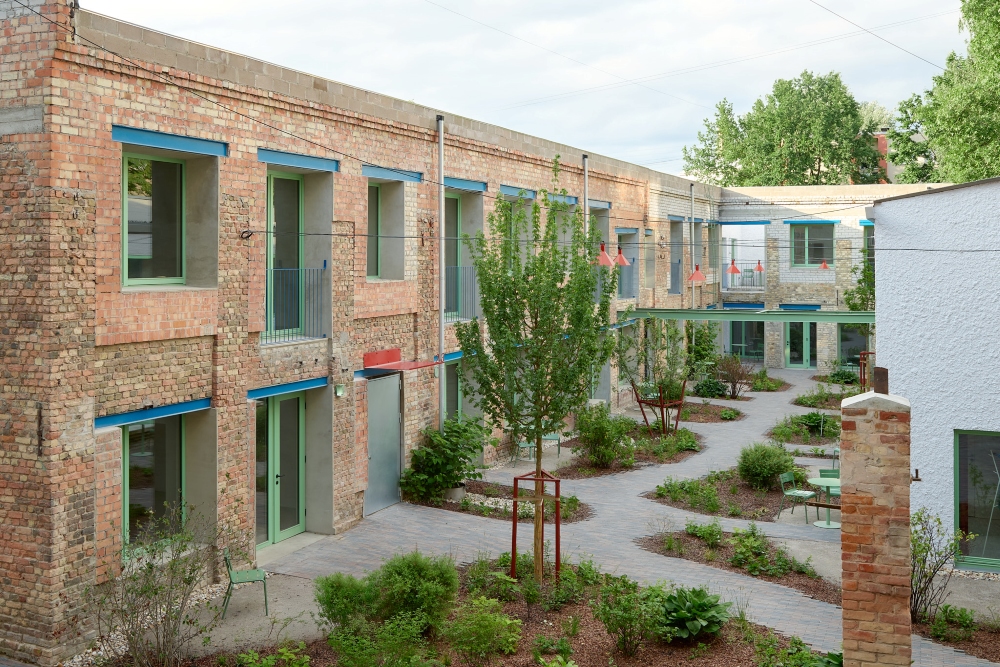
Fostering a sense of community
More than an architectural development, Augustine’s Garden is envisioned as a community-building project. The common spaces and architectural tools are used to help in this endeavour. For instance, the large ground-floor windows, with low and wide concrete window sills, can be used for sitting outside during the summer. The indoors flows seamlessly into the outdoor area, where small terraces boast a solid gravel base, intentionally designed to accommodate outdoor furniture. Rejecting the common practice of placing parking in the courtyards, Augustine’s Garden leaves room for bicycle parking and landscaping. The visitors can immerse themselves in the greenery, while the surrounding buildings provide relative privacy.
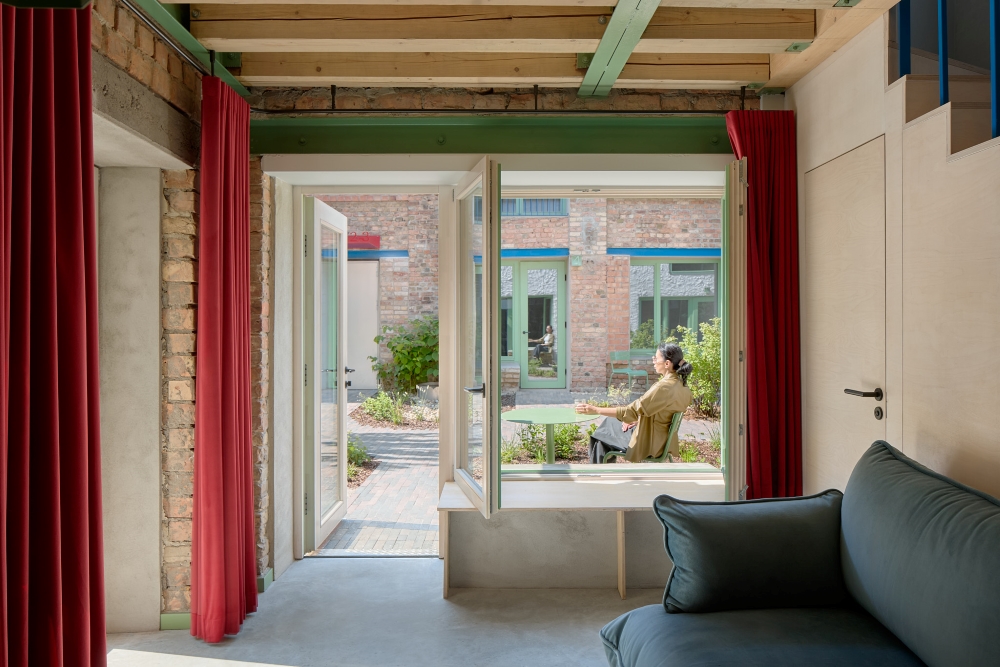
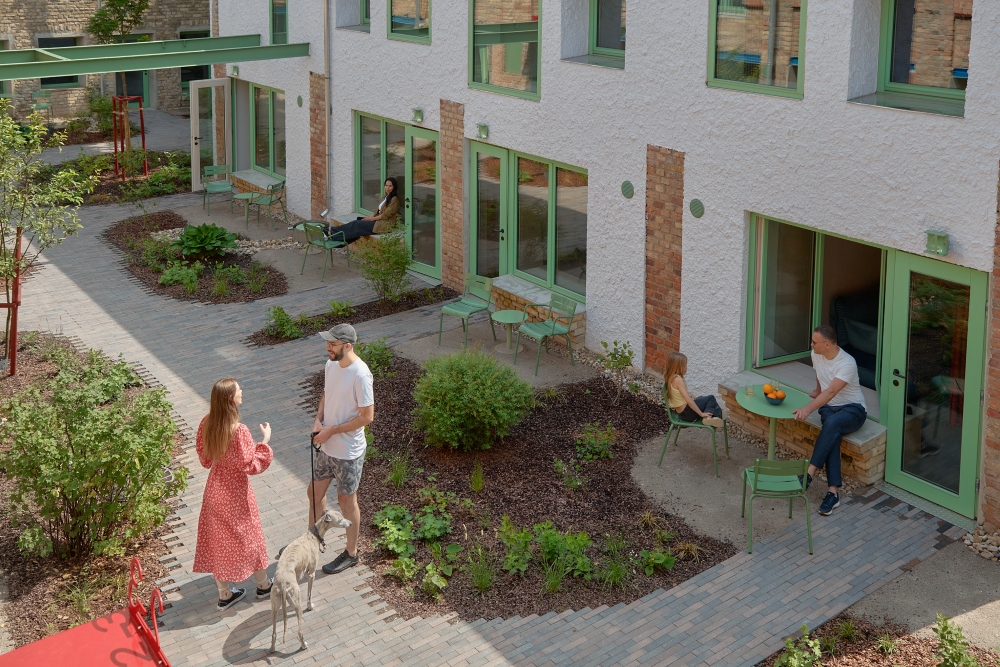
The complex is a compelling example of an adaptive reuse approach that raises the architectural value of buildings by reusing the maximum amount of materials and minimising new material use. By reconstructing the building following this approach, the Sampling architects provide it with a new function and distinct aesthetic identity.