



Header: Doublespace Photography
The collaboration between an architect and a client often defines the success of a home, but the House of Monitors takes this partnership to a functional extreme. Located on the edge of the Scarborough Bluffs in Toronto, this 4,175-square-foot residence is the home of a Resident Scenic Artist for the National Ballet of Canada and a shoring engineer. This specific combination of owner expertise drove the design logic. The house acts as a machine for catching light and a physical anchor into the unstable earth. Designed by Williamson Williamson, the project uses the building’s necessary structure to create a specific atmosphere, treating the construction materials as the finished product.
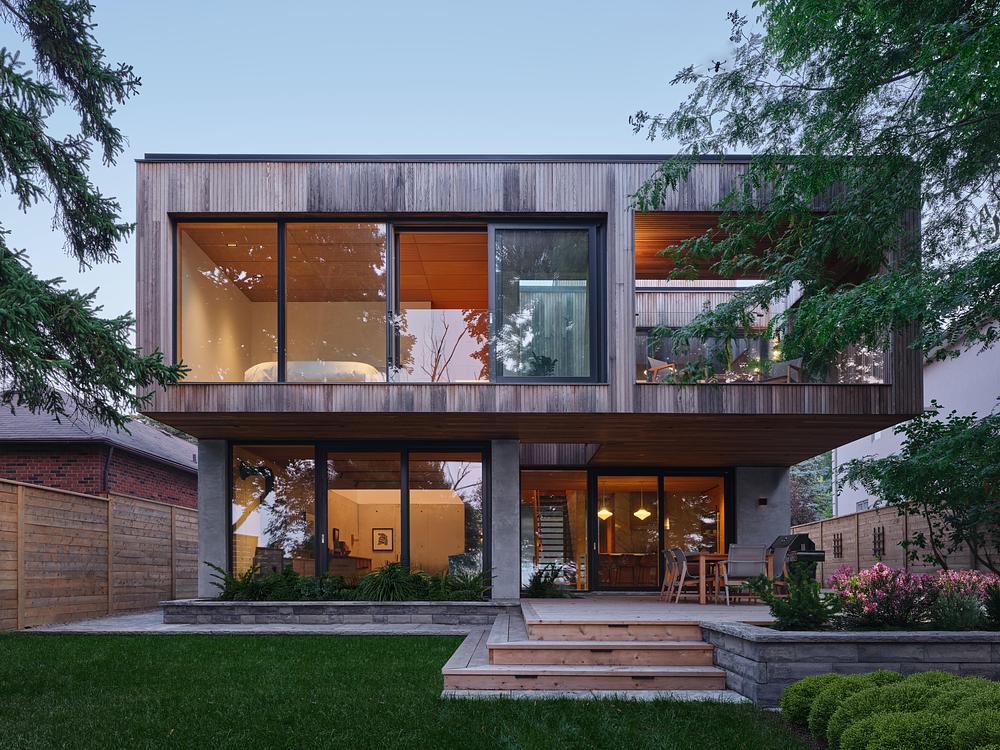

Building as inhabitable shoring
The site itself presents a difficult challenge. The Scarborough Bluffs are a 300-foot-high escarpment where erosion historically ate away the land at a rate of a meter per year. While conservation efforts in the 1960s stabilized the slope, the ground remains sandy and fragile. The design responds to this by treating the lower levels of the house as “inhabitable shoring.”
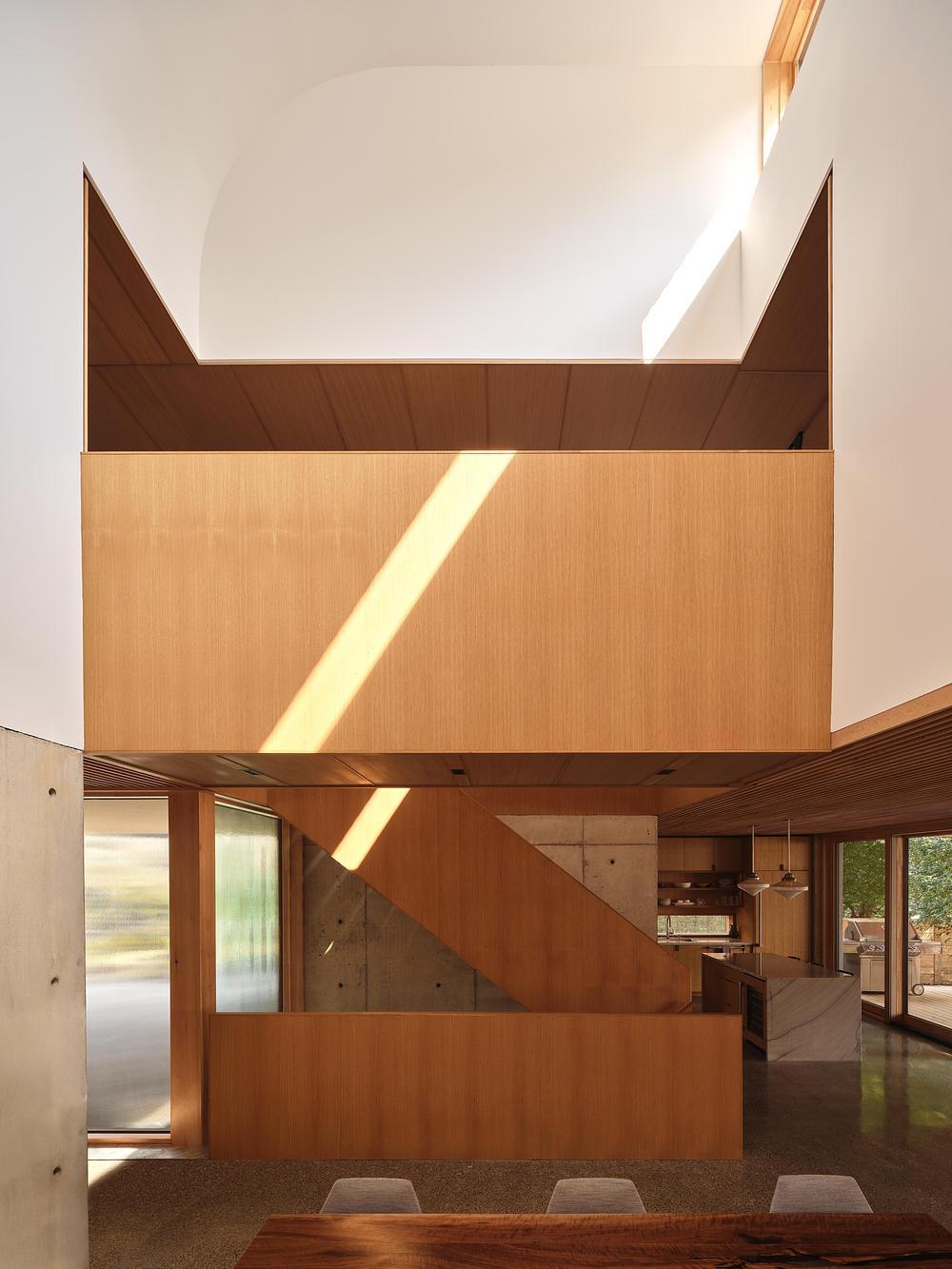
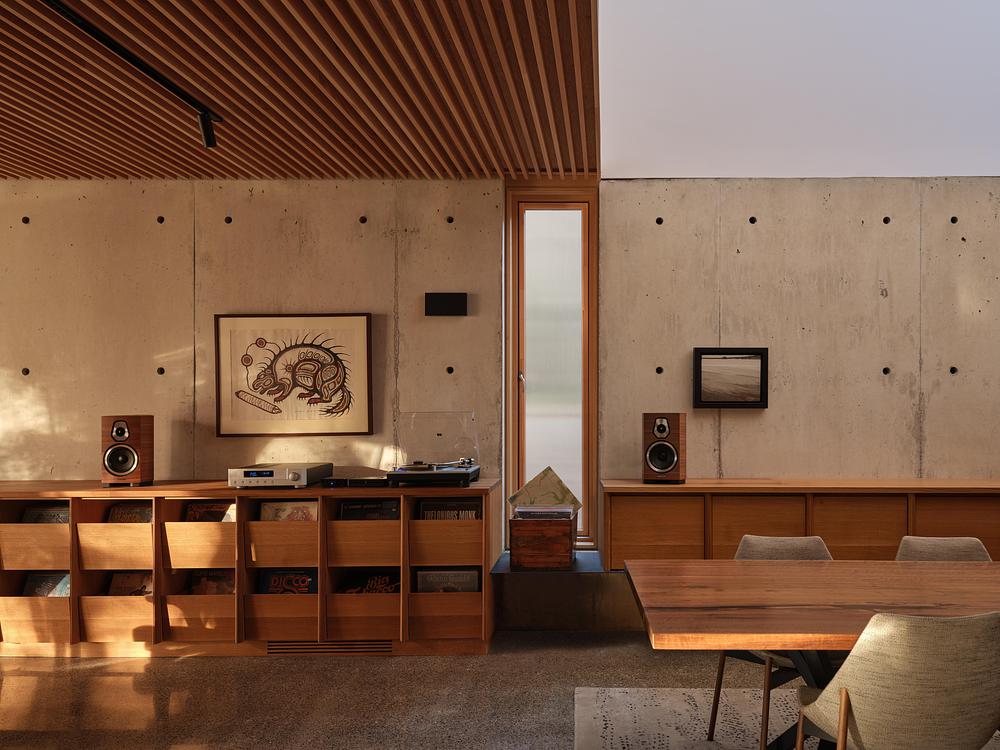
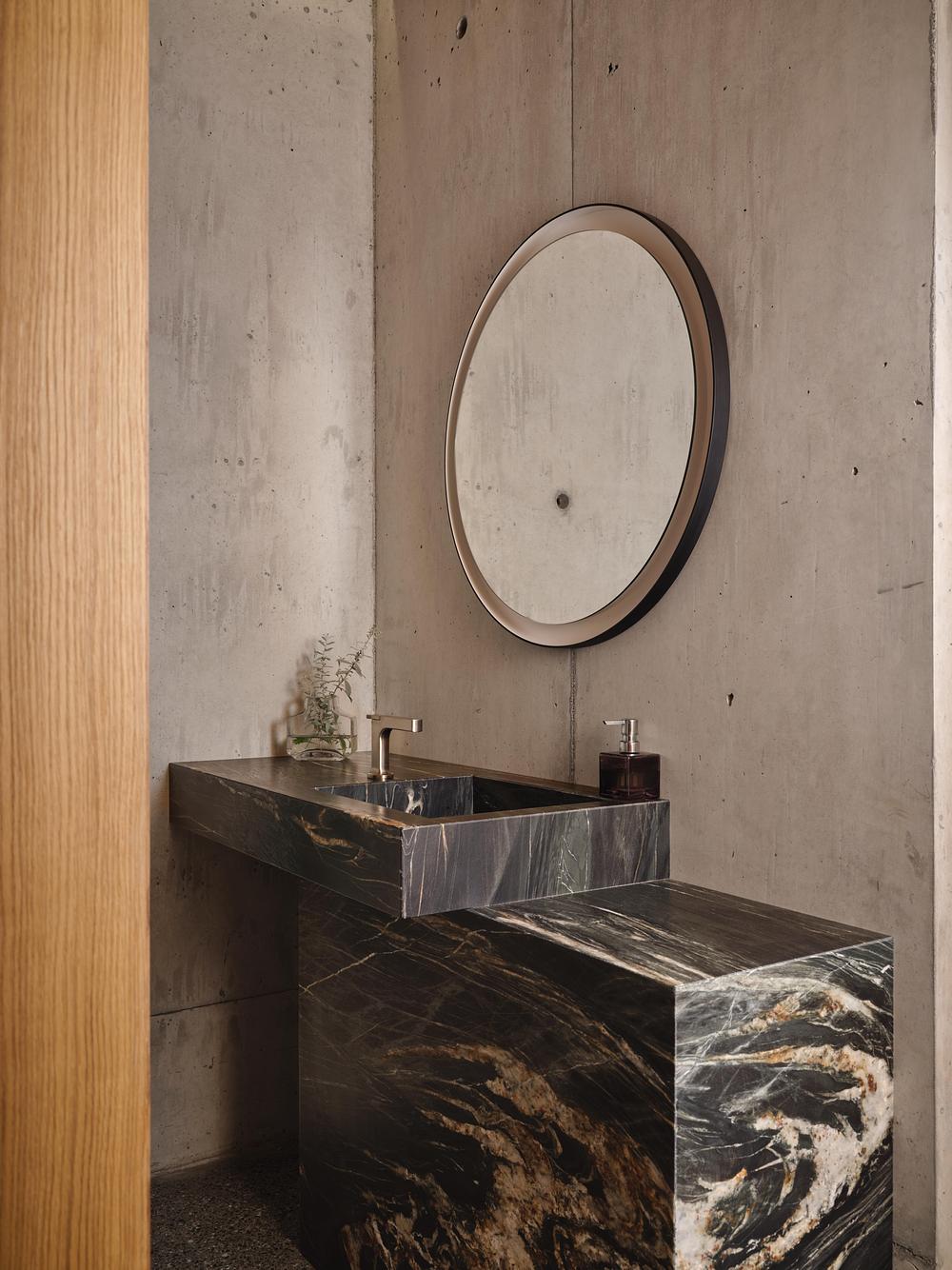
Concrete volumes rise directly from the soil, forming the structural spine of the home. This creates a heavy, stable base that minimises disturbance to the cliff edge. These concrete forms are not covered up at all and they remain visible inside and out, serving as the thermal mass, the primary support, and the aesthetic core of the building.
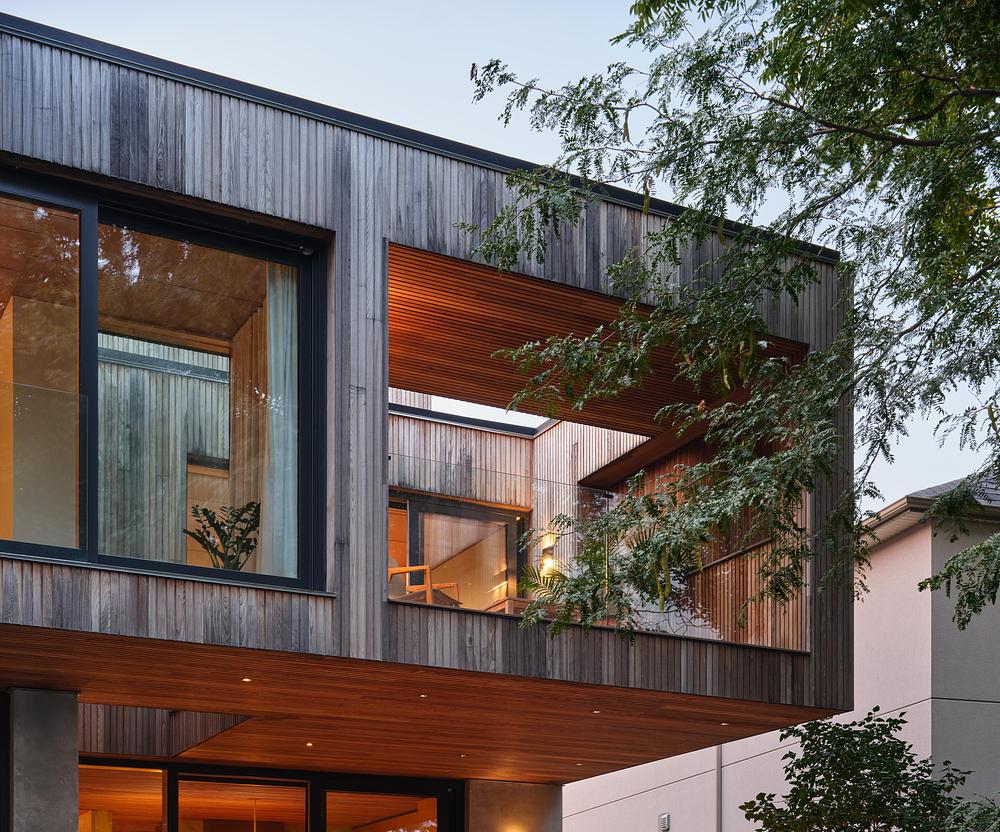
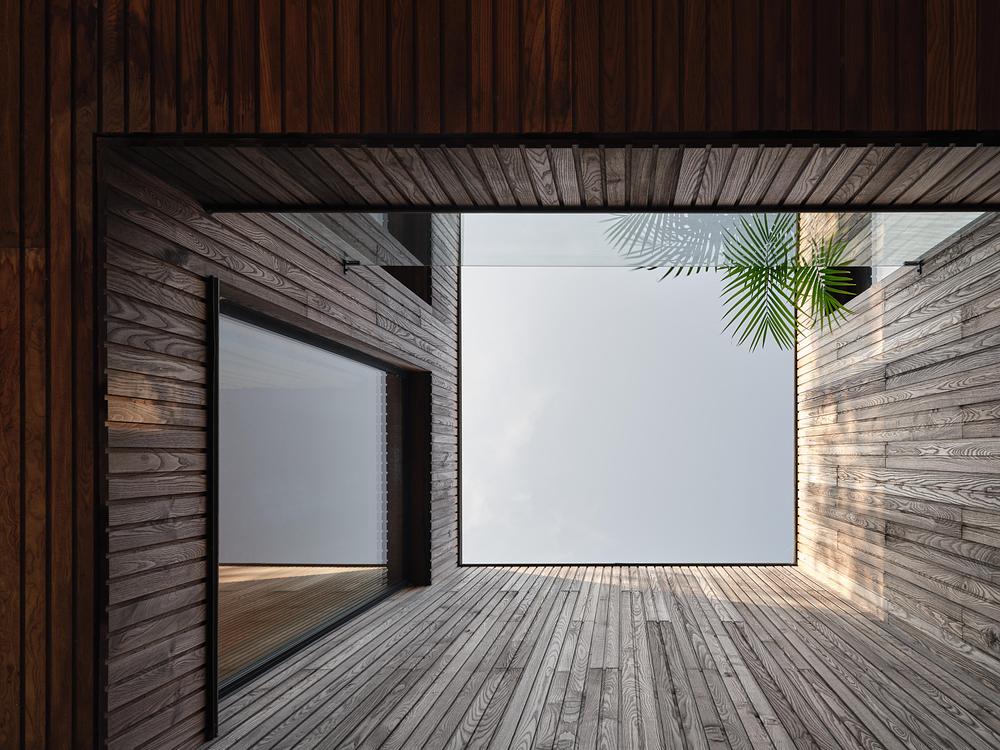
Resting on top of this heavy concrete base is a lighter wood volume that cantilevers out toward the street and the lake. This upper section is clad in TanTimber siding, creating a clear visual break between the earth-bound lower level and the airy upper quarters.
Choreographing light for art
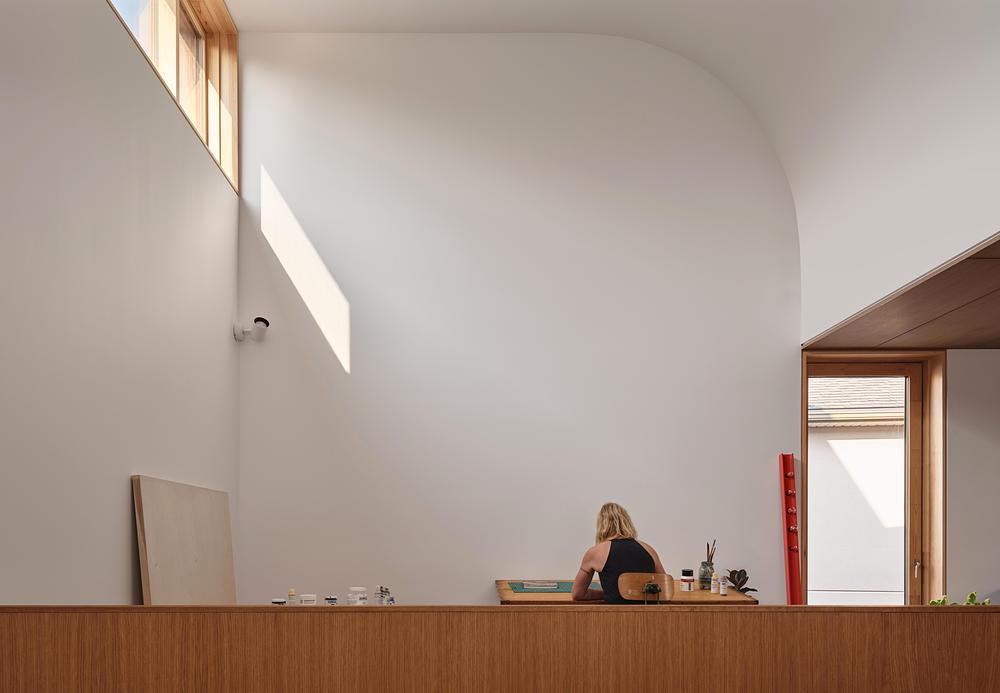
Because one of the owners works with light and scenery professionally, the way daylight enters the house was a primary concern. The design creates a painting studio that functions like a finely tuned instrument. Through virtual simulations and repeated studies, the team developed a north-facing clerestory window paired with a radiused ceiling. This curve helps distribute a soft, even daylight across the room, which is critical for painting without the interference of harsh shadows or direct sun.
Light is not just for working, however. A massive, 26-foot-tall light monitor sits in the centre of the plan. This vertical shaft cuts through the house, bringing sun down into areas that would otherwise be dark. It creates a feeling of huge space without actually increasing the floor area. White painted surfaces inside these monitors bounce the light deep into the floor plan, cutting down the need for artificial bulbs during the day. When lights are needed, the home utilises fixtures from WAC Lighting and Titanium Technologie alongside vintage pieces collected by the owner.
Materials and interior flow
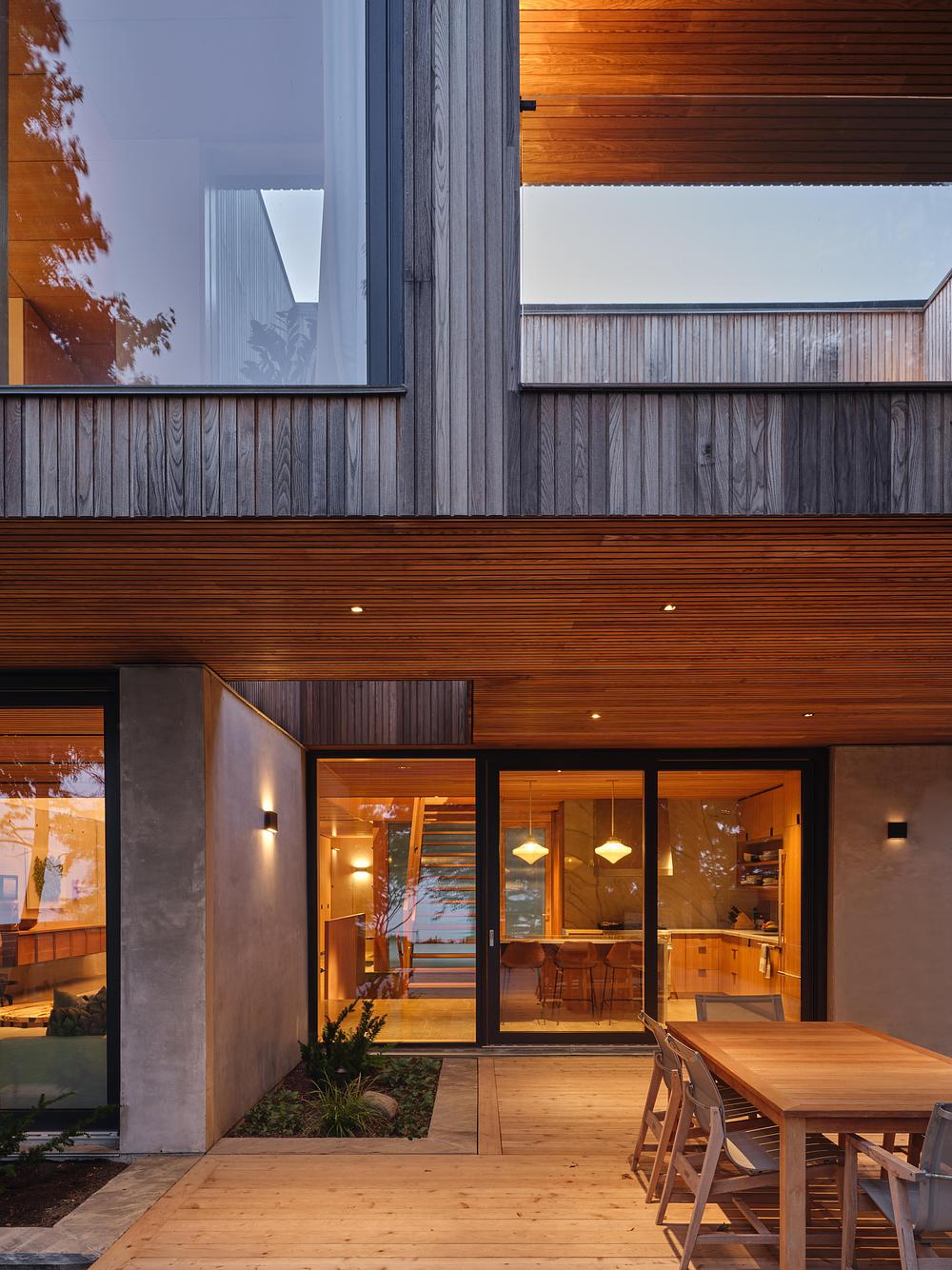
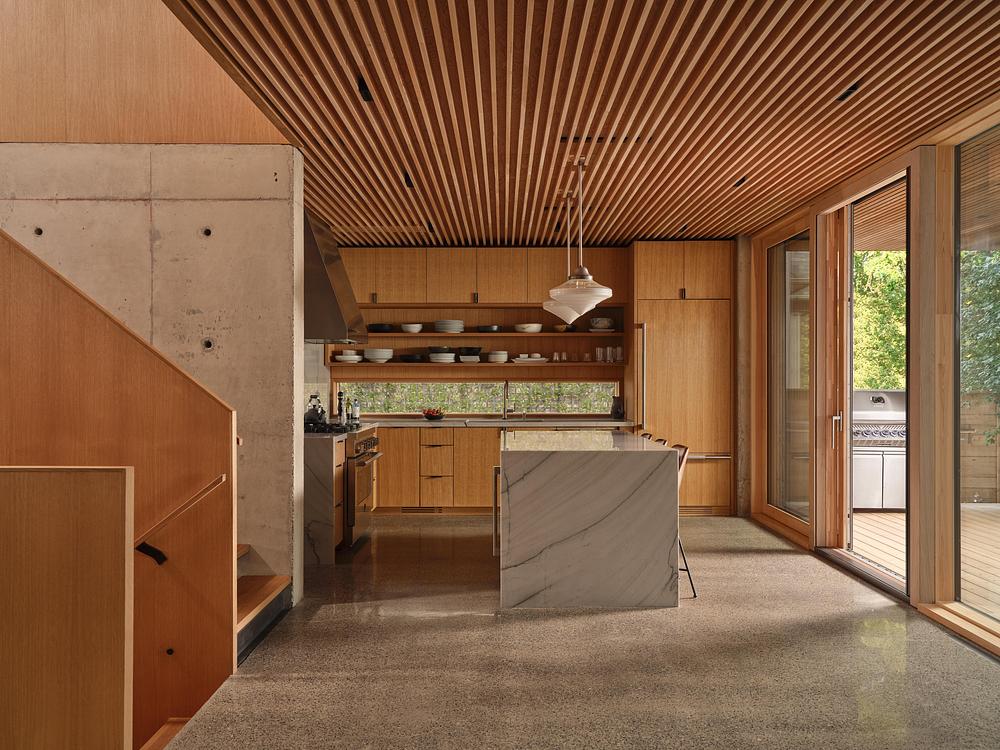
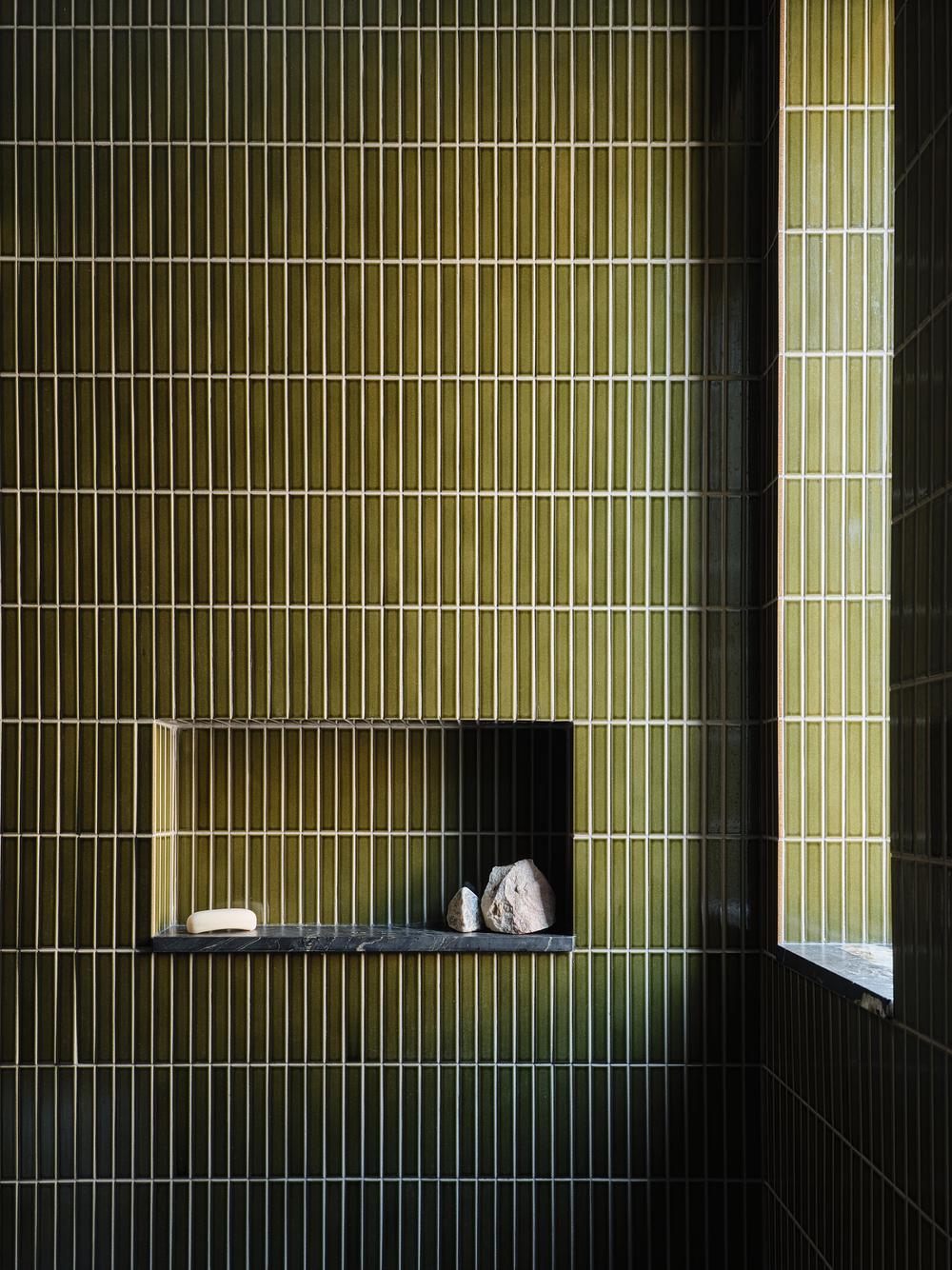
You enter the house beneath the front cantilever through a reeded glass door. This specific glass choice pulls light into the entryway while blocking views from the street, keeping the interior private. Inside, the layout is strictly organised around the concrete service core. To balance the cold, hard nature of the raw structure, the circulation paths and main rooms are lined with wood millwork. This puts warm, tactile wood within reach, while the concrete remains in the background.
The ground floor uses a protective layer of storage spaces, including a pantry, to buffer the living areas from the street. On the lake side, the kitchen, dining, and living areas open up to the view. The kitchen features Caesarstone counters and appliances by Jenn-Air and Whirlpool, keeping the look clean and functional. Moncer wood flooring runs throughout, tying the zones together.
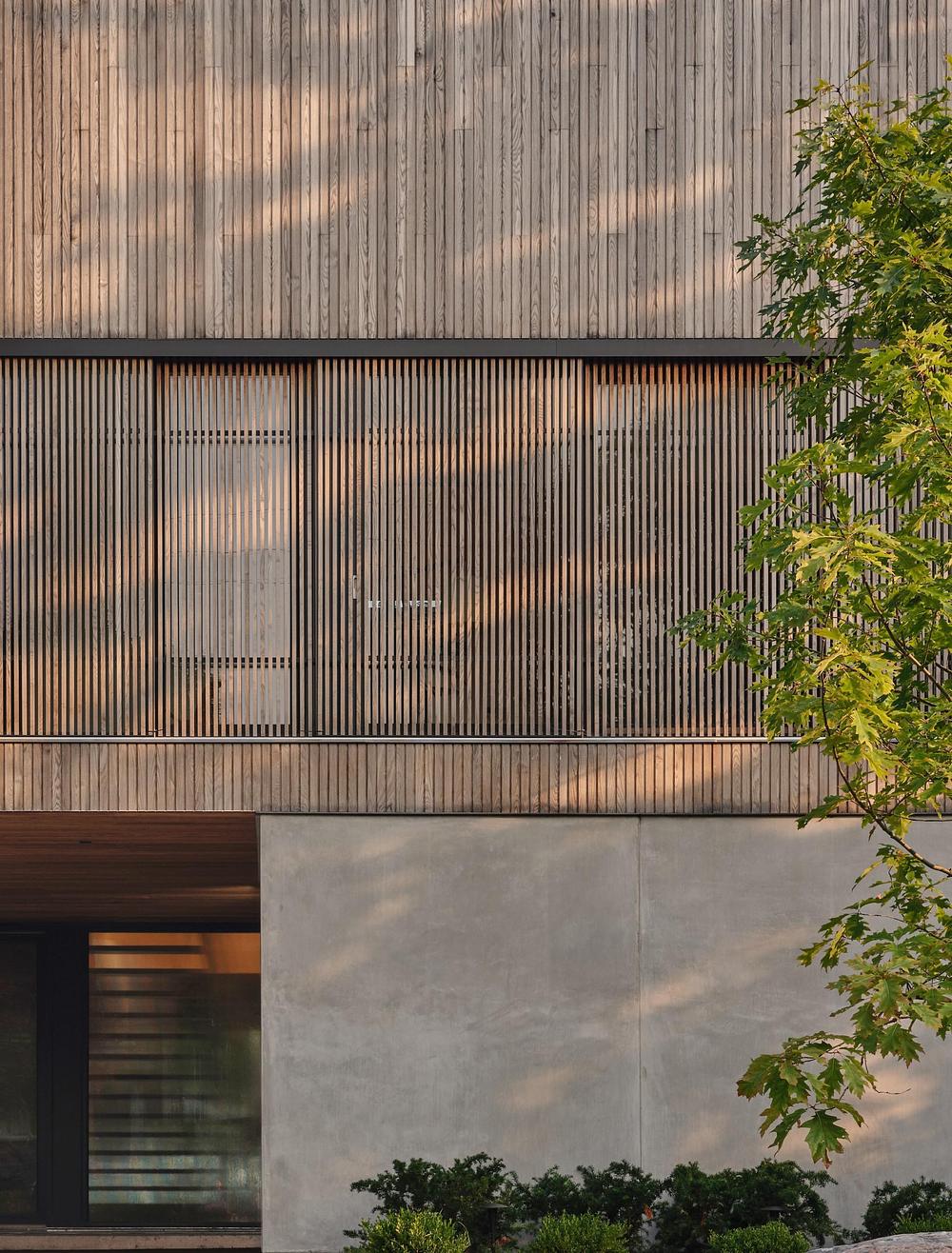
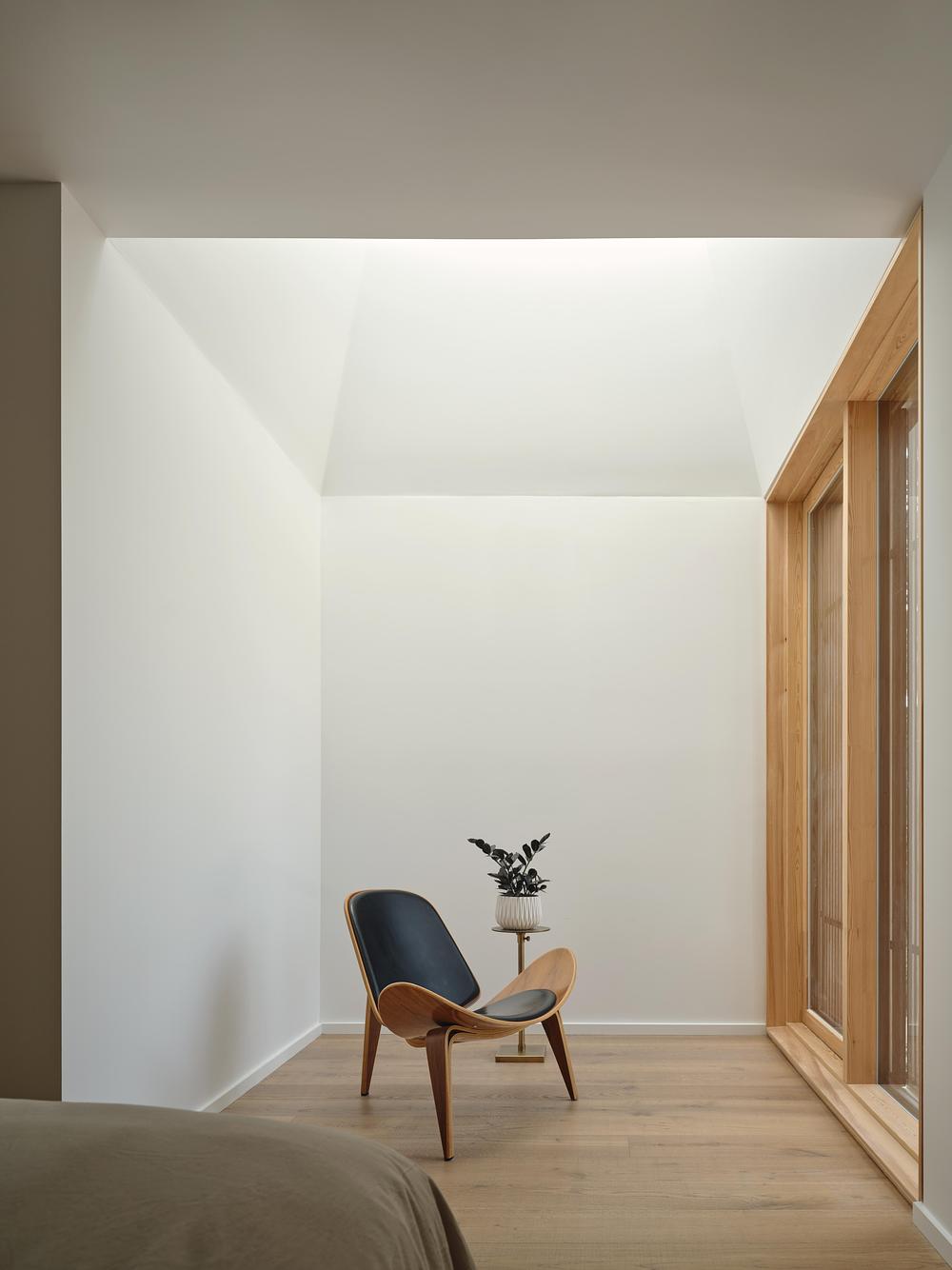
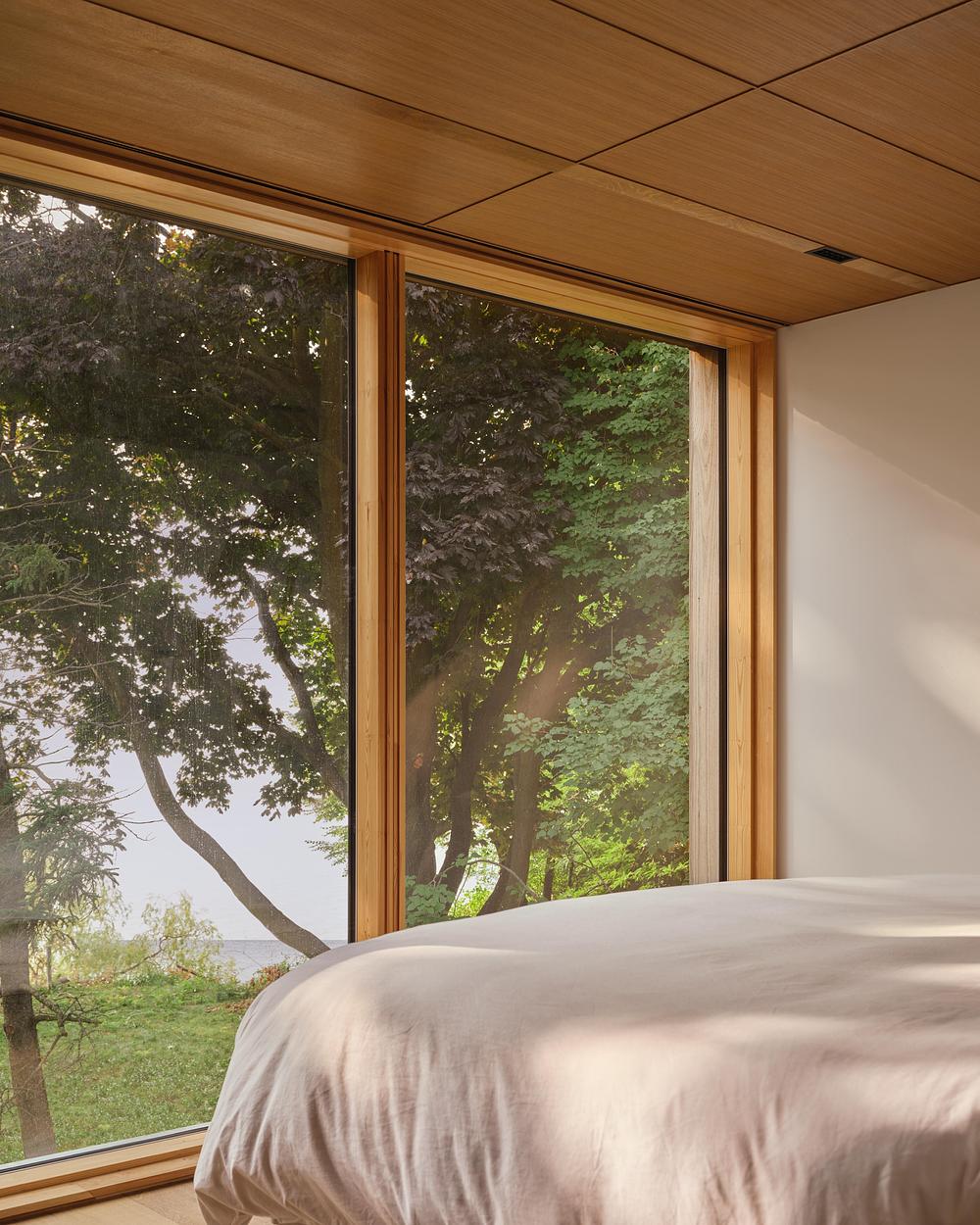
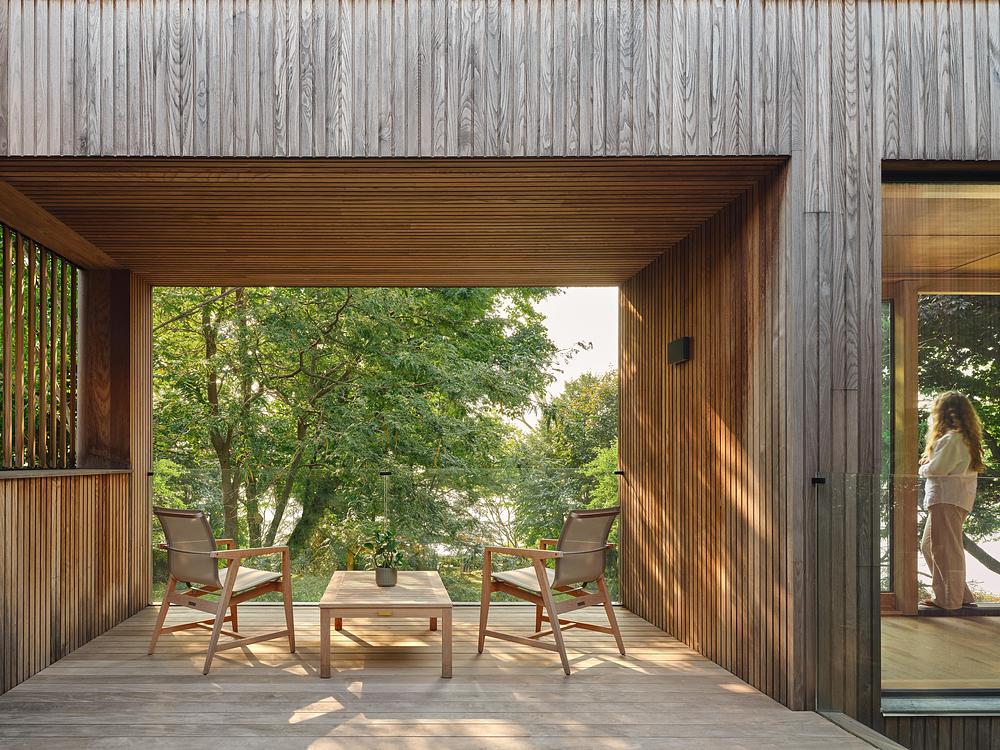
Upstairs, the private rooms share light and views through clever openings. The primary bedroom and deck look straight out to Lake Ontario. The secondary rooms, including an office and spare bedrooms, face the street but sit behind a slatted facade. This screen lets the occupants control their privacy levels while still letting air and light pass through.
The House of Monitors avoids showing off in favour of performing well. It acknowledges the history of the Scarborough Bluffs, where what looks natural is often man-made, by honestly displaying its own man-made roots. By prioritising durable materials like concrete and heat-treated wood, and by using the shape of the roof to capture free daylight, the project models a way to build responsibly on sensitive land. It proves that a house does not need to be loud to be excellent and that it just needs to be clear about how it is built and who it is built for.
Source: v2com newswire


