
Header: Ana Skobe
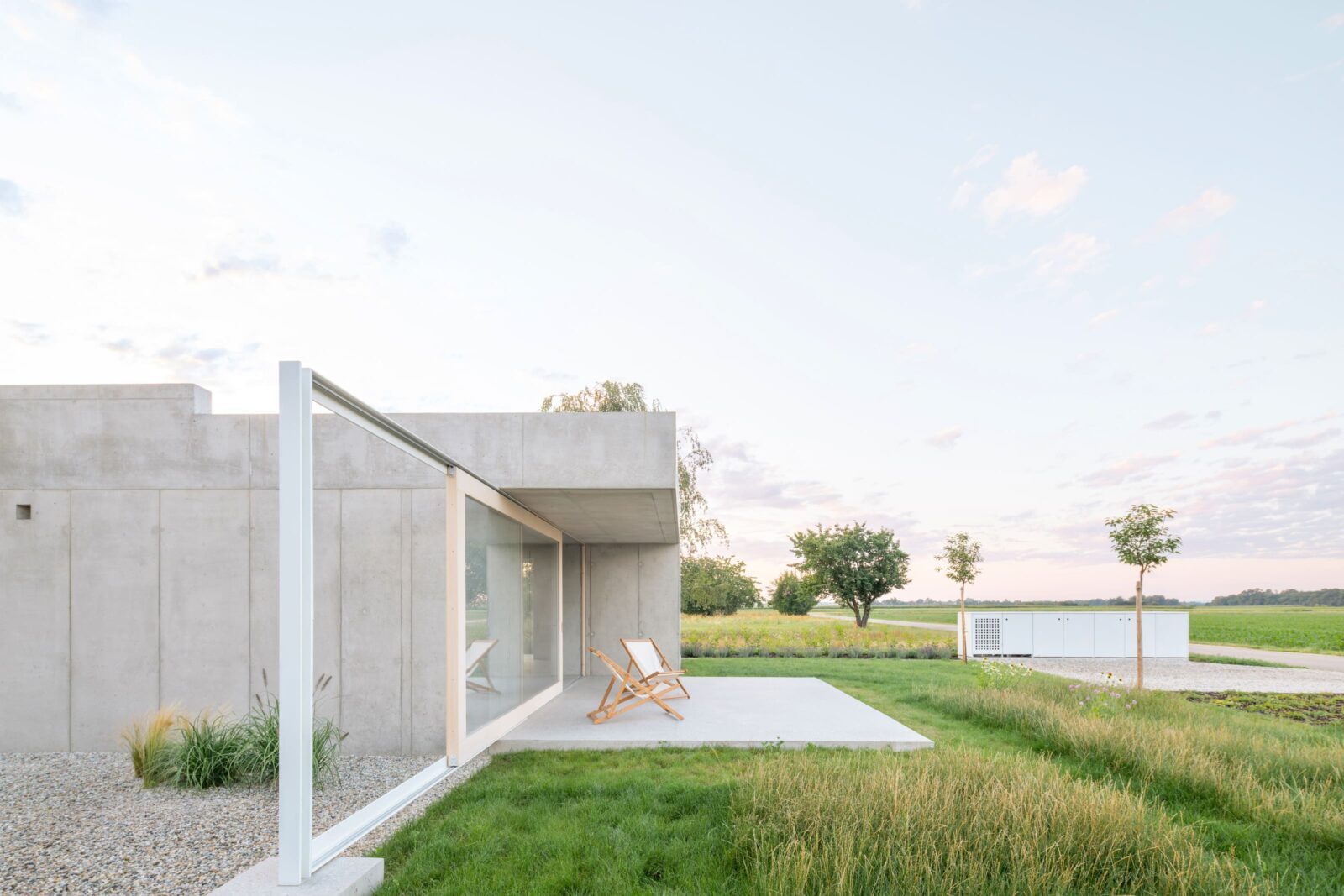
In the flat landscape of Murska Sobota, Slovenia, a new home sits quietly on the border where the town meets the fields. Designed by Tomaž Ebenšpanger of Skupaj Arhitekti, the House on the Edge of the Plain does not try to shout or impress with a flashy shape. Instead, it looks back at the local history of low-slung, modernist buildings and updates that style for life in 2026. It’s a modest structure that follows the strict local rules for height and size but ignores the typical suburban look of the houses nearby.
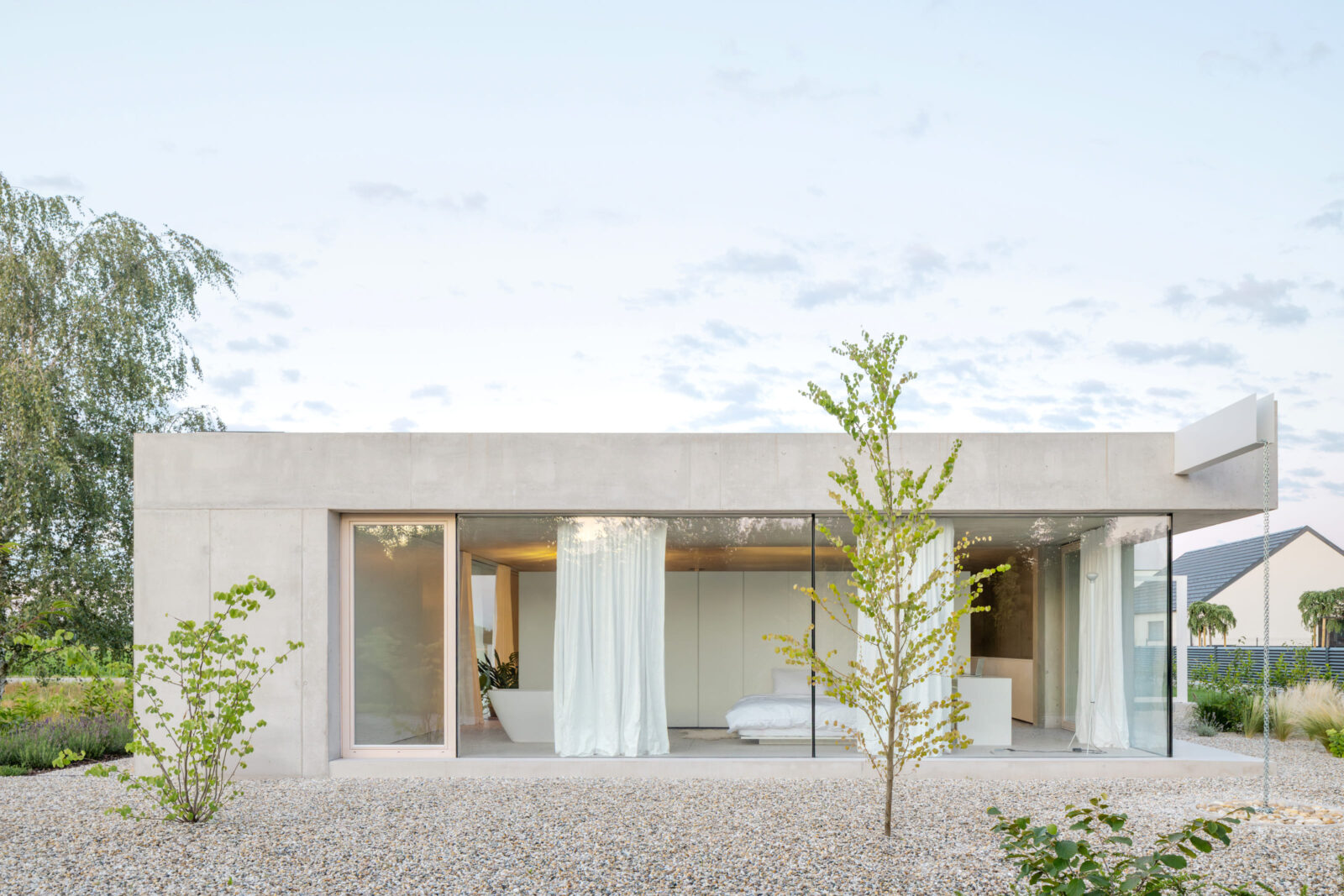
Concrete cores and open spaces
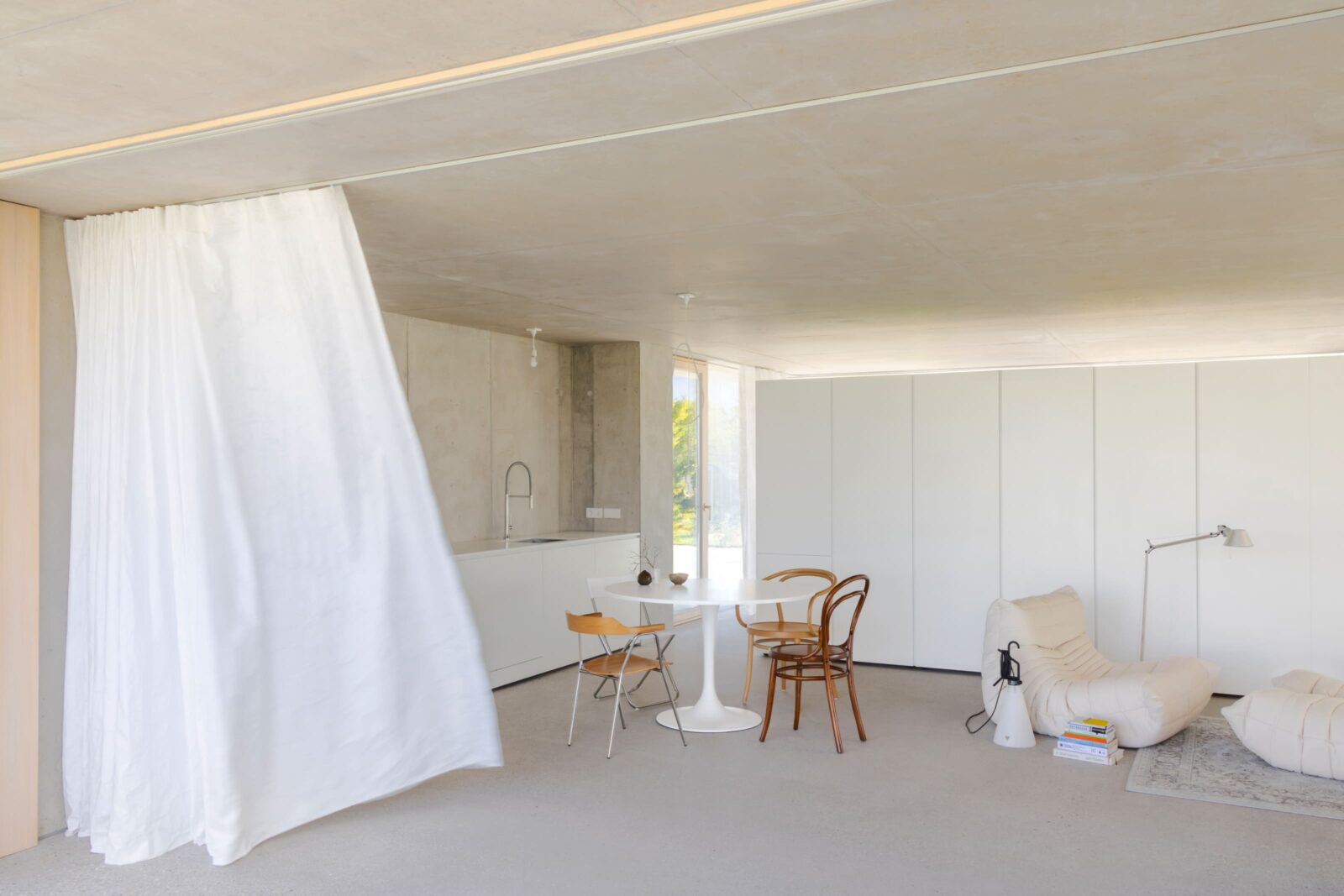
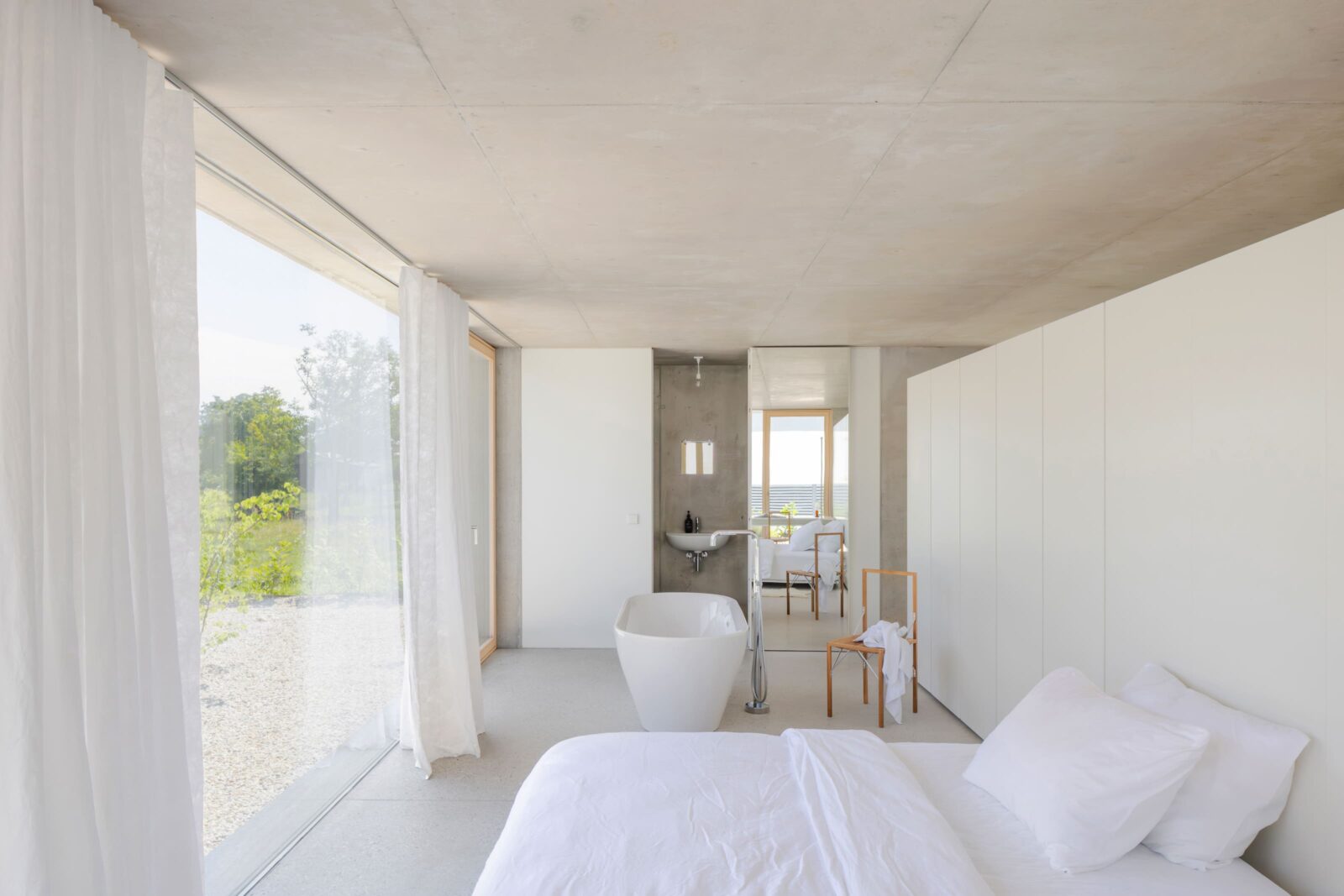
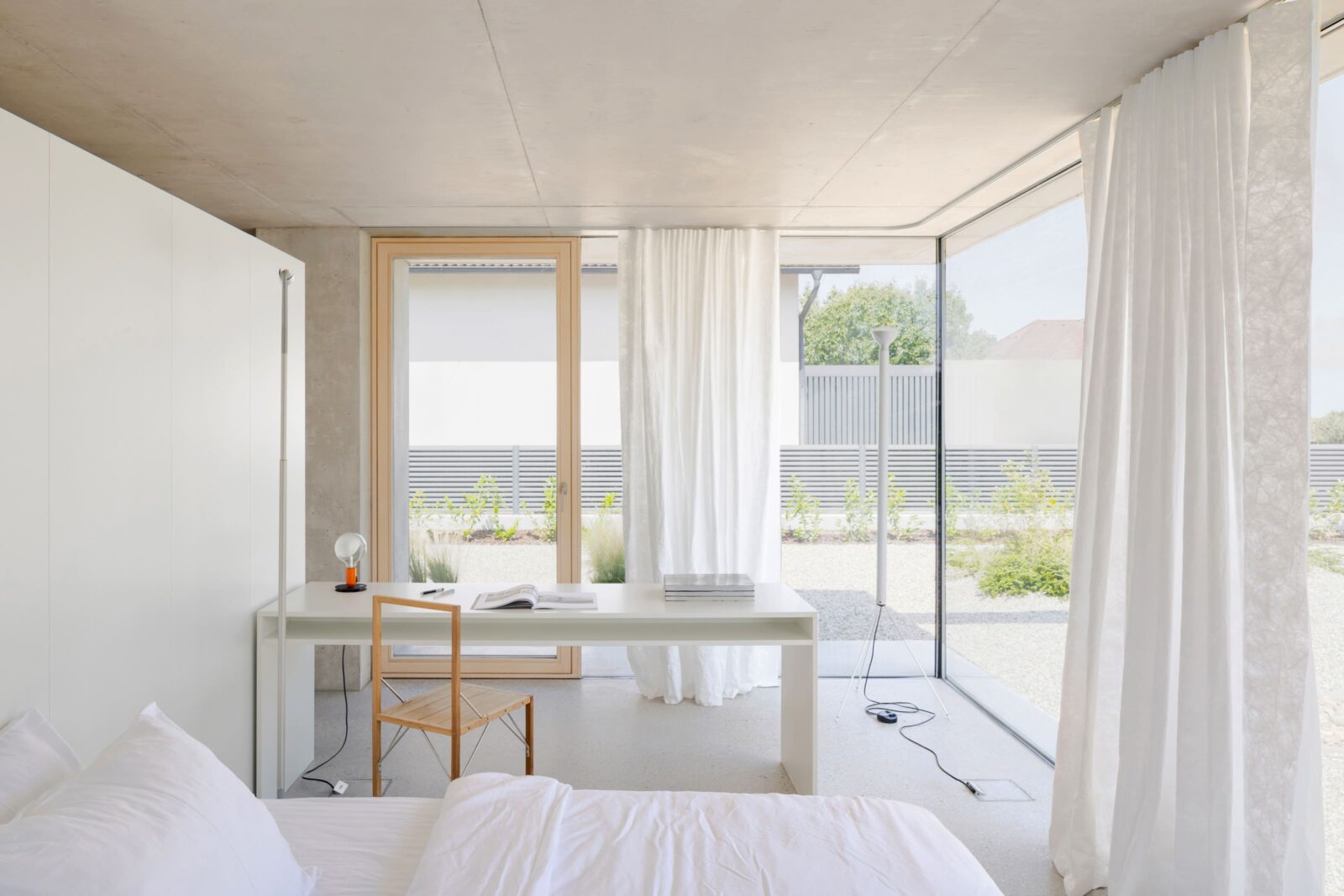
The layout of this 120-square-metre home is based on three solid reinforced-concrete cores. These pillars do the heavy lifting, acting as the main structure while also hiding the practical parts of the house like the bathroom, utility rooms, and the kitchen. Because these cores support the flat concrete roof slab, the rest of the floor plan stays wide open. To keep the space feeling continuous, a long storage wall runs through the middle. This timber wall divides the house into two sides: living and dining to the south-west, and bedrooms and workspace to the north-east, without ever making the rooms feel boxed in.
Living with the seasons
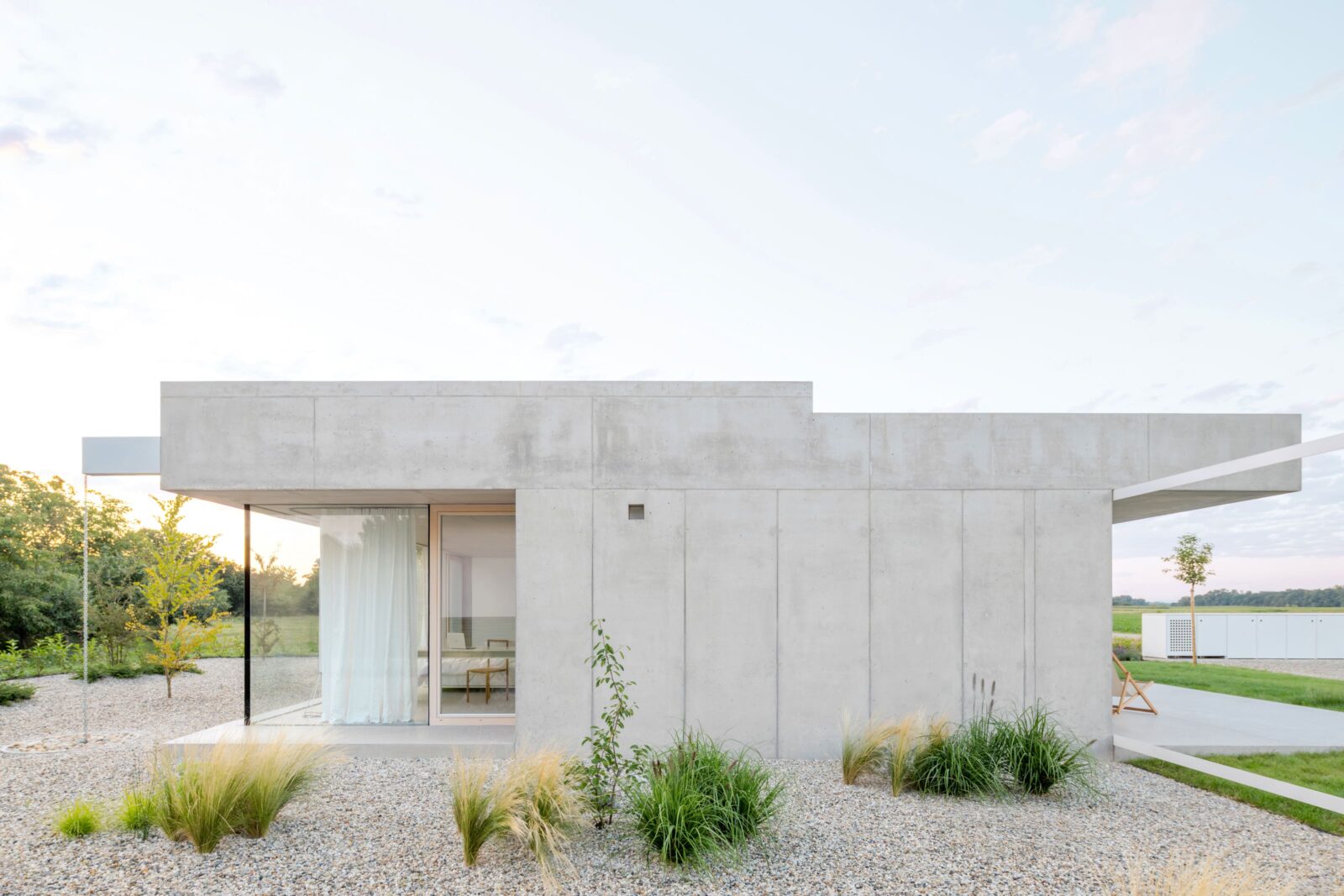
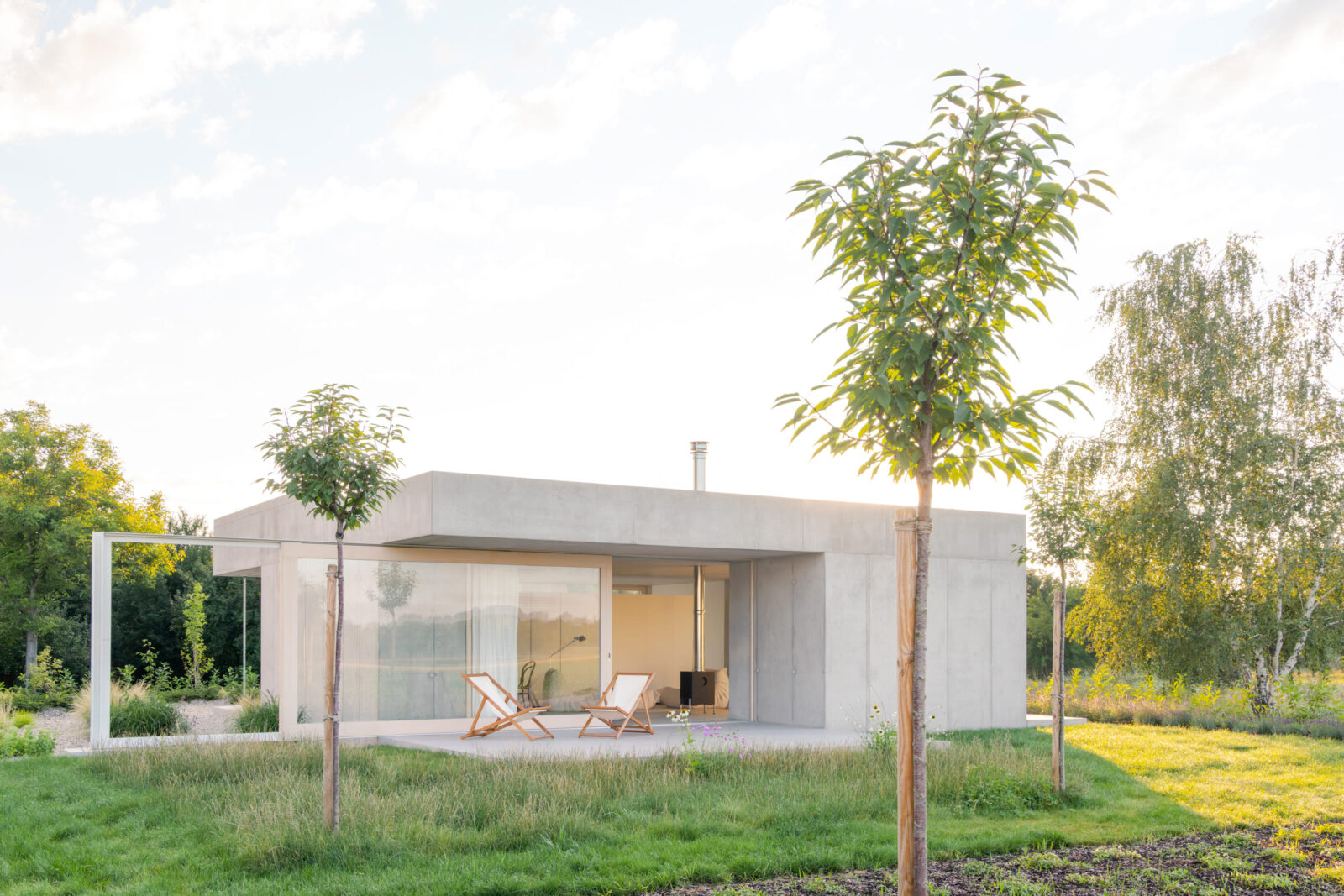
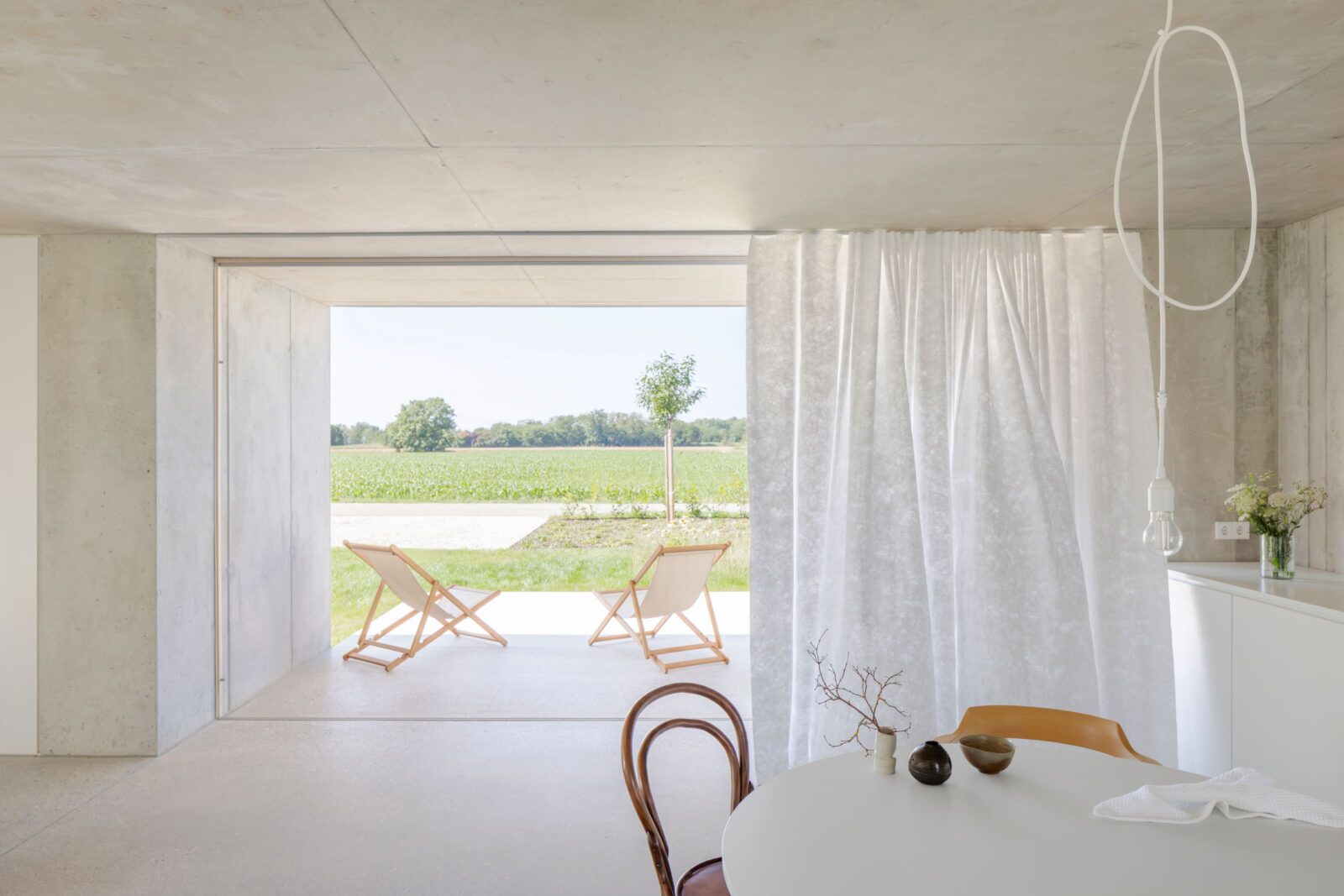
The design focuses on how it feels to live there throughout the year. On the north-west corner, the roof folds in a clever way that allows for a corner made entirely of glass with no visible support. This makes the wall seem to vanish. On the south-west side, a massive timber sliding window can be pushed back completely into a steel frame hidden in the wall. During the summer, the living room and the garden become one single area. The garden, designed by Tanja Simonič Korošak, plays a huge role in the project, ensuring that the view of the landscape is always the main focus from the inside.
Raw materials and local textures
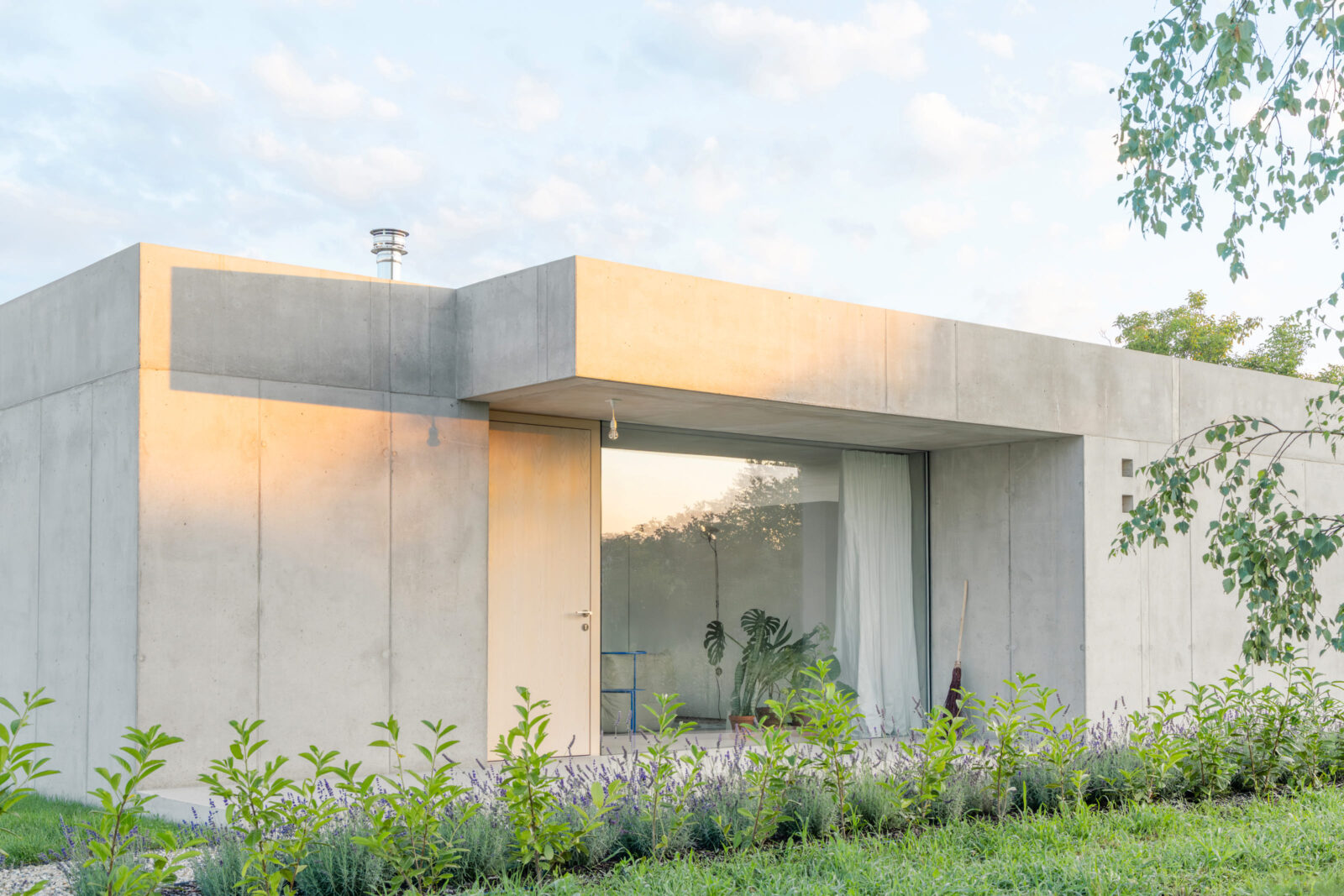
What makes the building feel grounded is the choice of materials. The architects used exposed concrete for both the inside and outside walls. They mixed the concrete with gravel taken from the nearby Mura River, which gives the surface a soft, natural look. You can still see the marks and textures from the wooden boards used to mould the concrete. These small imperfections and the way the material will age over time are a deliberate choice. Inside, the floors are polished concrete, and the furniture is made from simple veneered chipboard. Even the lighting is basic and functional, and a small cast-iron stove provides heat and a focal point during the winter months.

A quiet way of building
Skupaj Arhitekti has created a space that is more about the experience of light and the change of seasons than about looking good in a photograph. The project offers a different path for modern housing. It is a house built for daily rituals, where the architecture serves as a simple frame for the life happening inside it. Completed in 2025 for a private client, this home proves that a small footprint and a limited palette of materials can result in a powerful sense of place.
Project Info
Architecture: Tomaž Ebenšpanger (UM FGPA), Skupaj Arhitekti
Landscape: Studio TSK (Tanja Simonič Korošak)
Size: 85 m² (Net Floor Area)
Location: Murska Sobota, Slovenia
Photo credit: Ana Skobe