



Header: Kalle Kouhia
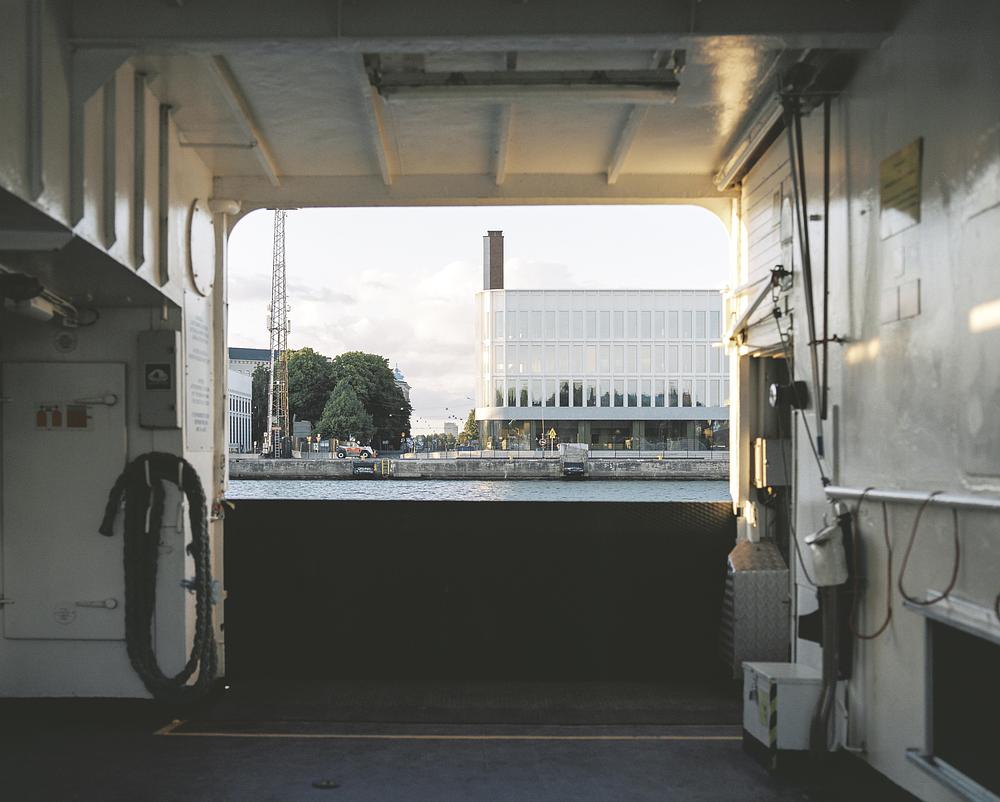
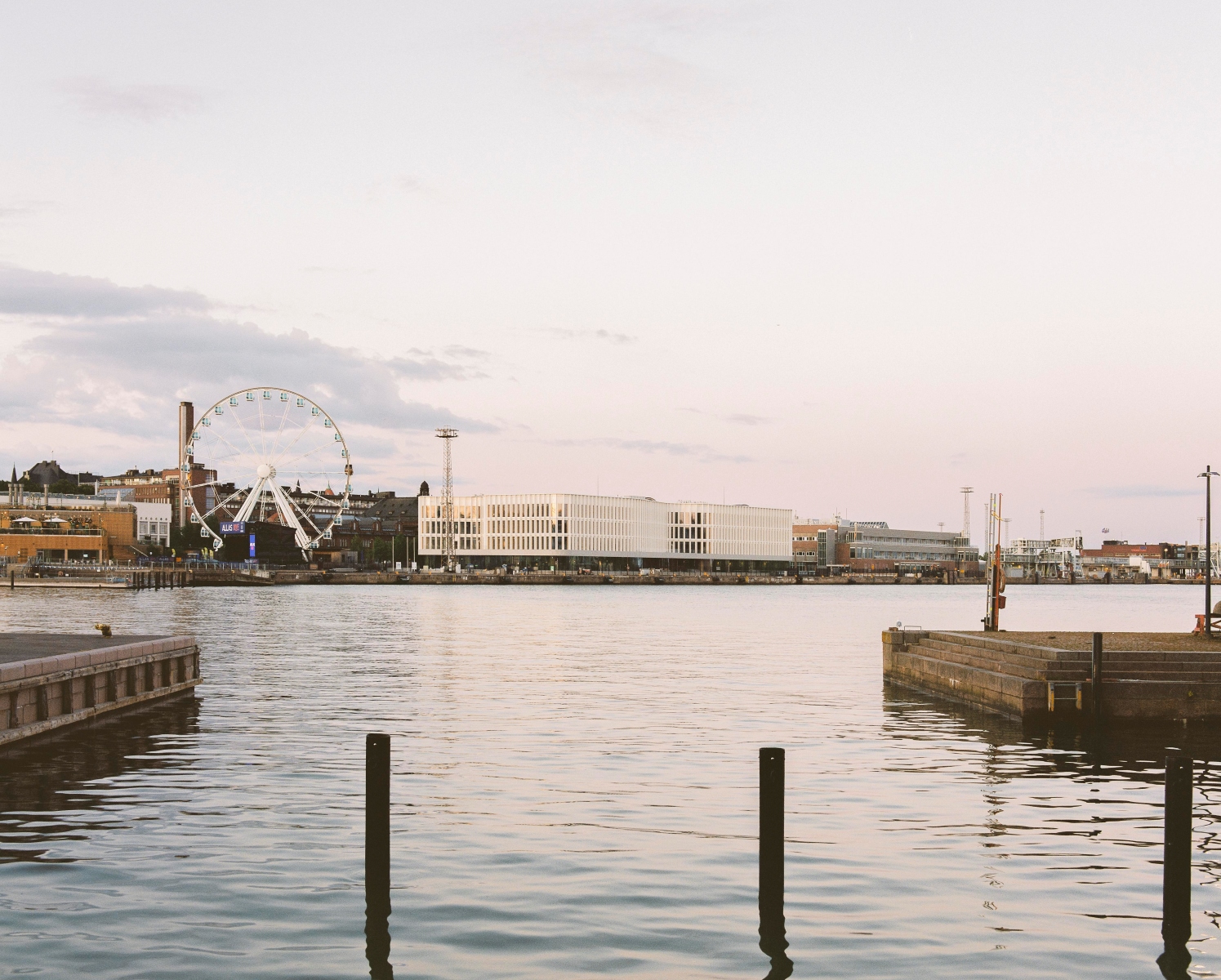
The office and hotel building Katajanokan Laituri is the first new building at the old industrial Katajanokka waterfront. Made of solid wood, the building showcases the possibilities of wood design in an urban environment, simultaneously symbolising the transition of a former industrial quarter into an open urban space accessible to the public.
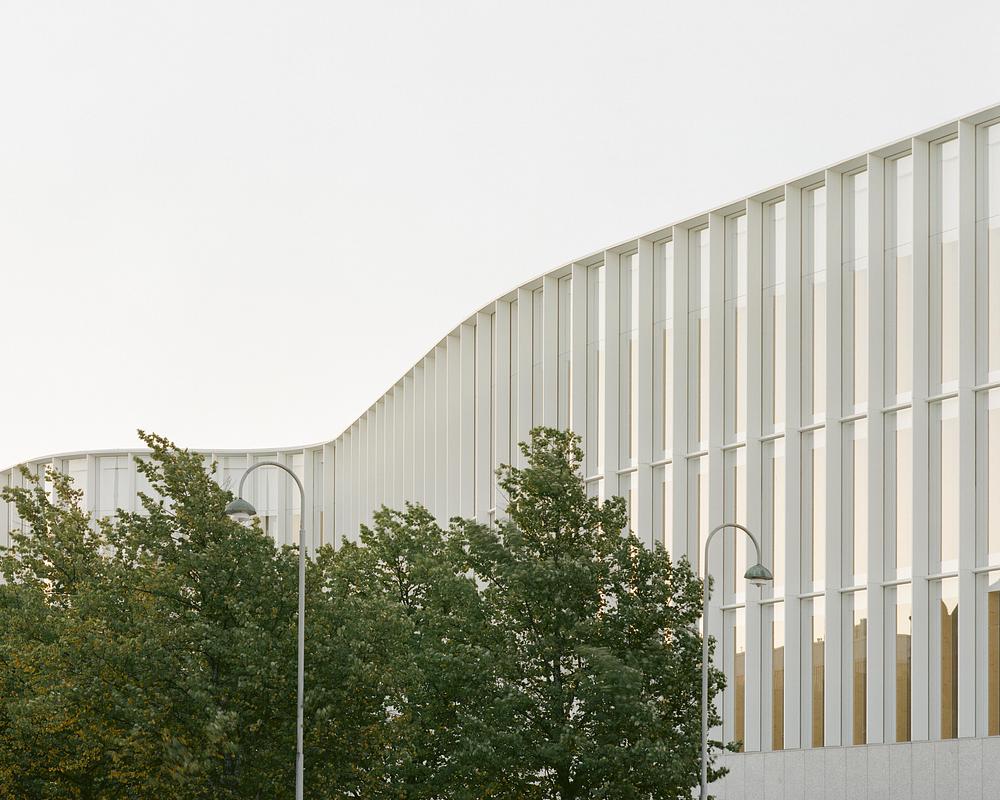
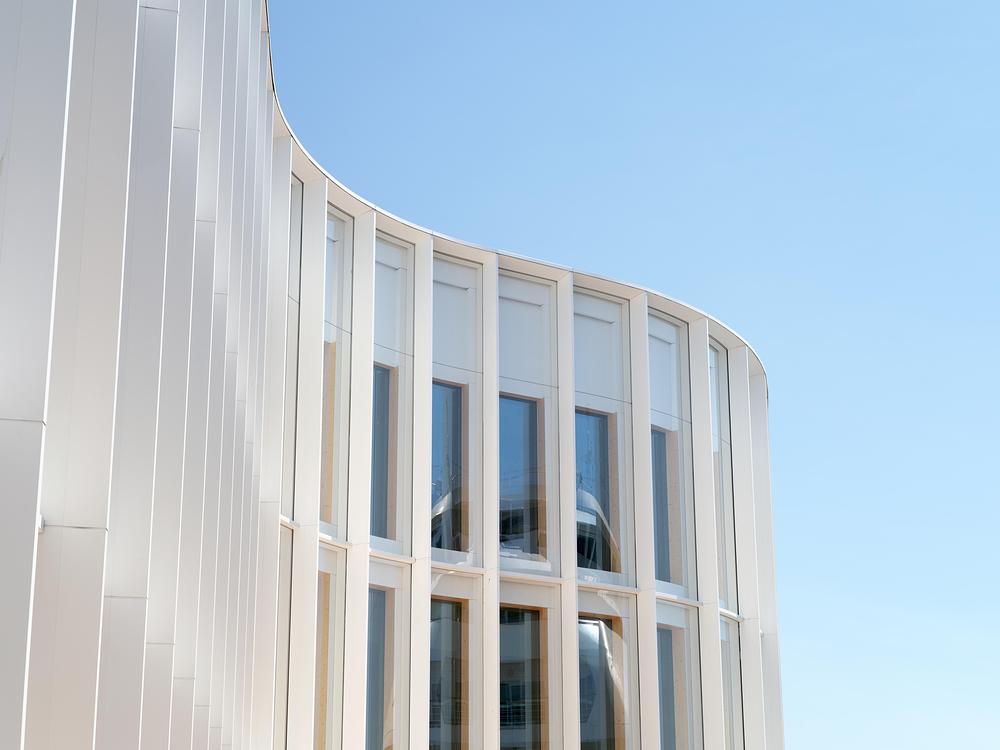
The building fits into the neoclassical silhouette of the city, while the wavy lines of its exterior connect the building to the layered Katajanokka peninsula’s building stock. The façade features a double structure with an outer layer made of aluminium, glass, and granite, and the inner layer made of an exposed wood structure. The outer layer protects the insides from the maritime weather while linking the structure to the cityscape. The façade’s unique character changes appearance depending on the season or the time of day.
Inspired by Nordic nature
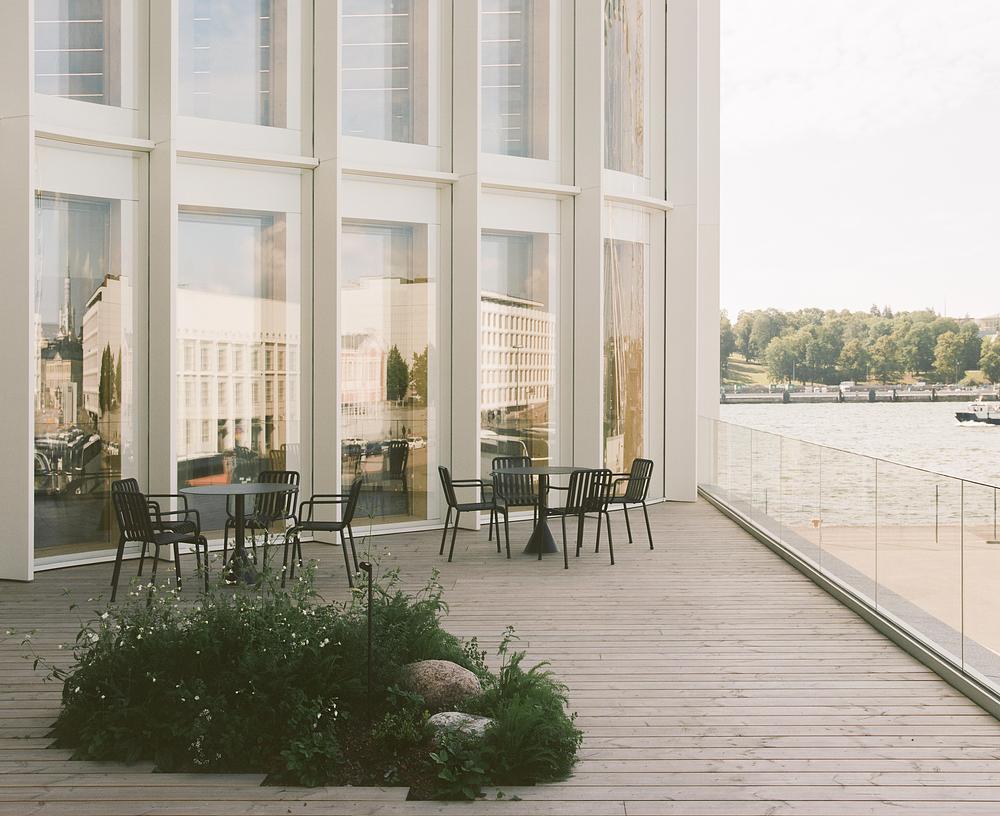
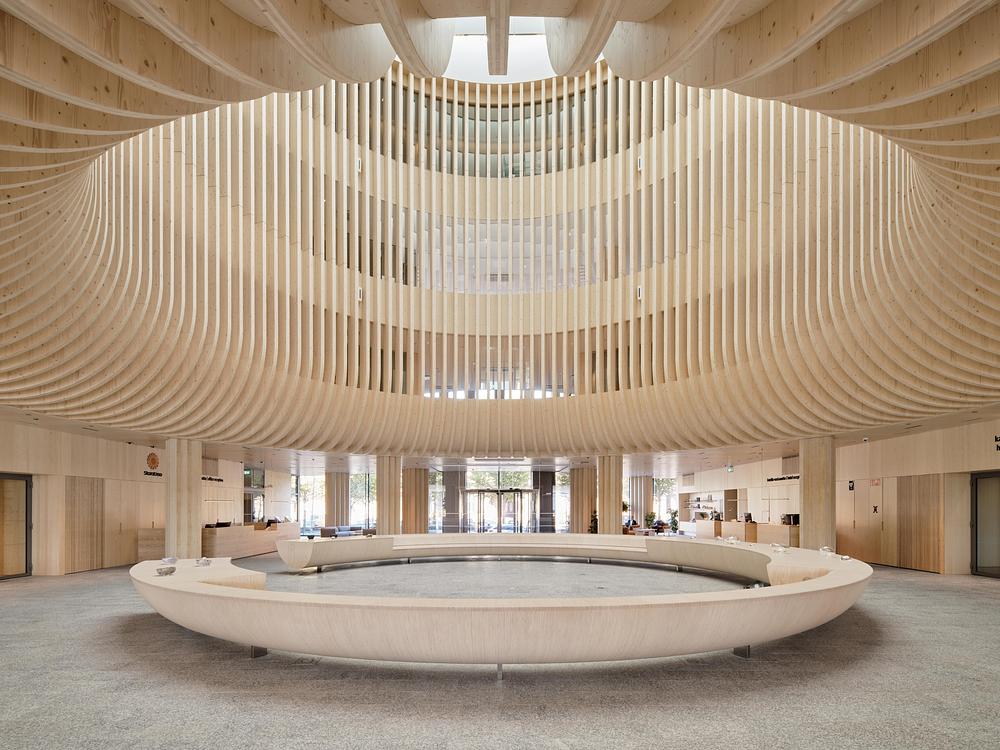
Katajanokan Laituri has four floors above the ground, a basement with parking, technical facilities, and a green rooftop terrace accessible to the public. Street-level spaces host a large, shared open foyer, conference space, as well as a café and a restaurant. The design of these ground-floor spaces allows for maximum adaptability over time while at the same time connecting the building with the city that surrounds it. The exposed spruce structures boldly articulate wood’s natural diversity as a building material, while careful spruce and ash detailing further enhance the building’s aesthetic appeal.
The interior features natural, environmentally friendly materials that are designed to age gracefully over time. In addition to wood, it includes light grey granite, which is used across the façade as well as the interior and exterior pavements. Inspired by Nordic nature, the outdoor spaces are rich in greenery, featuring archipelago meadows on the rooftop and a birch grove in the courtyard.
Locally-sourced timber
One half of the building contains a hotel, while the other half is occupied by the new headquarters of Stora Enso, a leading Finnish and Swedish forest industry company. The above-ground levels use an industrial, prefabricated, massive wood product made by the company. Laminated Veneer Lumber (LVL) produced locally in Varkaus, Finland, is used for the post-beam frame and the façade structure.
Cross-Laminated Timber (CLT) manufactured in the Swedish city of Gruvön is used for roof and floor structures as well as the inner walls, lift and staircase shafts, which stiffen the building. Katajanokan Laituri’s frame consists of 7,600 m³ of spruce and 2,500 wood elements. The standard, mass-produced wood materials were customised and adapted for ground-breaking structural and architectural solutions. The project aims to contribute to the environment by relying on renewable resources and materials such as wood and granite. Considering that the building is close to the sea, extensive flood protecting measure had to be implemented.
Anttinen Oiva Architects
An architecture office based in Helsinki, Anttinen Oiva Architects was founded in 2008 by Selina Anttinen and Vesa Oiva. The recipients of the Finnish State Prize for Architecture and Finlandia Prize for Architecture, the studio is best known for designing Vuorikatu Hotel, Helsinki University main library, Lagmansgården Reform School and several housing projects.
Technical sheet:
Location: Helsinki, Finland
Timeline: Invitational competition 2020, completion 2024
Area: gross ~23,000 m2, building floor area ~16,400 m2
Client: Mutual Pension Insurance Company Varma
Project management: Haahtela-rakennuttaminen
Main users: Stora Enso Oyj, Sokos hotels / Solo Sokos Hotel Pier 4
Architect: Anttinen Oiva Architects
Interior design / Stora Enso premises and main lobby: Anttinen Oiva Architects
Interior design / Pier 4 hotel facilities: Franz
Structural design: Sweco Rakennetekniikka
Fire engineering planning: KK-Palokonsultti
Landscape design: Nomaji Landscape Architects
Acoustic design: Akukon
HVAC, Electrical and Life Cycle Planning: Granlund
GEO planning: Sitowise
Photographers: Kalle Kouhia and Tuomas Uusheimo
Source: v2com-newswire


