
Header: Dmitry Suvorov
El Copitas Bar in Saint Petersburg has come a long way from a small underground bar to the iconic status it enjoys today. Founded in a neglected basement by three friends (Igor Zernov, Artem Peruk, and Nikolay Kiselyov), the interior was originally furnished with improvised materials.
From an empty basement to an iconic bar
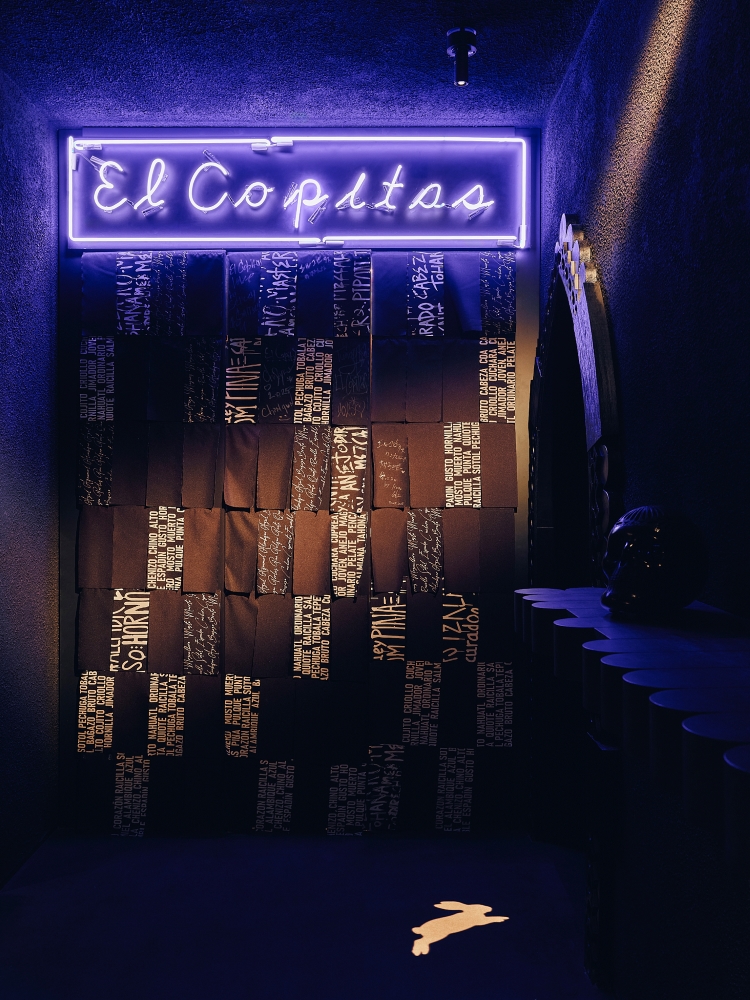
A centrepiece of the design, a large handmade wooden table was crafted by the owners, while the chairs were sourced from friends in other bars. However, over time, the bar changed and grew. A fresco depicting Frida Kahlo in Maya Blue was painted on the wall. References to Aztec myths (skulls and rabbit figures) are paired with tequila cups signed by the friends of the bar, who also wrote their wishes on the mural by the entrance.
The legend of Virgen de Juquila
Upon the clients’ desires, the interior is based on a legend from the Mexican city of Oaxaca, dedicated to the power of the Virgen de Juquila. According to the legend, the fresco of the tequila producers’ patron is the only item that survived a massive fire that burned the entire settlement. Following the spirit of the legend, the owners decided to keep the main elements of the old bar – communal tables, rabbit figures and a fresco of Frida – and place them in a new context.
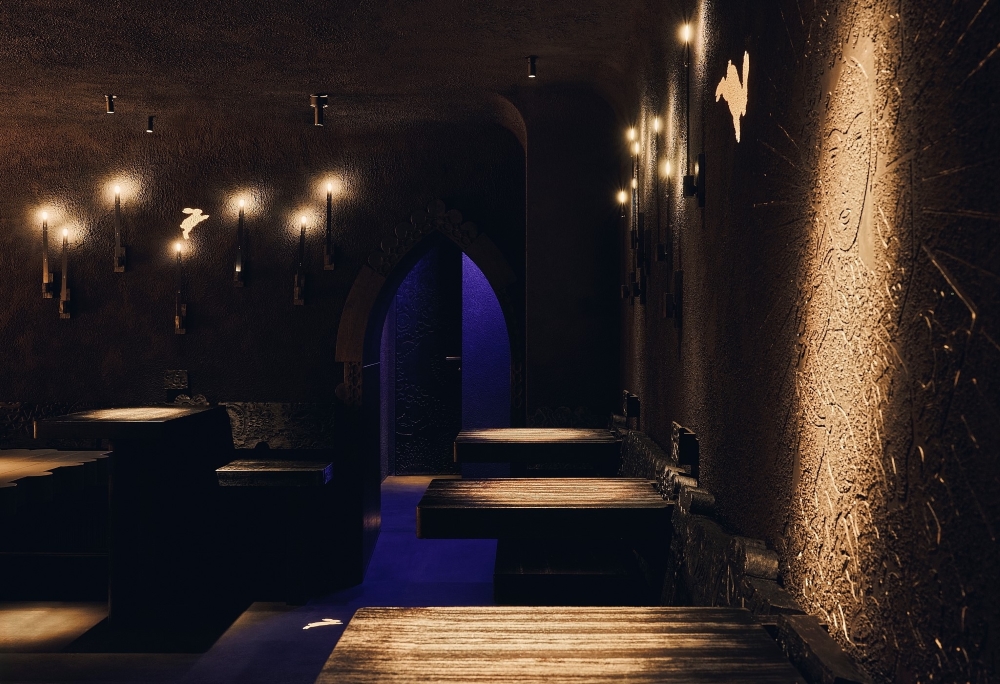
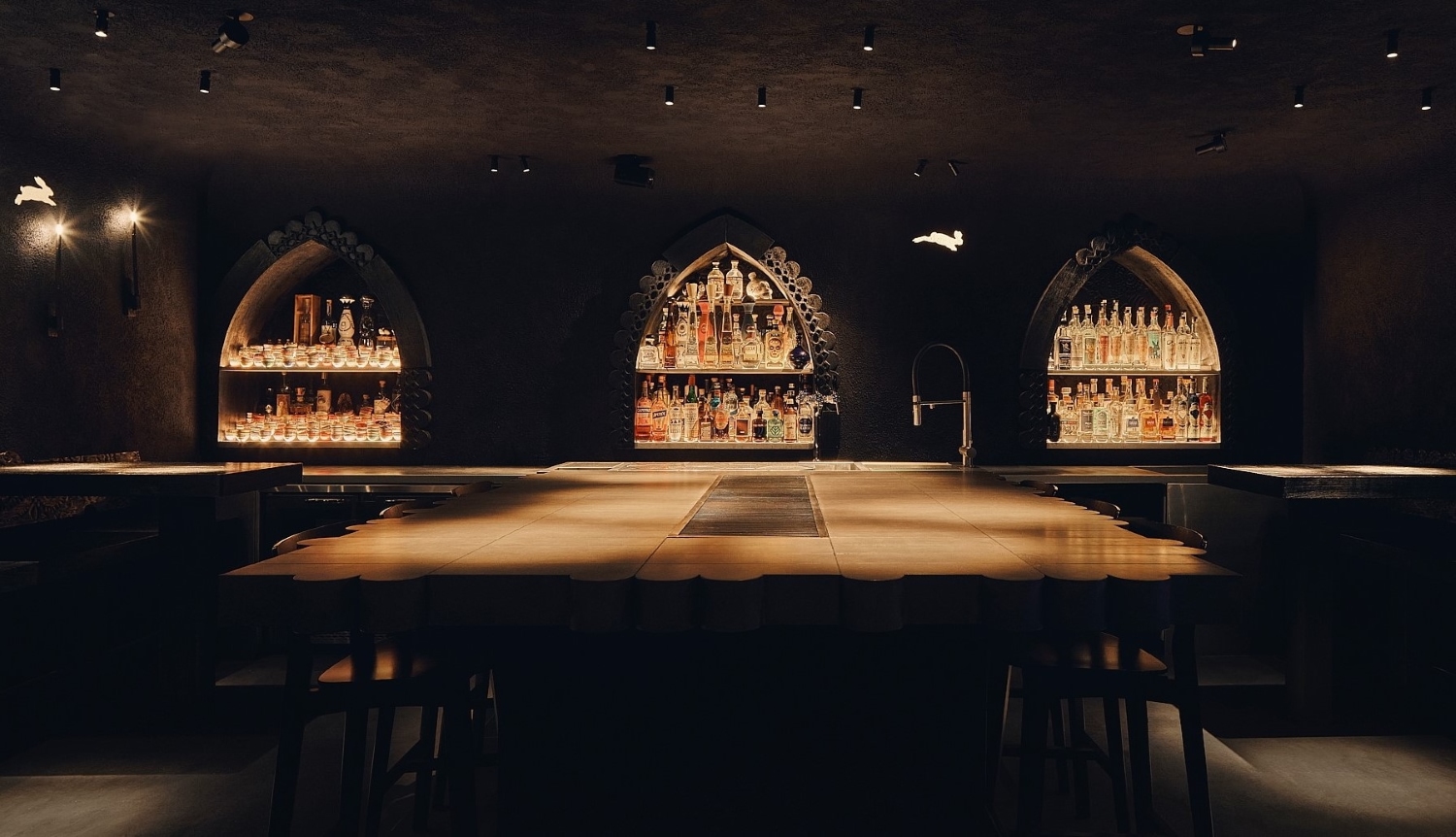
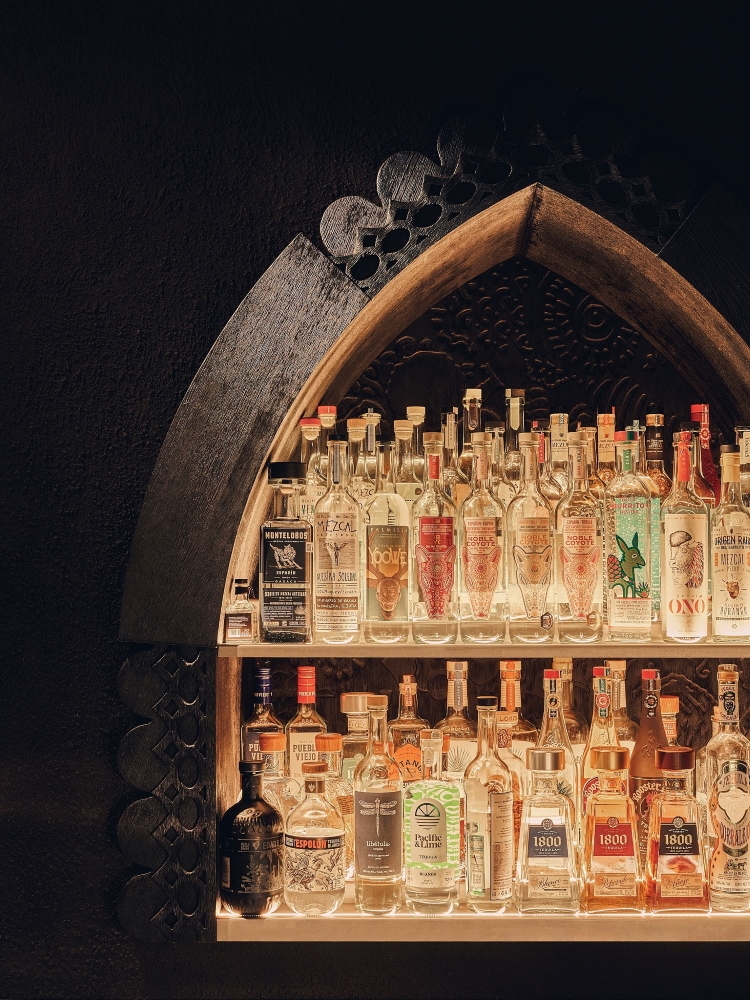
The interior of the bar features a monochromatic design with dark brown walls accompanied by dark table tops and chairs made of dark wood. Three localised altar-like pieces are tacked behind the bar, accompanied by LED candles around the perimeter.
The interaction between old and new design elements
As the bar developed a strong relationship with its customers in the last 10 years of existence, the challenge was to create a new space without destroying that bond. The new design was carefully calibrated to immerse visitors gradually into the new space. Upon entering the bar, the guests are greeted with a familiar El Copitas sign shining brightly in lilac pink.
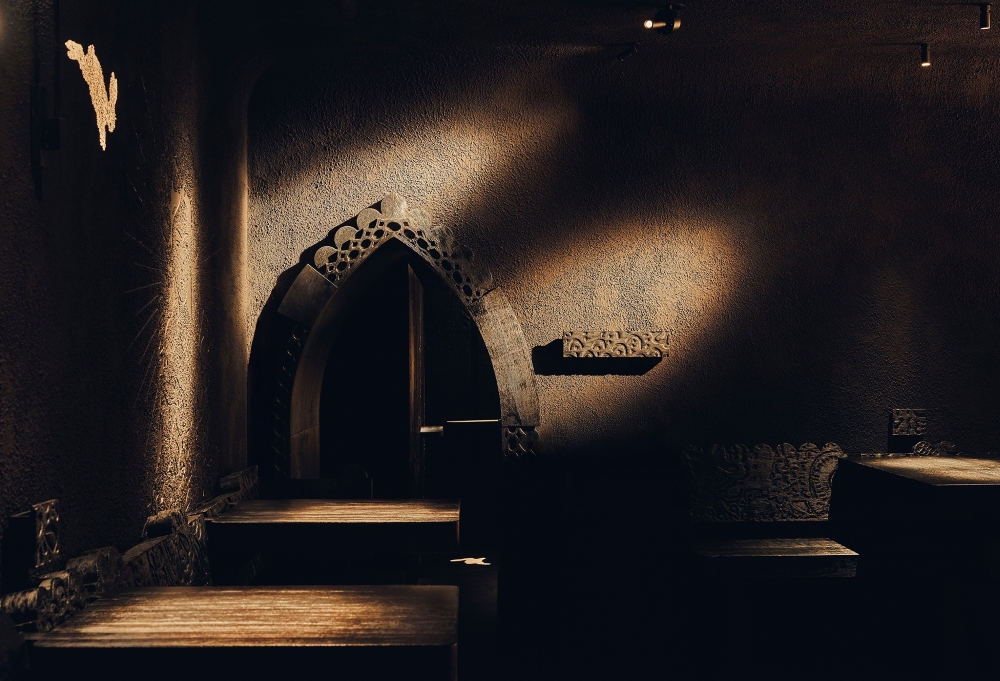
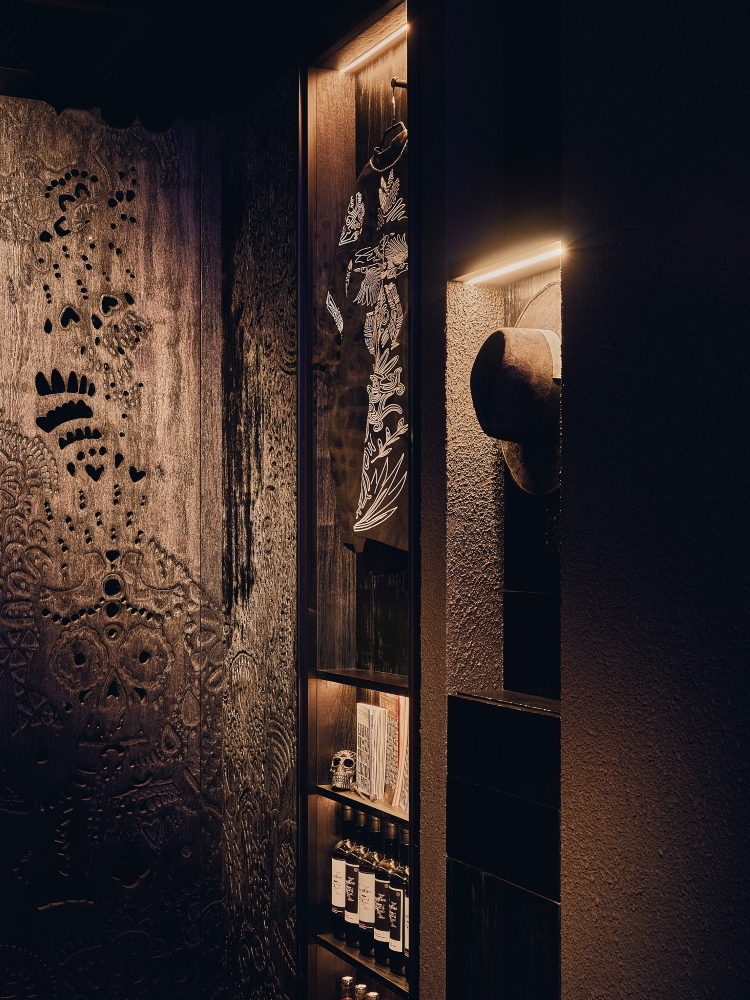
However, soon they are faced with a set of new elements and details: the carved cabinet, the trimming and the lancet archway that leads into the main hall. Ribbons in the wardrobe host inscriptions from the old bar, as well as spaces for new wishes and Mexico-related words. The design is inspired by the tradition of tying colourful ribbons to tree branches during travels, hoping to return one day.
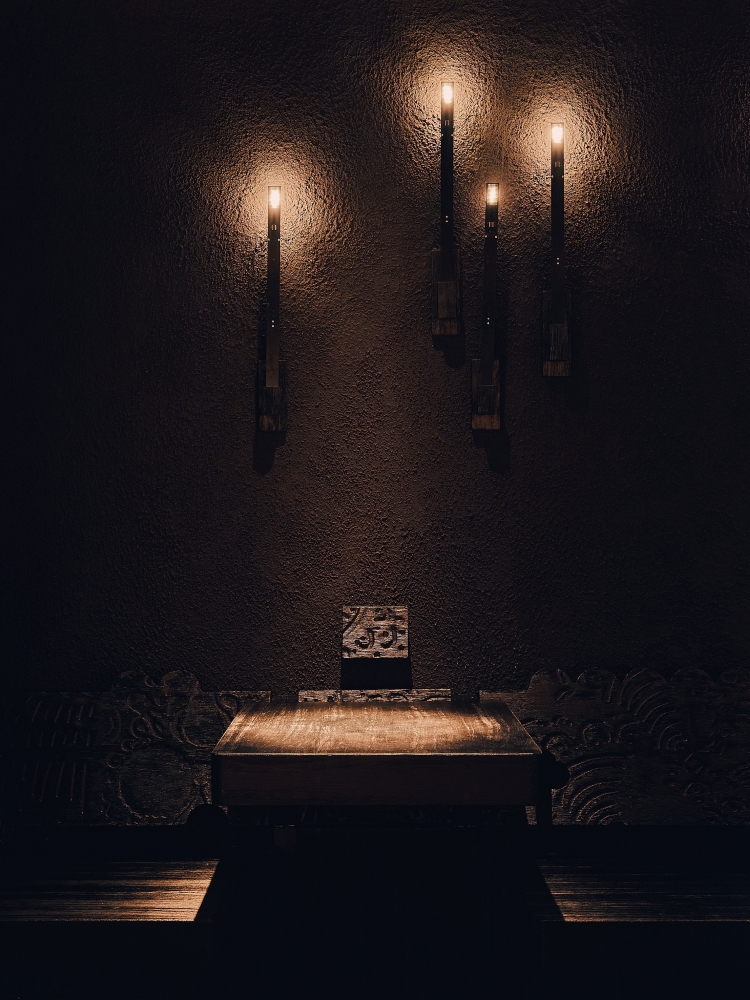
Concrete table and illuminated altars
Additional changes appear in the main hall. The centre is dominated by a large communal concrete table echoing the shape of an old table, but with a new built-in ventilation function. The bar has been relocated, while the seating is spread across the perimeter.
Three illuminated altars emerge from behind the bartender’s seat, which host personalised copitas and rare mezcal. The second room below another lancet archway has also suffered changes, from an open kitchen island and elbow tables to the carved cabinet with a built-in mini greenhouse cultivating cocktail flowers.
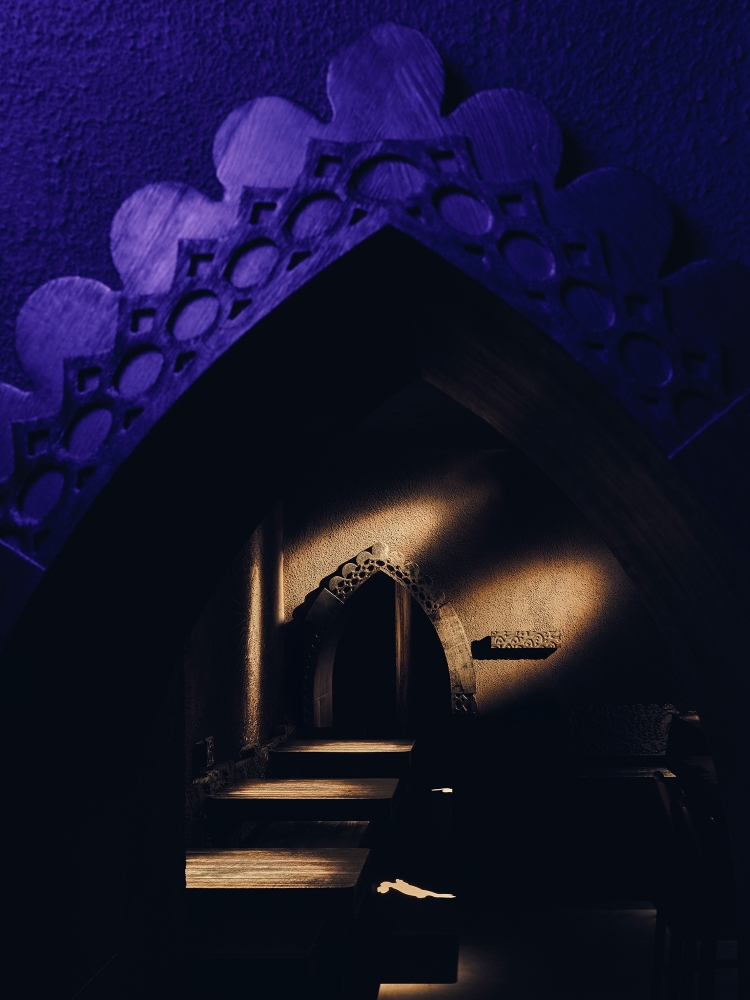
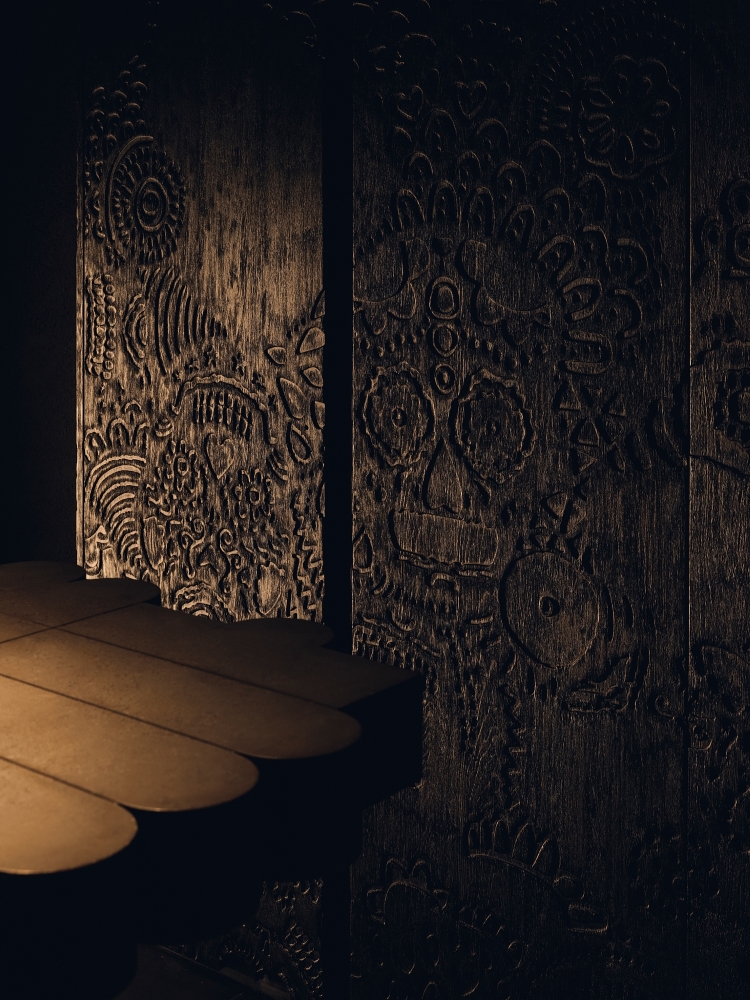
Aztec legends and Mexican folklore
Legends and Mexican culture references are spread around the bar, including Aztec images and ornaments integrated into the concrete walls and wood benches. The fresco of Frida has been recreated in thin lines on the main hall walls, mirroring the appearance of the Virgen de Juquila. The legend of the rabbits of Mayahuel, believed to have introduced agave to people, is represented through porcelain figurines and light projections. The light rabbits appear and disappear throughout the bar, playing a game of catch with those who try to photograph them for social media.
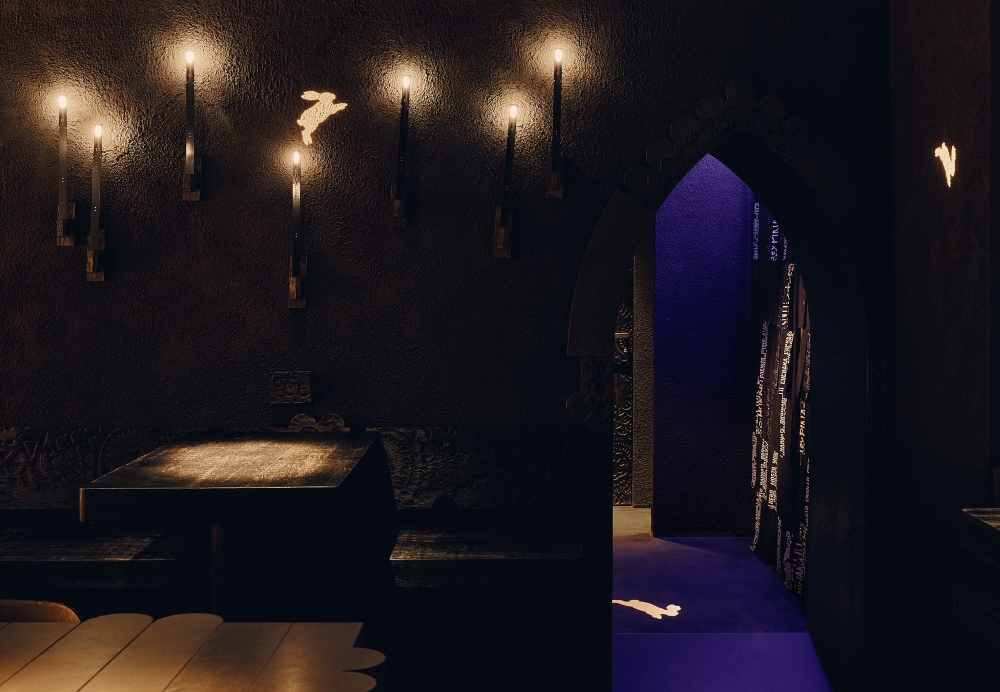
The renovation of El Copitas bar by DA BUREAU has been awarded the LIV Hospitality Design Award in the Interior Design Cocktail Bar category. The new El Copitas bar embodies the atmosphere of escapism while at the same time keeping the spirit of an old communal gathering place that serves original cocktails and dishes.