Header: Fran Parente
Flat Fasano is a luxury apartment in the Fasano Itaim development in São Paulo, Brazil, a mixed-use tower that combines a five-star Fasano hotel with private residences. The home was designed by Studio MK27 and completed in 2025, with Marcio Kogan and Diana Radomysler as lead designers and Luciana Antunes on the design team. It has recently been awarded the “Jury’s Favourite (Interior Design – Apartment)” prize at the BLT Built Design Awards.
The vision
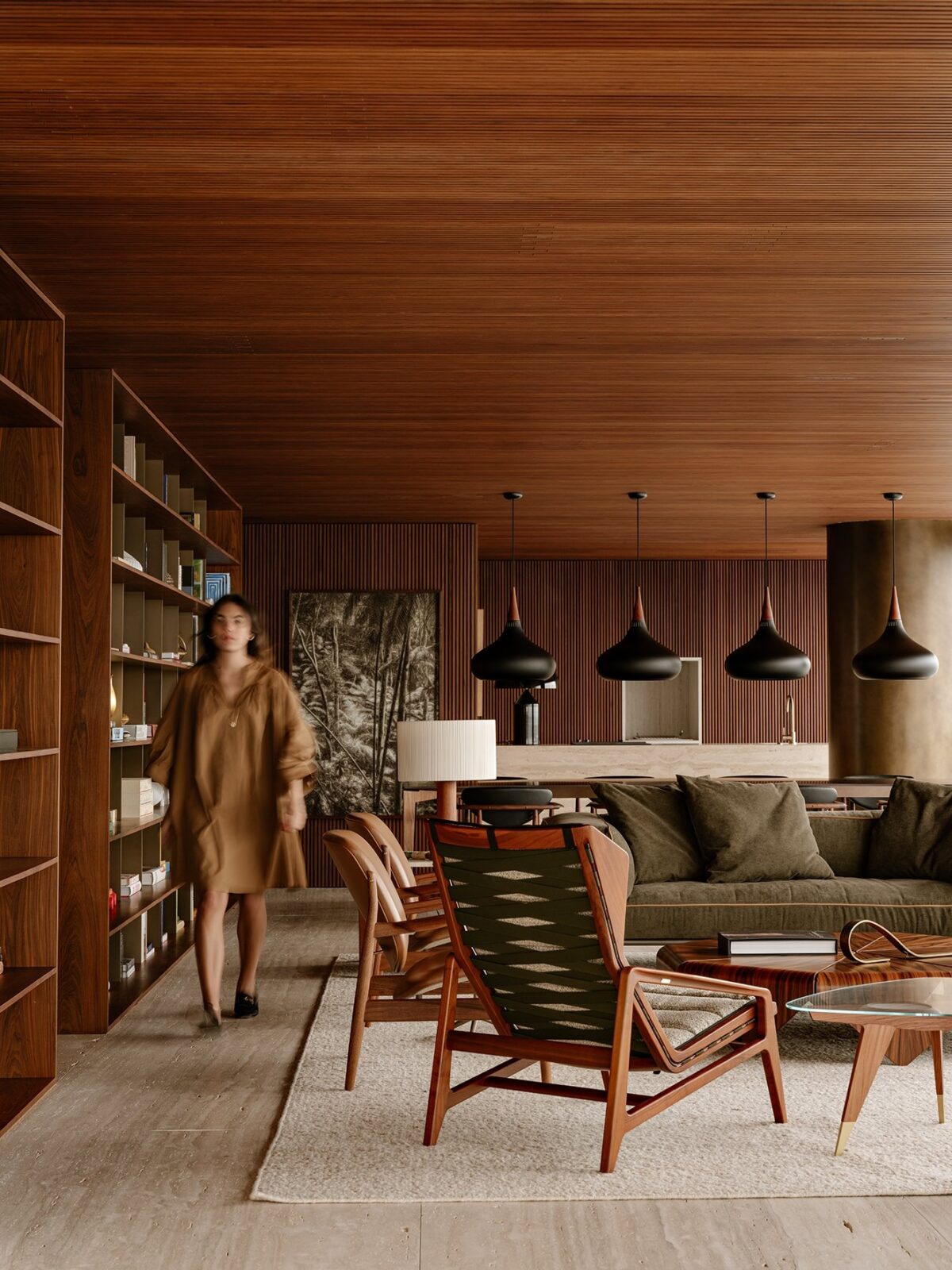
In this interior, daylight is treated as a main part of the design, brought in through floor-to-ceiling windows and then softened with macramé curtains. Warm woods and textured stone contrast against darker details, helping to create an old-school Brazilian vibe that is better appreciated with a Bossa Nova record playing in the background.
An open living space
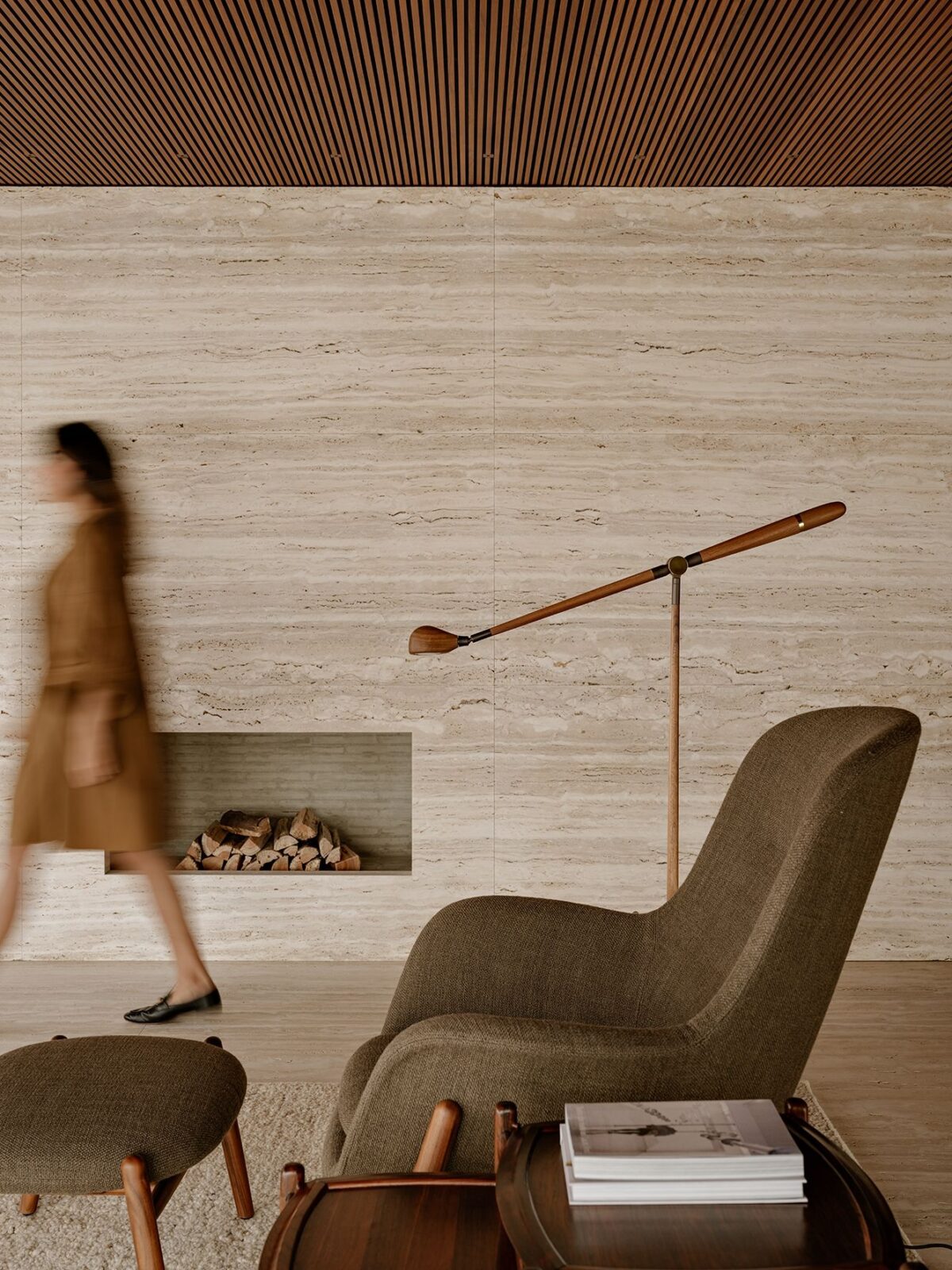
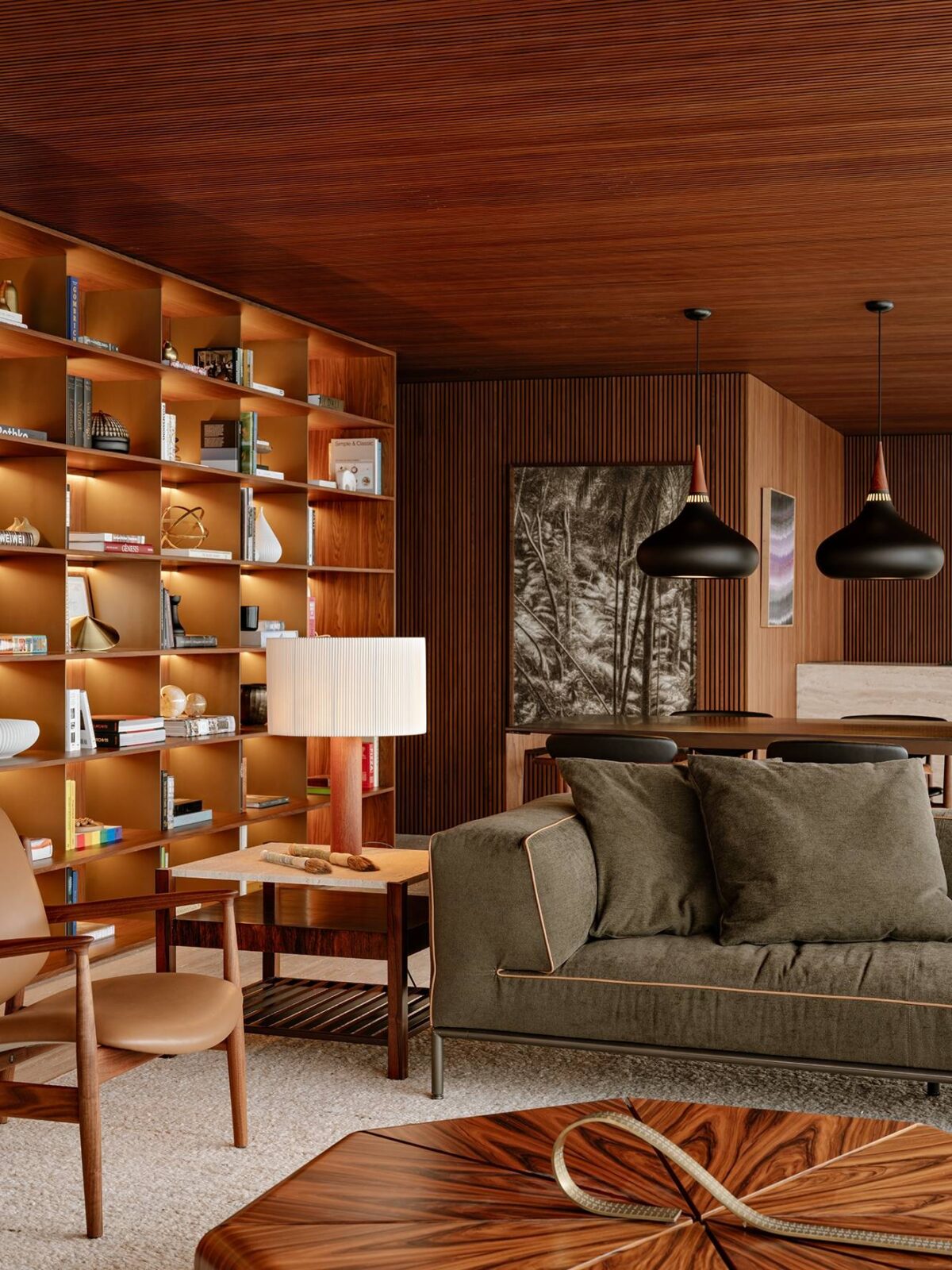
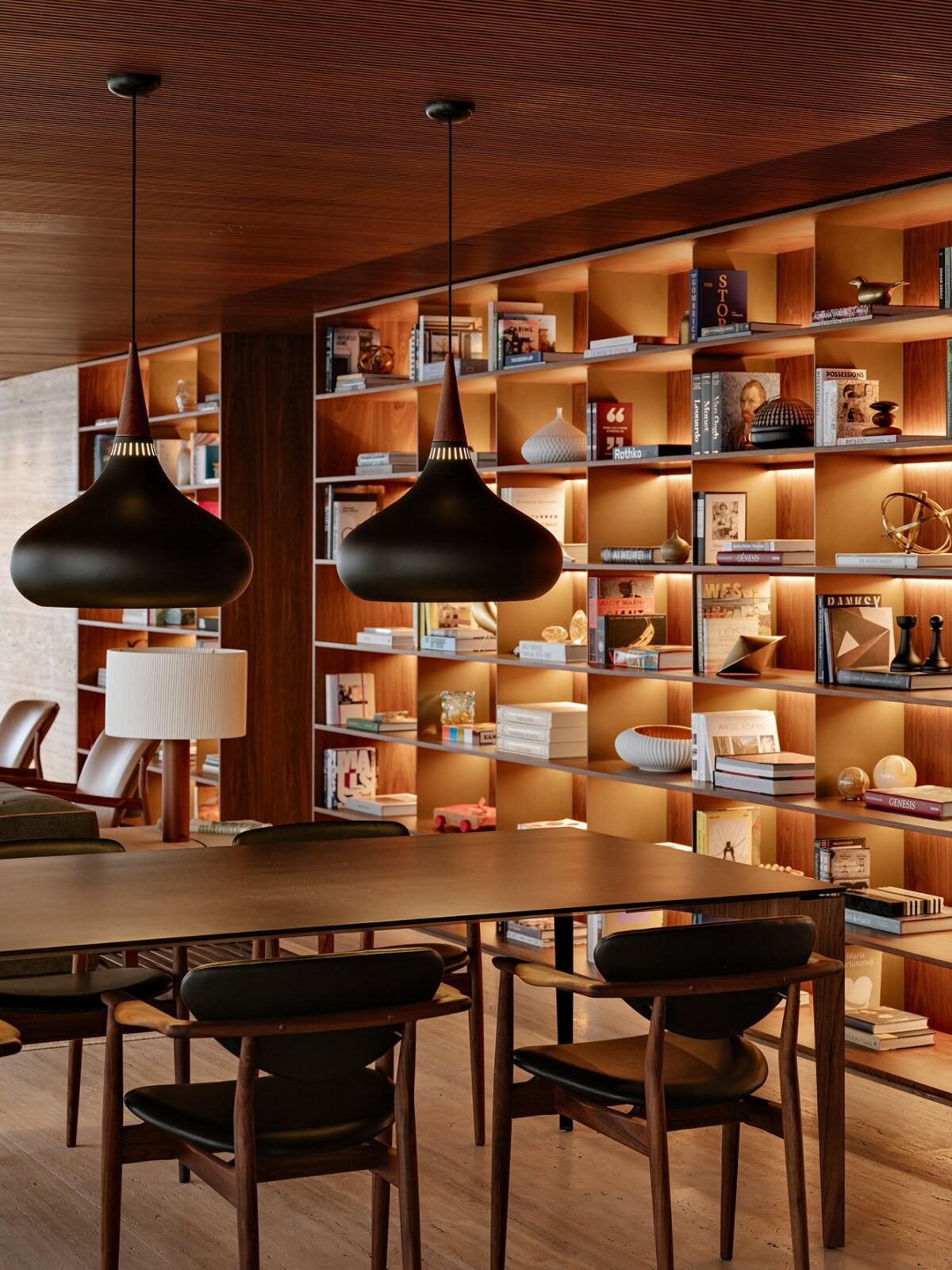
The layout revolves around an open social area that includes a living space, dining room, and a gourmet kitchen. On one side, a glass façade opens up to a terrace where residents can enjoy the warm São Paulo climate, and the opposite side is taken up by a custom, full-height built-in shelf running the length of the room. This shelving unit does more than just hold books and décor; it also helps mark out the different areas of this open layout without closing them off. Close to one end, a stone fireplace clad in travertine forms an intimate niche, grounding the space and creating an area where conversations can flow in comfort.
Within that open plan, the living space is broken down using furniture groupings and rugs. Three seating areas can be discerned: a nook by the fireplace, a central lounge area, and the dining space next to the kitchen, each defined by a large neutral rug and its own cluster of seating, tables, and lamps. Overhead, a slatted wooden ceiling helps mark transitions, uphold the overall interior aesthetics, and conceal technical elements like HVAC and lighting tracks.
Strong materials
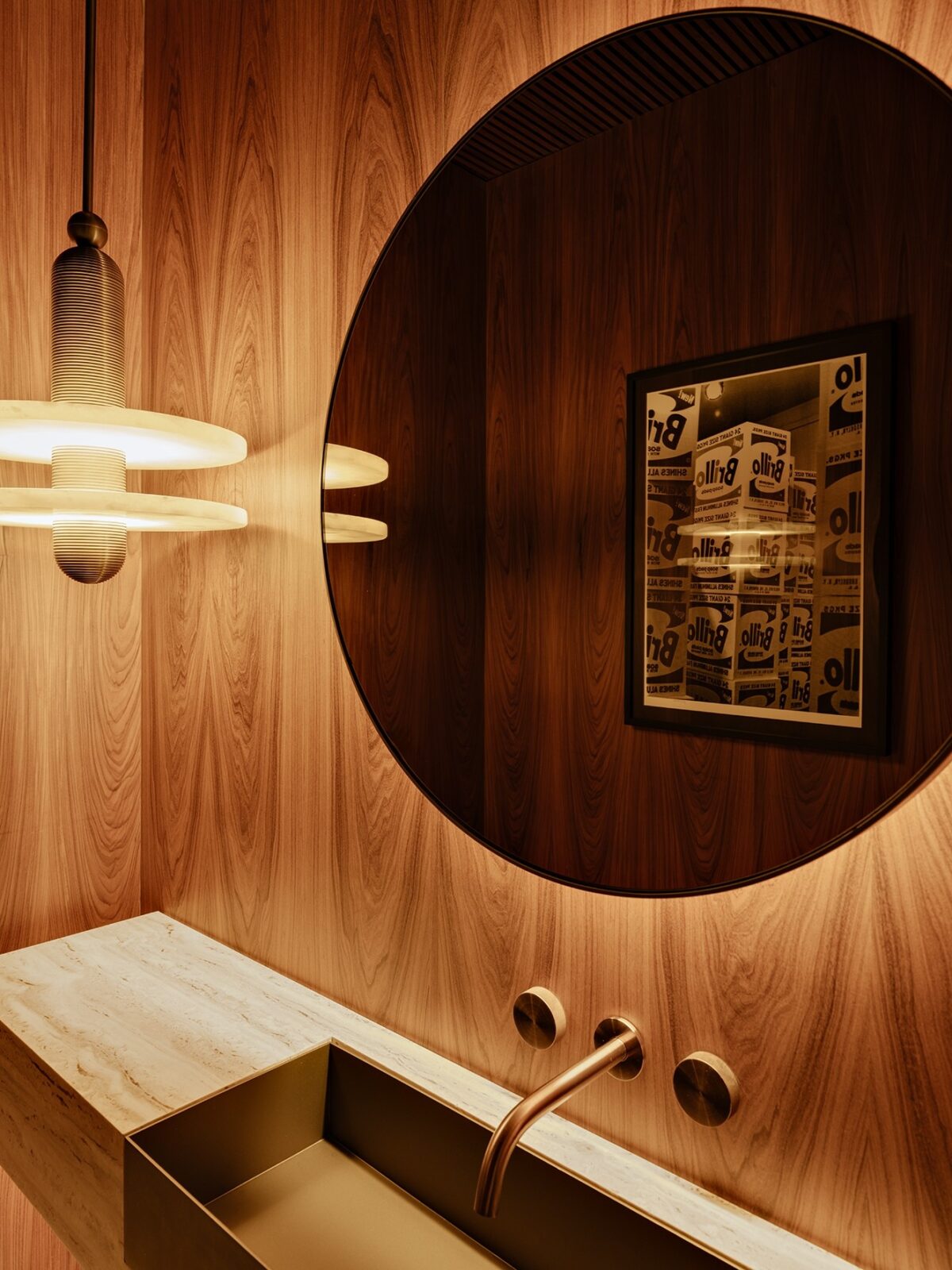
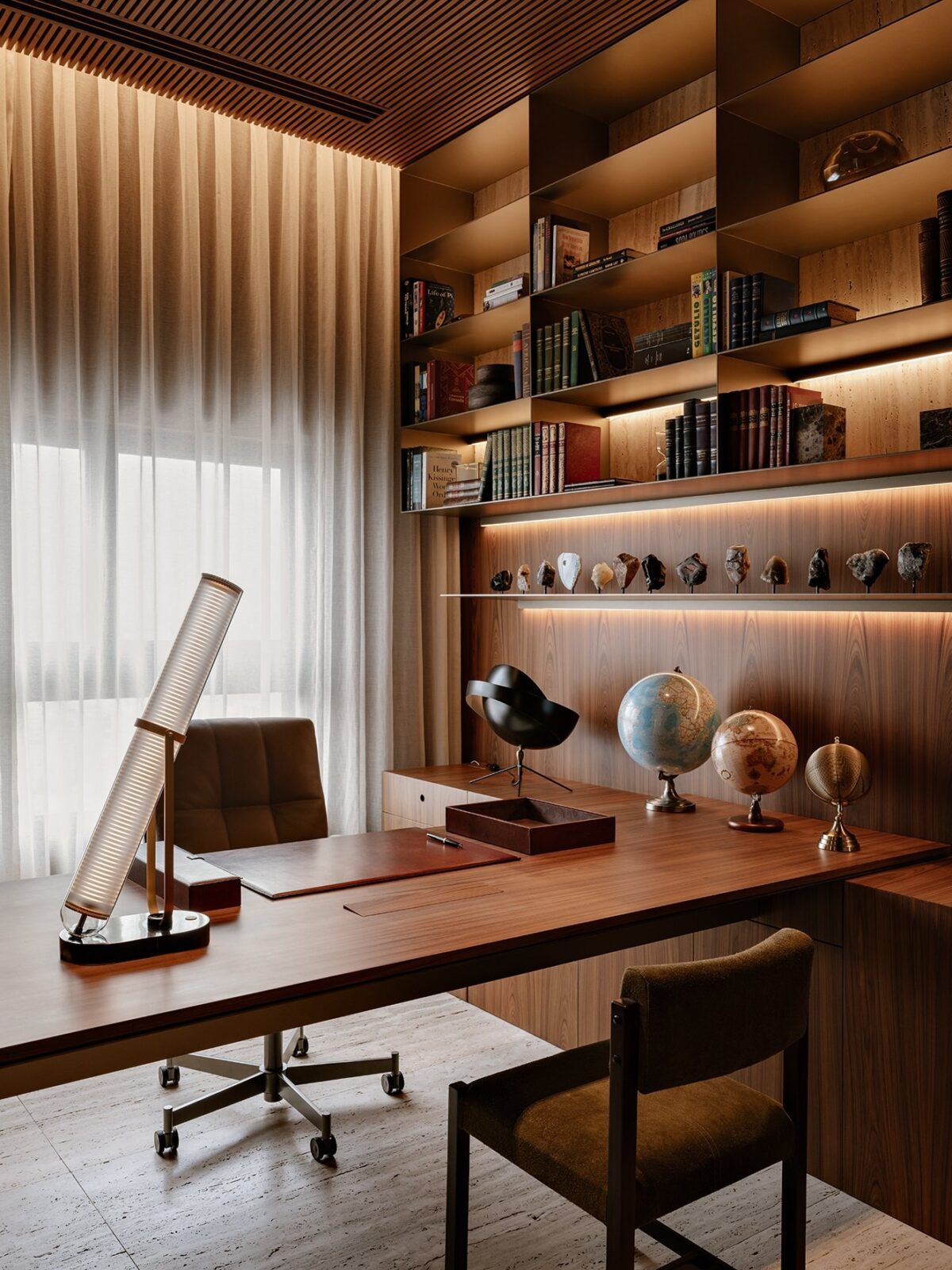
The designers chose dark grey slate laid in an irregular shard pattern for the main floors, having created some contrast by wrapping walls in freijó wood veneer, with shelving and other wall storage in matching tones. In the ensuite bathrooms, honed travertine was used on both the floors and walls. Lighting was developed in collaboration with Lumini, with integrated LEDs and recessed fittings used to put a spotlight on shelving, objects and artworks.
Intentional furniture
The furniture used throughout the home mixes Brazilian modernism with contemporary Brazilian pieces, also bringing mid-century international classics here and there. The list includes the Pétala coffee table by Jorge Zalszupin, a dining table by Jader Almeida, an Akari paper floor lamp by Isamu Noguchi, a floor lamp by Alvar Aalto, and George Nelson bubble pendant lamps above the dining table, alongside vintage armchairs by Gio Ponti and Finn Juhl.
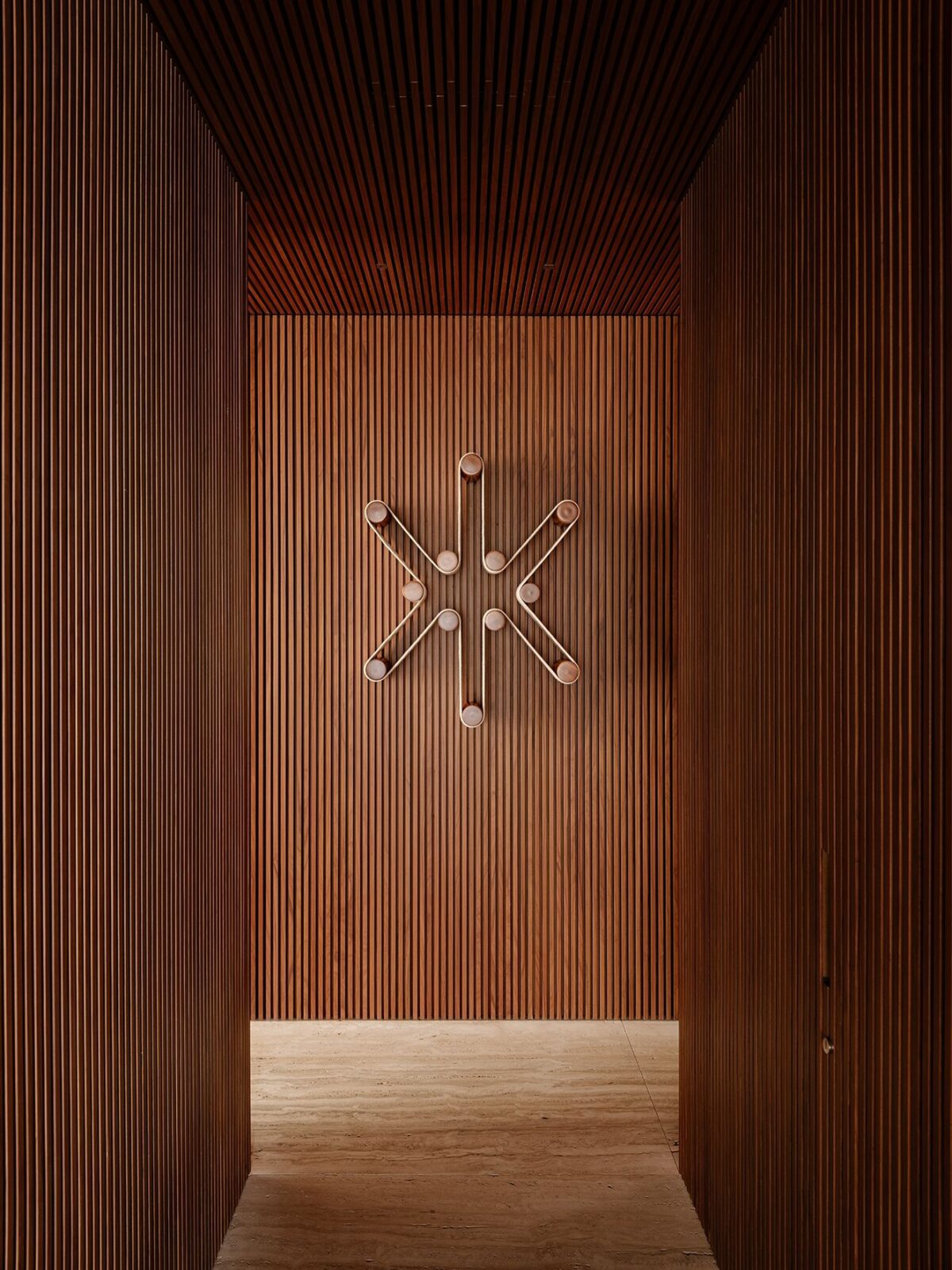
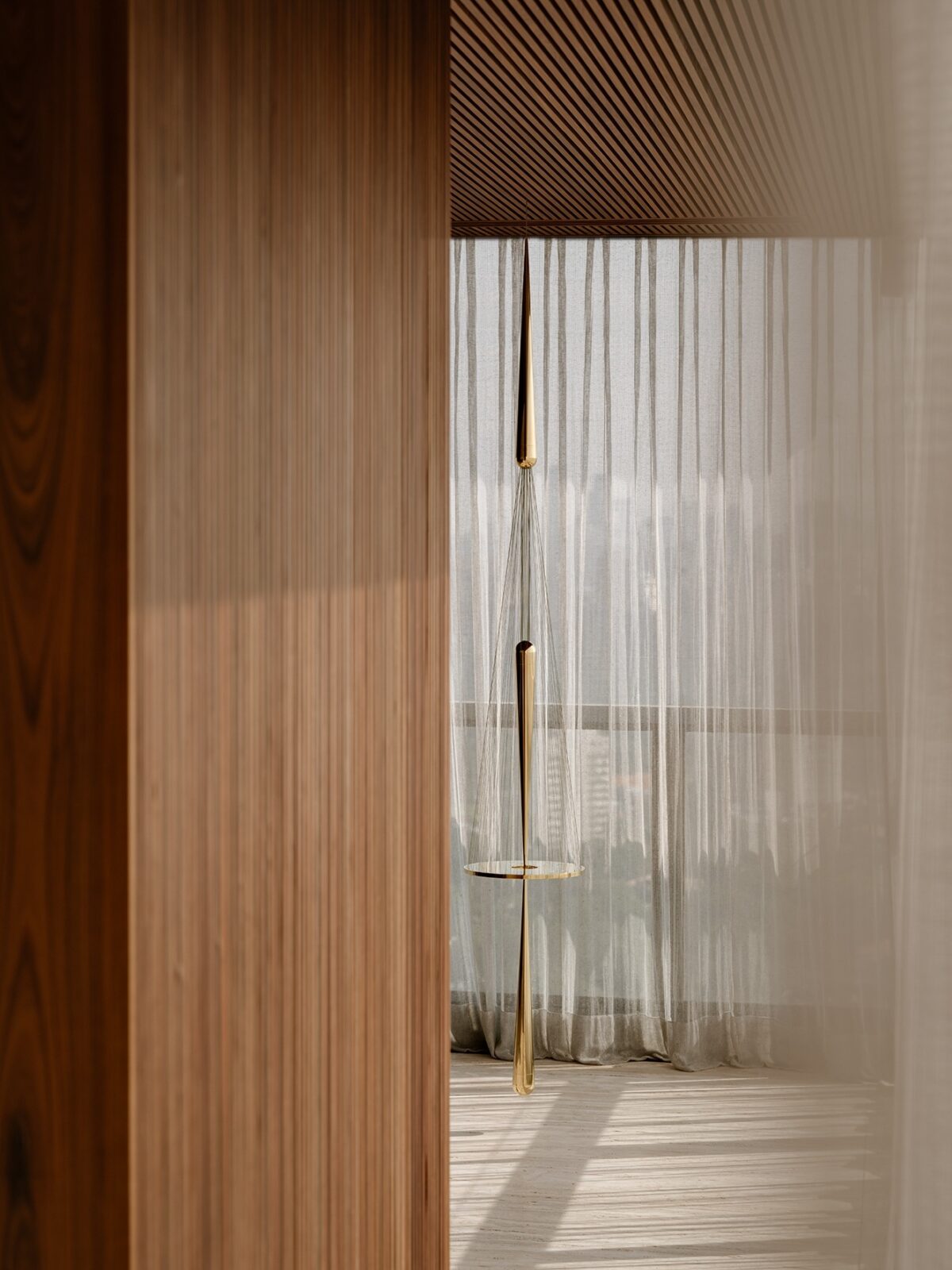
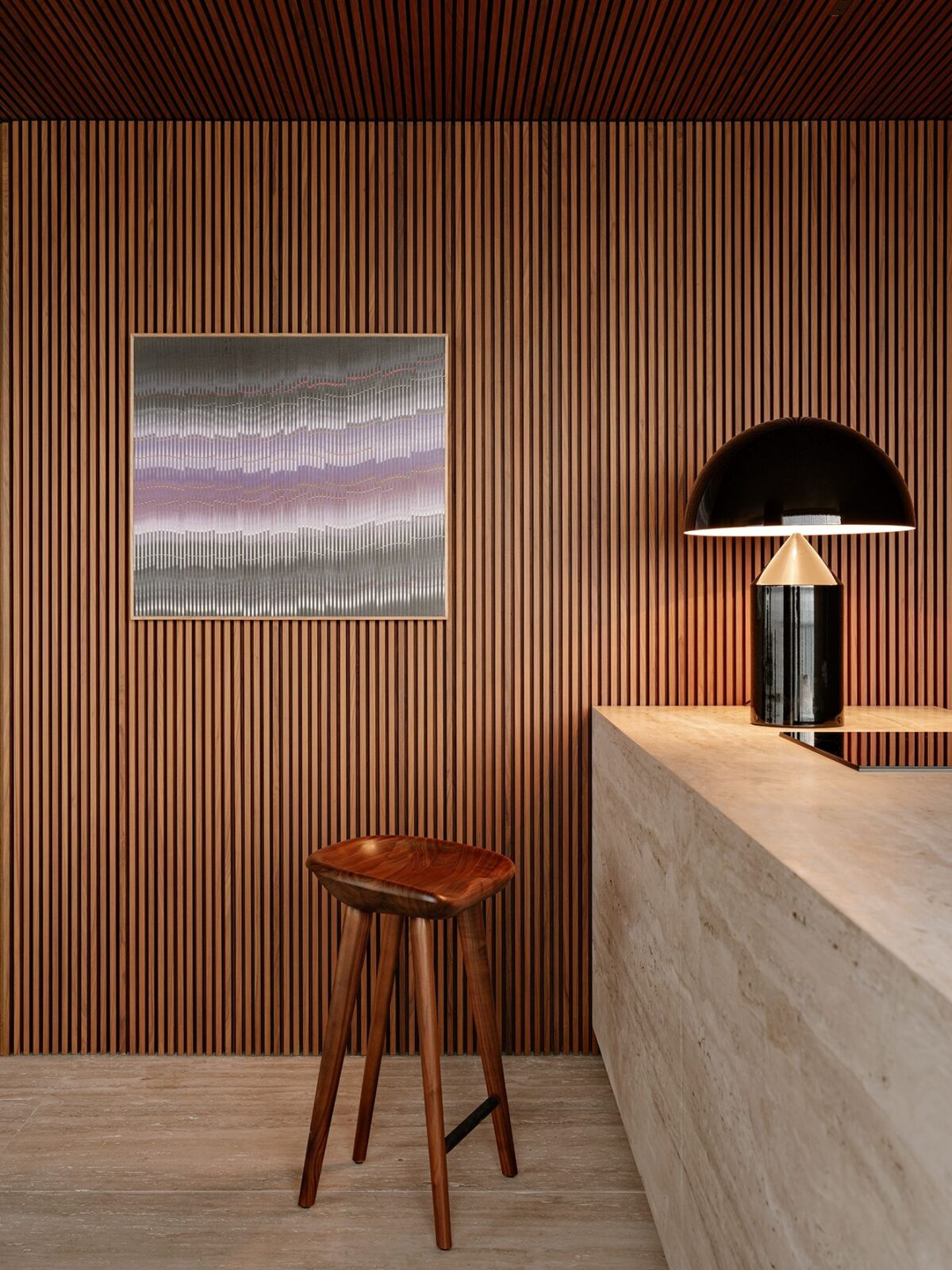
Art was almost built into the rooms: a group of abstract drawings can be found in the entrance, two works by Artur Lescher (one suspended near the glass façade and another placed among the vertical wooden slats in the corridor), and a kinetic artwork by Abraham Palatnik installed near the kitchen and dining area.
Calming bedrooms
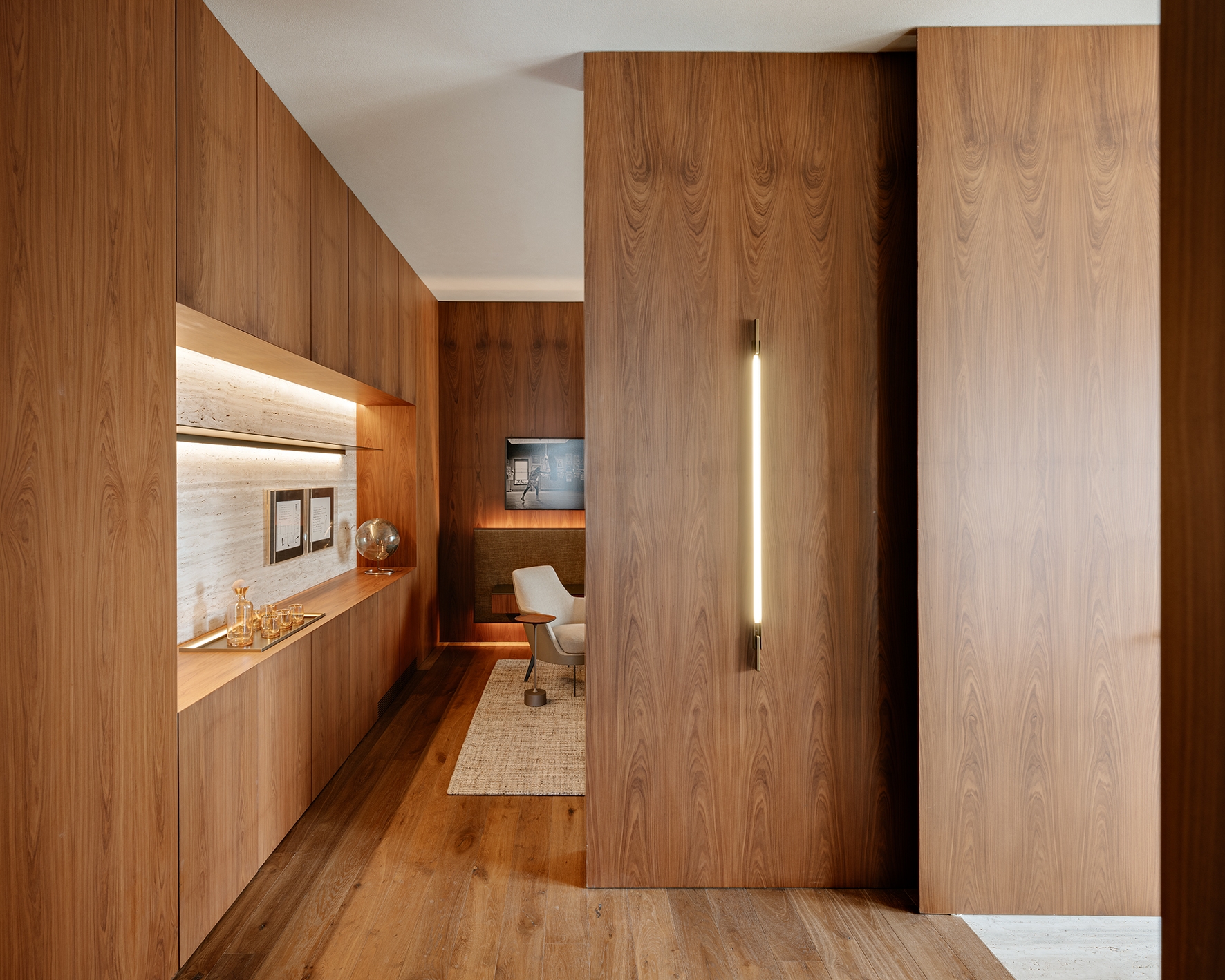
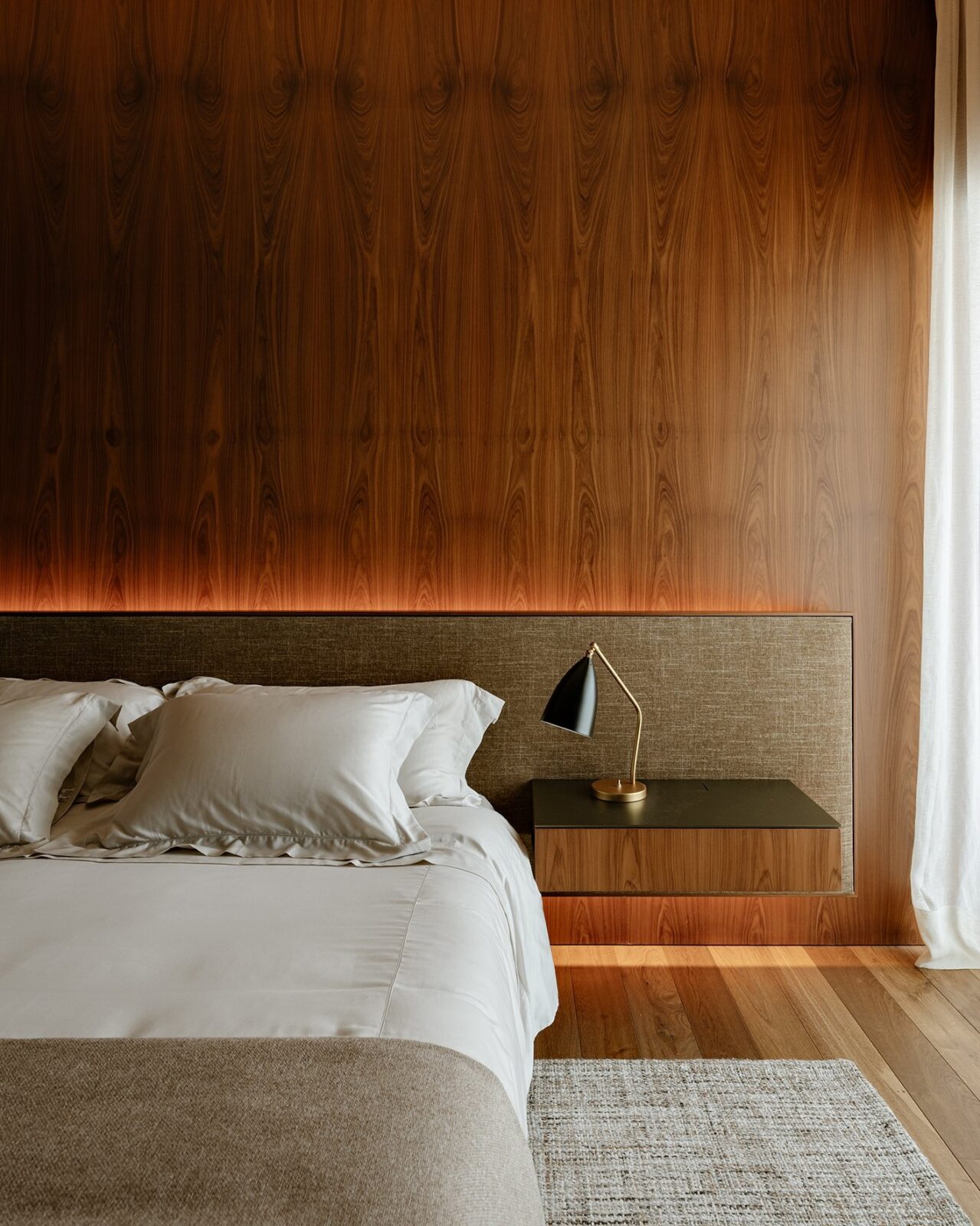
The private rooms soften and lighten the material mix. The corridor towards the bedrooms is dressed in the same wood slats and panels found in the main living space, with softer lighting and sculptural wall sconces introducing the new look ahead. In the master bedroom, the ceiling shifts to white, the floor changes to natural wood planks, and a full-width wood-panelled headboard holds floating nightstands and indirect lighting. As mentioned, the bathrooms use travertine from floor to ceiling, complementing the rich look with simple geometric fixtures finished in matte black and brushed metal, built-in concealed storage, a large mirror, and a glass shower.