




Header: Adrien Williams
La Maison de la Baie de l’Ours draws its strength from the striking beauty of its site: its relationship to the horizon, the lake and the rocky escarpments. Designed by ACDF Architecture to offer a living experience deeply rooted in the landscape, the house fosters an intimate dialogue between nature and its occupants.
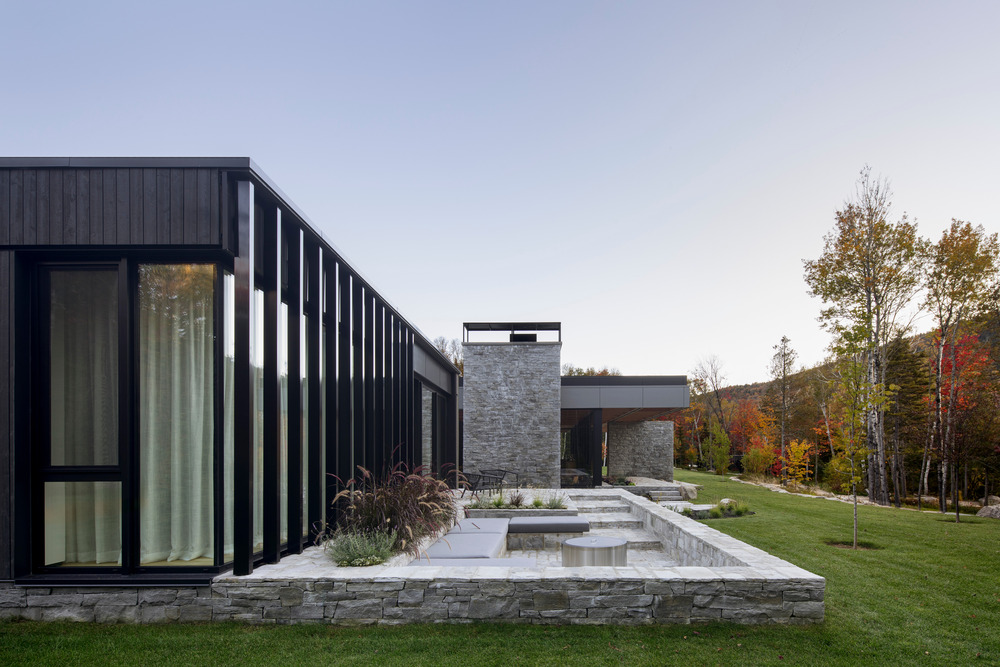
Every architectural element resonates with the site in some way, whether through blurred interior-exterior transitions, immersive pathways that dramatise movement from one zone to another, powerful horizontal framings created by deep cantilevers, or the use of stone monoliths that serve both as structural anchors and physical extensions of the terrain.
The result is a unique form of immersion into the exceptional setting of Saint-Donat-de-Montcalm, in the heart of the Lanaudière region, north of Montreal.
A respectful relationship with the site
Located on the shore of Lac Archambault, the house sits on land once occupied by a summer camp, abandoned for many years. It was carefully positioned in a partially cleared area of the lot, accessed via an old service path, where the ground was naturally flatter, thus avoiding any intervention in the steeper parts of the site.
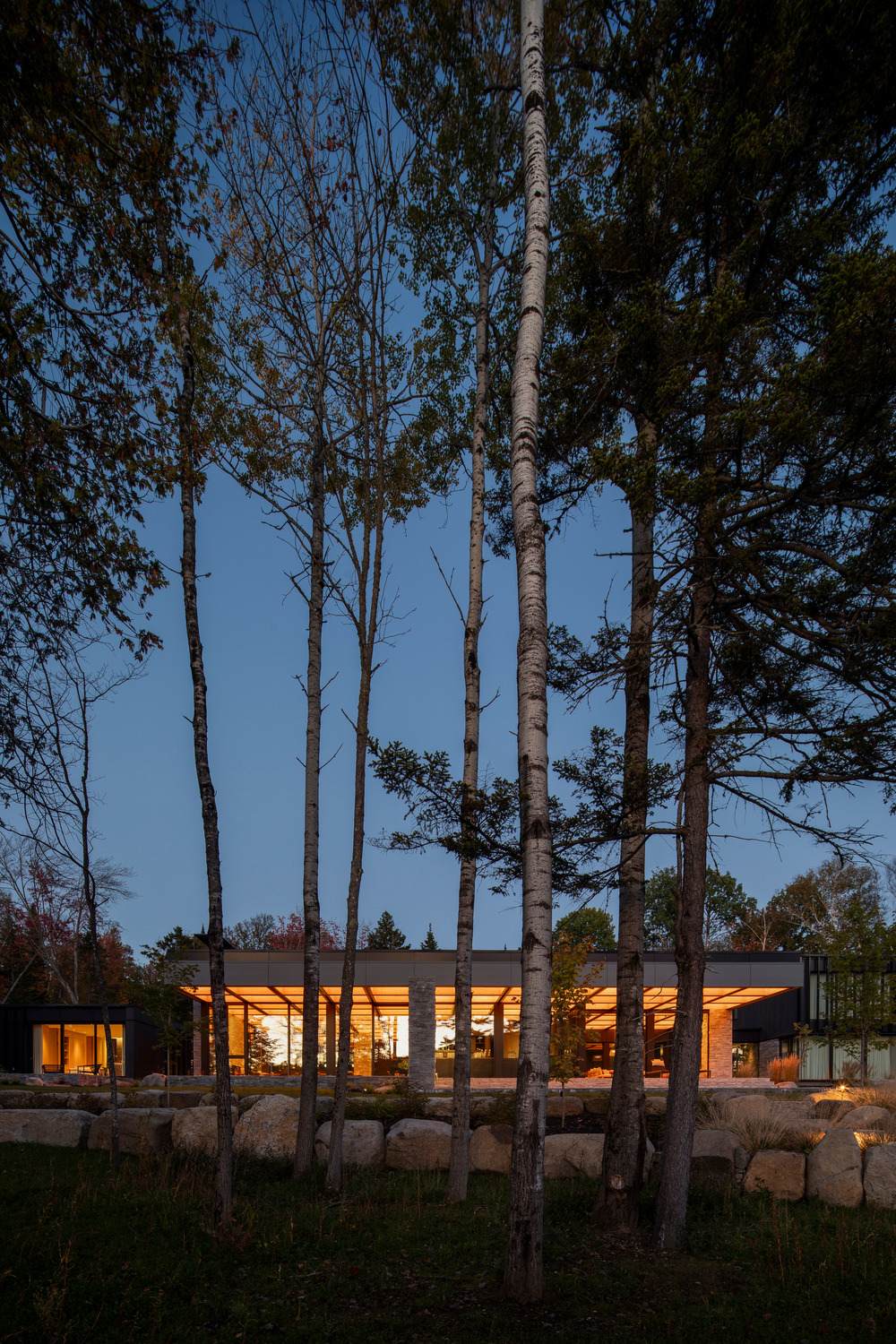
The house offers a living experience that is both enveloping and open, and, despite its size, it remains discreet when viewed from the lake. It forms a protective, almost secret place, one that gives a sense of being sheltered while still allowing for full immersion in the surrounding nature.
Through careful framing, recesses and controlled transparency, the project explores a subtle paradox: to see without being seen. It creates a relationship to the world that is at once calm and intense, where one can withdraw without isolation, contemplate without exposure and inhabit without overpowering.
Three layers in dialogue with the site
The architecture of La Maison de la Baie de l’Ours is articulated through three main elements, designed as complementary layers. Together, they allow the home to engage with the landscape in a refined and sensitive way.
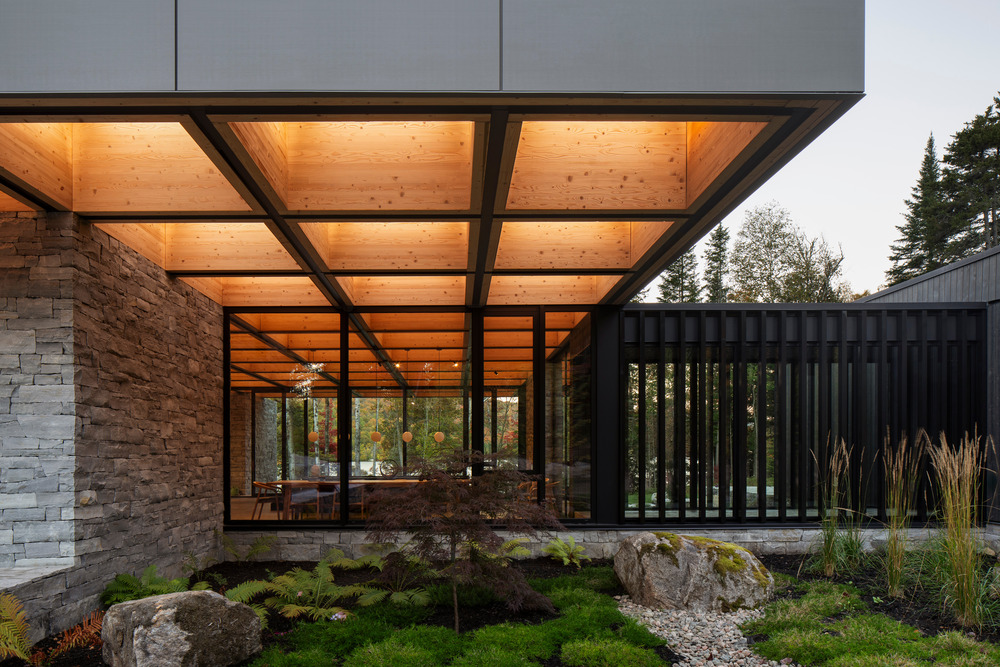
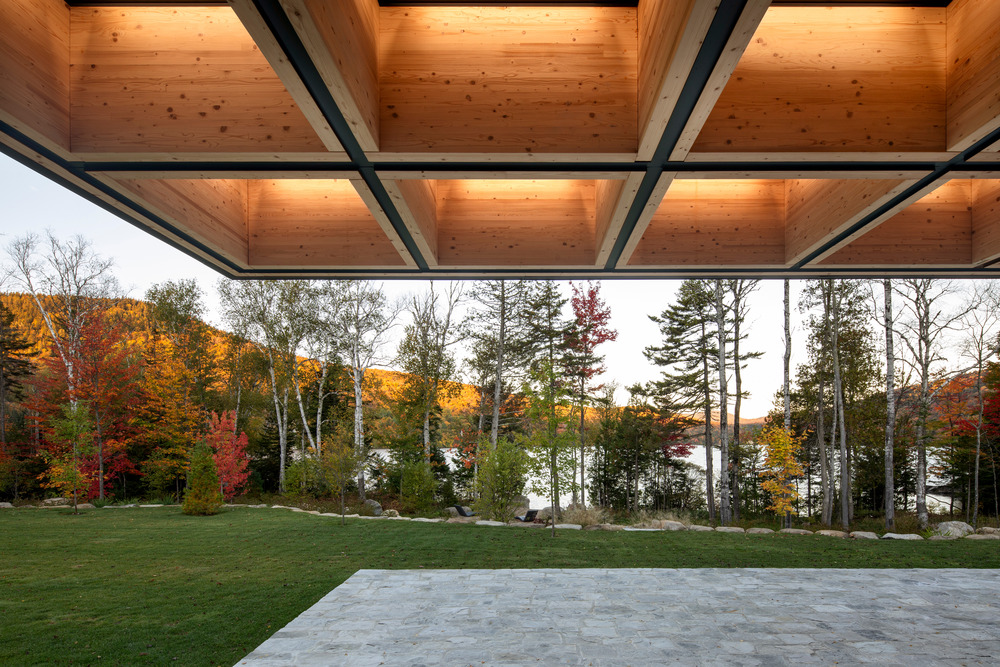
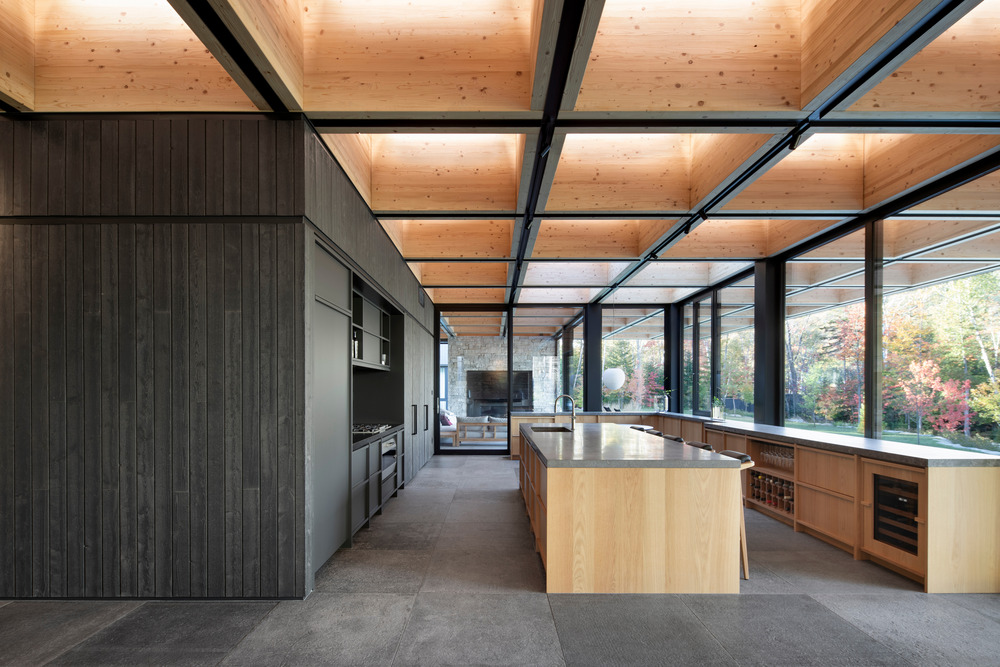
The first element is a vast timber roof structure that defines the architecture and the home’s spatial experience. Composed of glulam beams assembled into a coffered system, it creates deep cantilevers that extend the interior into the landscape. Appearing to float above the ground, this roof frames carefully composed views of the lake and surrounding mountains while softening the boundary between inside and out.
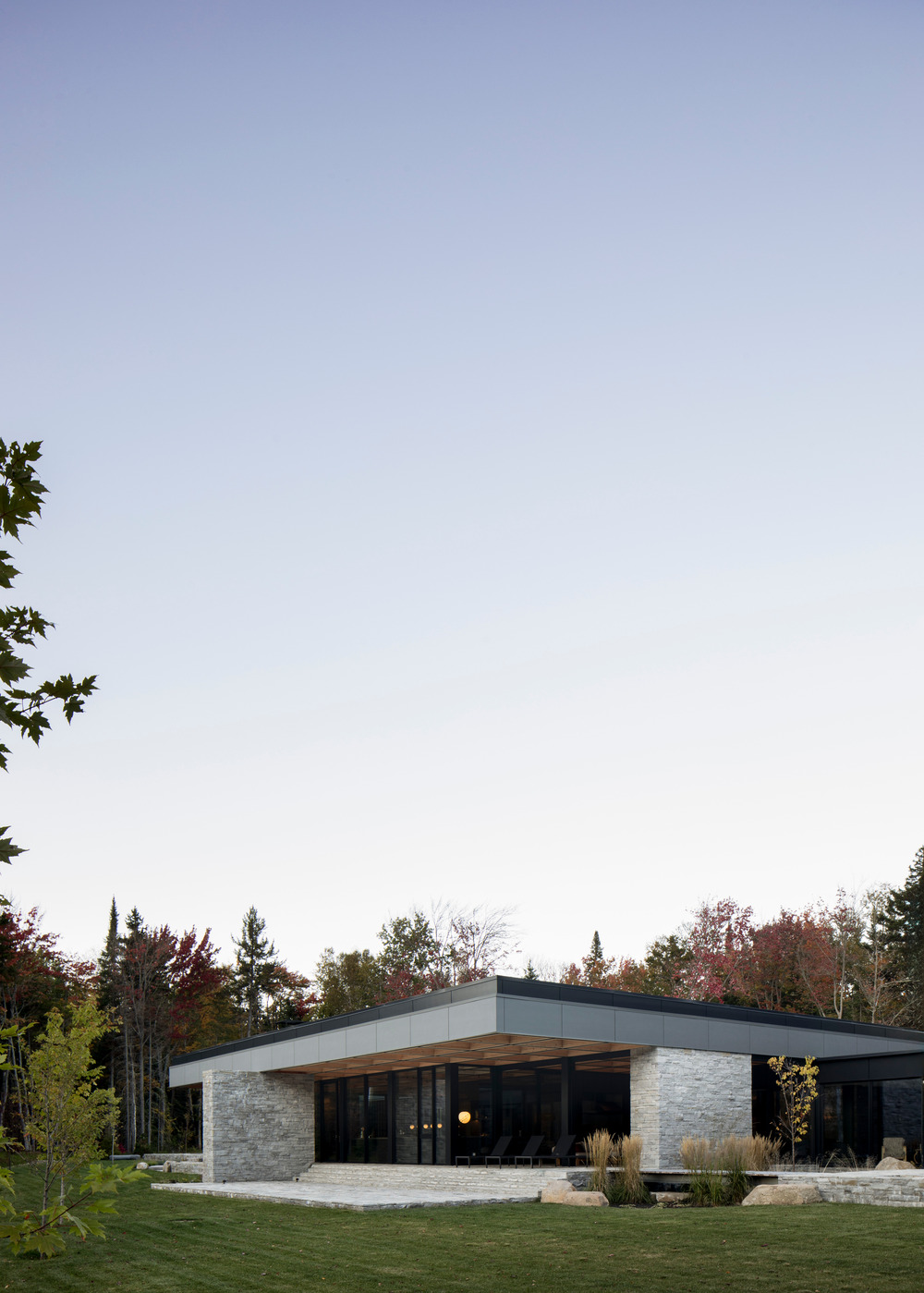
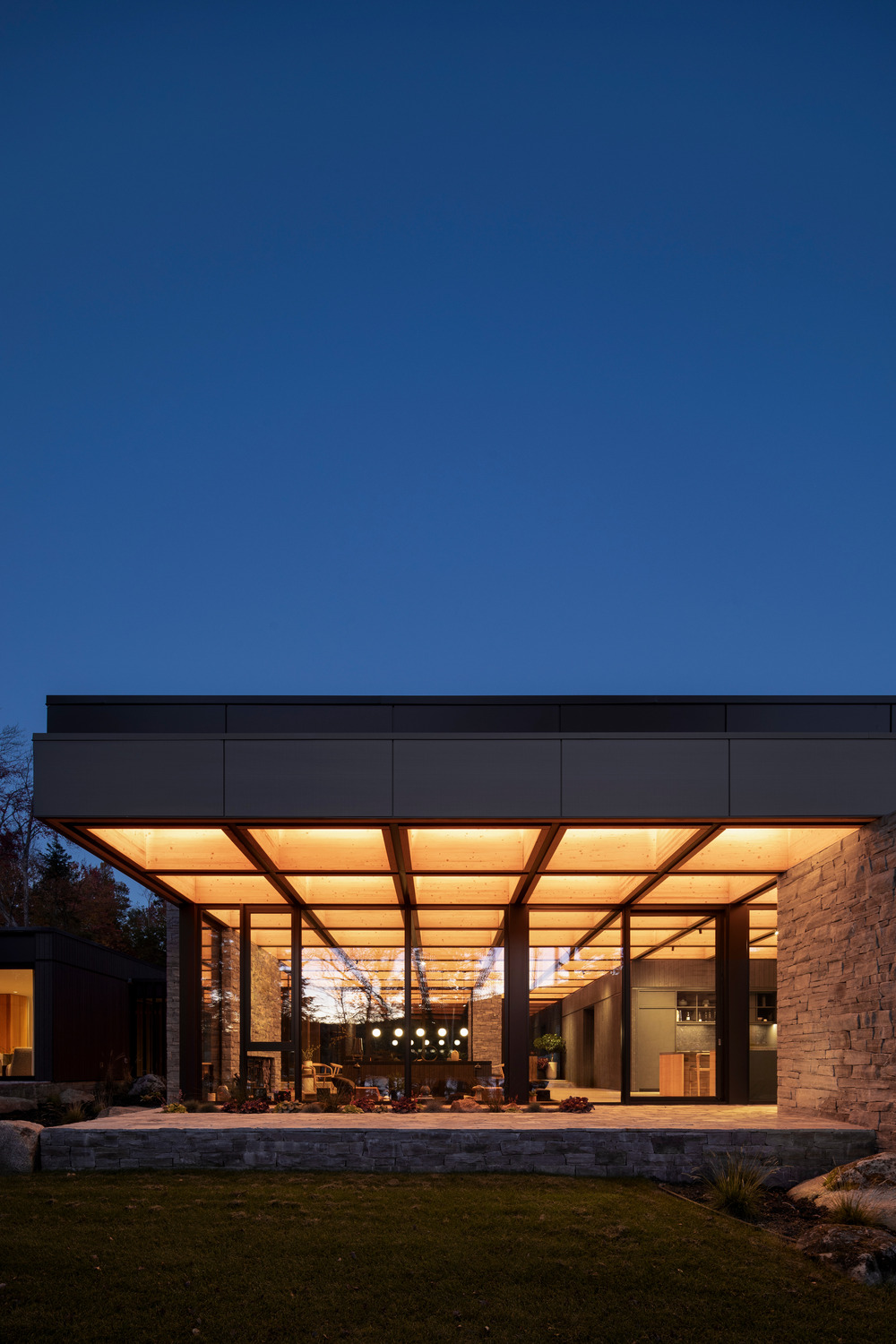
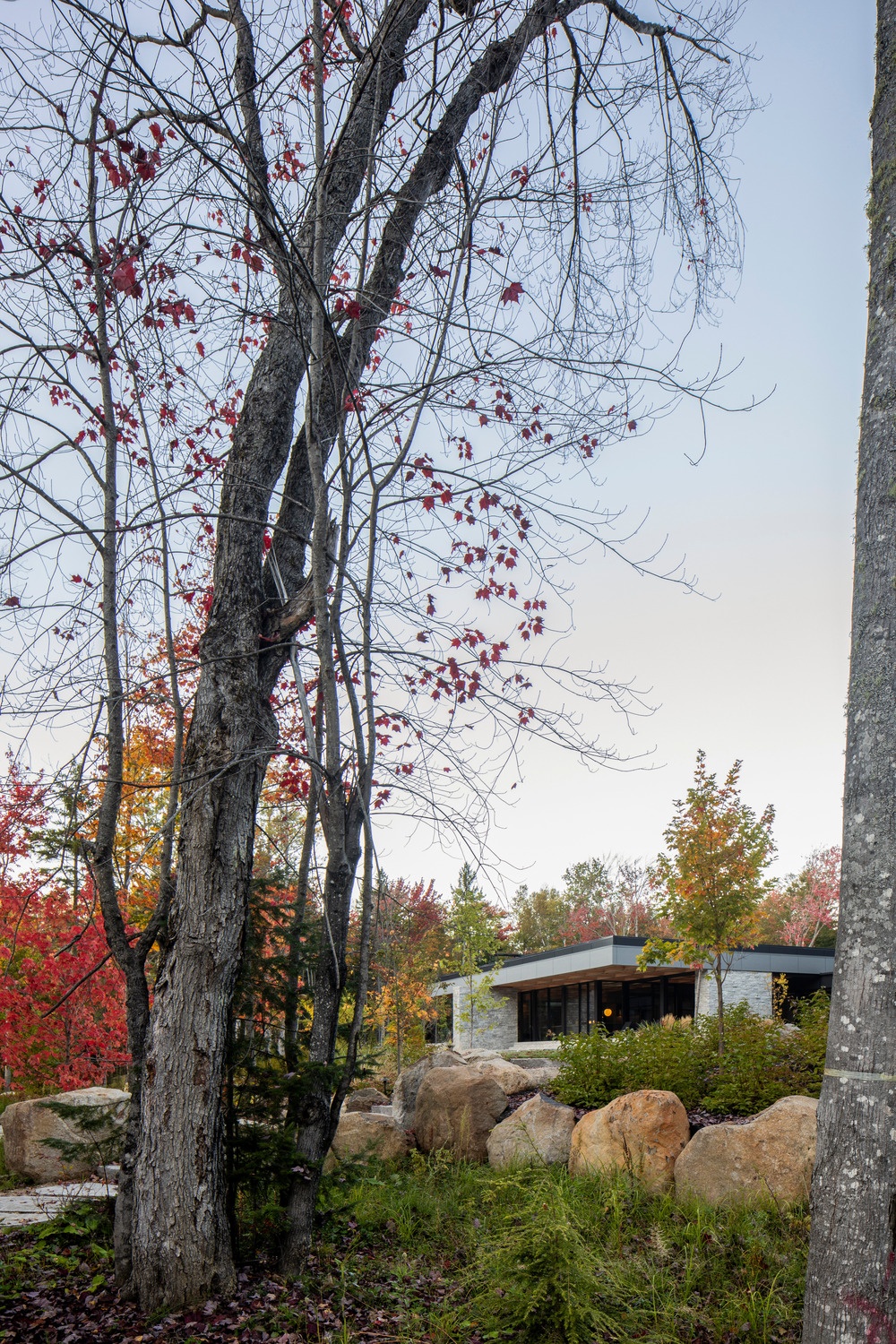
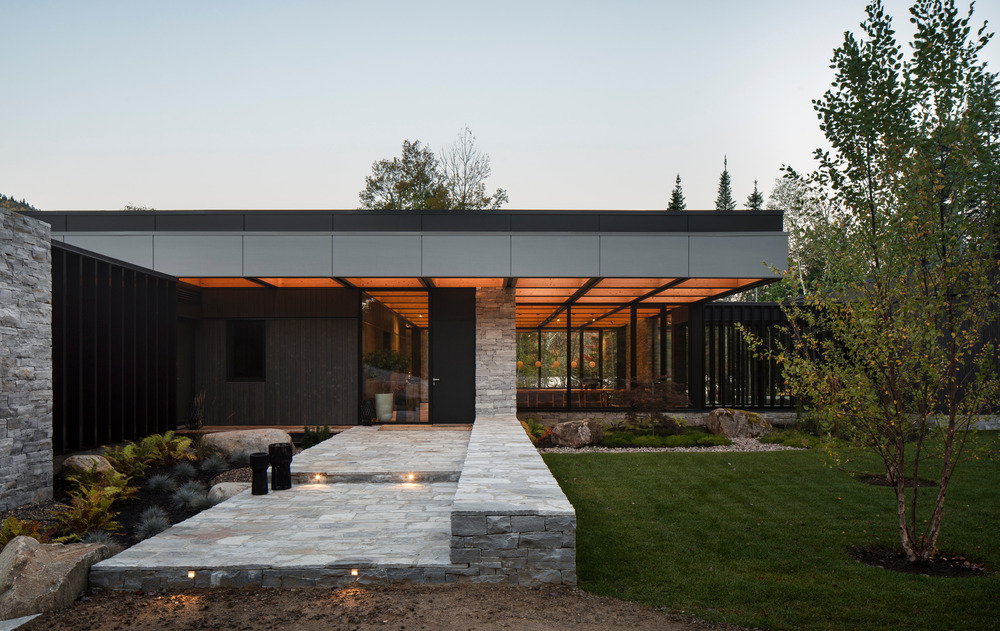
The second element consists of a series of stone walls that function as structural supports and sculptural gestures. Integrated into the terrain like natural extensions of the bedrock, they ground the house firmly within the site.
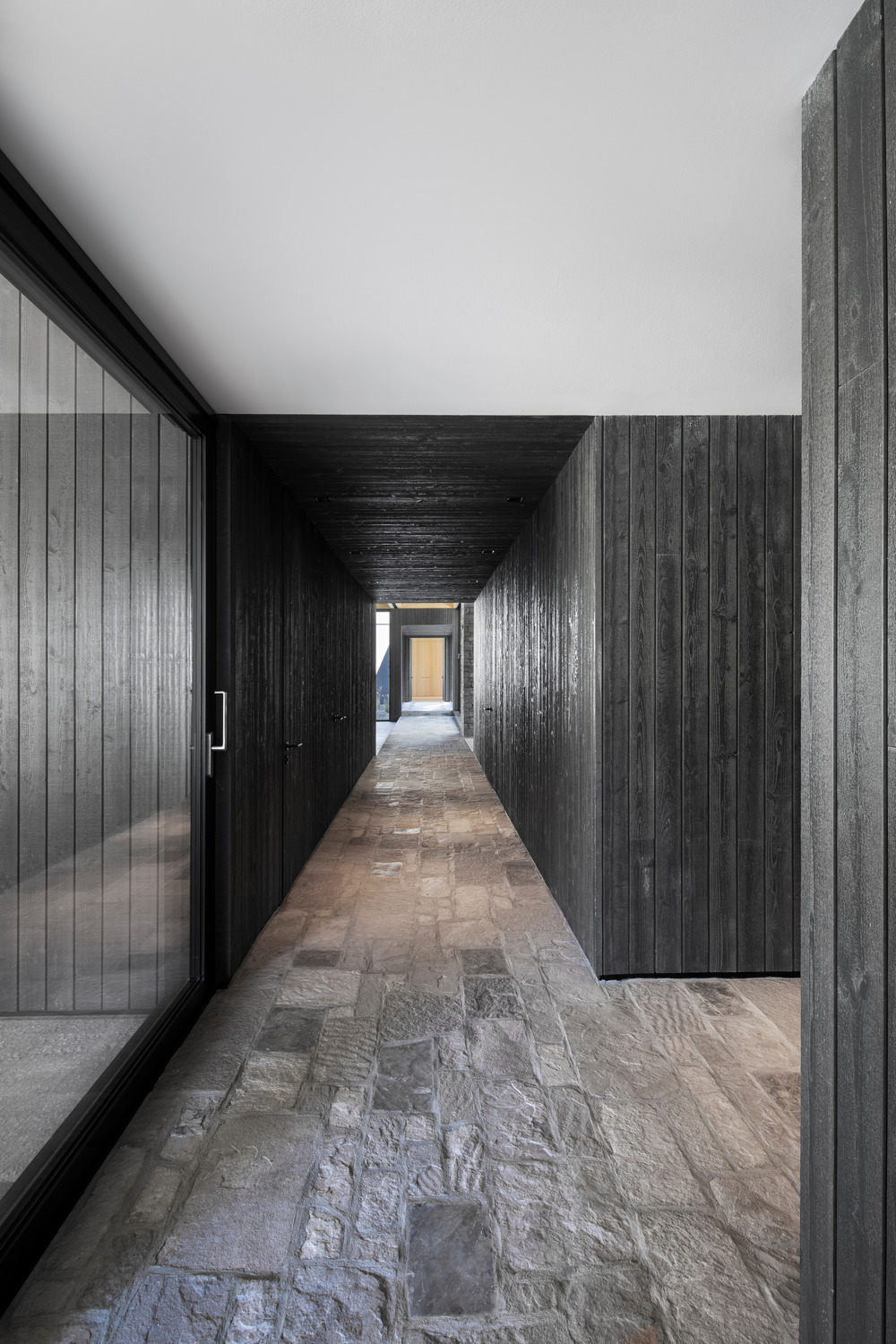
The third element consists of darker wooden volumes that house the bedrooms and service areas. Less open and more inward-looking than the main living spaces, these volumes are set back from the roof structure to create moments of privacy and retreat. Together, these three layers define an architecture that is protective and open, with each part contributing to a nuanced and site-sensitive interpretation of place.
“We didn’t want to impose a shape on the landscape, we wanted to reveal what was already there.”
Maxime Frappier, architect
A roof as both gesture and refuge
The 5’x5’ coffered timber roof spans the central portion of the house, sheltering the main living areas. The structure is primarily supported by a series of stone monoliths, deliberately positioned away from the corners, allowing for cantilevers that extend the interior outward into the landscape. This not only creates expansive, sheltered outdoor spaces but also dissolves the boundary between inside and out.
“We wanted the structure to elevate the place without distancing the people who inhabit it.”
Maxime Frappier, architect
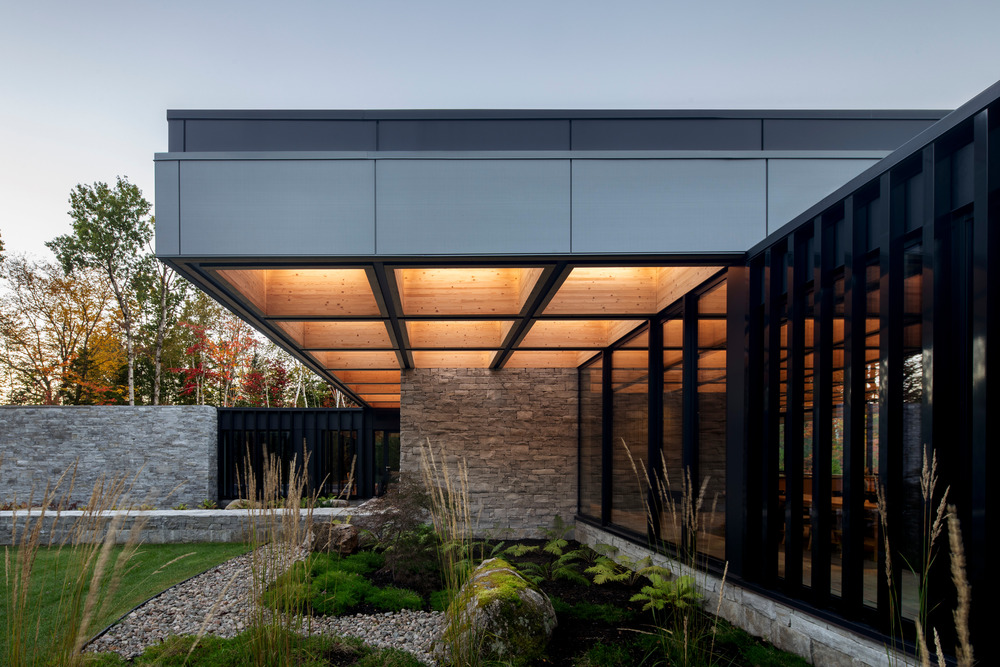
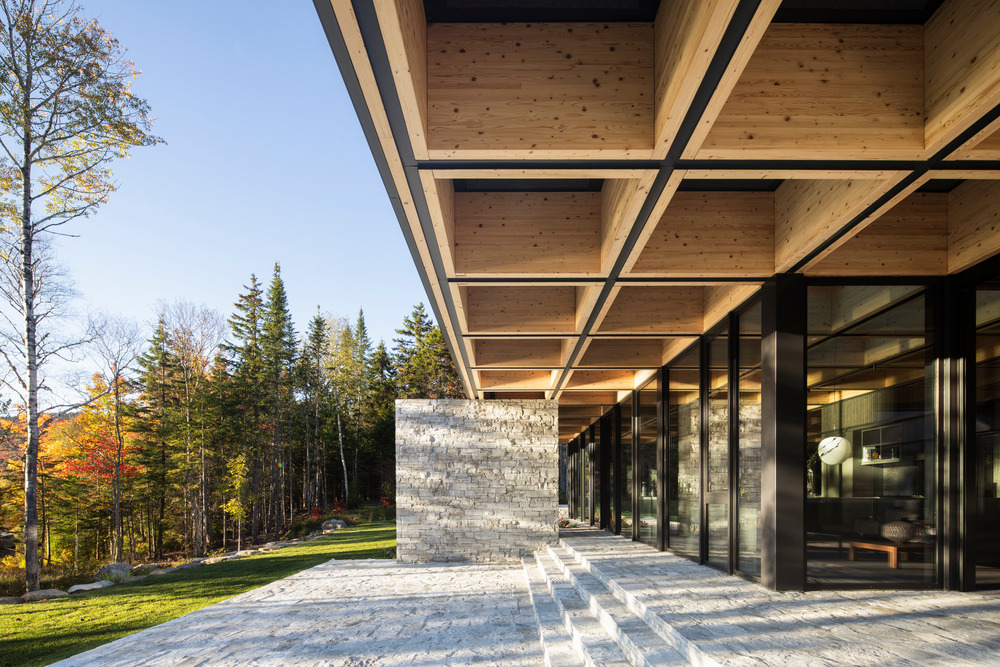
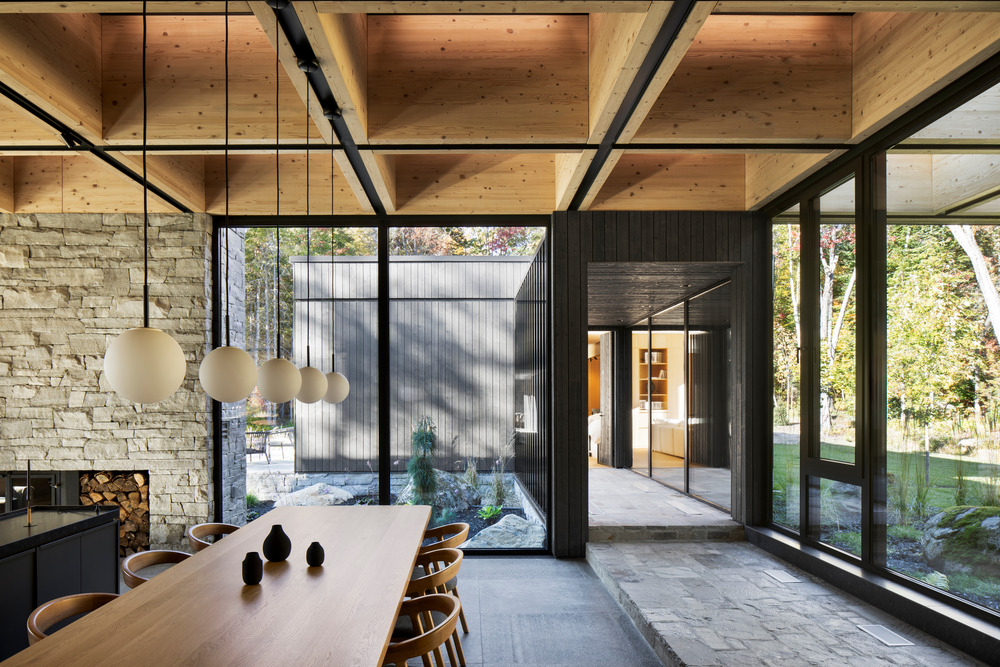
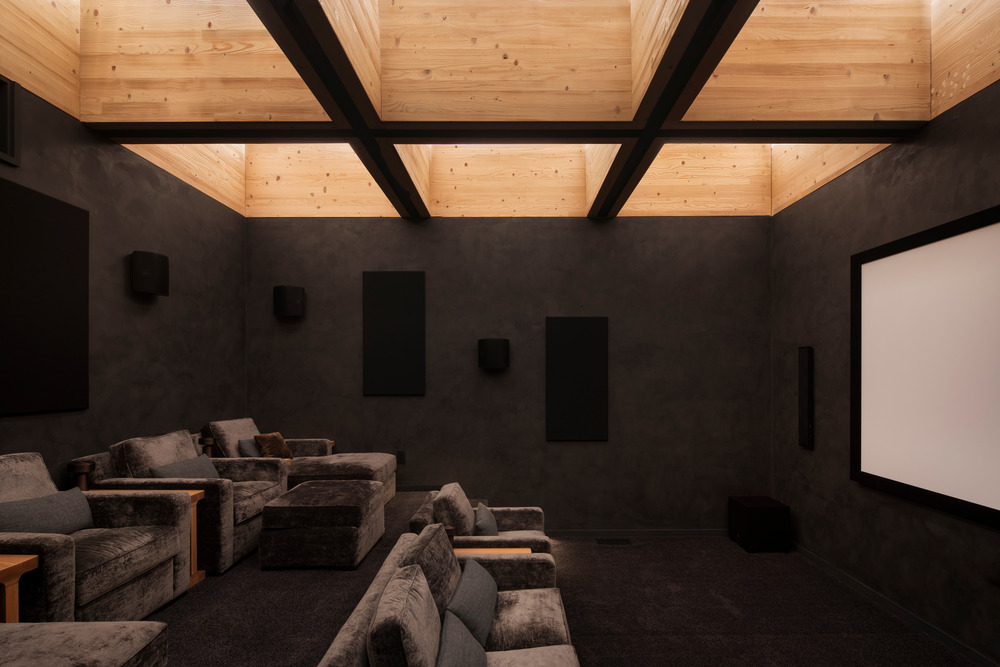
Acoustic panels are installed within each timber coffer, enhancing the comfort and quietude of the main living spaces. Discreet lighting devices are integrated along the perimeter of these panels, gently illuminating the warm texture of the surrounding wood. Strategically placed skylights further enrich the atmosphere, allowing natural light to shift across the surfaces throughout the day and seasons. Together, this careful treatment of sound and light fosters a profound sense of intimacy and calm that is perfectly in tune with the home’s vocation as a sanctuary in harmony with nature.
The structural columns are concealed within large monolithic stone walls, sparingly placed to help define subspaces throughout the interior. As they extend outward, some of these walls gradually transform into low stone partitions (murets) that root the house into the ground, as if they were natural extensions of the terrain. Their materiality and positioning suggest they have always been part of the site, like a geological outgrowth of the landscape itself.
This architectural strategy not only enhances the perceived lightness of the roof but also reinforces the project’s integration with its surroundings, establishing an organic continuity between the built and the natural. In this sense, the house follows in the footsteps of modernist principles, demonstrating how architecture can soften the boundary between shelter and landscape, between human presence and the natural world.
A fluid and immersive living space
The living areas are organised in a fluid sequence designed to support conviviality and privacy. The kitchen, with its cosy dinette, and the sunken living room open wide to the lake. At the centre of the plan, the dining room enjoys a double visual connection to the forest and the water, deepening the immersive experience. The fireplace serves as the central gathering element. Visible from all shared spaces, it anchors the kitchen, dining room and living room, creating a warm, unifying presence around which domestic life revolves.
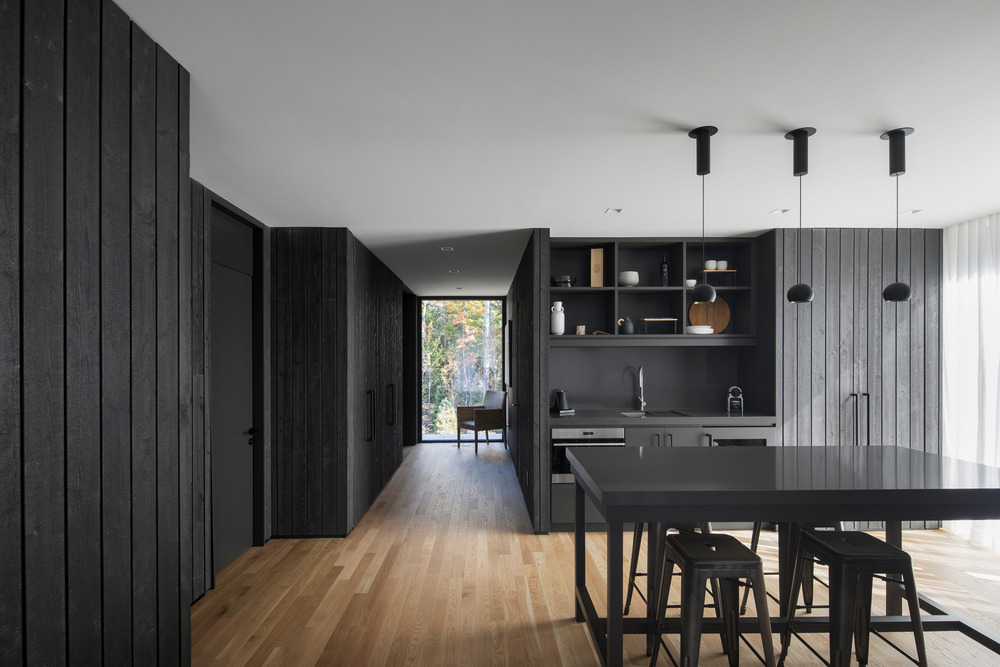
A secondary kitchen, hidden within a dark wood volume and accessed via a discreet passage, supports gatherings without interfering with the main social spaces. To the rear of the kitchen, a large screened terrace unfolds beneath the roof’s overhang. Equipped with retractable mosquito screens and an outdoor fireplace, it becomes a true outdoor living room. From the kitchen island, both fireplaces are in view, reinforcing the continuity between interior and exterior and heightening the immersive connection with the landscape.
Private wings in continuity with nature
Flanking the central living spaces are two distinct wings: one dedicated to the parents, the other to the children. A partial upper level, located above the children’s wing, houses a guest suite and the family’s workspaces, providing both privacy and spatial fluidity in daily life.
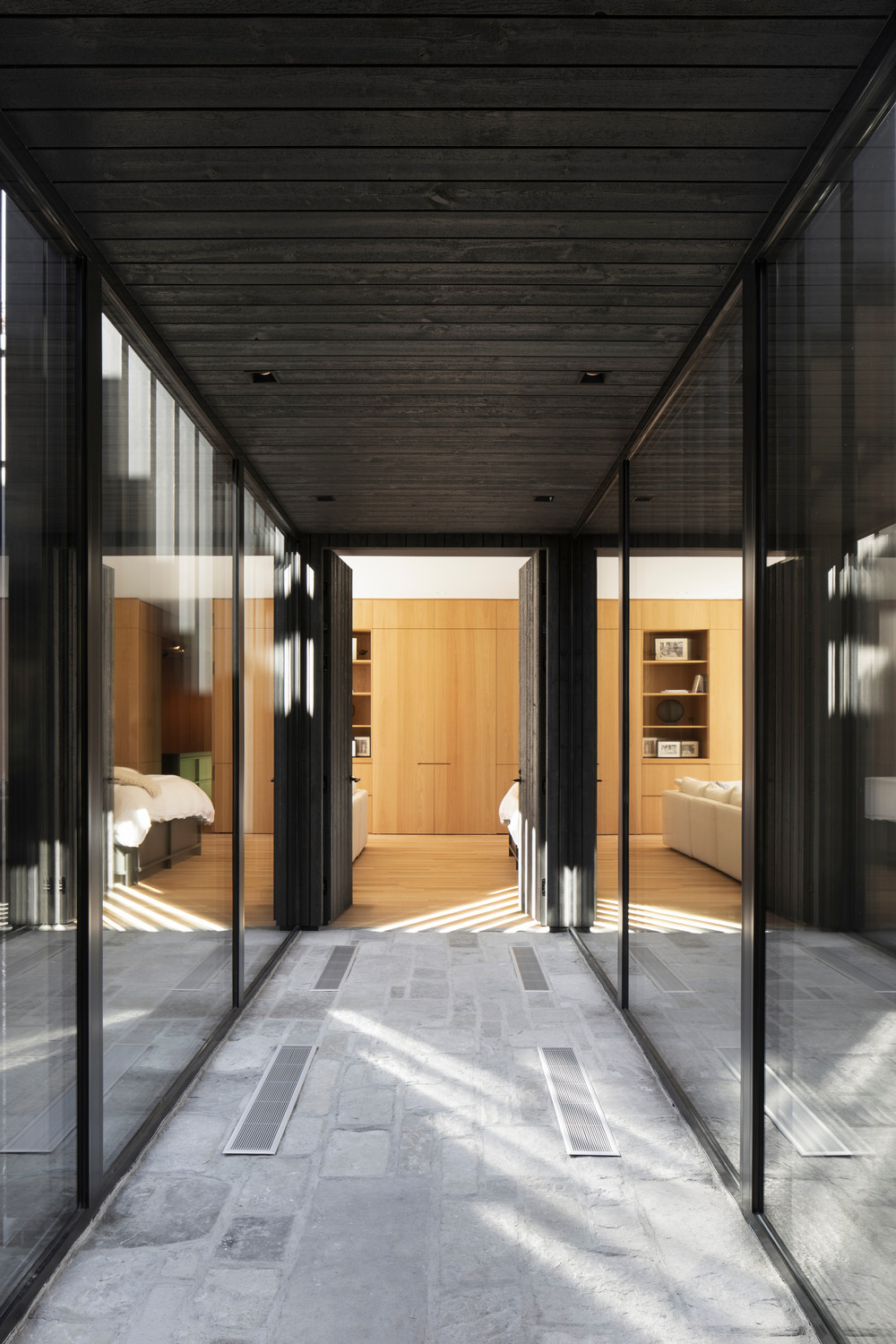
The master suite is accessed via a glazed corridor, designed as a true threshold between shared areas and a quieter world. Bathed in light and open to the surroundings, this passage enhances the sense of retreat and eases the transition to a slower, more peaceful rhythm.
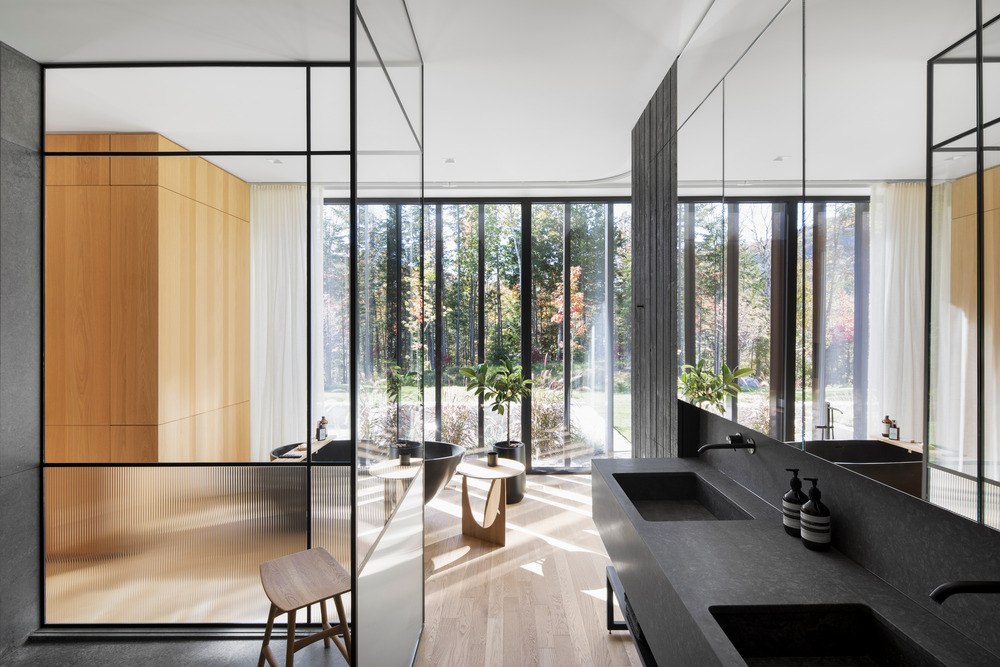
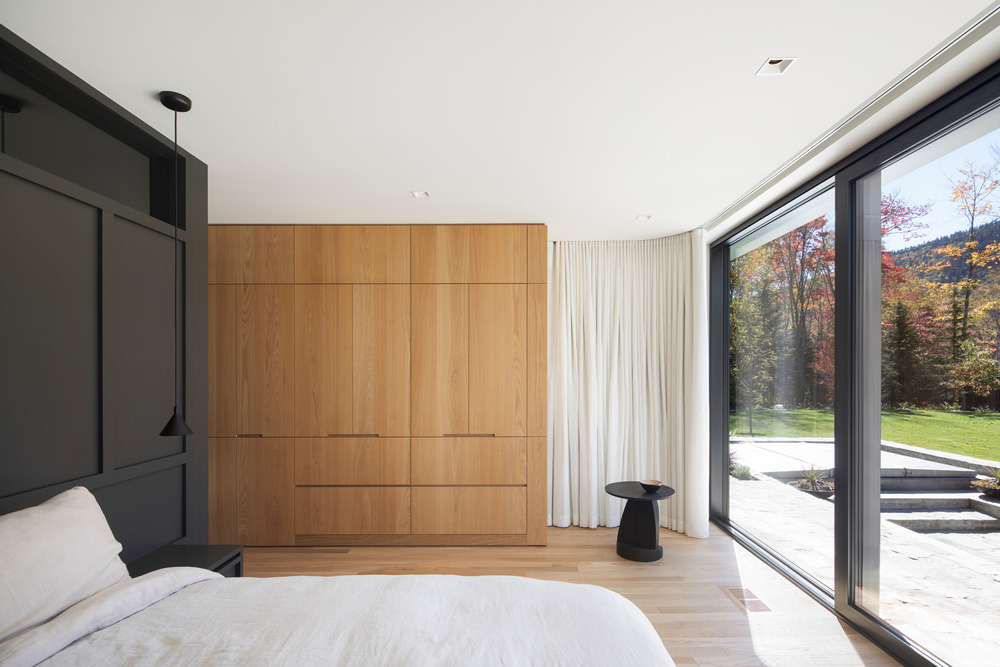
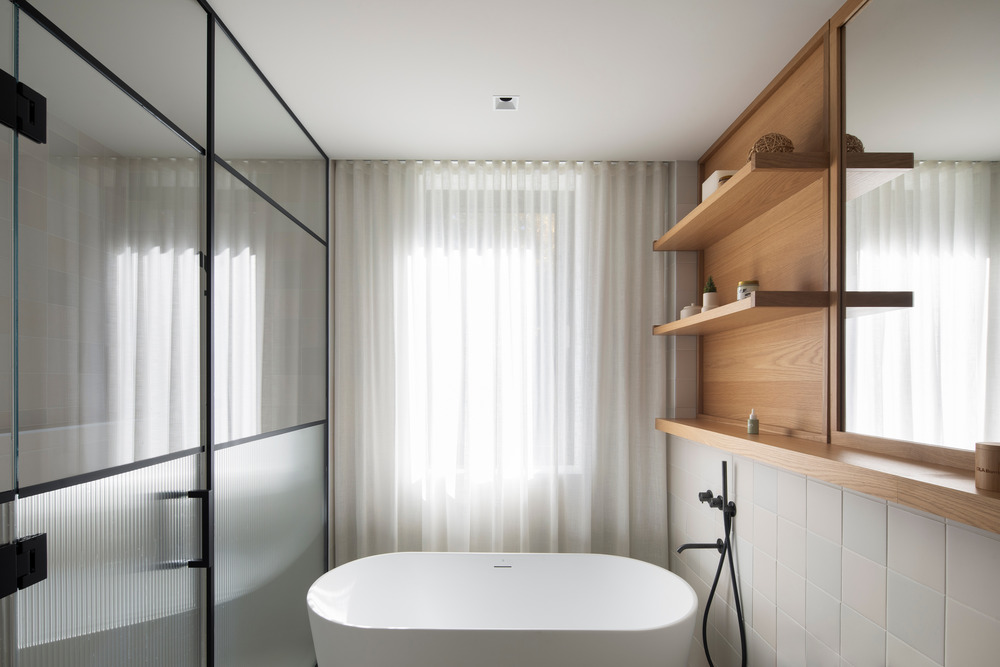
The parental suite includes a lake-facing bedroom, an intimate lounge, a generous walk-in closet and a bathroom that opens onto the forest. The spatial flow between these elements creates a sensory continuity with the surrounding landscape, encouraging calm, introspection and a deep connection to nature.
Outside, a sunken terrace, bordered by built-in benches and a fireplace, extends the atmosphere of calm and reflection. It invites deep connection with the elements (water, wood and stone), offering a living experience that is both immersive and grounded.
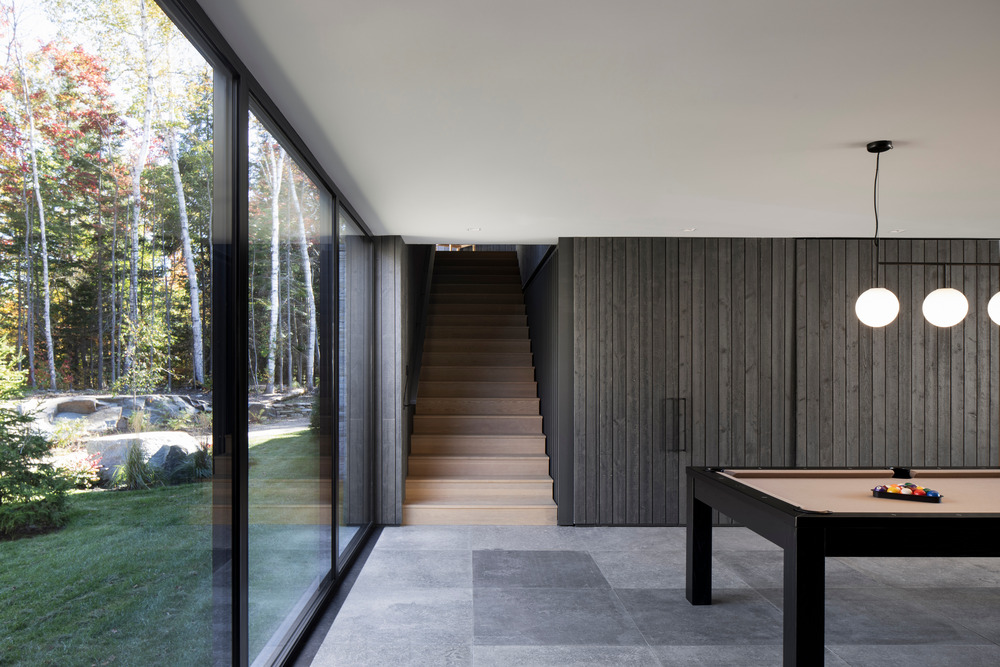
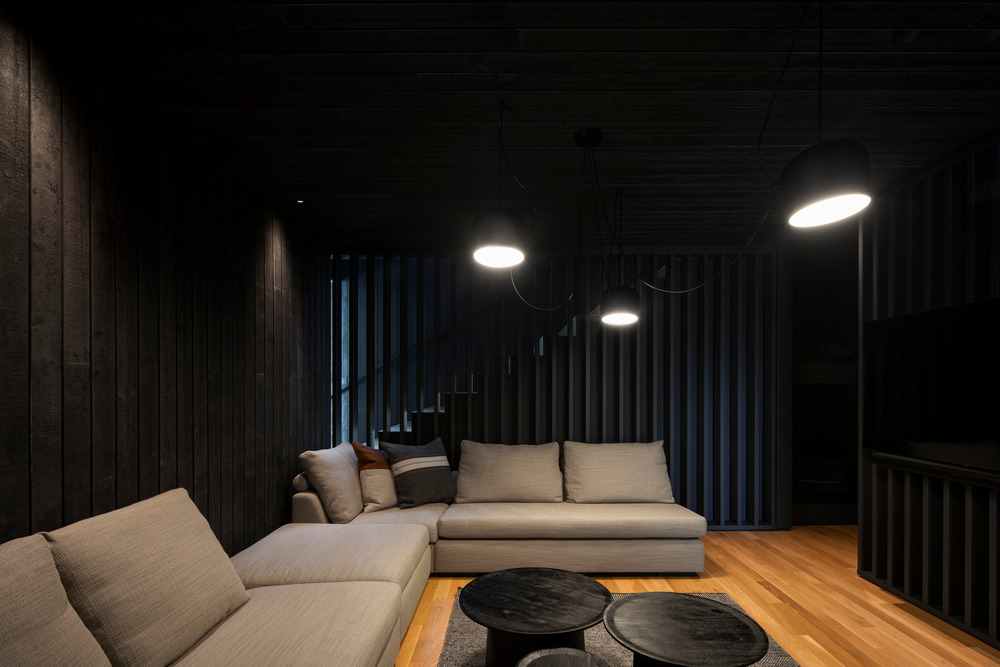
Opposite, a dark wood-clad hallway leads to a large playroom that acts as a bridge between the main living areas and the children’s bedrooms. Generously lit and open at both ends to the outdoors, this space becomes a fluid transition zone between collective life and private retreat. This playroom also provides access to the upper-level spaces designed to host guests and support the family’s work life.
Adjacent to the central volume, a soft, lounge-like alcove offers a flexible retreat, complete with built-in bunks for children or visiting friends. A home cinema completes the floor, adding a playful, social dimension to this warm and highly functional level.
The children’s bedrooms open generously onto the landscape and have direct access to a private terrace — an ideal spot for relaxation in nature. From this terrace, a small wooden bridge crosses over a planted zone to reconnect with the main terrace. This simple gesture reinforces the connections between the project’s different layers and enhances the continuity between indoor and outdoor spaces.
La Maison de la Baie de l’Ours shows how a house can sit gently within a powerful natural setting while still offering comfort and protection. The design encourages residents to experience the landscape through light, movement and carefully framed moments of privacy and openness. From shared living areas to quieter family zones, each space supports a slower and more attentive way of living. In the end, the house stands as a calm retreat that allows nature, architecture and everyday life to exist side by side, creating a place where residents can fully experience the changing character of the lake and forest throughout the year.
Source: v2com newswire
